Rio de Janeiro
Rio de Janeiro – The Marvelous City
From New Year’s Eve at Copacabana to soaring above the city and exploring its hidden layers
Introduction
We arrived in Rio de Janeiro on December 30, just one day before the city hosted one of the world’s largest New Year’s Eve celebrations. The excitement was already in the air, stages were being built along Copacabana Beach, streets were filling with visitors from around the world, and Rio was getting ready for an unforgettable night.
Known as Brazil’s Cidade Maravilhosa (“Marvelous City”), Rio de Janeiro is where dramatic granite mountains, lush rainforest, and golden beaches come together in spectacular fashion. The city is home to Christ the Redeemer, one of the New Seven Wonders of the World, and offers an unforgettable mix of natural beauty, vibrant culture, and adventure.
Brazil’s rich culture has been shaped by Indigenous traditions, Portuguese influence, and African heritage, all of which are reflected in its music, cuisine, festivals, and everyday life. The people of Rio, known as Cariocas, are famous for their love of the outdoors and their joyful approach to life.
Interestingly, despite its name, Rio de Janeiro wasn’t named after a river. When Portuguese explorers arrived in January 1502, they mistakenly believed that Guanabara Bay was the mouth of a river and named the area Rio de Janeiro, meaning “River of January.”
Over the next few days, we explored Rio’s famous landmarks, relaxed on its legendary beaches, soared above the city on a hang glider, experienced Brazilian music and dance, and welcomed the New Year alongside millions of people on Copacabana Beach. It was an unforgettable way to experience one of the world’s most beautiful cities.
Our plan in Rio
Day 1 – Arrival in Rio (short)
Day 2 – New Year’s Eve at Copacabana
Day 3 – Iconic Rio (Christ the Redeemer, Sugarloaf, Cathedral, Selarón, etc.)
Day 4 – Soaring Above Rio (Hang gliding, Museum of Tomorrow, Ginga Tropical)
Day 5 – Beyond the Postcards (Favela tour, beach, departure)
Day 1 – Welcome to Rio
“From the heart of the Amazon to the rhythm of Rio.”
After an unforgettable rainforest adventure, we landed in Rio de Janeiro on the evening of December 30. The contrast was immediate. Just a few hours earlier we had been surrounded by dense jungle and winding rivers. Now we found ourselves in a city where mountains rise dramatically above beautiful beaches and the energy never seems to slow down.
Our hotel was on the famous Copacabana Beach, and after checking in, we couldn’t resist taking our first evening walk along the waterfront. Even before New Year’s Eve, the beach was buzzing with activity. Workers were busy preparing massive stages for concerts, visitors from around the world filled the promenade, and there was a sense that the city was counting down to something special.
For dinner, we enjoyed a meal at La Fiorentina, a popular restaurant overlooking Copacabana. Sitting outside with the ocean breeze, watching people stroll along the beach, was the perfect introduction to Rio’s relaxed lifestyle.
As we walked back to our hotel, we could already feel the anticipation building. Tomorrow, Copacabana would host one of the largest New Year’s Eve celebrations on the planet, and we couldn’t wait to be part of it.
Day 2 – New Year’s Eve at Copacabana
“A day of sunshine, celebration, and one unforgettable midnight.”
December 31 was our first full day in Rio, and since many of the city’s major attractions and guided tours were closed for New Year’s Eve, we decided to enjoy the area around Copacabana Beach.
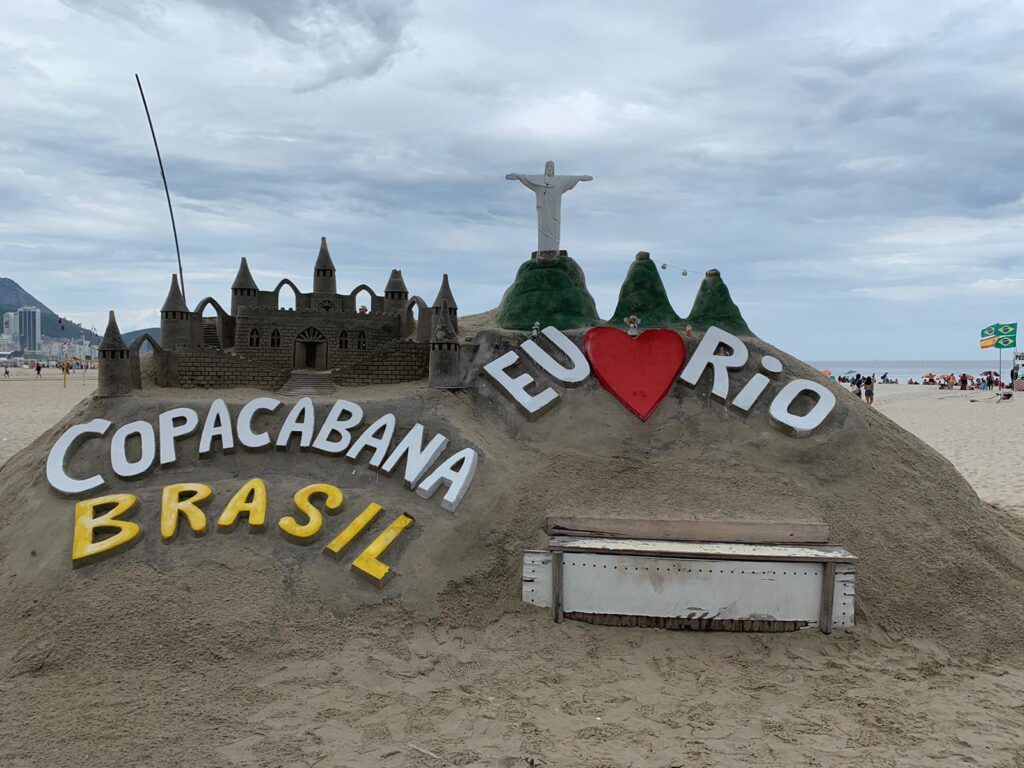
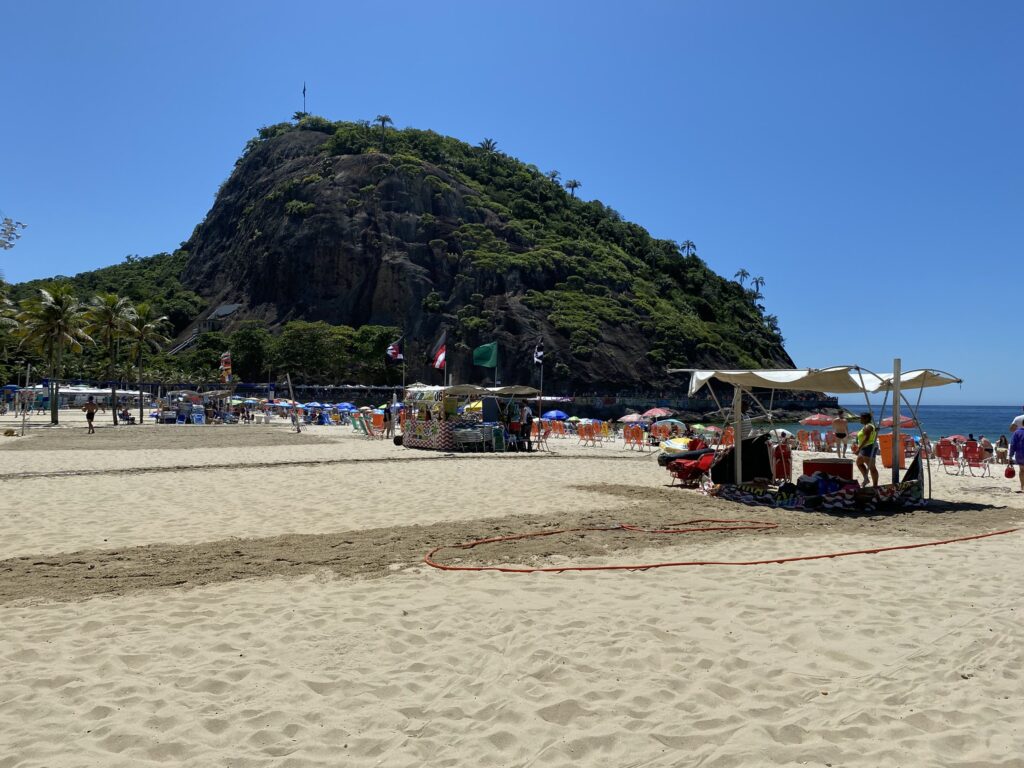
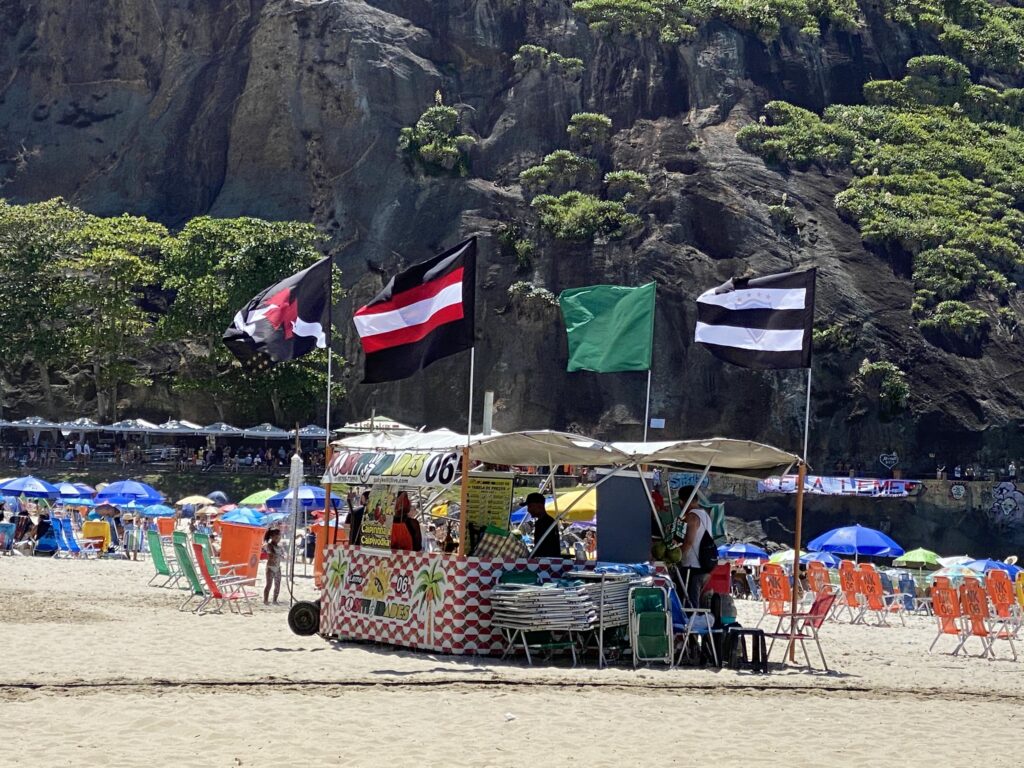
Having the beach right across from our hotel was a luxury. We spent the morning walking along the famous shoreline before jumping into the warm Atlantic Ocean. Watching locals play beach volleyball, jog along the promenade, and relax under colorful umbrellas made it easy to understand why Copacabana has become one of the world’s most recognizable beaches.
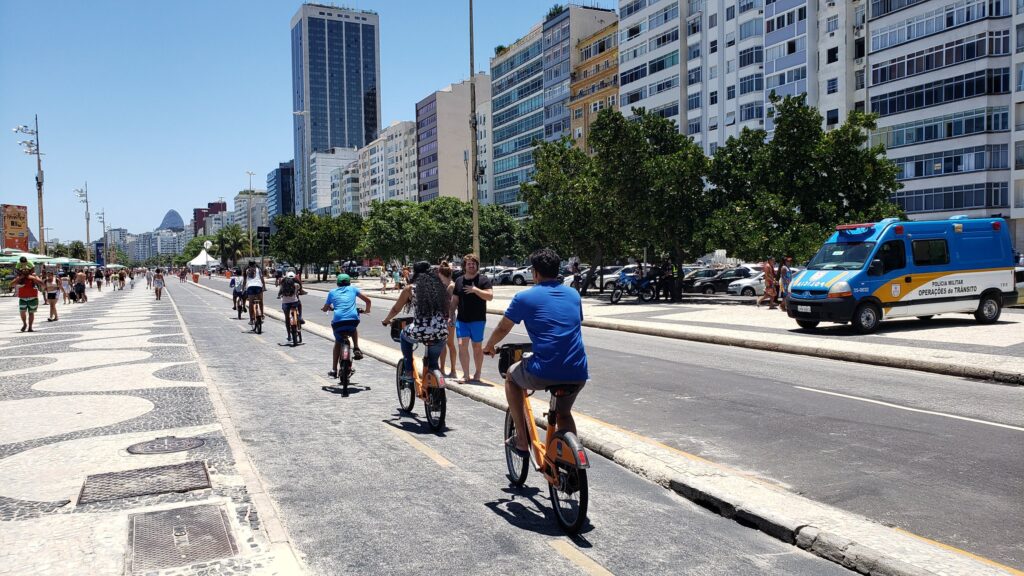
Later, we rented bicycles and rode along the dedicated bike path from one end of Copacabana to the other. It was a wonderful way to experience the neighborhood at a slower pace while enjoying the ocean views.
Our first lesson about Rio came unexpectedly. I was carrying my Canon DSLR camera when three different locals stopped to warn us not to display expensive cameras openly. They explained that tourist areas can attract thieves and suggested using our phones instead. We appreciated their concern and thanked them for looking out for us.
A little later, while riding beside my younger son, who was taking things a bit slower on his bicycle, someone suddenly reached out and tried to snatch the gold chain I was wearing. Thankfully, we were moving fast enough that the attempt failed. Not long afterward, we also witnessed another tourist being robbed in broad daylight.
It was certainly unsettling, but we didn’t let it ruin our experience. Instead, we returned to the hotel and adjusted our plans. We locked our camera, wallets, and other valuables in the room safe, carried only our phones, one credit card, and a small amount of cash, and made sure one person always stayed aware of our surroundings while another took photos. Those simple precautions allowed us to continue exploring the city comfortably.
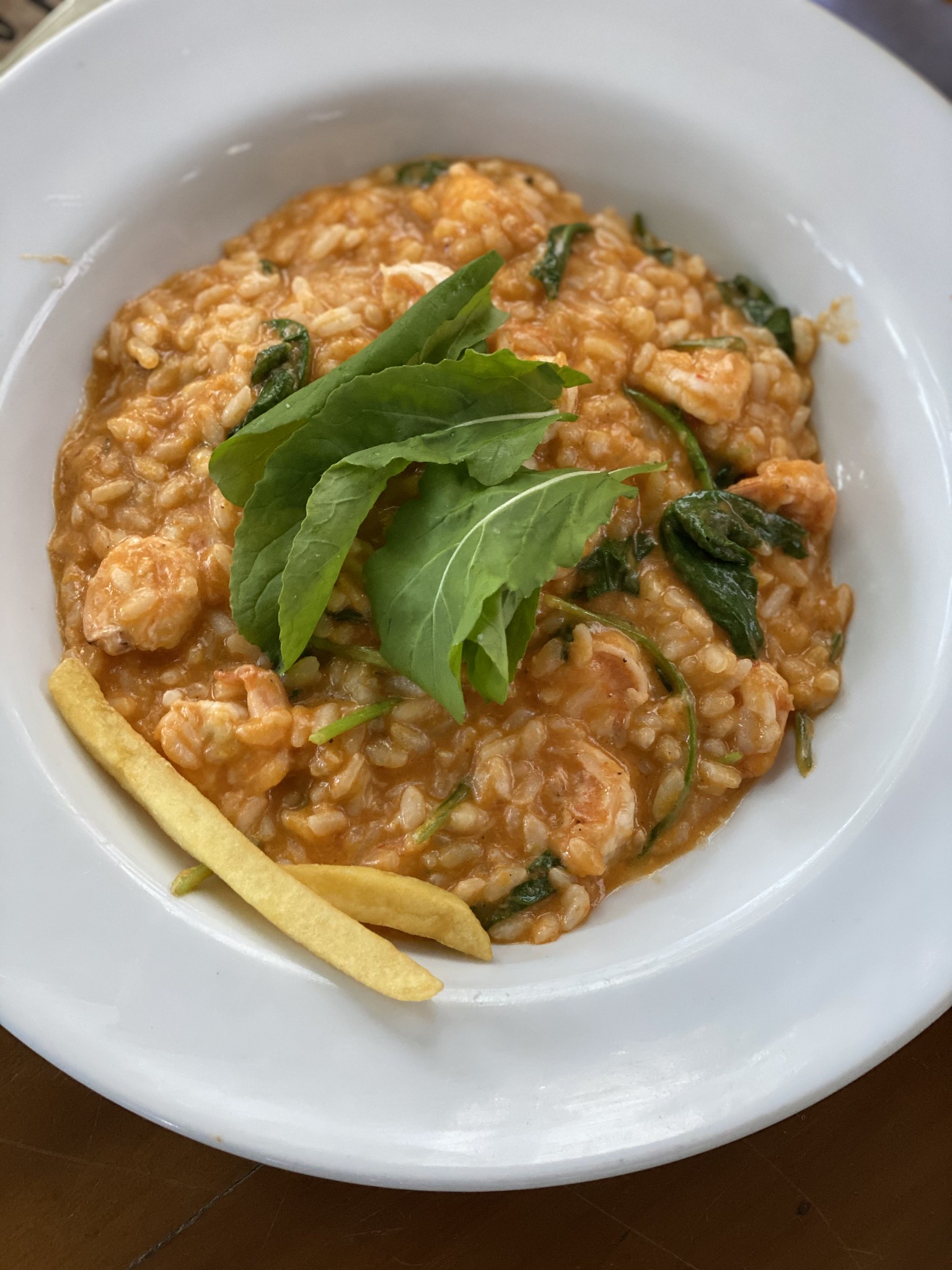
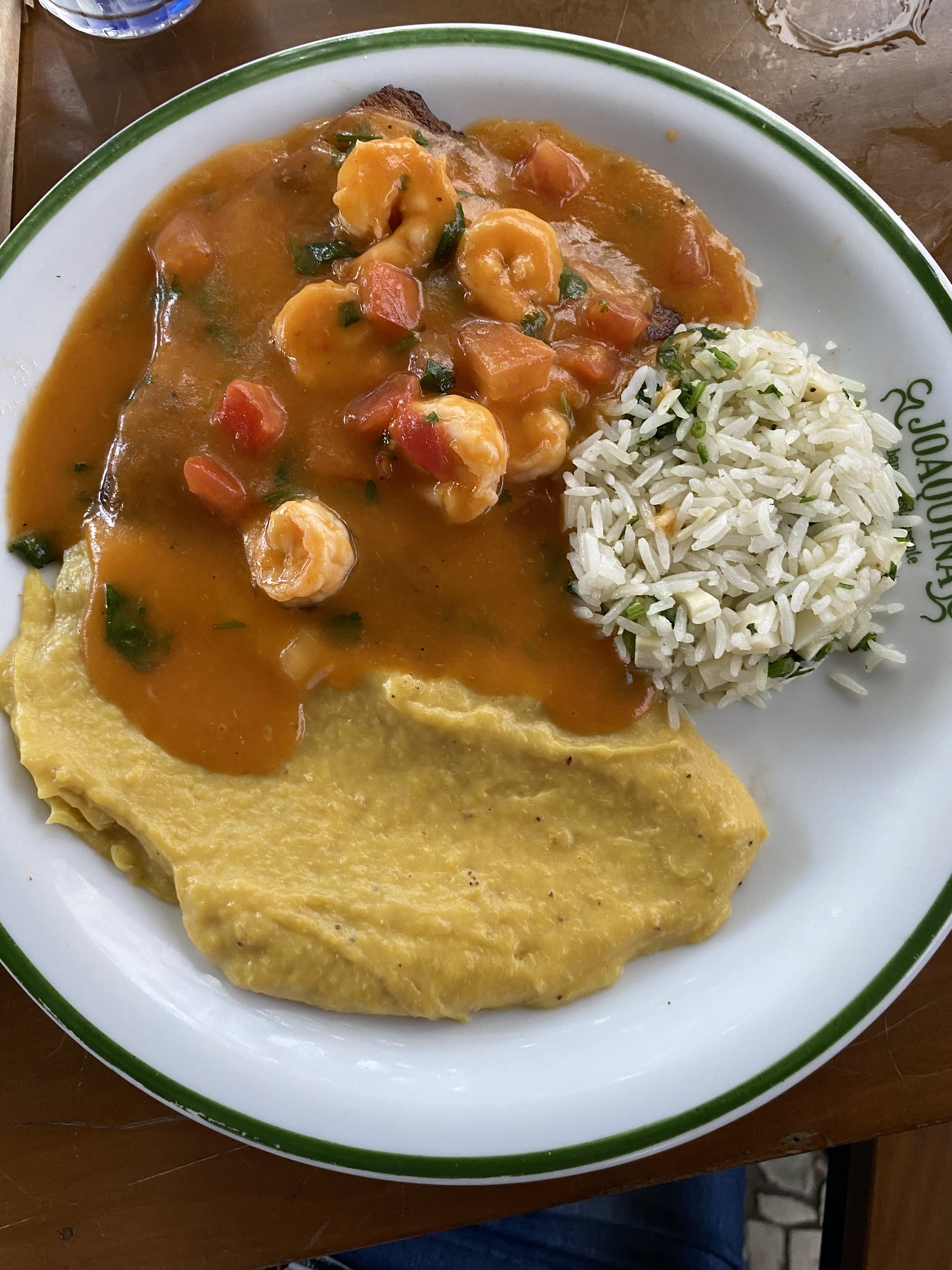
Lunch at a nearby restaurant introduced us to another side of Rio’s culture, the relaxed pace of dining. Service was much slower than we were used to, but no one seemed to mind. Meals here are meant to be enjoyed, not rushed.
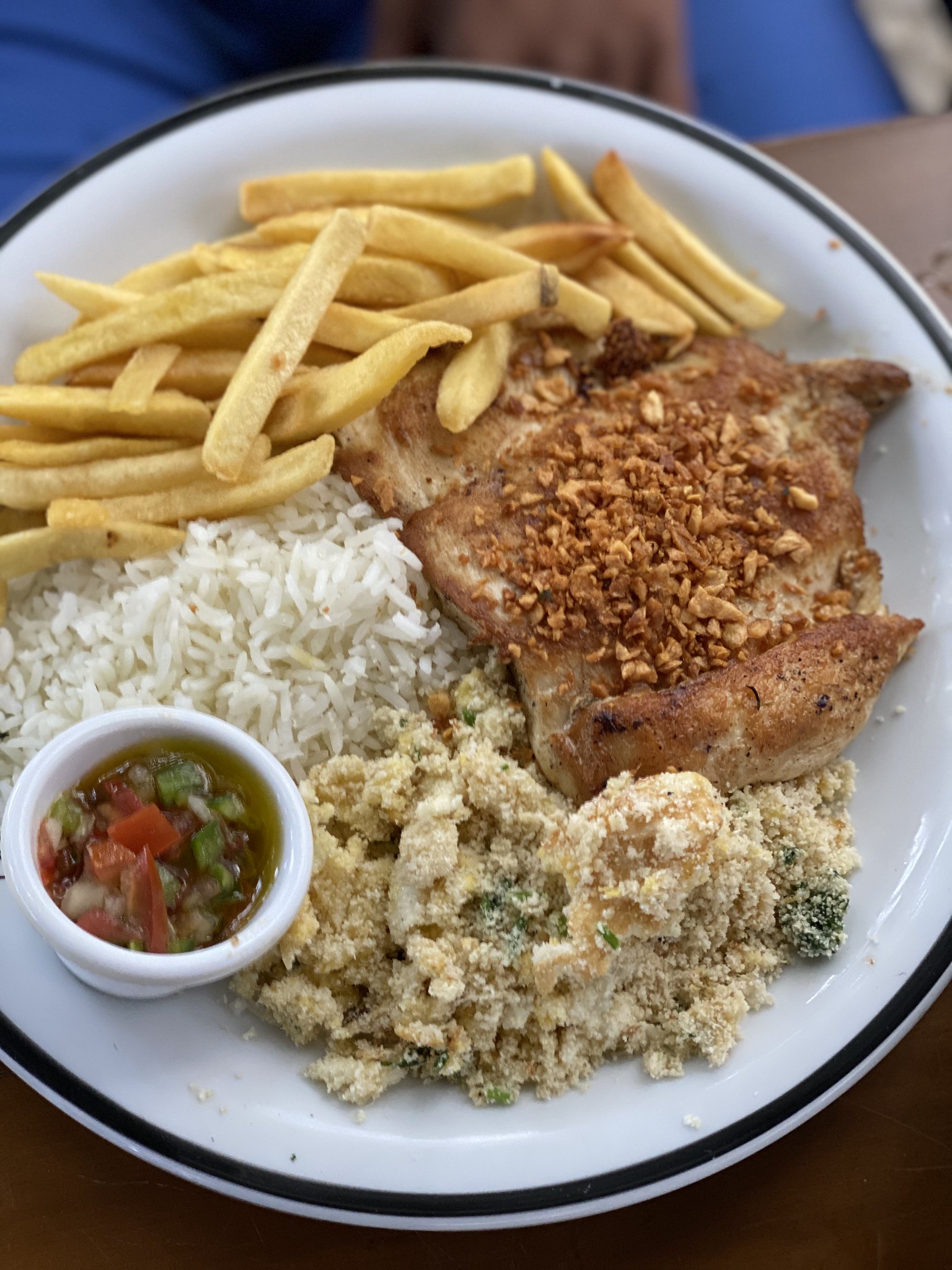
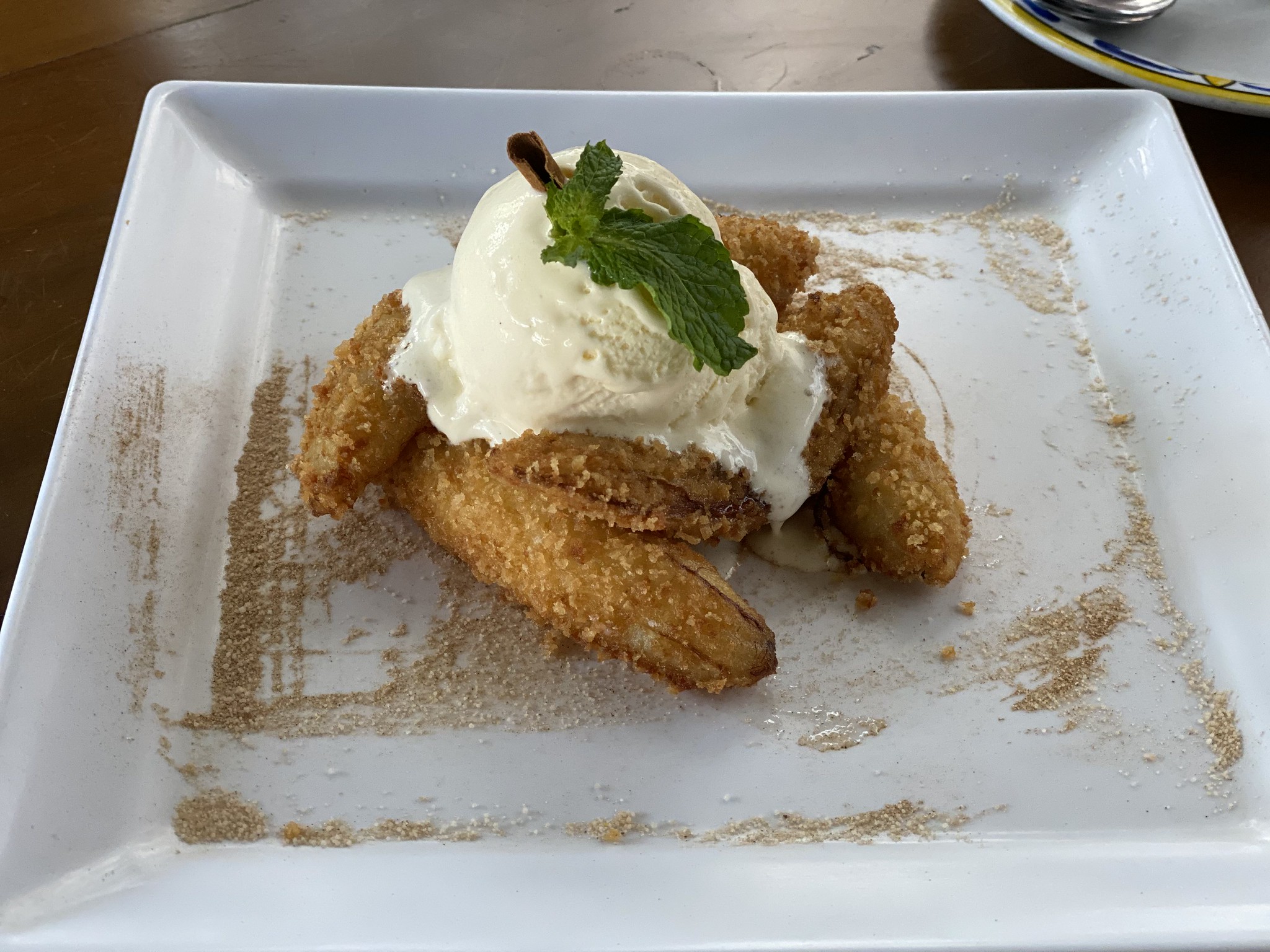
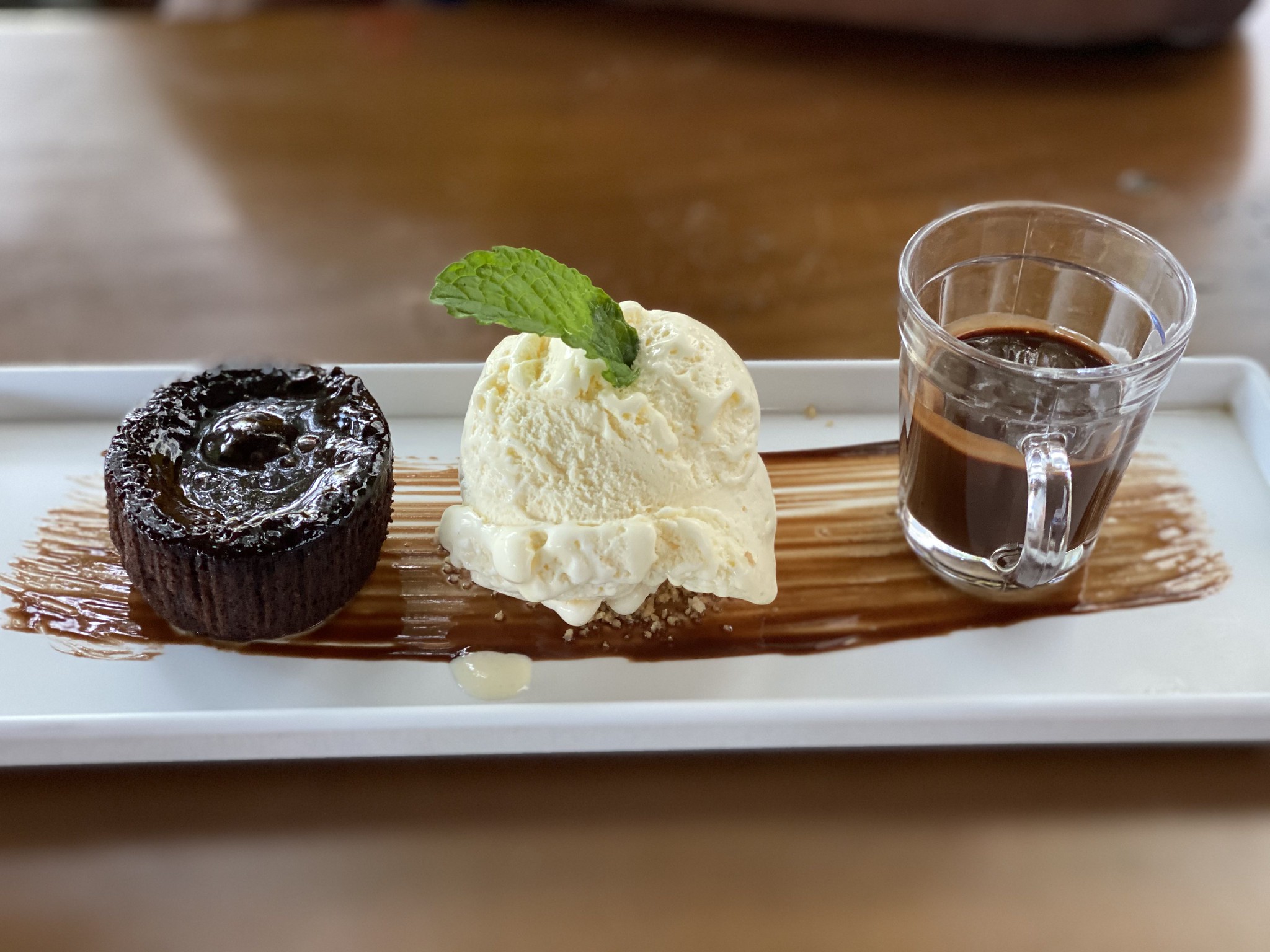
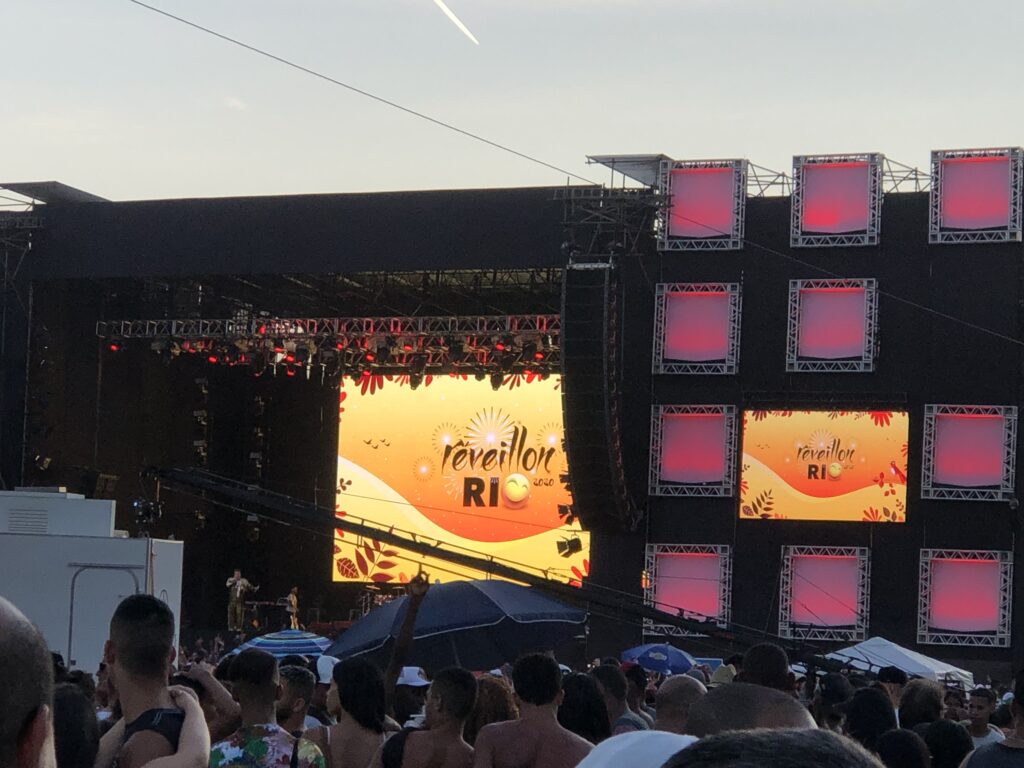
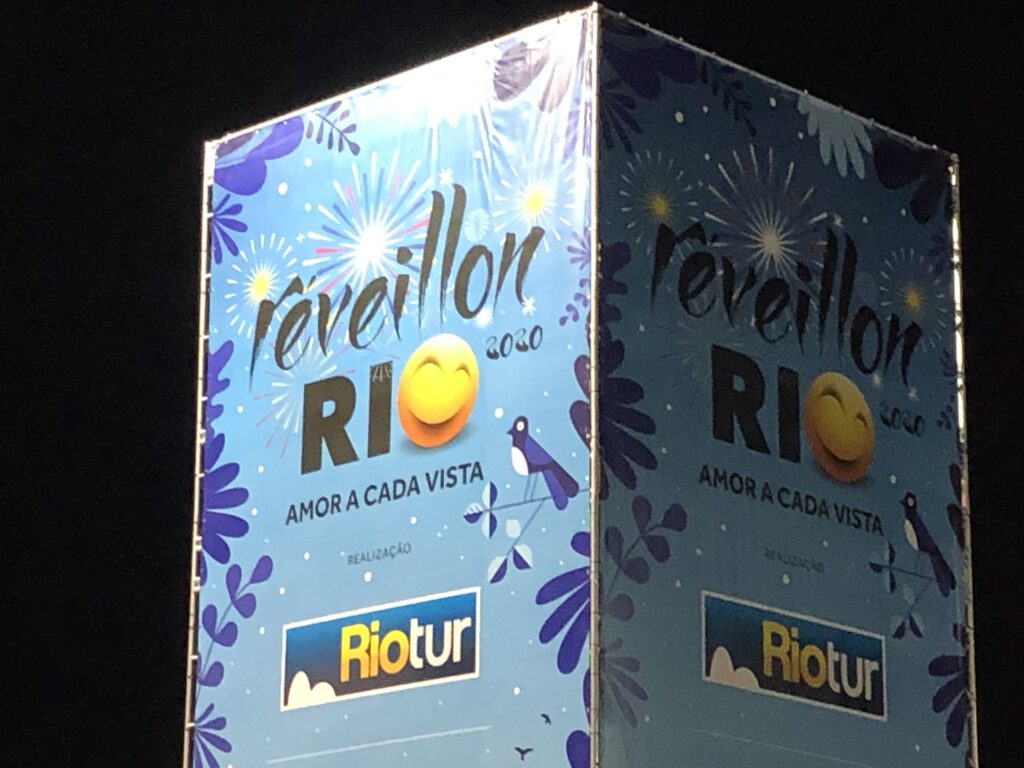
By early afternoon, roads around Copacabana began closing as preparations for the night’s celebration gathered pace. New Year’s Eve, known locally as Réveillon, is Brazil’s second-largest annual celebration after Carnival. Wearing white is a cherished tradition, symbolizing peace, hope, and good fortune for the coming year. Everywhere we looked, people dressed in white streamed toward the beach, creating a sea of white stretching for blocks.
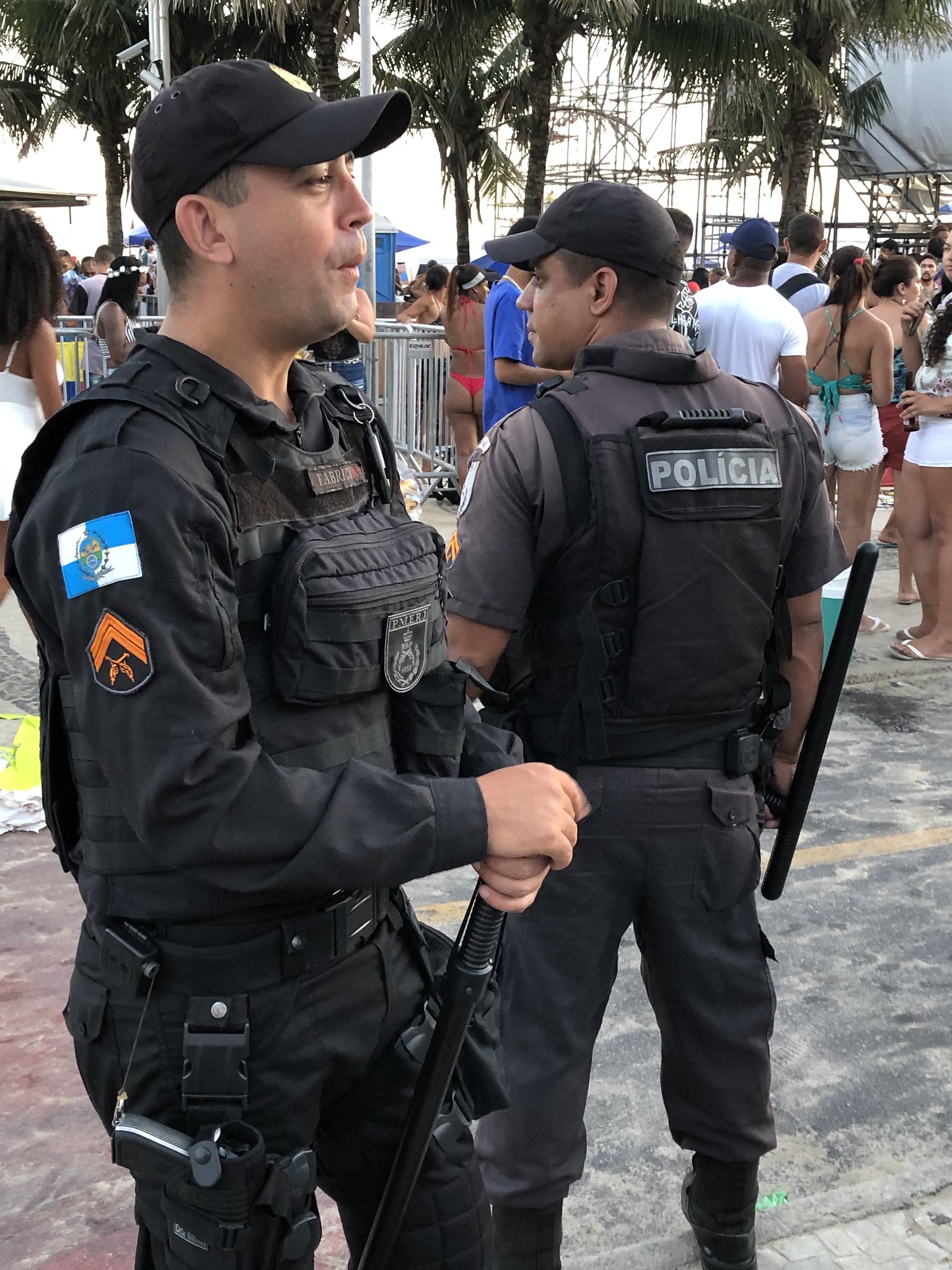
In the early evening, we walked over to one of the concert stages to enjoy the live music and festive atmosphere. Police officers were stationed throughout the area, helping manage the enormous crowds. Even with such a visible security presence, we unfortunately witnessed another robbery nearby. It was a reminder that, like any major city hosting millions of visitors, staying alert and taking sensible precautions is important.
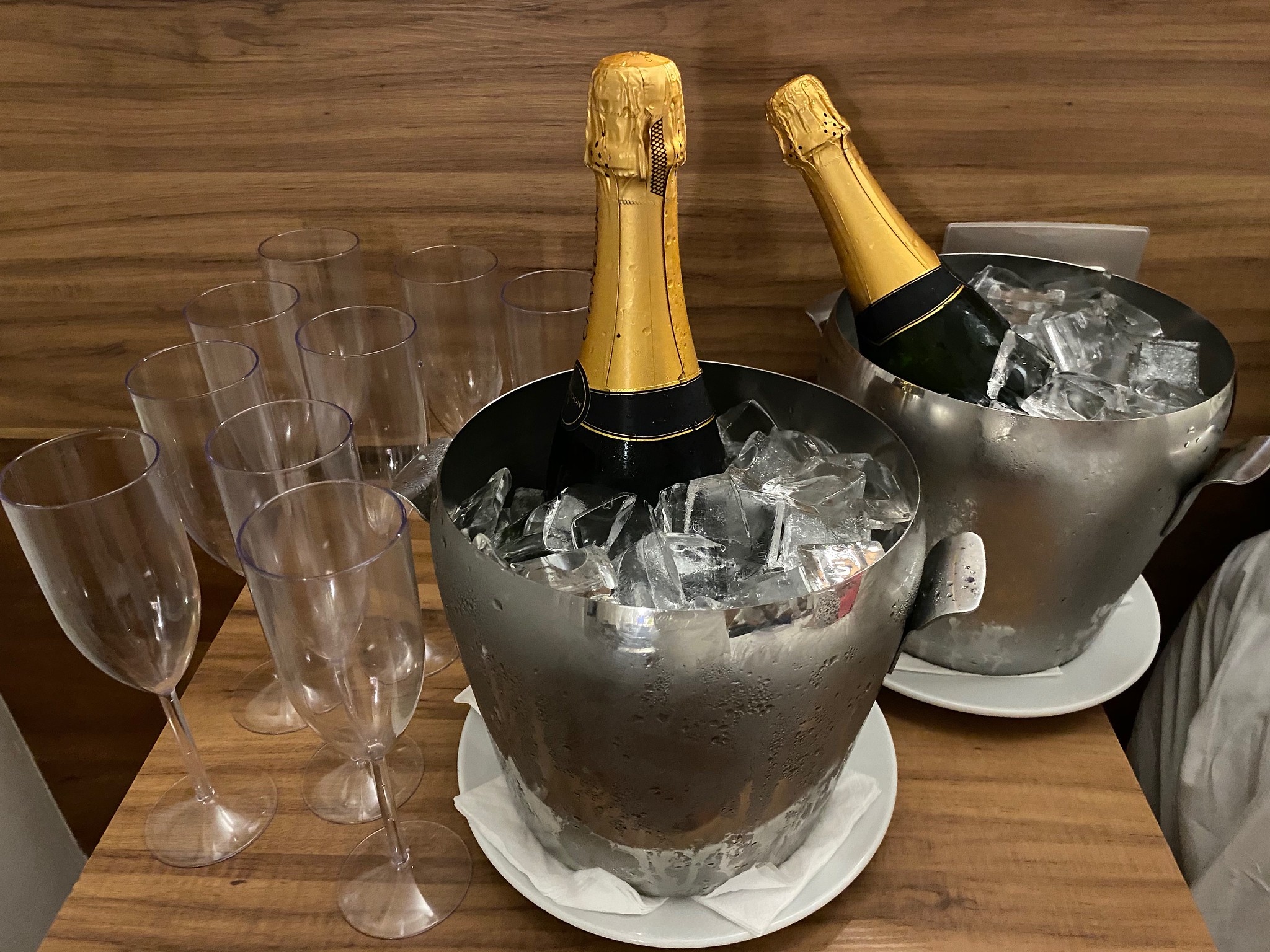
After that, we returned to our hotel, ordered room service for dinner, and celebrated with a bottle of champagne while waiting for the countdown.
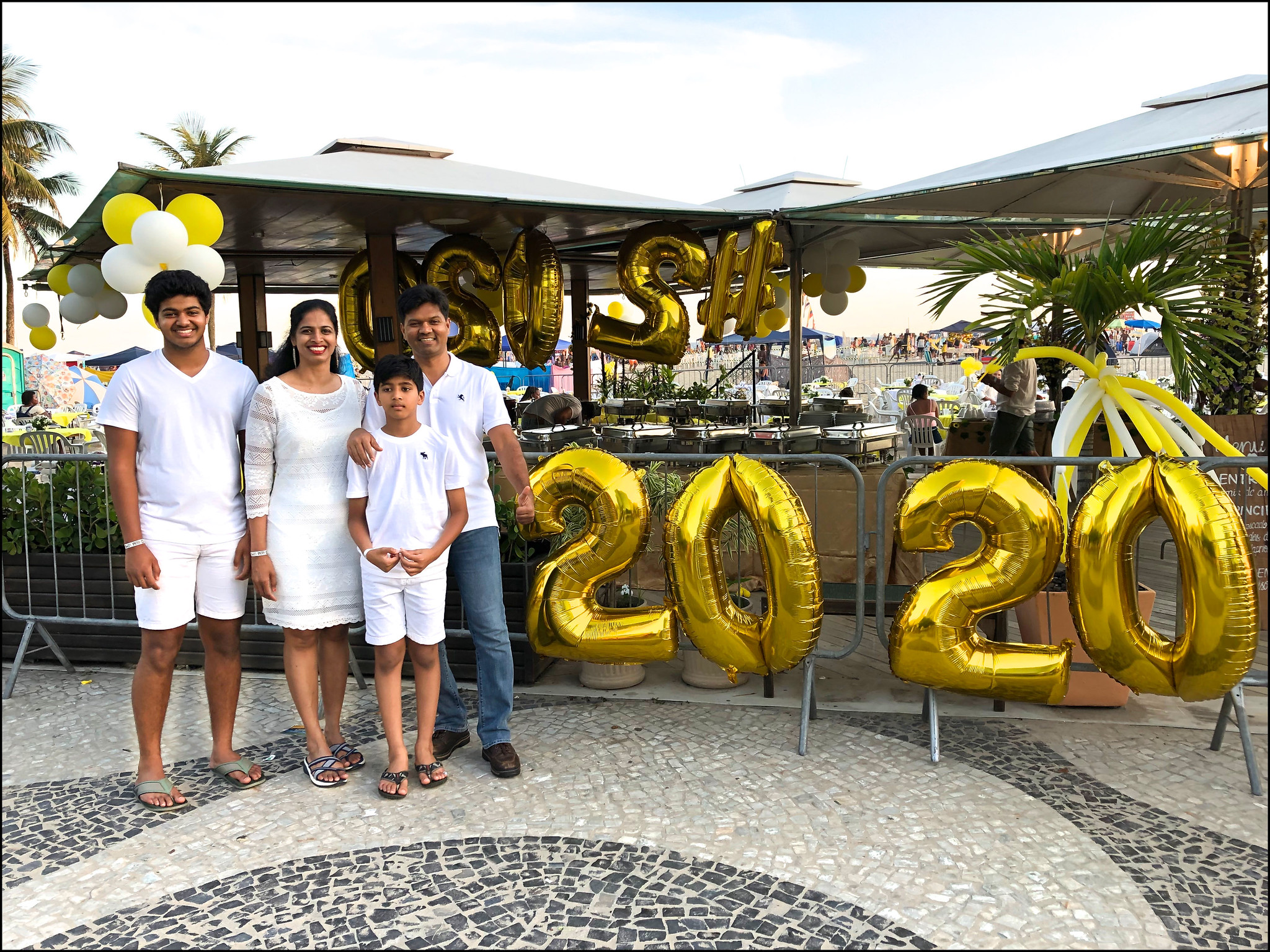

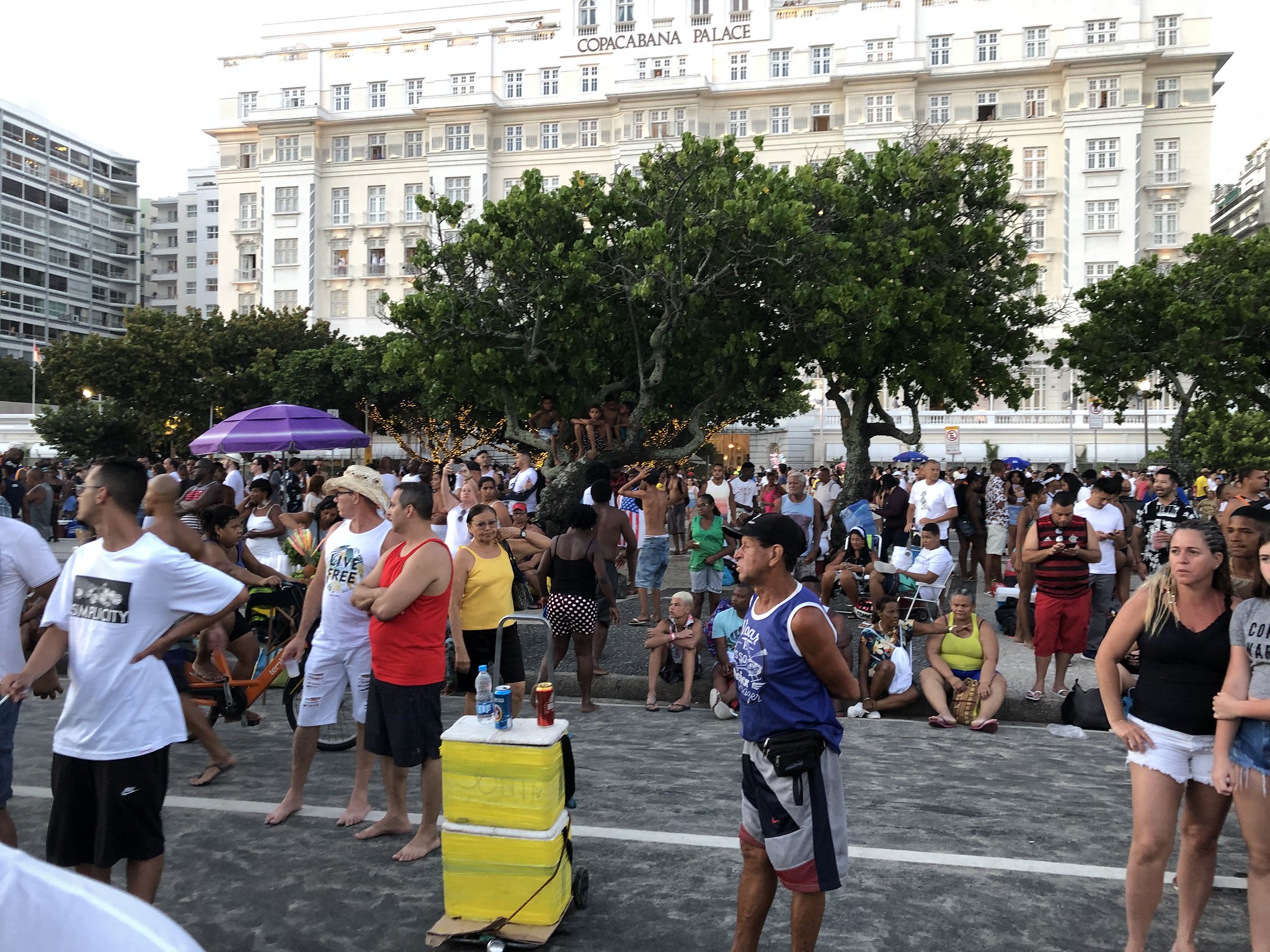
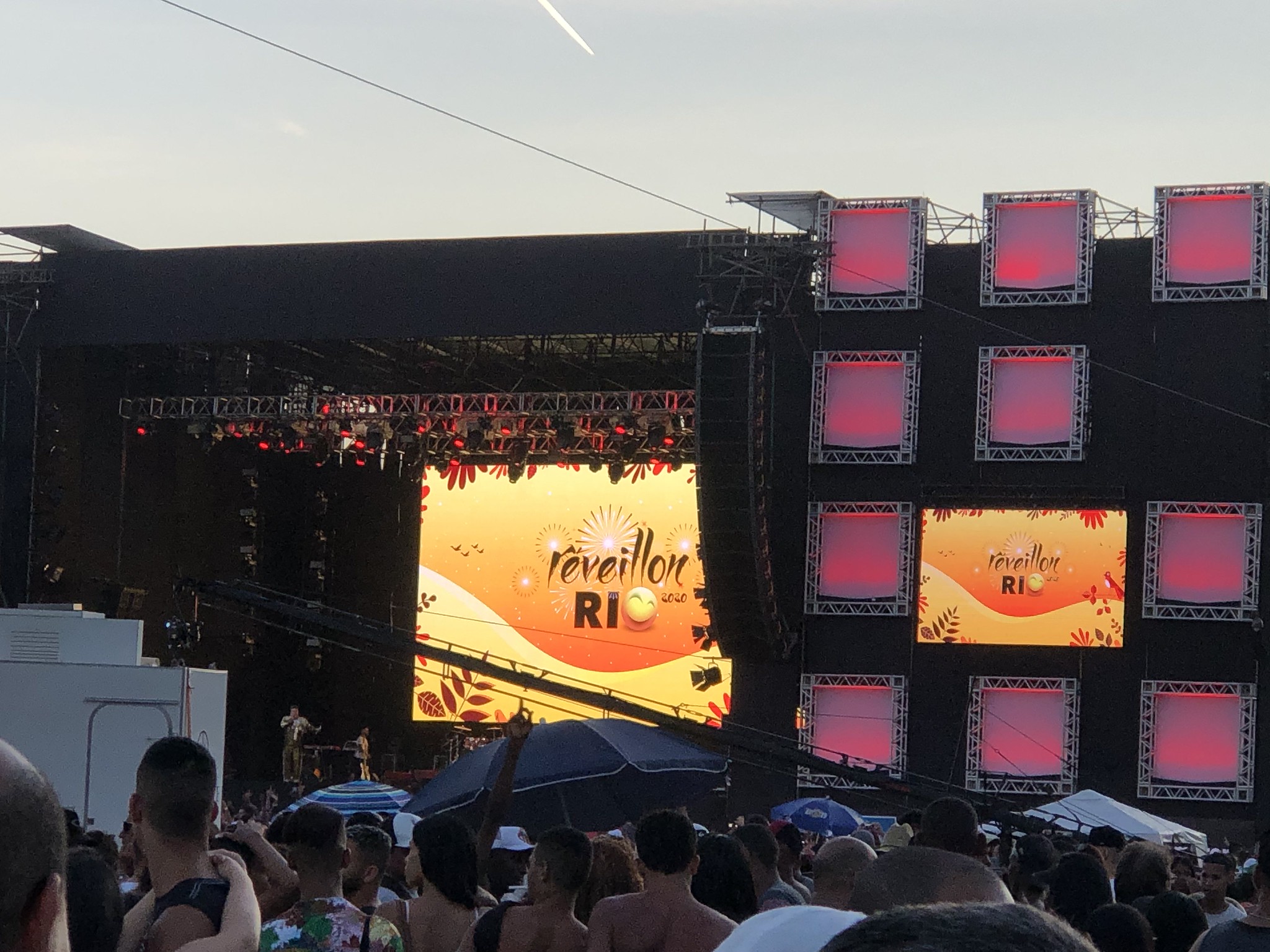
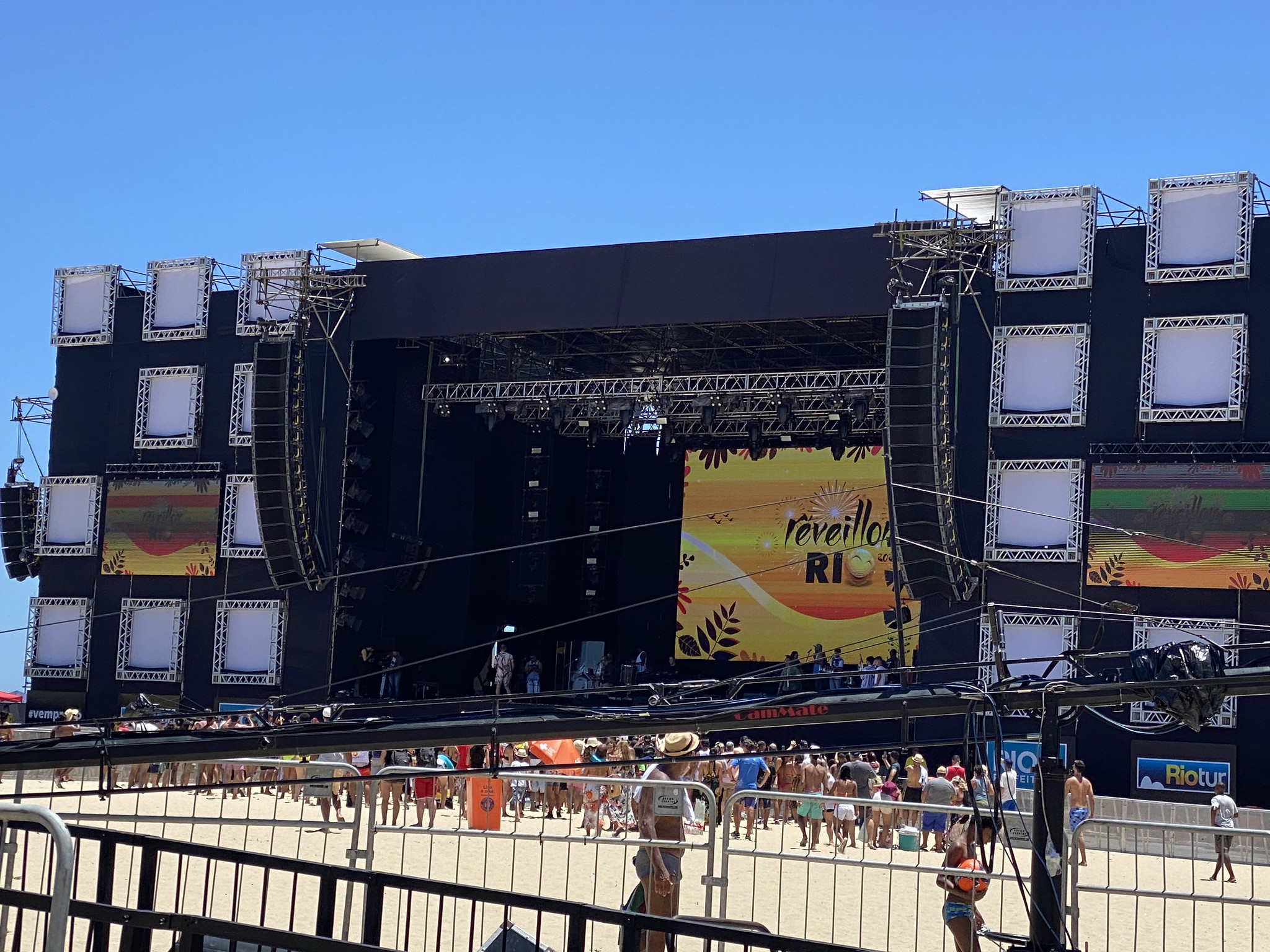
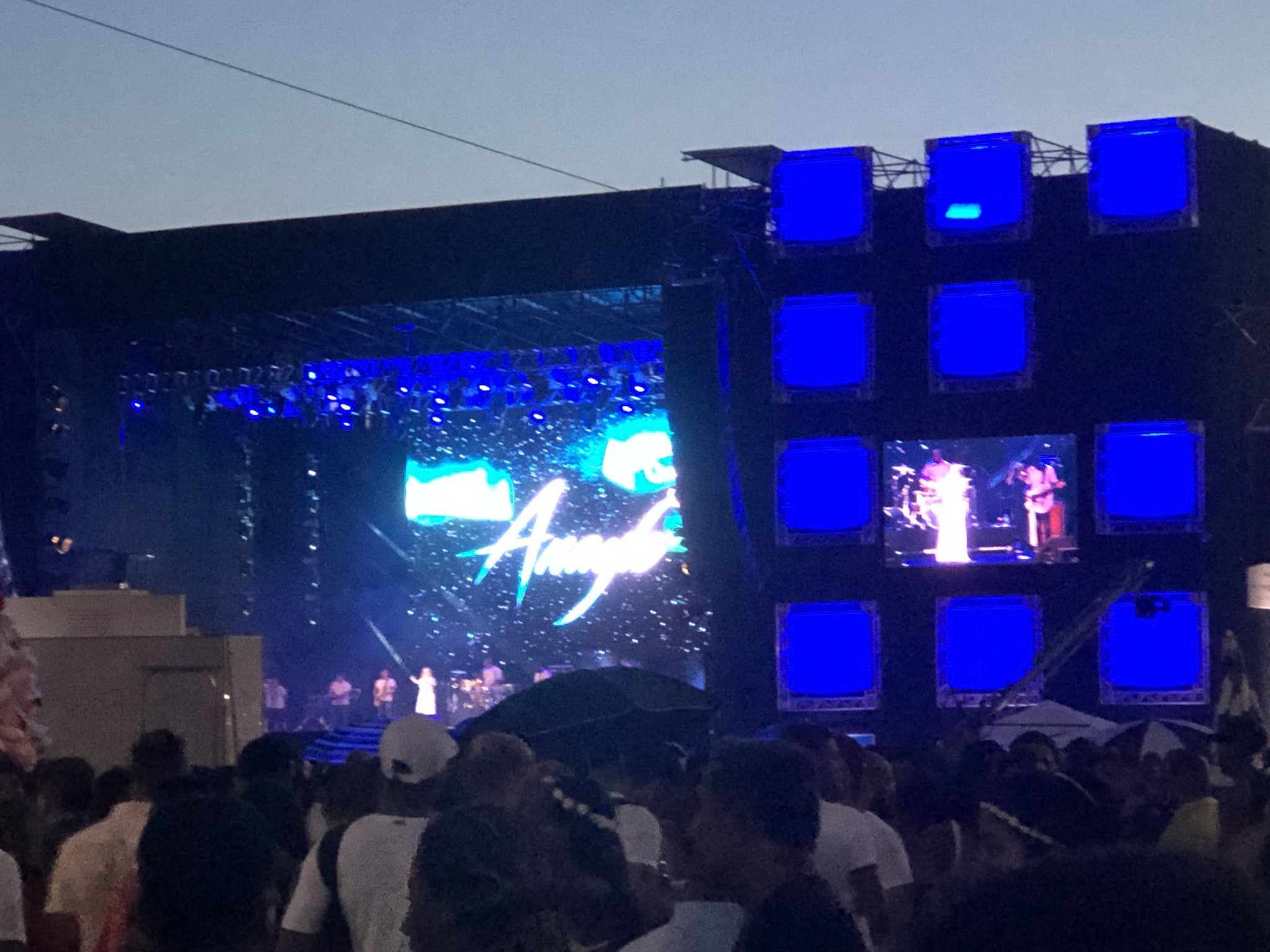
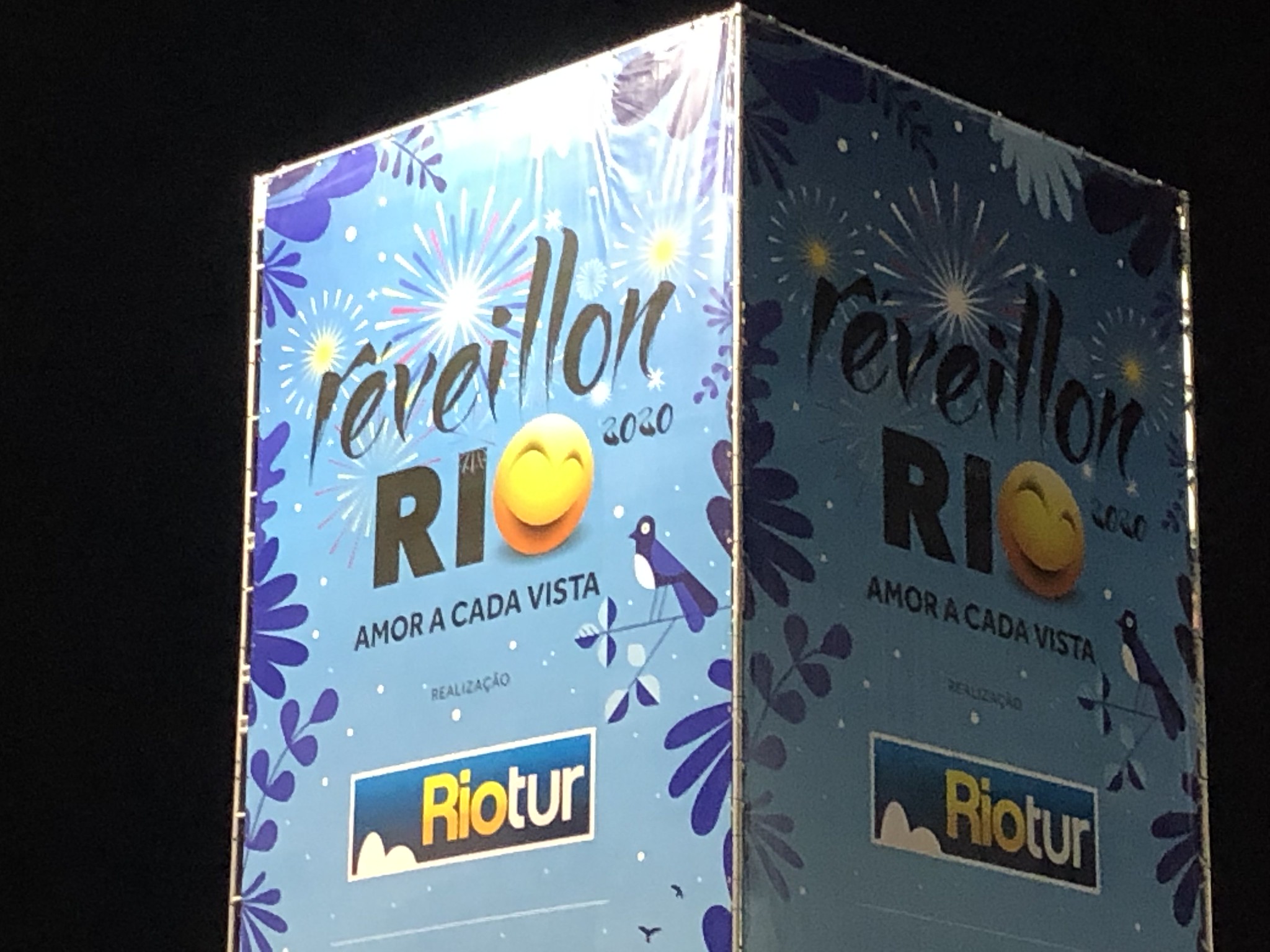
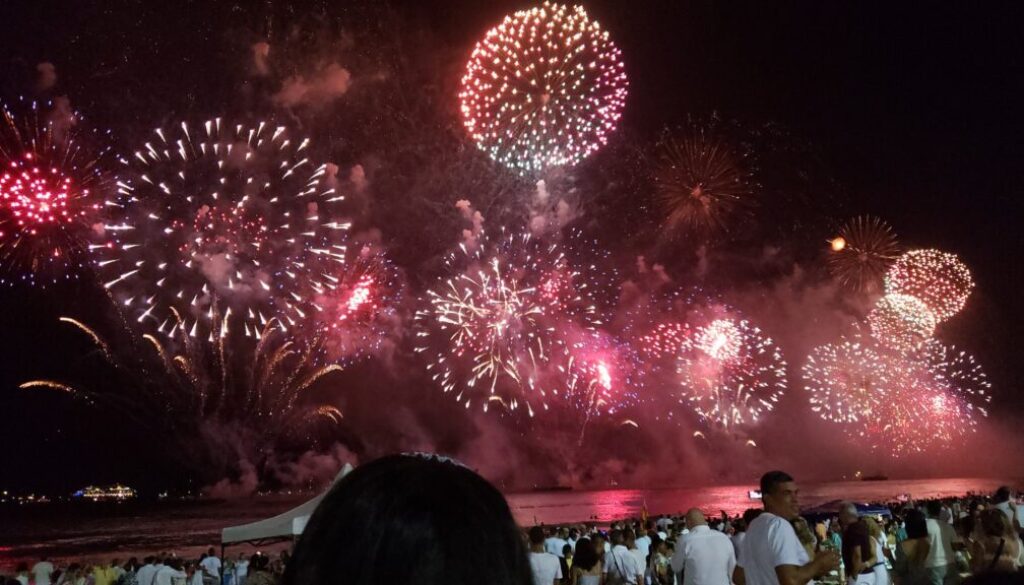
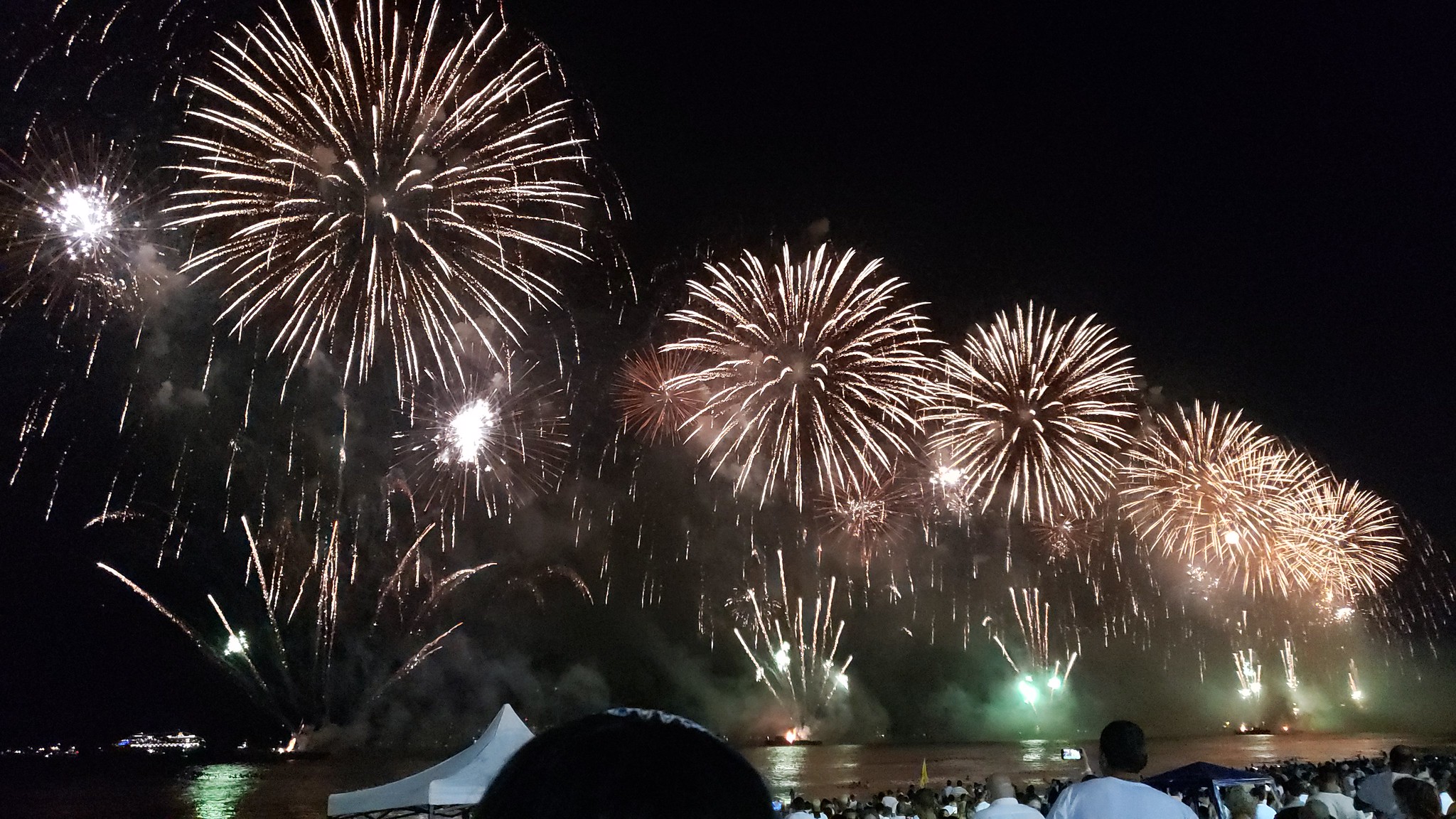
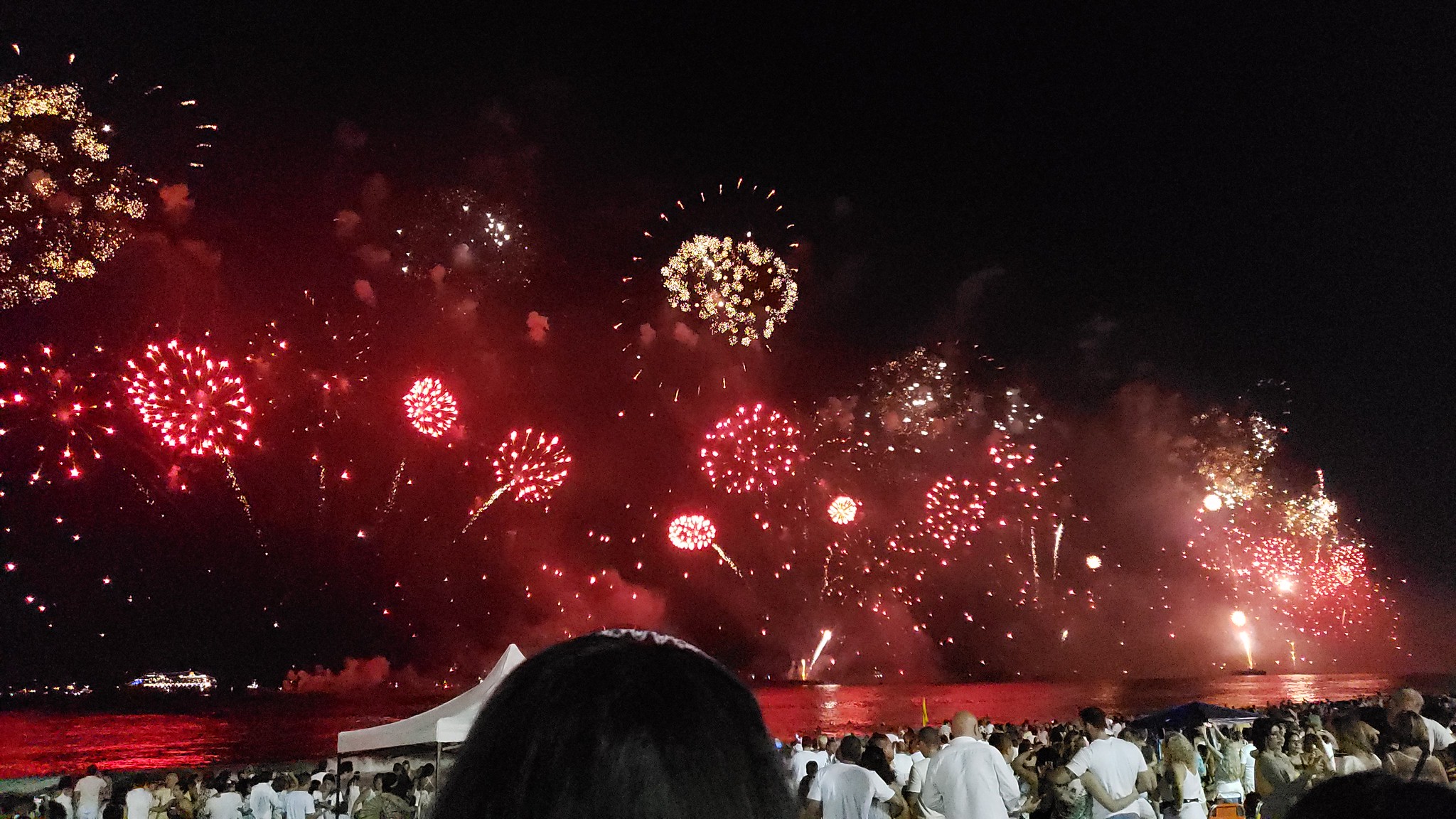
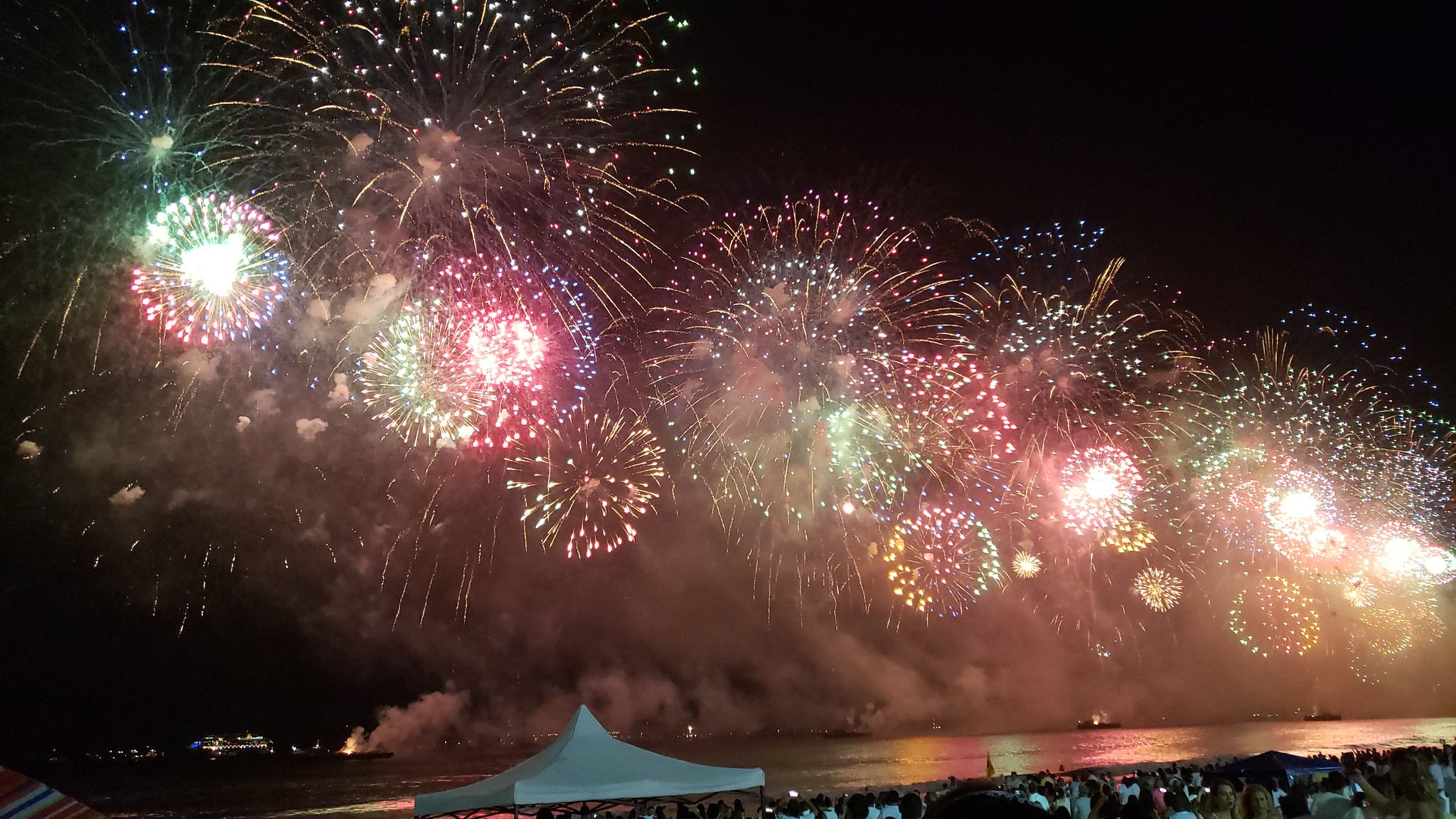
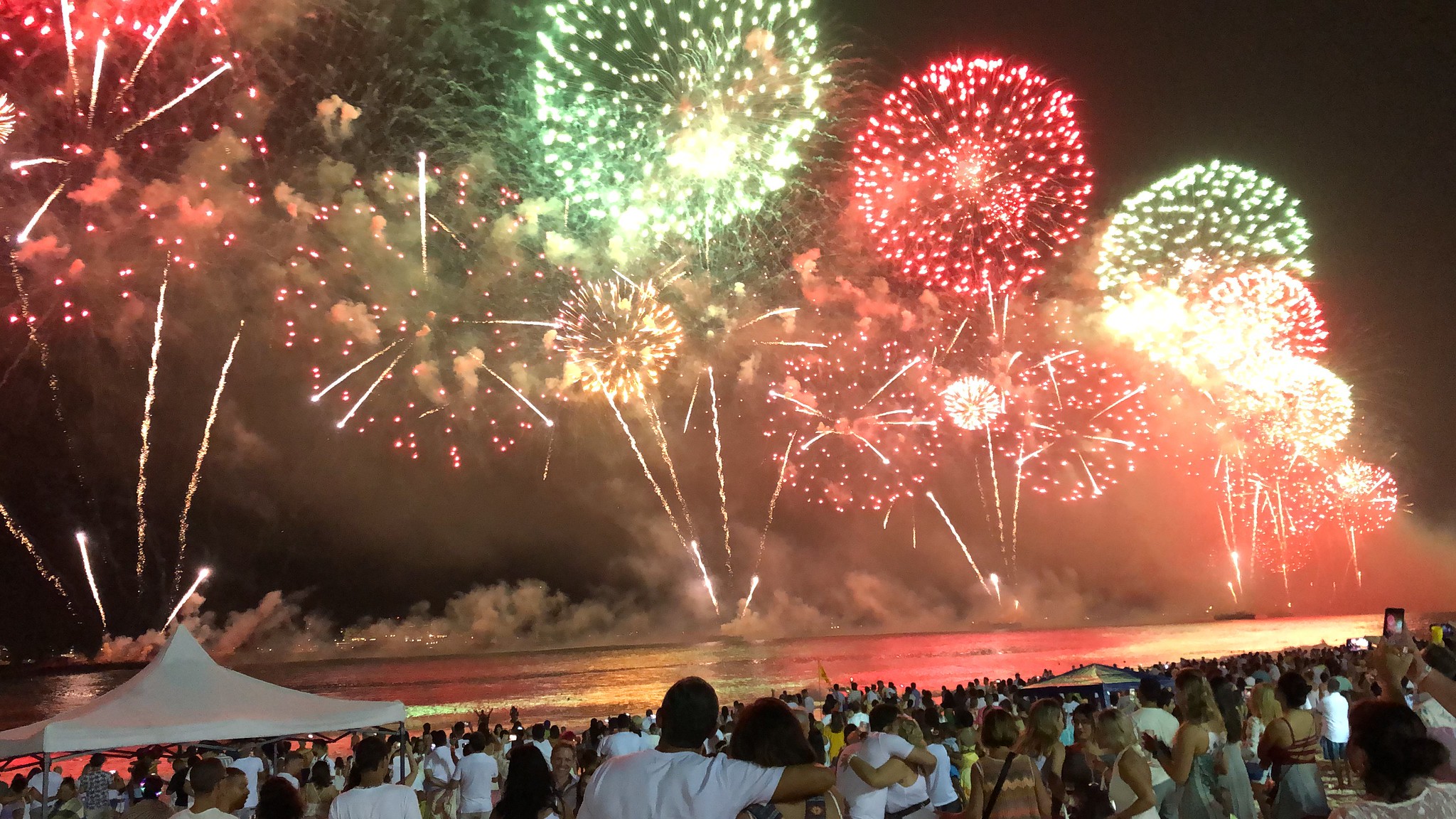
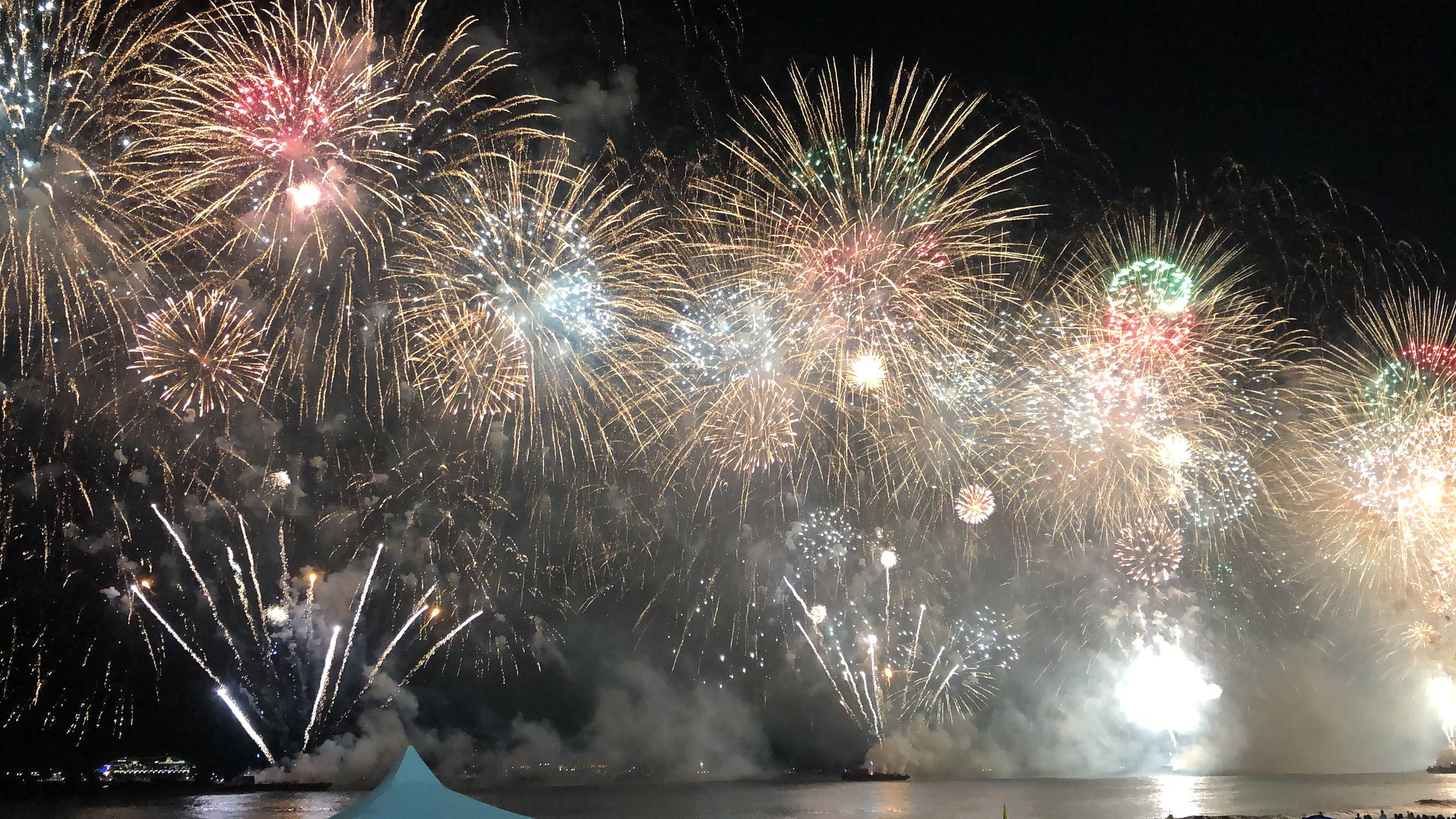
Around 10:00 PM, we made our way back to Copacabana Beach. The atmosphere was unlike anything we had ever experienced. Millions of people filled the shoreline, music echoed across the beach, and everyone counted down together beneath the warm summer sky.
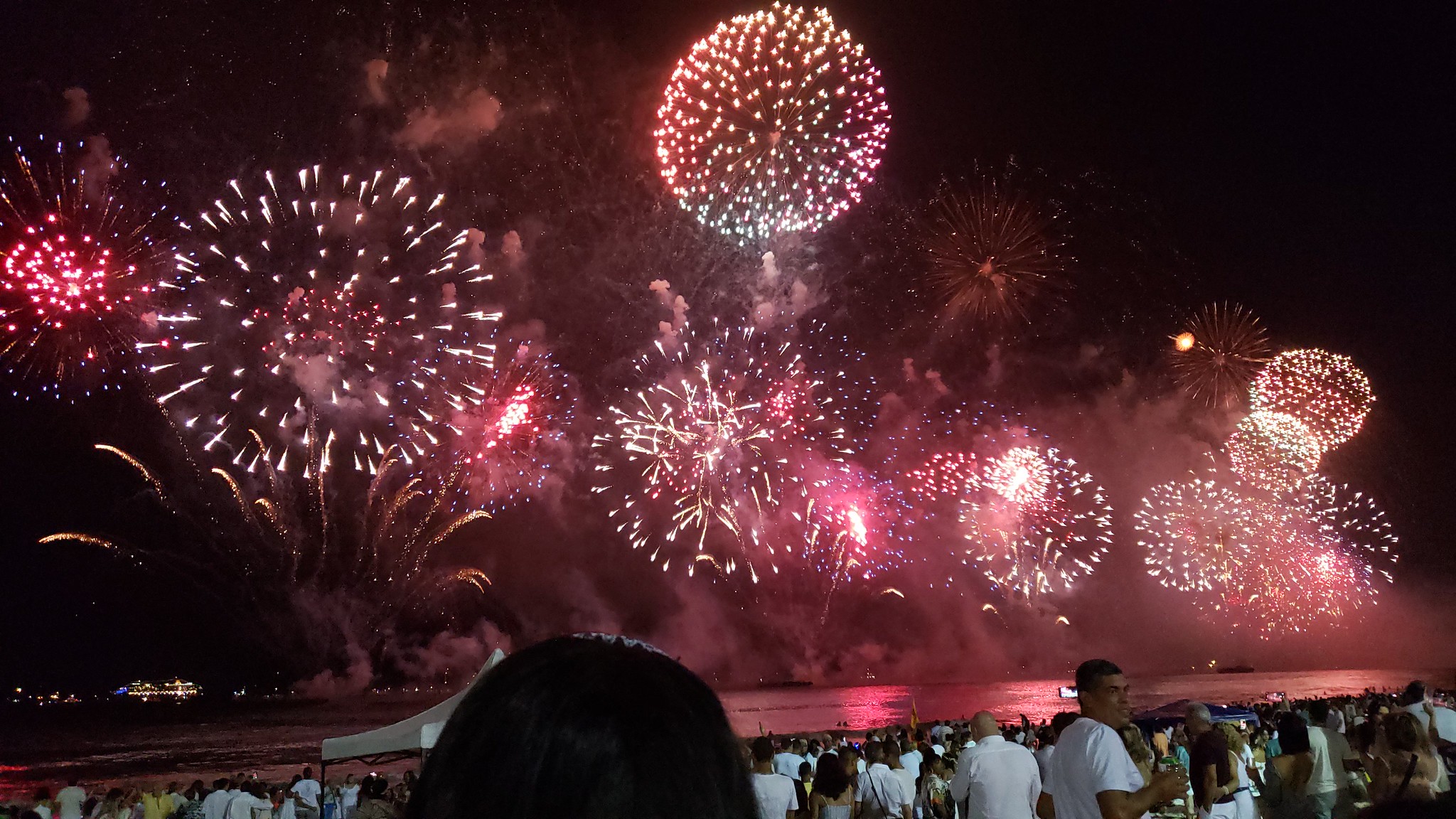
As midnight arrived, spectacular fireworks erupted over the Atlantic Ocean, lighting up the entire coastline. The cheers, the music, the excitement, and the joy of celebrating with our family and friends made it one of the most magical moments of our travels.
Welcoming the New Year on Copacabana Beach is an experience we’ll never forget. It wasn’t just a fireworks show, it was a celebration of life, hope, and new beginnings shared with people from every corner of the world.
Day 3 – Discovering Rio’s Iconic Landmarks
“From one of the New Seven Wonders of the World to sweeping views over the city, today was all about experiencing the landmarks that define Rio de Janeiro.”
After the excitement of New Year’s Eve, we set out to explore some of Rio’s most iconic attractions on a full-day guided tour. The city revealed itself layer by layer from world-famous sports venues and historic monuments to breathtaking viewpoints high above the coastline.
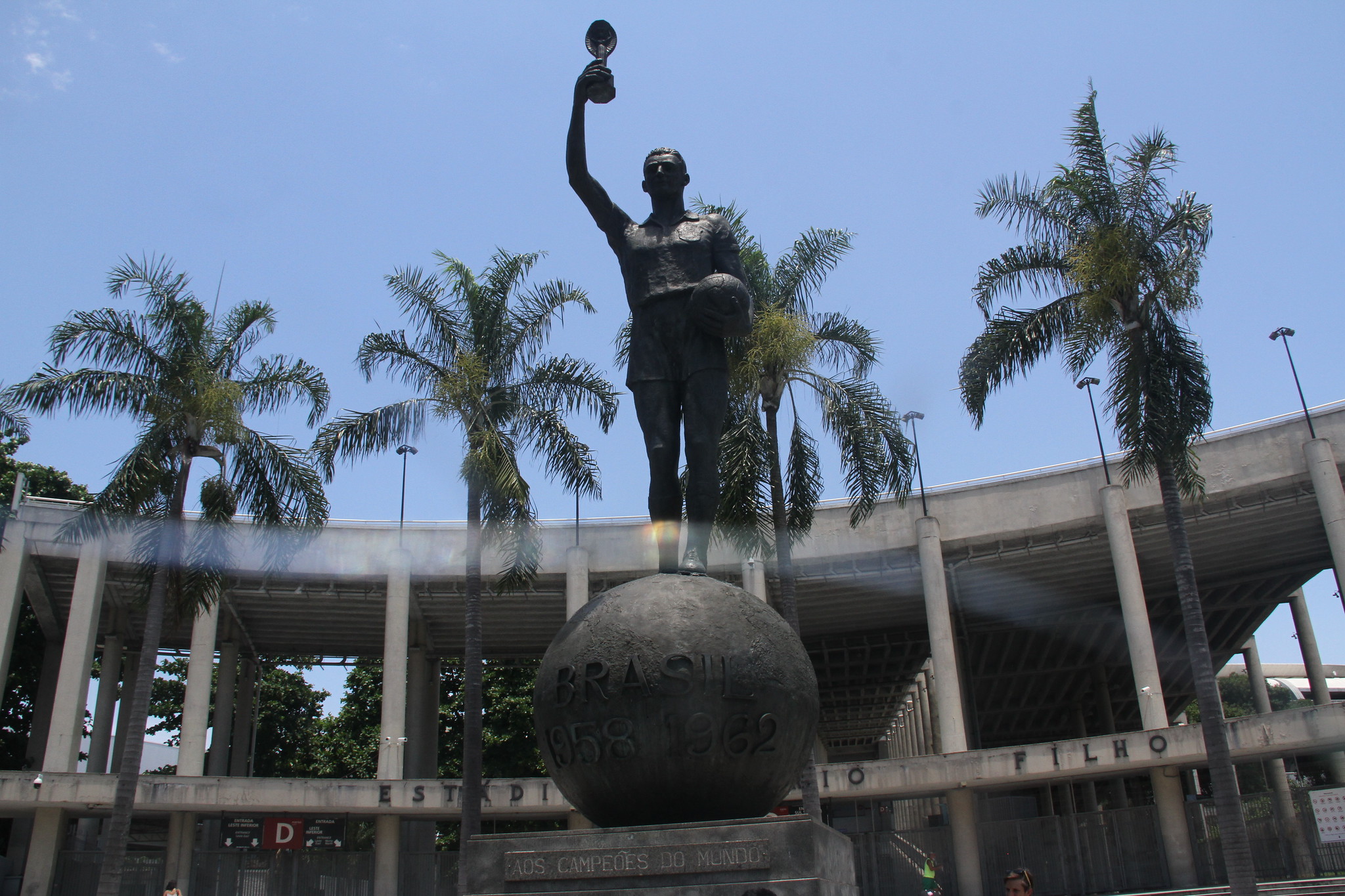
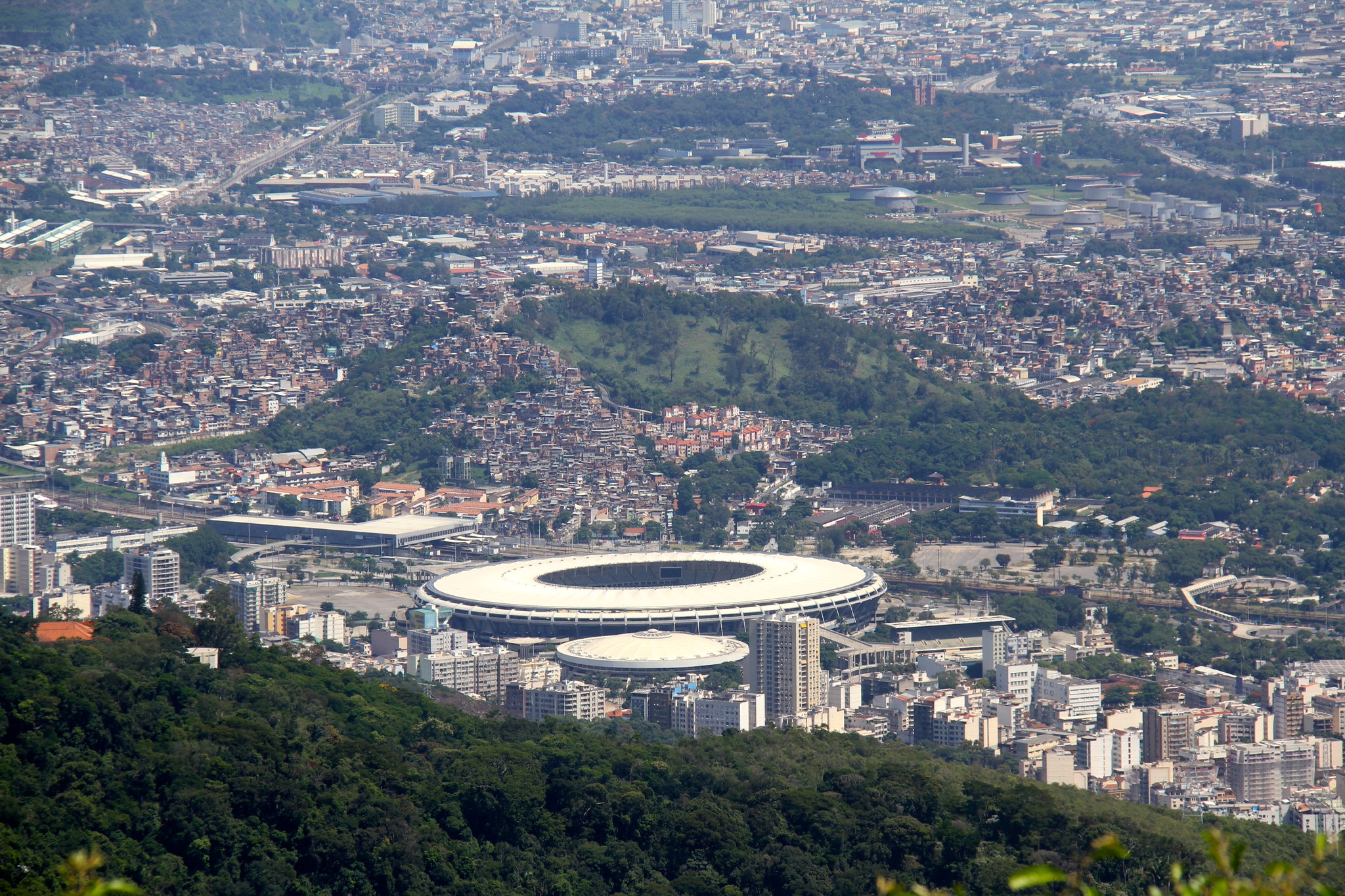
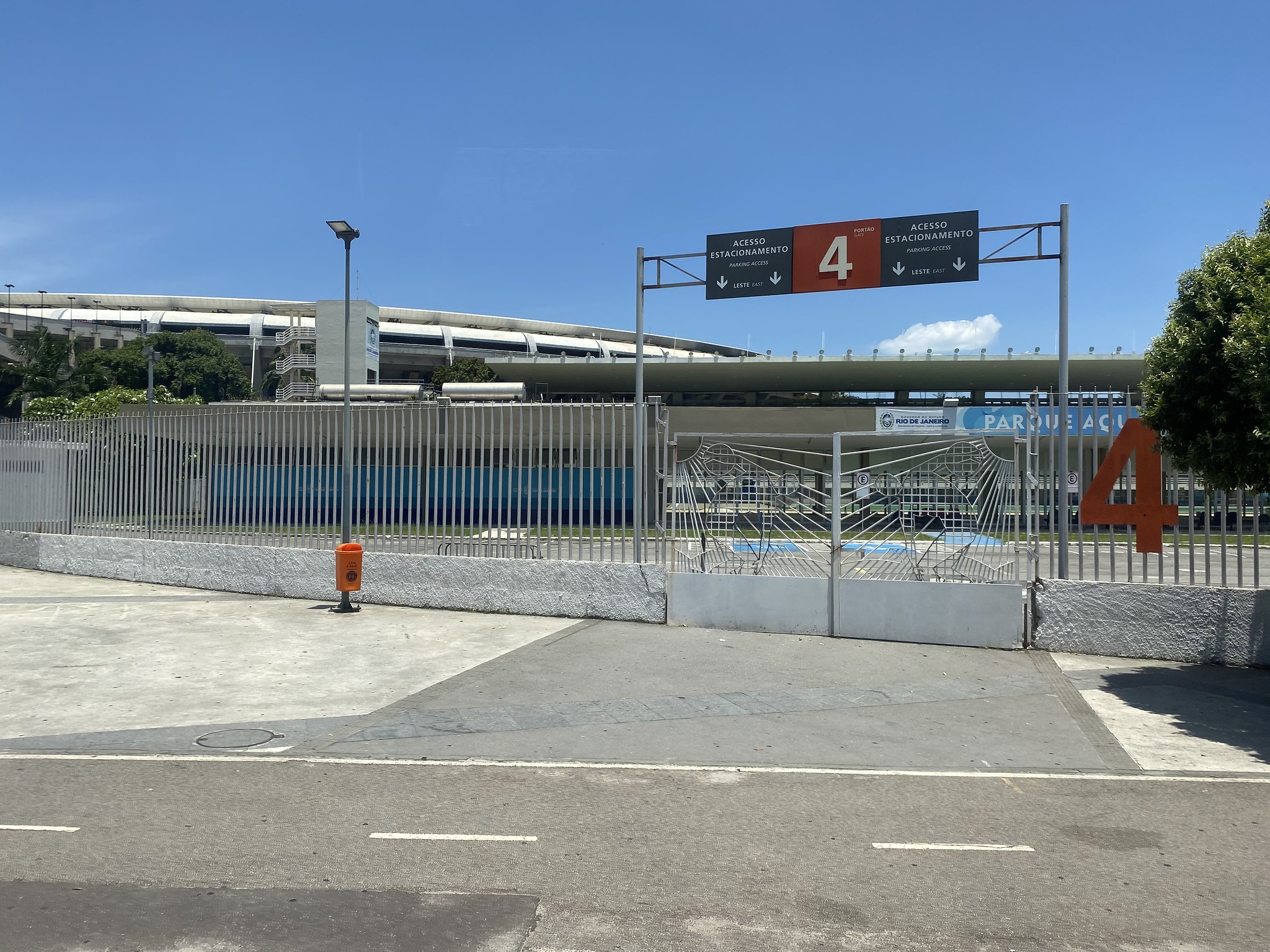
Our first stop was the legendary Maracanã Stadium, one of the most famous football stadiums in the world. We viewed it from the outside, where its scale alone reflects the passion Brazil has for the sport. This iconic venue has hosted FIFA World Cup finals, Olympic events, and countless unforgettable matches.
While taking photos near the statues outside the stadium, we briefly placed our bag aside—a small habit we had picked up during travel. Our guide immediately noticed and rushed over to secure it, reminding us how important it is to stay alert in busy tourist areas. It was a timely reminder that made us more cautious for the rest of the day.
Shortly after, my Canon DSLR camera slipped from my hands and hit the ground. For a moment, my heart stopped—but fortunately, only the protective lens filter shattered while the lens itself remained completely safe. It was a small accident that could have easily been much worse.
Next, we made our way to the highlight of the day – Christ the Redeemer.
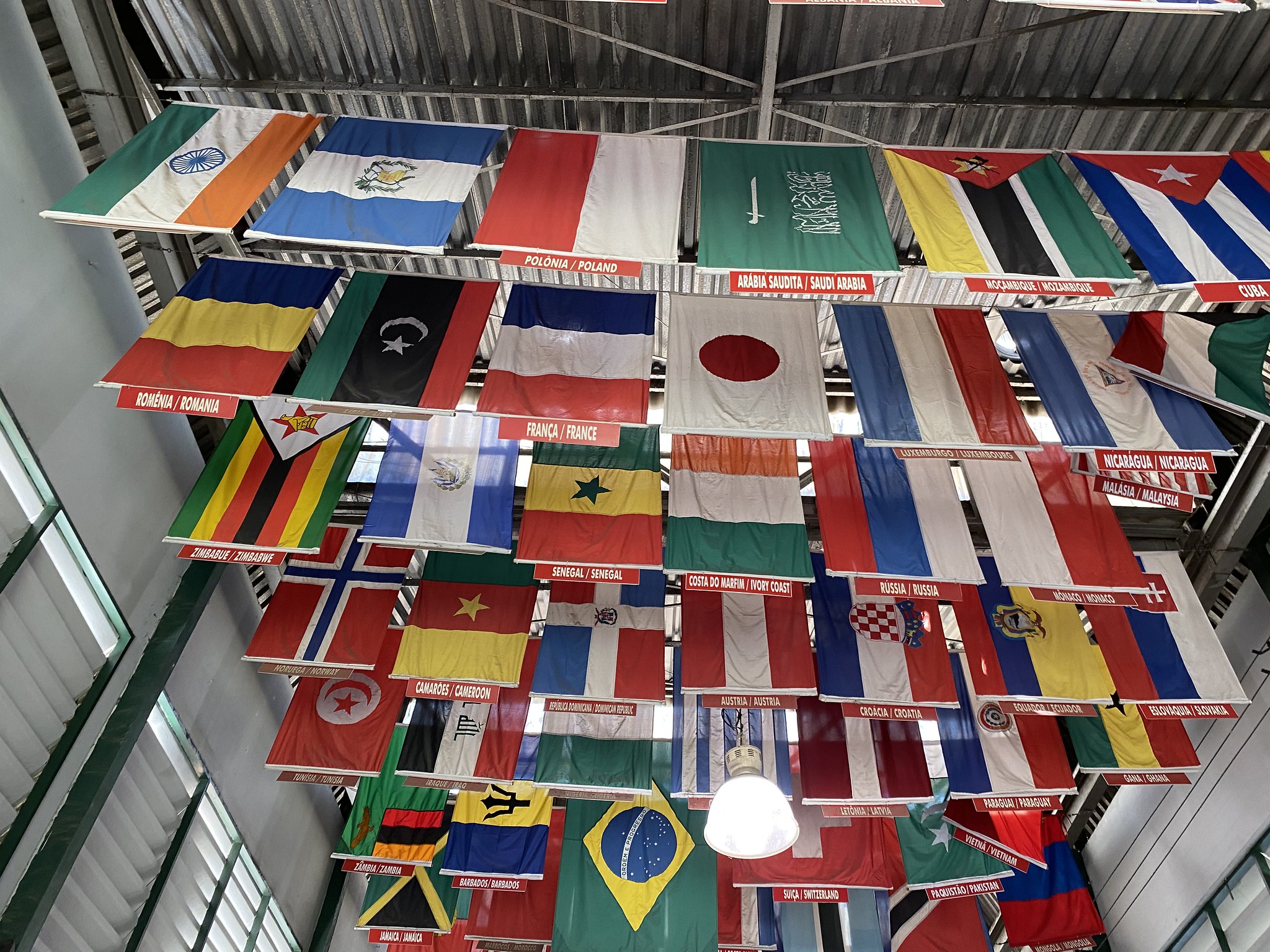
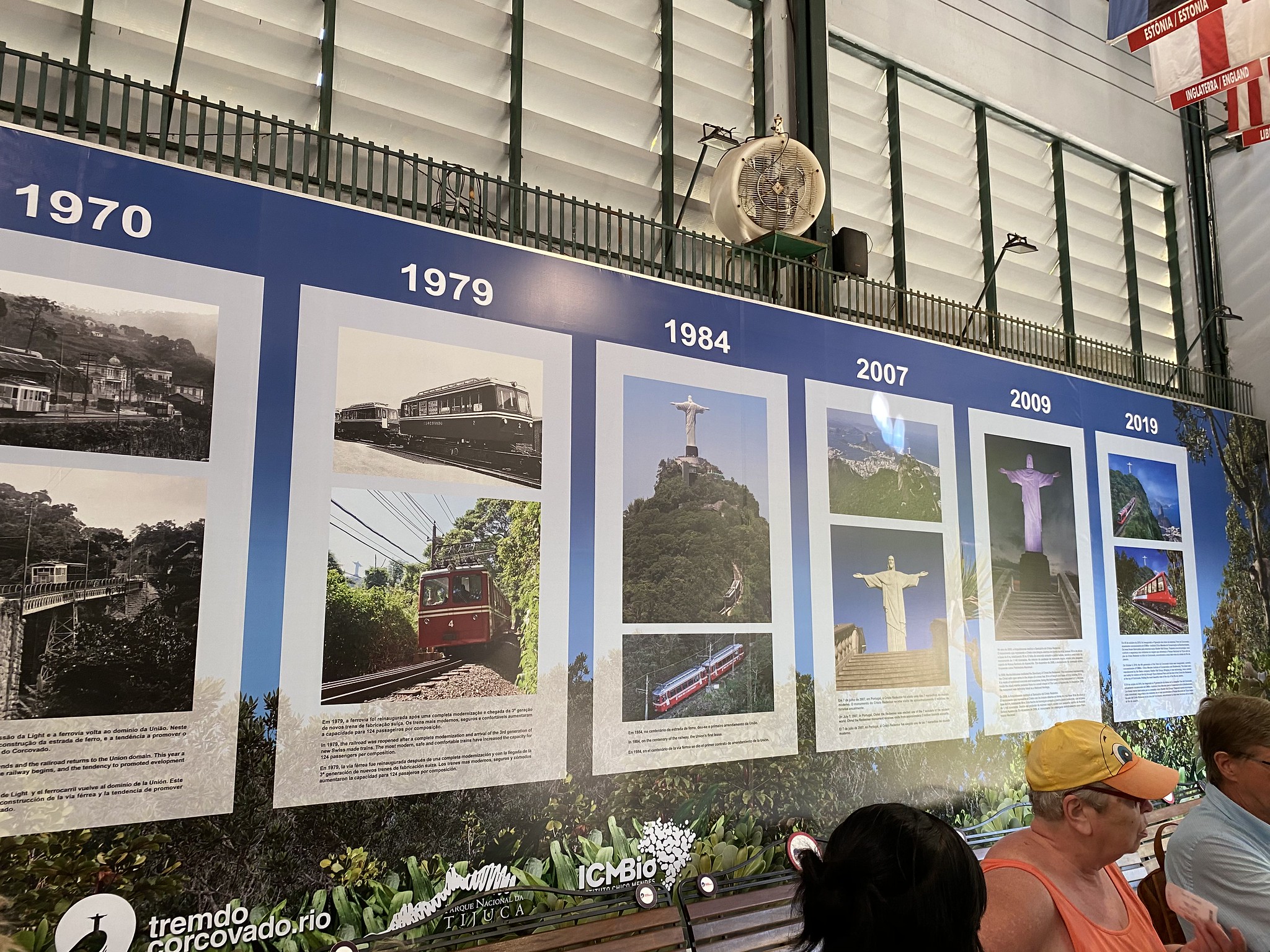
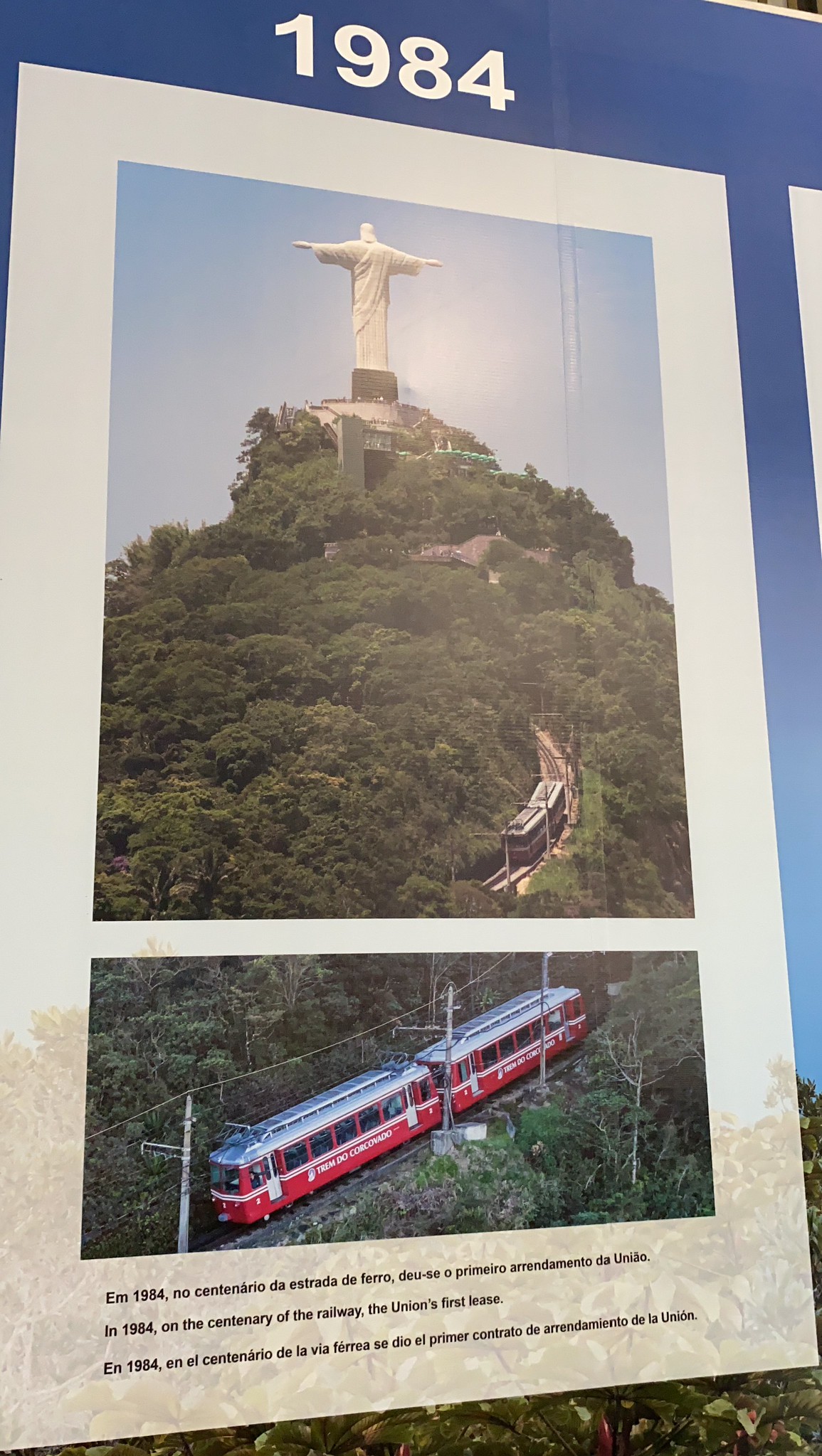
The journey began with the historic Corcovado Train, which climbs through the lush greenery of Tijuca National Park, one of the largest urban rain forests in the world. While waiting at the station, we explored displays that explained the monument’s construction history and the decades of effort it took to complete one of Brazil’s most iconic landmarks.
As the train ascended slowly through the forest, we passed dense vegetation and even spotted jack fruit trees along the way. Our guide shared how jack fruit were introduced to Brazil over time and became part of the local landscape.
At the summit station, escalators led us up to the viewing platform beneath the statue.
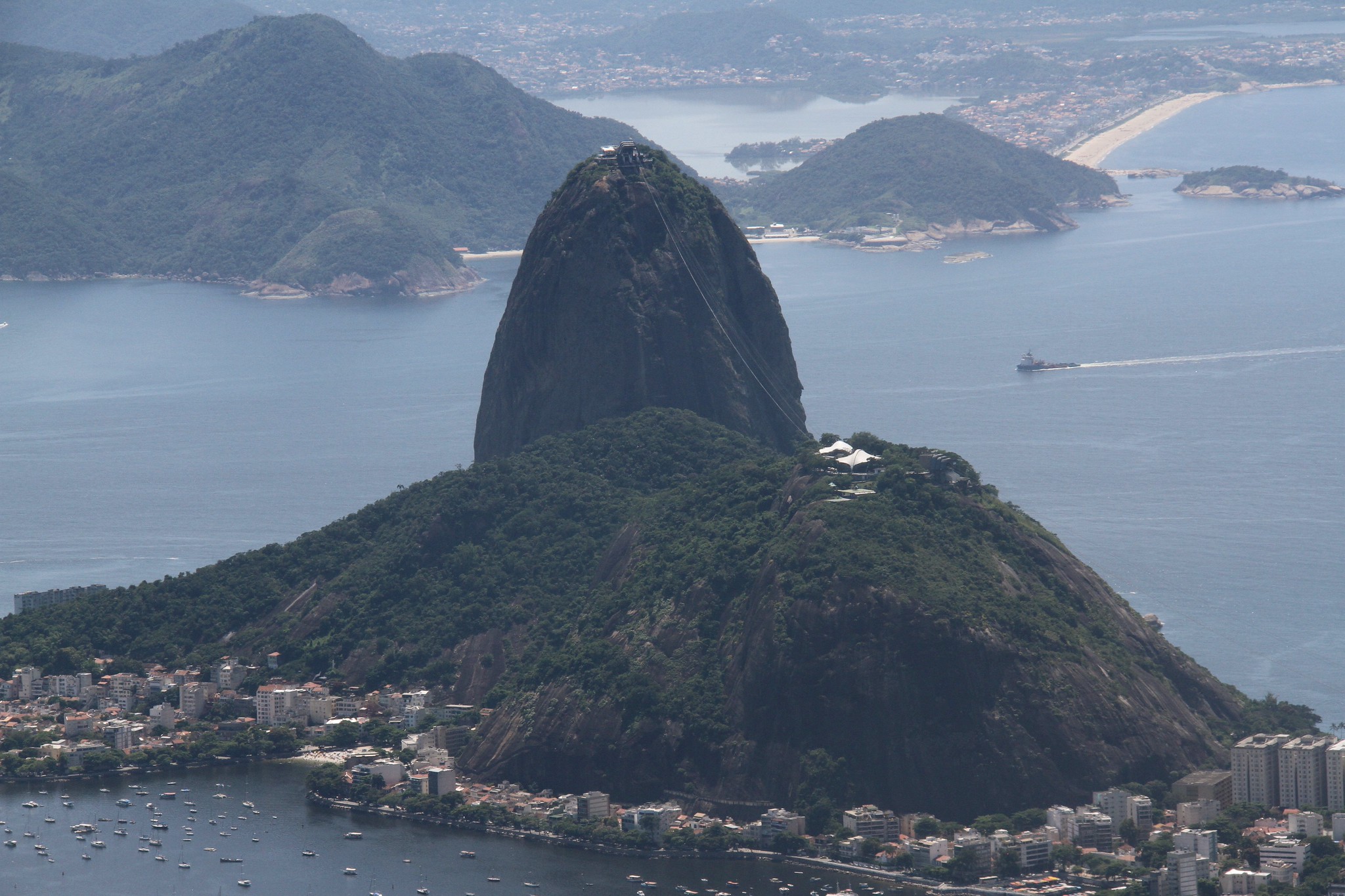
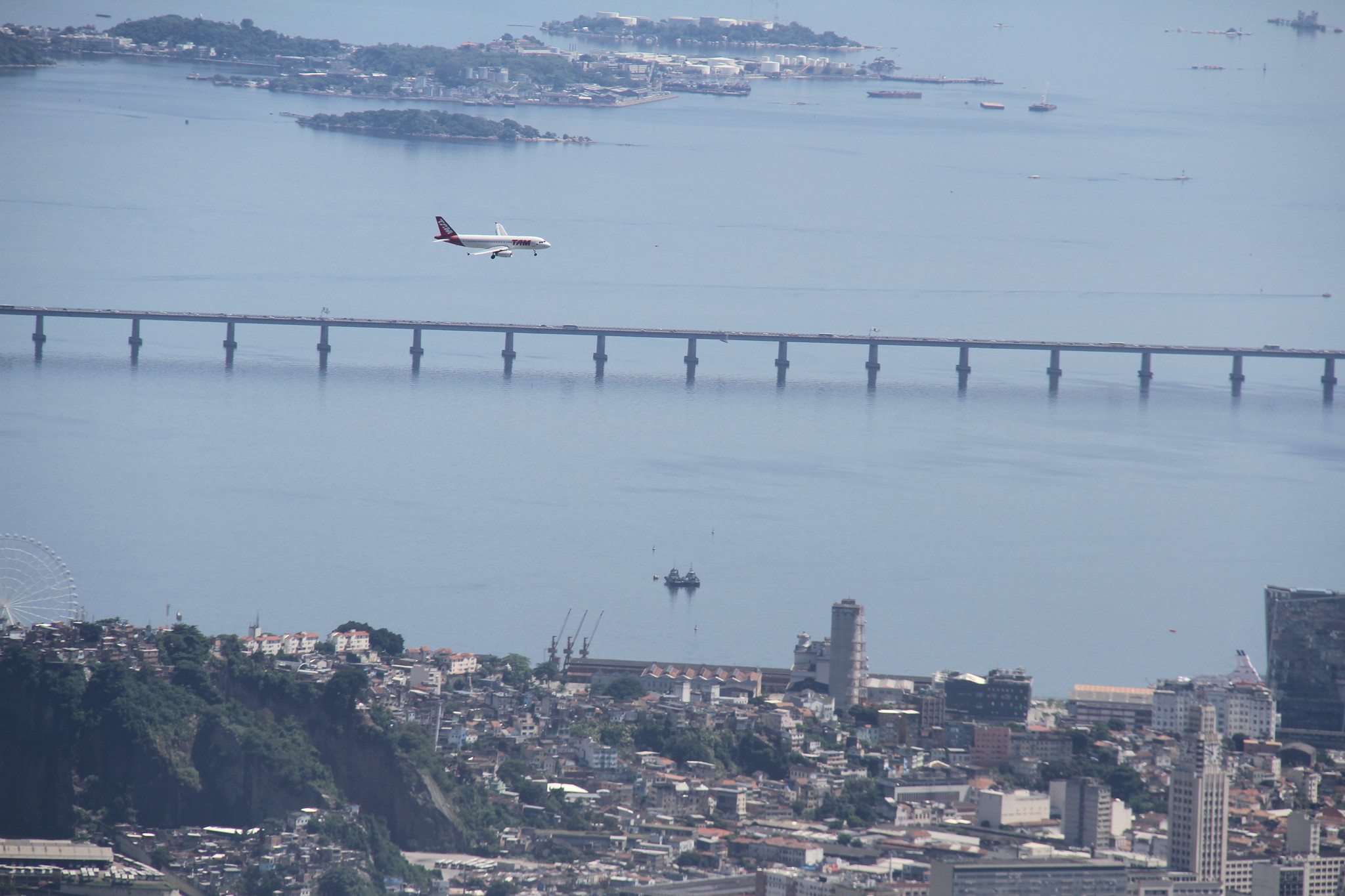
We were lucky with perfect weather, clear blue skies and bright sunshine revealed panoramic views of Rio stretching in every direction. From the top, we could clearly see Copacabana Beach, Guanabara Bay, Sugarloaf Mountain, and the surrounding hills that define the city’s dramatic landscape.
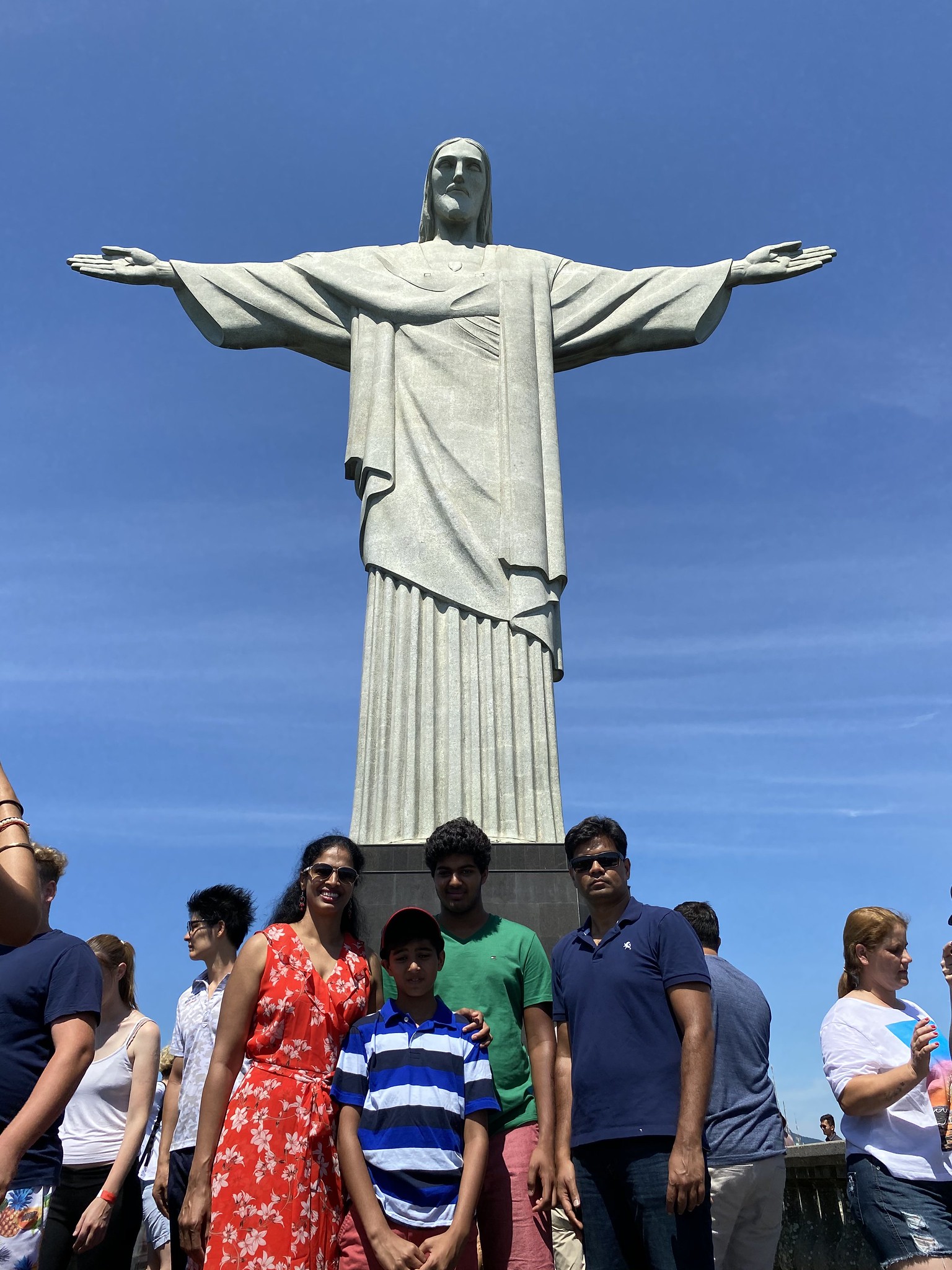
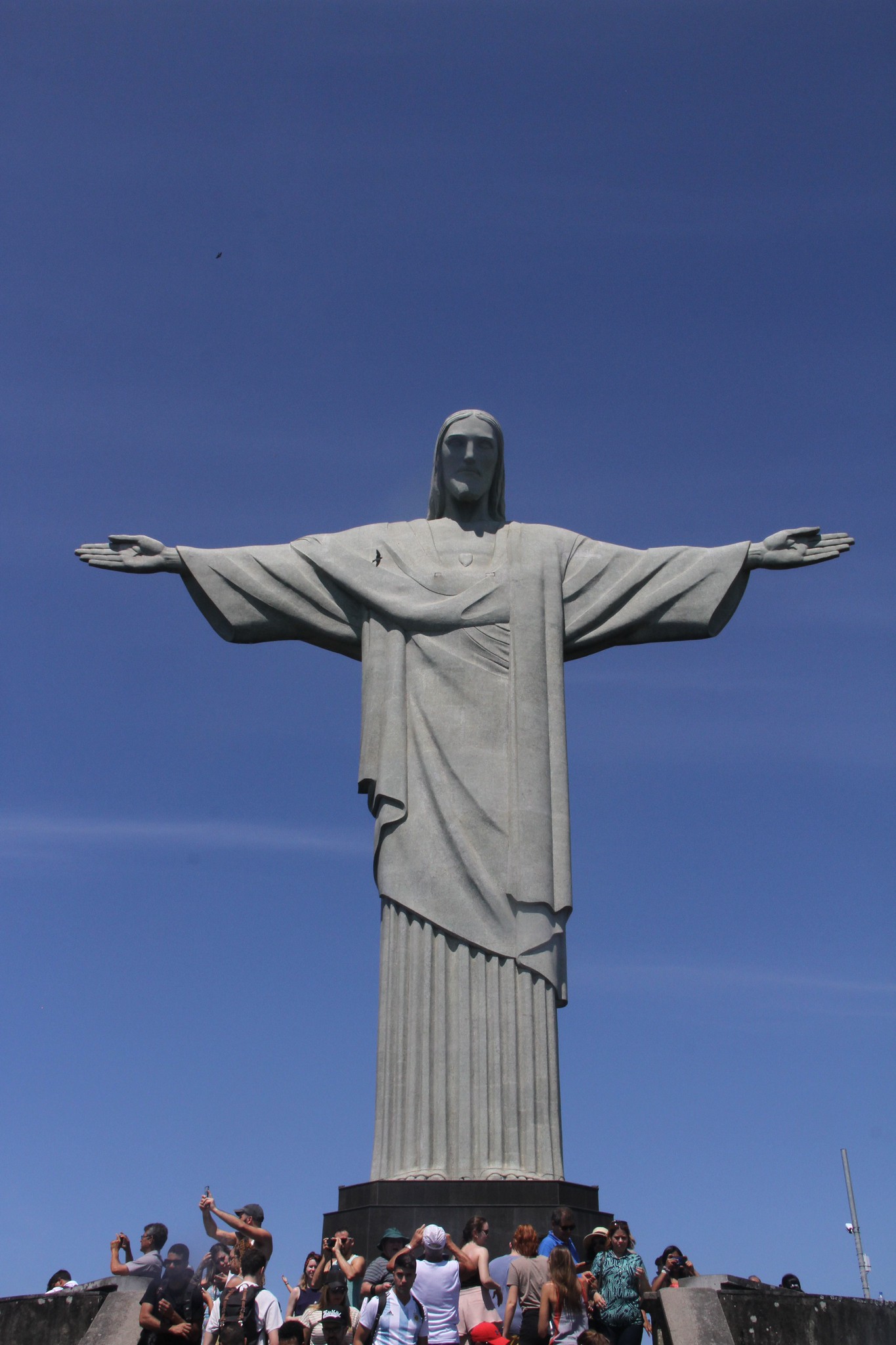
The viewing platform, however, was extremely crowded. Finding a clear shot without people in the background was nearly impossible. In the end, we used the 0.5x ultra-wide lens on our phone to capture a full group photo with the statue, resulting in a fun, slightly exaggerated perspective that became one of our favorite pictures.
Of course, we also joined the classic pose, standing with arms stretched out beneath Christ the Redeemer, mirroring the statue above us.
The midday sun was intense, and after spending time at the top, everyone was grateful for cold water and a short break before continuing.
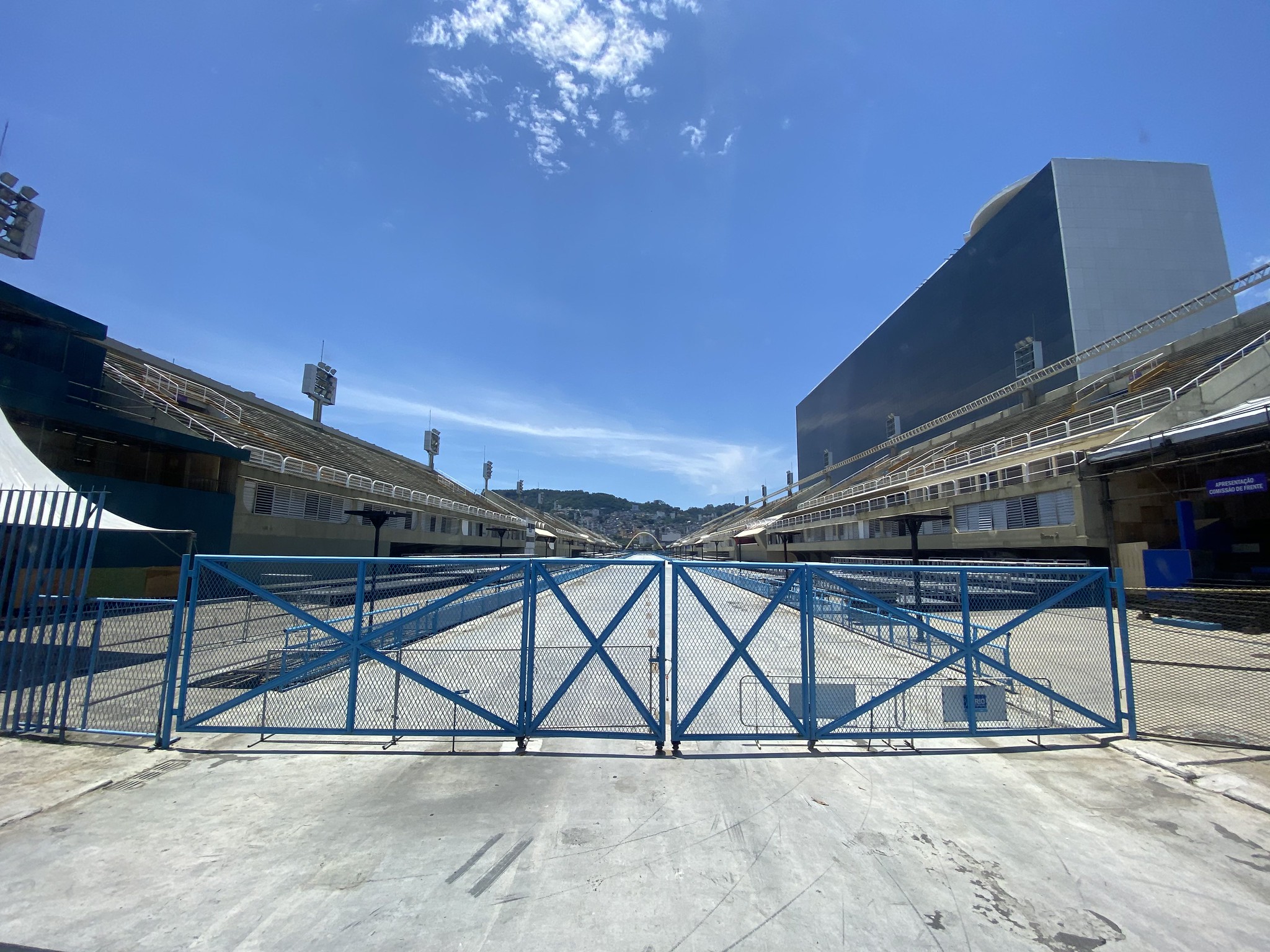
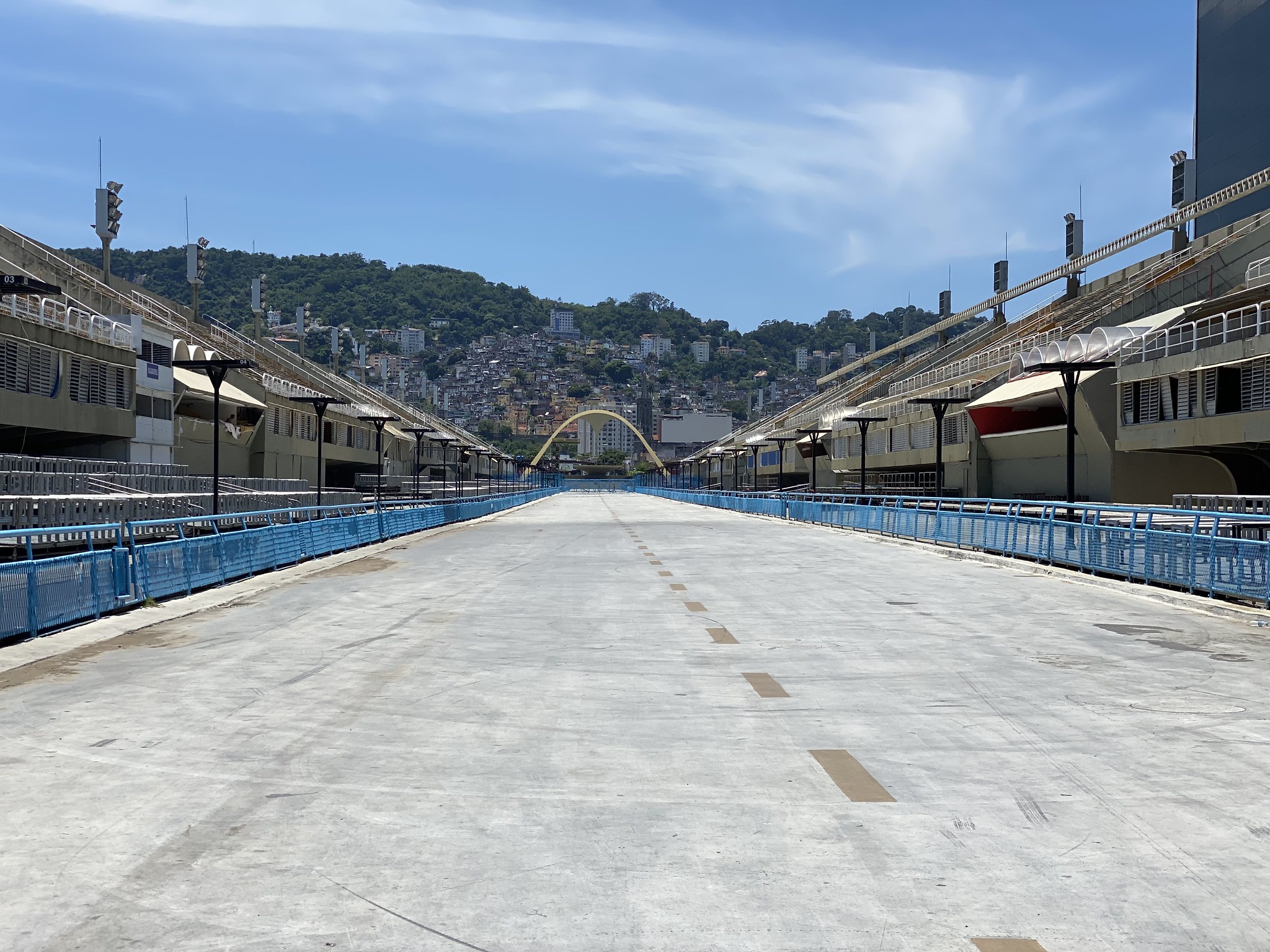
Our next stop was the Sambadrome, the famous parade avenue where Rio’s Carnival takes place each year. Looking at the empty stands, our guide explained how this space transforms during Carnival into one of the largest cultural festivals in the world, filled with samba schools, music, costumes, and elaborate floats.
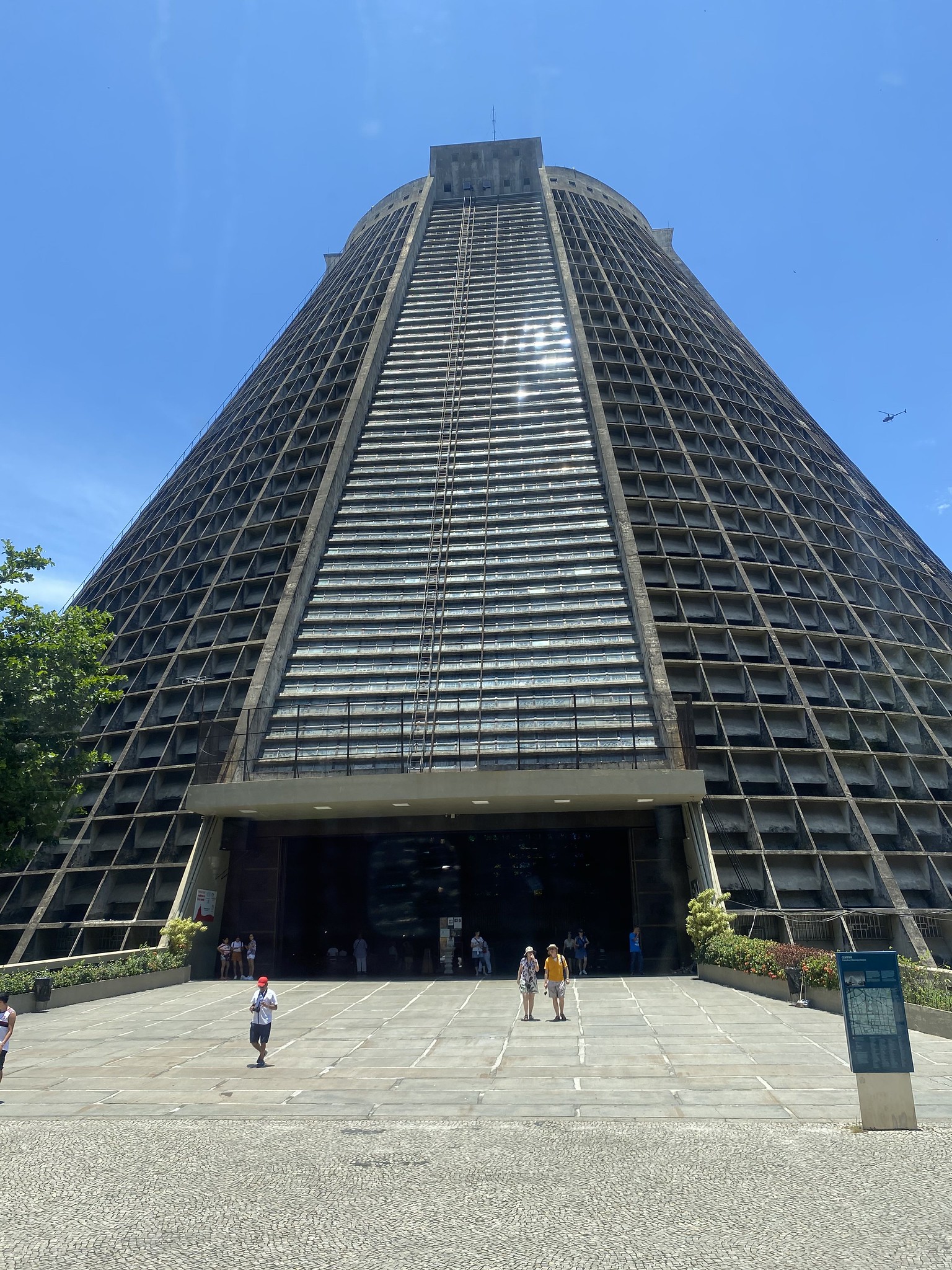
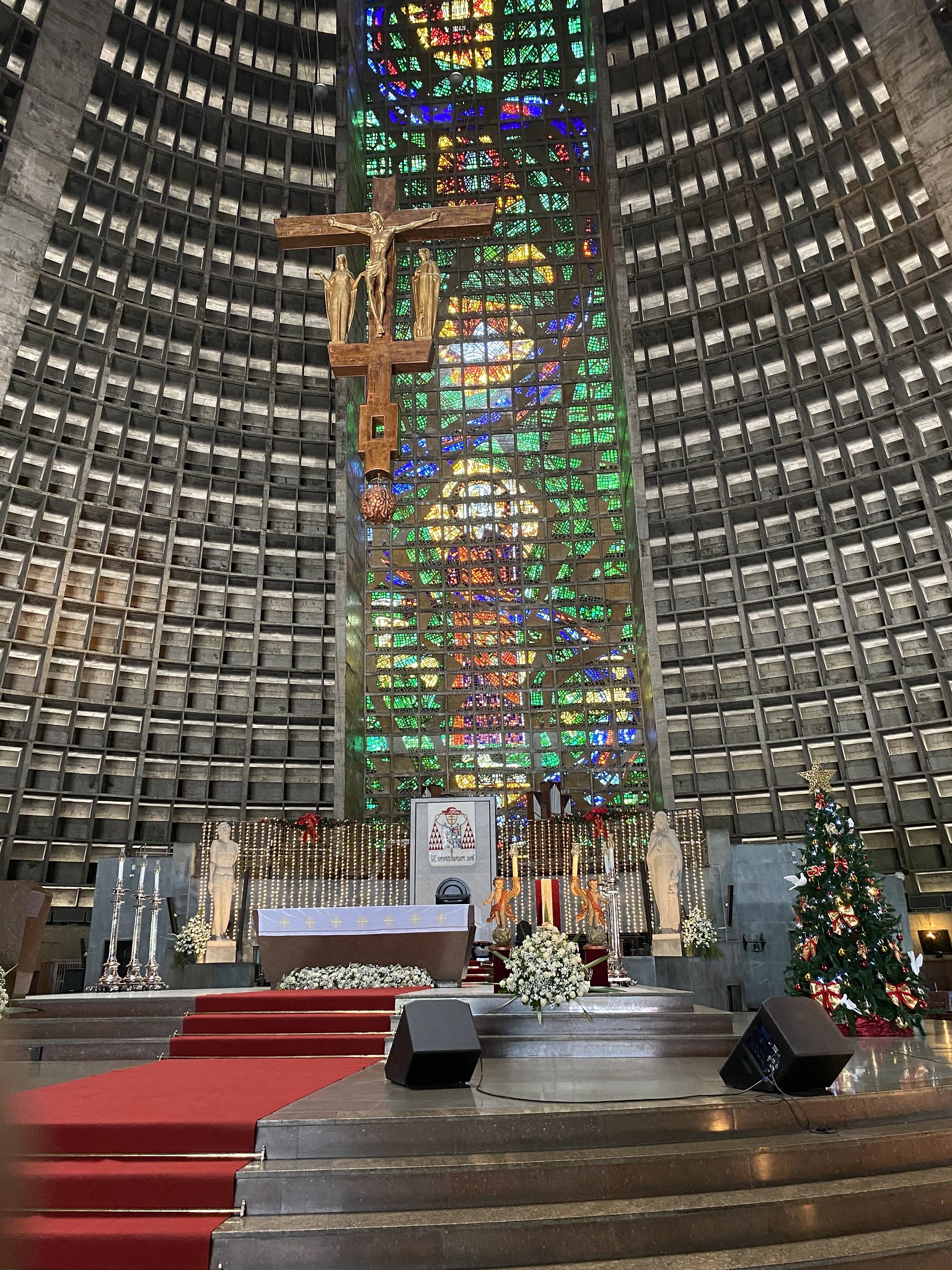
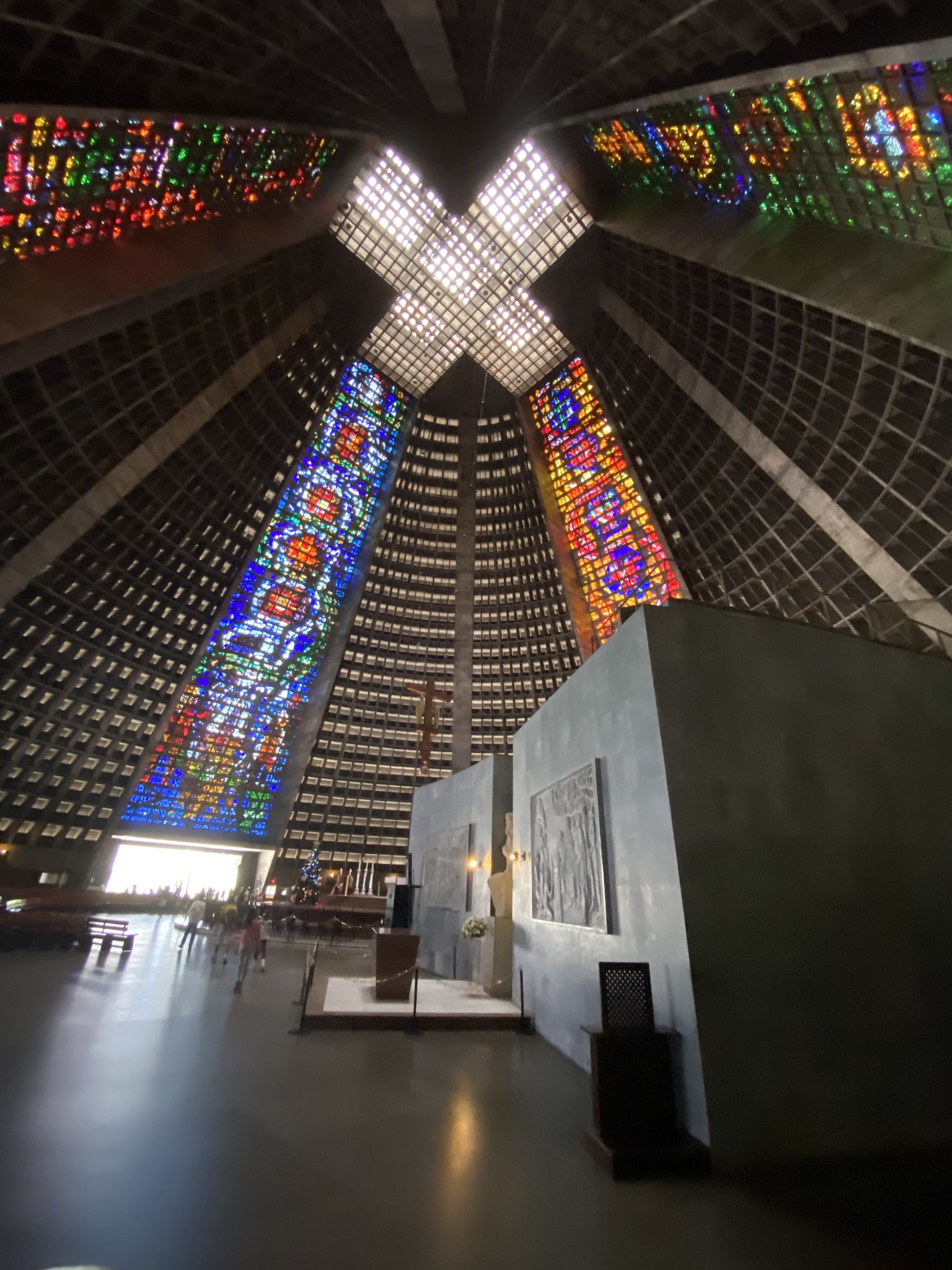
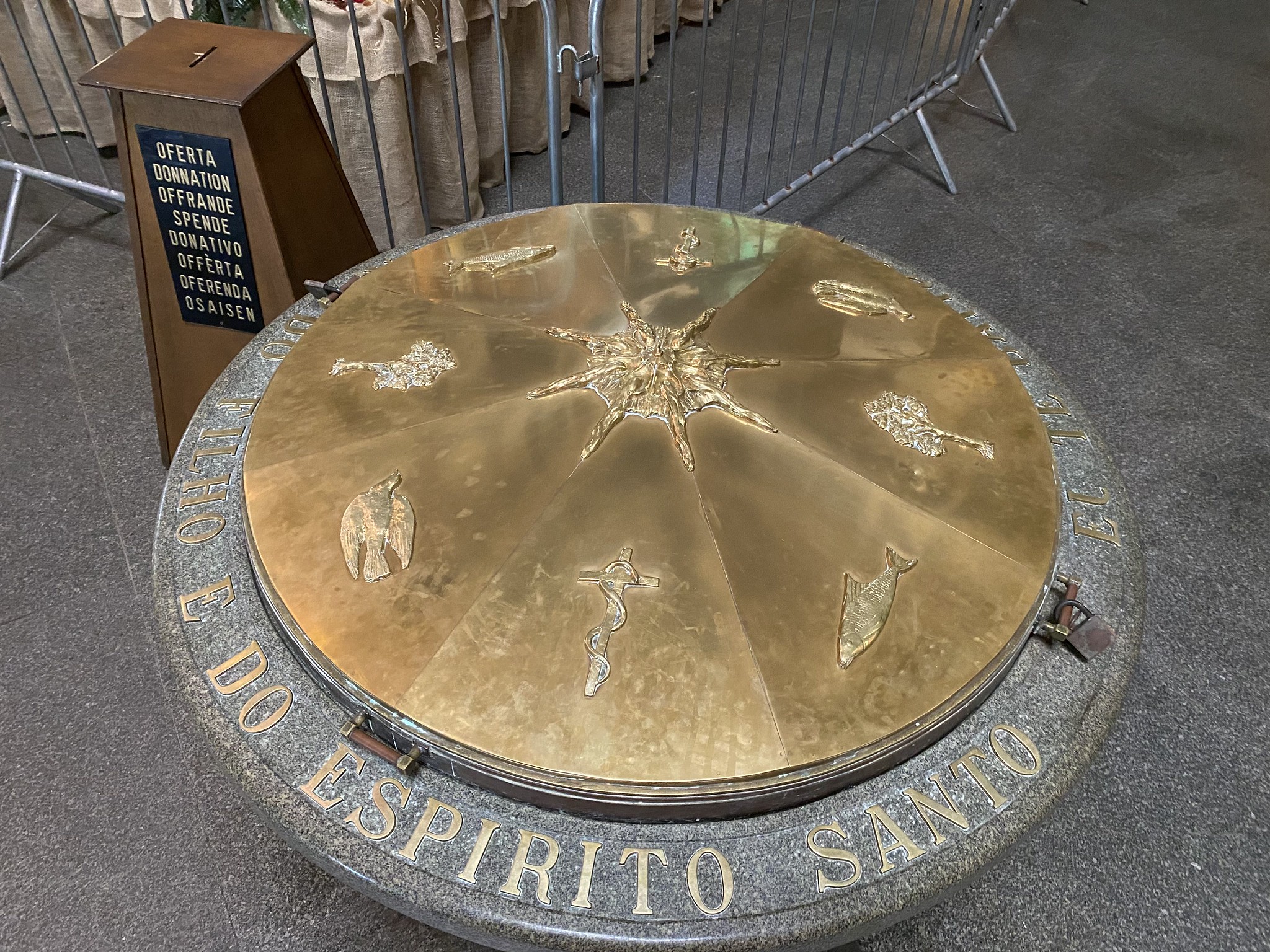
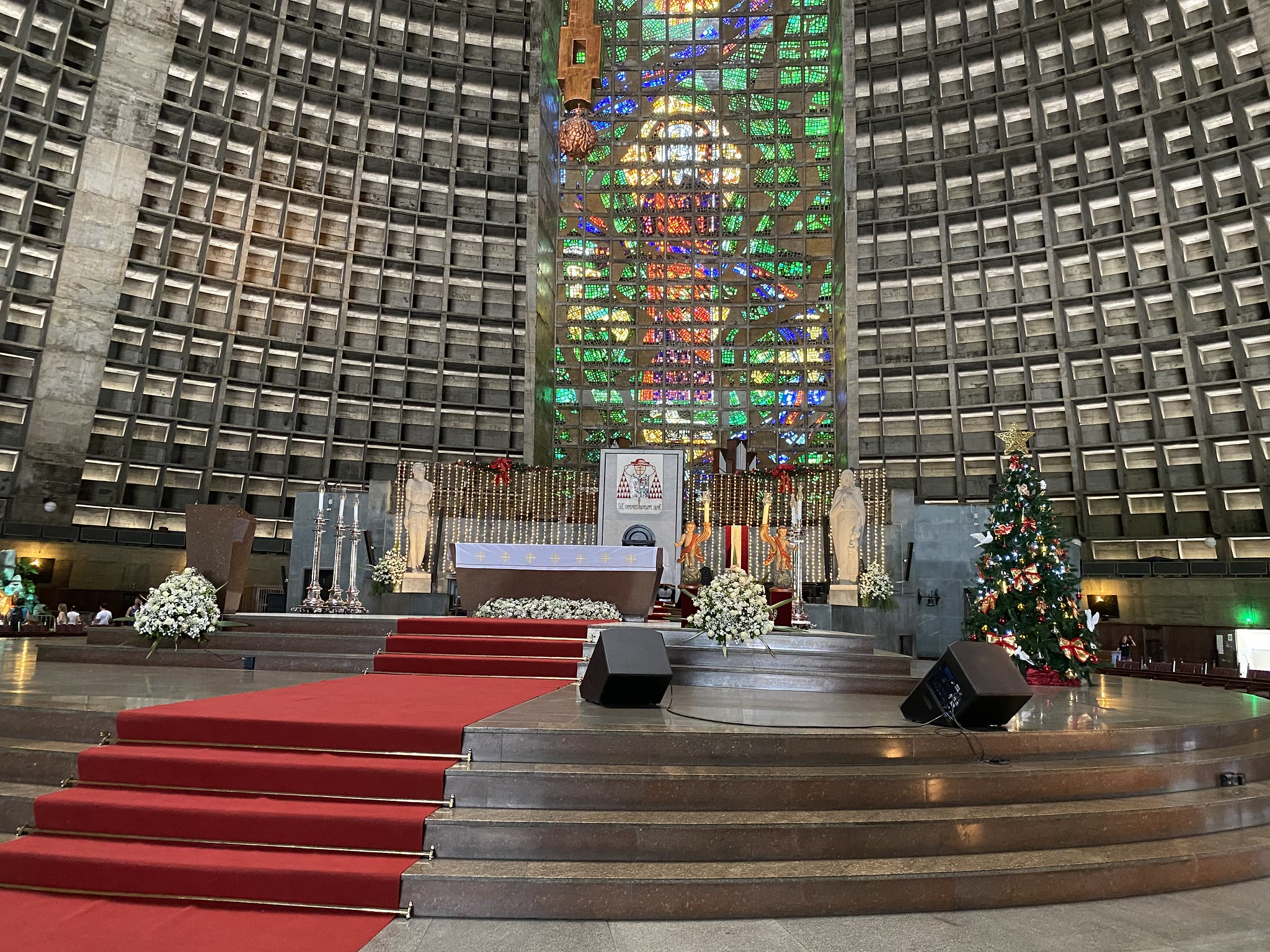
We then visited the striking Metropolitan Cathedral of Rio de Janeiro, a modern pyramid-shaped structure inspired by ancient Mayan architecture. After the heat outside, stepping inside felt refreshingly cool. The interior was stunning, with towering stained-glass windows that created a peaceful, colorful glow throughout the space.
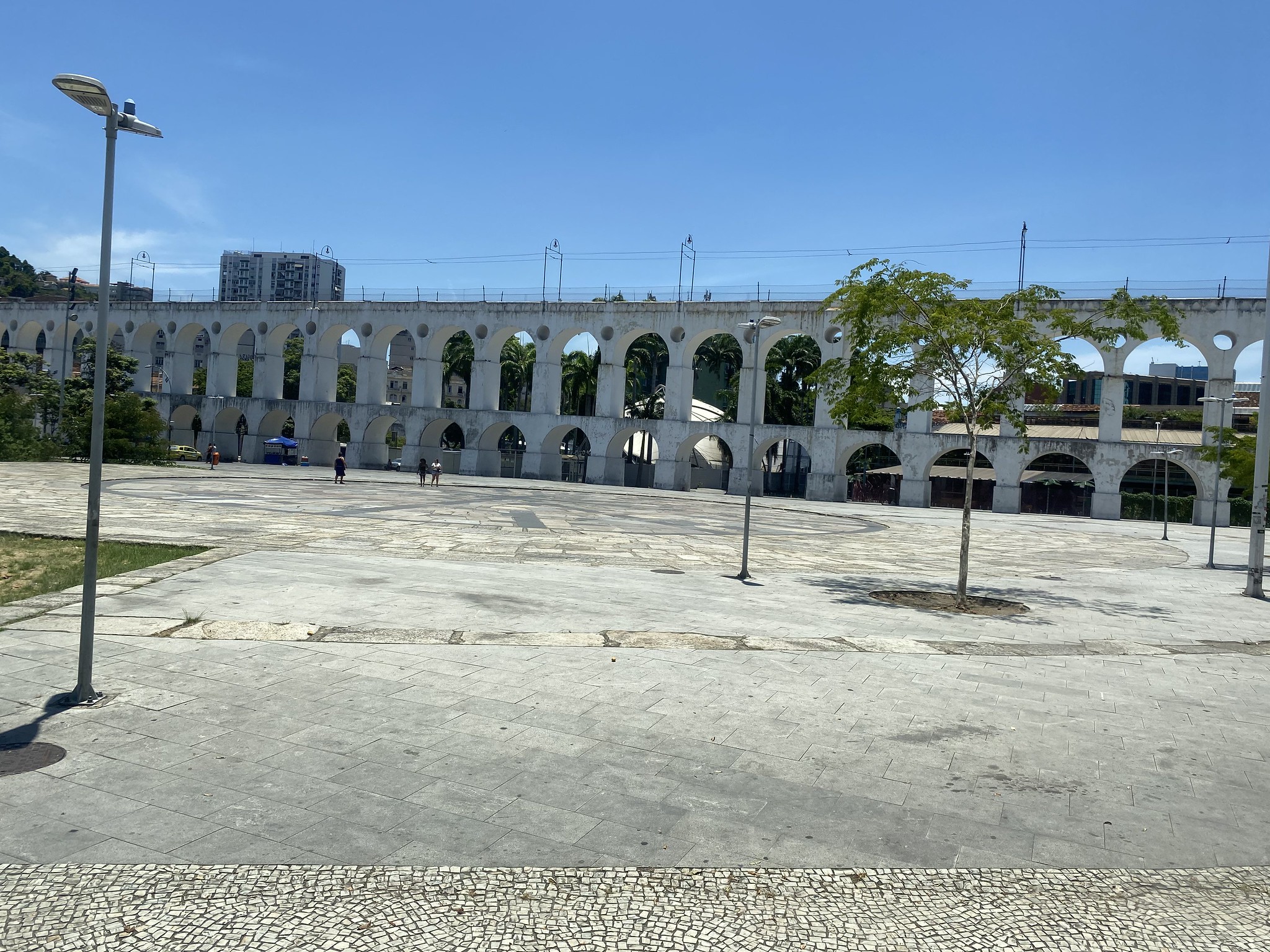
A short drive brought us to the historic Carioca Aqueduct (Arcos da Lapa), an 18th-century structure that once supplied water to the city and now stands as one of Rio’s most recognizable landmarks.
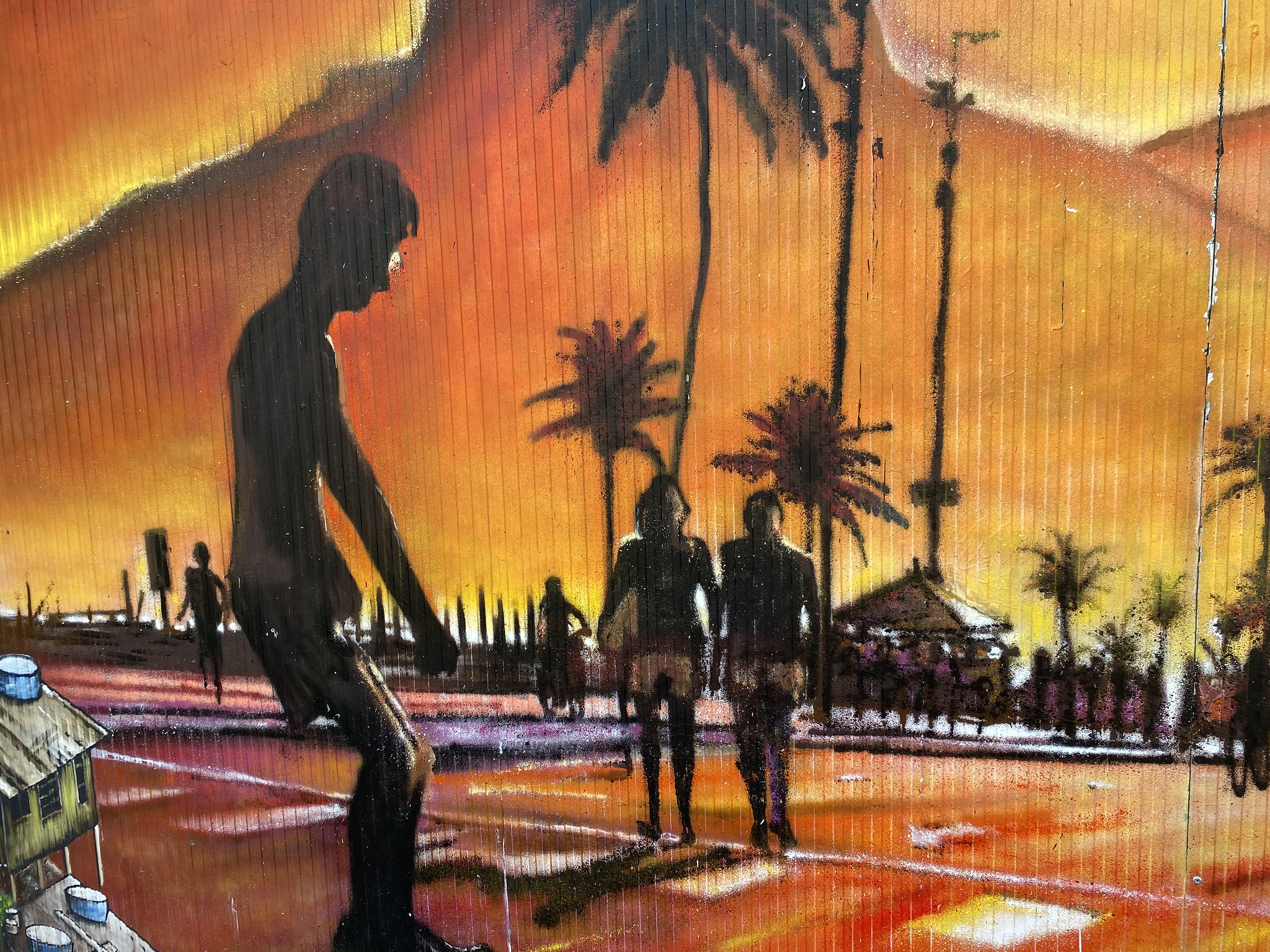
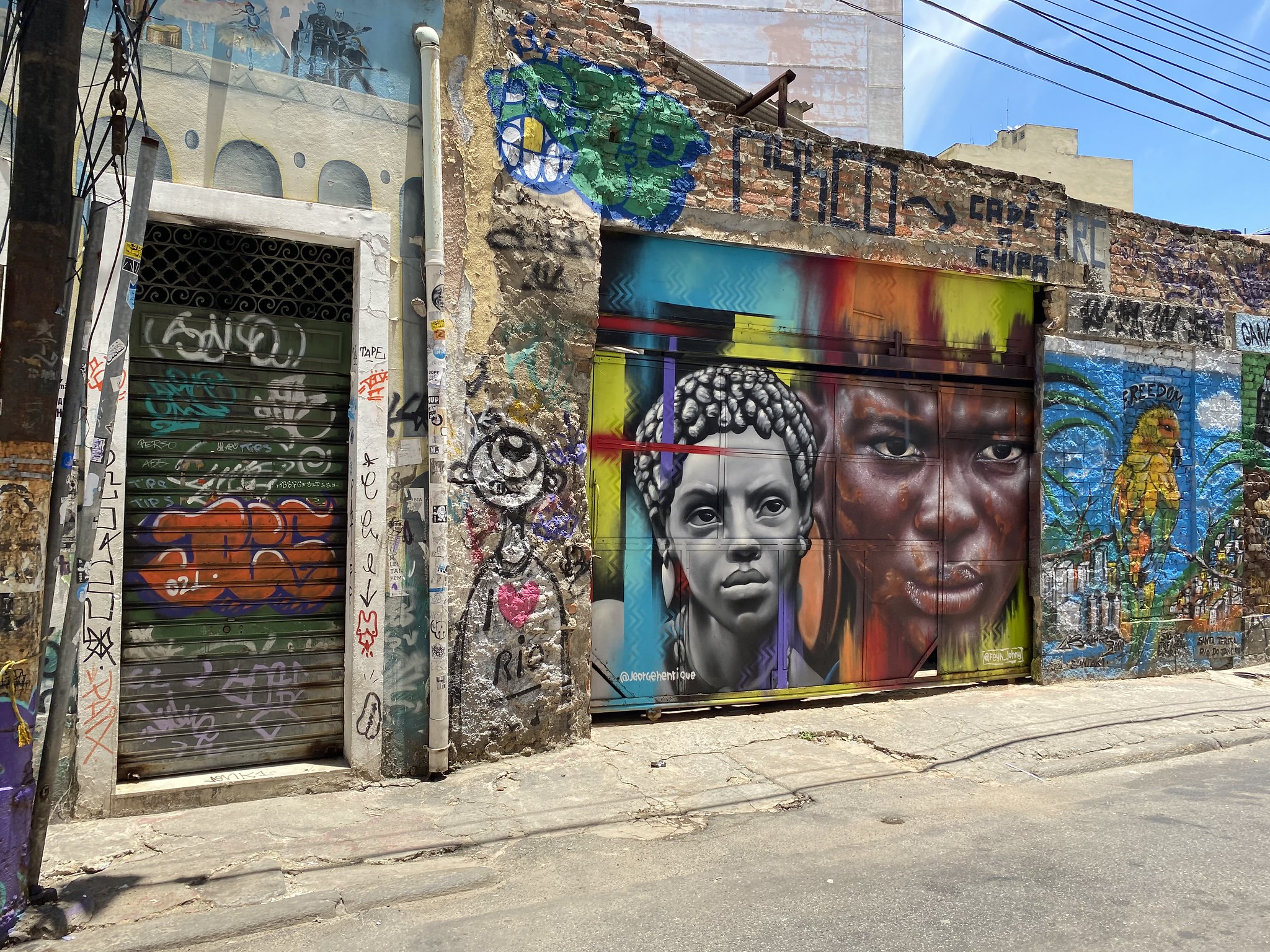
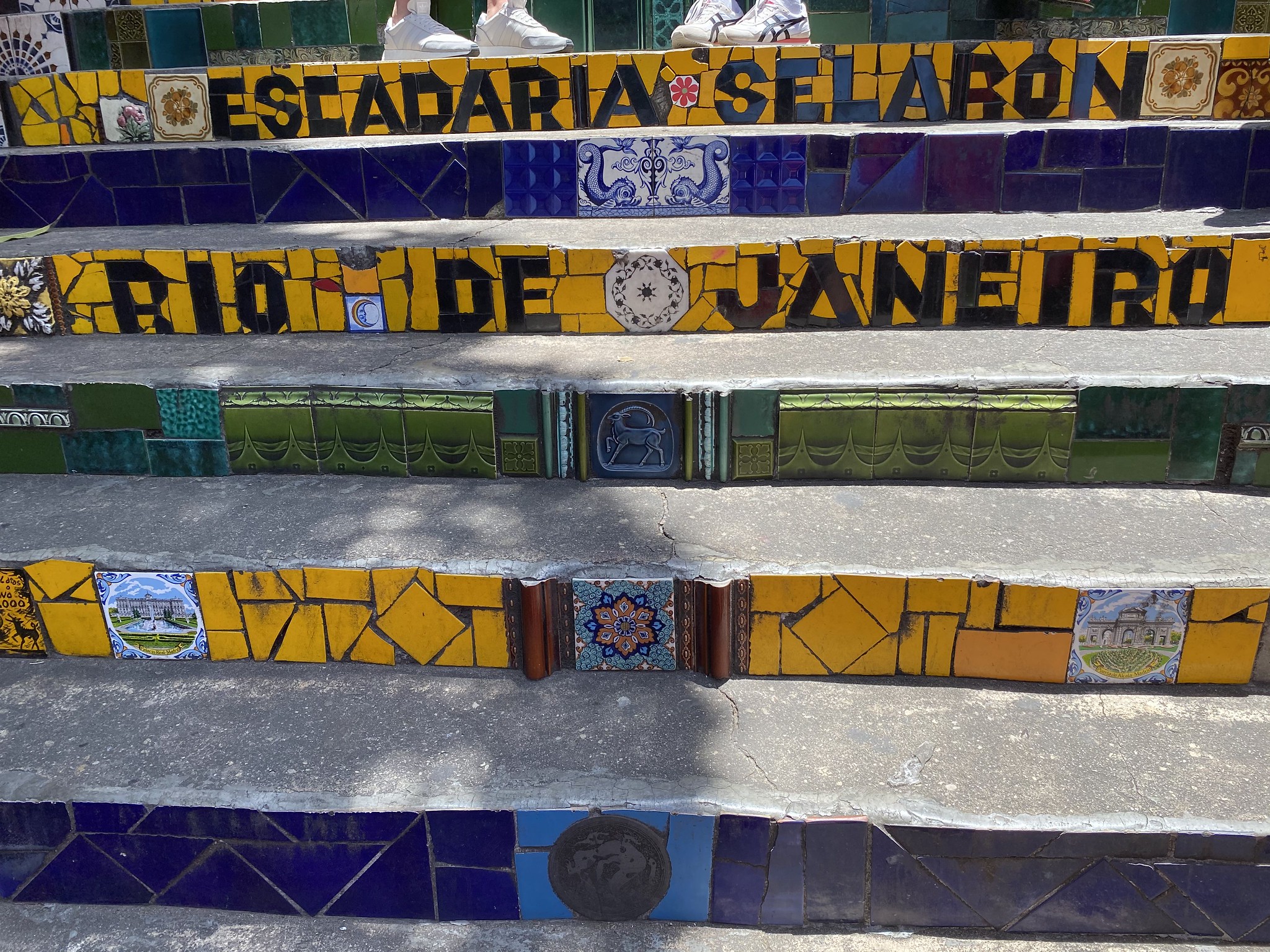
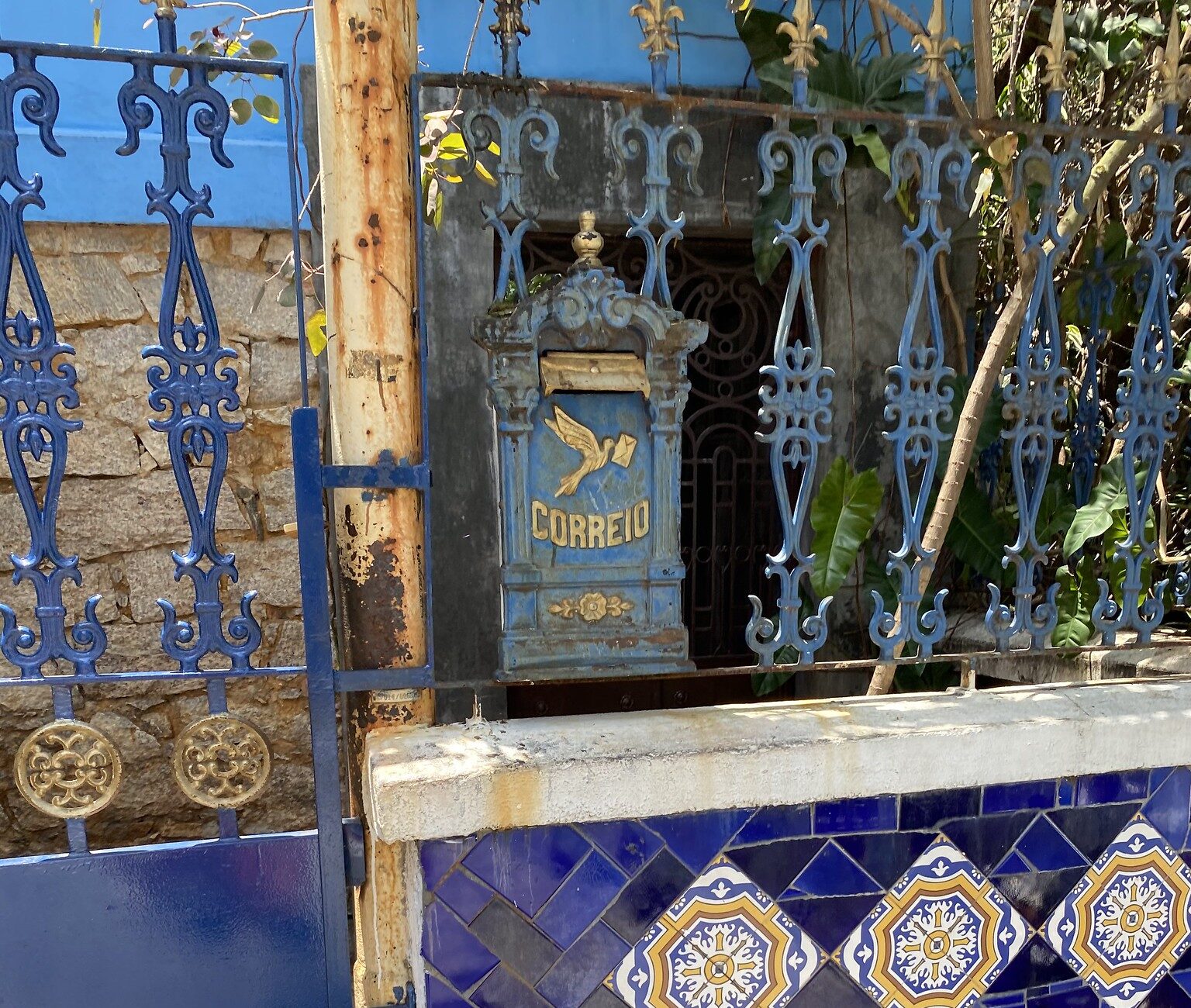
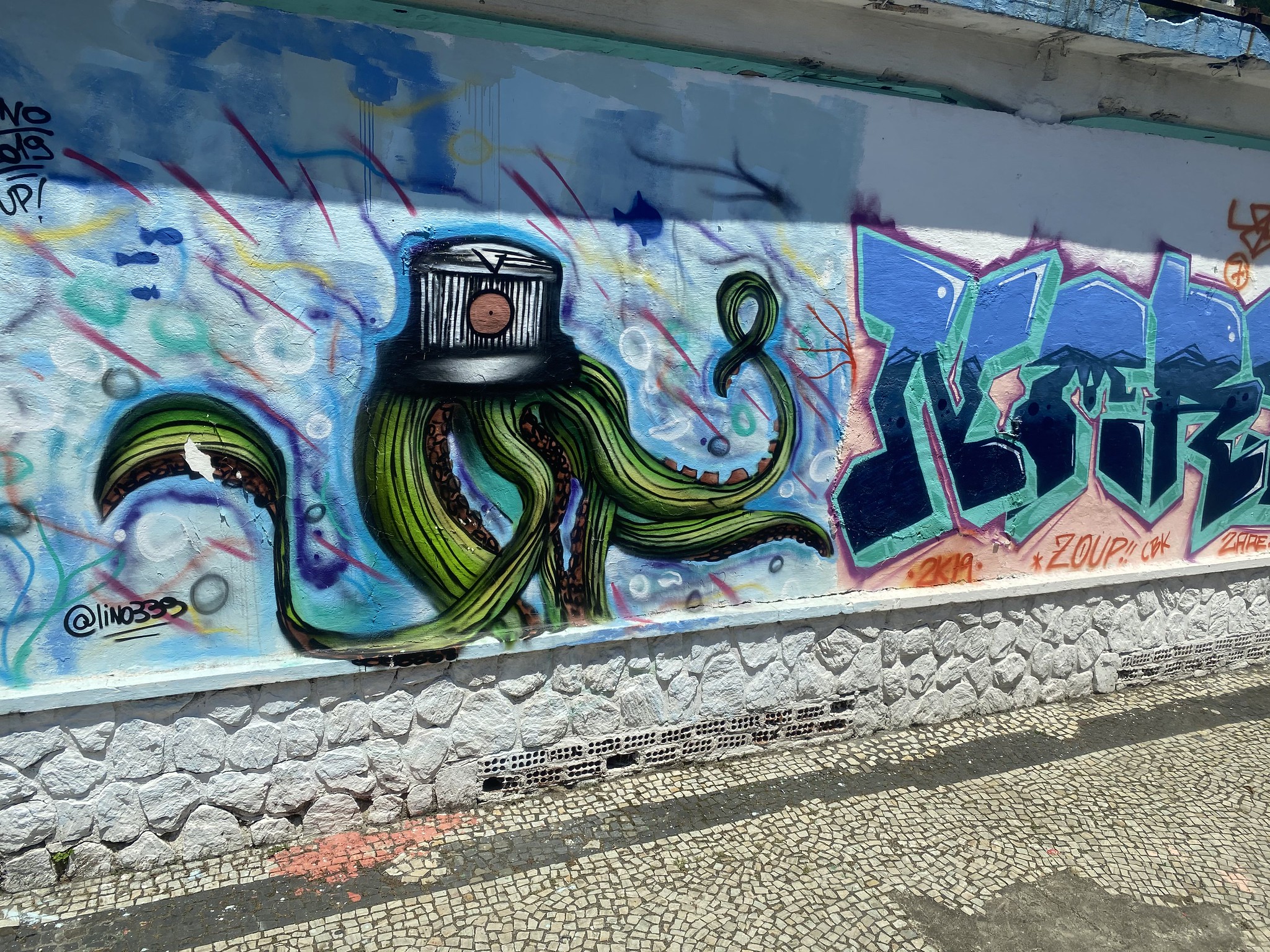
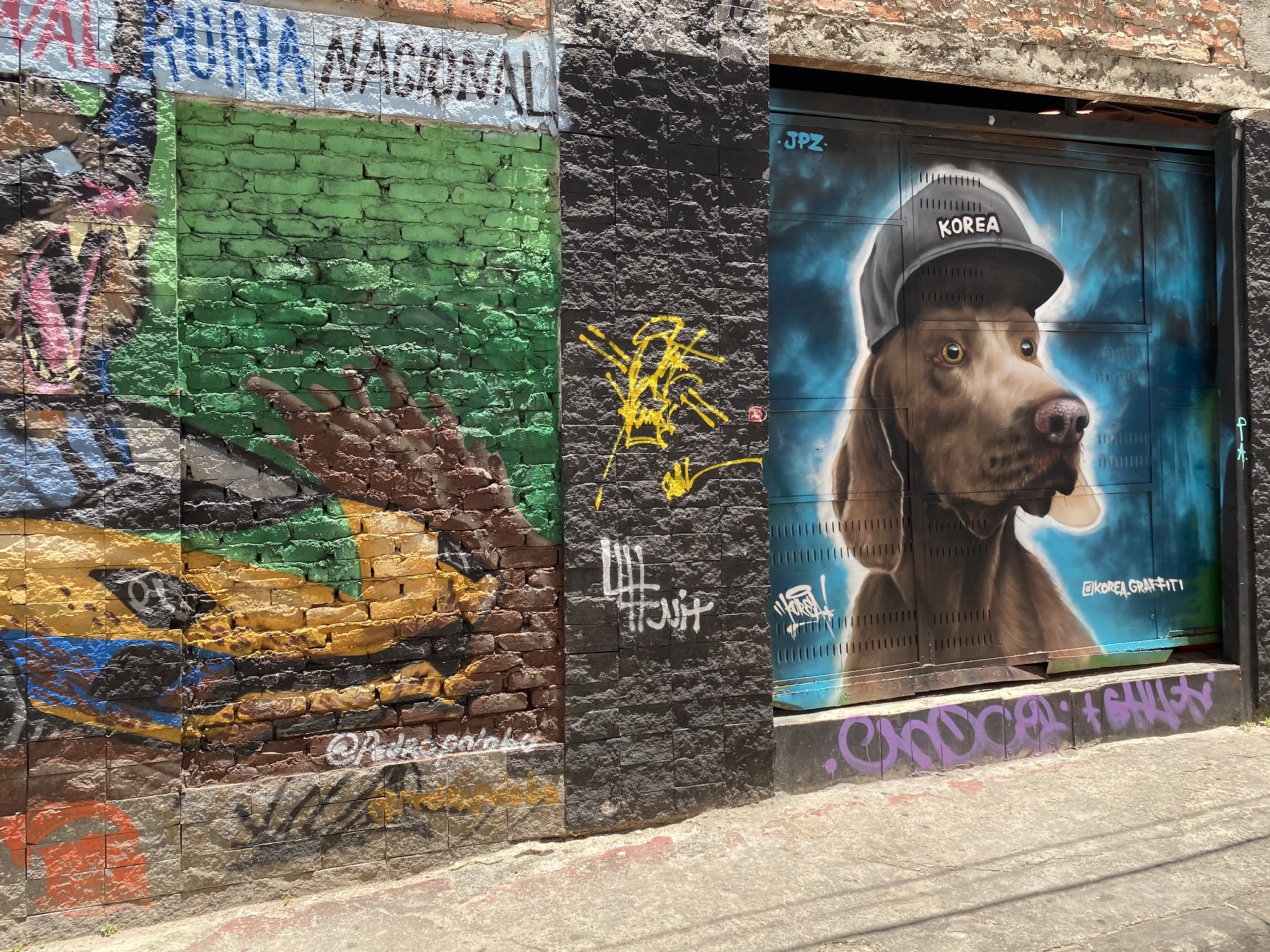
From there, we walked toward the Selarón Steps, one of the most vibrant public art installations in the world. The surrounding streets were covered in colorful murals and graffiti, creating an energetic atmosphere even before reaching the staircase itself.
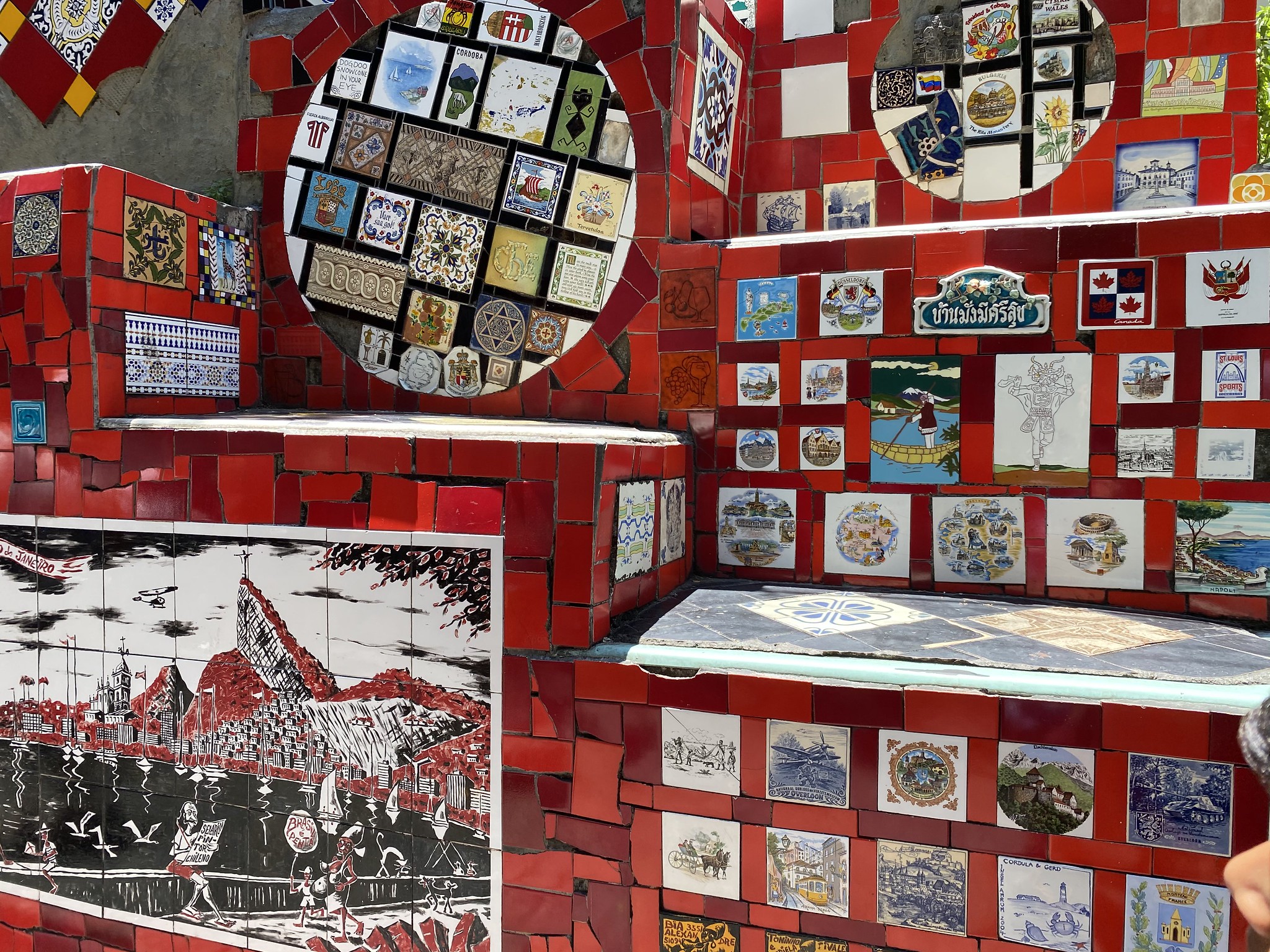
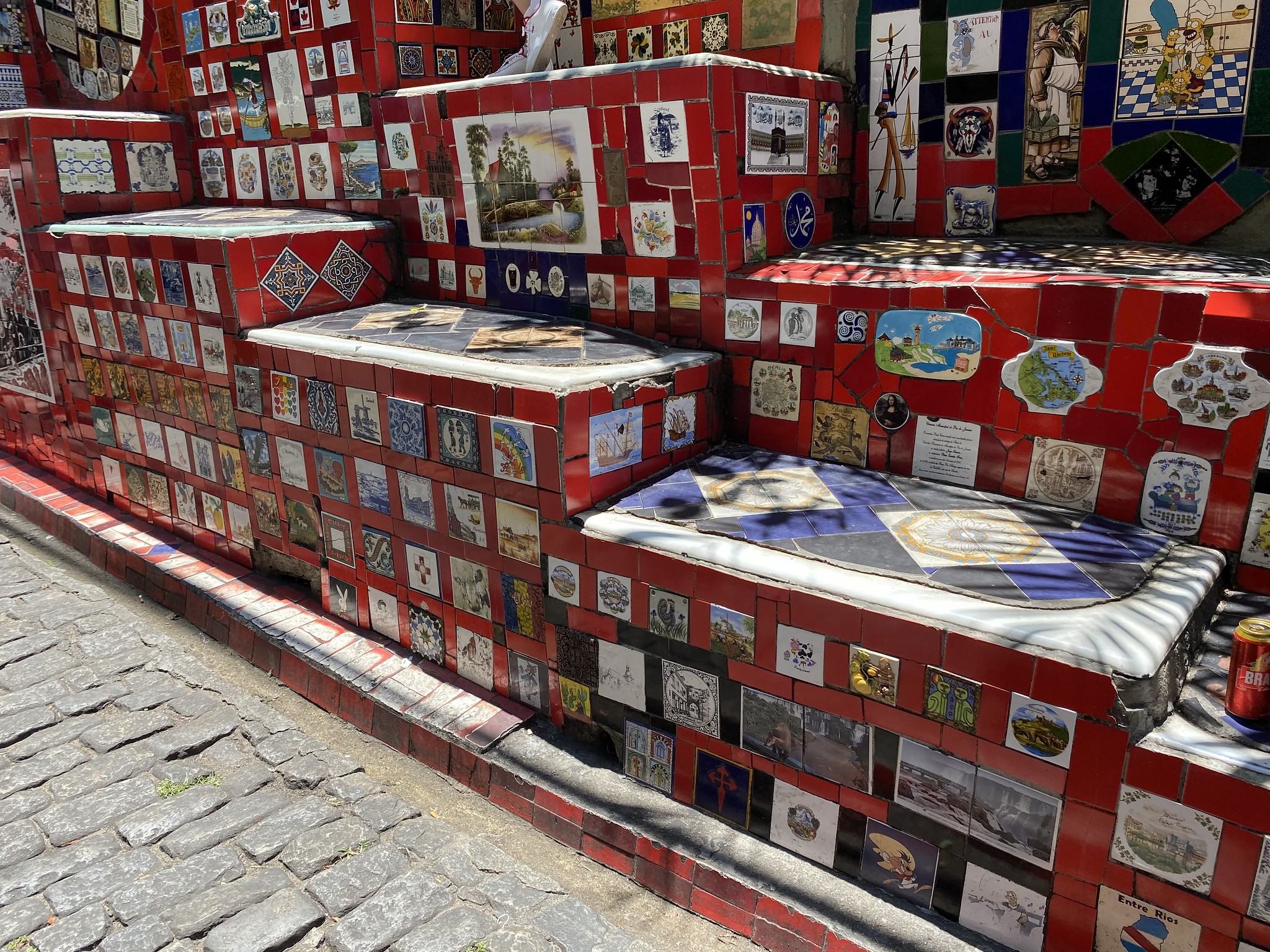
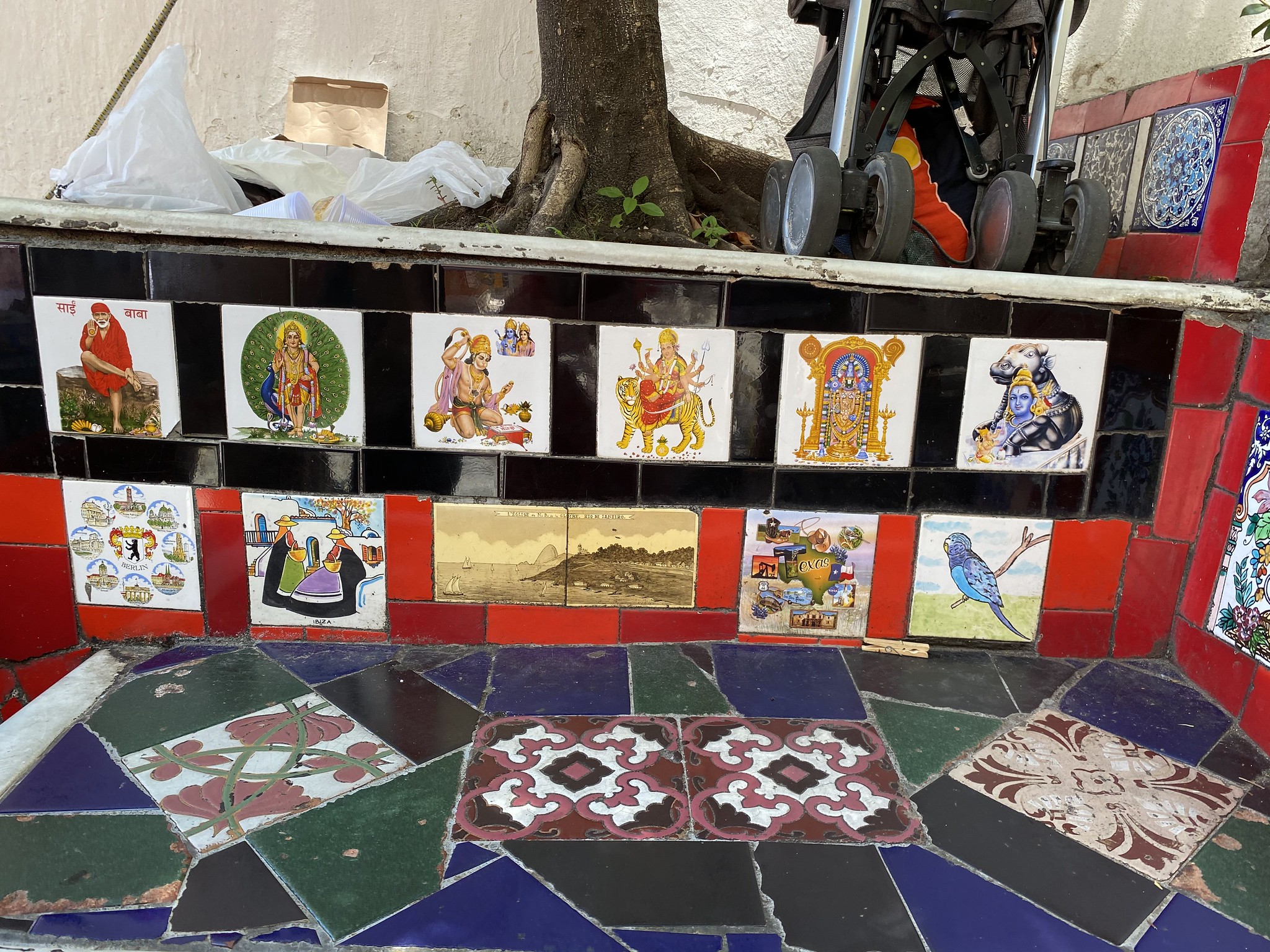
The steps, created by artist Jorge Selarón, are covered in thousands of tiles collected from over 60 countries. As we climbed slowly under the hot sun, we spotted tiles from India, the United States, and many other places, each adding to the global story behind the artwork.
Despite the intense heat and lack of shade, the colors and creativity made it one of the most memorable stops of the day.
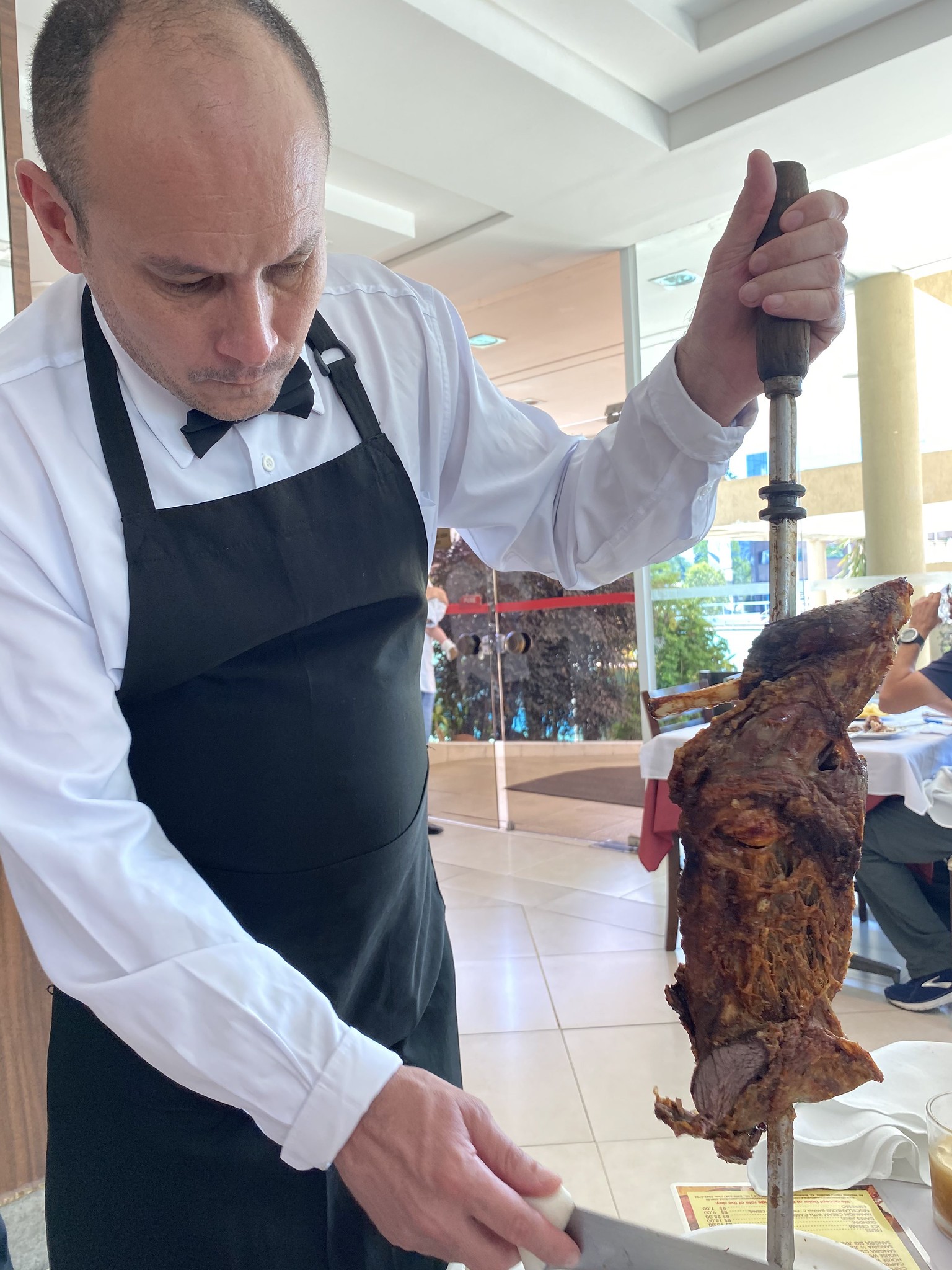
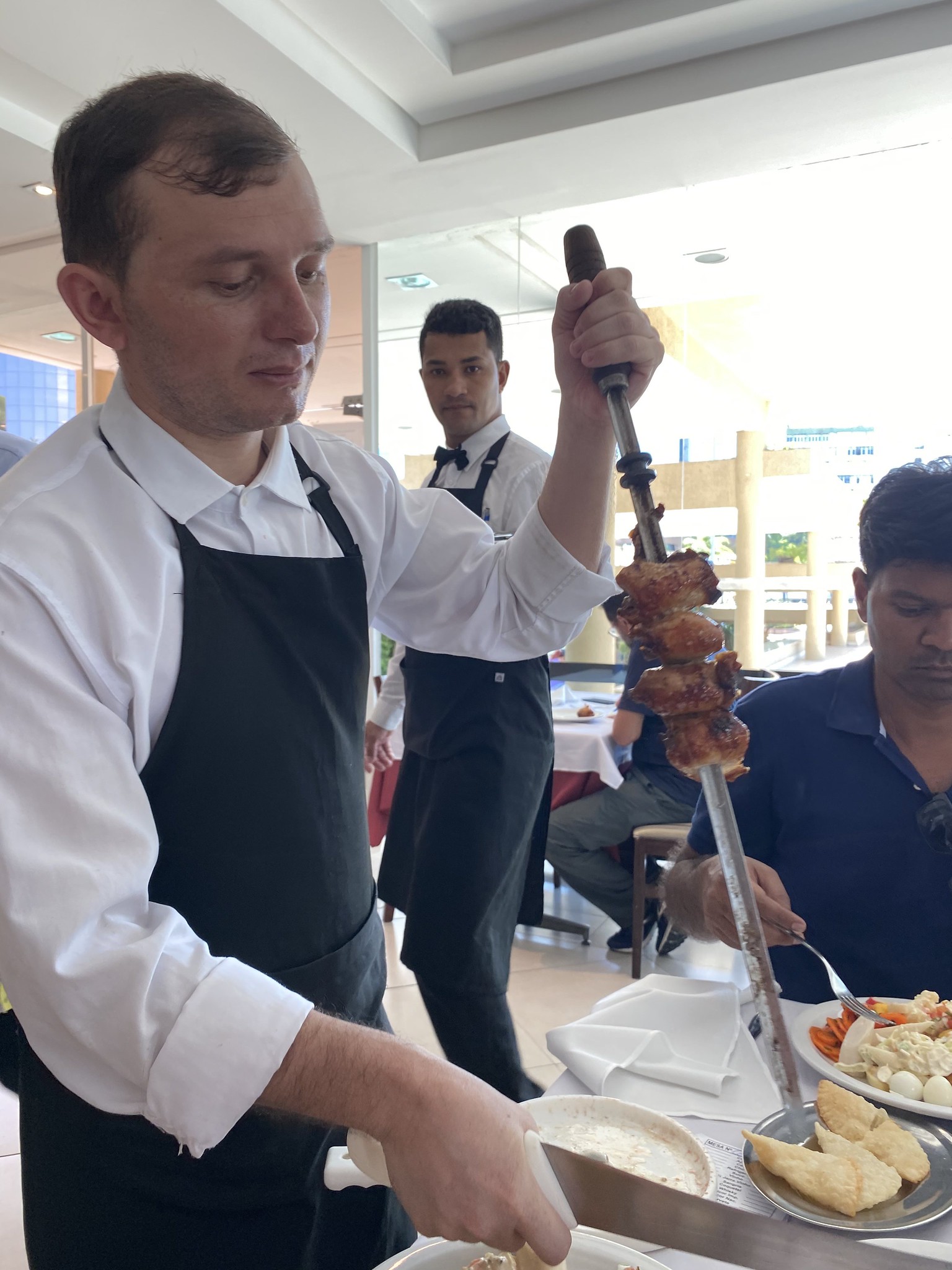
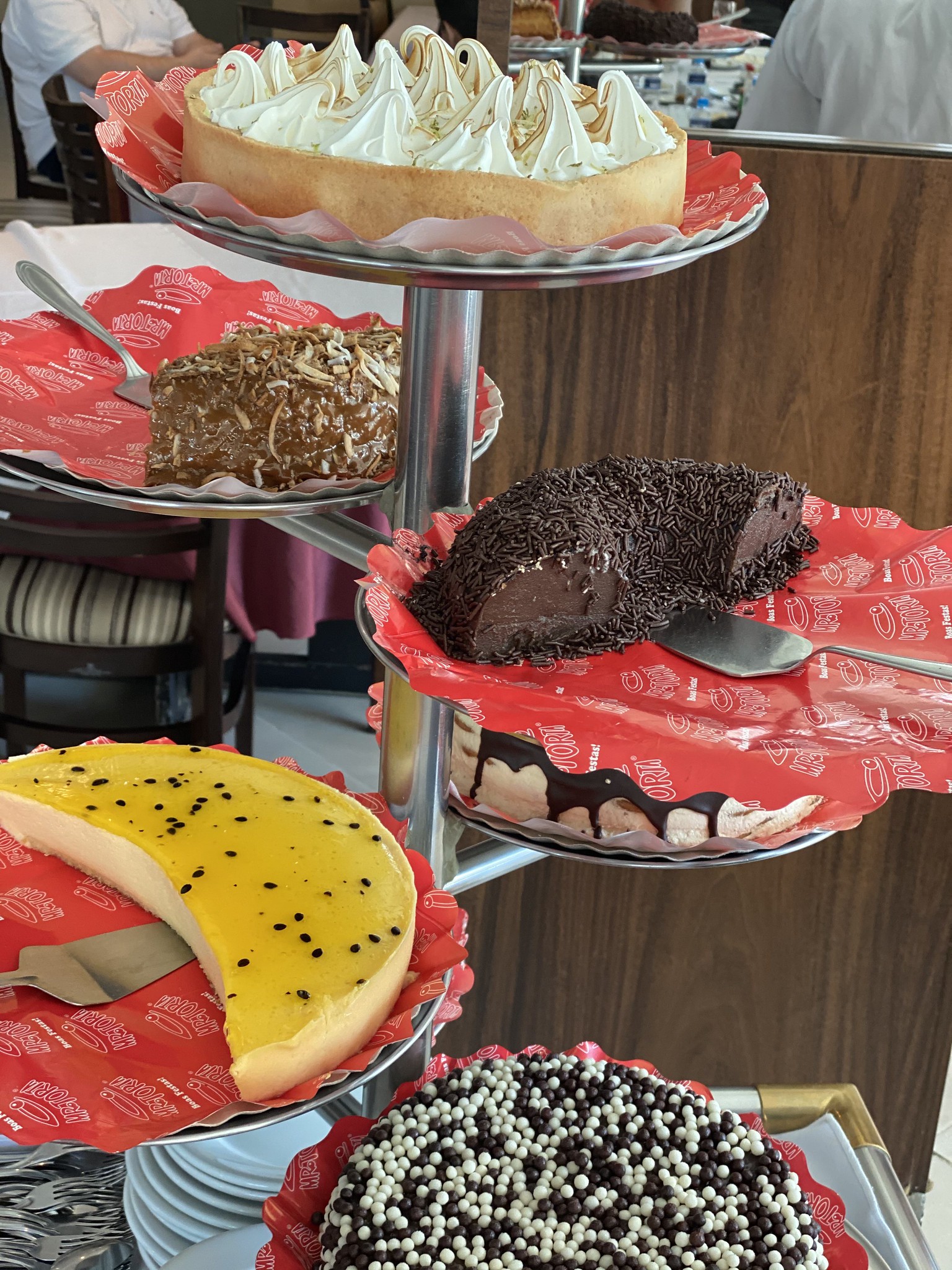
By lunchtime, we were ready for a break, and a traditional Brazilian churrascaria was the perfect stop. In true rodízio style, skewers of freshly grilled meats kept arriving at the table—chicken, lamb, shrimp, and more—along with a generous salad bar. It was a relaxed and satisfying meal, finished with delicious desserts that gave us the energy to continue the day.
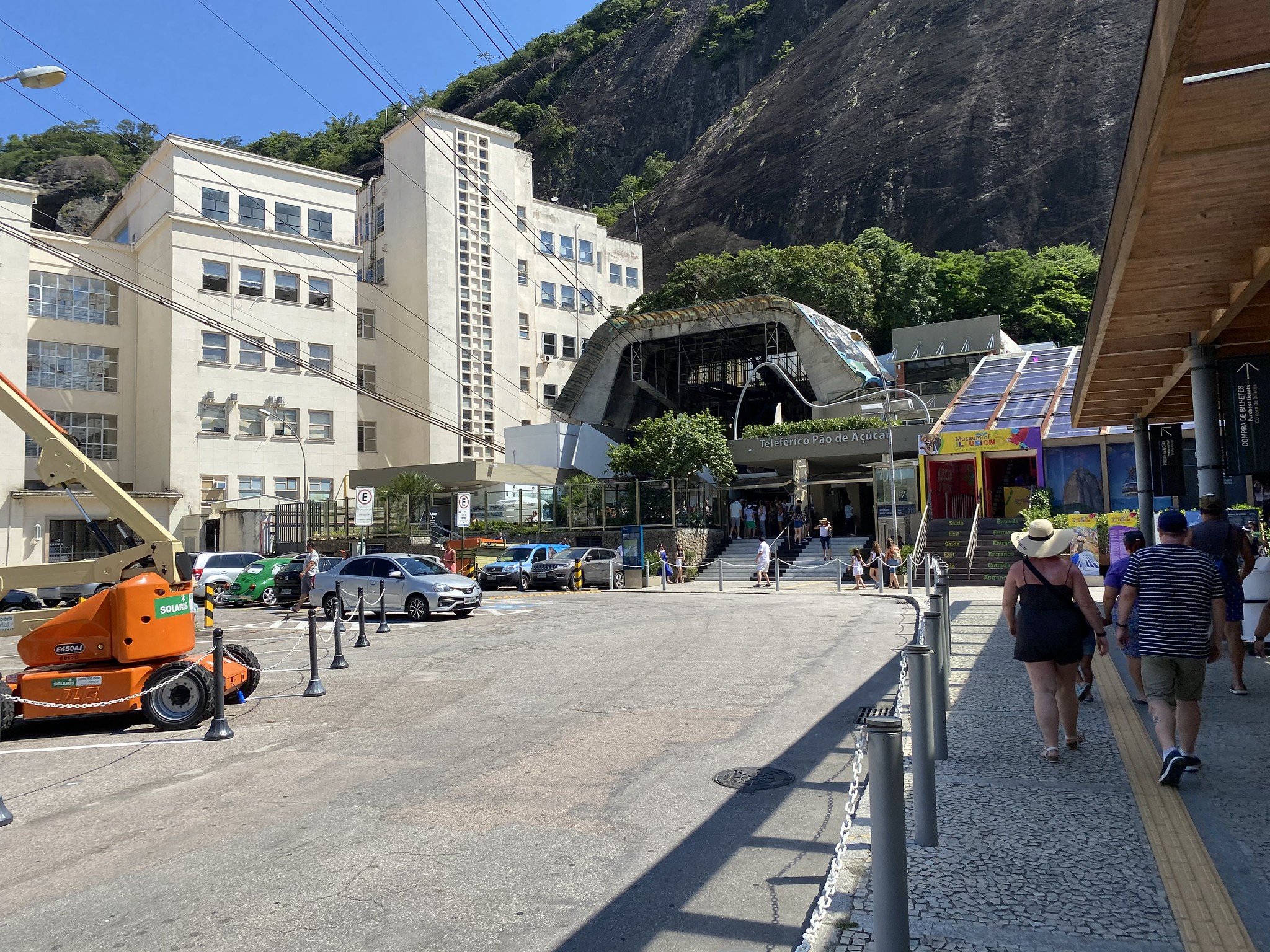
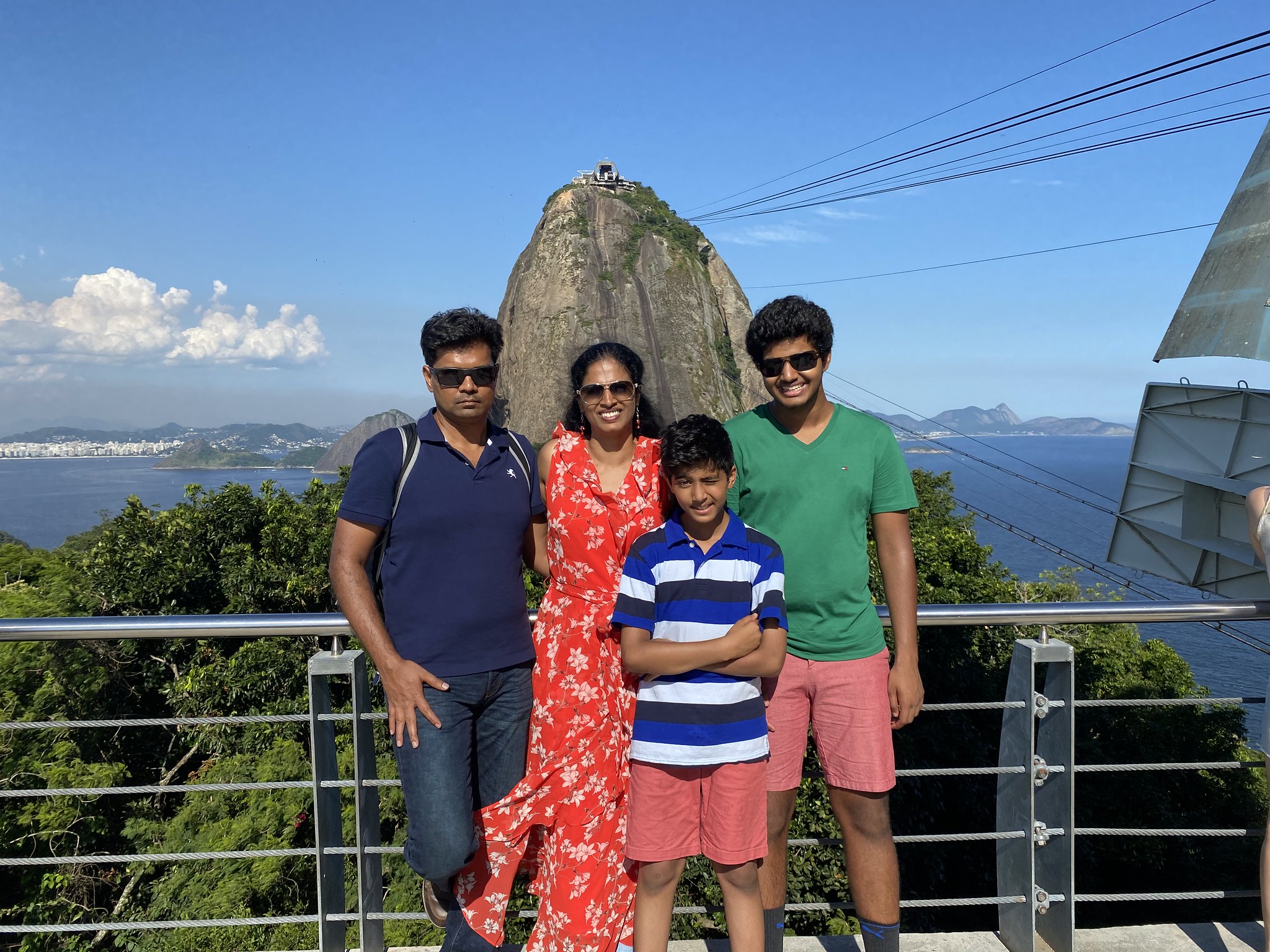
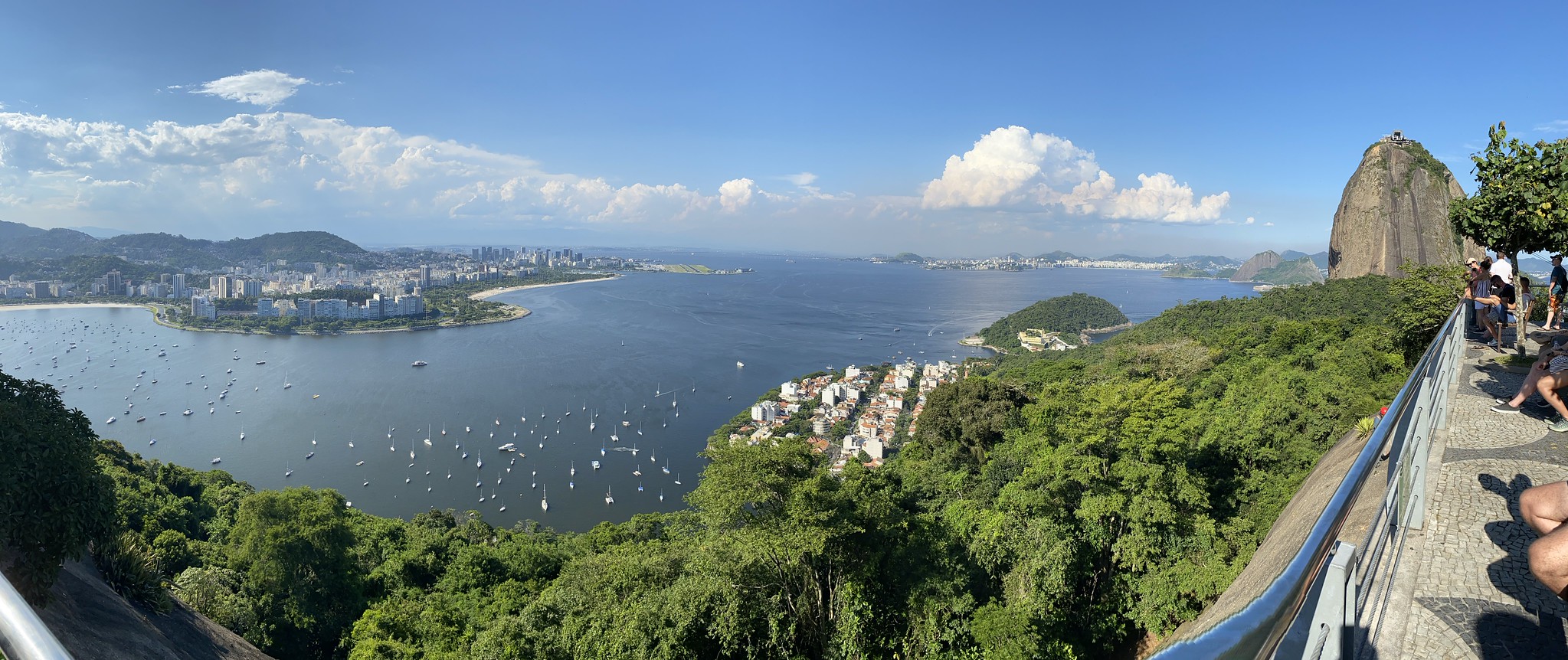
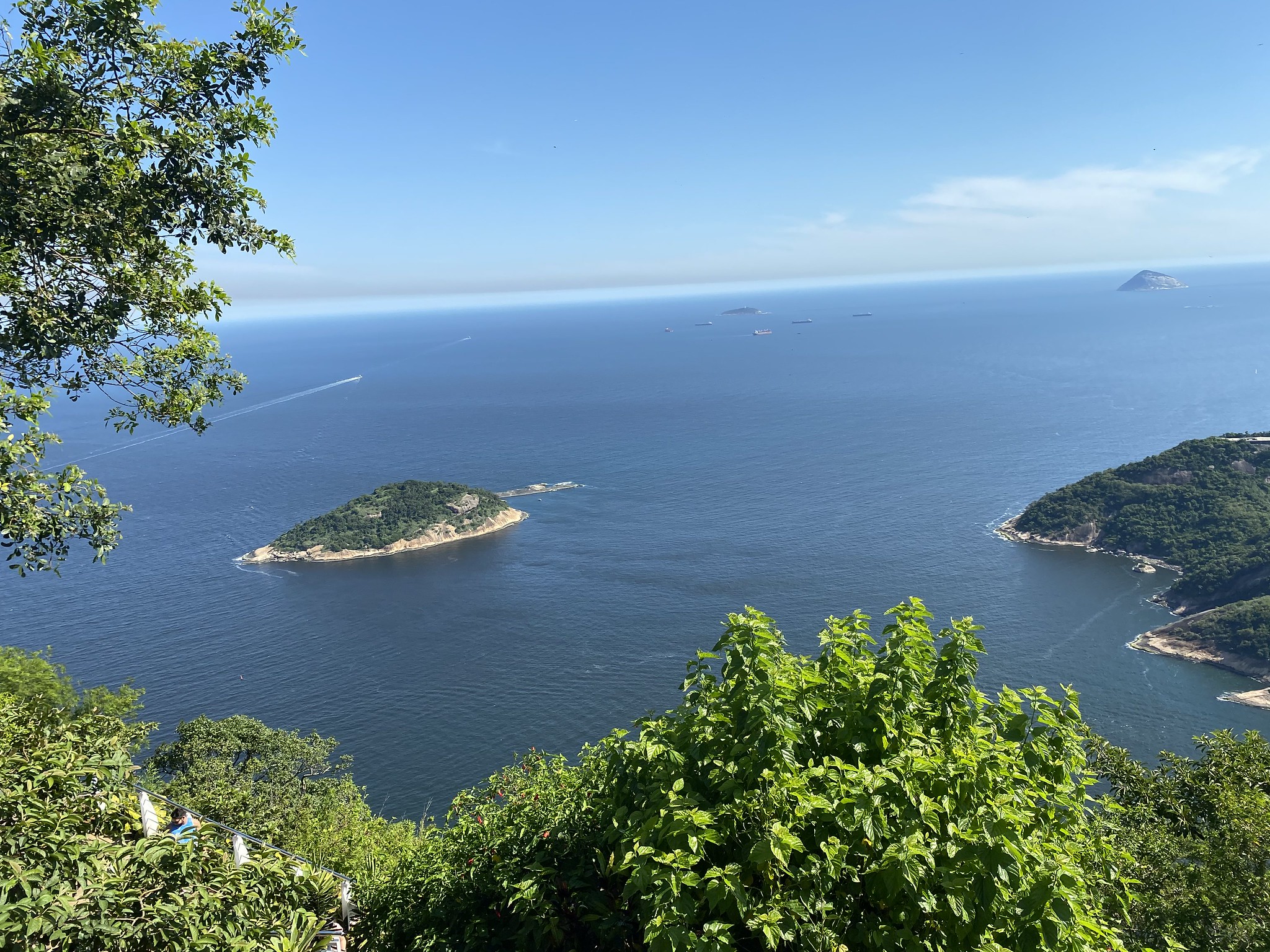
In the afternoon, we reached Sugarloaf Mountain, one of Rio’s most famous viewpoints. A two-stage cable car carried us first to Morro da Urca and then to the summit. From the top, we were treated to breathtaking 360-degree views of the city—beaches, mountains, forests, and the vast Atlantic Ocean stretching into the horizon.
Looking back, we could even see Christ the Redeemer standing high above the city, now from a completely different perspective. It was a powerful reminder of how uniquely Rio blends natural beauty with urban life.
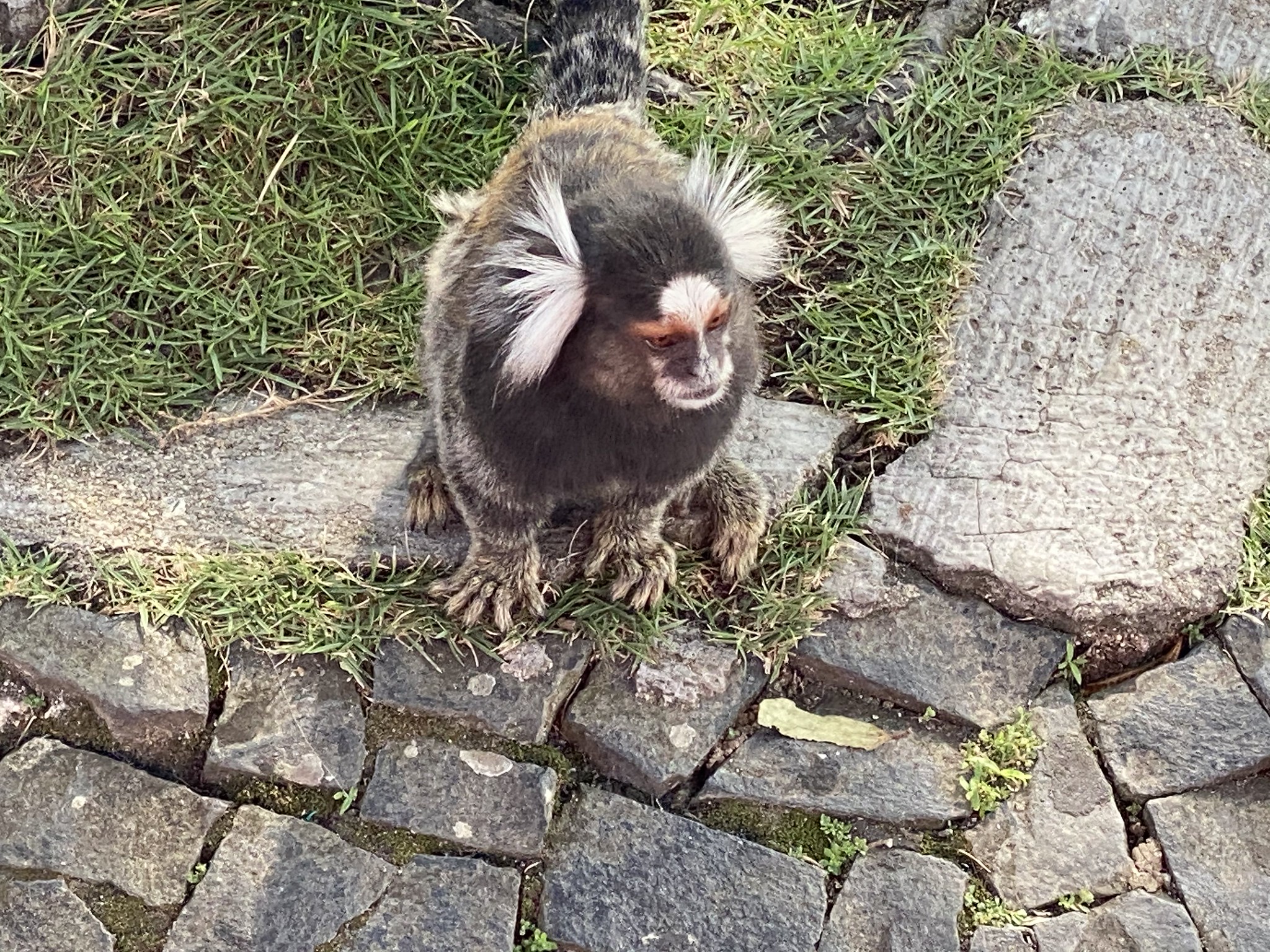
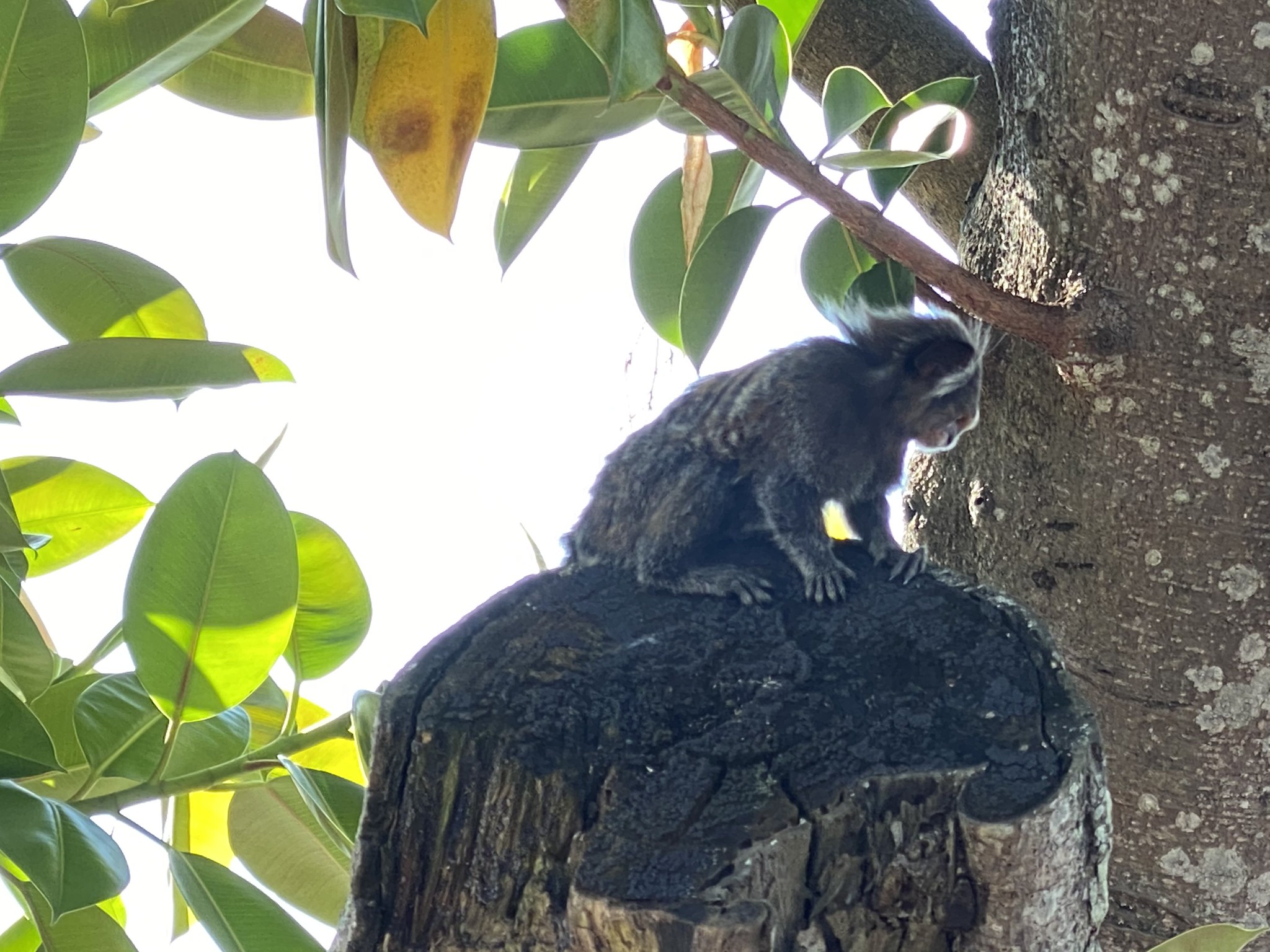
Around the summit, small stalls sold snacks and souvenirs. We also spotted a common marmoset, a small monkey native to Brazil with distinctive white ear tufts, moving quickly through the trees—a surprising and delightful encounter.
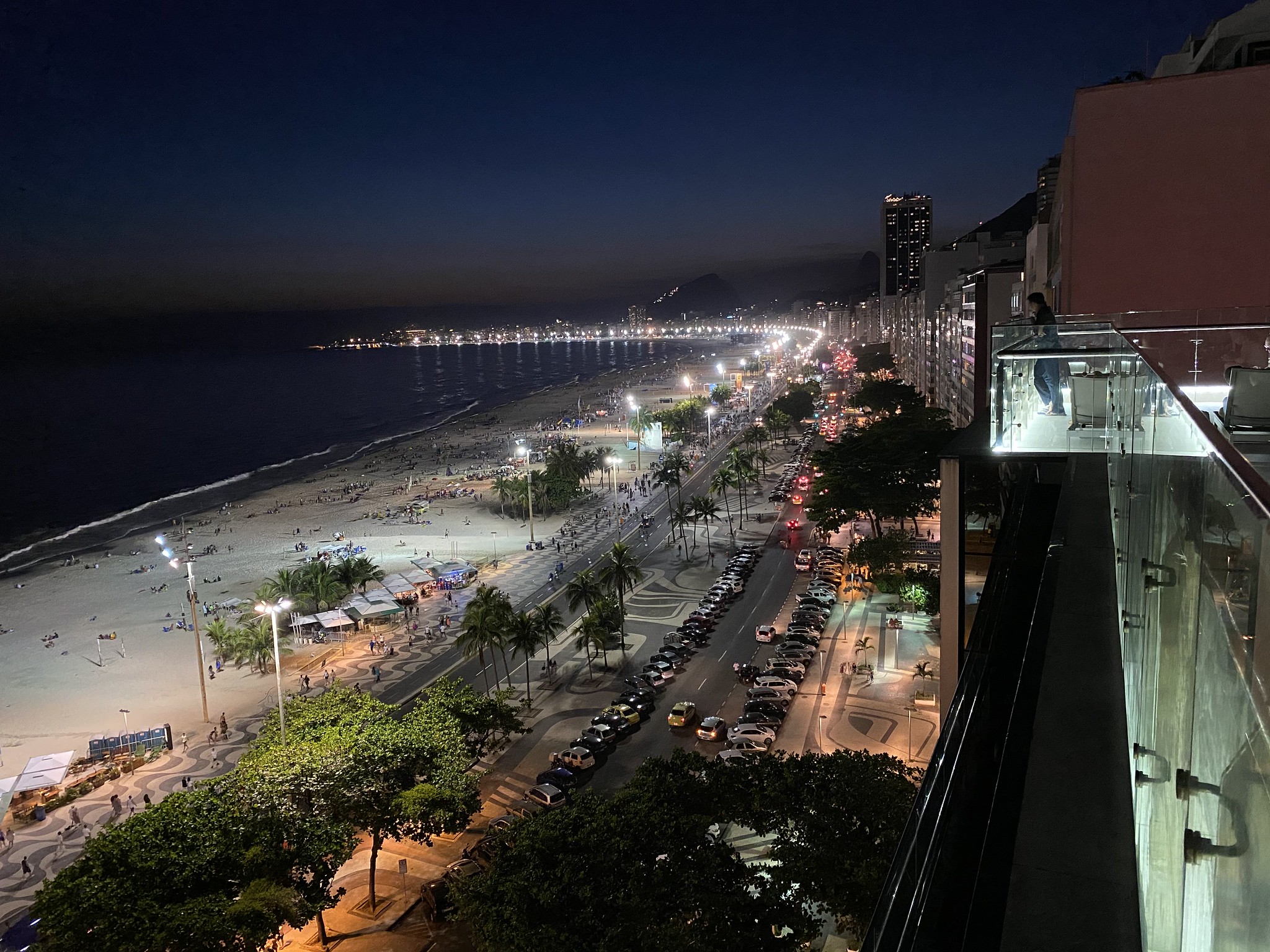
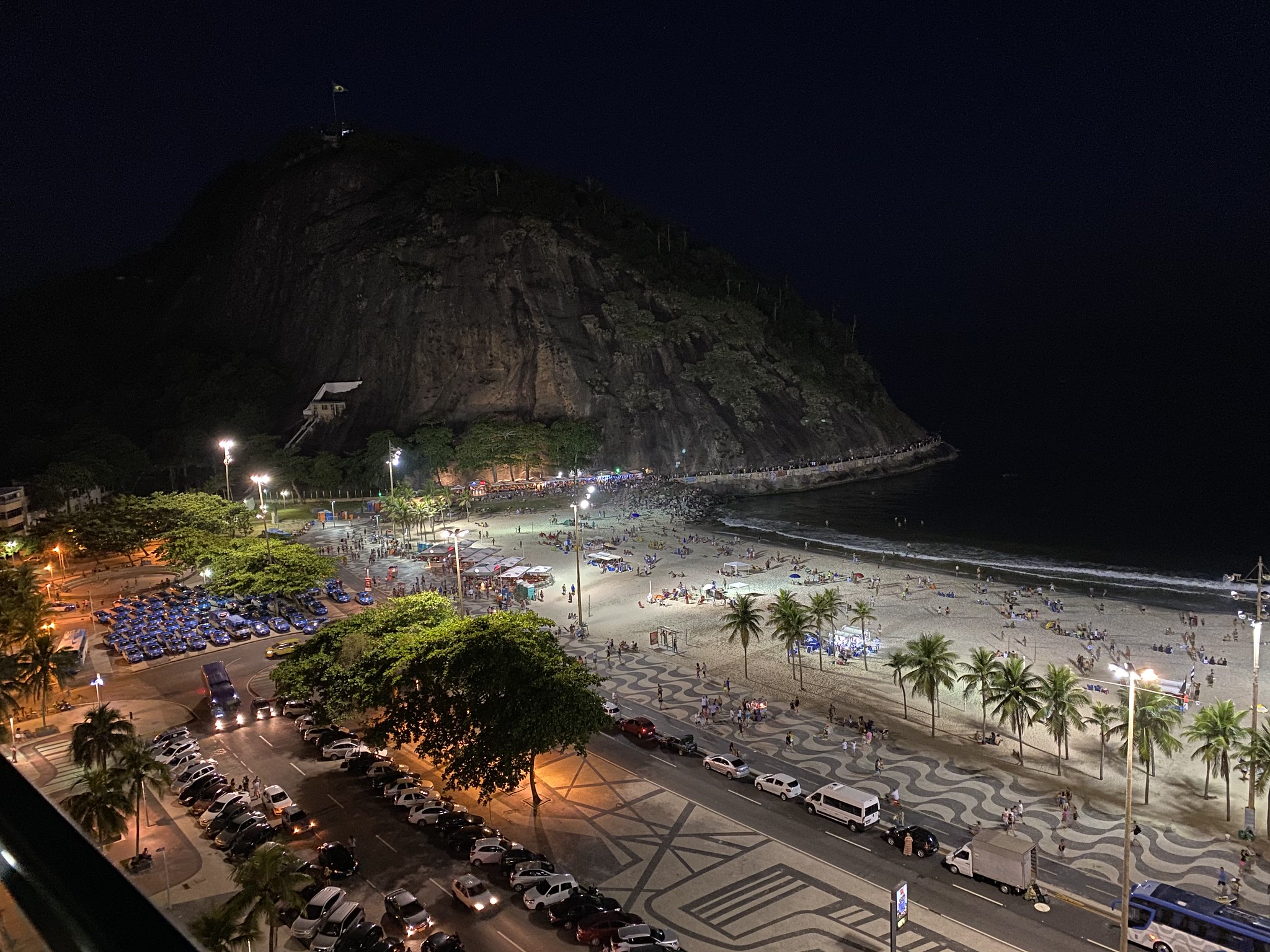
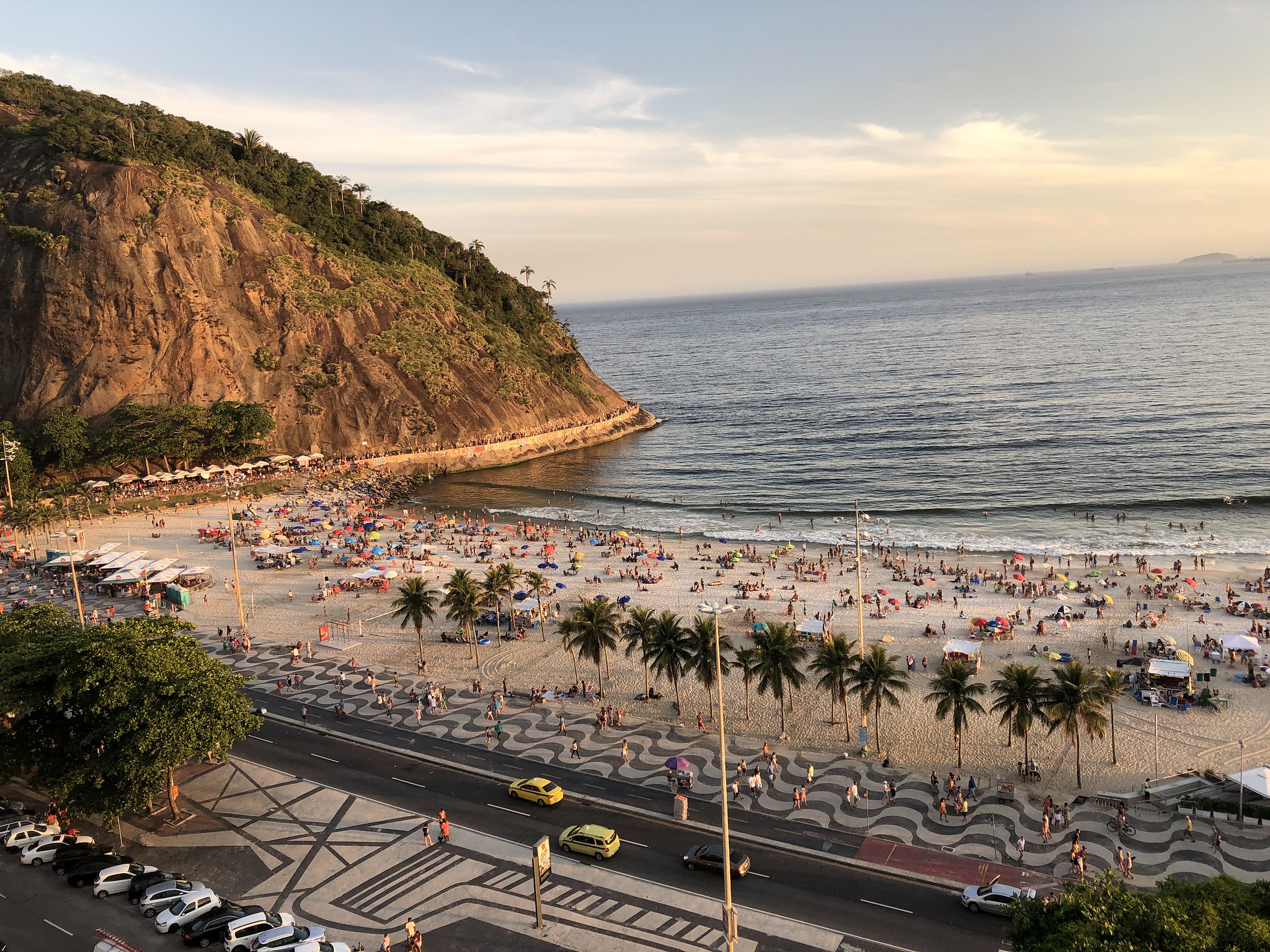
After a full day of exploration, we returned to our hotel and spent a relaxed evening at the rooftop, watching the lights of Copacabana begin to glow.
Later that night, we stepped out once again to experience Rio’s nightlife. Music filled the streets, and we watched locals dancing with energy and joy. Before long, we joined in as well, enjoying the rhythm, the atmosphere, and the spirit of the city.
It was the perfect way to end a day that captured the very essence of Rio—iconic landmarks, unexpected moments, and a celebration of life at every turn.
Day 4 – Soaring Above Rio & The Soul of the City
“From flying over Rio’s coastline to exploring its hidden cultural gems, today was a perfect blend of adventure, art, and rhythm.”
After experiencing Rio from the ground level over the past few days, today we were ready to see the city from a completely different perspective—starting high above it.
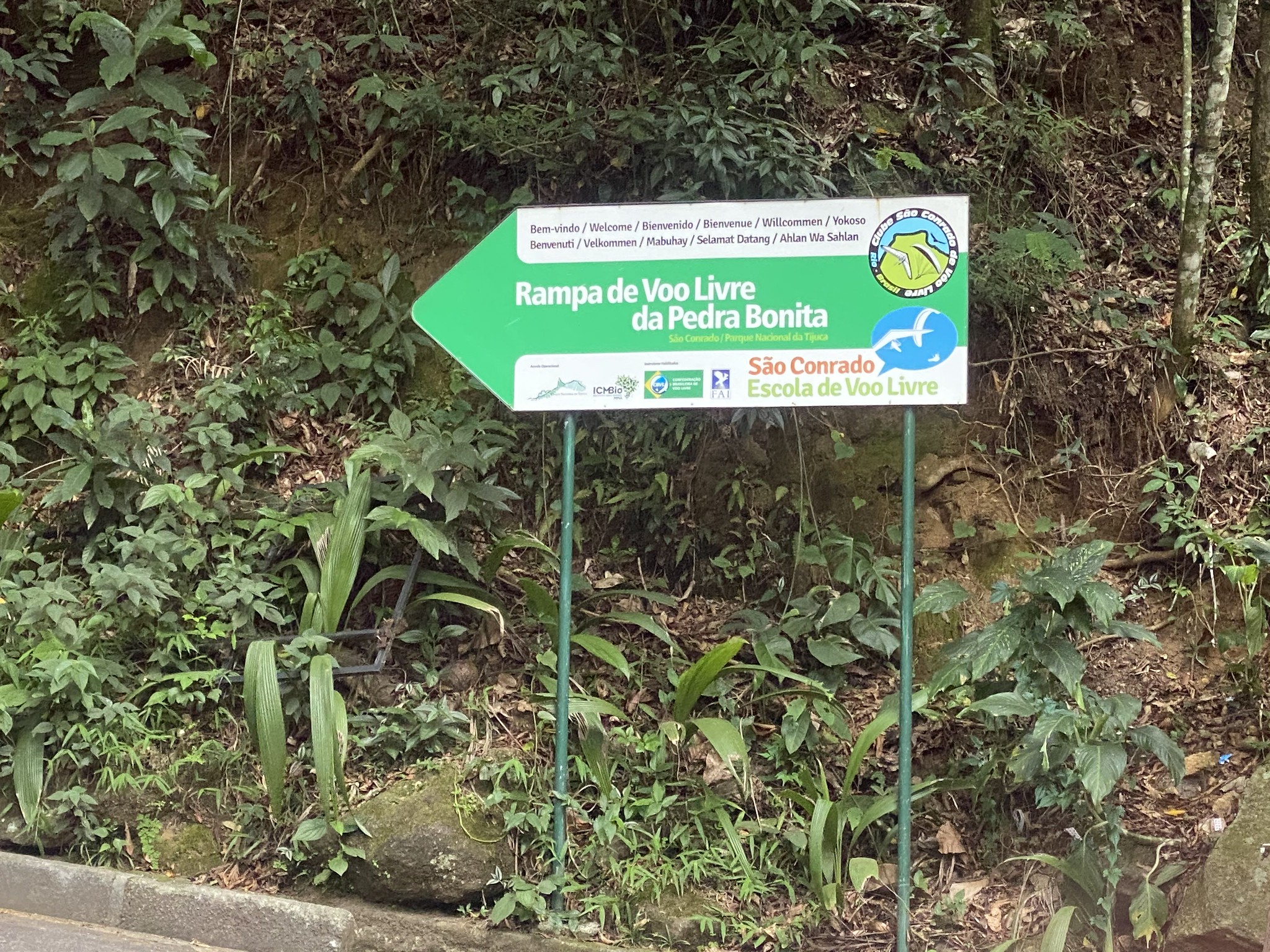
We had already done bungee jumping in a previous trip, so hang gliding in Rio felt like the next level of adventure. It is considered one of the must-do experiences in the city, and we were excited (and slightly nervous) as we headed up to the launch point on the hill.
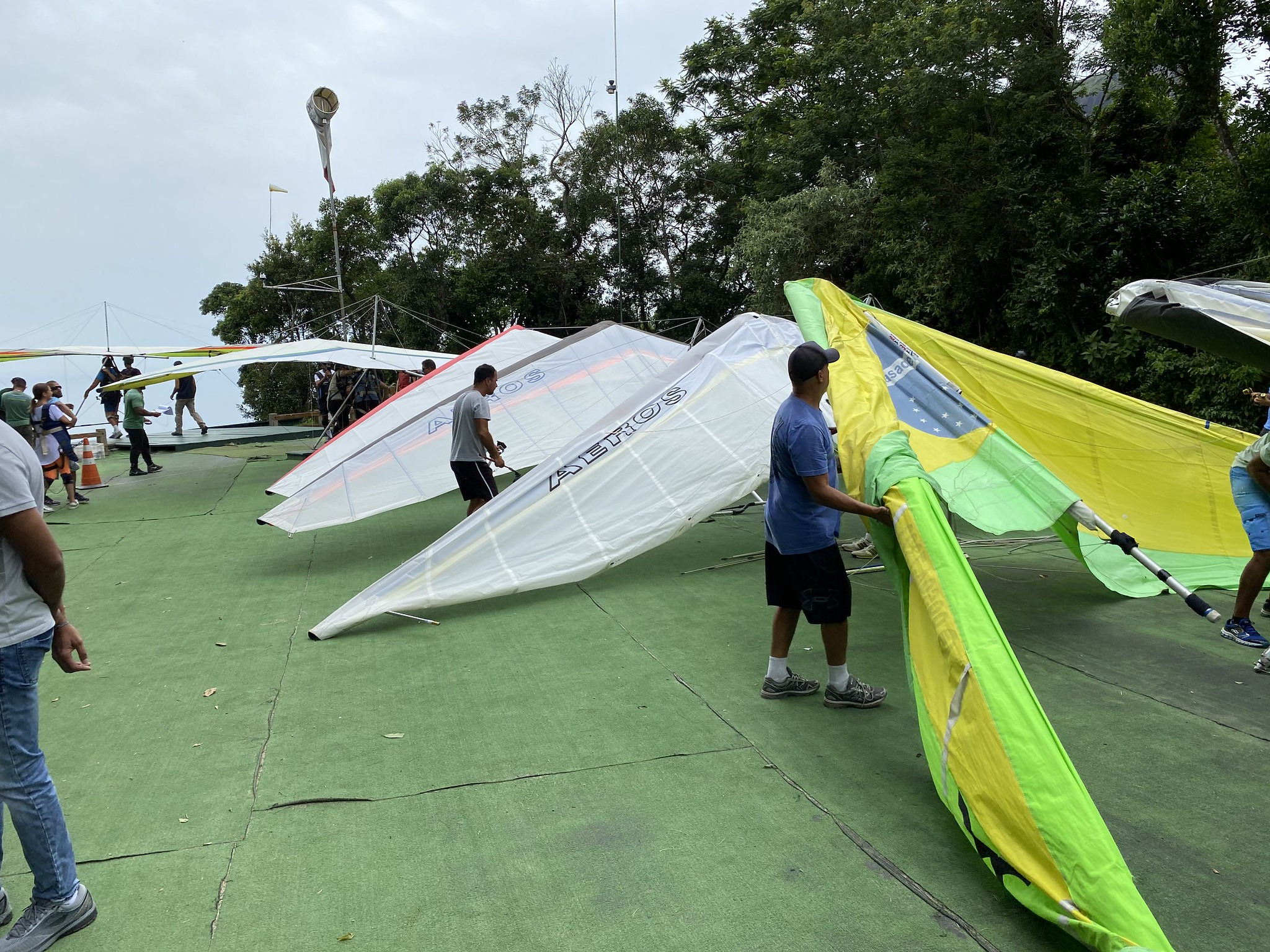
At the top, preparations were underway as instructors set up the hang gliders. Due to changing wind conditions, only half of our group was able to fly initially, while the rest of us had to wait for the wind to become suitable.
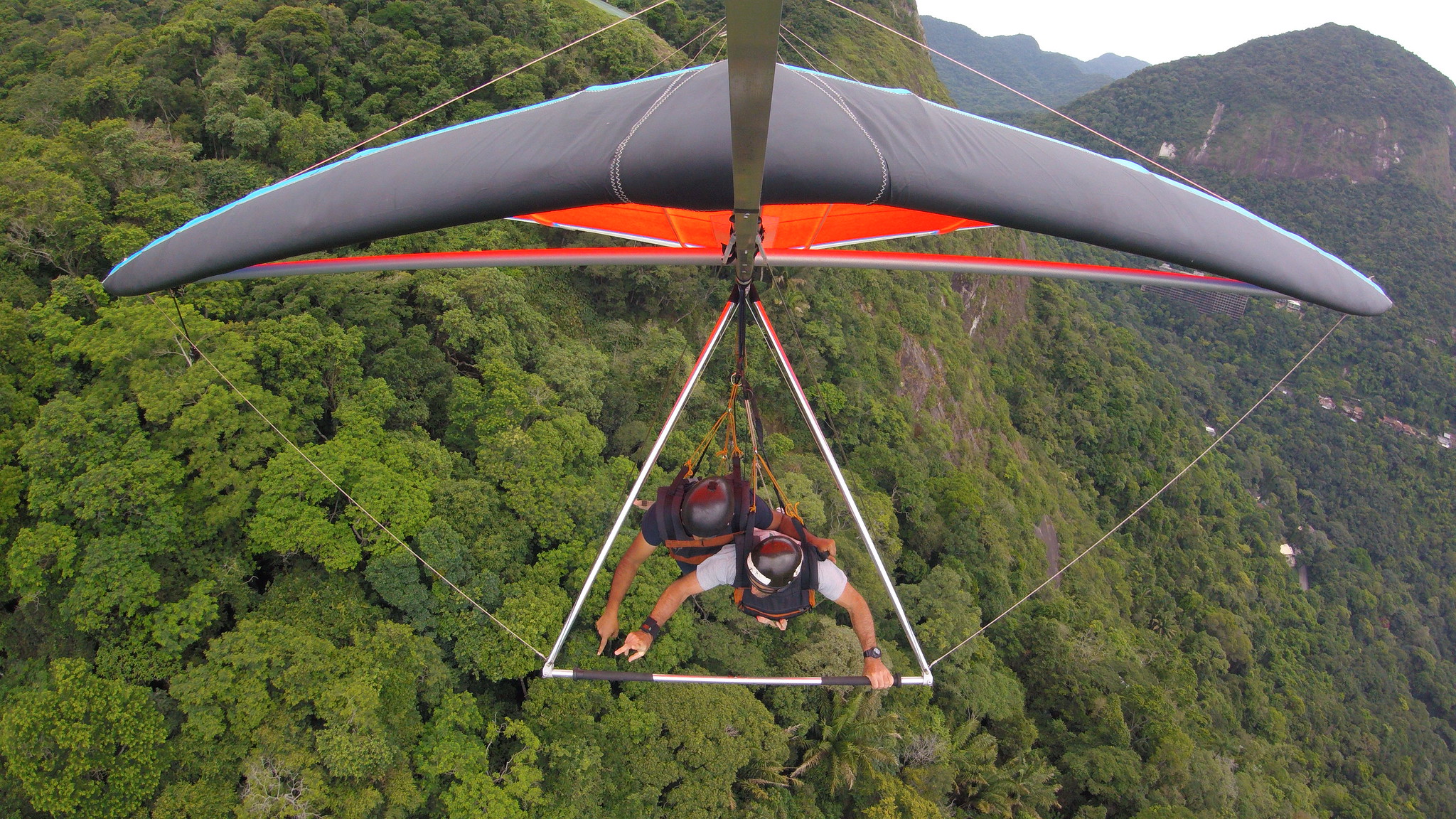
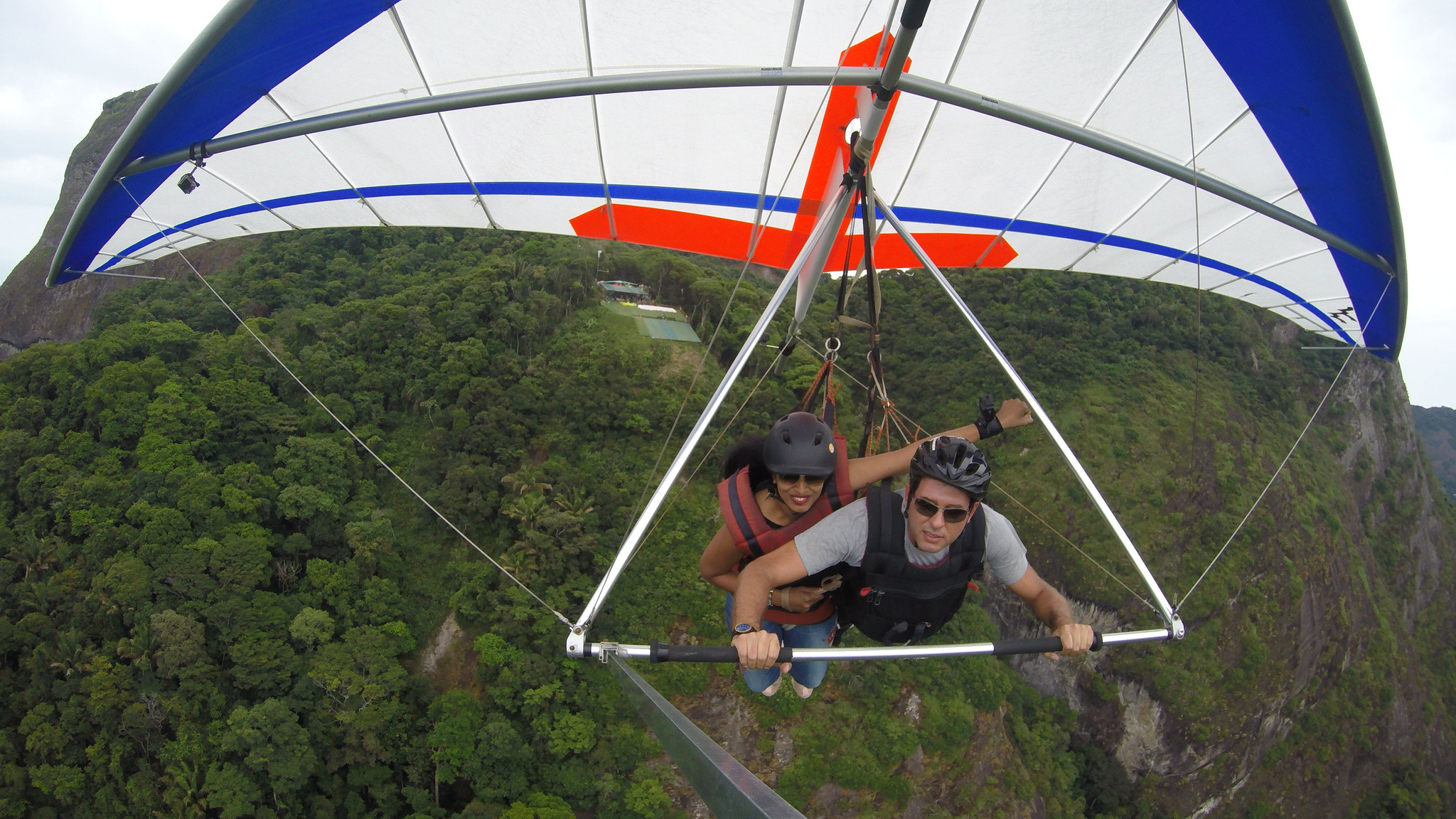
I strapped a GoPro onto my left wrist to capture the experience. Before takeoff, we practiced a few coordinated steps with the instructor, since both of us had to run and launch together.
The takeoff itself was surprisingly smooth. Within seconds, we were airborne—gliding silently above Rio’s coastline. I was strapped on the instructor’s right side, which limited my camera angle, so I didn’t get the best GoPro footage. But none of that mattered once we were in the air.
Below us stretched the incredible landscape of Rio de Janeiro—golden beaches, dense green hills, and the vast Atlantic Ocean meeting the city skyline. Floating above it all felt surreal, almost like the city had opened up just for us.
When we finally landed, there was a shared sense of accomplishment. It wasn’t just an activity—it felt like we had experienced Rio in its purest form, from the sky.
While waiting for the rest of our group to complete their flights, we relaxed with fresh coconut water and açaí bowls, enjoying the coastal breeze and reflecting on the experience.
After the adventure, we took an Uber into the city to explore Rio’s cultural side, starting with the National Library of Brazil. The grand entrance staircase, with its colorful architectural design, immediately stood out. Inside, we explored multiple floors filled with historic collections and impressive reading halls.
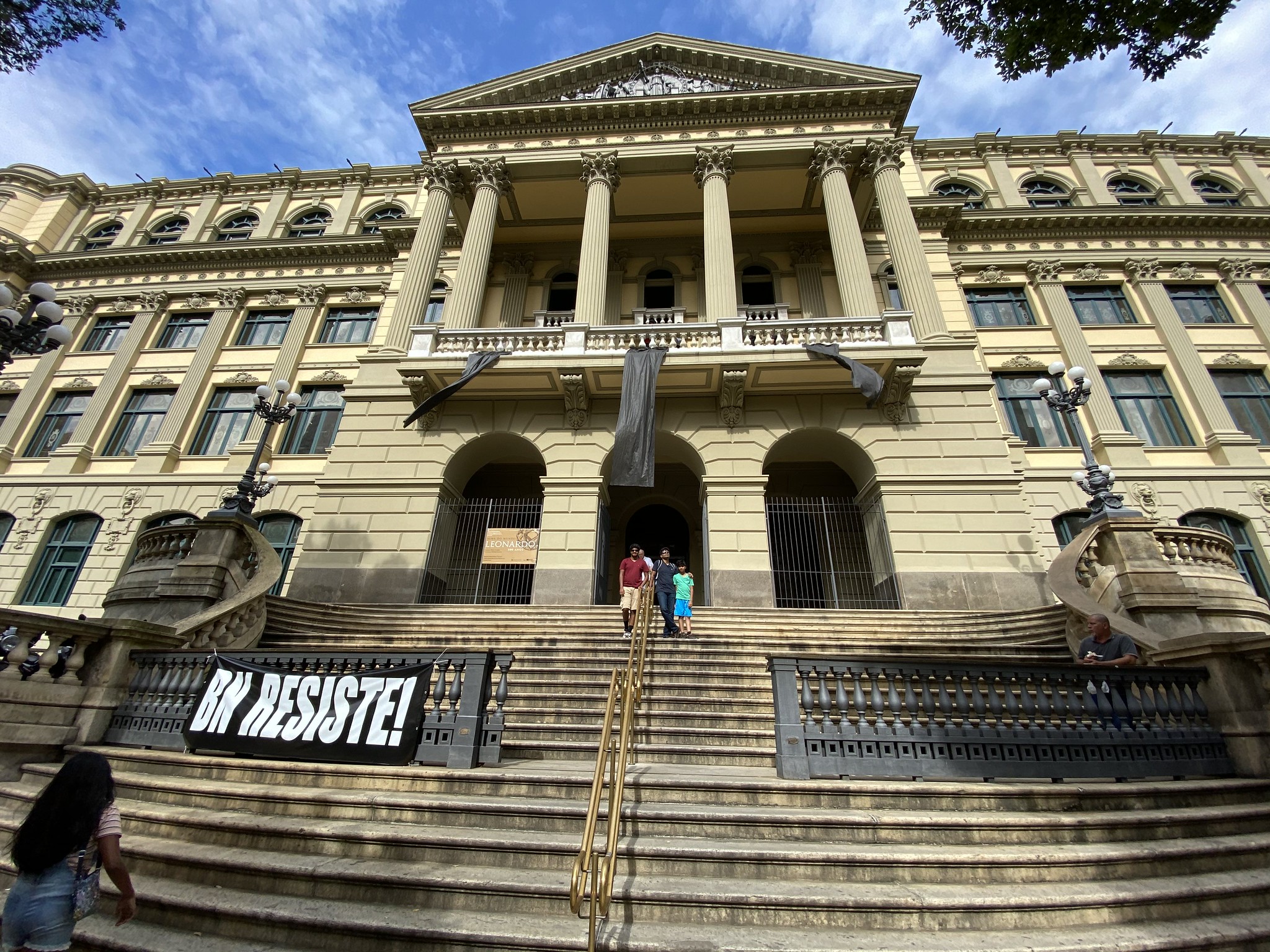
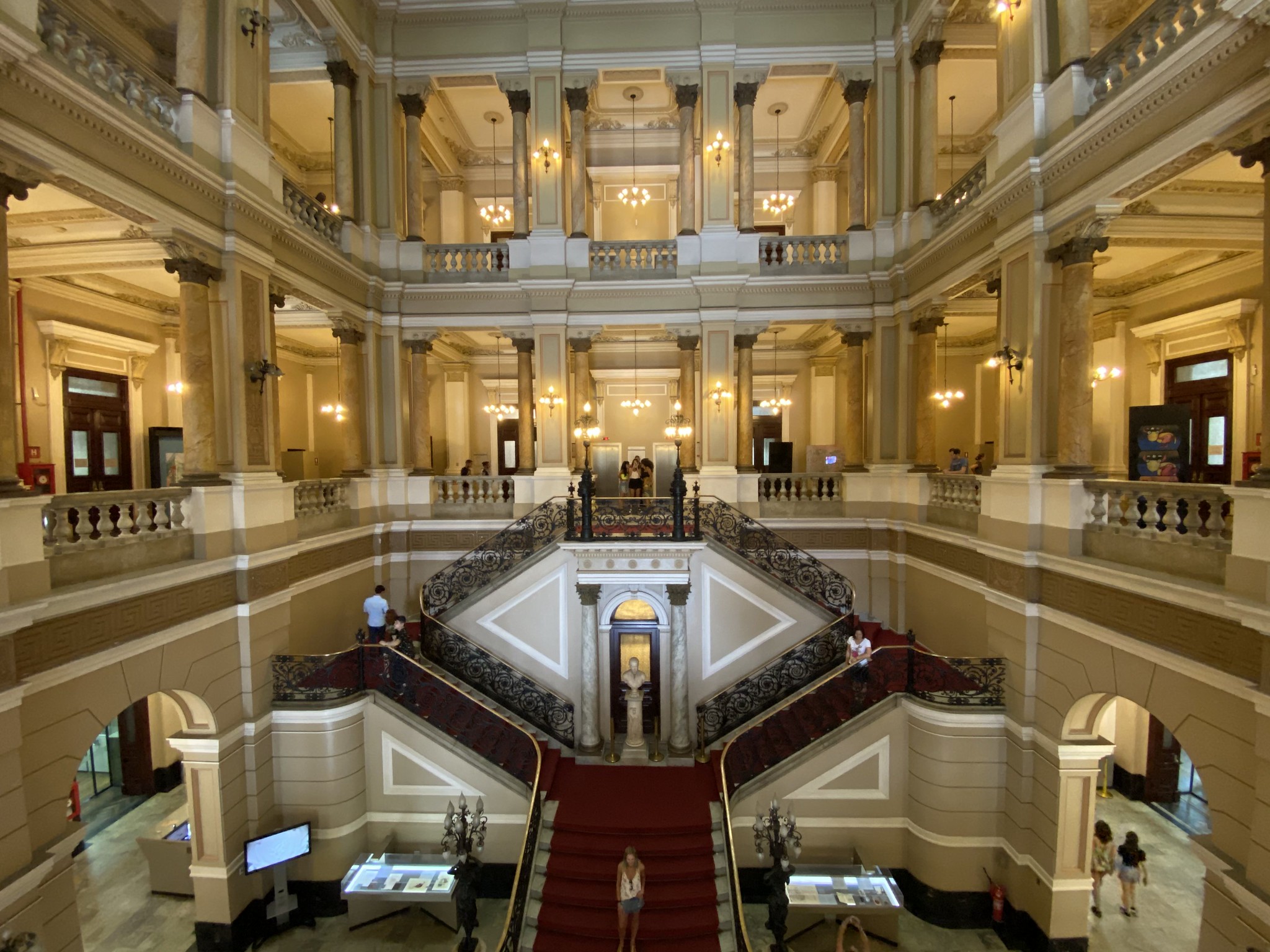
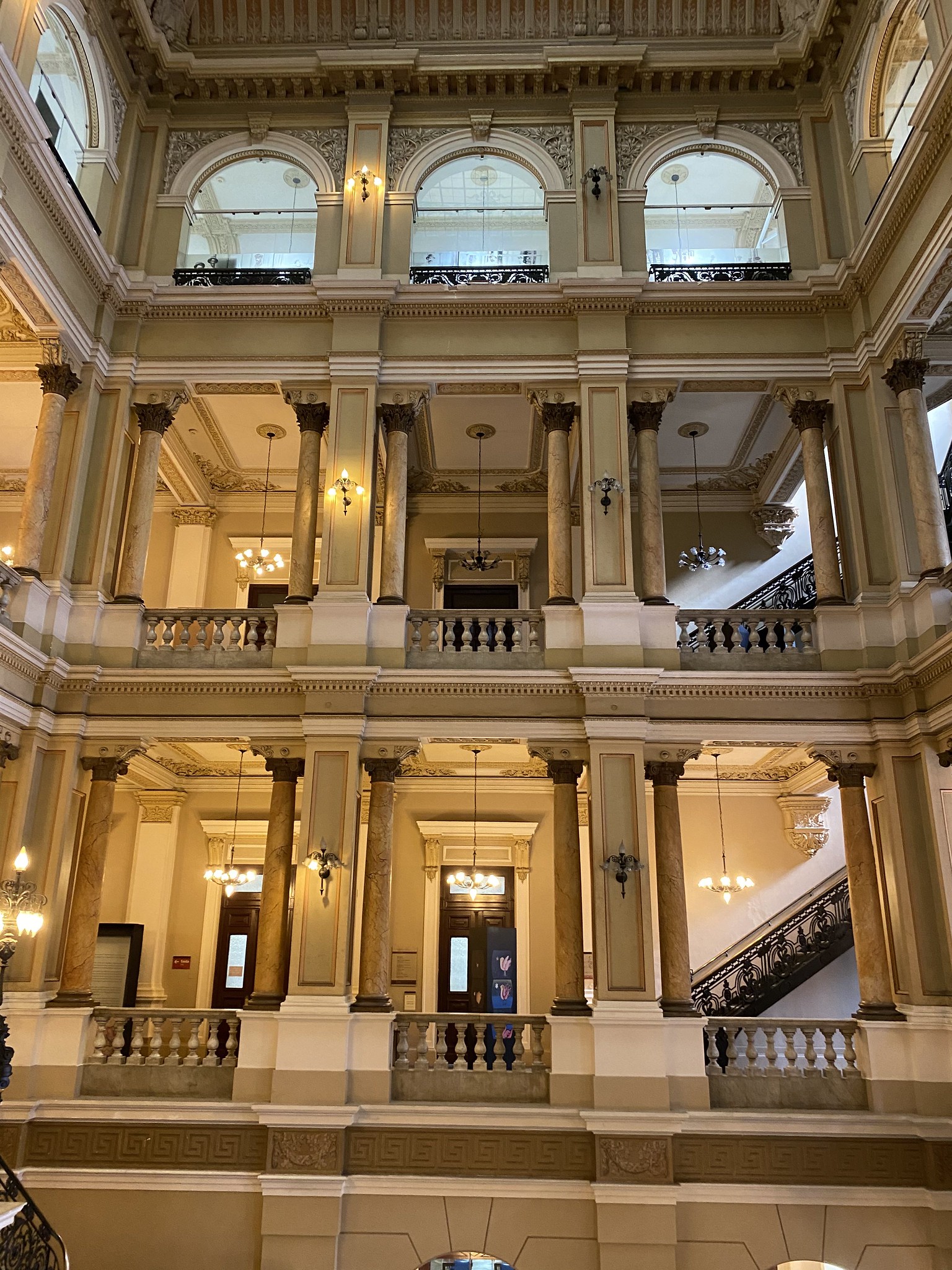
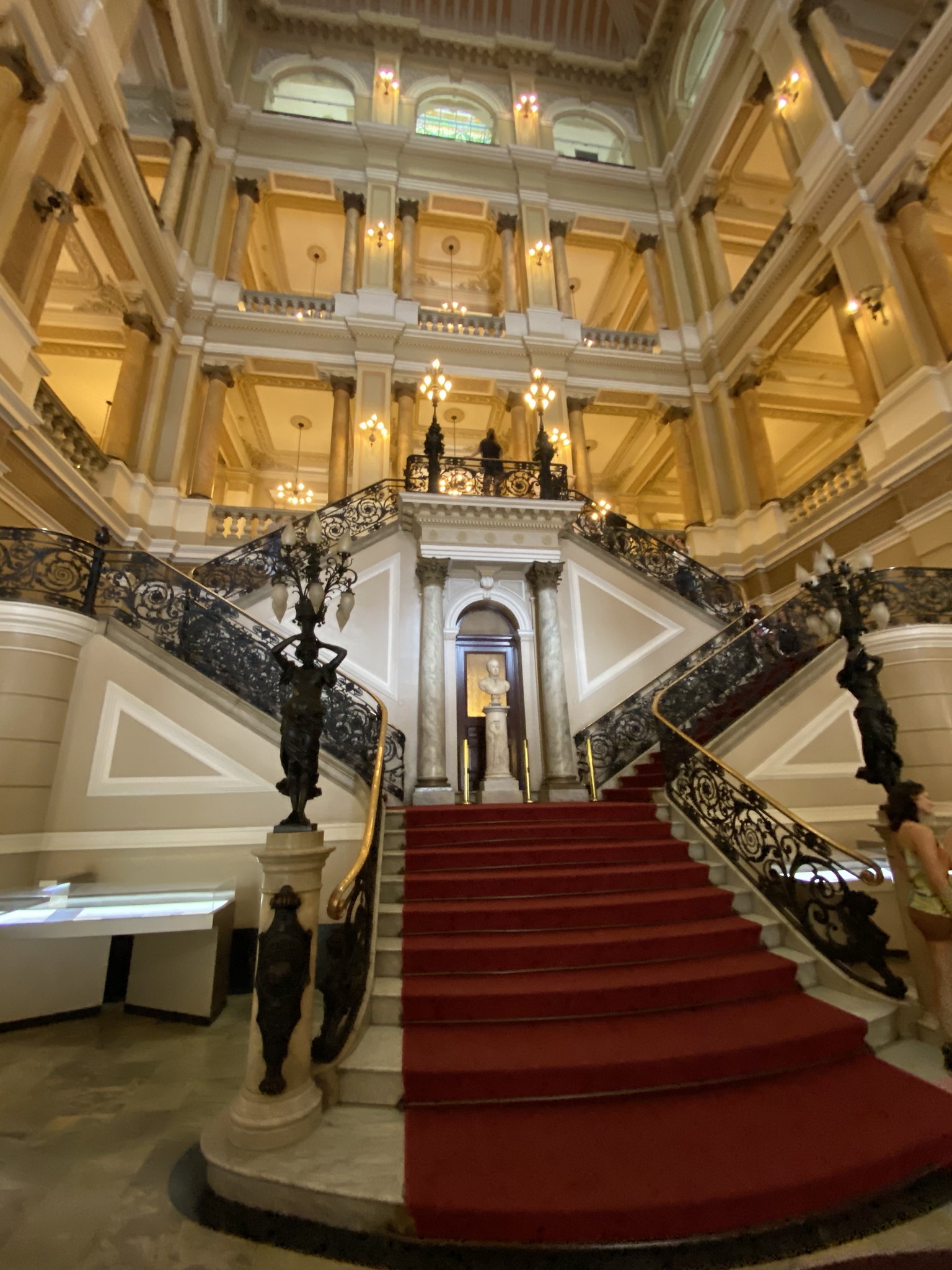
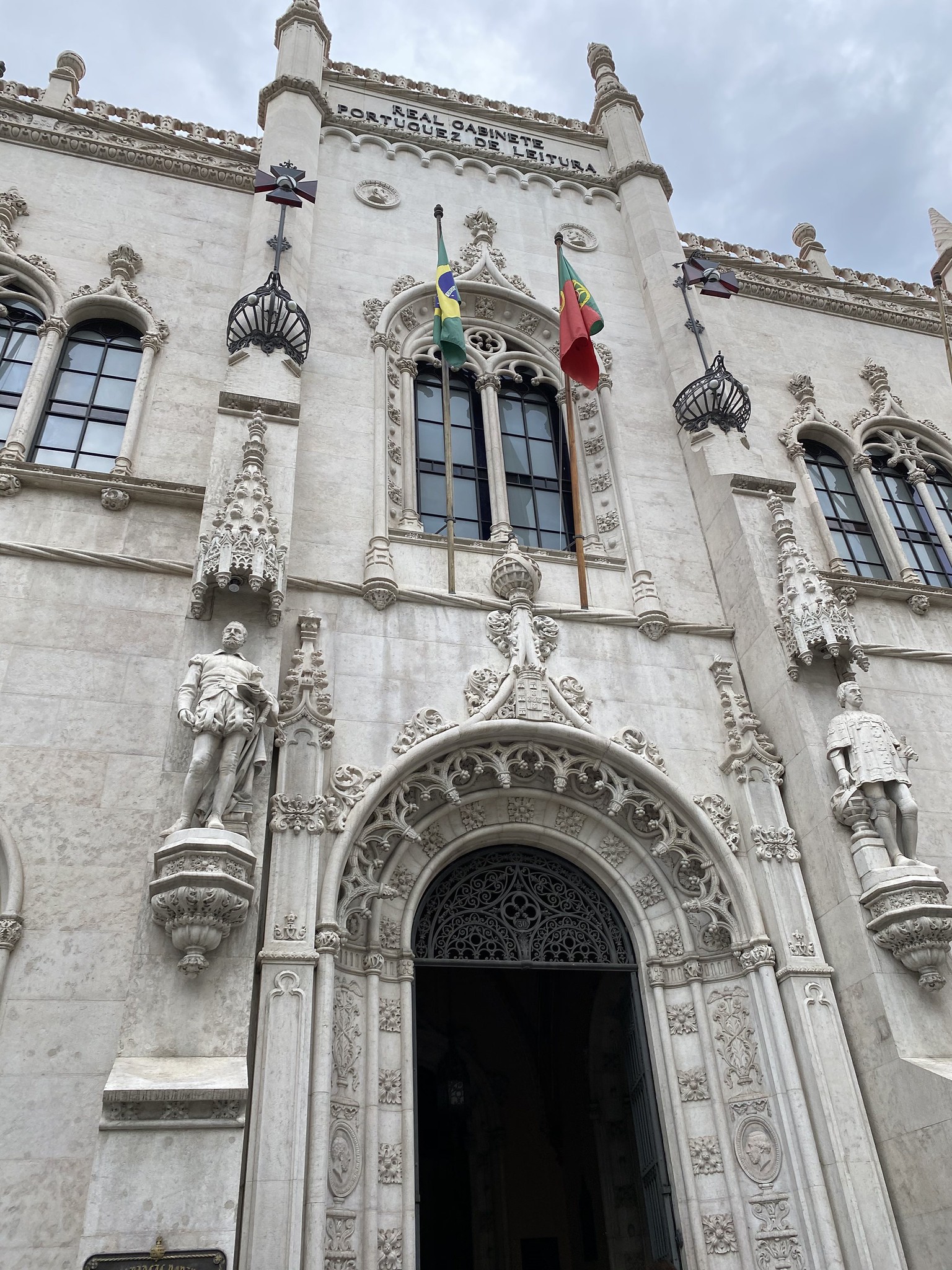
From there, we walked through the streets of Rio’s historic center to the Real Gabinete Português de Leitura (Royal Portuguese Reading Room)—one of the city’s hidden architectural treasures. Stepping inside felt like entering a different world. The towering wooden bookshelves, ornate design, and grand interior gave it an almost magical atmosphere, reminiscent of a scene from a fantasy film. We sat quietly for a few moments, simply taking in the beauty and silence of the space.
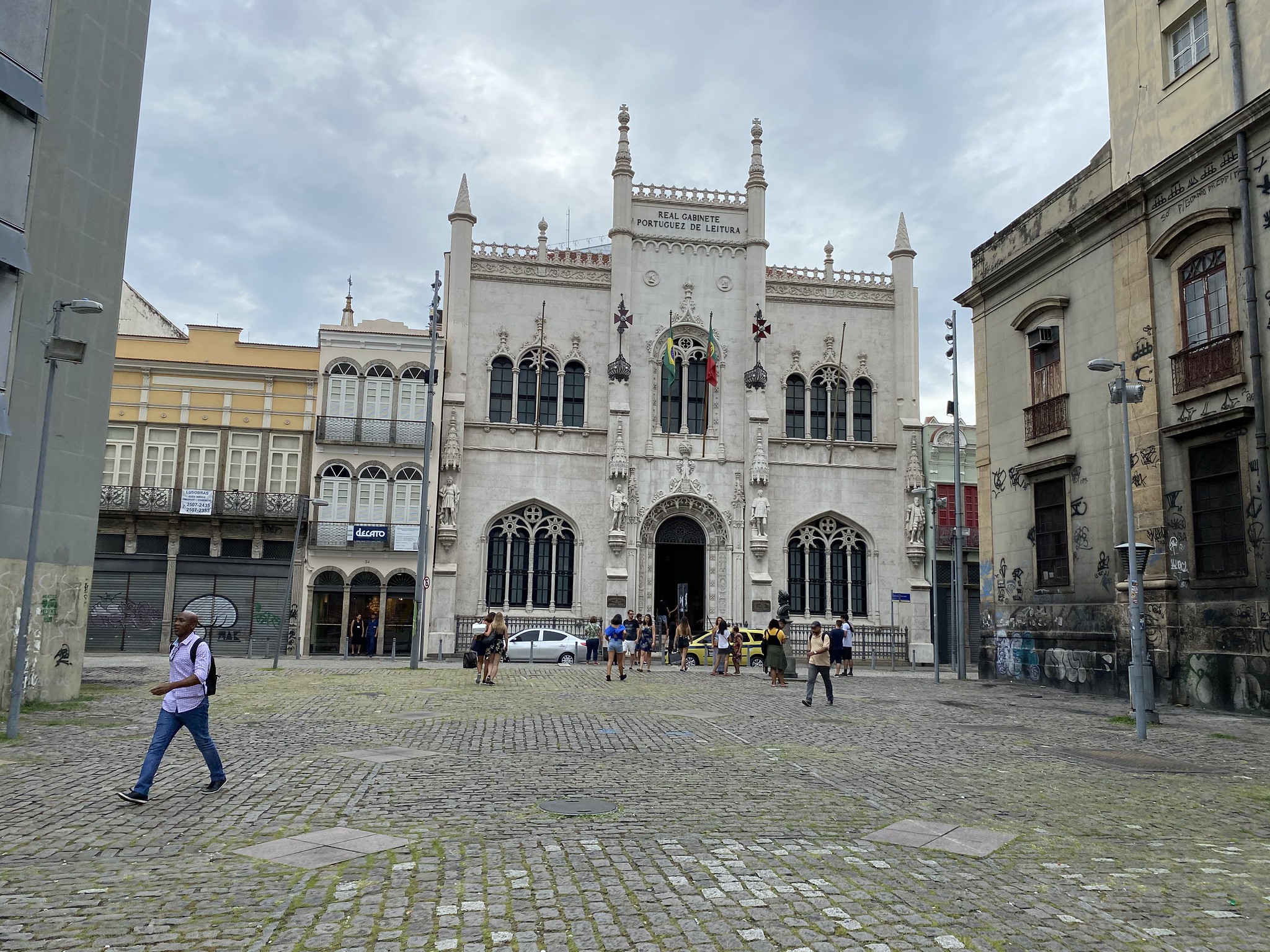

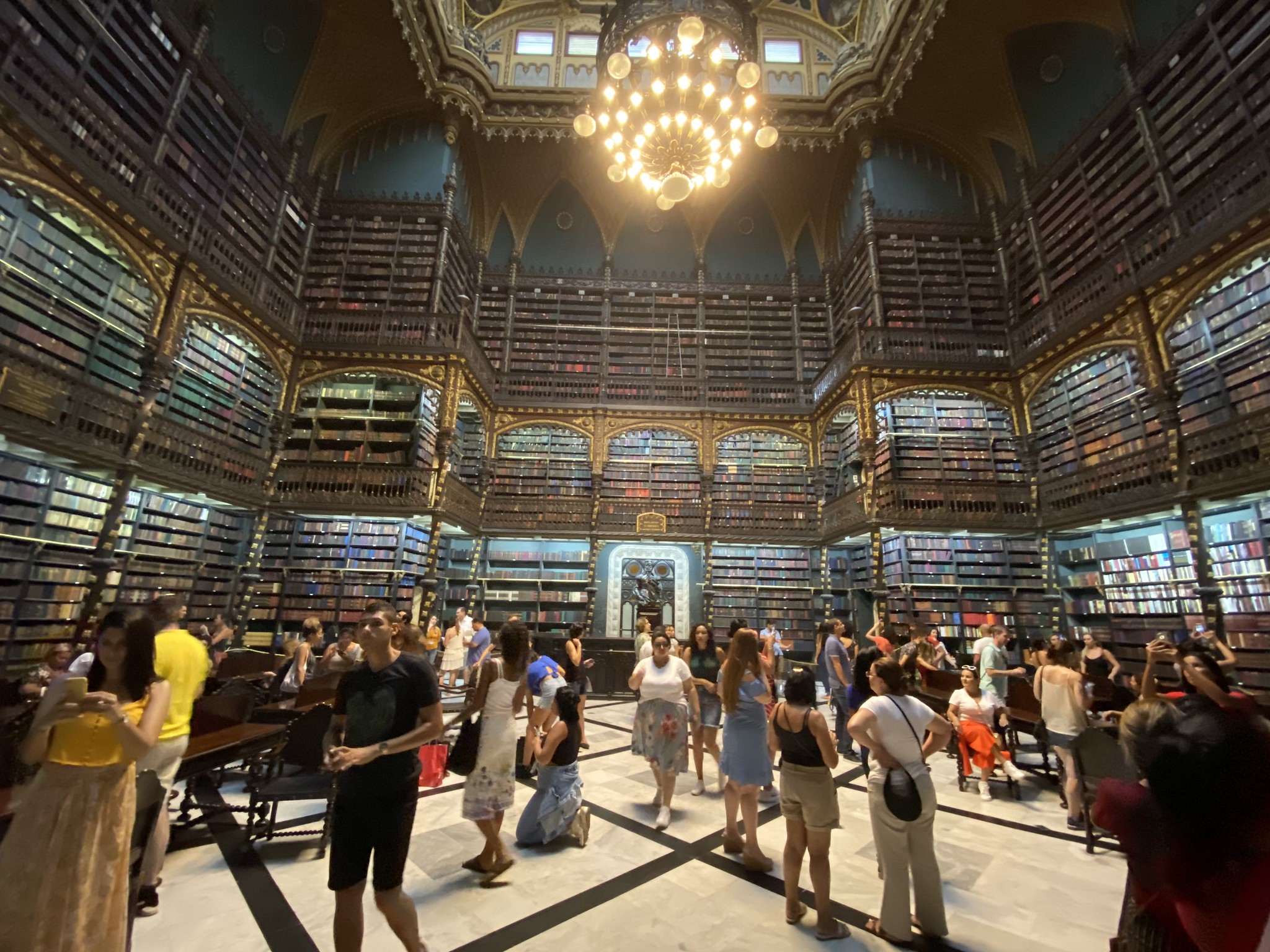
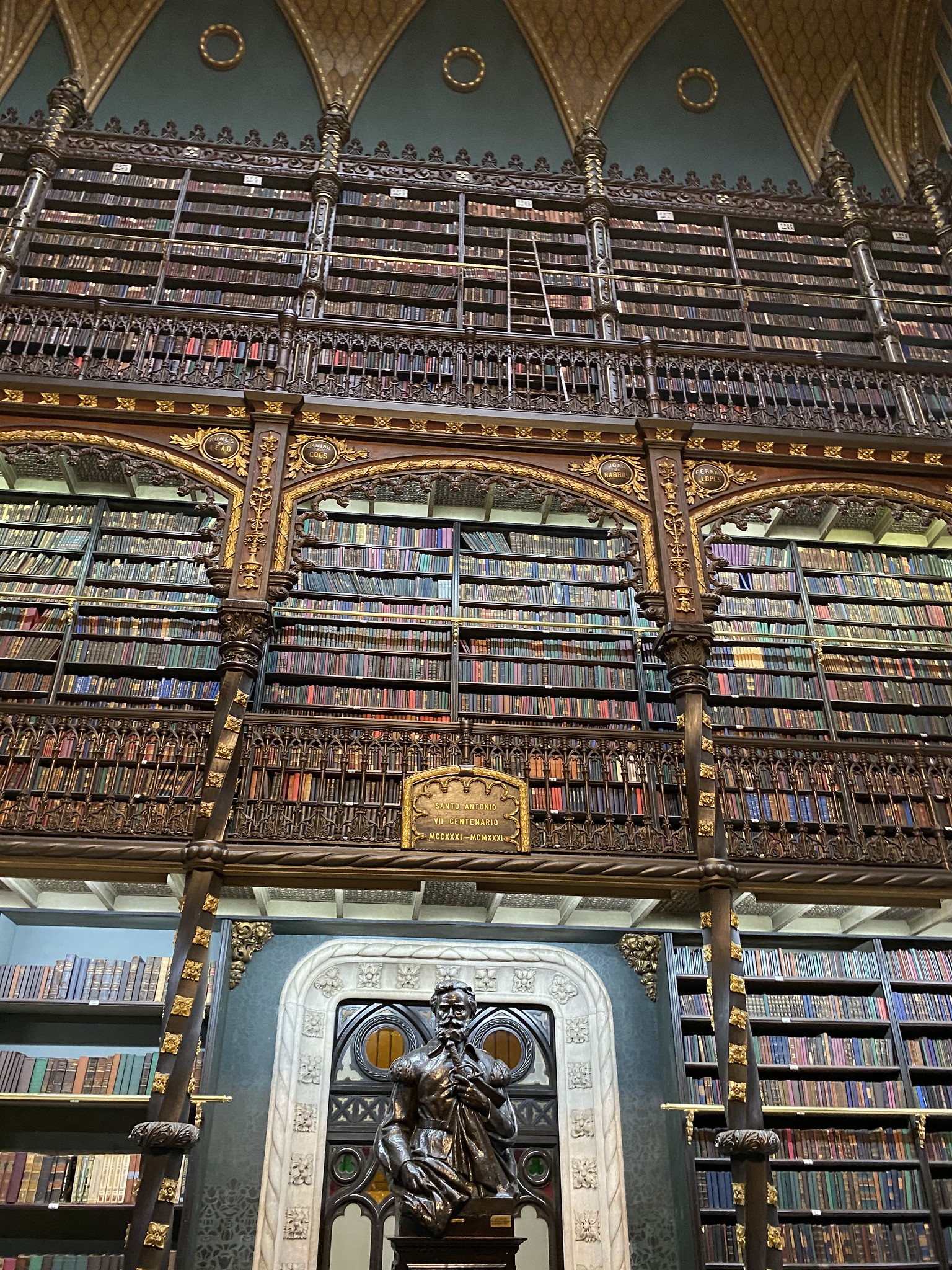
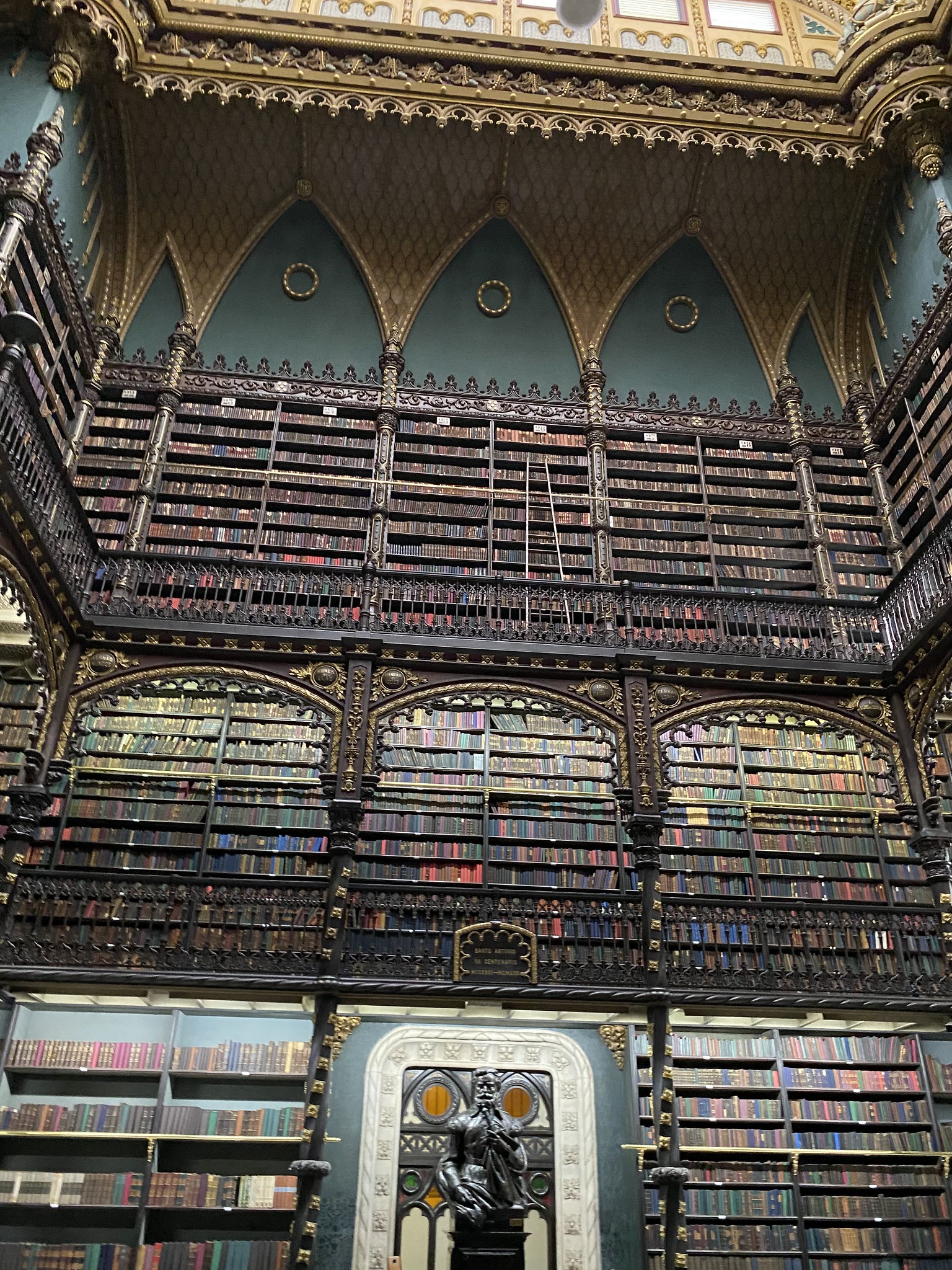
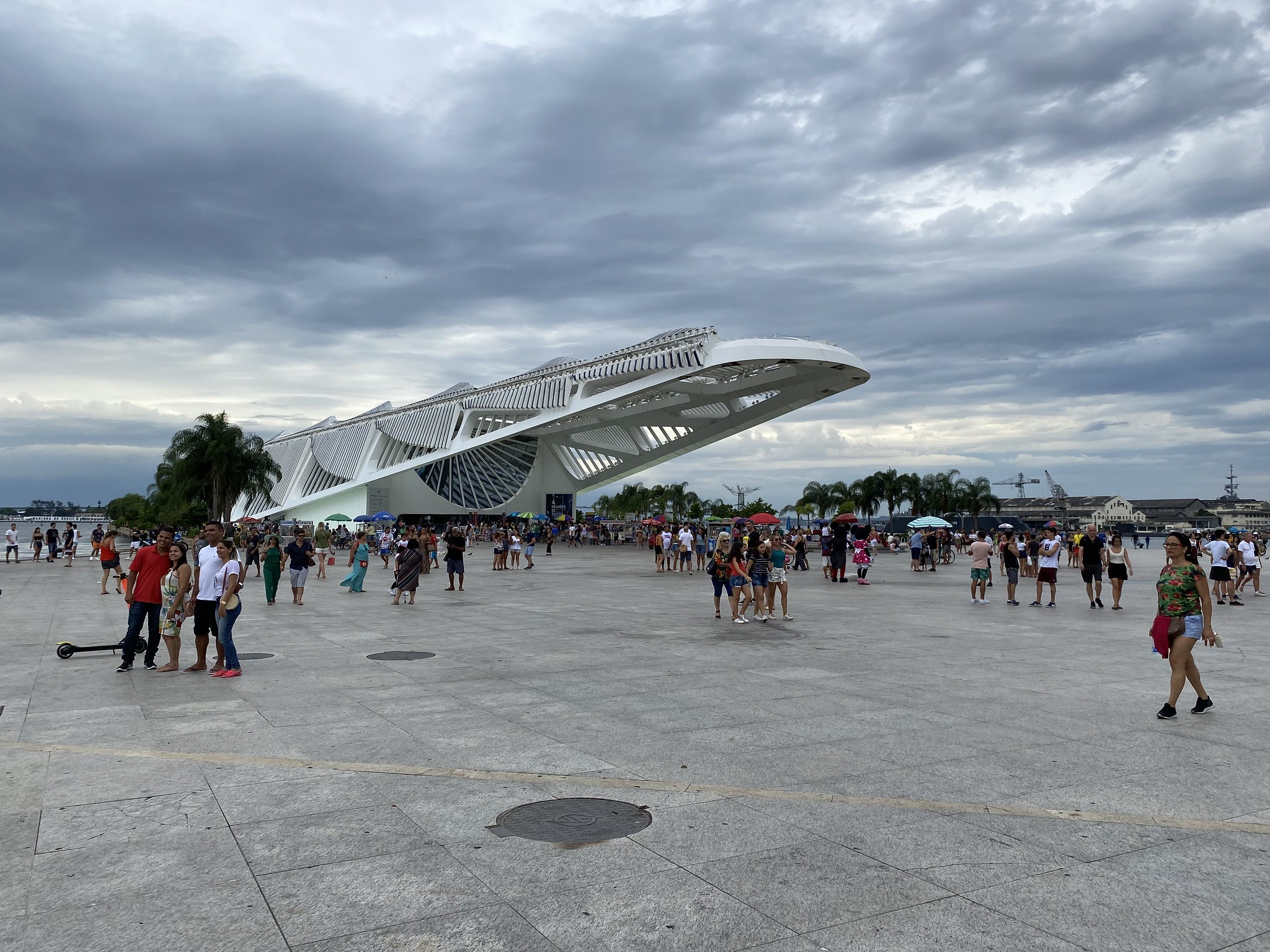
Next, we made our way to the Museum of Tomorrow, located along the pier. Its futuristic design immediately caught our attention. We spent time admiring the structure itself, which looks like something from another world, blending science, sustainability, and modern architecture.
Outside the museum, the waterfront was alive with activity. A group of children were playfully jumping into the water from the pier, laughing and enjoying themselves with complete freedom. They even came over and asked us to take pictures of them mid-jump, which added a lively and spontaneous energy to the moment.
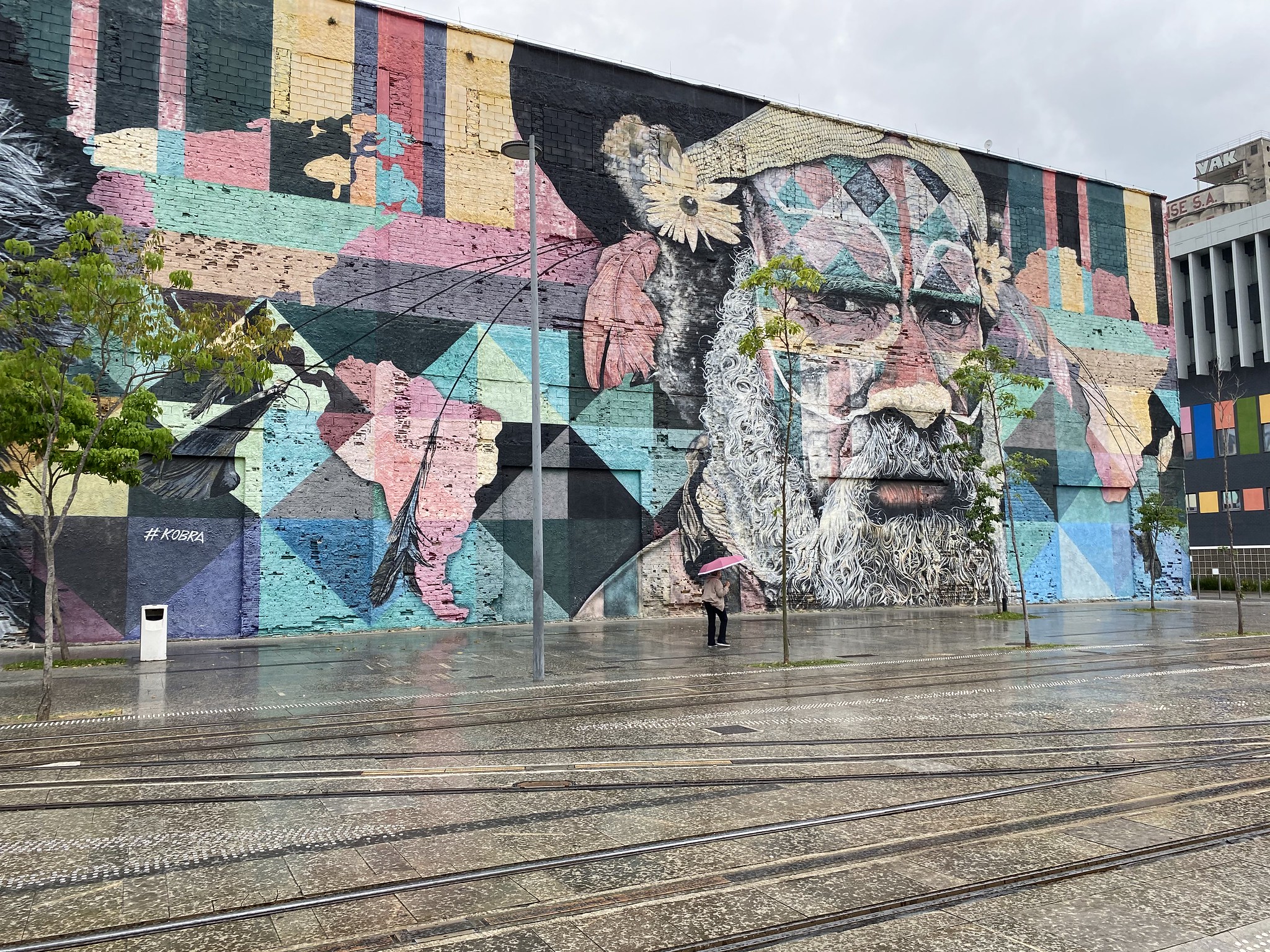
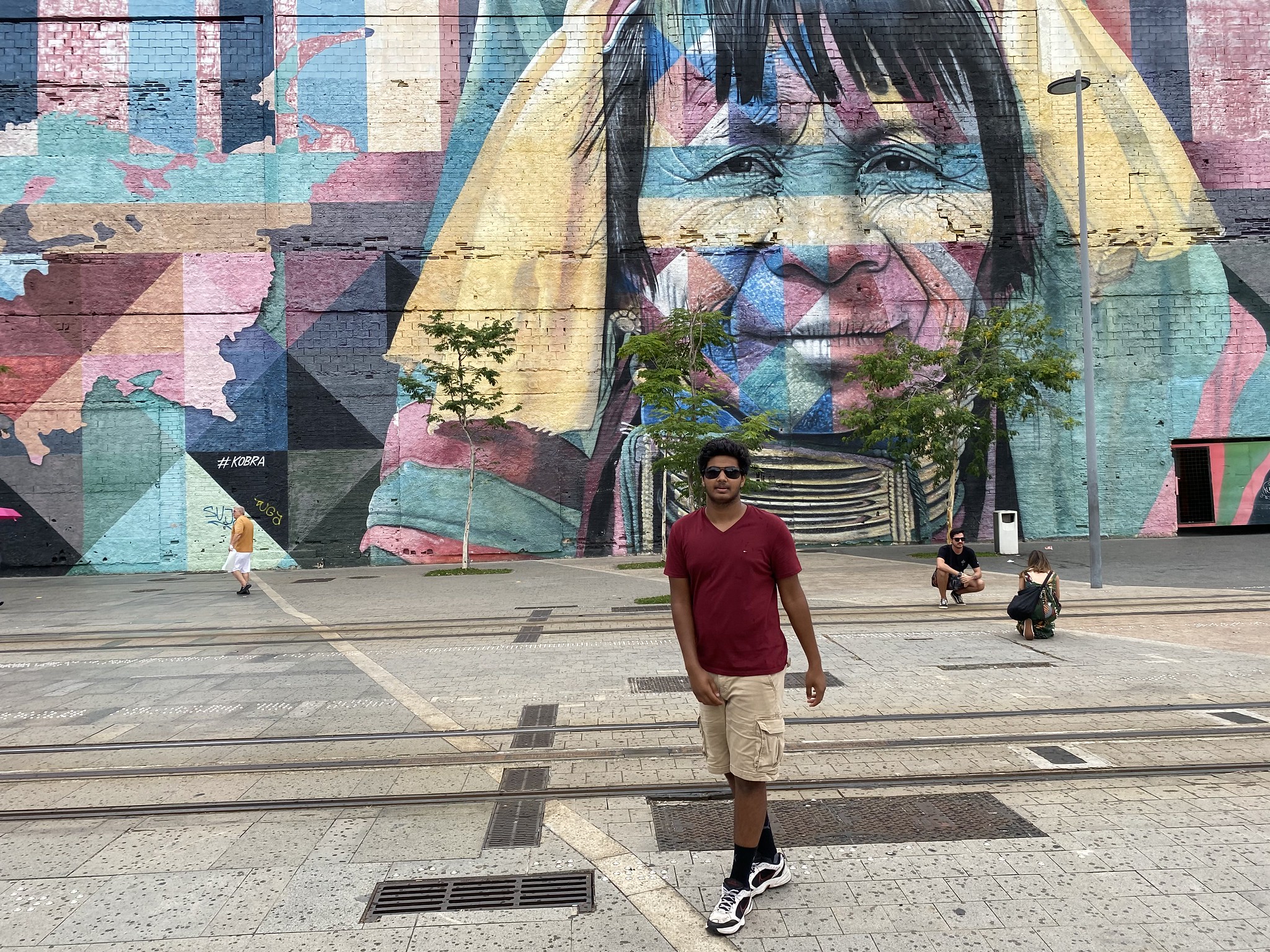
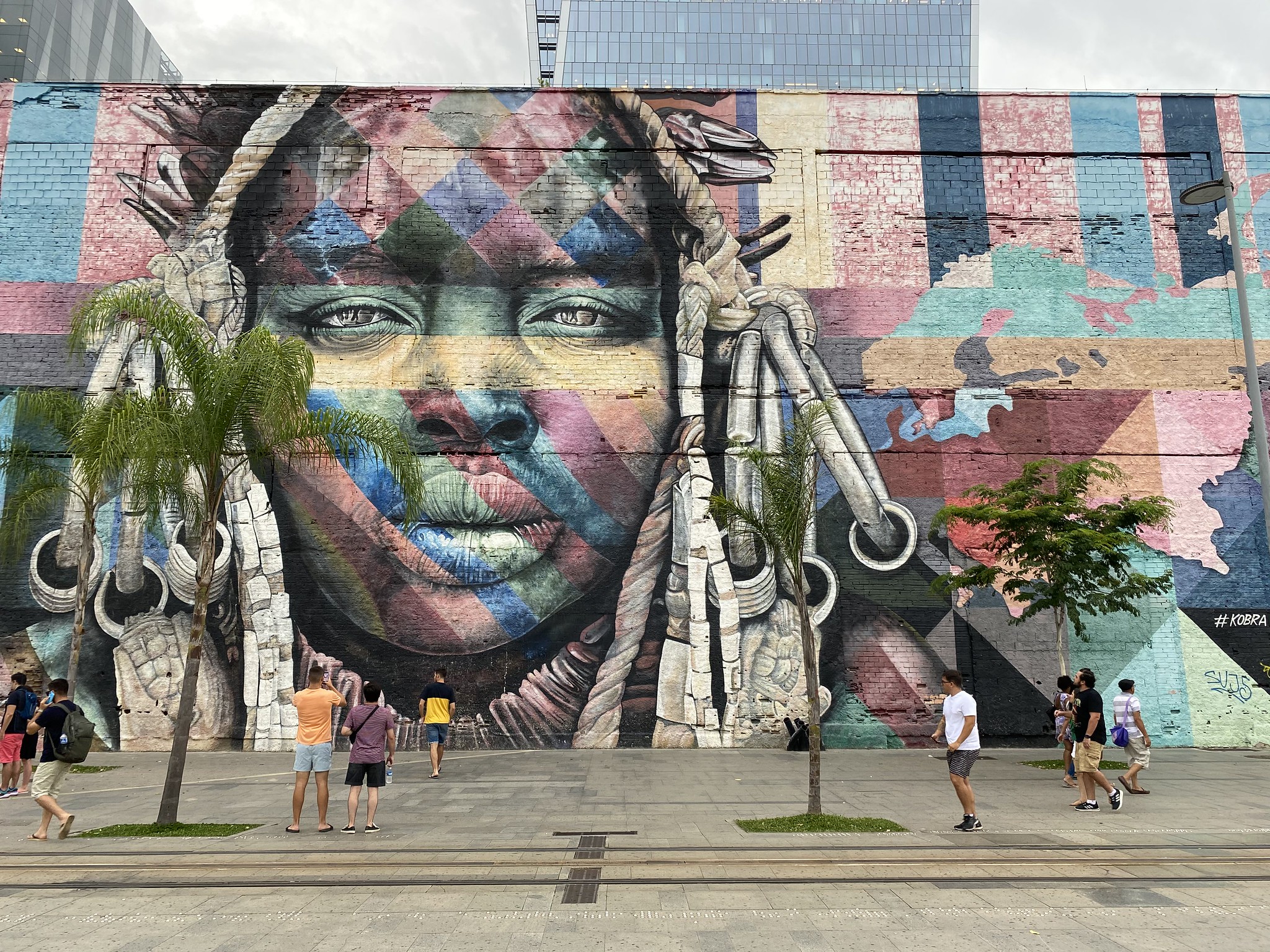
From there, we continued walking along the Olympic Boulevard, famous for its massive street murals and urban artwork. Light drizzle began to fall, cooling down the afternoon heat as we explored the colorful walls and took photos along the way.

By late afternoon, we returned to Copacabana for lunch near our hotel and took a short break.
In the evening, we headed to the Ginga Tropical Show at a theater in Leblon, arranged through C2Rio. The performance brought Brazil’s cultural energy to life—featuring samba, capoeira, and traditional dances that captured the spirit of Carnival. The music, rhythm, and energy in the room made it feel like a mini version of Rio’s famous Carnival celebration.
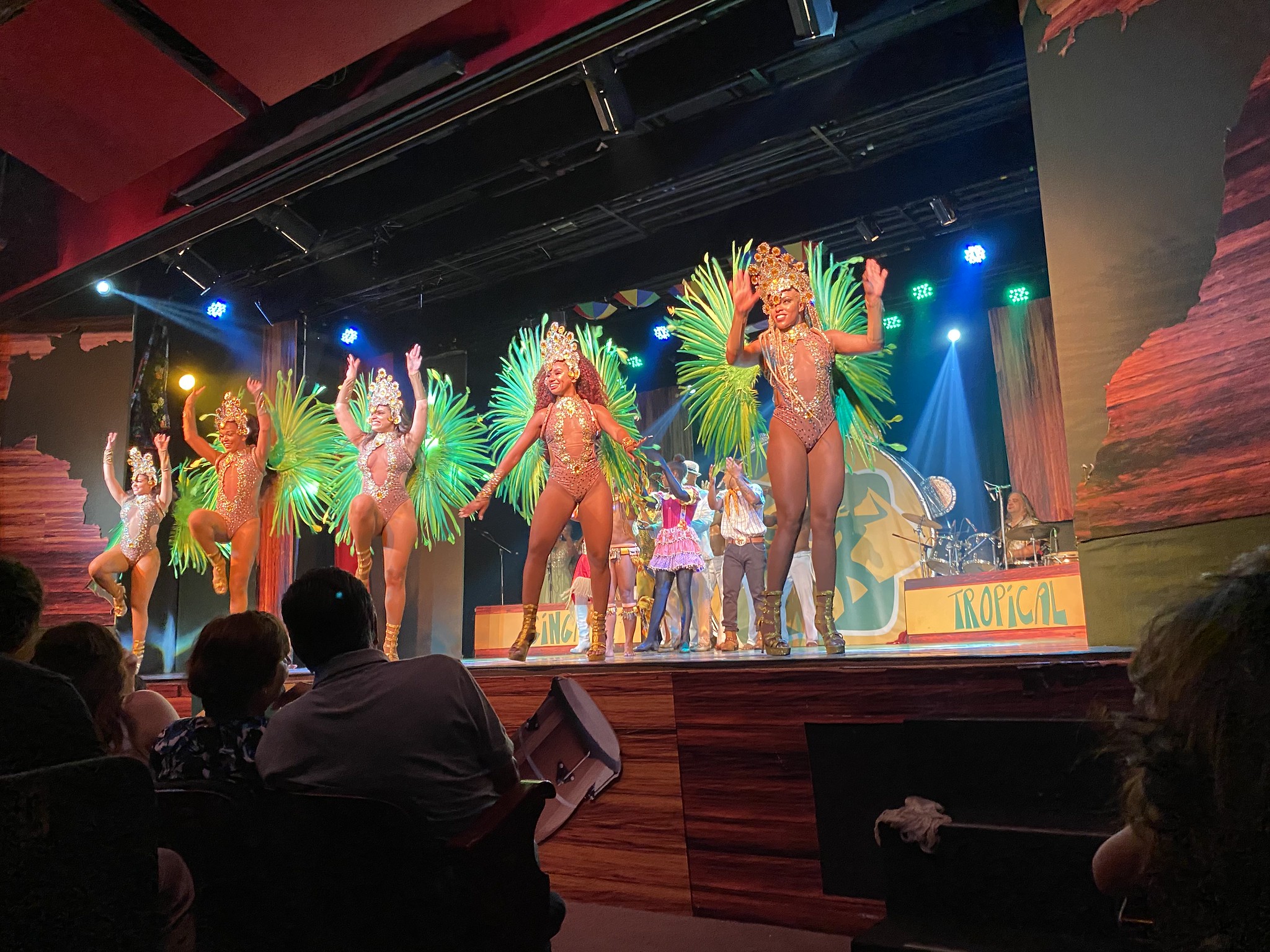
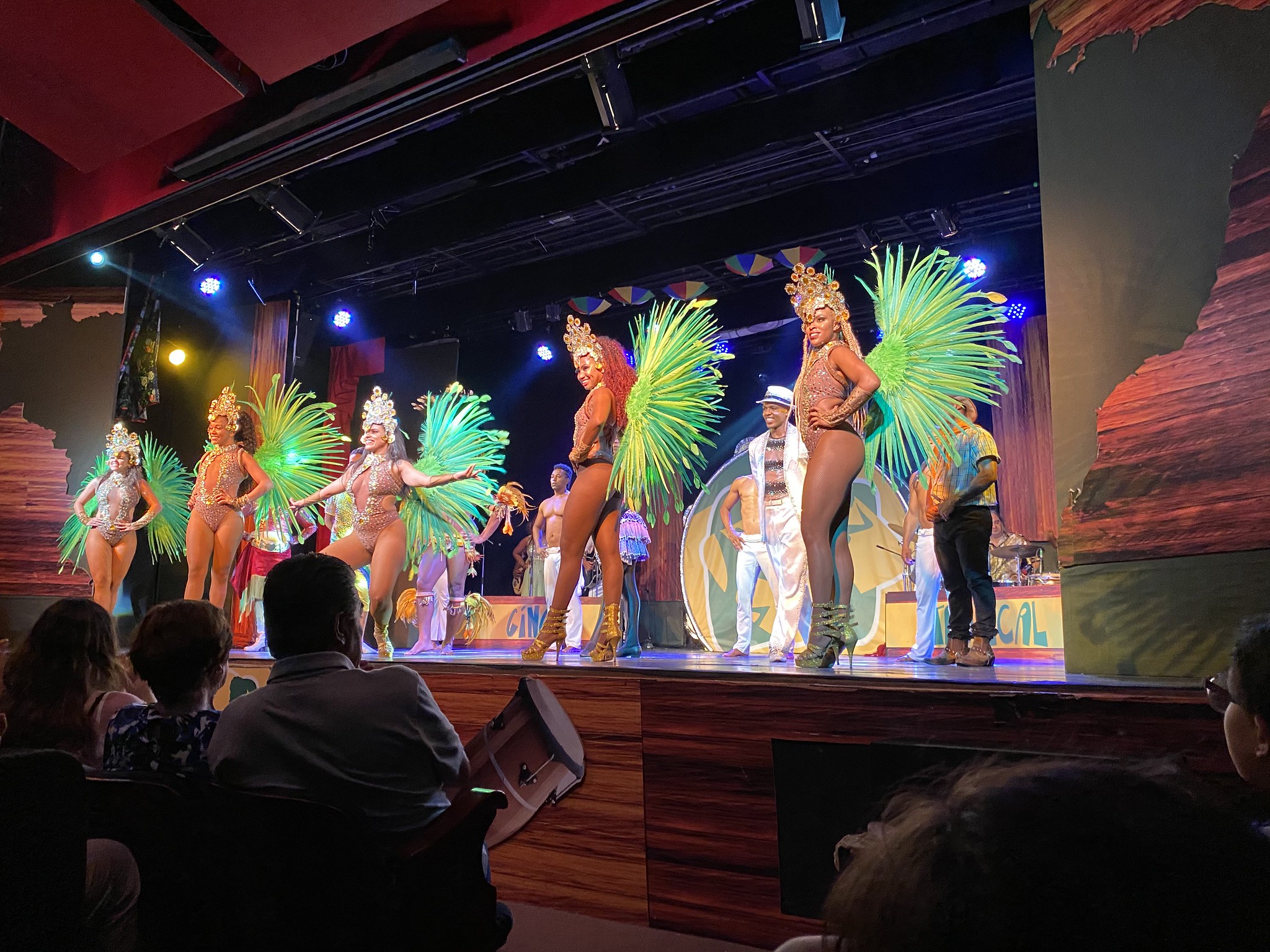
It was the perfect way to end a day that combined adrenaline, culture, architecture, and pure Brazilian rhythm.
Day 5 – Copacabana Farewell & A Different Side of Rio
“A slow morning by the beach, a powerful glimpse into Rio’s hillside communities, and one last walk through the city we had come to love.”
Our final day in Rio began the way it should—at Copacabana Beach. We spent our last morning there with family, walking along the shoreline and soaking in the familiar rhythm of waves, joggers, and beach vendors. After several days of exploring the city, it felt like a quiet moment to simply pause and take it all in.
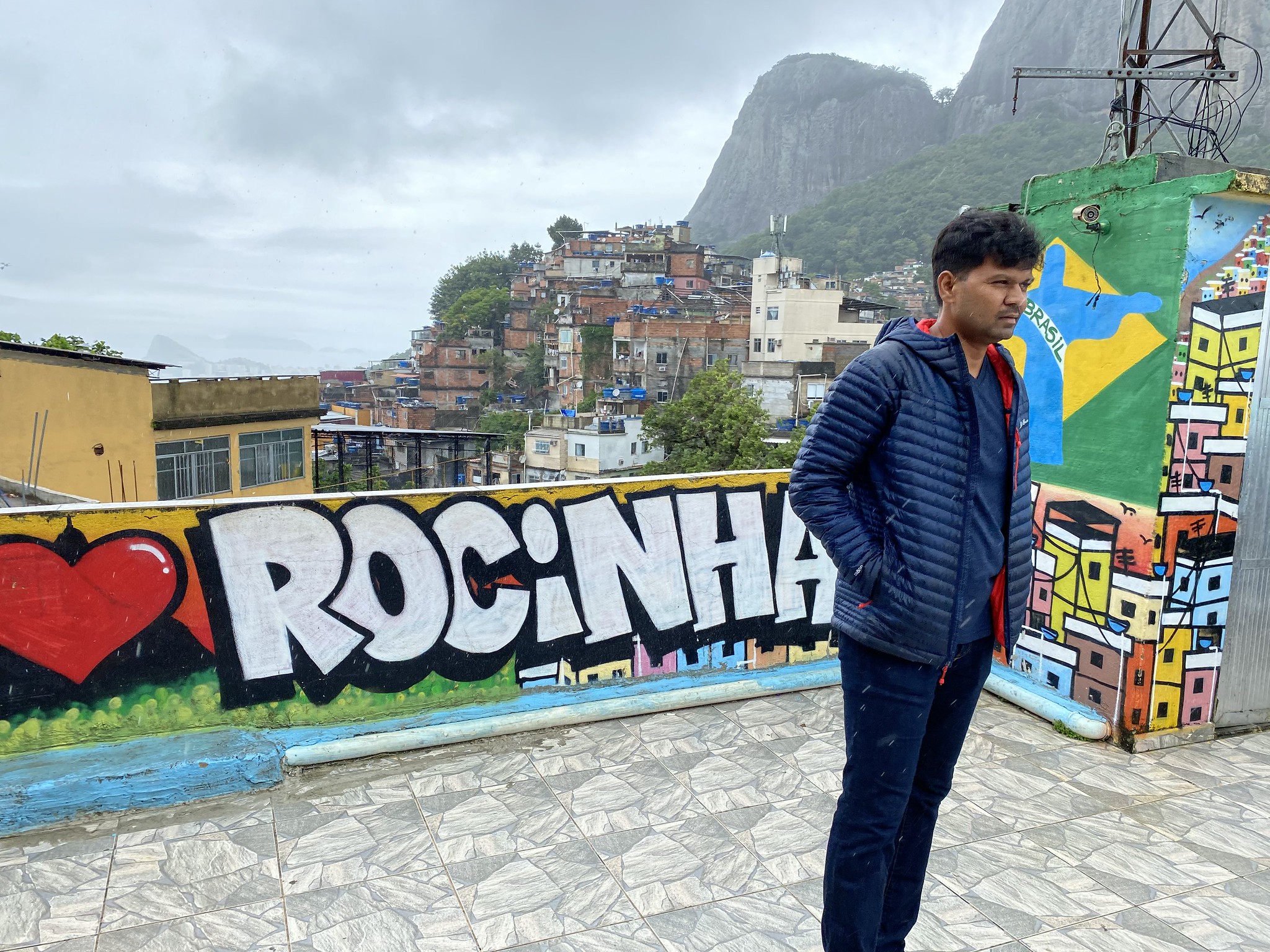
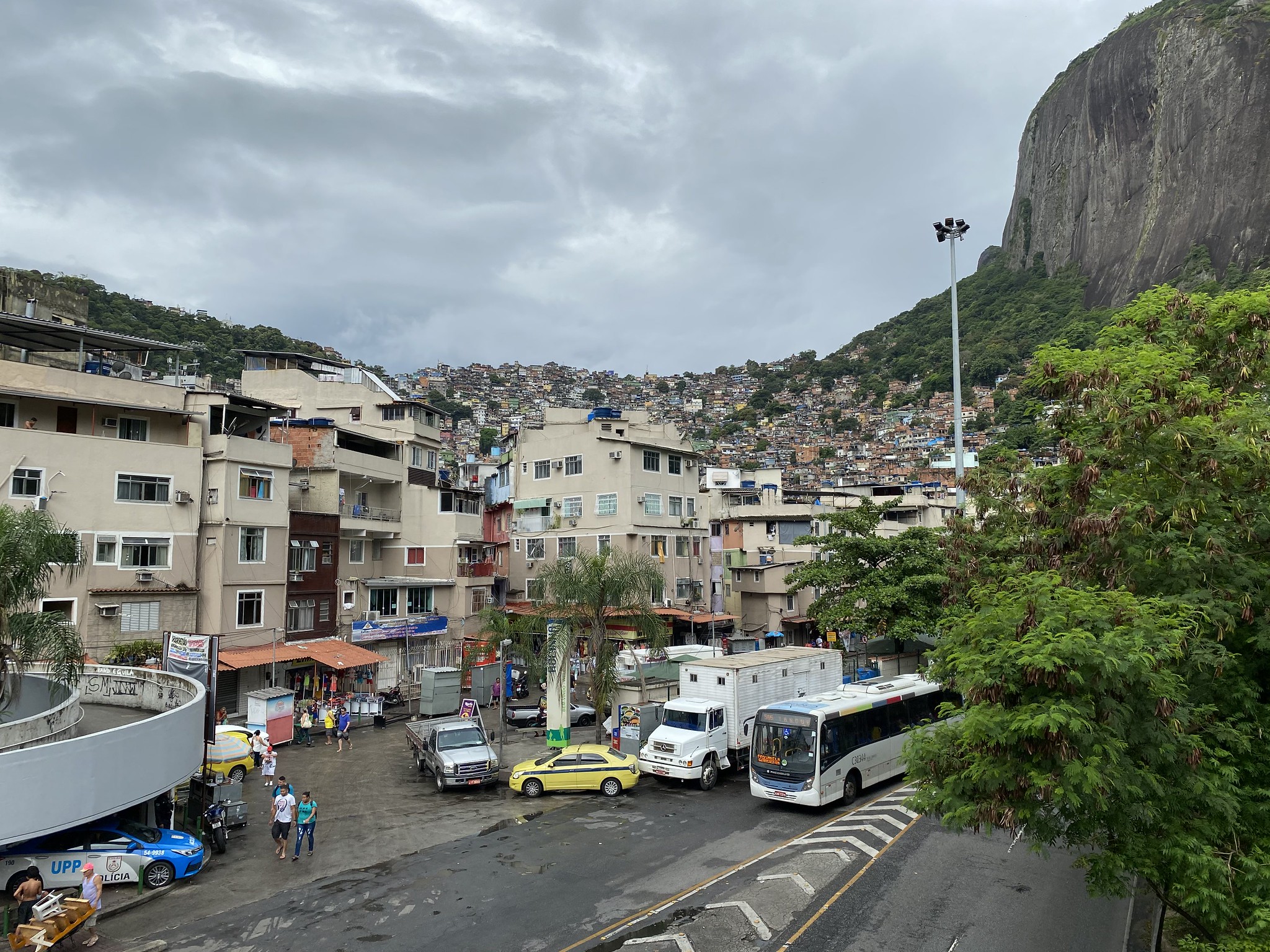
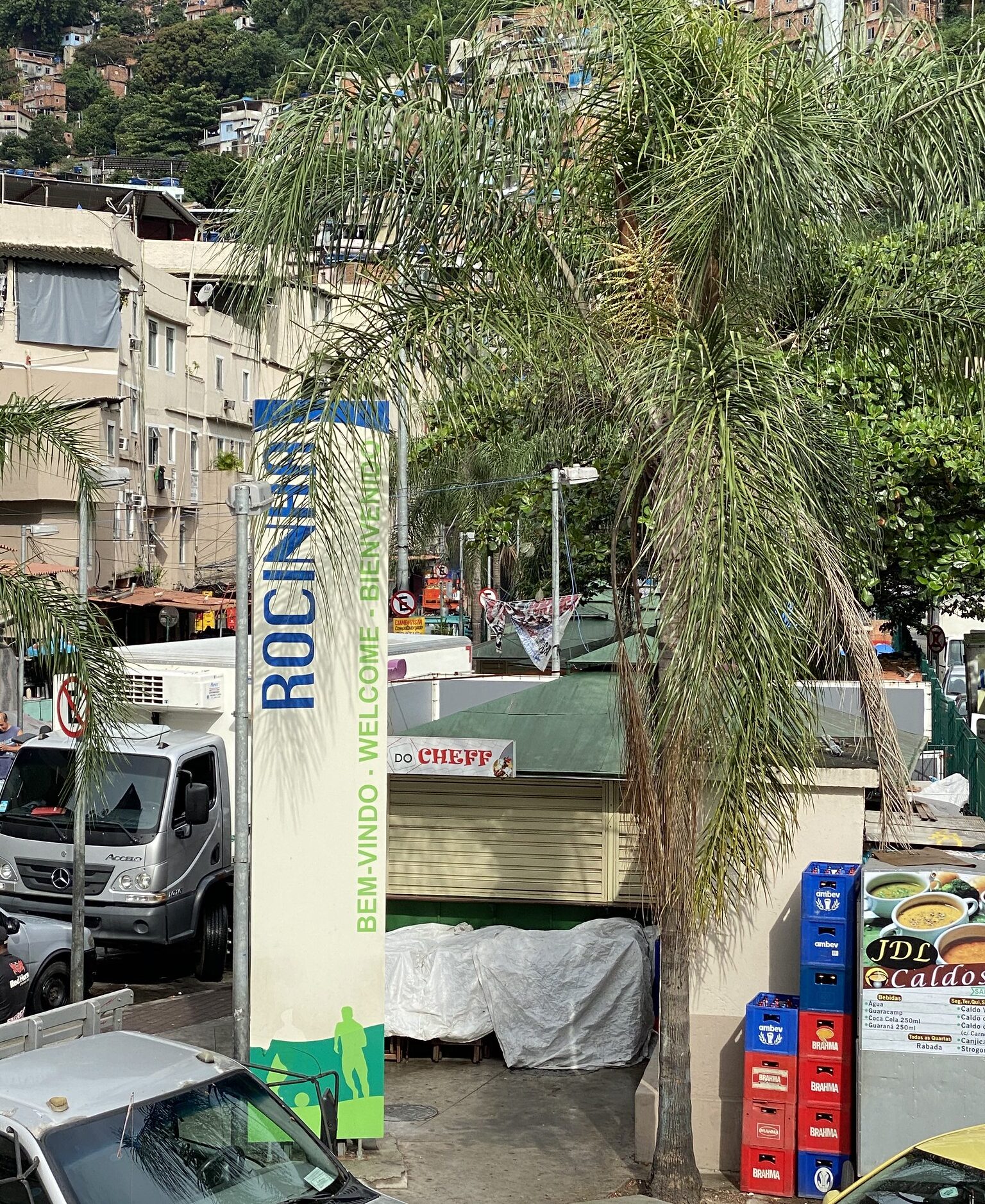
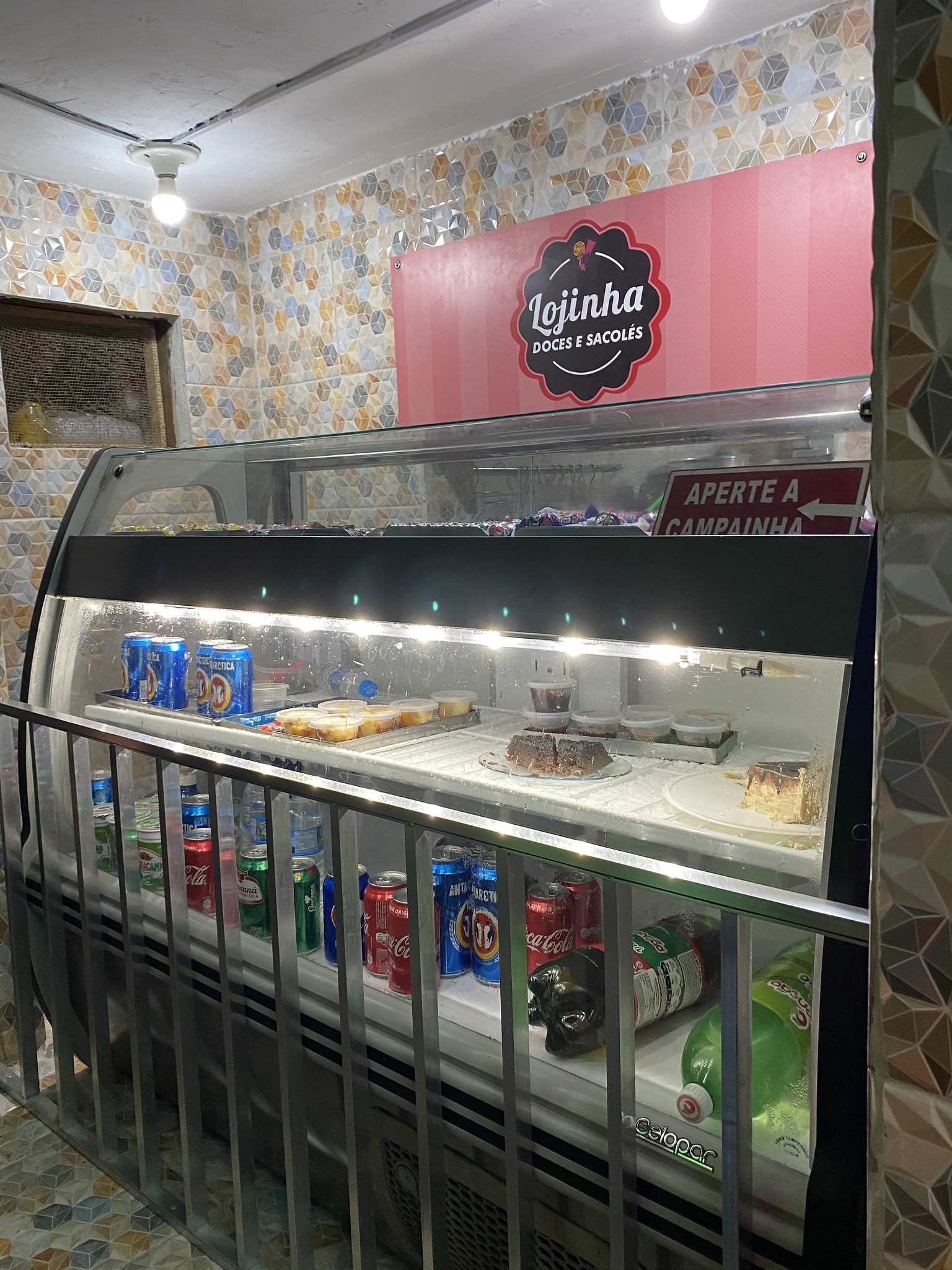
Later in the day, we joined a last-minute guided favela tour, which offered a very different perspective of Rio.
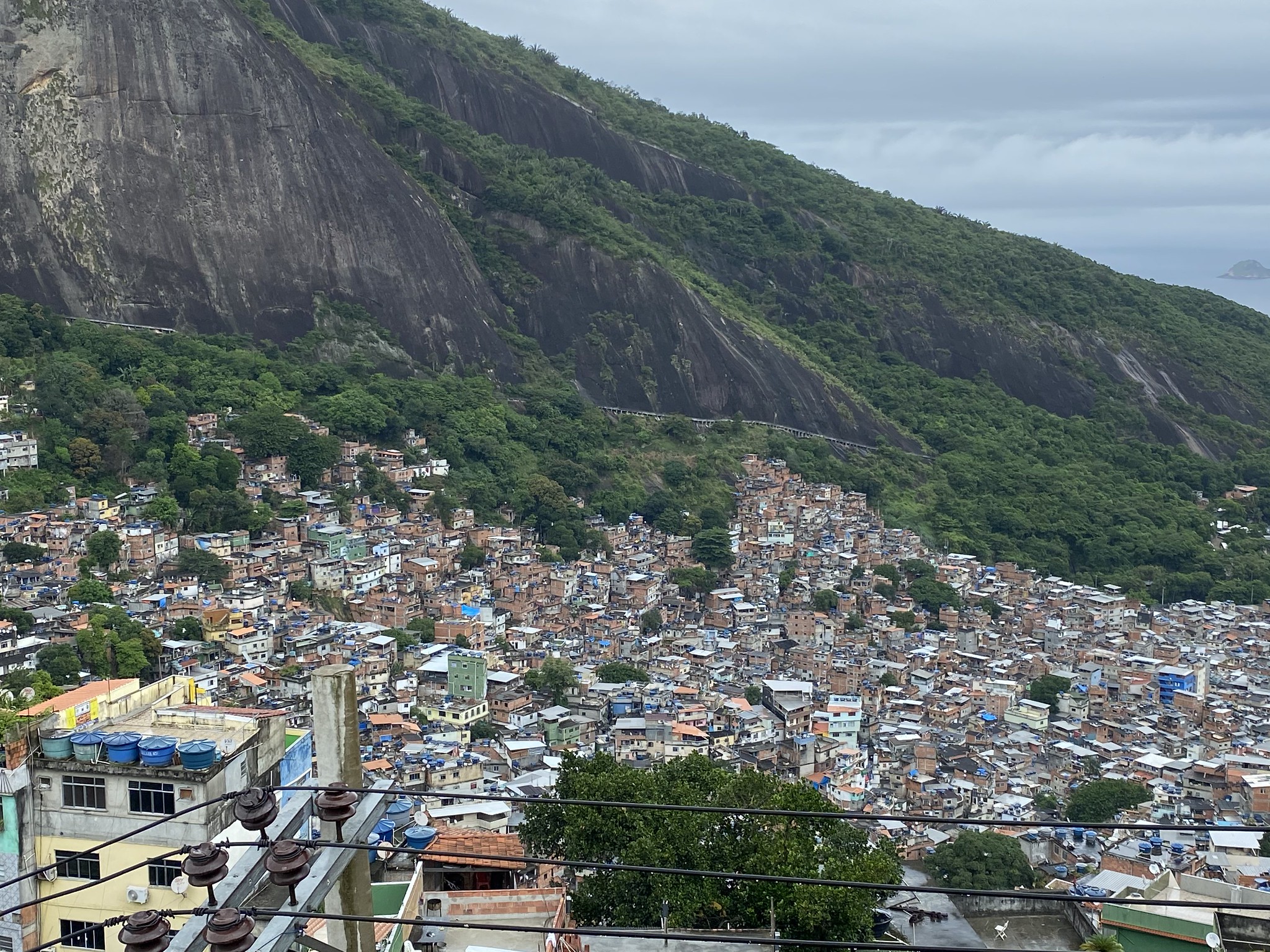
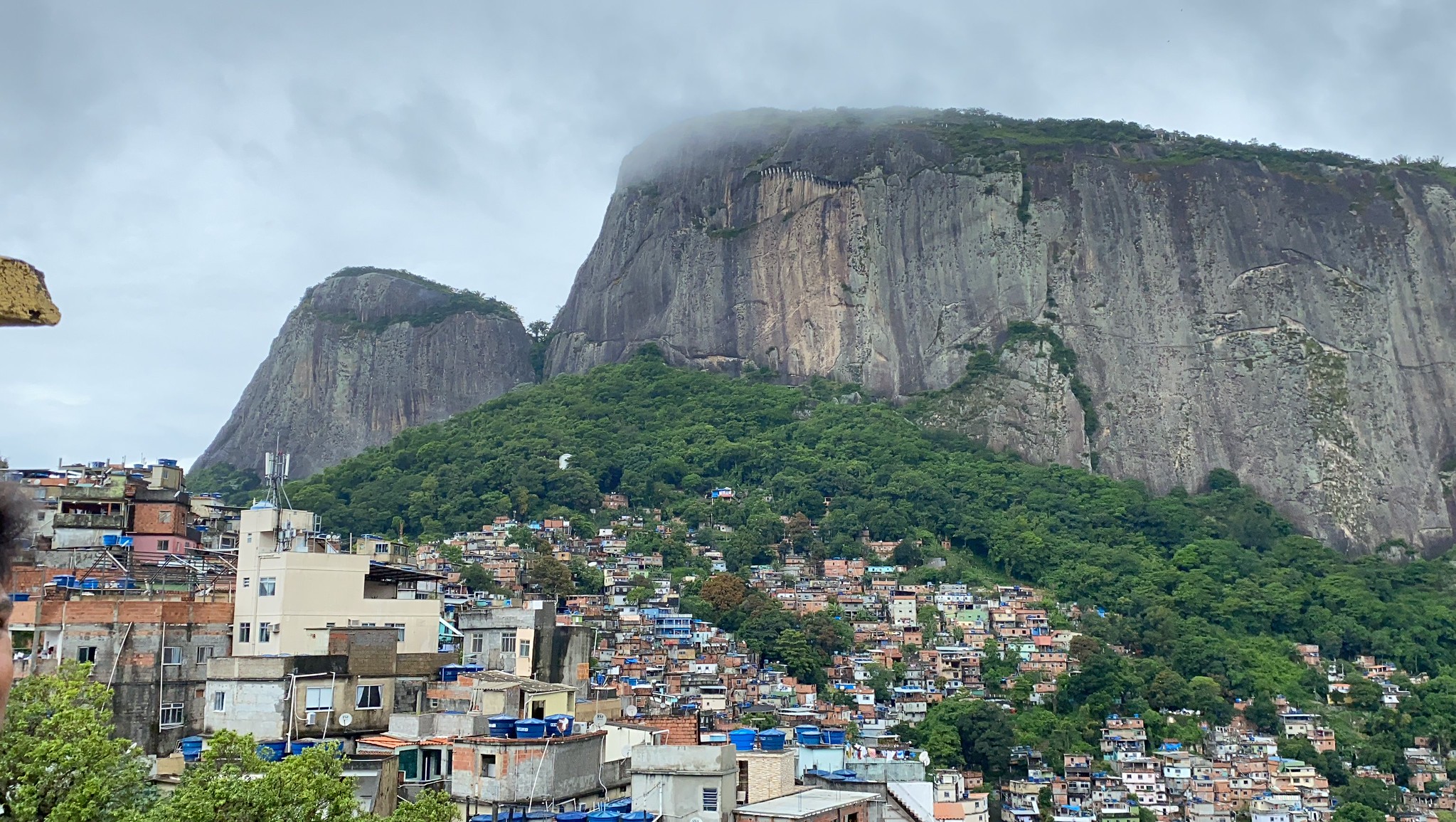
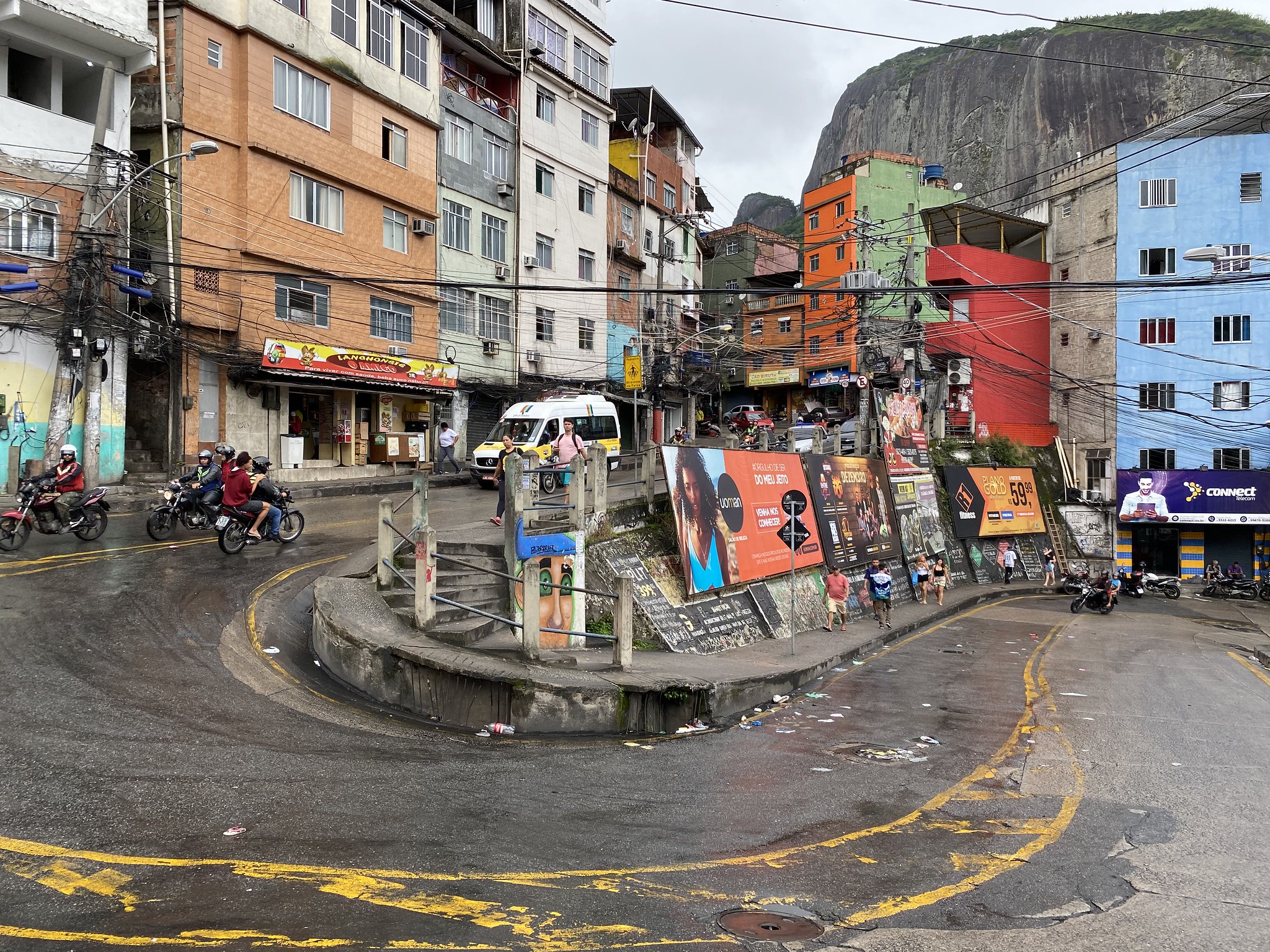
We walked with our guide through narrow streets and stairways built into the hillside communities. From a second-floor viewpoint inside one of the buildings, we could see the dense layout of homes stretching across the slopes, framed by mountains in the background. It was a striking view of how the city has grown organically over time.
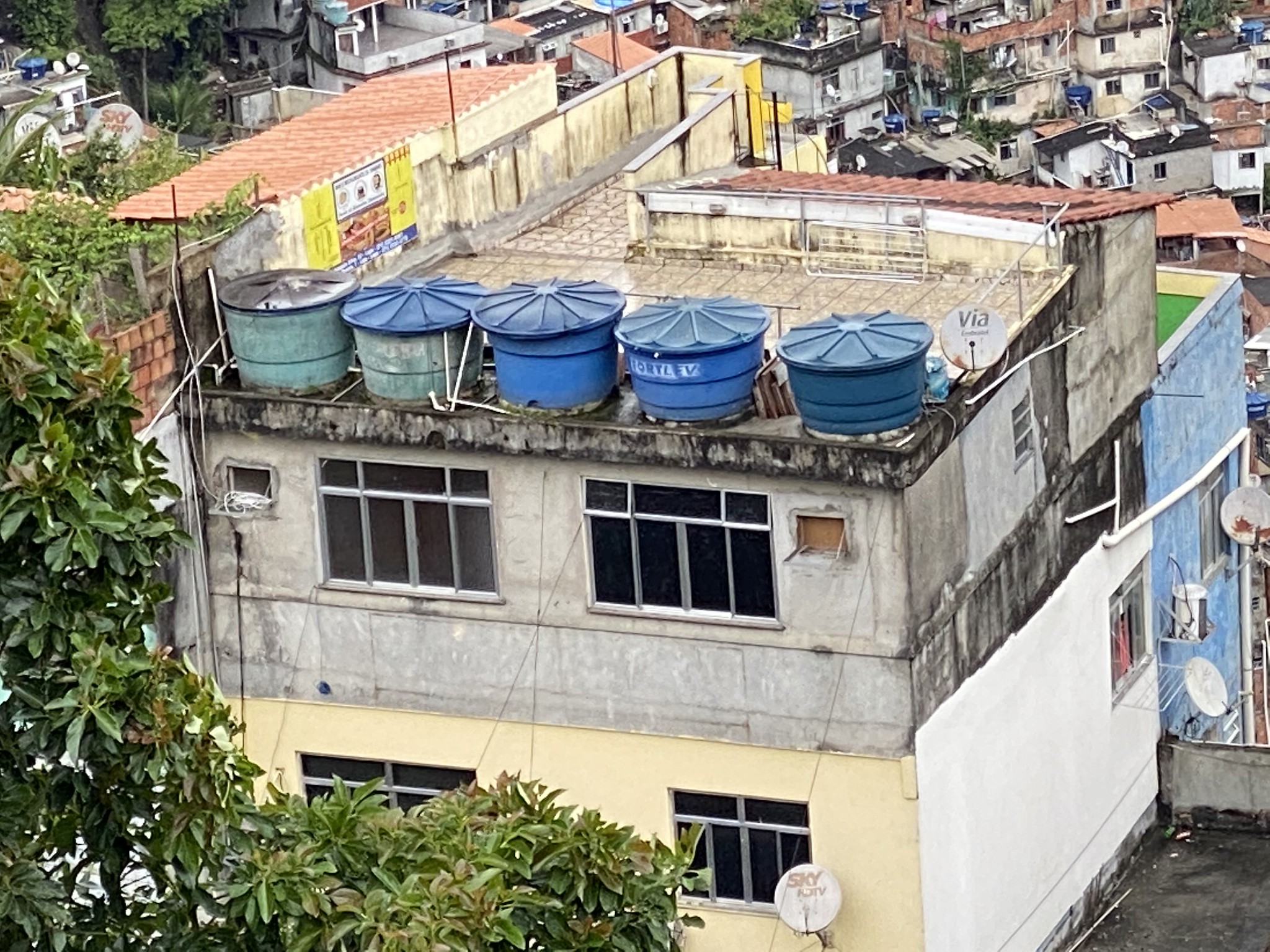
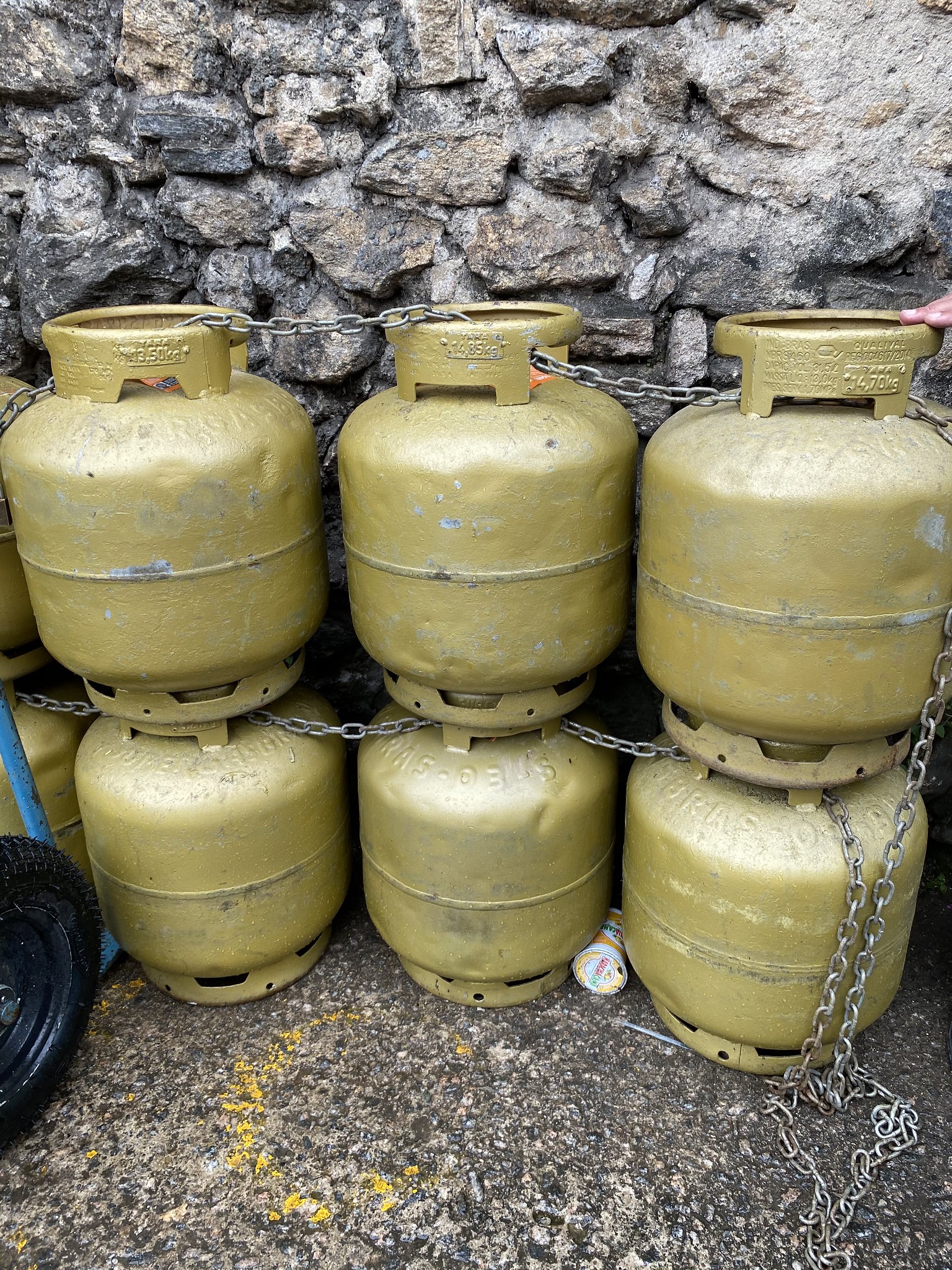
From this vantage point, everyday life was visible in detail—water tanks placed on rooftops, cooking gas cylinders stored in common areas, and narrow pathways connecting homes throughout the hillside. People moved through the streets and staircases as part of their daily routine, giving us a closer understanding of how these communities function.
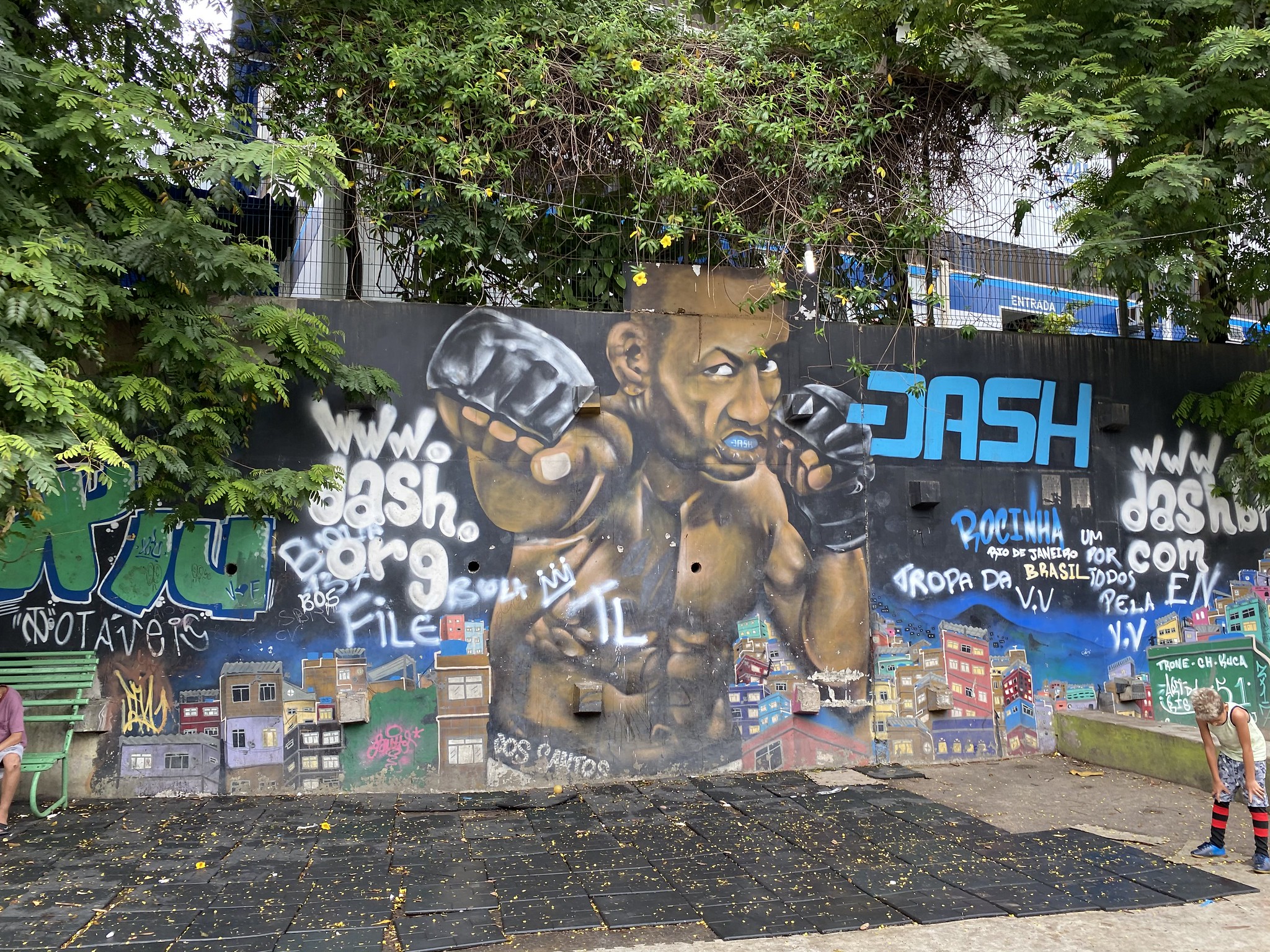
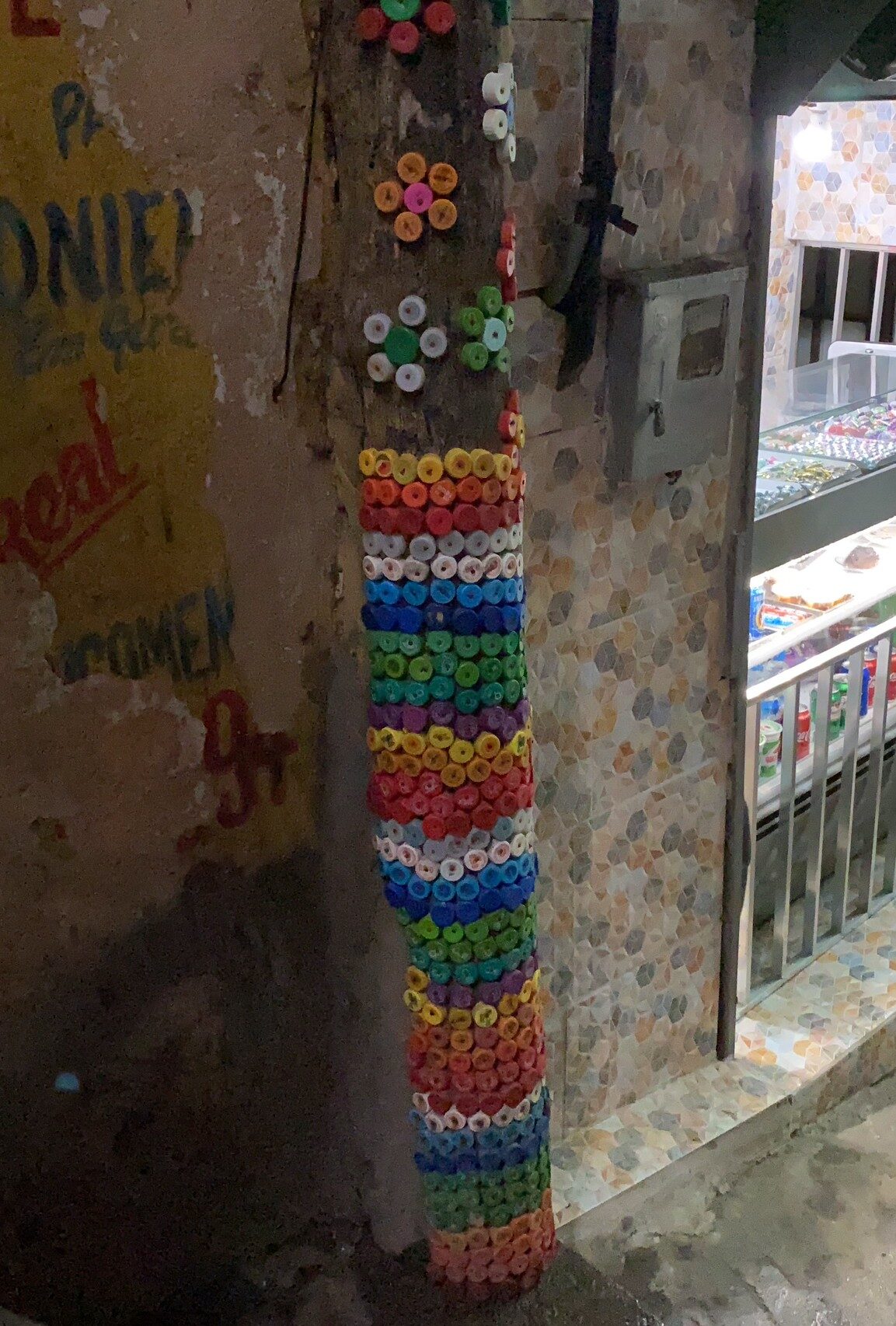
We continued walking through the neighborhood, passing small local churches and colorful murals painted on the walls. At one point, we reached a sharp hairpin bend where the road curved tightly along the hillside, offering another dramatic view of the area.
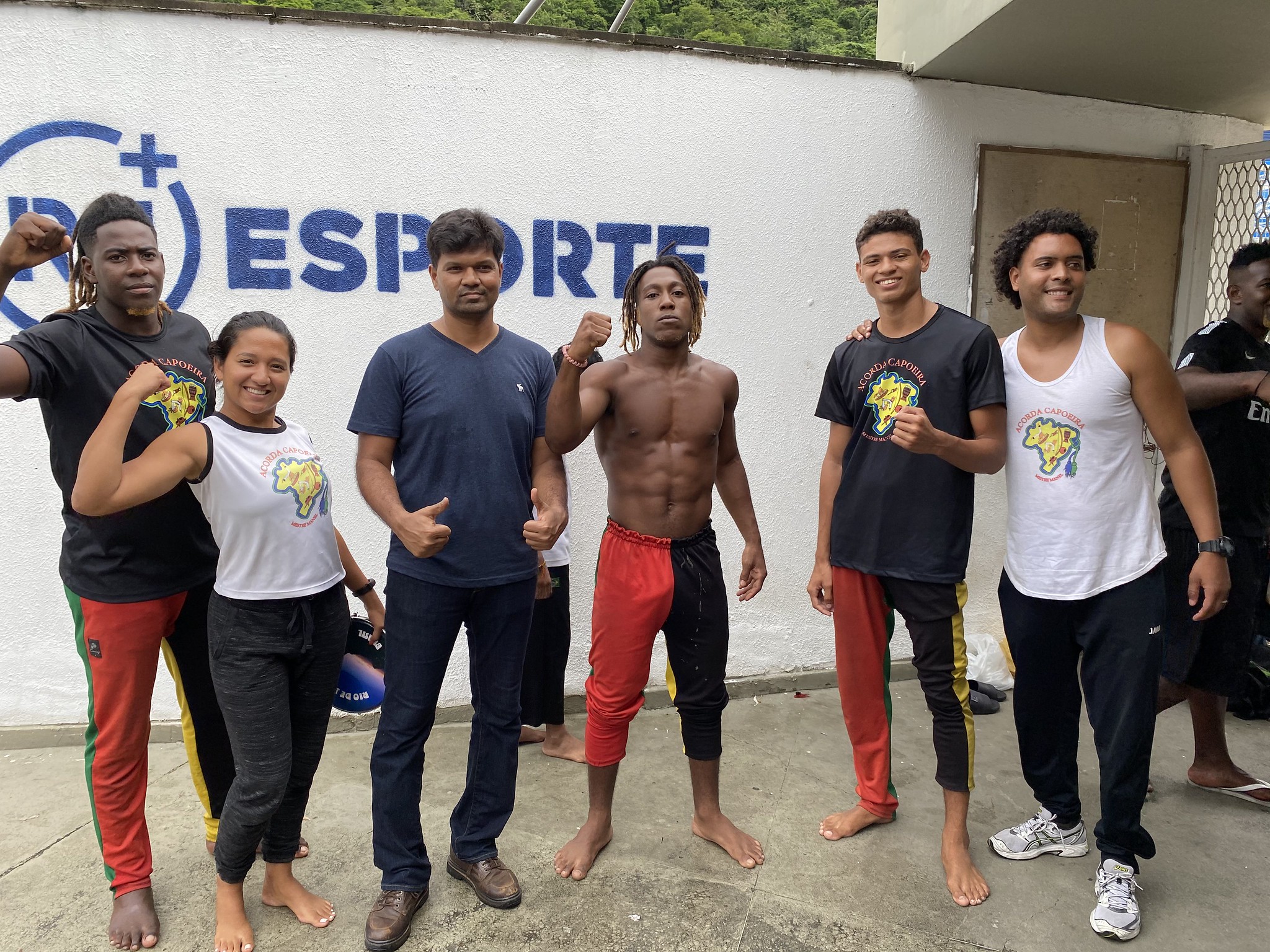
During the tour, we also stopped to watch a local dance performance, where a group was showcasing traditional rhythms and movement. It added a lively and cultural touch to an otherwise reflective experience.
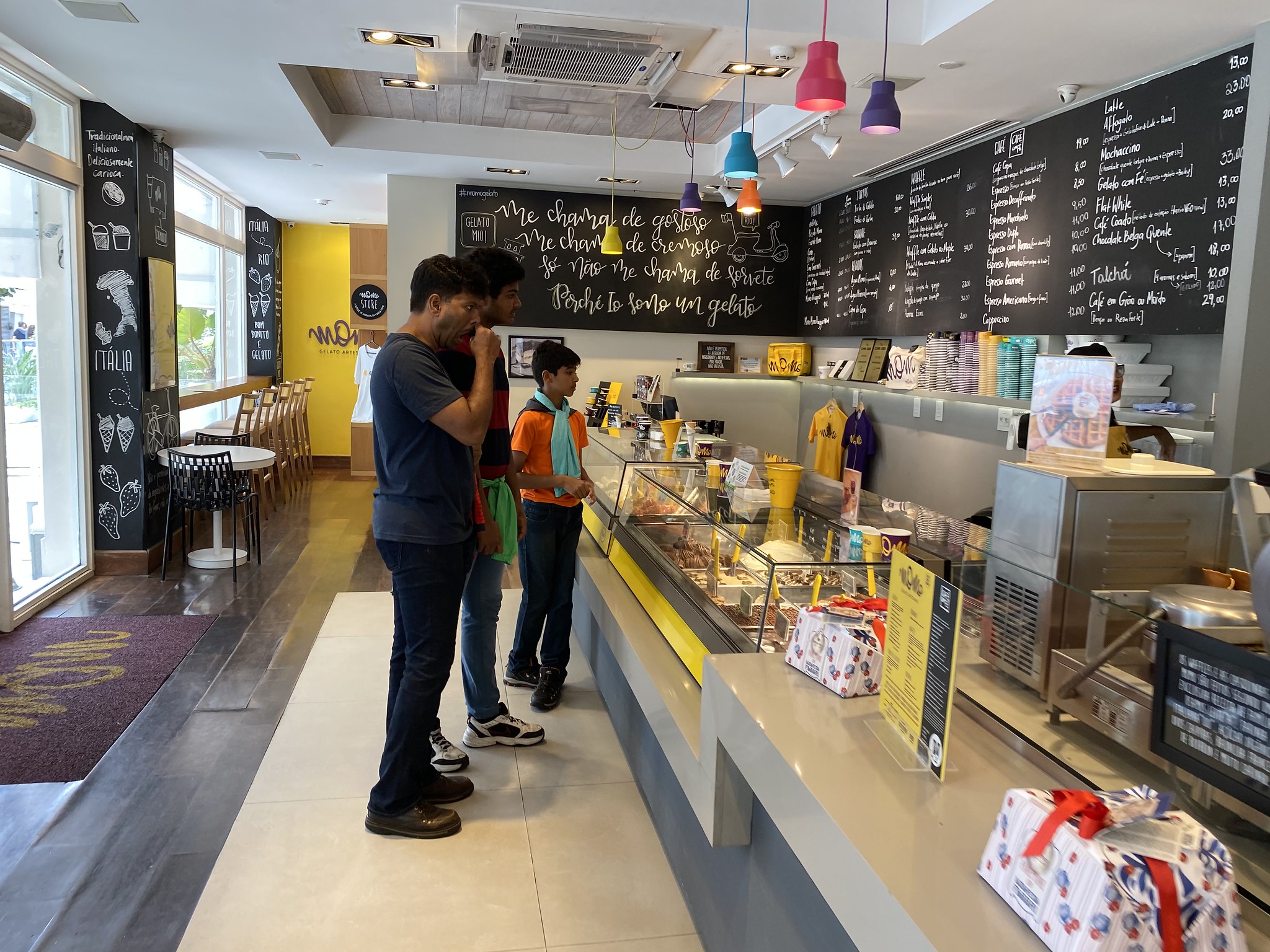
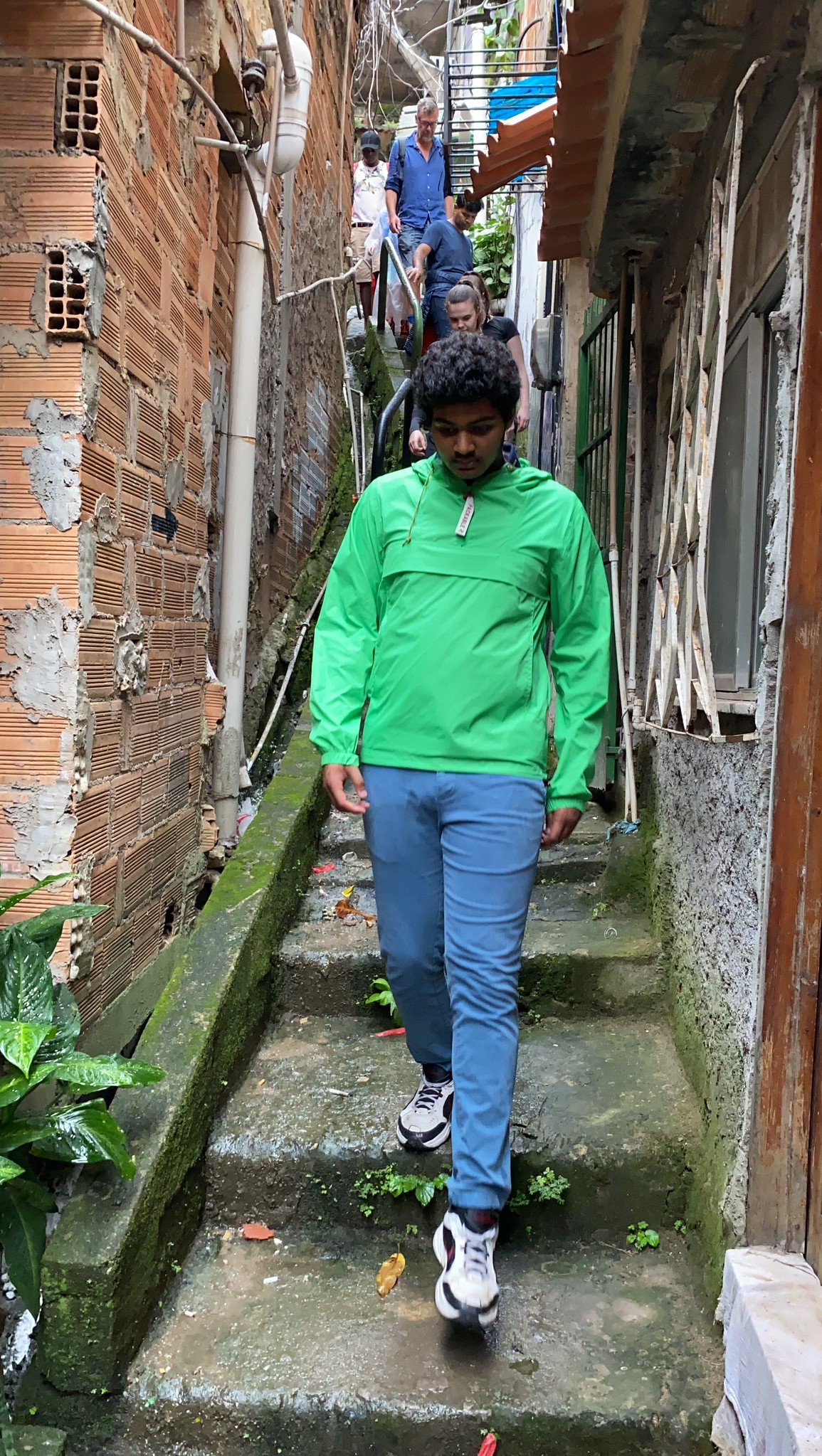
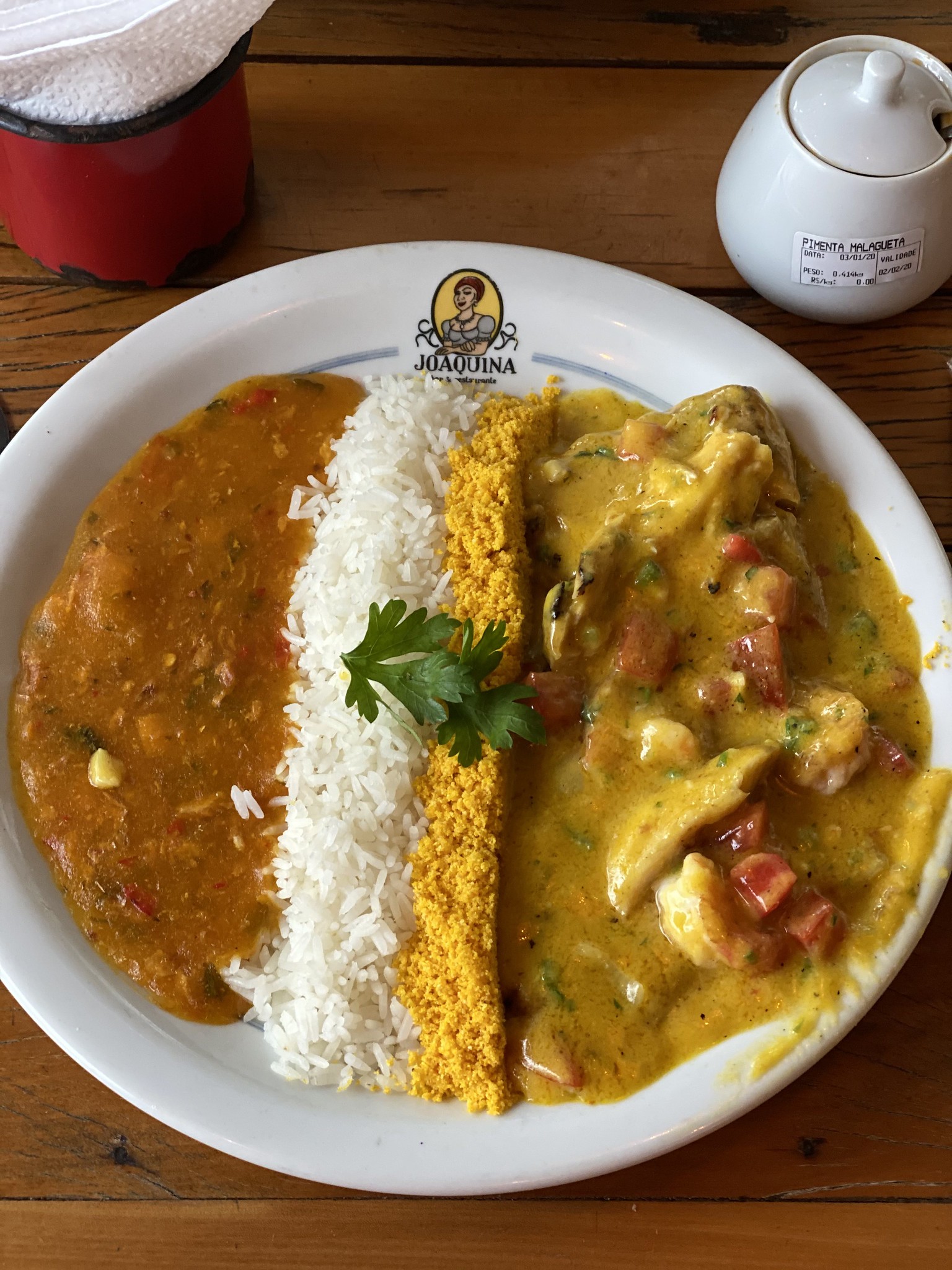
After the tour, we returned to Copacabana for a final lunch, enjoying one last relaxed meal near the beach.
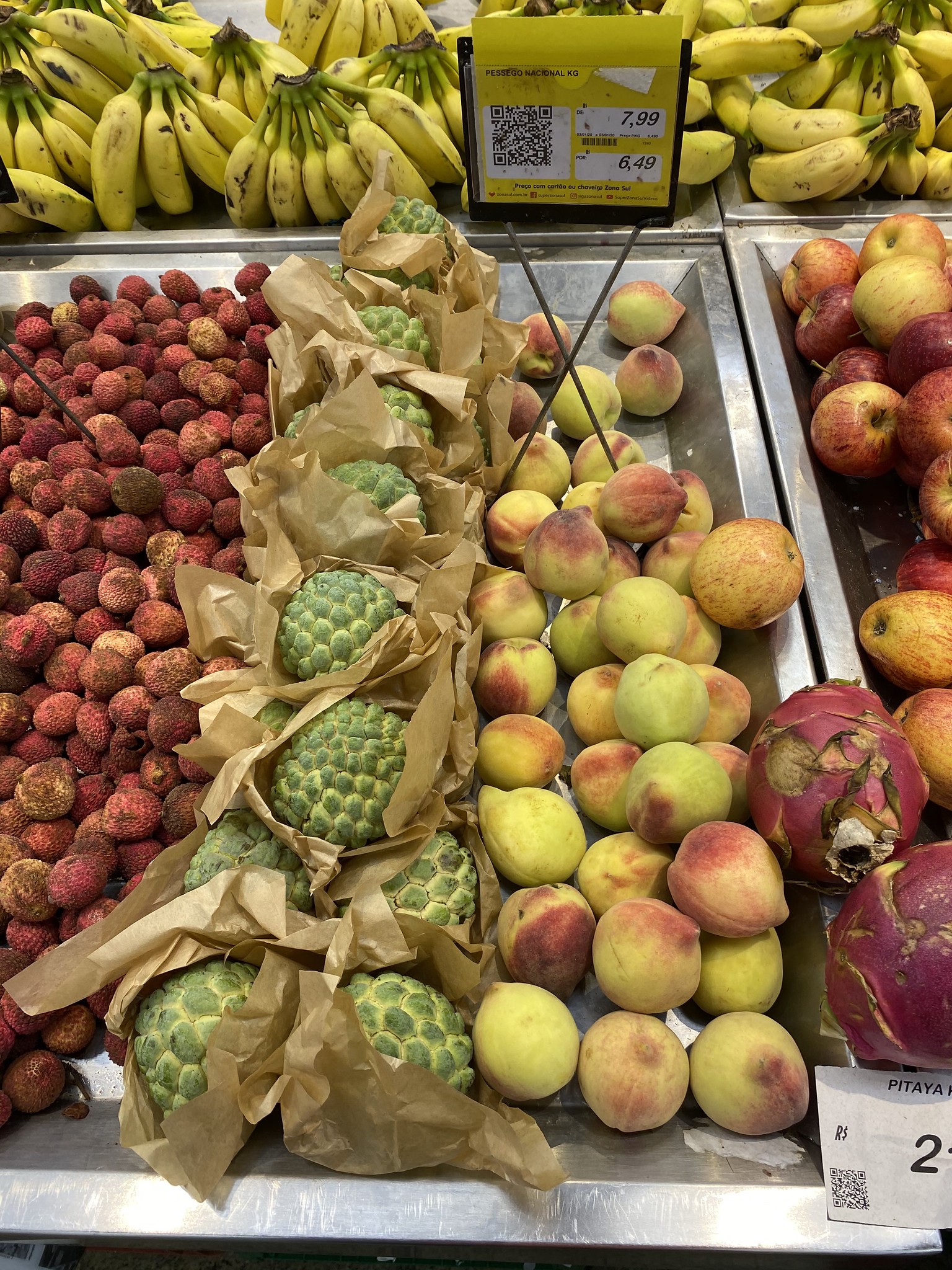
Before heading back, we stopped at a local grocery store to explore everyday life in Rio. The shelves were filled with fresh fruits and vegetables unique to the region. I came across one of my favorite fruits—custard apple—but it wasn’t ripe enough to enjoy and couldn’t be carried on the flight, so I left it behind.
It was a small moment, but it perfectly captured the feeling of the day—observing, appreciating, and saying goodbye.
Rio had shown us two very different worlds over these days: its iconic beaches and landmarks, and its deeply human, lived-in neighborhoods. Both left a lasting impression in their own way.
As we prepared to leave the city, we carried with us not just memories of Christ the Redeemer or Copacabana, but also the everyday rhythms of a city that is vibrant, complex, and unforgettable.
Final Reflection
Rio de Janeiro showed us two contrasting worlds, its iconic beaches and landmarks, and its deeply human, everyday life in the hillsides. From celebrating New Year’s Eve on Copacabana Beach to gliding above the coastline and exploring its cultural heart, every day revealed a new side of the city.
Five days earlier, we had arrived from the Amazon expecting to see Christ the Redeemer and Sugarloaf Mountain. We left Rio with much more than photographs of famous landmarks. We experienced the excitement of celebrating New Year’s Eve with millions of people, flew above the city on a hang glider, wandered through historic libraries, learned about life in a favela, danced to samba rhythms, and discovered that some of our favorite travel memories came from the unexpected moments in between.
That’s the Rio we’ll remember.
IKTraveler Tips & Learnings
📷 1. Leave expensive camera gear in the hotel unless you really need it.
Three different locals warned us not to openly carry a DSLR around Copacabana. After witnessing a couple of theft incidents, we switched to using our phones most of the time and kept the DSLR safely in the hotel.
🎒 2. Carry only the essentials.
We kept our passports, wallets, jewelry, and extra credit cards in the hotel safe. While exploring, we carried just one credit card, a little cash, and our phones.
👥 3. Travel smart as a group.
Whenever someone stopped to take photos, another person kept an eye on the surroundings. It was a simple habit that gave us extra peace of mind.
☀️ 4. Stay hydrated.
Rio can get very hot, especially at Christ the Redeemer and the Selarón Steps. Carry water, wear a hat, and use sunscreen.
🎆 5. New Year’s Eve is unforgettable, but arrive early.
Copacabana becomes incredibly crowded. Roads start closing in the afternoon, so plan your movements well ahead of time.
🪂 6. Don’t skip hang gliding.
If the weather cooperates, this is one of the best ways to experience Rio. Floating above the beaches and mountains was one of the highlights of our entire South America trip.
🥩 7. Try a Brazilian churrascaria.
Even if you don’t eat beef or pork, most churrascarias also serve chicken, seafood, salads, and vegetarian dishes, making them a great option for mixed groups.
🏛️ 8. Don’t miss Rio’s hidden gems.
Many visitors only see Christ the Redeemer and Sugarloaf Mountain. We also loved the Royal Portuguese Reading Room, Museum of Tomorrow, and the colorful streets around the Selarón Steps.