Poznan and Warsaw
Poland – A Journey Through History, Resilience, and Culture
Located in the heart of Central Europe, Poland is a country where centuries of history meet vibrant modern life. Stretching from the Baltic Sea in the north to the Tatra Mountains in the south, Poland has been shaped by powerful kingdoms, changing borders, wars, and remarkable resilience. With medieval old towns, grand castles, historic churches, beautiful countryside, and lively modern cities, Poland offers travelers a unique combination of heritage, culture, and everyday European life.
Poland is one of Europe’s largest countries, with a population of nearly 38 million people. Its history is both fascinating and complex, from the rise of the Polish–Lithuanian Commonwealth, one of Europe’s most powerful states, to the challenges of partitions, World War II, and the decades of communist rule. Today, Poland stands as a modern European nation while proudly preserving the stories and traditions that shaped it.
The country is home to several important cities, each with its own unique character:
Warsaw – Poland’s capital and largest city, Warsaw is a symbol of resilience and rebirth, rising from near-total destruction during World War II to become a modern European capital with a beautifully reconstructed Old Town and a dynamic skyline.
Kraków – The former royal capital and cultural heart of Poland, Kraków is famous for its medieval Old Town, Wawel Castle, historic churches, and beautifully preserved traditions.
Gdańsk – A historic Baltic port city known for its colorful architecture, maritime heritage, and its important role in modern European history through the Solidarity movement.
Wrocław – A charming city of bridges, islands, colorful squares, and hundreds of hidden dwarf statues, Wrocław reflects a fascinating blend of Polish, German, Czech, and Austrian influences.
Poznań – One of Poland’s oldest cities and considered the birthplace of the Polish nation, Poznań combines rich history, Renaissance architecture, famous Town Hall goats, traditional St. Martin’s Croissants, and a vibrant modern atmosphere.
Our journey through Poland began in Poznań, a city where Poland’s story began, before continuing to Warsaw, a city that represents Poland’s ability to rebuild, adapt, and move forward. Together, these two cities provided the perfect introduction to understanding Poland. One rooted in its origins and the other shaped by its remarkable rebirth.
From Berlin to Poznań: Crossing into Poland
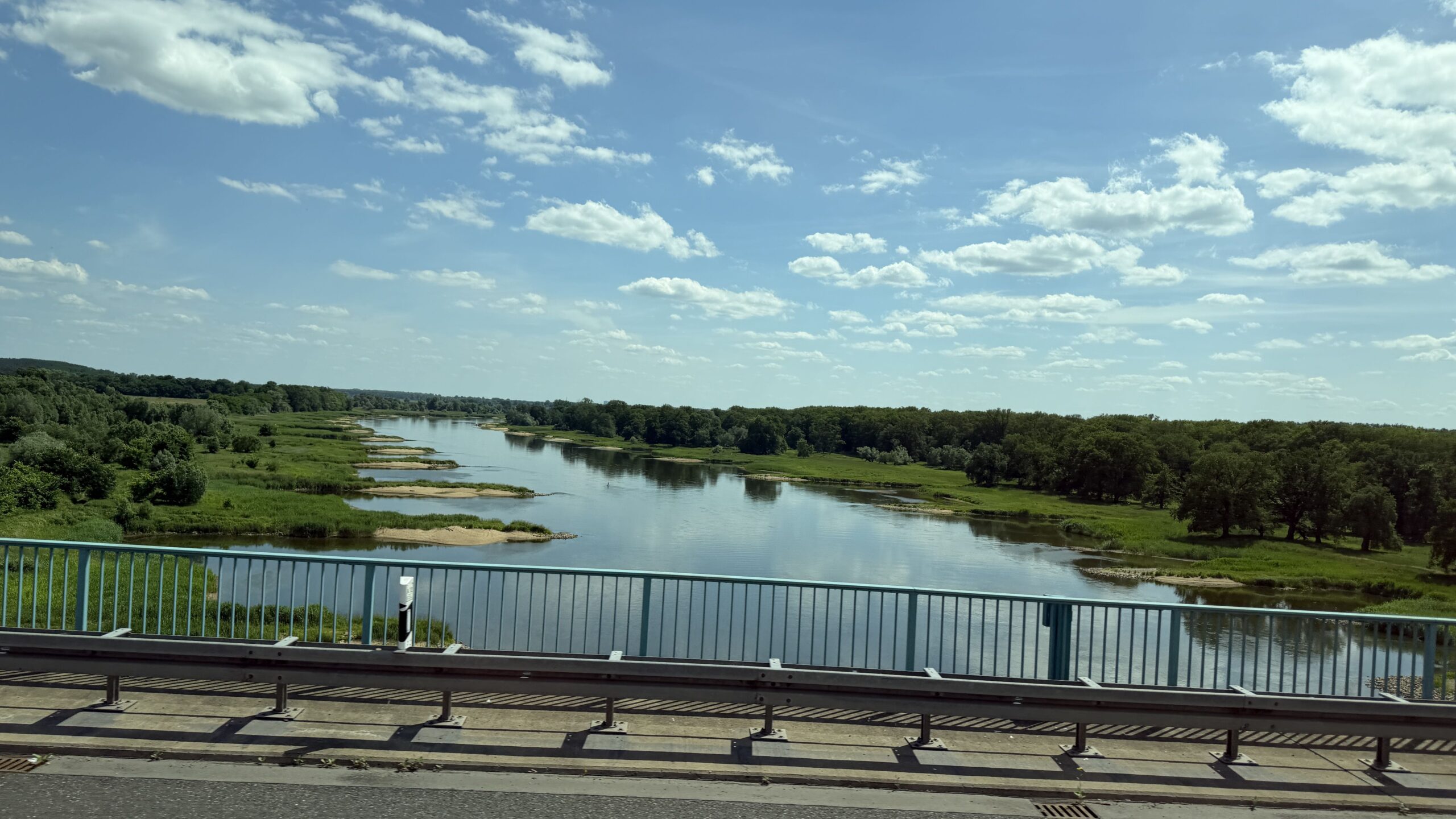
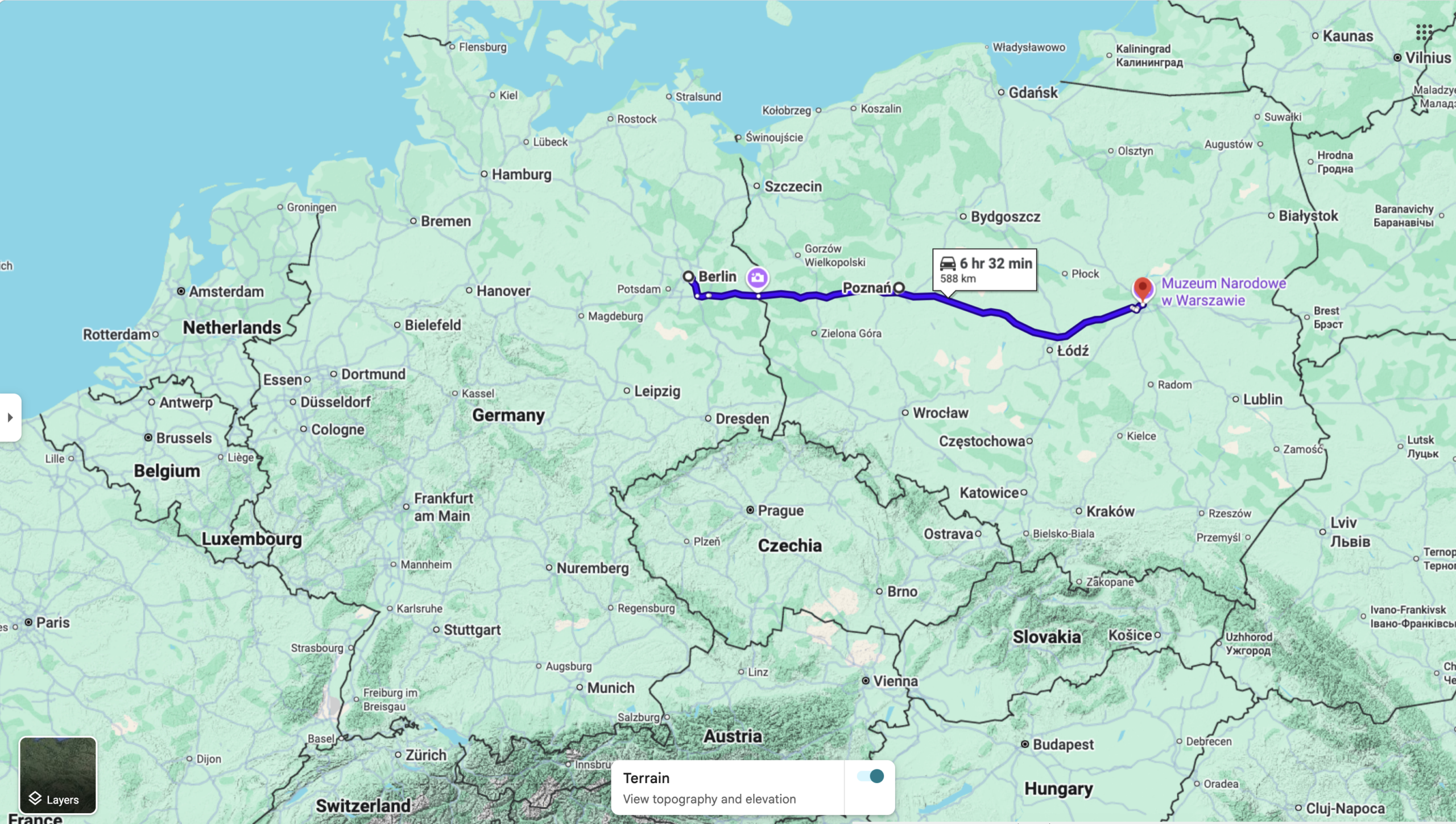
Our journey to Poland began around 1:00 PM from Berlin, leaving behind one of Europe’s most history-rich capitals. The drive itself was smooth, although we did notice a long traffic backup on the opposite side of the highway caused by a single broken-down vehicle. It was interesting to see how one incident could completely halt traffic in one direction while ours continued moving without delay.
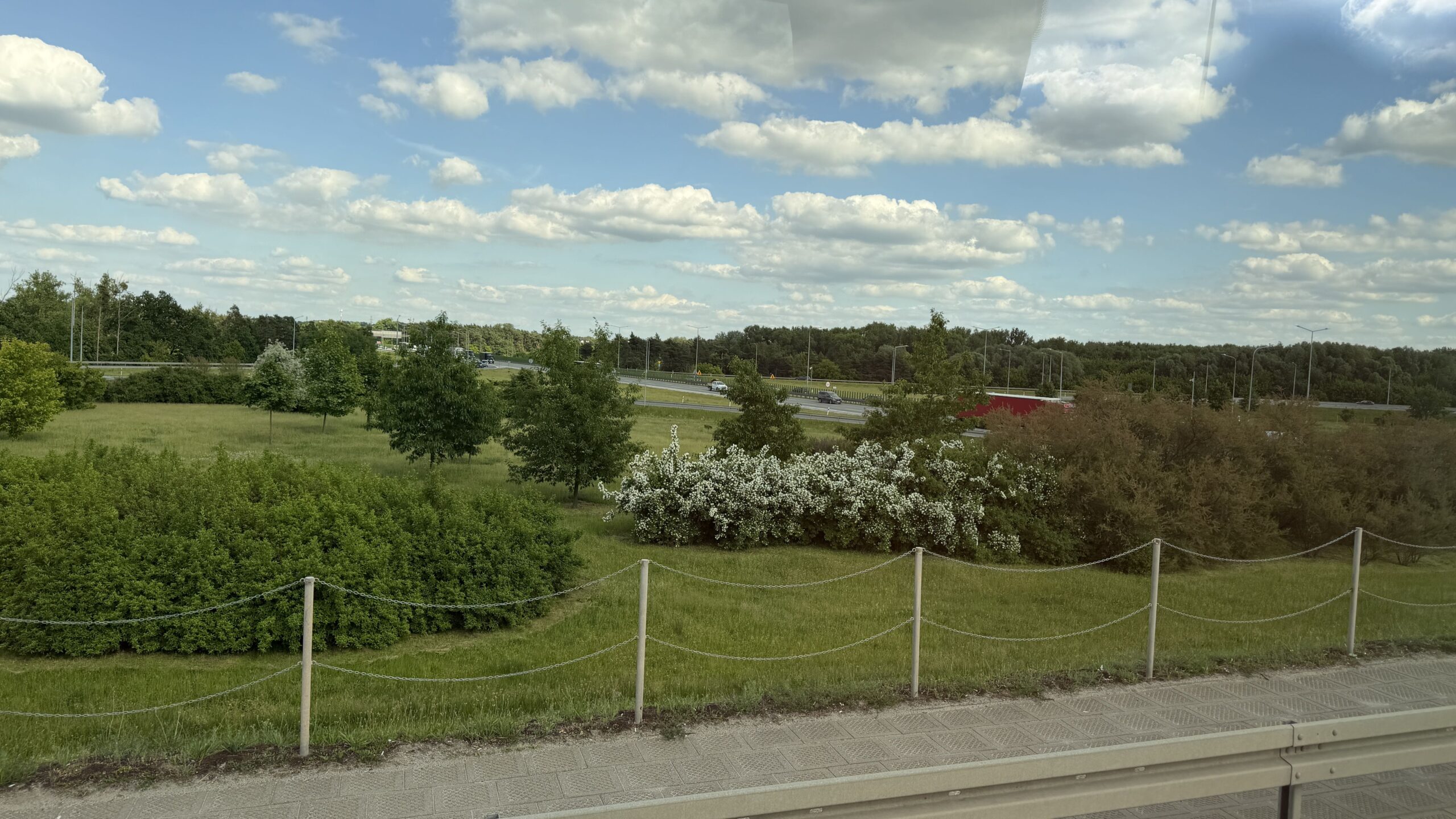
Crossing from Germany into Poland was surprisingly seamless. Thanks to the Schengen Agreement, there were no passport checks or lengthy border formalities, just a road sign welcoming us into a new country. After crossing the border, we stopped briefly at a highway service area for a quick break before continuing our journey east.
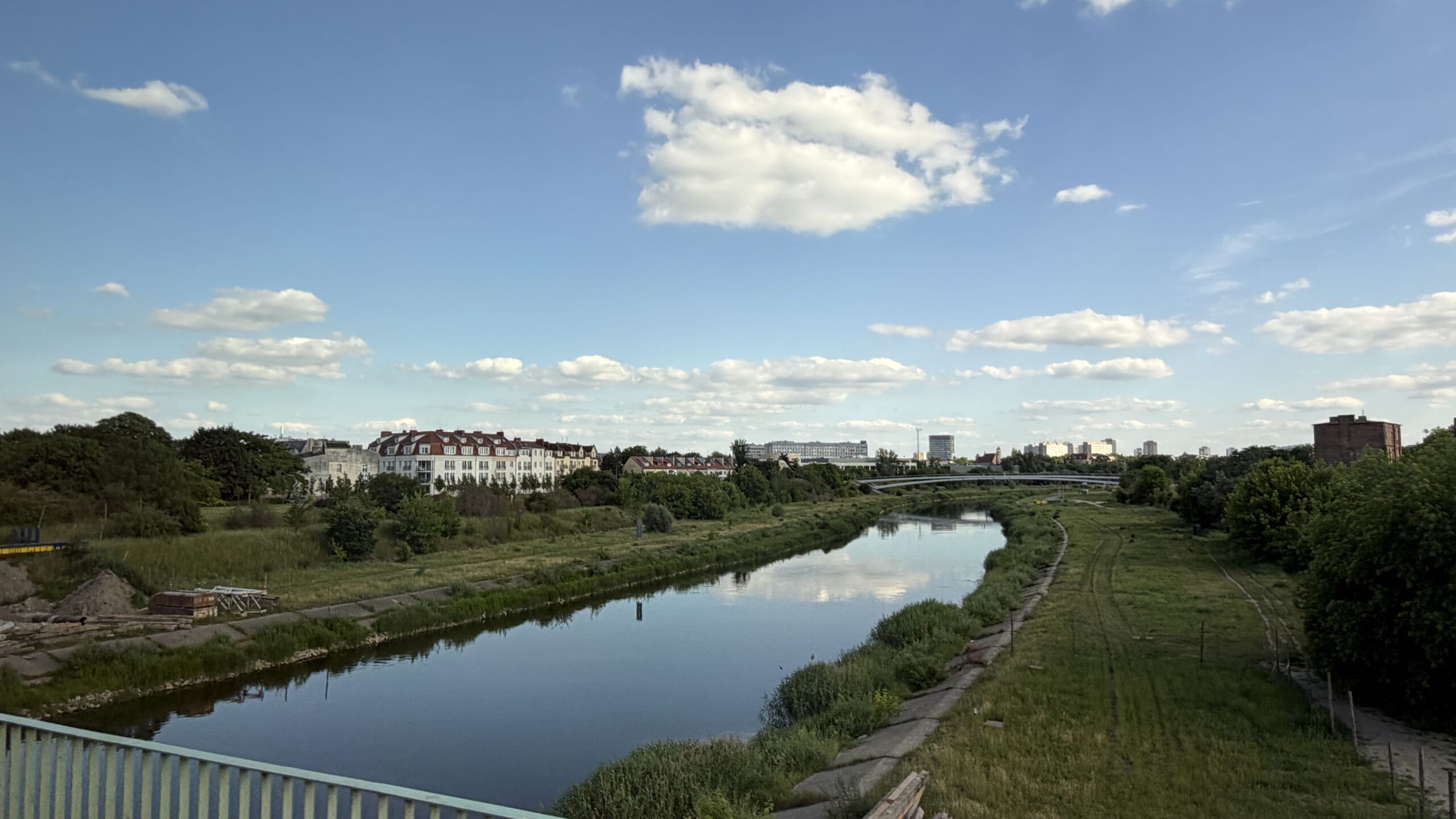
By around 5:00 PM, we arrived in Poznań, one of Poland’s oldest cities and widely regarded as the birthplace of the Polish nation. Situated along the Warta River, Poznań beautifully combines over a thousand years of history with a vibrant university culture, modern businesses, and a relaxed atmosphere. It immediately felt like a city where history and everyday life coexist effortlessly.
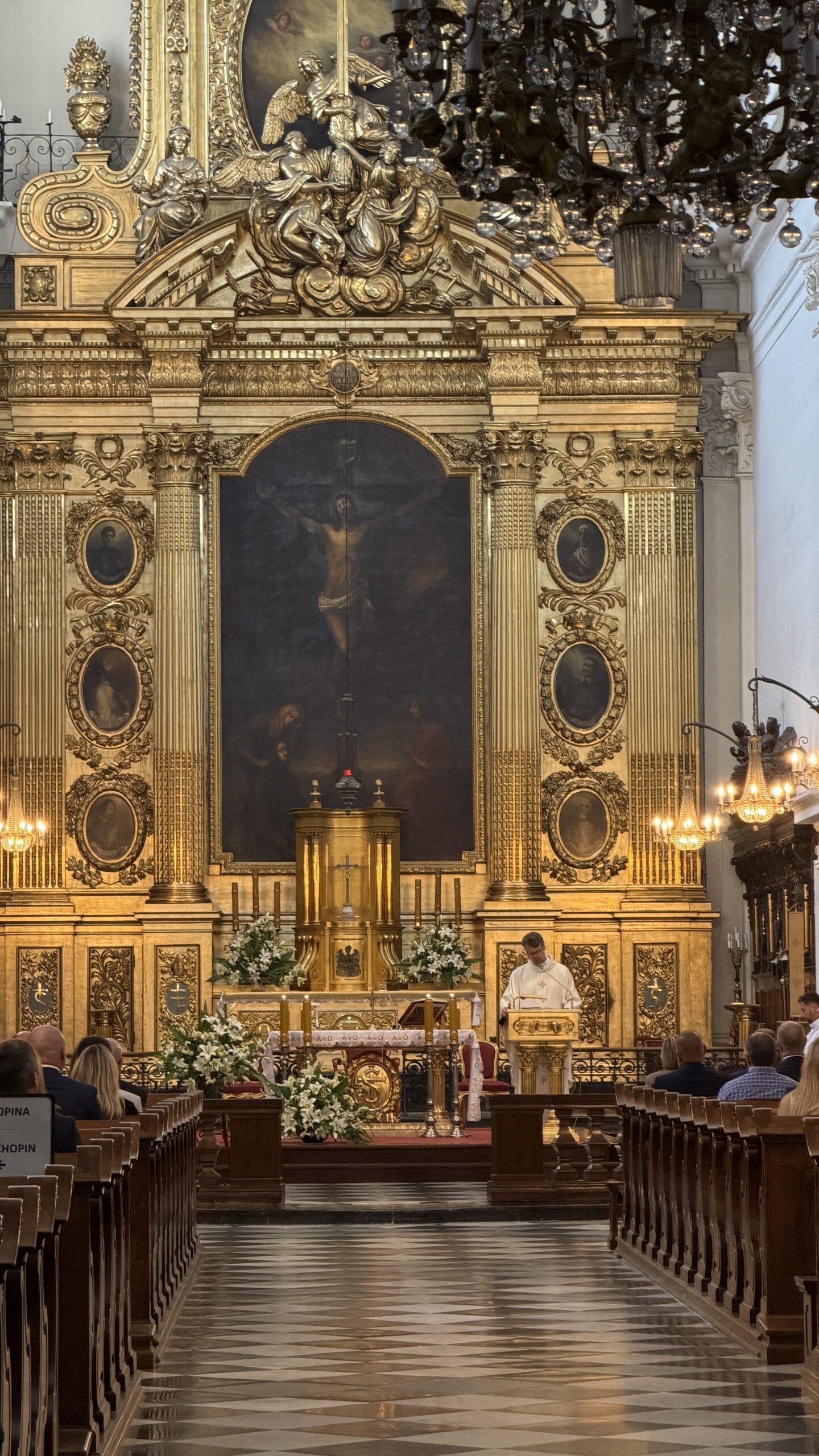
Our First Stop – Poznań Cathedral
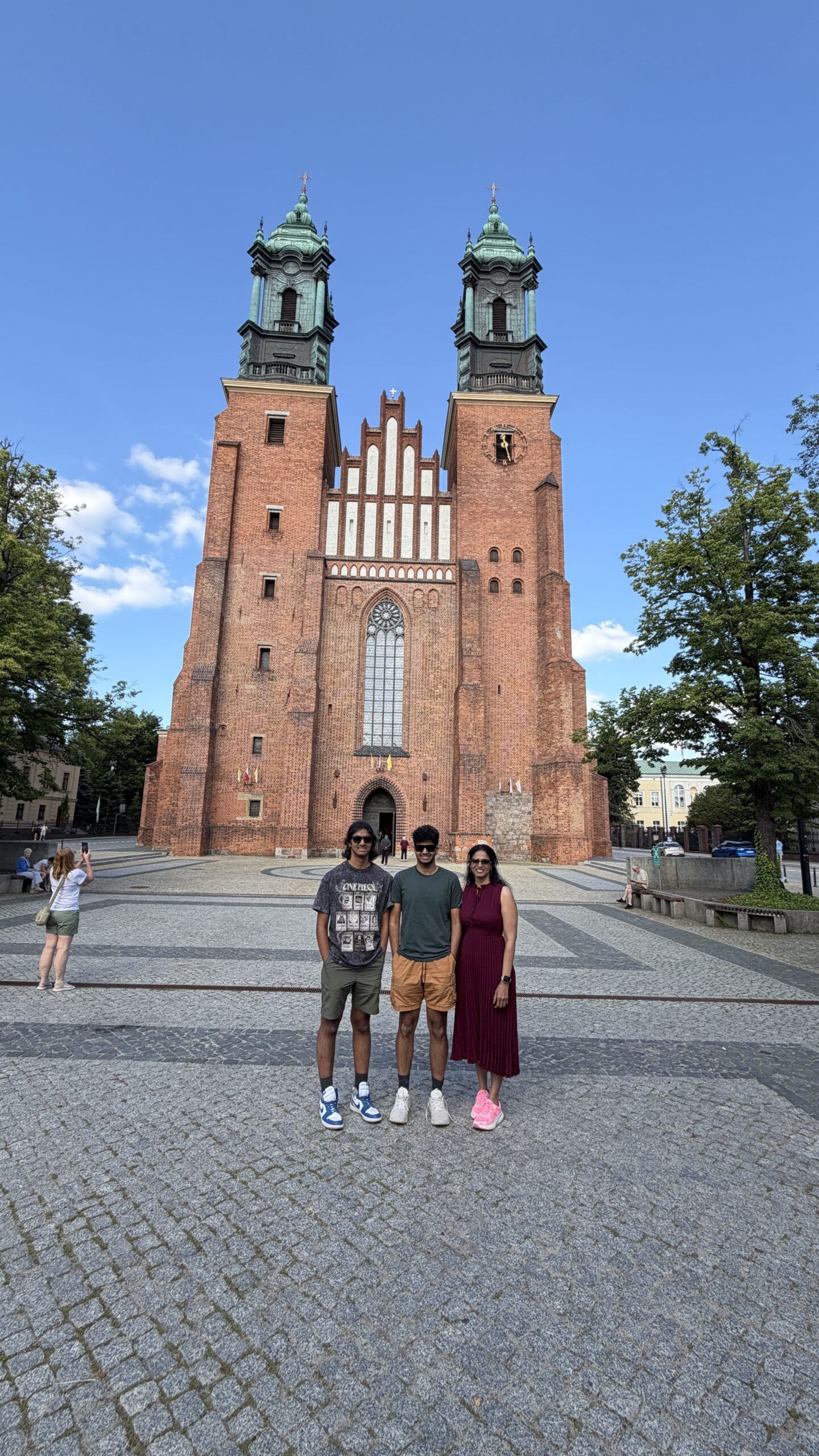
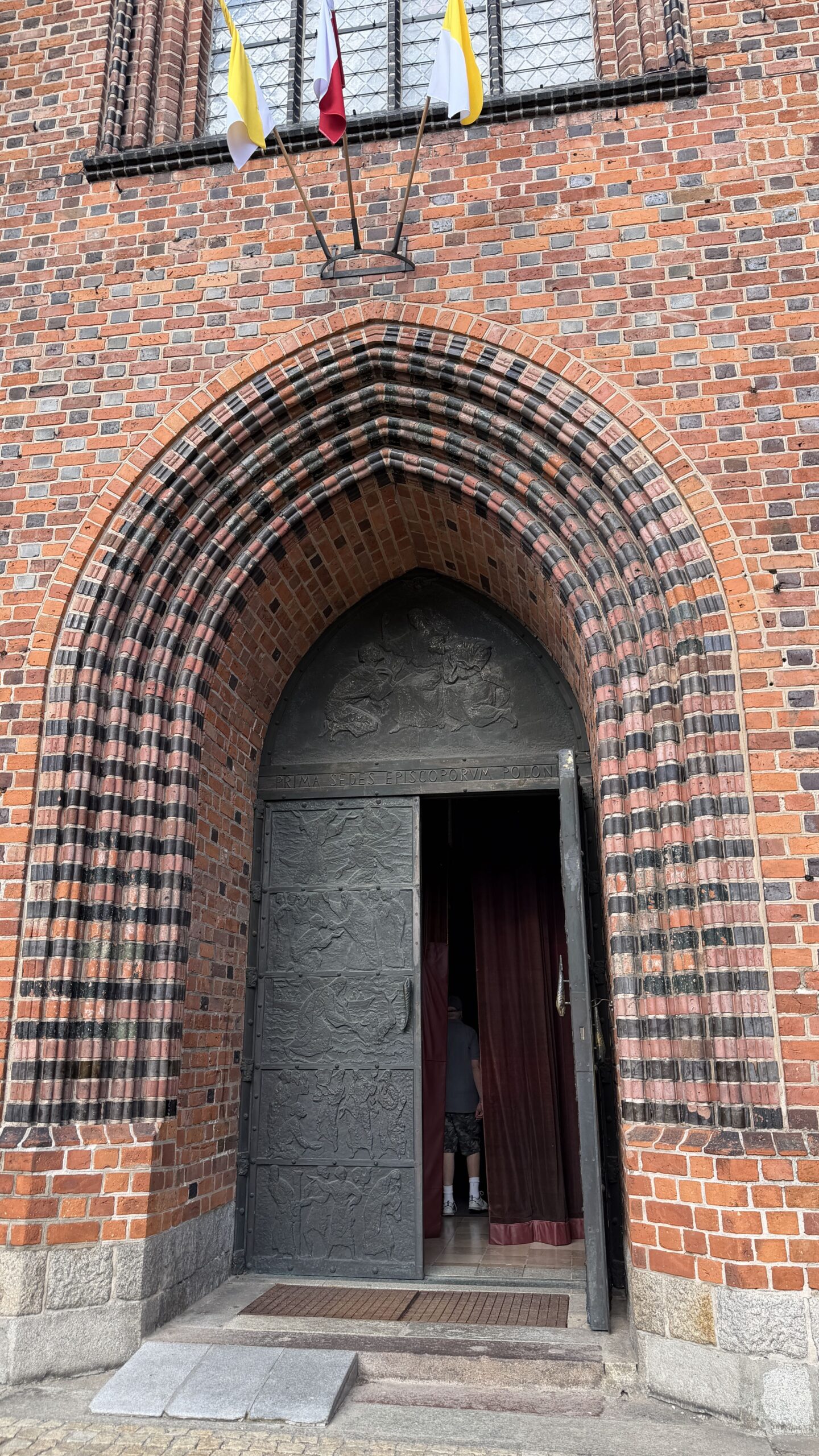
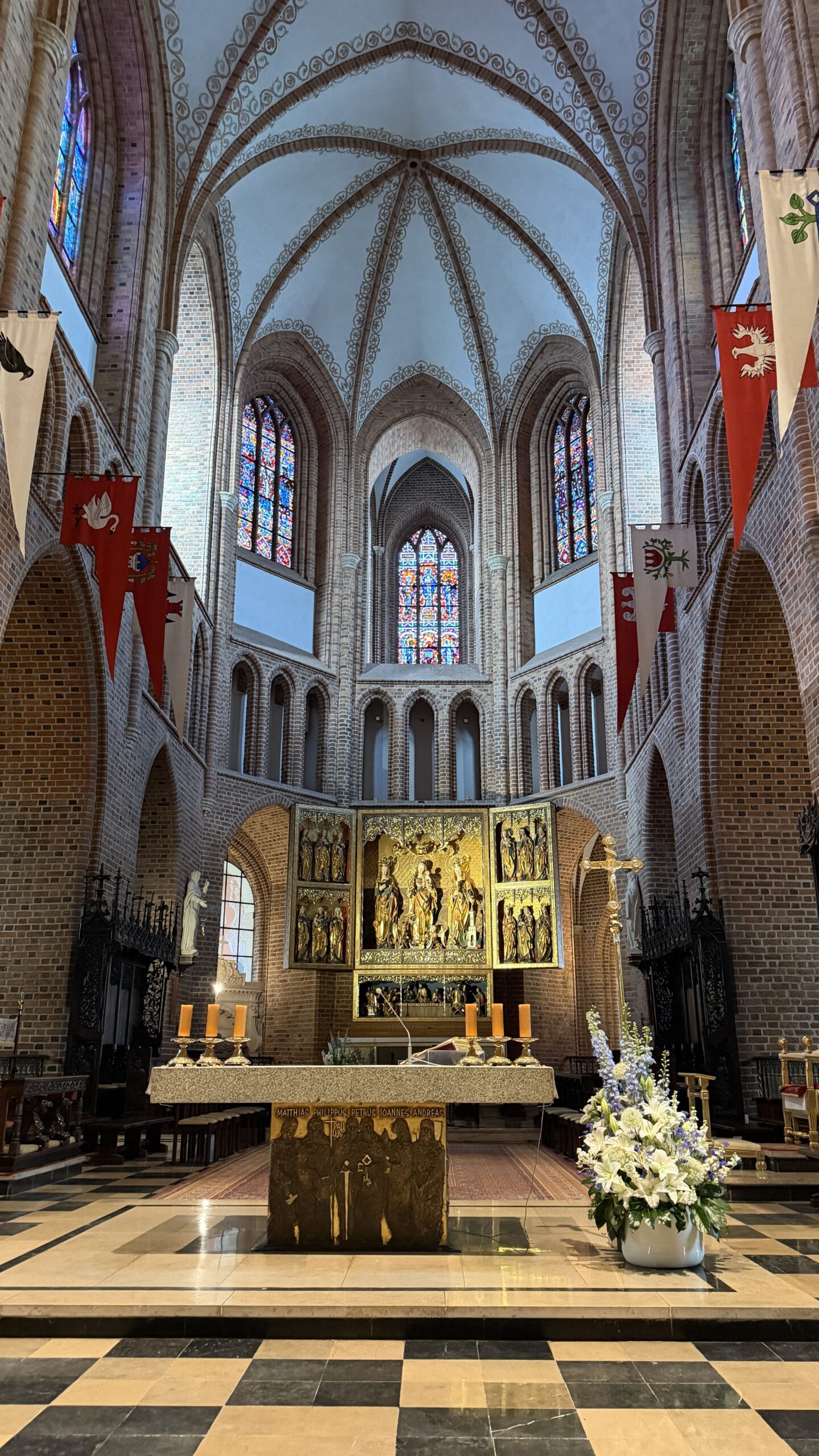
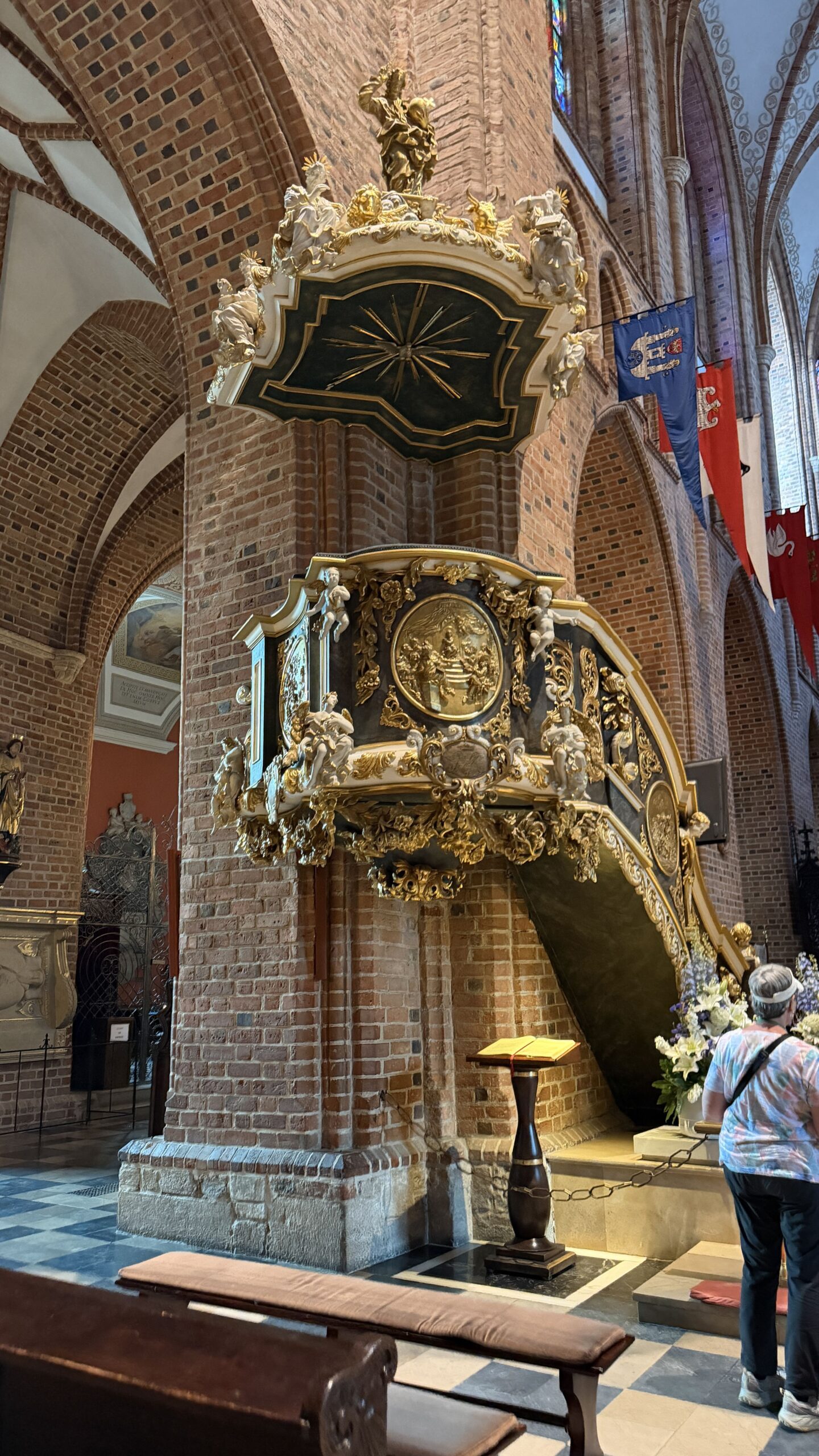
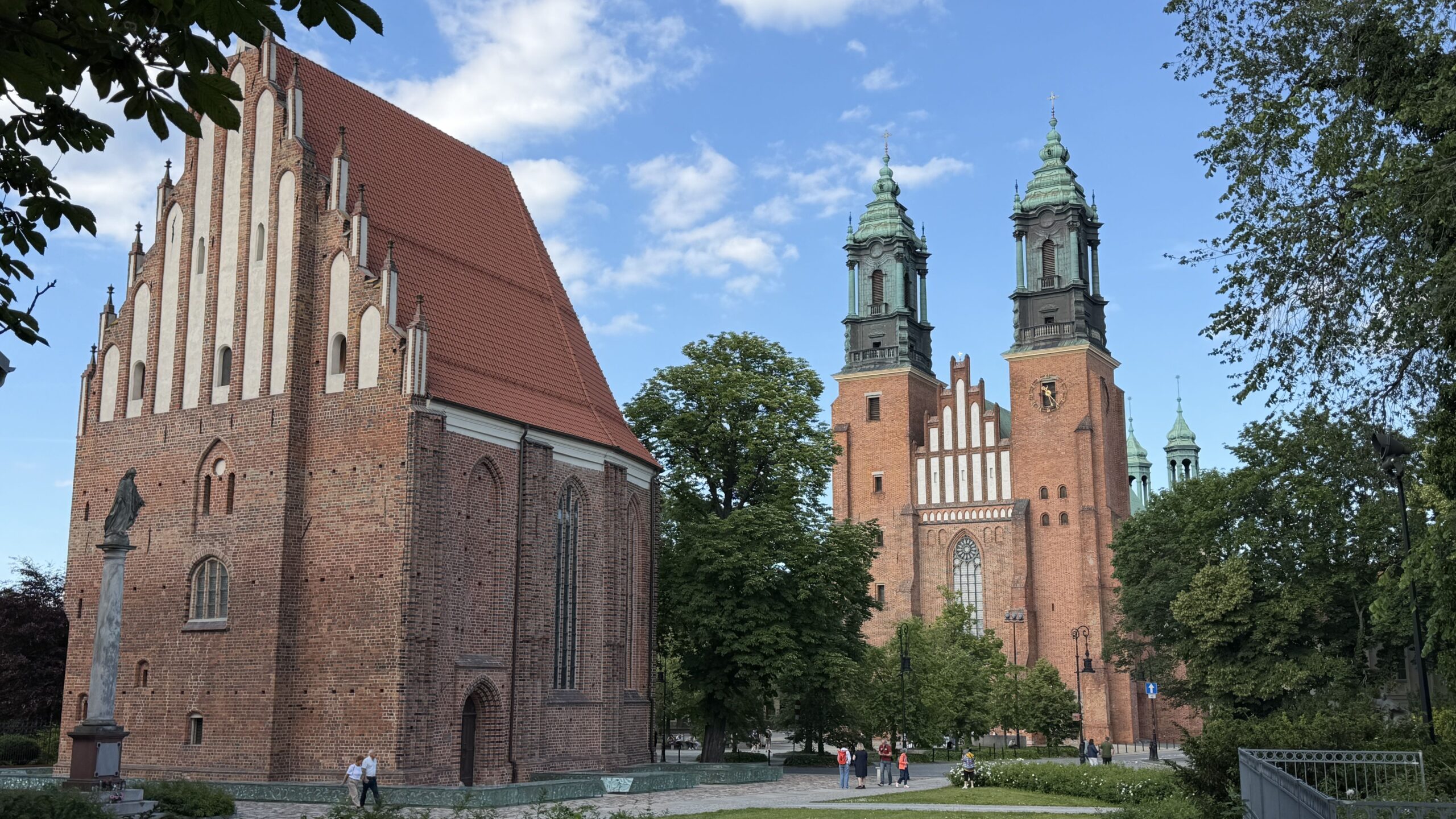
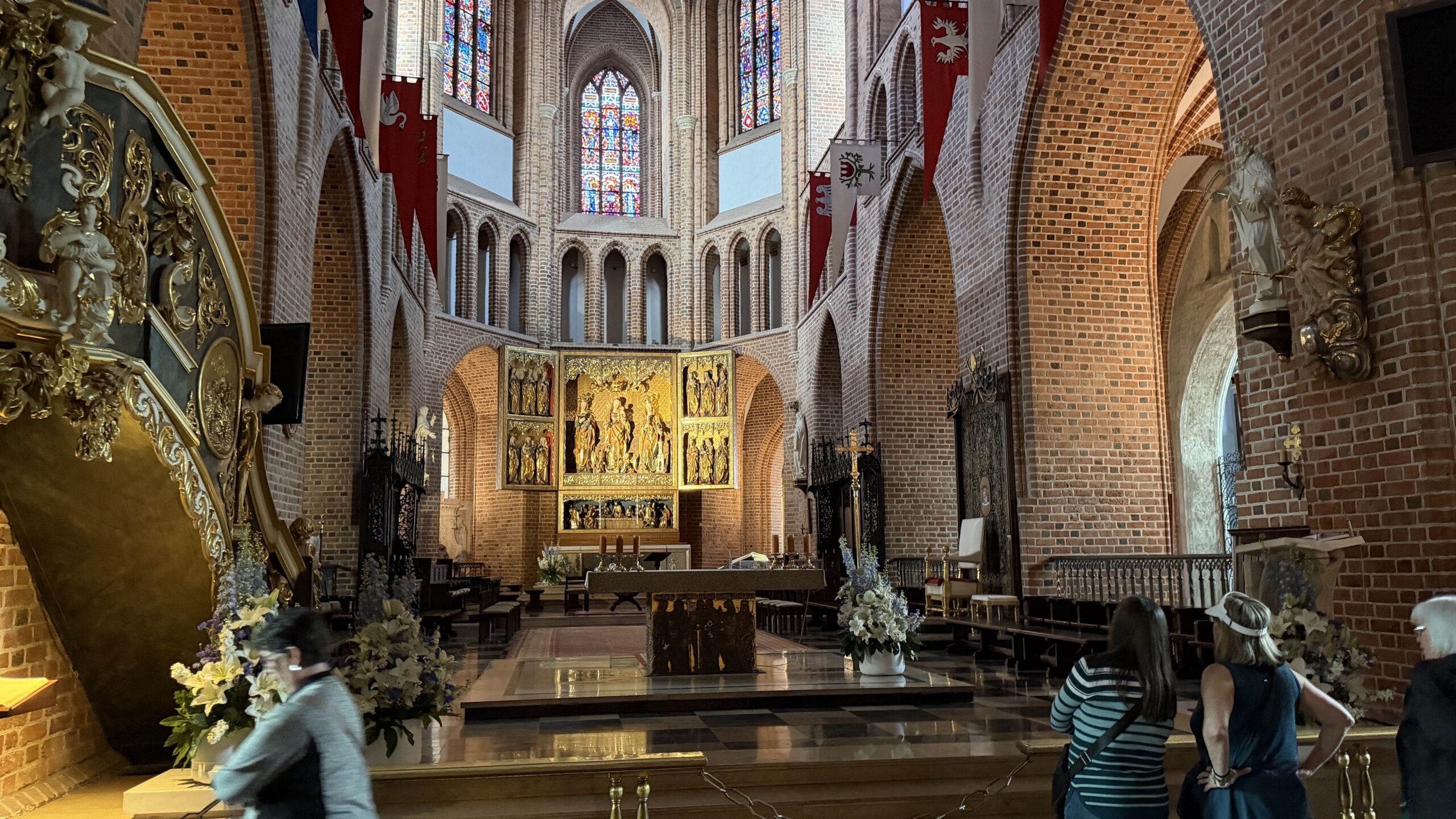
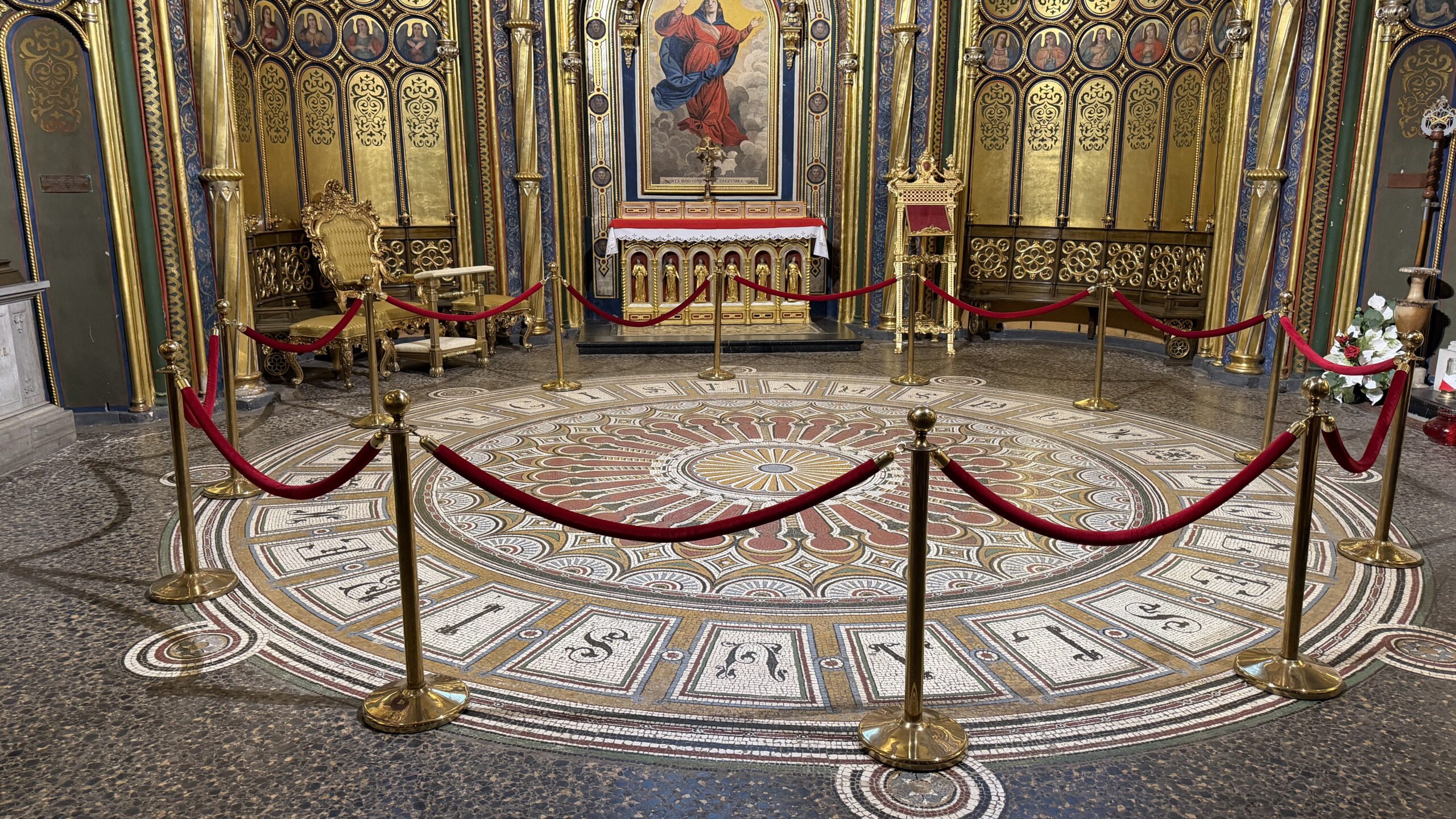
Before checking into our hotel, we made a stop at the magnificent Poznań Cathedral on Ostrów Tumski (Cathedral Island), knowing it would close later in the evening. It was the perfect place to begin our exploration of Poland.
Often considered one of the oldest cathedrals in Poland, this magnificent church dates back to the 10th century and is deeply connected to the origins of the Polish state. It is also the final resting place of Poland’s first rulers, Mieszko I and Bolesław the Brave. Standing inside, surrounded by centuries of history, we could immediately sense why this cathedral is regarded as one of the nation’s most important landmarks.
Dinner at the Hotel
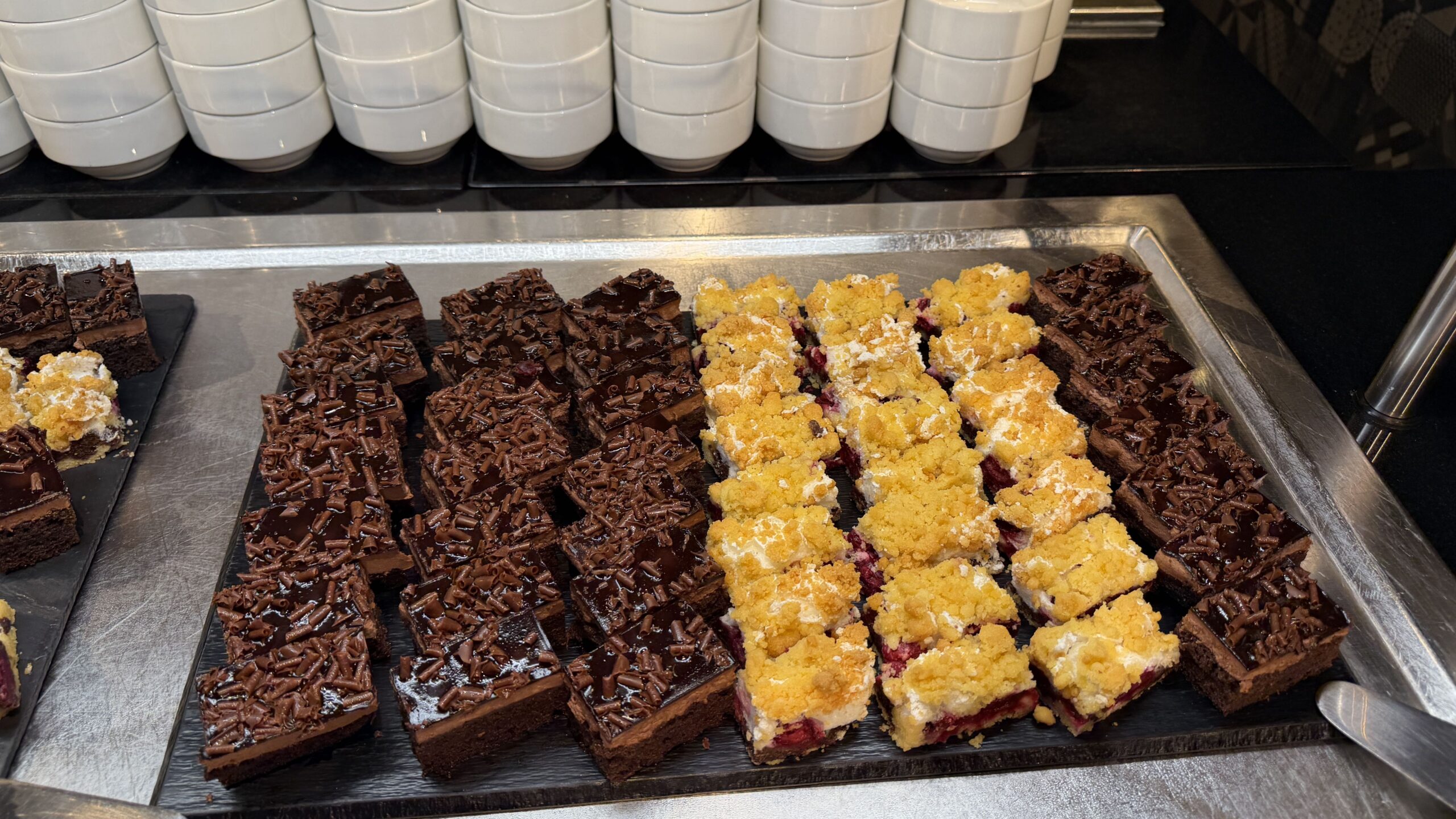
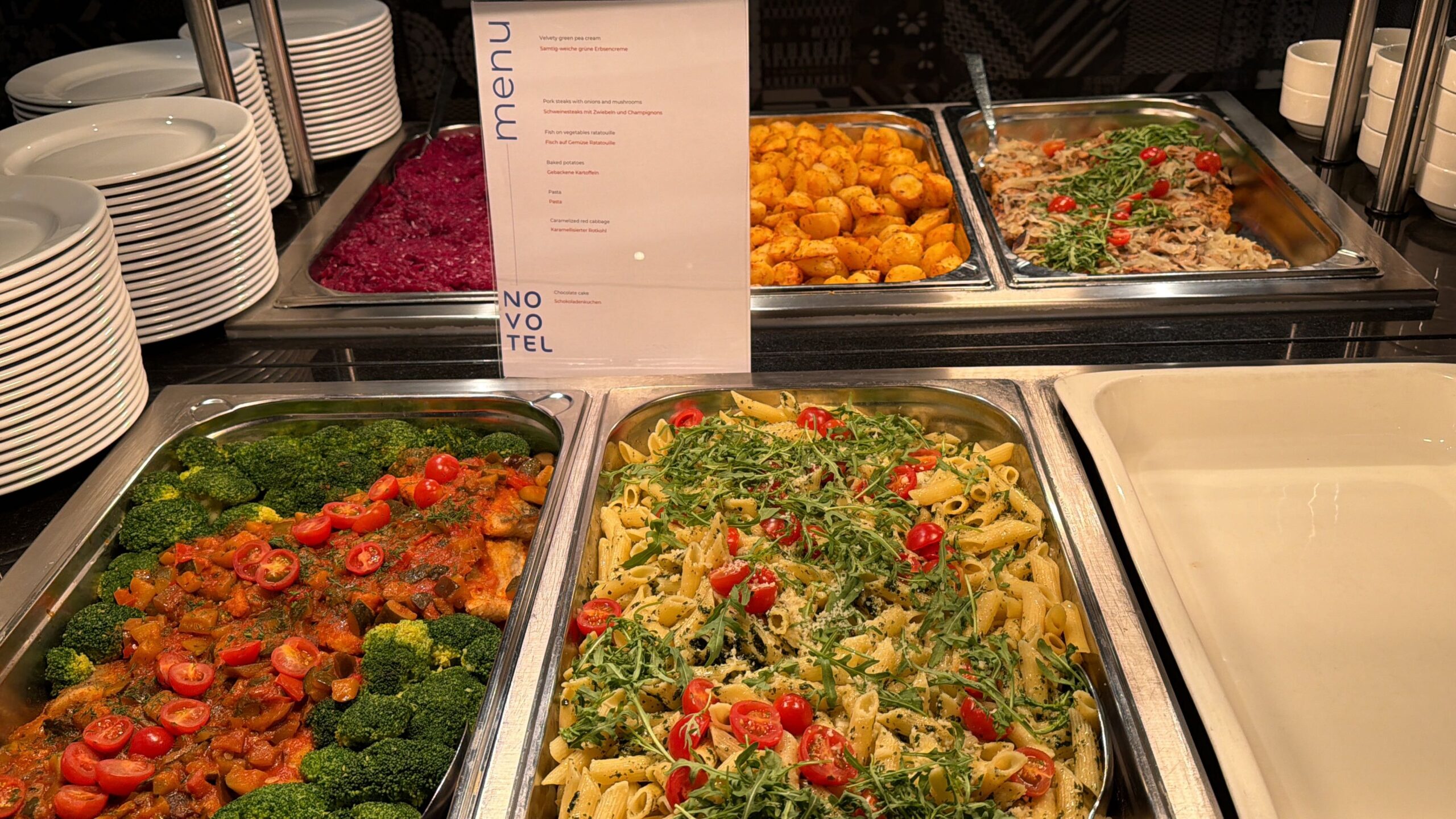
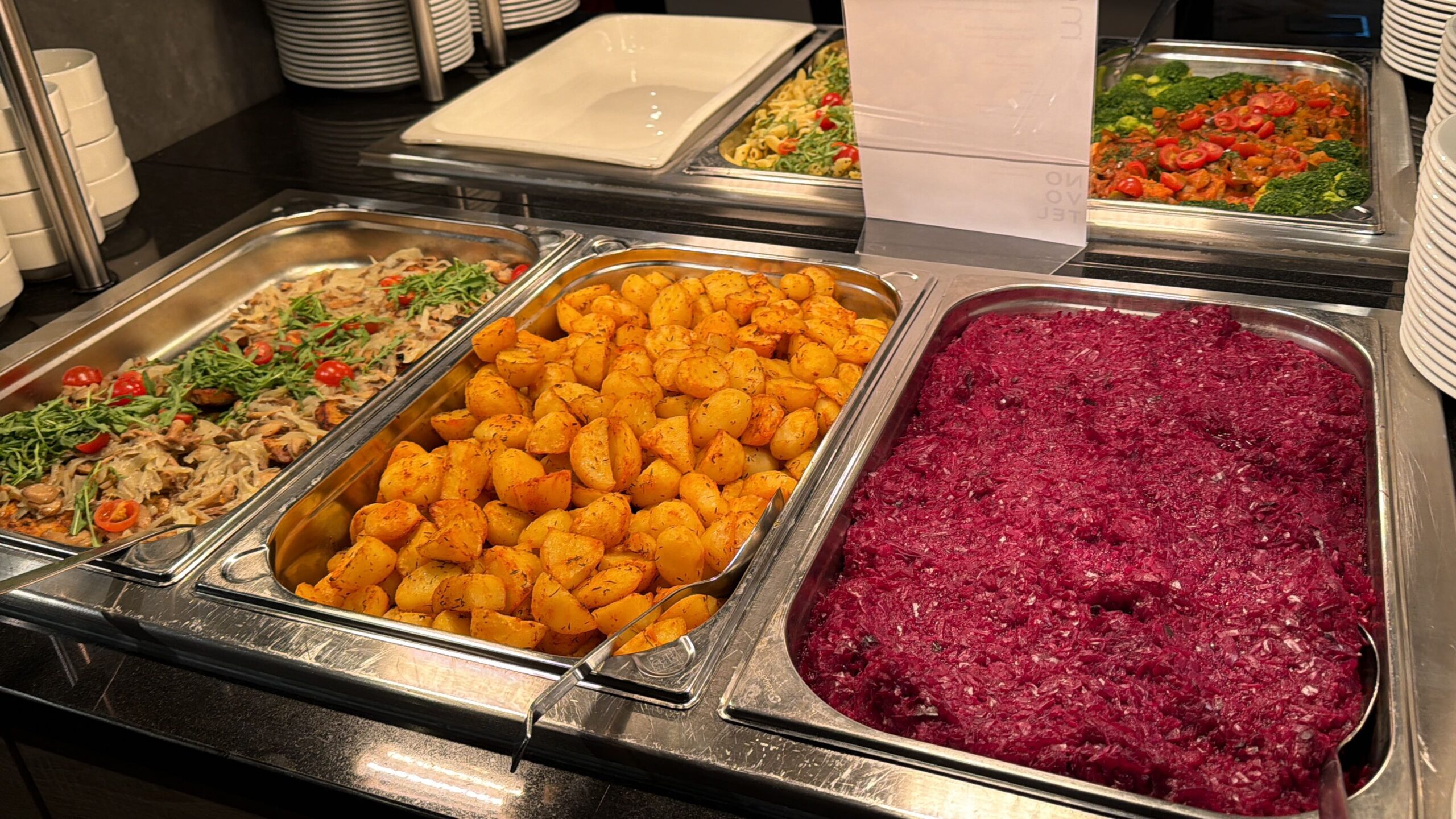
After checking into the hotel, we enjoyed a relaxing buffet dinner at 7:00 PM. Following several hours on the road, it was the perfect opportunity to recharge before heading out again for an evening walk.
An Evening Stroll Through Old Town (Stare Miasto)
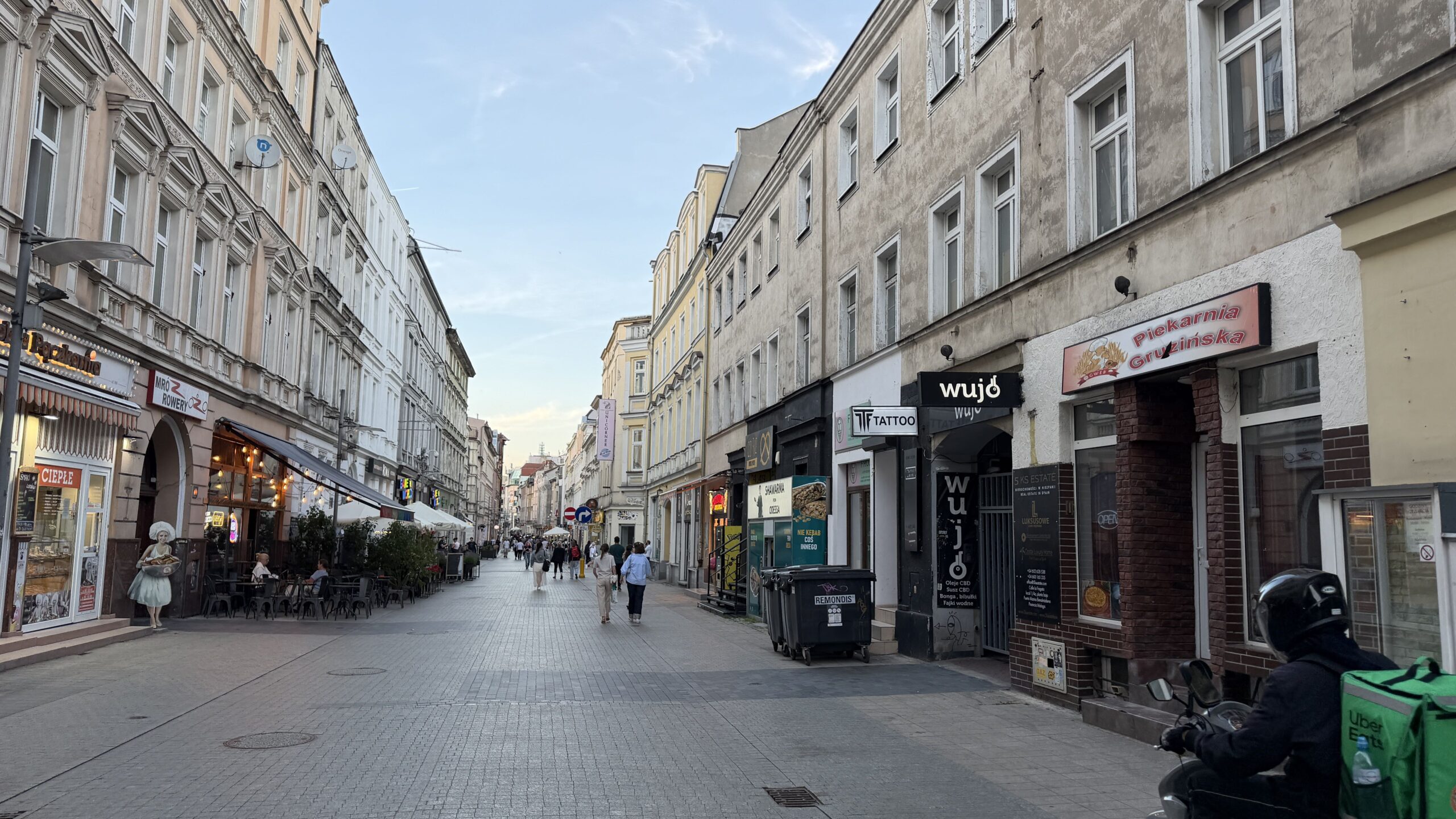
Around 8:00 PM, we set out to explore Poznań’s charming Old Town (Stare Miasto). As dusk settled over the city, the beautifully restored Renaissance buildings surrounding the Old Market Square glowed under the evening lights. Outdoor cafés were still busy, locals and visitors filled the square, and the atmosphere felt both lively and wonderfully relaxed.
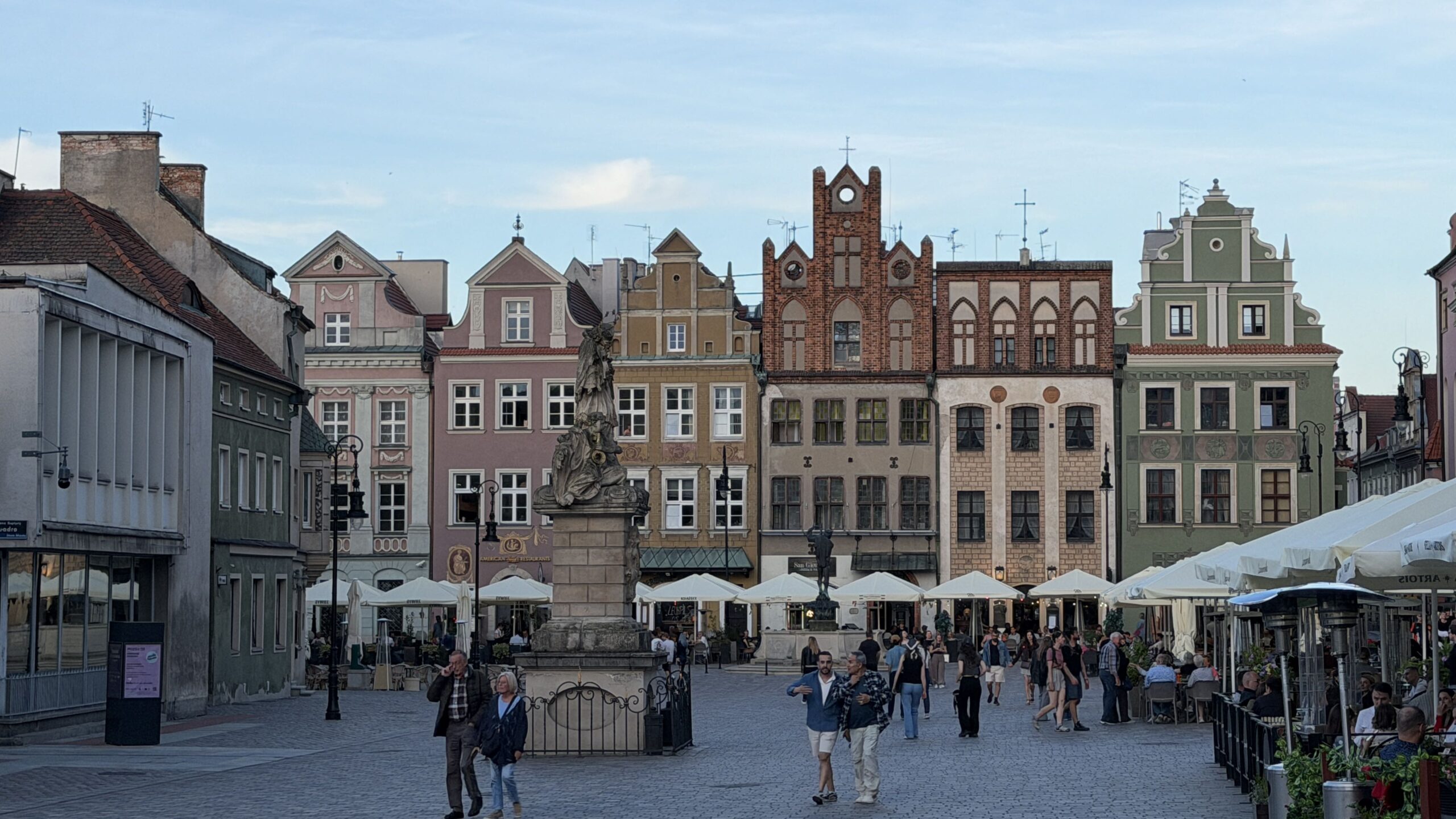
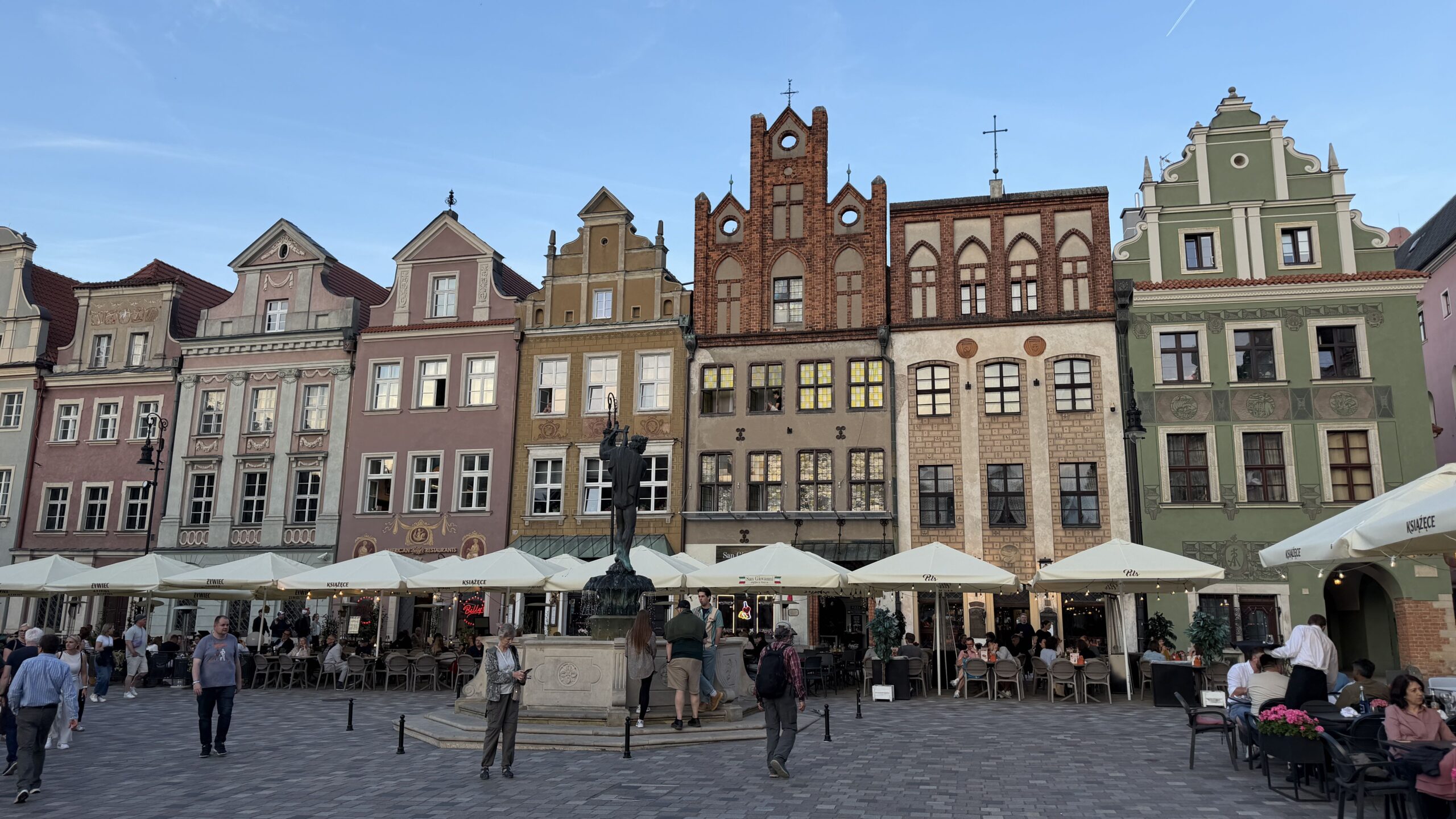
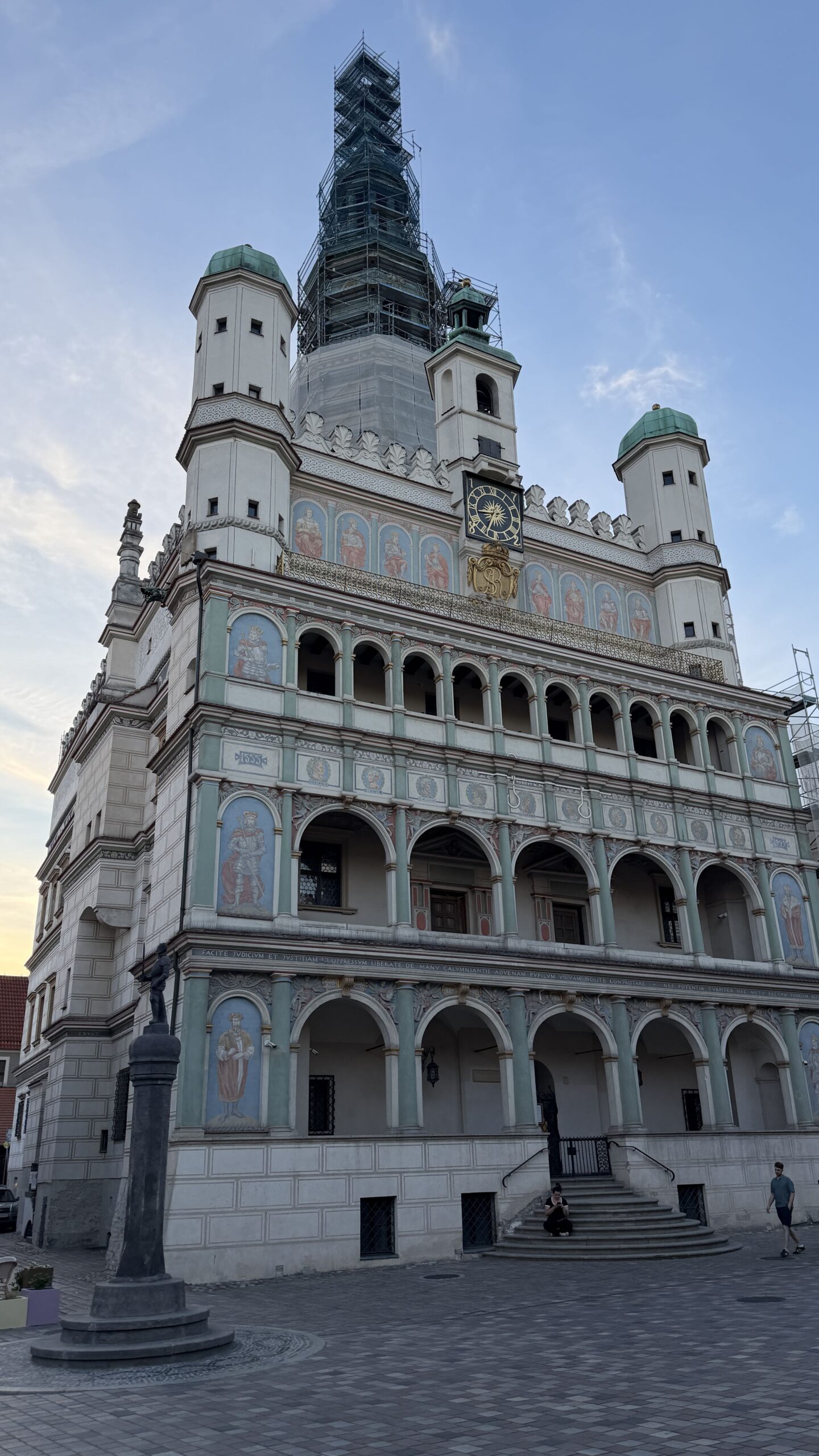
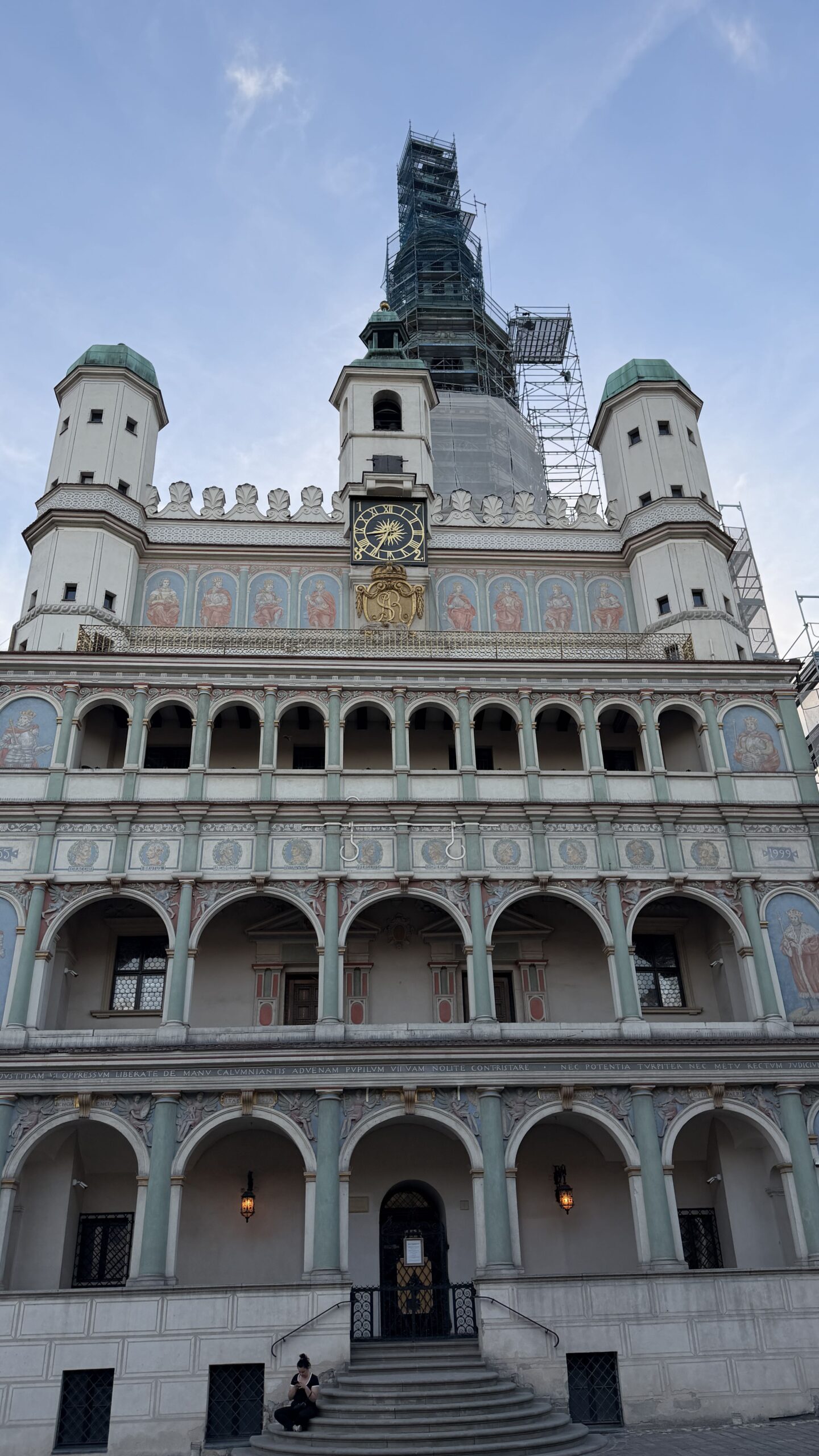
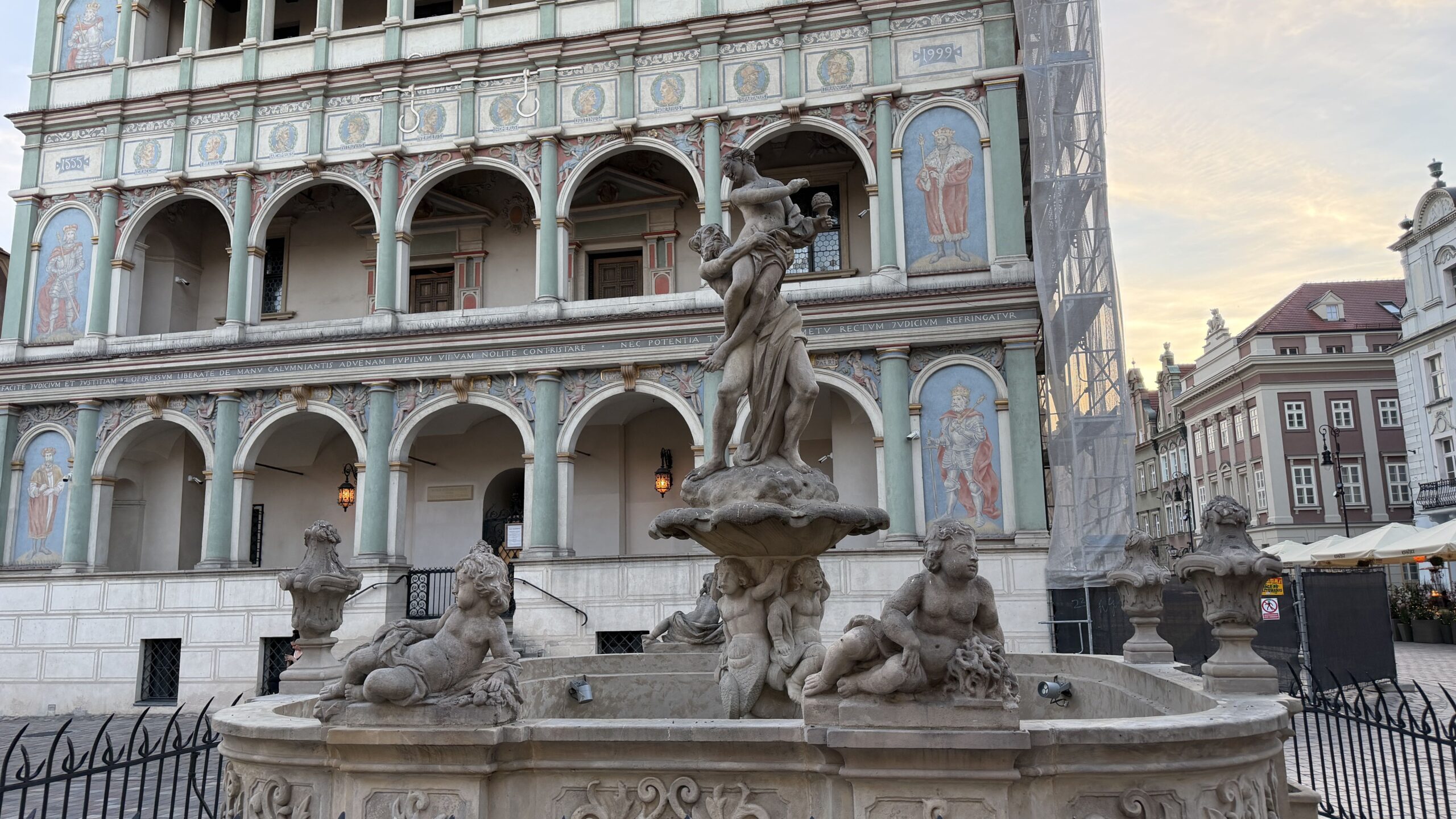
The centerpiece of the square is the magnificent Poznań Town Hall, one of the finest Renaissance buildings in Central Europe. Standing proudly in front of it is the elegant Proserpina (Proserpine) Fountain, dating to the 18th century, adding even more charm to the already picturesque setting. It was easy to see why this square is considered one of the most beautiful in Poland.
The Famous Fighting Goats of Poznań
One of Poznań’s most beloved traditions is the story of the two mechanical goats that appear every day at noon on top of the Town Hall clock tower.
According to local legend, a chef preparing a grand banquet accidentally burned the main course. Desperate to find a replacement, he stole two goats from a nearby meadow. Just as he was about to cook them, they escaped, ran through the streets, climbed onto the Town Hall roof, and began butting heads in front of the gathered crowd. Everyone found the spectacle so amusing that the city decided to commemorate the event forever. Today, two mechanical goats emerge from the clock tower every day at noon and butt heads twelve times, delighting visitors from around the world.
Although we visited in the evening and missed the famous show, simply knowing the story made looking up at the Town Hall even more enjoyable. As we walked around there are Goats status in many places.
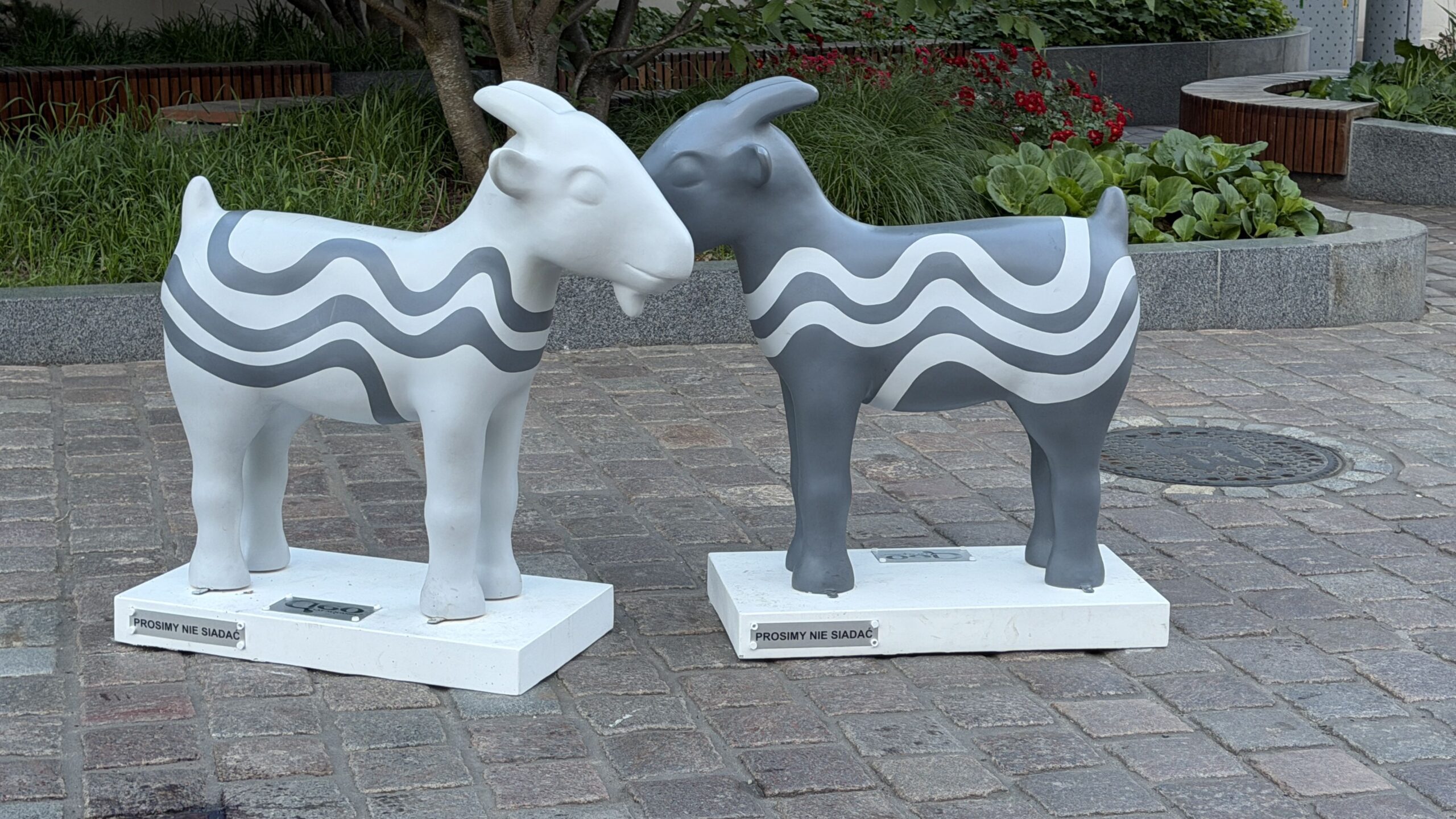
A Taste of Poznań – St. Martin’s Croissant
Another symbol of Poznań that we quickly learned from our guide/tour director was about city’s famous St. Martin’s Croissant (Rogal Świętomarciński). This isn’t just any croissant—it’s a traditional local pastry generously filled with white poppy seeds, walnuts, almonds, raisins, butter, and a hint of citrus flavor. It is so special that it holds Protected Geographical Indication (PGI) status in the European Union, meaning only certified bakeries in the Poznań region can produce the authentic version using the traditional recipe.
Although we didn’t get a chance to try one on our first evening, it immediately made our list of local specialties to look for while exploring Poland. If you’re visiting Poznań, tasting an authentic St. Martin’s Croissant is almost as much a part of the experience as watching the famous fighting goats on the Town Hall.
Historic Architecture Around the city
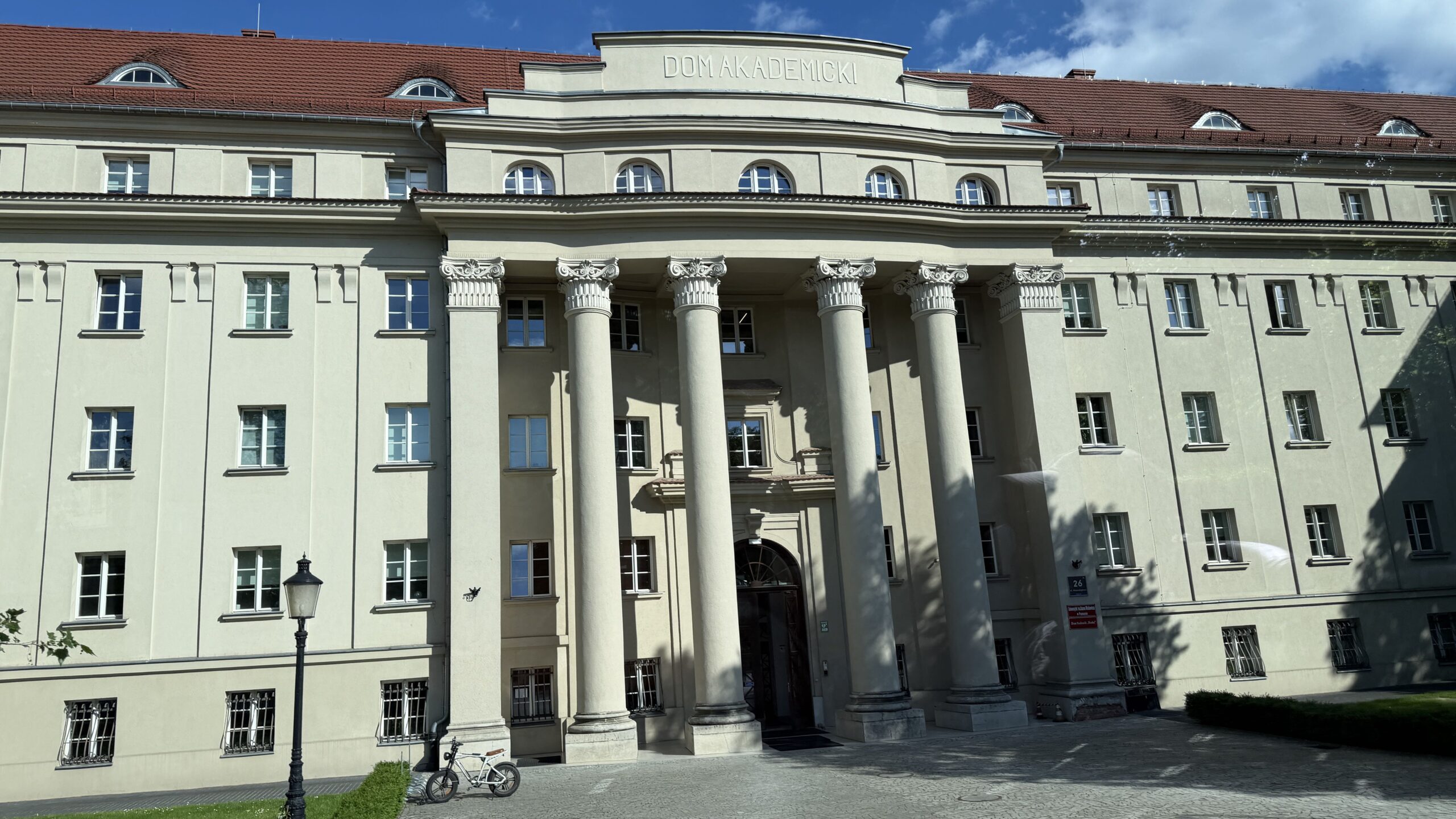
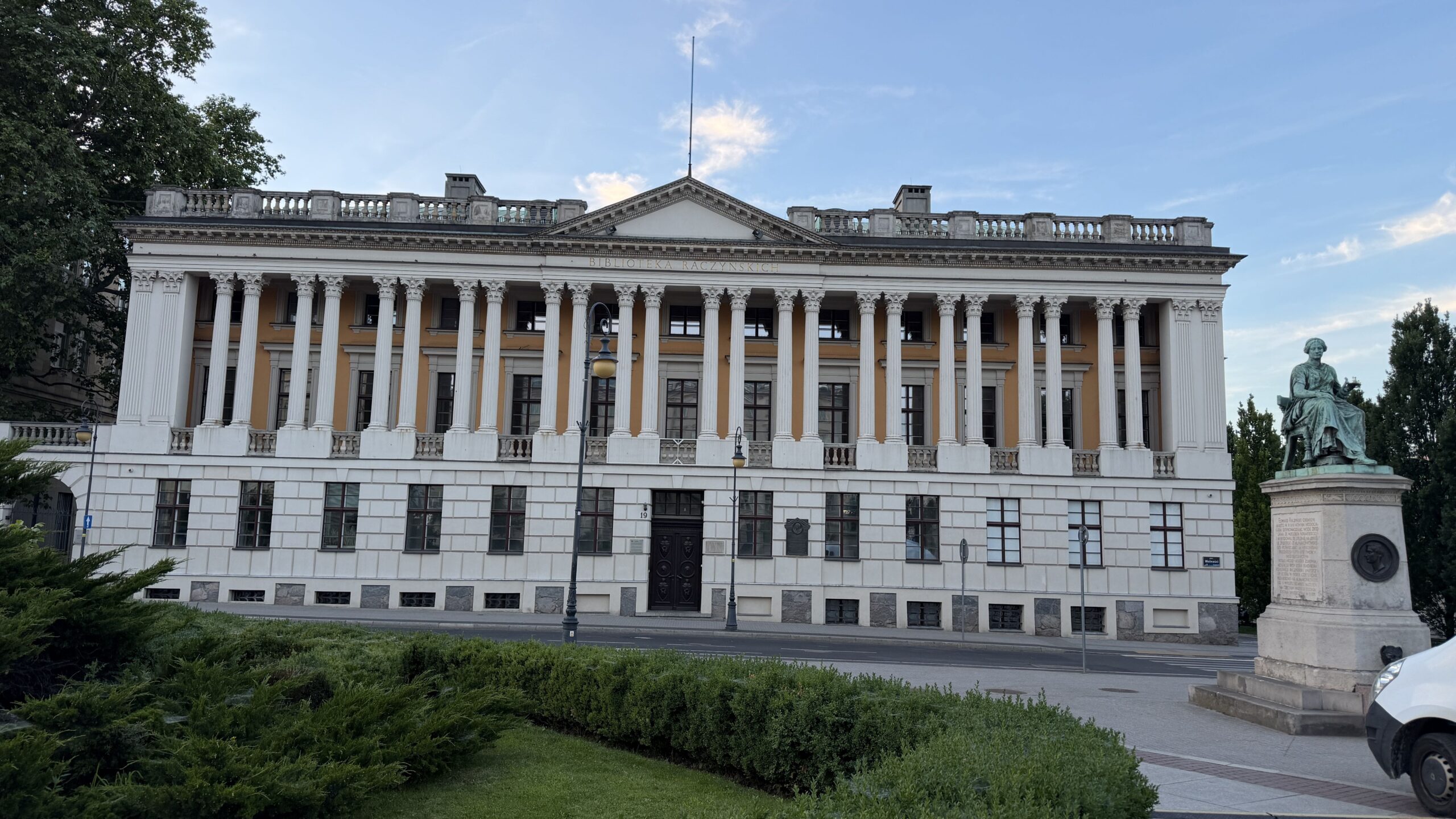
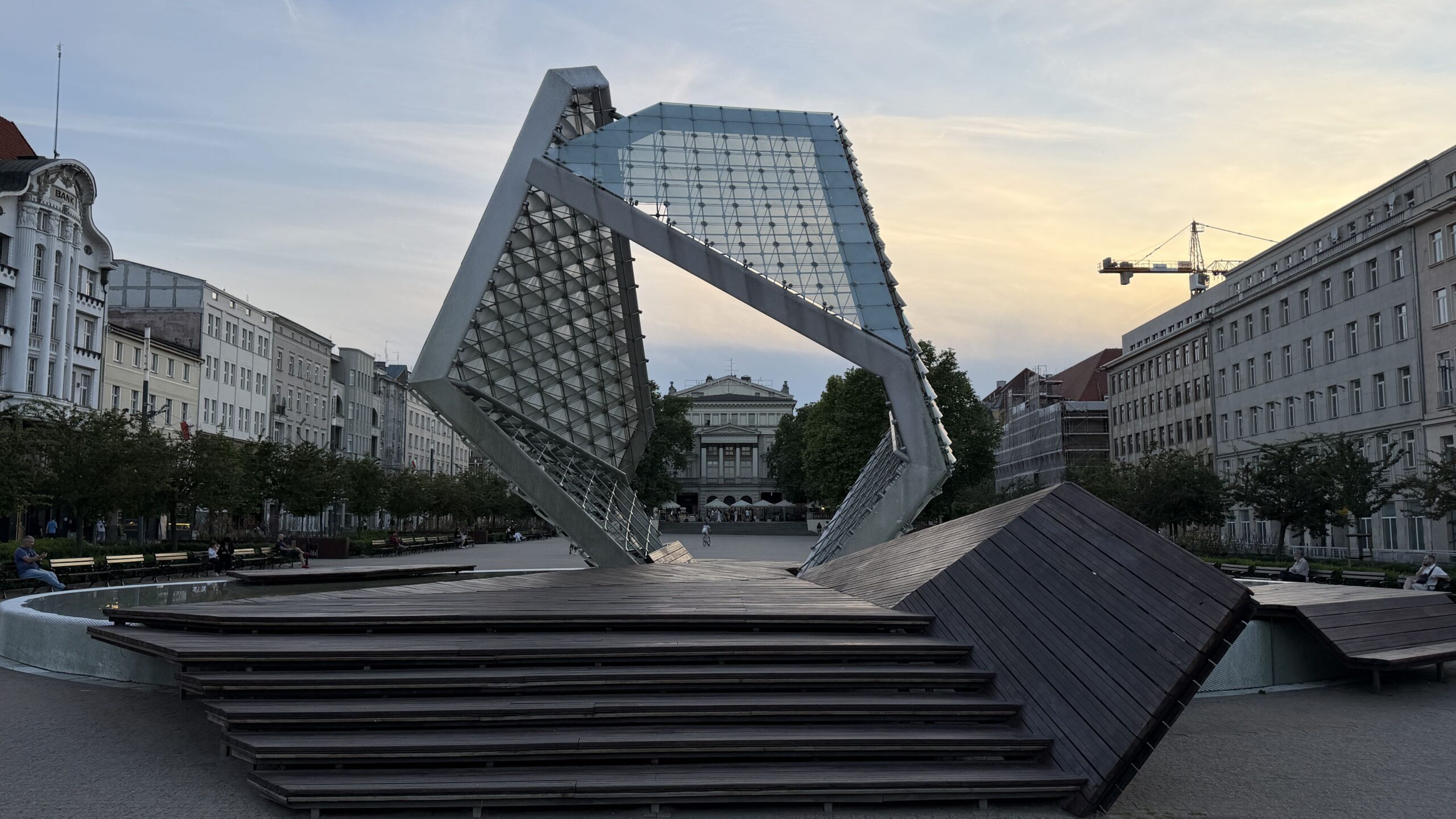
Our walk continued past the impressive Raczyński Library and the National Museum in Poznań, whose grand classical architecture contrasted beautifully with the colorful merchant houses of the Old Market Square. Nearby, a striking glass pyramid immediately reminded us of the famous Louvre Pyramid in Paris, adding an unexpected modern architectural touch to the historic surroundings.
Public Transportation Done Right
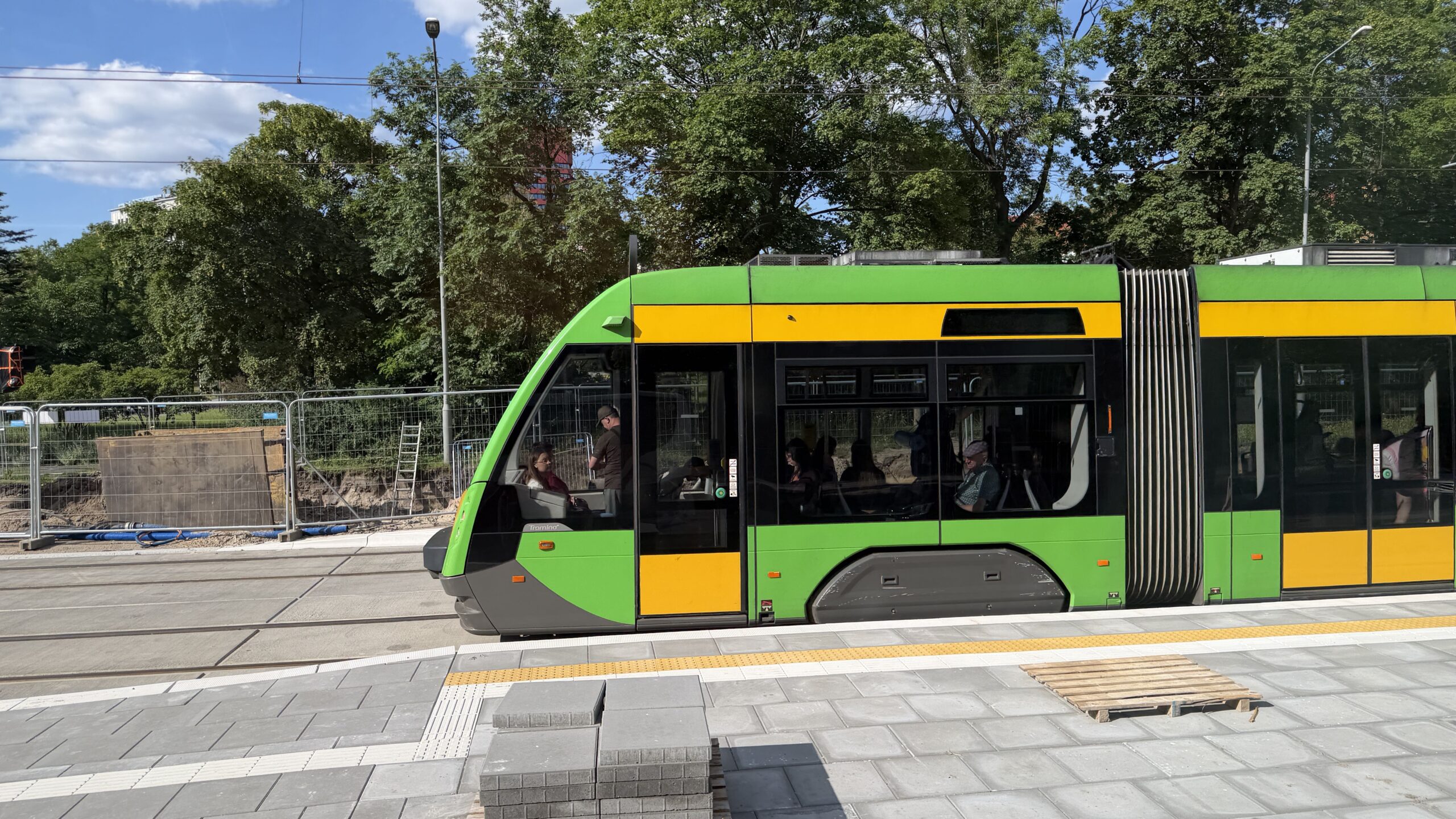
One feature of Poznań that immediately impressed us was its excellent tram network. The trams moved quietly and efficiently through the city while pedestrians and cyclists comfortably shared the same streets. Everything seemed remarkably well organized, with different modes of transportation operating together without disruption.
Watching the trams glide effortlessly through the historic streets reminded us why so many European cities are admired for their public transportation. Here, trams don’t simply complement cars—they are an essential part of everyday life.
An Unexpected Surprise – Game World
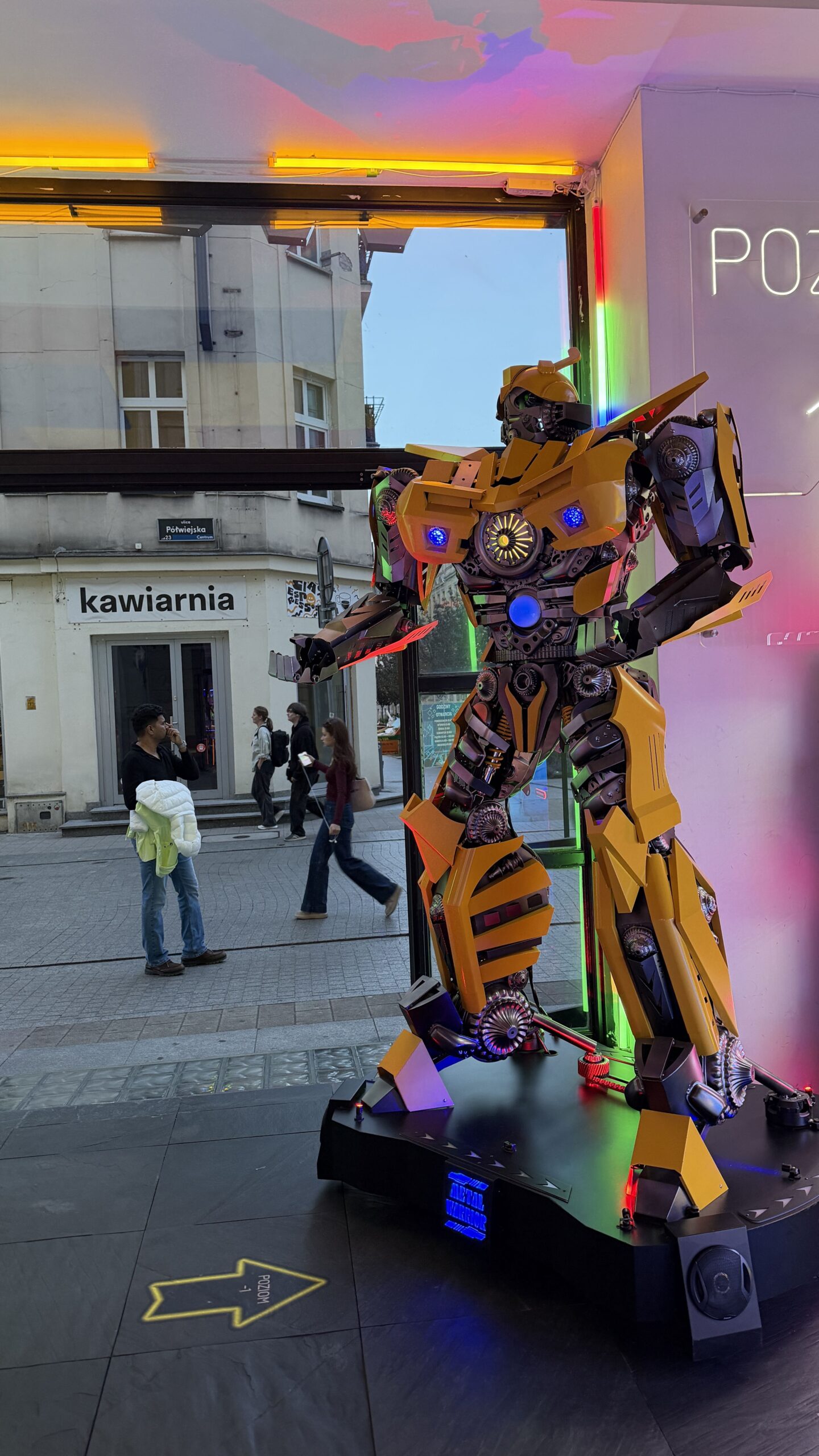
While walking from the Old Town to our hotel, we stumbled upon Game World on Półwiejska Street, just a short walk from the popular Stary Browar shopping center. What first caught our attention was the giant Bumblebee statue from Transformers standing proudly outside the entrance. Towering nearly 2.5 meters (over 8 feet) tall, it quickly became one of the most unexpected photo stops of the evening.
Curious to see what was inside, we discovered that Game World is much more than a traditional arcade. It features retro pinball machines, classic arcade games, virtual reality experiences, billiards, foosball, darts, and several larger-than-life character displays. Finding such a modern entertainment venue while wandering through Poznań’s historic streets was a fun surprise and a reminder that the city blends centuries of history with contemporary attractions.
IKTraveler Tip
If your itinerary allows, plan your visit to the Old Market Square just before noon to watch Poznań’s famous mechanical goats appear from the Town Hall clock tower. Even if you miss the daily performance like we did, don’t skip an evening walk through the square. The illuminated Renaissance buildings, lively cafés, and relaxed atmosphere make it one of the most enjoyable times to experience the city.
Reflection
Our first evening in Poland was the perfect introduction to the country. From standing inside the nation’s oldest cathedral to strolling through one of its most beautiful market squares, Poznań welcomed us with history, colorful architecture, fascinating legends, and an easygoing charm. After exploring Berlin’s complex past, this peaceful evening felt like the perfect transition into the next chapter of our journey across Poland.
From Poznań to Warsaw: A City That Rose from the Ashes
After breakfast, we said goodbye to charming Poznań and began our journey east toward Poland’s capital, Warsaw. The drive of about 330 kilometers (205 miles) took us through the country’s pleasant agricultural countryside, where vast green fields, small villages, and open landscapes offered a peaceful glimpse of rural Poland.
By early afternoon, we arrived in Warsaw—a city unlike any other in Europe. Often described as the “Phoenix of Europe,” Warsaw has risen from unimaginable destruction to become a vibrant modern capital while carefully preserving its historical identity.
A Quick Taste of Warsaw
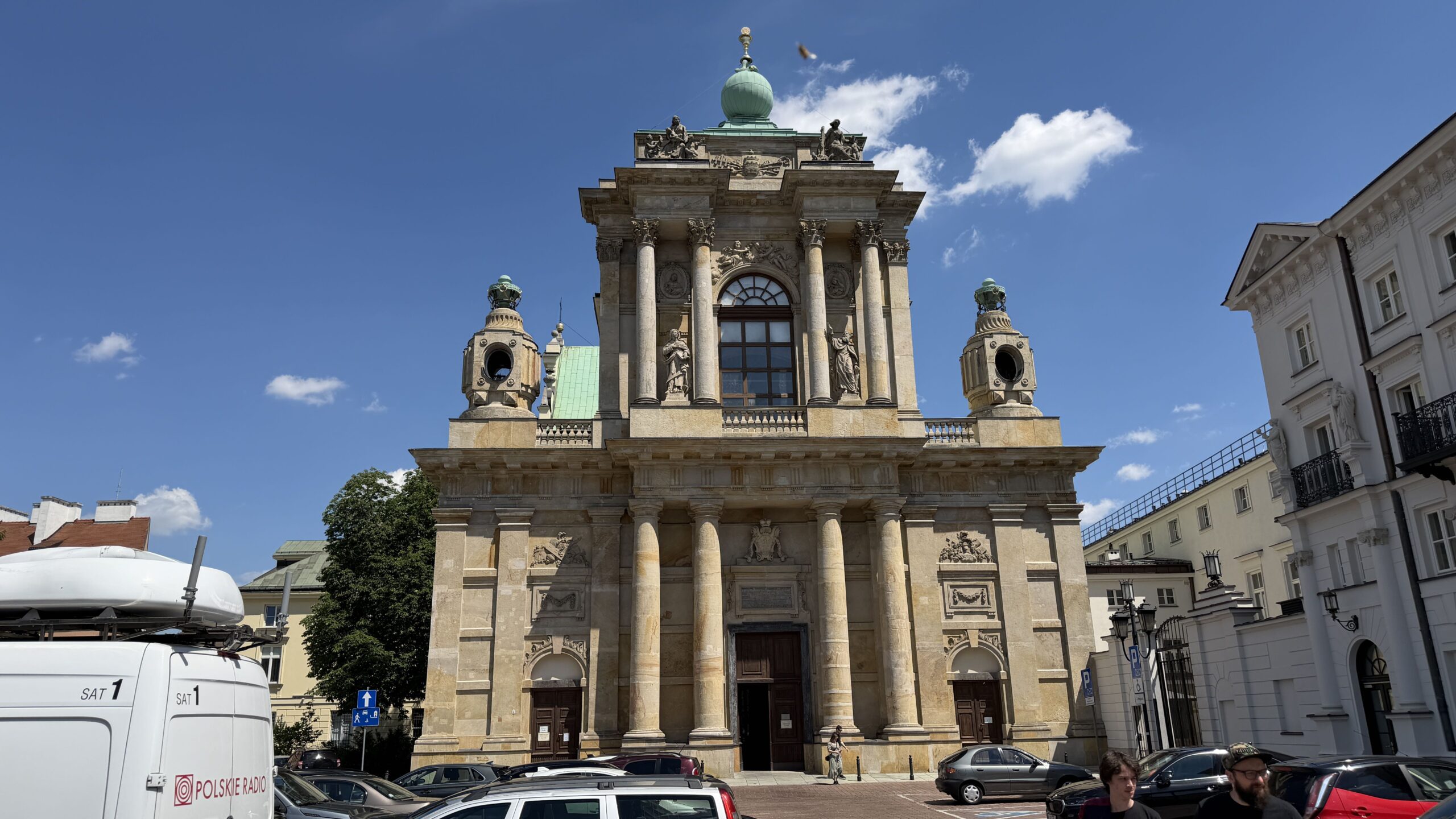
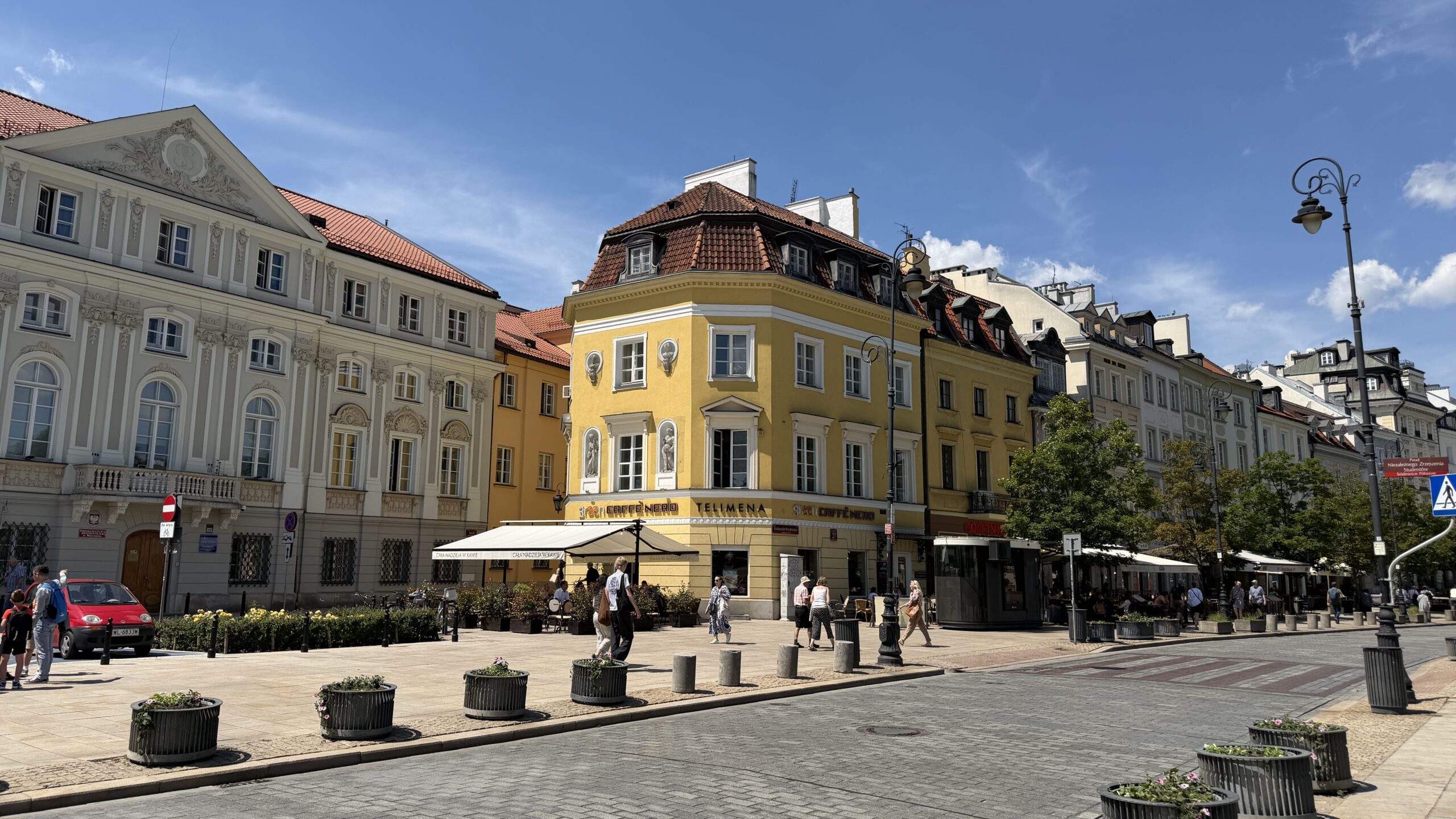
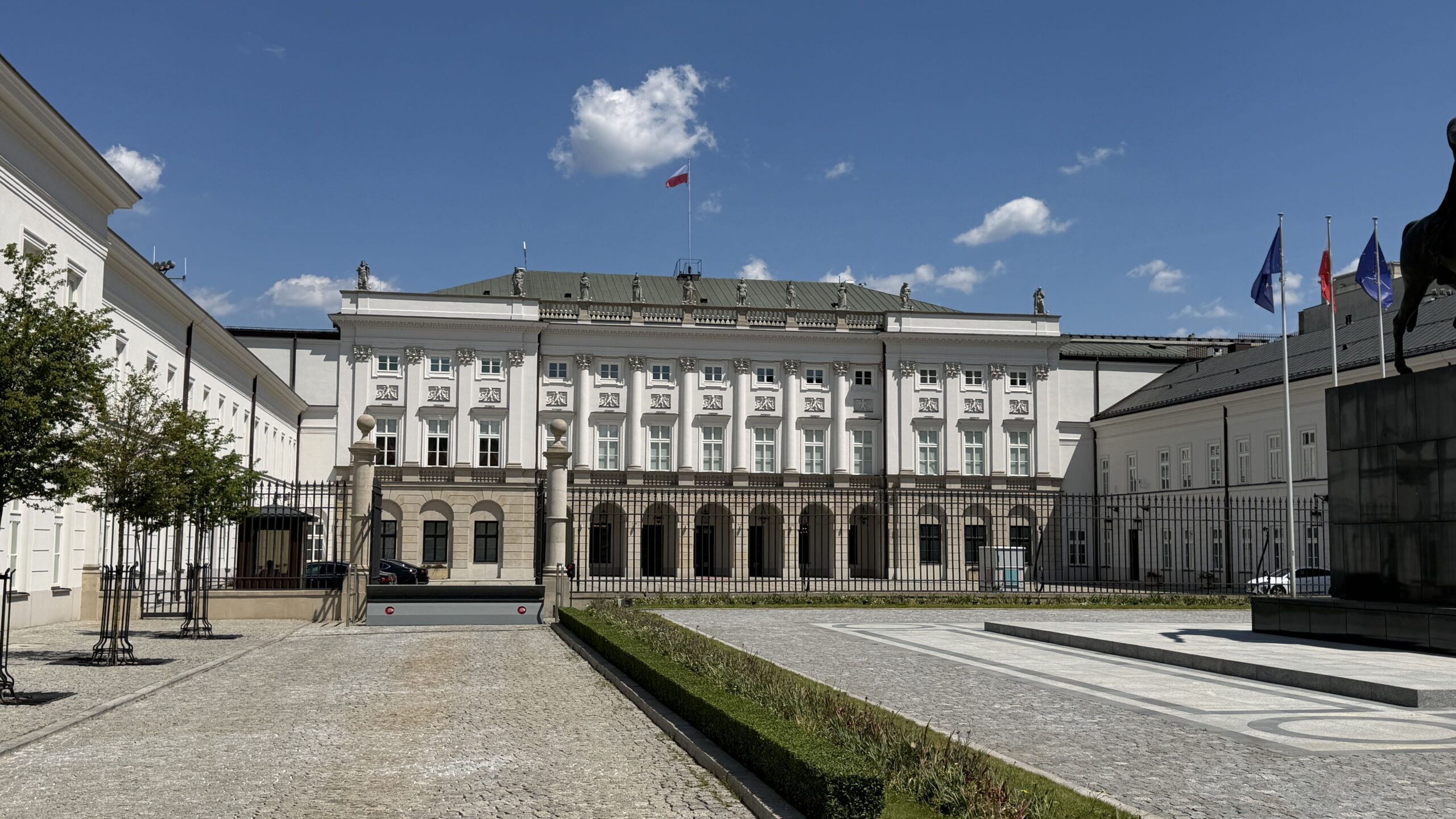
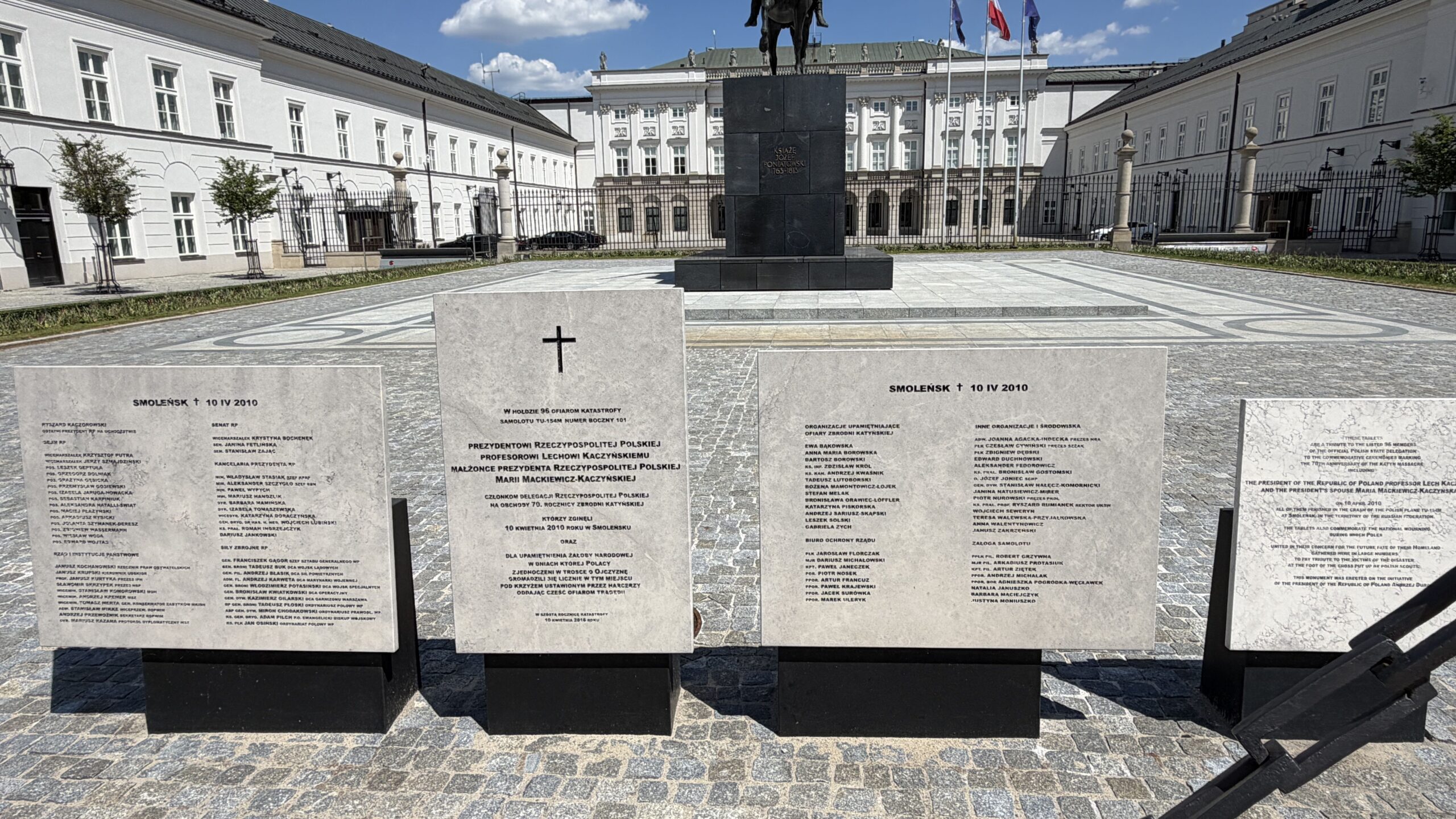
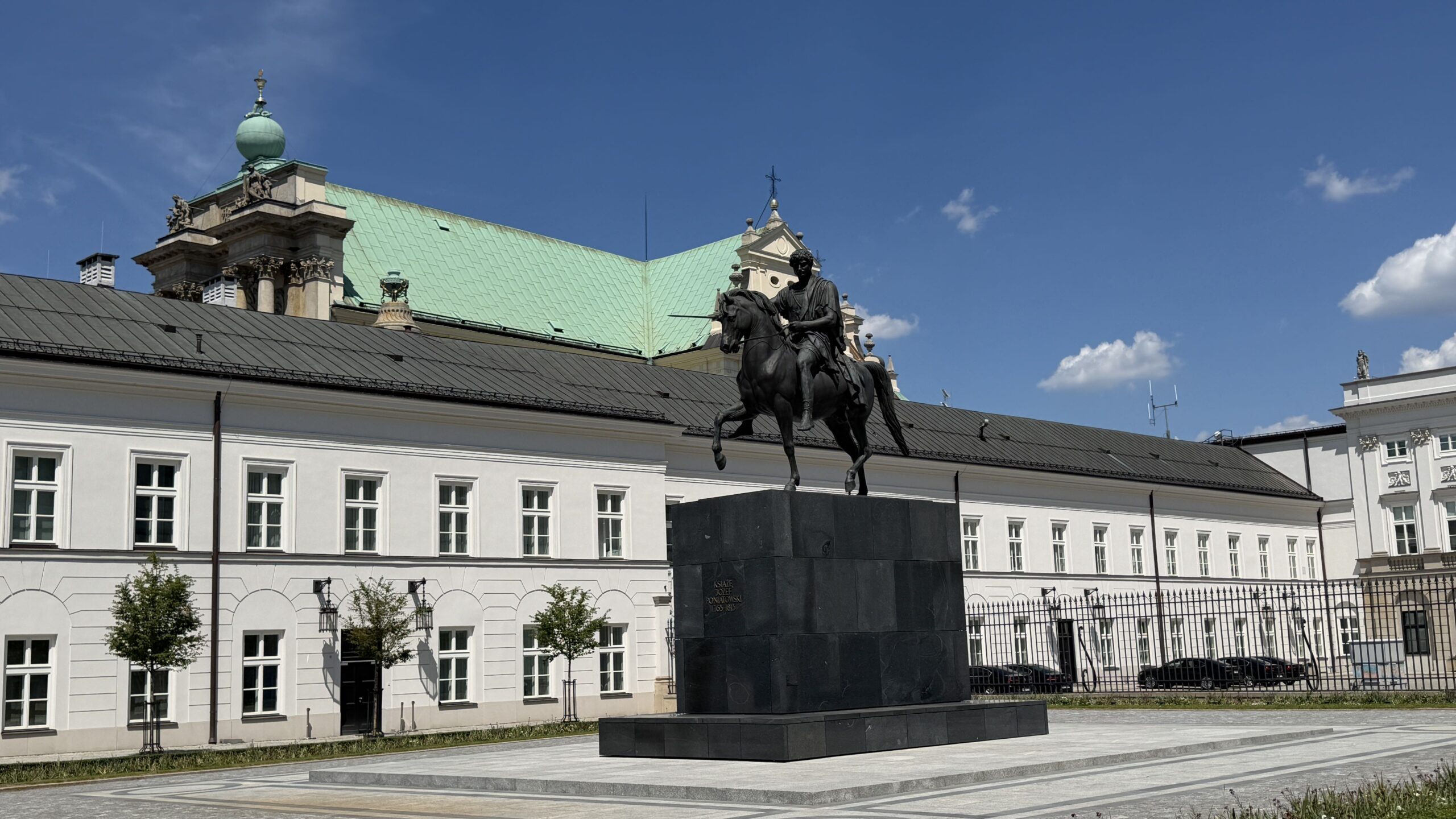
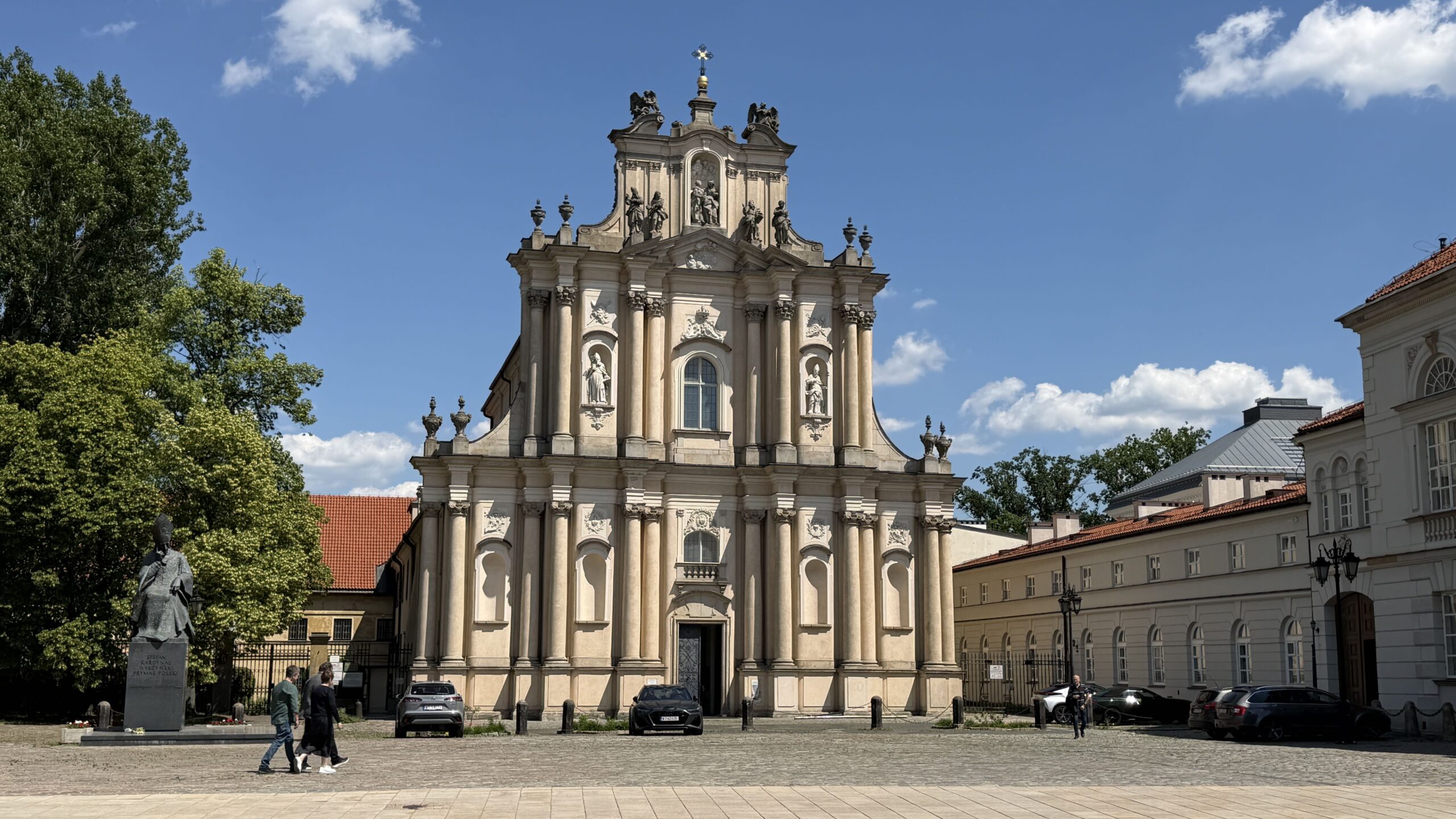
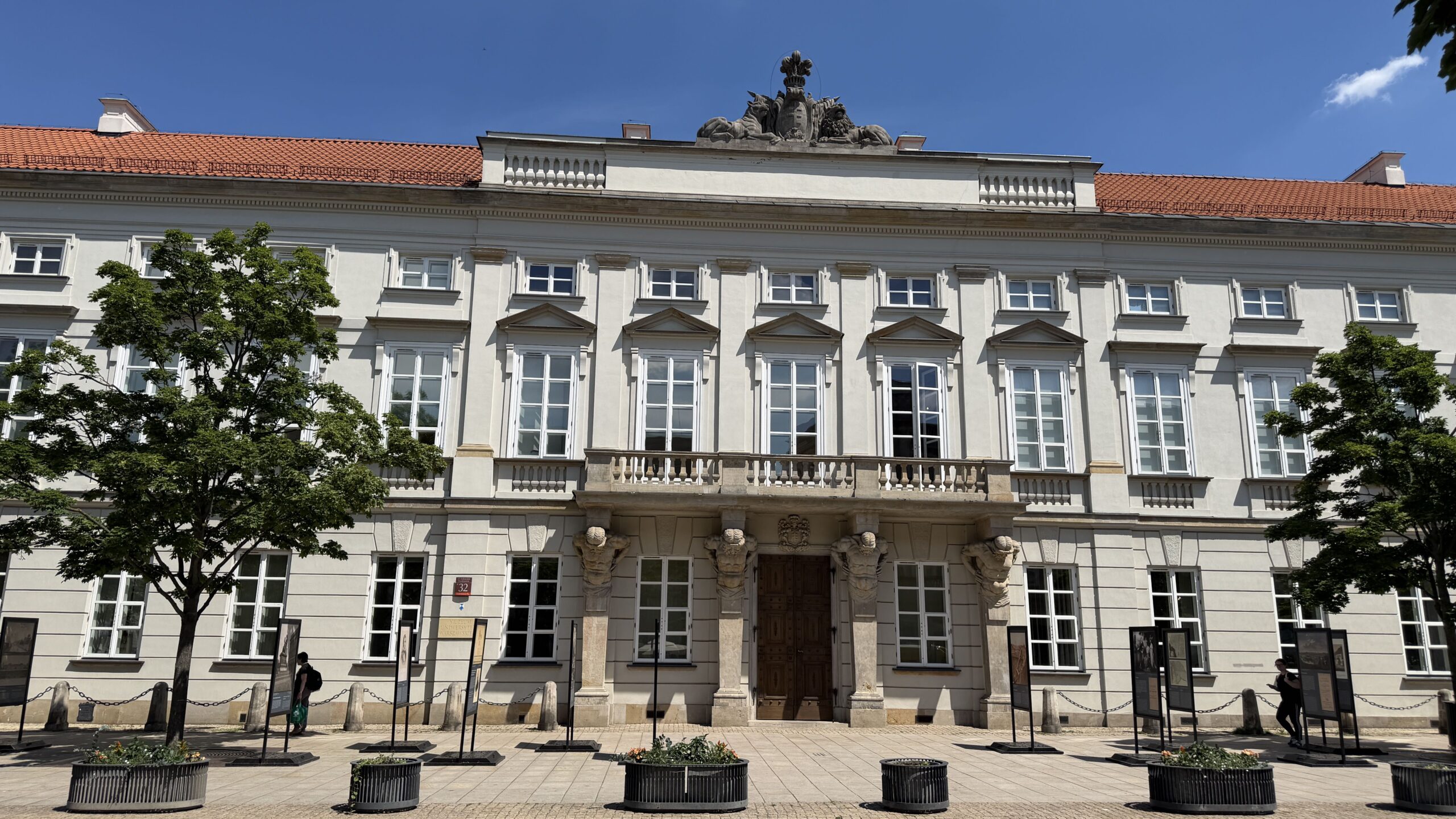
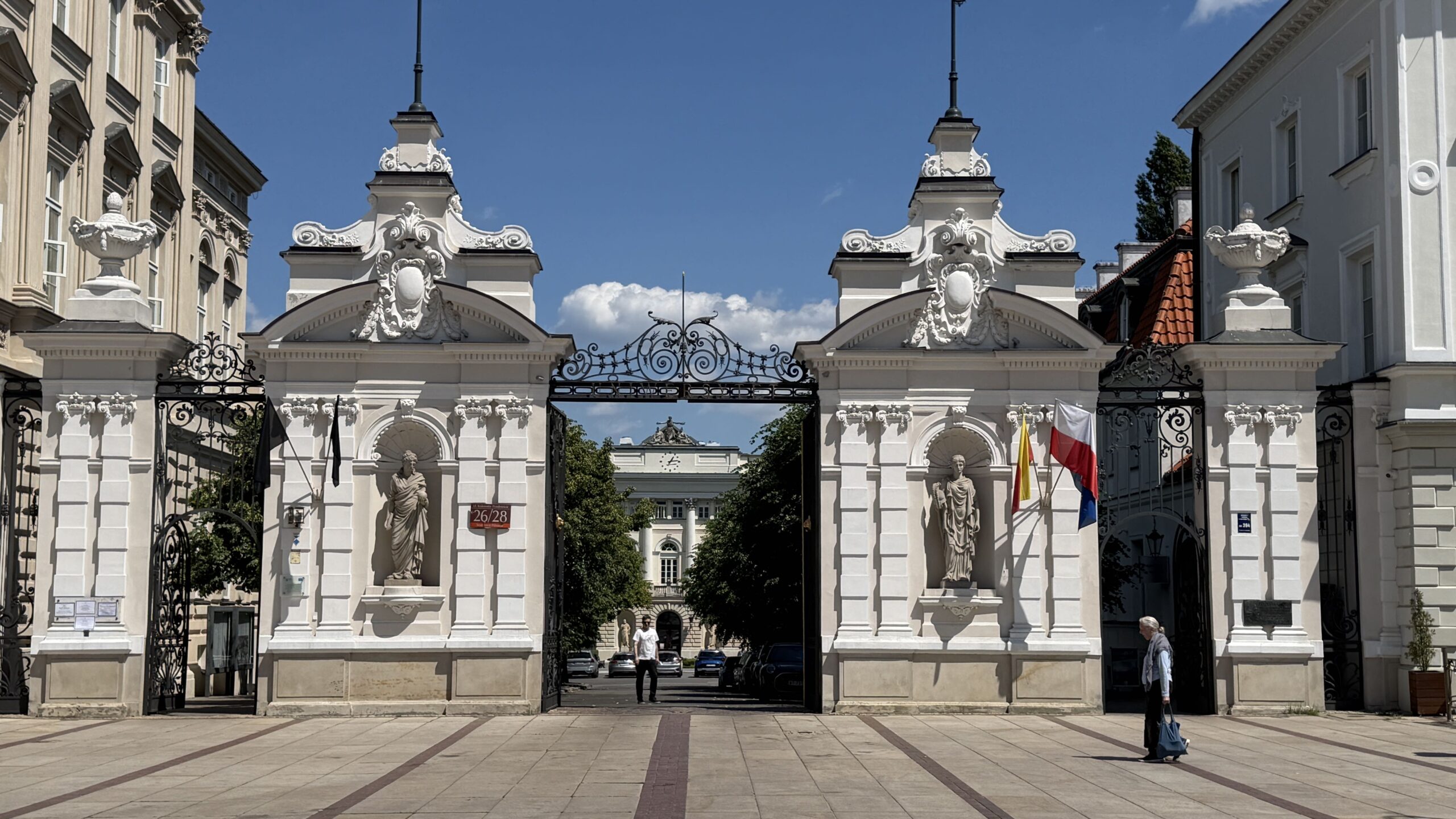
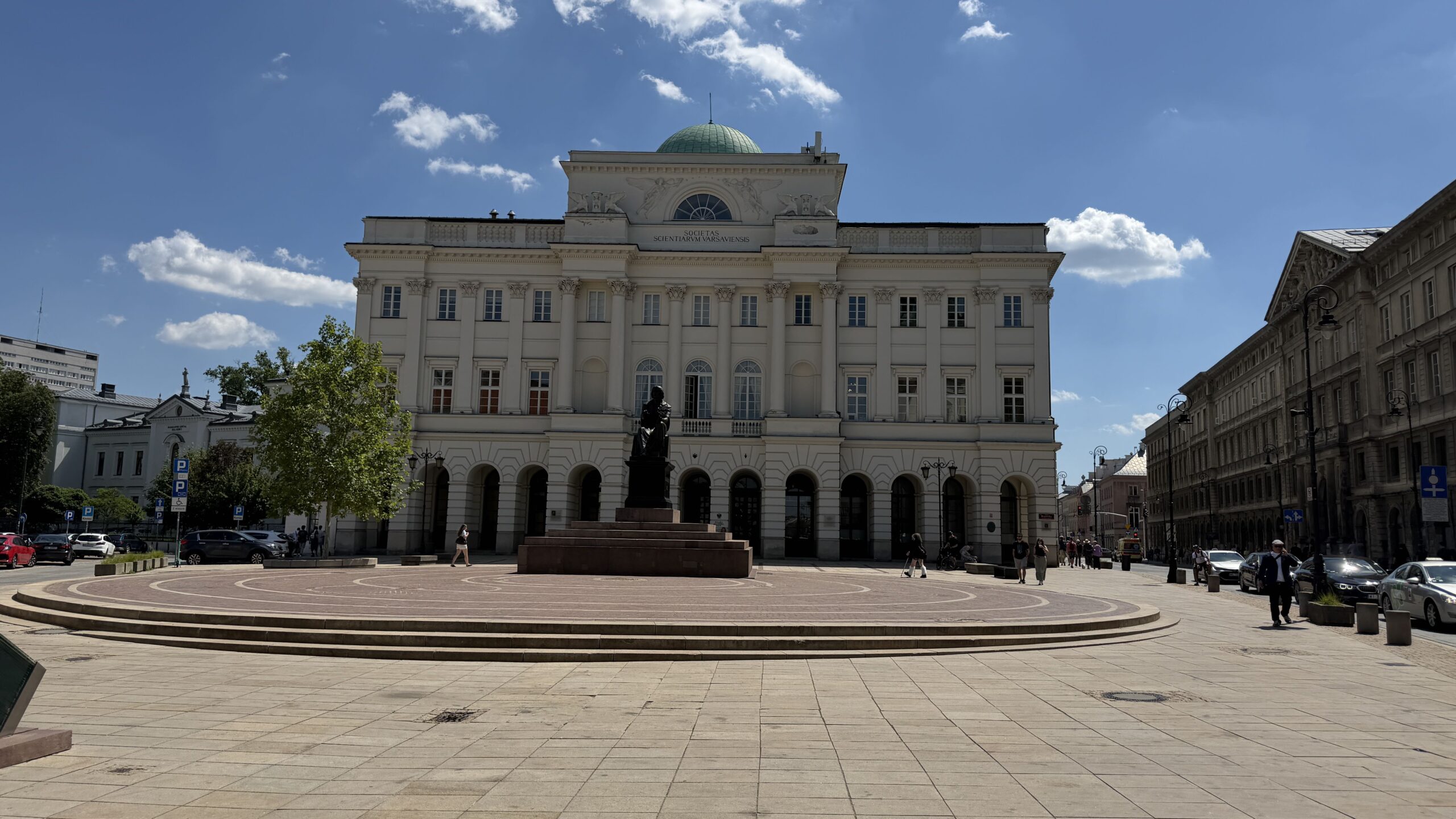
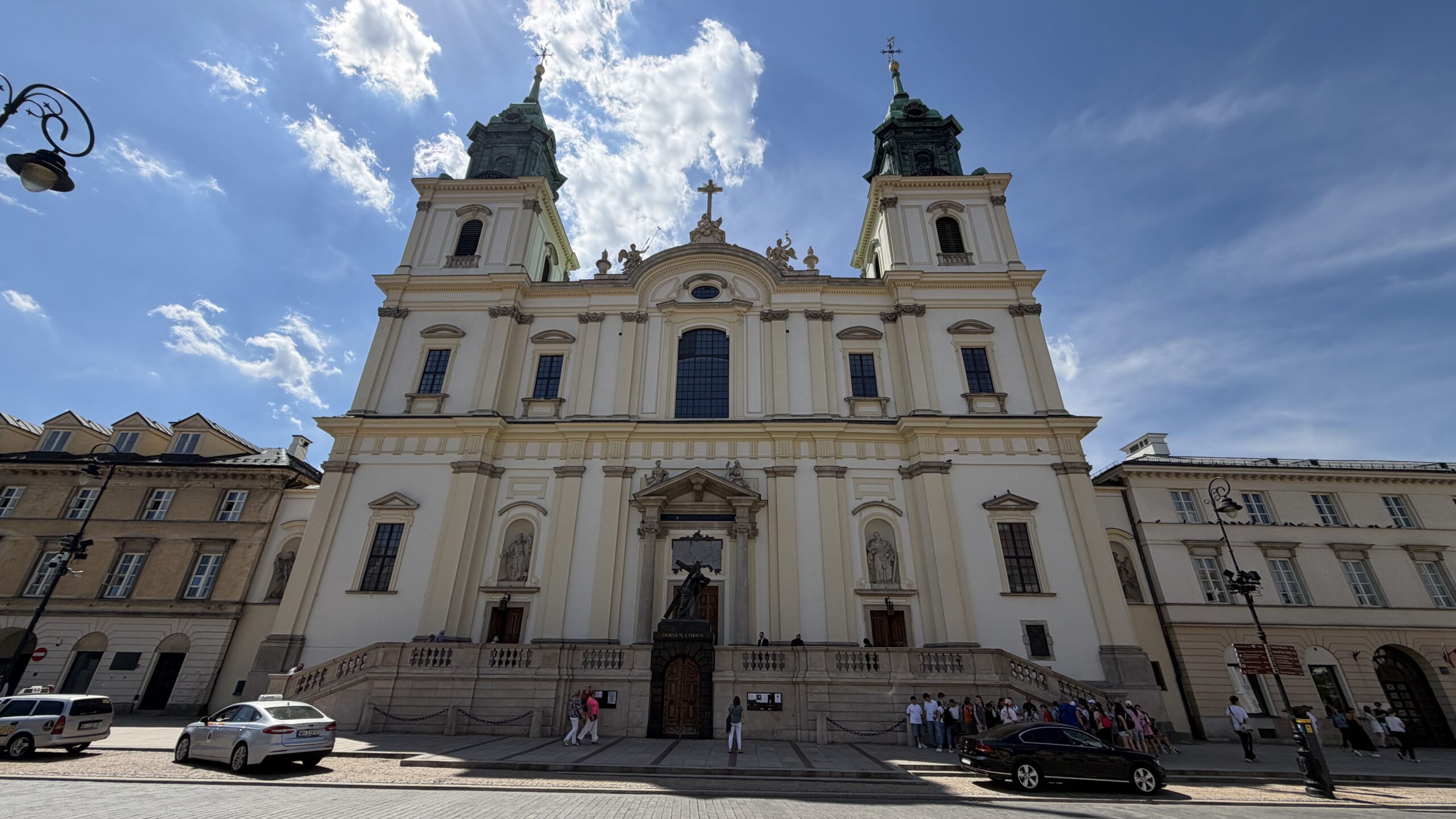
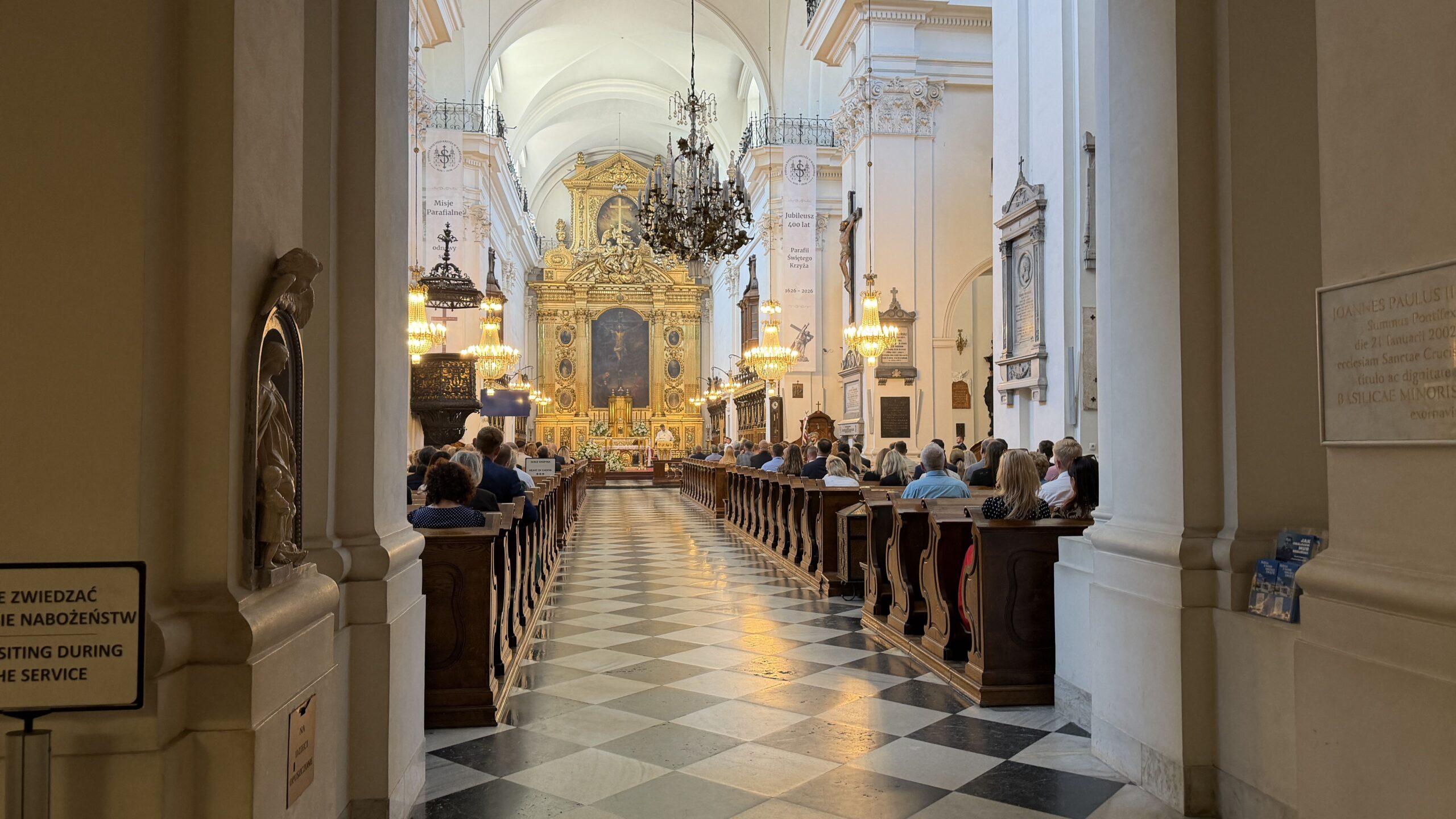
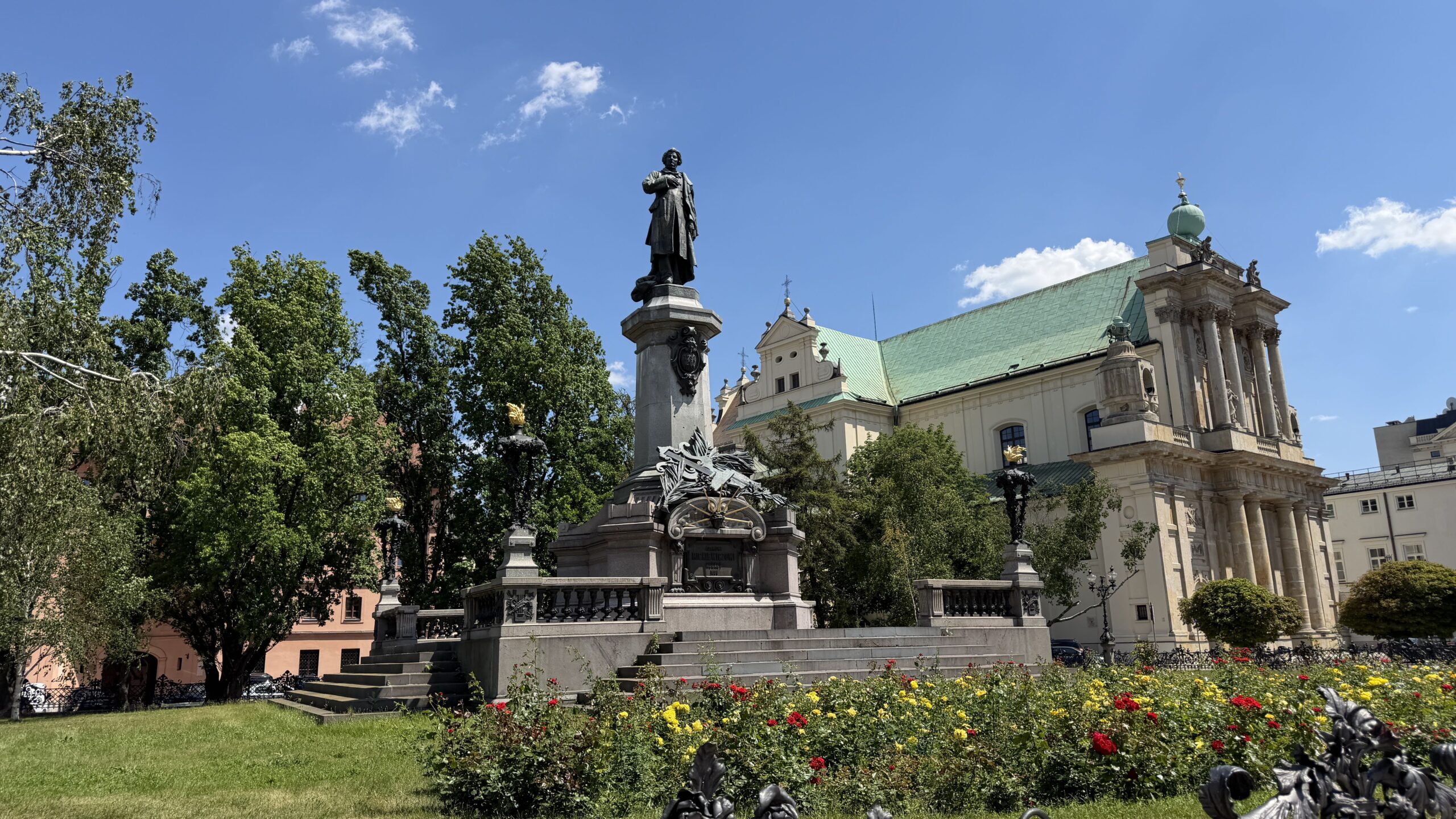
Before our guided tour, we had some free time to explore on foot. We wandered along part of Warsaw’s famous Royal Route, passing several beautiful landmarks including the Carmelite Church, the Presidential Palace, the Church of the Visitation of the Blessed Virgin Mary, the Holy Cross Church, and buildings belonging to the University of Warsaw. Even during this short walk, Warsaw impressed us with its elegant streets and grand architecture.
With only about 30 minutes available for lunch, we decided to experience authentic Polish cuisine at Zapiecek, a popular local restaurant known for its traditional pierogi. Naturally, we ordered Poland’s signature dish, both steamed and fried meat-filled pierogi—along with a bowl of hot Barszcz, the country’s famous beetroot soup.
There was just one problem. The food wasn’t arriving, and time was running out. We thought of simply pay the bill and leave without waiting, worried we’d miss the tour. Just as we were about to give up, the restaurant manager came over with a smile and assured us that everything was ready. Within minutes, our meal was carefully packed to go, and I even remembered to ask for spoons so we could enjoy the soup later.
Carrying takeaway bags instead of eating comfortably at the restaurant wasn’t exactly the plan, but that’s part of traveling. We hurried back to the meeting point and arrived at 2:03 PM—just three minutes after the scheduled departure. Thankfully, everything worked out perfectly.
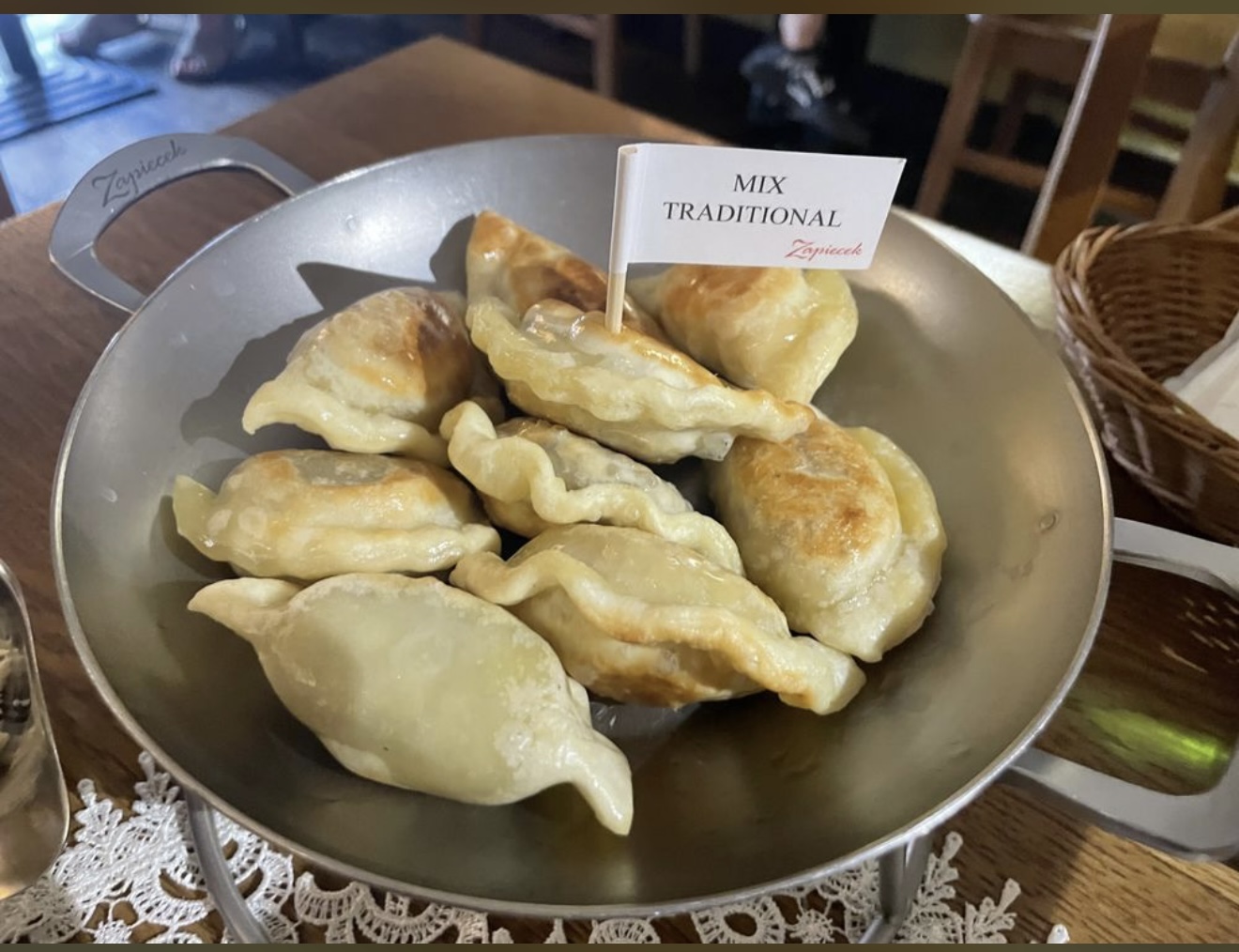
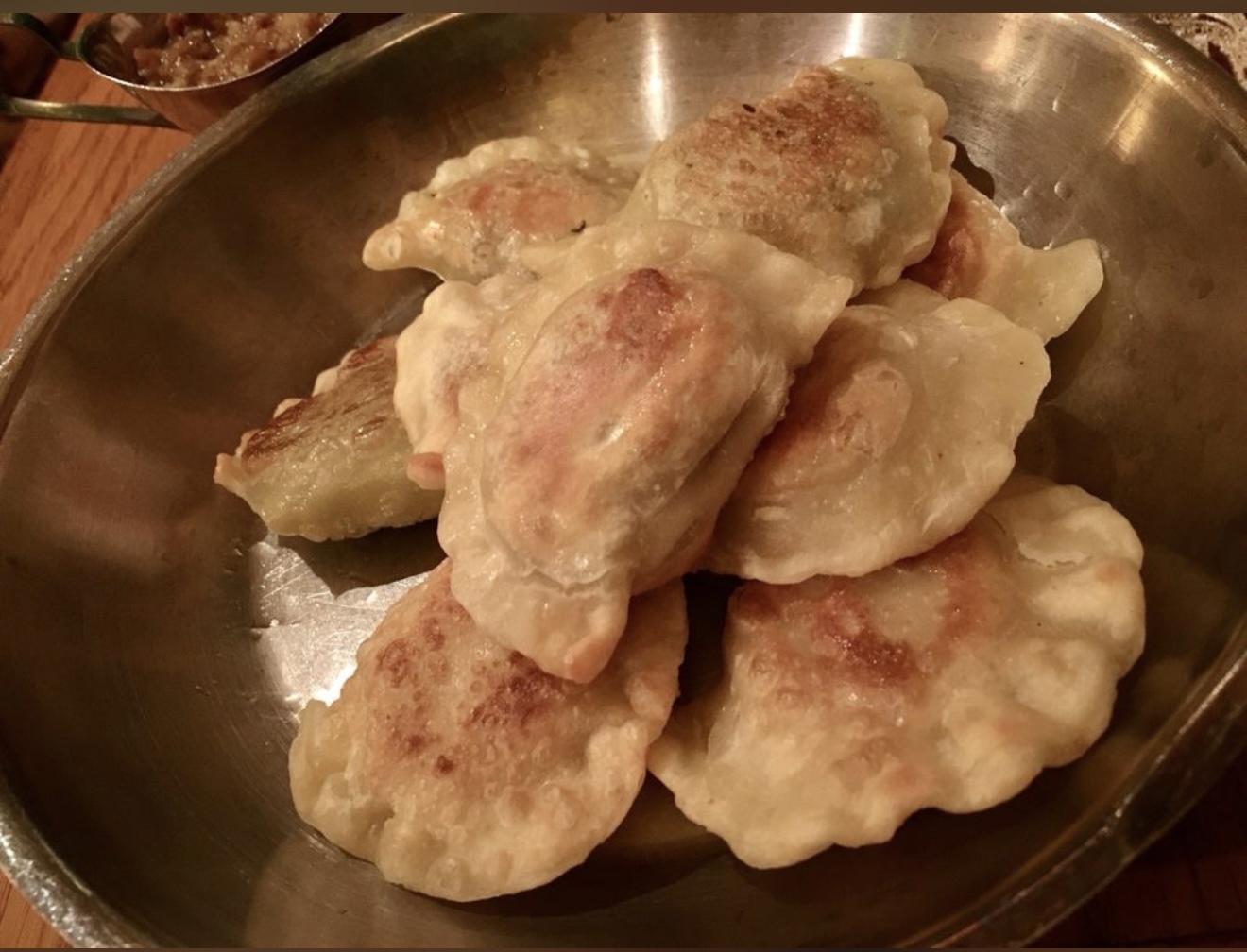
Pictures above are form the restaurant for reference.
Discovering Warsaw
Our optional “Discover Warsaw” sightseeing tour began by coach before continuing on foot through the city’s historic center.
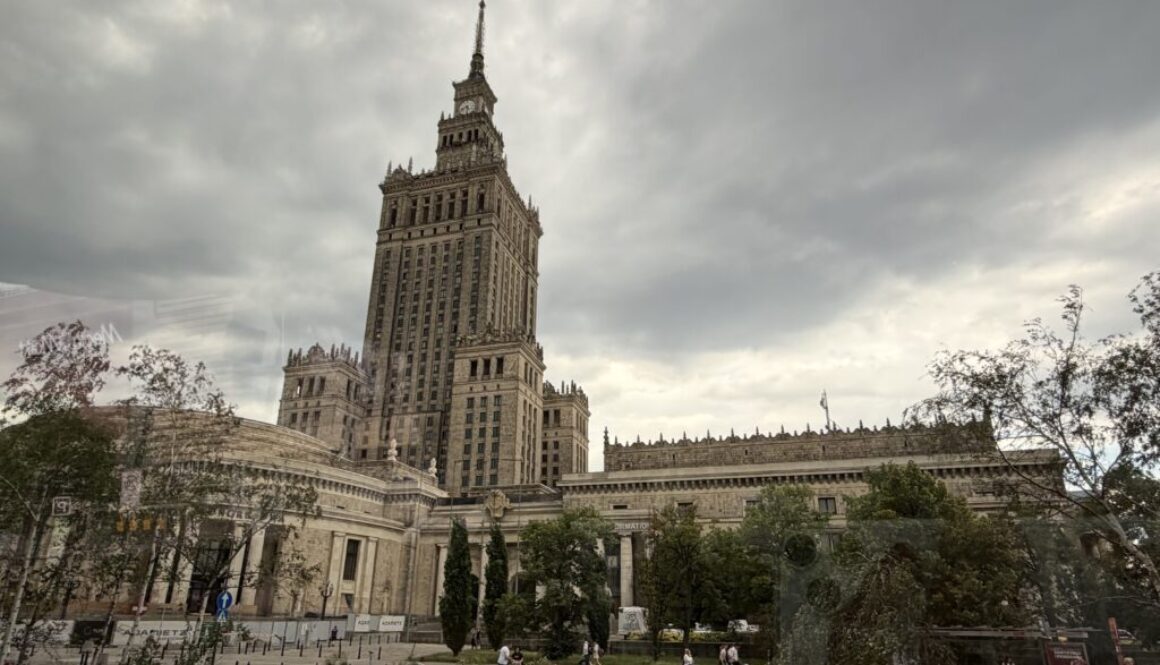
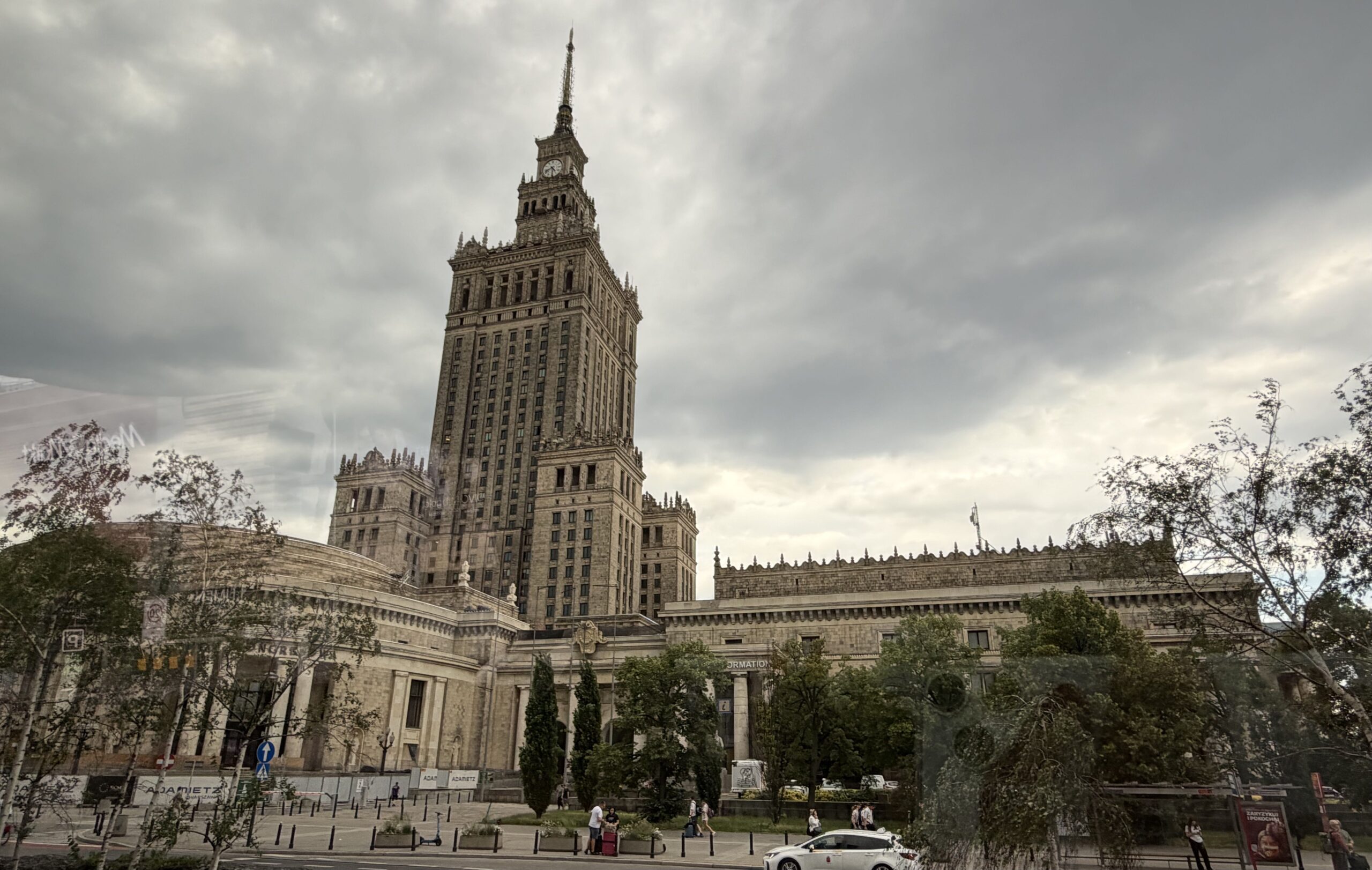
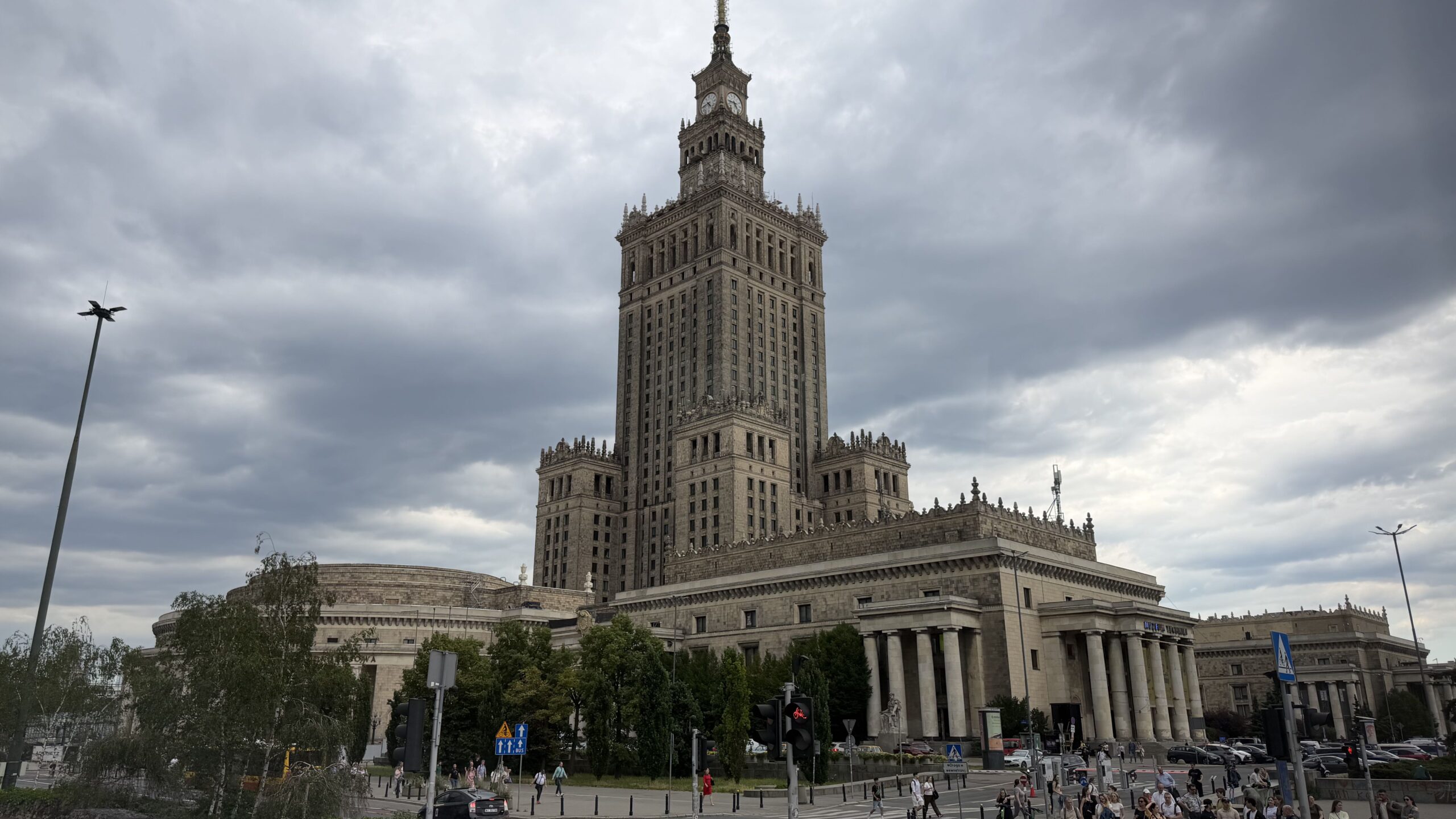
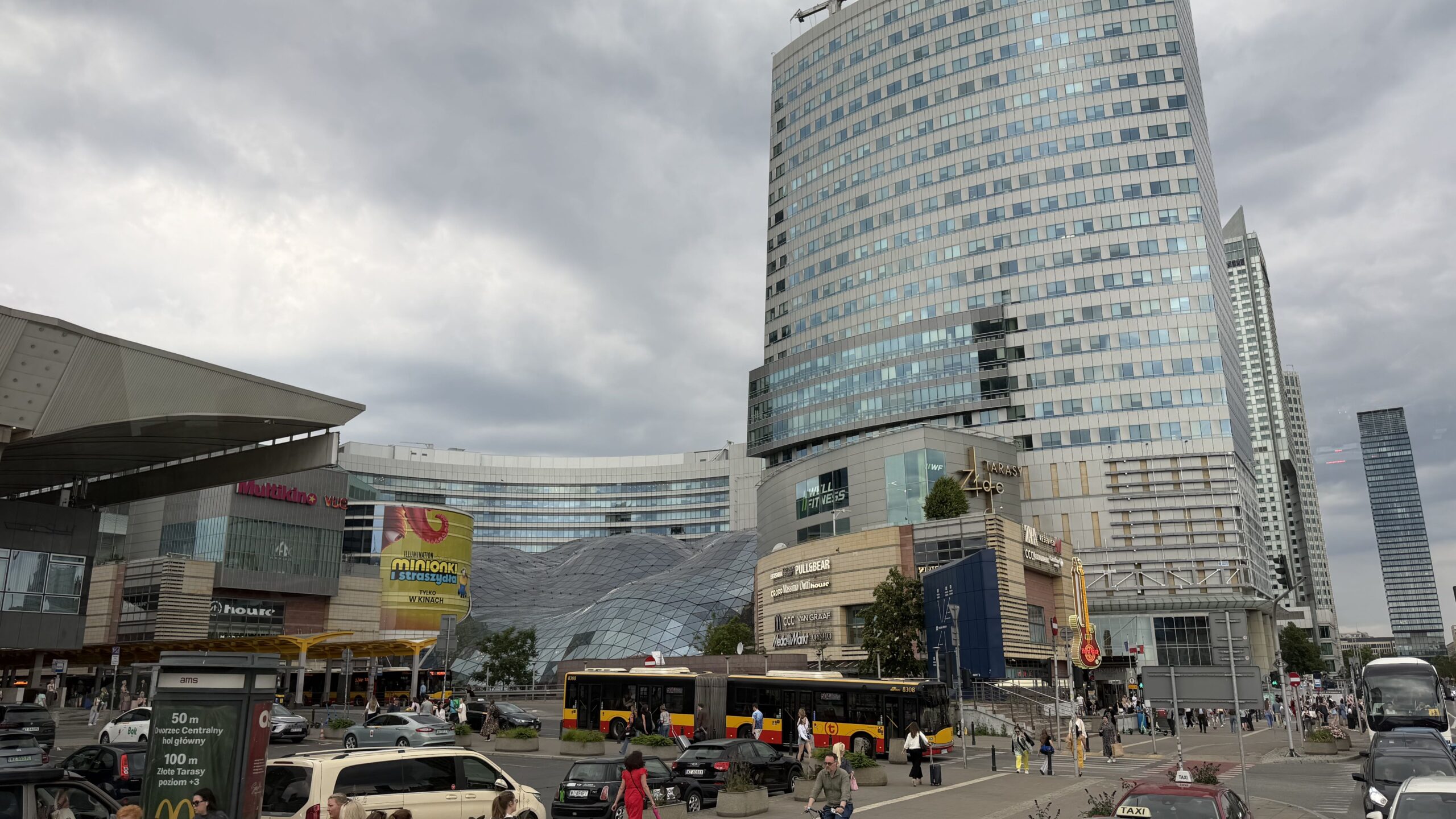
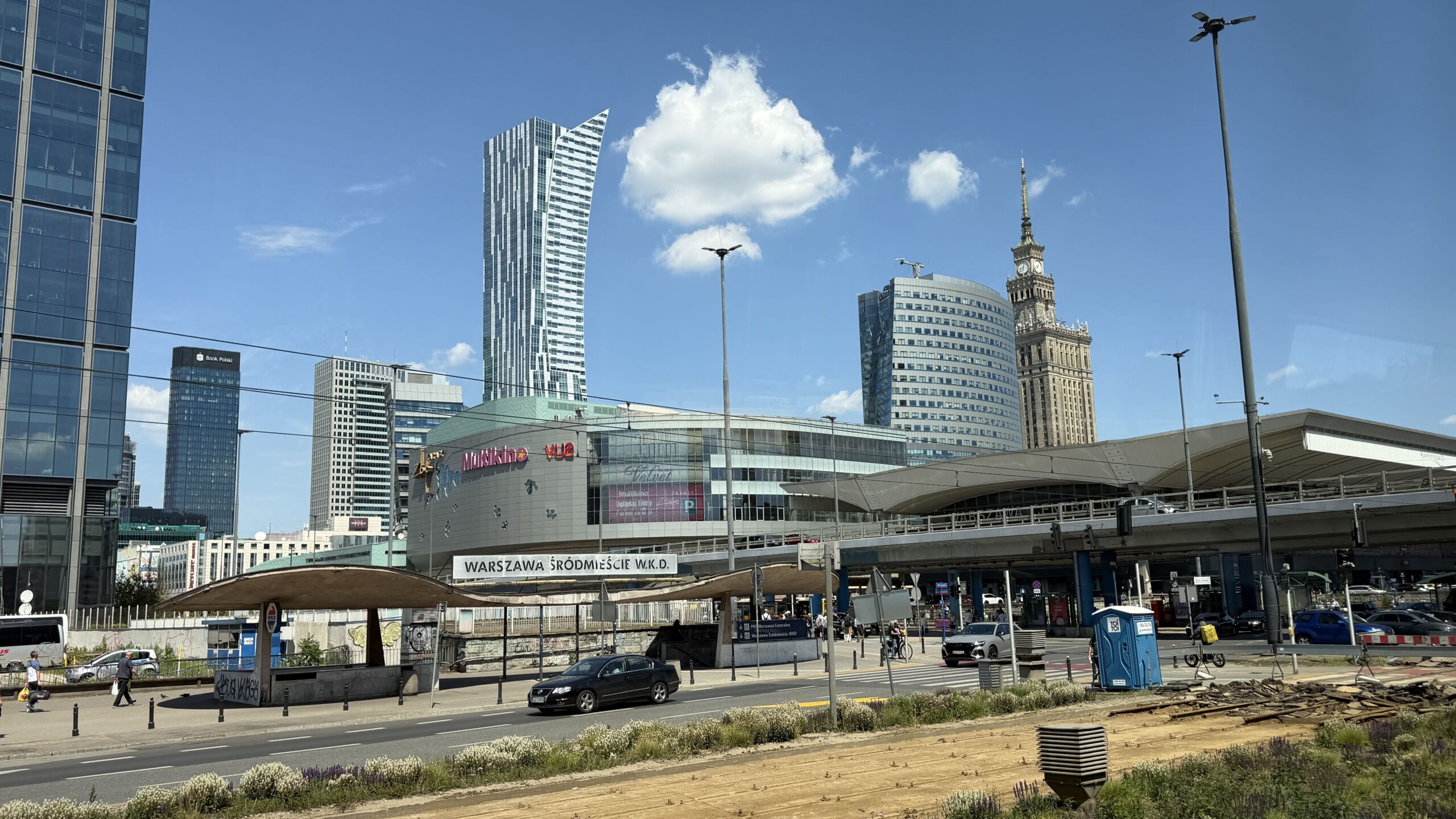
One of the first landmarks that caught my attention was the impressive Palace of Culture and Science. Towering over the skyline, its massive symmetrical design immediately stood out. Built in the 1950s as a gift from the Soviet Union, the building remains one of Warsaw’s most recognizable landmarks. While its history is complex and sometimes controversial, today it houses museums, theaters, offices, exhibition halls, and an observation deck overlooking the city.
Exploring the Old Town
As our guide explained Warsaw’s history, we quickly realized why the city is often called the Phoenix of Europe.
Our authentic Polish lunch became part of the sightseeing tour itself. Instead of sitting inside the restaurant, we enjoyed our packed pierogi and hot Barszcz while walking through Warsaw’s historic streets. Looking back, it turned into one of those unexpected travel memories that often become the most memorable.
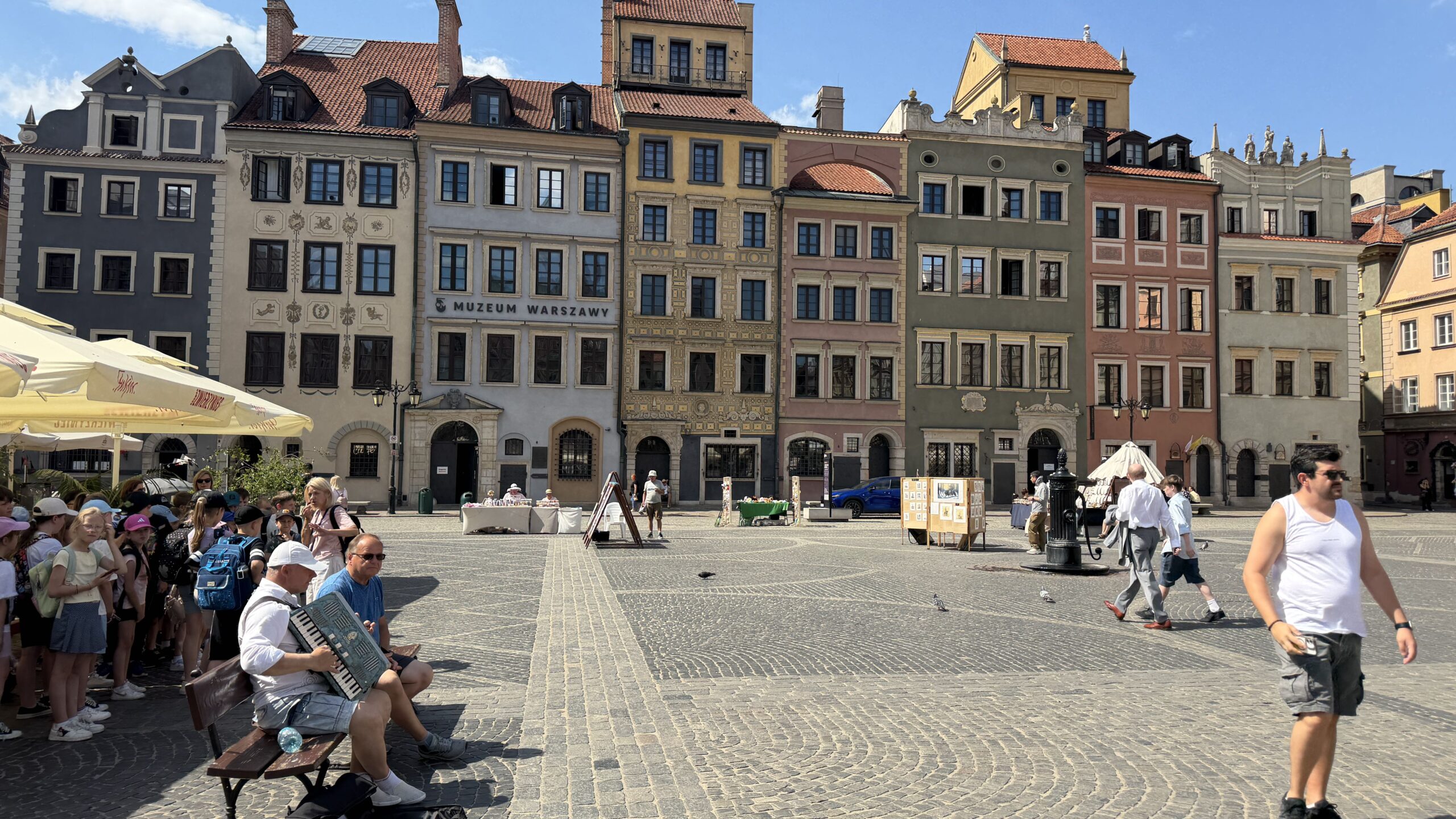
The city center was full of life, with musicians playing on benches, busy outdoor restaurants, and groups of schoolchildren filling the streets with energy. It created a vibrant atmosphere that contrasted beautifully with the city’s wartime history.
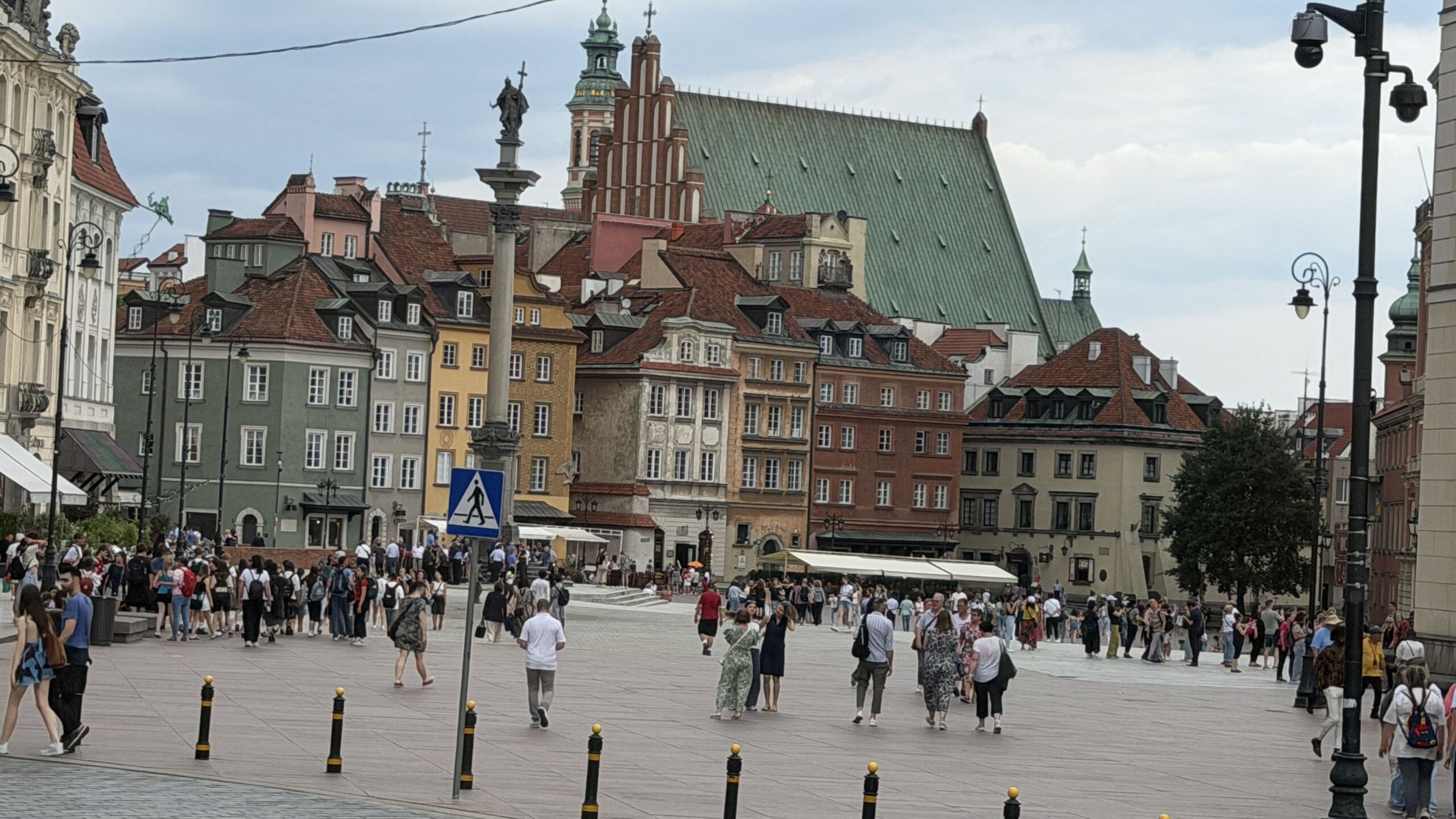
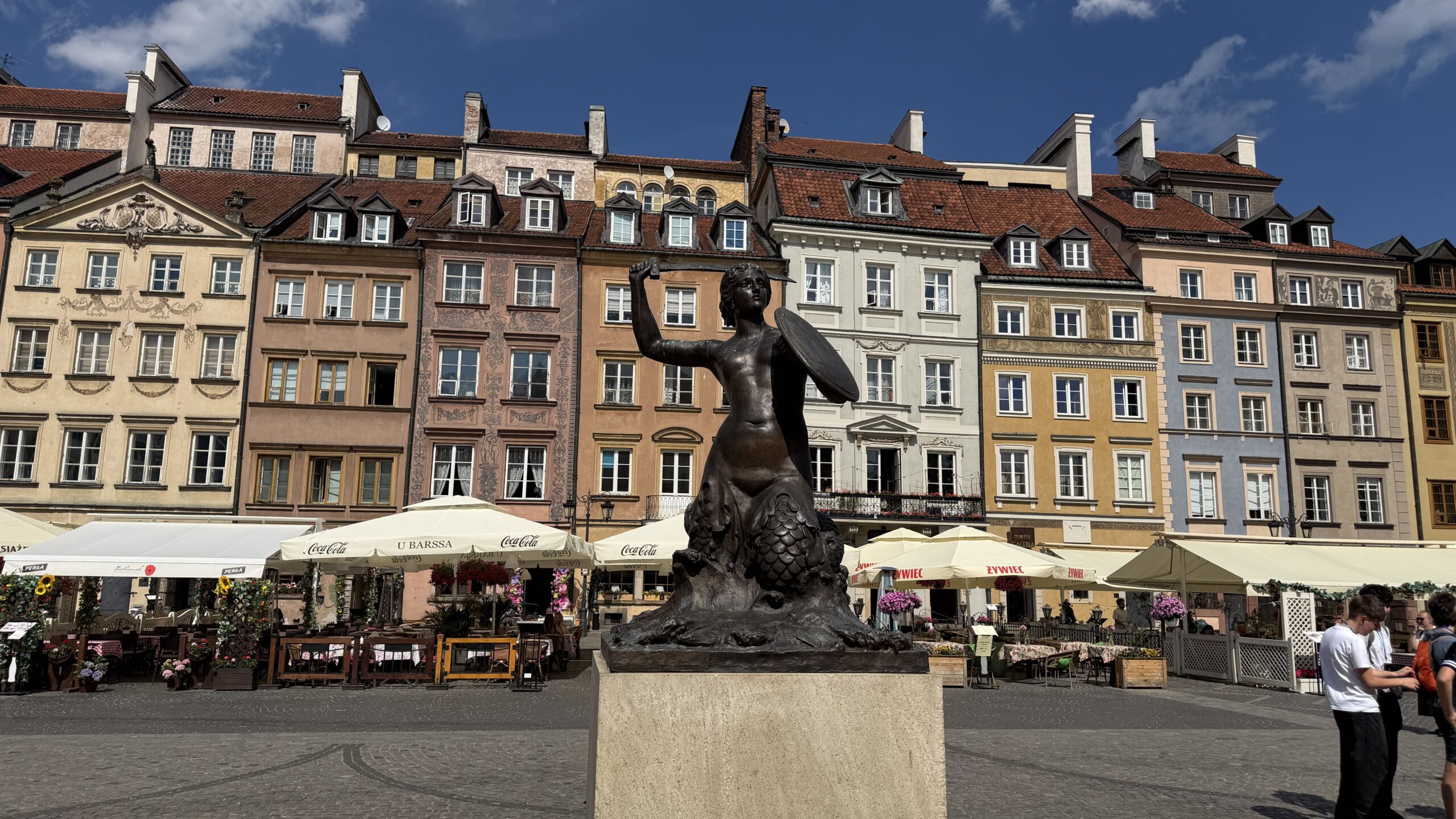
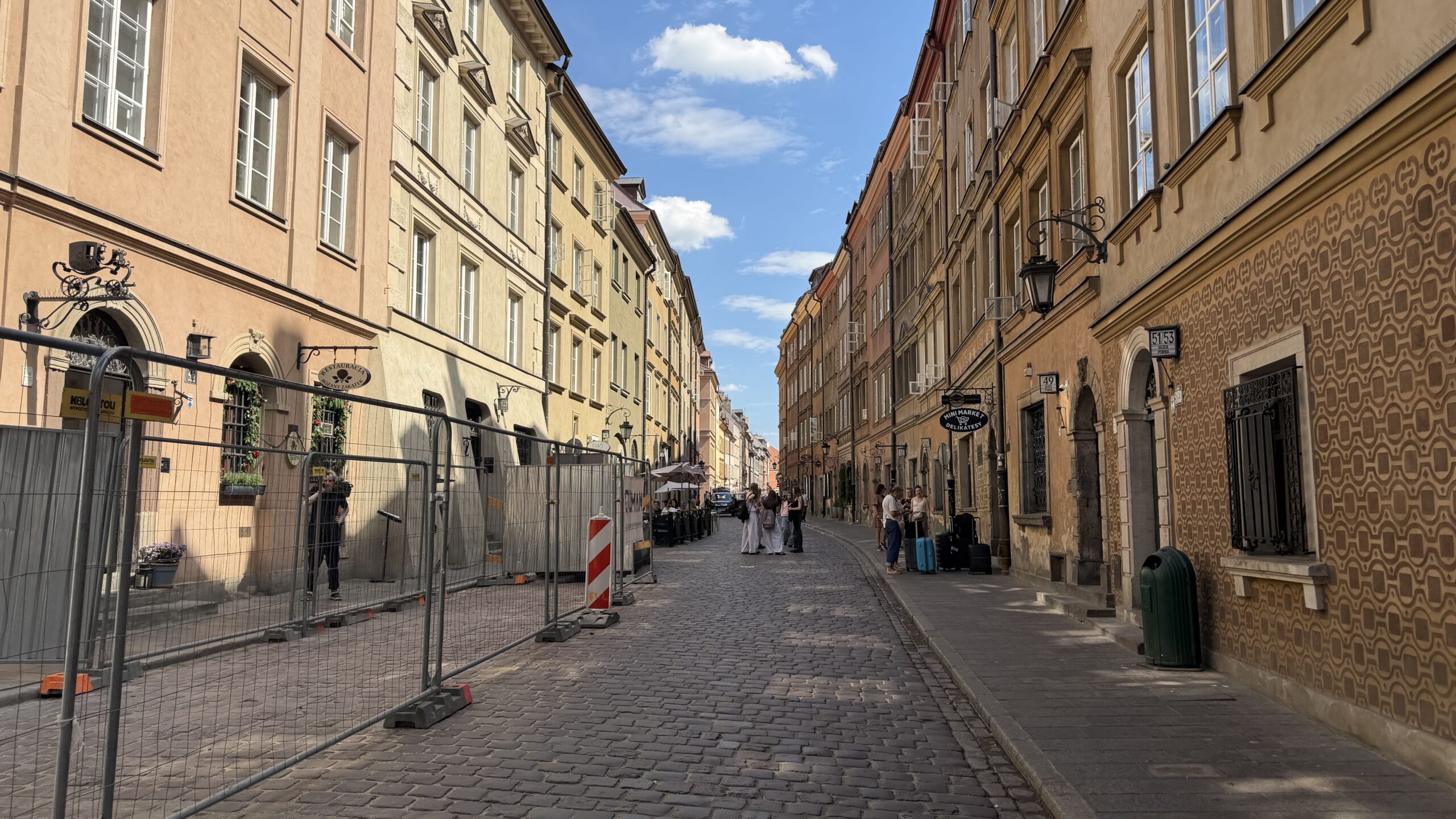
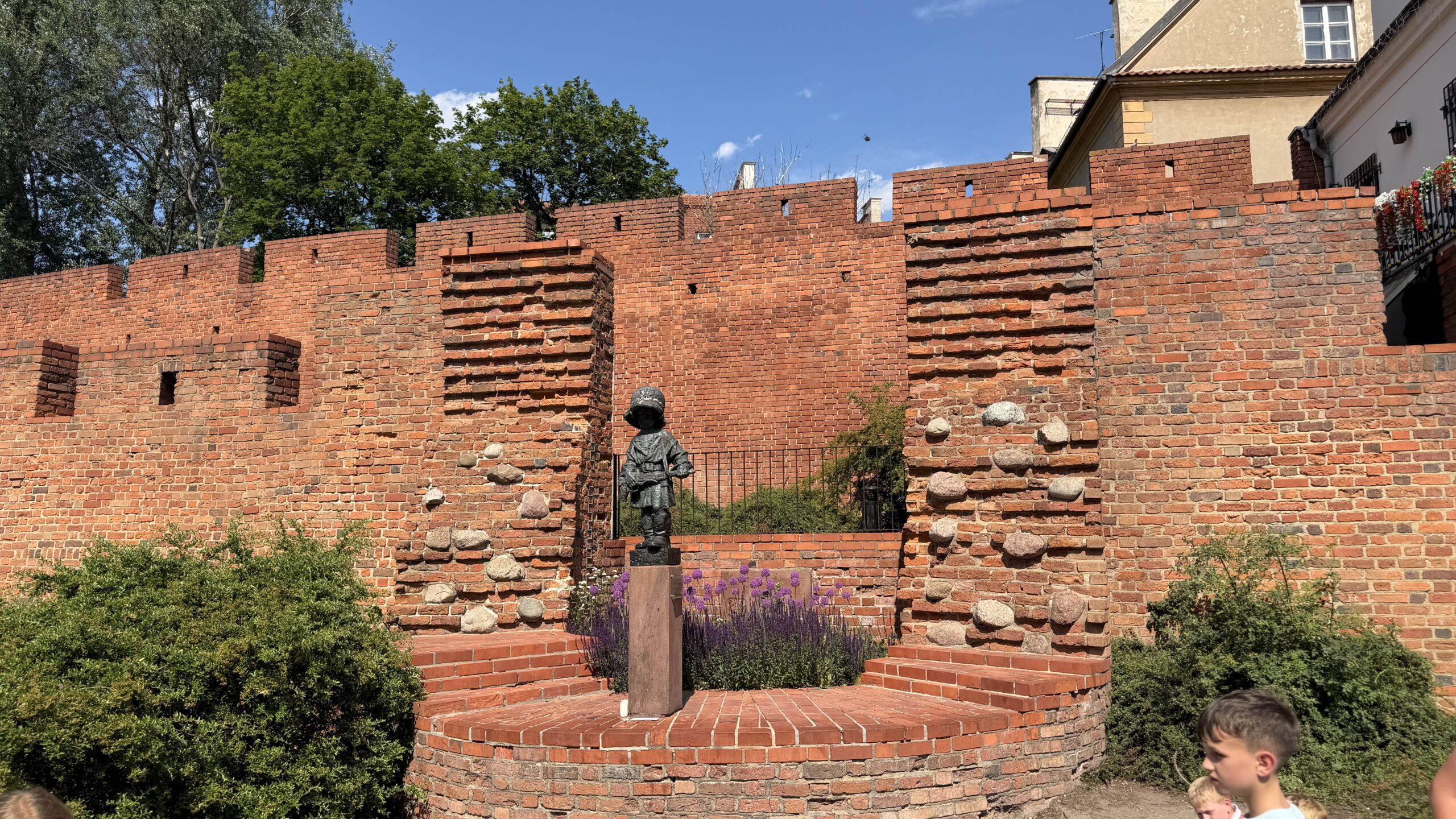
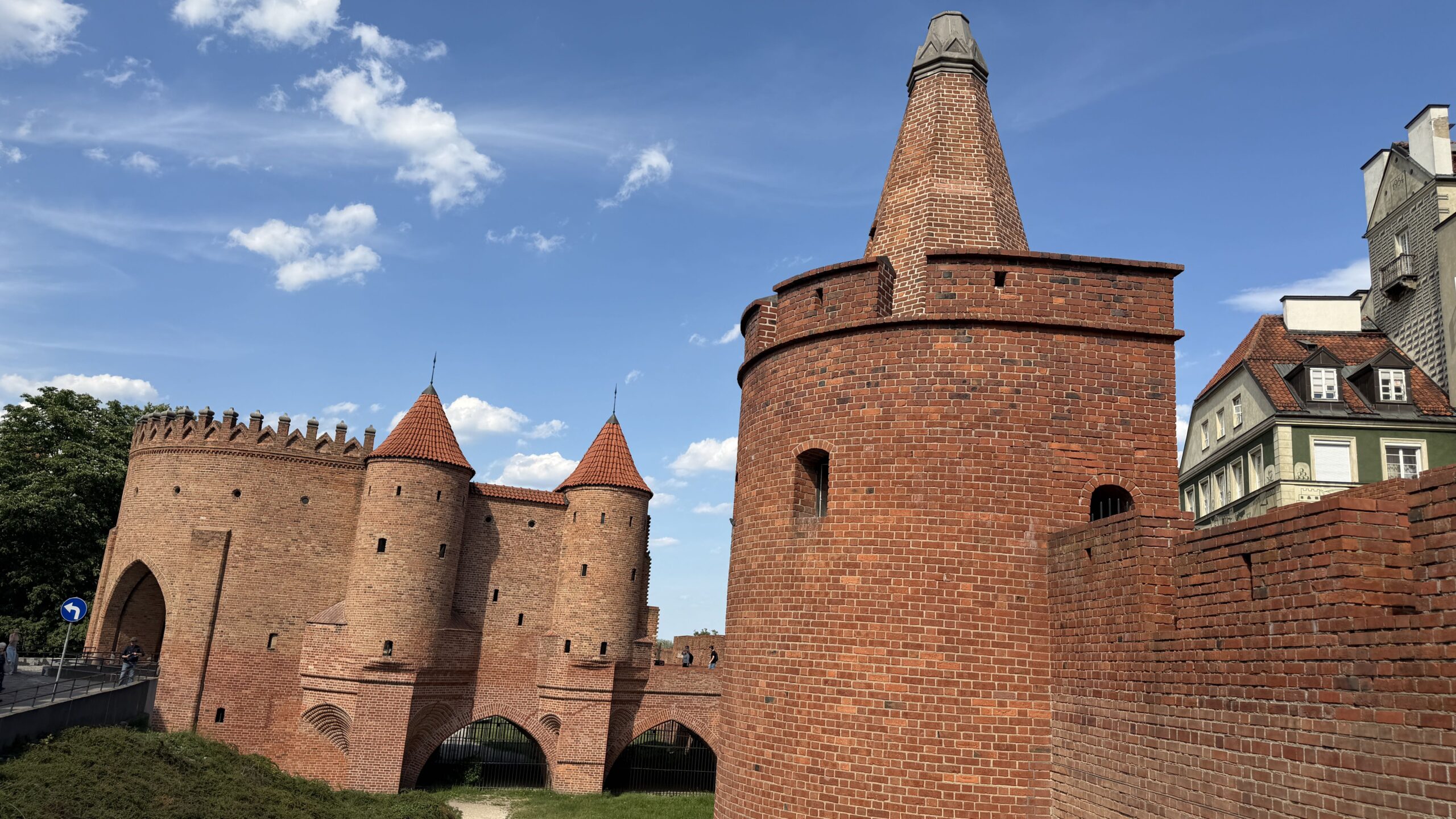
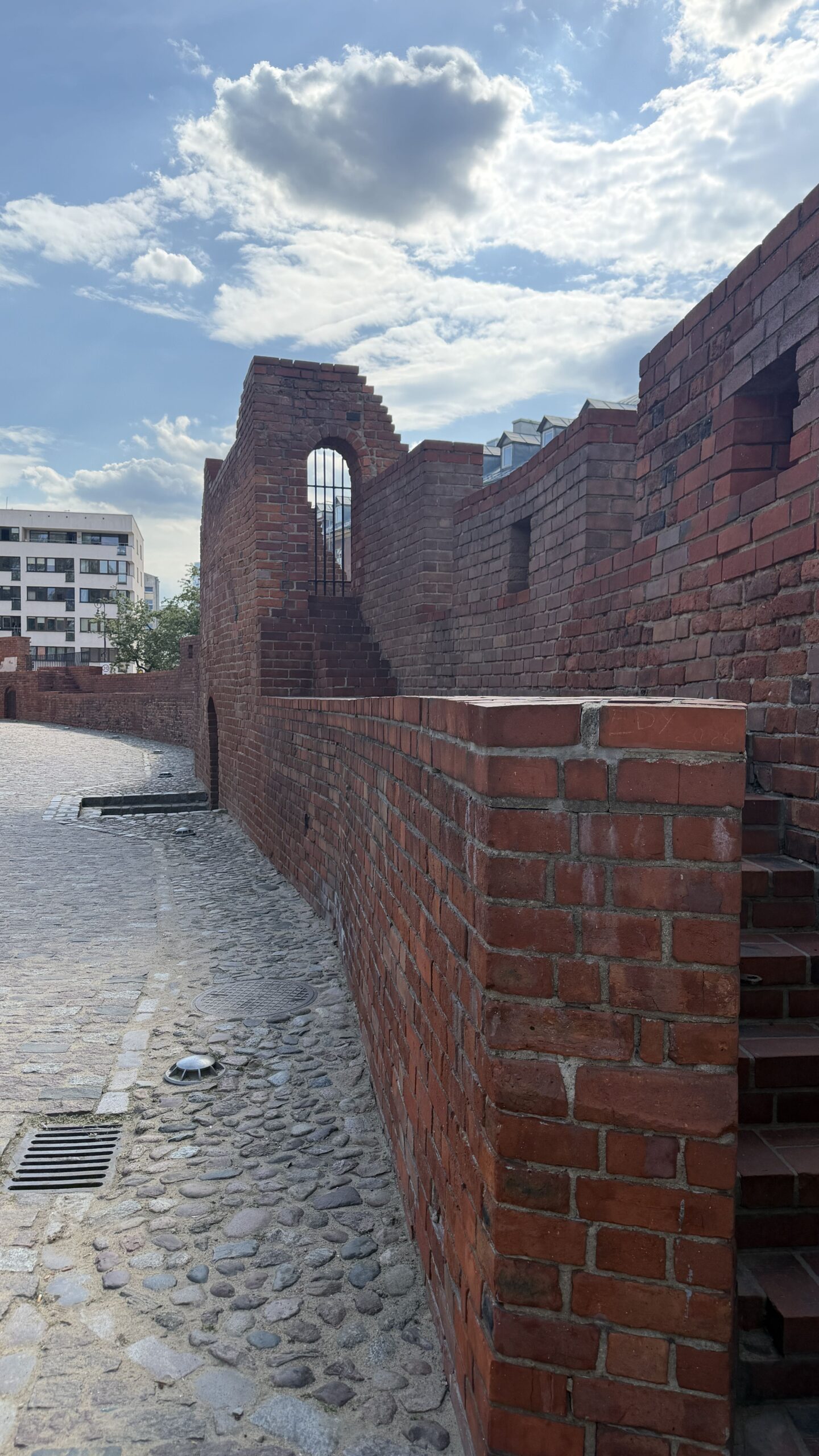
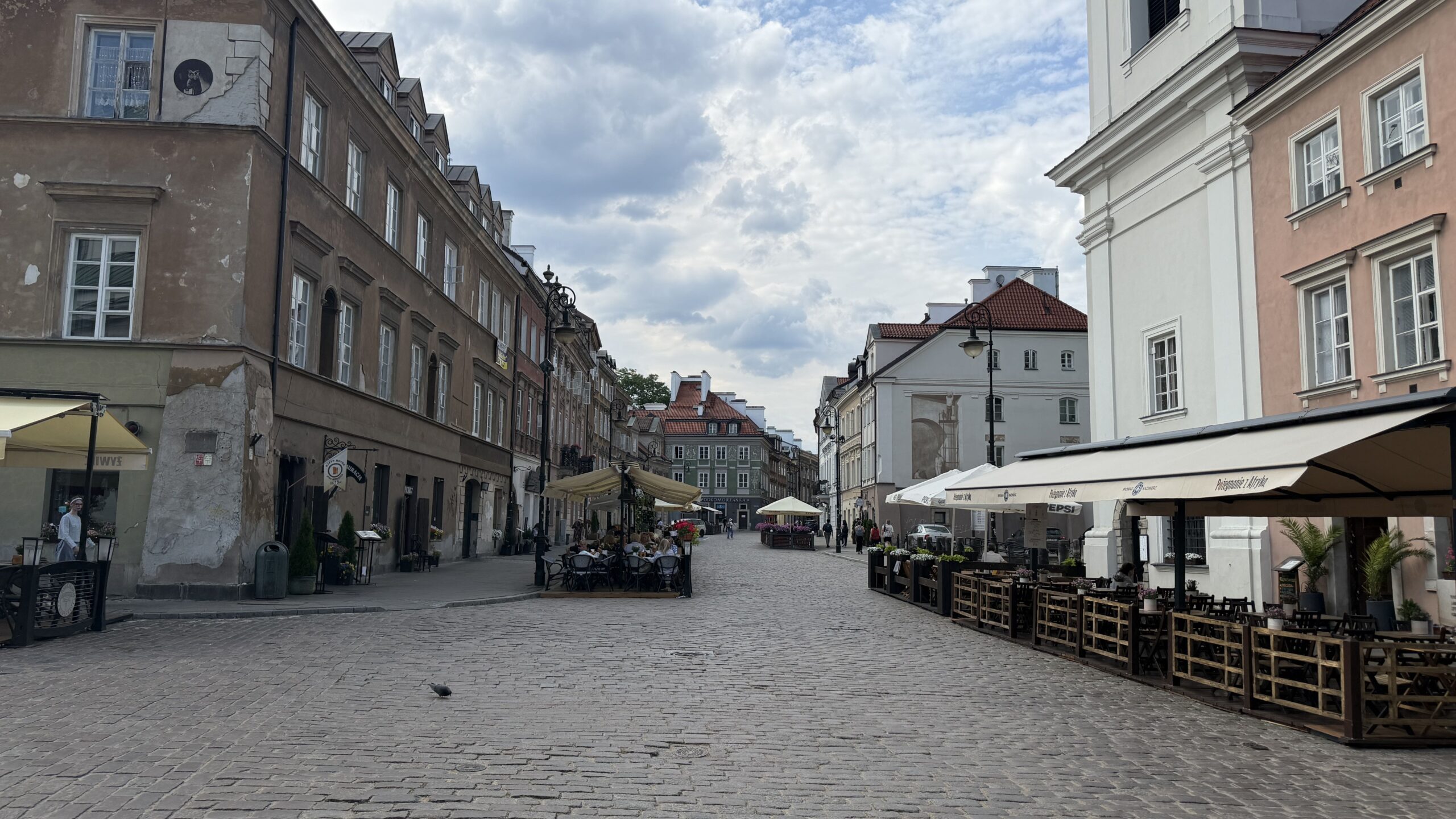
Our guide explained the story behind the destruction of the city. During World War II, approximately 85% of Warsaw was destroyed. Much of this devastation occurred after the failed Warsaw Uprising of 1944, when German forces systematically demolished the remaining buildings, placing explosives inside churches, homes, palaces, and public buildings to reduce entire neighborhoods to rubble. Standing in today’s beautifully restored streets, it was almost impossible to imagine that so much of the city had once lain in ruins.
Instead of abandoning the historic city, the Polish people painstakingly rebuilt it using old paintings, photographs, architectural drawings, and historical records. The reconstruction became one of the greatest restoration projects ever undertaken and eventually earned Warsaw’s Old Town recognition as a UNESCO World Heritage Site.
Did You Know?
One fascinating fact our guide shared was that architects even relied on detailed 18th-century paintings by the Italian artist Bernardo Bellotto, also known as Canaletto, to accurately recreate many of Warsaw’s historic buildings after the war. Walking through the Old Town today feels like stepping back in time, even though much of what you see was meticulously reconstructed after World War II.
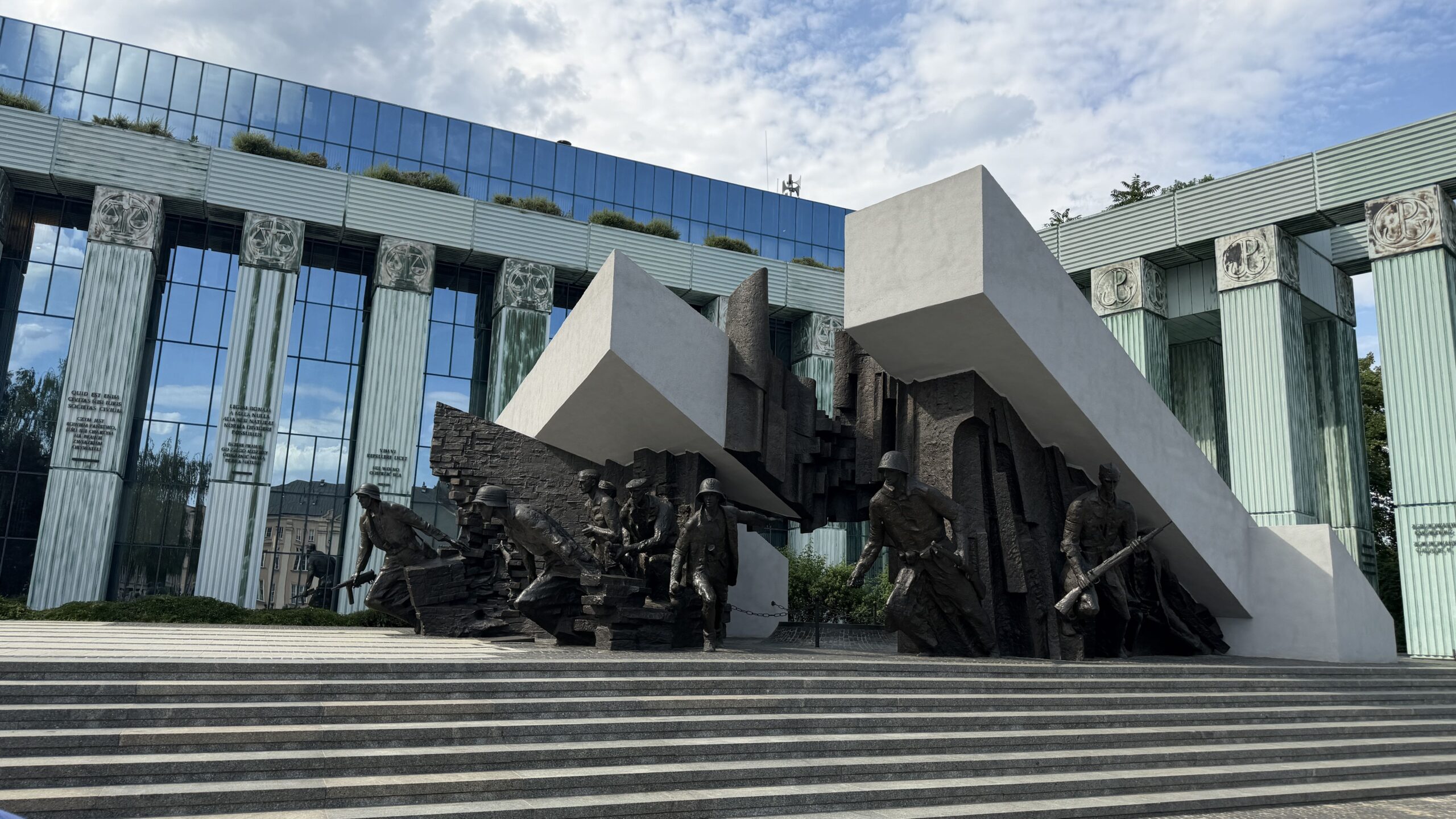
Warsaw Uprising Monument
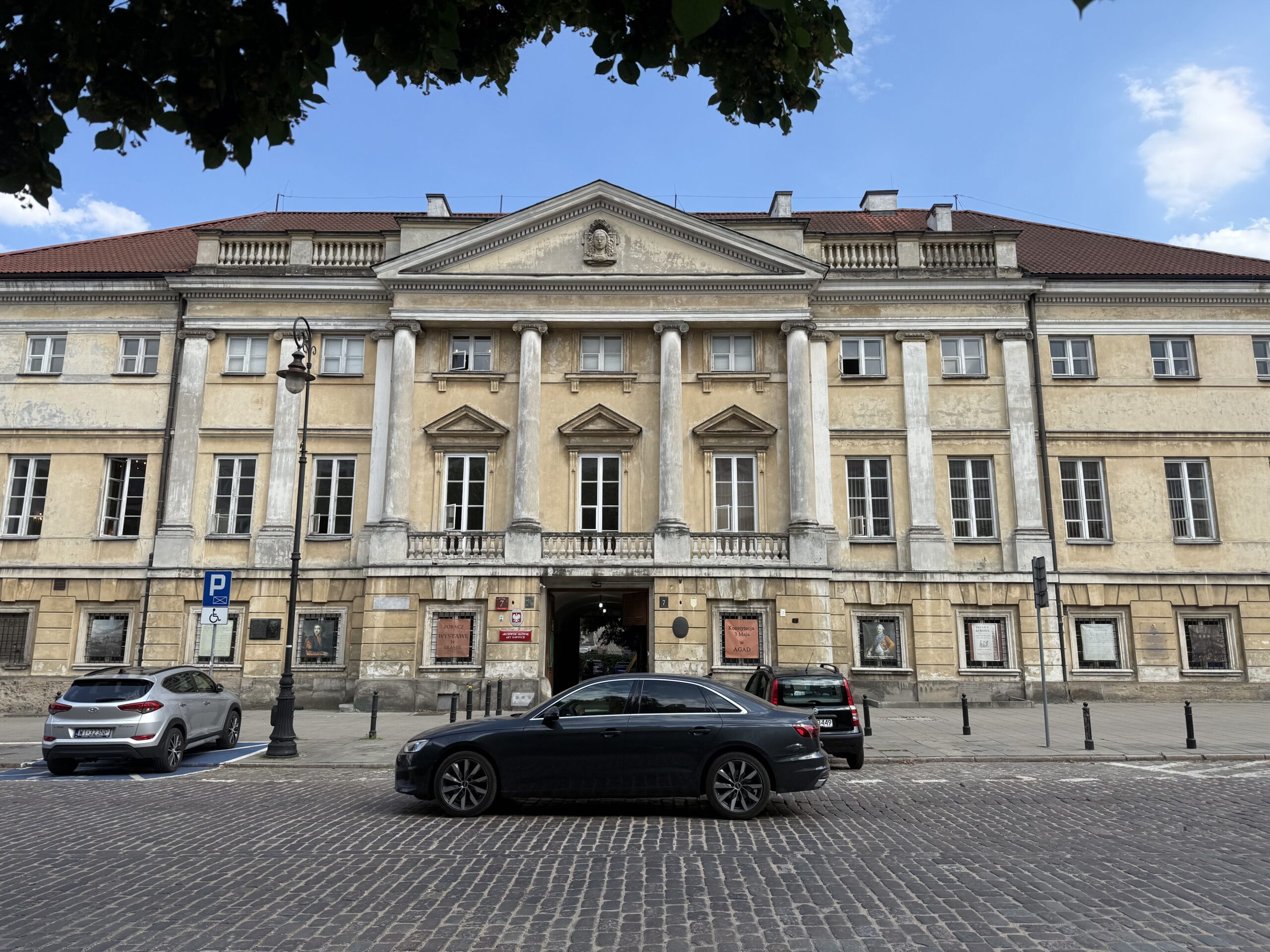
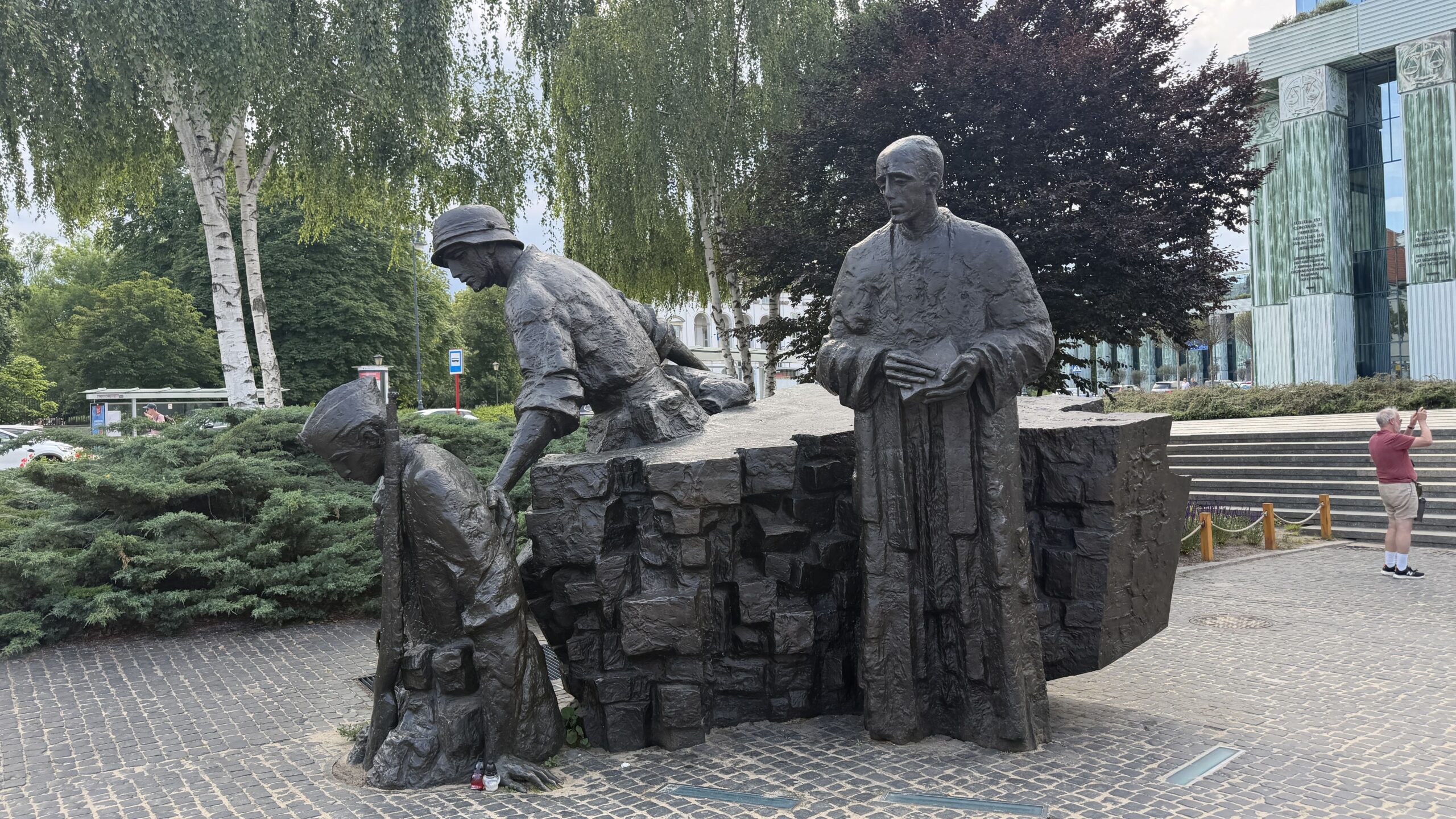
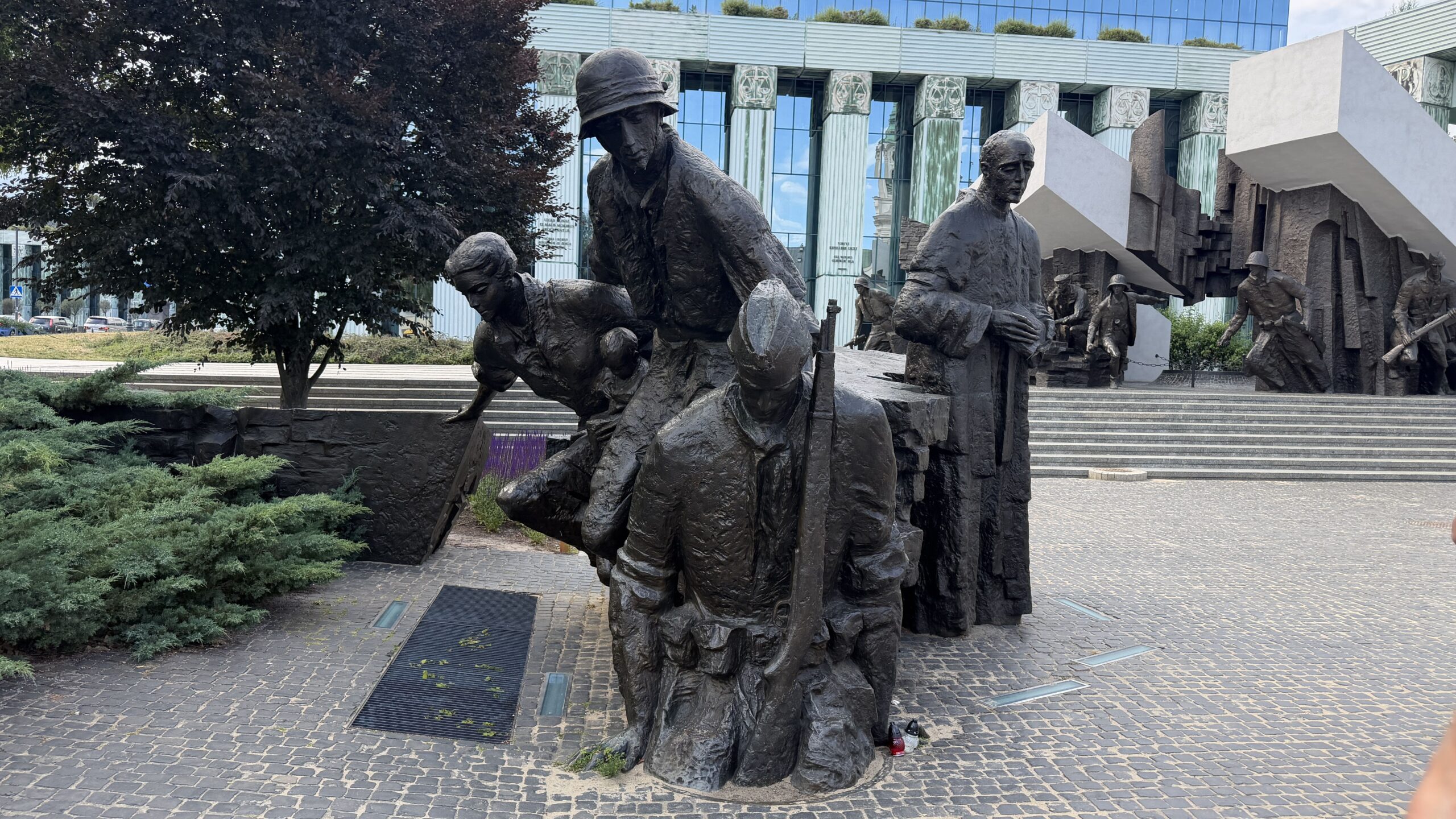
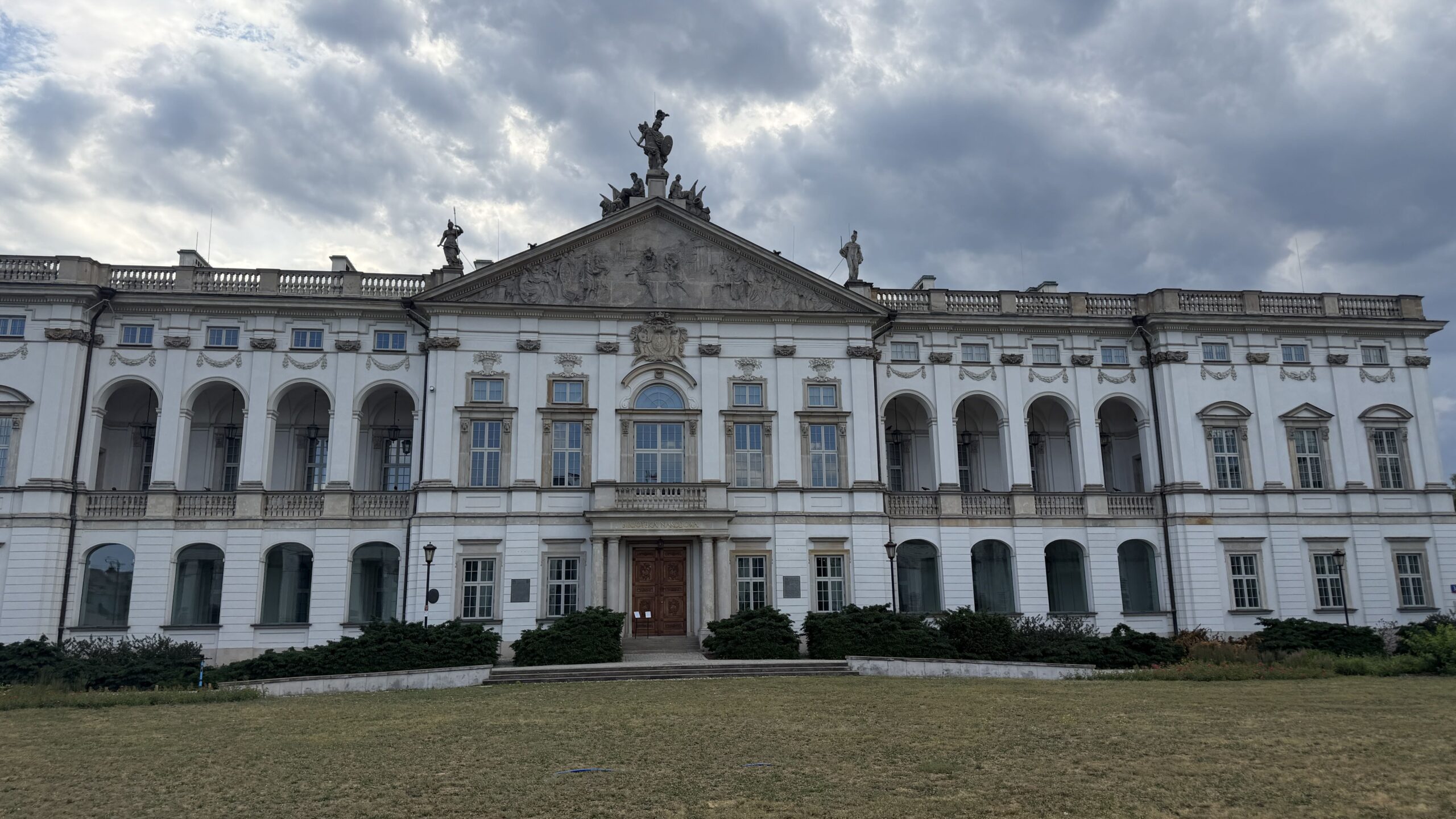
We continued exploring many of Warsaw’s most important landmarks, the Warsaw Uprising Monument, the beautiful Krasiński Palace, and the historic streets of the UNESCO-listed Old Town.
One particularly meaningful stop was the area of the former Warsaw Ghetto, once the largest Jewish ghetto established by Nazi Germany during World War II. Standing there while listening to the stories of courage, suffering, and resilience added another powerful chapter to our understanding of European history.
Marie Skłodowska-Curie
During our walk, we also passed the birthplace of one of Poland’s greatest scientists, Marie Skłodowska-Curie. Her childhood home on Freta Street is now a museum dedicated to her remarkable achievements. She remains the only person in history to receive Nobel Prizes in two different scientific fields Physics and Chemistry making her one of the most influential scientists of all time.
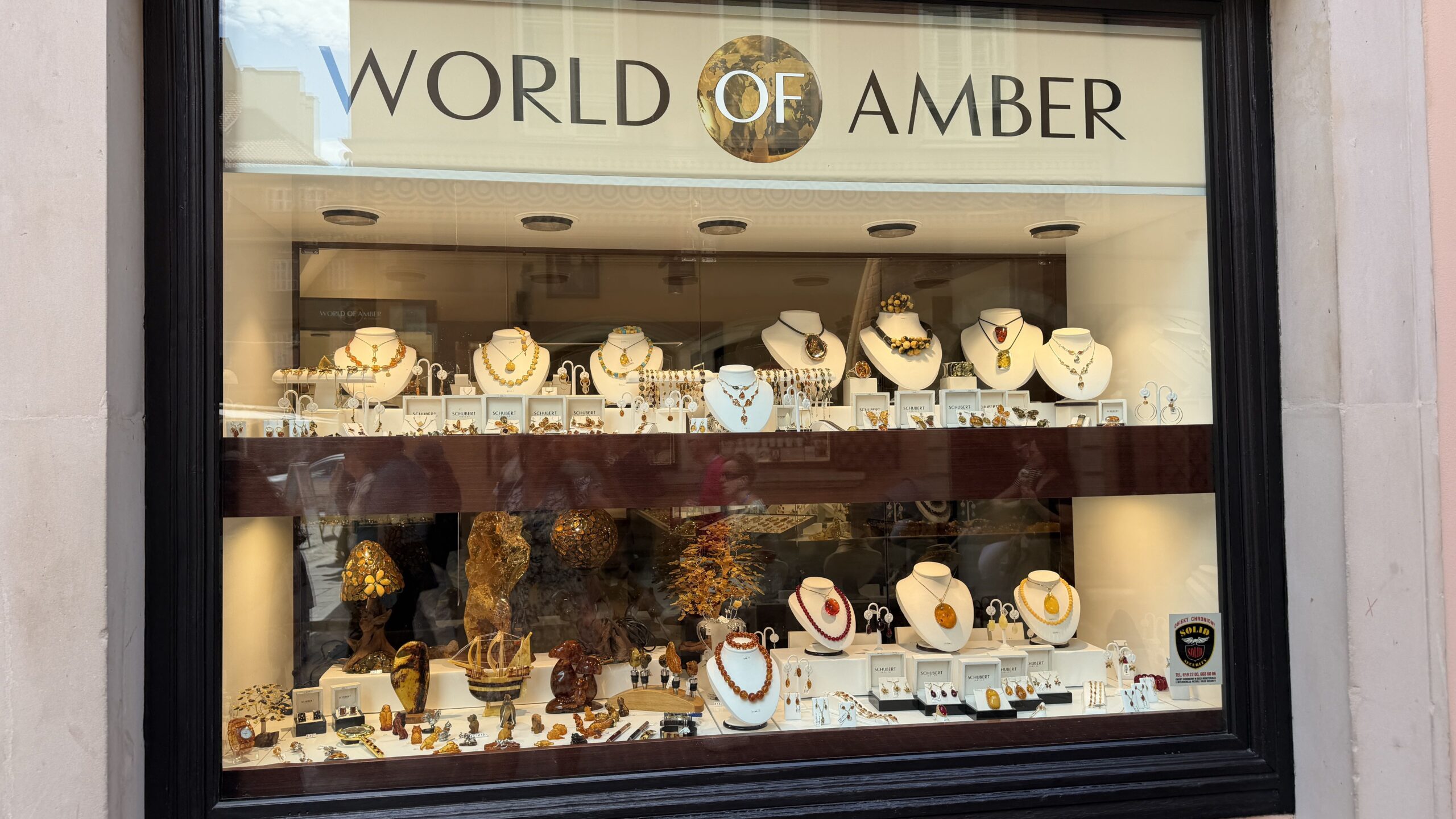
Poland’s Famous Amber
Another interesting thing we learned was Poland’s long tradition of Baltic amber. Although most amber originates along Poland’s northern Baltic coast, Warsaw is one of the country’s best places to shop for authentic amber jewelry. Our guide mentioned that amber jewelry from this region has been admired around the world for centuries and continues to be worn by royalty and celebrities alike.
Dinner Surprise
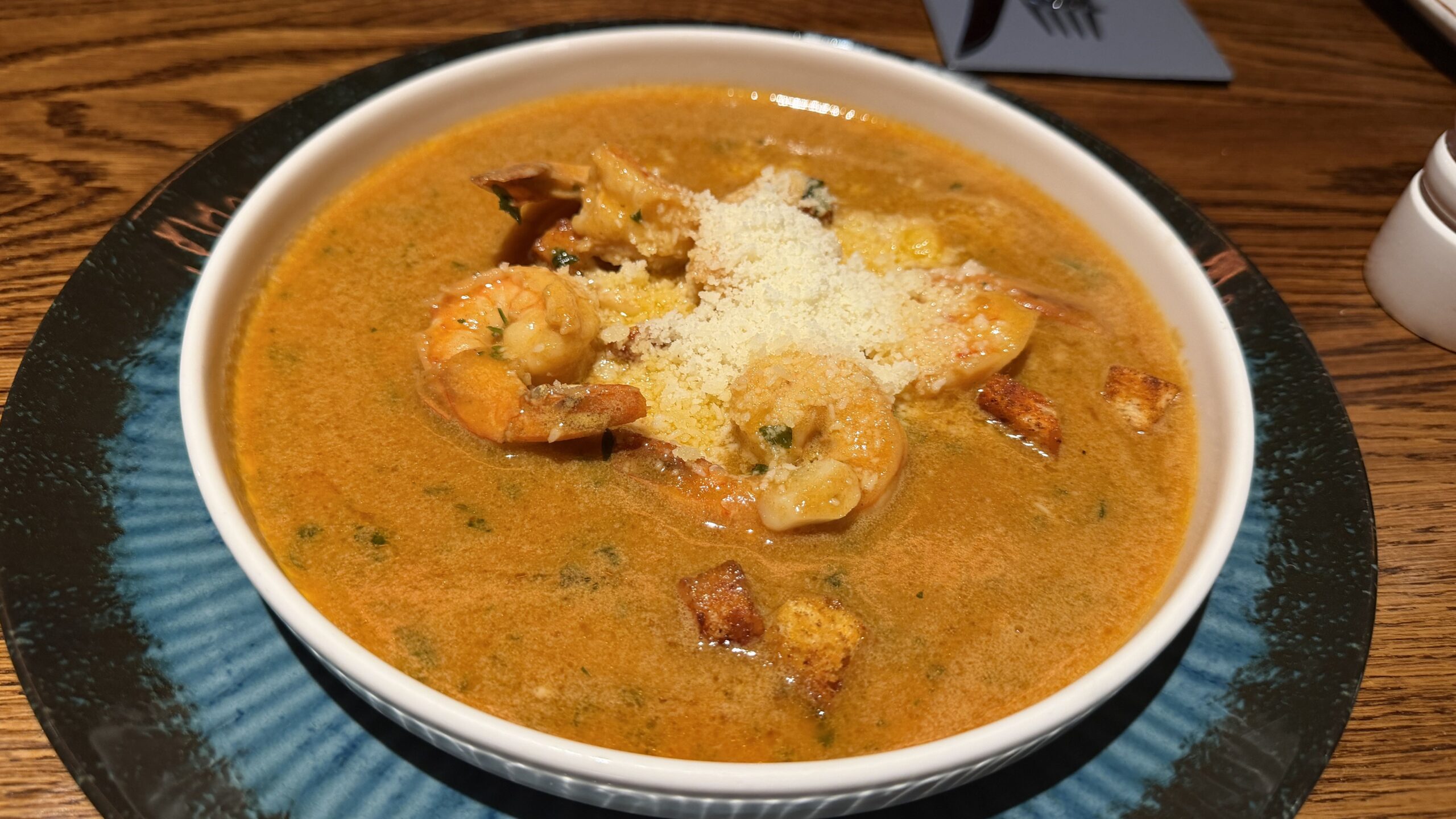
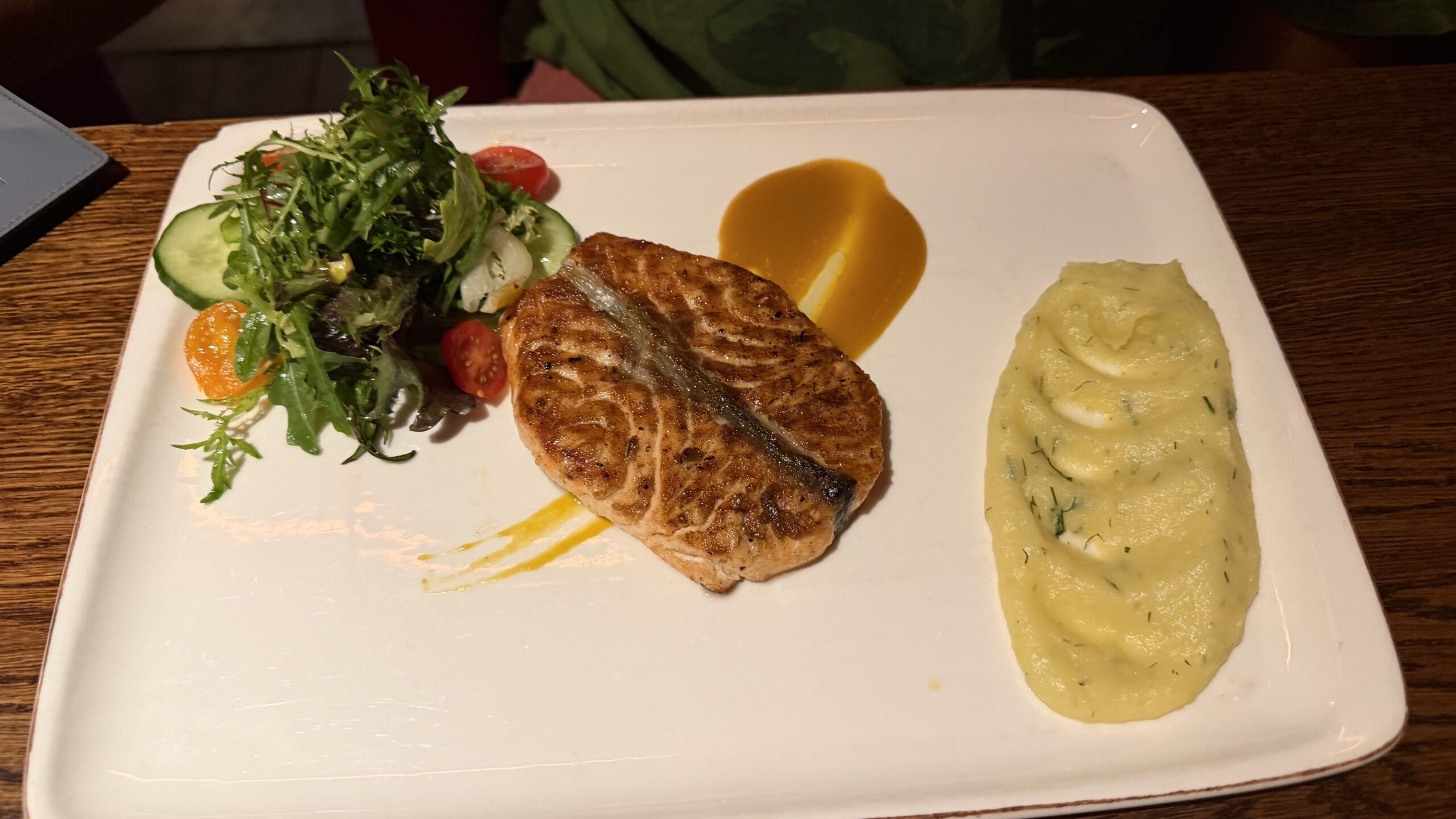
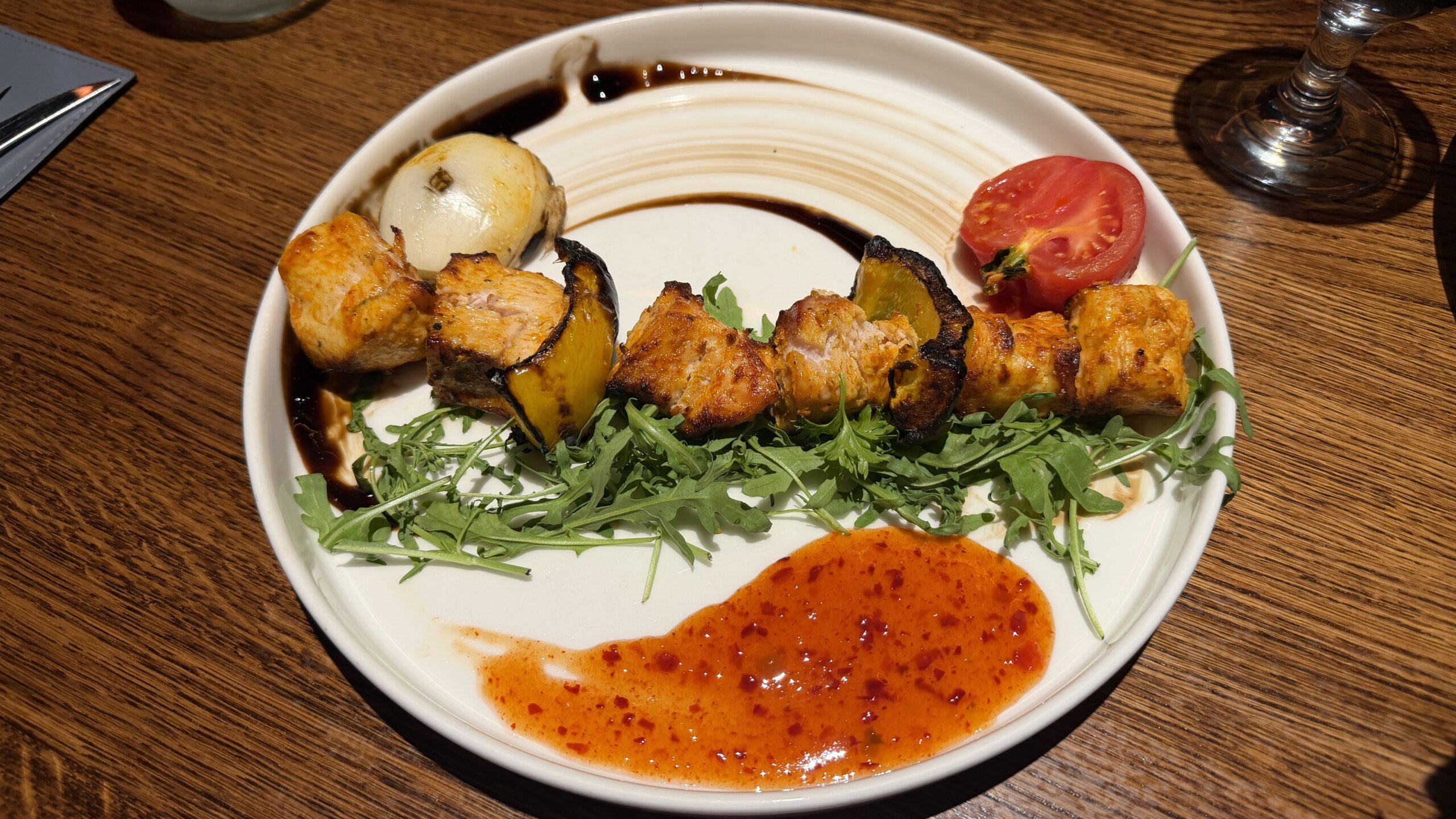
After an unforgettable day exploring Warsaw, we reached hotel and refreshed. We were thinking about the dinner and want to try some thing new. We had originally planned to dine at Maho restaurant, but by mistake we ended up at Pera Steakhouse & Grill. As it turned out, that little mix-up became one of the best tasty surprise of the trip.
Everything we ordered was excellent. The chicken, salmon, and butter shrimp were all cooked beautifully, but the true highlight of the evening was the San Sebastián cheesecake. Rich, creamy, and perfectly caramelized on top, it was easily one of the best desserts we enjoyed during our European journey.
By the end of dinner, we all agreed that Pera Steakhouse & Grill ranked among our favorite restaurants of the trip so far.
IKTraveler Tip
Don’t try to squeeze a full sit-down lunch into a short sightseeing break like we did! If your schedule is tight, consider ordering takeaway so you can still enjoy authentic Polish food without worrying about missing your tour. And if you’re visiting Warsaw, allow plenty of time to simply walk through the Old Town—its remarkable history becomes even more meaningful when you hear the stories behind the beautifully reconstructed buildings.
Reflection
Warsaw surprised us in every possible way. Before arriving, we expected another beautiful European capital. Instead, we discovered a city that symbolizes resilience, determination, and hope. From walking through streets rebuilt almost entirely from wartime devastation to enjoying our first authentic Polish meal on the go, the day was filled with memorable moments. Warsaw isn’t just a city you visit—it’s a place whose history leaves a lasting impression long after you’ve left.
Traveled around 300 km each day from Berlin to Poznan and then Poznan to Warsaw.
Currency: Polish Złoty
Weather: June supposed to be pleasant summer with more day light . We felt very hot in the afternoons.
Travel Date: June 2026