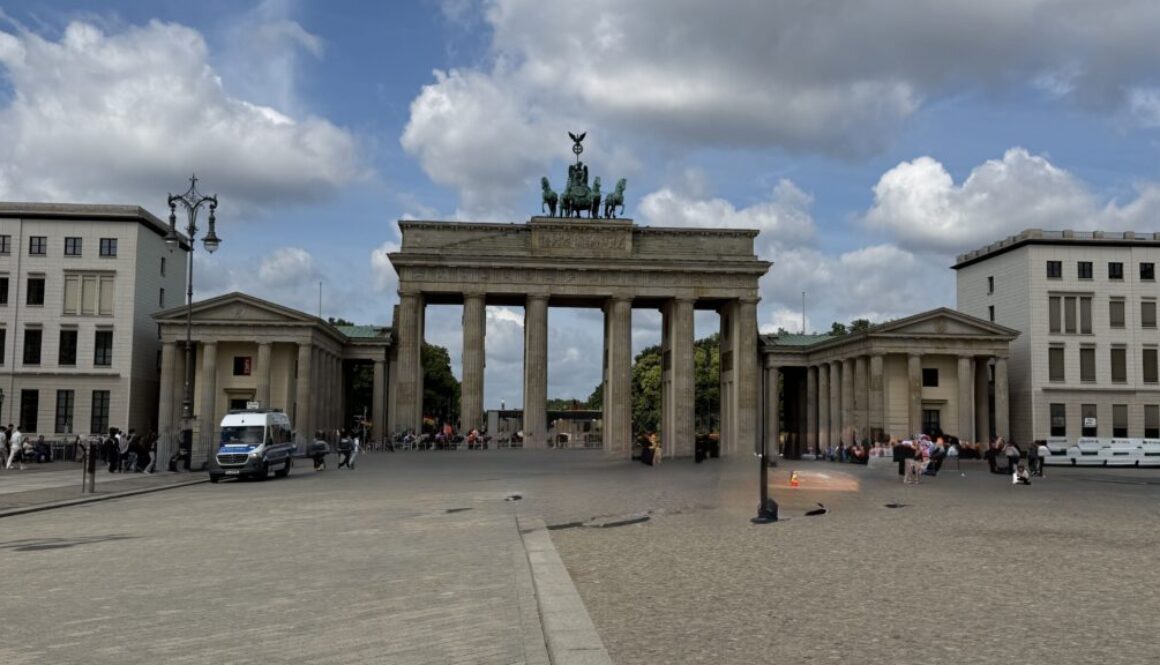
Berlin
A Day in Berlin, Germany
Berlin is one of those cities that almost everyone recognizes, even if they’ve never visited. Long before we ever planned this European trip, Germany was already familiar to us through school history books. Names like Hitler, World War II, East Germany, West Germany, and the Berlin Wall were part of our history lessons growing up. As adults, Germany became known for different reasons – precision engineering, luxury cars like Mercedes-Benz, BMW, Audi and Porsche, world-famous beers, football, castles, and efficient public transport. Never did I imagine that one day we would actually walk through the streets of Berlin and stand at places that had once existed only in textbooks.
Berlin is the capital and largest city of Germany, located in the northeastern part of the country along the River Spree. With a metropolitan population of over six million people and a city population of around 3.8 million, it is one of Europe’s most influential political, cultural, and economic centers.
Unlike many European capitals that are known primarily for royal palaces or ancient monuments, Berlin is a city defined by reinvention. Its story spans more than 800 years, from a small medieval trading settlement to the capital of the Kingdom of Prussia, then the German Empire, and later one of the most divided cities in the world during the Cold War.
Perhaps no other European city has experienced such dramatic changes within a single century. During World War II, much of Berlin was destroyed by heavy bombing. After Germany’s defeat in 1945, the city was divided into four occupation zones controlled by the United States, Britain, France, and the Soviet Union. As tensions between East and West grew, Berlin became the symbolic center of the Cold War.
In 1961, East Germany built the Berlin Wall, physically separating East and West Berlin for nearly three decades. Families were divided overnight, roads were cut off, and people risked their lives trying to cross from East to West in search of freedom. The wall remained until 1989, when peaceful protests and political change finally led to its fall. Less than a year later, Germany was officially reunified, and Berlin once again became the nation’s capital.
Today, Berlin proudly preserves both the painful and inspiring chapters of its past. Instead of erasing reminders of war and division, the city has chosen to protect them as memorials for future generations. Bullet-marked buildings stand beside modern glass architecture, fragments of the Berlin Wall remain in public spaces, and museums tell stories that remind visitors of the importance of democracy, peace, and freedom.
Berlin is also one of Europe’s greenest capitals, with thousands of parks, lakes, forests, and cycling paths spread throughout the city. It is home to more than 170 museums, several UNESCO World Heritage Sites, renowned universities, vibrant neighborhoods, and one of Europe’s most diverse food scenes. History lovers, architecture enthusiasts, art fans, and foodies all find something to love here.
For us, Berlin wasn’t simply another stop on our European tour, it was a city where history came alive.
Journey from Denmark to Berlin
Our journey to Berlin began after leaving Denmark. We boarded our coach and started driving toward the port town of Gedser, located on Denmark’s southern tip. From here, our coach would cross the Baltic Sea by ferry to Rostock, Germany.
Watching an entire tour bus drive onto a ferry is always fascinating. Along with hundreds of passengers and dozens of other vehicles, our coach rolled into the massive ship before we headed upstairs to enjoy the crossing.
The ferry ride across the Baltic Sea was smooth for most of the journey. We had lunch onboard while watching the sea stretch endlessly in every direction. As we relaxed and enjoyed the view, it was hard to believe we were literally sailing from one country to another with our bus safely parked below deck.
Towards the end of the crossing, however, I began feeling a little dizzy and slightly seasick. Thankfully, the feeling disappeared soon after we reached land.
Once the ferry docked in Rostock, everyone returned to the coach, and we continued our drive south through the German countryside toward Berlin.
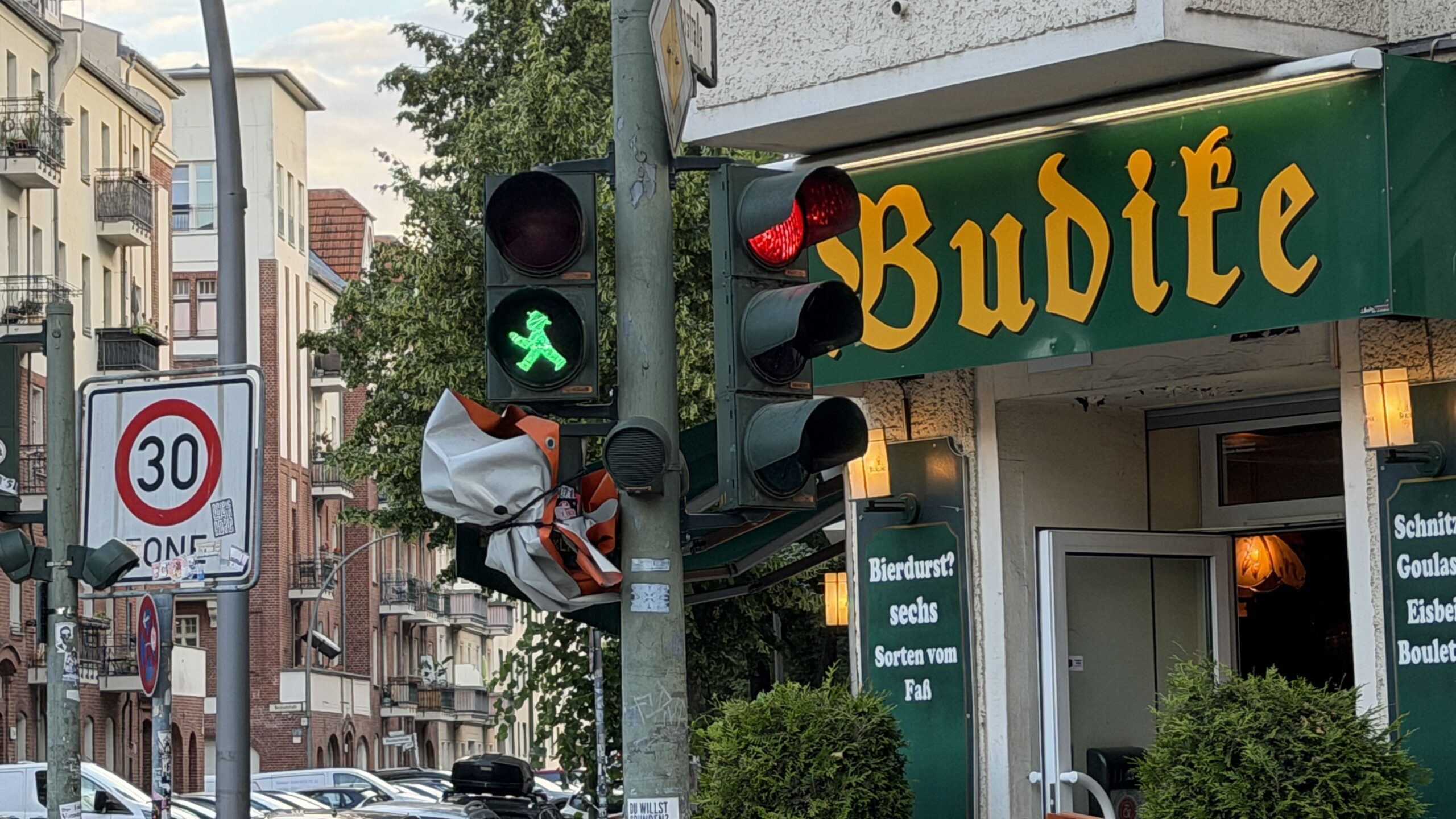
After arriving in Berlin, we checked into our hotel and had a little time to freshen up before heading out for dinner. That evening, we walked to a traditional German restaurant called Budike, where we were excited to experience authentic German cuisine.
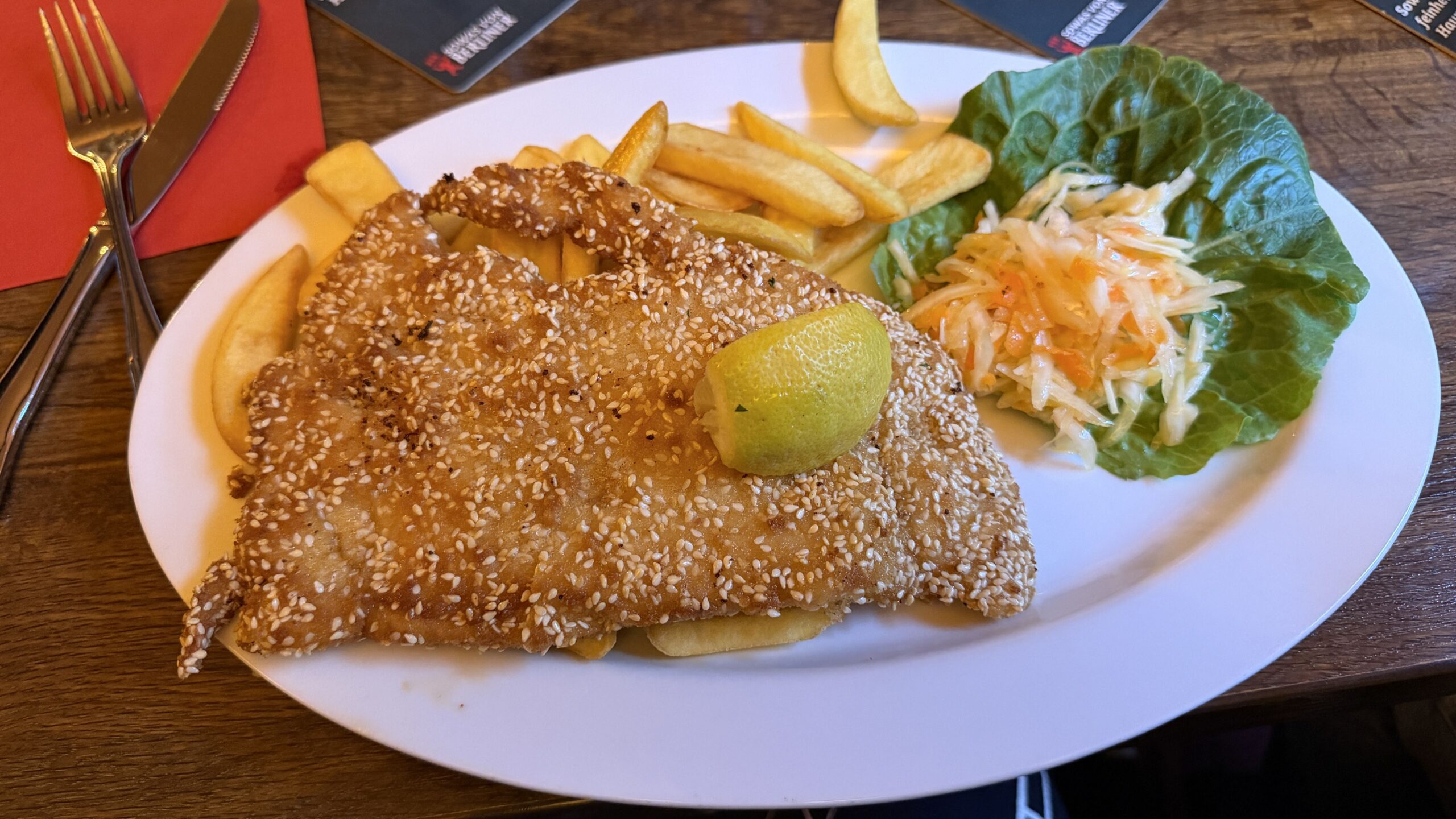
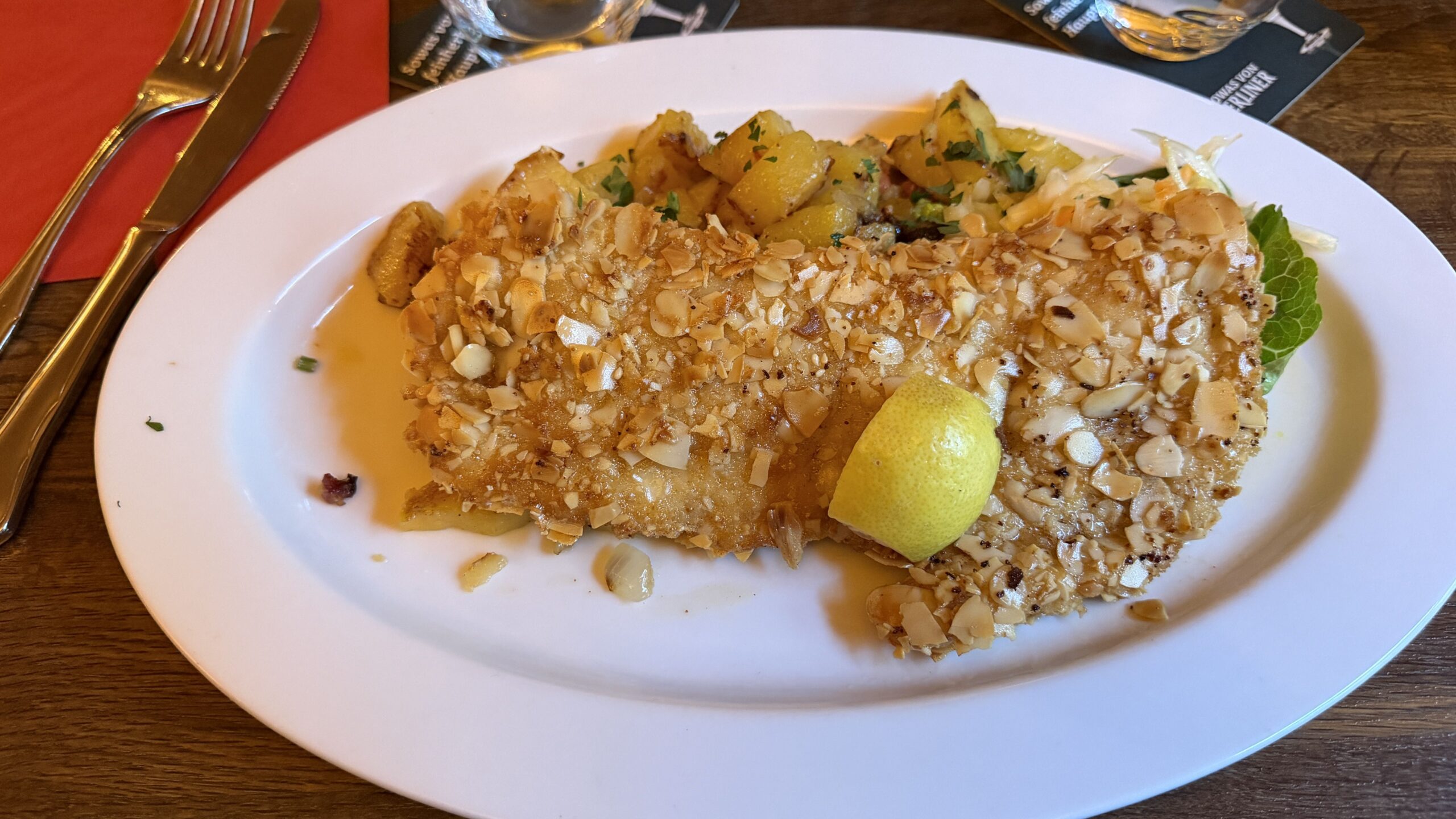
One thing we quickly noticed was that many traditional German dishes revolve around pork and beef. Almost every variety of sausage on the menu was made from either pork or beef, and there were hardly any chicken options available. Fortunately, we found two delicious turkey schnitzels on the menu—one coated in sesame seeds and another with a crunchy almond crust. Both were wonderfully prepared, crispy on the outside while remaining tender and juicy inside.
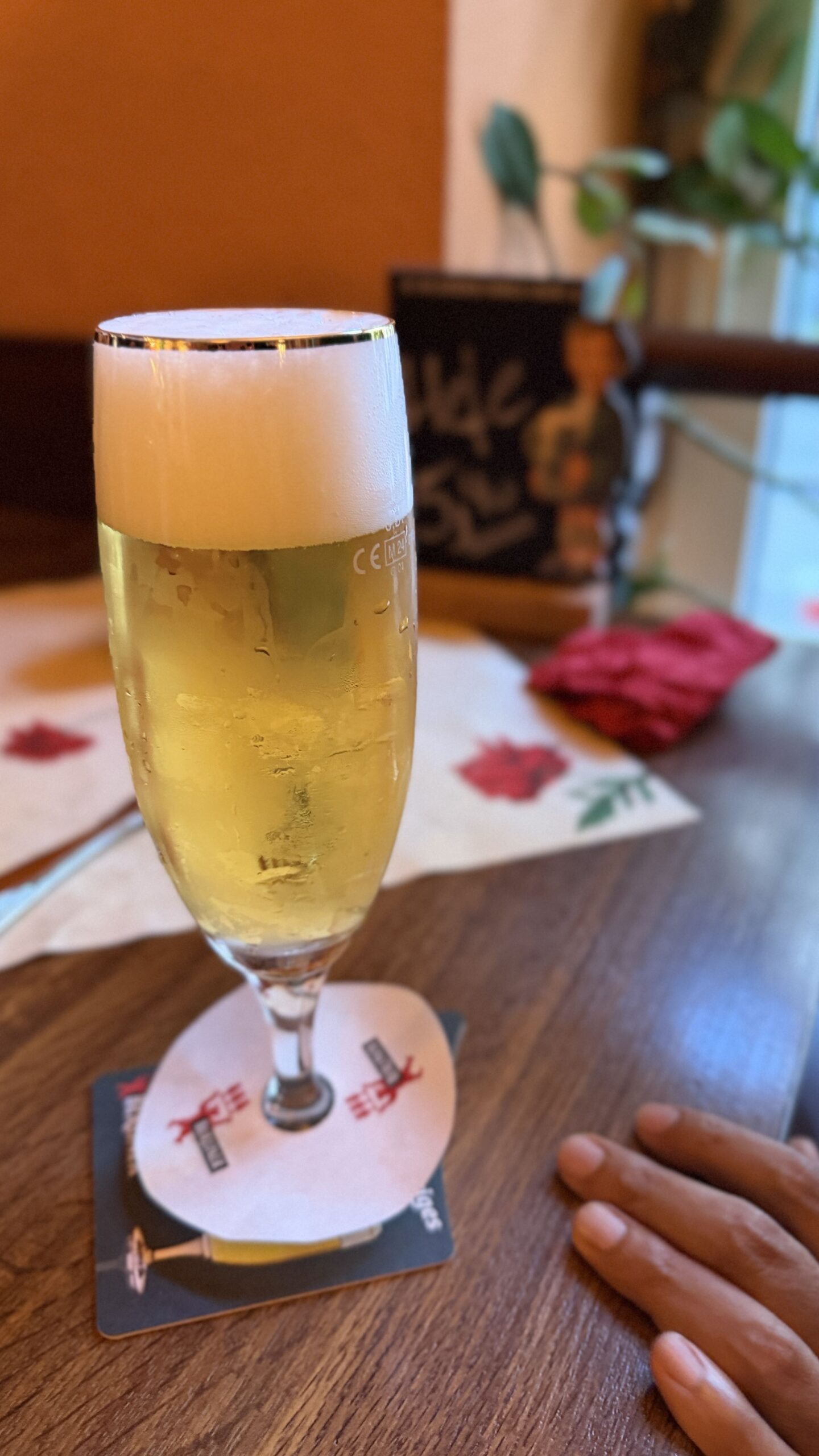
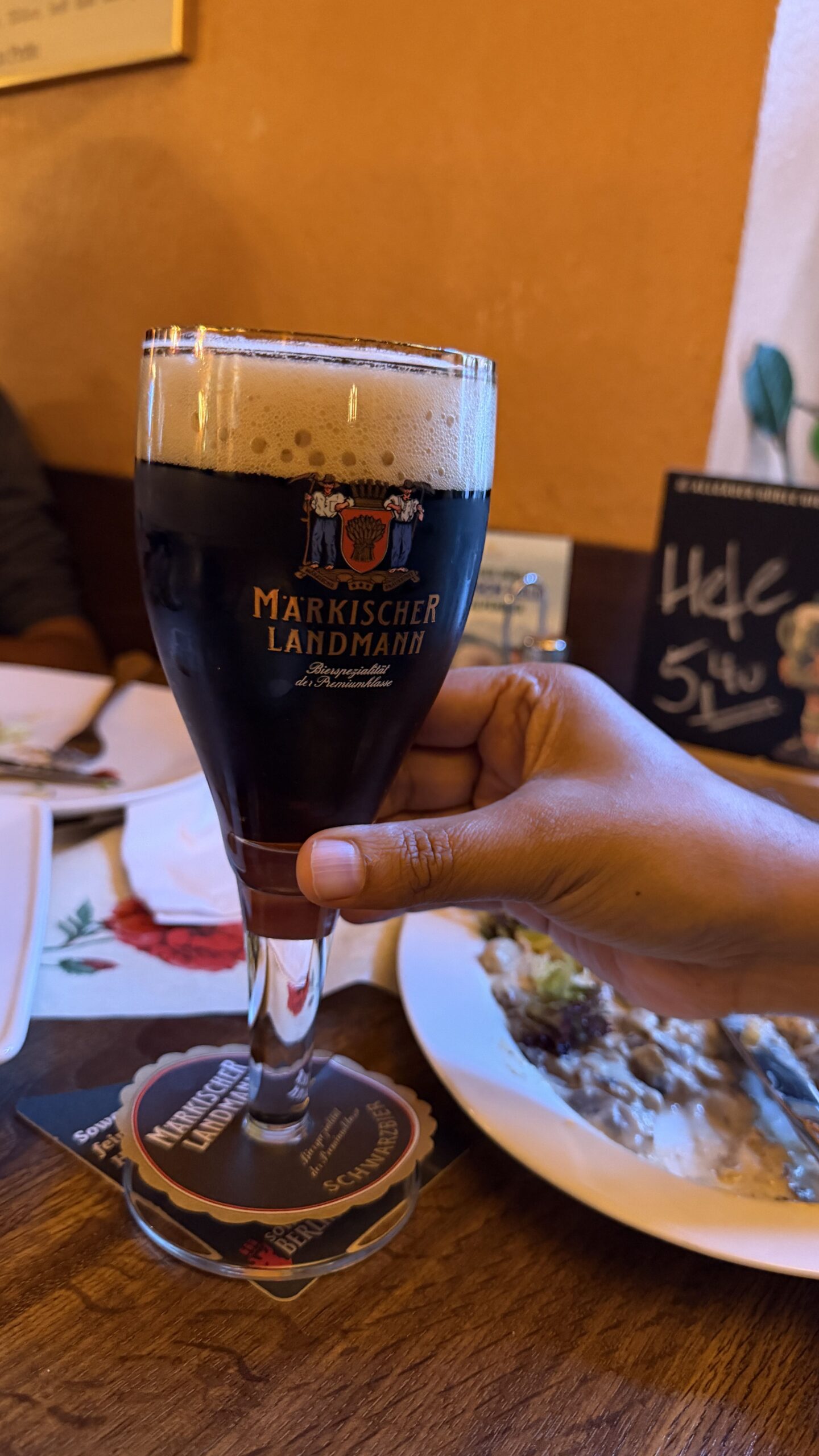
No German meal feels complete without sampling the local beer, so we decided to try both the traditional light beer and the darker variety. Even for someone who isn’t a beer expert, it was interesting to taste the difference between the two styles while enjoying a relaxed evening after a full day of travel.
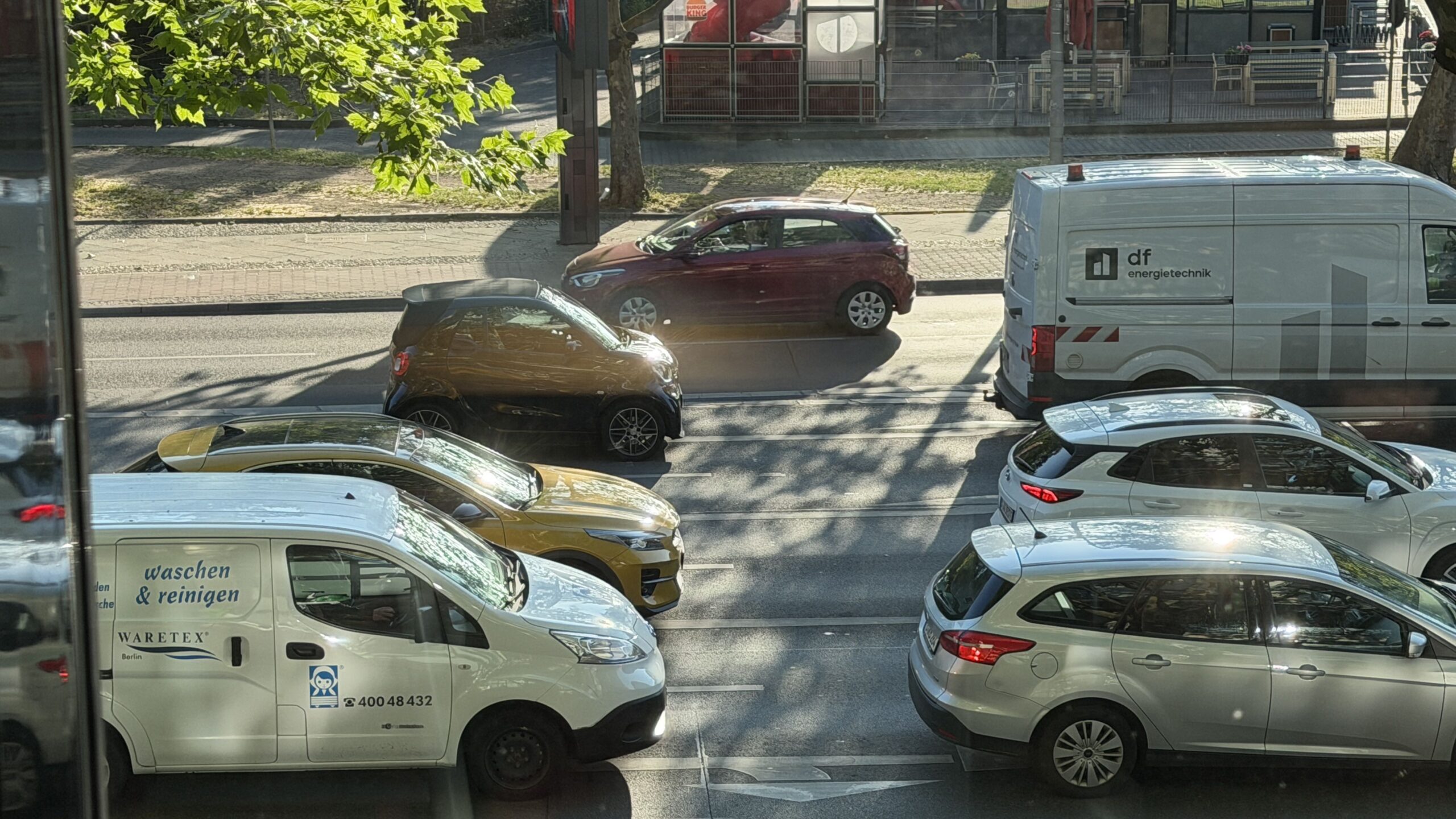
During our short walk through Berlin that evening, another small detail caught our attention. There seemed to be tiny compact cars everywhere. Compared to the larger SUVs commonly seen back home, Berlin’s streets were filled with remarkably small vehicles, perfectly suited to navigating the city’s narrow roads and limited parking spaces.
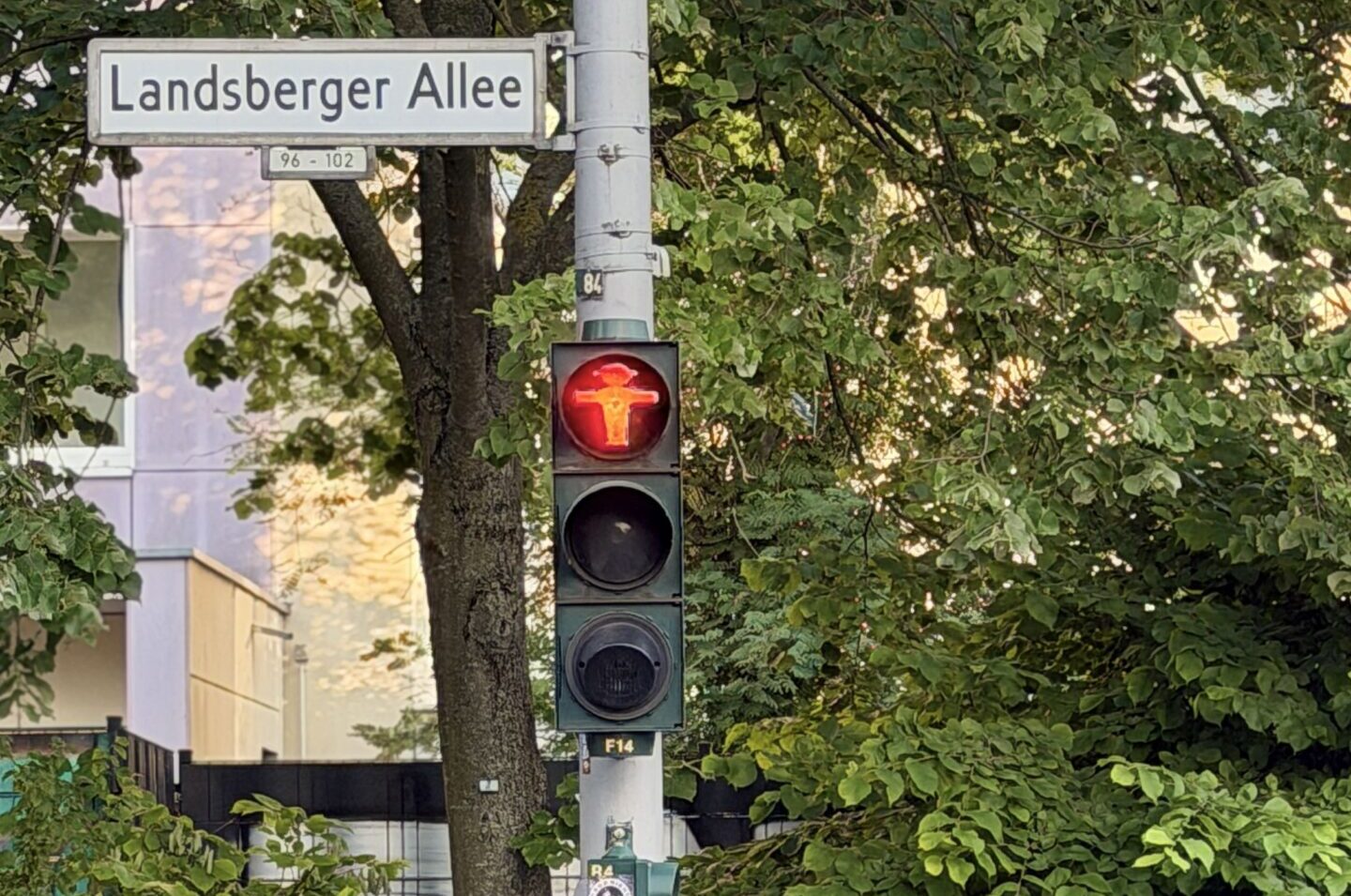
Our guide also pointed out the famous East German Ampelmännchen traffic lights. At first they looked like ordinary pedestrian signals, but we learned they have a fascinating history. These little hat-wearing figures were created in East Germany and became so beloved that Berliners fought to keep them after reunification. Today, they’re one of the city’s most recognizable and charming icons. I am able to capture the picture of those lights while our walk in the evening.
It was only our first evening in Berlin, but already the city felt different from anywhere else we had visited. The combination of modern life, historic surroundings, efficient public transport, and vibrant street atmosphere made us excited for the sightseeing tour that awaited us the following morning.
After a good night’s rest, we were prepared to explore one of Europe’s most historically significant capitals.
Discovering Berlin
After breakfast, we boarded our coach and made our way into the heart of Berlin. Like every major city, the morning roads were already busy with commuters, but our excitement easily outweighed the slow-moving traffic. Today’s agenda was a three-hour panoramic sightseeing tour of Berlin, led by a local guide who would introduce us to one of Europe’s most fascinating capitals.
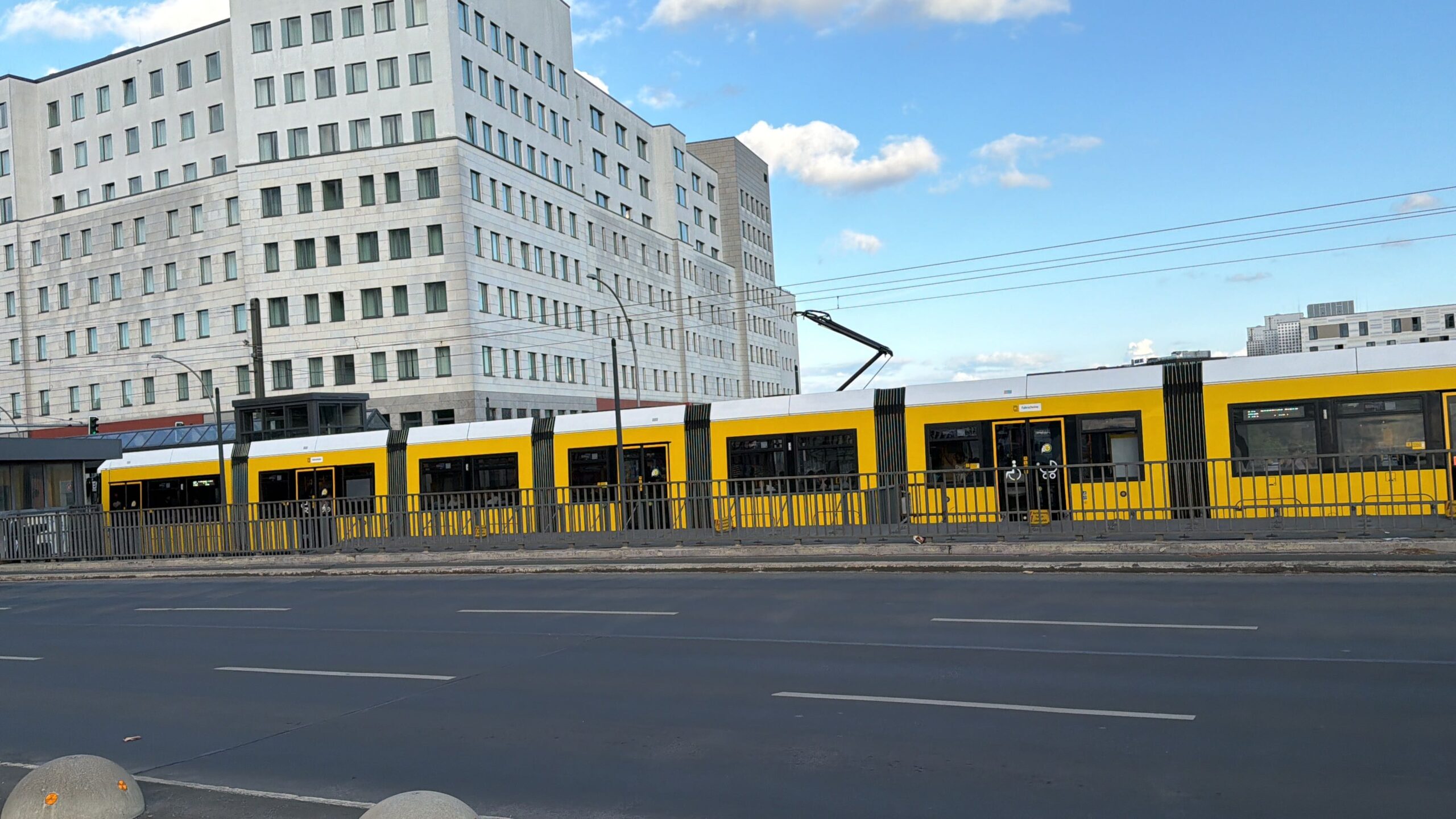
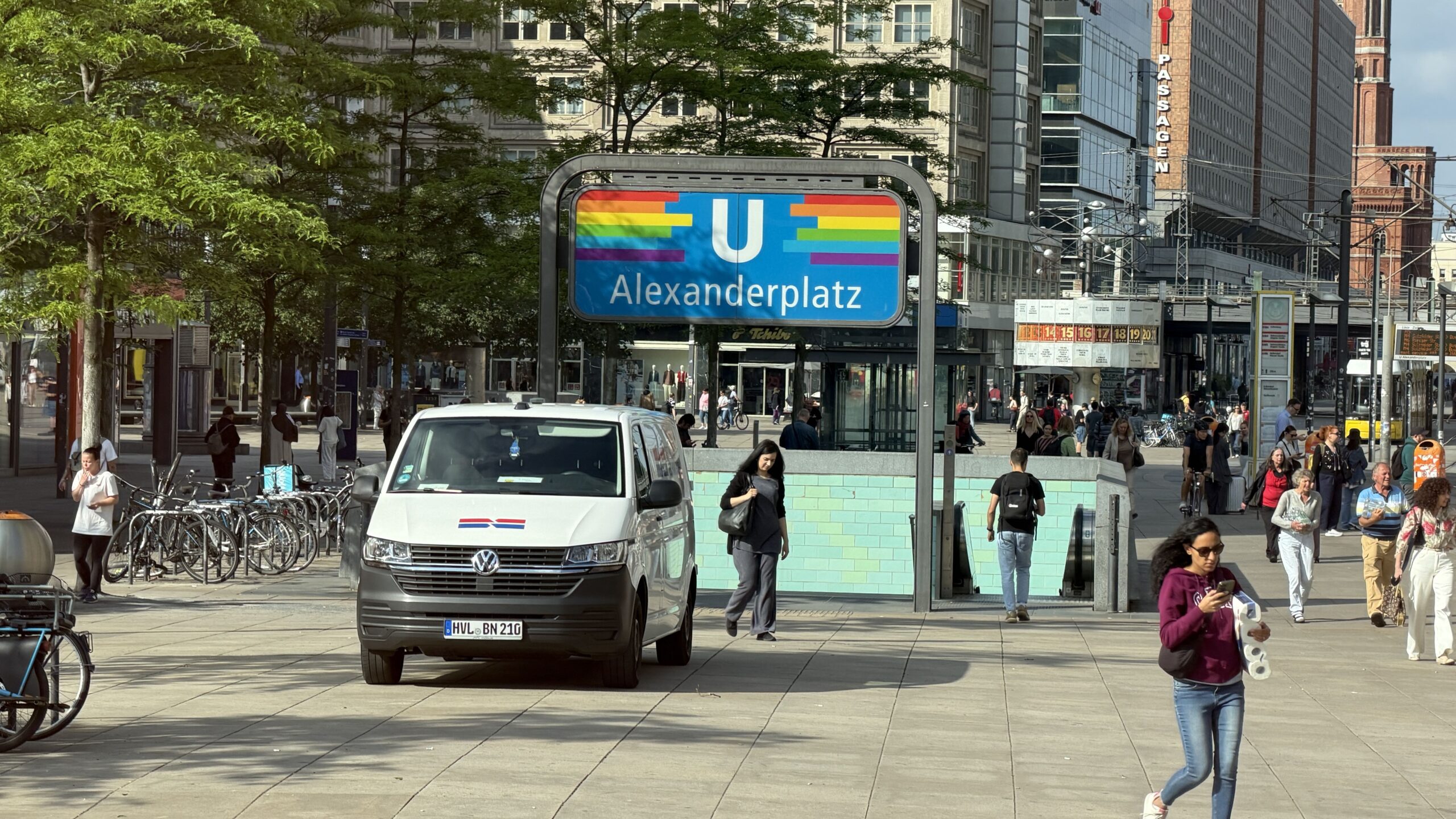
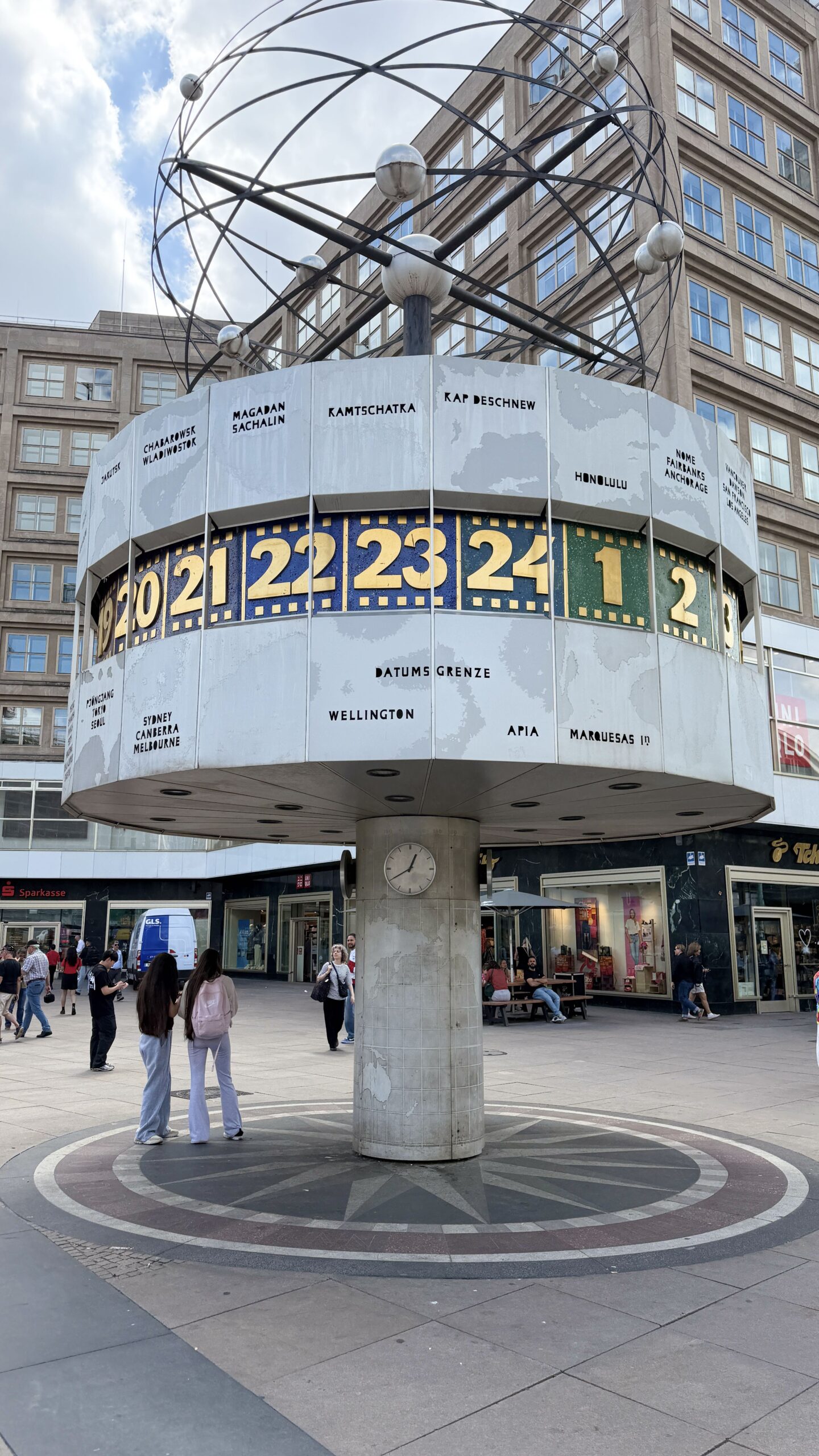
Our first stop was Alexanderplatz, one of Berlin’s largest and busiest public squares. Originally a livestock market in the Middle Ages, Alexanderplatz has transformed over the centuries into a major transportation hub and one of the city’s most recognizable landmarks. Trains, trams, buses, cyclists, office workers, tourists, and street performers all seemed to converge here, creating a lively atmosphere that perfectly reflected modern Berlin.
This was where our local guide joined our group.
As soon as we settled into the coach, he began sharing Berlin’s remarkable story. Rather than simply pointing out monuments, he painted a picture of a city that has been repeatedly destroyed, rebuilt, divided, reunited, and continues to evolve today.
One comment from the guide stayed with me throughout the day.
“Berlin is never truly finished.”
Construction cranes were visible across different parts of the city, and our guide explained that Berlin has been rebuilding for decades. Even today, restoration projects continue on historic buildings while modern architecture rises beside centuries-old landmarks. Berlin doesn’t try to erase its past—it preserves it while constantly looking toward the future.
The heavy morning traffic actually worked in our favor. Because the coach moved slowly through the city, we had more time to admire the surroundings and listen to the guide’s fascinating stories.
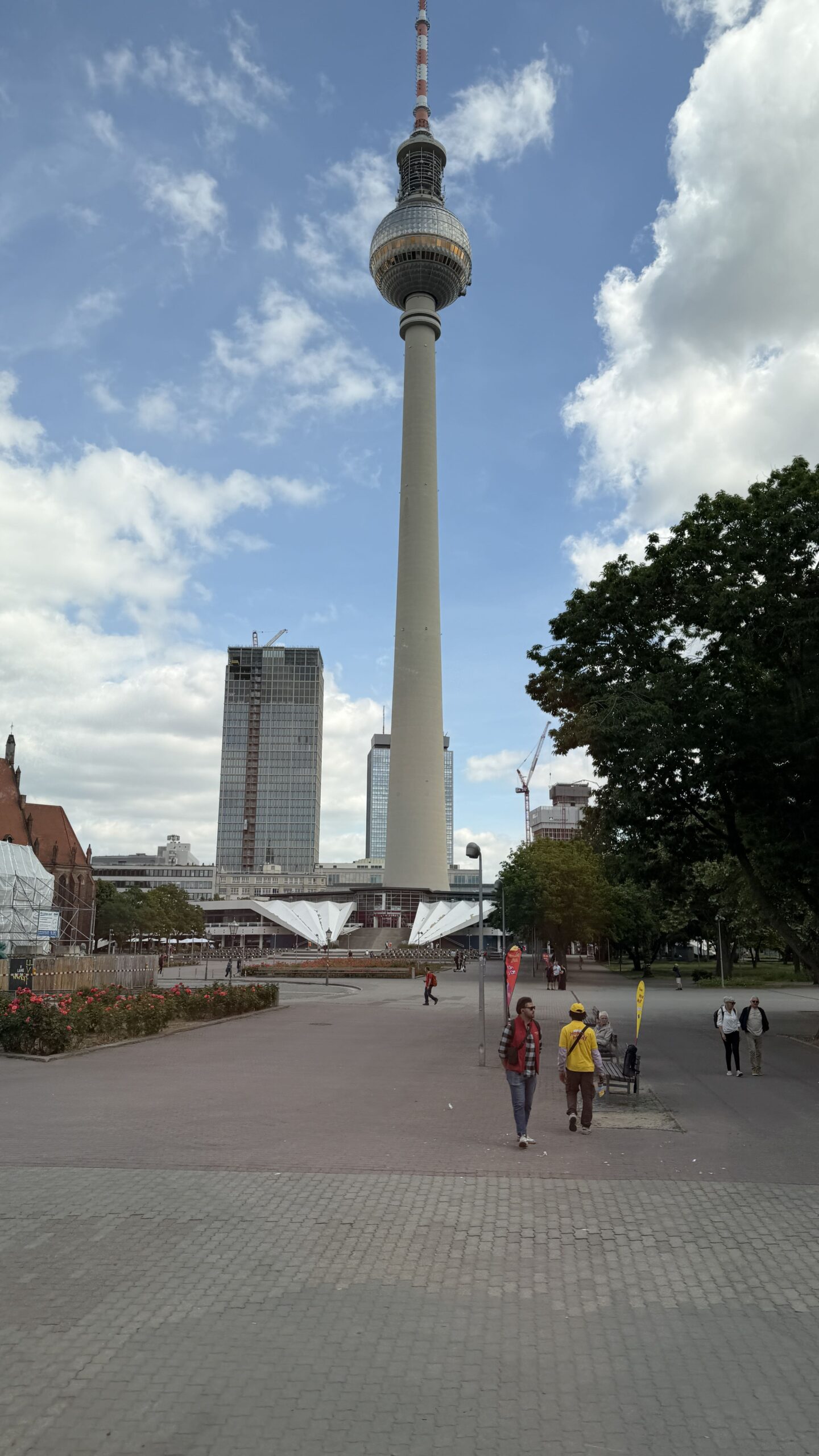
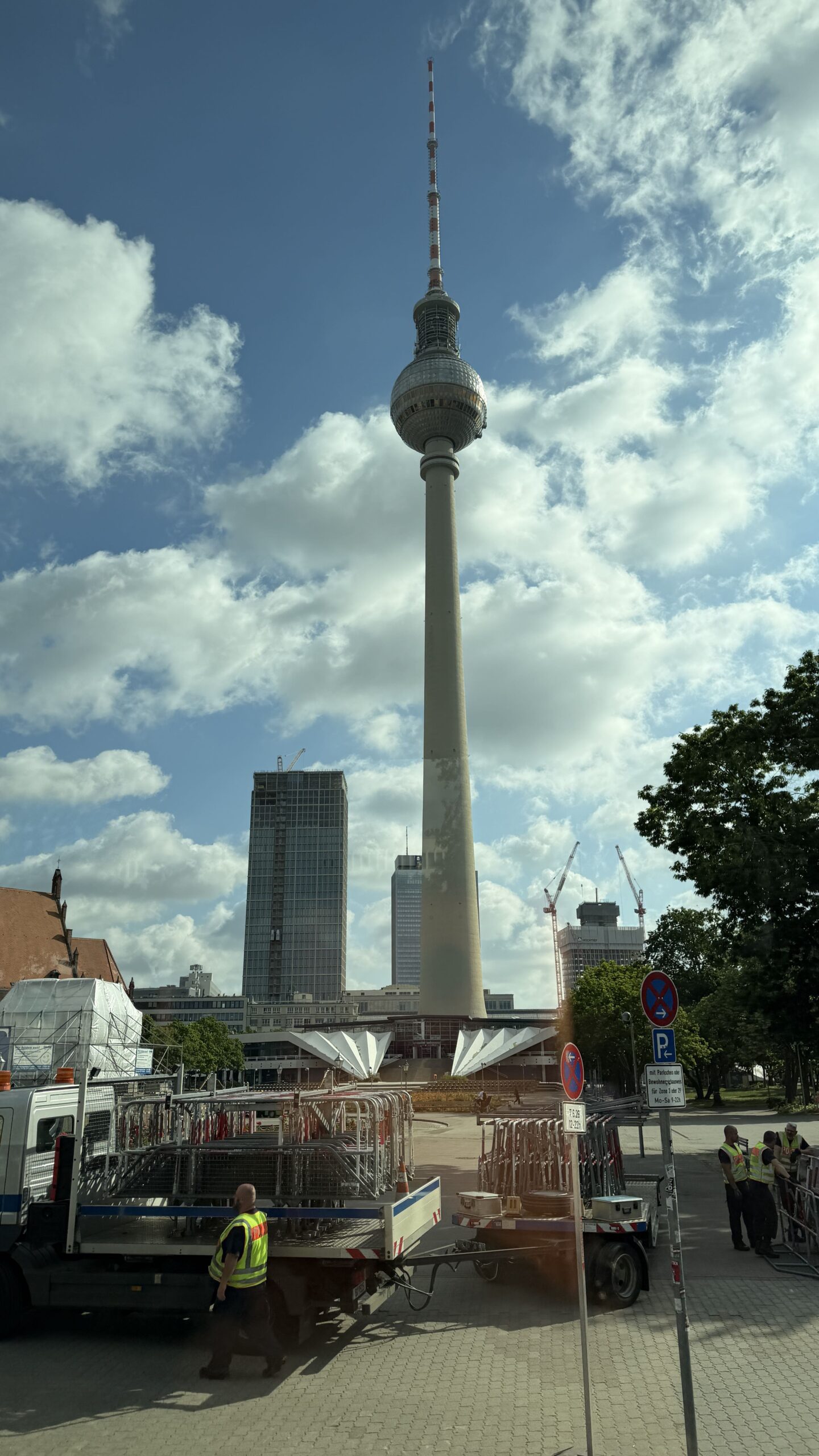
One of the first landmarks we passed was the Berlin TV Tower (Fernsehturm). Rising 368 meters into the sky, it remains Germany’s tallest structure and can be seen from almost anywhere in the city. Built by East Germany in the late 1960s, the tower was originally intended as a symbol of socialist achievement. Ironically, after reunification it became a symbol for all of Berlin rather than just East Berlin. Its silver sphere dominates the skyline and serves as an unmistakable orientation point throughout the city.
Soon afterwards we drove past Berlin Central Station (Berlin Hauptbahnhof), Europe’s largest multi-level railway station. Opened in 2006, the enormous glass-and-steel building perfectly represents modern Germany—efficient, clean, and architecturally impressive. Trains operate on multiple levels, connecting Berlin with destinations across Germany and much of Europe.
As we continued, centuries of history unfolded one landmark after another.
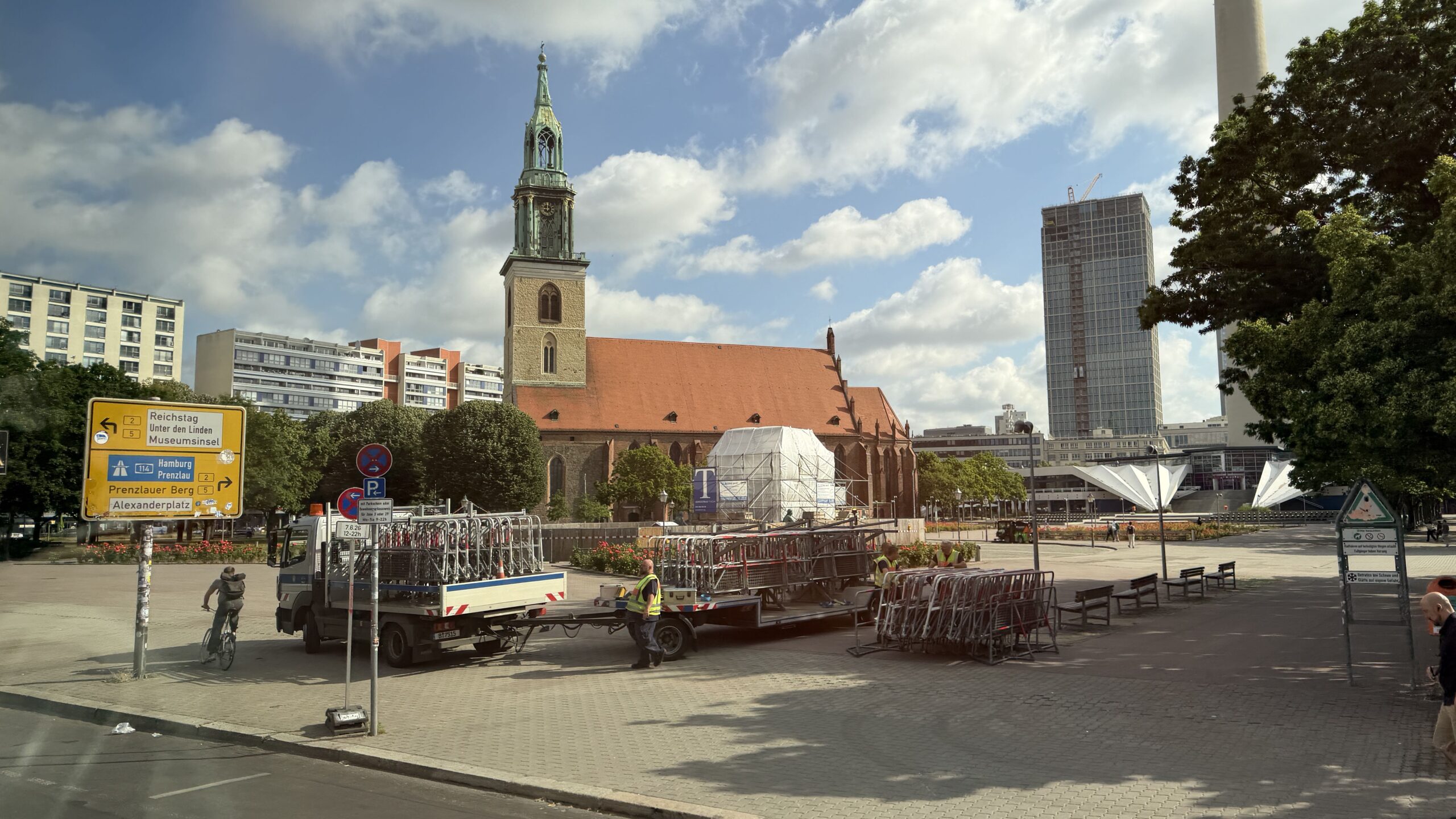
Our guide pointed out St. Mary’s Church (Marienkirche), one of Berlin’s oldest surviving churches. Dating back to the 13th century, it survived World War II despite the destruction surrounding it. Standing beside modern buildings and the towering TV Tower, the medieval church beautifully illustrates Berlin’s unique blend of old and new.
Nearby stood the magnificent Berlin Cathedral (Berliner Dom). Its massive green copper dome dominates Museum Island and is one of the city’s most recognizable churches. Built in the late nineteenth century, the cathedral showcases magnificent Baroque Revival architecture and has served as one of Germany’s most important Protestant churches.
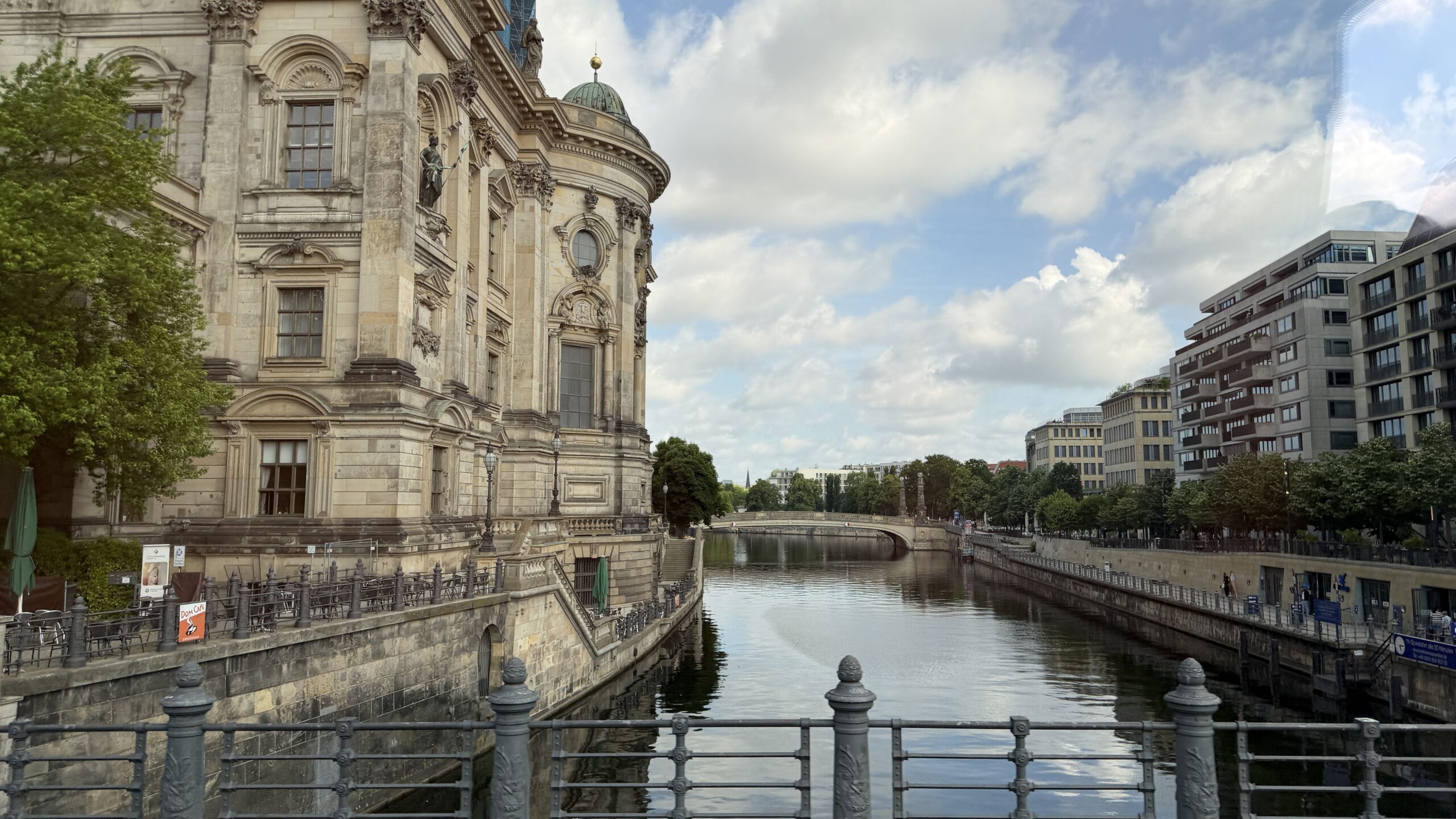
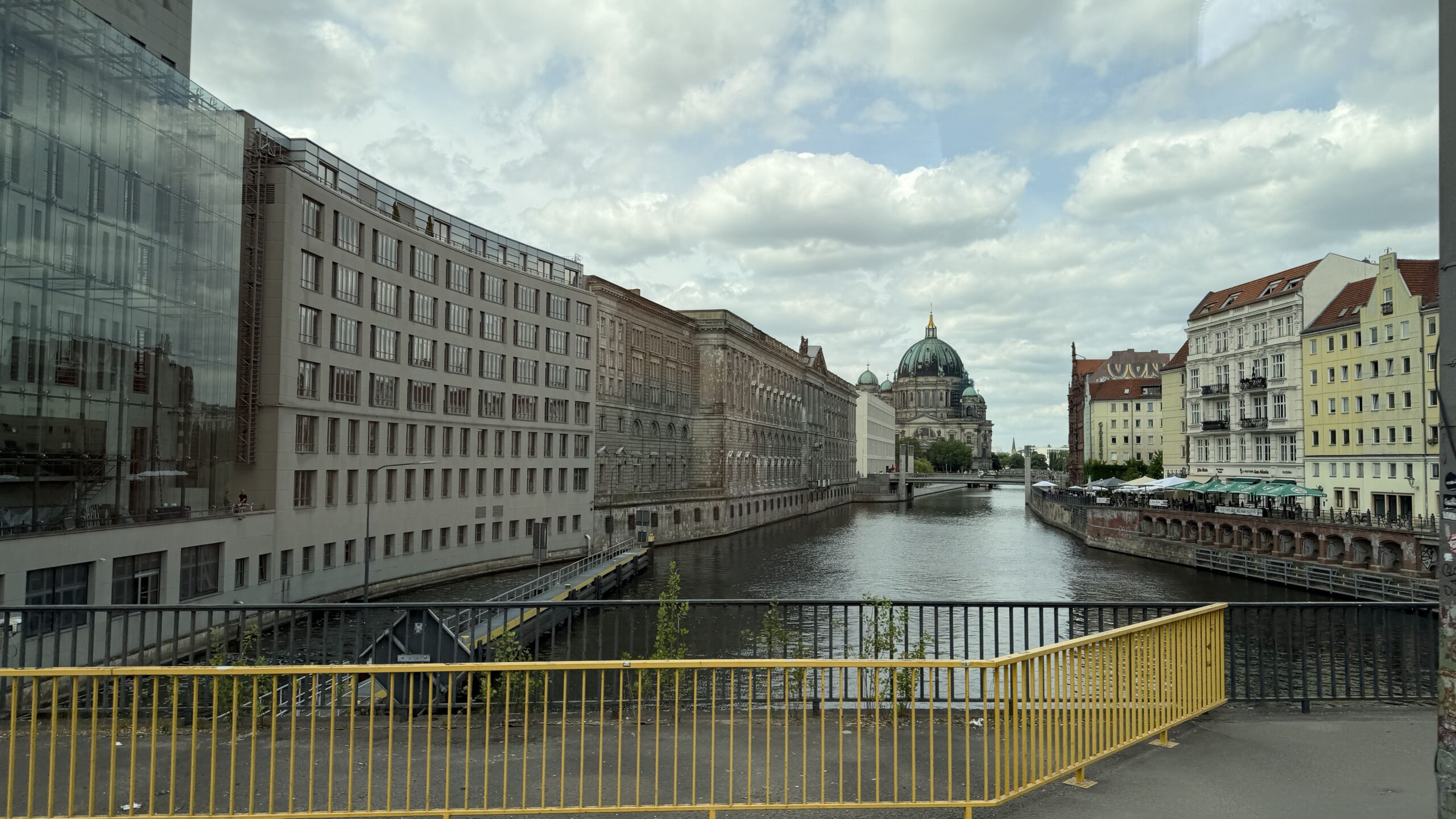
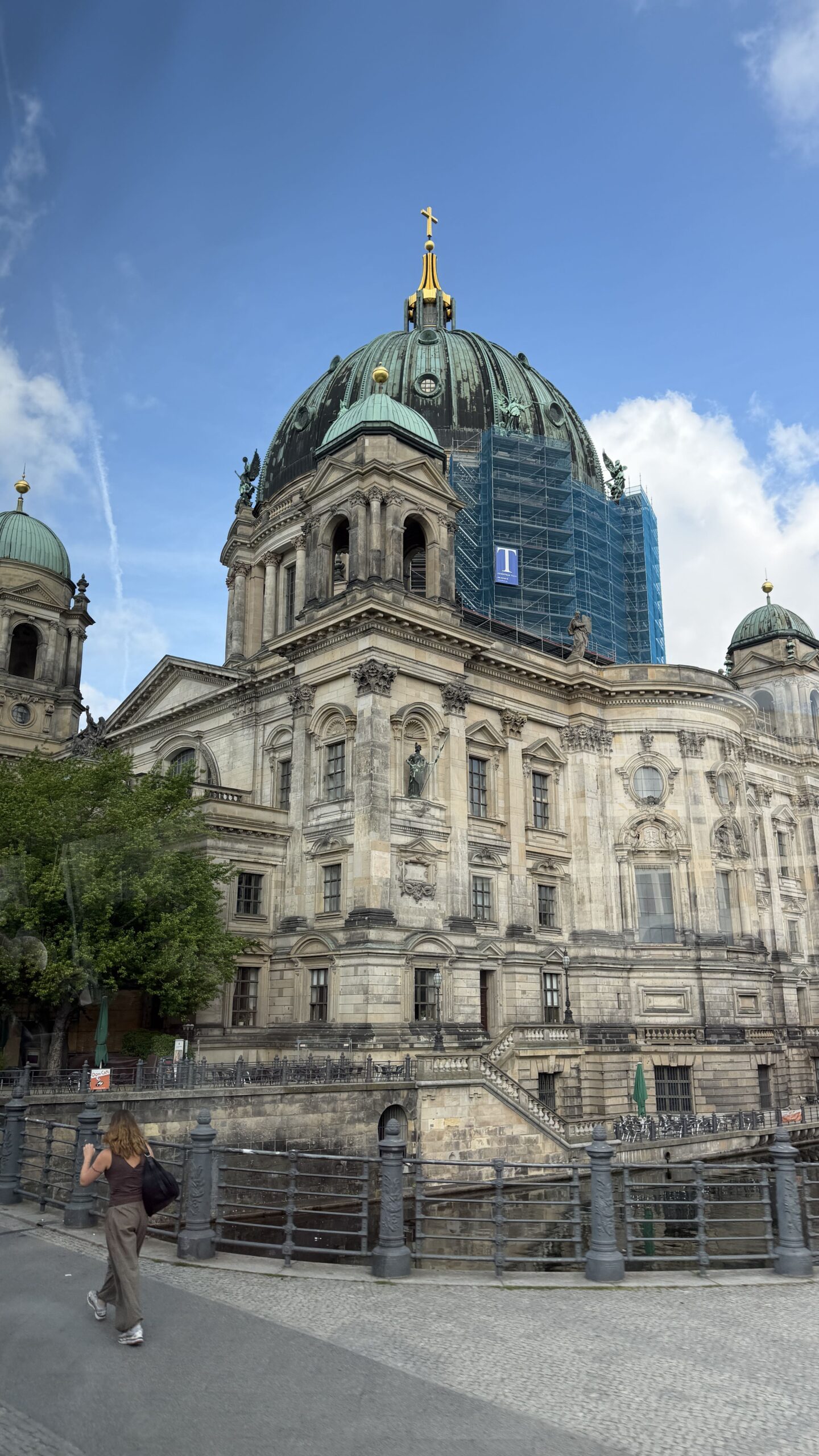
The coach then entered the area known as Museum Island, one of Berlin’s greatest cultural treasures and a UNESCO World Heritage Site. This small island on the River Spree is home to five internationally renowned museums containing priceless collections spanning thousands of years of human civilization.
While many visitors admire the beauty of Museum Island, our guide encouraged us to look a little closer. He pointed toward the classical stone columns of the historic Kolonnadenhof courtyard. At first glance they appeared perfectly ordinary. Then he showed us something we would probably never have noticed ourselves. The columns still carry visible bullet holes from the fierce fighting that took place during the final days of World War II. Rather than repairing or replacing them, Berlin deliberately chose to preserve these scars.
Standing there, those small marks in the stone spoke volumes. They quietly reminded visitors that the city’s beautiful buildings had witnessed some of the darkest moments in modern history. It was one of those subtle details that made Berlin feel different from many other European capitals. Instead of hiding its painful past, it openly acknowledges it.
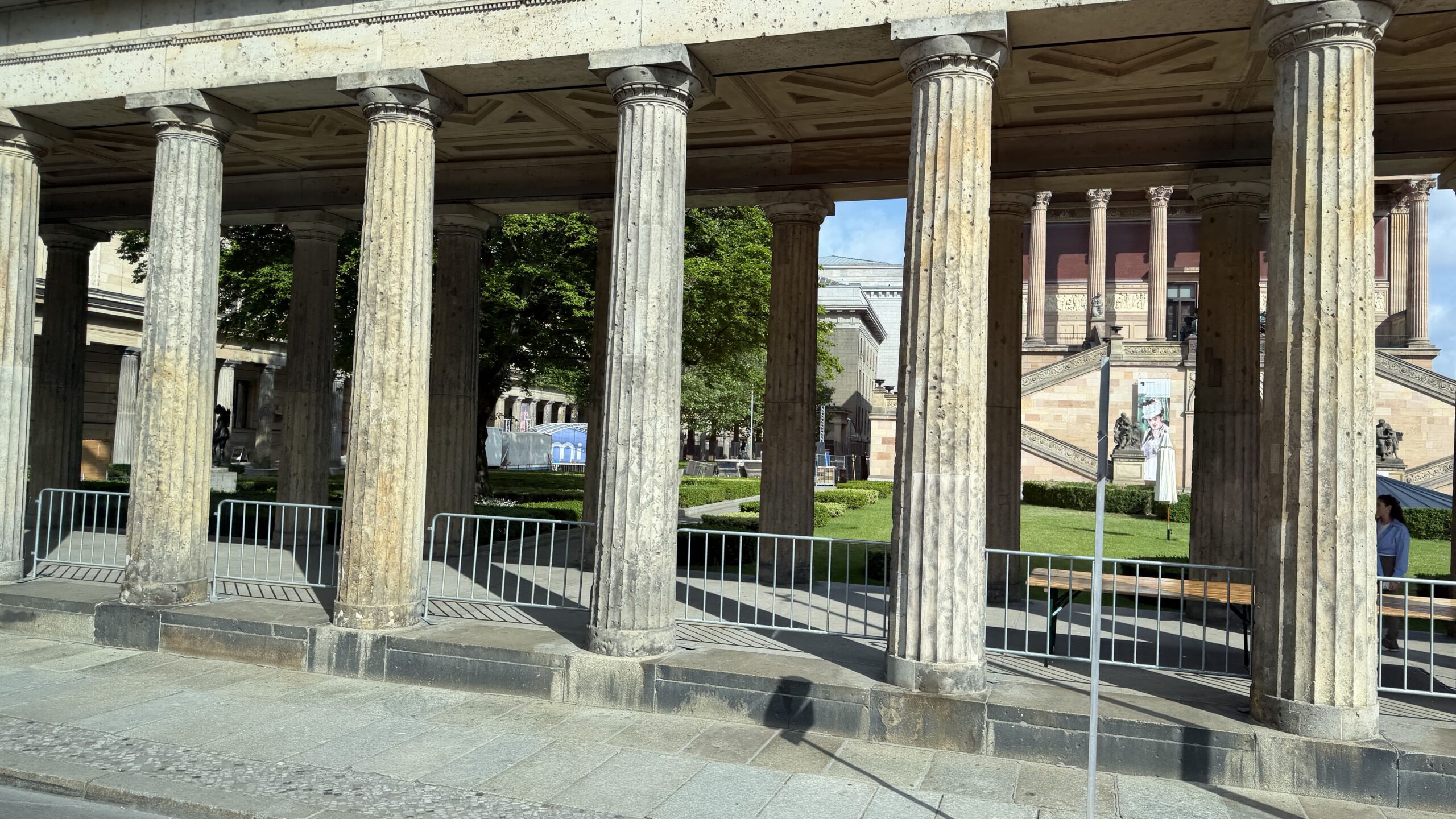
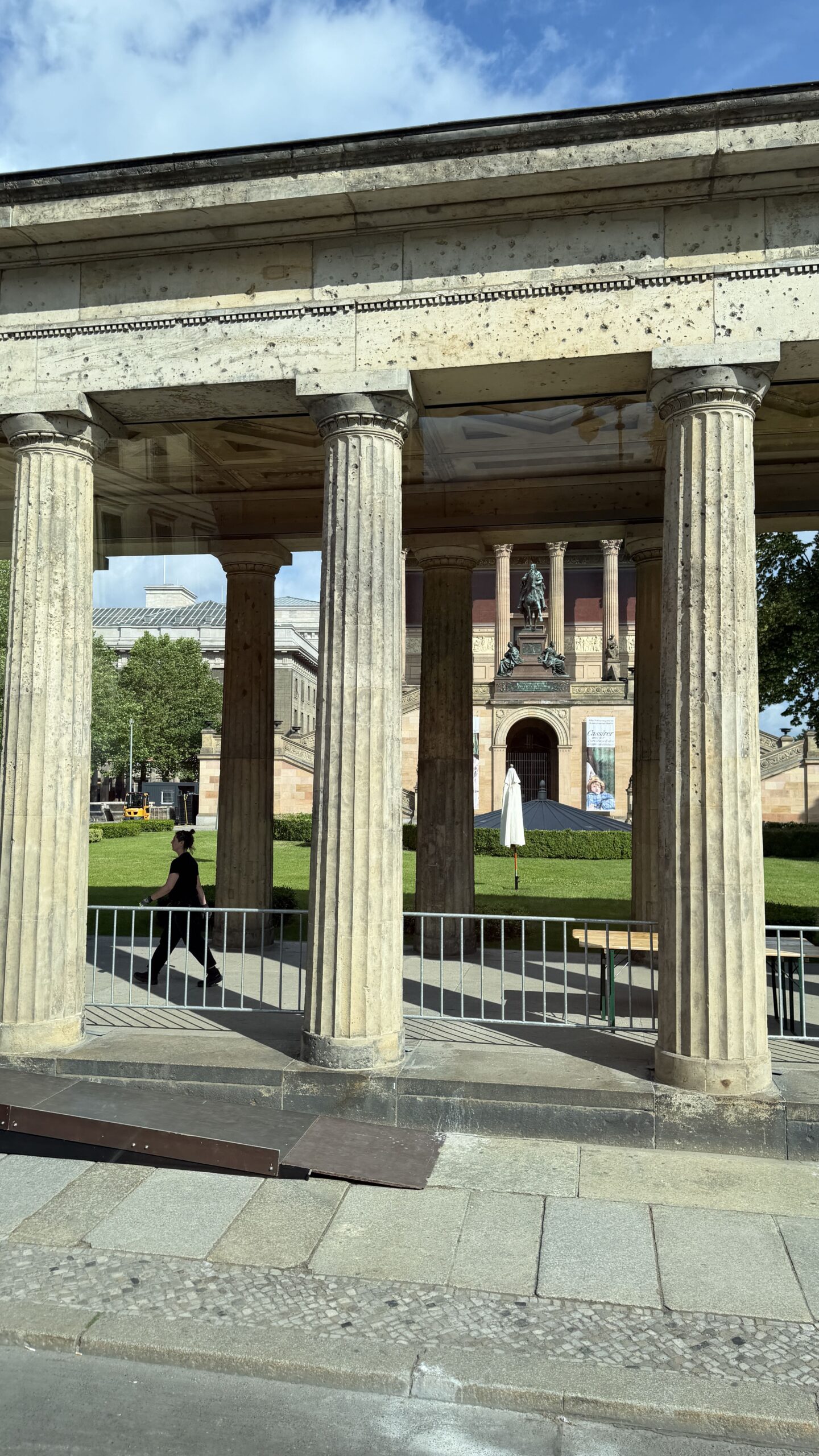
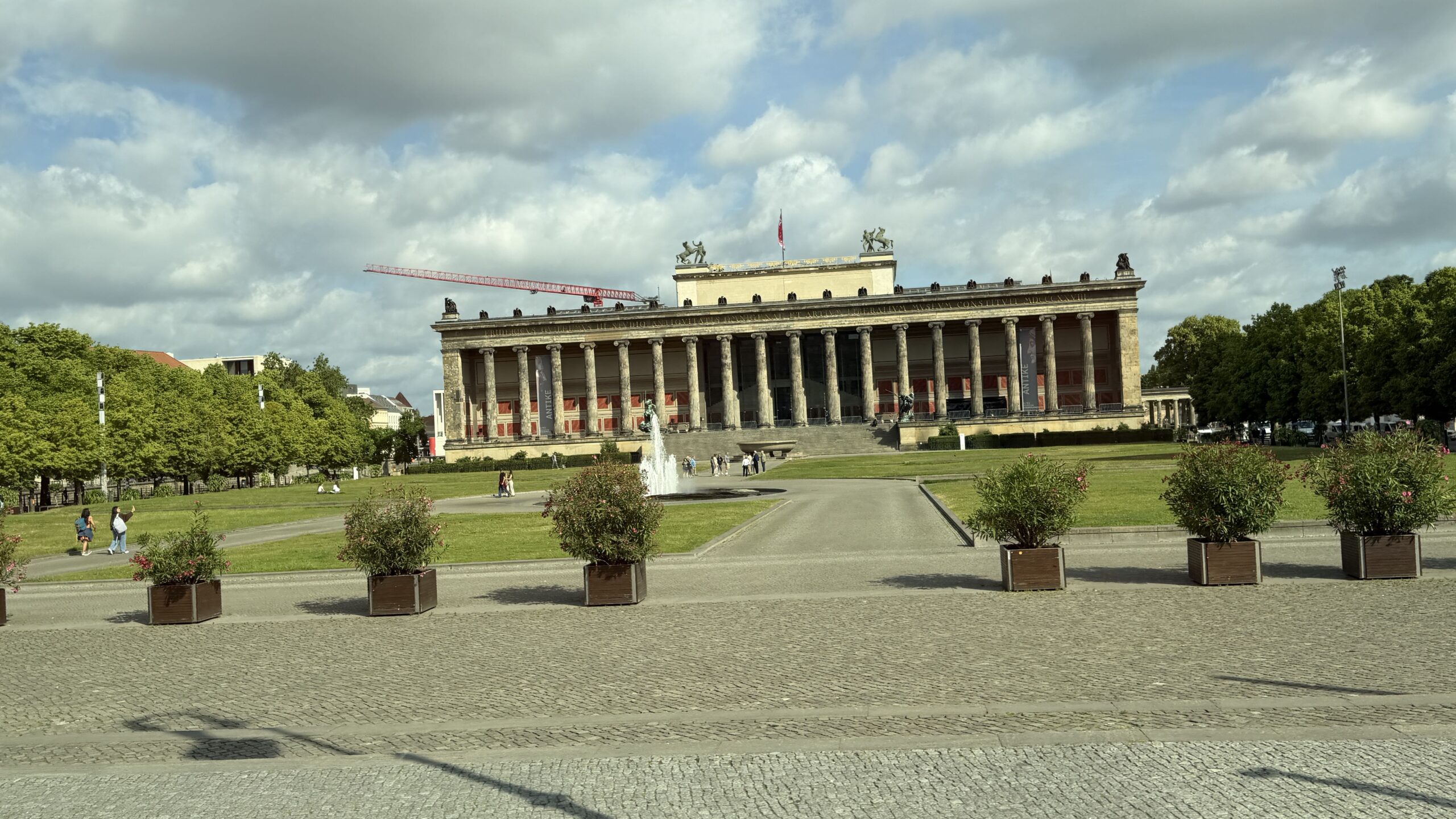
Nearby stood the elegant Altes Museum, one of Berlin’s finest examples of Neoclassical architecture. Completed in 1830, it is the oldest museum on Museum Island and forms part of the UNESCO World Heritage Site. Even from the coach, its grand Ionic columns and symmetrical design made it easy to appreciate why it is considered an architectural masterpiece.
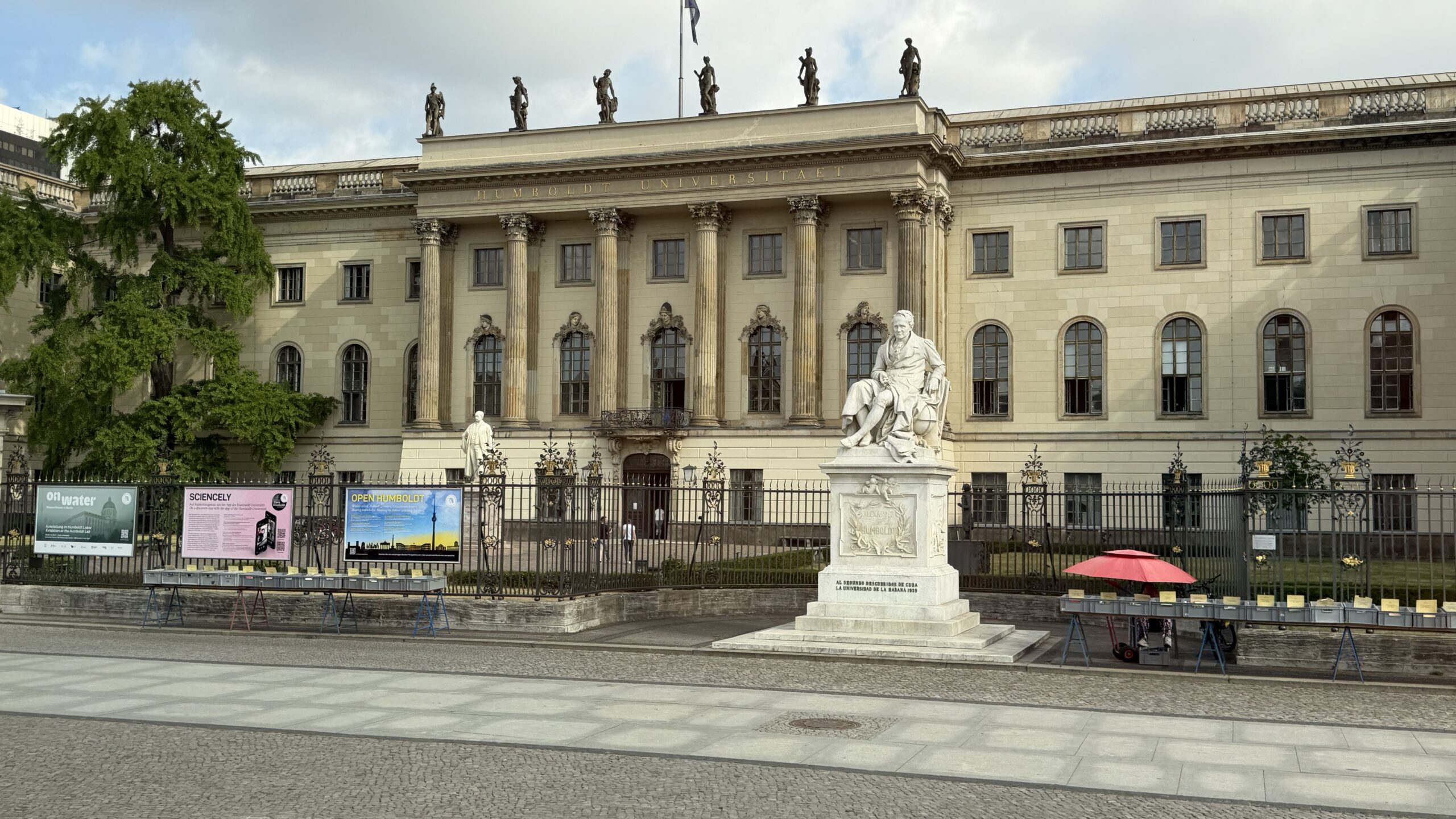
We also passed the prestigious Humboldt University of Berlin, located along the famous boulevard Unter den Linden. Founded in 1810, the university has educated many of the world’s leading scientists, philosophers, writers, and Nobel Prize winners. Great minds such as Albert Einstein and Max Planck have been associated with the institution, making it one of Europe’s most respected universities.
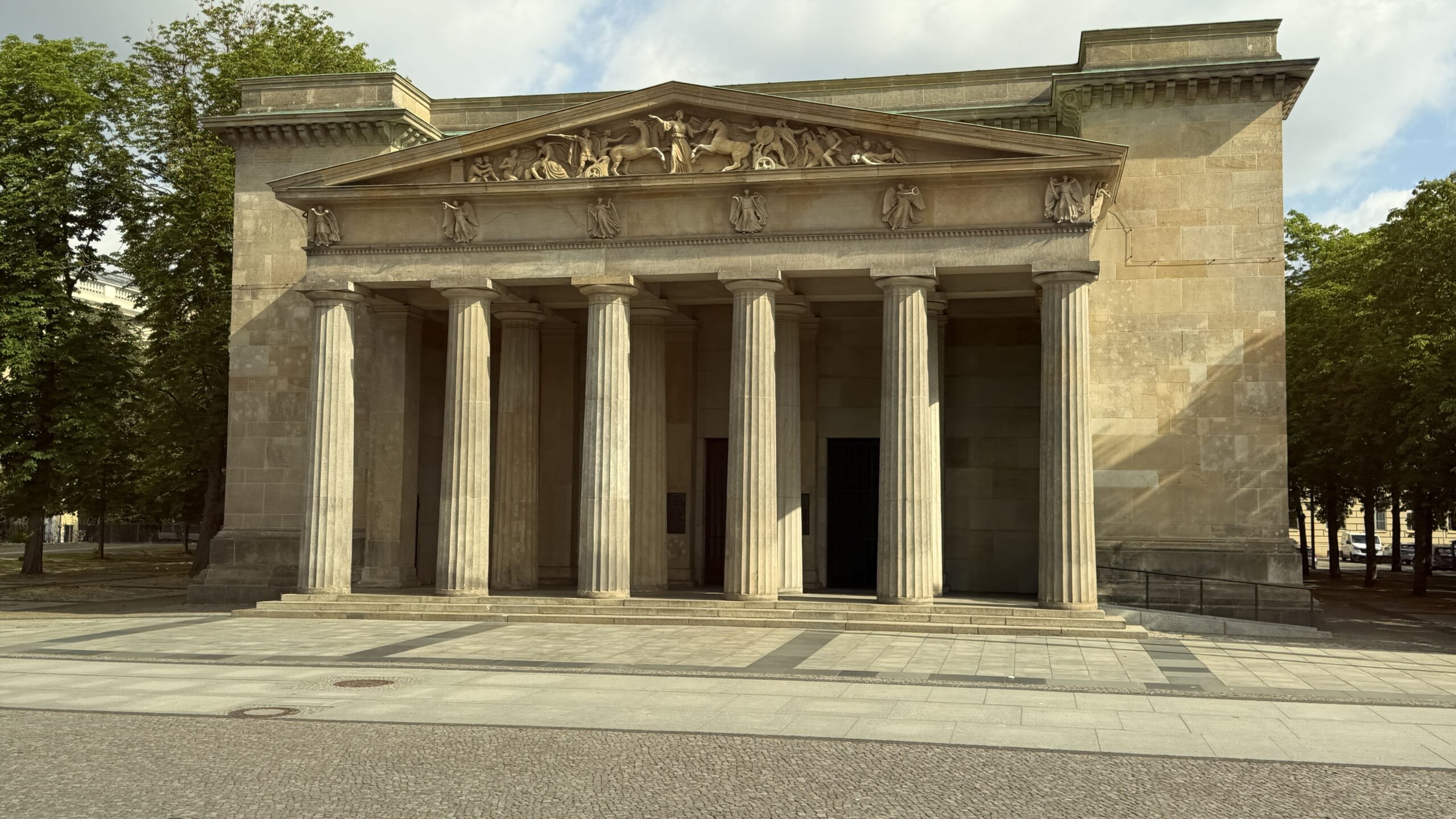
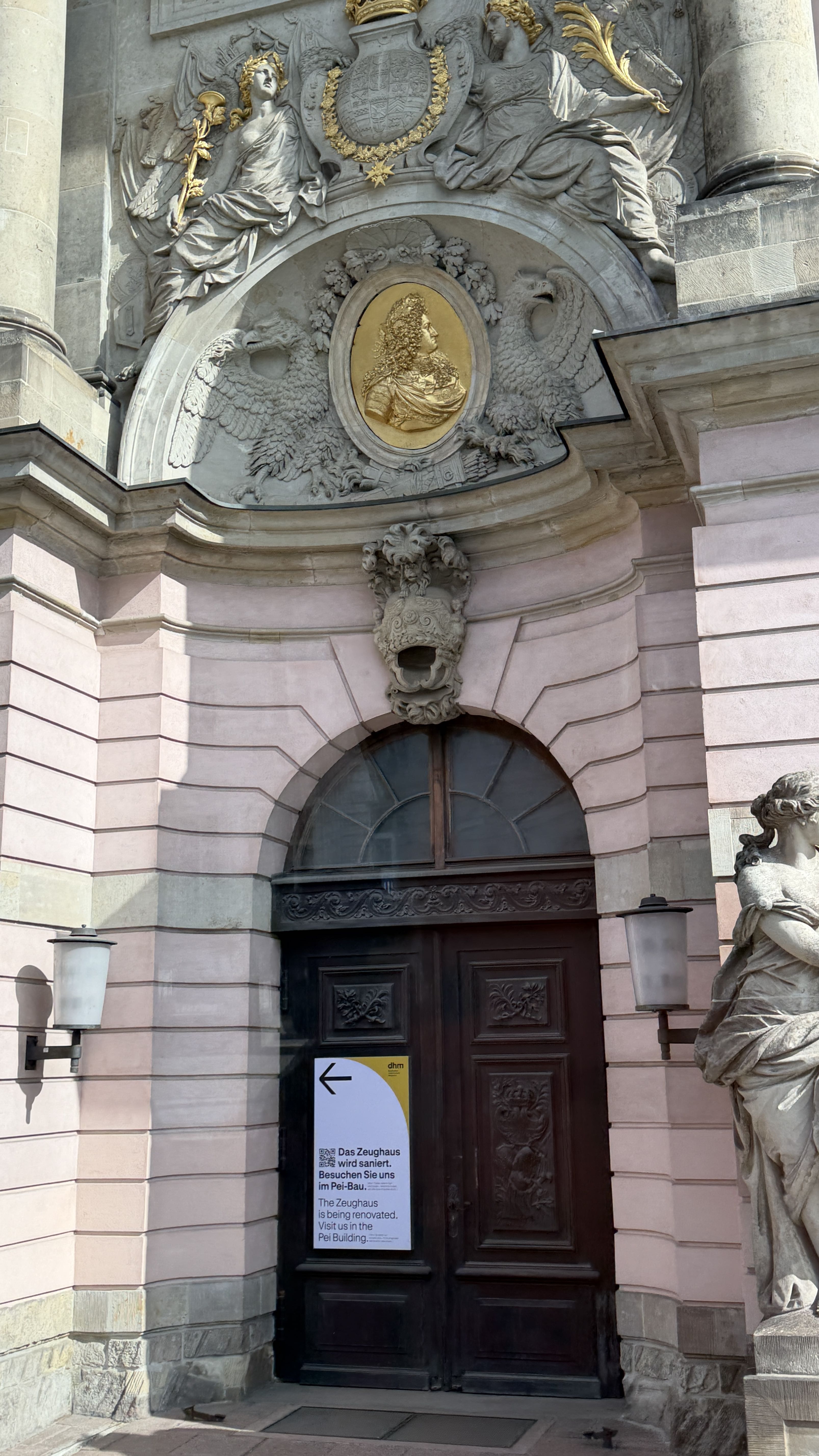
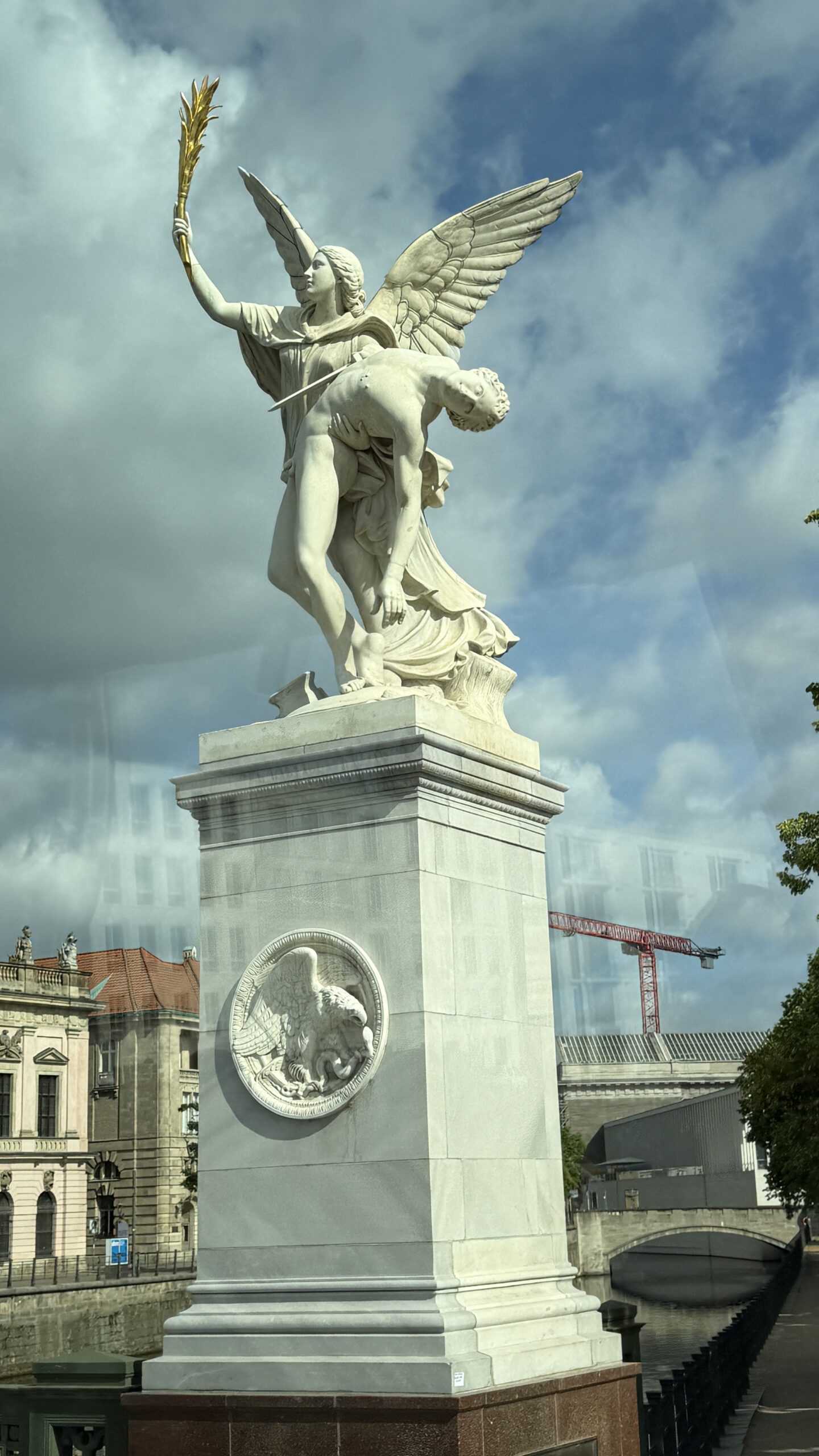
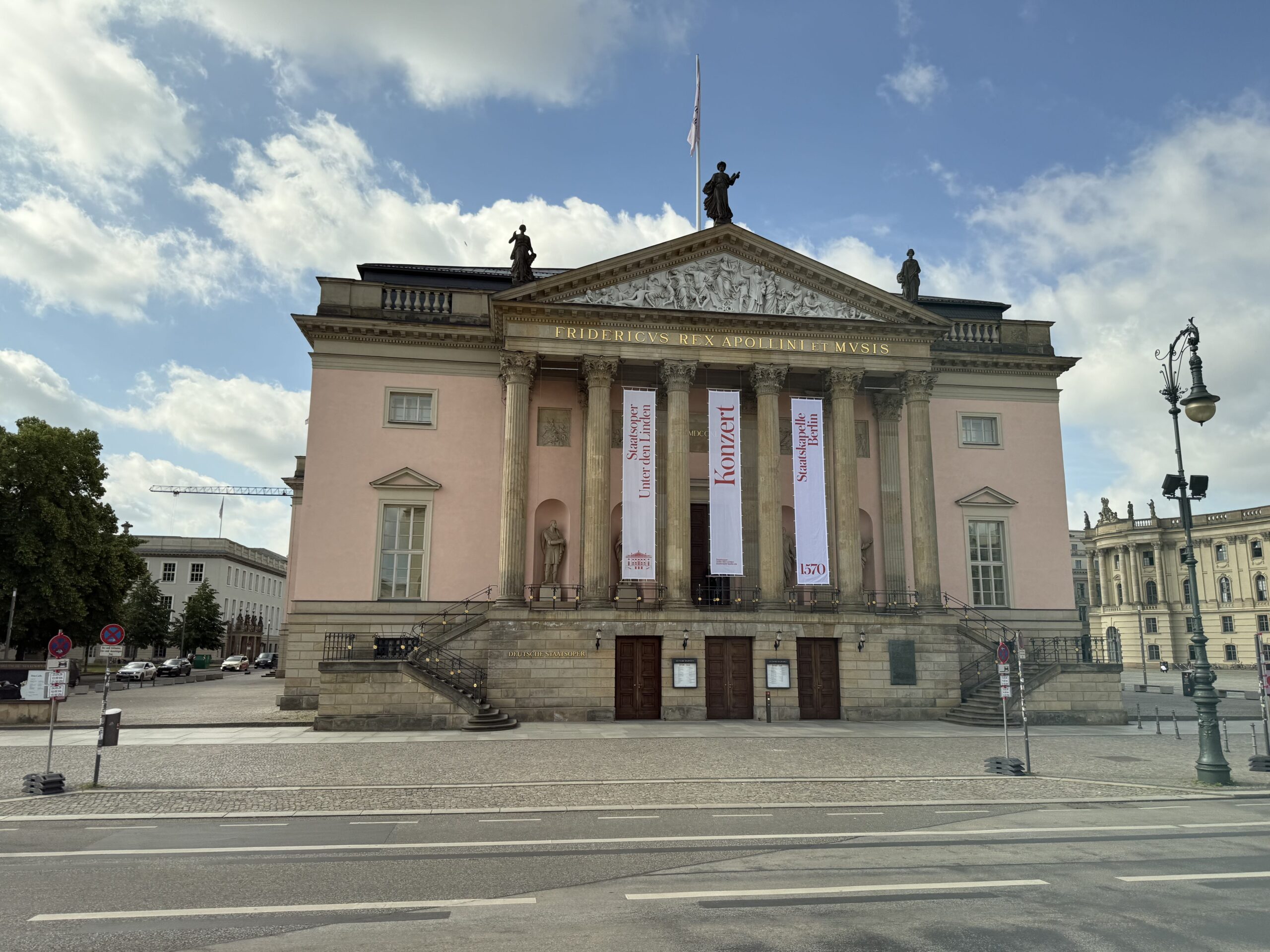
Our guide explained that Unter den Linden, literally meaning “Under the Linden Trees,” has long been Berlin’s ceremonial boulevard. Lined with historic buildings, embassies, museums, and cultural institutions, it connects many of the city’s most important landmarks and has served as Berlin’s grand avenue for centuries.
The tour then shifted from Berlin’s architectural beauty to one of the most emotional chapters in German history.
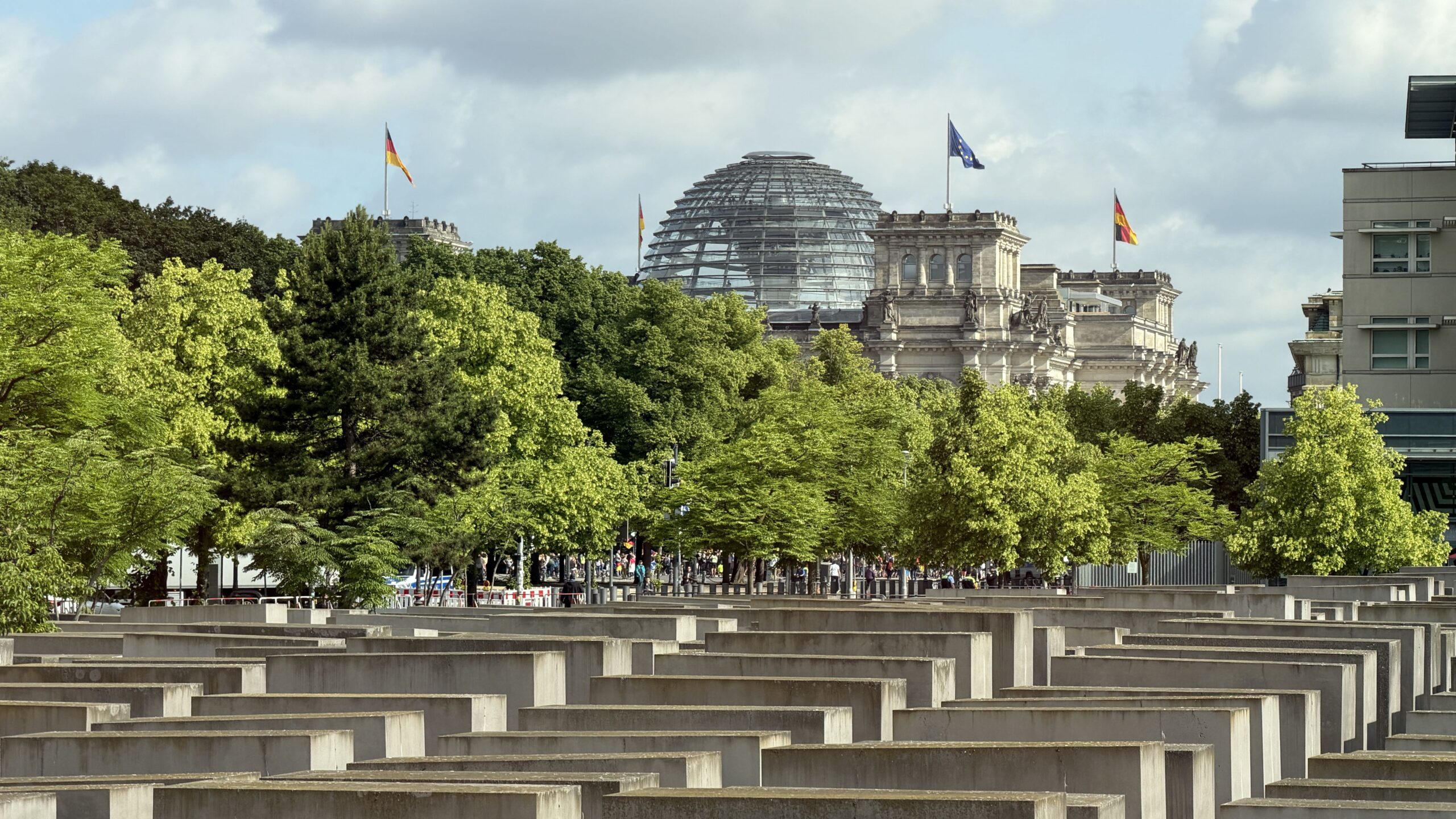
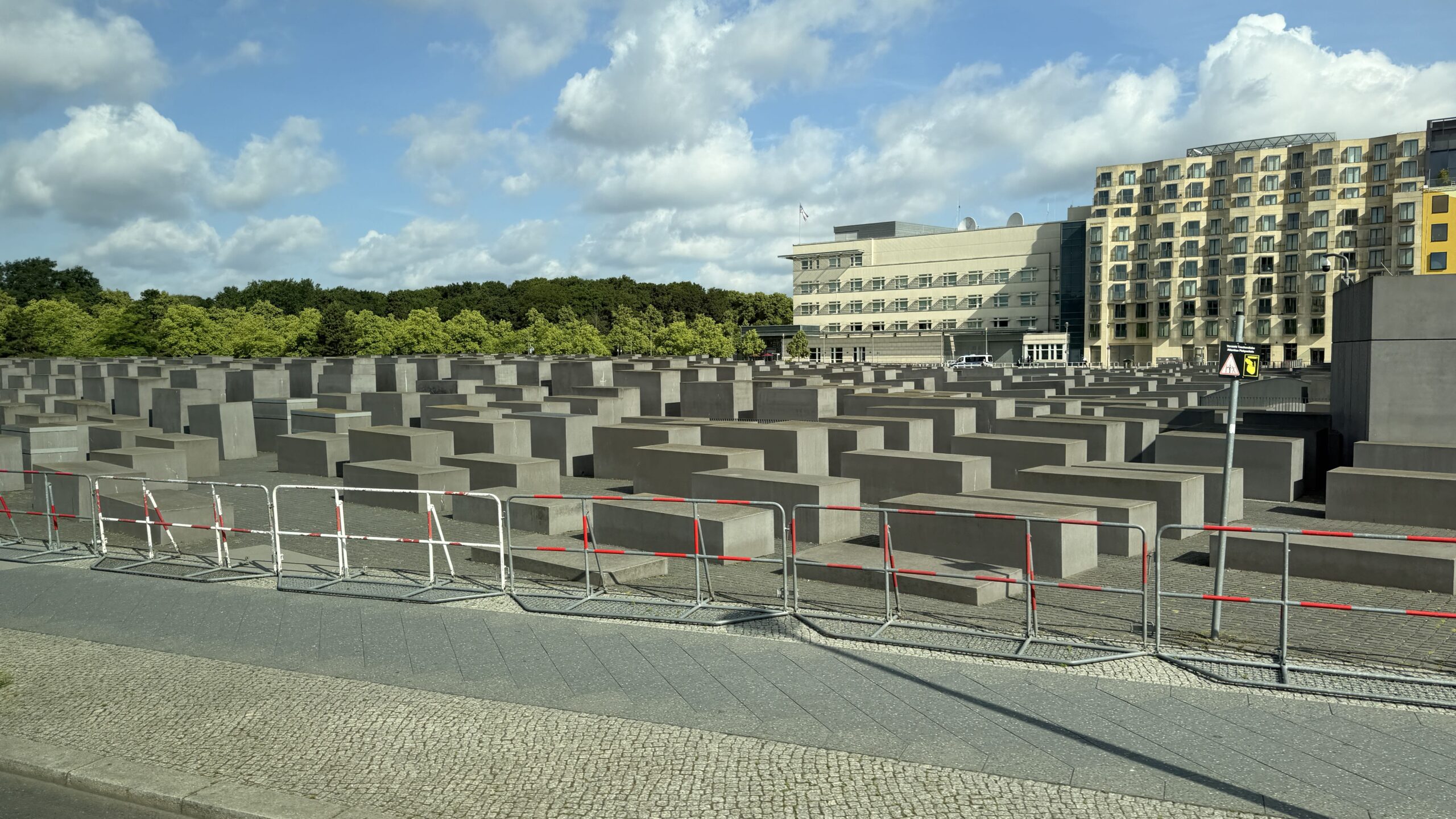
We drove past the Memorial to the Murdered Jews of Europe, more commonly known simply as the Holocaust Memorial.
Spread across an entire city block, the memorial consists of 2,711 grey concrete slabs arranged in rows of varying heights. From a distance the design appears simple, but walking between the towering slabs creates a surprisingly powerful and emotional experience. The memorial honors the six million Jewish victims murdered during the Holocaust and stands as one of Germany’s strongest commitments to remembering the atrocities of World War II.
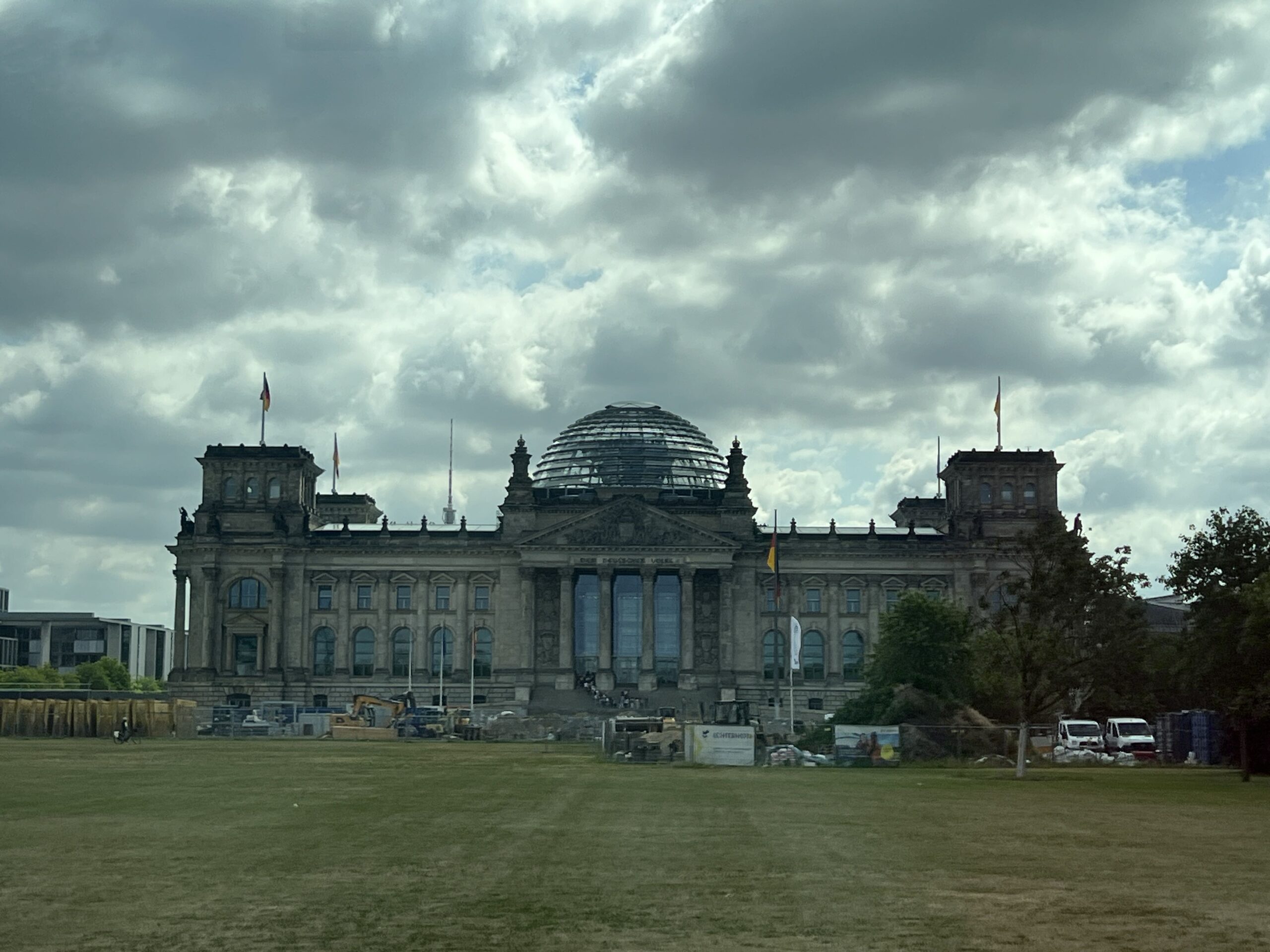
Not far away stood another building that has witnessed much of Germany’s modern history—the Reichstag.
Originally completed in 1894, the Reichstag served as the home of the German Parliament. It survived empire, war, dictatorship, division, and reunification. Today it houses the German Bundestag, the country’s federal parliament. Its famous glass dome, added during restoration after reunification, symbolizes transparency and democracy, allowing visitors to literally look down into the parliamentary chamber below.
Our guide reminded us that Berlin’s landmarks are not simply beautiful buildings—they are chapters of Germany’s story, each representing triumphs, tragedies, and new beginnings. As the coach continued through the city, we realized we weren’t just sightseeing.
We were driving through living history.
Brandenburg Gate
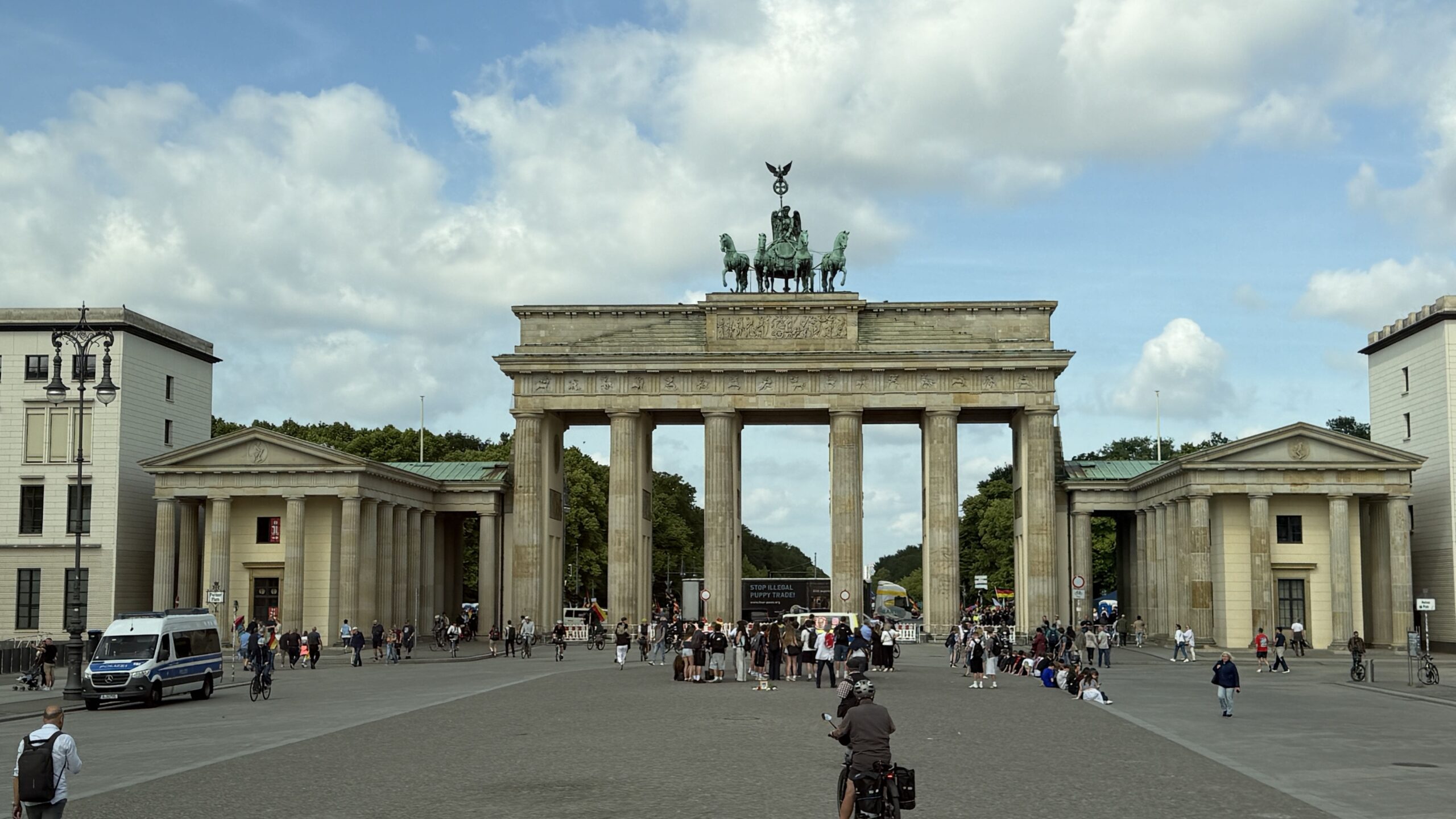
No visit to Berlin is complete without seeing its most famous landmark—the Brandenburg Gate.
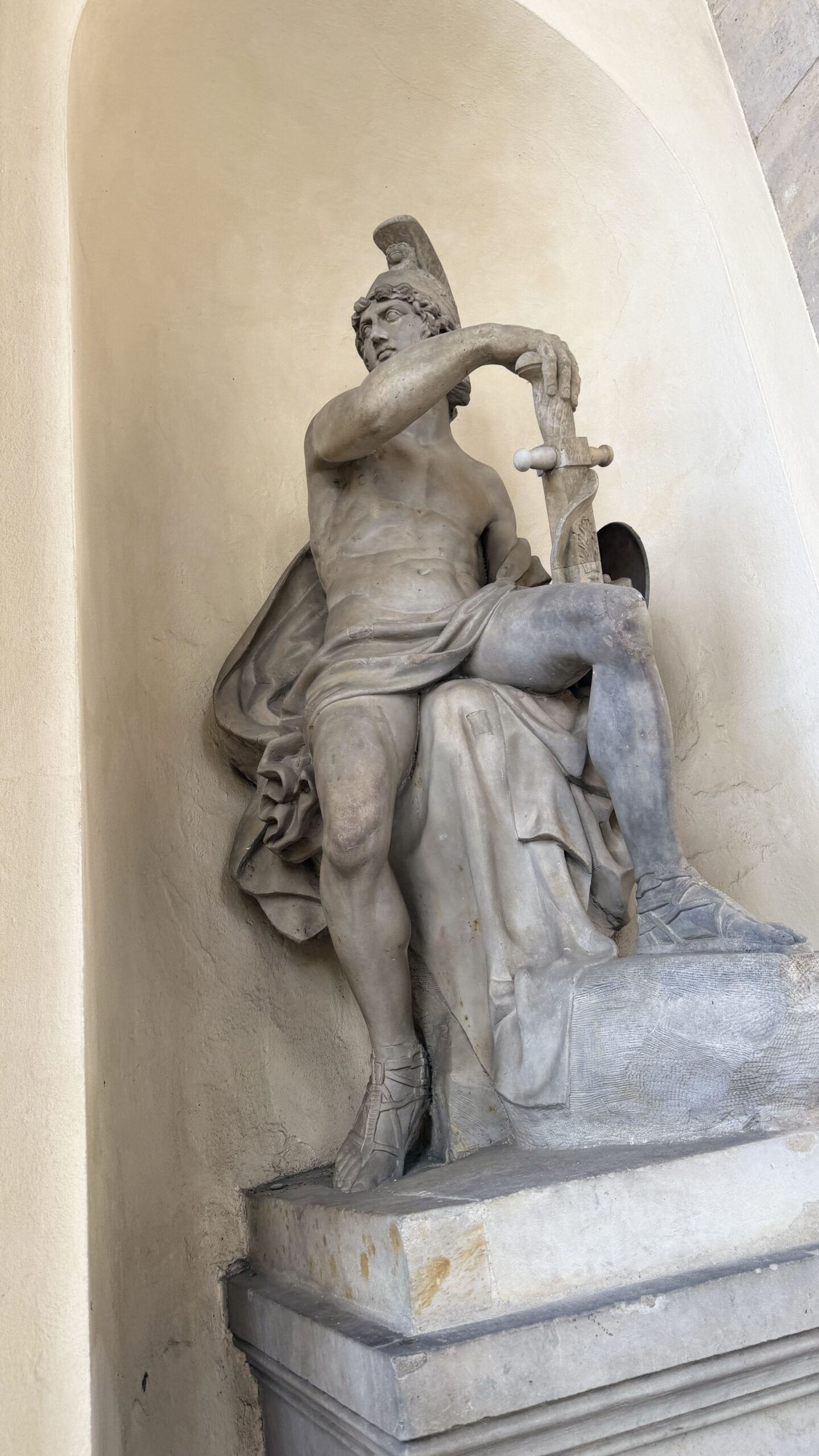
As our coach approached, our guide began explaining why this monument is so much more than an impressive gateway. Built between 1788 and 1791, the Brandenburg Gate originally marked the entrance to the city and was inspired by the Acropolis of Athens. Throughout more than two centuries, it has witnessed the rise and fall of kingdoms, the German Empire, two World Wars, the Cold War, and finally the reunification of Germany.
For nearly three decades, the Brandenburg Gate stood trapped between East and West Berlin, inaccessible to ordinary citizens because it was located within the heavily guarded border zone of the Berlin Wall. Images of the gate became one of the defining symbols of the Cold War. When the Berlin Wall finally fell in November 1989, millions around the world watched as people gathered here to celebrate the reunification of Germany.
Today, the Brandenburg Gate has taken on a completely different meaning. It now stands as a powerful symbol of peace, freedom, democracy, and unity—not only for Germany but for people everywhere.
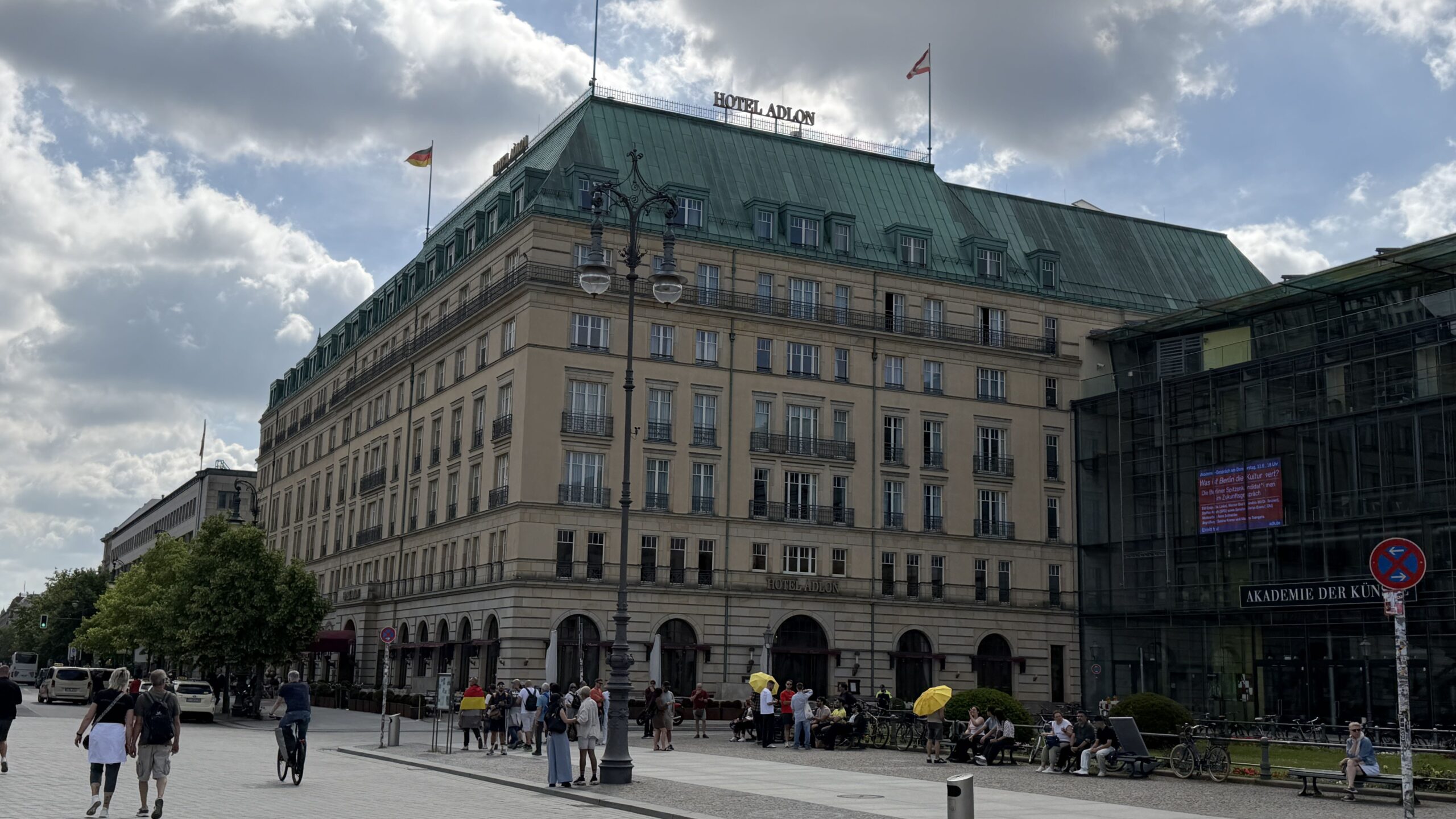
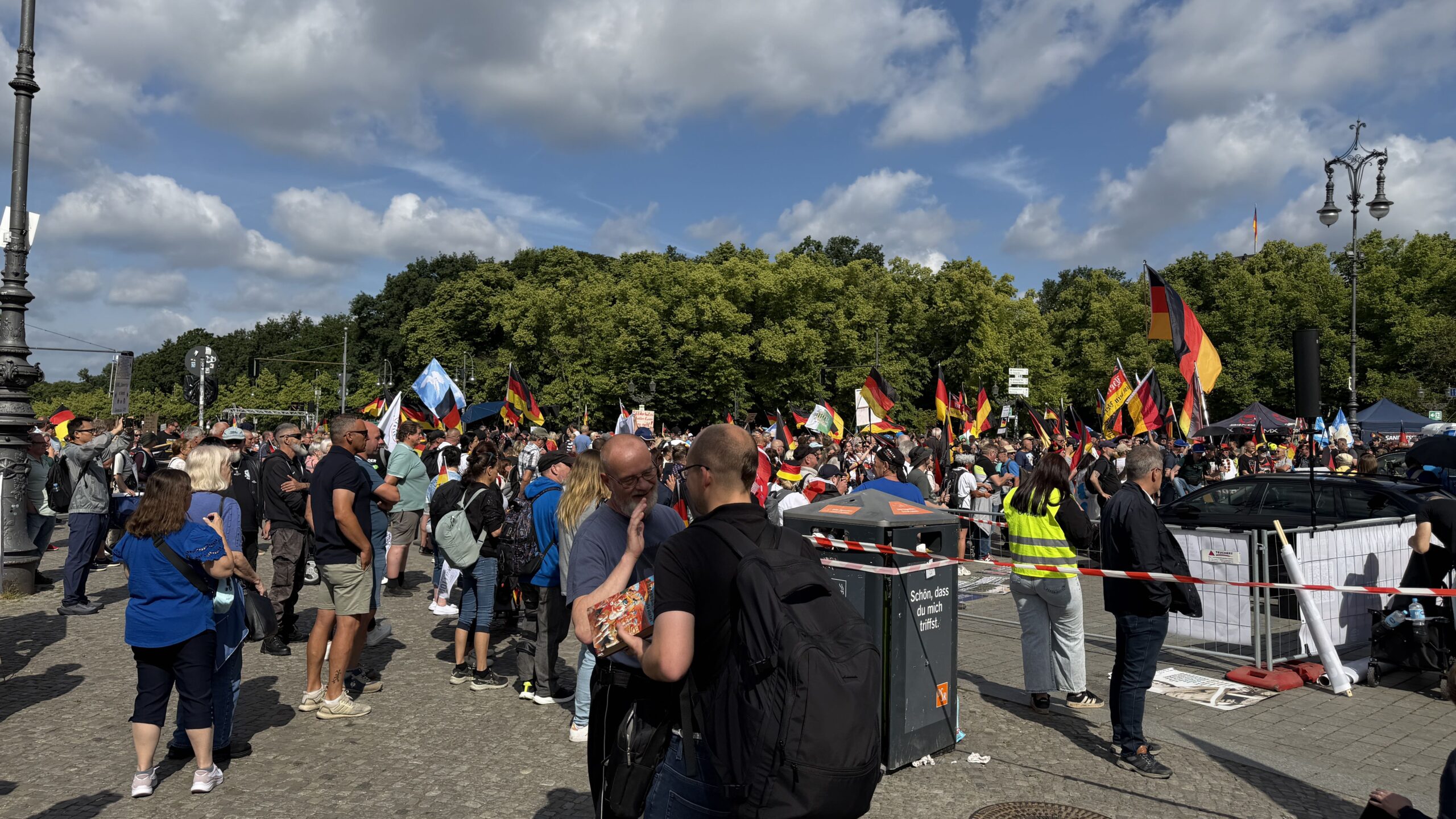
We got off the coach and spent some time walking around Pariser Platz in front of the gate. There was a public gathering taking place during our visit. Loudspeakers filled the square with music while people carried flags and banners displaying the words “Wir sind das Volk” (“We are the people”). Our guide explained that this phrase became famous during the peaceful demonstrations in East Germany in 1989. It represented ordinary citizens demanding freedom and democratic reforms, eventually helping to bring down the Berlin Wall. Seeing those words displayed once again, in front of one of Europe’s most iconic monuments, added another layer of meaning to our visit.
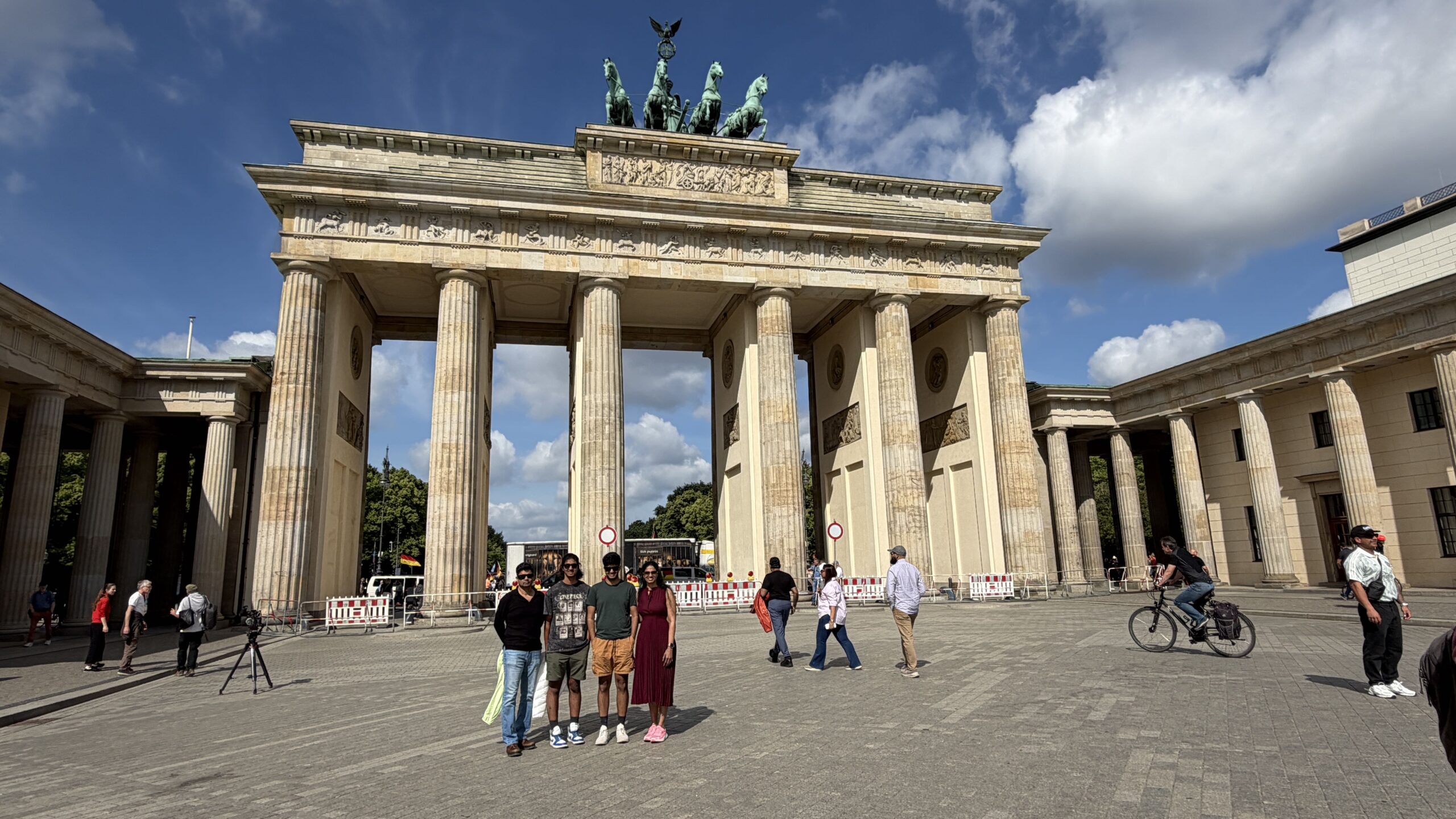
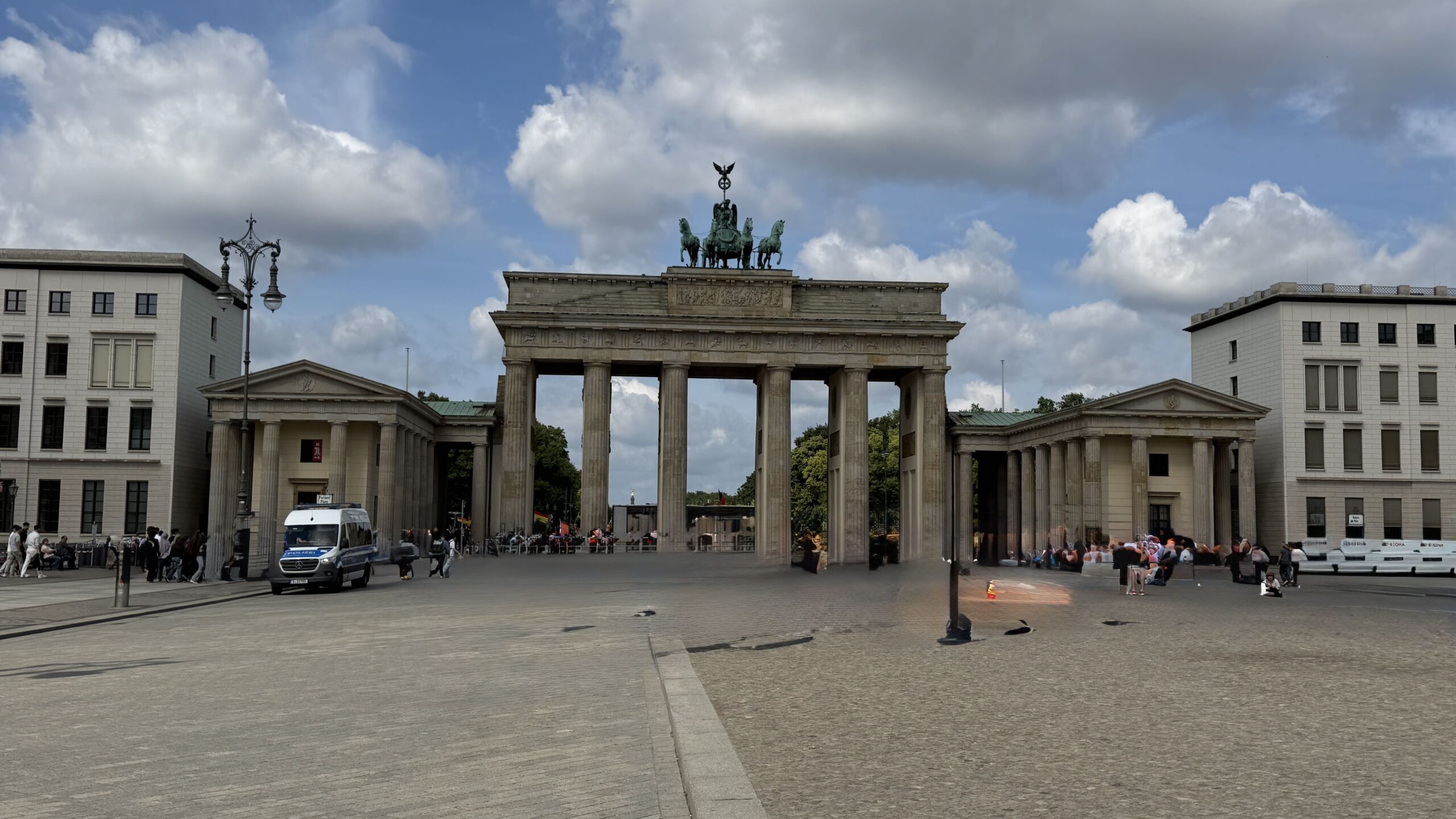
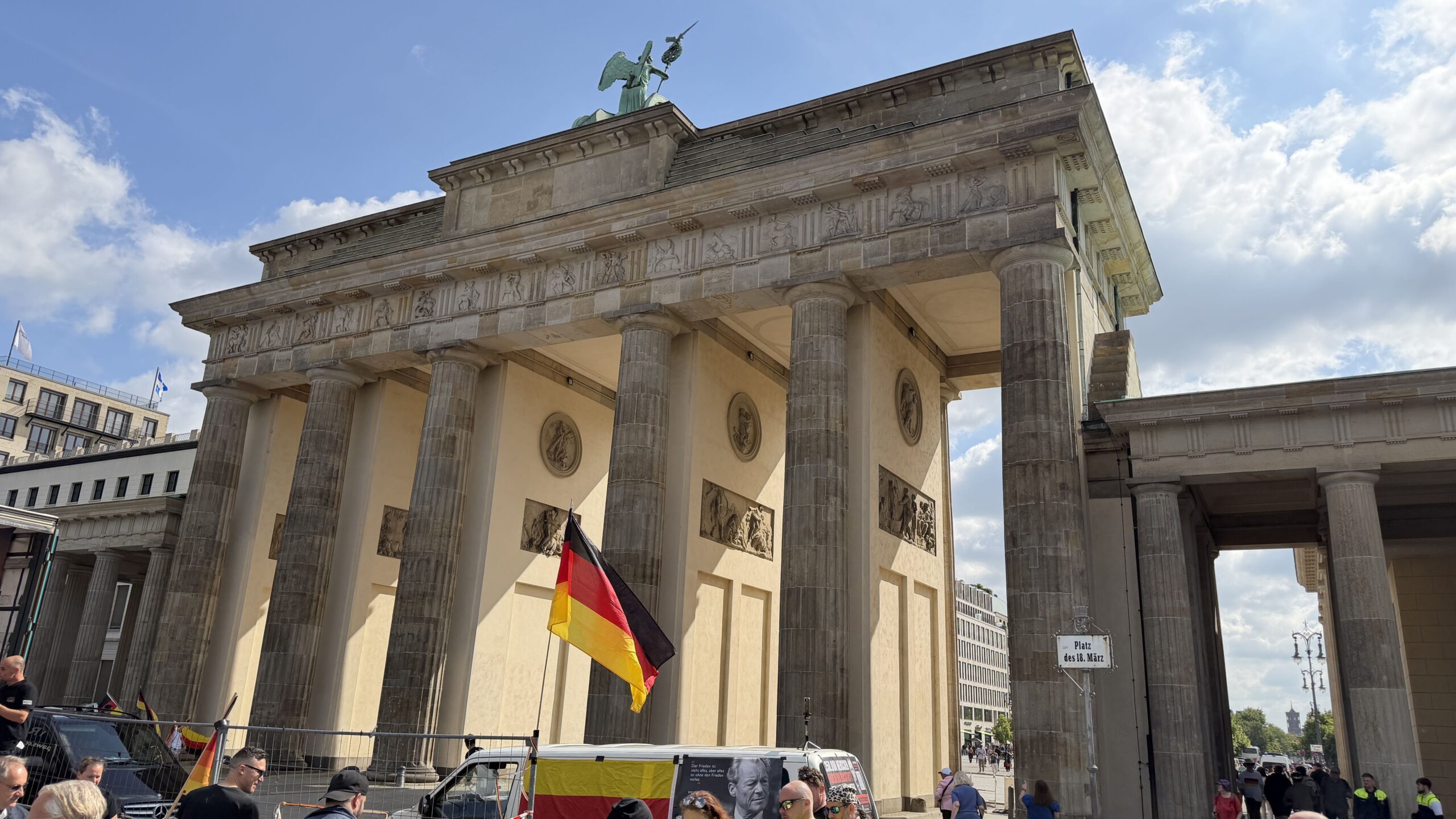
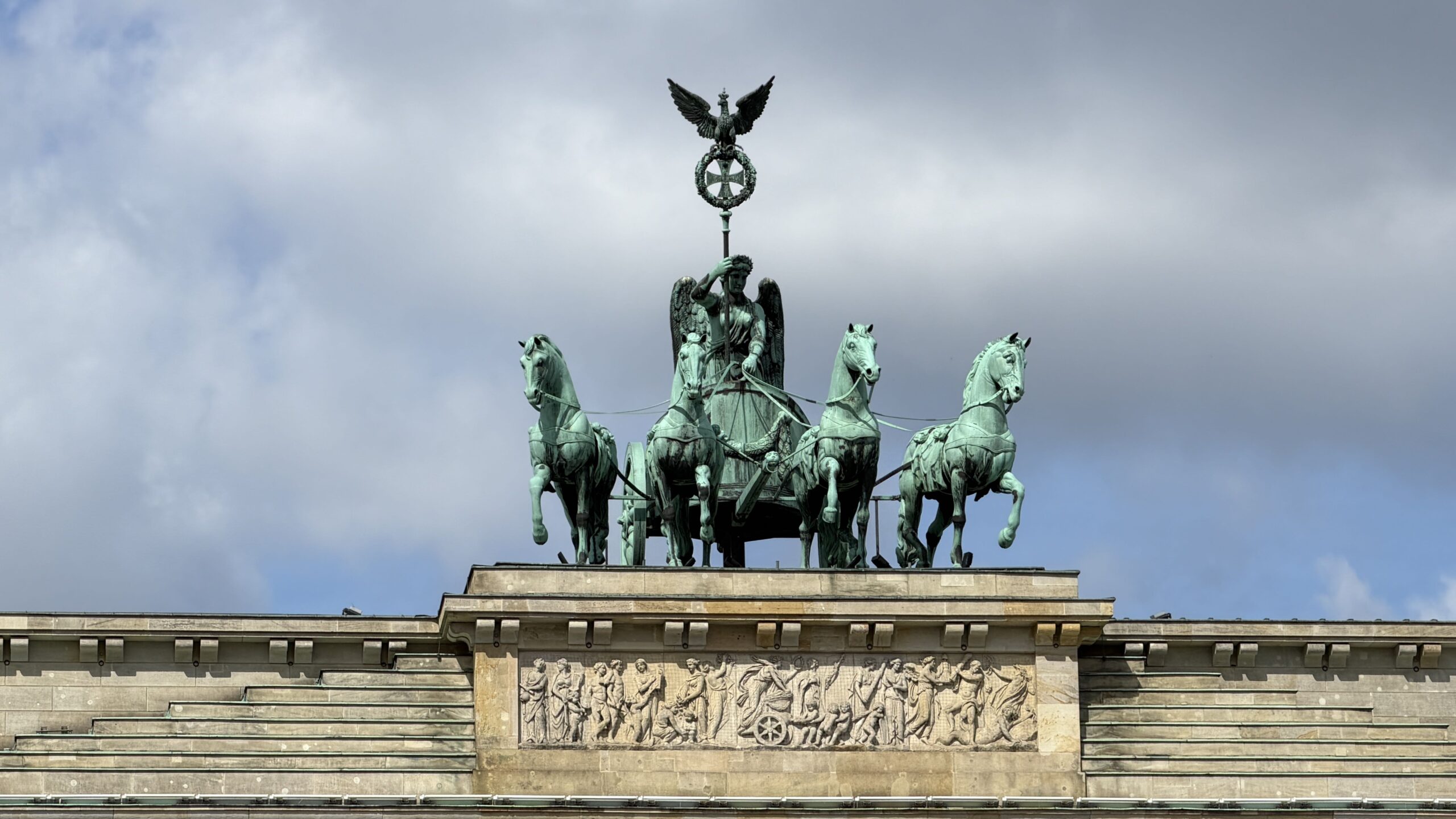
Standing there, I found myself thinking back to my childhood. Never in those school days did I imagine that one day I would actually stand beneath the Brandenburg Gate, walk through the streets of Berlin, and visit places that had once existed only in the pages of history textbooks. It was one of those travel moments that quietly reminds you how fortunate you are to experience the world firsthand.
Back on the coach, our tour continued through more of Berlin’s landmarks.
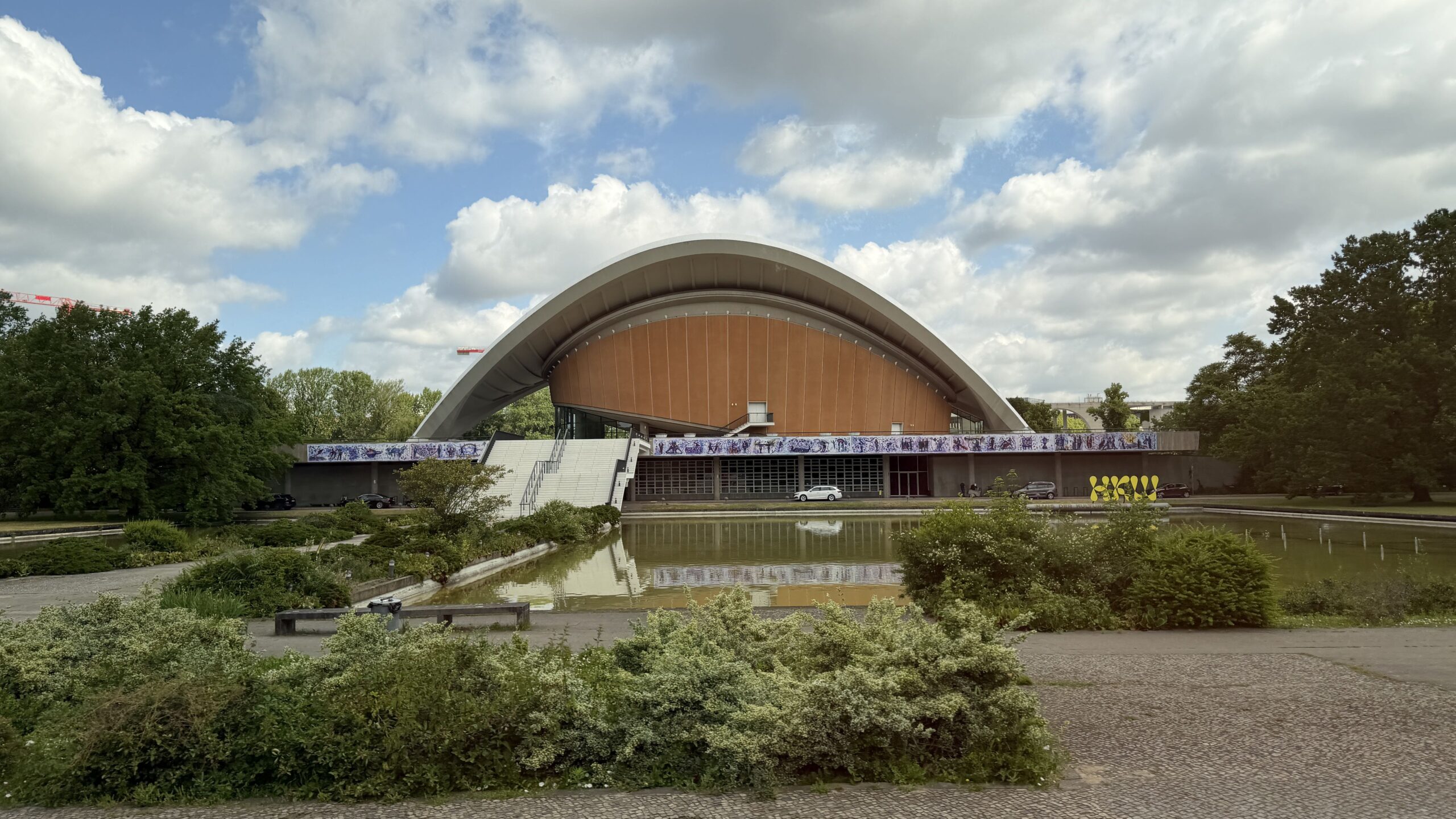
We passed the striking House of World Cultures (Haus der Kulturen der Welt), instantly recognizable by its sweeping curved roof, which has earned it the nickname “The Pregnant Oyster.” Built in the 1950s as a gift from the United States to West Berlin, the building now hosts international exhibitions, concerts, performances, and cultural events that celebrate artistic traditions from around the globe.
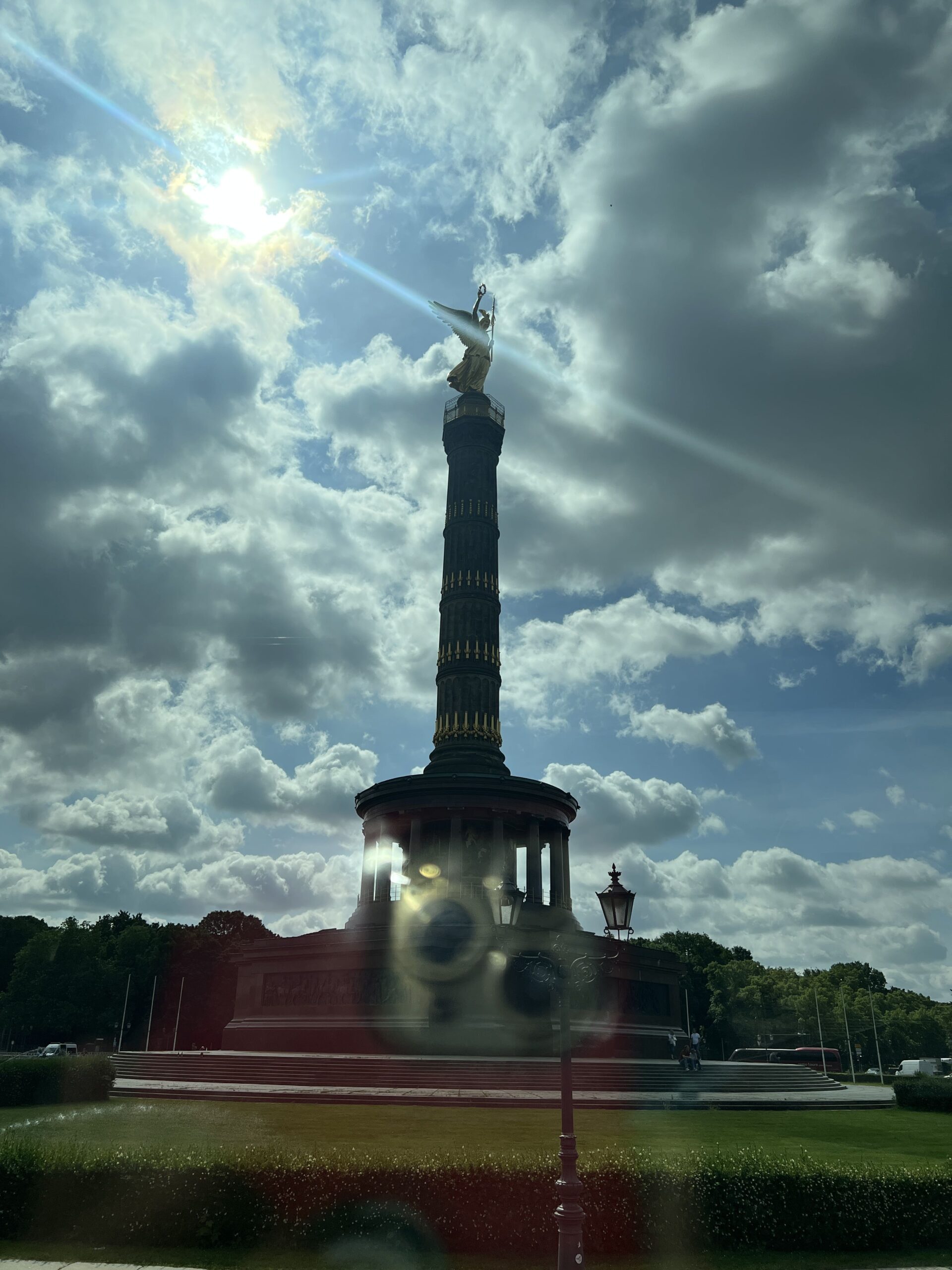
Soon afterwards we drove past the impressive Victory Column (Siegessäule), standing proudly in the center of Berlin’s Tiergarten Park. The golden statue of Victoria at its summit can be seen from a considerable distance and commemorates Prussia’s military victories during the nineteenth century. Today, it remains one of Berlin’s most photographed monuments.
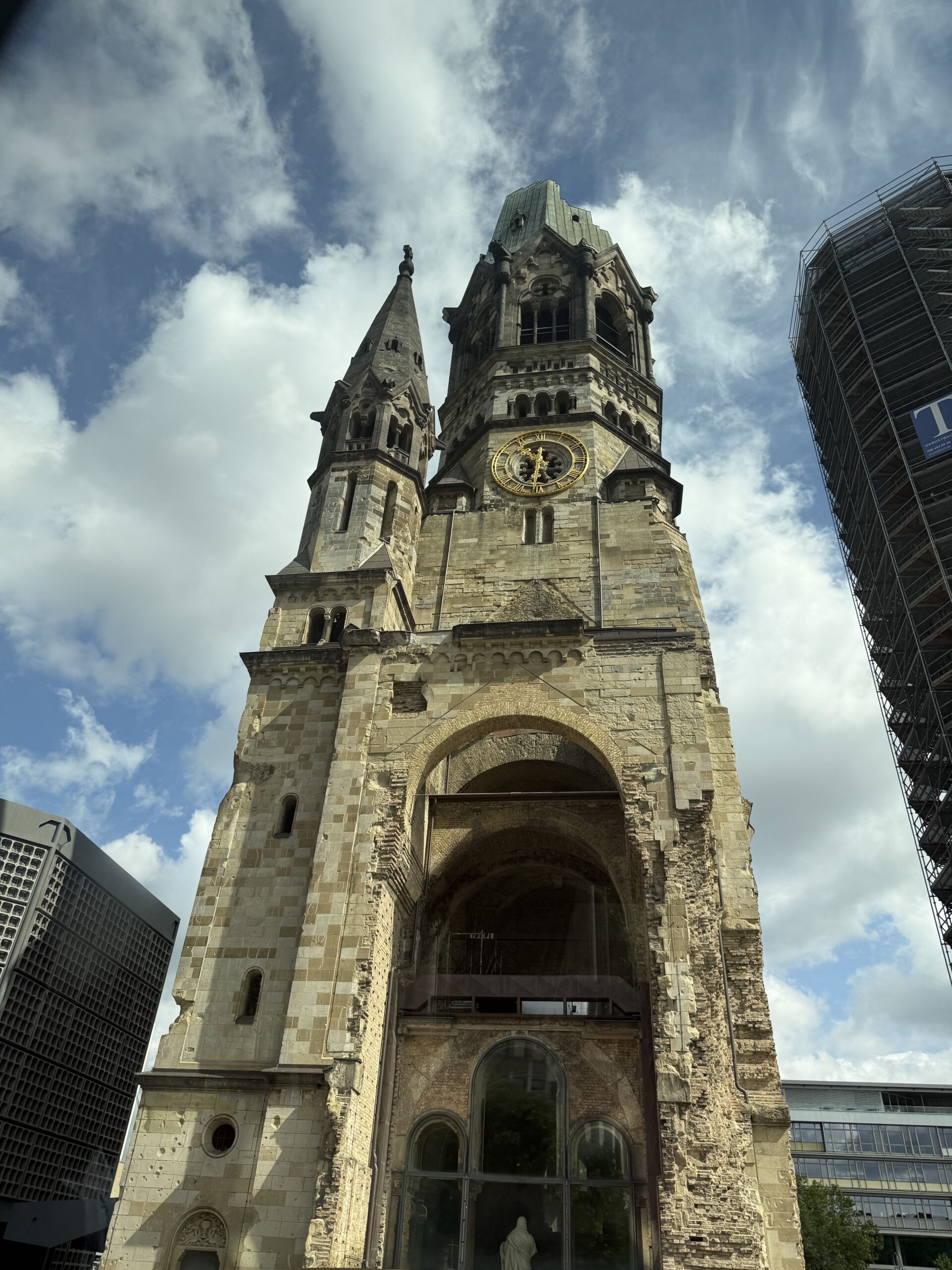
Our guide then pointed out another powerful reminder of World War II—the Kaiser Wilhelm Memorial Church.
Unlike many historic buildings that were fully restored after the war, the ruined tower of this church was intentionally left damaged. Rather than erasing the destruction, Berlin chose to preserve it as a permanent memorial to the devastation caused by war. Standing beside the modern church that was later constructed, the shattered tower silently tells a story that words alone cannot fully express.
Berlin Wall Memorial
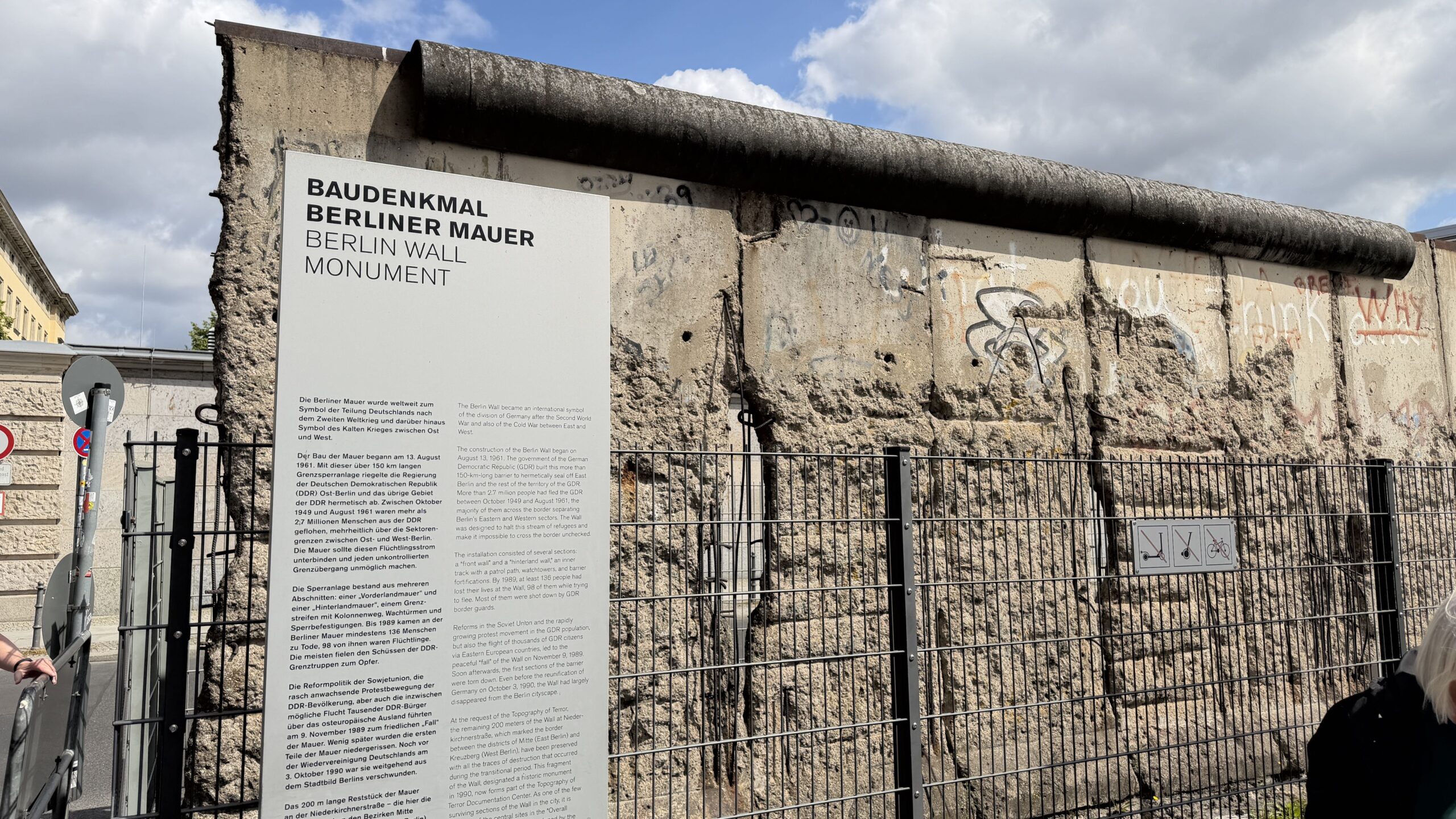
One of the most anticipated stops of our tour was the Berlin Wall Memorial.
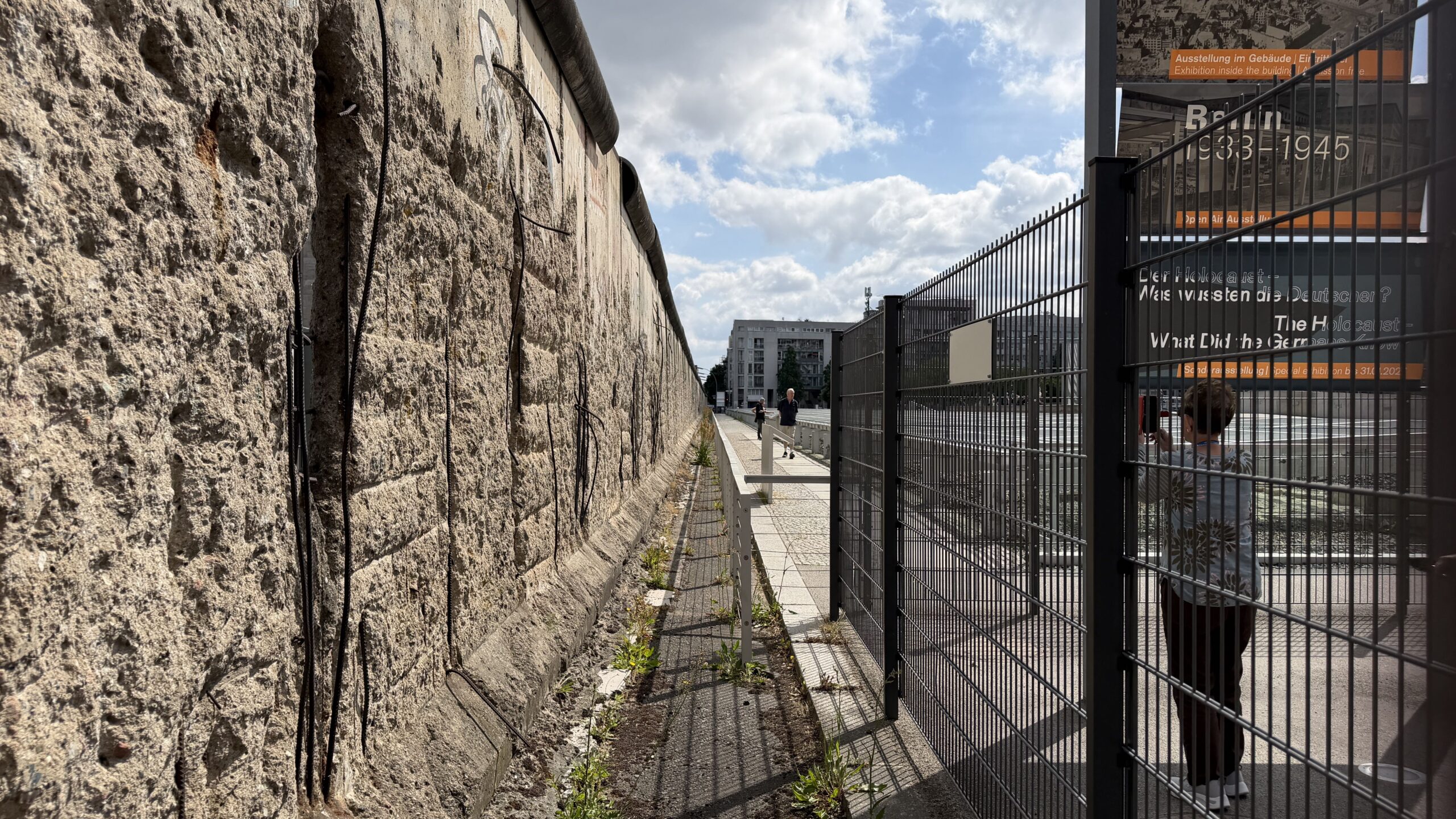
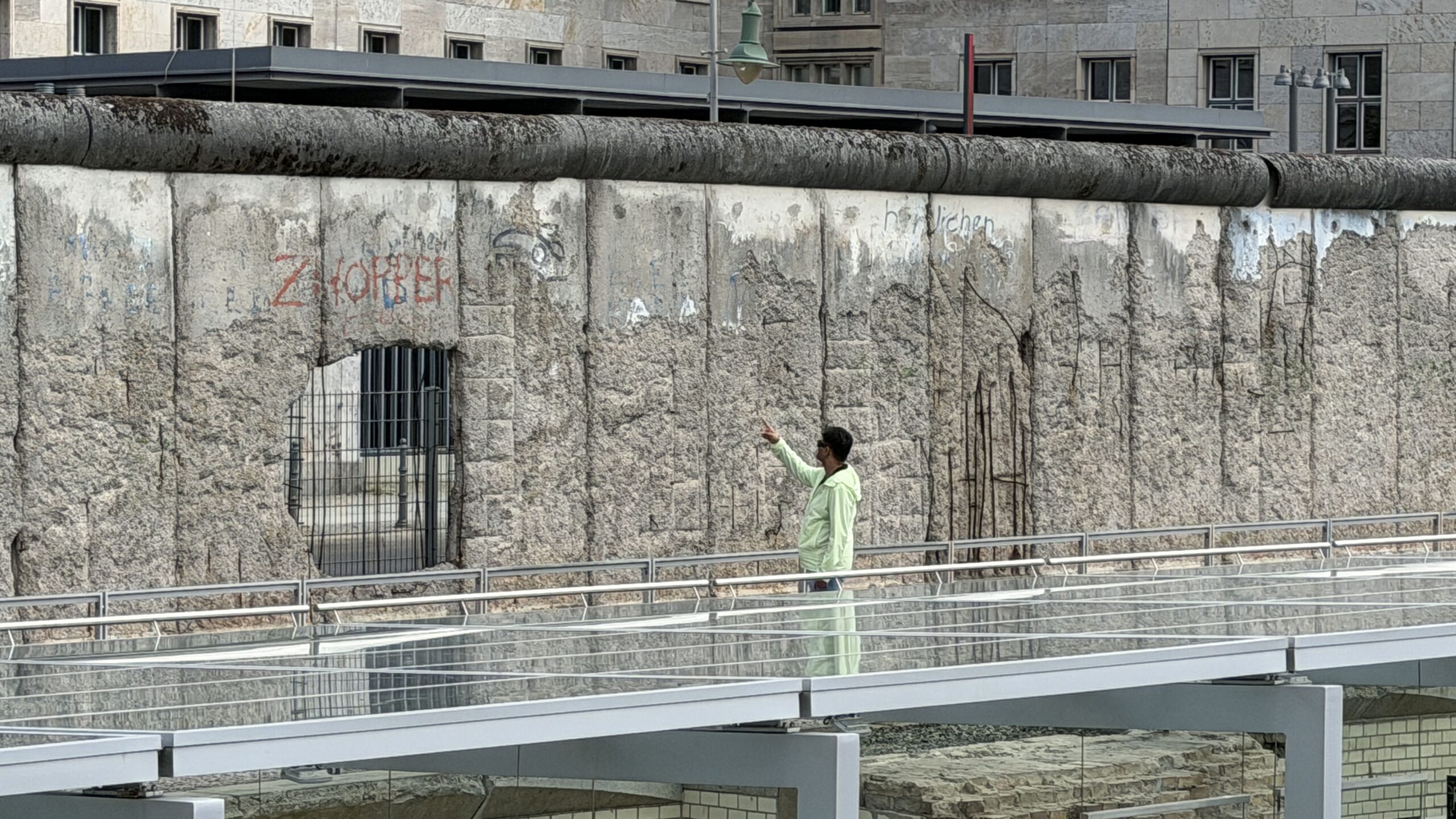
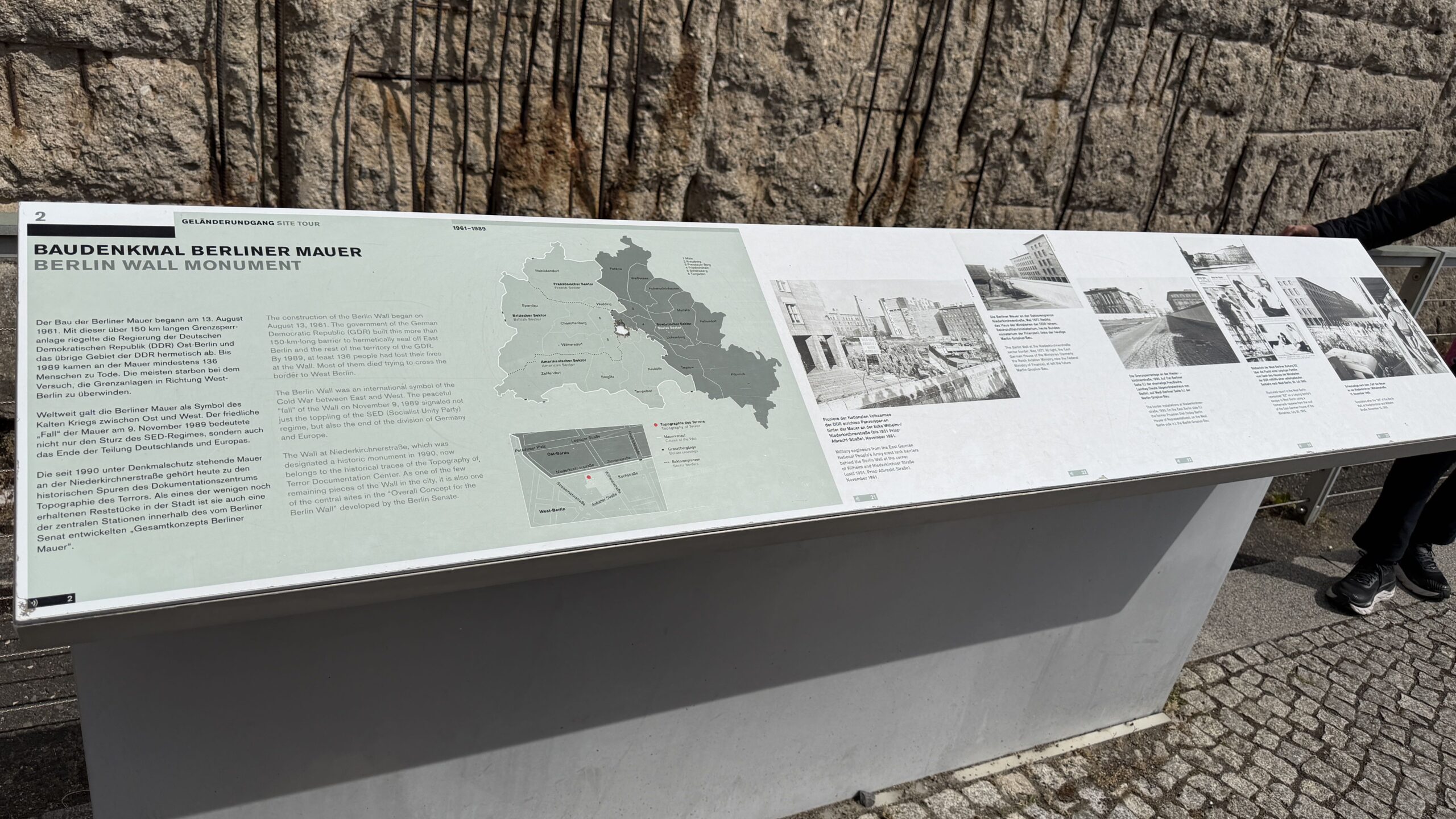
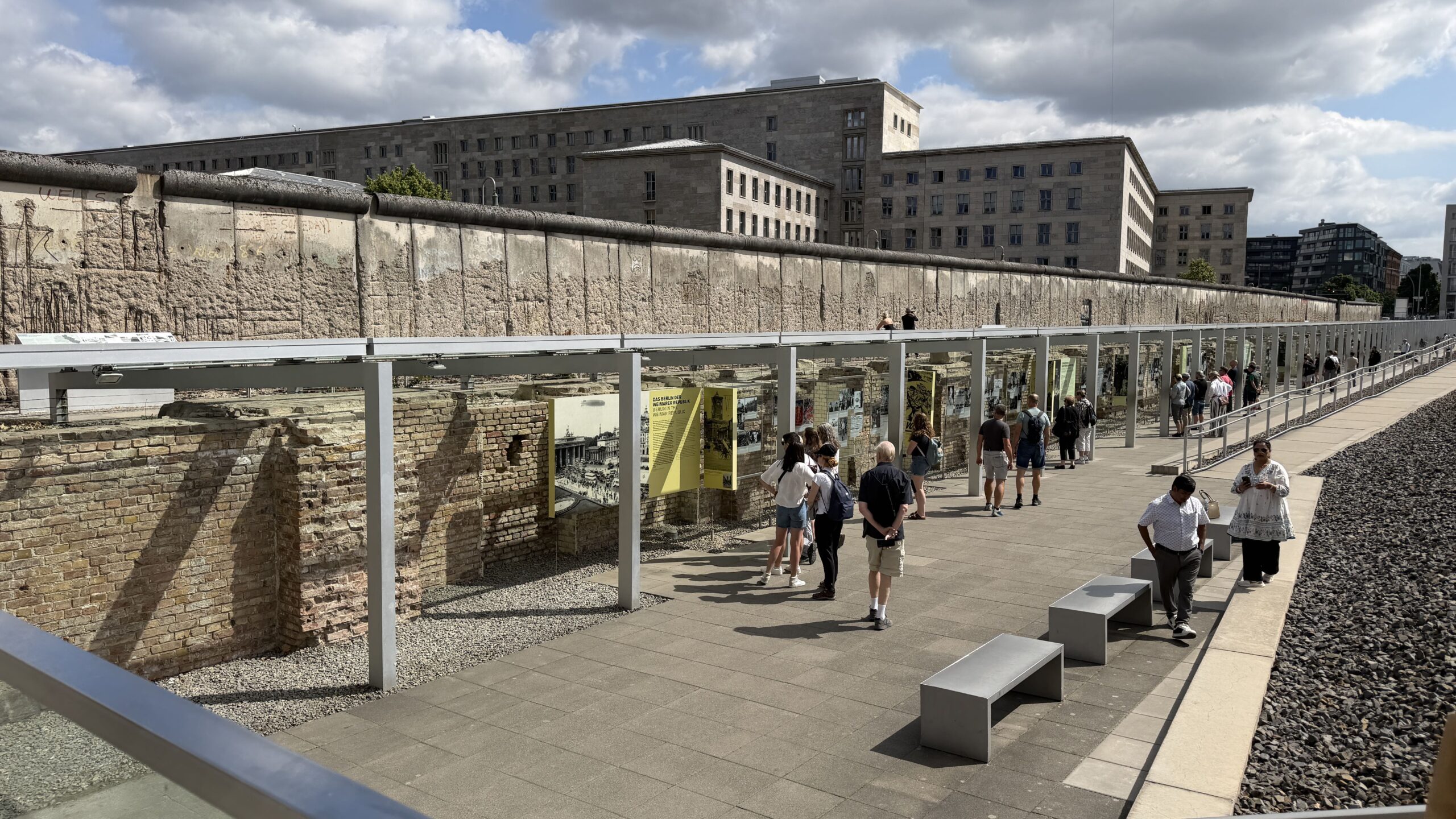
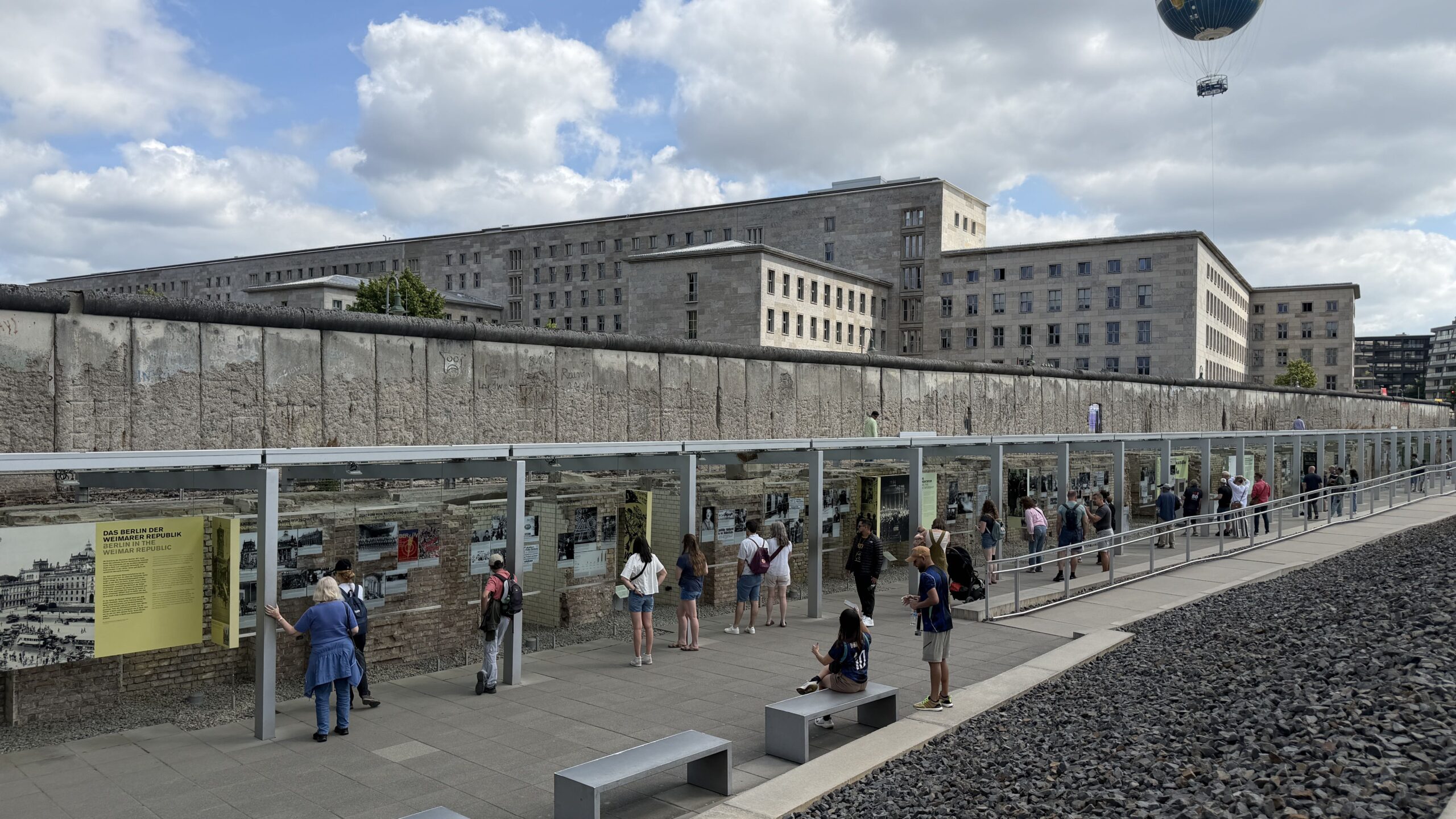
Here we were able to see one of the largest remaining sections of the original Berlin Wall. Although many smaller fragments can be found throughout the city, this preserved section gives visitors a much clearer understanding of the wall’s scale and the physical barrier that divided Berlin for nearly three decades.
Our guide explained how construction of the wall began overnight in August 1961. Families woke up to discover streets blocked, barbed wire stretched across neighborhoods, and loved ones suddenly trapped on opposite sides of the city. Over time, temporary barriers were replaced with thick concrete walls, guard towers, floodlights, patrol roads, and heavily armed border guards, creating one of the most fortified borders in the world.
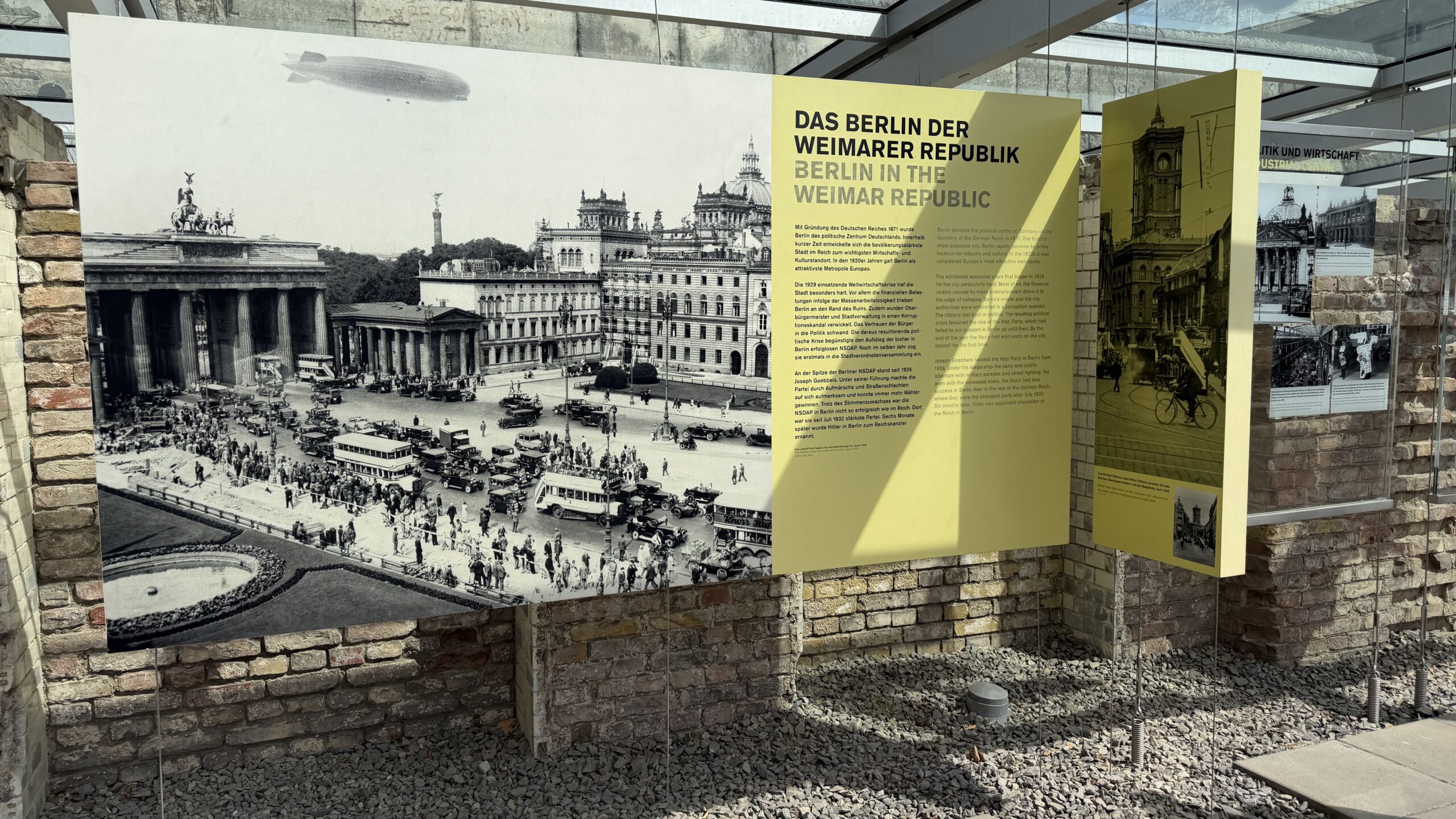
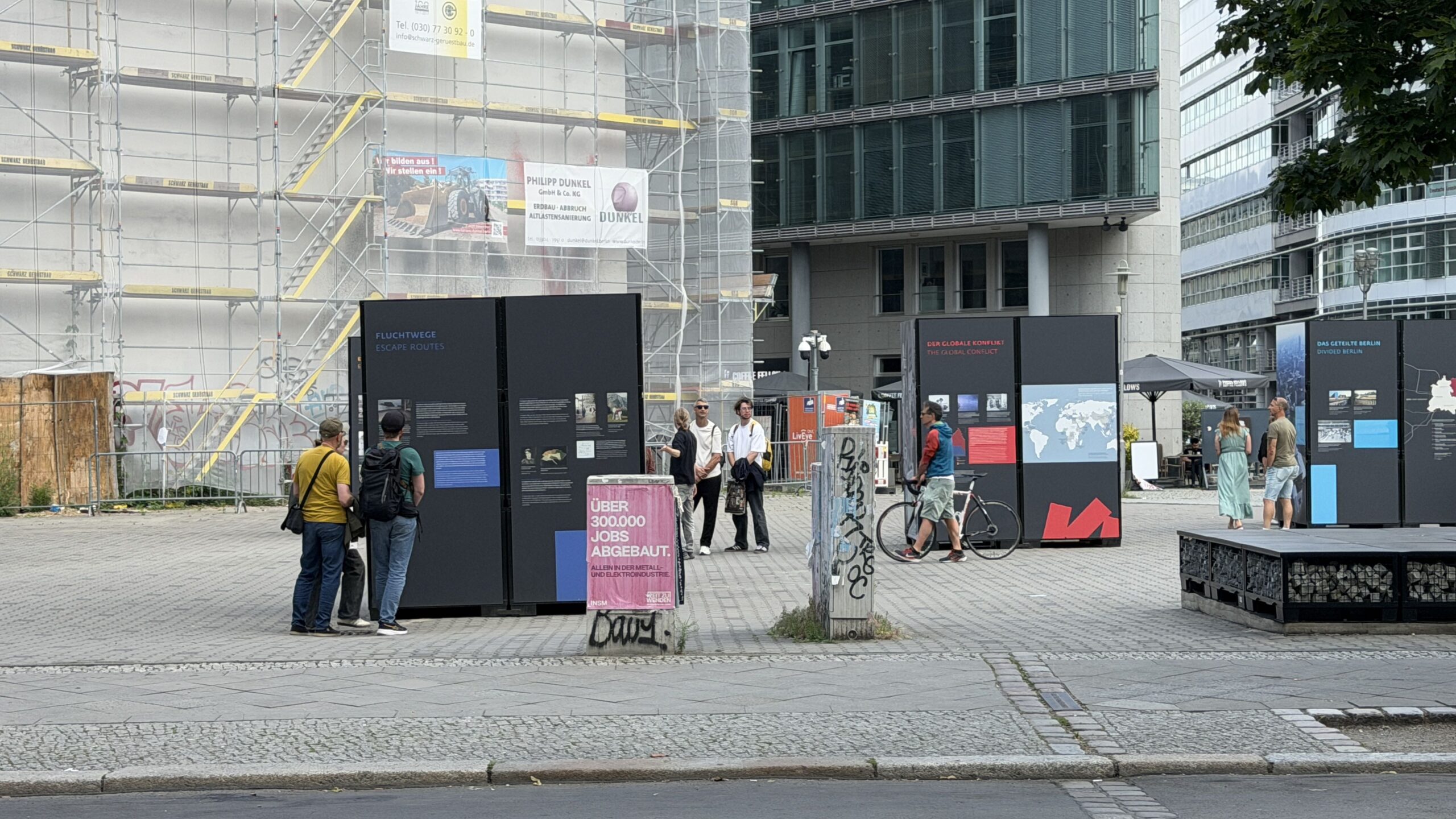
Inside the memorial building, photographs, historical displays, and personal stories documented the experiences of those who attempted daring escapes and the many who lost their lives trying to cross from East Berlin into West Berlin.
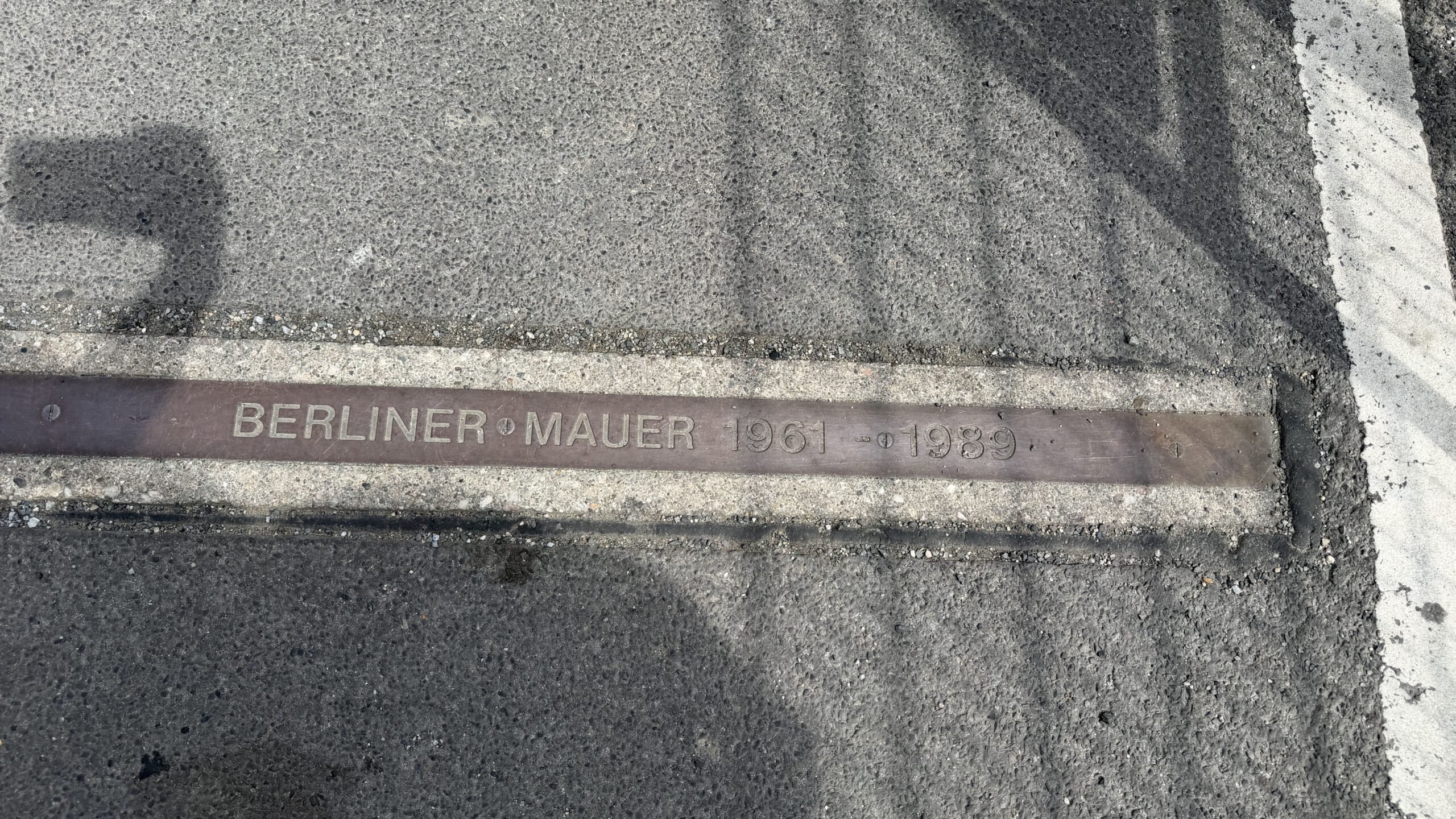
One particularly memorable moment came when we stood directly over the former path of the Berlin Wall. It was surreal to place one foot where East Berlin once stood and the other where West Berlin began. Today, nothing physically separates the two sides except a simple line on the ground, yet only a few decades ago this was one of the most heavily guarded borders on Earth.
Travel has a unique way of transforming history from something you read into something you actually feel.
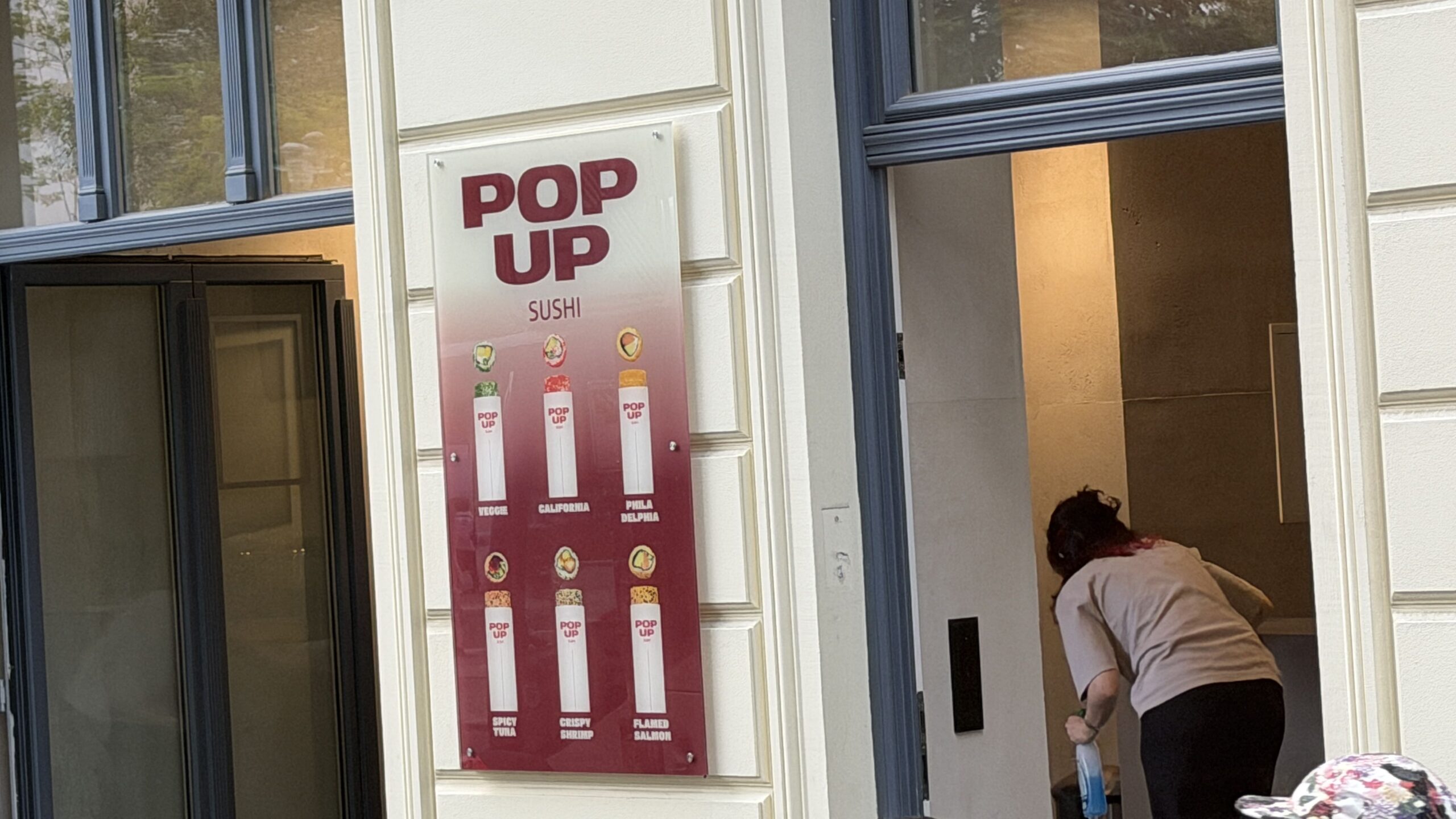
As we walked back toward the coach, one unexpected sight caught our attention—a small “Pop Up Sushi” shop. It was amusing to see a modern sushi takeaway sitting so close to one of the world’s most historic Cold War landmarks. Moments like these perfectly capture today’s Berlin, where history and modern life exist side by side.
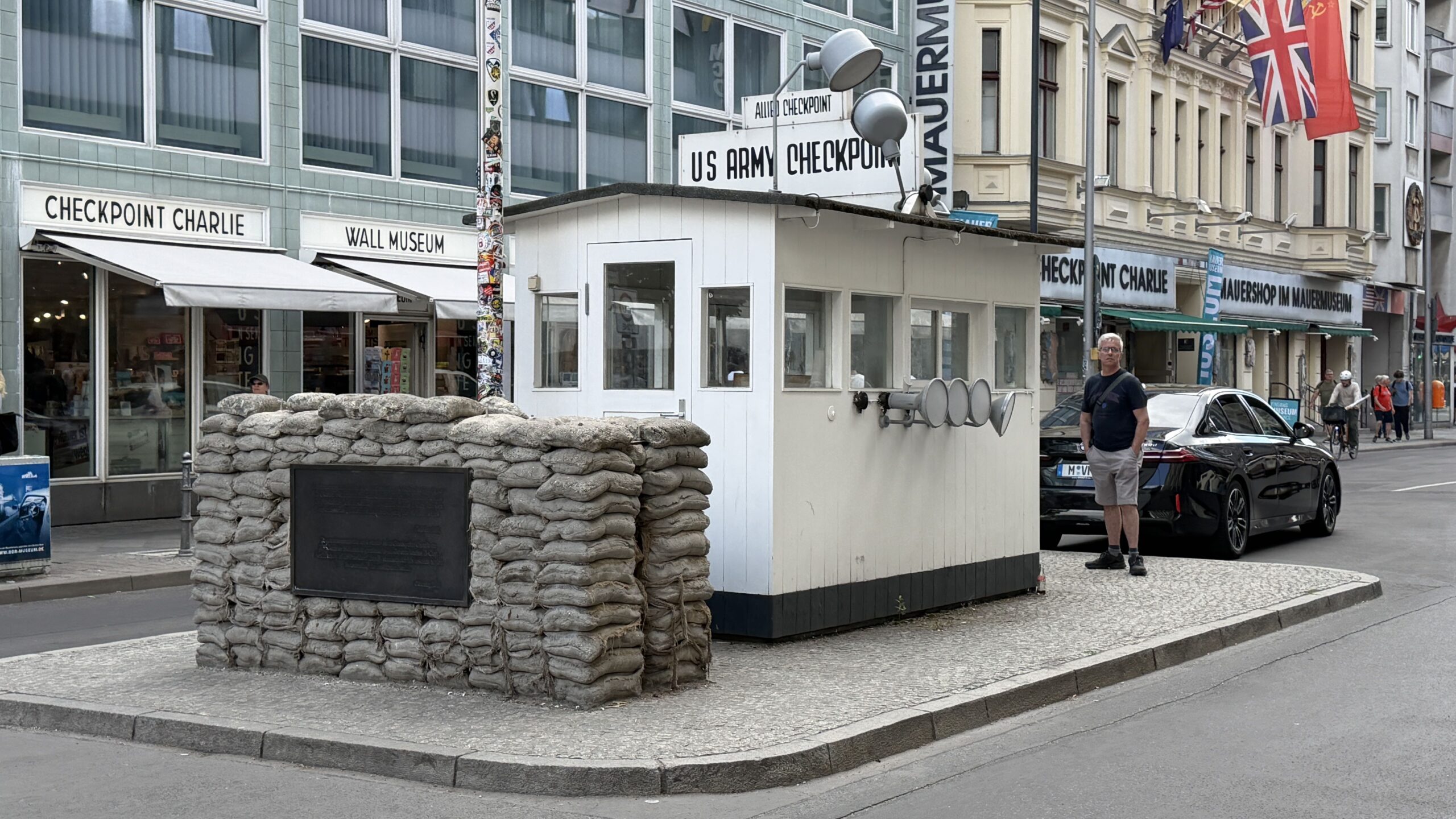
Checkpoint Charlie
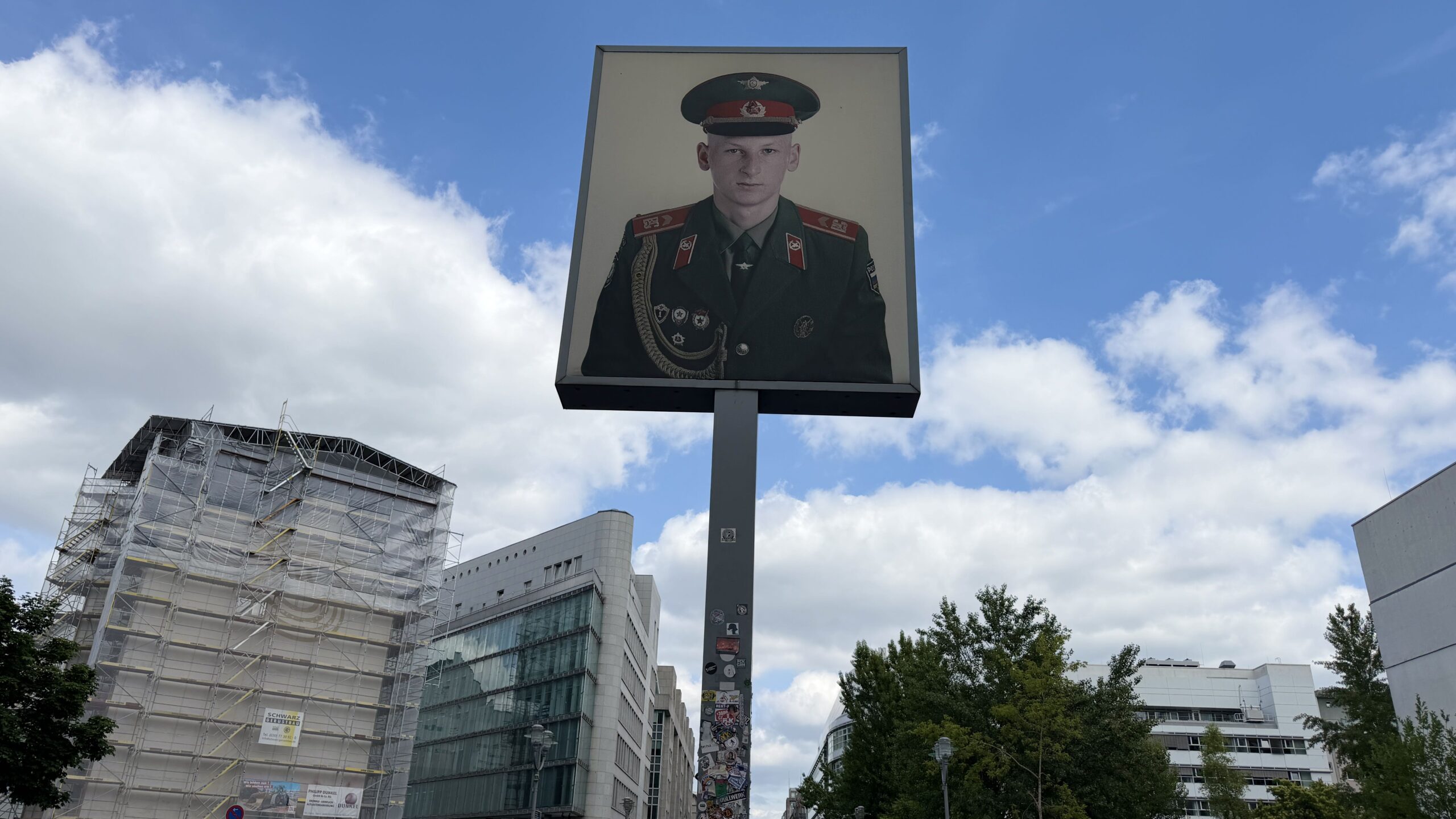
Our next stop was the famous Checkpoint Charlie, perhaps the best-known border crossing between East and West Berlin during the Cold War. This was where Allied personnel, diplomats, and foreign visitors crossed between the American and Soviet sectors. It became one of the most recognized symbols of the division of Germany.
The area was bustling with visitors from around the world. We noticed several groups of schoolchildren gathered near the checkpoint, eagerly taking photographs while teachers guided them through this historic place. Watching young students learn about events that shaped modern Europe reminded me once again of my own school days.
Right next to Checkpoint Charlie stands the Checkpoint Charlie Museum, which documents remarkable escape attempts and tells the stories of people who risked everything to cross the Berlin Wall. Interestingly, just a short walk away stood a McDonald’s—a modern and familiar sight that felt oddly out of place beside one of history’s most significant Cold War locations.
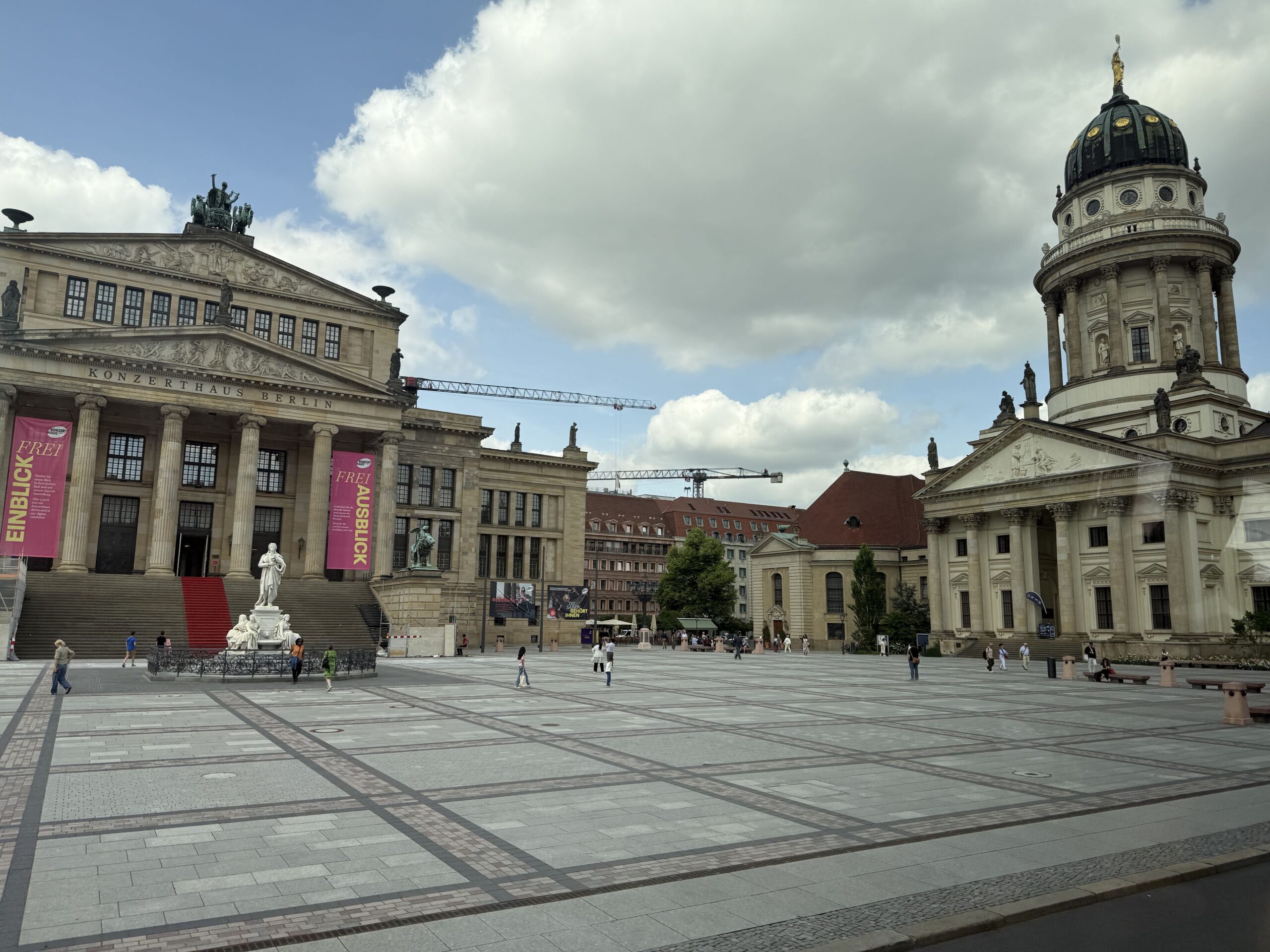
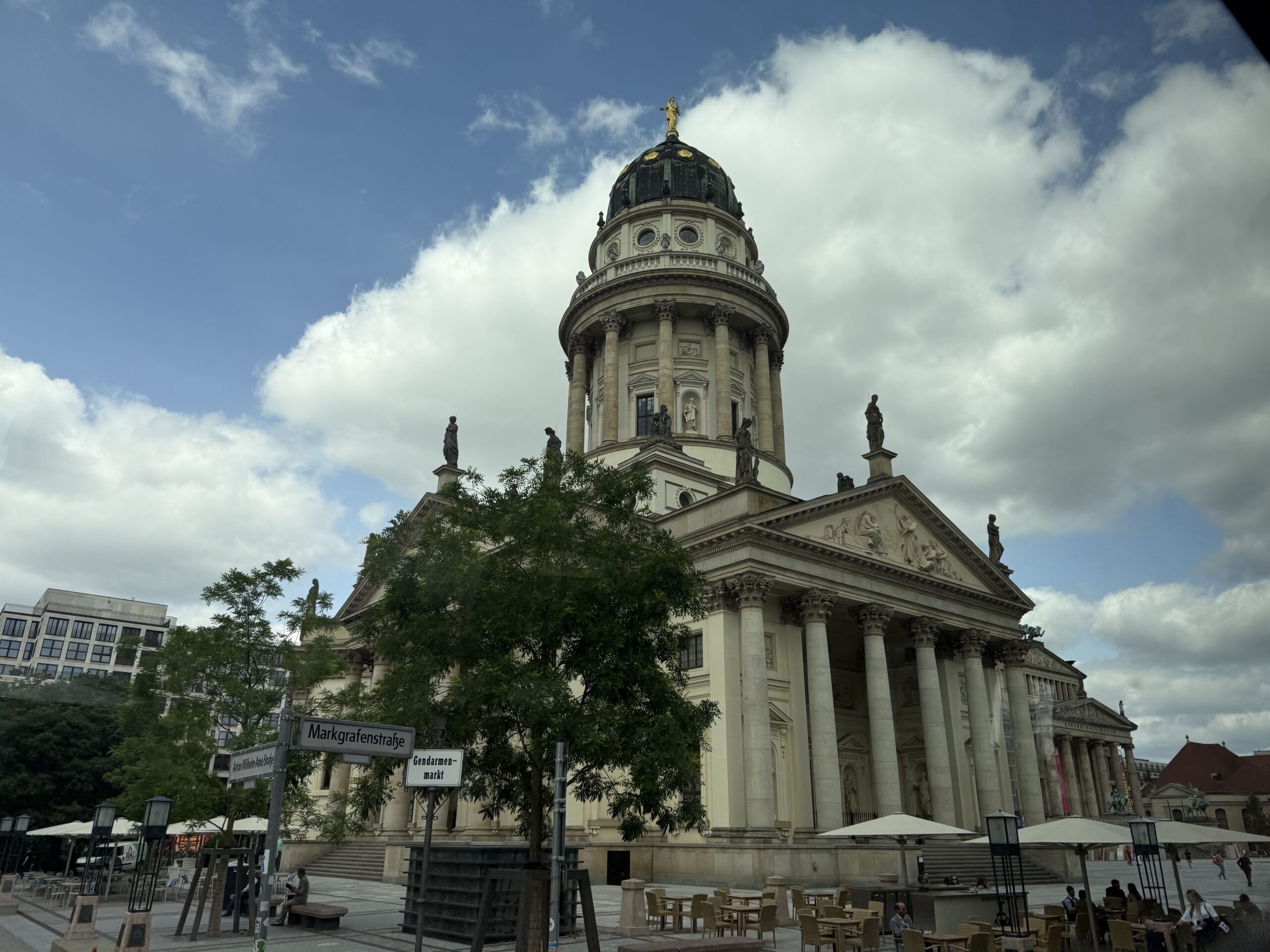
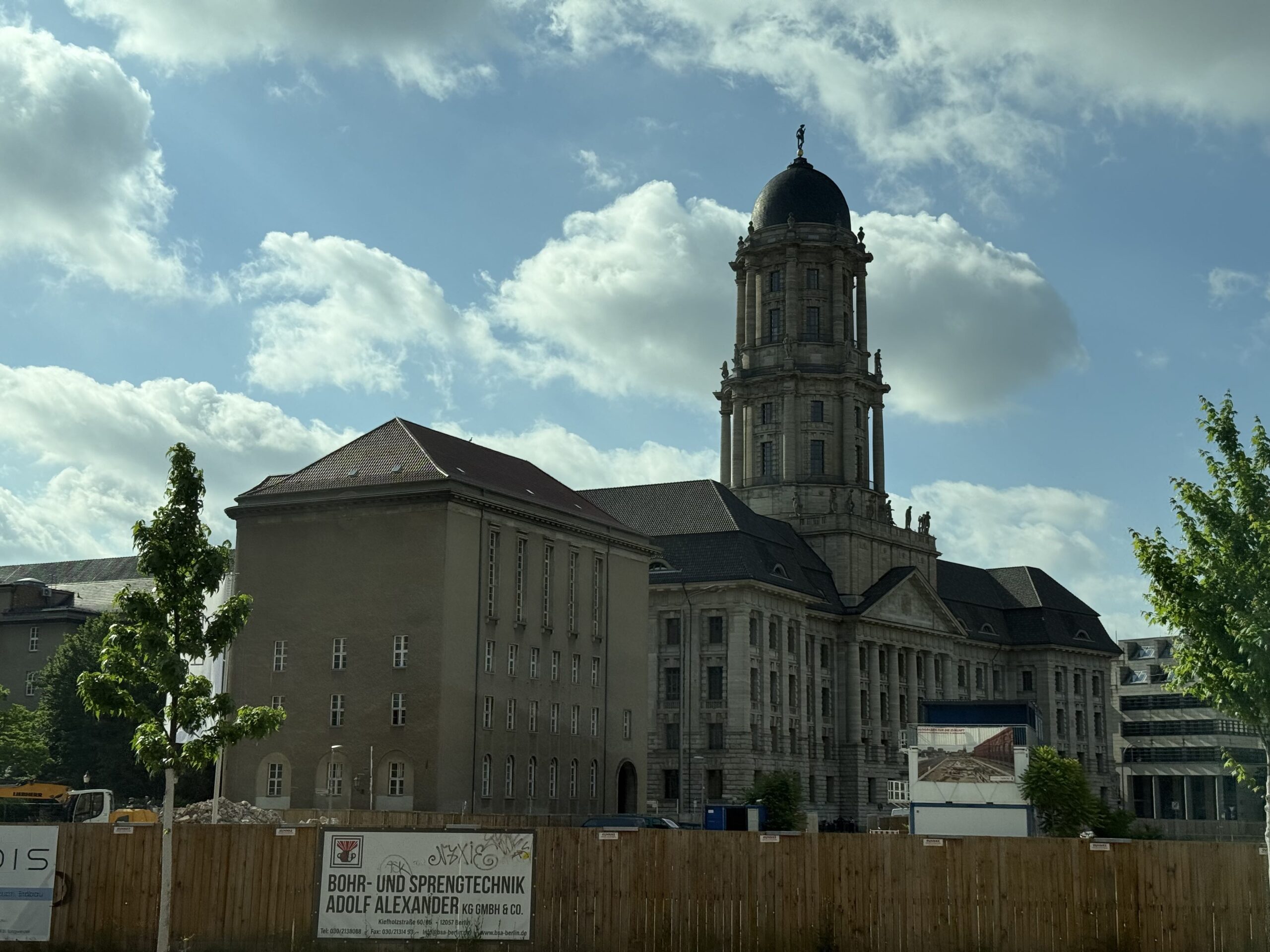
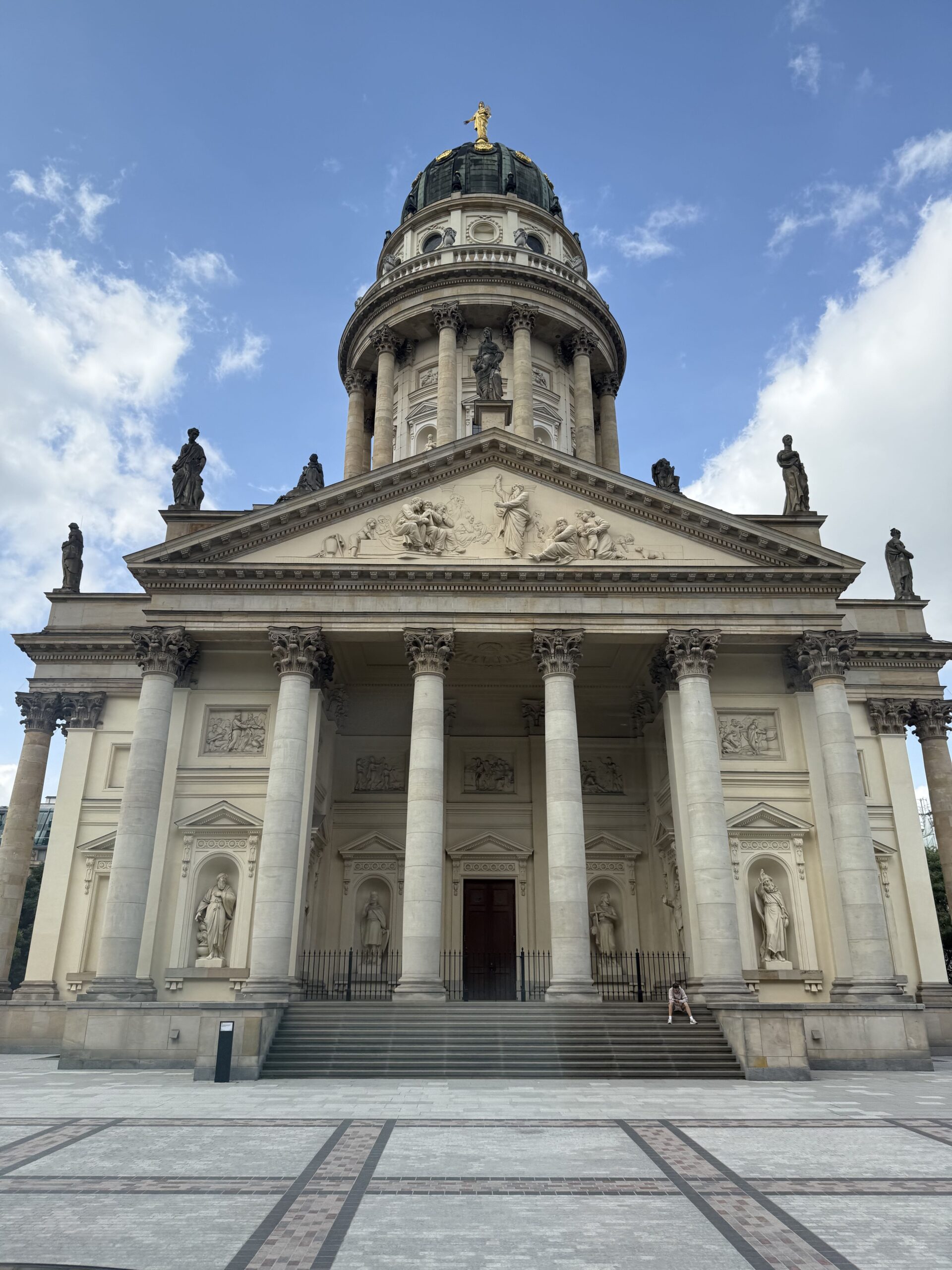
As our tour continued, we also passed the elegant French Cathedral (Französischer Dom) overlooking Berlin’s beautiful Gendarmenmarkt square. Nearby, we caught another glimpse of the historic Altes Stadthaus, an impressive administrative building whose grand architecture reflects Berlin’s imperial past.
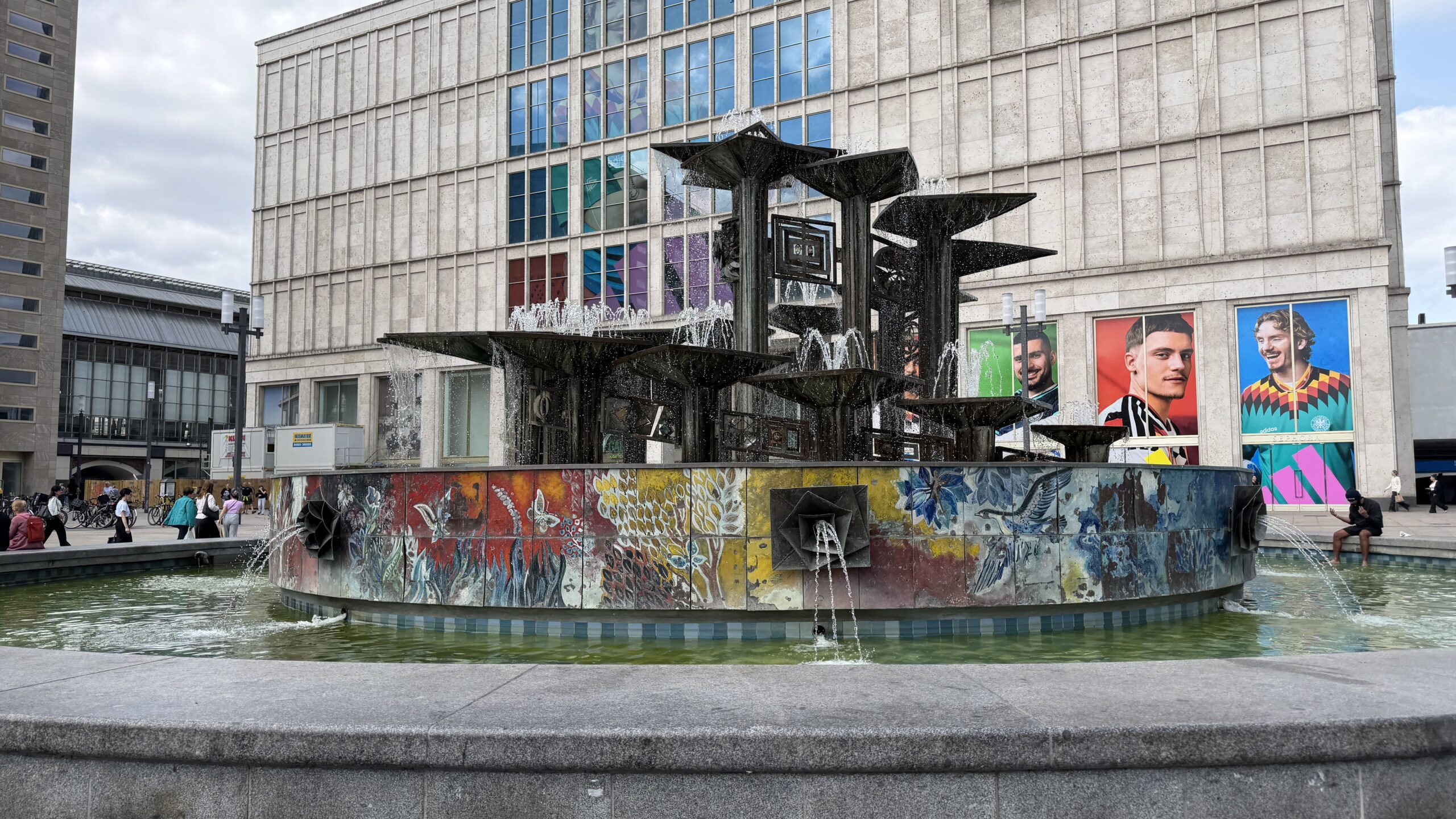
By early afternoon, our panoramic tour came full circle as we returned to Alexanderplatz.
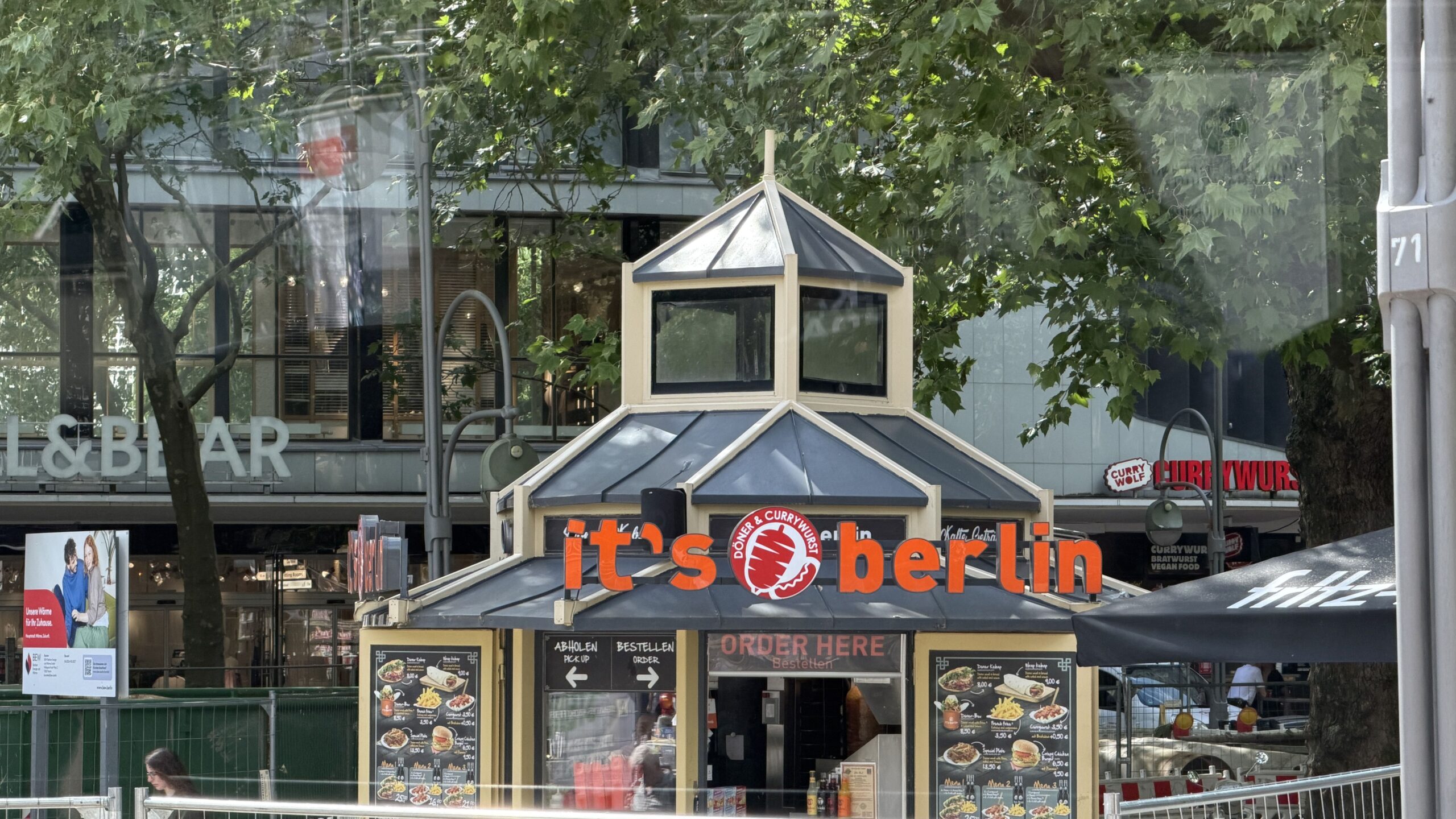
With some free time before continuing our journey, we looked around the square for lunch. Alexanderplatz offers countless dining choices, ranging from traditional German restaurants to international fast food and street vendors. We decided on freshly prepared kebabs, which turned out to be a satisfying and delicious meal before we left Berlin.
Although our time in Berlin lasted only a day, the city left an unforgettable impression. Few places in the world preserve their history as openly and honestly as Berlin. Bullet-marked buildings, fragments of the Berlin Wall, memorials to unimaginable tragedies, magnificent architecture, and vibrant modern neighborhoods all exist together, creating a city that constantly reminds visitors of where it has been while confidently looking toward the future.
Our Berlin sightseeing tour had come to an end, but the stories we heard and the places we visited would remain among the most memorable experiences of our European journey.
Leaving Berlin for Poland
By early afternoon, our time in Berlin had come to an end. At 1 PM, we departed the city and continued our journey toward Poland, marking the next leg of our European adventure.
As we left Berlin behind, the scenery gradually shifted from the urban landscape of Germany’s capital to open highways and countryside stretches. It felt like we were moving away not just from a city, but from a place layered with centuries of history, stories, and emotions.
Soon after leaving Berlin, we crossed the German border. Interestingly, on the opposite side of the highway, traffic was completely at a standstill due to a broken-down vehicle. It was one of those small travel moments that make you pause—how a single vehicle can bring an entire lane of movement to a halt.
Once we officially crossed into the next stretch of our journey, we made a stop at a roadside comfort station. It was a short break, a chance to stretch our legs, refresh, and prepare for the remaining drive ahead.
The journey continued smoothly afterward, with the long highway stretching through the European countryside. The rhythm of the road, combined with the fading afternoon light, made it a calm and reflective part of the day after the intensity and richness of Berlin’s sightseeing.
By around 5 PM, we were approaching Poznań, Poland, one of the oldest and most historically significant cities in the country. The city welcomed us with a mix of modern development and historic charm, signaling a new cultural experience waiting ahead.
Initially, we wondered whether to join the sightseeing tour or spend the time exploring on our own. In hindsight, taking the tour was absolutely the right choice. Berlin’s busy streets, rich history, and countless landmarks can feel overwhelming for a first-time visitor. Our local guide connected the dots between the monuments, historic events, and modern-day Berlin, helping us understand the city in a way we never could have by ourselves.
Berlin is not just a city—it is a living history lesson. It carries the weight of war, division, and reunification, yet stands today as a symbol of resilience and unity. Standing there in person transforms everything learned in textbooks into something real. Berlin doesn’t hide its past—it lives with it.