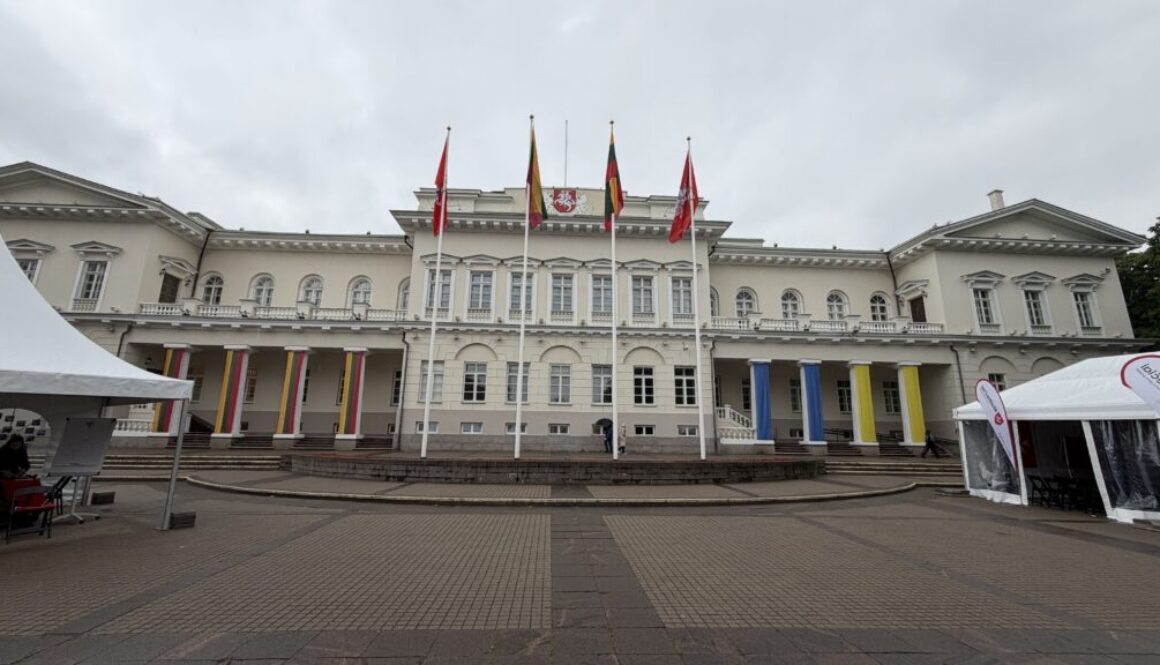
Vilnius
Lithuania
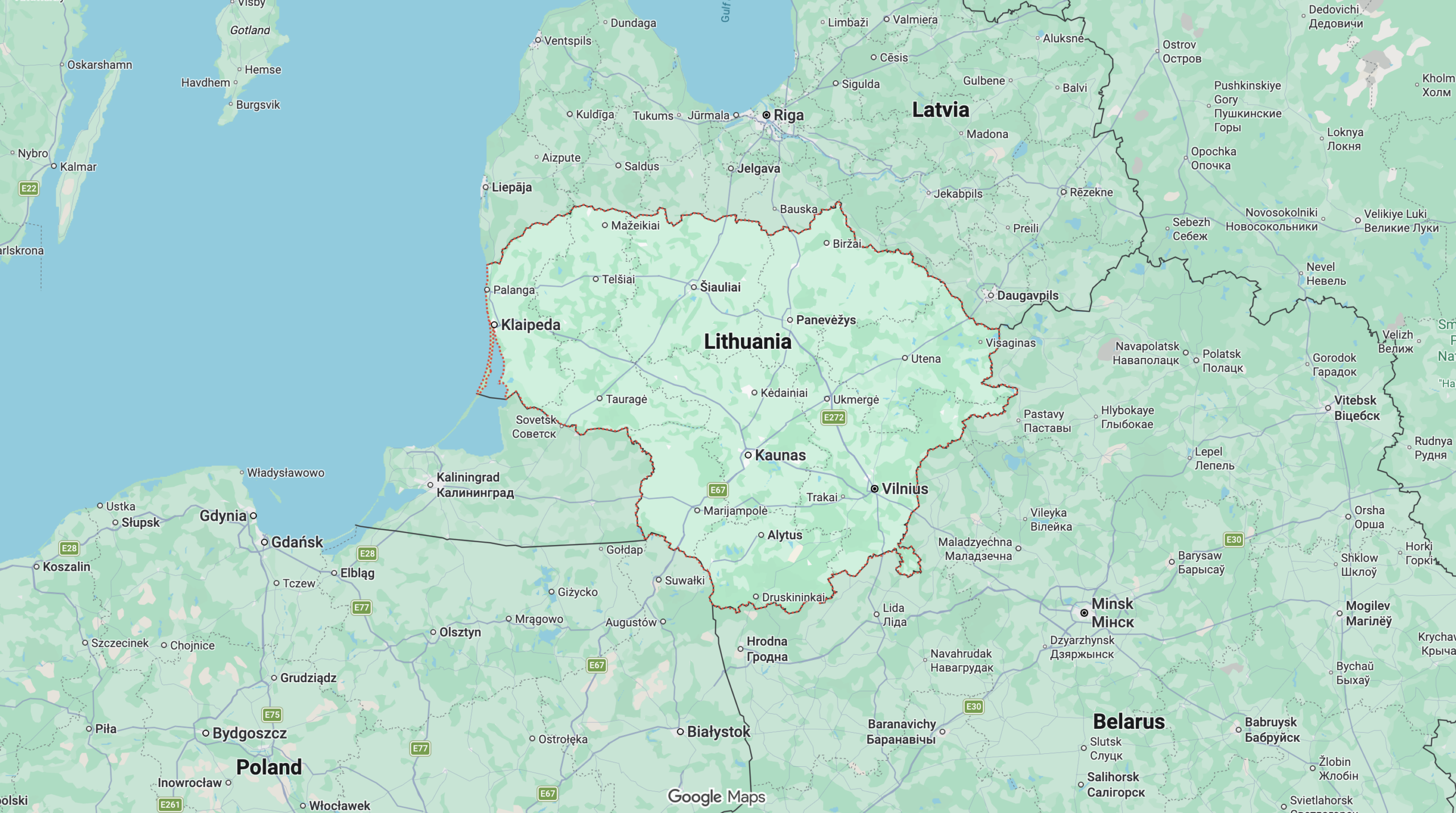
Lithuania is the southernmost and largest of the three Baltic countries, alongside Latvia and Estonia. Situated on the eastern shore of the Baltic Sea, it shares borders with Latvia, Belarus, Poland, and Russia’s Kaliningrad region. With a population of around 2.9 million people, Lithuania is known for its beautiful forests, lakes, medieval castles, and rich cultural heritage. The official language, Lithuanian, is one of the oldest living Indo-European languages still spoken today.
Lithuania has a remarkable history. During the Middle Ages, the Grand Duchy of Lithuania grew into one of Europe’s largest states before joining with Poland to form the Polish–Lithuanian Commonwealth in 1569. In the late 18th century, the country became part of the Russian Empire. Lithuania declared independence in 1918 but was occupied by the Soviet Union in 1940, followed by Nazi Germany during World War II, and then remained under Soviet rule for nearly five decades. On March 11, 1990, Lithuania became the first Soviet republic to declare the restoration of its independence, an important milestone that helped pave the way for the collapse of the Soviet Union. Today, Lithuania is a modern democratic nation and a proud member of the European Union, NATO, and the Schengen Area.
Currency
Lithuania uses the Euro (€) as its official currency. During our visit, we found payments incredibly convenient—we used Apple Pay for almost everything, from restaurants and cafés to shops and attractions, without needing to carry much cash. While it’s always a good idea to have a few euros on hand for small purchases, we rarely needed them.
Major Cities
- Vilnius – The capital and largest city, famous for its UNESCO-listed Old Town, Baroque architecture, and vibrant cultural scene.
- Kaunas – Lithuania’s second-largest city, known for its interwar modernist architecture, historic old town, and lively student atmosphere.
- Klaipėda – The country’s main seaport on the Baltic Sea, featuring a charming old town with German influences and serving as the gateway to the Curonian Spit.
- Šiauliai – Best known for the Hill of Crosses, one of Lithuania’s most important pilgrimage sites.
- Panevėžys – A regional cultural and industrial center in northern Lithuania, known for its theaters, parks, and museums.
About Vilnius
Vilnius, the capital and largest city of Lithuania, is one of Europe’s best-kept secrets. Although Lithuania has a coastline along the Baltic Sea, the capital is located inland, about 300 kilometers (185 miles) from the coast. The city is best known for its beautifully preserved UNESCO World Heritage-listed Old Town, one of the largest medieval old towns in Northern Europe. Walking through its cobblestone streets, you’ll find colorful Baroque churches, elegant courtyards, charming cafés, historic squares, and impressive architecture reflecting centuries of Lithuanian, Polish, Jewish, and Russian influences. Today, Vilnius blends its rich history with a youthful, modern atmosphere, making it a delightful city to explore on foot.
Lithuanian Food
Lithuanian cuisine is hearty, comforting, and deeply rooted in the country’s agricultural traditions. Potatoes, rye bread, mushrooms, dairy products, and seasonal vegetables are staples of many traditional dishes.
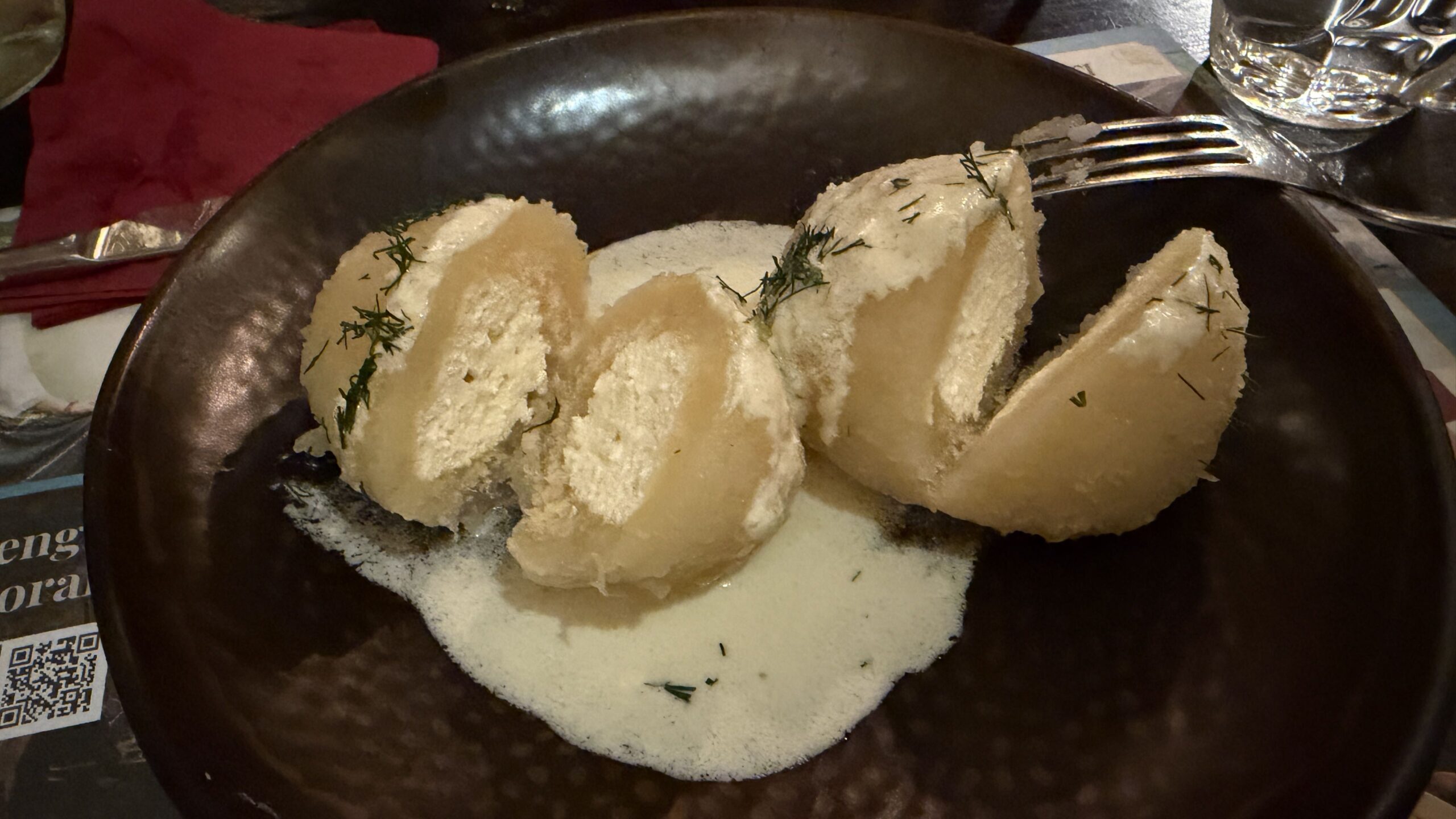
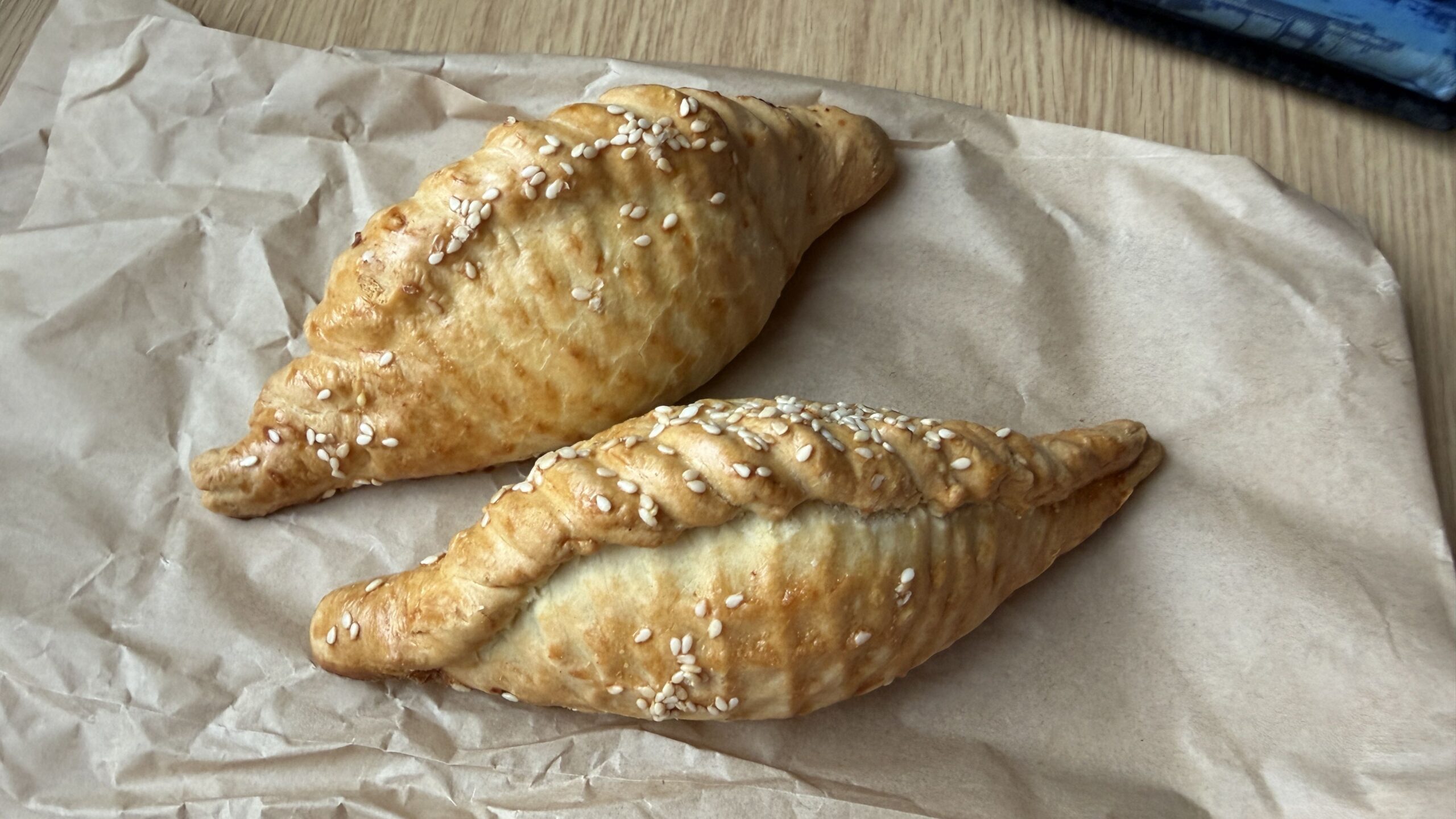
One of the country’s signature foods is Cepelinai, large potato dumplings usually filled with meat or cheese and served with sour cream. Other local favorites include Kibinai, savory pastries introduced by the Karaim community, Šaltibarščiai, a refreshing cold beetroot soup, crispy potato pancakes, smoked fish, and a variety of freshly baked rye breads. While traditional Lithuanian cuisine features plenty of meat, most restaurants also offer vegetarian options, making it easy for all travelers to enjoy the local flavors.
Day 1 – Our Journey to Vilnius
After an incredible time exploring Warsaw, it was time to continue our Baltic adventure. We left the city in the morning and settled in for the scenic drive north toward Vilnius, the capital of Lithuania.
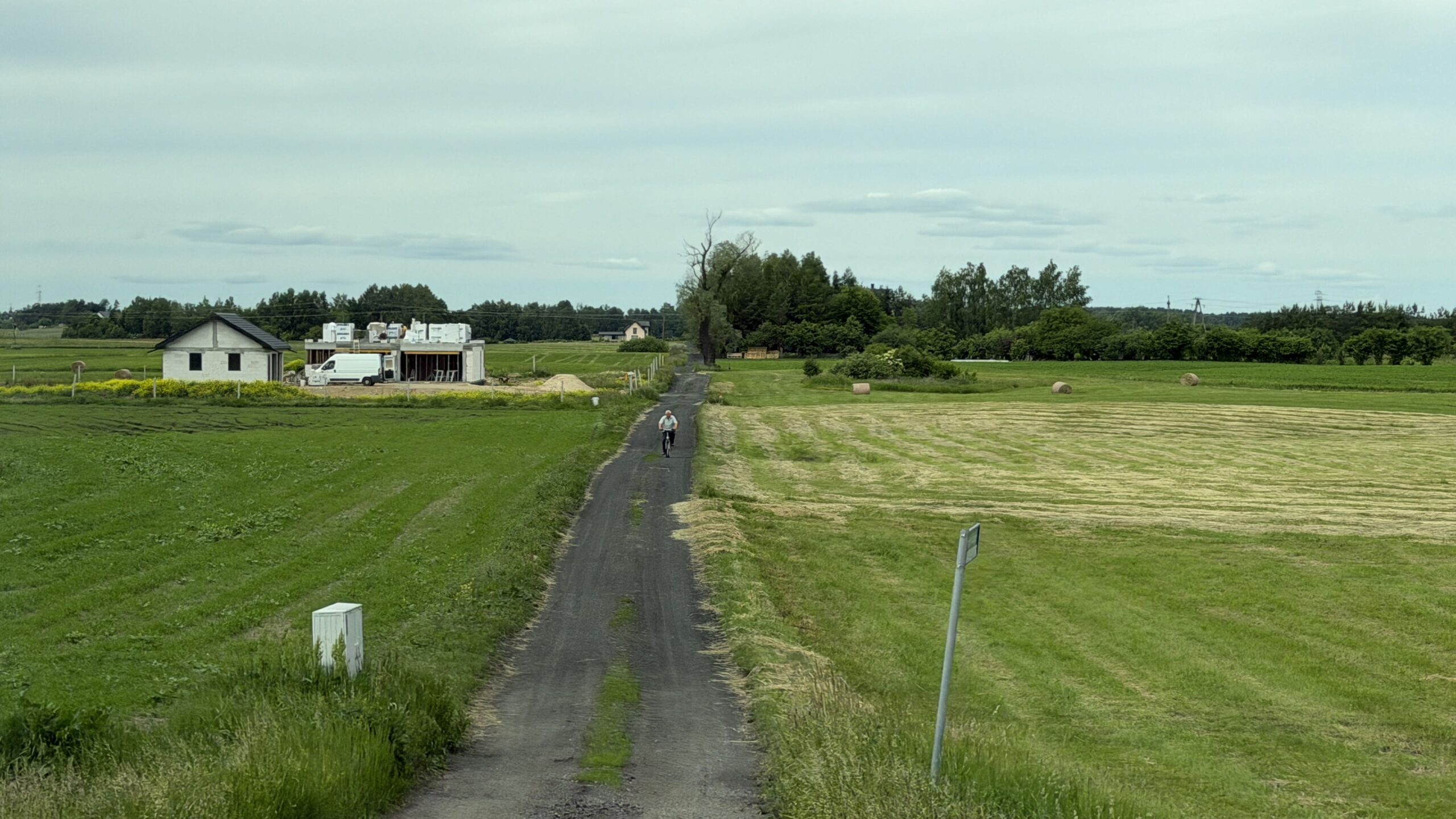
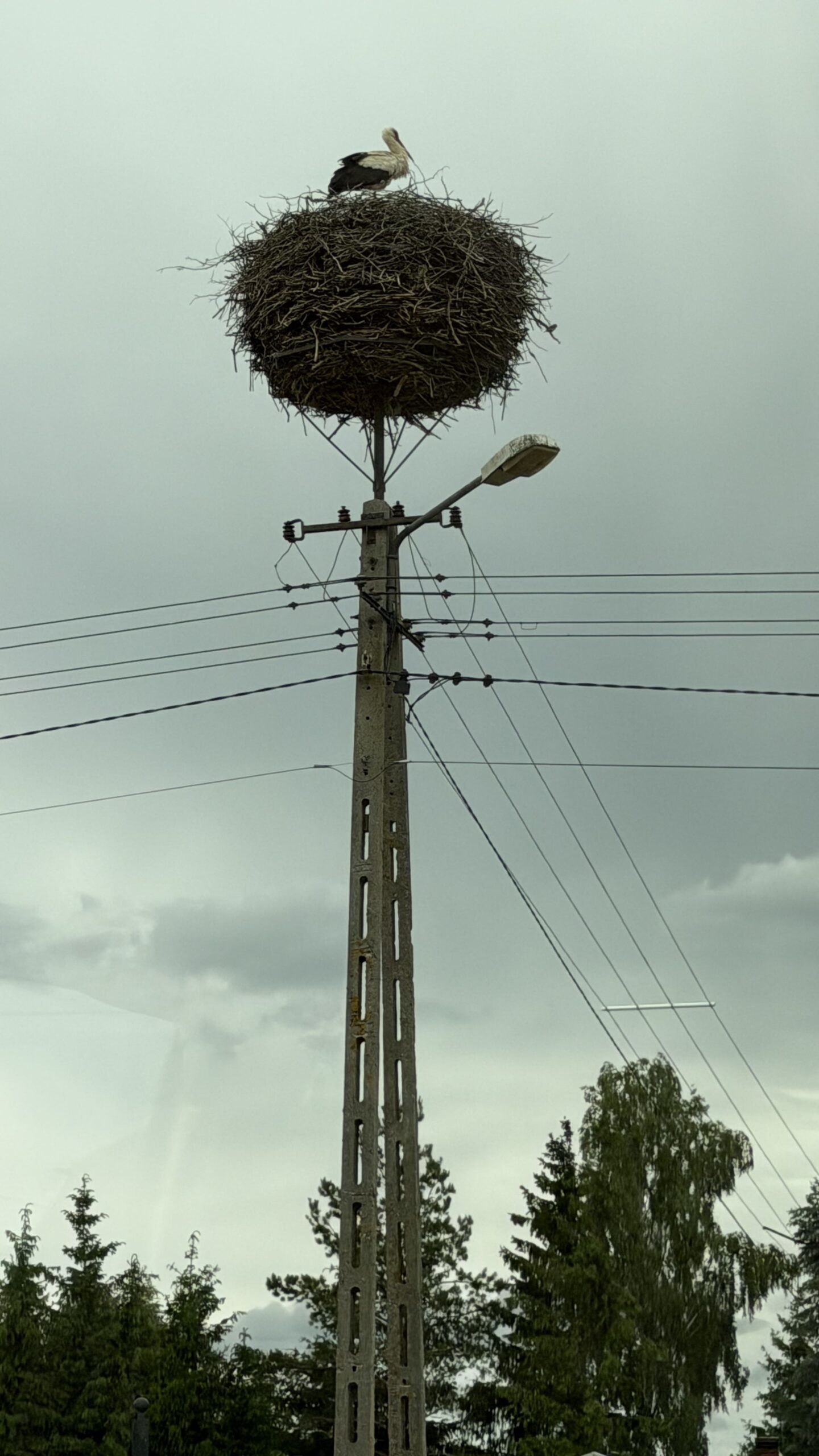
As we left the busy streets of Warsaw behind, the landscape gradually changed into peaceful countryside dotted with forests, lakes, and small towns. It was one of those relaxing travel days where the journey itself became part of the experience.
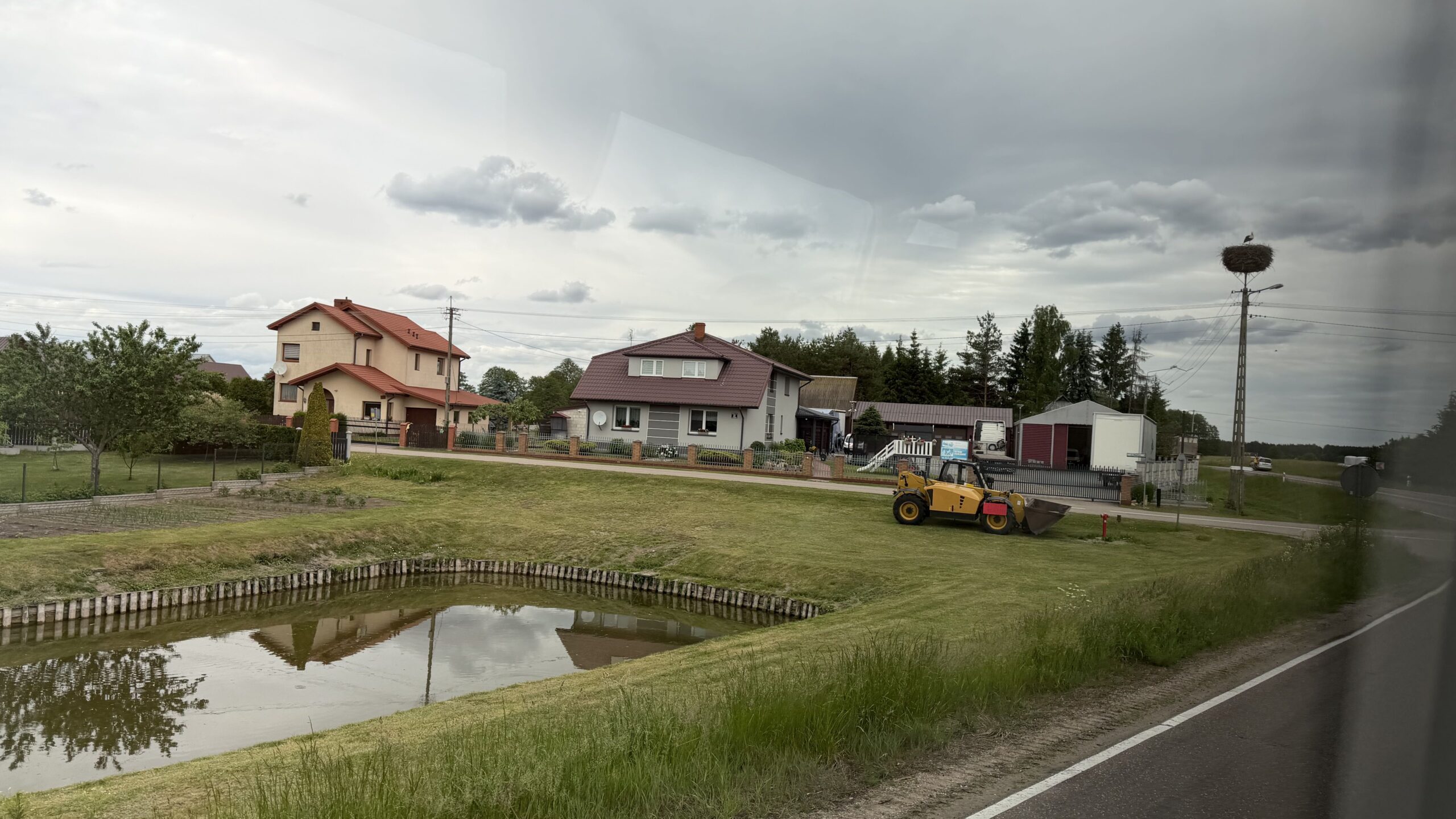
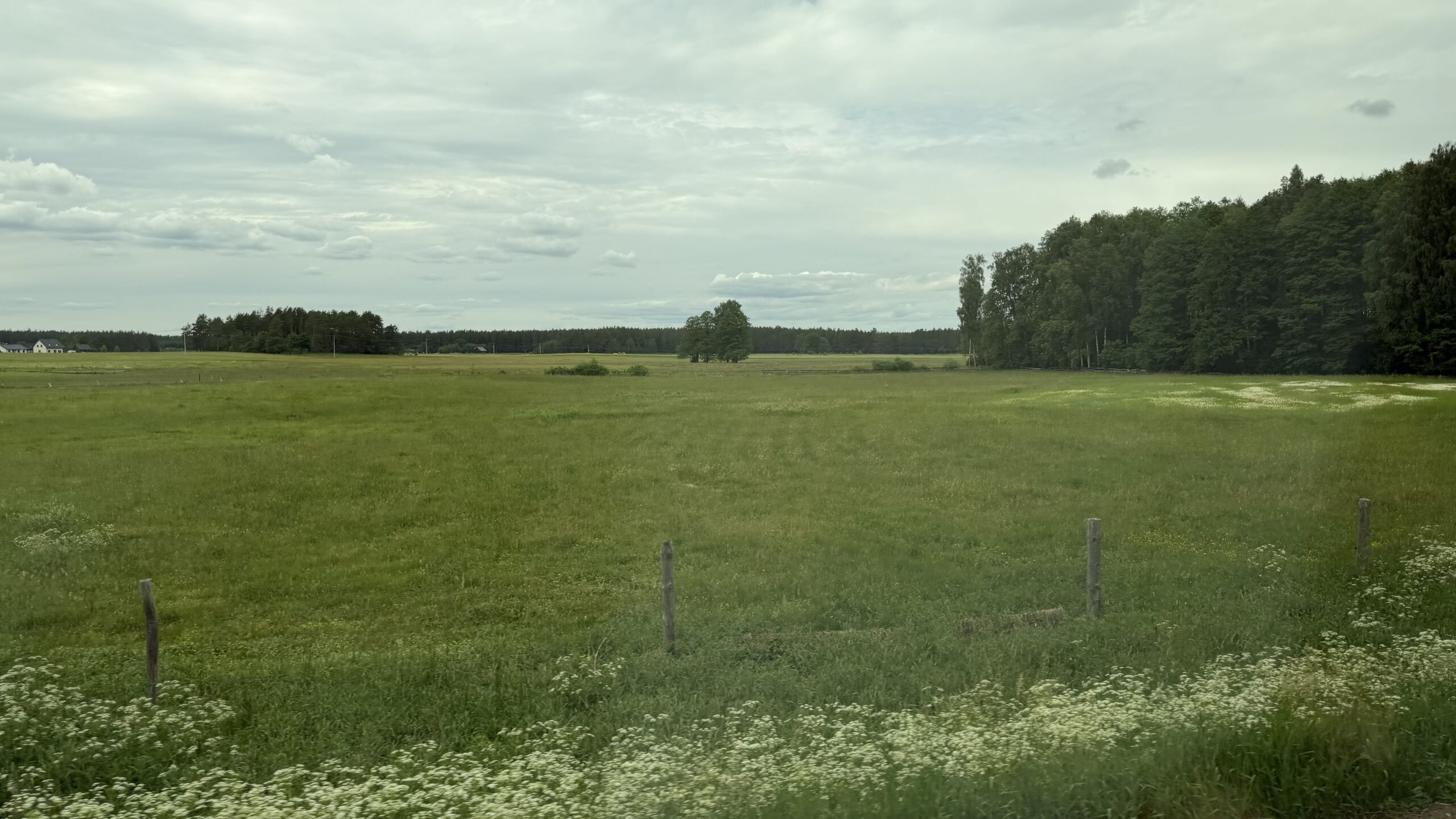
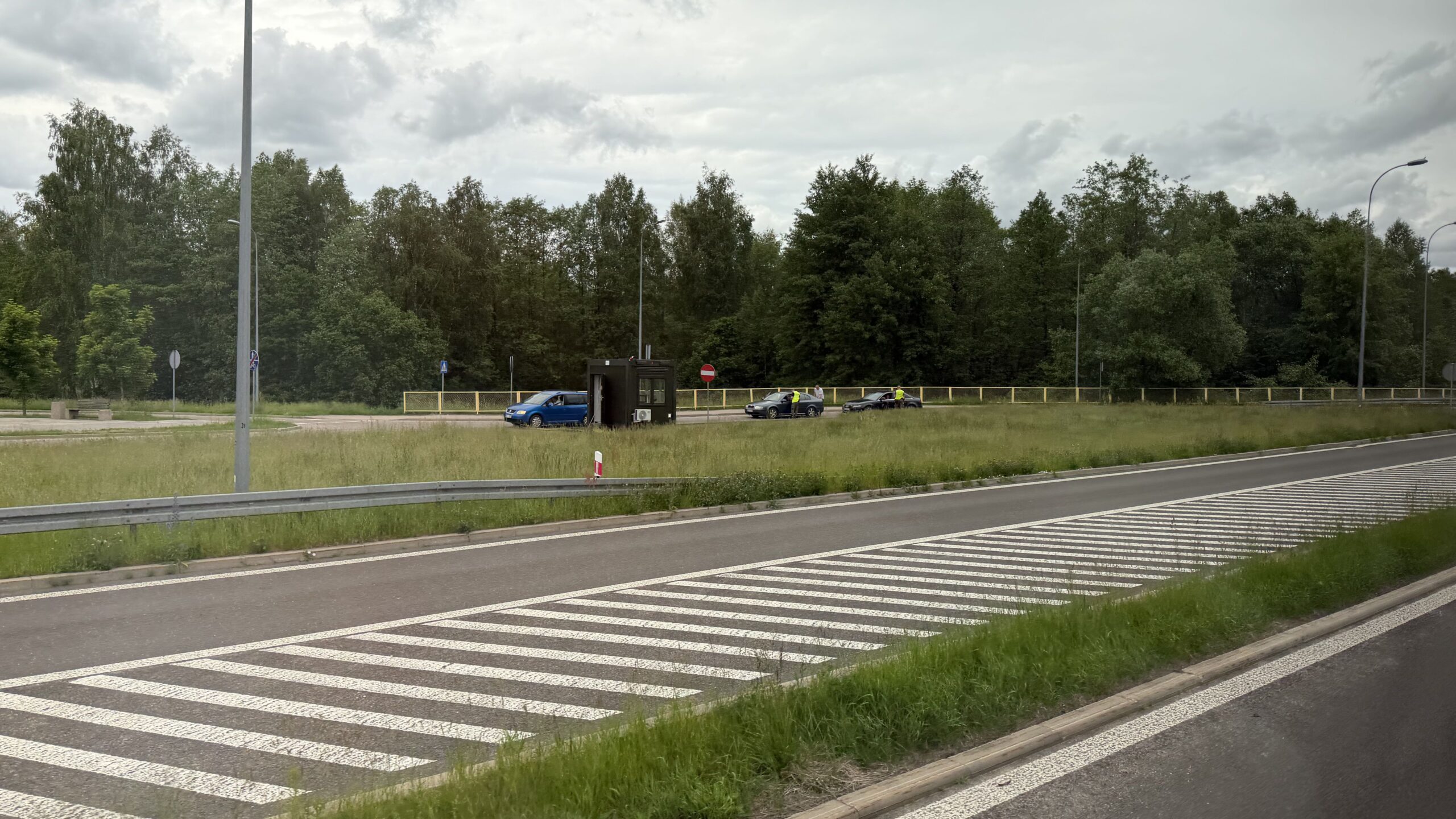
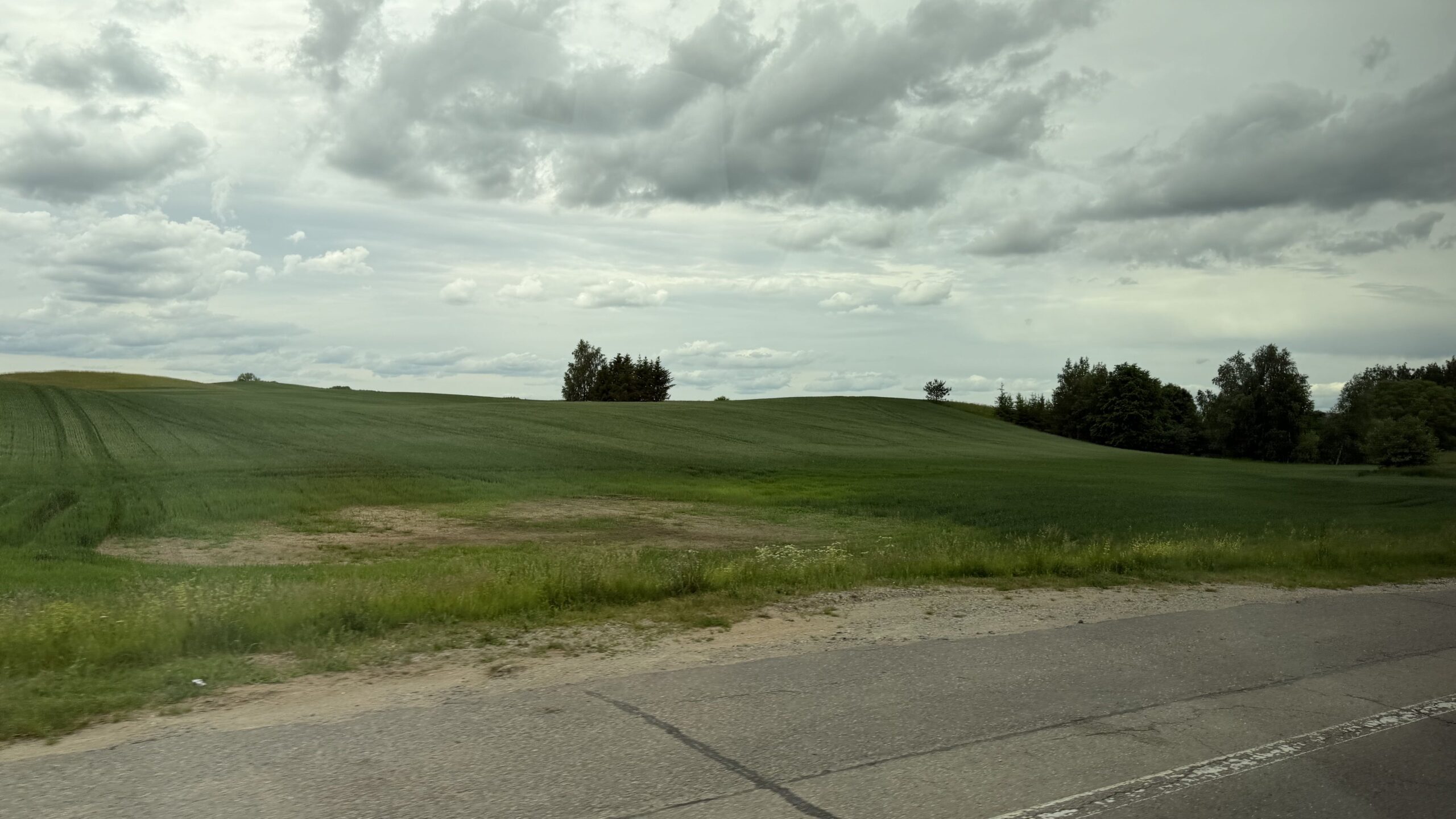
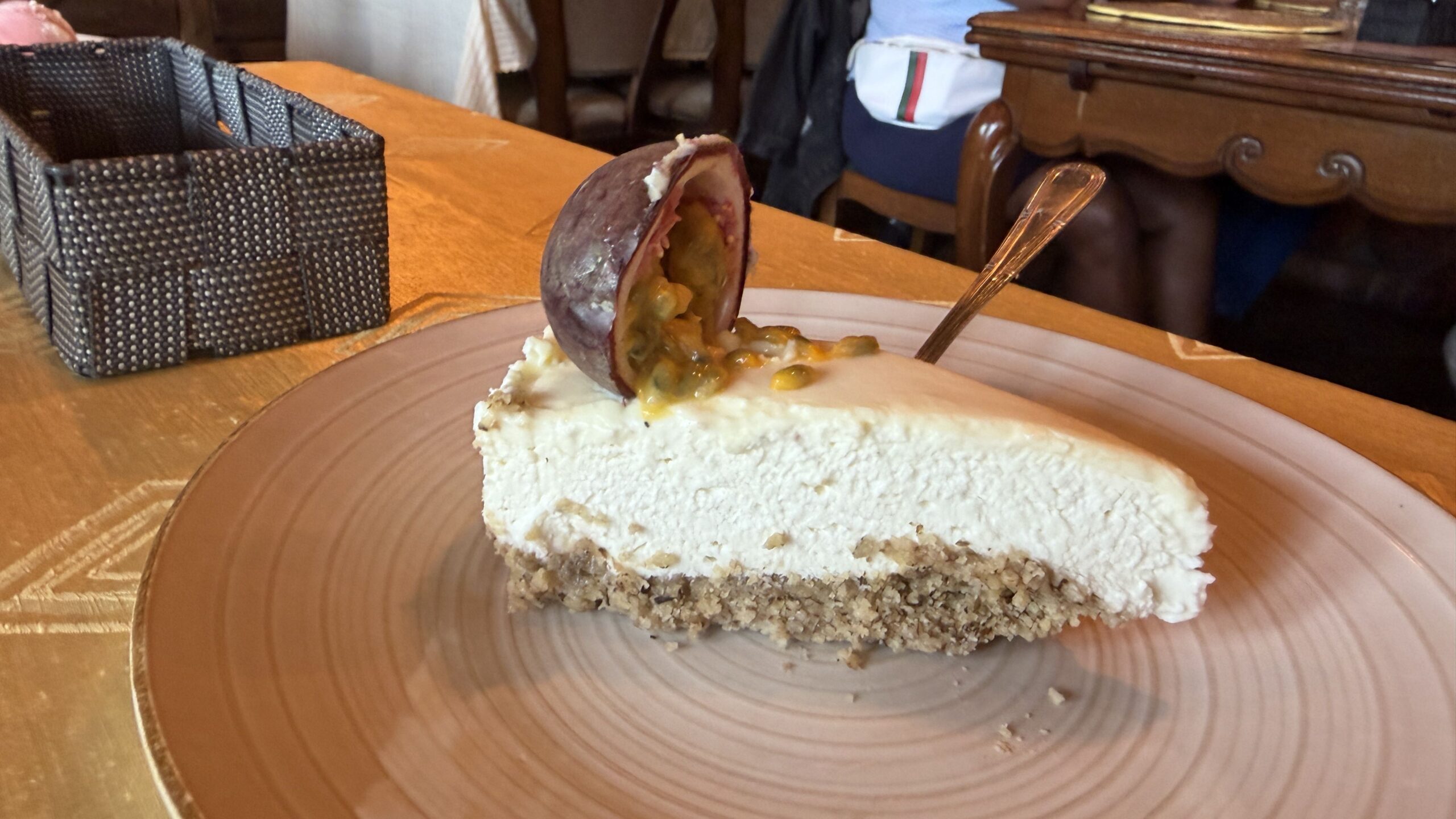
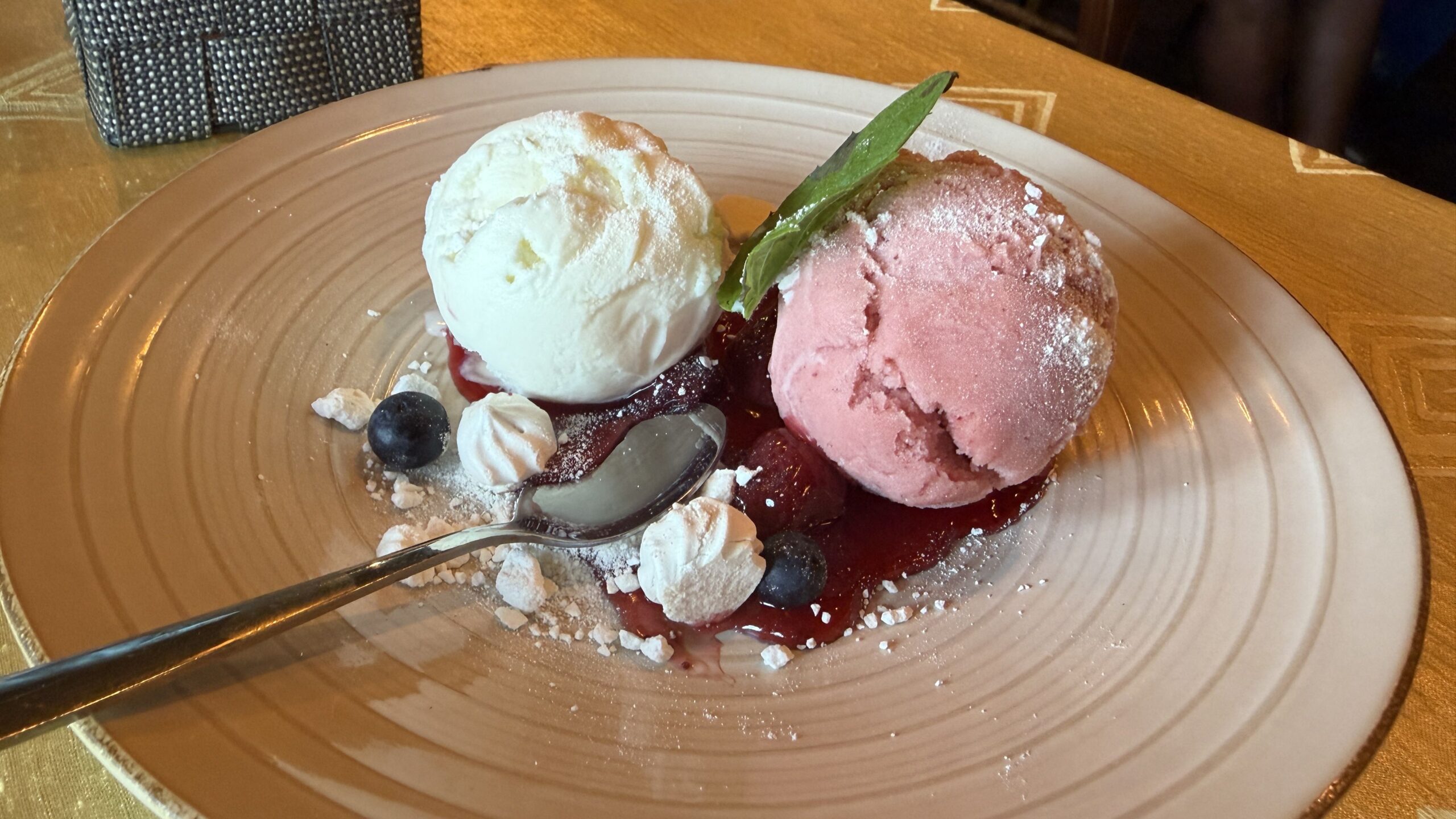
Our plan was to reach the lakeside town of Augustów around noon for lunch. However, with light traffic and a smooth drive, we arrived much earlier than expected—around 11:00 AM. The restaurant wasn’t quite ready to serve a large tour group that early, but what happened next left a lasting impression.
Despite having only couple of people working, the staff welcomed us with smiles and immediately got to work. They moved quickly, stayed organized, and managed to prepare and serve meals for our entire group in remarkably little time. Their positive attitude and willingness to accommodate us made the stop memorable. Sometimes it’s not just the food that stands out during a trip—it’s the people who go out of their way to make travelers feel welcome.
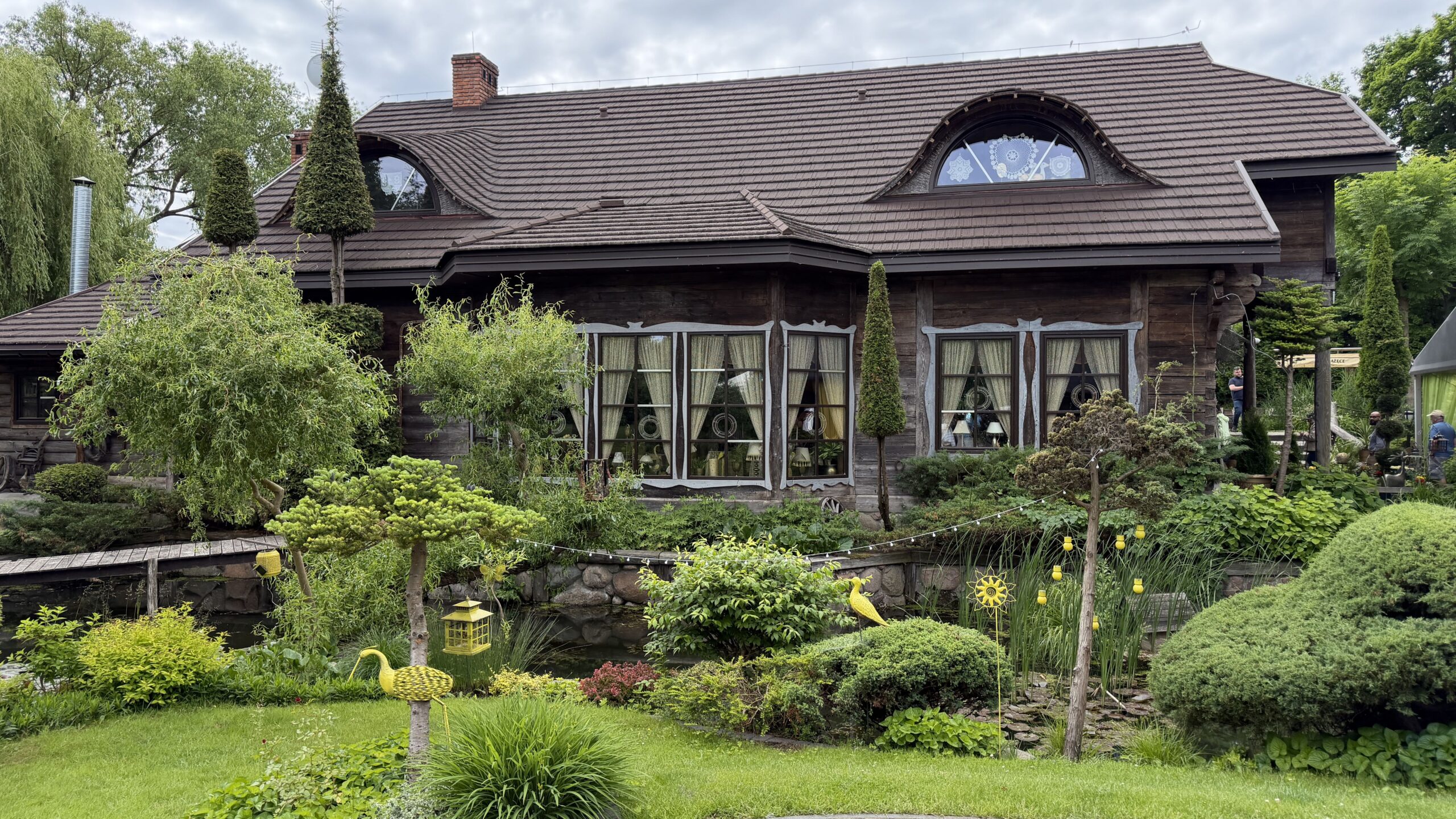
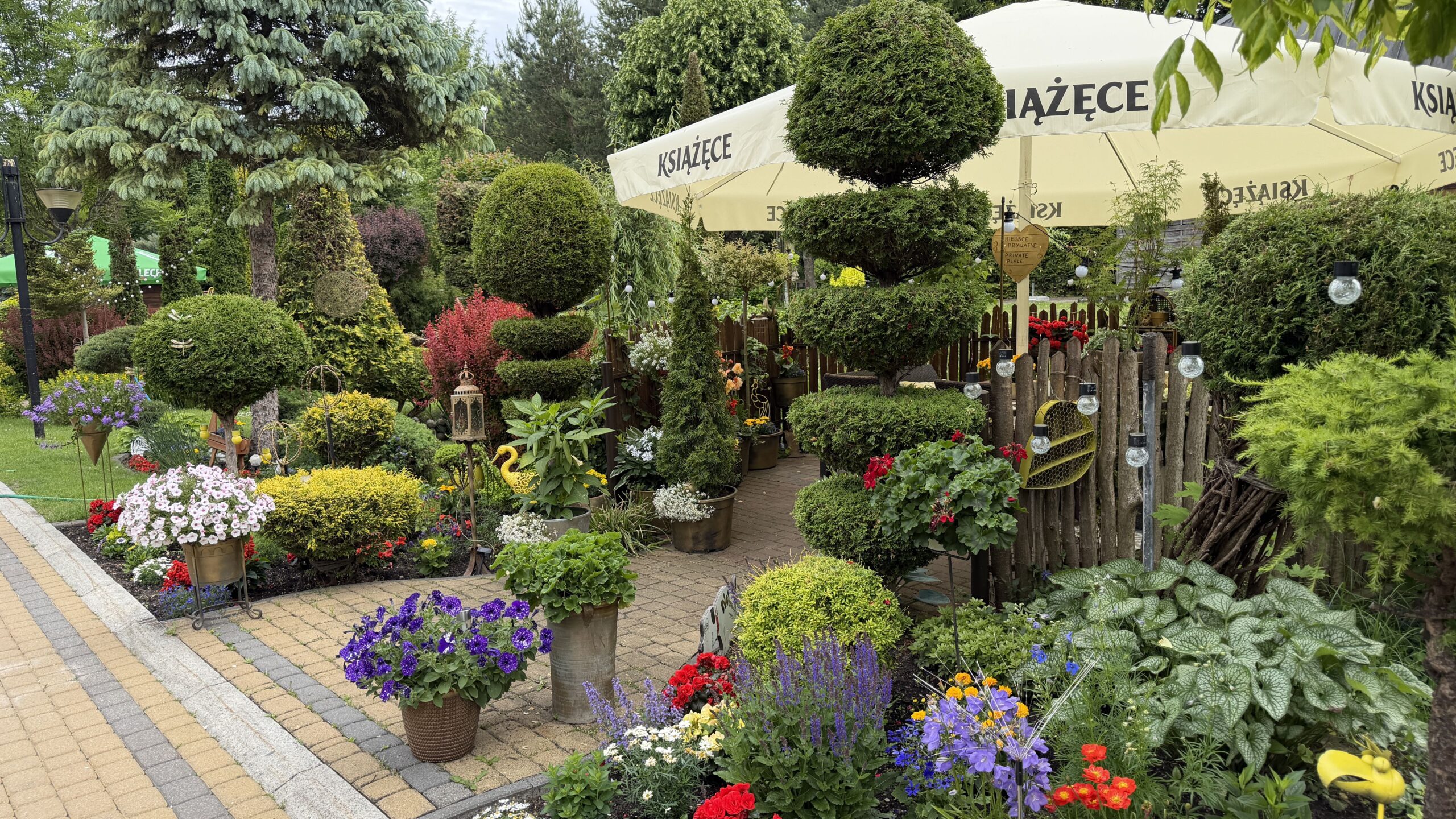
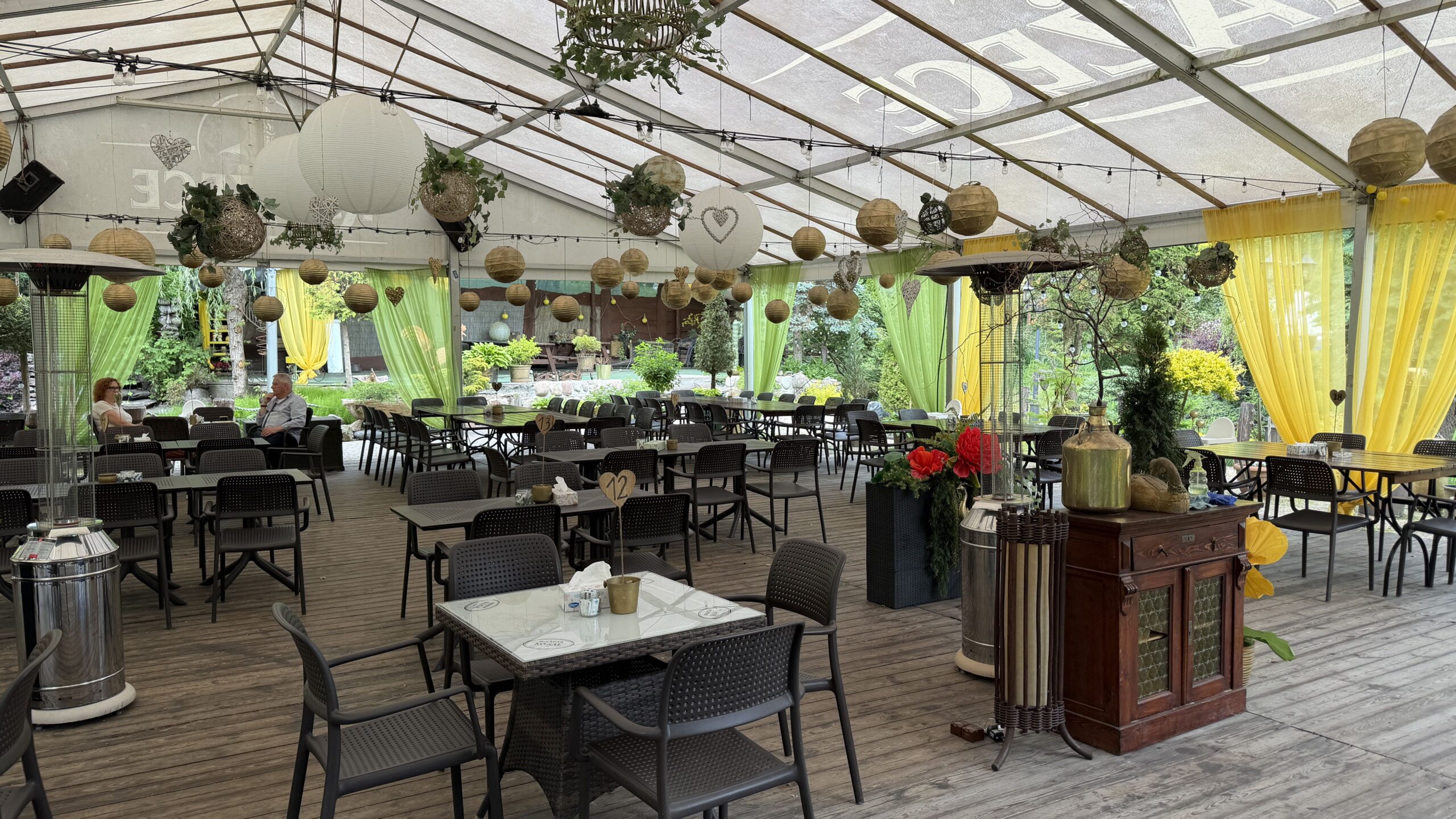
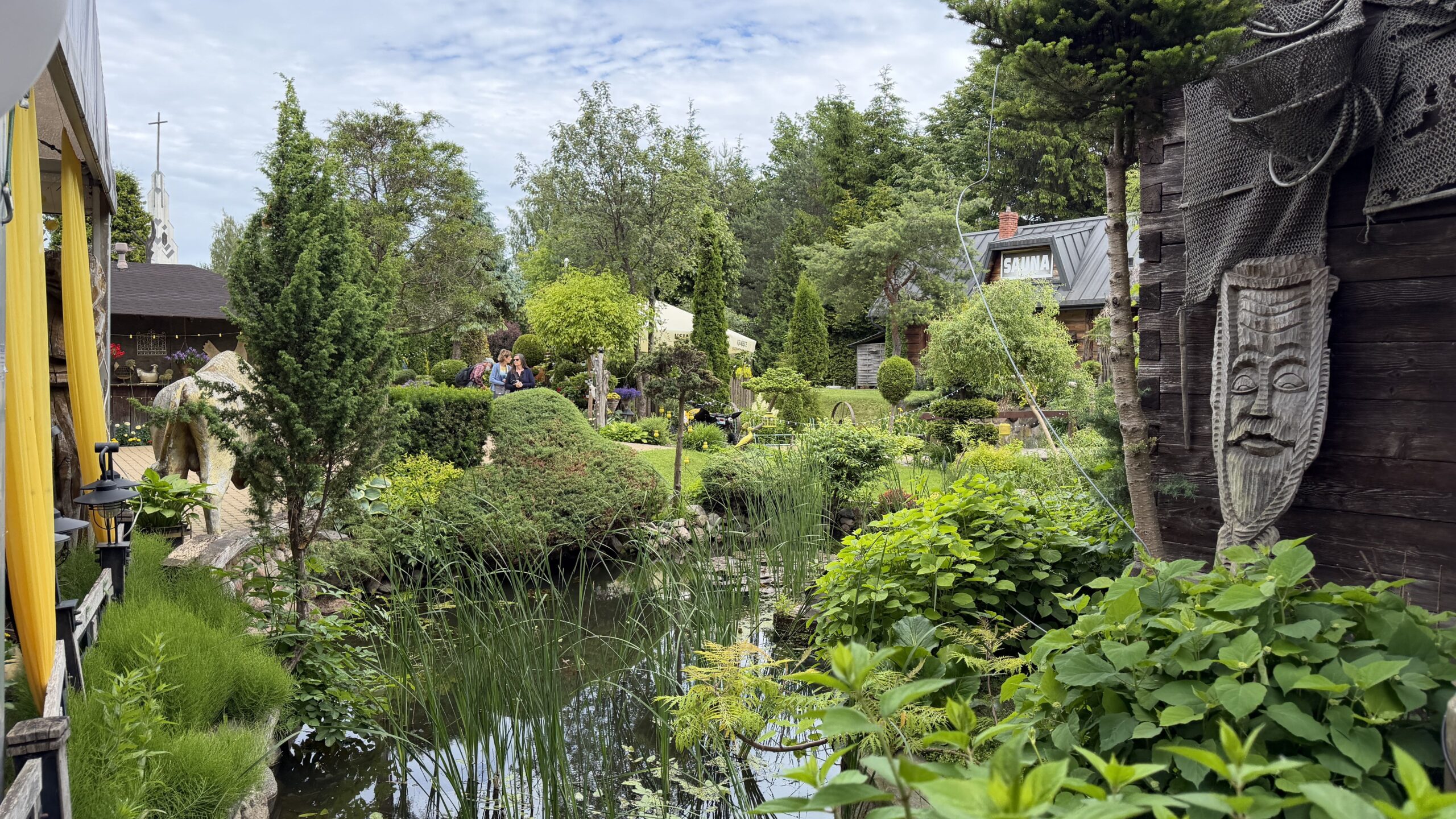
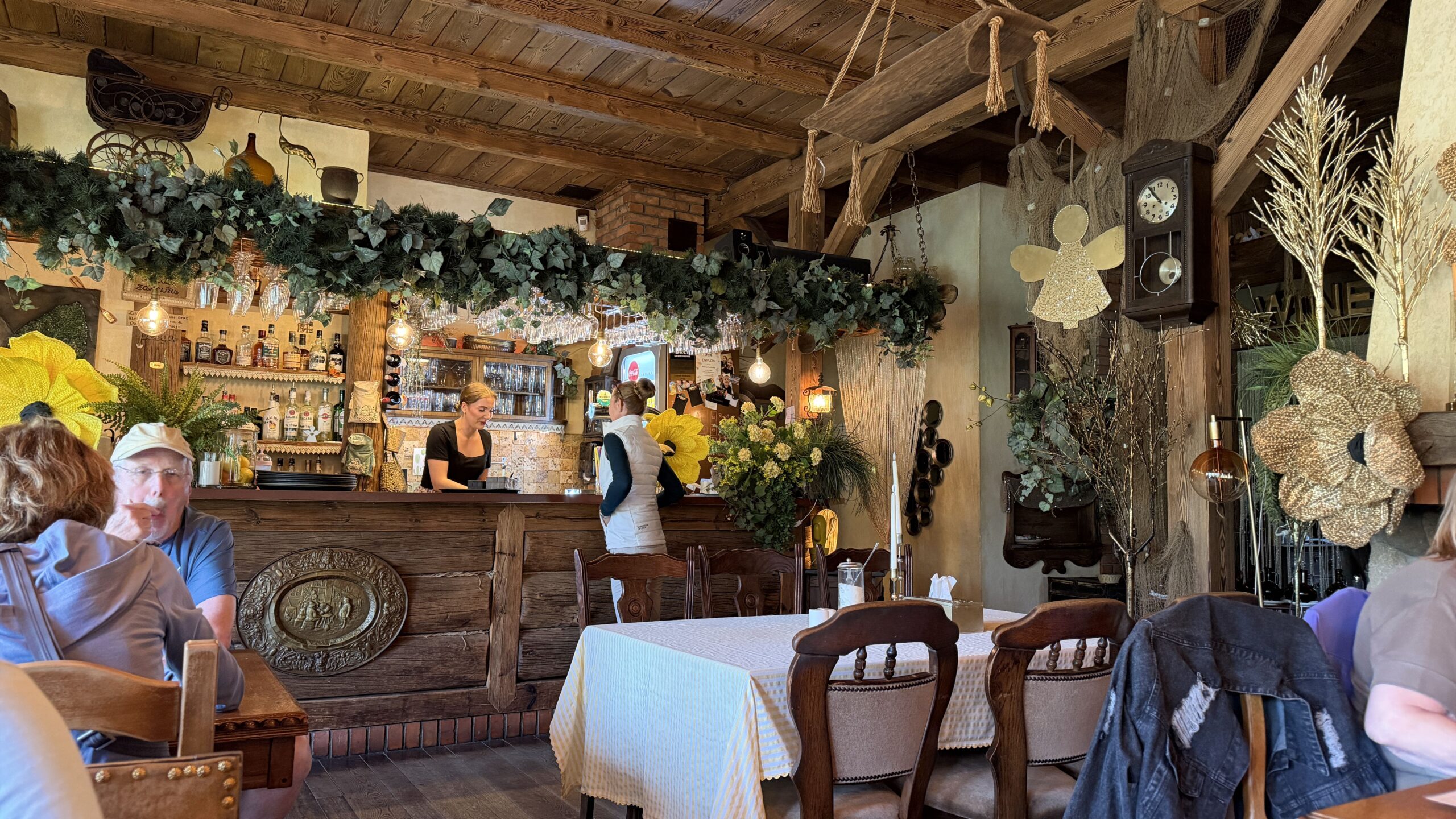
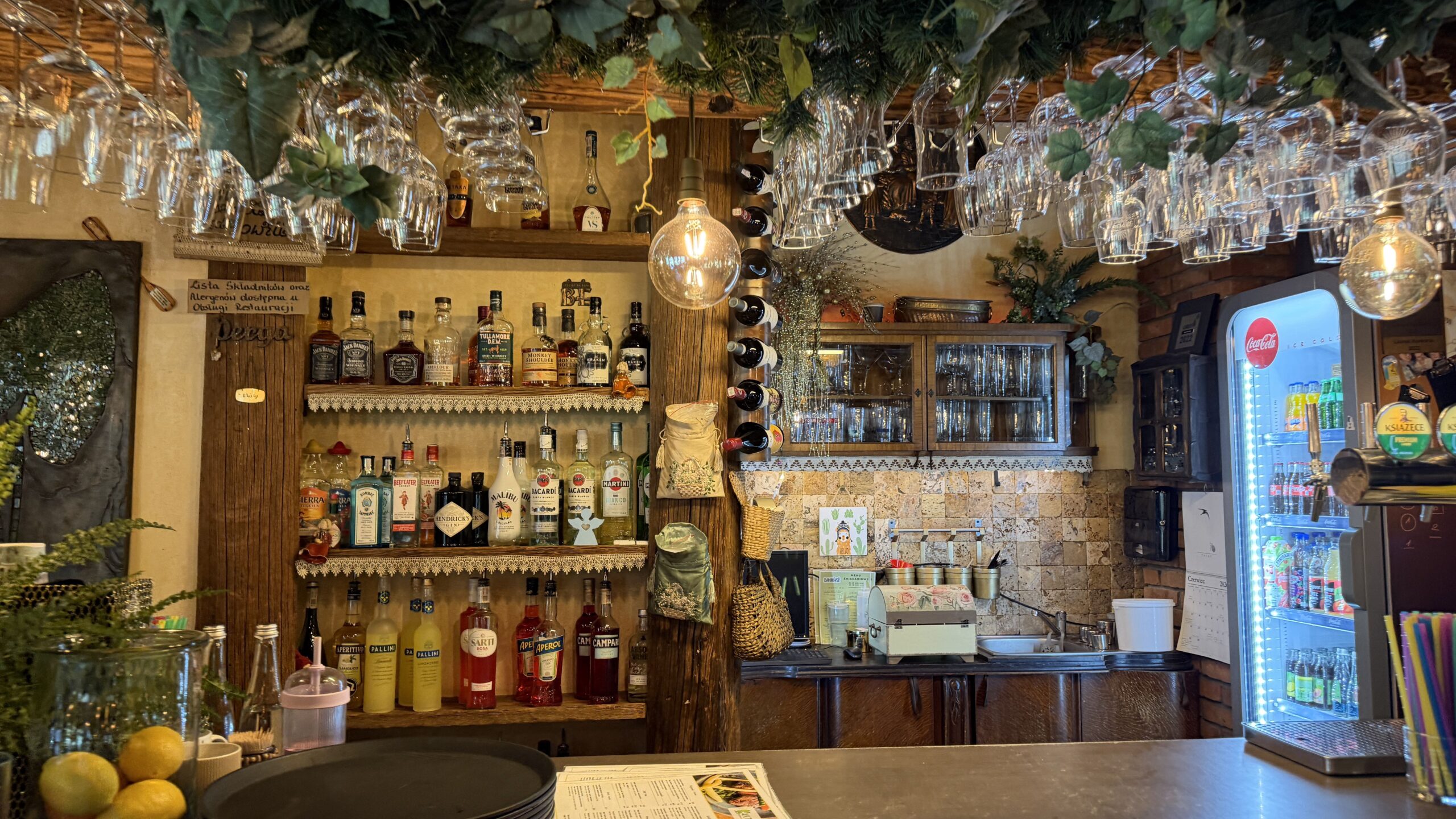
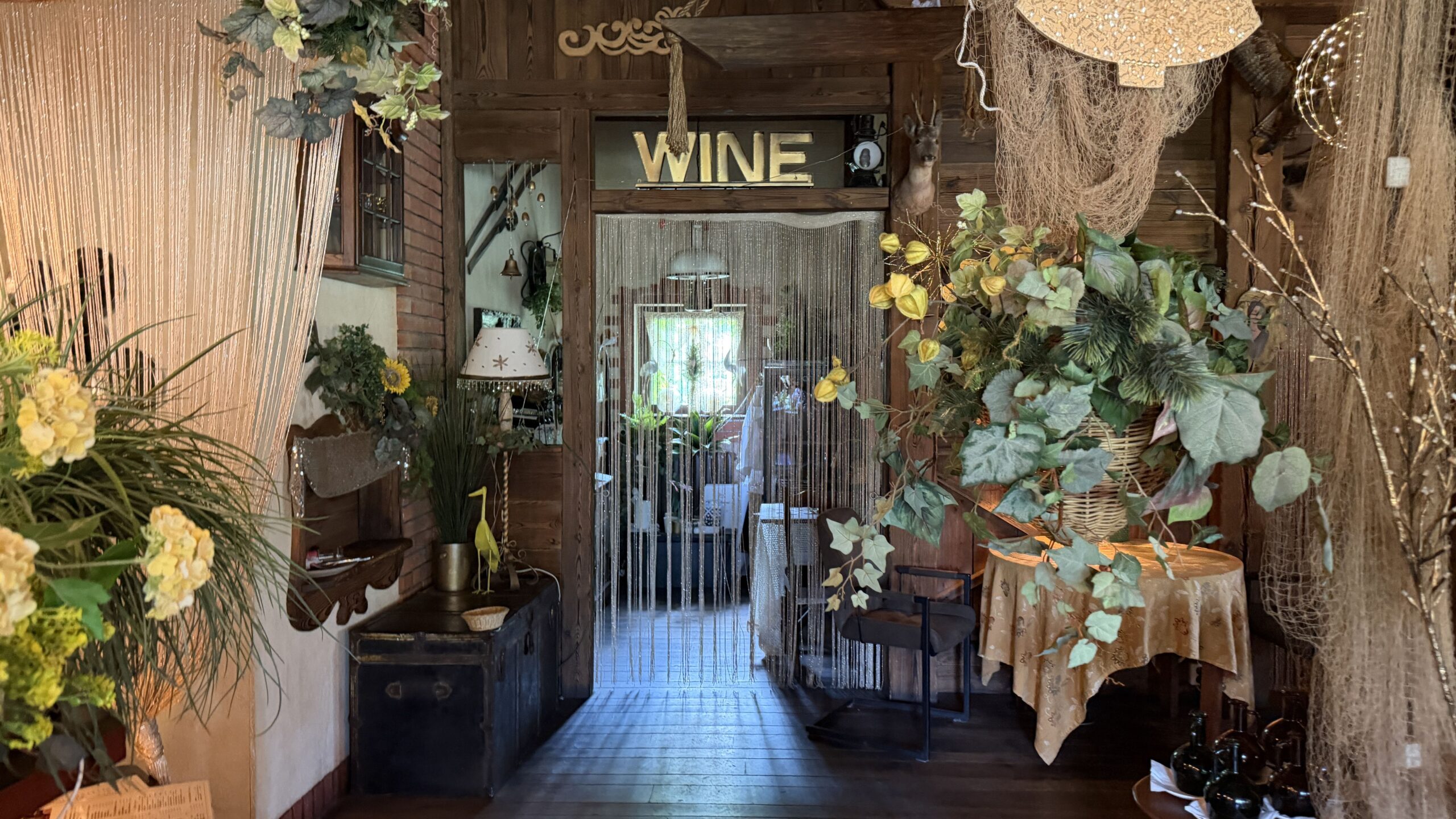
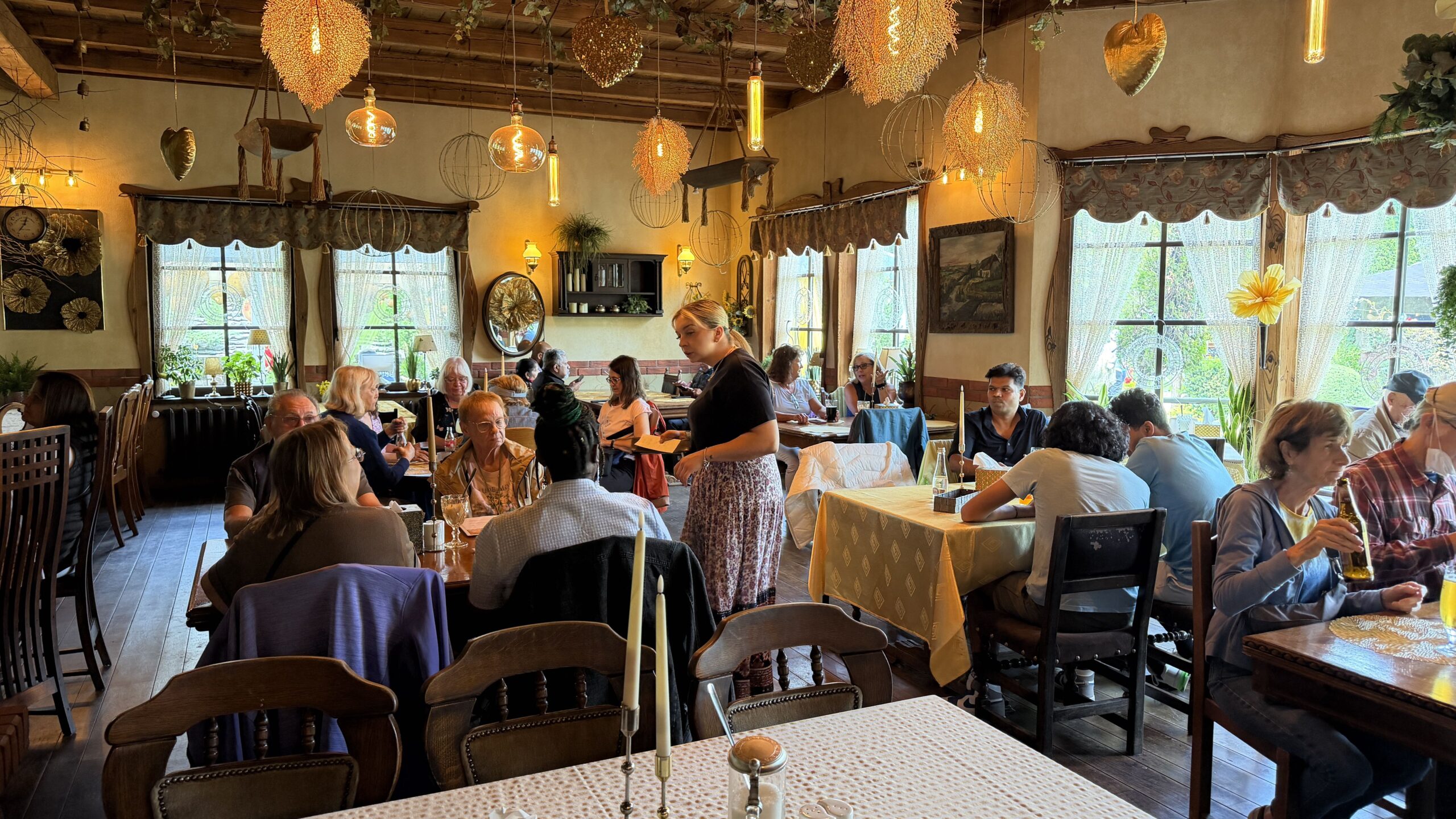
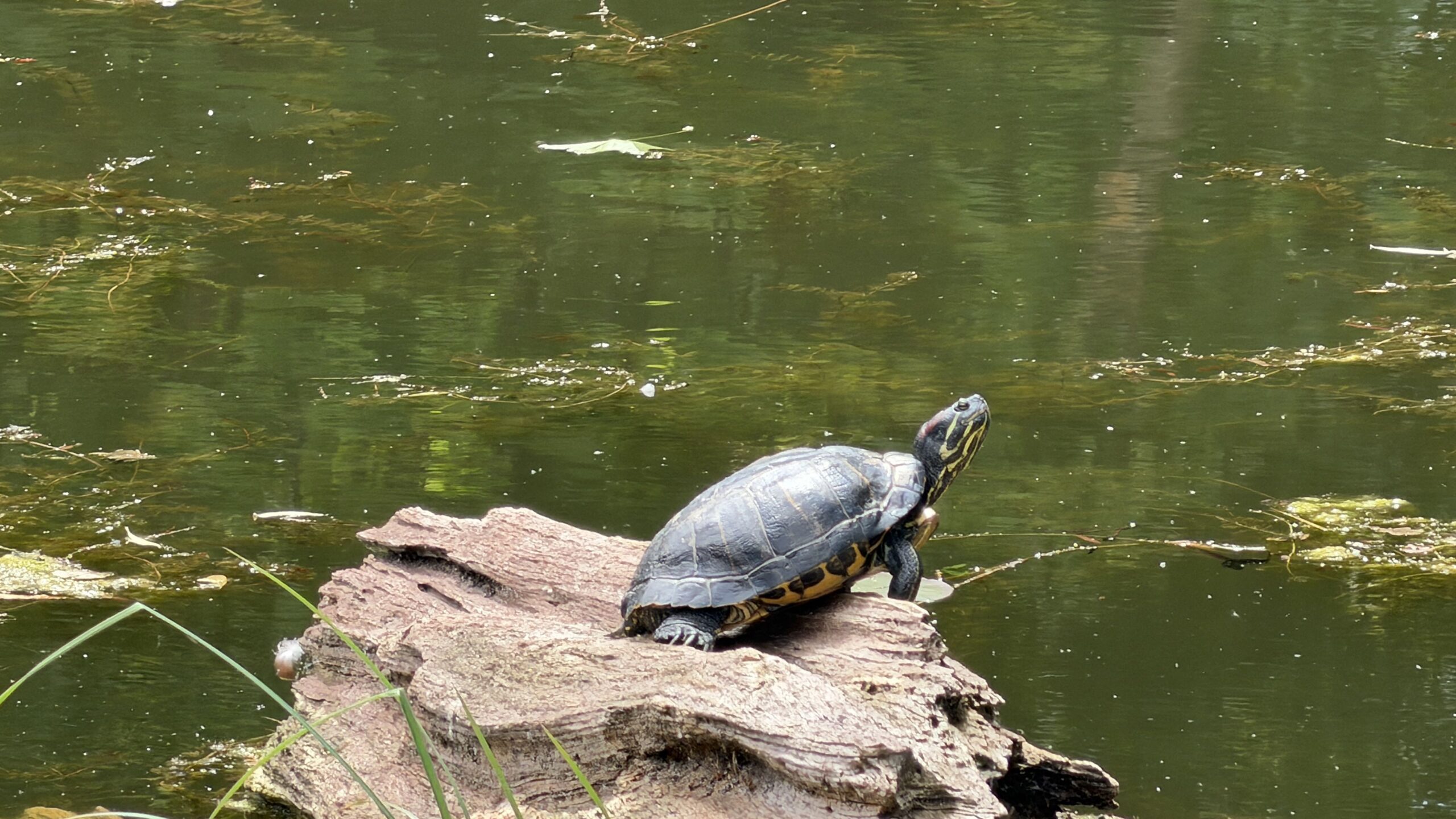
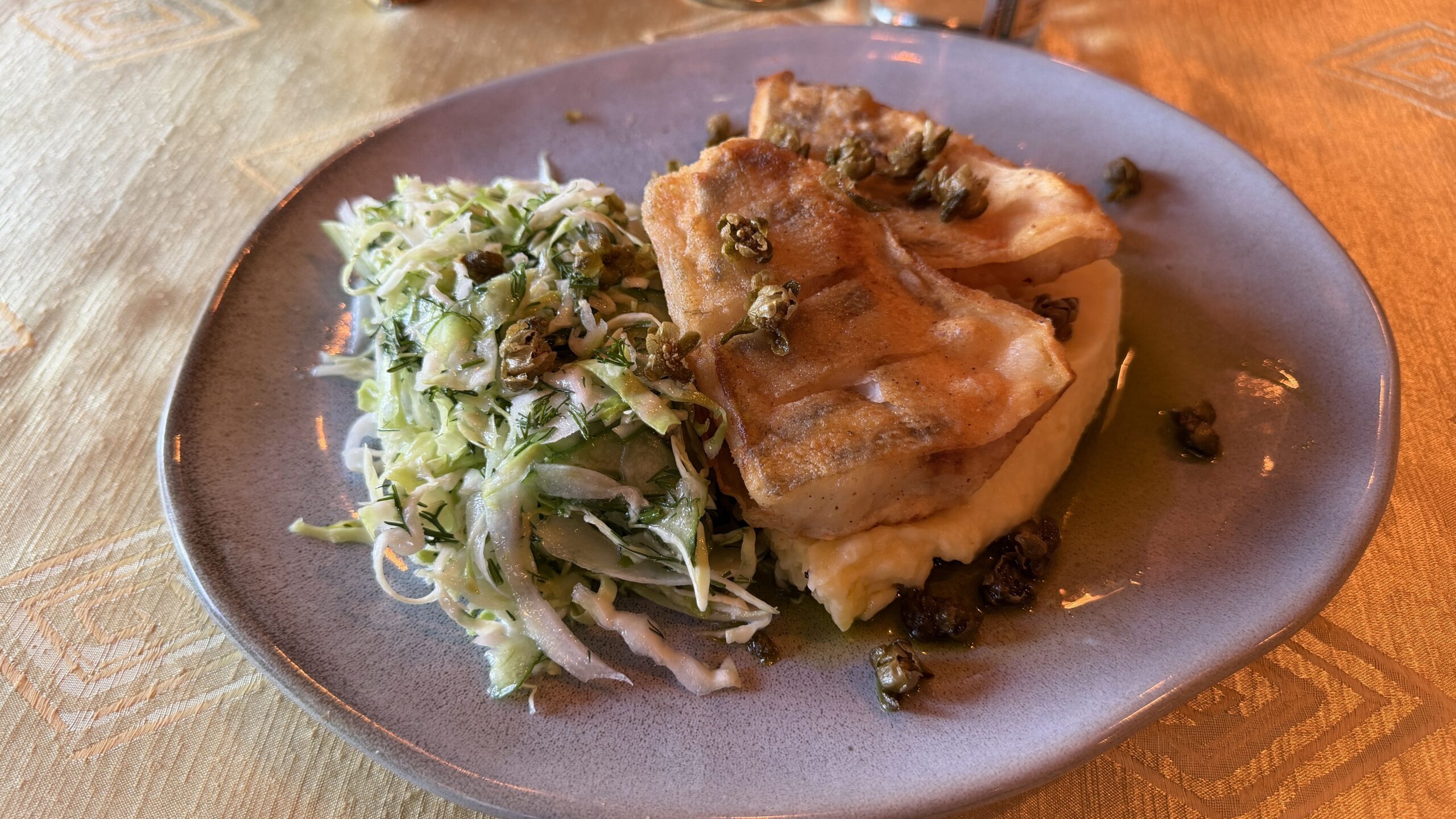
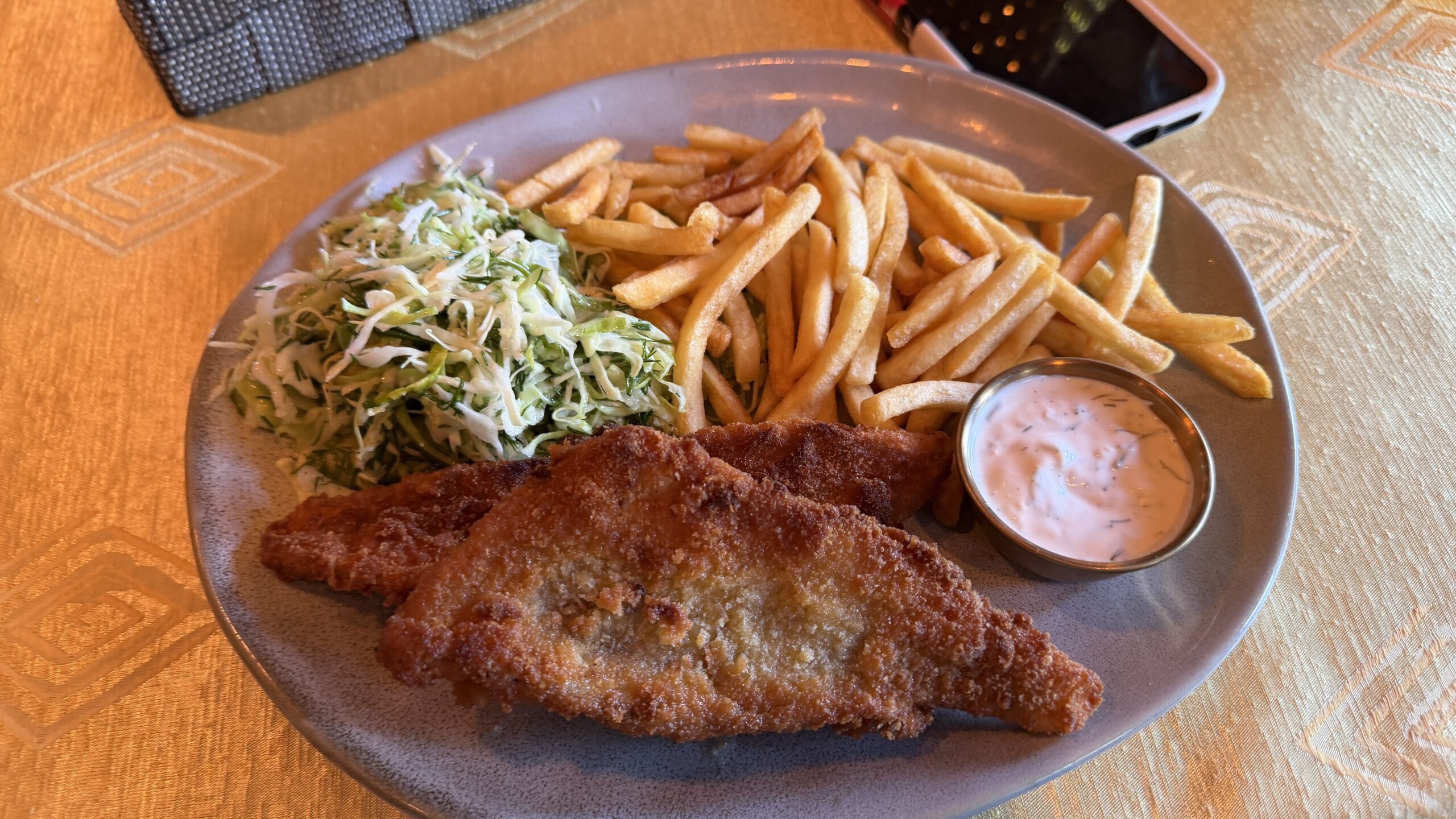
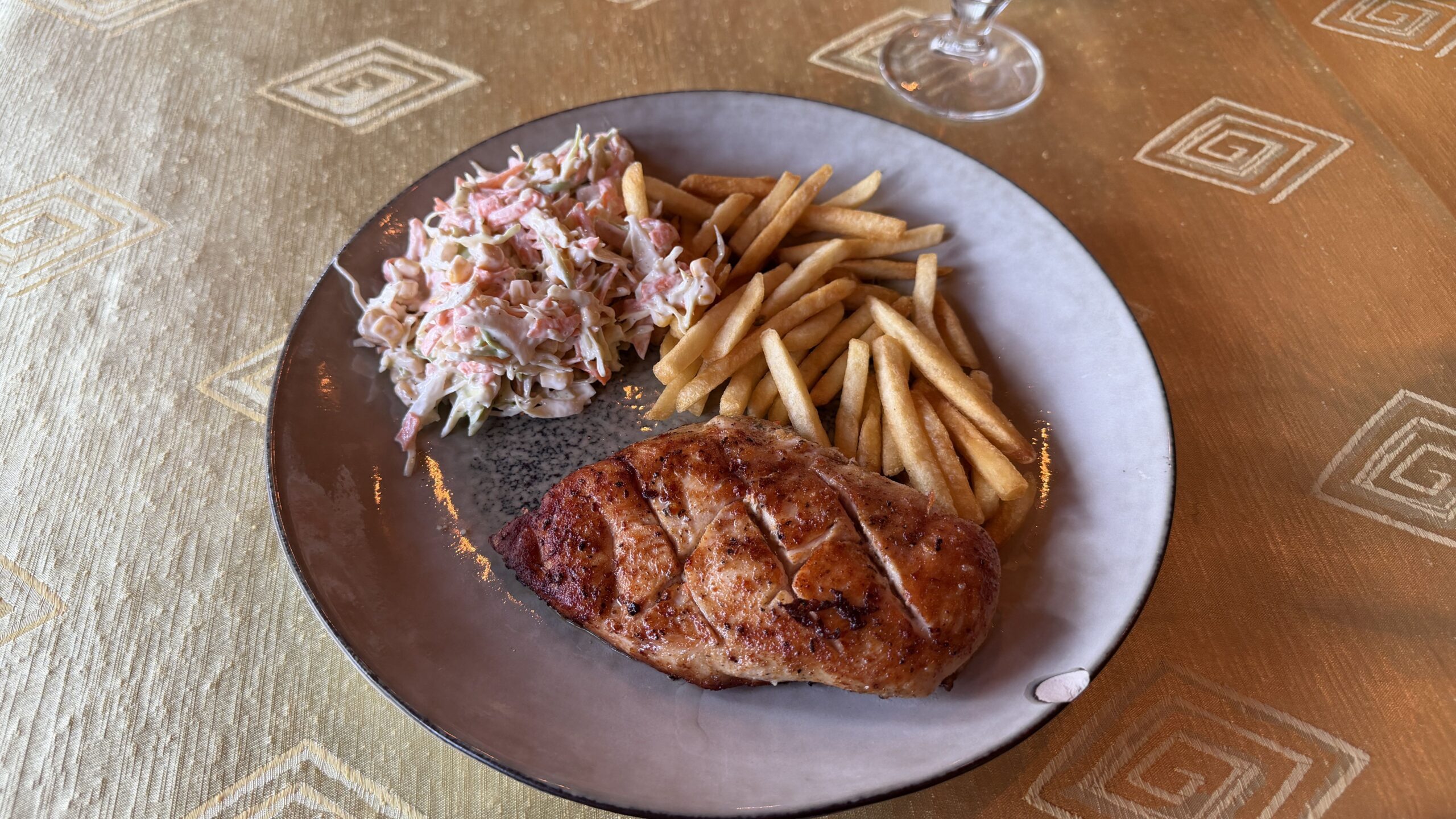
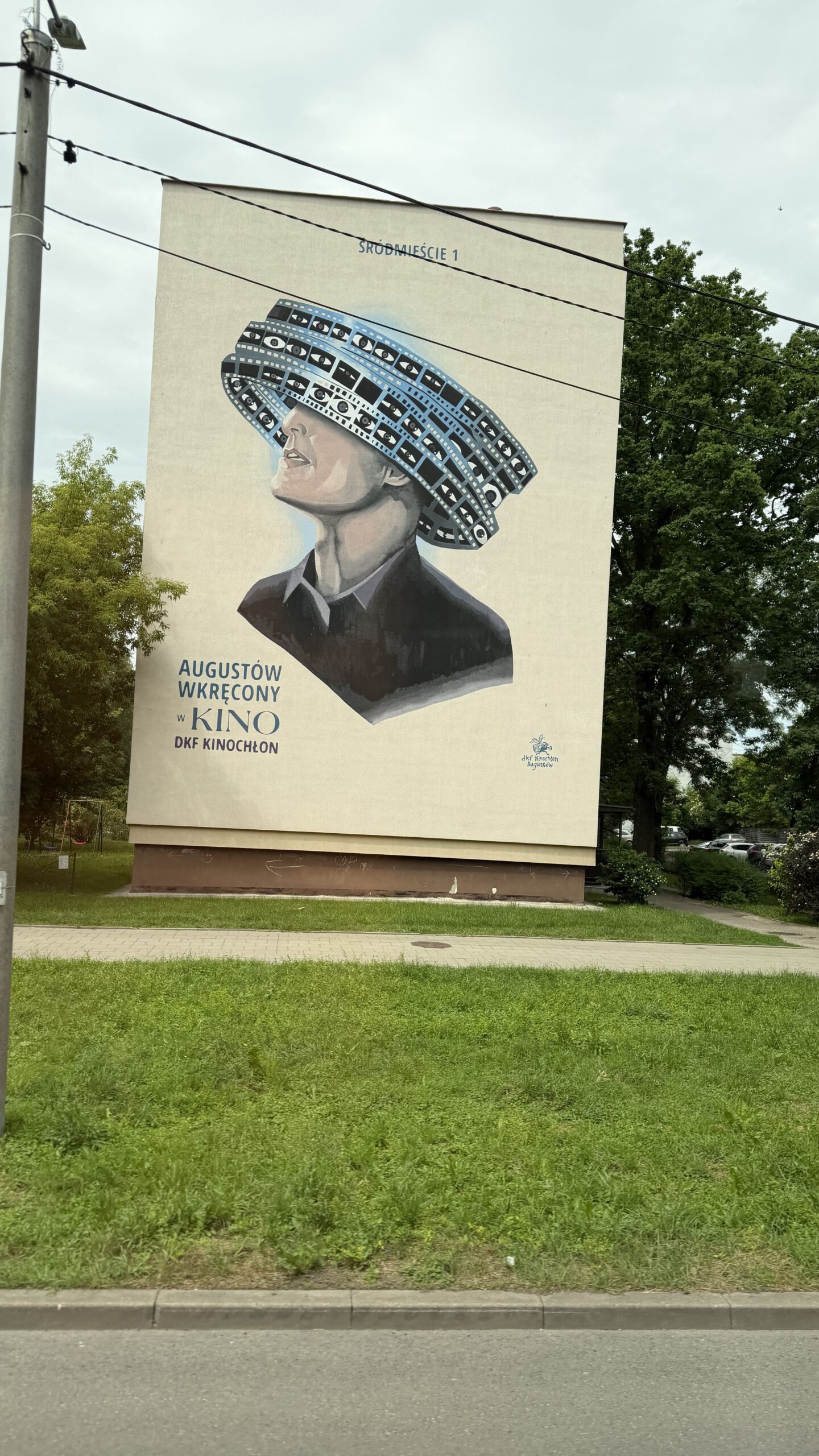
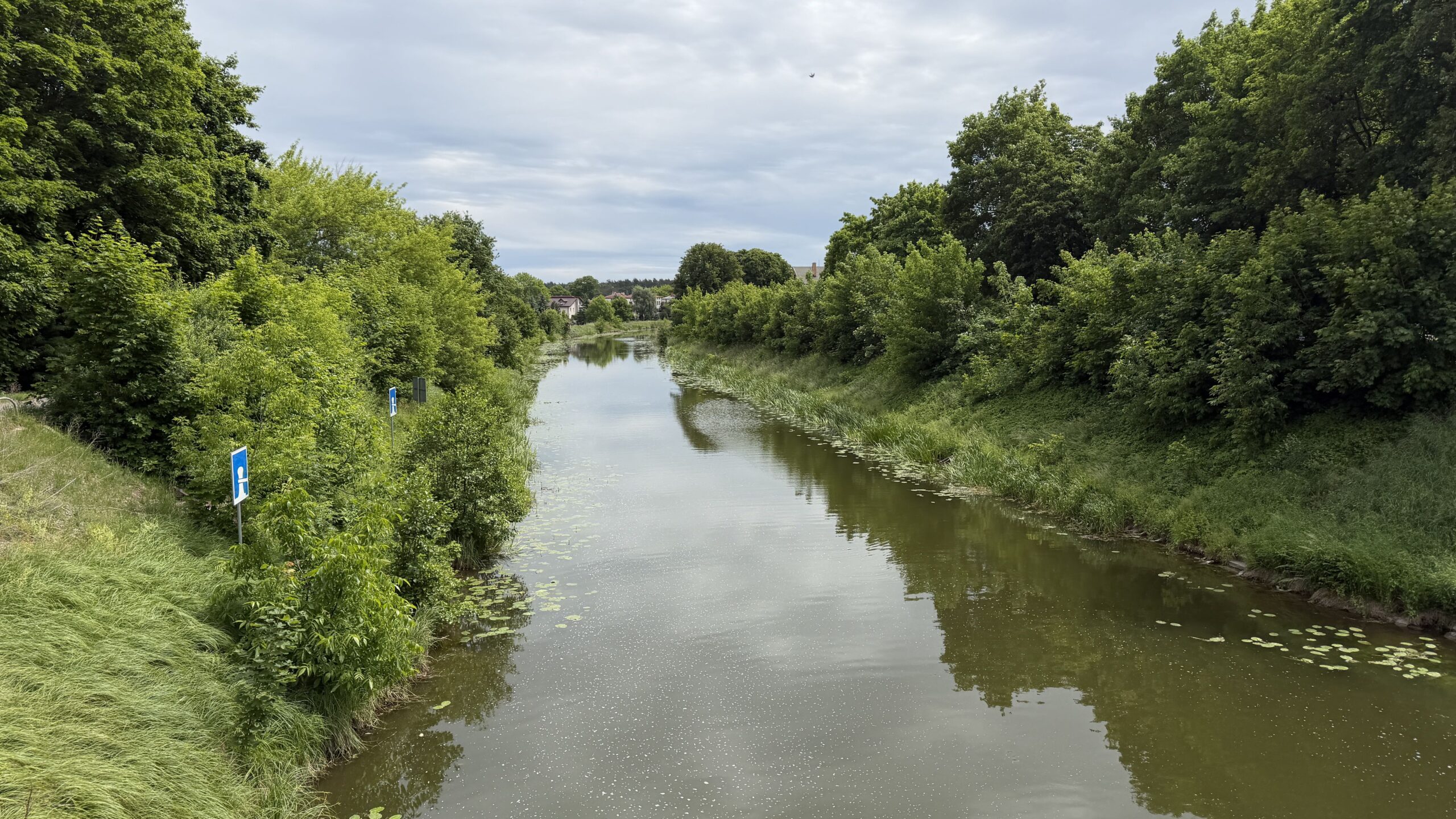
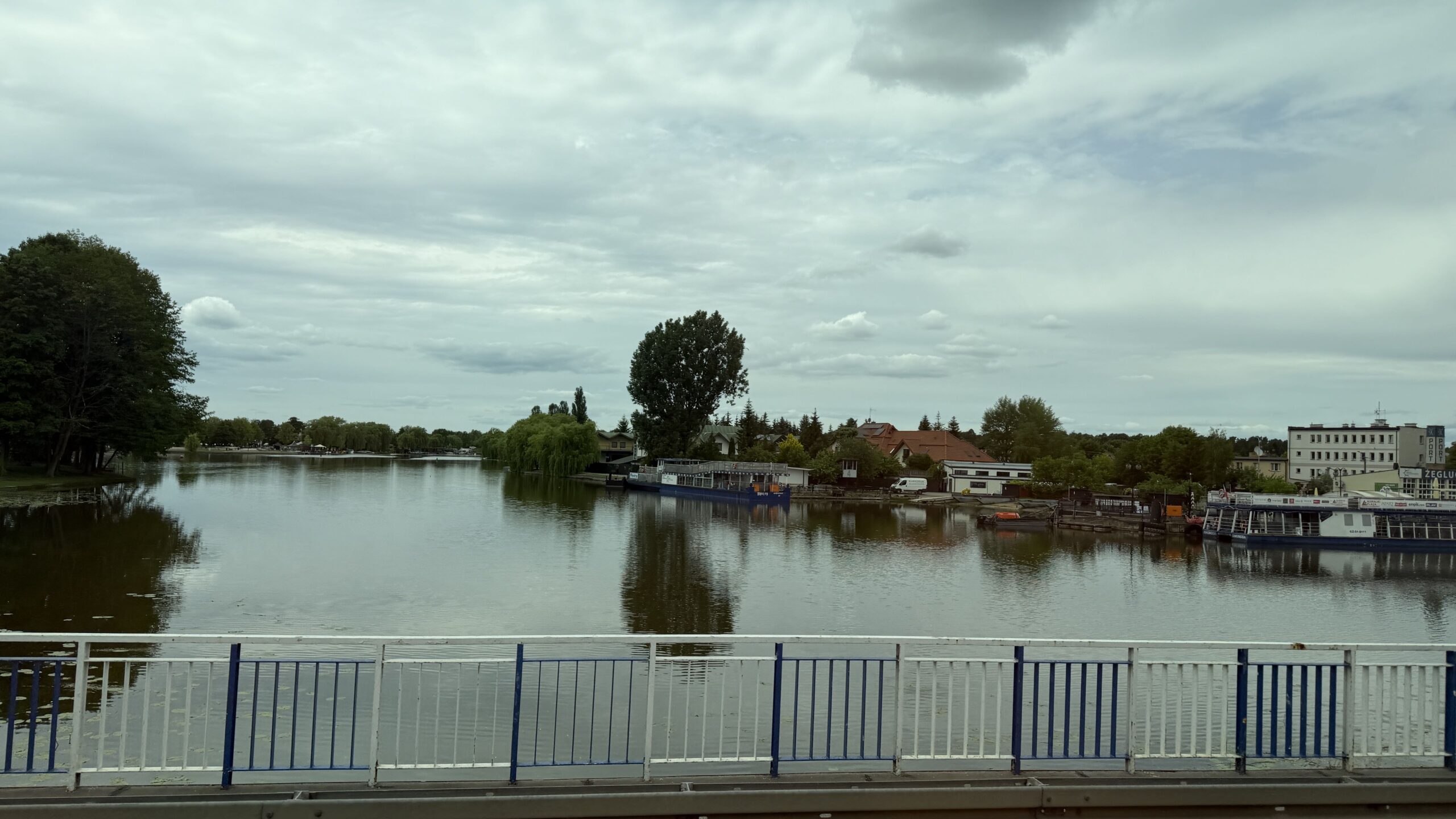
After lunch, we had a quick drive through Augustów. Known for its beautiful lakes, canals, and surrounding forests, the town is a popular destination for boating and outdoor activities during the summer. Although our visit was brief, it gave us a glimpse of another charming corner of northeastern Poland before we continued our journey toward Lithuania.
By evening, we arrived in Vilnius, checked into our hotel, and enjoyed dinner there. After a full day on the road, it was the perfect opportunity to relax and recharge before discovering Lithuania’s fascinating capital the next morning.
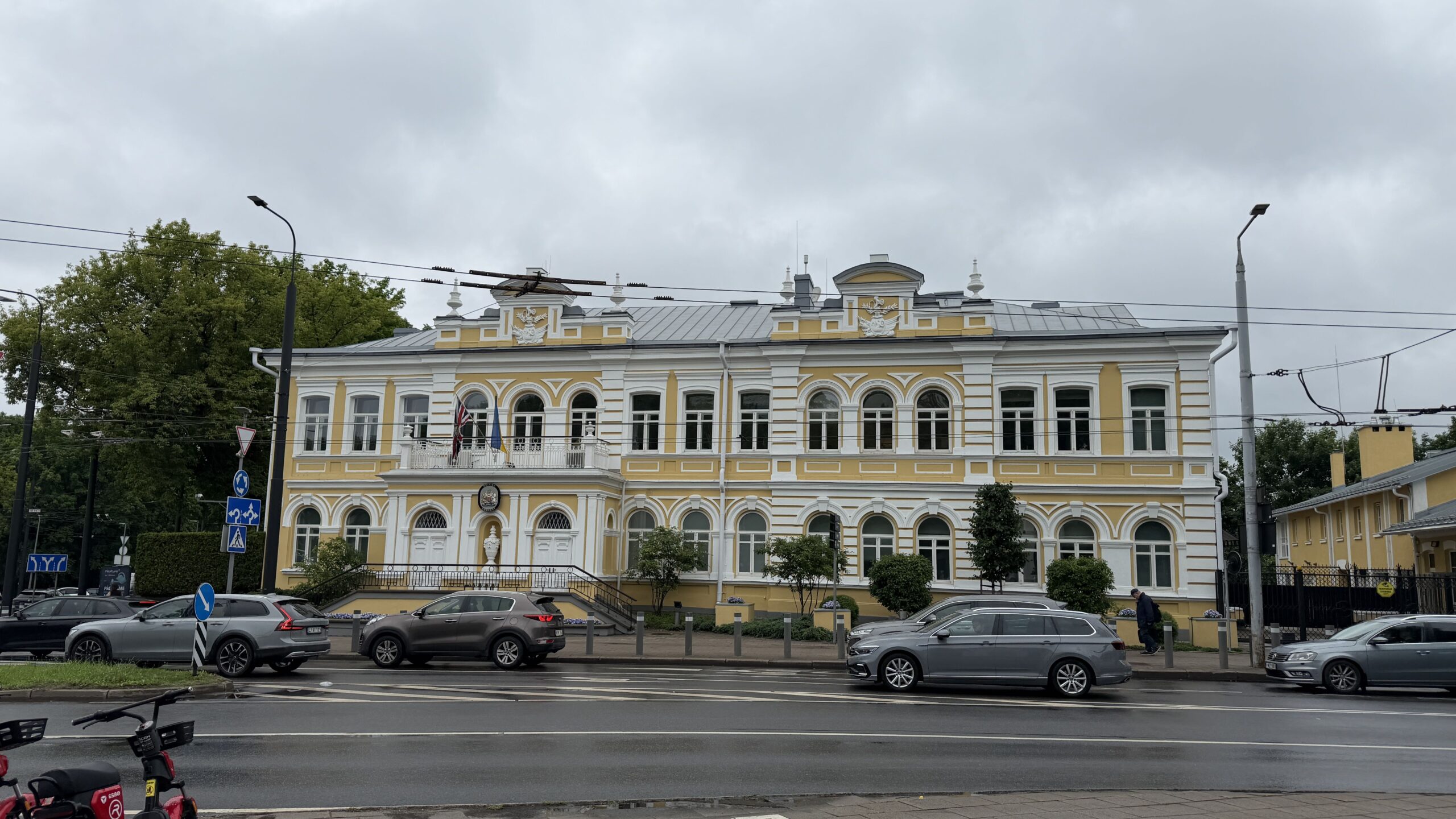
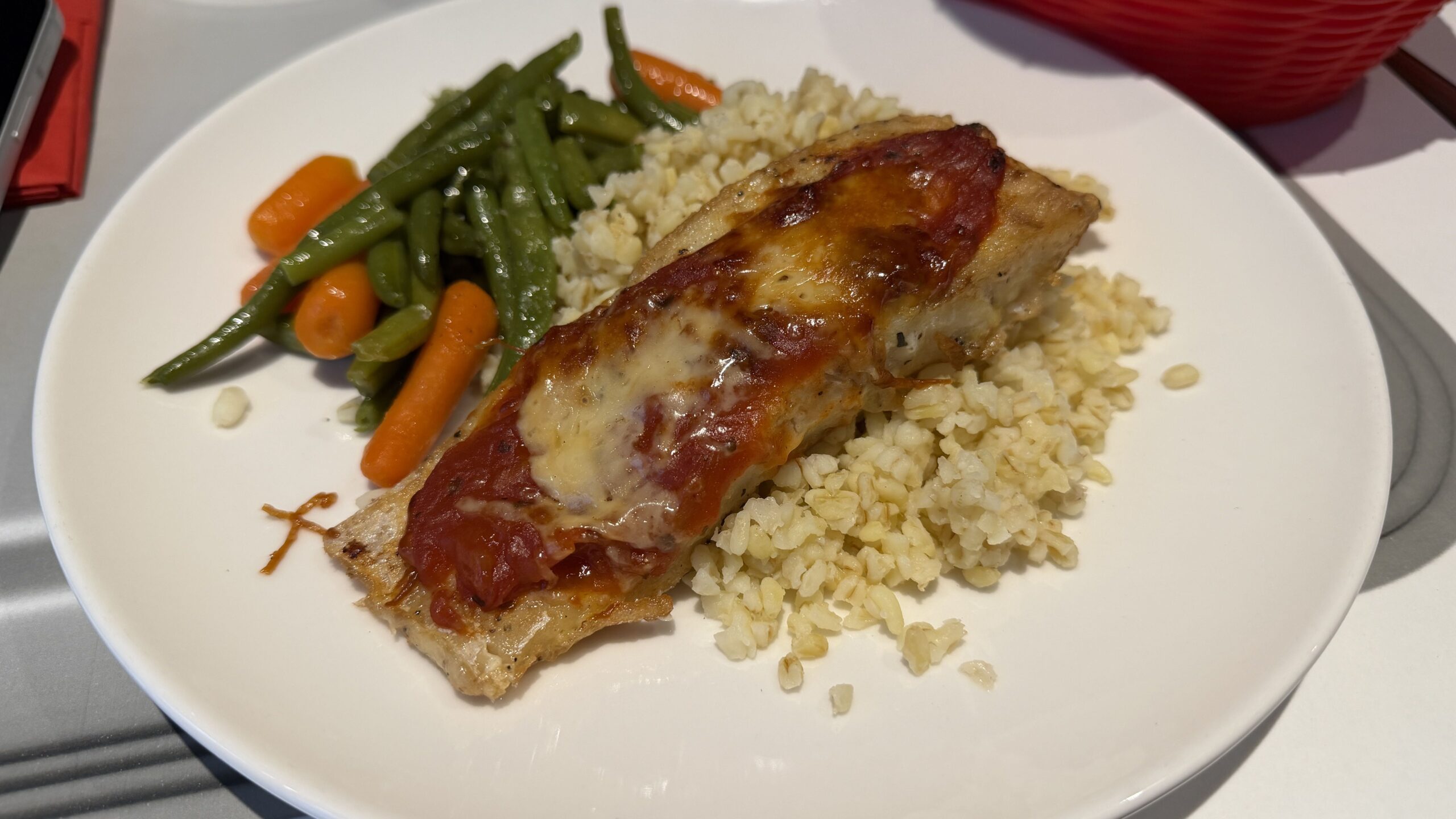
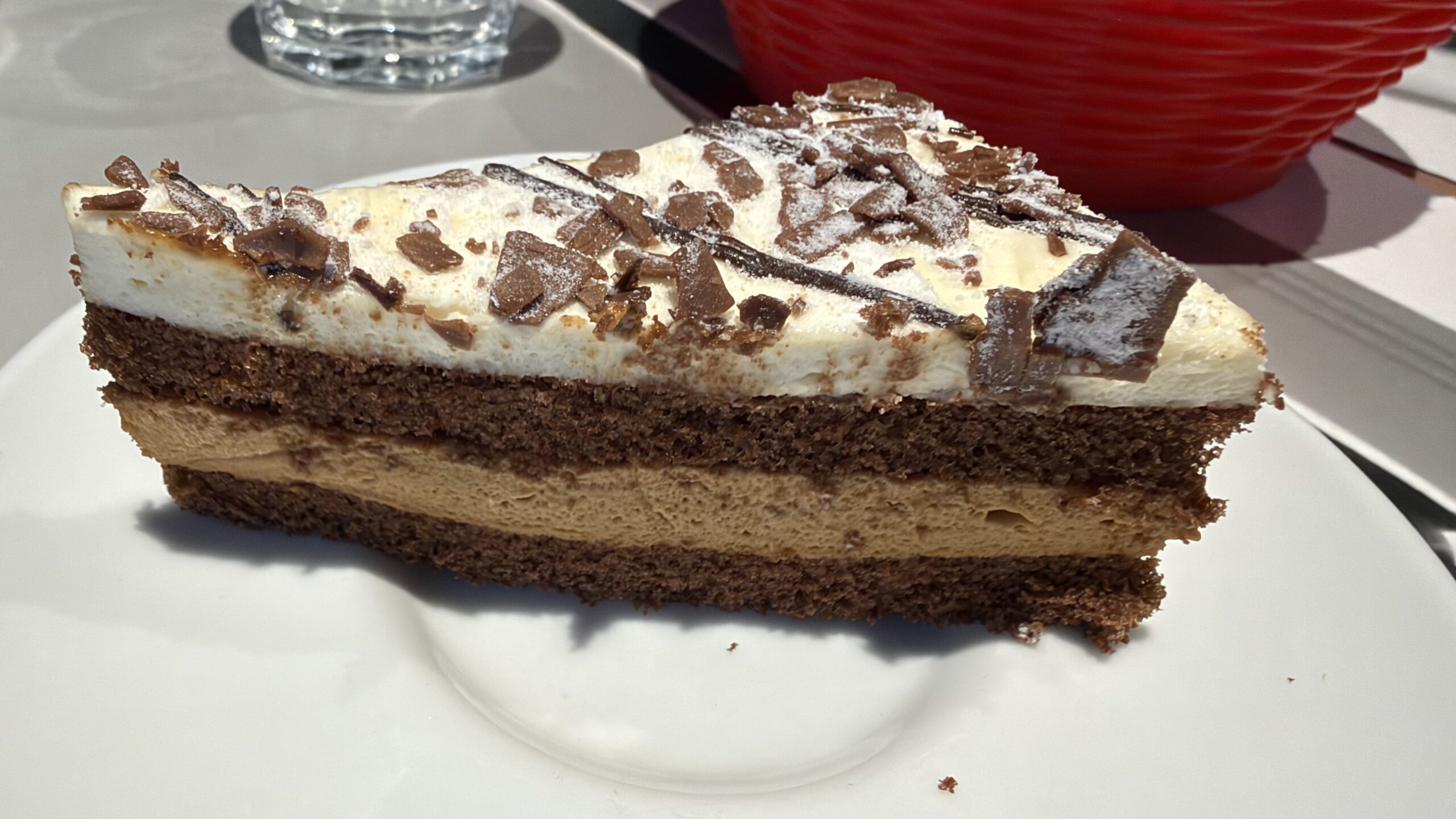
Day 2 – Discovering Vilnius: Churches, Old Town, Jewish Heritage & Trakai Castle
After a good night’s rest in Vilnius, we started our first full day of exploring Lithuania’s capital. We had breakfast at the hotel and began our sightseeing tour at 8:30 AM. The weather was a little unpredictable, with light drizzle in the morning, but that did not stop us from enjoying the city. In fact, the cool weather and quiet streets made our walk through Vilnius even more special.
Church of St. Peter and St. Paul – A Baroque Masterpiece
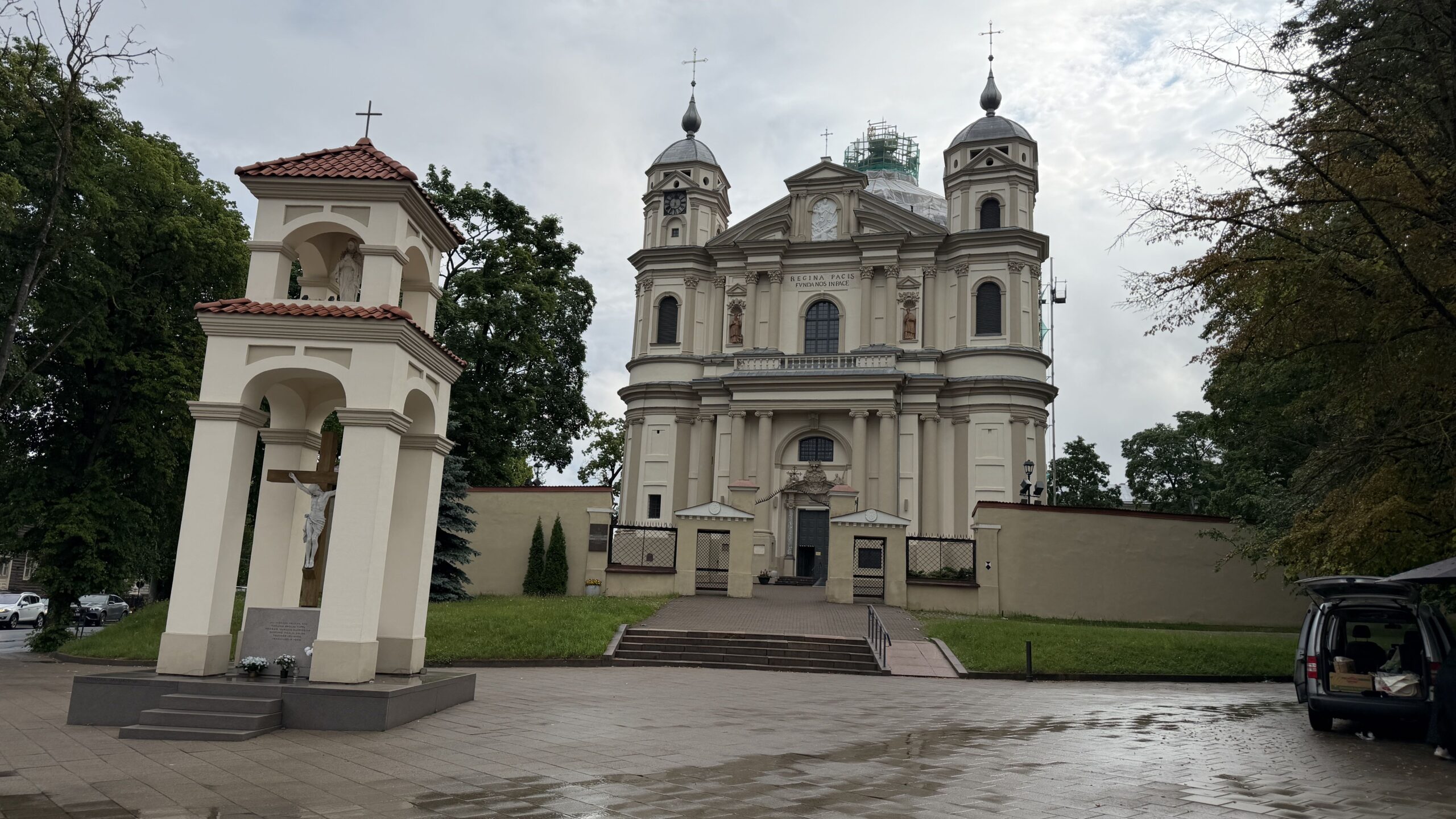
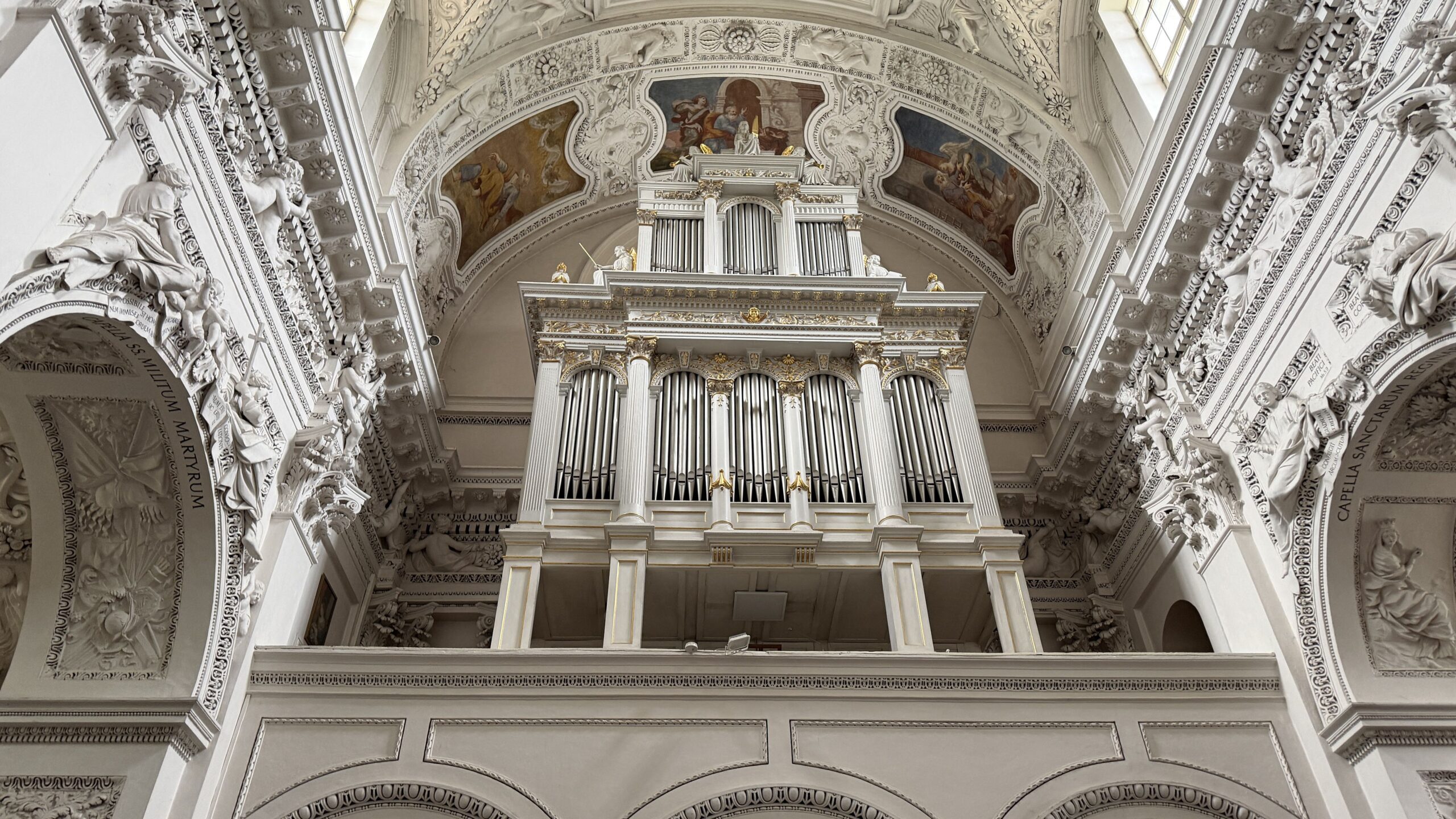
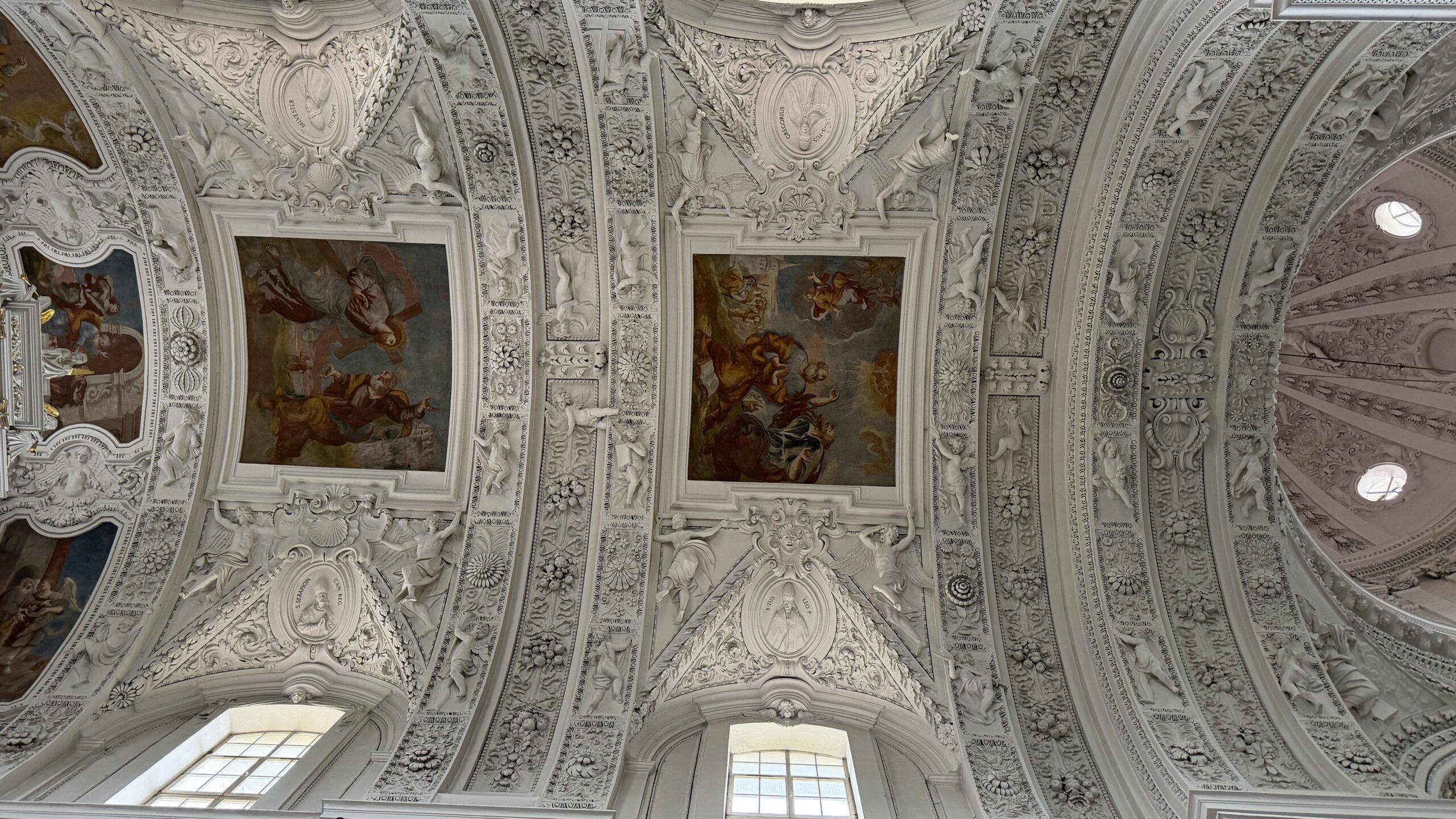
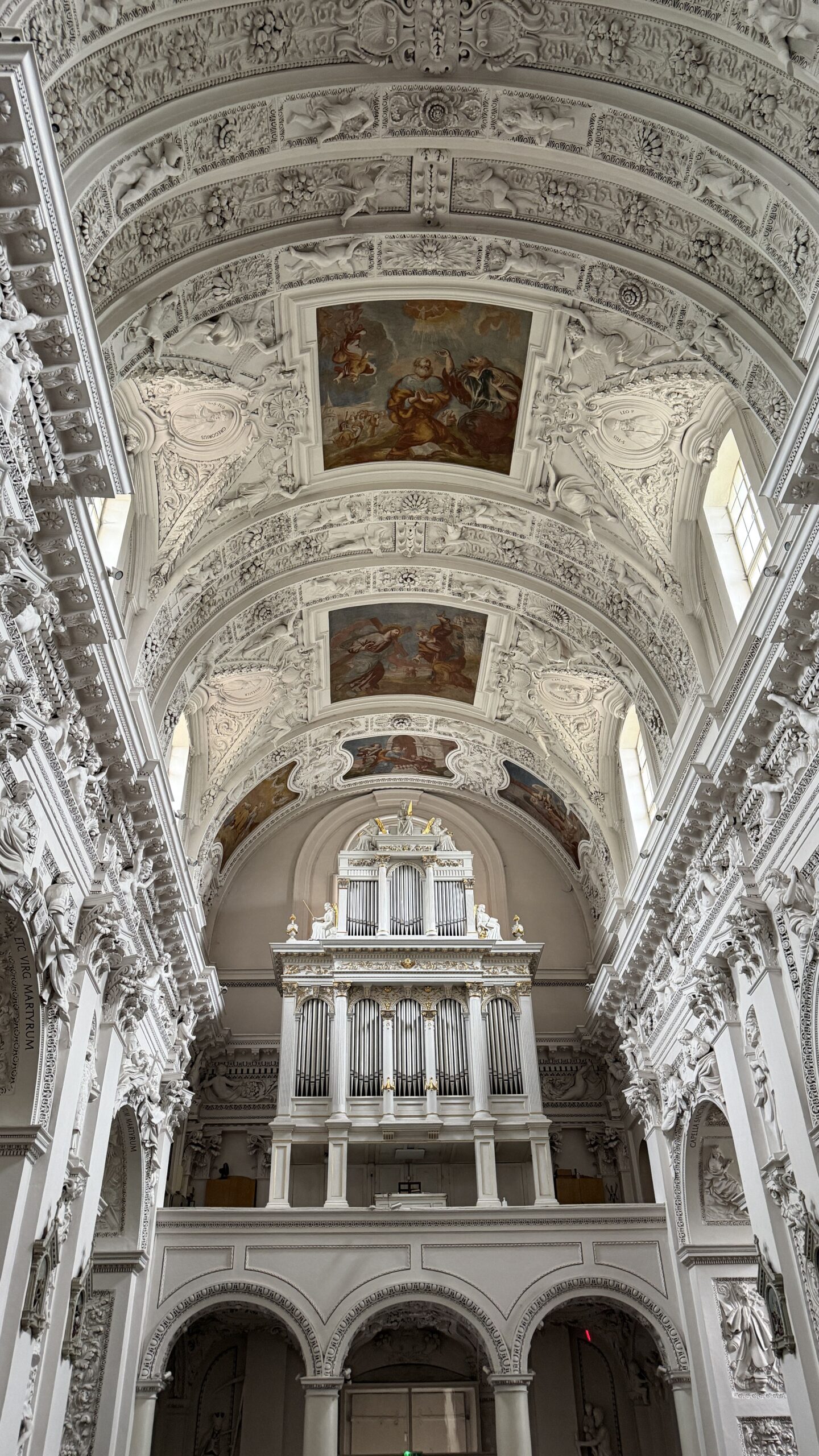
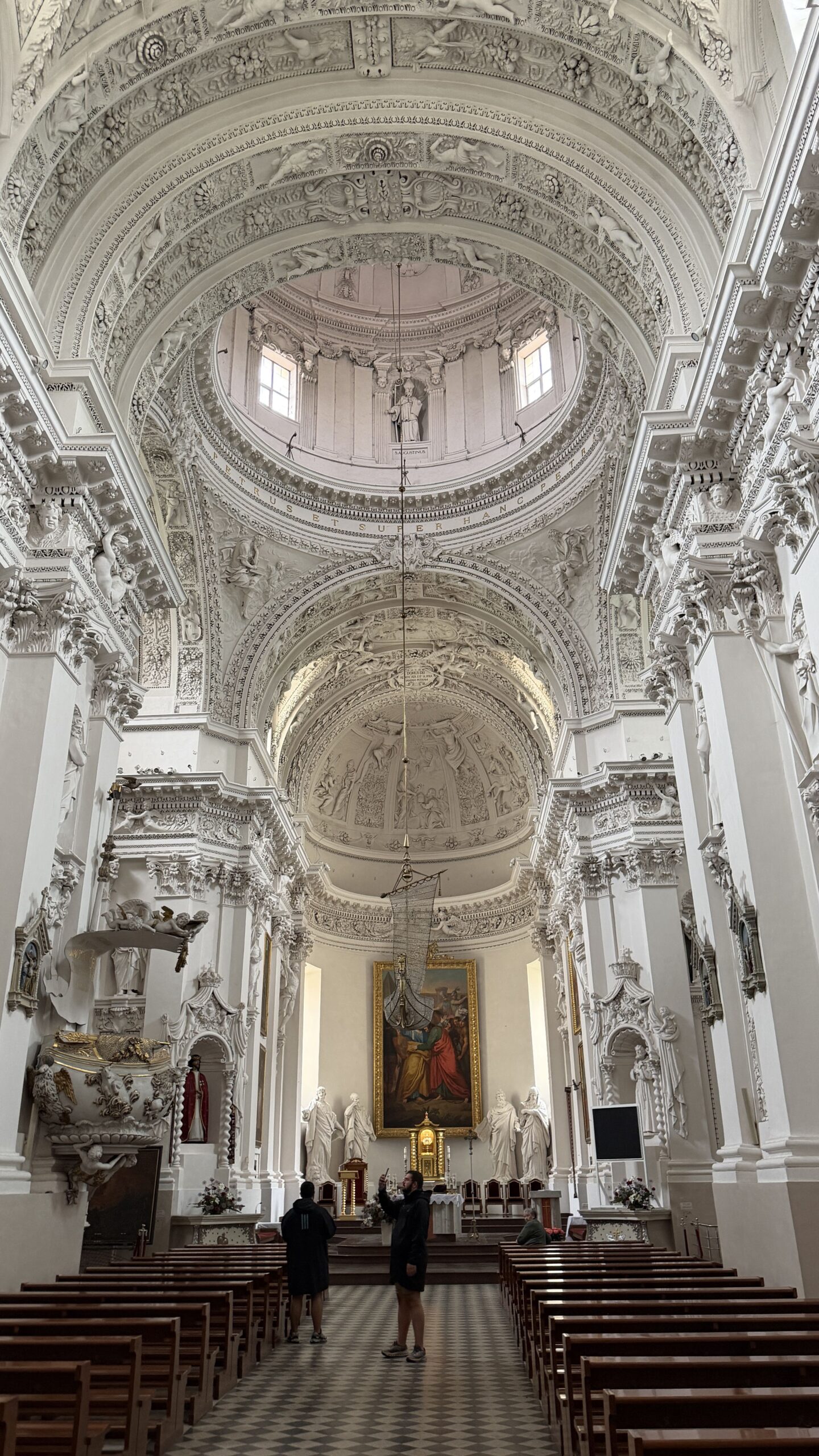
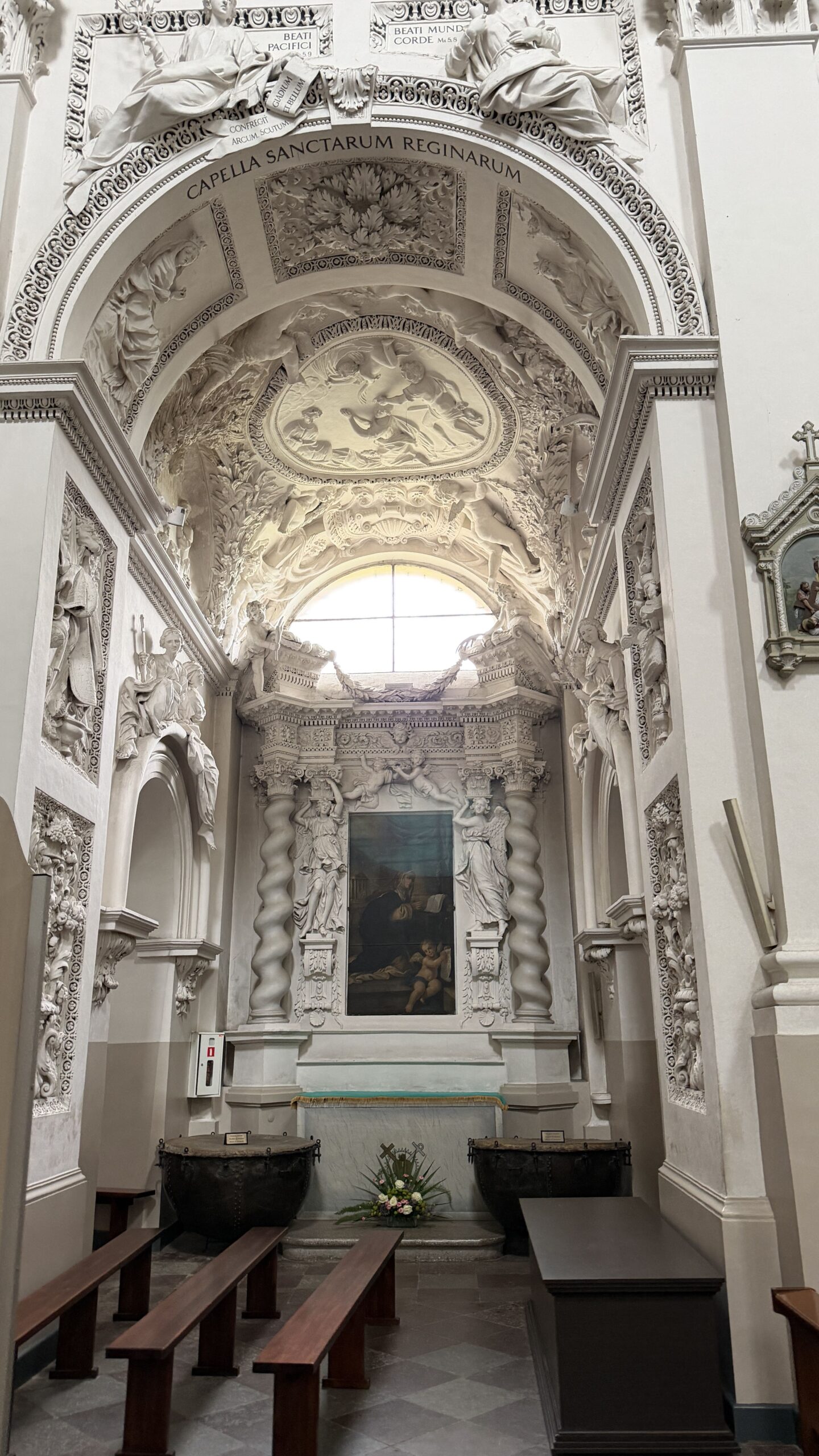
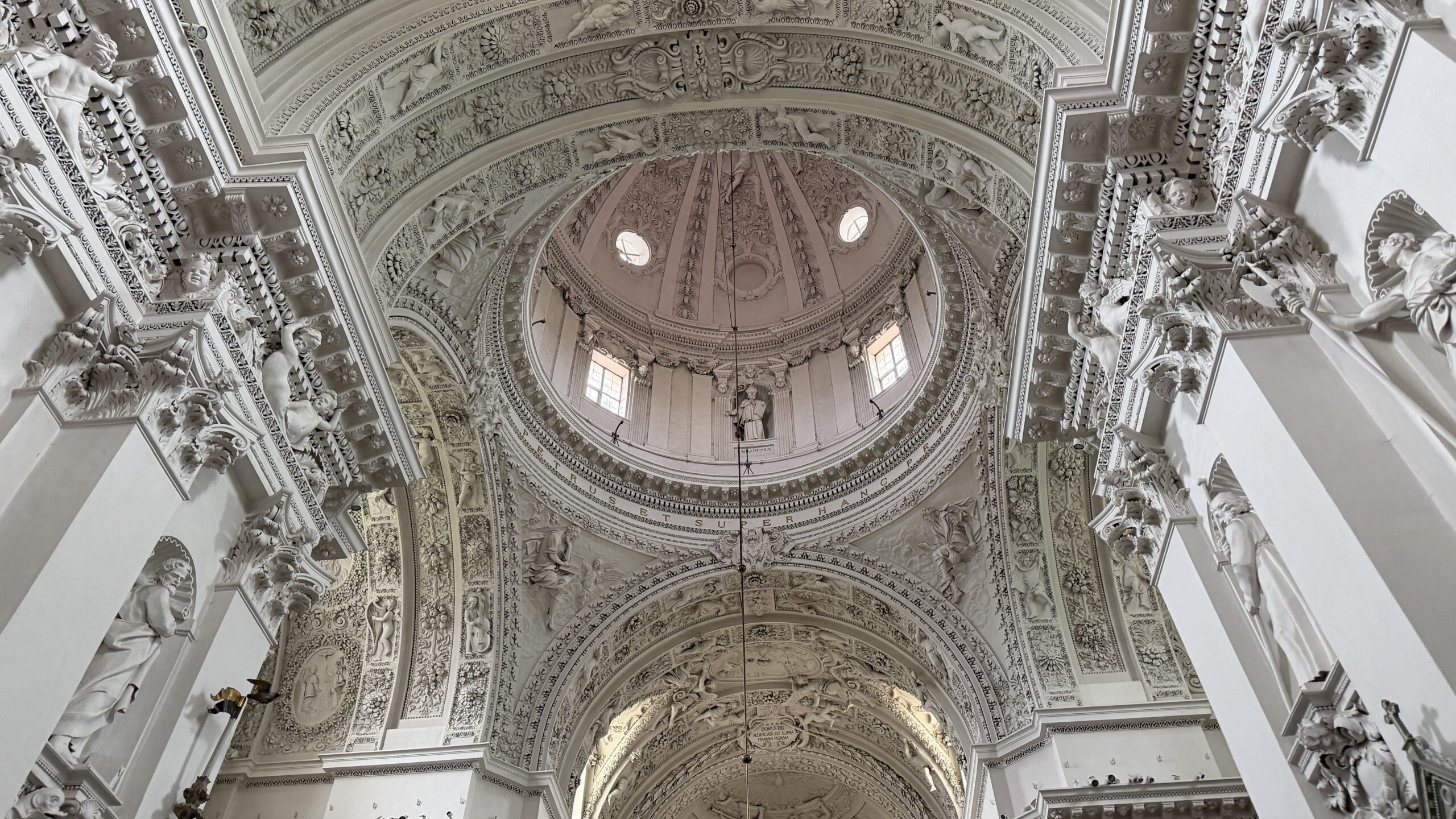
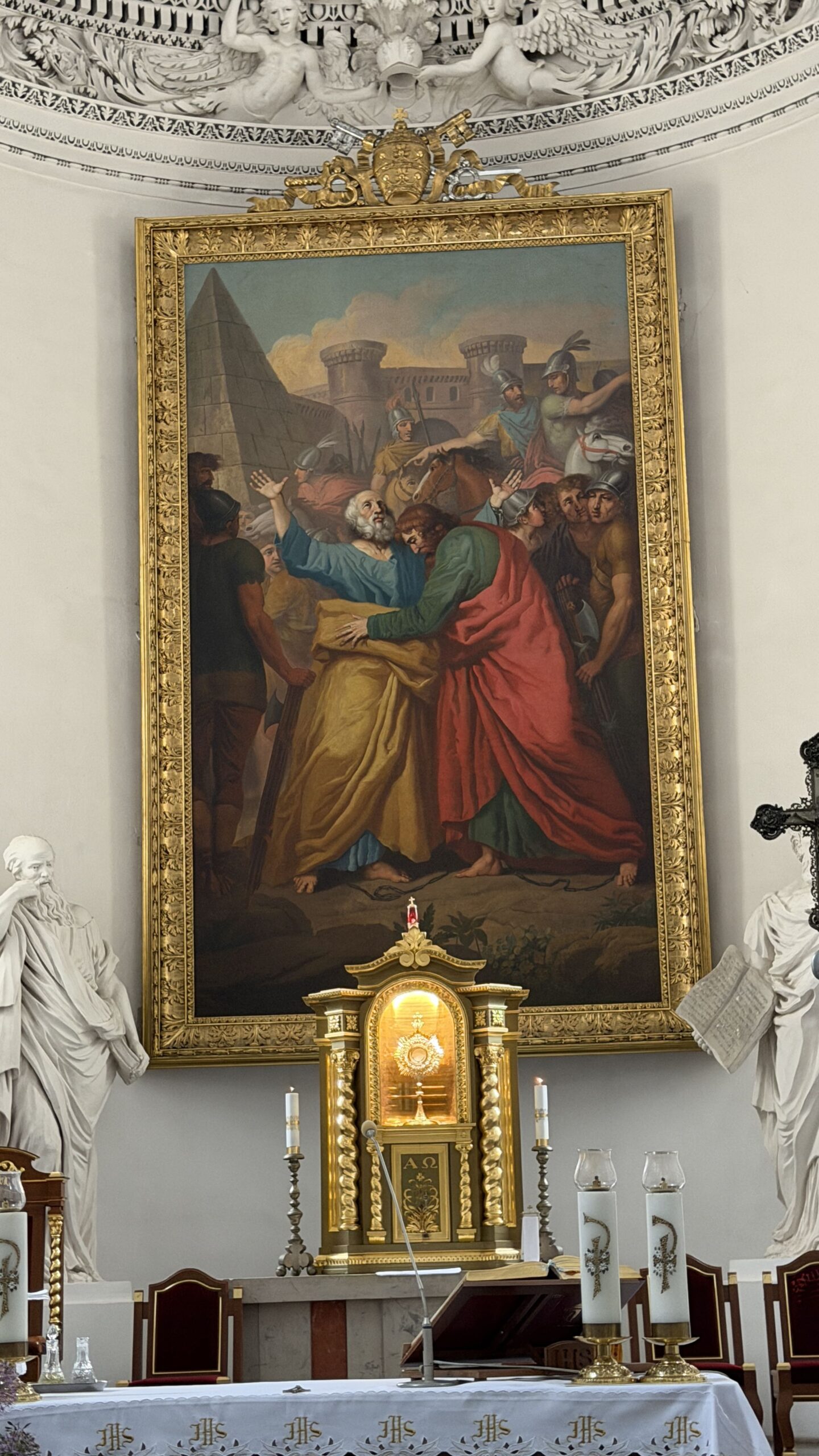
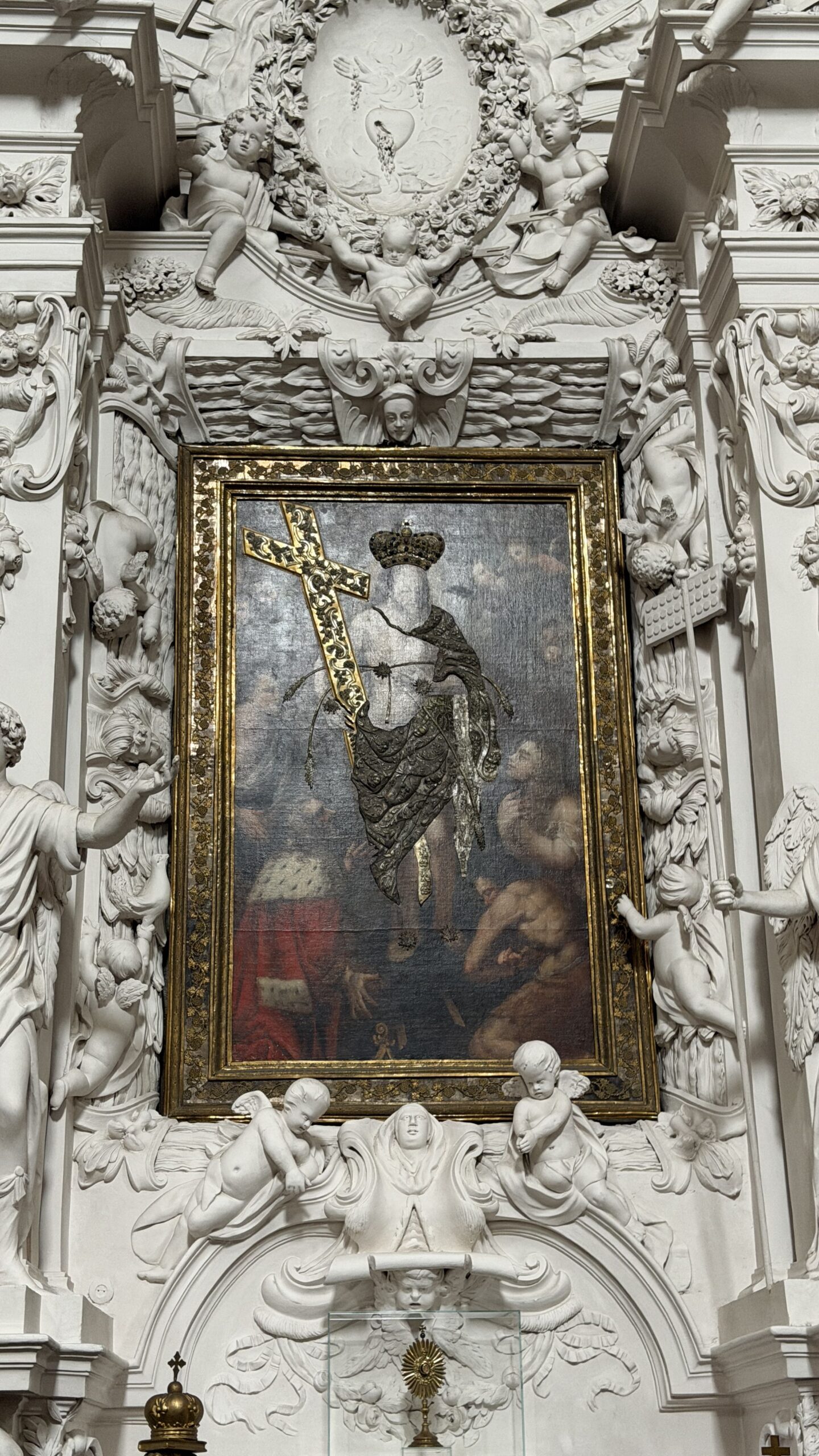
Our first stop was the magnificent Church of St. Peter and St. Paul. From the outside, the church looks elegant and simple, but stepping inside was a completely different experience. The interior was breathtaking, filled with thousands of small details, intricate carvings, and beautiful designs covering the walls and ceiling.
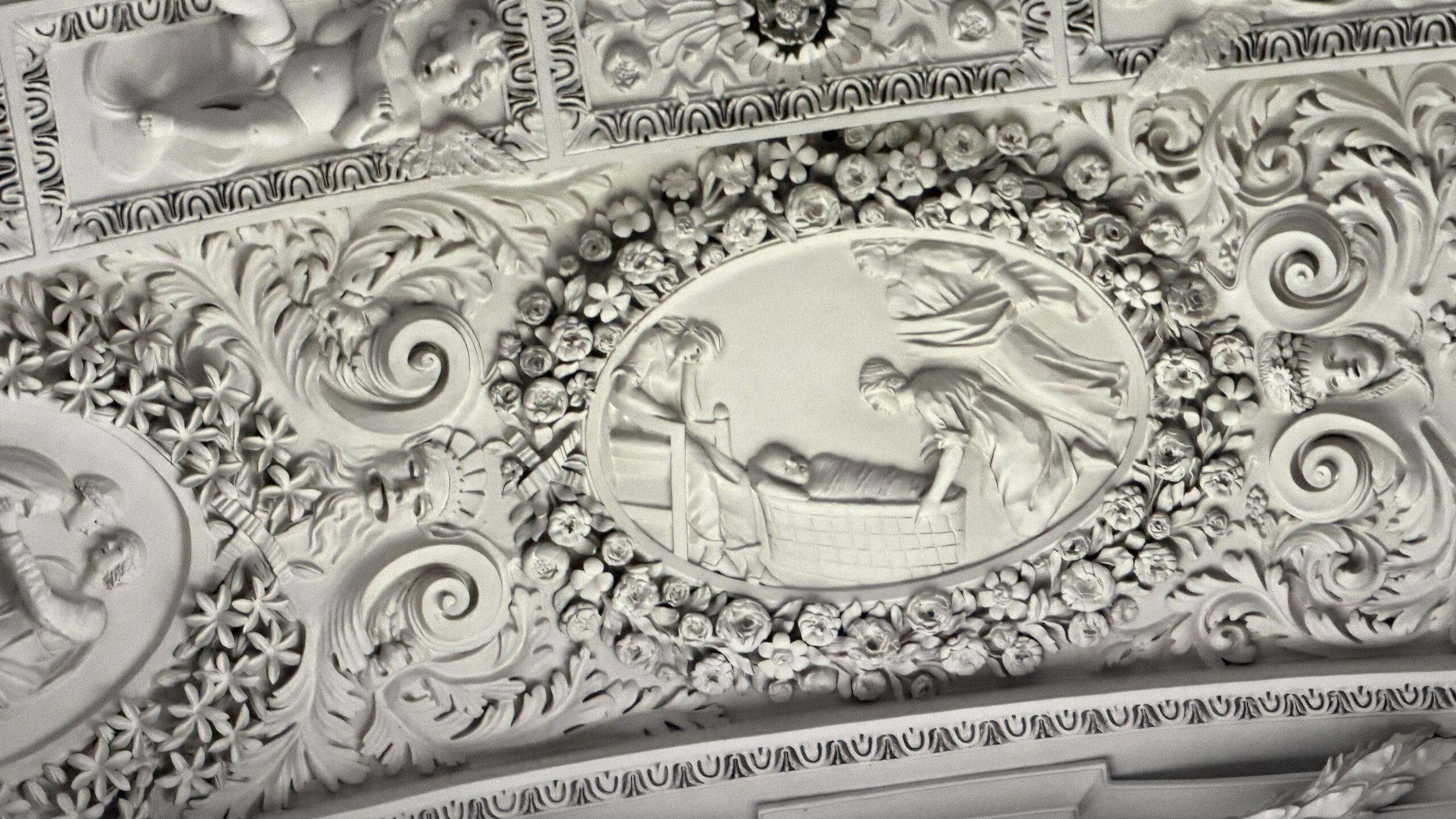
One of the most unique features of this church is its bright white interior. The decorations were created using white stucco, a mixture traditionally made from plaster, lime, and marble dust, giving the church a glowing appearance. Unlike many European churches filled with dark wood and colorful paintings, this church felt bright, peaceful, and almost magical.
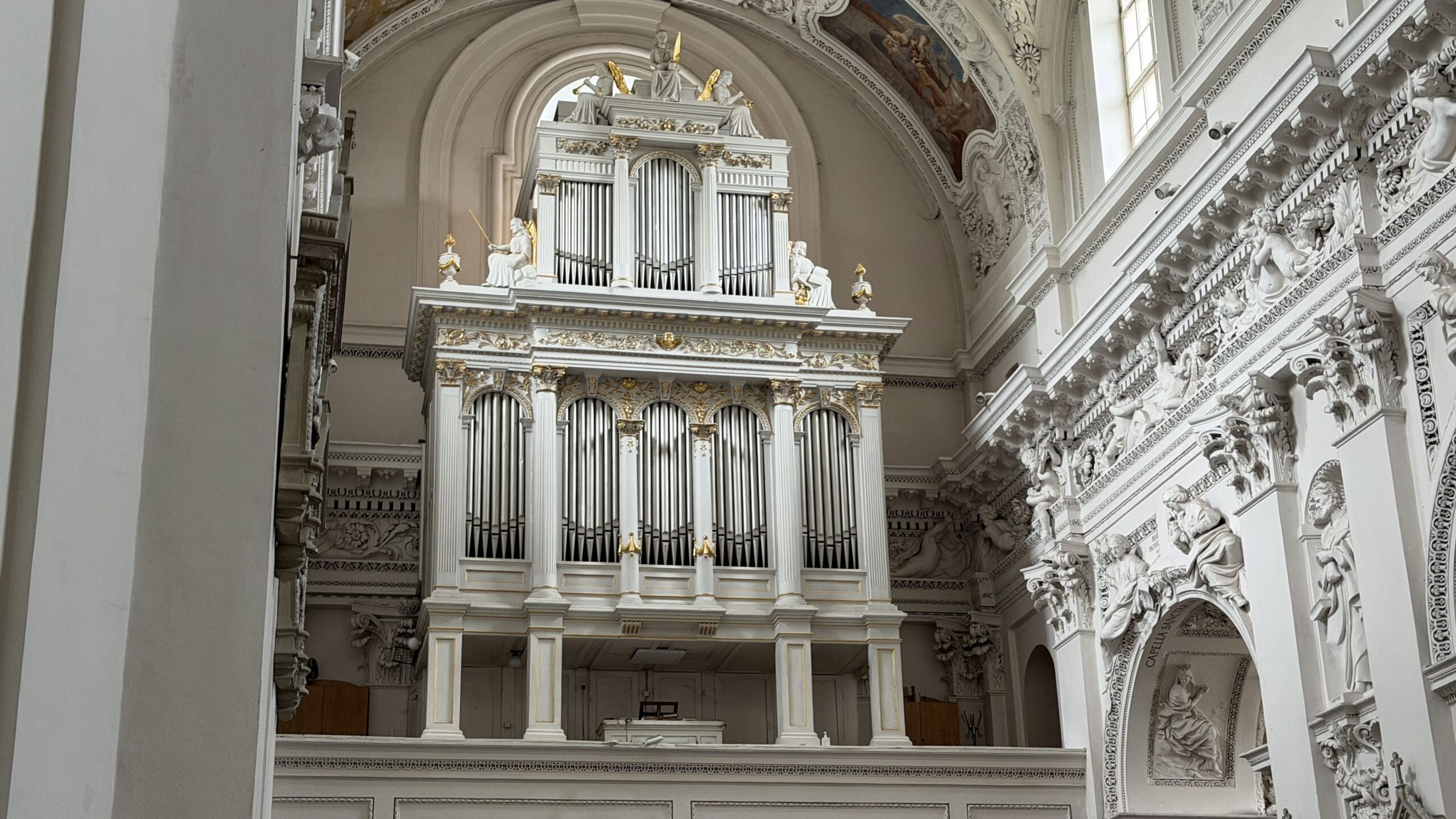
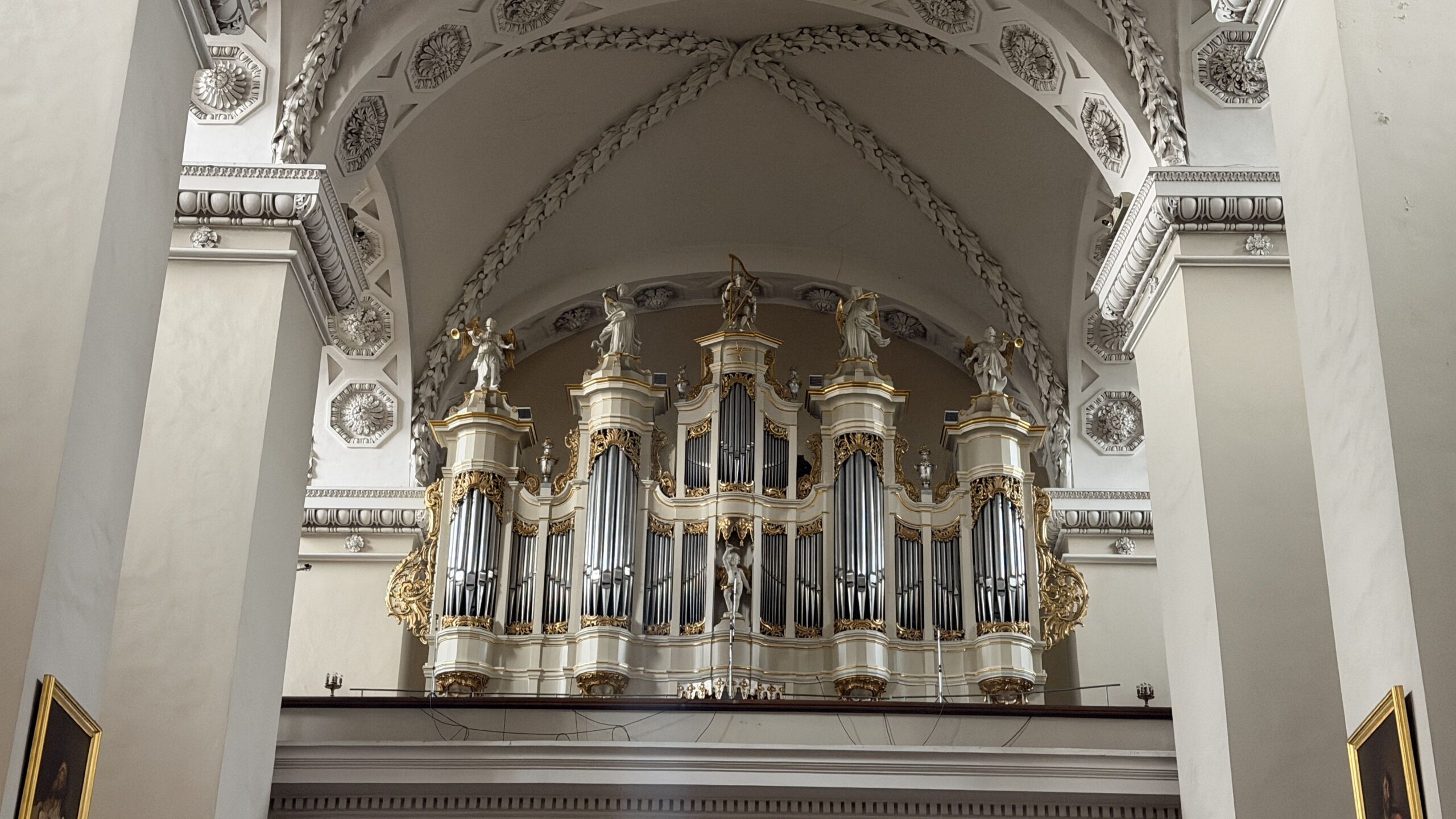
The main organ immediately caught our attention with its beautiful white and gold design, perfectly matching the rest of the interior. We also admired the many detailed oil paintings throughout the church, each adding another layer to the incredible artwork surrounding us. There are 2000+ white stucco sculptures and every one is different, Angles, Demons, nature, soliders and endless details.
It was our first introduction to Vilnius, and already the city felt completely different from the European cities we had visited before. The colors, architecture, and style of the buildings had a character of their own.
Vilnius Old Town – A Walk Through History
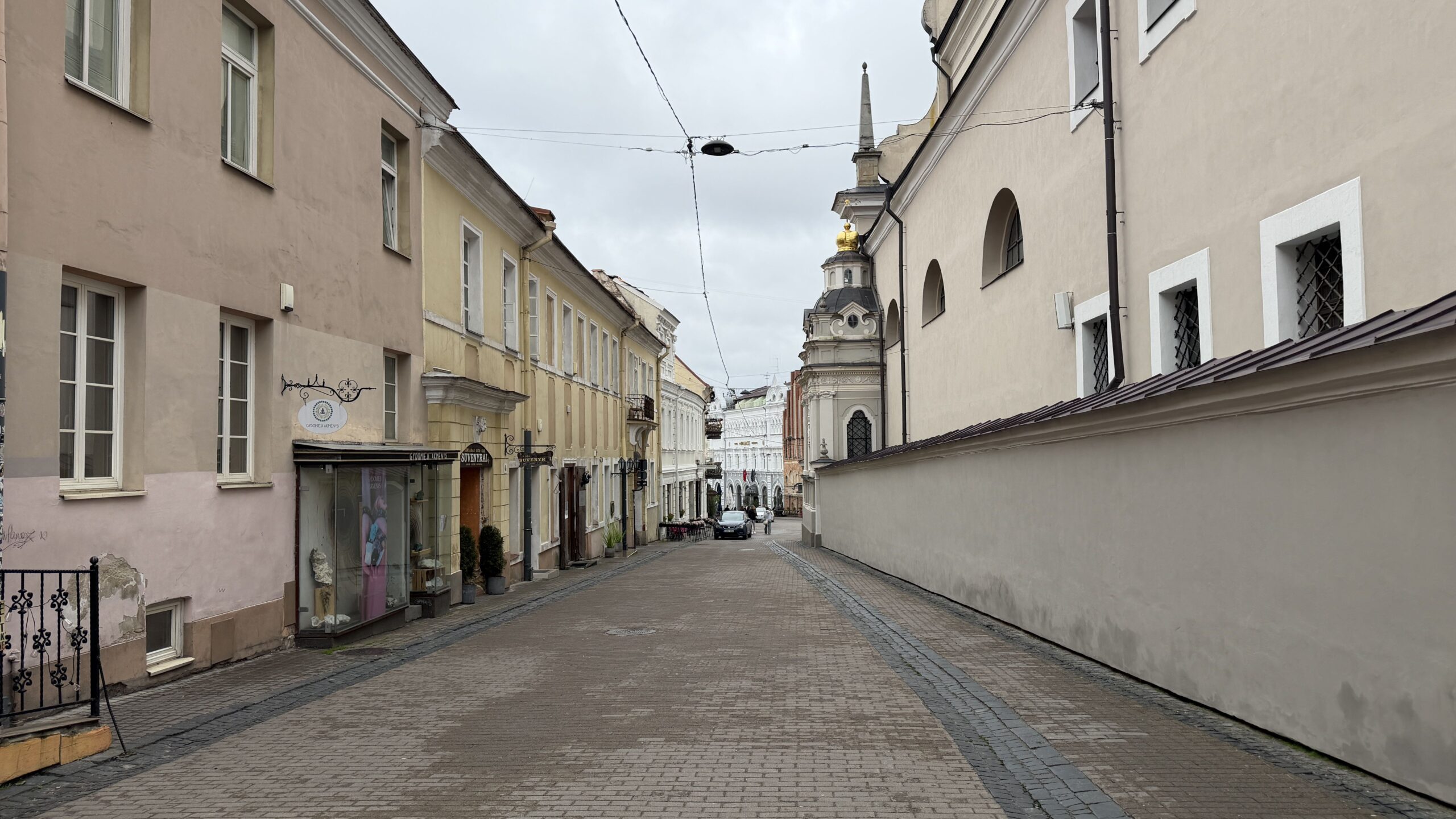
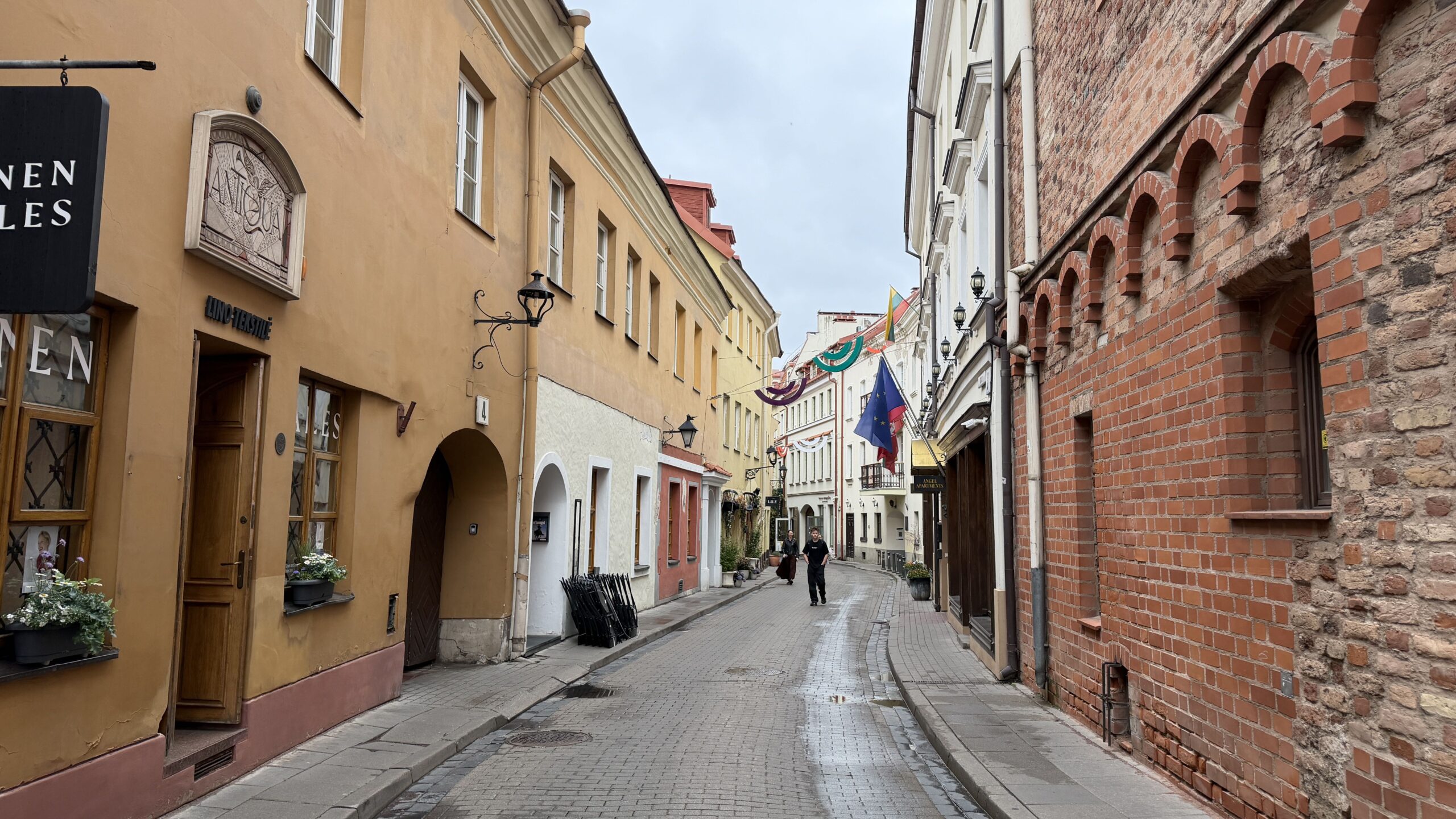
From there, we continued toward Vilnius Old Town, a UNESCO World Heritage Site and one of the largest surviving medieval old towns in Europe. Walking through the cobblestone streets felt like stepping back in time. Every corner revealed another beautiful church, colorful building, or hidden courtyard.
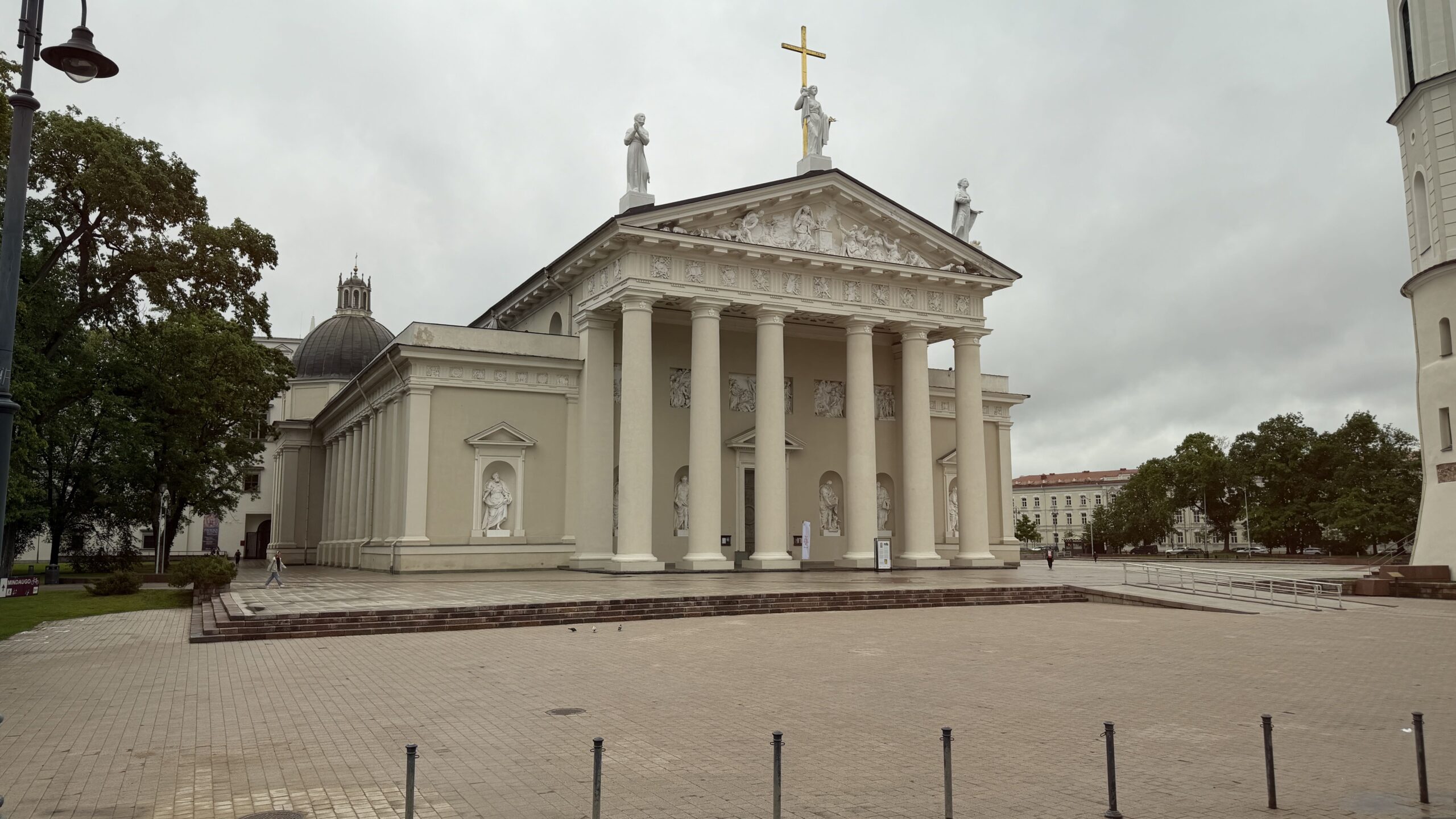
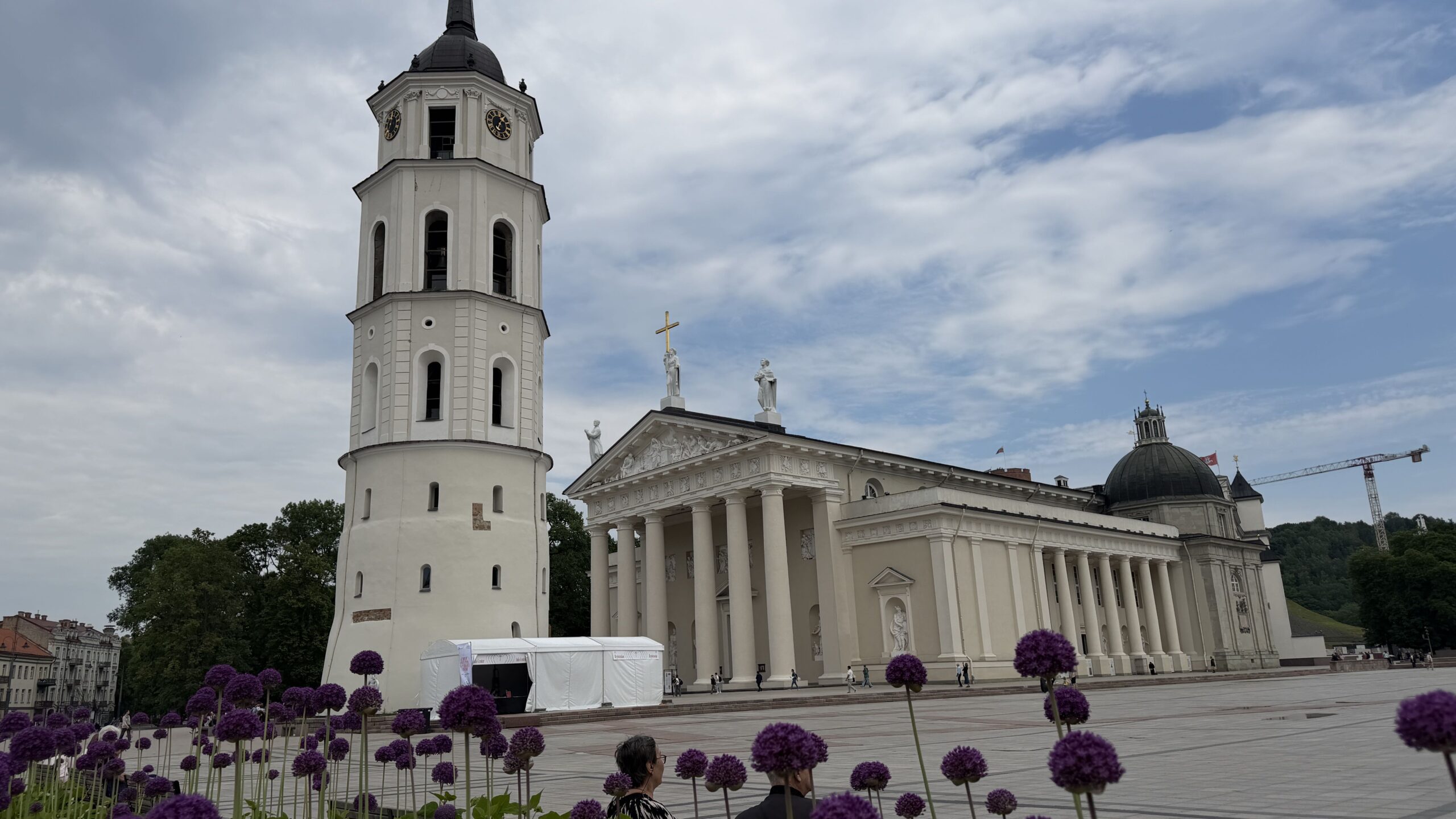
Our next stop was the impressive Vilnius Cathedral, located in Cathedral Square. This iconic white cathedral has been the spiritual heart of Lithuania for centuries and stands as one of the city’s most recognizable landmarks.
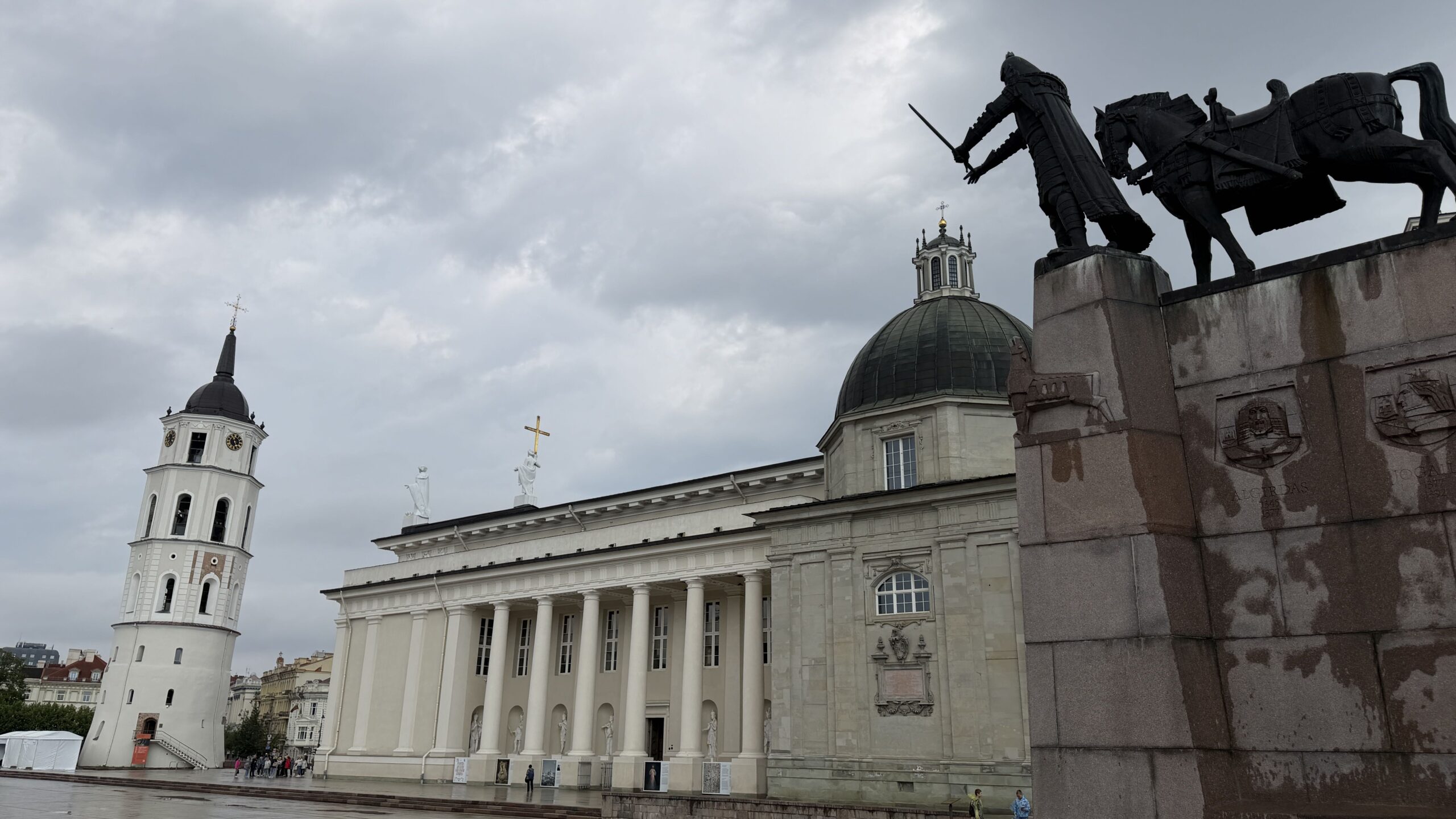
As we walked deeper into the Old Town, we visited several important historic sites, including the Gate of Dawn Chapel, one of the most famous religious landmarks in Lithuania, and the Church and Monastery of the Holy Trinity.
We also passed the beautiful Church of St. Casimir, one of the oldest Baroque churches in Vilnius.
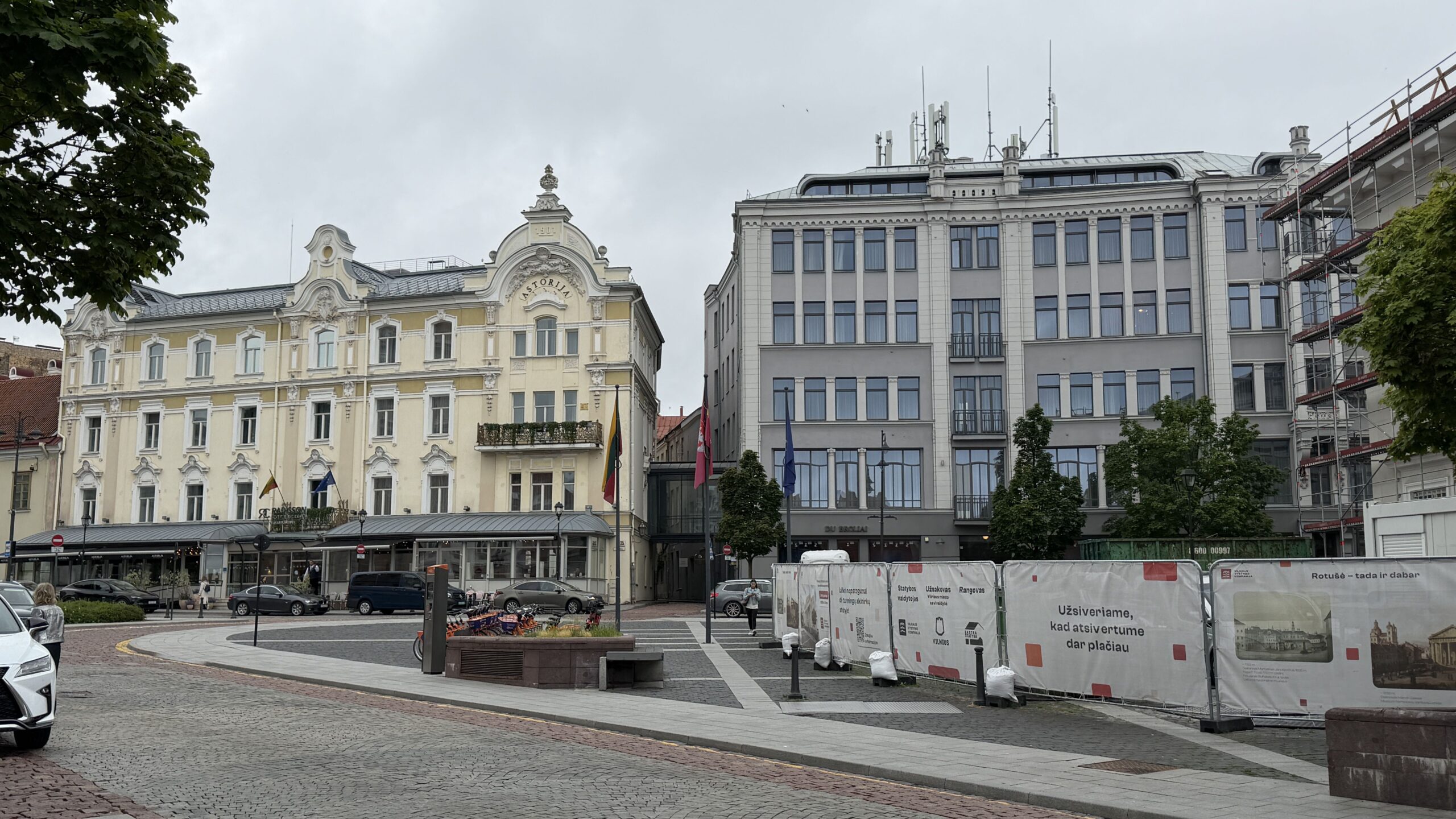
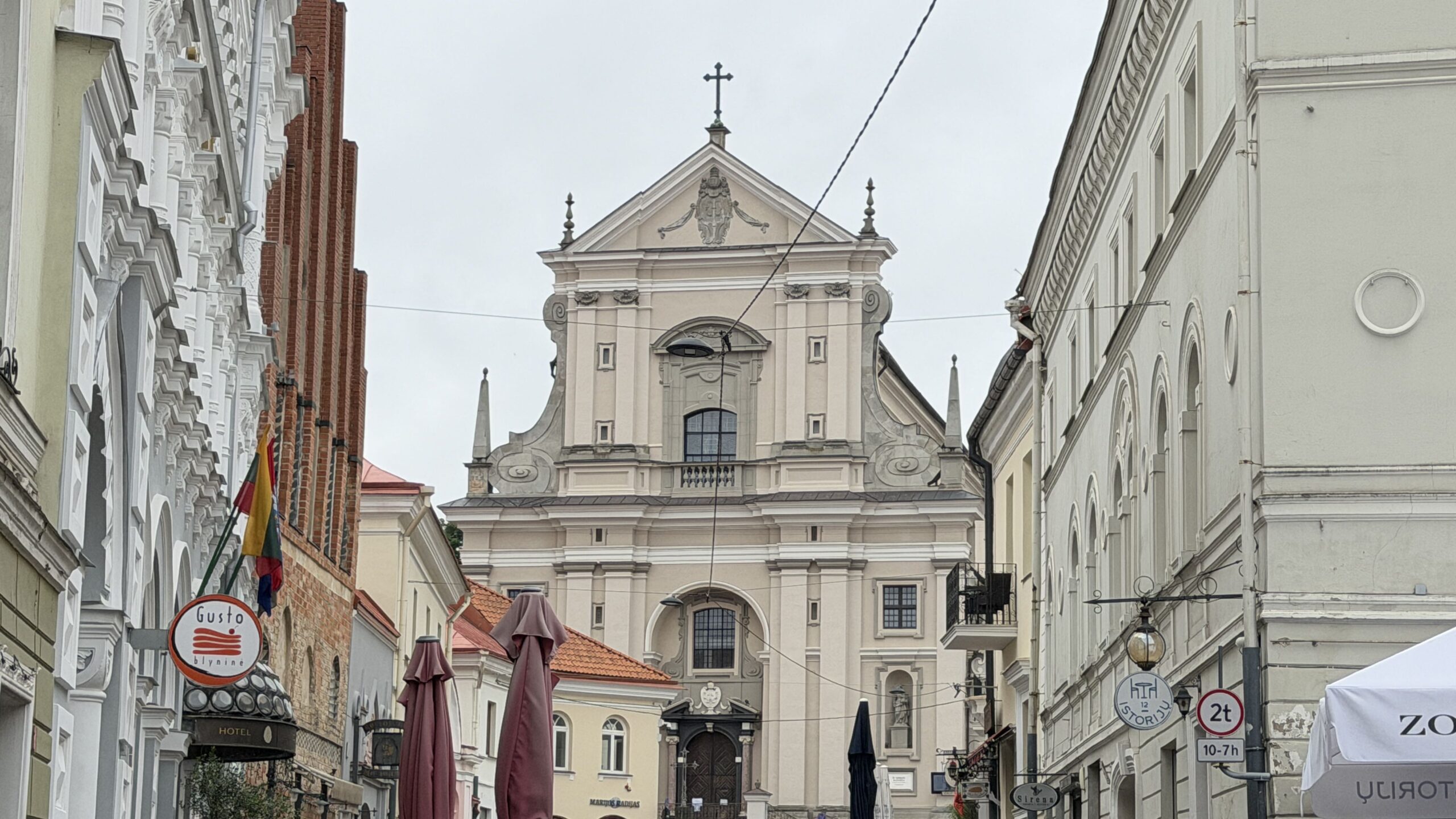
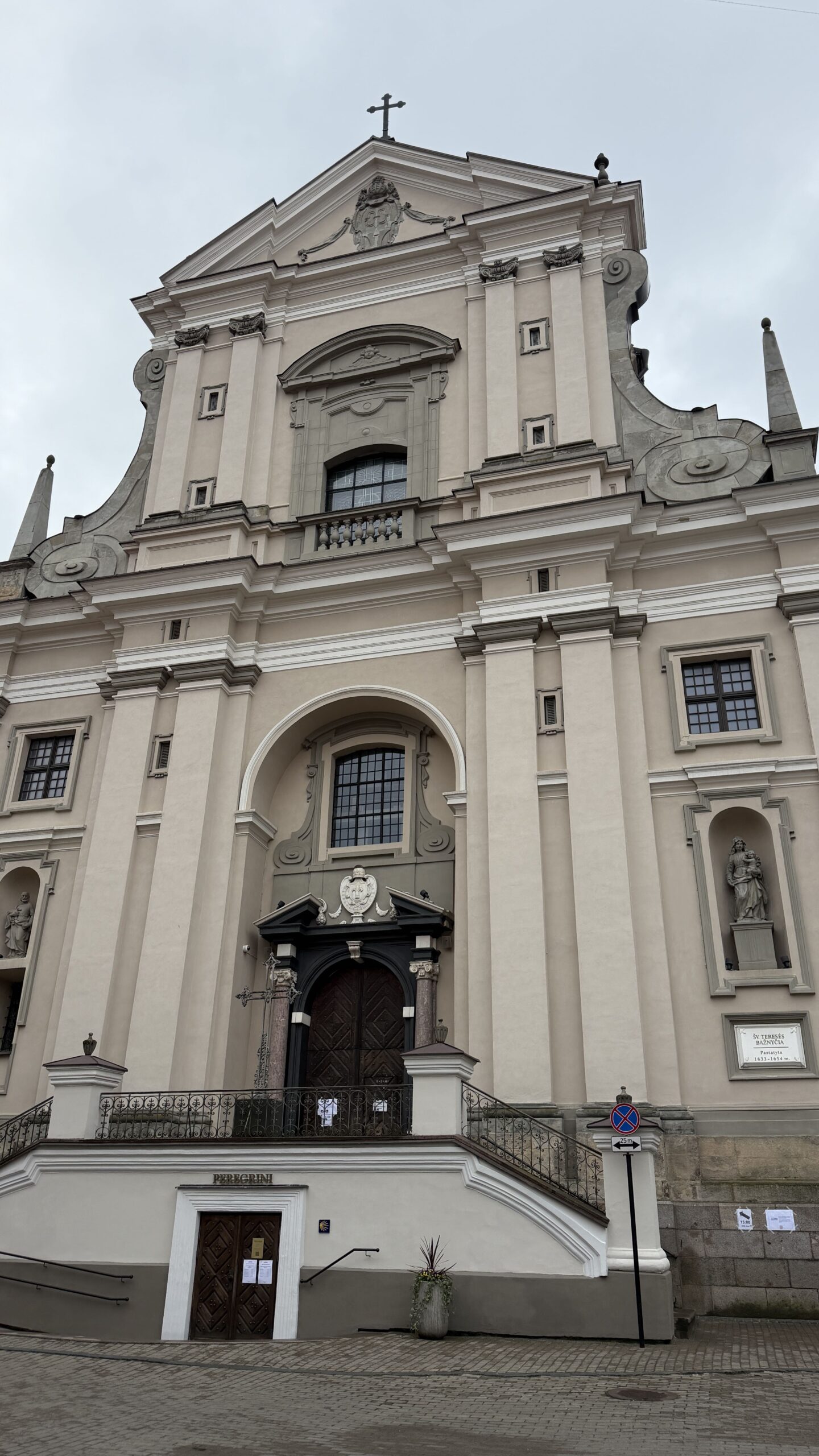
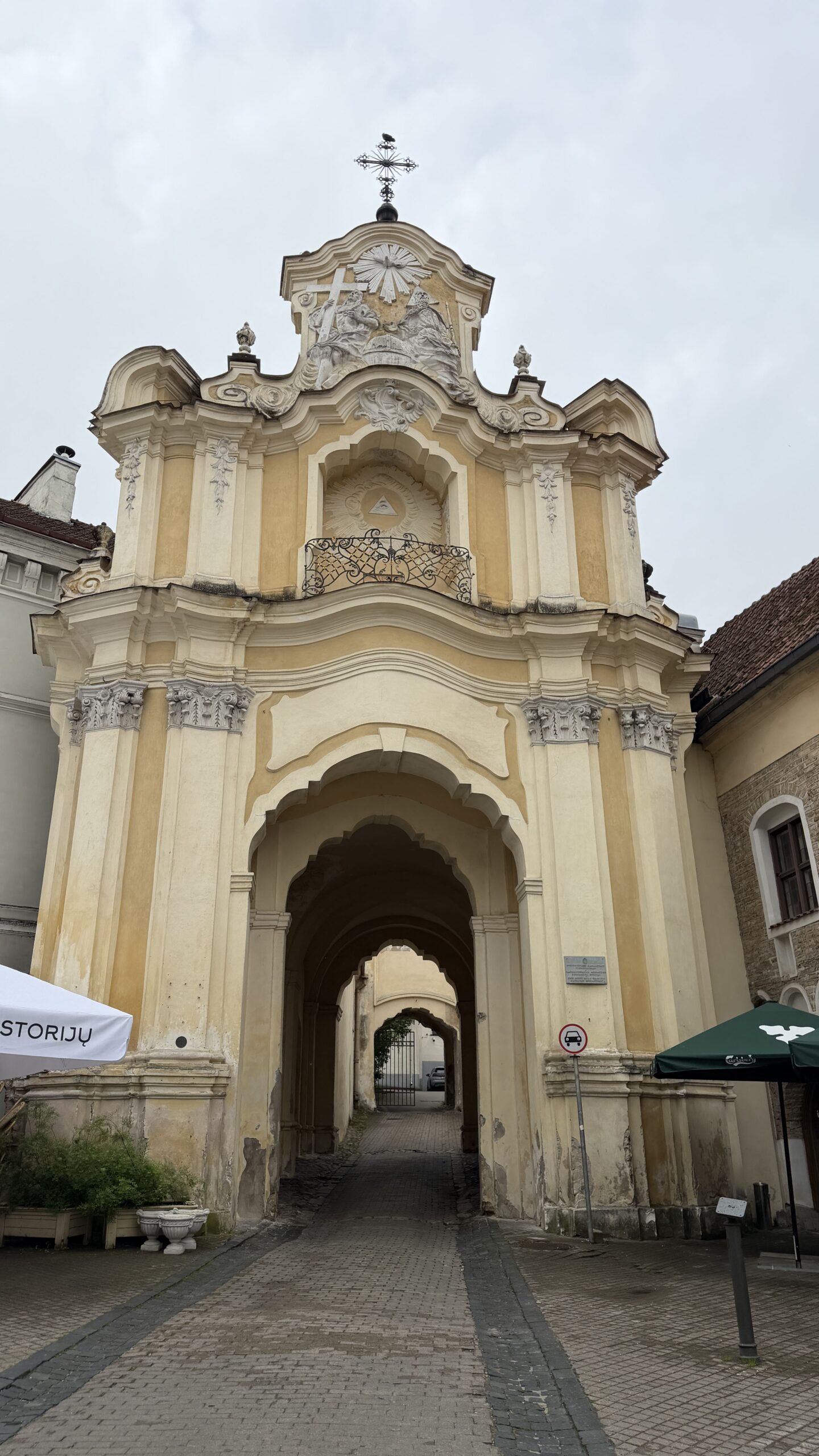
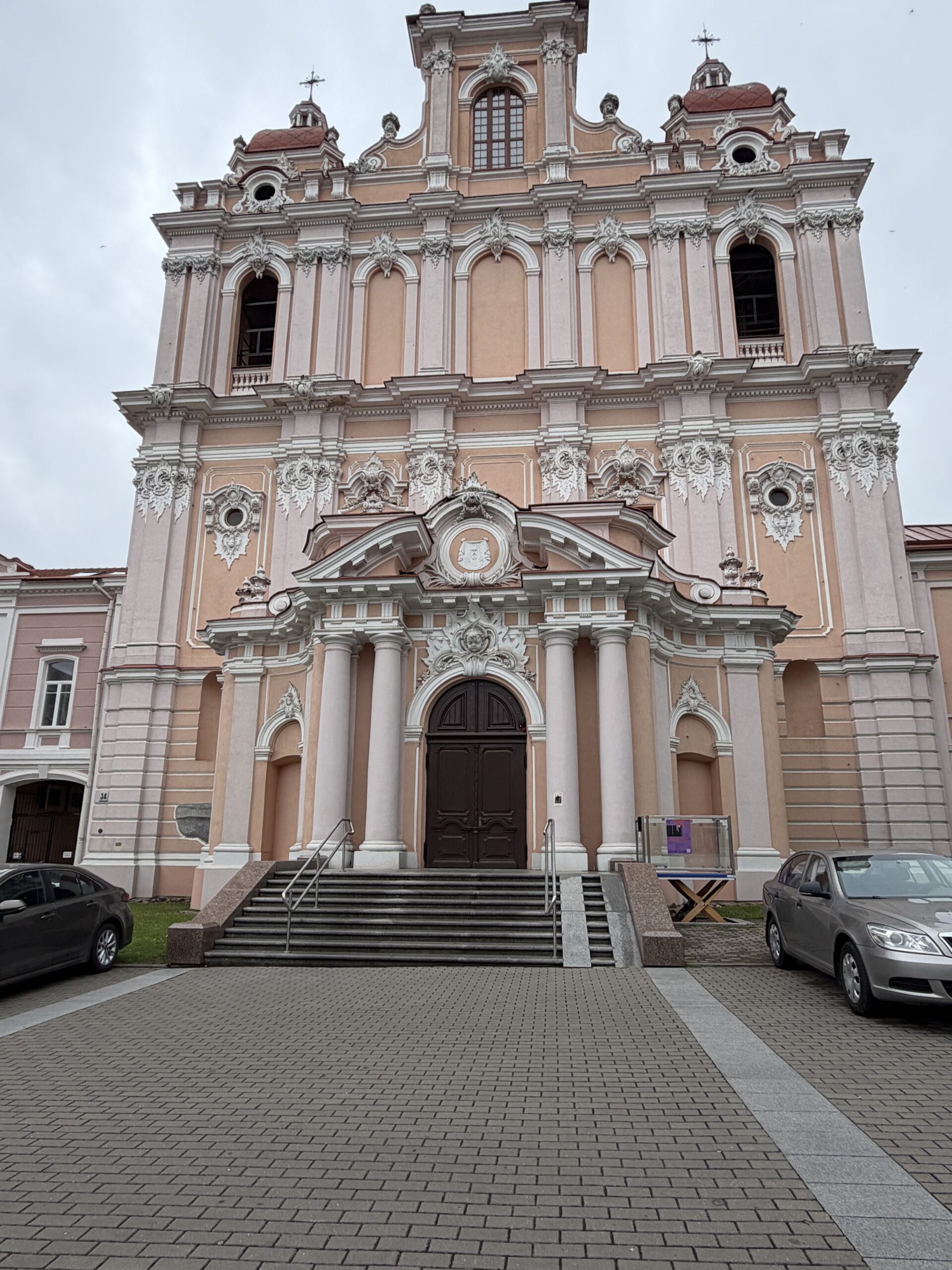
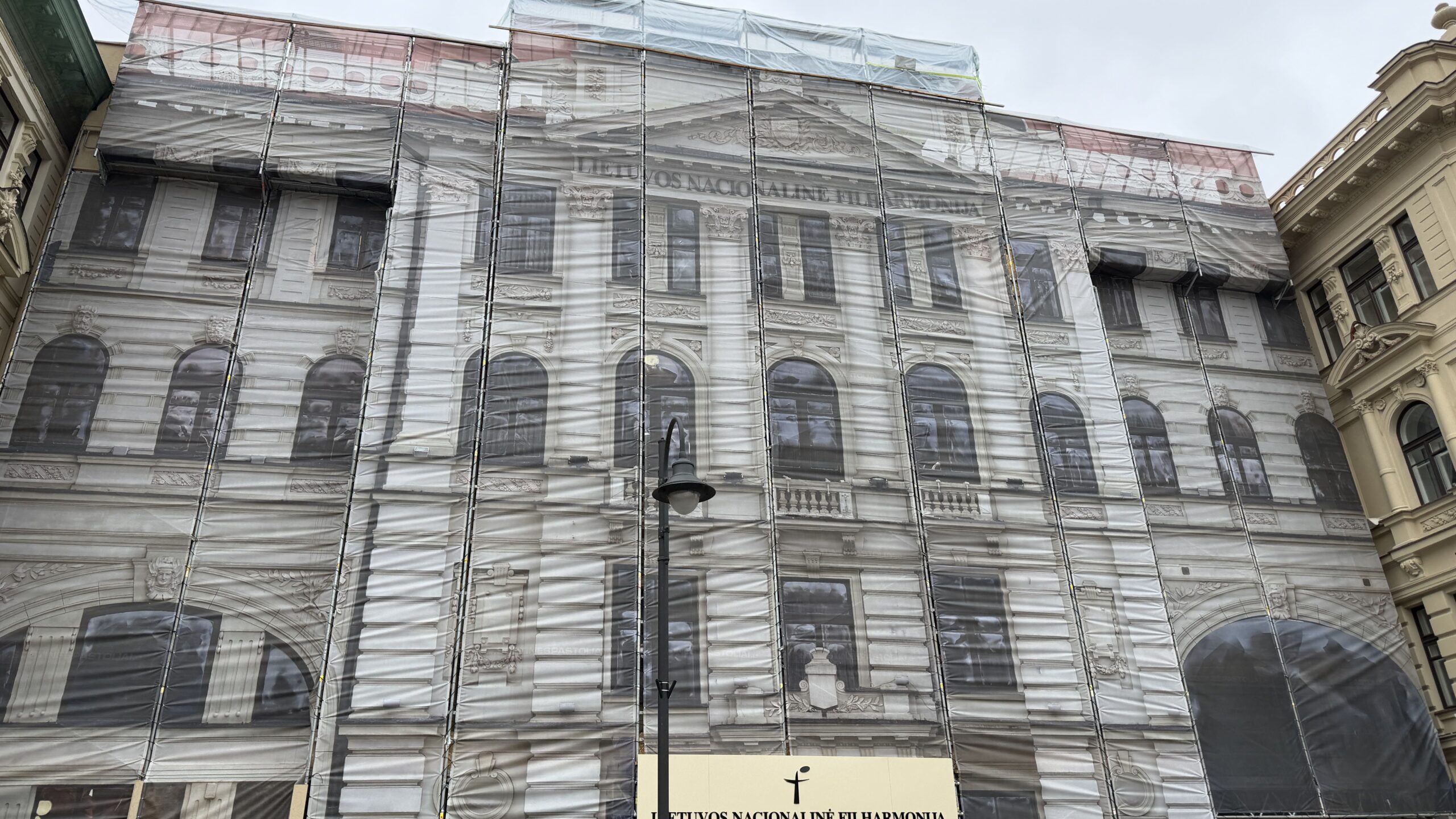
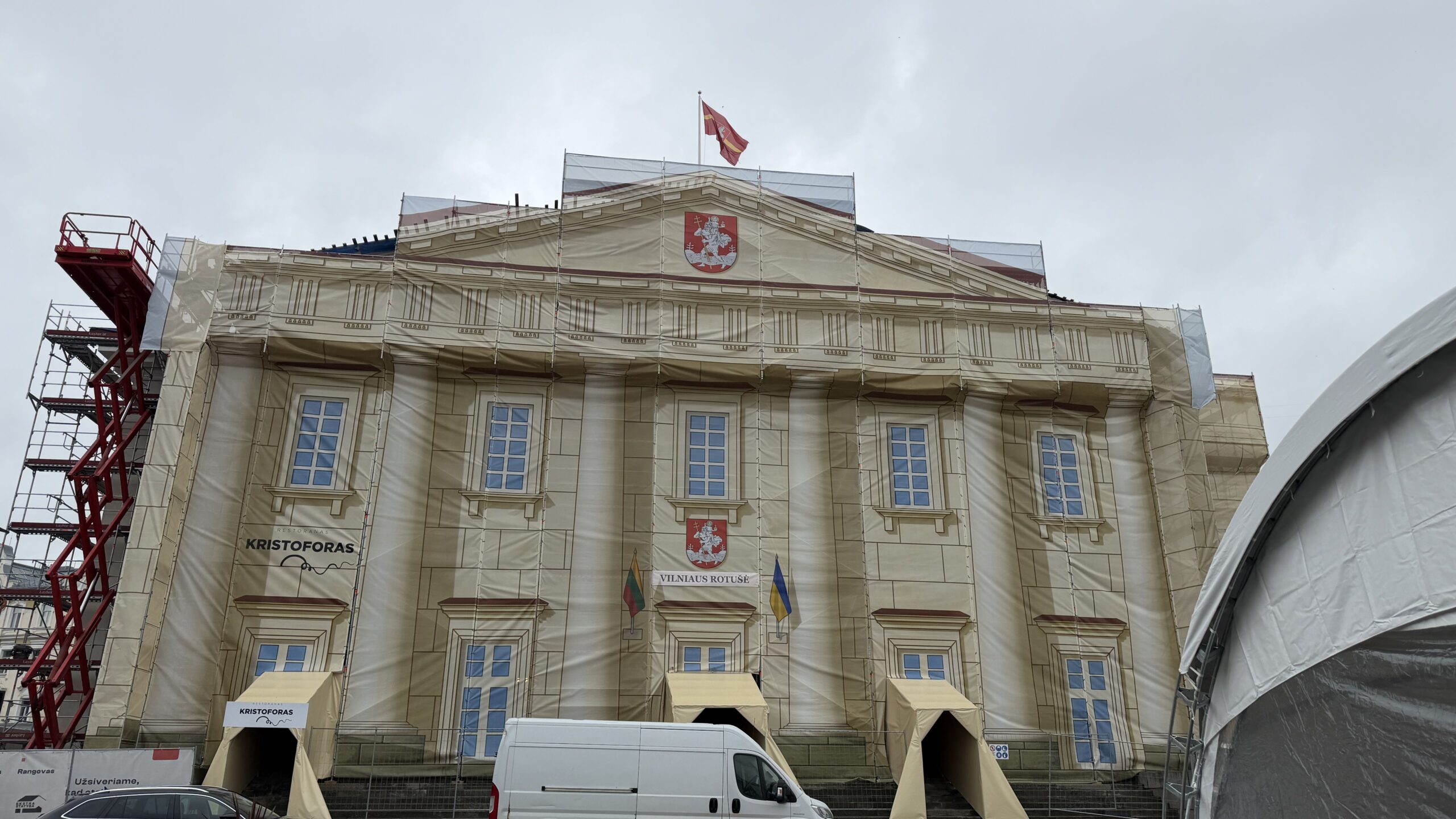
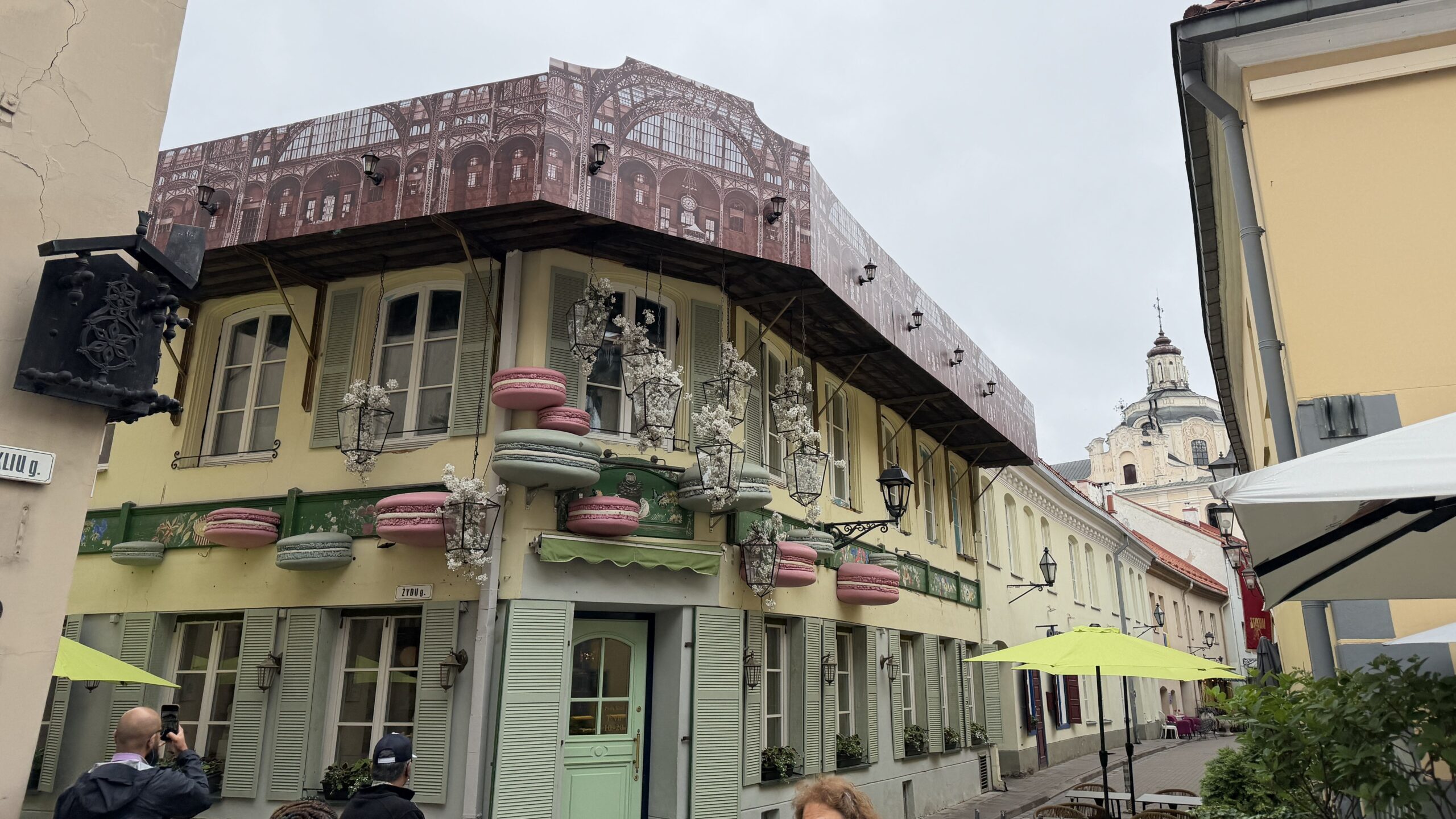
One interesting thing our guide pointed out was how carefully historic buildings are preserved during renovations. When a building is being restored, the construction covering often displays an exact replica of the finished building. These images are created based on historical paintings and designs, allowing the city to maintain its historic appearance even while restoration work is taking place.
Exploring Vilnius in the Rain
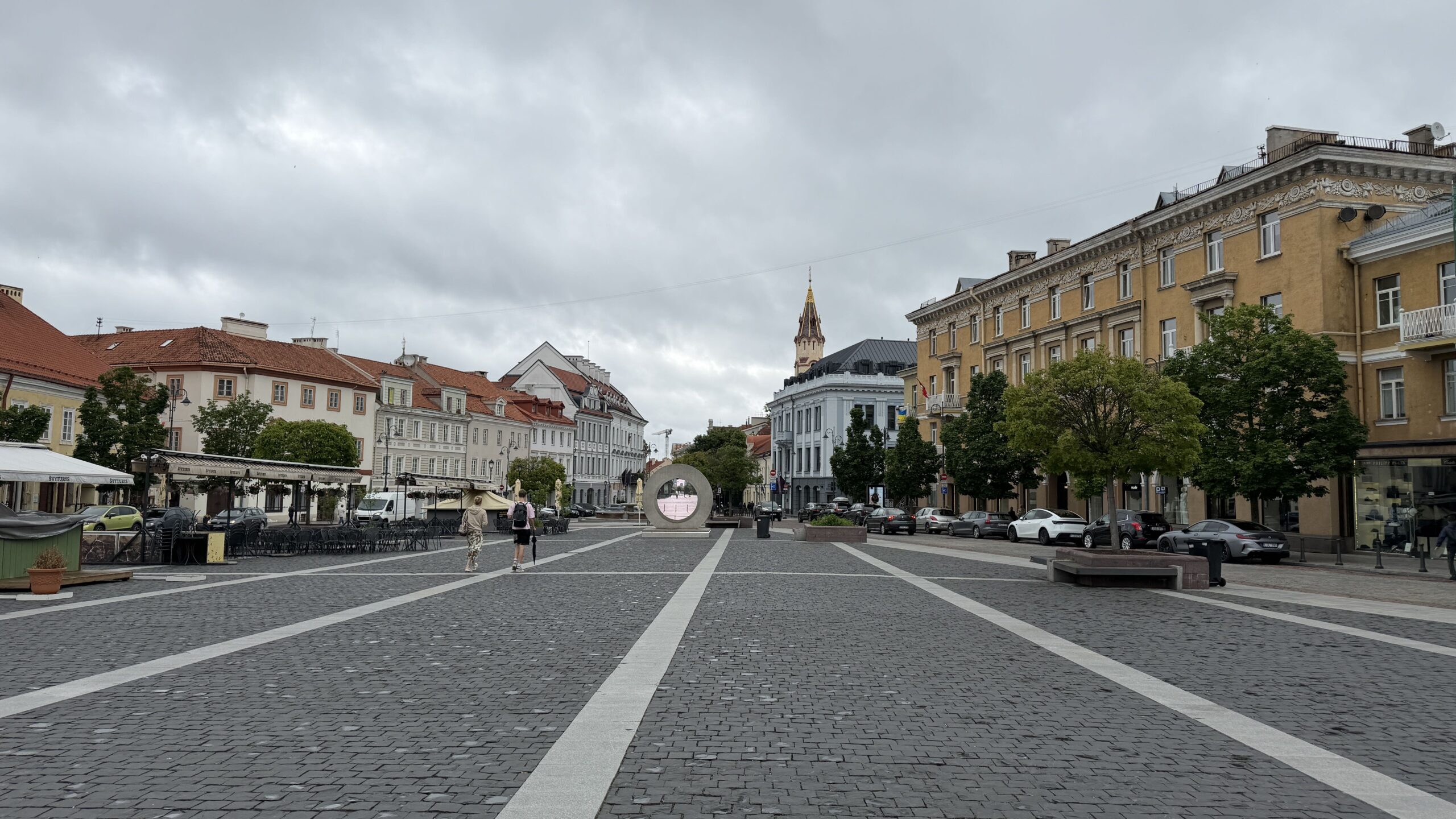
The drizzle continued as we walked through the Old Town, but it actually added to the charm. The streets were quiet, with very few tourists around, and most restaurants and cafés were still preparing to open for the day. It felt like we had the historic city almost to ourselves.
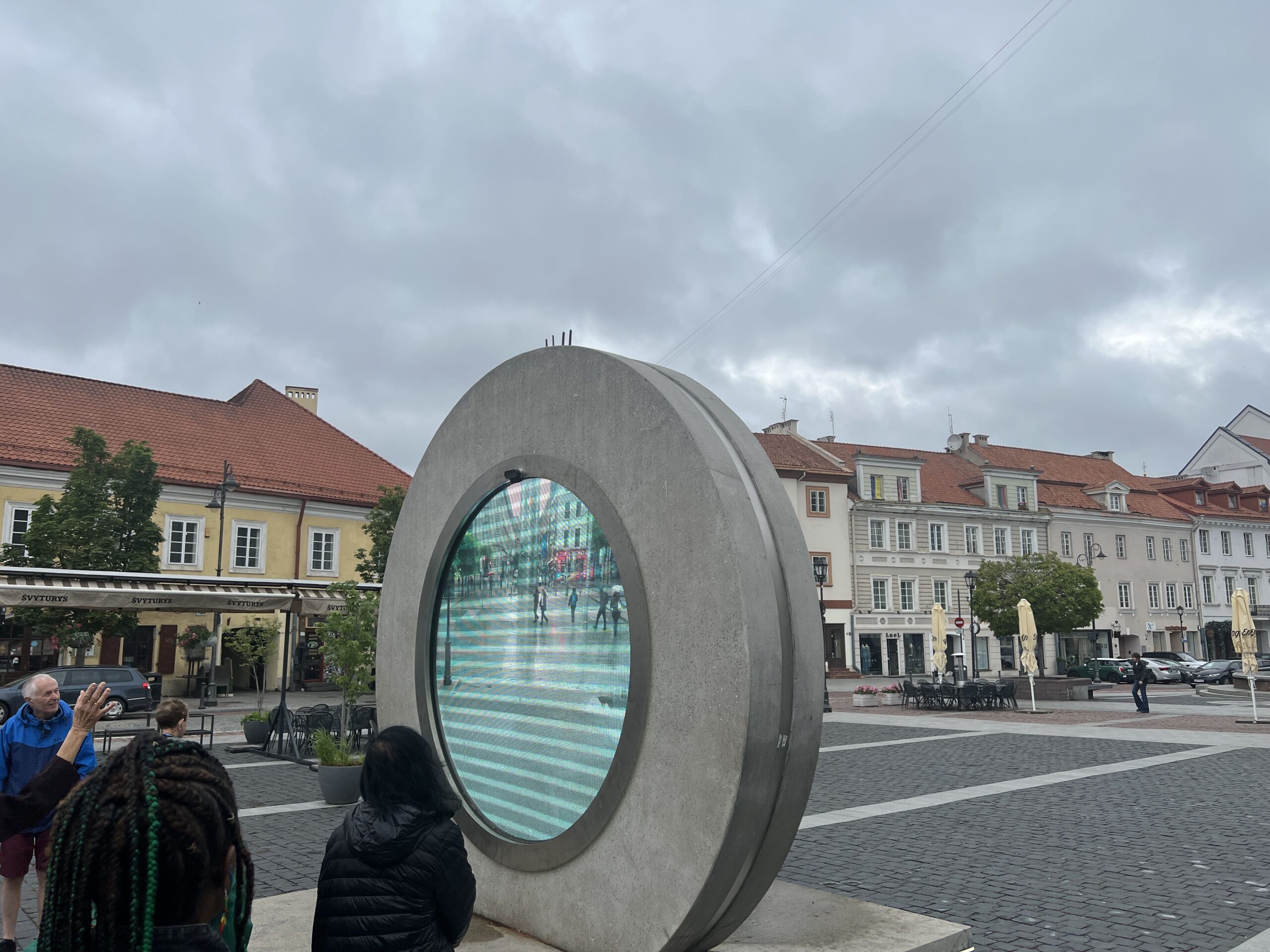
One of the most fascinating modern attractions we discovered was a special portal connecting Vilnius with other cities around the world. Located in the Old Town, this interactive installation allows people in different countries to see and communicate with each other through live cameras. During our visit, we saw people from places like New York and London appearing on the screen. It was a fun reminder that even a historic city like Vilnius has embraced modern technology to connect with the world.
Vilnius Ghetto – Remembering the Jewish History
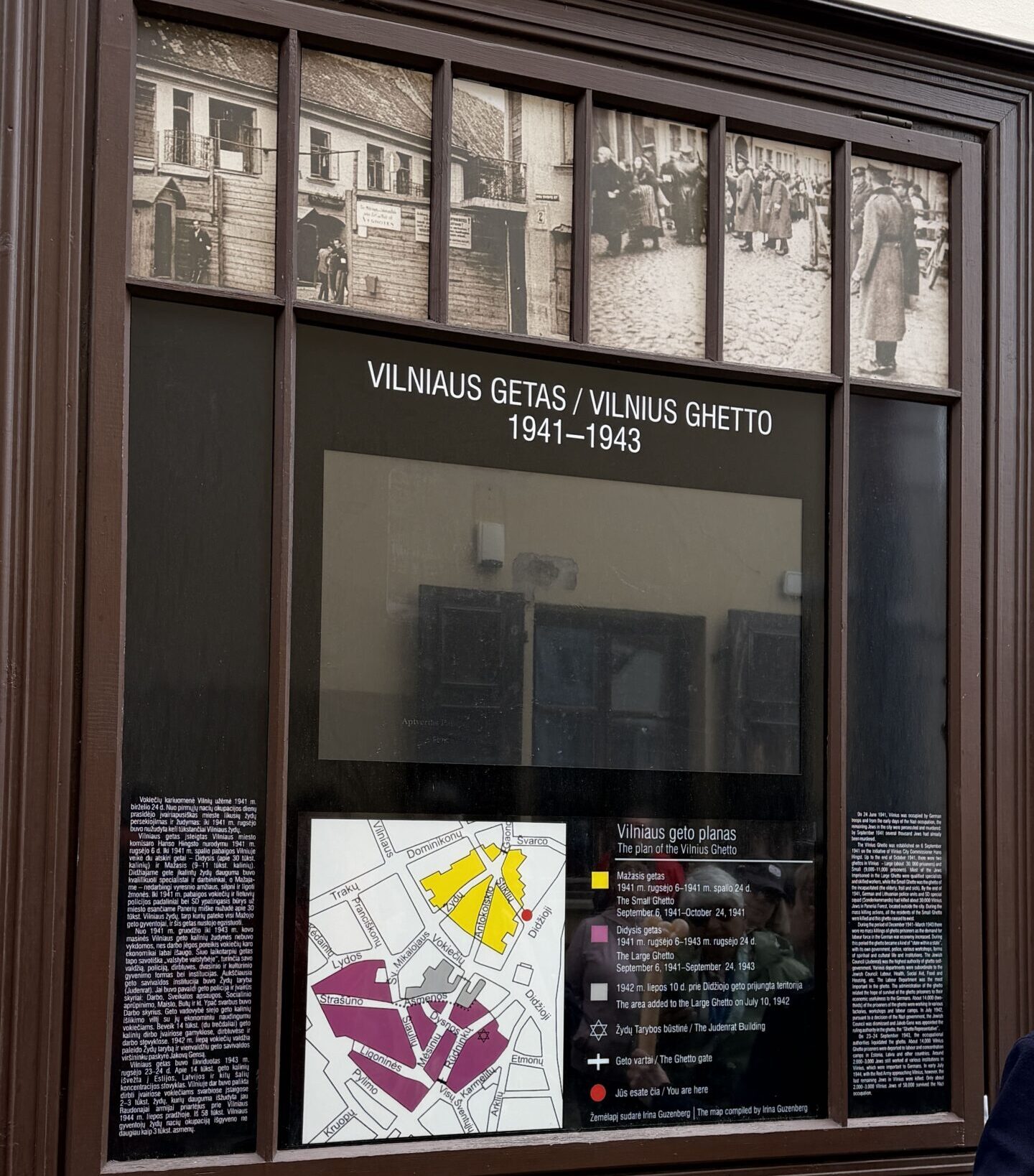
Our guide also took us through the streets of the former Vilnius Jewish Quarter, sharing the difficult history of the Vilnius Ghetto during World War II. Before the war, Vilnius had a large and vibrant Jewish community and was sometimes called the “Jerusalem of Lithuania” because of its importance in Jewish culture and learning.
The guide shared stories of Lithuanian people who risked their own lives to hide and save Jewish children during the Holocaust. Walking through these streets was a powerful reminder of the city’s complex history—the beauty of its architecture alongside the painful memories preserved within its walls.
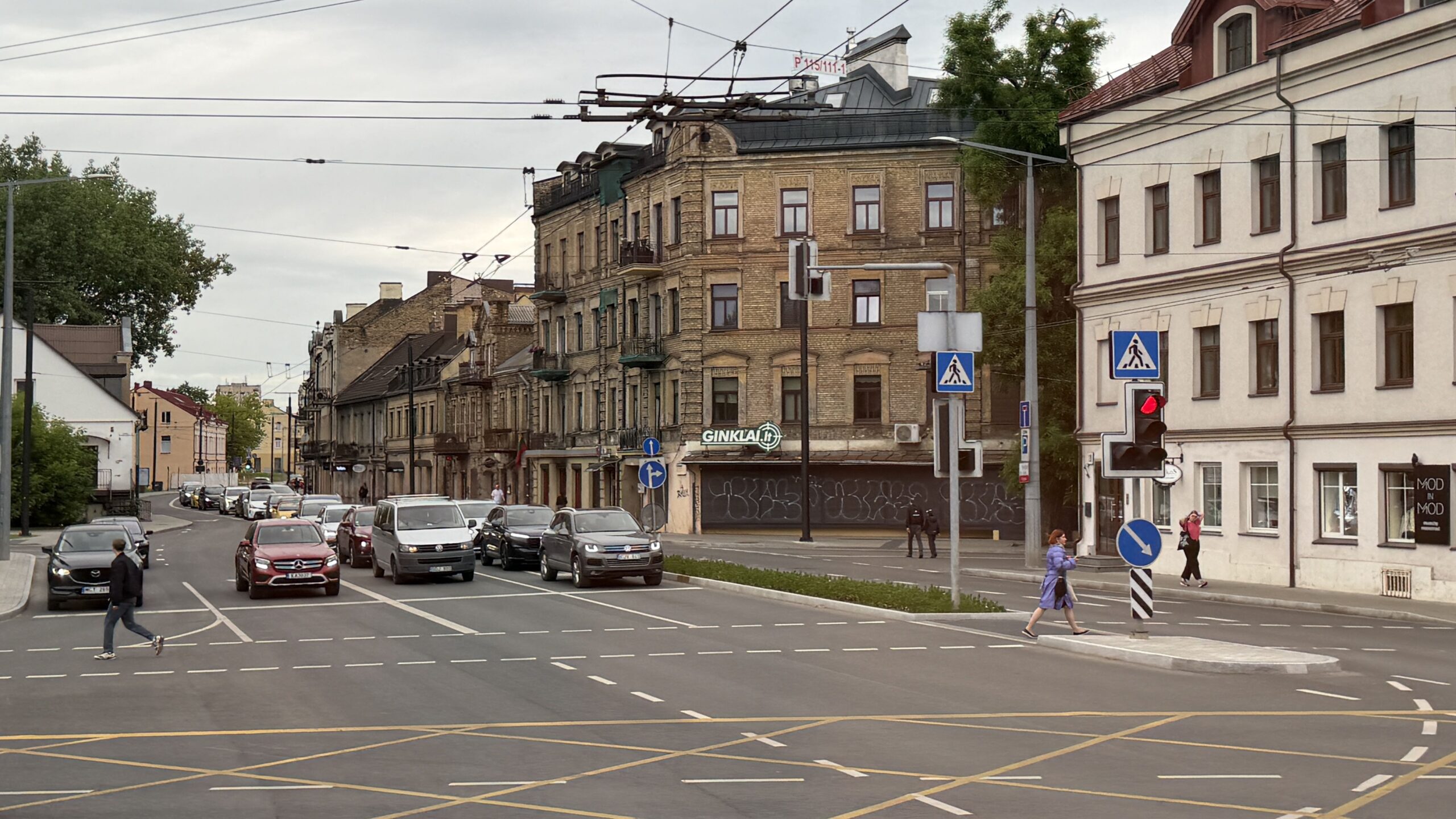
We also noticed that many street signs in Vilnius are written in two languages, reflecting the city’s multicultural past and the different communities that have shaped its identity.
Coffee, Cake, and Lithuanian Hospitality
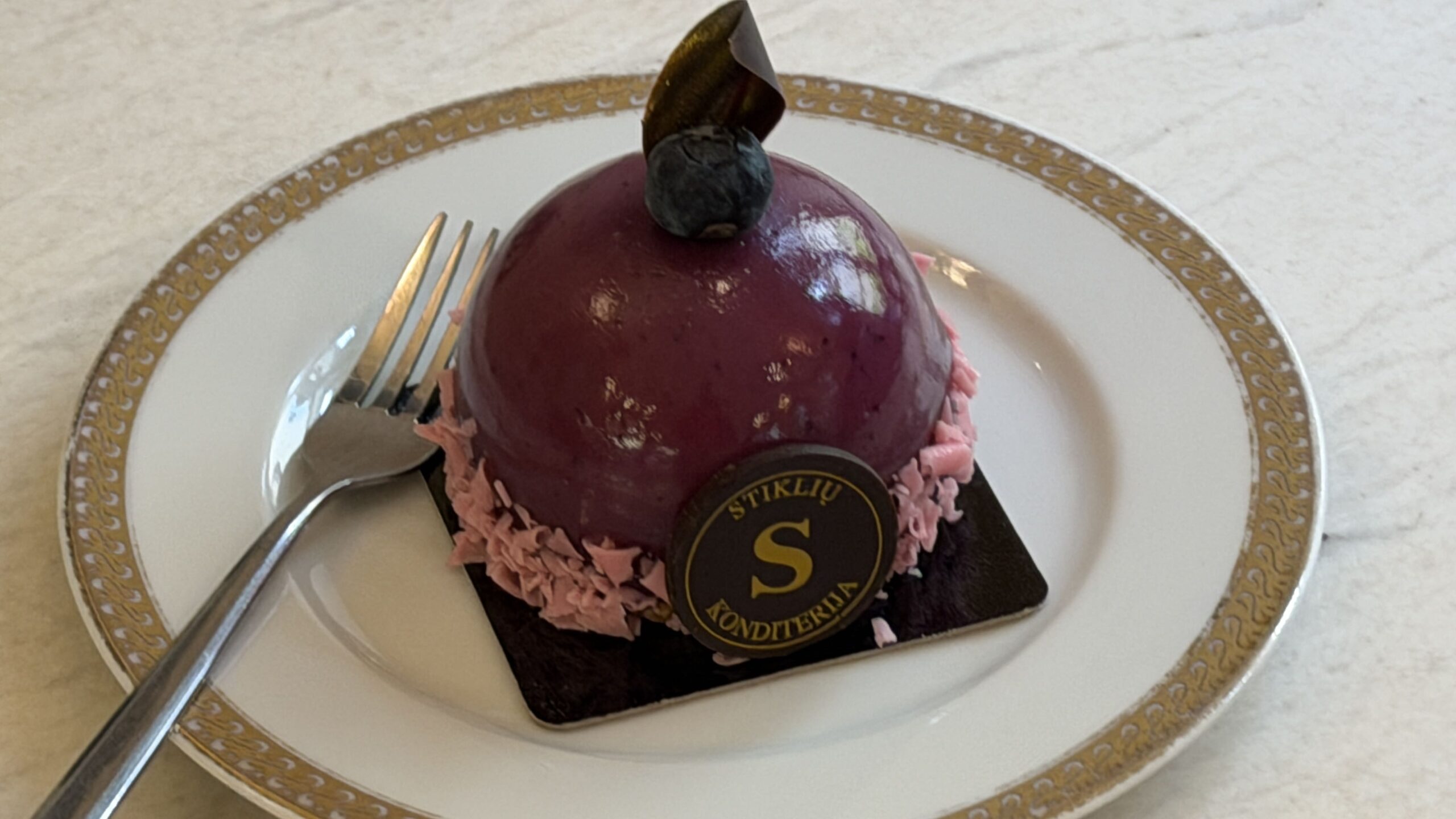
After all the walking, it was time for one of our favorite travel traditions—finding a local café! As we always say during our trips: everyone drinks coffee, and we eat cakes.
We stopped at Stikliai Konditerija, a beautiful pastry shop in the Old Town, where we enjoyed a delicious blueberry cake. The pastry was not only tasty but also beautifully presented.
This street is also becoming known for fine dining, with a Michelin-starred restaurant located nearby, adding another layer to Vilnius’s growing food scene.
Divine Mercy Sanctuary and Presidential Palace
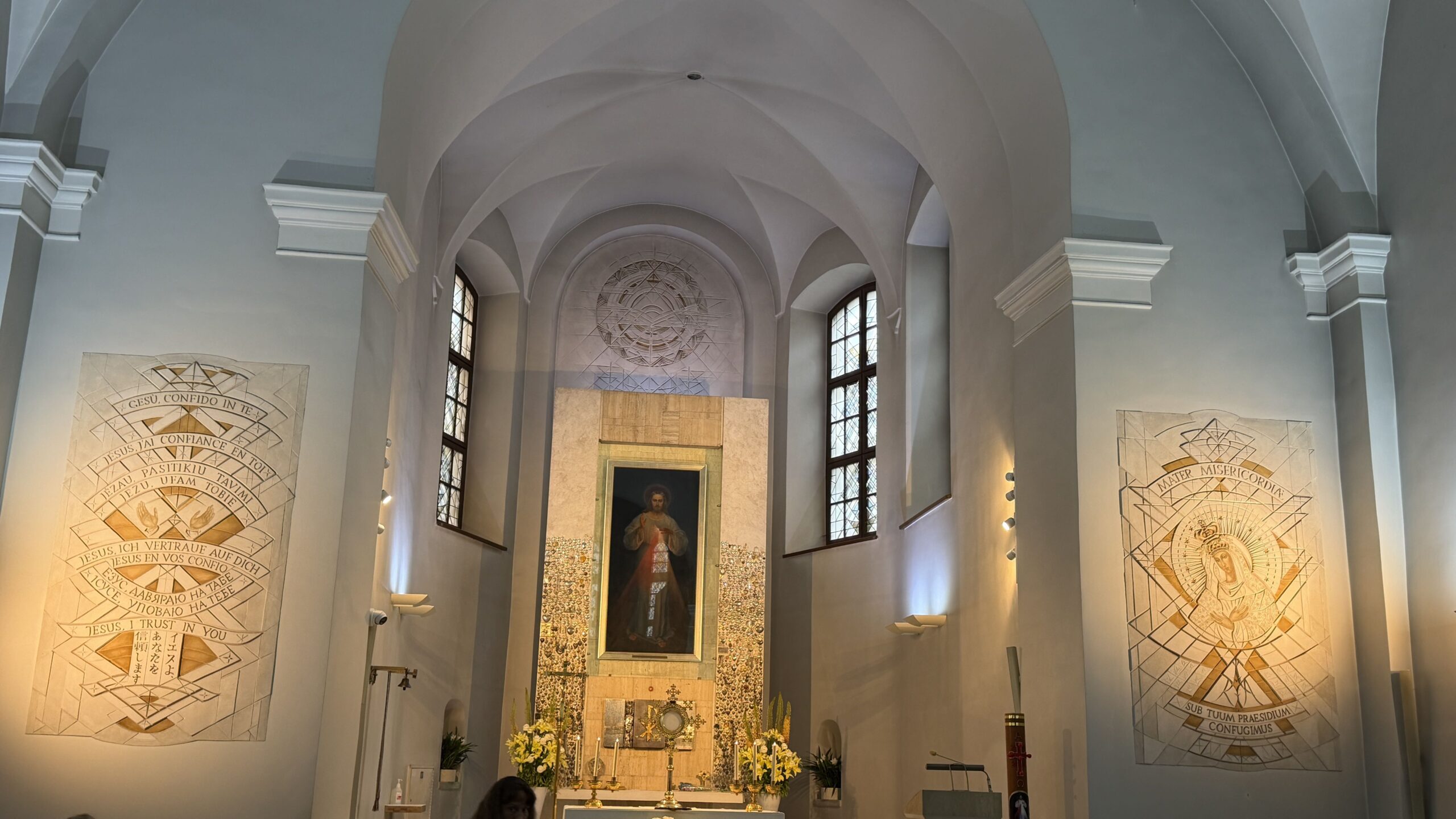
Our next stop was the Divine Mercy Sanctuary, a special church connected to the story of the Divine Mercy devotion and the famous image of Jesus associated with Saint Faustina.
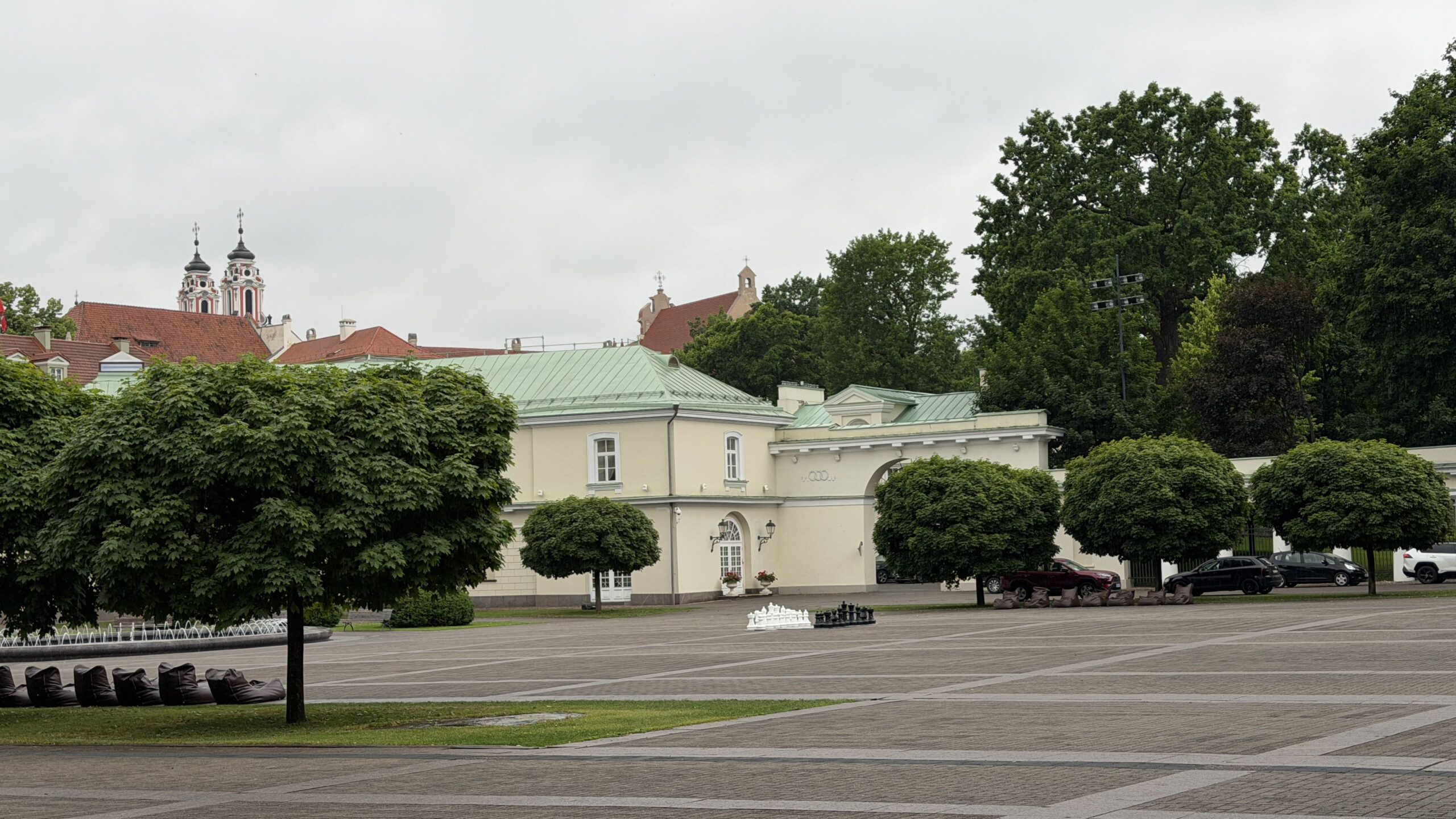
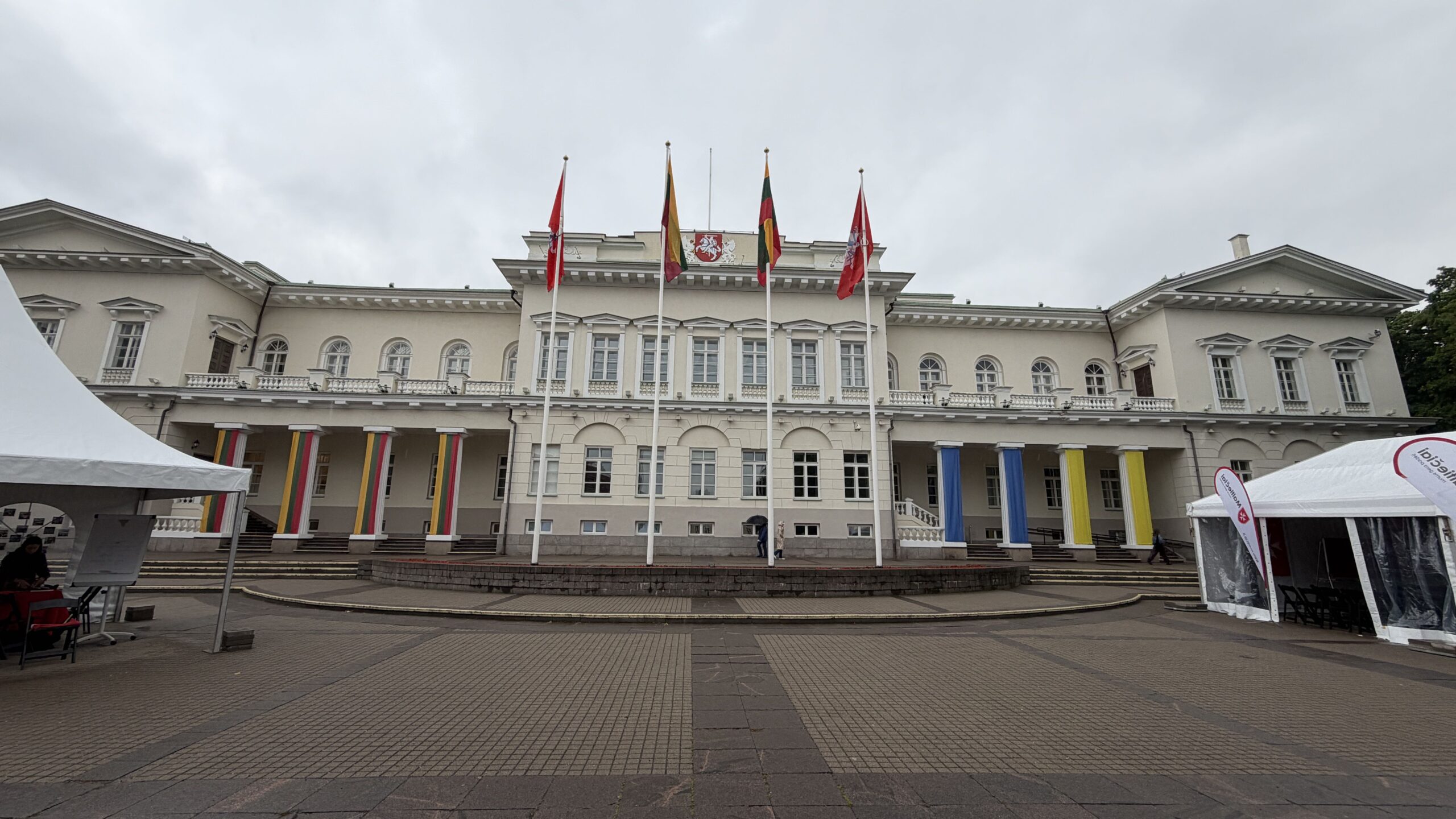
We then walked past the Presidential Palace of Lithuania, the official residence of the Lithuanian president. One thing that stood out was how approachable the presidential grounds felt compared with many other countries. Our guide mentioned that the president is sometimes seen in the courtyard, and we noticed a large outdoor chess set with oversized chess pieces—a unique and welcoming touch.
Inside Vilnius Cathedral
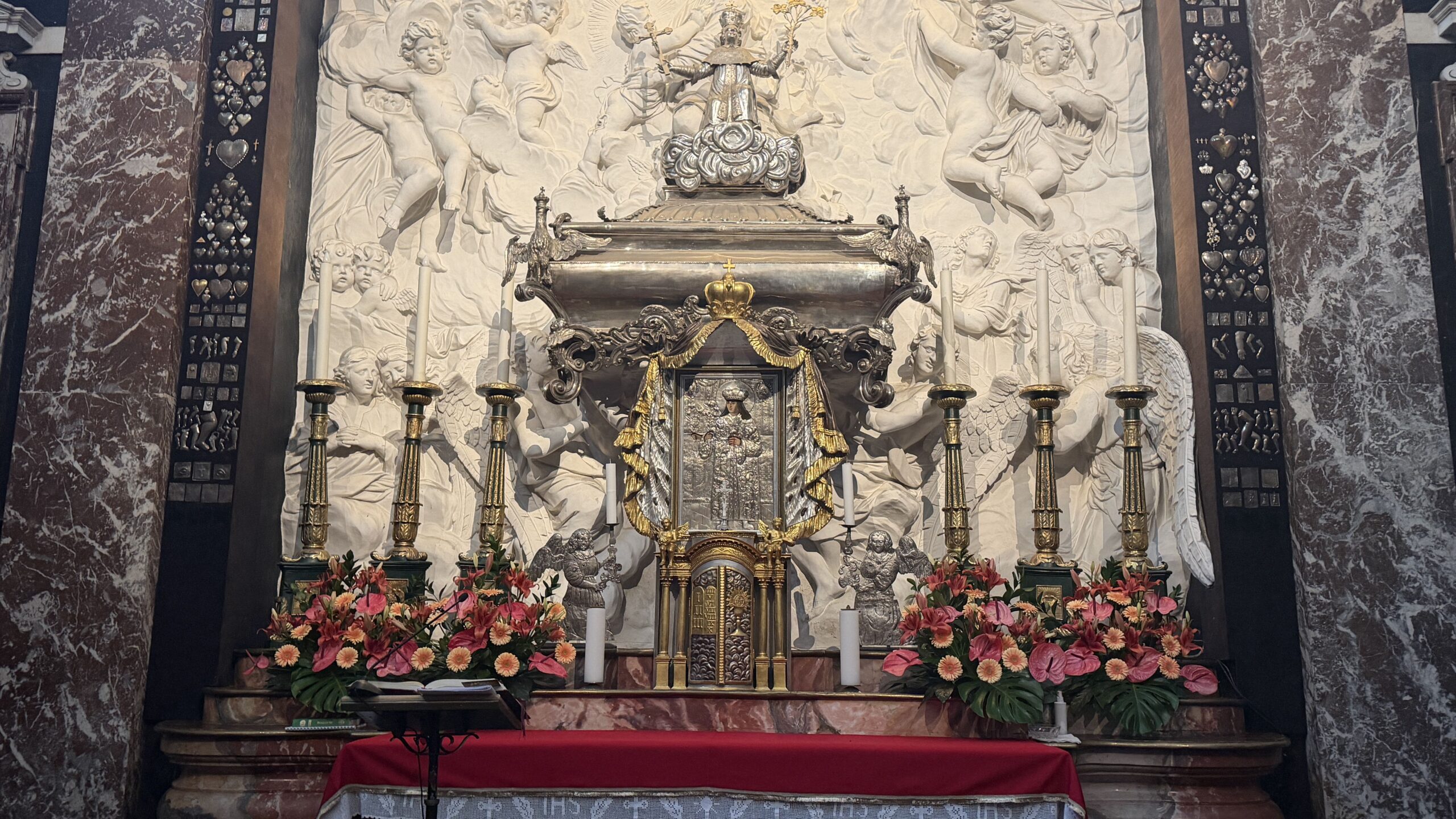
As the rain became heavier, we returned to Vilnius Cathedral to explore the interior. Inside, we sat in one of the side rooms where beautiful sculptures and carvings told religious stories through art.
The quiet atmosphere inside the cathedral provided a perfect break from the heavy rain outside.
Shopping for Lithuanian Treasures and Local Food
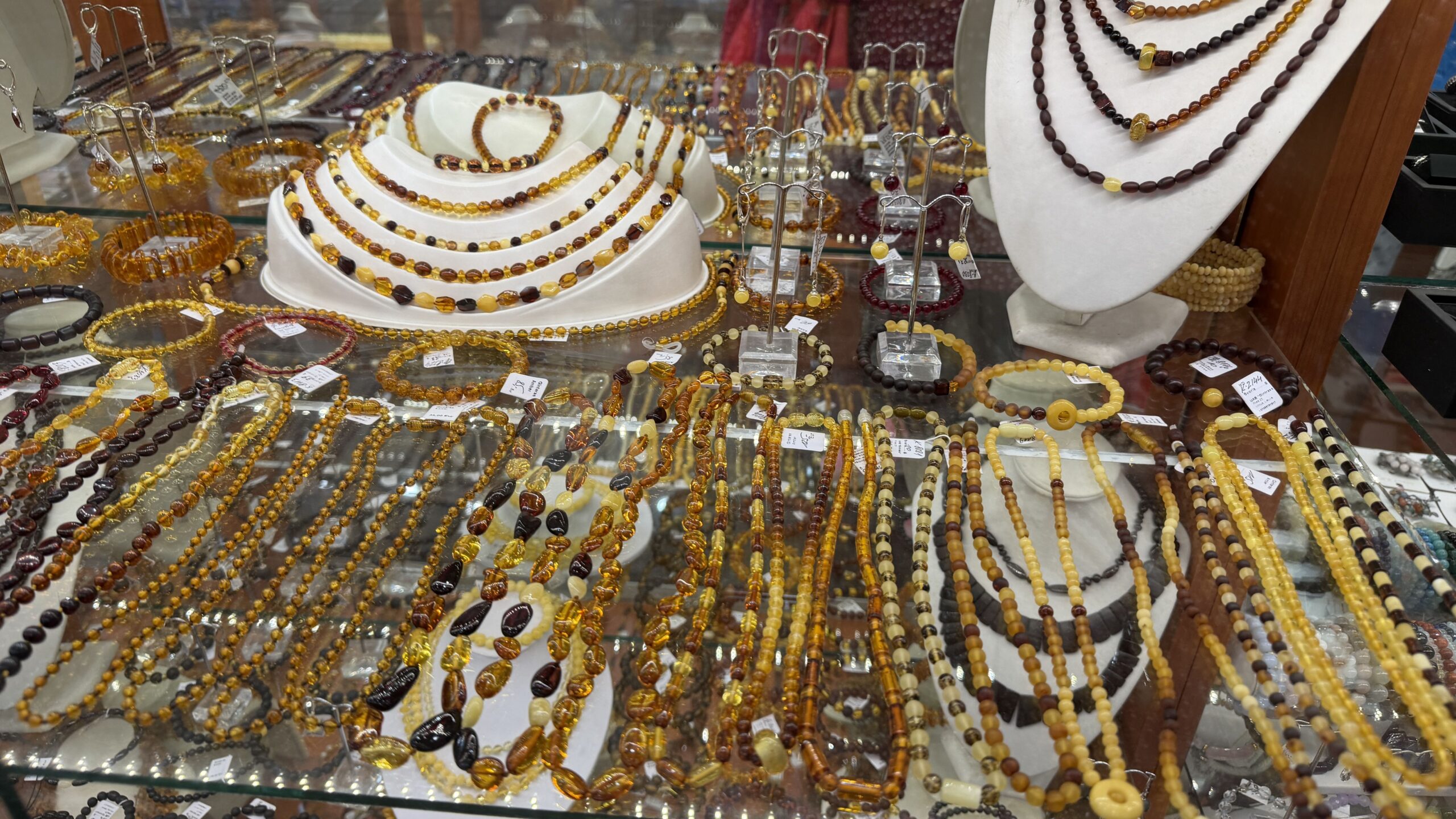
After the tour, we spent some time looking for traditional Lithuanian products. Lithuania is especially known for linen, wool products, and amber, and these were some of the souvenirs many visitors look for.
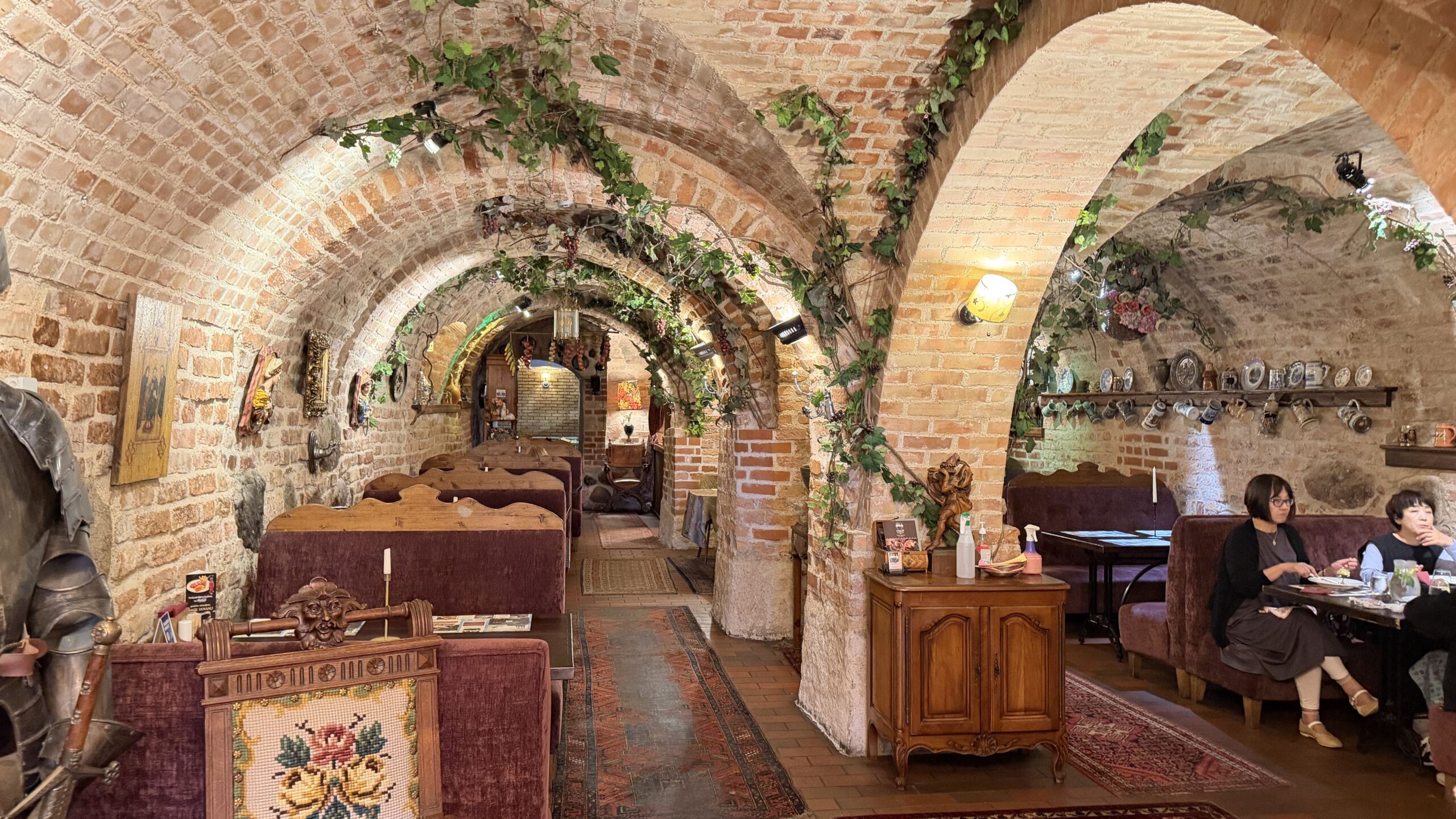
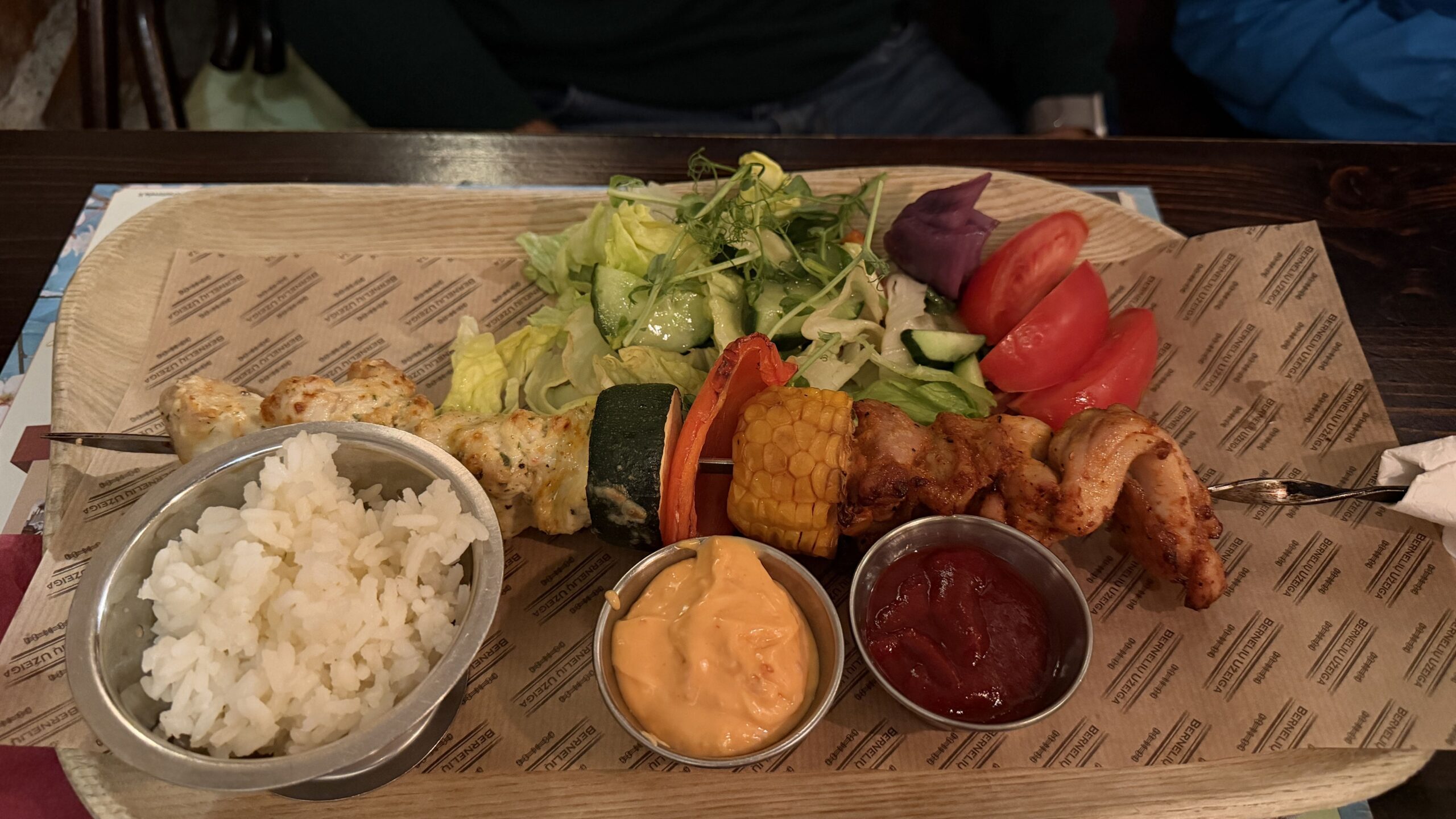
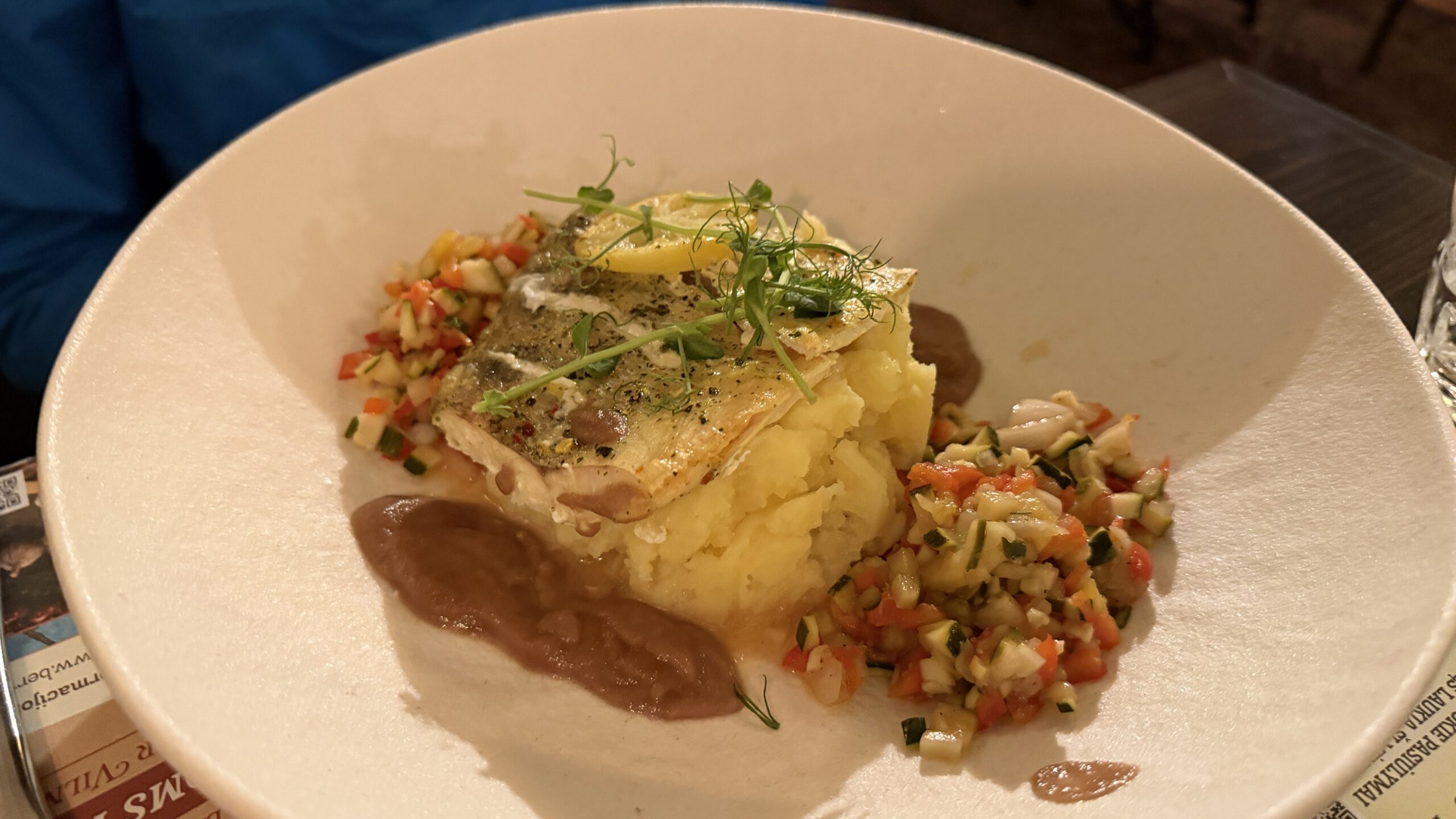
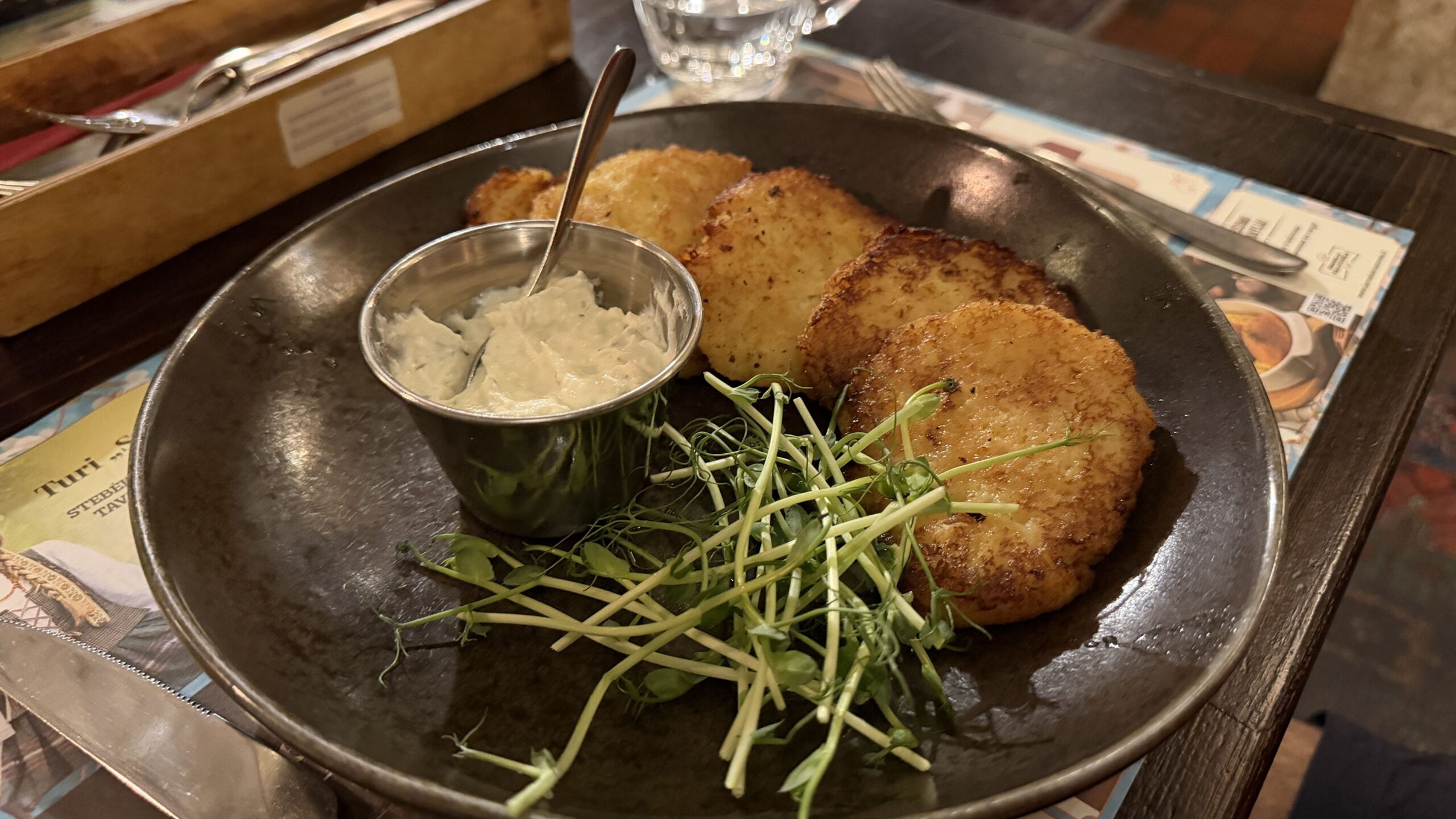
For lunch, we visited Bernelių Užeiga, a restaurant known for traditional Lithuanian cuisine. It was a great opportunity to experience more local flavors.
Some members of our group also explored the city’s international food scene and found several Indian restaurants in Vilnius, showing how diverse the city’s dining options have become.
Trakai Island Castle – A Fairytale Castle on the Lake
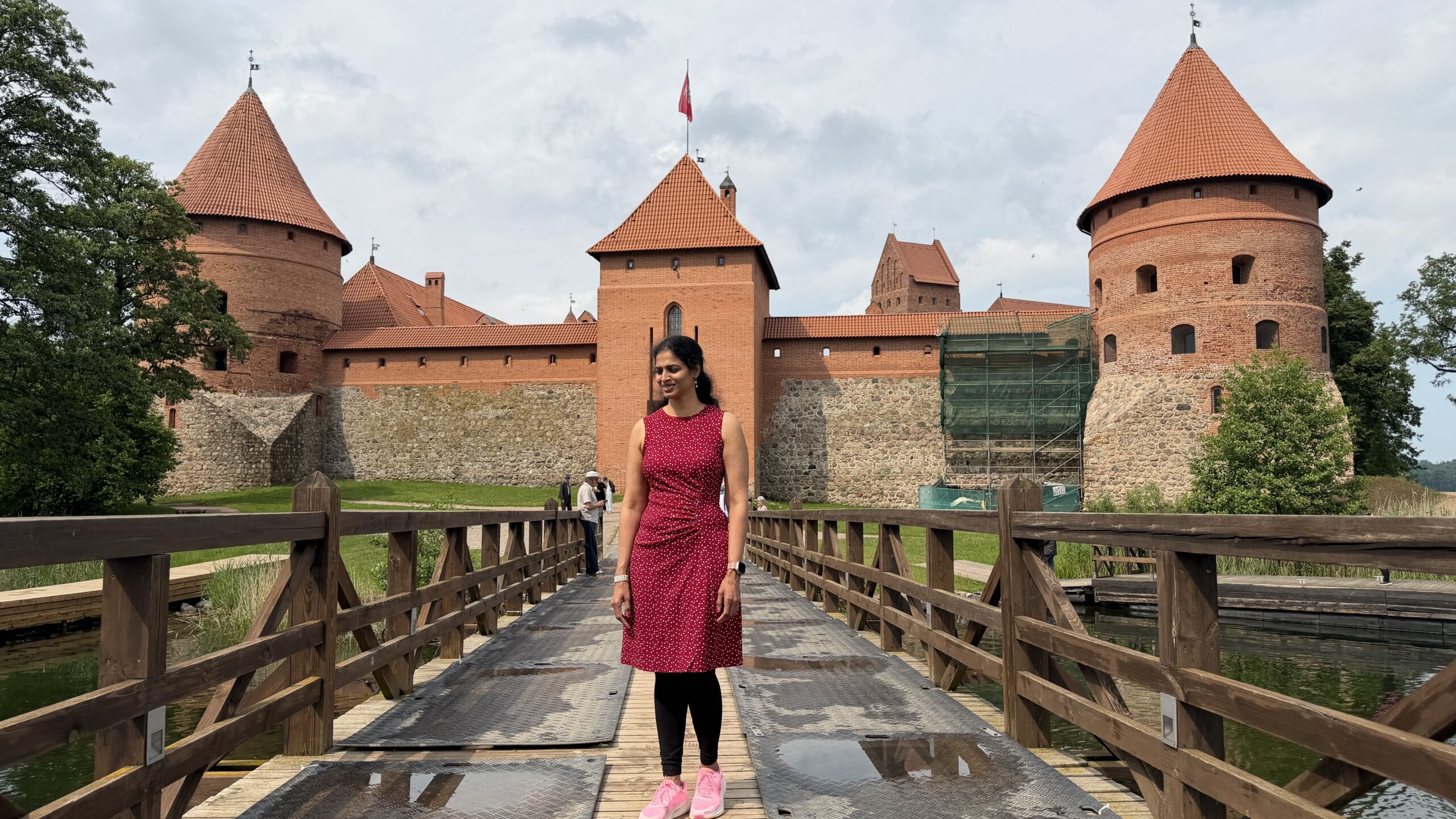
In the afternoon, we left Vilnius for one of Lithuania’s most famous landmark—the spectacular Trakai Island Castle.
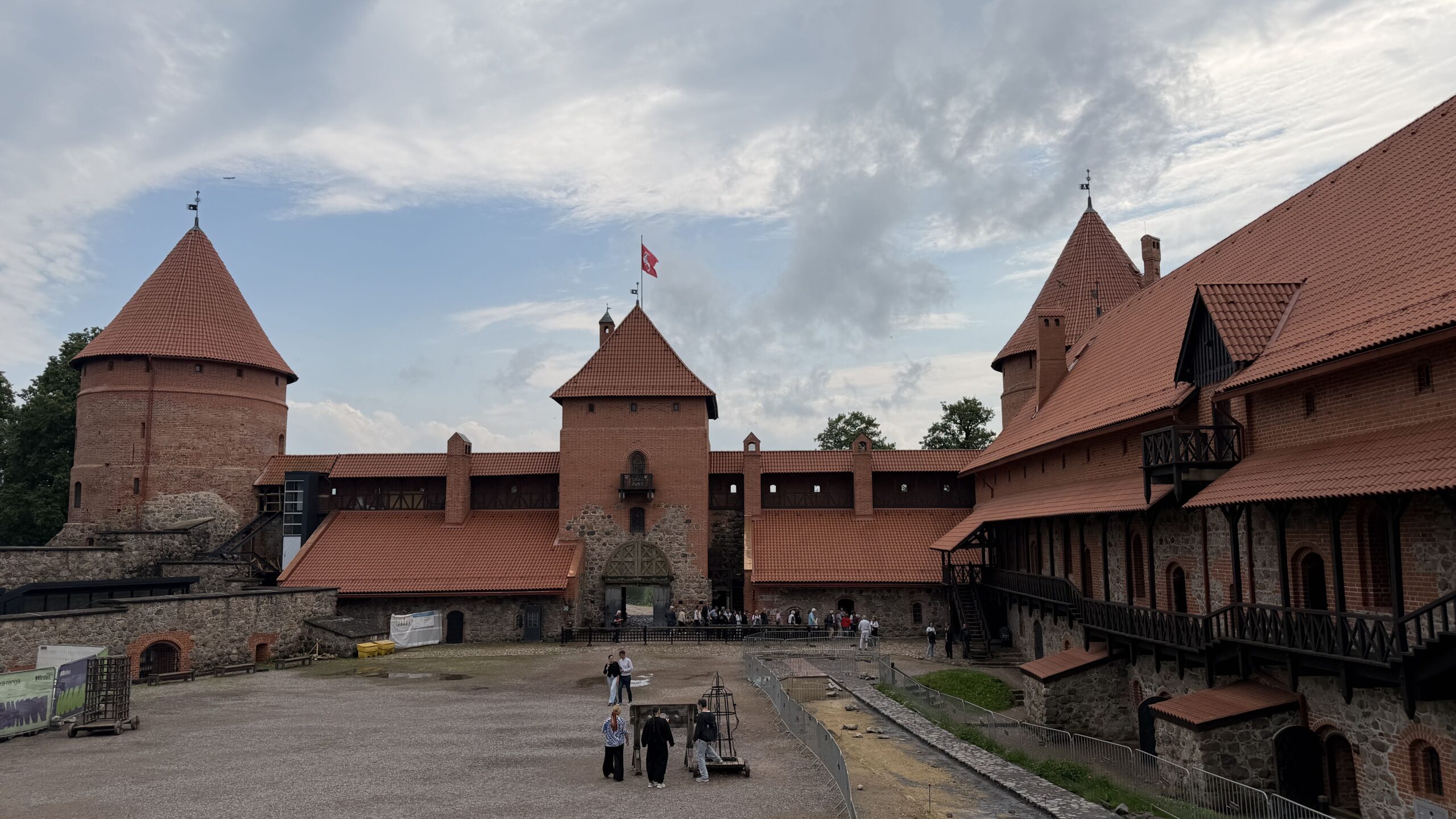
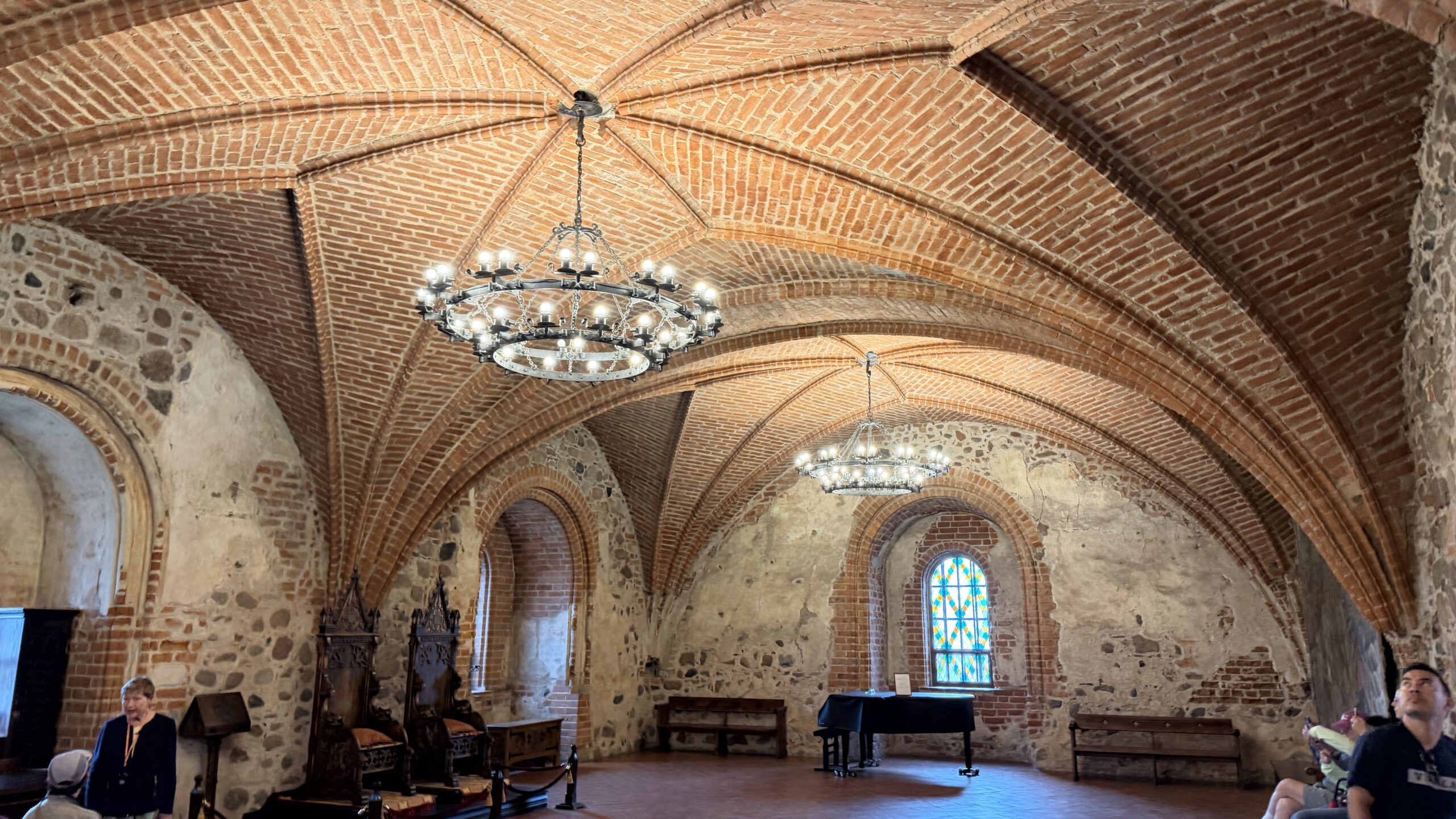
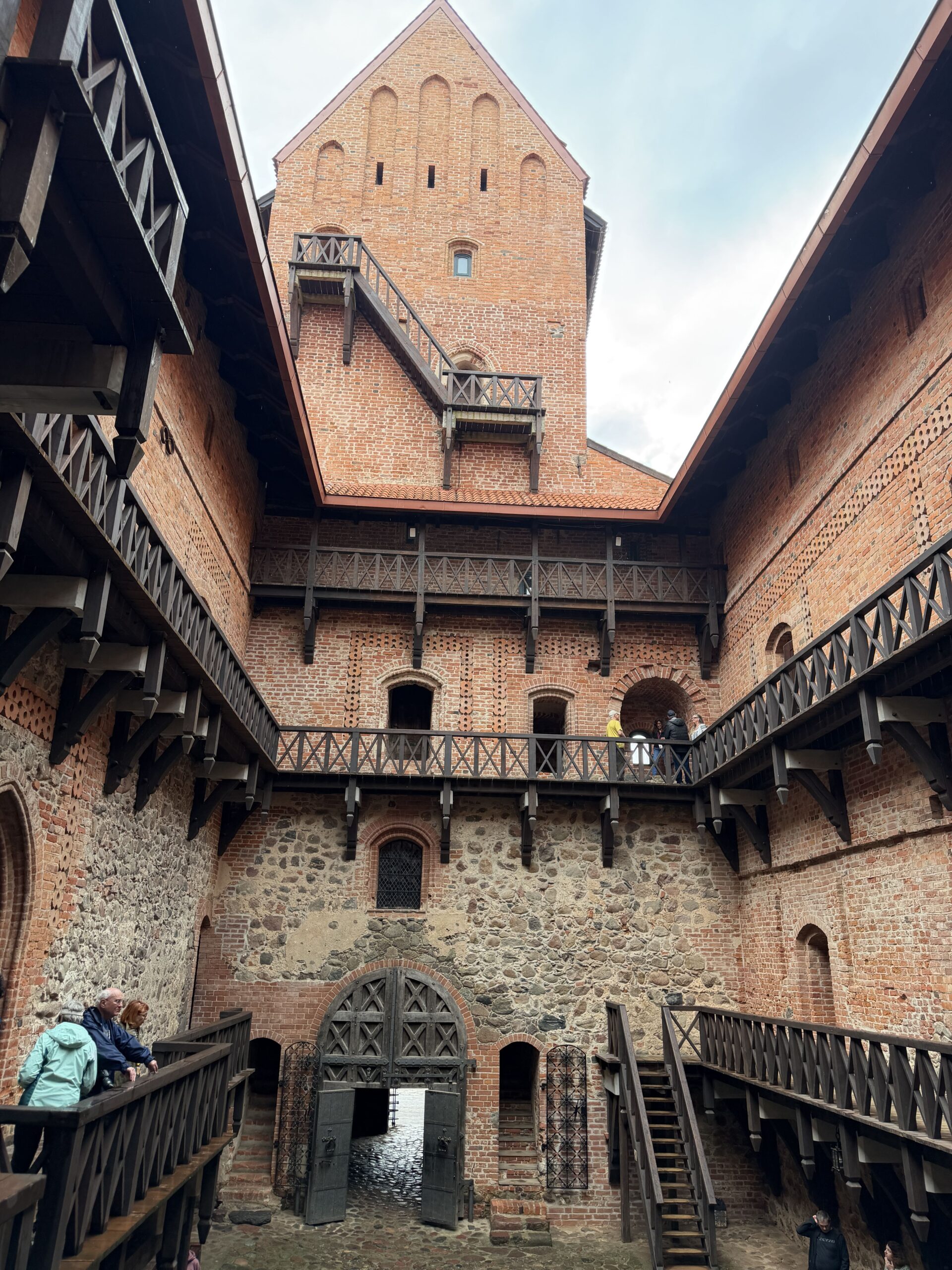
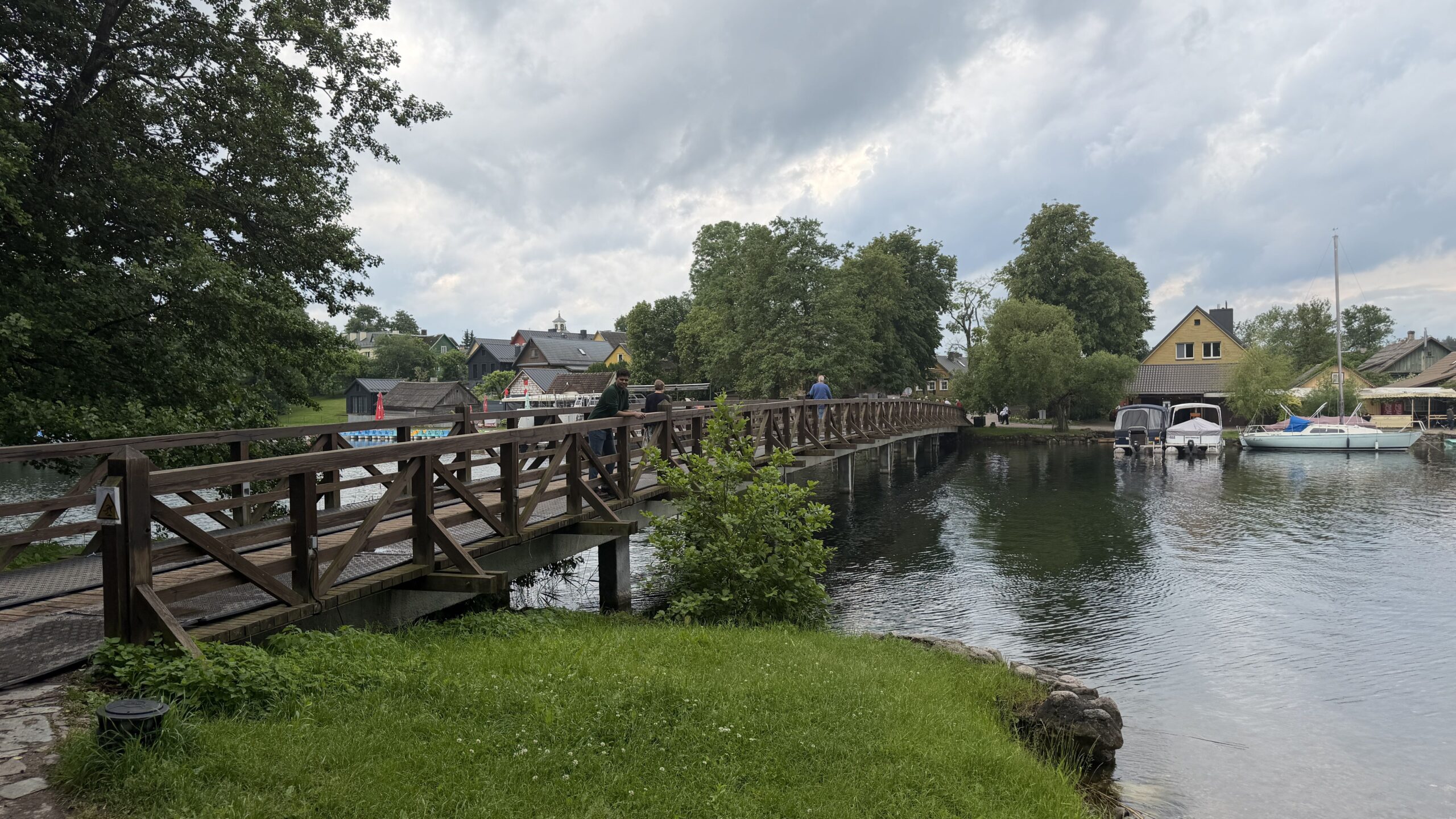
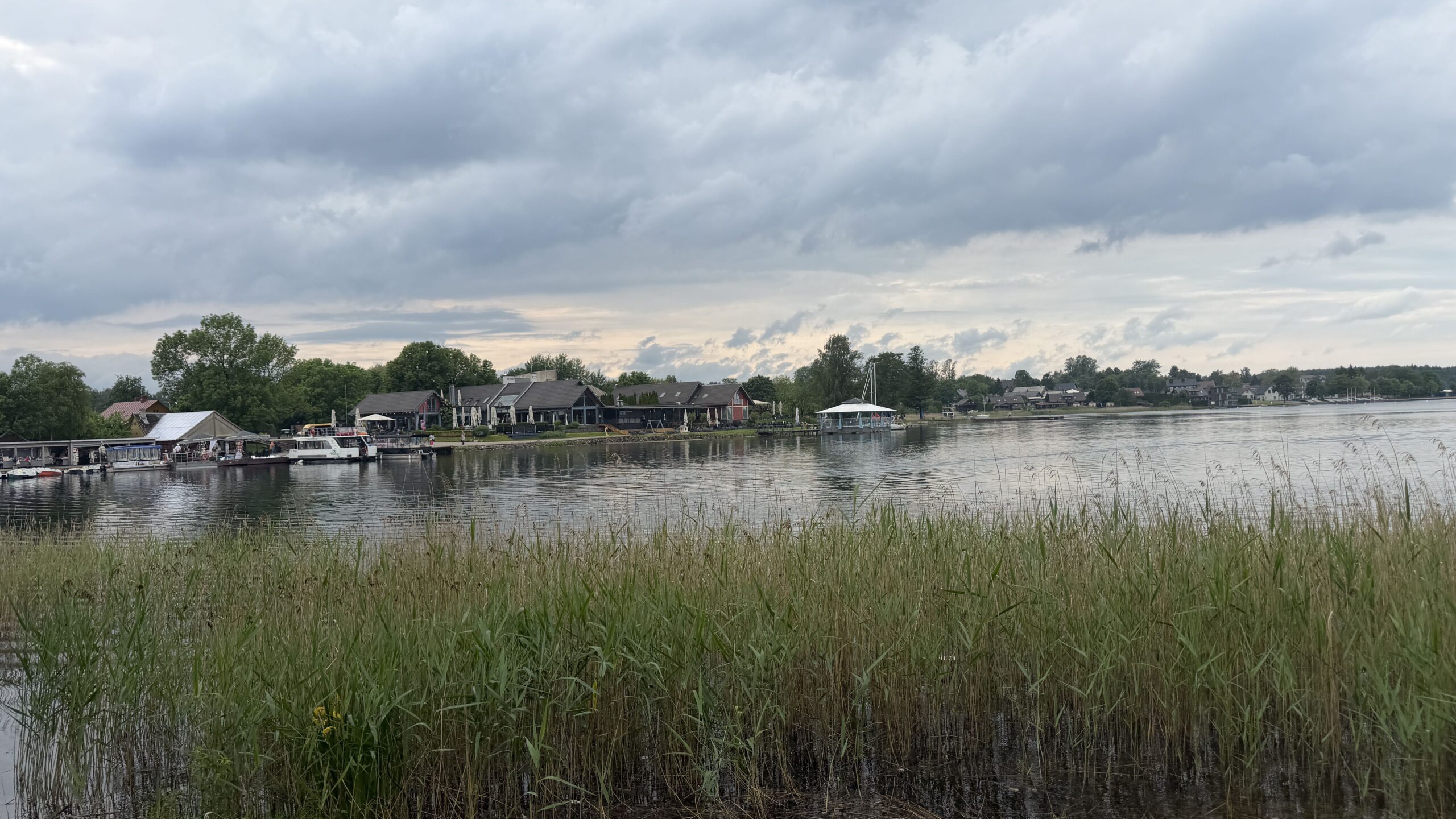
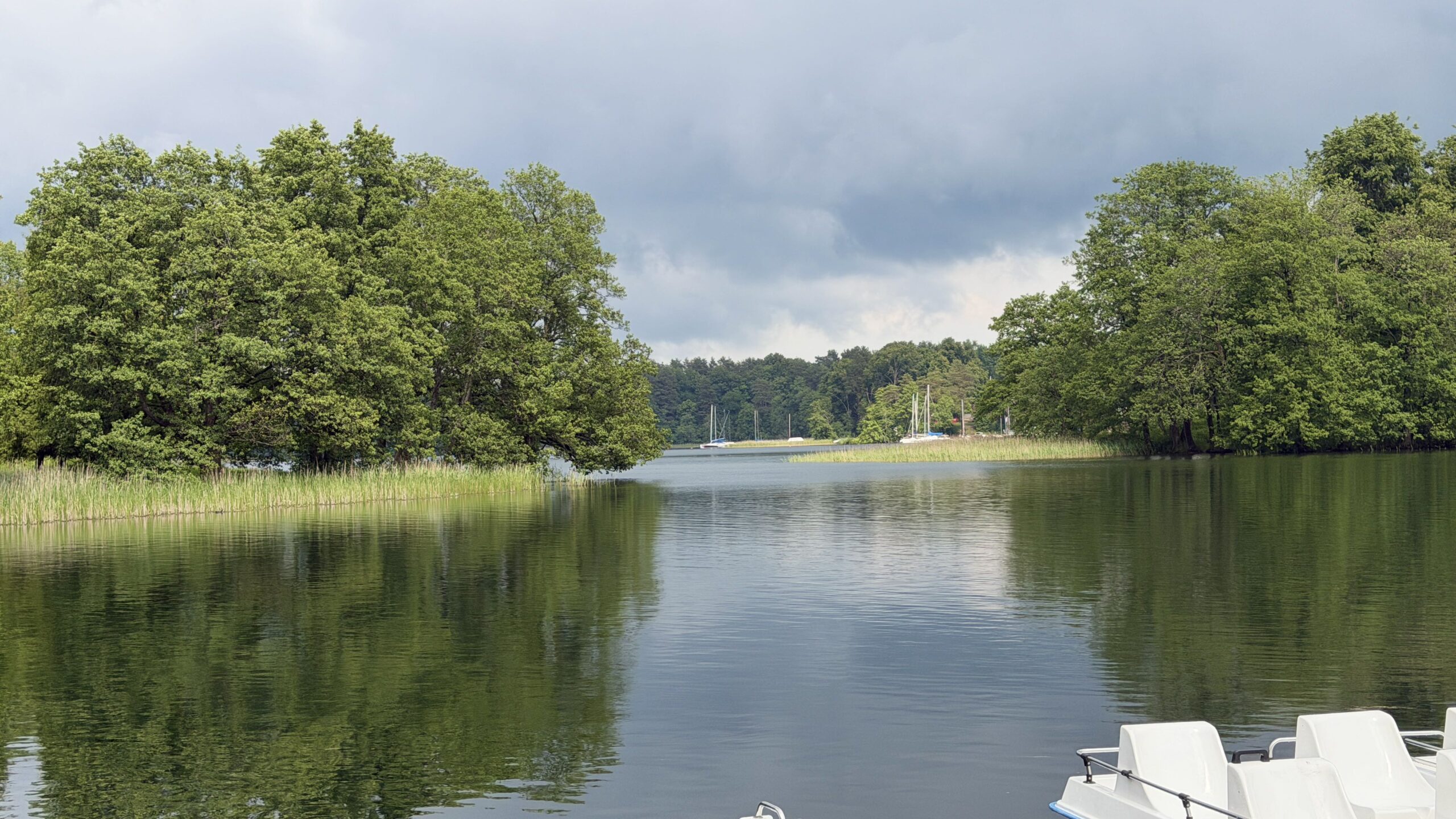
Located about 30 kilometers from Vilnius, this beautiful castle sits on an island-like peninsula in the middle of Lake Galvė. Built in the 14th century, Trakai Castle was once the political center of the Grand Duchy of Lithuania before the capital moved to Vilnius.
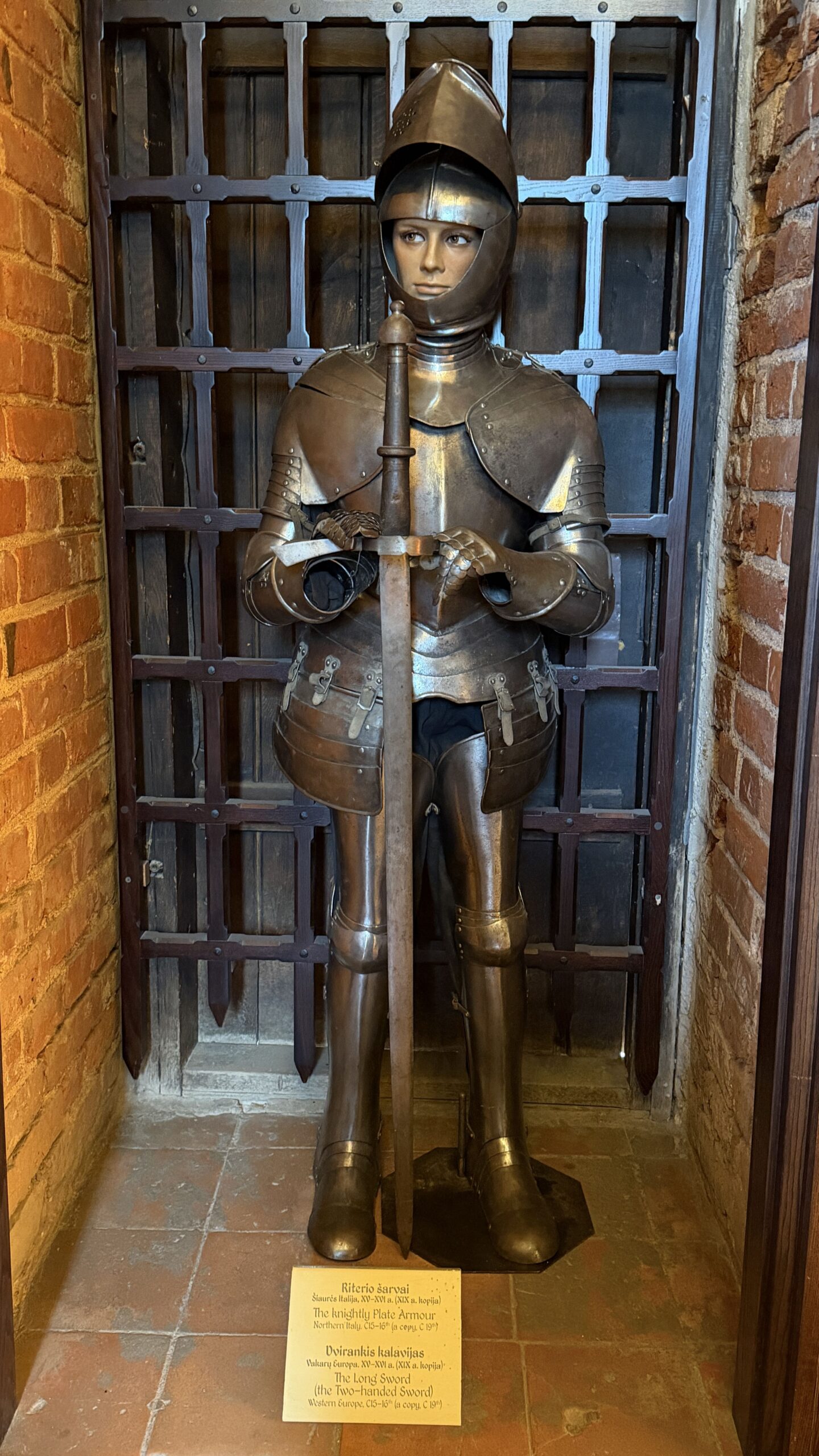
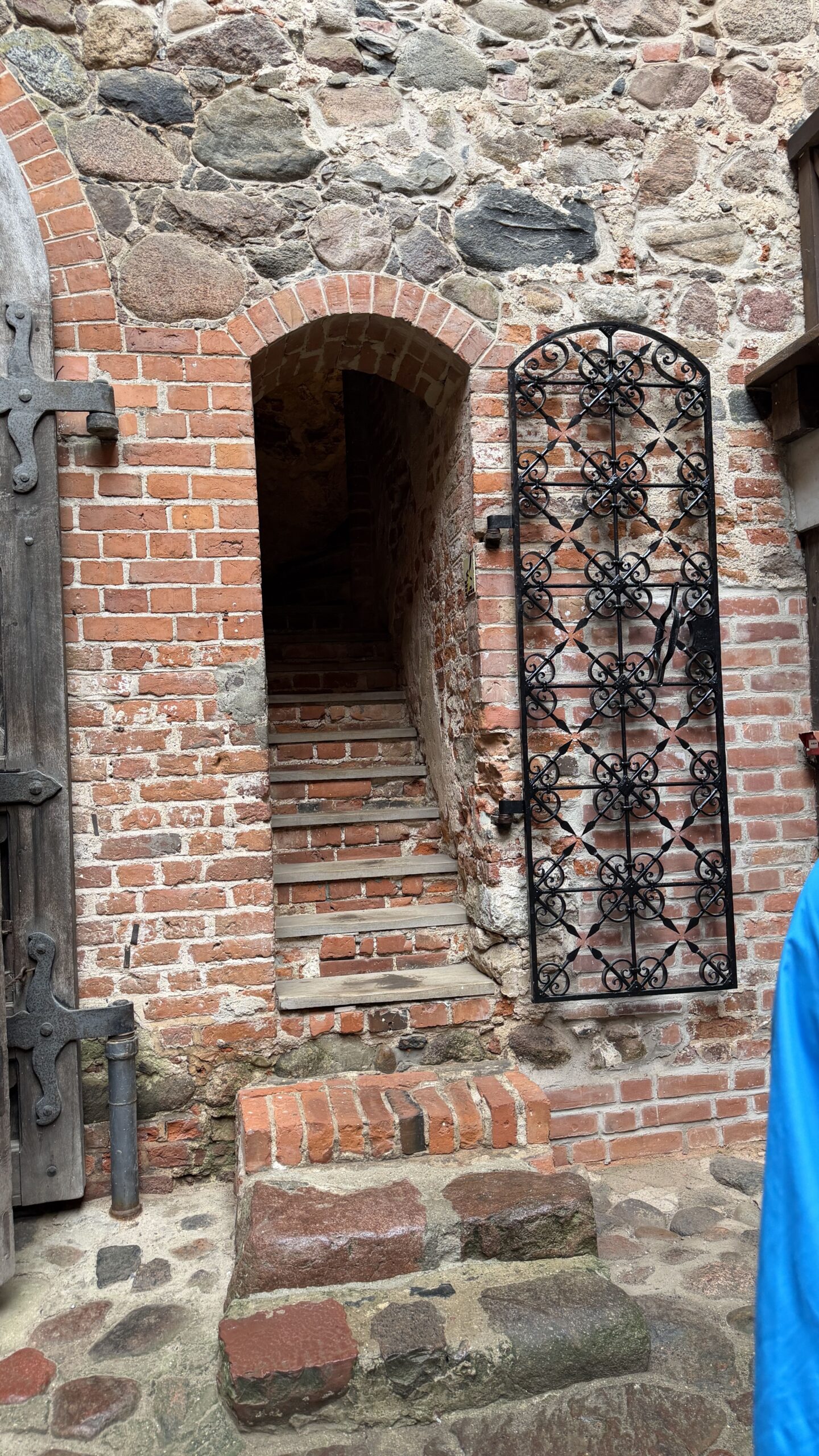
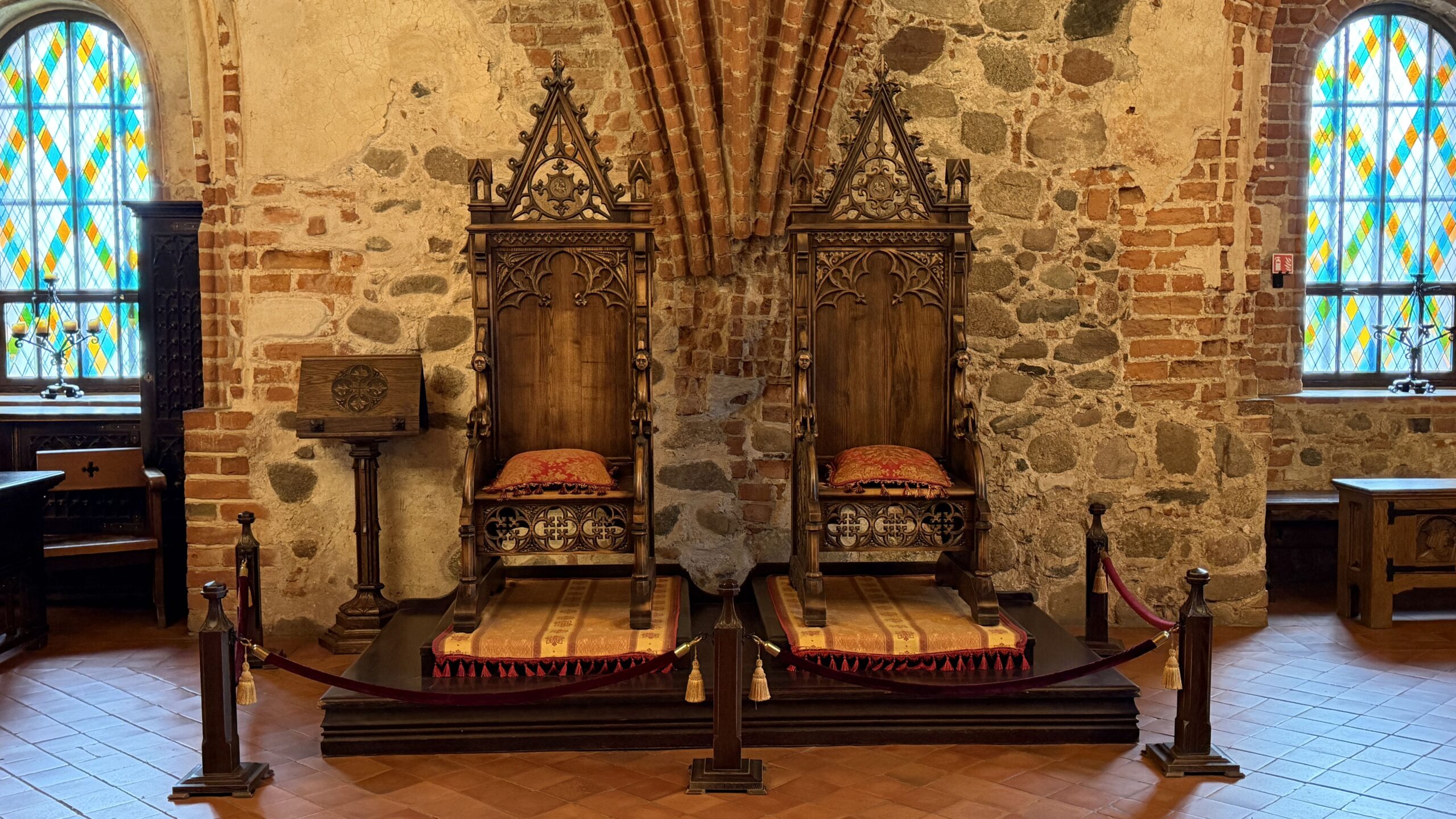
Walking toward the castle, surrounded by water and forests, felt like entering a storybook scene. The castle has been carefully restored and now houses a museum displaying archaeological discoveries, medieval artifacts, historic furniture, ceramics, and glassware.
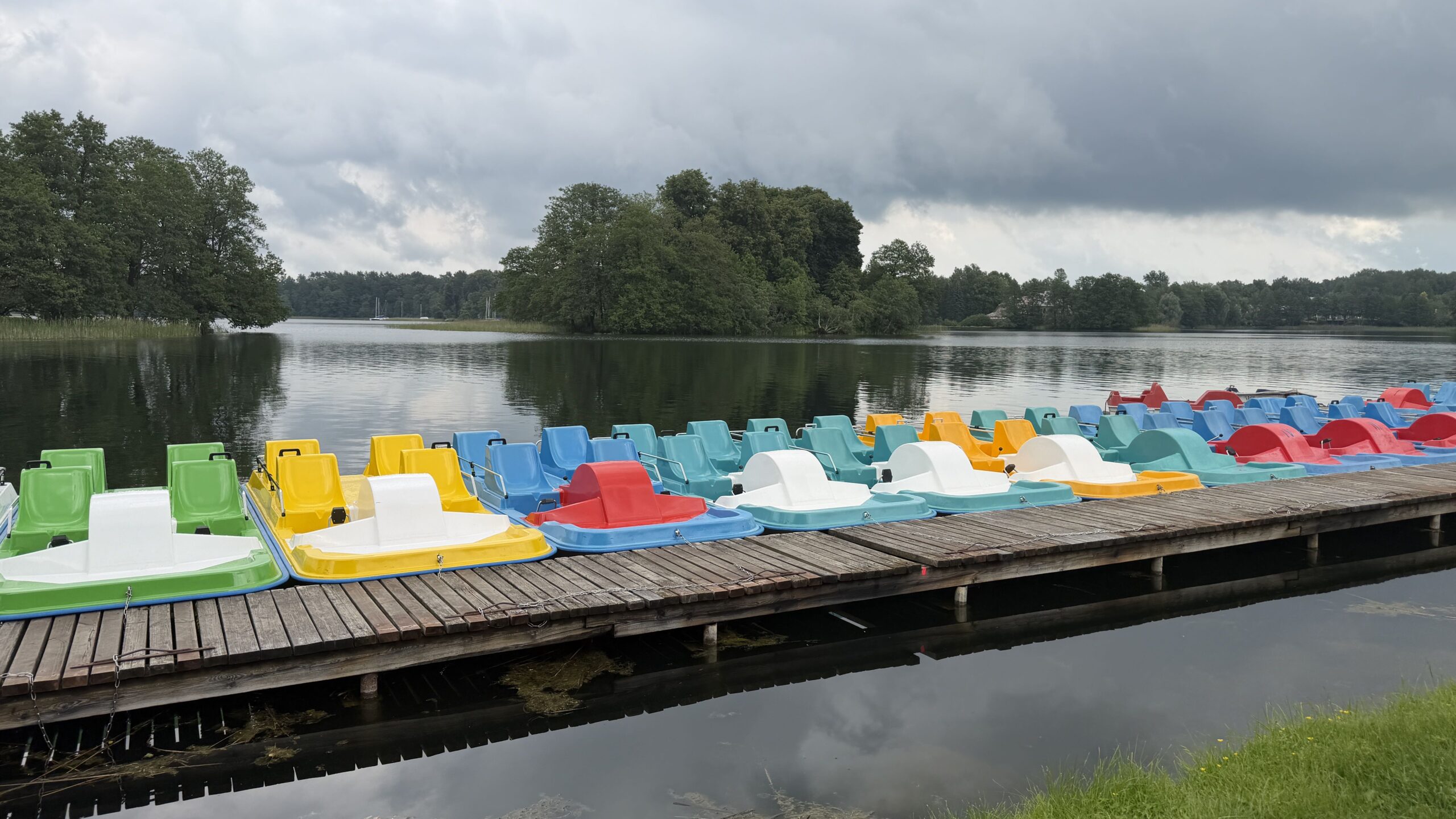
After the guided tour, we had time to walk around the surrounding village and enjoy the peaceful lakeside setting.
Evening Walk and Dinner
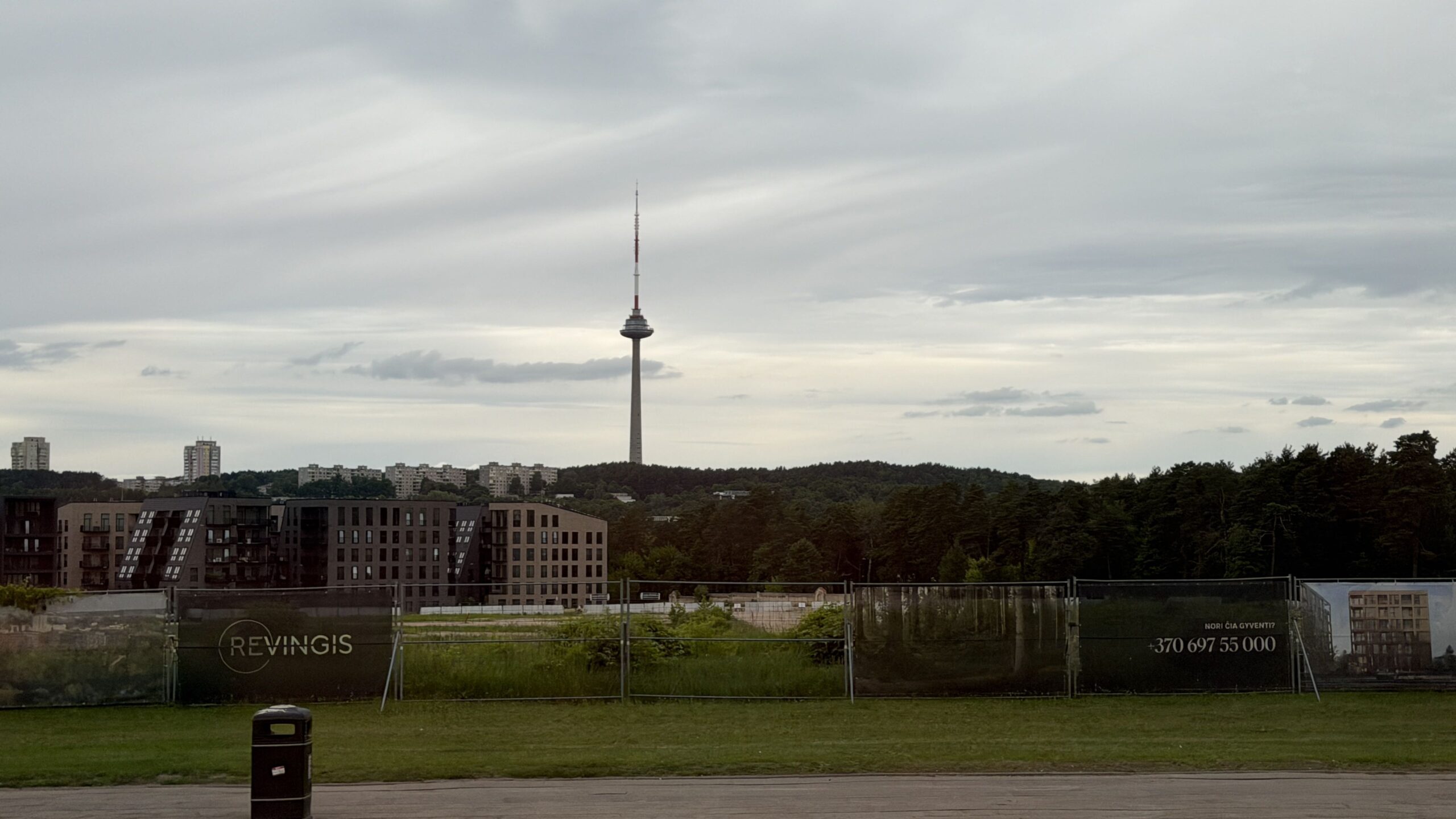
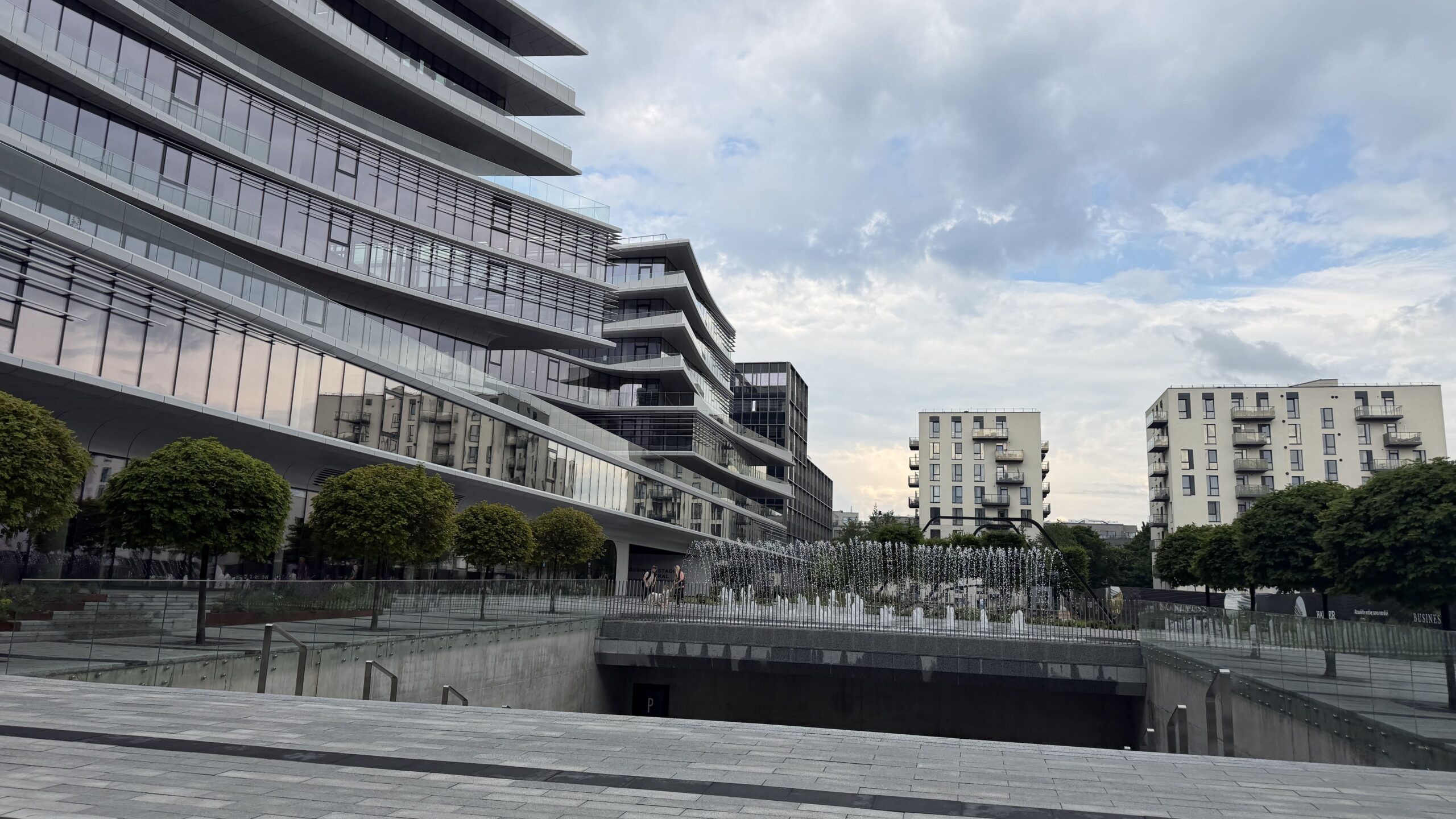
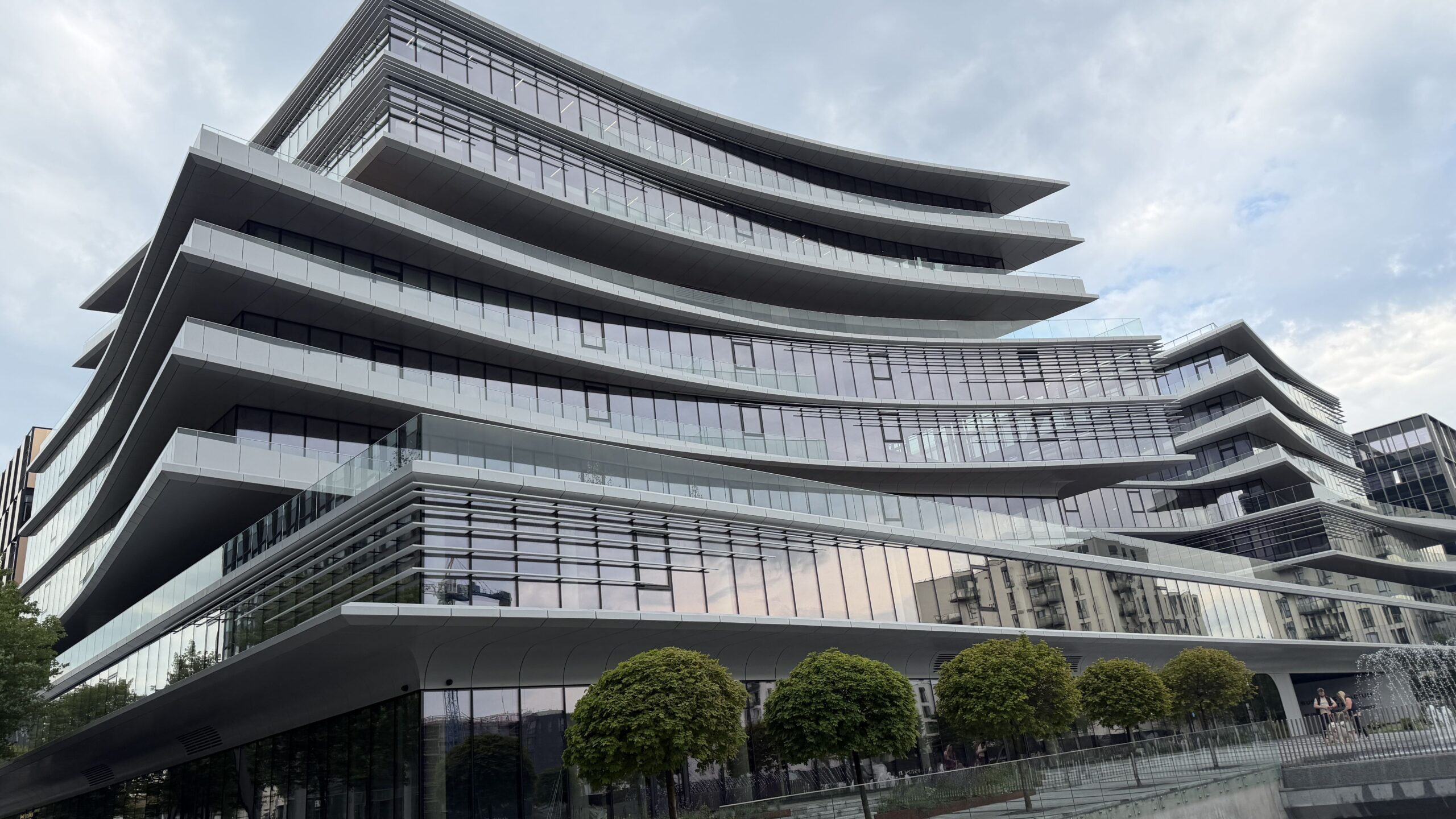
After returning to Vilnius, I went for a long walk around our hotel area. I was surprised by how much everyday life surrounded the city—there were apartment buildings, schools, hospitals, restaurants, and local neighborhoods all within walking distance. It gave us a glimpse of what daily life in Vilnius looks like beyond the tourist areas.
During my walk, I picked up a few Kibinai, a traditional Lithuanian pastry originally brought by the Karaim community. These savory pastries were delicious and became one of my favorite local foods from Lithuania.
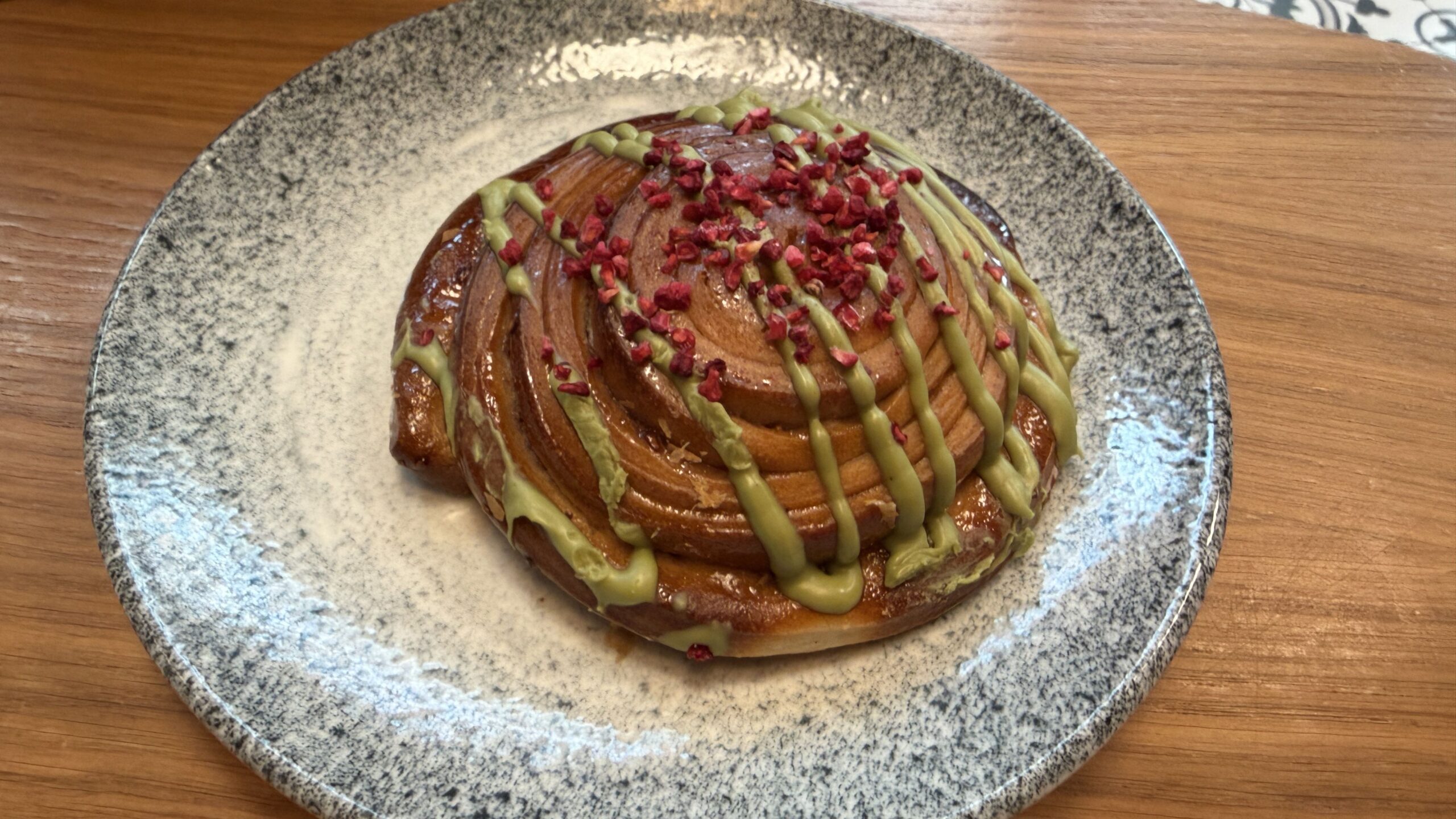
For dinner, we visited Viva Pizza, where we enjoyed a combination of pizza, wok dishes, and sushi. To finish the evening, we tried a pistachio roll—a dessert that reminded us a little of a cinnamon roll but with its own Lithuanian twist.
It was a full and memorable first day in Vilnius—beautiful churches, fascinating history, rainy cobblestone streets, delicious food, and a fairytale castle. Lithuania was already proving to be a wonderful surprise.
IKTraveler Tips
- Wear comfortable walking shoes. Vilnius Old Town is best explored on foot, and you’ll be walking on plenty of cobblestone streets.
- Don’t let a little rain spoil your day. We explored much of the Old Town in a drizzle, and it actually added to the charm. A lightweight rain jacket or compact umbrella is worth packing.
- Visit the Church of St. Peter and St. Paul. The stunning white stucco interior is unlike any church we’ve seen elsewhere in Europe. Don’t judge it by the simple exterior!
- Take time to wander the Old Town. Some of our favorite moments came from simply walking through the quiet streets before the cafés and restaurants became busy.
- Try traditional Lithuanian food. Don’t miss local specialties like Kibinai, and be sure to stop at a local bakery or café for coffee and pastries.
- Shop for local products. Lithuania is well known for its amber jewelry, linen, and wool products, which make wonderful souvenirs.
- Don’t skip Trakai Castle. It’s only a short drive from Vilnius and was one of the highlights of our trip. The lakeside setting makes it feel like stepping into a fairy tale.
- Apple Pay worked almost everywhere. We rarely needed cash during our visit, making payments quick and convenient throughout the city.
Did You Know?
- Lithuania was the last pagan nation in Europe, officially adopting Christianity in 1387.
- Vilnius Old Town is one of the largest surviving medieval old towns in Northern Europe and has been a UNESCO World Heritage Site since 1994.
- The Lithuanian language is considered one of the oldest living Indo-European languages, preserving many features of ancient Sanskrit and Latin.
- Amber, often called “Baltic Gold,” has been collected along the Baltic Sea coast for thousands of years and remains one of Lithuania’s most treasured natural products.
Final Reflection
Vilnius turned out to be one of those European capitals that quietly wins you over. From the breathtaking white stucco masterpiece of the Church of St. Peter and St. Paul, with its thousands of intricate carvings, to the charming cobblestone streets of the UNESCO-listed Old Town and the fairytale beauty of Trakai Island Castle, every place had its own unique character. We were equally impressed by the warm and welcoming people, the delicious local food and pastries, and the relaxed atmosphere throughout the city. Lithuania may not always be at the top of every traveler’s bucket list, but after spending time here, we felt it was one of Europe’s hidden gems—rich in history, full of charm, and well worth exploring.
Travel Date: June 2026