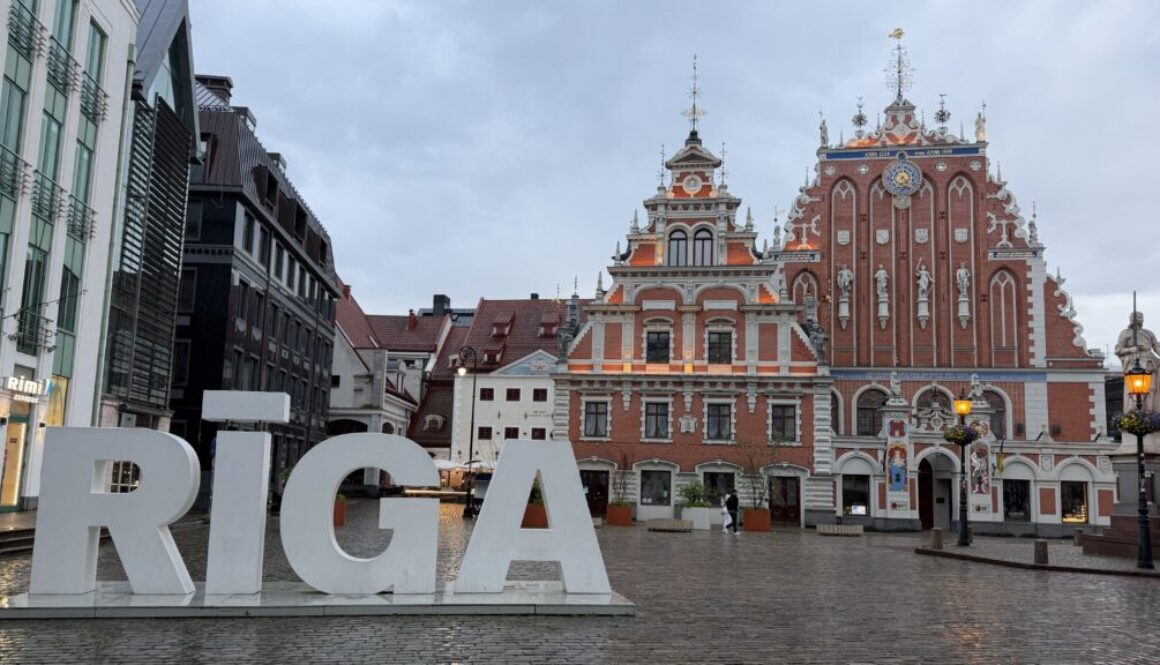
Riga
Latvia
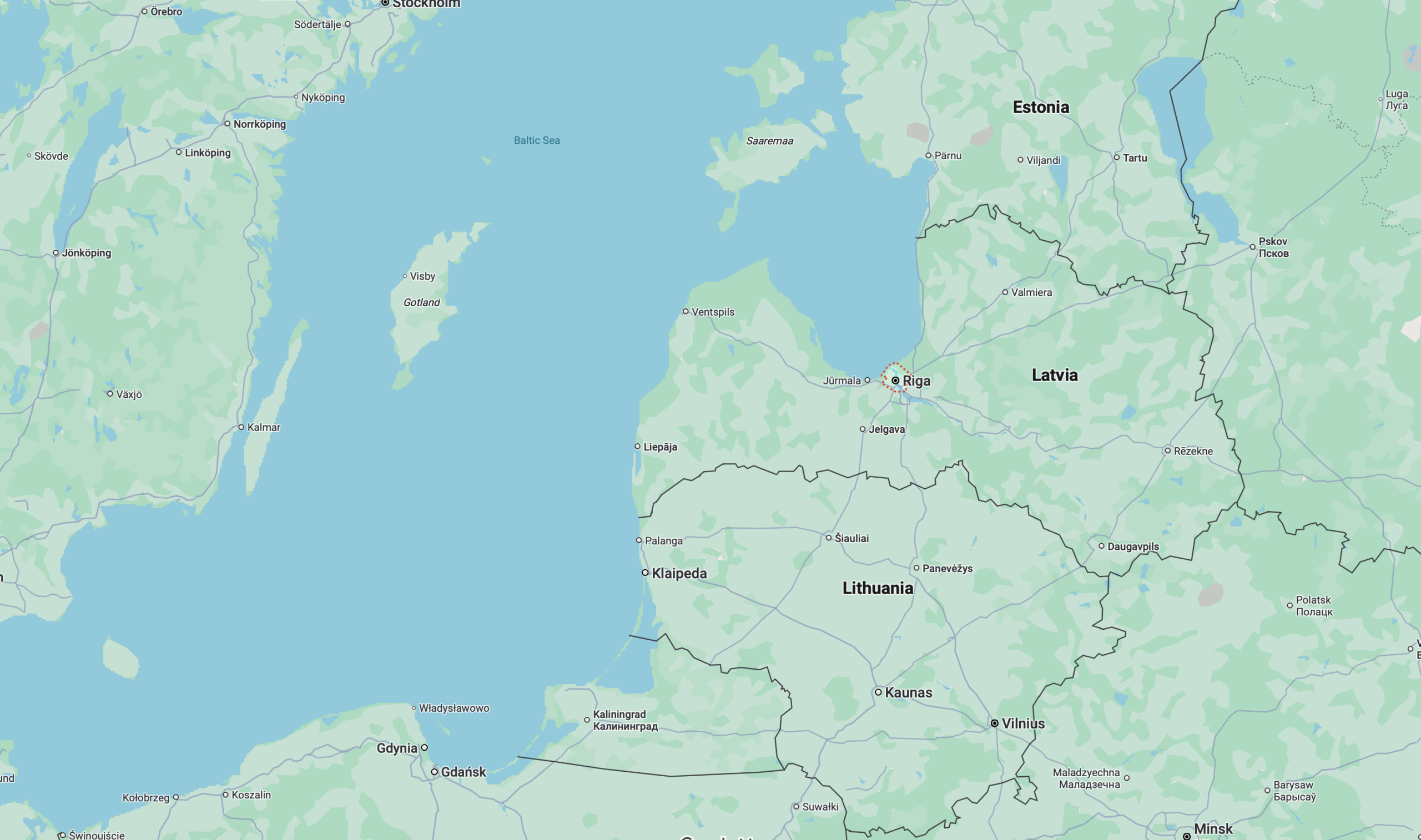
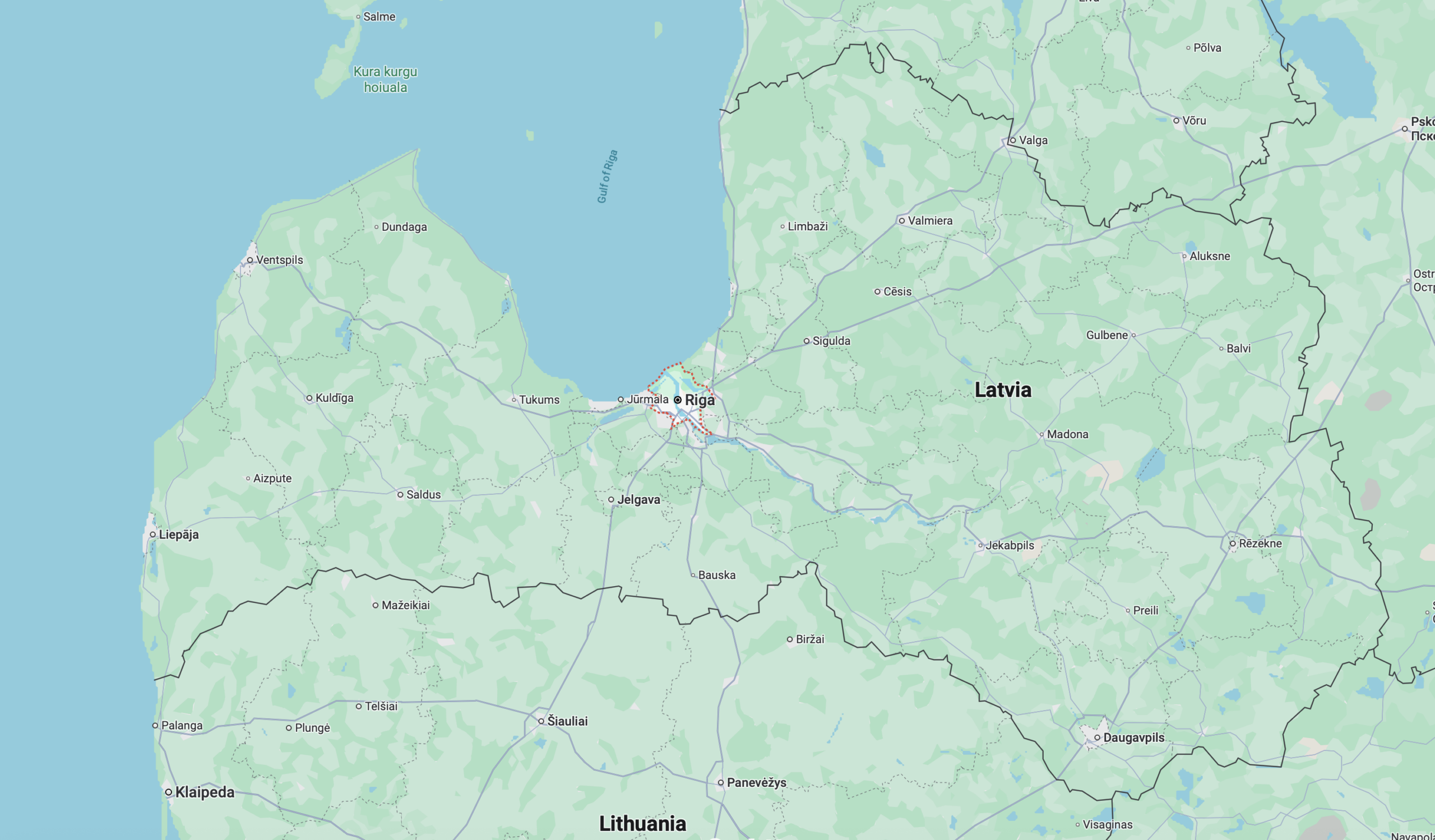
Latvia is one of the three Baltic countries in Northern Europe, bordered by Estonia, Lithuania, Russia, Belarus, and the Baltic Sea. Although compact in size, the country is rich in history, forests, lakes, and an unspoiled coastline. Latvia regained its independence in 1991 following the collapse of the Soviet Union and has since become a modern European nation while proudly preserving its traditions and cultural heritage. Along with its capital, Riga, other important cities include Liepāja, Daugavpils, Jelgava, and Ventspils, each contributing to the country’s unique character.
Currency
Latvia regained its independence in 1991 following the collapse of the Soviet Union and has grown into a modern European nation while carefully preserving its rich cultural heritage. Since 2014, the country has used the Euro (€) as its official currency, making travel easy for visitors exploring multiple European countries.
Cuisine
Latvian cuisine reflects both its northern climate and centuries of tradition. Expect hearty yet flavorful dishes featuring rye bread, smoked fish, potatoes, mushrooms, fresh dairy products, and seasonal berries. Popular local specialties include grey peas with bacon, piragi (small stuffed pastries), smoked fish, and delicious desserts made with berries and honey. Whether you’re strolling through Riga’s historic streets or relaxing at a local café, Latvia offers a welcoming blend of authentic flavors waiting for you.
Riga
Founded in 1201, Riga is the capital and largest city of Latvia, located on the banks of the Daugava River near where it flows into the Baltic Sea. For more than 800 years, Riga has been an important trading center in Northern Europe and was one of the leading cities of the powerful Hanseatic League, bringing wealth and influence that shaped the city’s remarkable architecture.
Today, Riga is renowned for its beautifully preserved medieval Old Town, a UNESCO World Heritage Site, and one of the world’s largest collections of Art Nouveau buildings. The city’s cobblestone streets, colorful merchant houses, historic churches, lively squares, and riverside setting create a unique blend of history, culture, and modern European charm. With centuries of history waiting around every corner, we were eager to discover what made Riga one of the Baltic region’s most beloved cities.
Day 1 – Our Journey to Riga
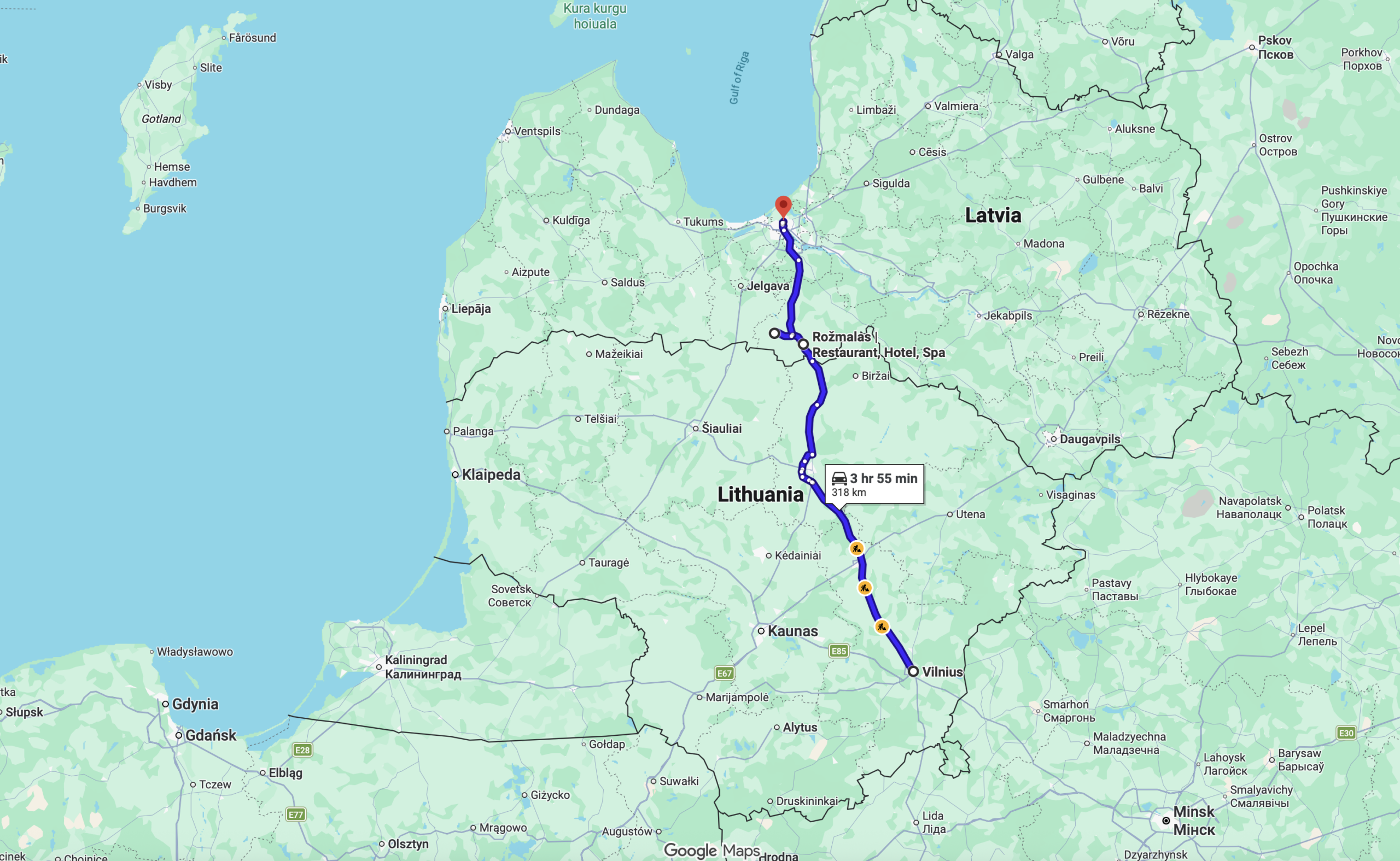
After spending a wonderful day exploring the beautiful churches and charming Old Town of Vilnius, it was time to continue our Baltic adventure to Riga, Latvia. The drive itself was enjoyable, taking us through the peaceful countryside of Lithuania before we crossed into Latvia. Thanks to both countries being part of the Schengen Area, there were no border checks—just a sign welcoming us into Latvia. We made a quick comfort stop shortly after crossing the border before continuing toward our lunch destination.
Lunch at Rožmalas
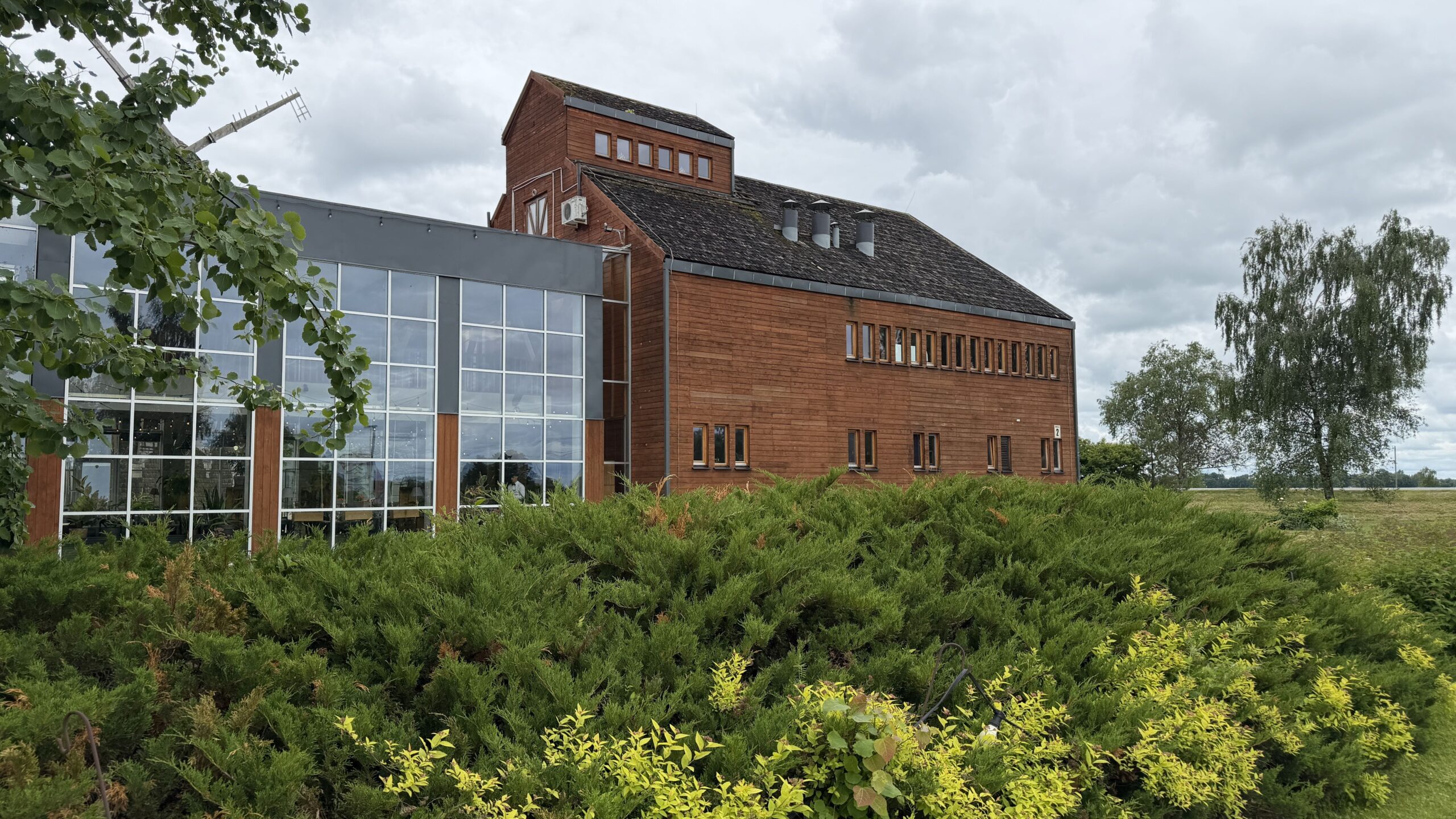
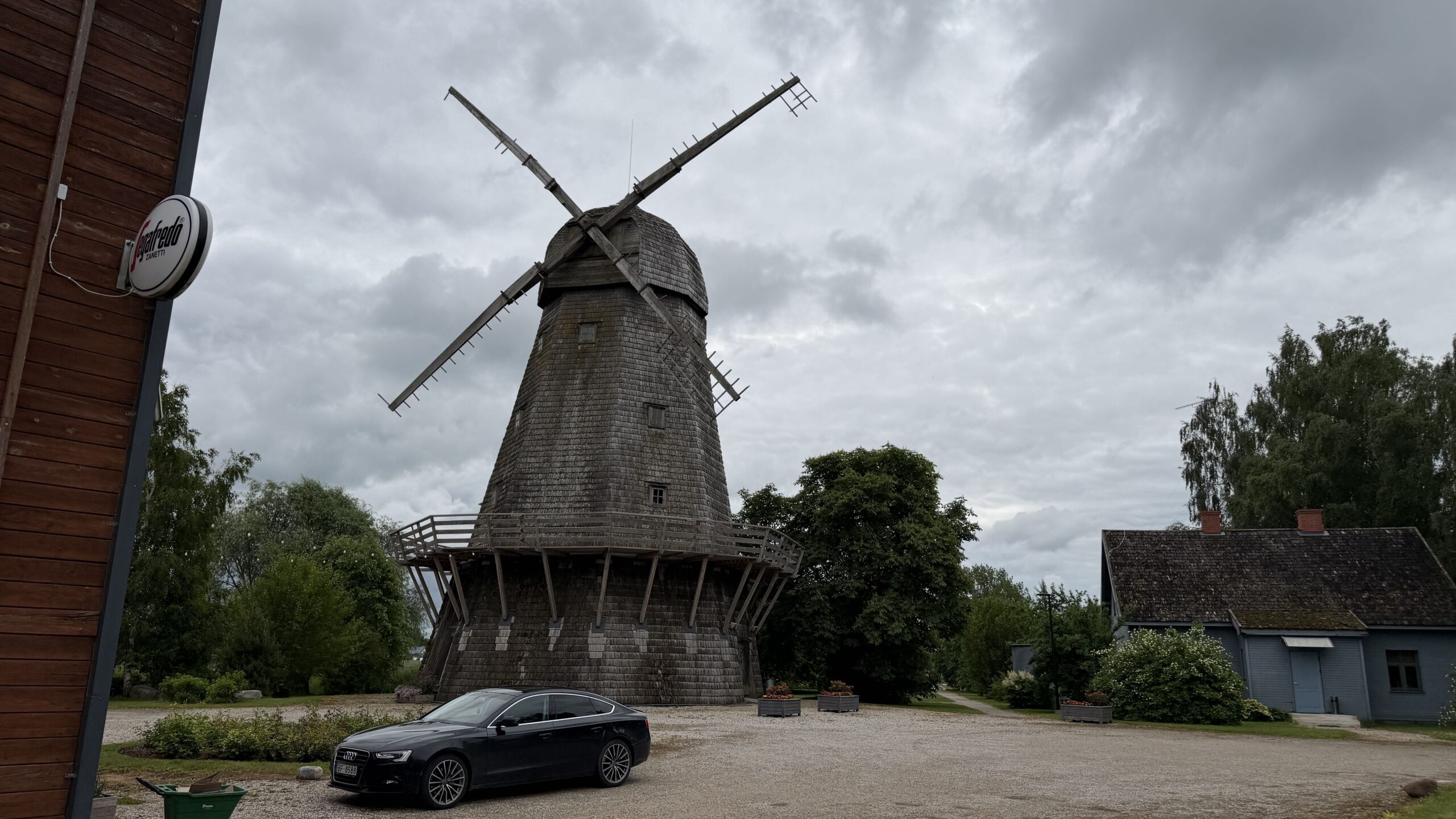
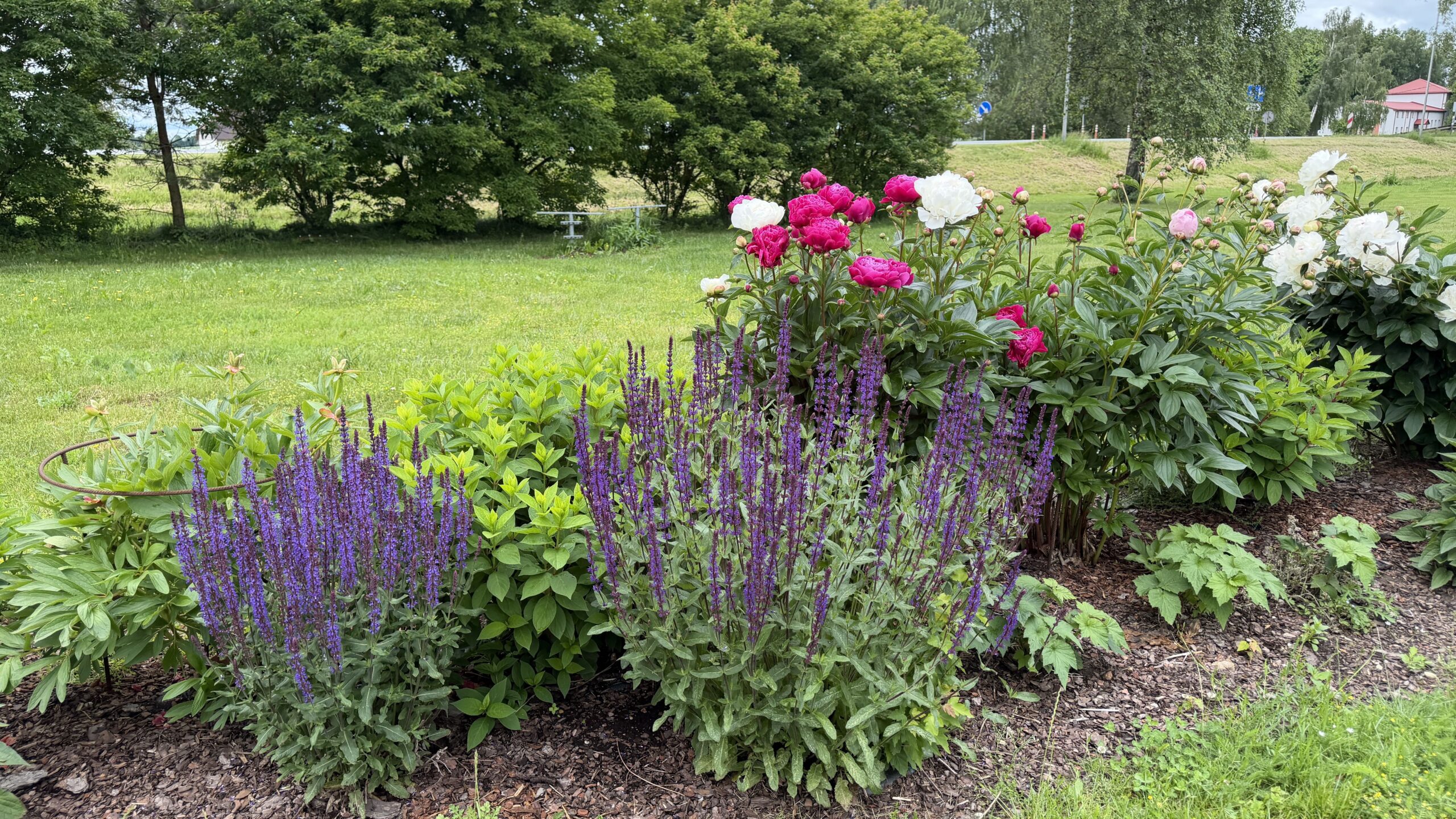
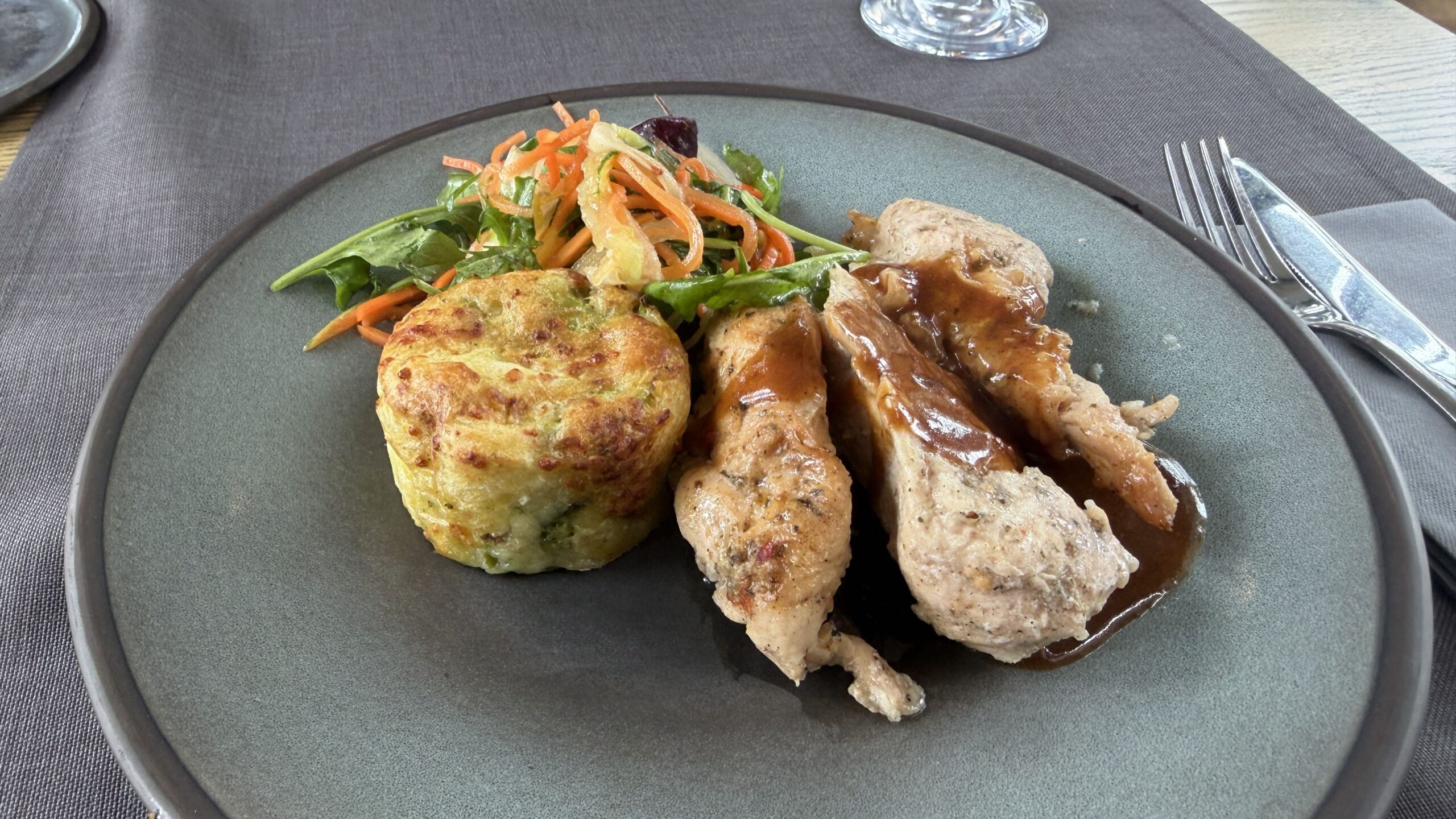
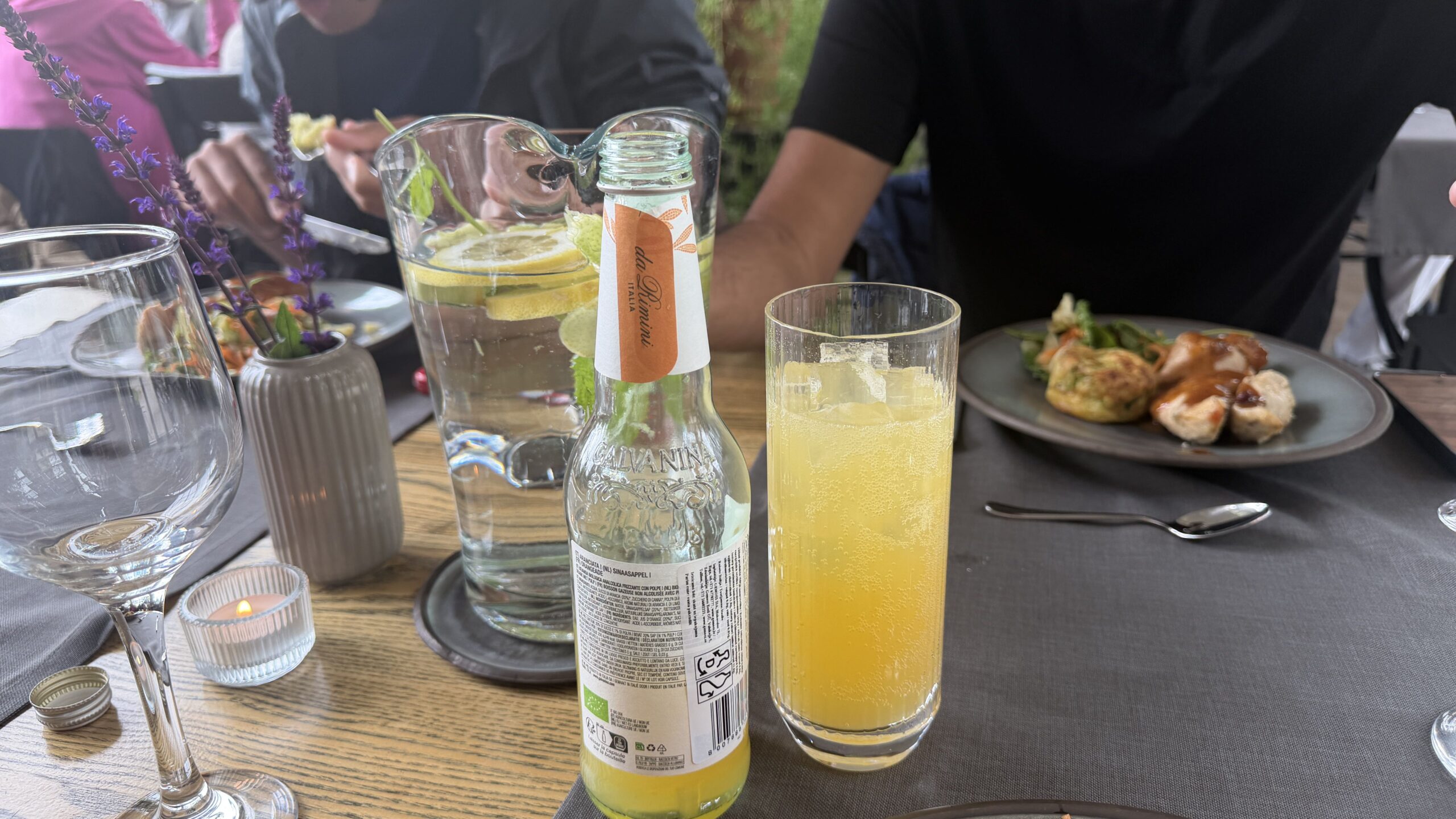
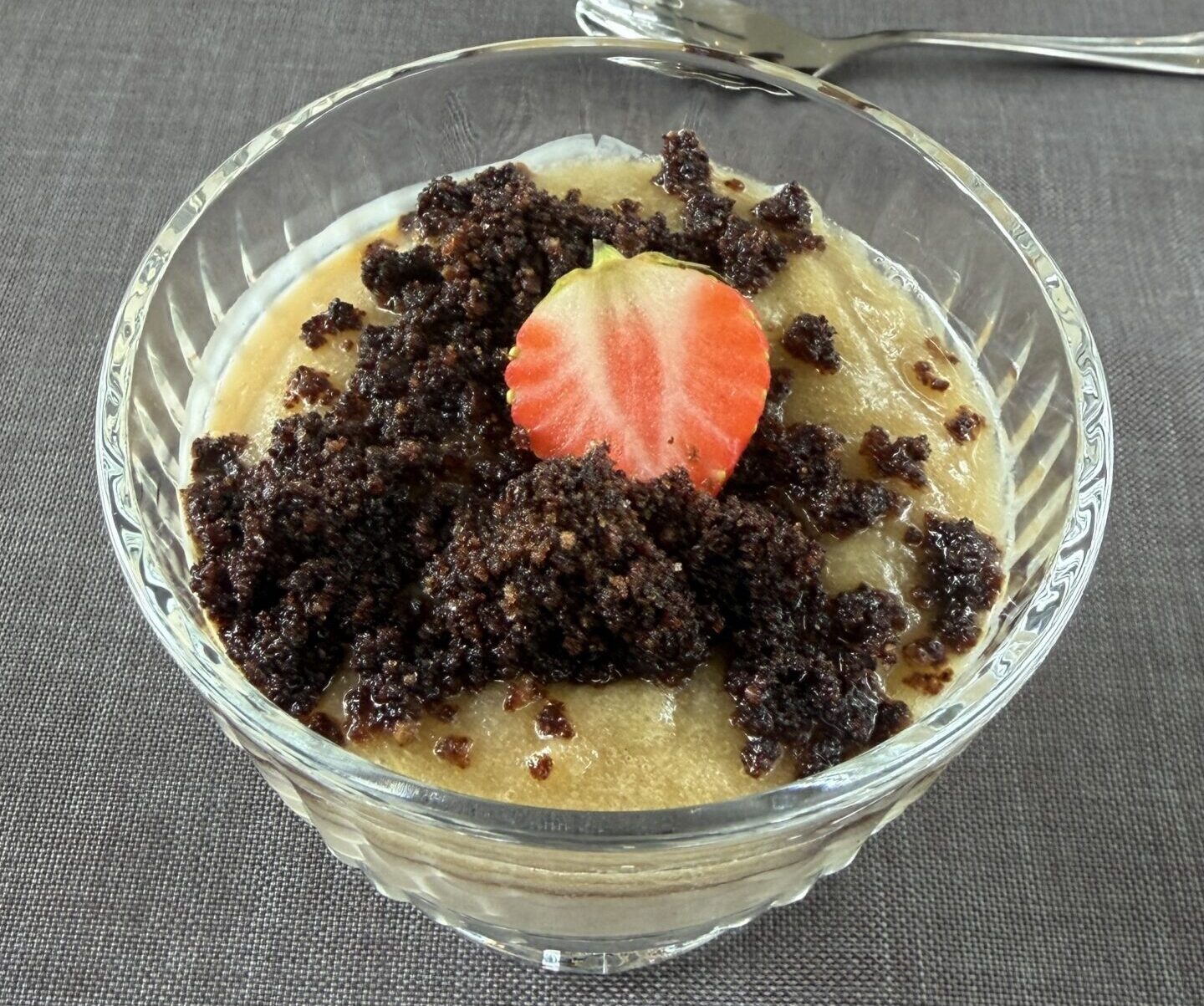
Our lunch stop was at Rožmalas, a beautiful countryside restaurant and hotel complex near Rundāle Palace. The property immediately caught our attention with its historic wooden windmill, colorful gardens, and bright, welcoming interiors. We were served a delicious three-course meal, with thoughtfully prepared dishes and several drink options. This time, instead of our usual soft drinks, we decided to try one of the local non-alcoholic beverages, which turned out to be a refreshing accompaniment to the meal.
Rožmalas is much more than just a restaurant. It is a charming Latvian countryside retreat featuring a hotel, spa, and the beautifully restored Ribbes Windmill, giving visitors a glimpse into traditional Latvian rural life before continuing their journey.
Rundāle Palace – Latvia’s Baroque Masterpiece
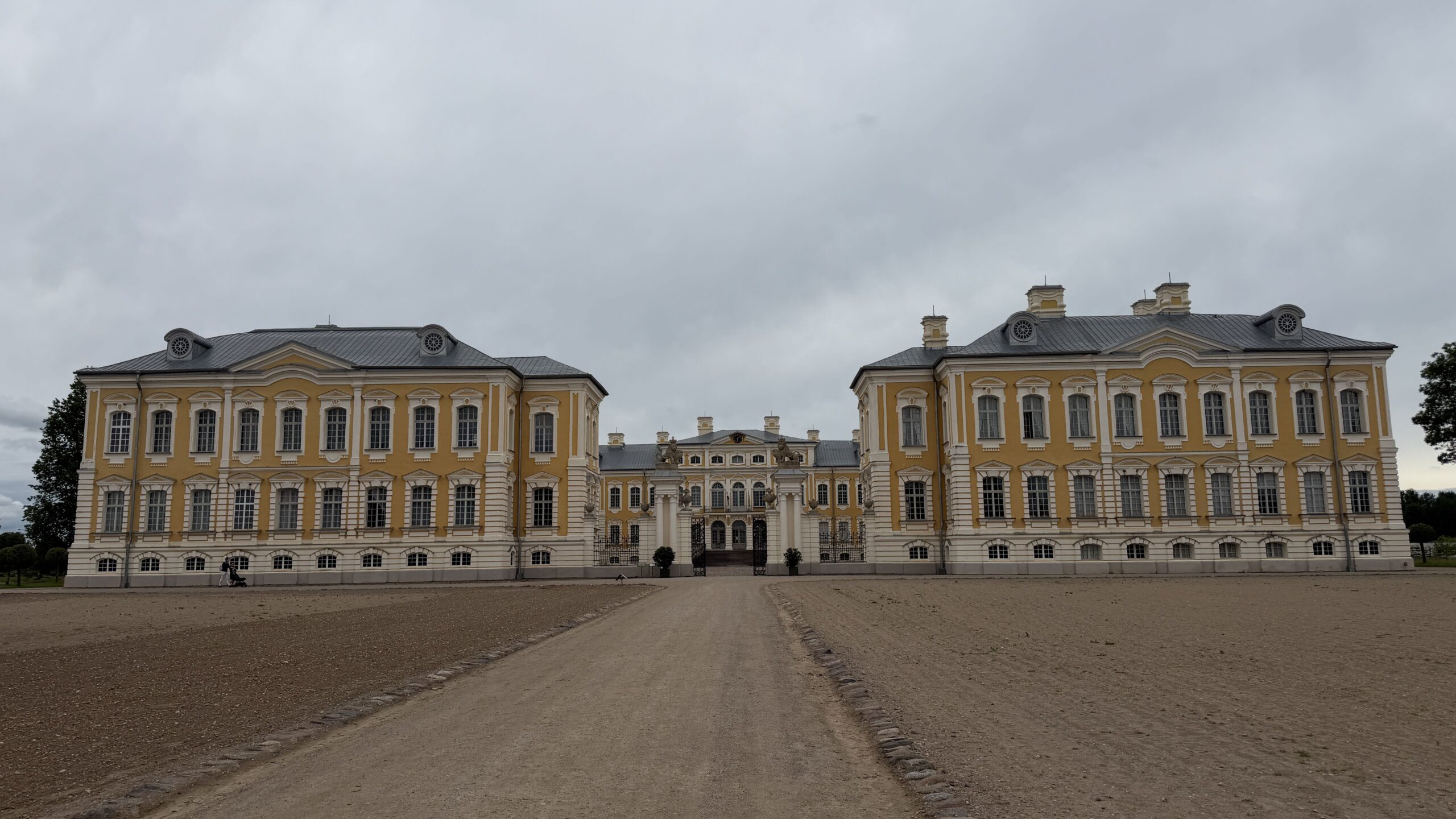
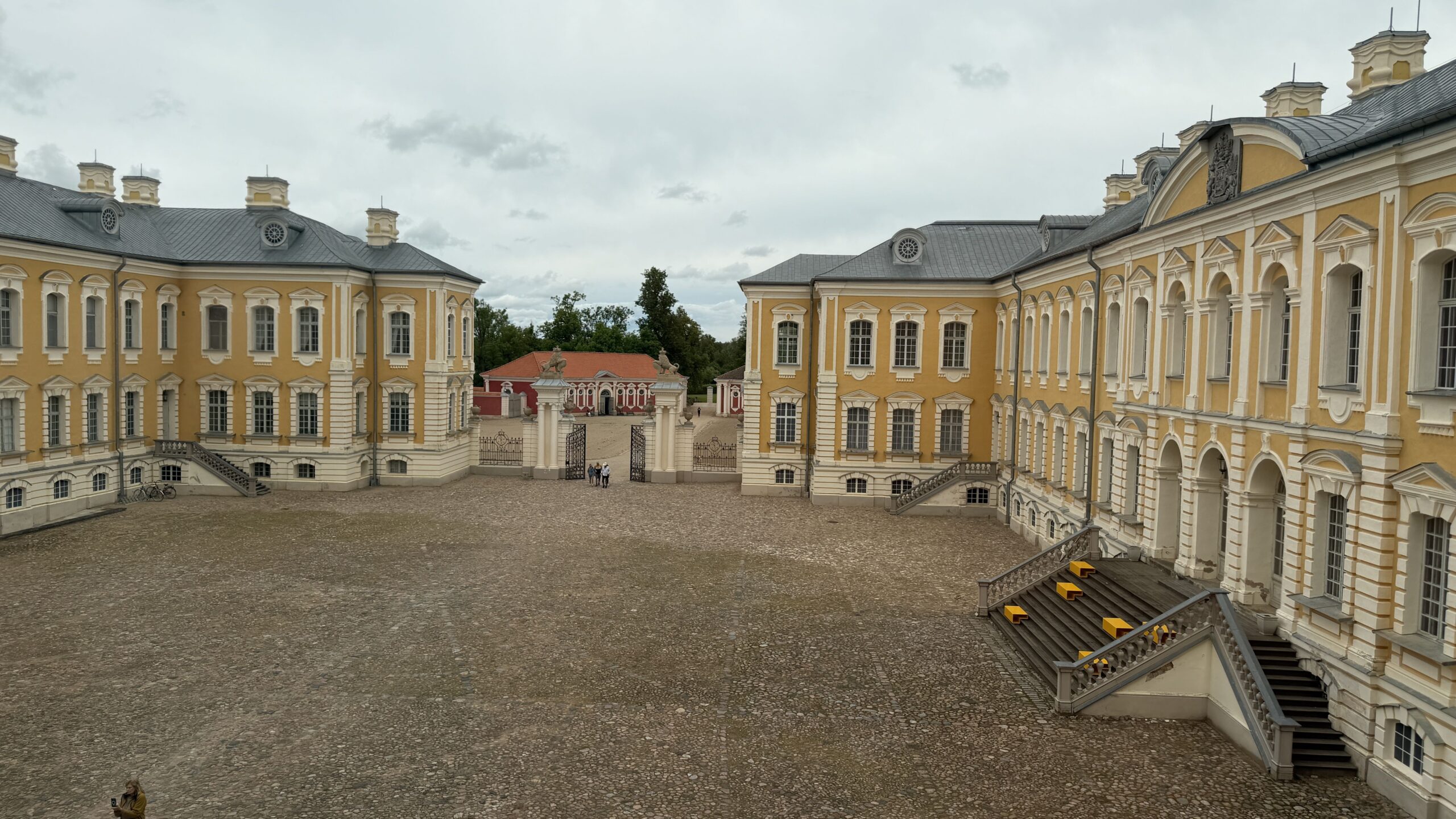
Our next stop was Rundāle Palace, often called the “Versailles of Latvia.” Built in the 18th century as the summer residence of the Duke of Courland, the palace was designed by the renowned Italian architect Francesco Bartolomeo Rastrelli, the same architect behind the magnificent Winter Palace in St. Petersburg.
As we walked toward the entrance, the palace immediately stood out with its striking yellow-and-white Baroque façade, glowing beautifully against the surrounding greenery. Before entering, everyone was asked to wear protective shoe covers to help preserve the palace’s original wooden floors and historic carpets—a small reminder of the care taken to protect this remarkable landmark.
We joined a guided tour led by Soloveika Olafs, who turned out to be one of the funniest and most entertaining guides of our entire trip. His stories, humor, and enthusiasm brought the palace’s history to life, making the tour both informational and enjoyable.
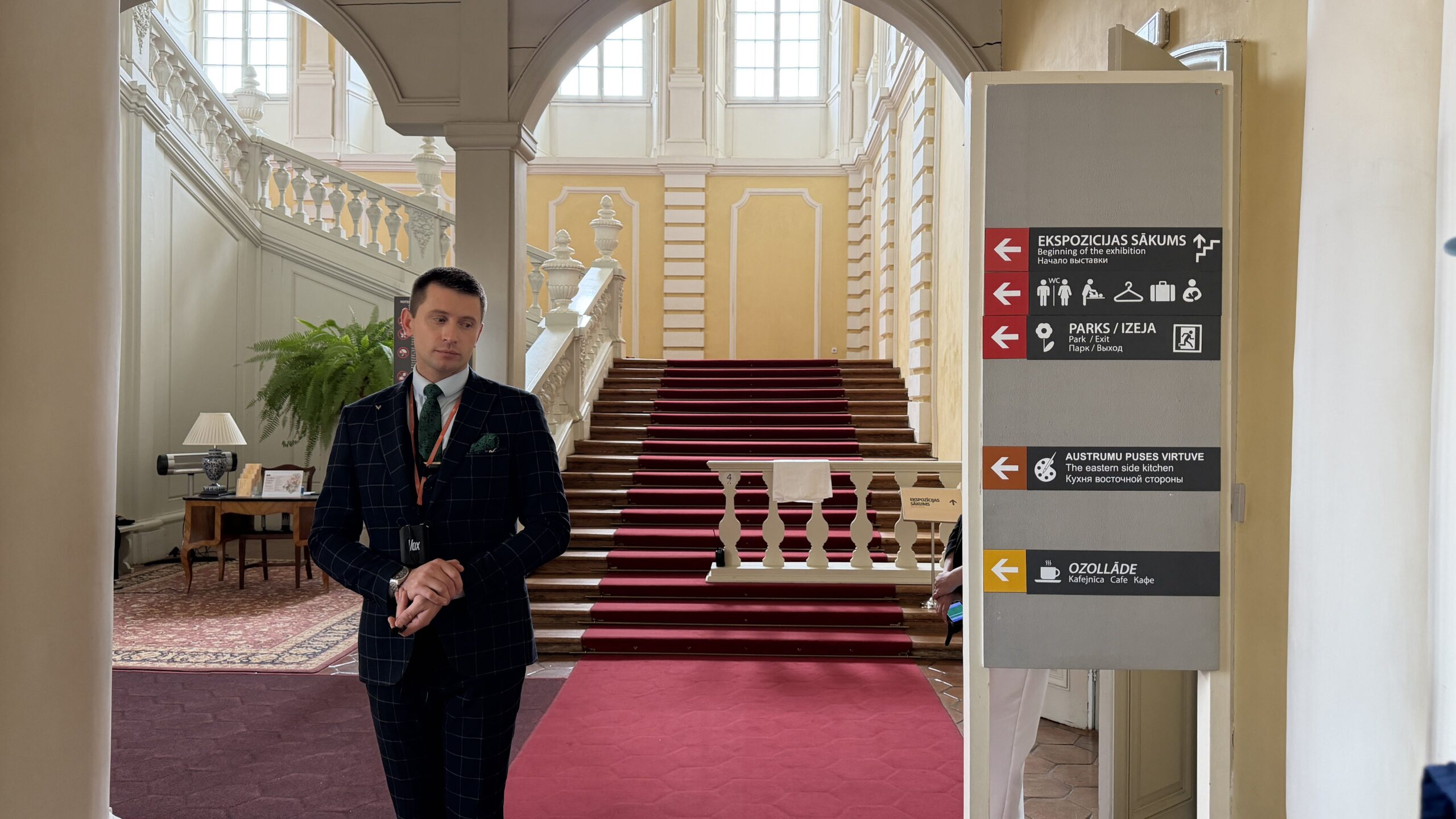
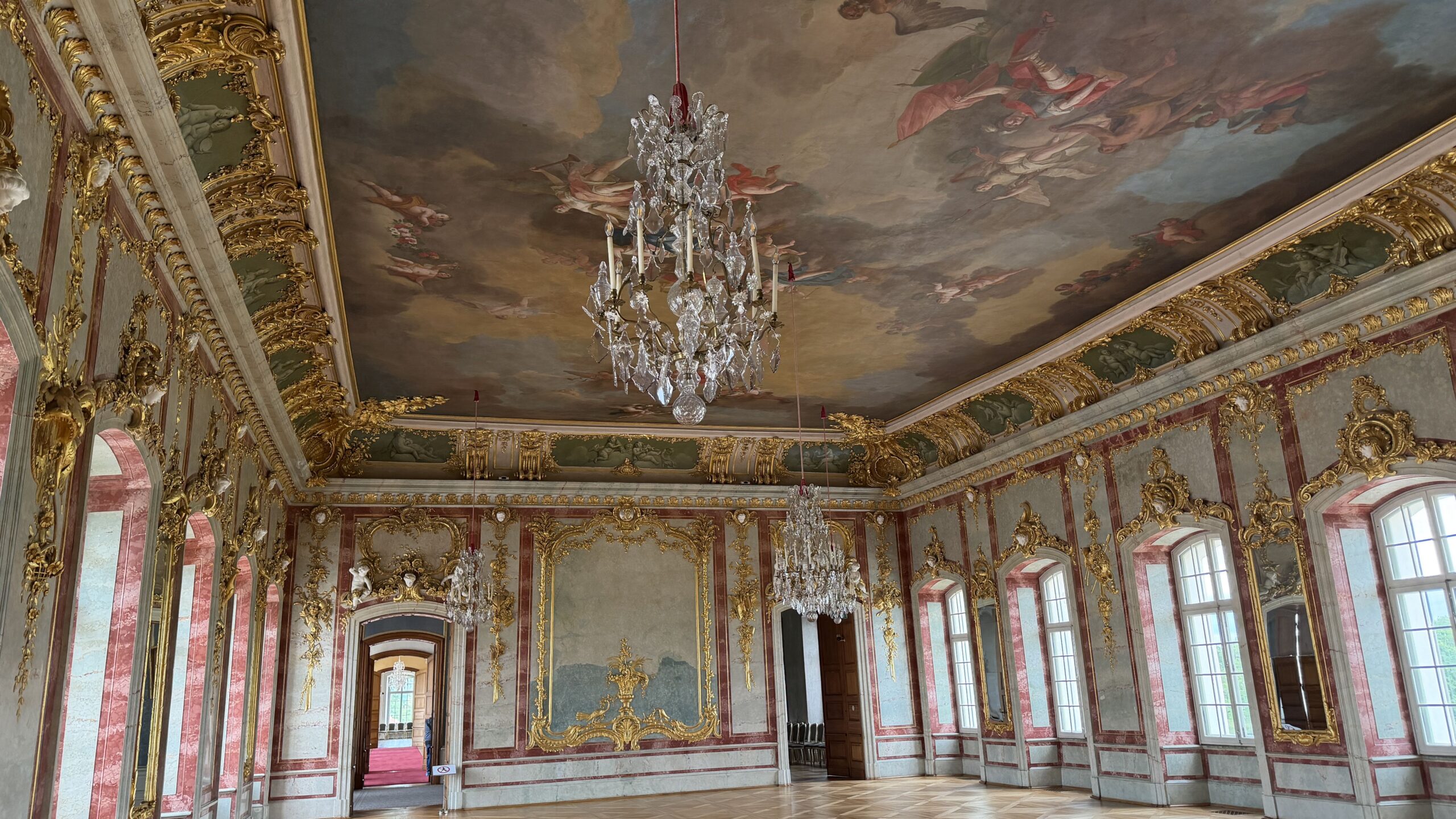
Our tour began in the magnificent Golden Hall, also known as the Throne Room, where elaborate gold decorations reflected the wealth and prestige of the Dukes of Courland.
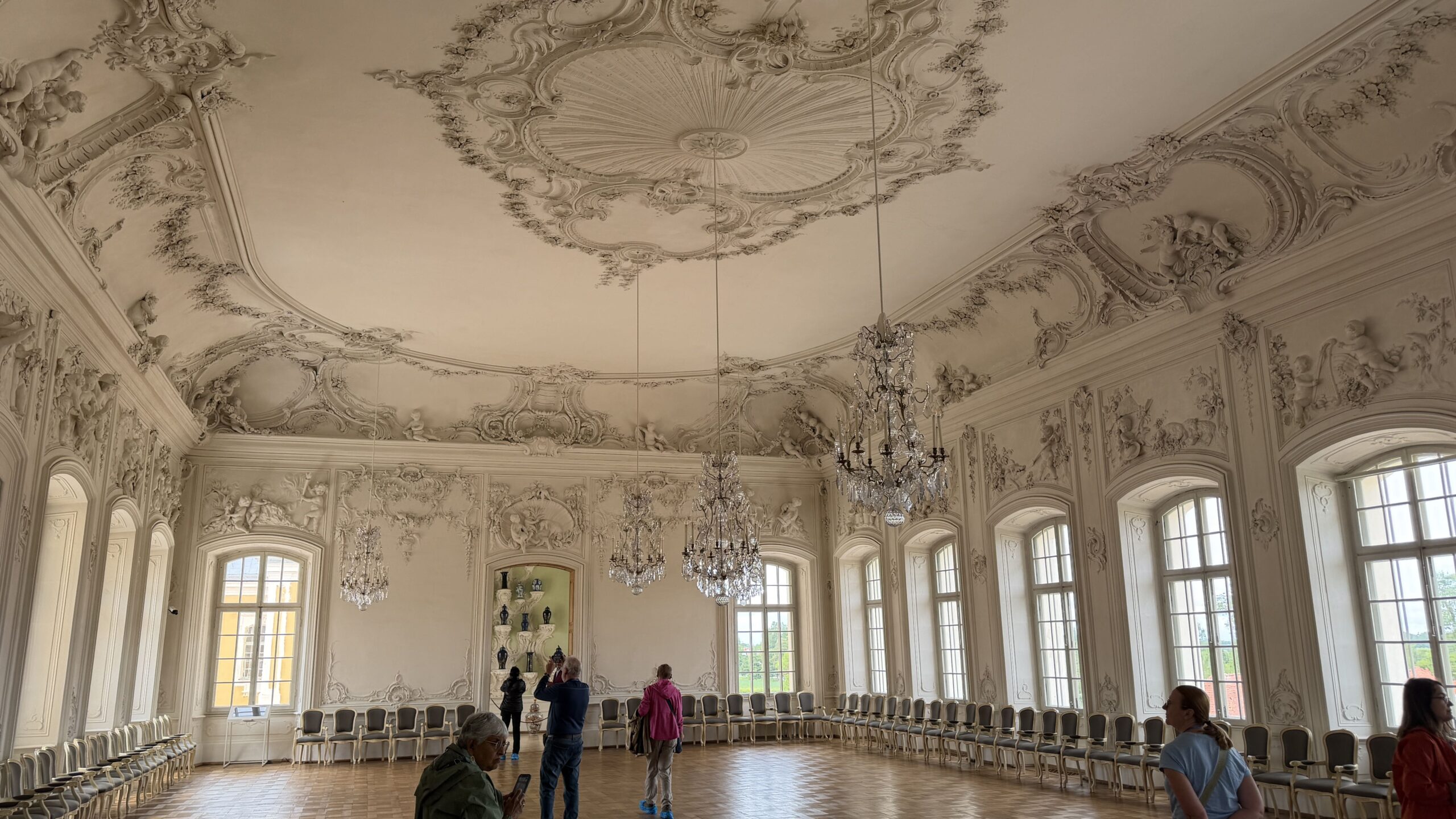
From there we continued into the elegant White Hall, the palace’s grand ballroom, where lavish celebrations and royal gatherings once took place. As we explored further, we visited the King’s and Queen’s private apartments, family dining rooms, guest rooms, servants’ quarters, and beautifully decorated reception rooms. Every room featured intricate ceiling artwork, ornate wall decorations, priceless paintings, antique furniture, and beautifully crafted ceramic pieces collected from across Europe.
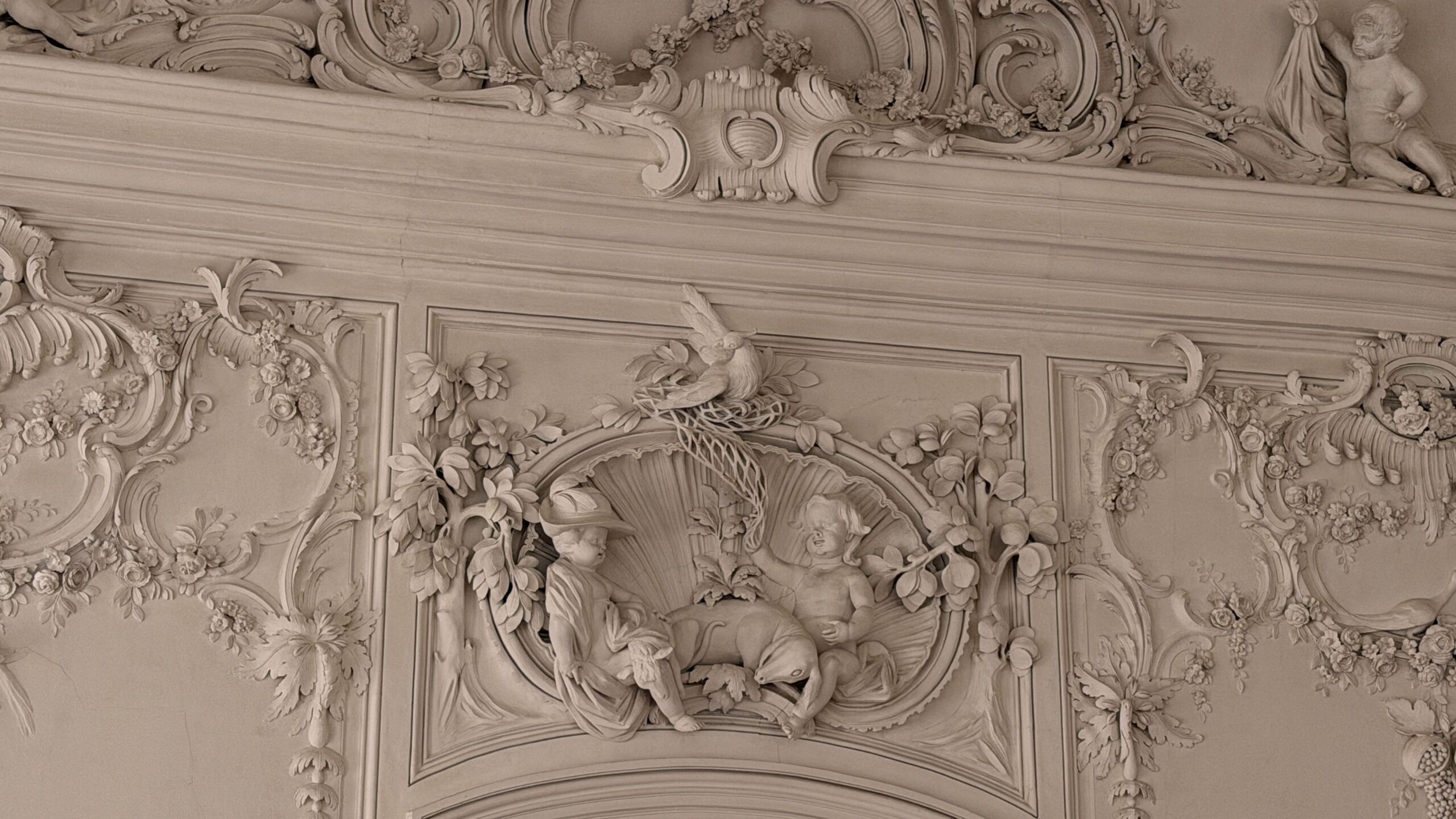
One of the things that fascinated us most was the collection of antique table clocks, each with its own unique design. The royal bedroom overlooked the formal gardens, while the dining room displayed an elegant ceramic dinner service fit for nobility.
Another interesting feature our guide pointed out was the beautifully decorated blue ceramic heating stove tucked into the corner of the room. In the 18th century, wood was fed into these stoves from adjoining service corridors, allowing the rooms to stay warm without servants constantly entering the royal chambers.
Our guide also explained that, unlike many European palaces damaged during World War II, Rundāle Palace survived largely intact. However, after serving various purposes—including use as a school during the Soviet era—it required decades of careful restoration. Beginning in 1972, conservation experts meticulously restored the palace’s 138 rooms, decorative artwork, and magnificent French-style gardens. The restoration was completed in 2014, returning the palace to its original Baroque and Rococo splendor. We even had the opportunity to see examples of paintings before and after restoration, giving us a real appreciation for the incredible craftsmanship involved in preserving this historic treasure.
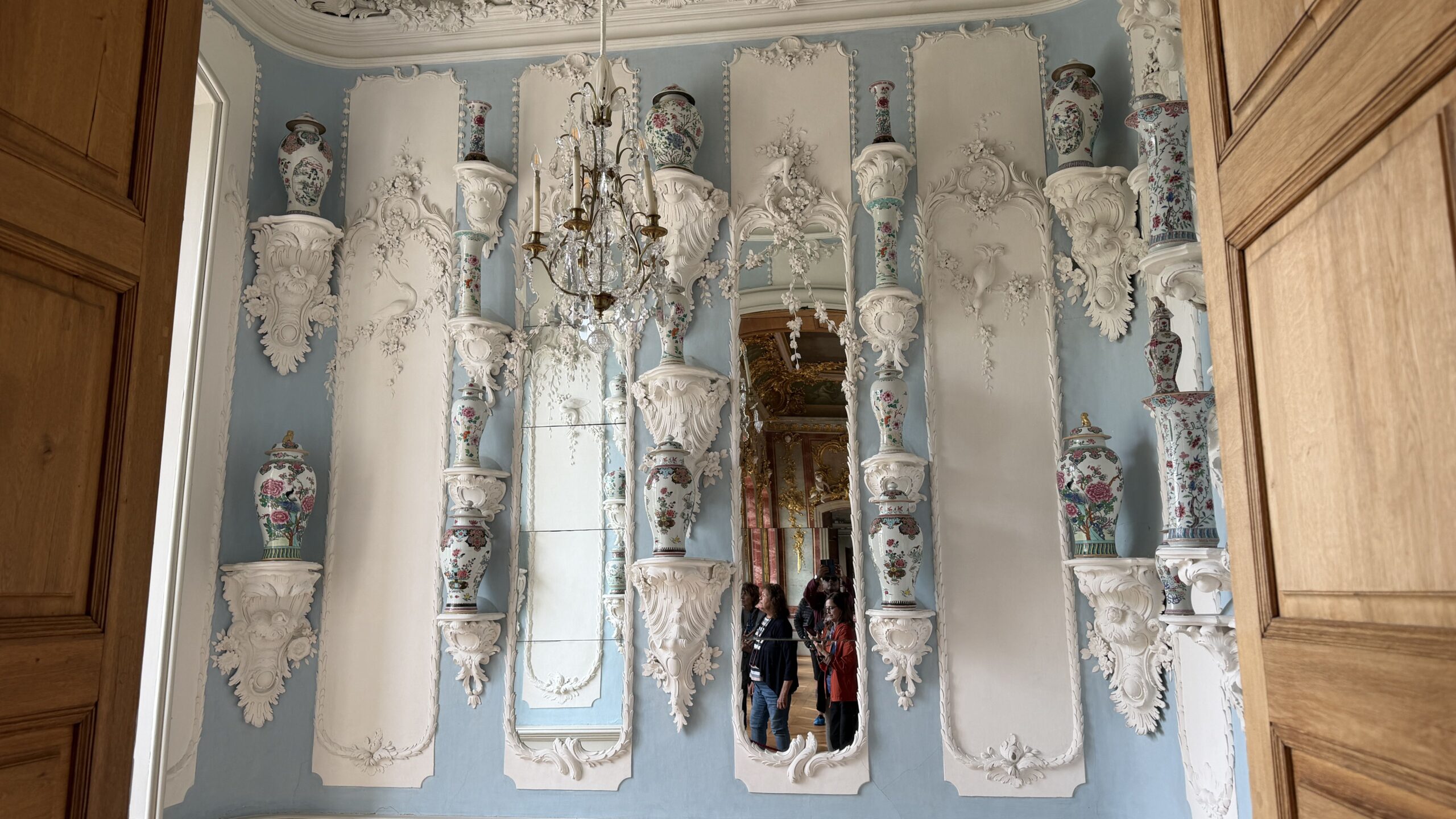
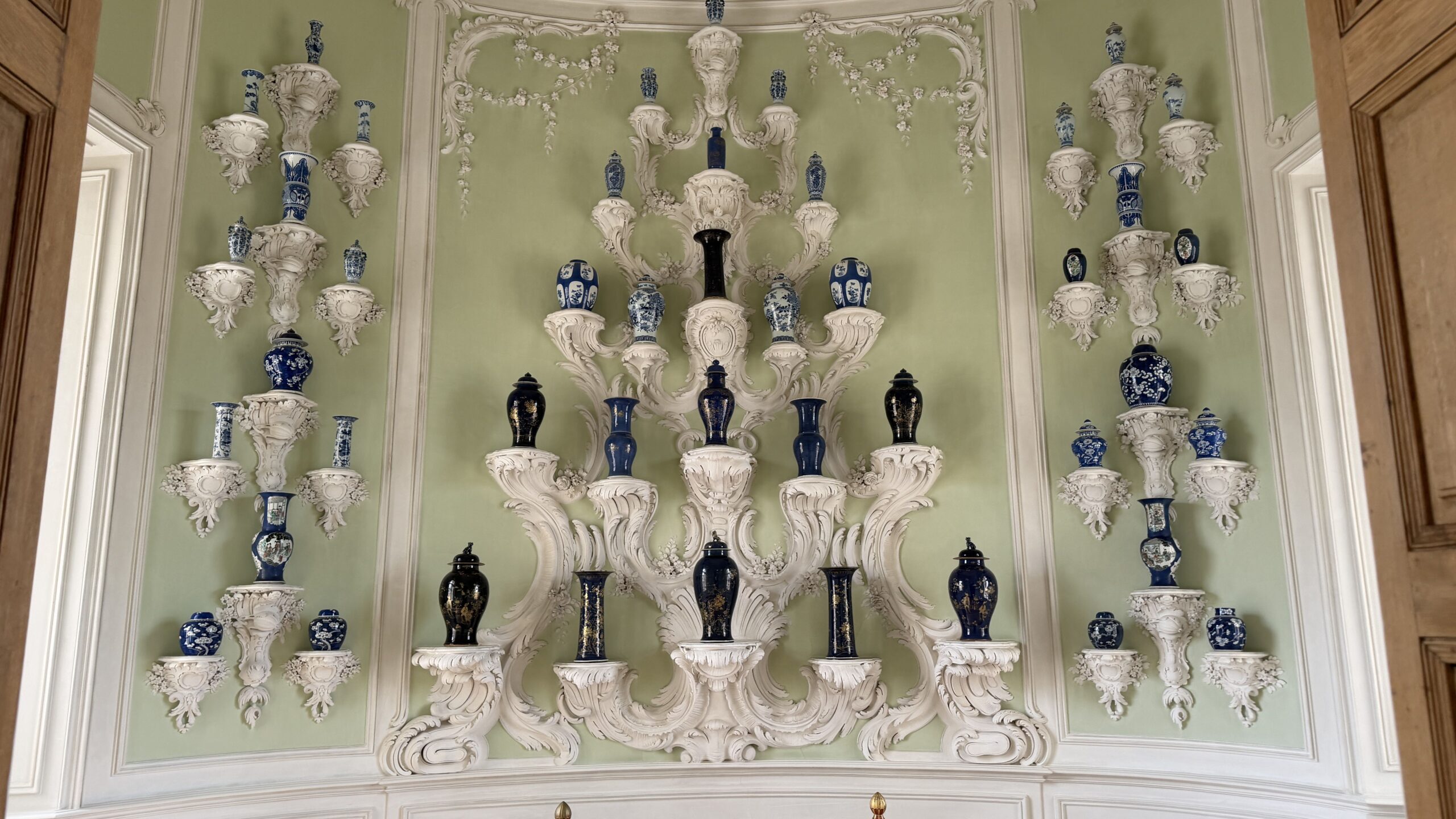
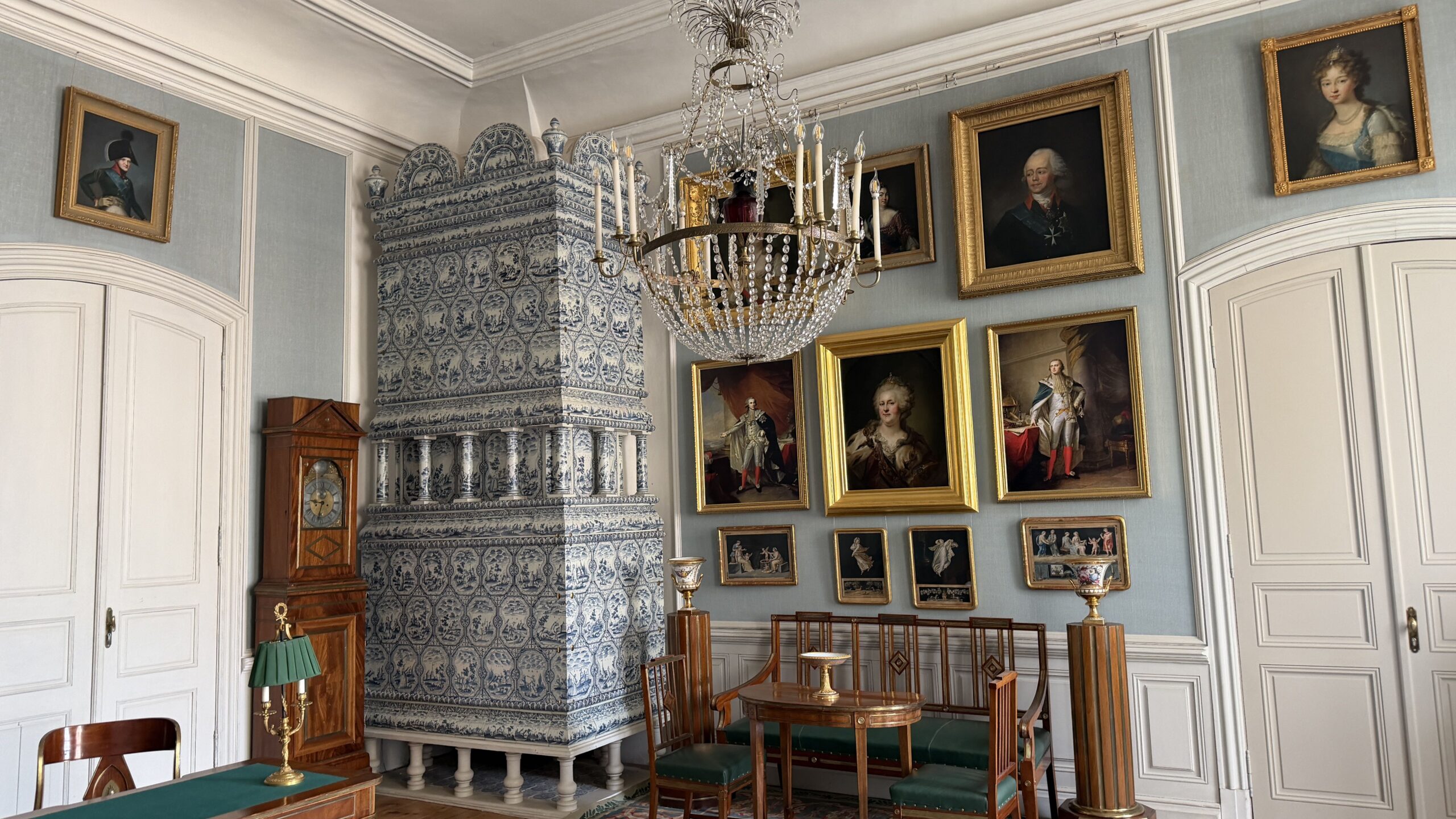
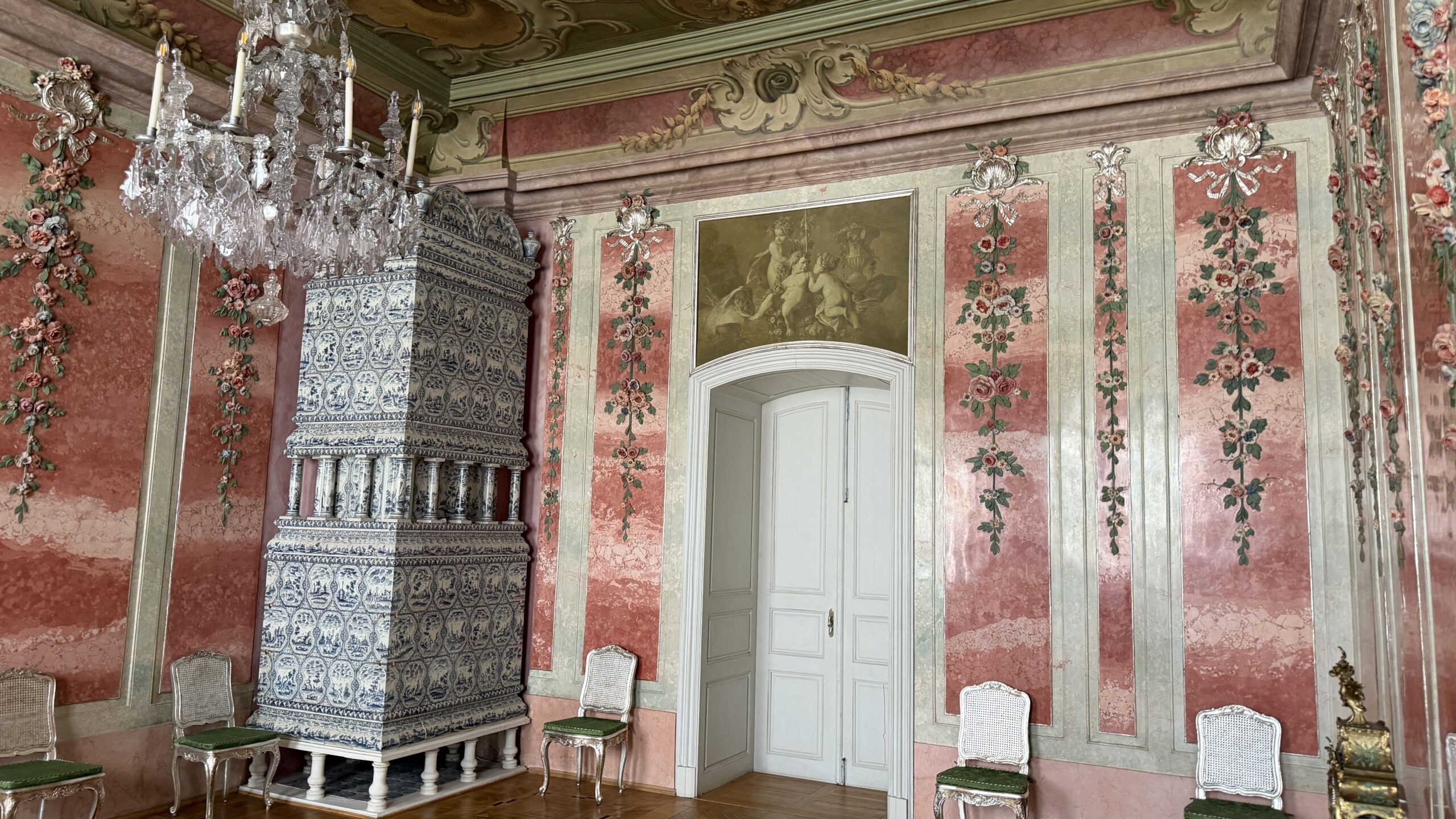
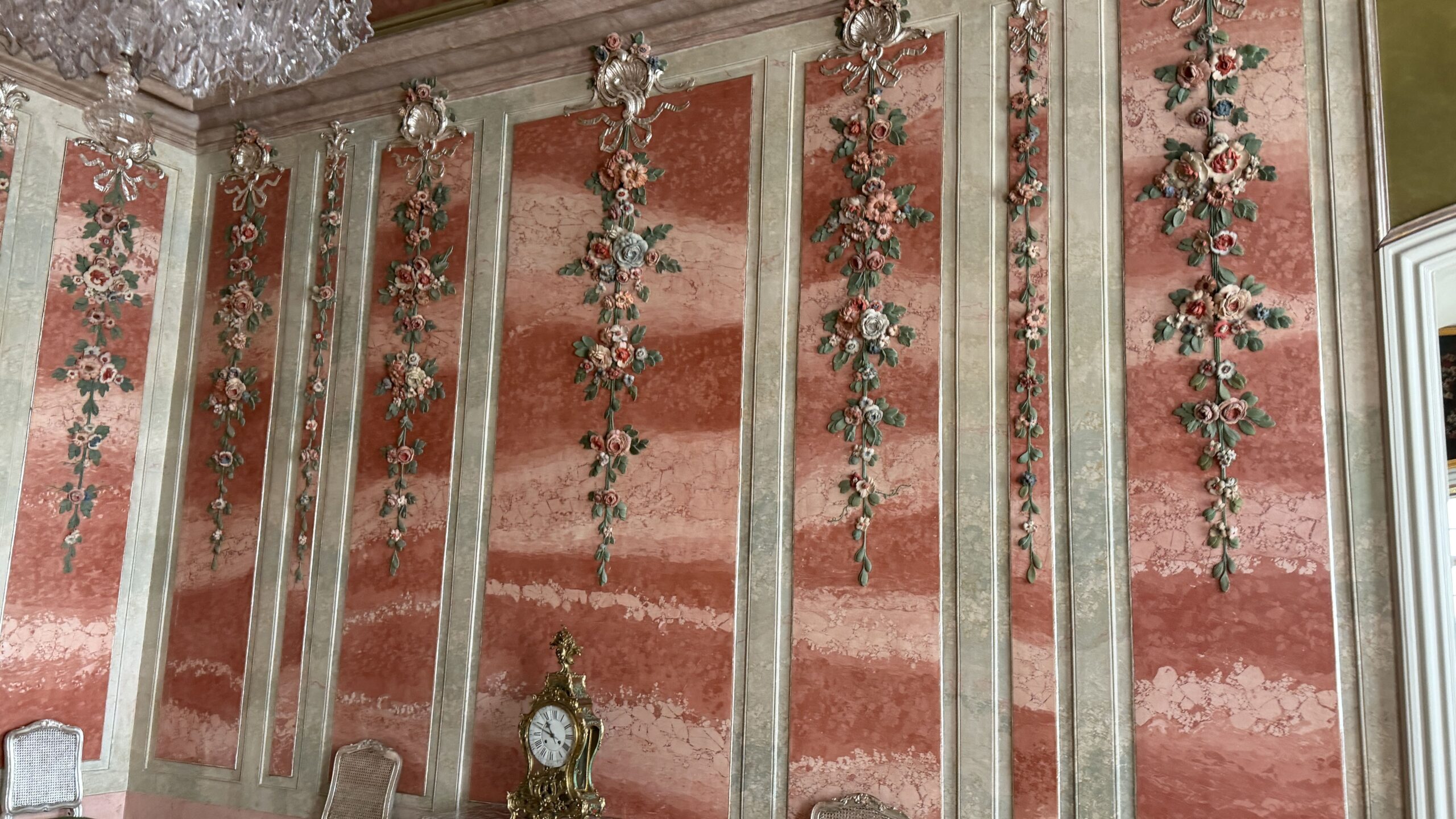
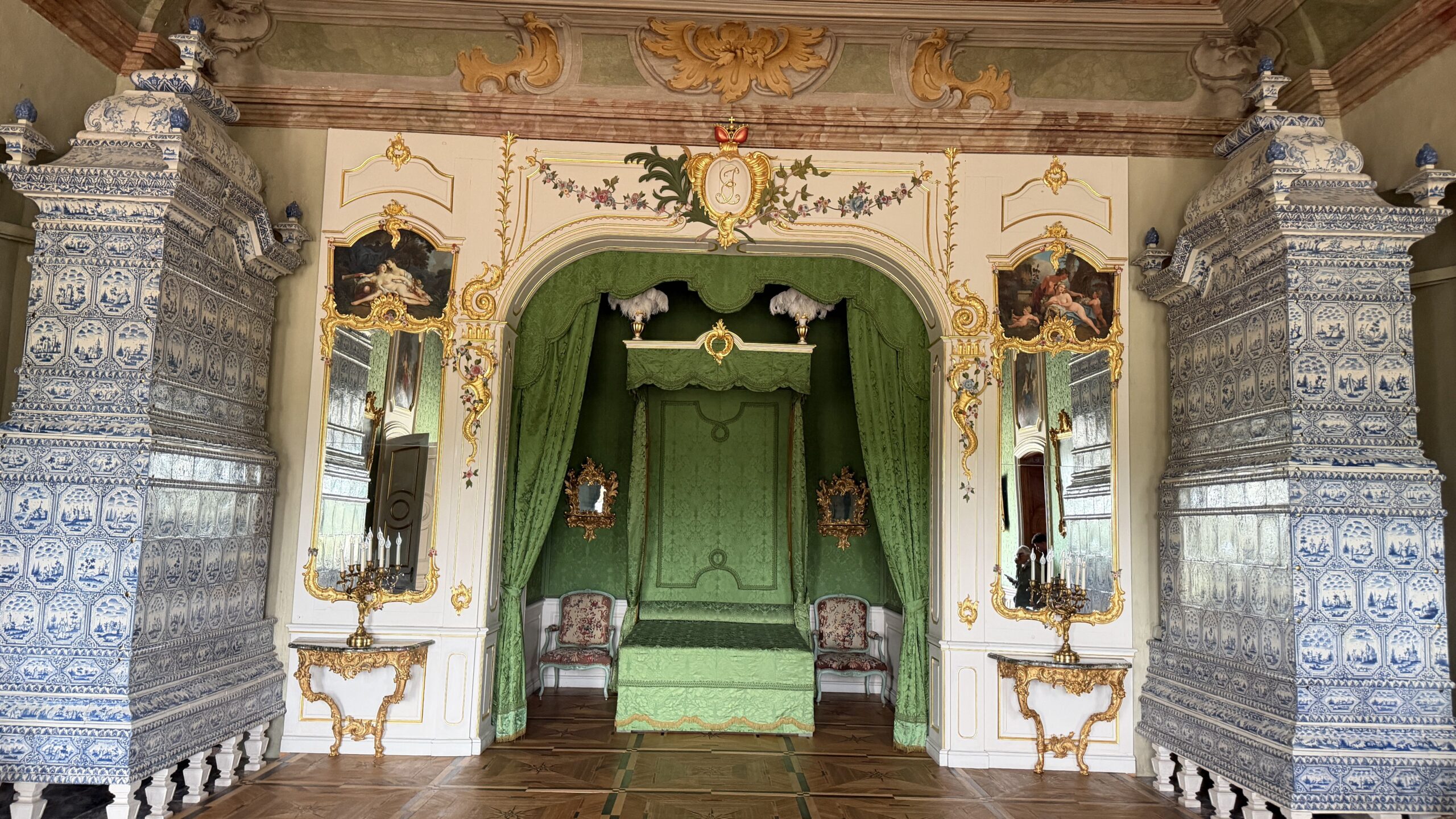
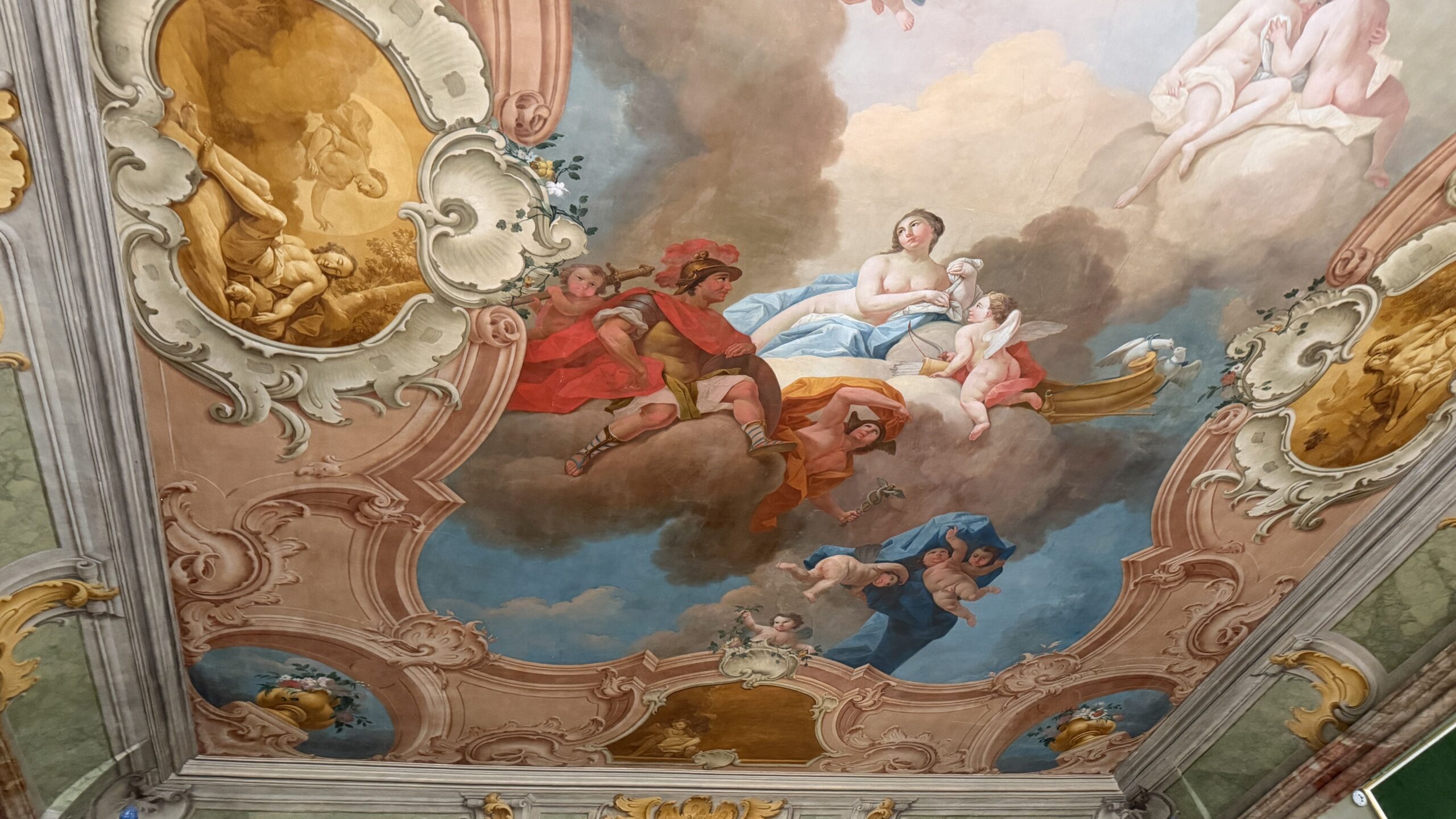
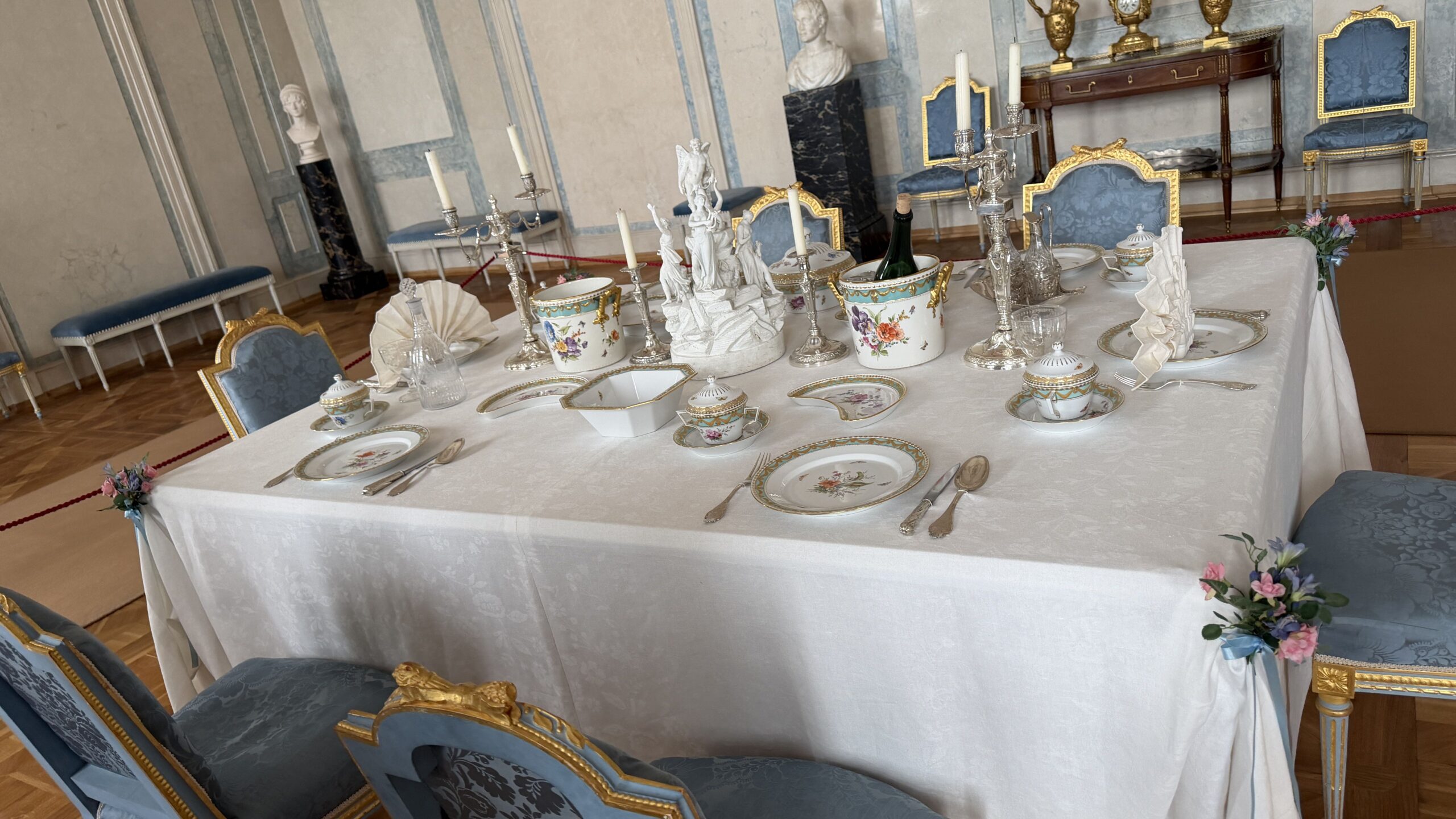
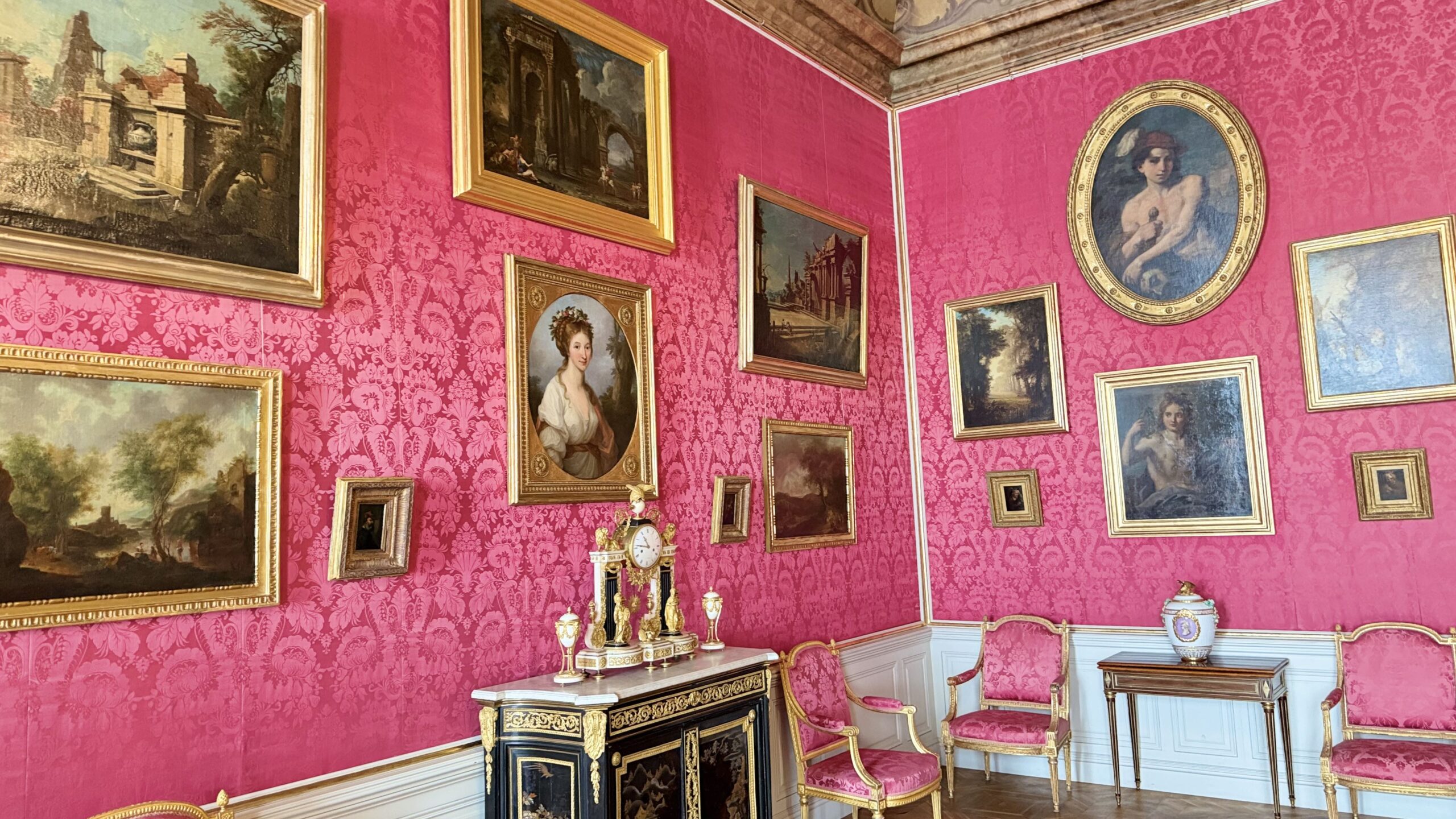
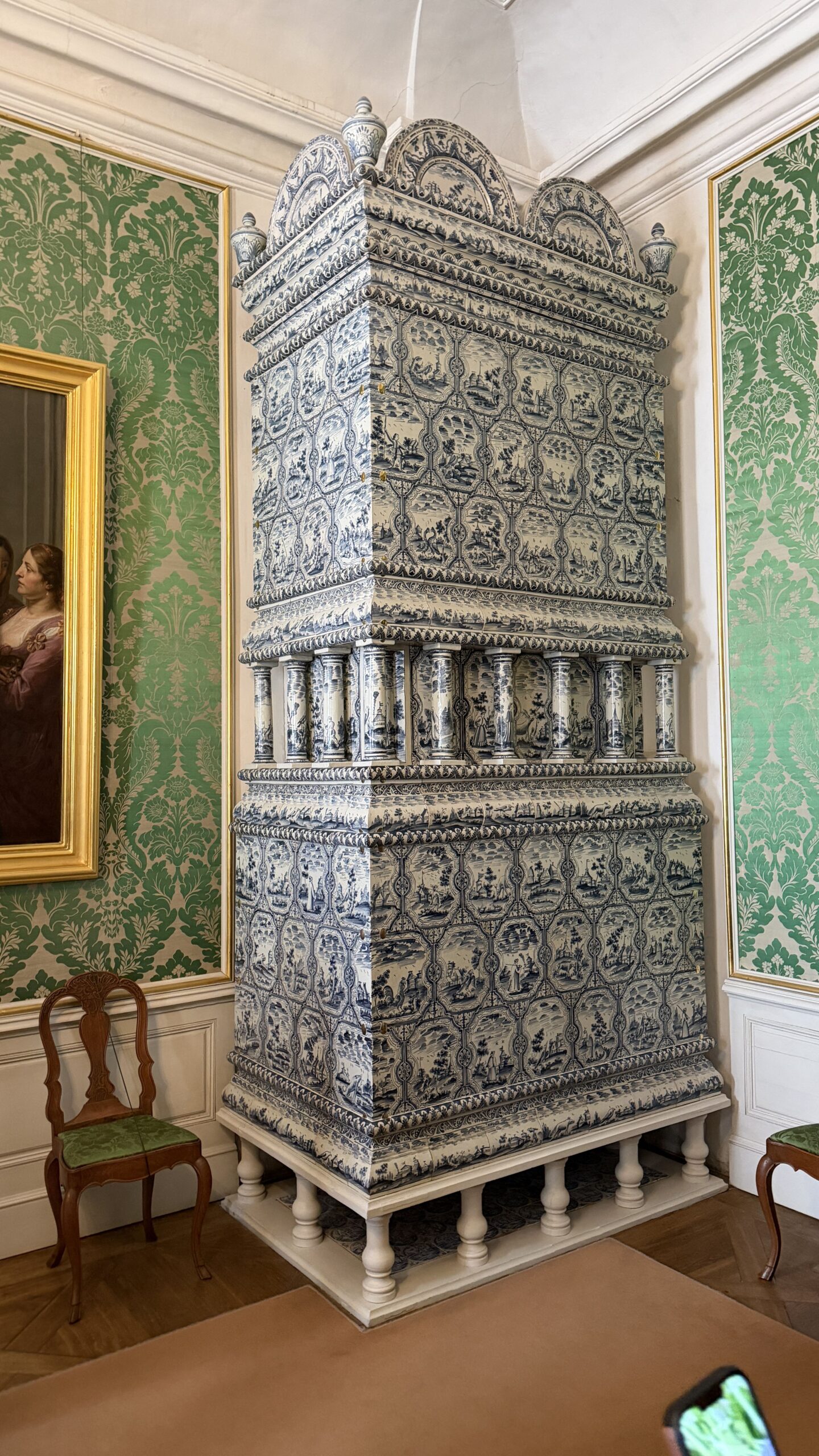
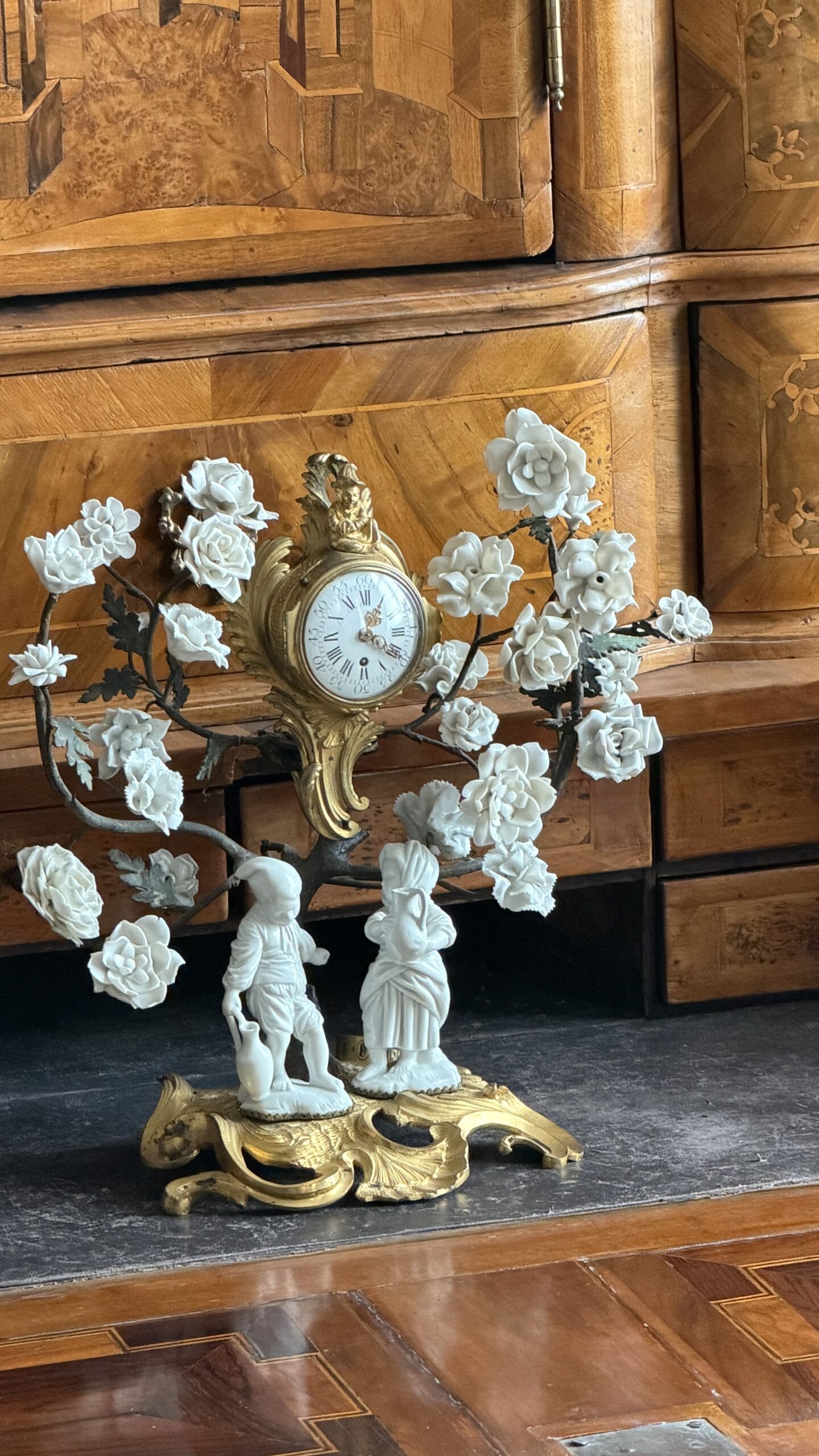
At the end of the tour, we descended to the lower level, where the stone corridors and vaulted ceilings felt almost cave-like. The passage eventually led us outside to the palace gardens. Visitors need to present their tickets again to enter the gardens, and for those who prefer not to walk, golf carts are available to take guests around the grounds.
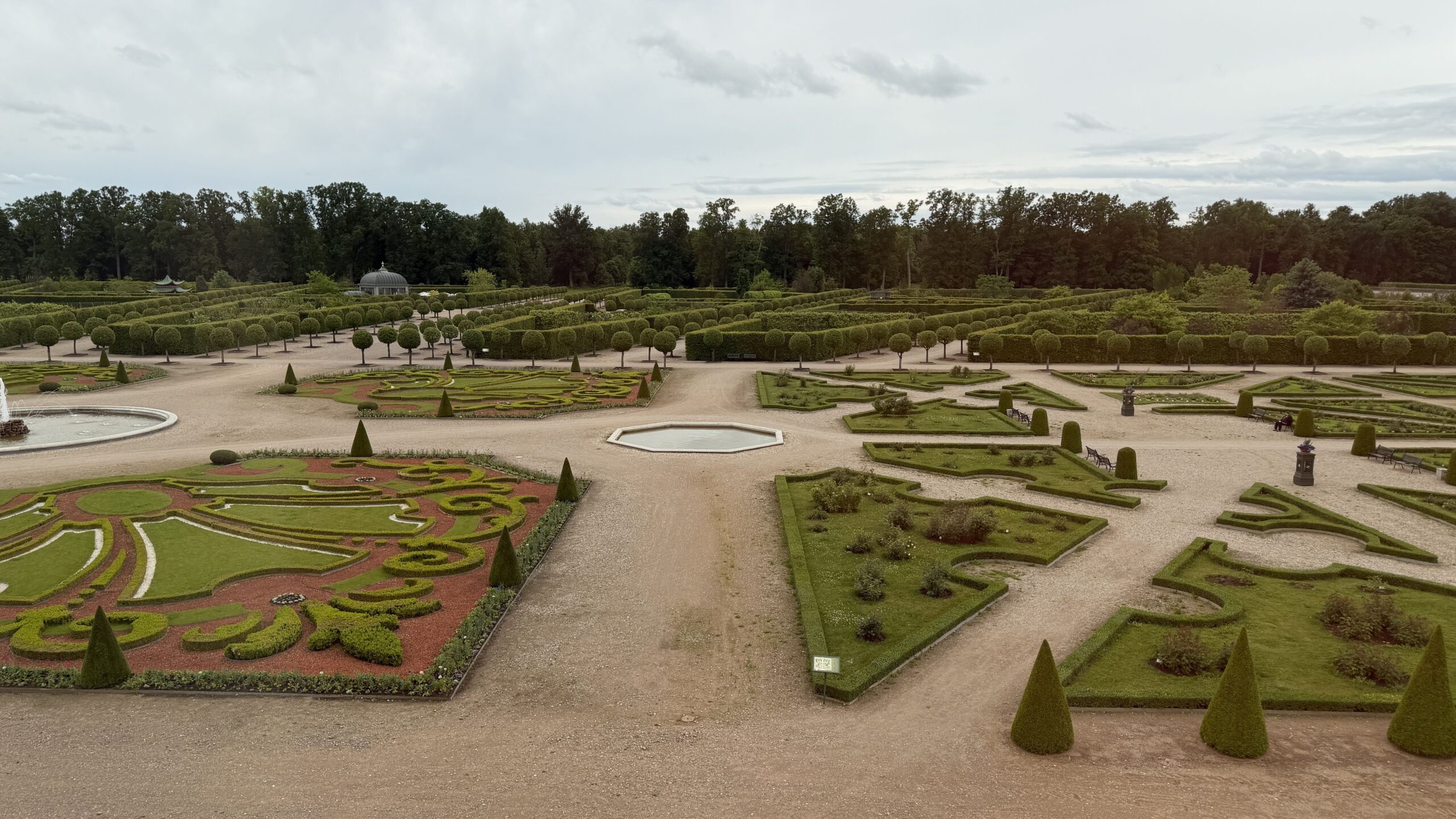
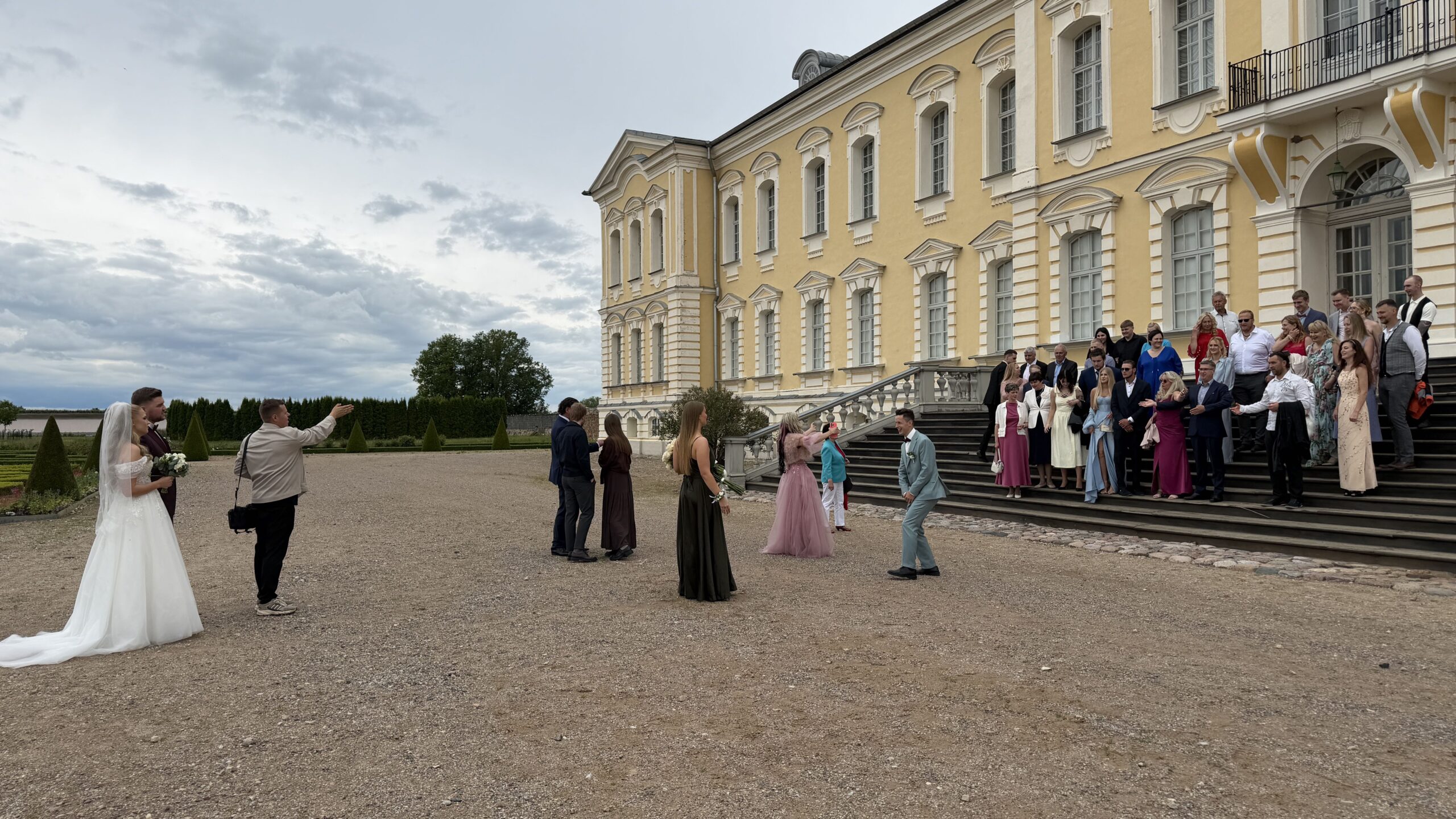
While we were exploring, a wedding party arrived, and the newlyweds posed for family photographs on the grand palace staircase—a picture-perfect setting for such a special occasion. Although the gardens weren’t in peak bloom during our visit, they were beautifully laid out with geometric hedges, tree-lined pathways, and elegant landscaping. As we walked back toward the parking area, we passed beneath a long corridor of green arches, providing a peaceful and picturesque end to our visit before continuing our journey to Riga.
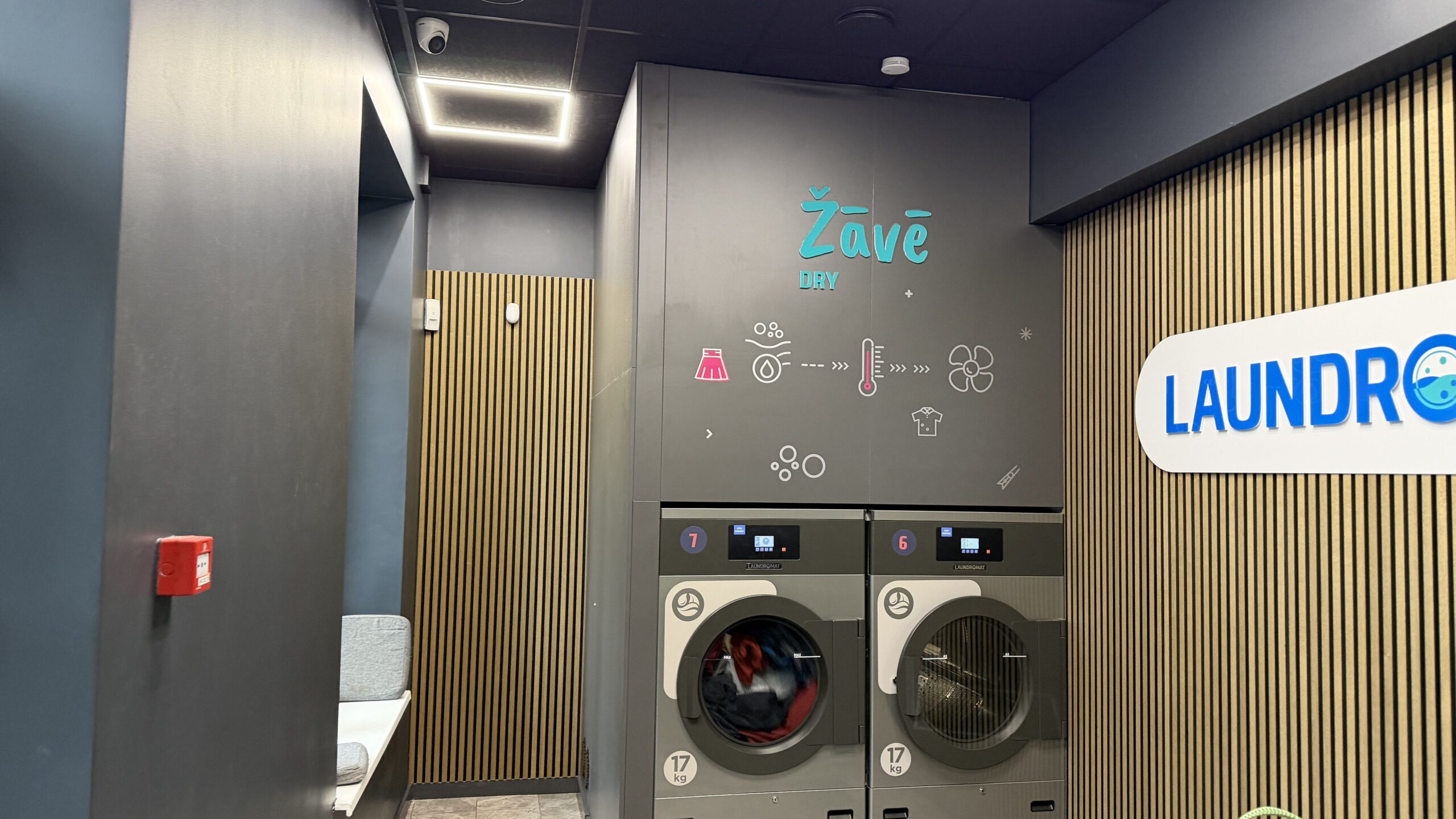
We reached Riga after exploring the Rundāle Palace and checked in to hotel. If you are traveling through multiple European countries and need to catch up on laundry, Riga is a convenient place to do it. The city has several laundry services and laundromats, making it a practical stop to refresh your clothes before continuing your Baltic journey.
Day 2 – Exploring Riga – A City of Art Nouveau, History & Latvian Traditions
After a good breakfast at the hotel, we started our day with a guided walking tour of Riga’s Old Town (Vecrīga). Founded in 1201 by Bishop Albert of Riga, the city grew into an important trading center and later became one of the key members of the powerful Hanseatic League. Today, Riga is a fascinating mix of cultures, with influences from Latvian, German, Russian, and other European traditions visible throughout the city.
Our local guide led us through the narrow cobblestone streets of the historic center, where every corner revealed another beautiful building, church, or hidden story. Before long, we arrived in one of Riga’s most celebrated neighborhoods, famous for its extraordinary Art Nouveau architecture.
Discovering Riga’s Art Nouveau Beauty
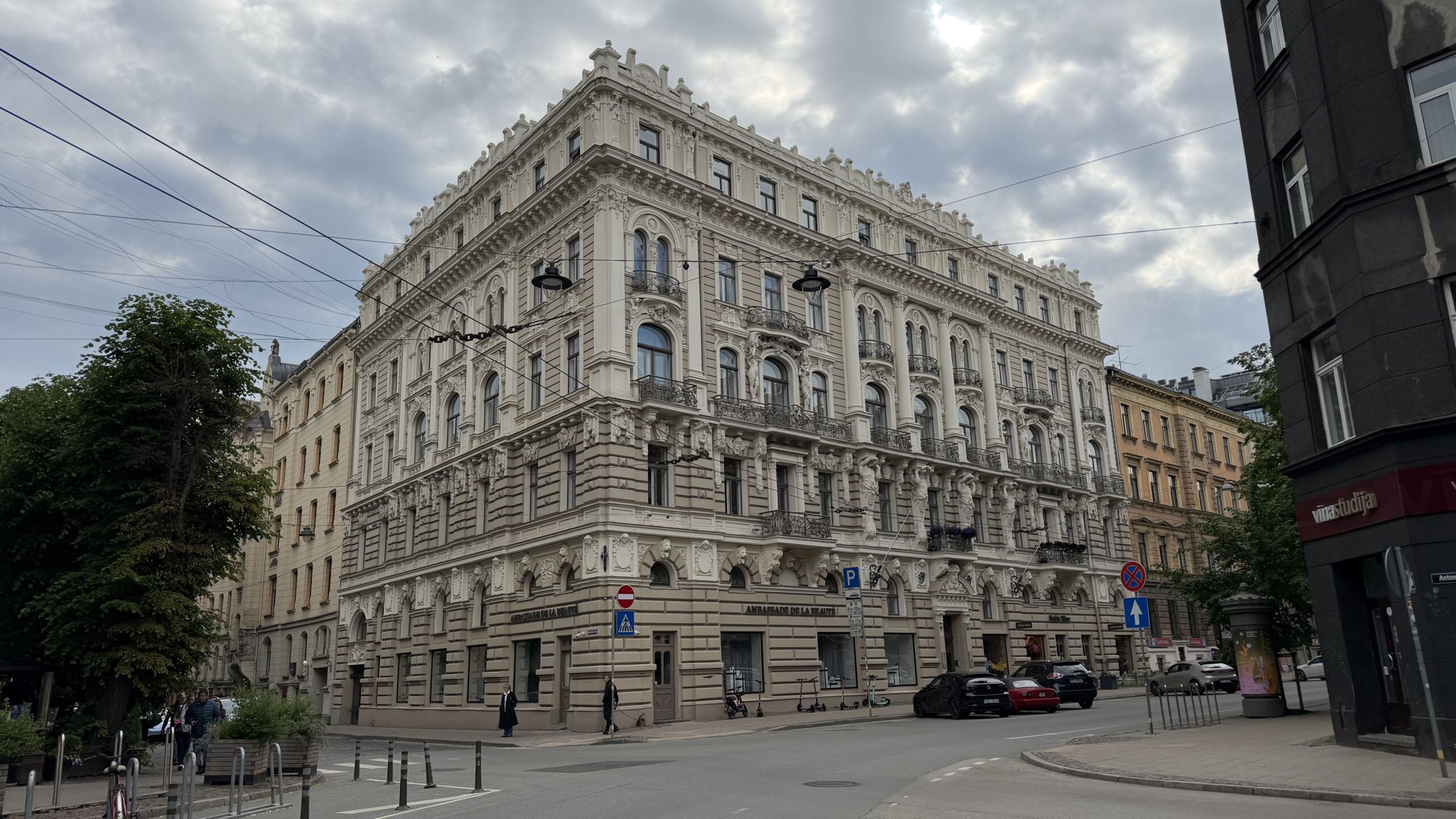
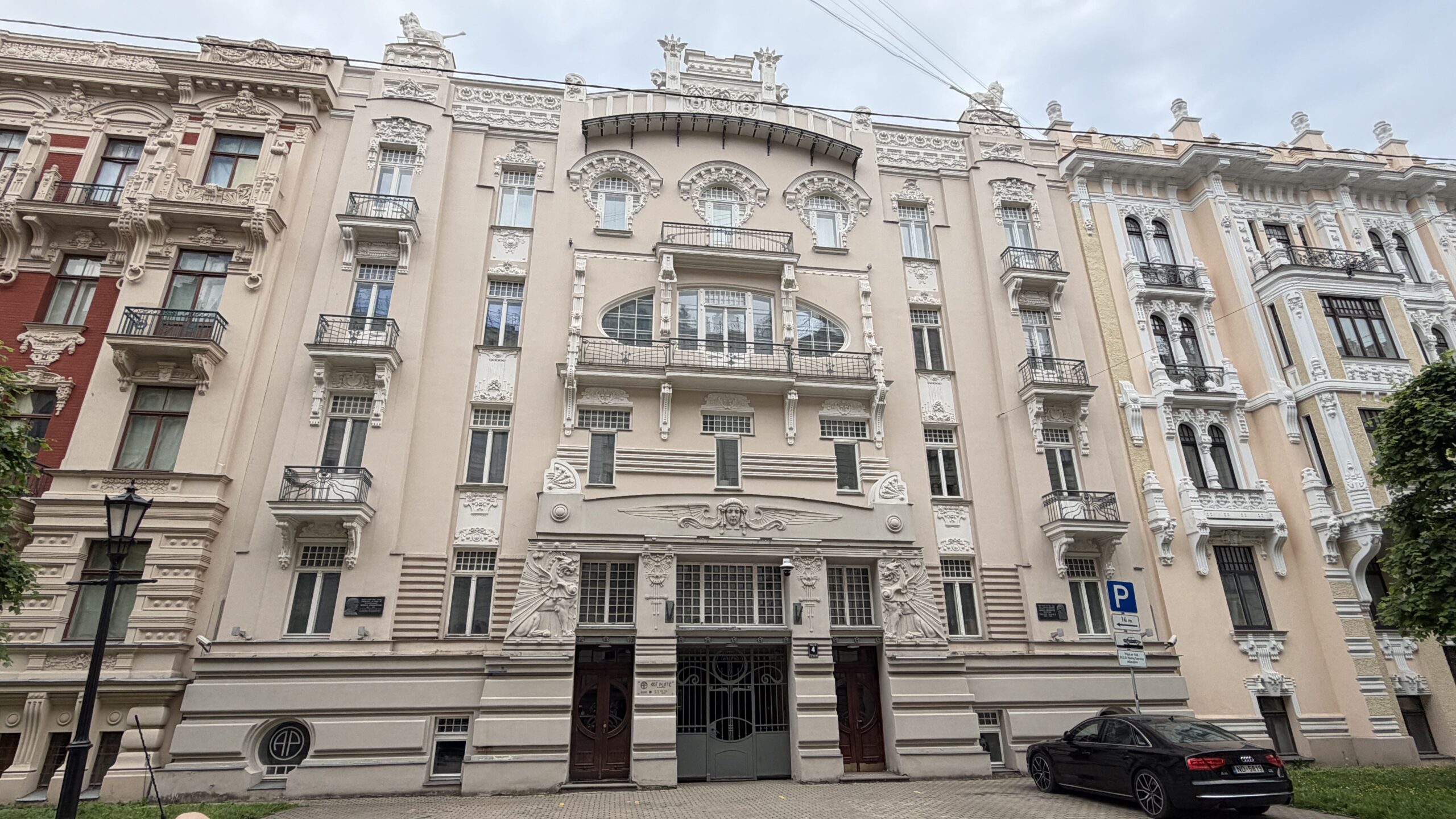
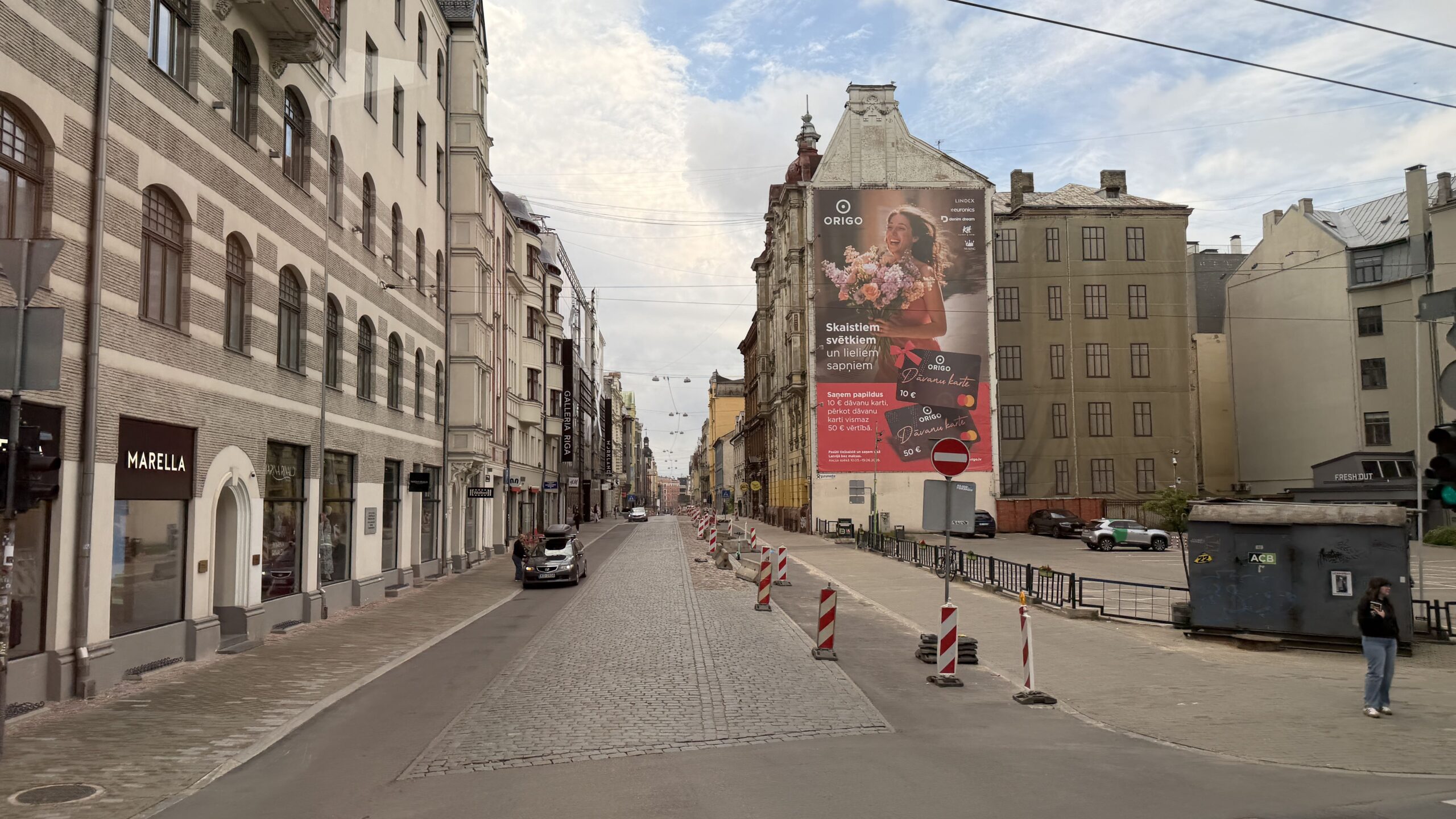
One of the things that immediately stood out about Riga was its incredible collection of Art Nouveau architecture. The city has one of the highest concentrations of Art Nouveau buildings in the world, and walking through streets like Alberta iela (Alberta Street) felt like exploring an open-air architecture museum.
What makes Riga especially unique is that its Art Nouveau architecture isn’t all the same. There are 4 unique sub-styles, influenced by German, Russian, and local Latvian traditions Eclectic (Decorative), National Romanticism, Perpendicular (Vertical), and Neo-Classical. Over time, architects developed several distinct styles, from richly decorated facades covered with sculpted faces, flowers, and mythical creatures to simpler geometric designs and buildings inspired by traditional Latvian folk motifs. This variety gives every street its own character and makes Riga one of Europe’s best places to appreciate this architectural movement.
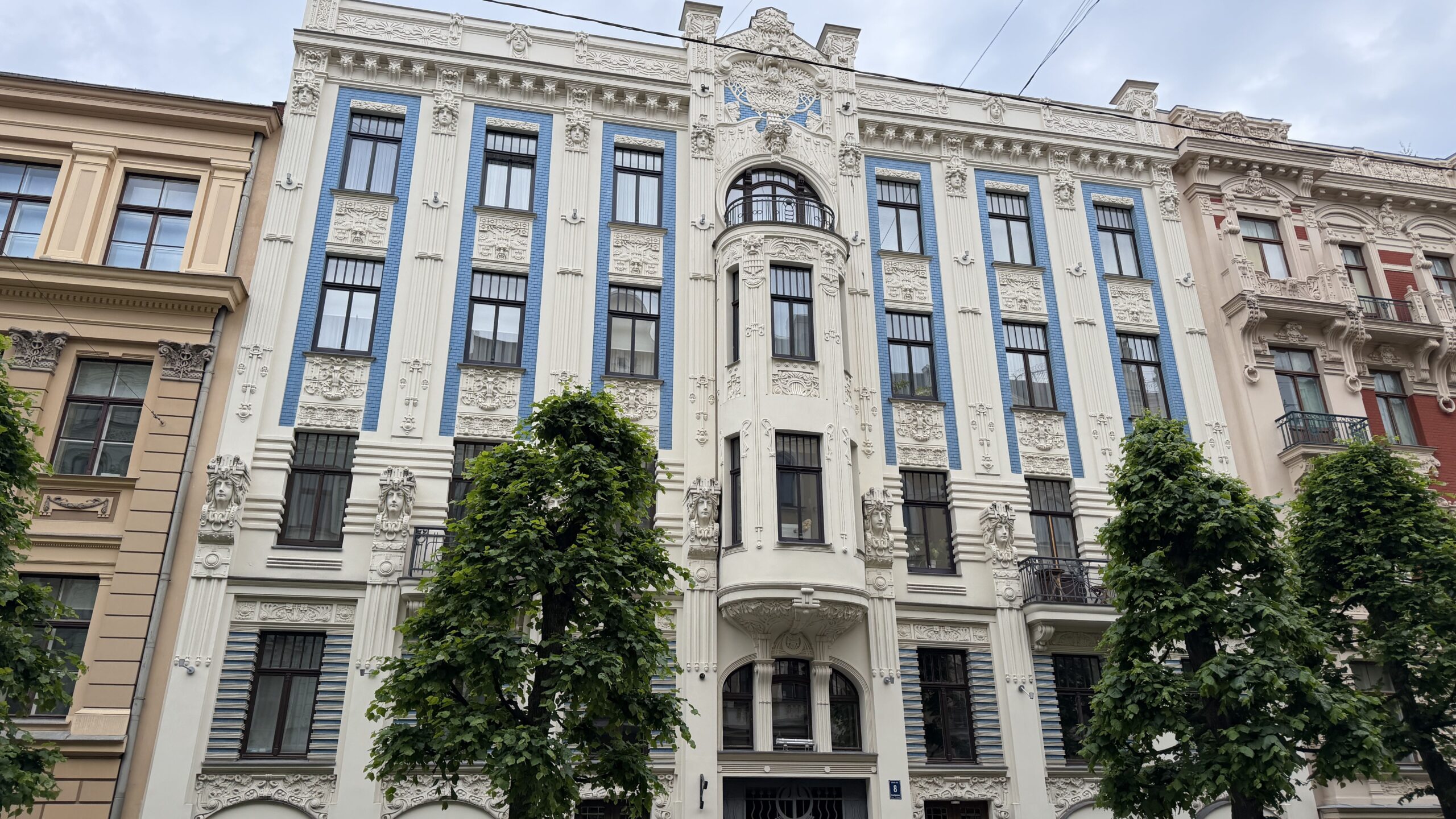
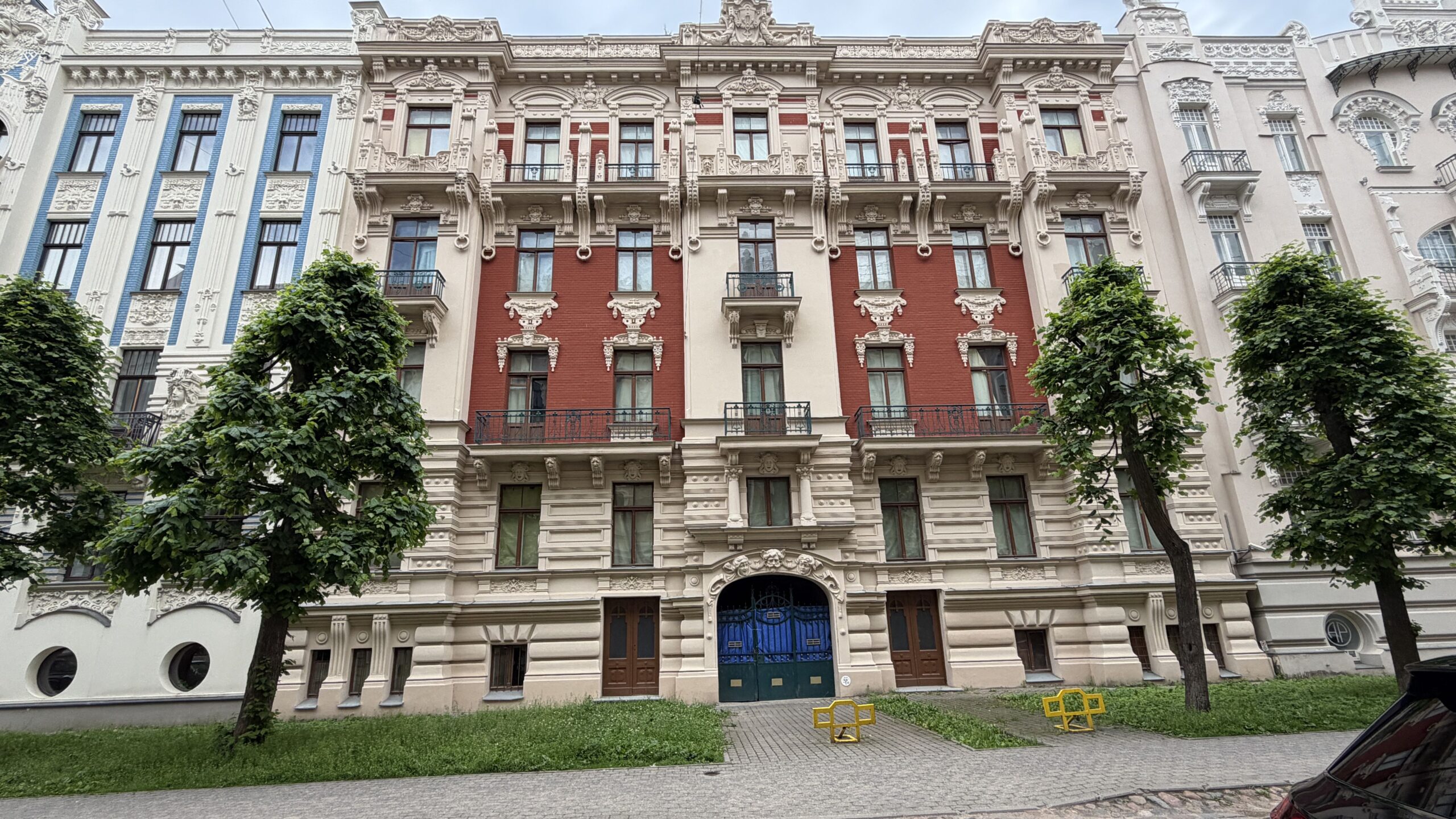
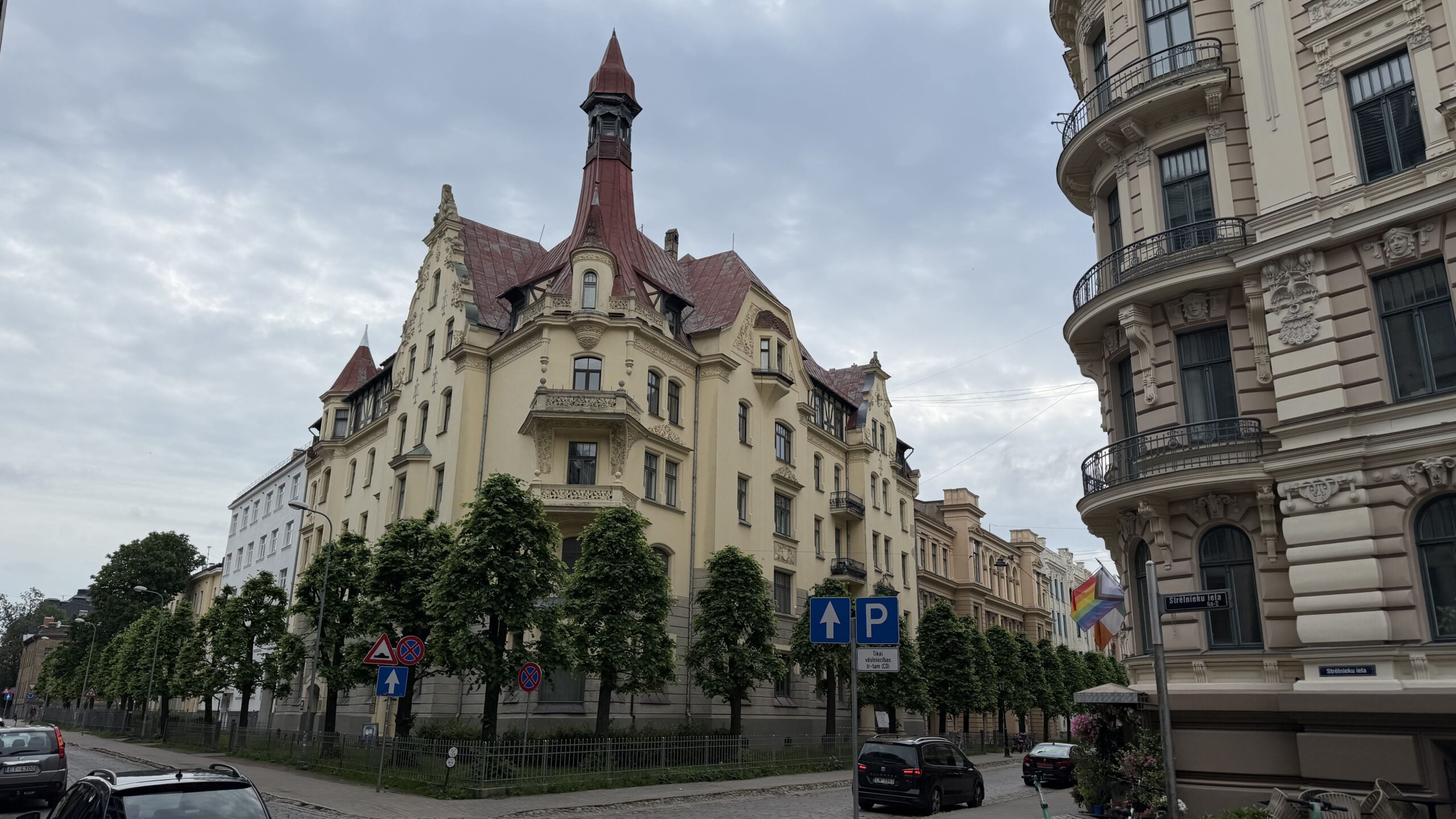
Our first stop was one of the famous Art Nouveau buildings at Alberta iela 13, designed in 1904 by the renowned architect Mihails Eizenšteins. The building’s elaborate decorations, expressive faces, detailed sculptures, and prominent corner tower showcased the creativity and imagination of the Jugendstil style. Another nearby red-colored Art Nouveau building, also designed by Eizenšteins, displayed the same dramatic architectural style that made this neighborhood famous.
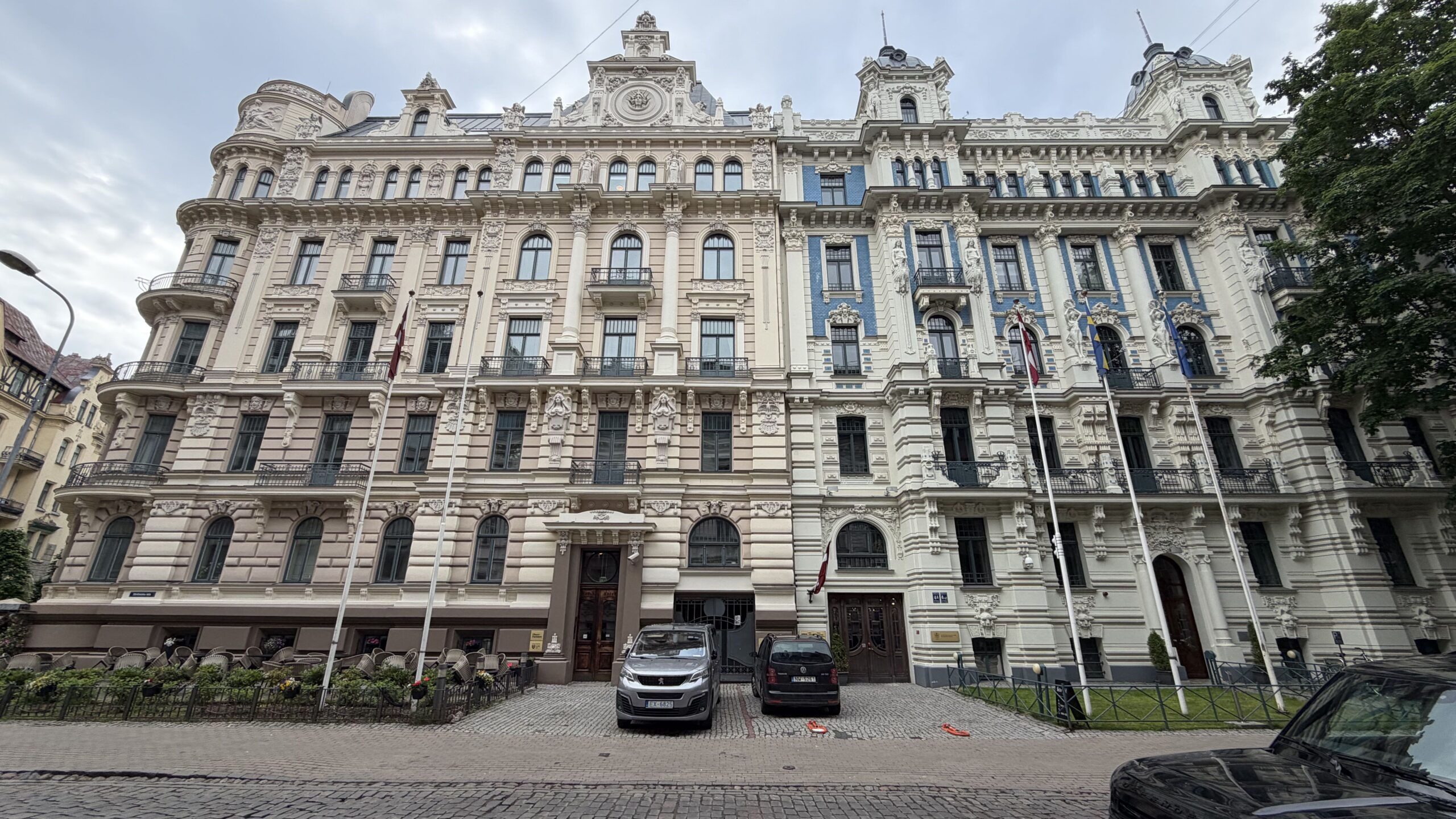
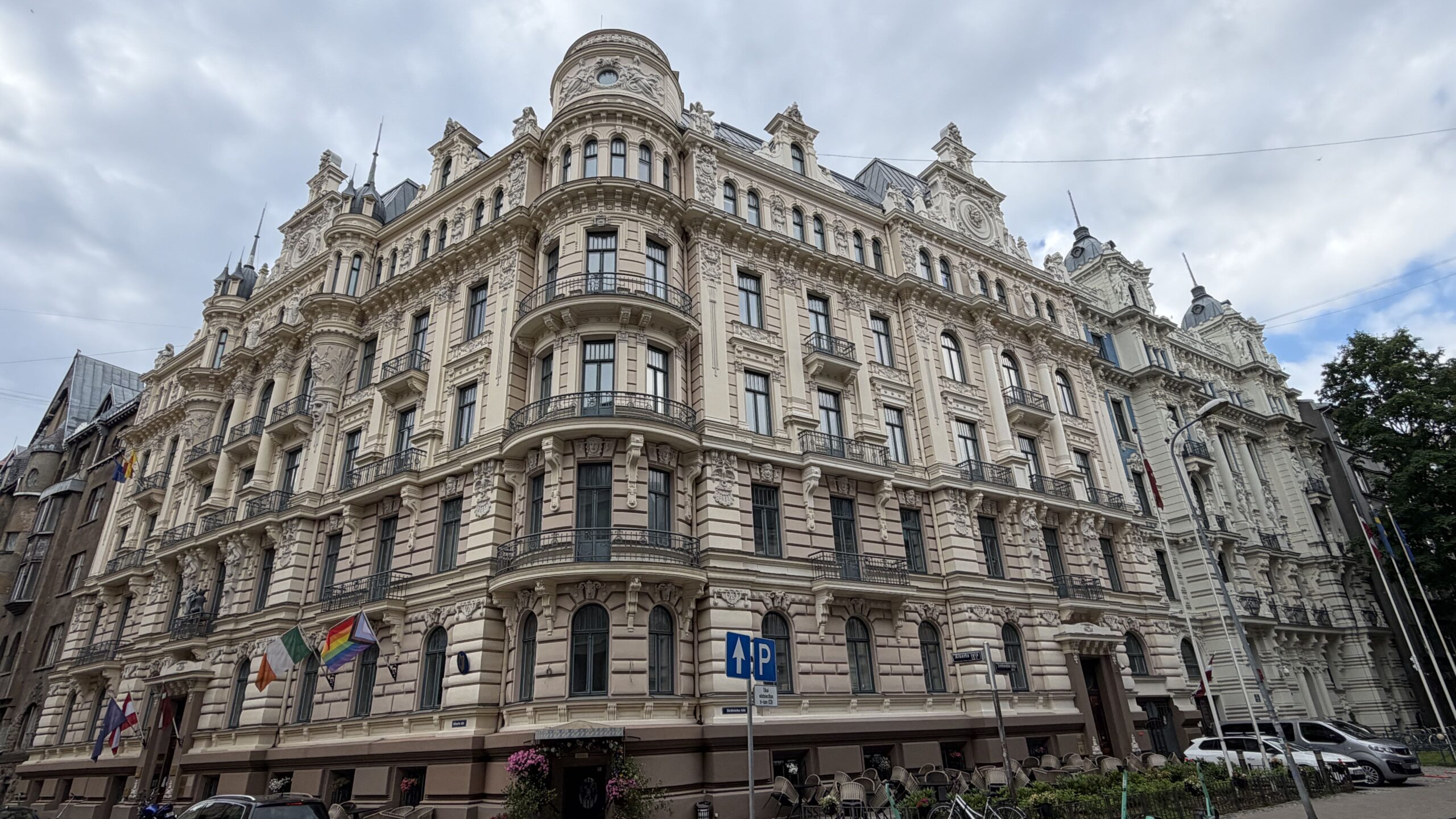
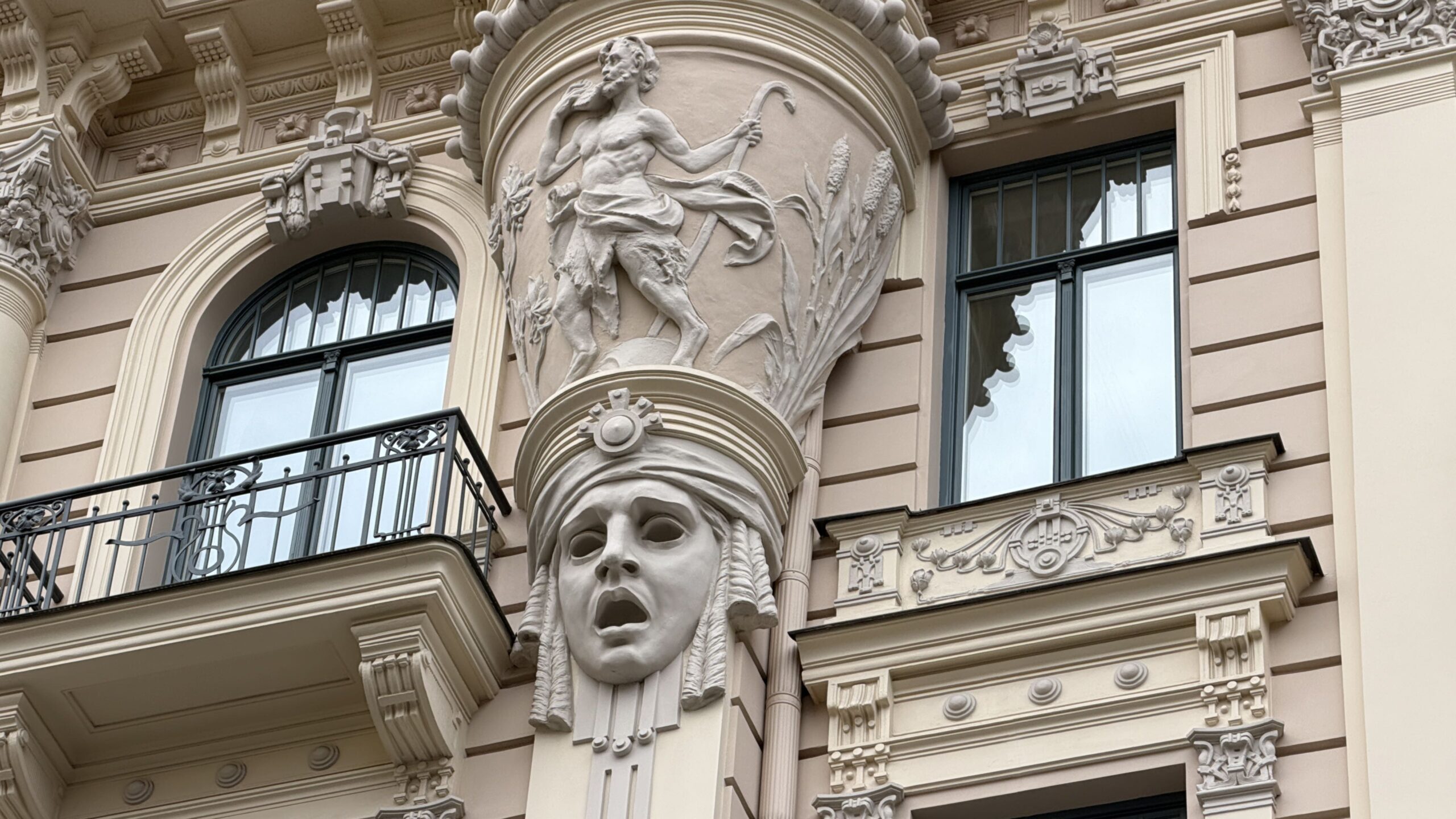
As we continued walking, we started noticing that the beauty of Riga’s Art Nouveau buildings was not only in their grand facades but also in the small details hidden everywhere. Sculptures, faces, flowers, animals, and decorative elements were carefully incorporated into ordinary apartment buildings, turning them into works of art.
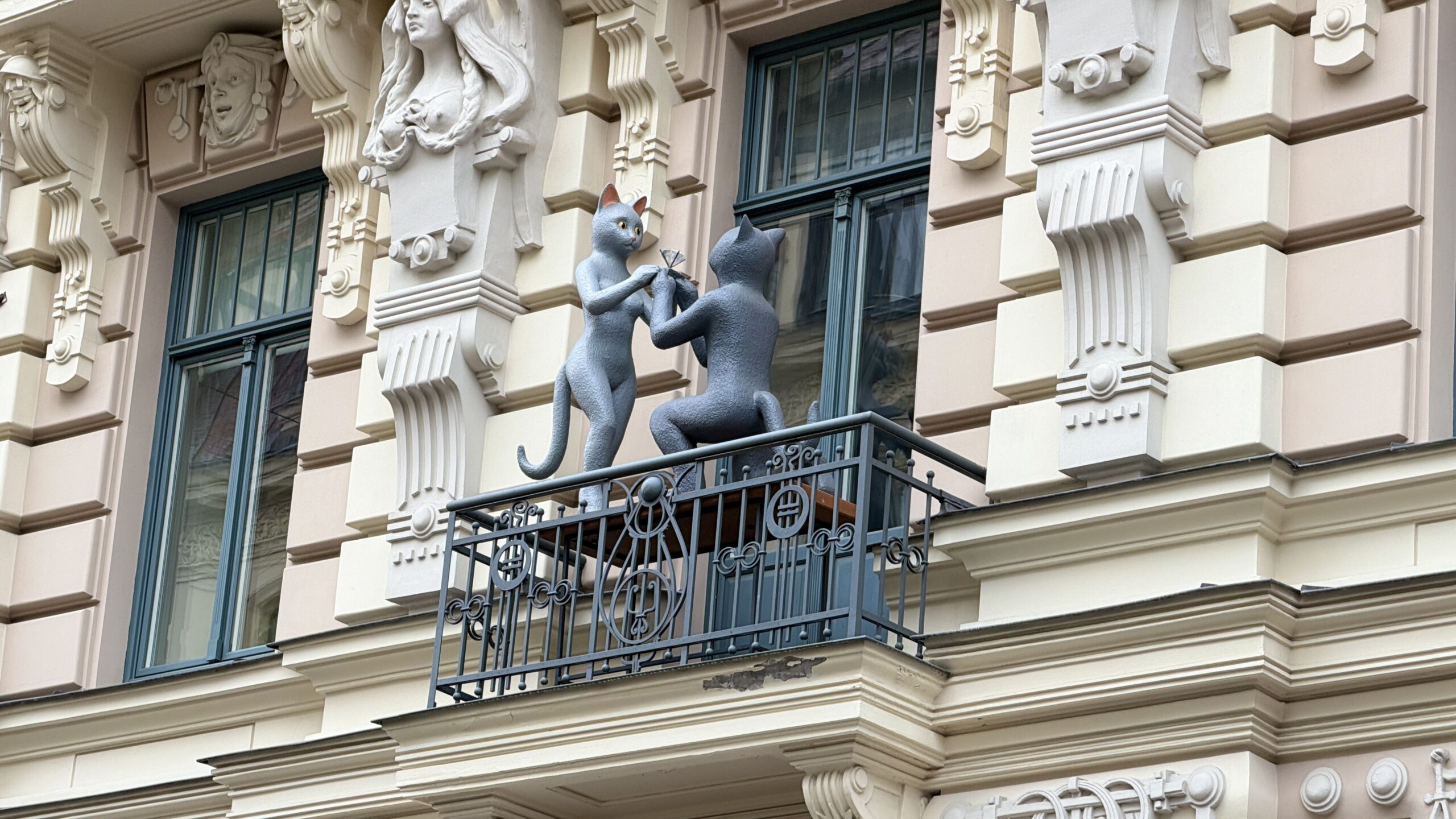
One of our favorite discoveries was this charming balcony sculpture of two cats appearing to interact with each other. Unlike the famous Cat House (Kaķu nams) cats, which have their own legend in Riga’s Old Town, this was another wonderful example of how Art Nouveau architects used imagination and creativity to add personality to everyday buildings. It felt like Riga was constantly surprising us—every corner had another artistic detail waiting to be discovered.
Churches, Monuments & Stories Around Riga
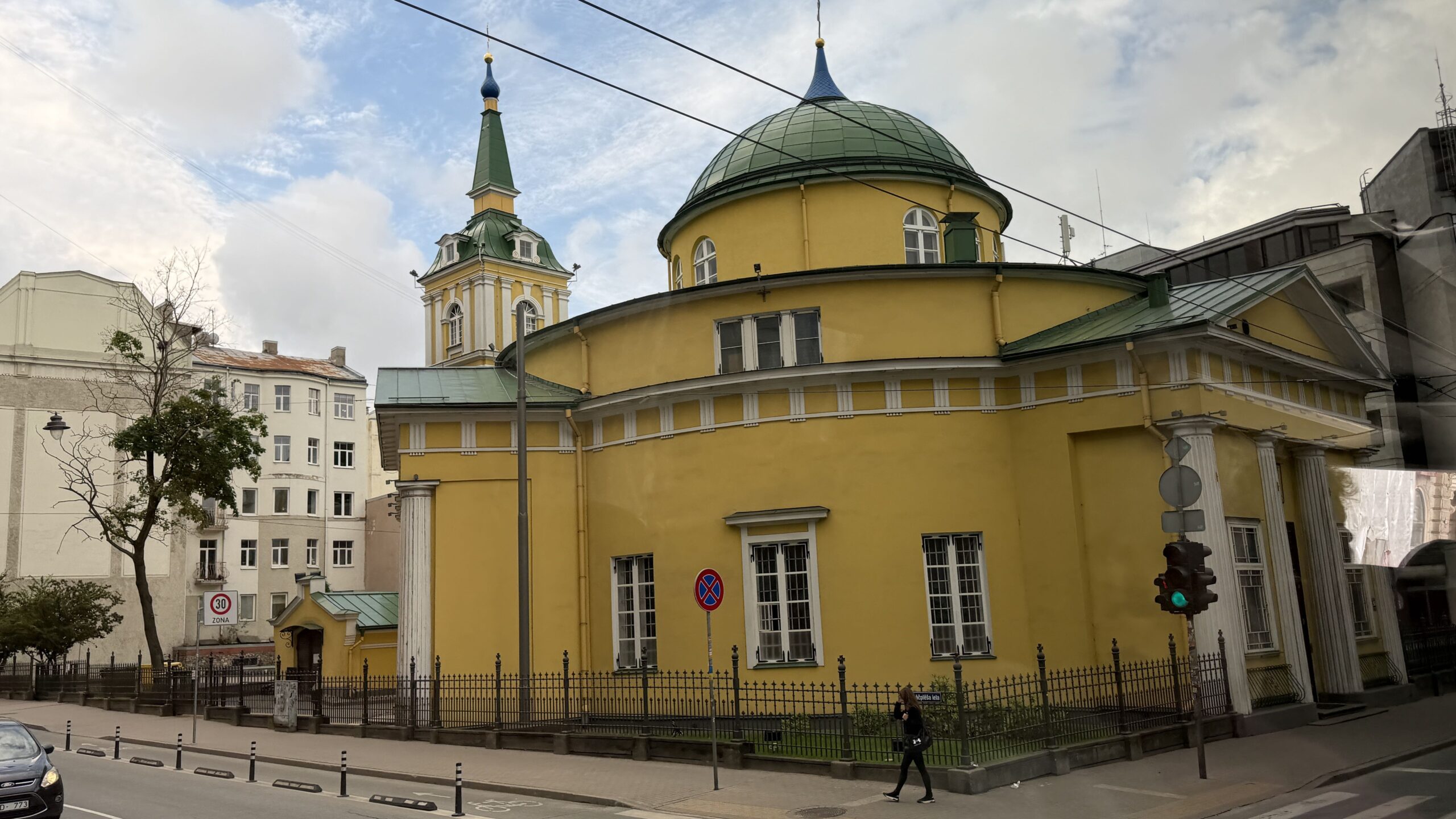
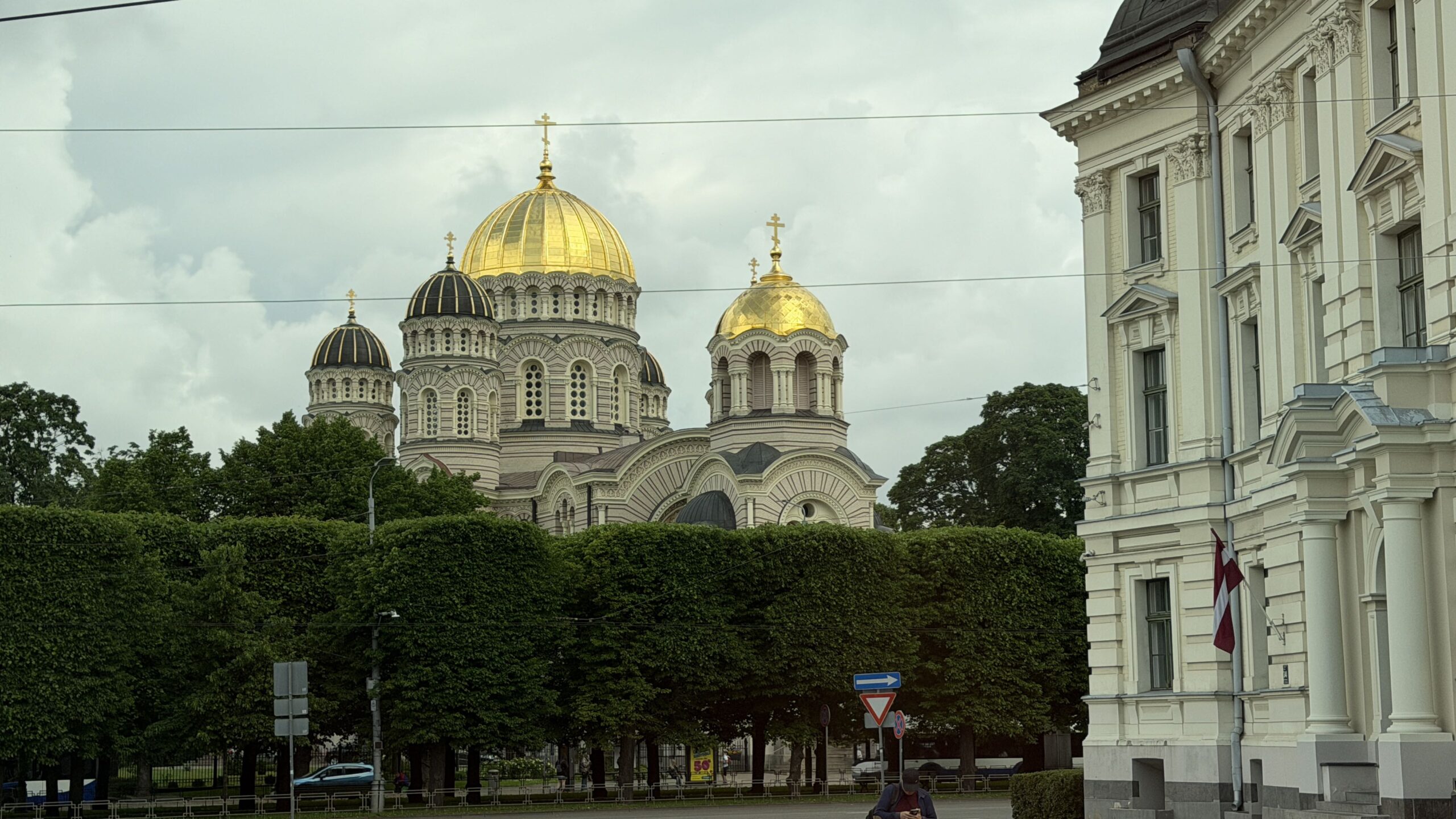
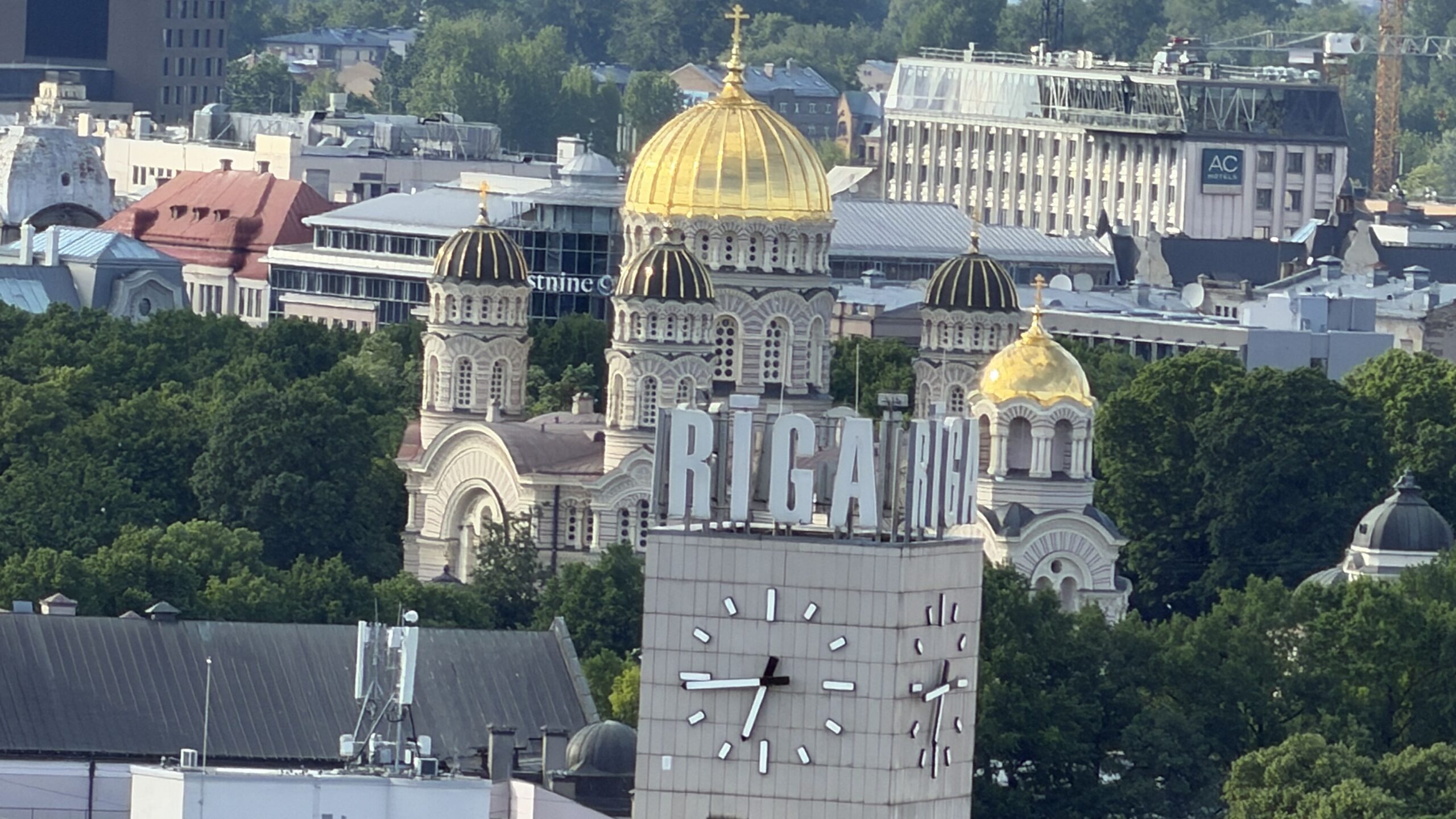
We continued our tour and we passed St. Alexander Nevsky Church, easily recognizable by its green domes and traditional Russian Orthodox design. We then visited the impressive Nativity of Christ Cathedral, one of Riga’s most important Orthodox churches, known for its beautiful golden domes and detailed interiors.
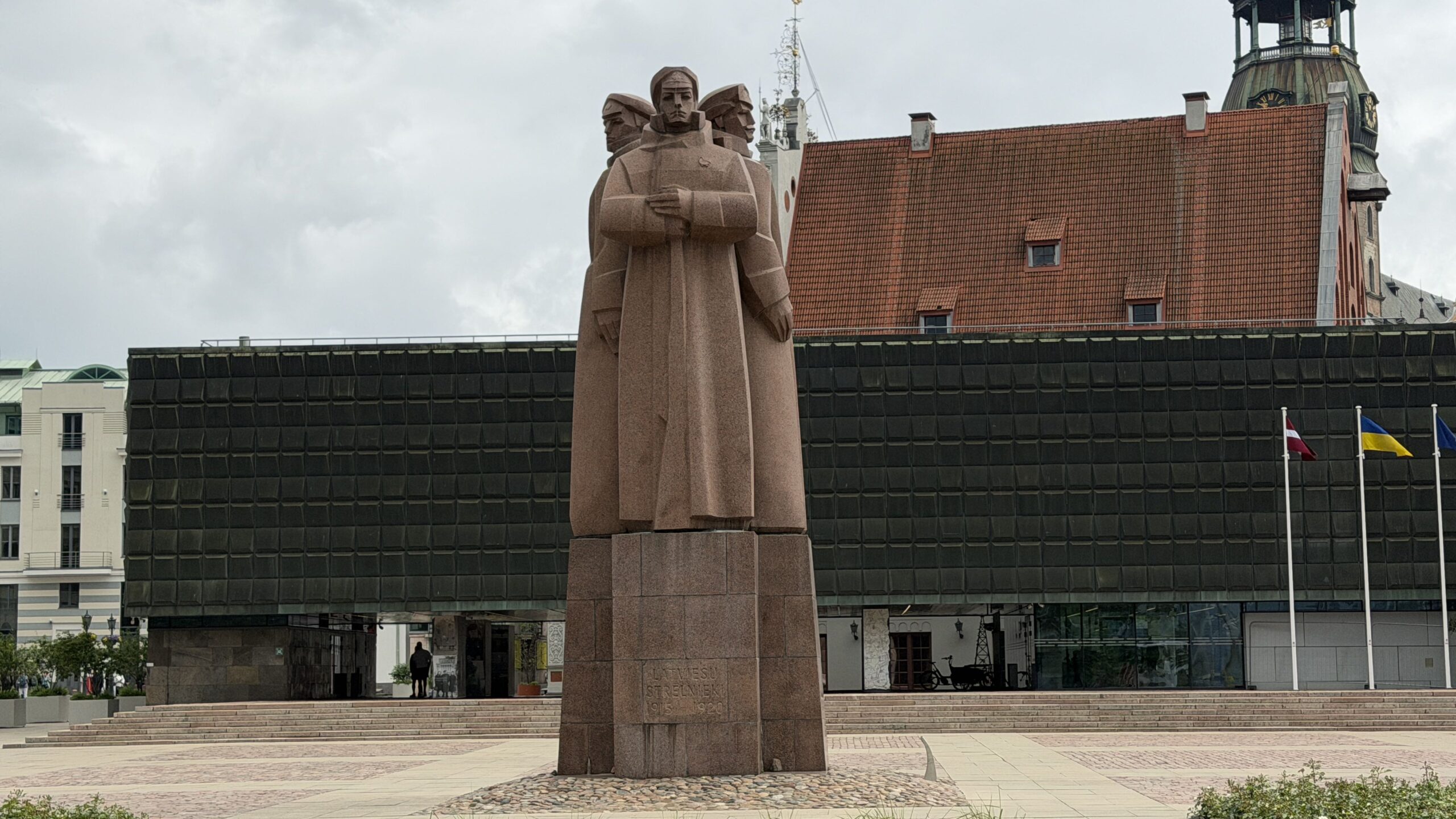
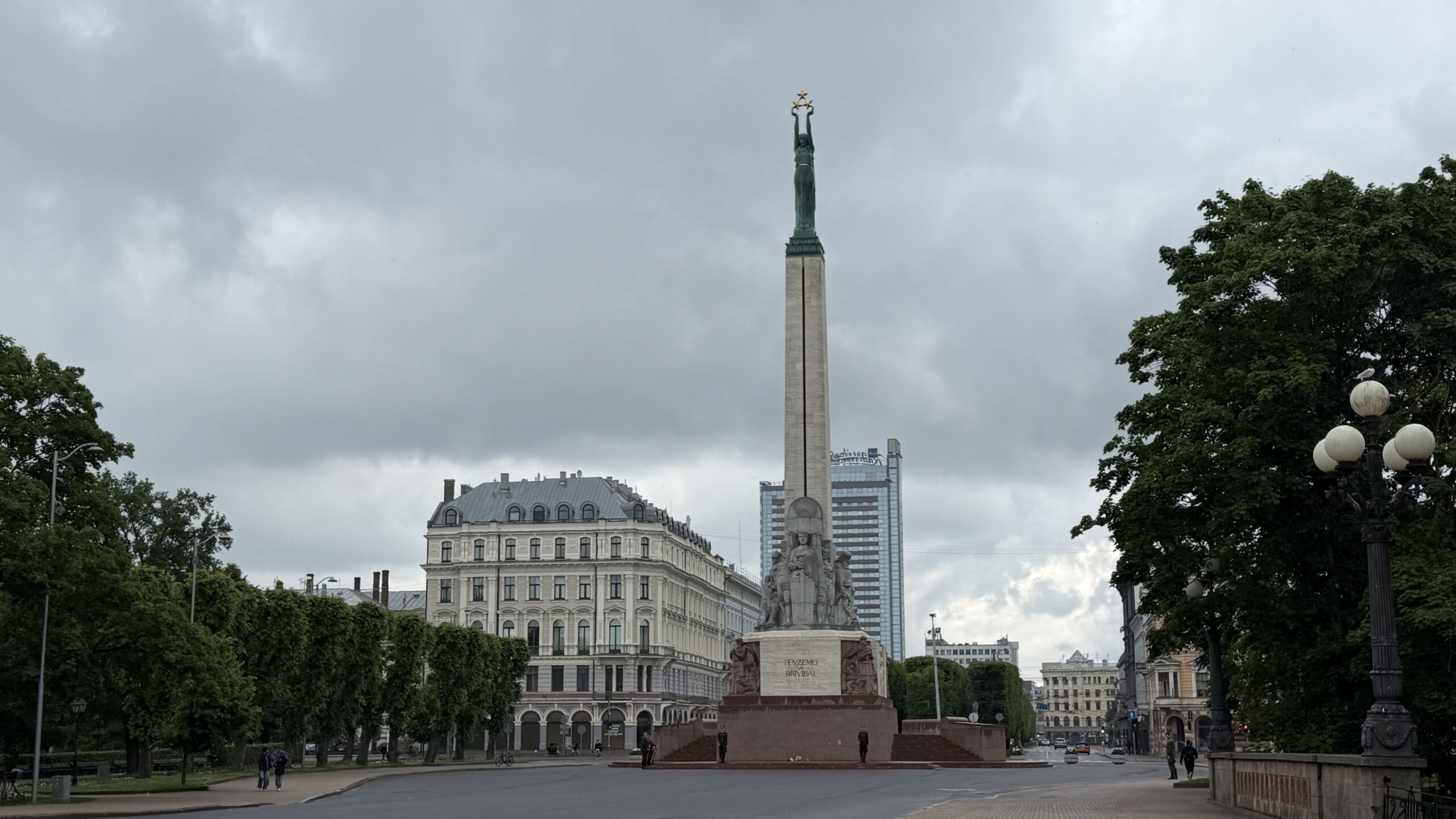
Our next stop was the Monument to the Latvian Riflemen and the famous sculpture “L’Homme qui marche I” (Walking Man) by Swiss artist Alberto Giacometti. The simple yet powerful sculpture reminded us how modern art can create emotion with minimal design.
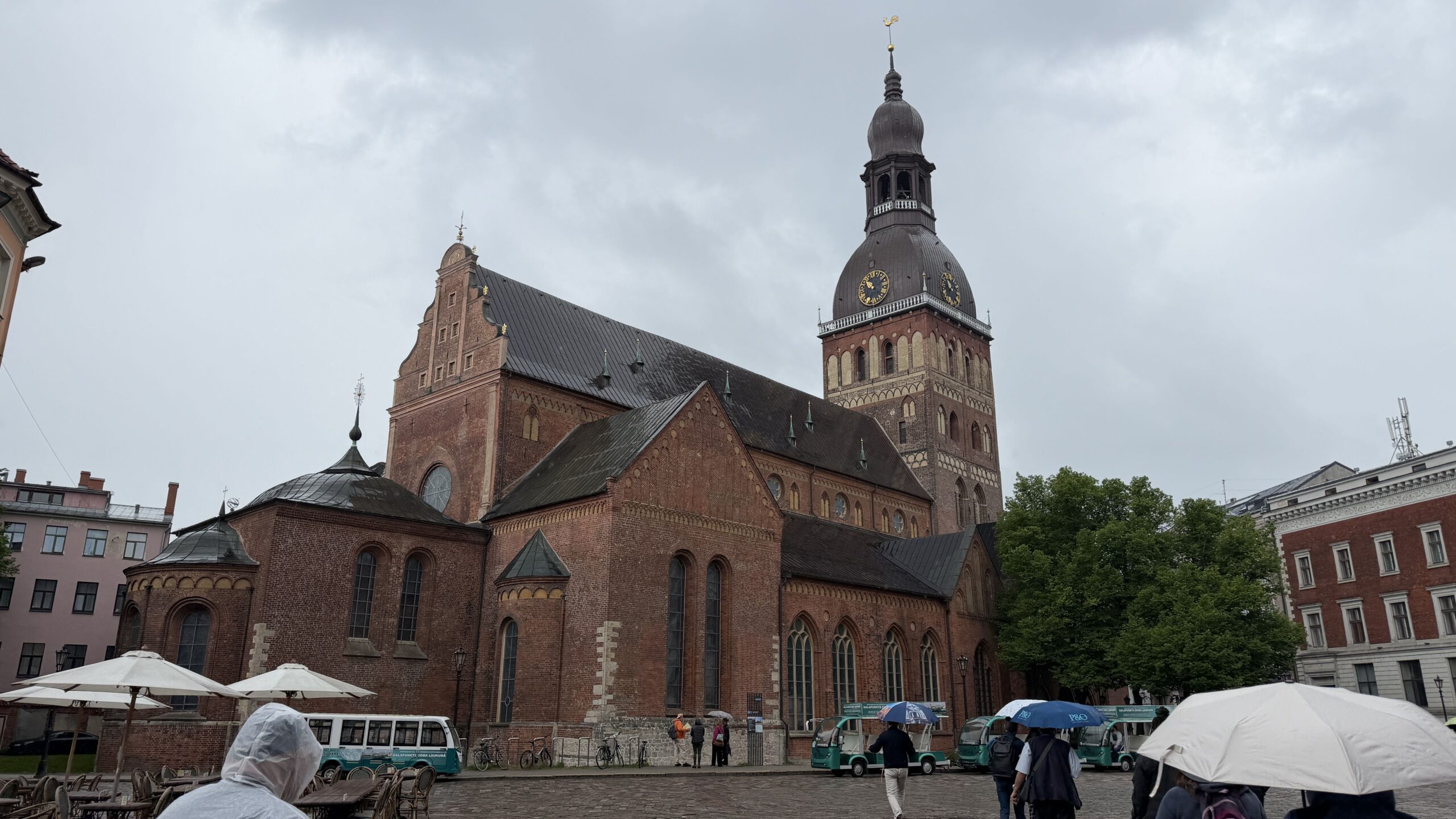
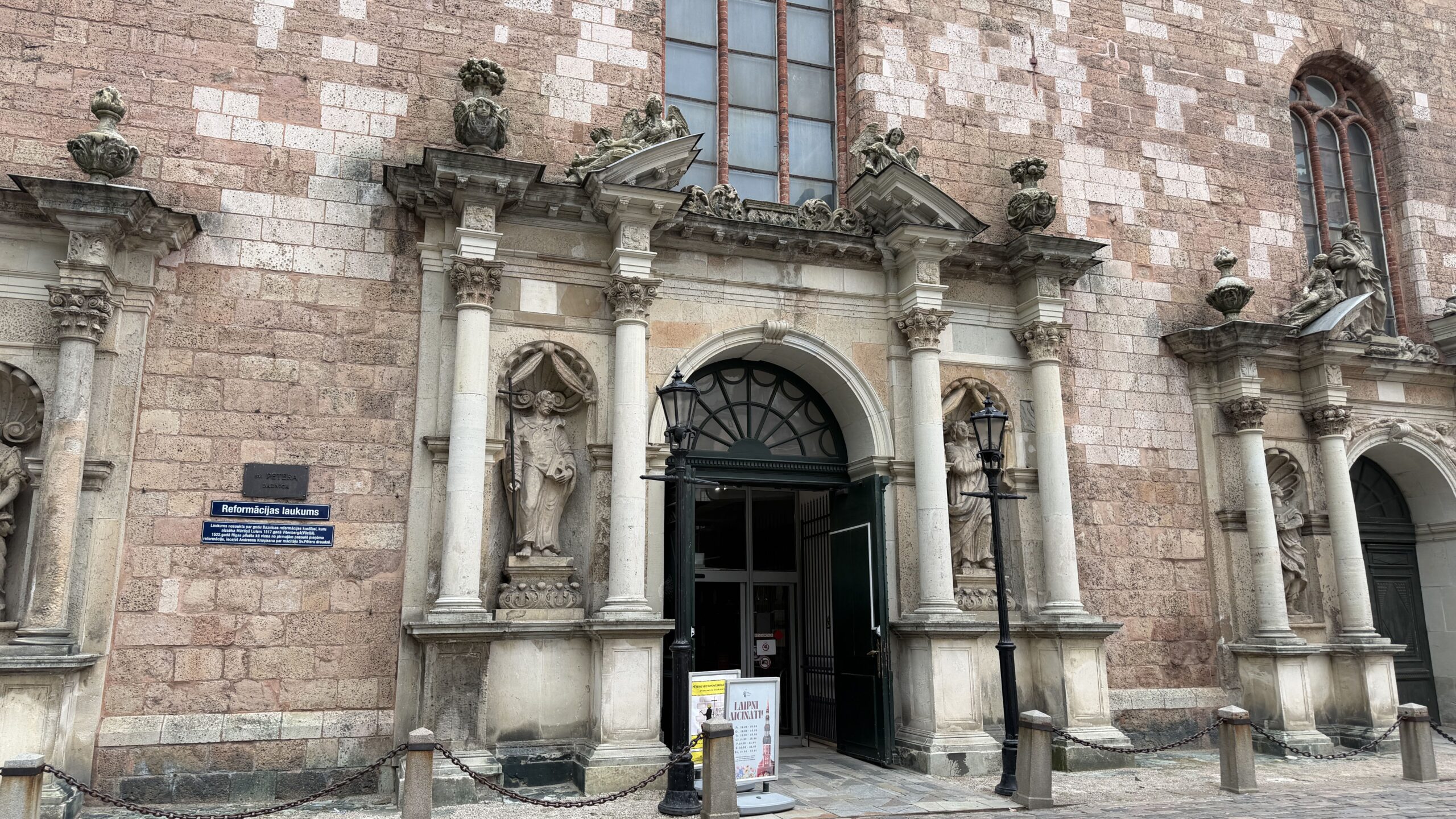
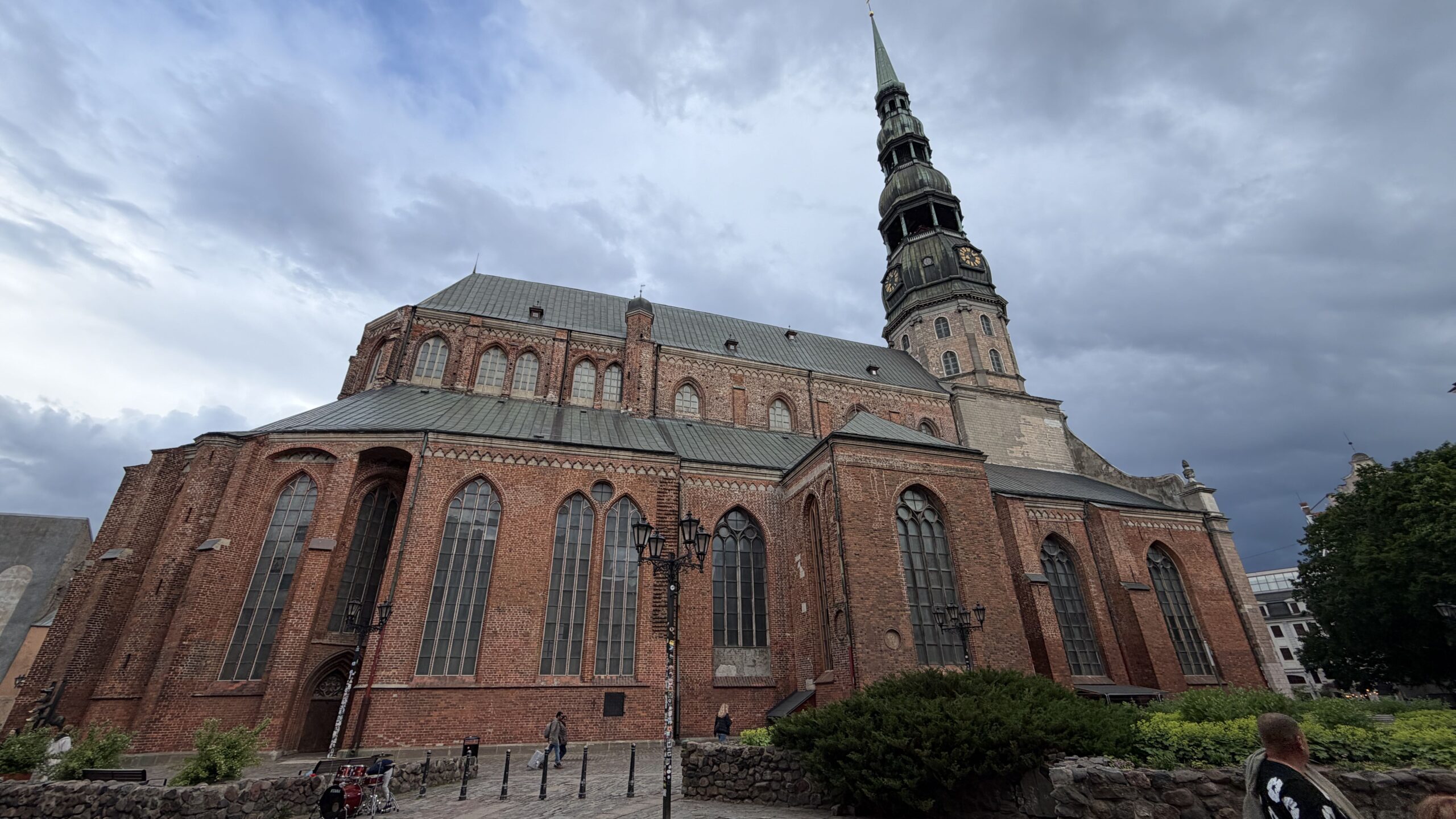
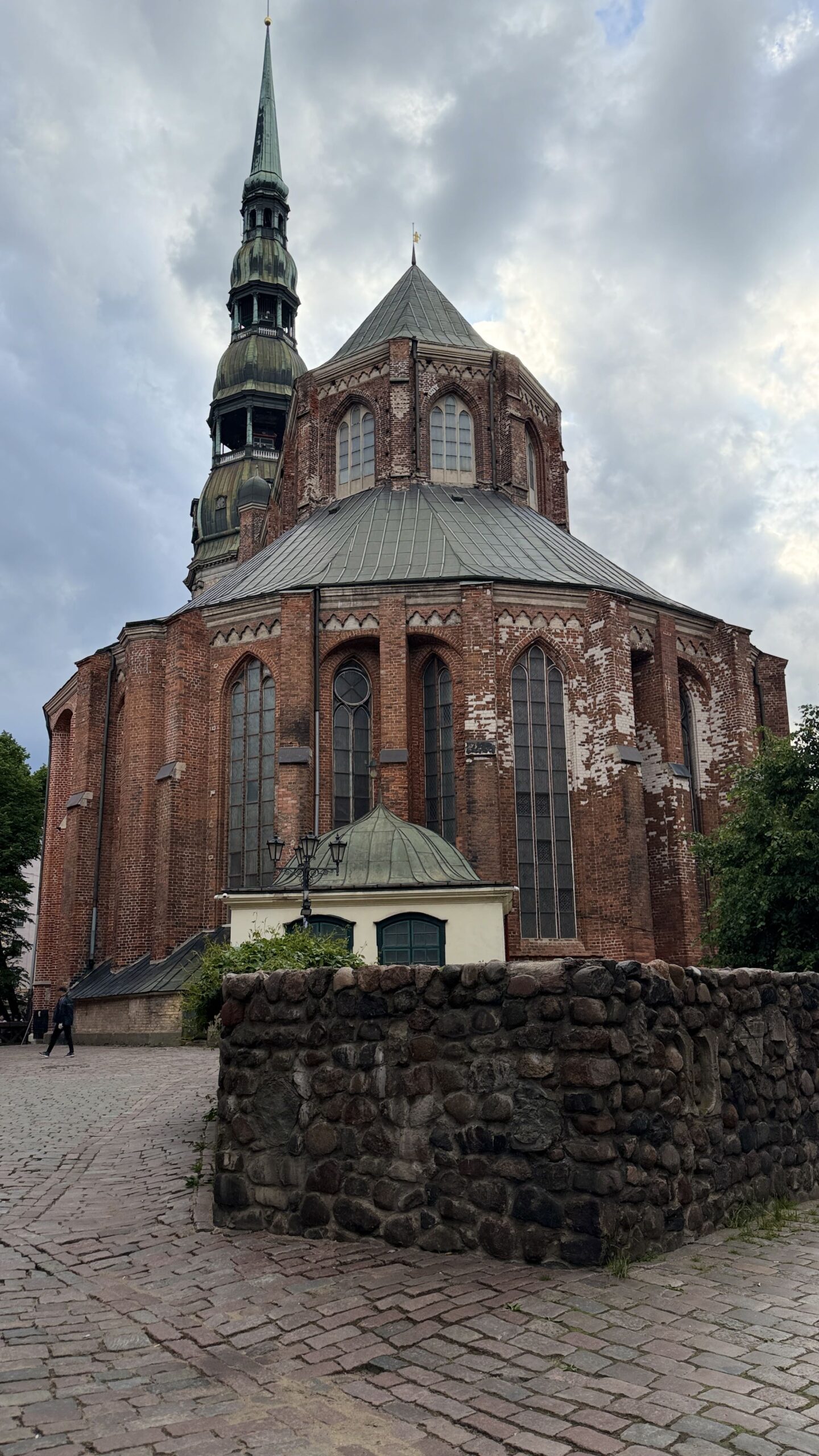
We then walked towards the St. Peter’s Church, one of Riga’s most recognizable landmarks, whose towering spire has dominated the city’s skyline for centuries. We can even go to the top of the church tower for beautiful views.
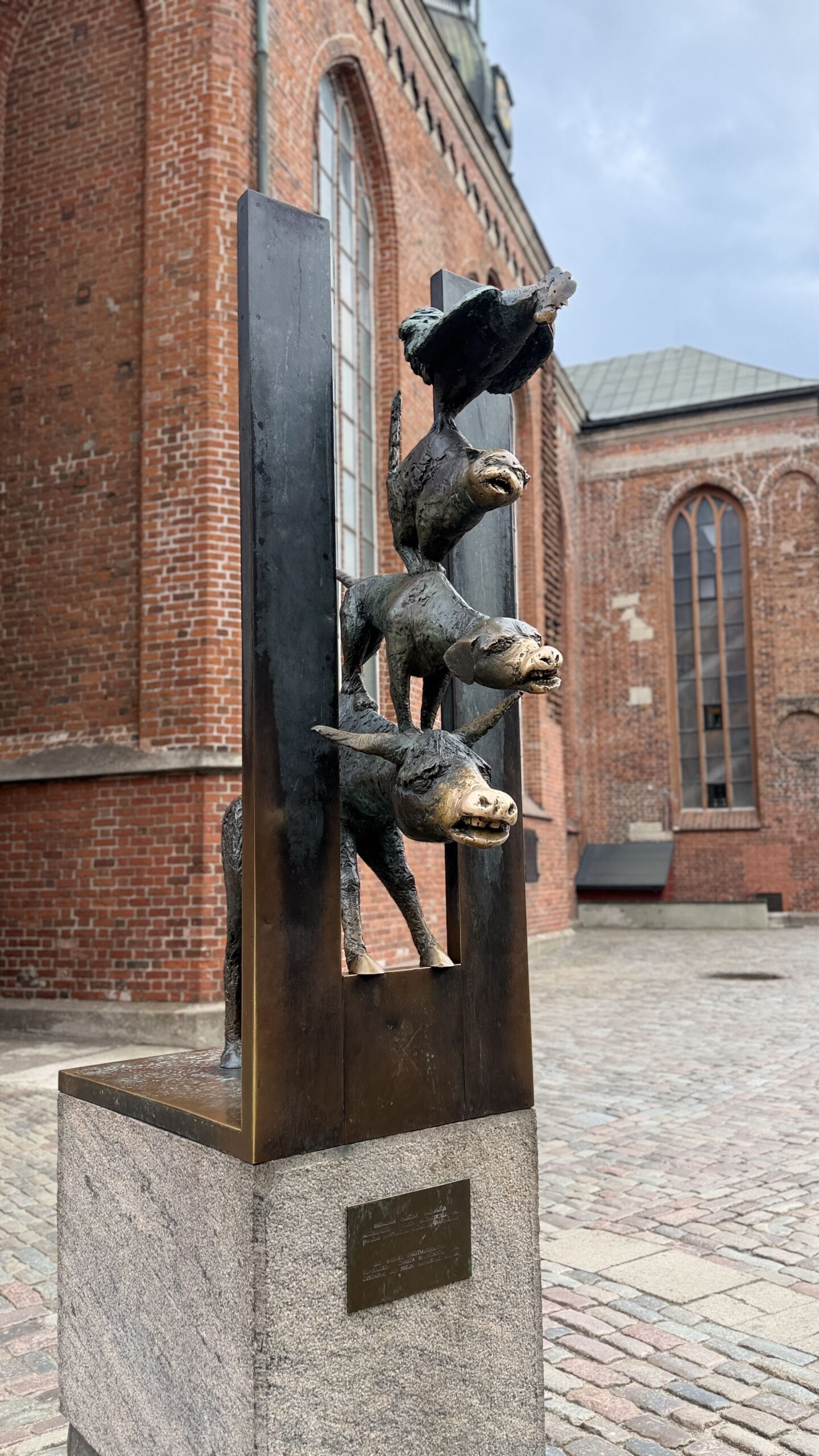
The bronze Bremen Town Musicians statue in Riga, Latvia, is a popular tourist attraction depicting the characters from the Brothers Grimm fairy tale. The local legend states that rubbing the noses or beaks of the stacked animals makes your wishes come true. Because the animals are stacked on top of each other, reaching the higher animals becomes increasingly difficult:
- The Donkey: Located at the bottom, its muzzle is highly polished and gleaming because it is the easiest to reach.
- The Dog and Cat: Require a stretch or a jump to touch.
- The Rooster: Perched at the very top, reaching its beak is said to grant the maximum amount of luck or make your most secret desires come true
The Fairy Tale: The design is based on the Brothers Grimm fairy tale, The Town Musicians of Bremen. The story follows four aging domestic animals—a donkey, a dog, a cat, and a rooster—who ran away from their masters after being deemed too old and useless. They set off for the city of Bremen to become town musicians. On their journey, they encountered a house occupied by robbers. To scare them away, they formed a vertical pyramid, burst through the window making a terrible noise, and successfully claimed the home for themselves.
House of the Black Heads
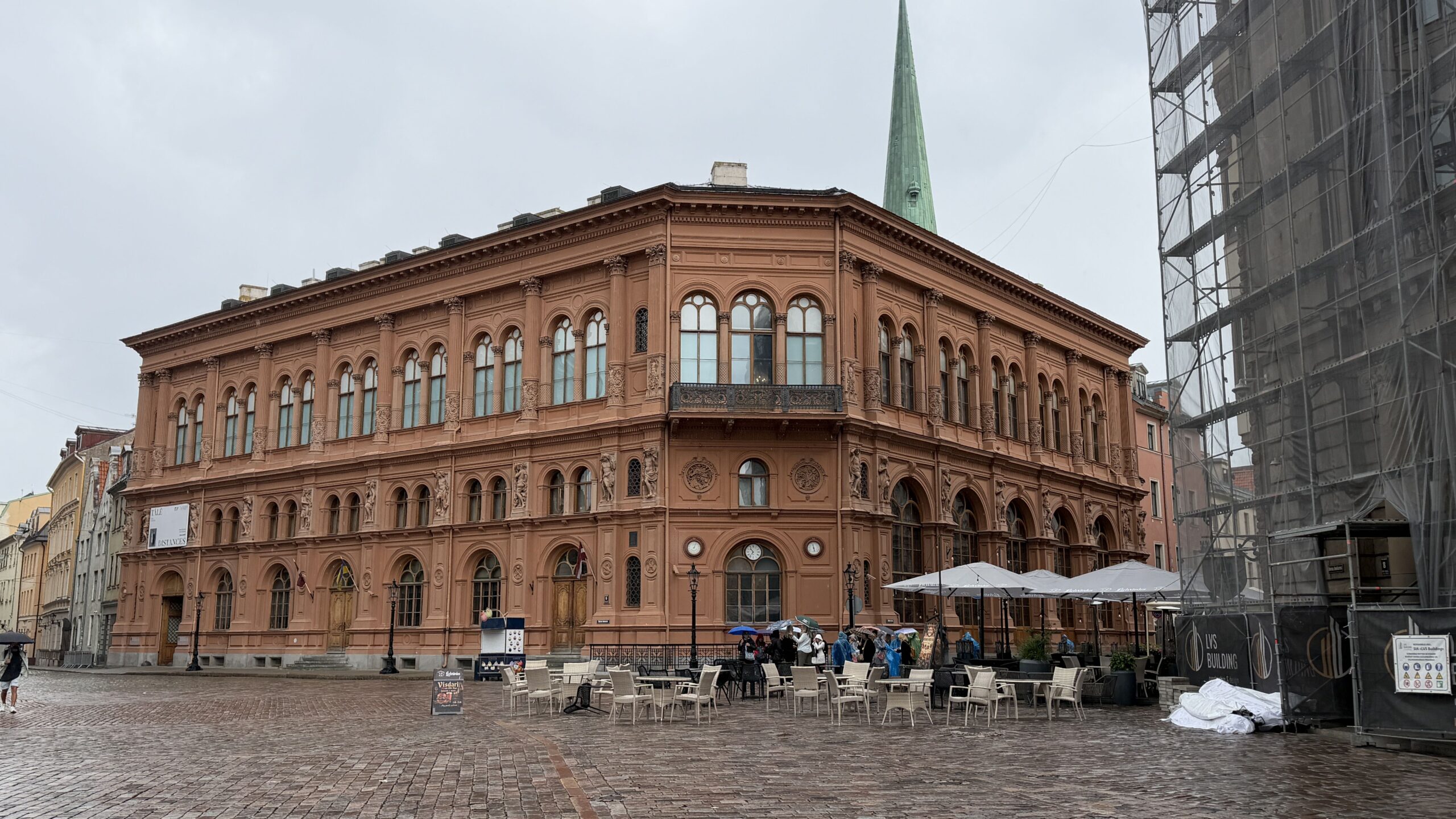
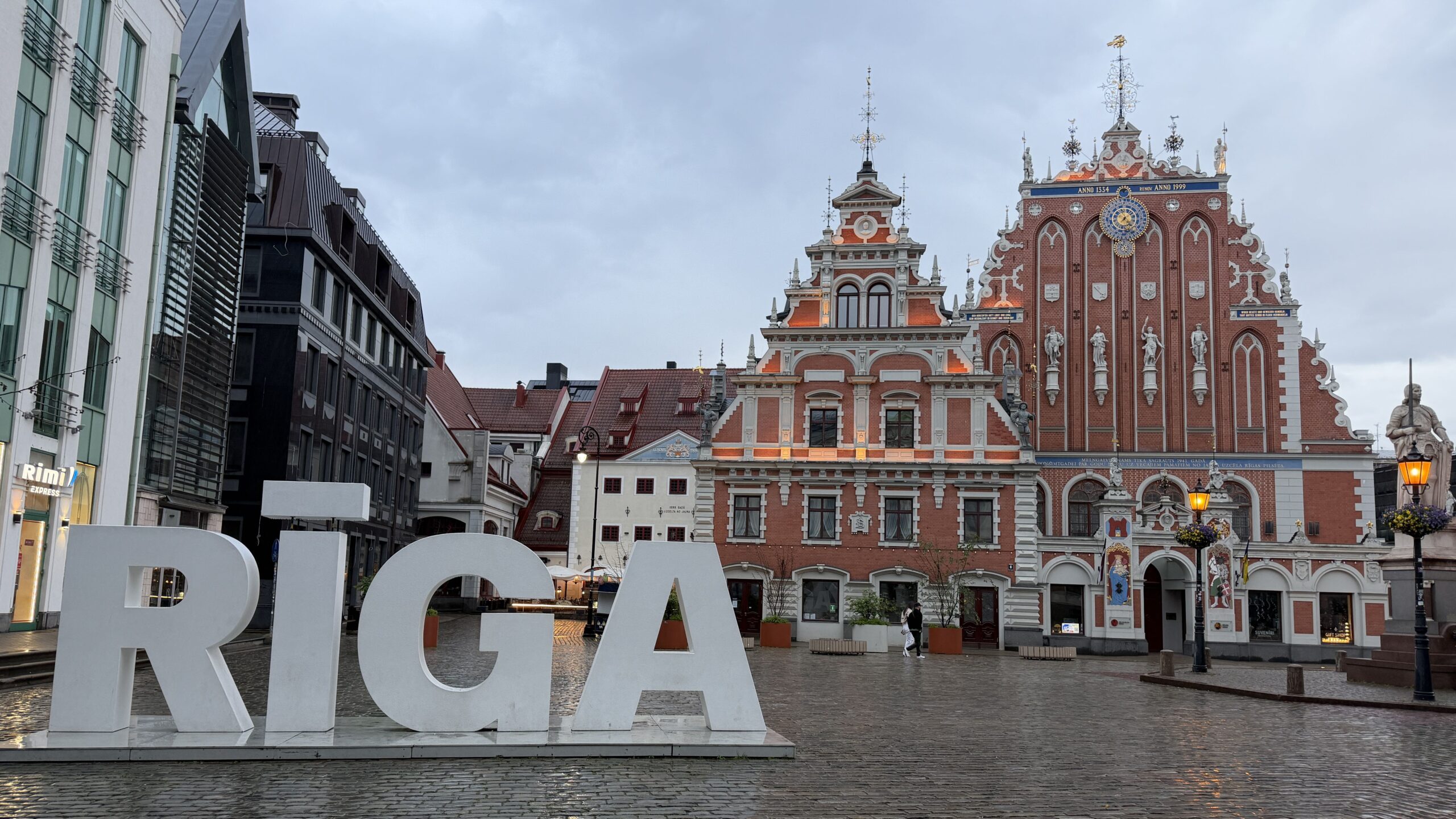
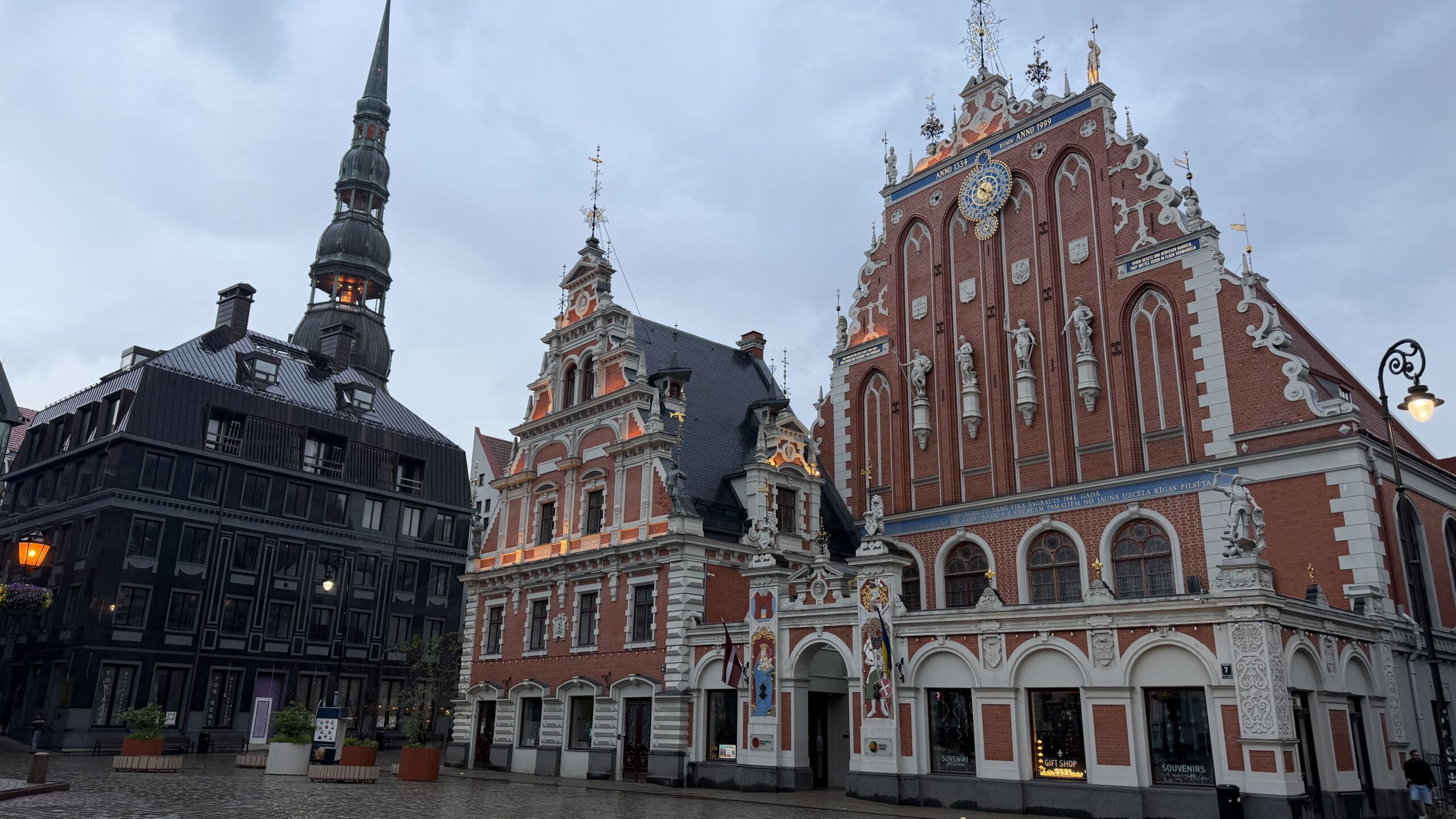
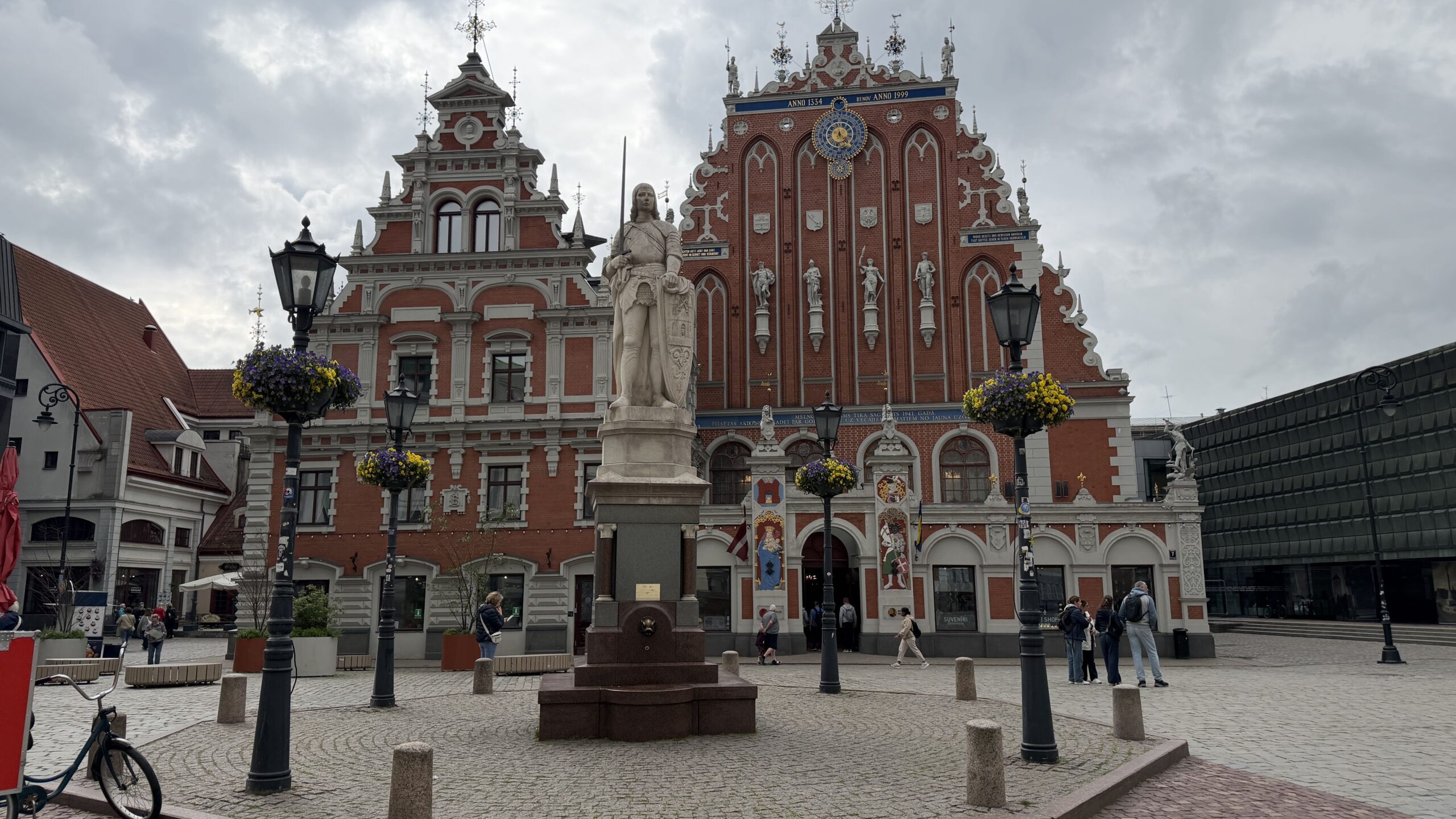
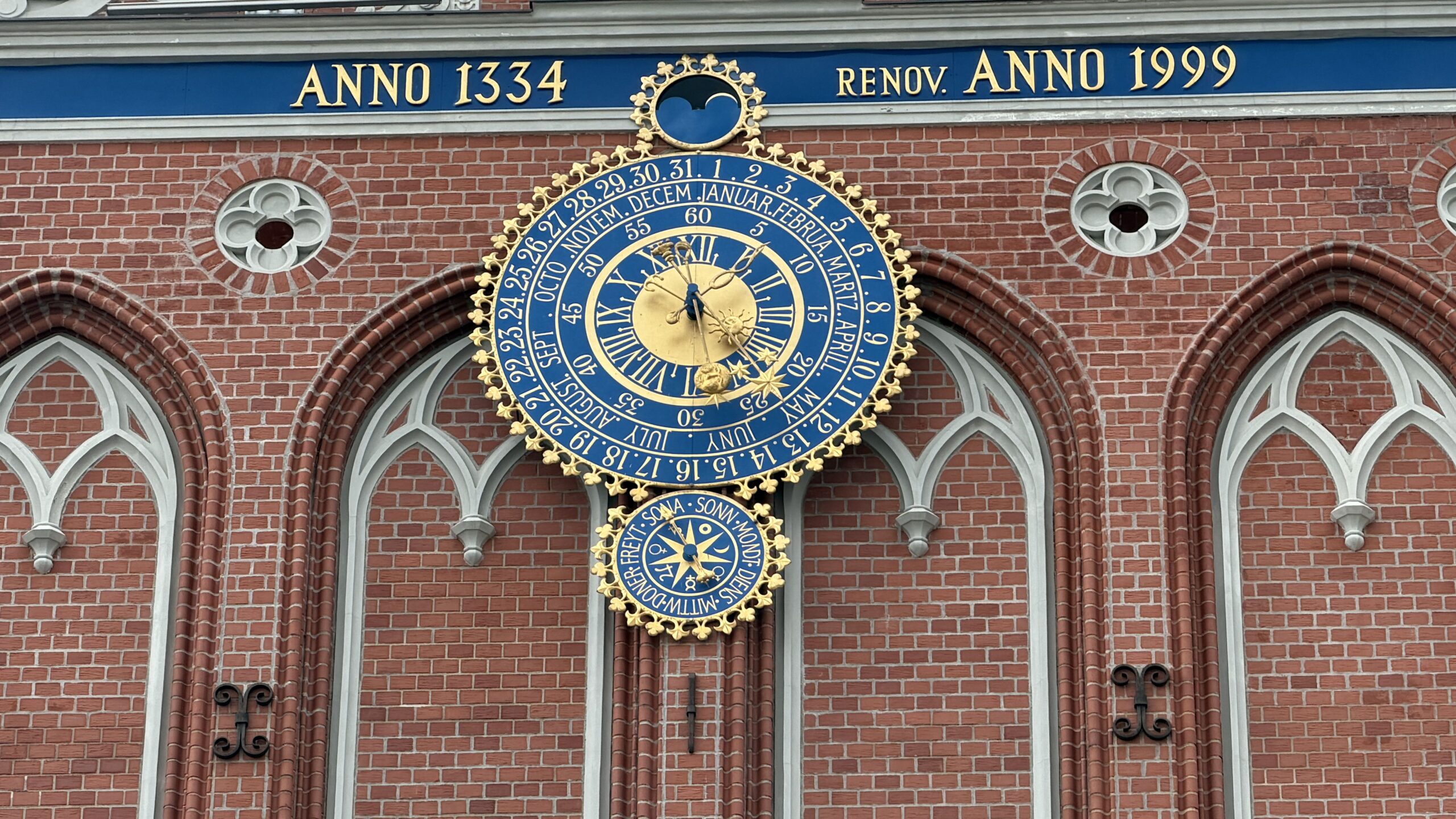
The magnificent House of the Black Heads, one of the most photographed buildings in Riga. Originally built for the Brotherhood of Blackheads, a guild of unmarried German merchants, the building represented Riga’s importance as a medieval trading city. When we were near the House of the Black heads it started little drizzle and there were not many people outside. So we were lucky to get some good pictures.
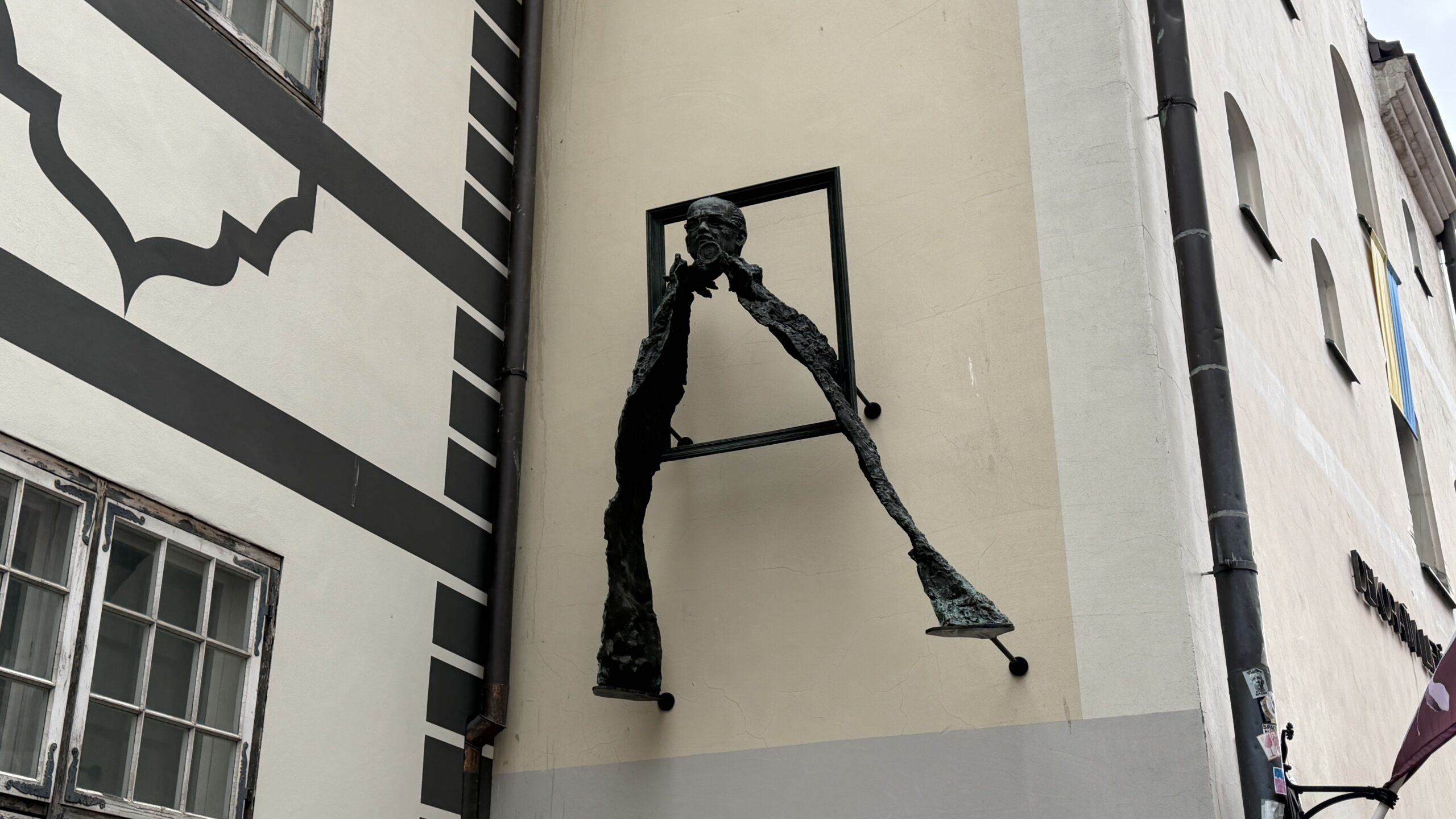
We also came across a unique sculpture dedicated to Philippe Halsman, one of the most influential portrait photographers of the 20th century. Known as the pioneer of “Jumpology,” Halsman captured famous personalities in mid-air jumps and created an incredible 101 cover photographs for Life magazine.
The Famous Black Cats of Riga
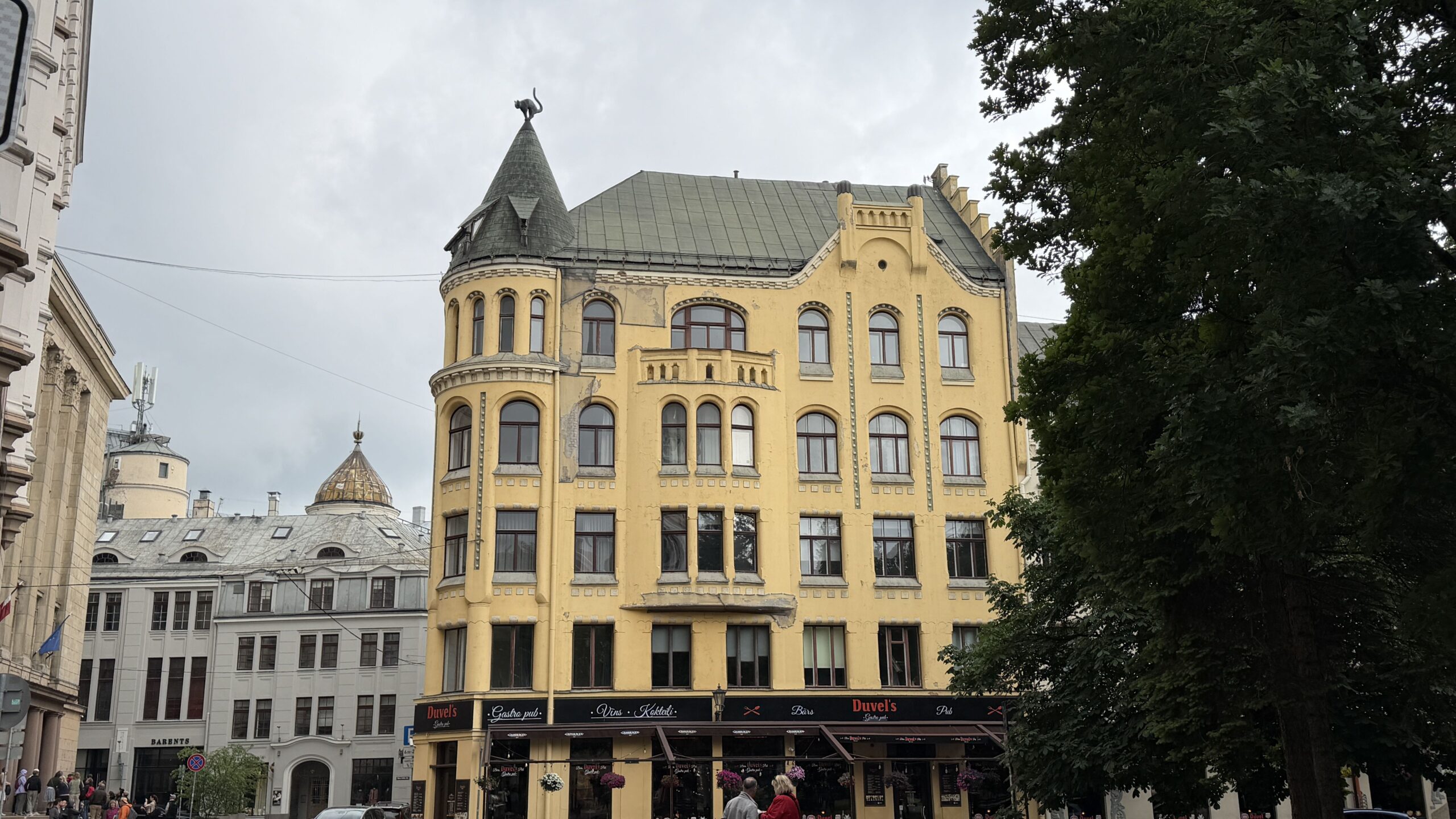
One of the most interesting stories from our walk was the legend of the Cat House (Kaķu nams).
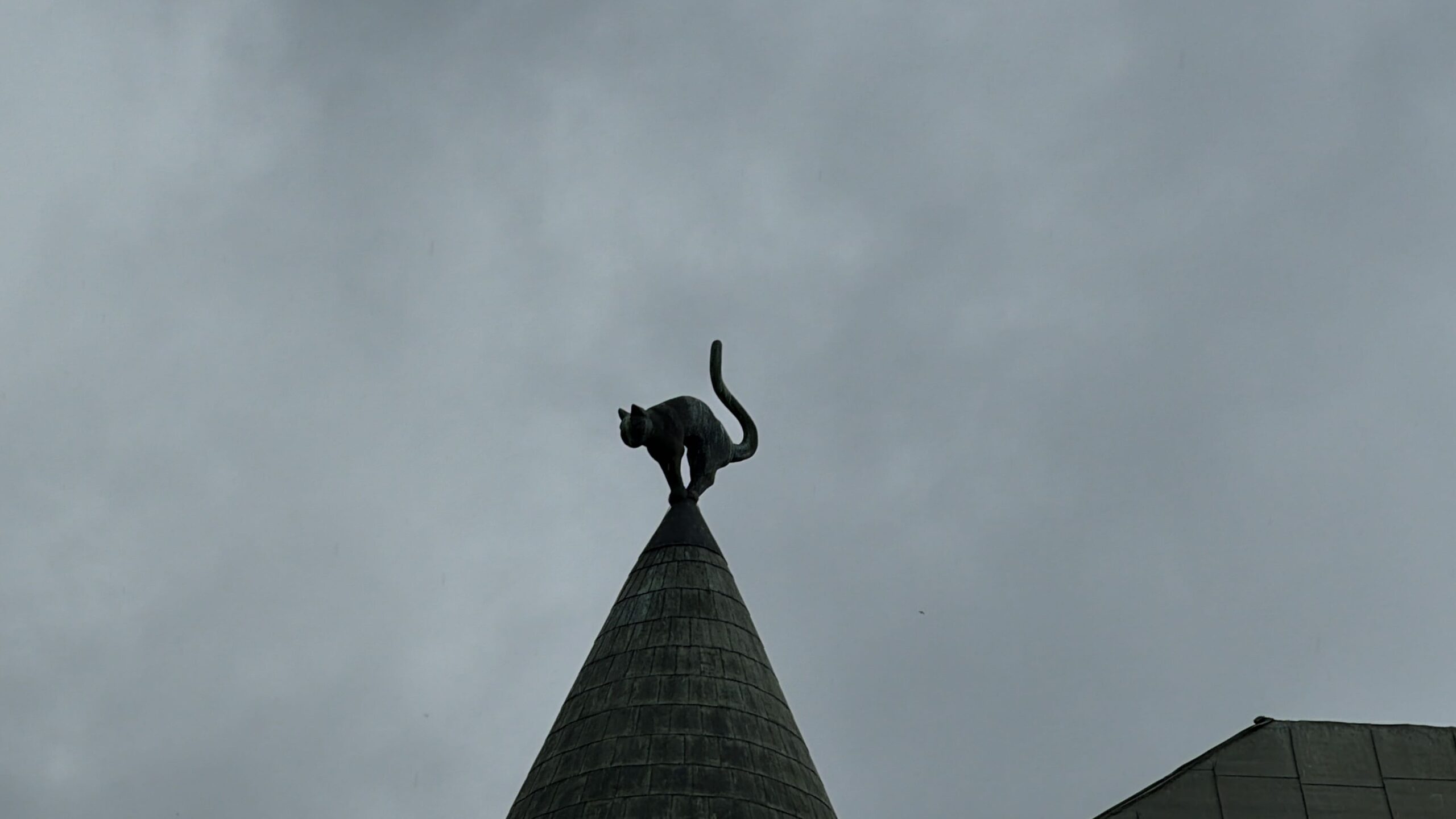
The yellow Art Nouveau building, built in 1909 by architect Friedrich Schefel, is famous for the black cat sculpture sitting on its rooftop. According to local legend, the building belonged to a wealthy Latvian merchant who was rejected from joining the German-dominated Great Guild. Angry about the rejection, he placed the cats on the roof with their tails raised and facing toward the Guild building as an act of revenge.
The story says the gesture caused a major dispute and eventually a lawsuit. A compromise was reached—the merchant was accepted into the Guild, and the cats were turned away from the building. Today, the playful black cats have become one of Riga’s most beloved symbols.
Walking Through Riga in the Rain
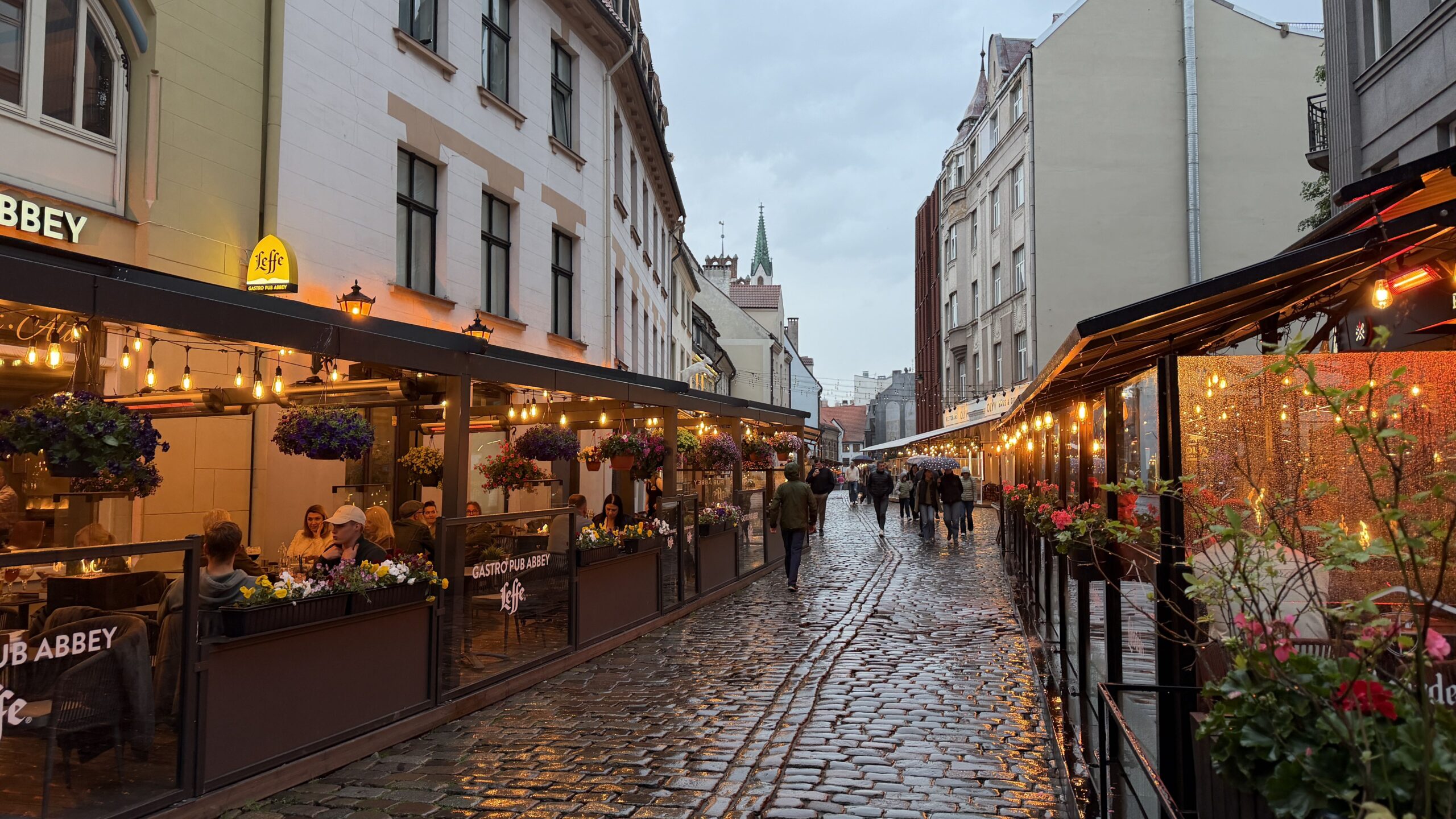
As we continued exploring, the weather changed, and a light drizzle started falling. We pulled out our rain jackets and continued walking. The rain actually added a different charm to Riga—the shiny cobblestone streets, historic buildings, and quiet corners of the Old Town created a very atmospheric feeling.
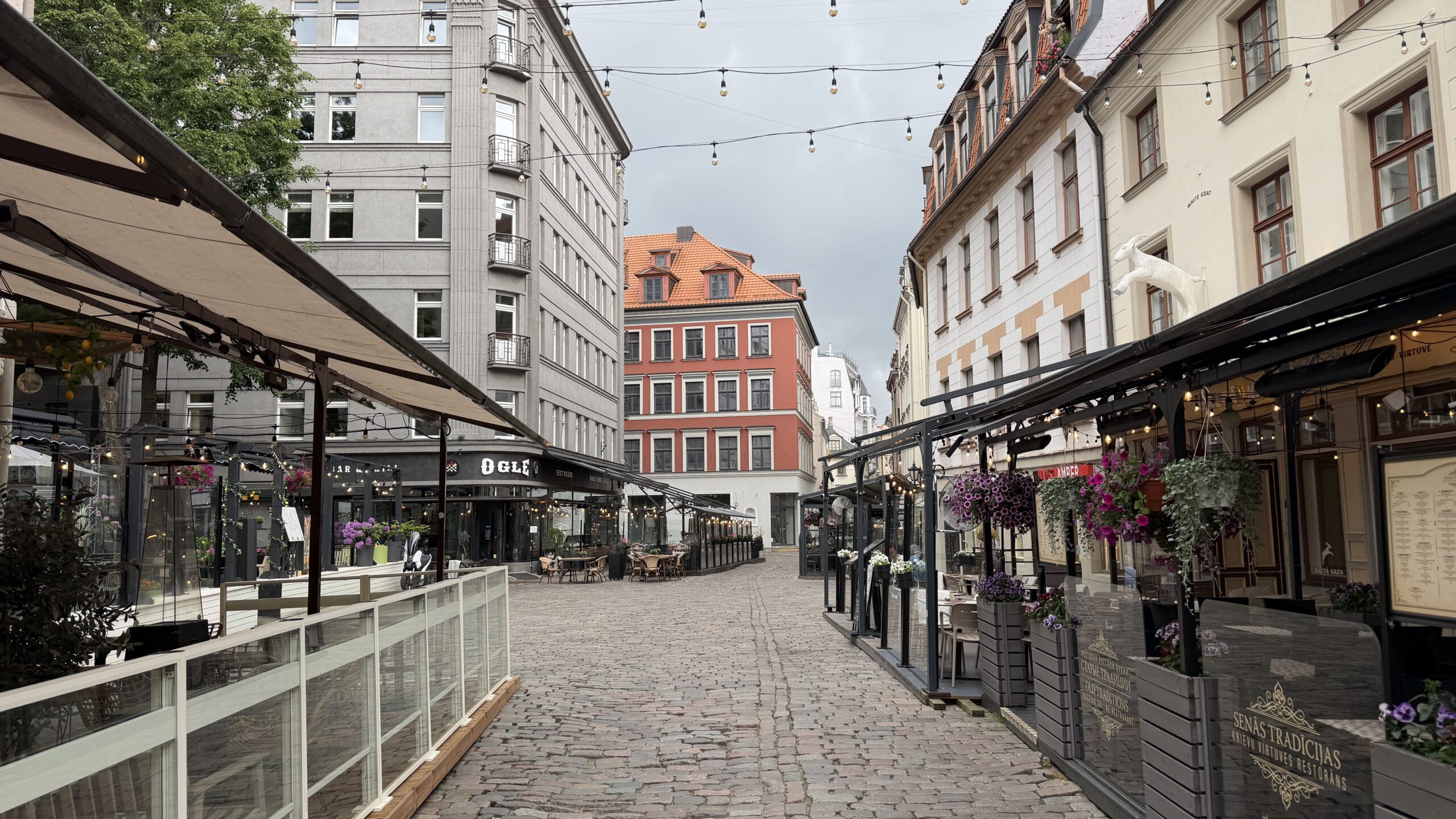
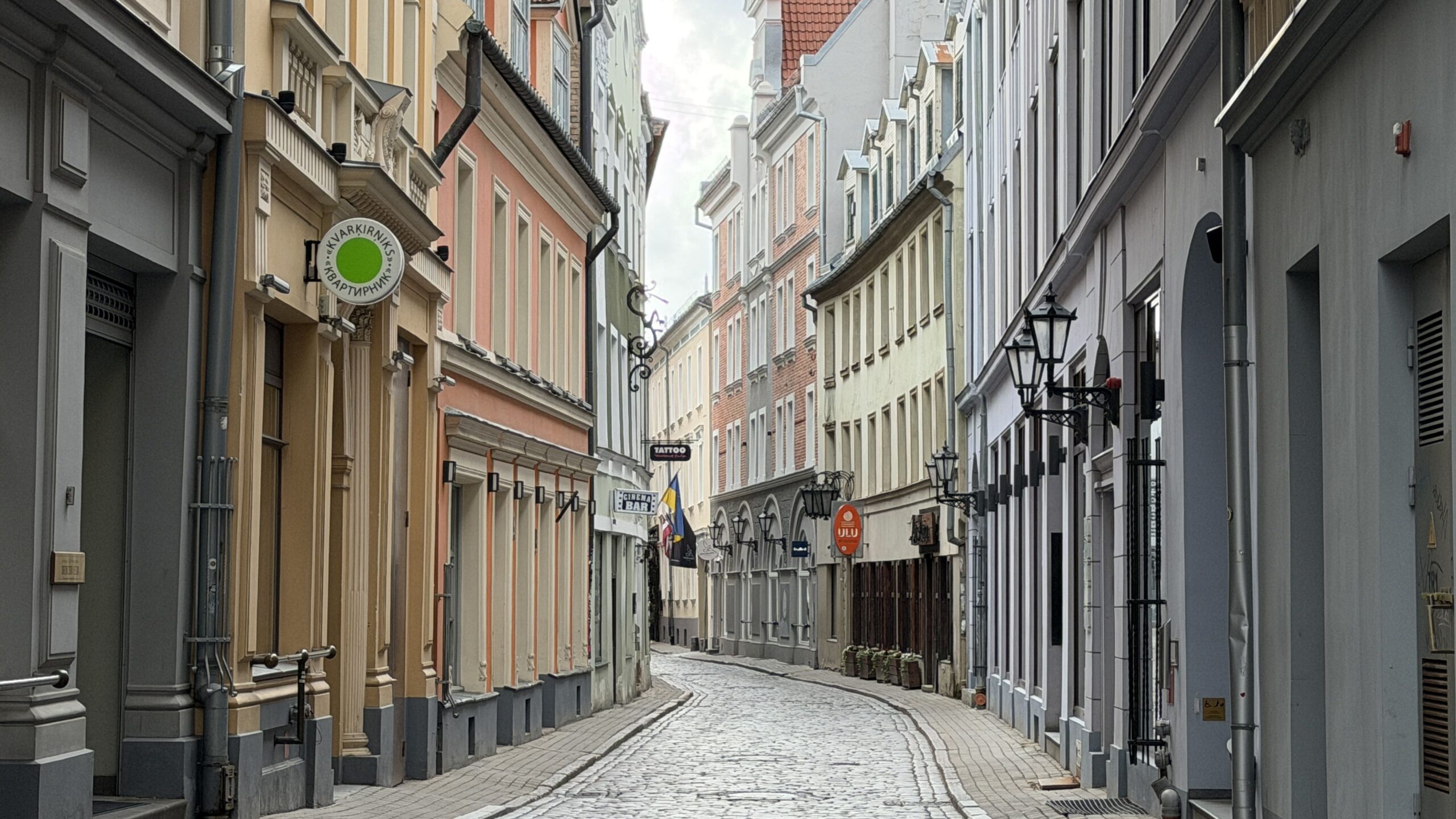
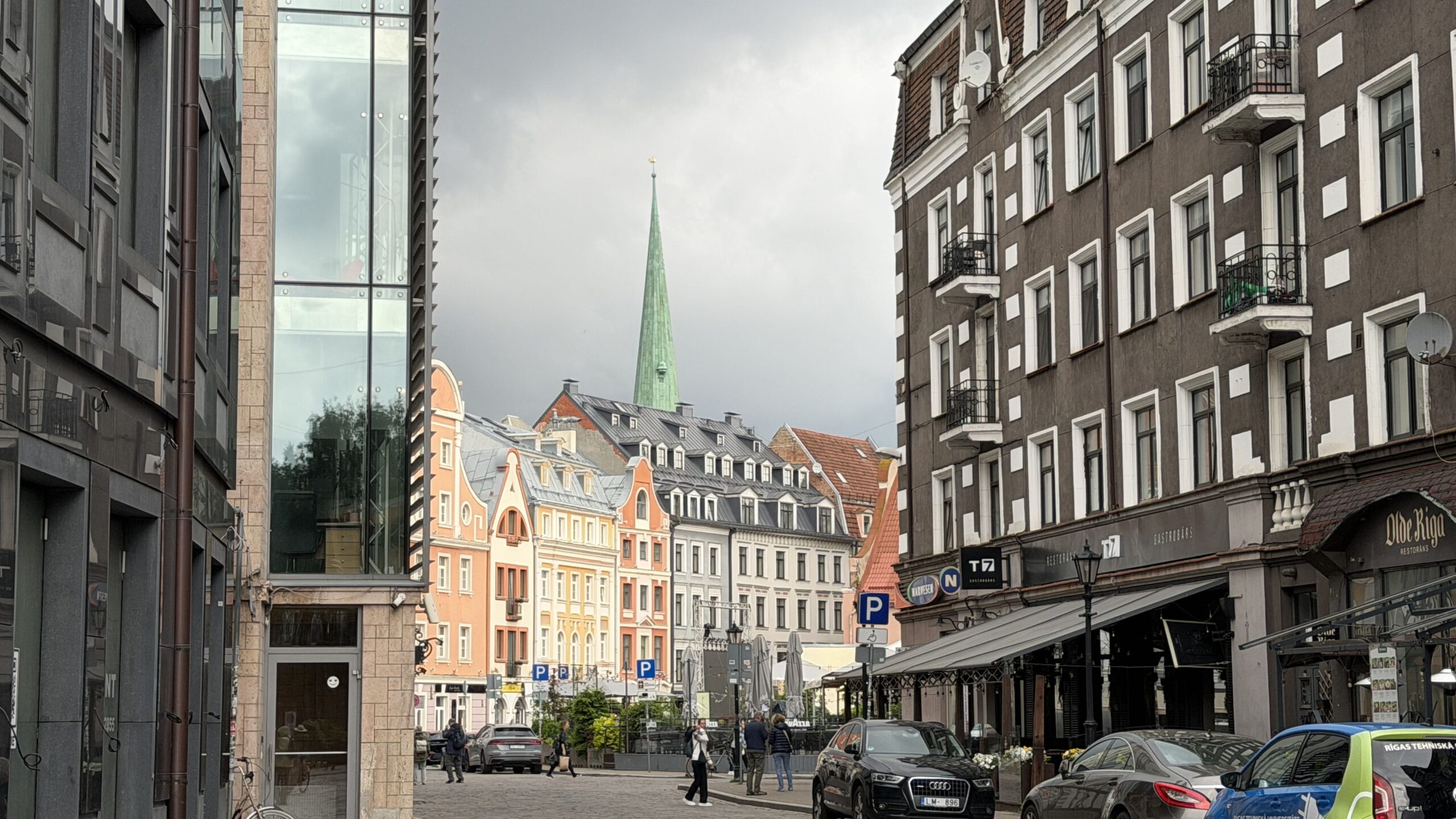
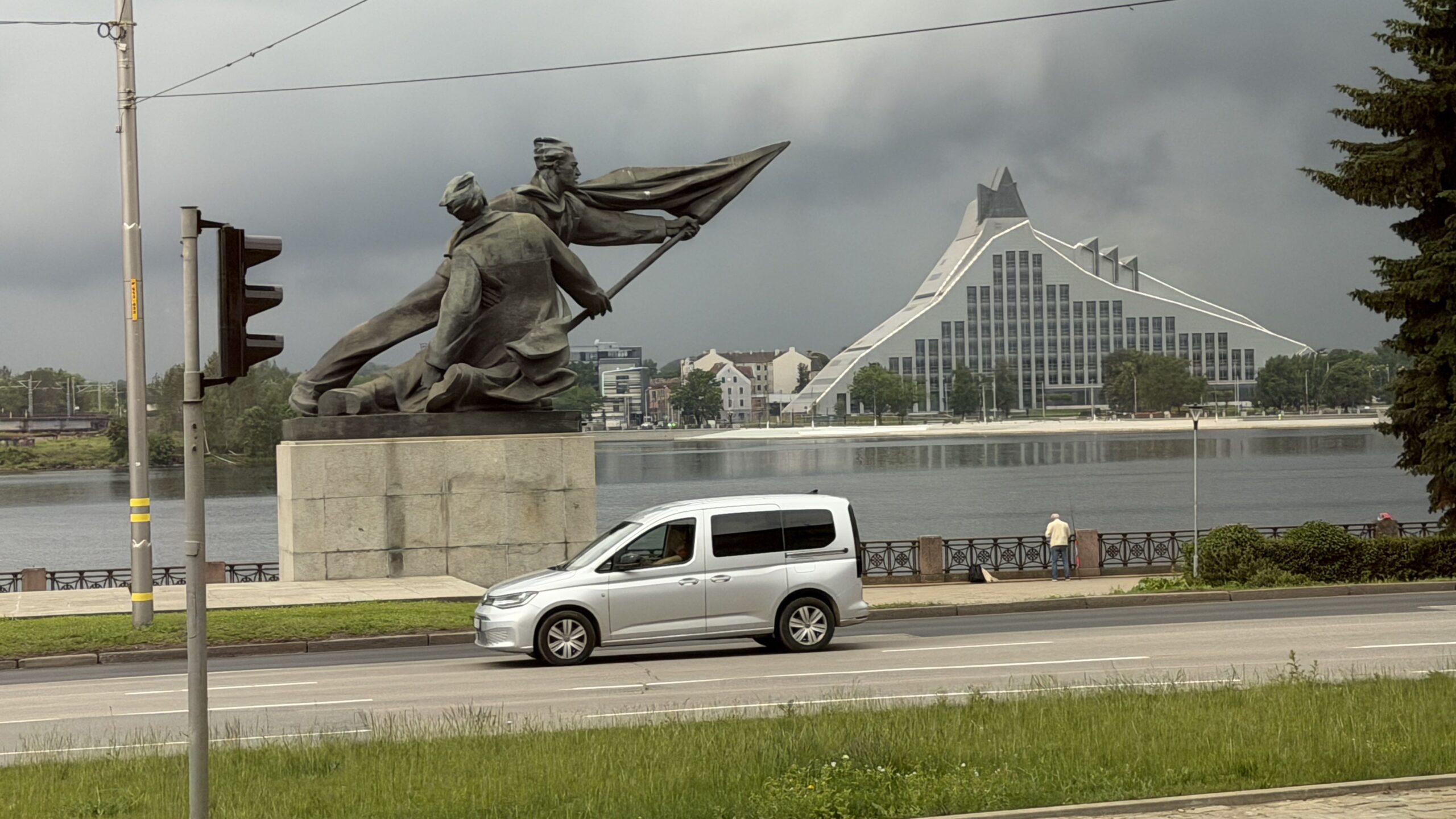
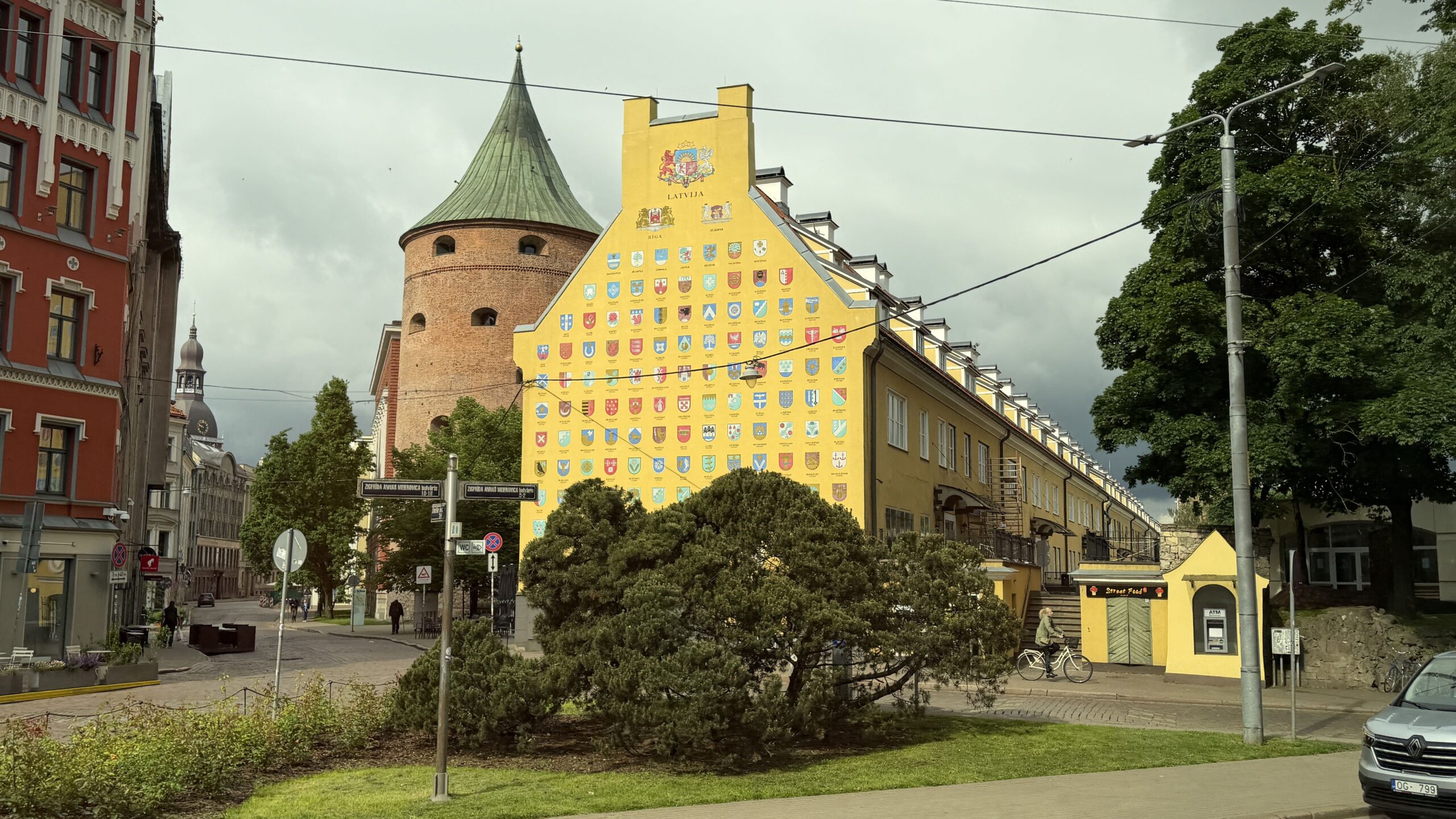
We passed the Powder Tower, one of the remaining parts of Riga’s old defensive system. The current tower dates back to 1650 and was later incorporated into the Latvian War Museum after renovations in the 20th century. Nearby, we saw the Jacob’s Barracks with its beautiful display of coats of arms representing Latvian parishes.
After completing our morning Old Town tour, we took a short break before our afternoon experience.
A Peek Into Latvia’s Past – Latvian Ethnographic Open-Air Museum
In the afternoon, we visited the Latvian Ethnographic Open-Air Museum, located on the peaceful shores of Lake Jugla. Established in 1924, it is one of the oldest and largest open-air museums in Europe.
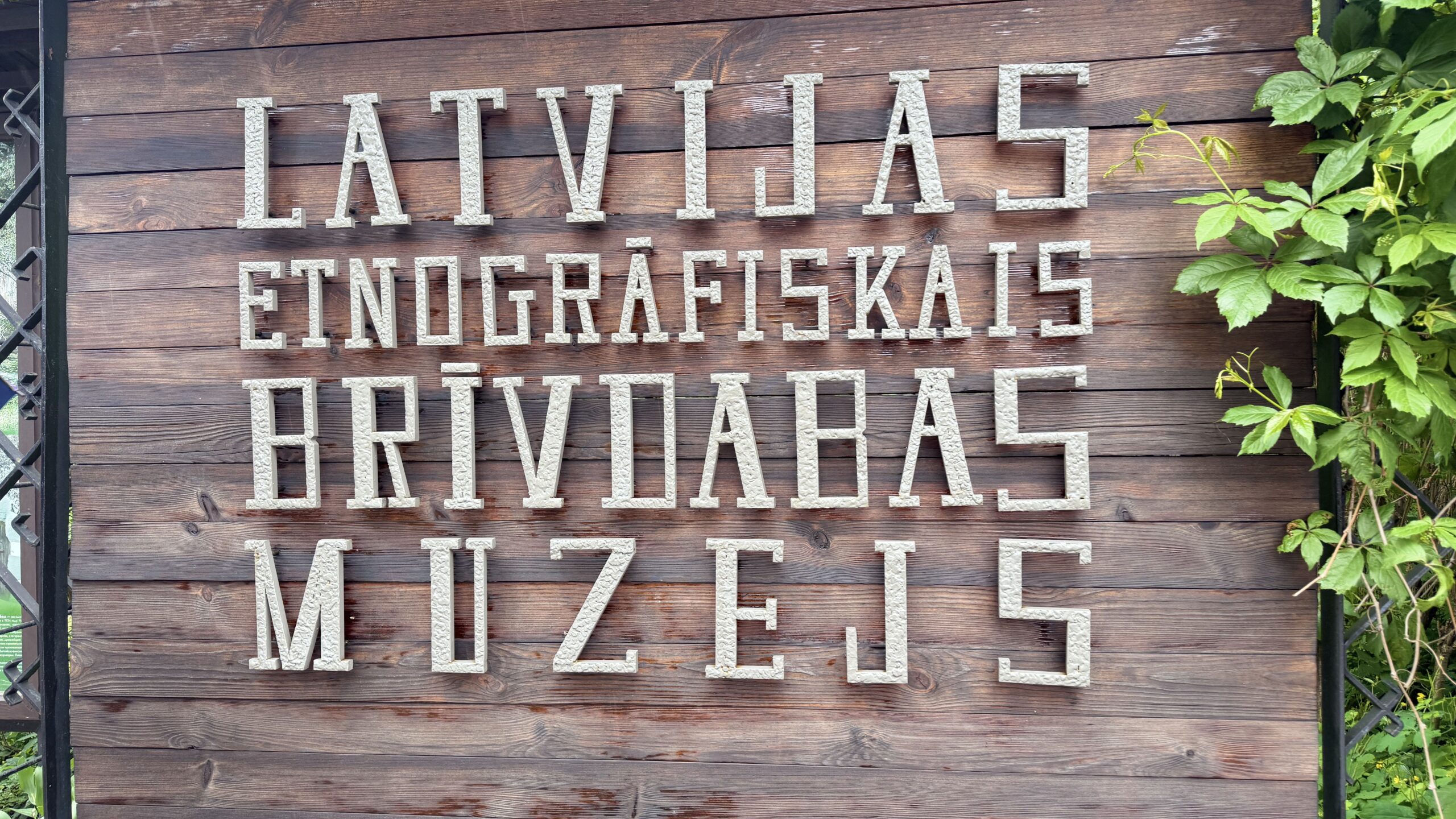
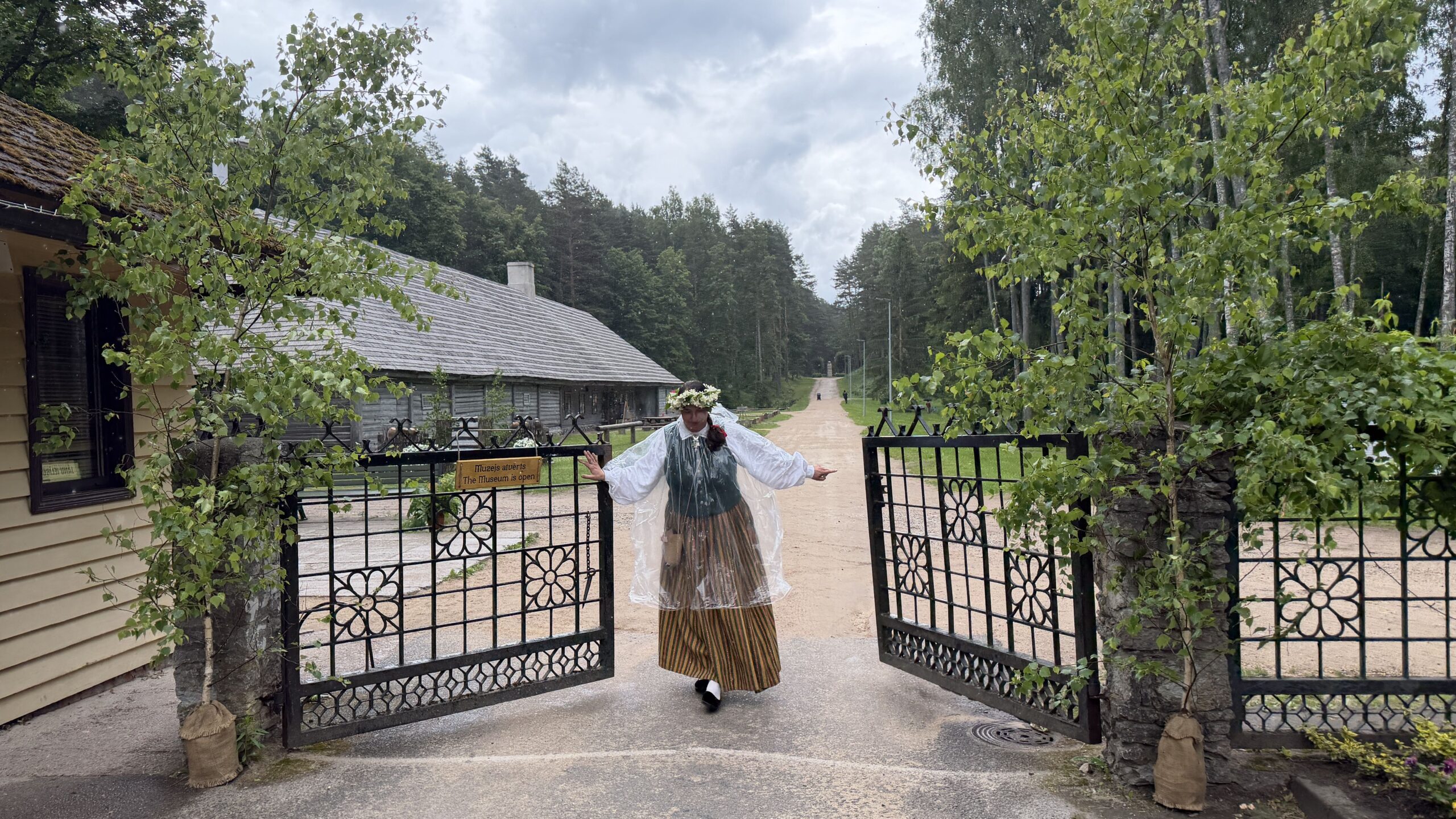
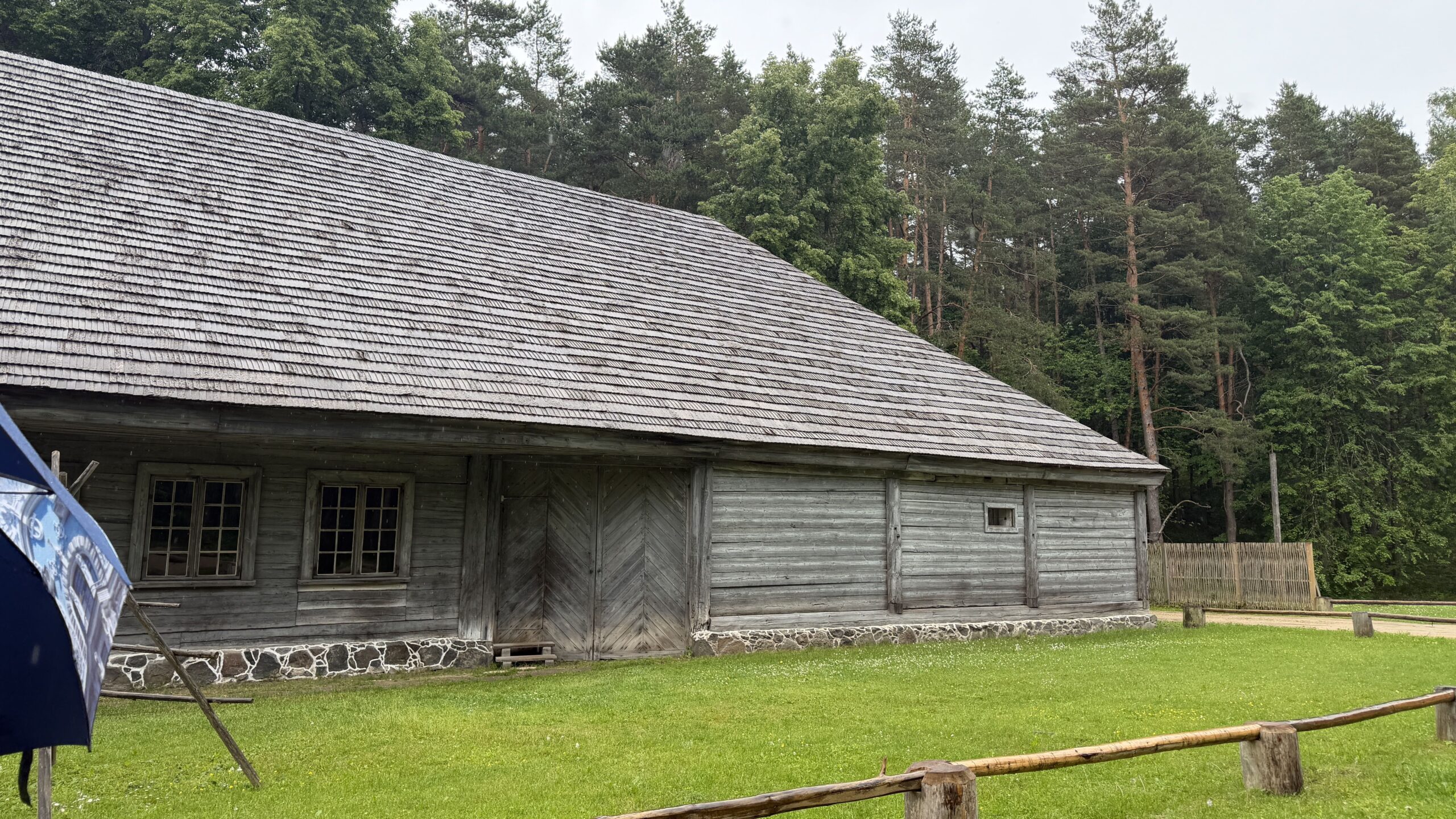
This was a completely different experience from the historic streets of Riga. Instead of grand buildings and monuments, this museum showed us everyday Latvian life from centuries ago. Spread across the forested landscape were more than 100 historic buildings, including farmhouses, fishermen’s homes, windmills, churches, and traditional structures representing different regions of Latvia from the 16th to 19th centuries.
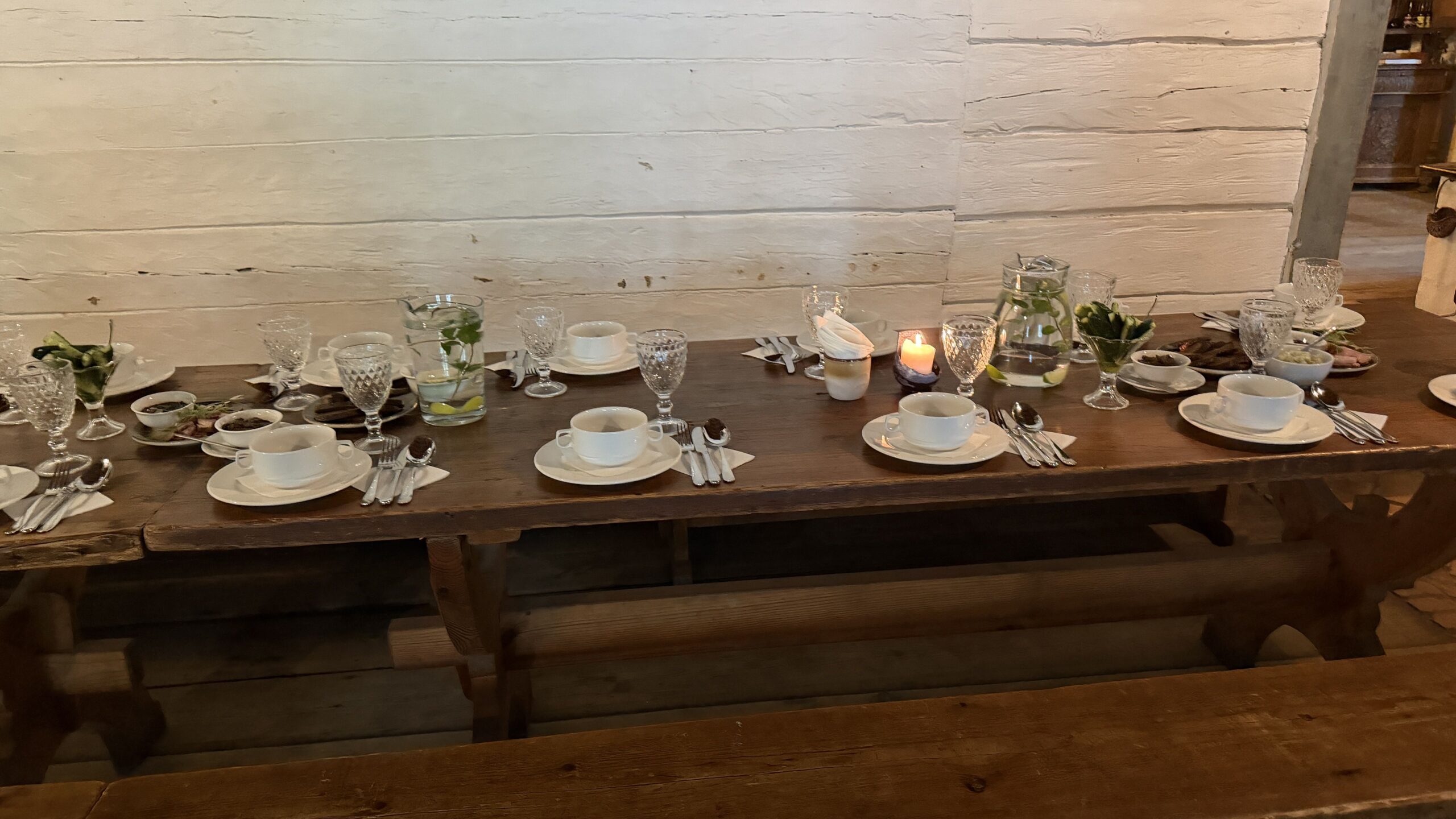
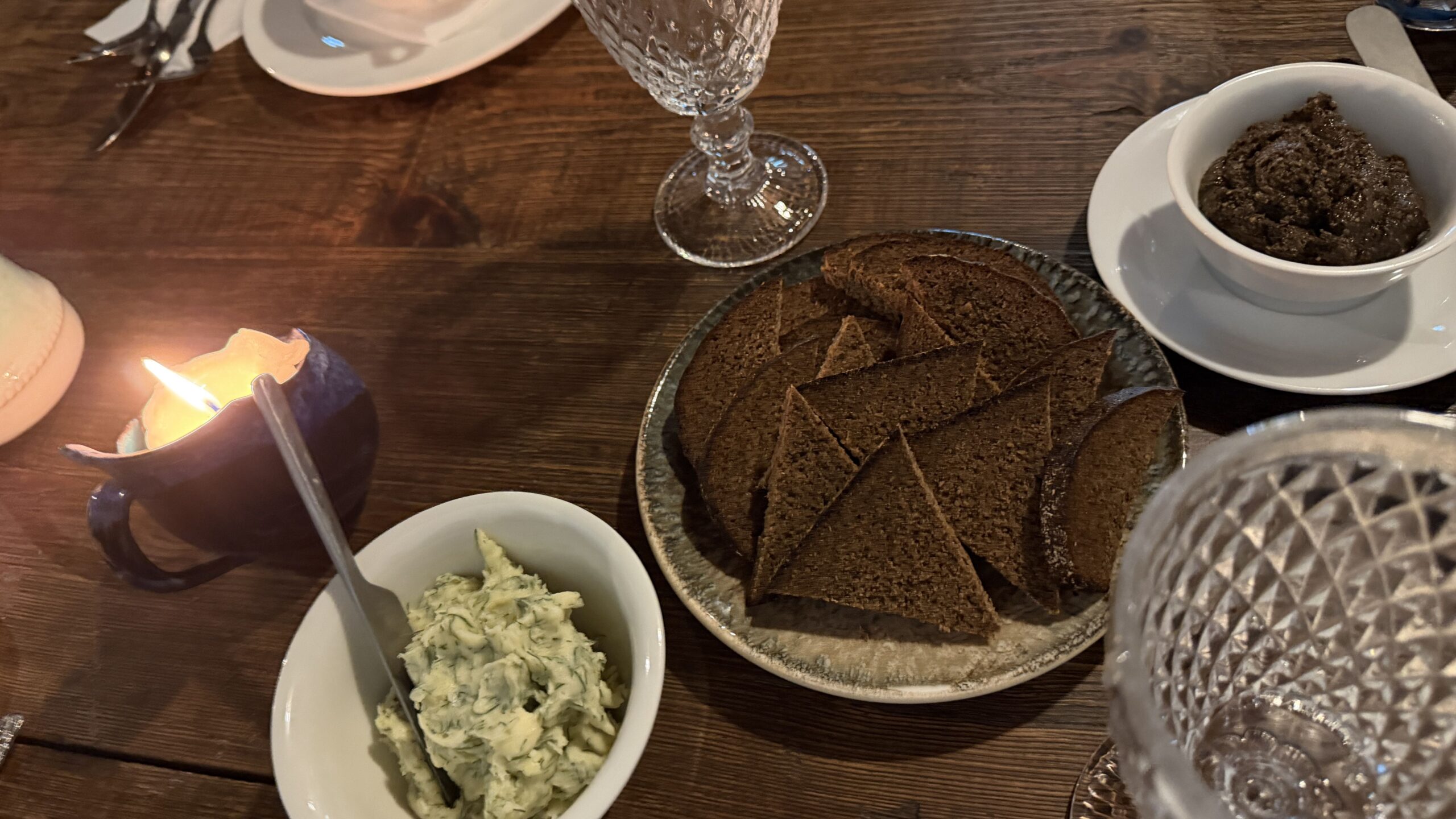
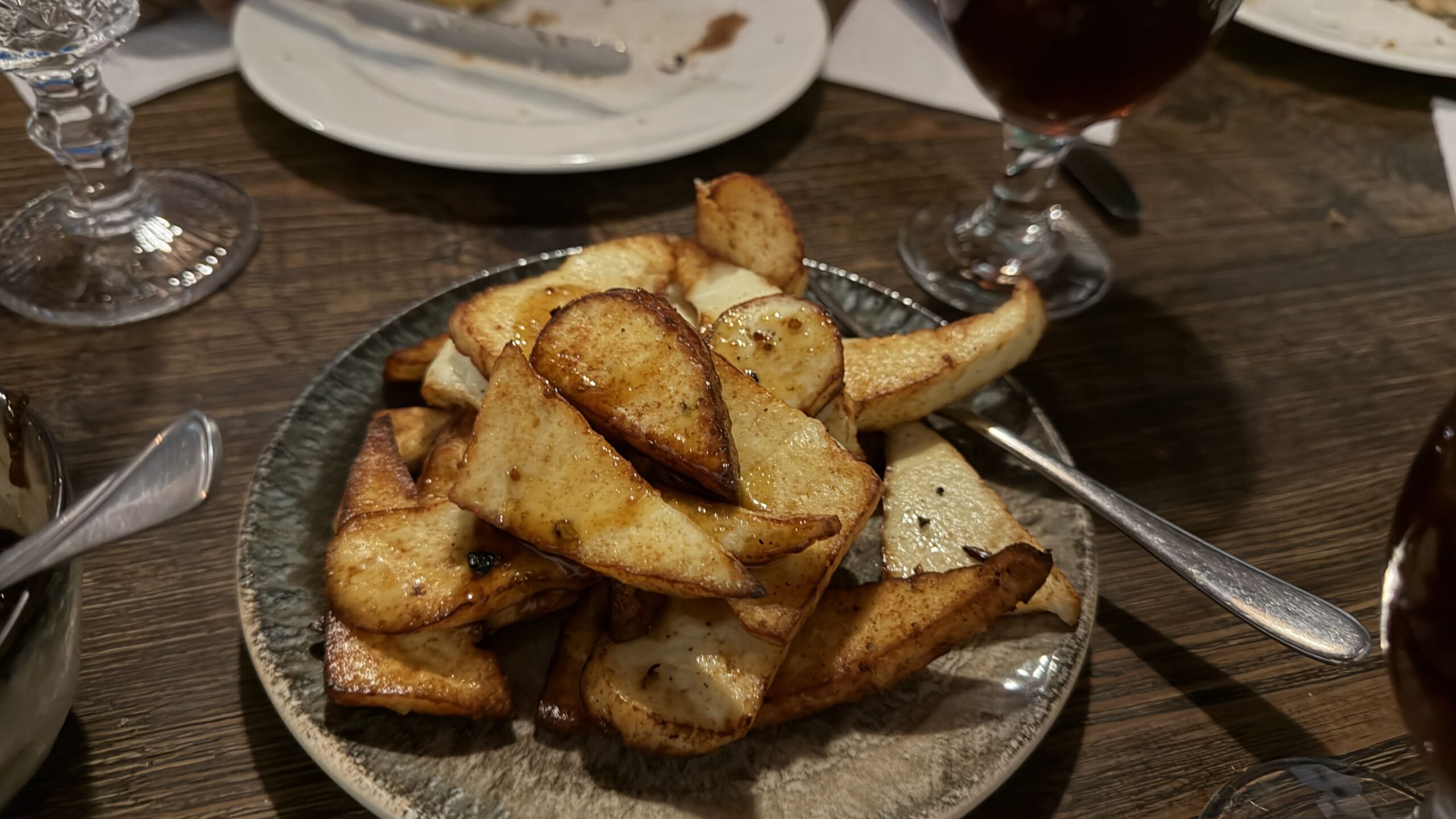
We started with a traditional family-style lunch at the museum restaurant. The food was delicious, though we felt there was a lot of meat included. The meal included rye bread, cucumbers, onion jam, fried tofu pieces, chicken, and other local dishes.
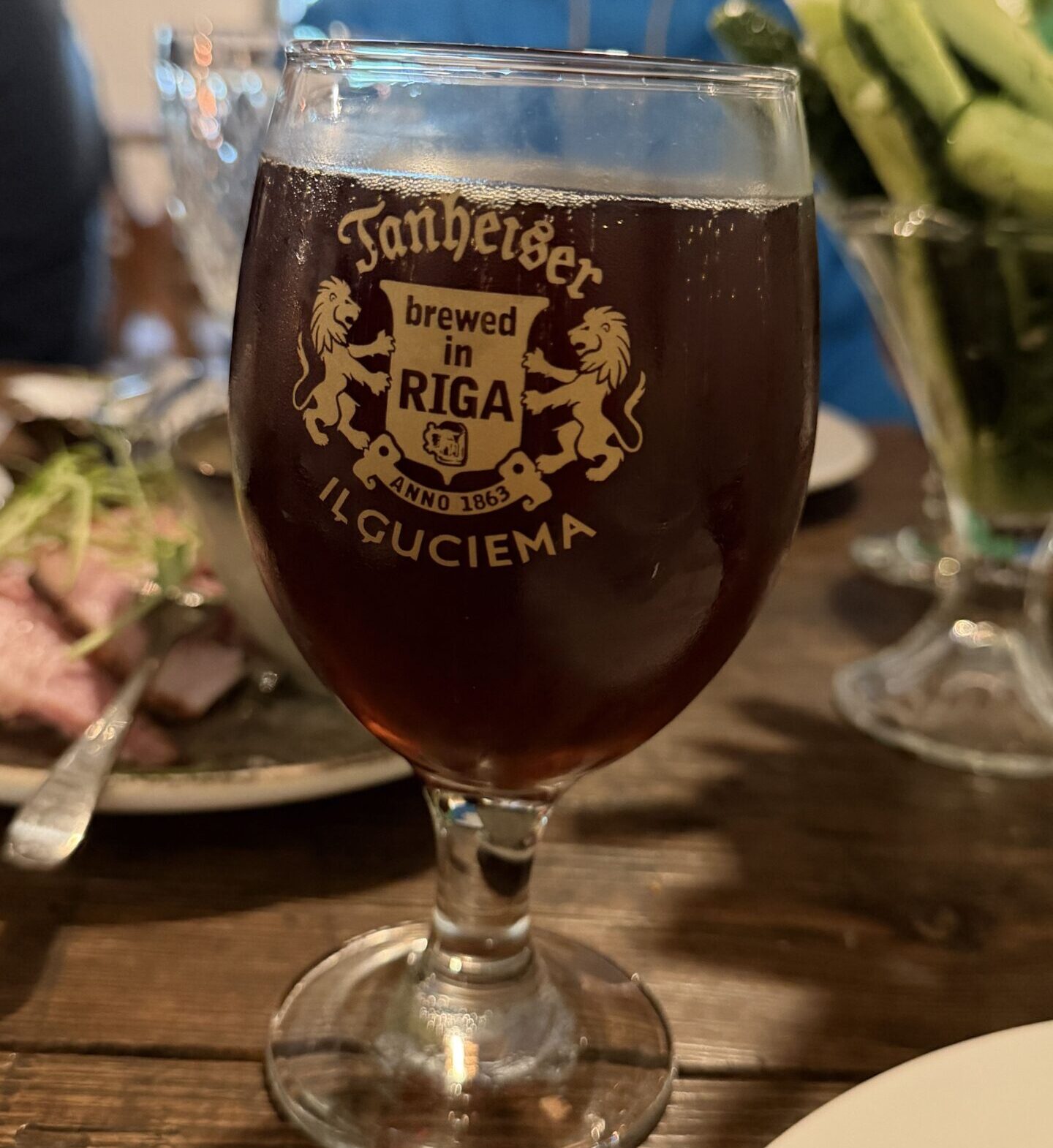
We also tried Kvass, the traditional Latvian drink made from fermented rye bread, malt, and sugar. It is slightly sweet, tangy, and refreshing. We had heard a lot about this famous Baltic drink, so we were excited to try it—but it turned out that it was not everyone’s favorite!
After lunch, we walked through the open-air village, even though it continued to rain. The old wooden church was one of our favorite stops. The preserved interiors and beautiful wooden ceiling paintings showed the craftsmanship of earlier generations.
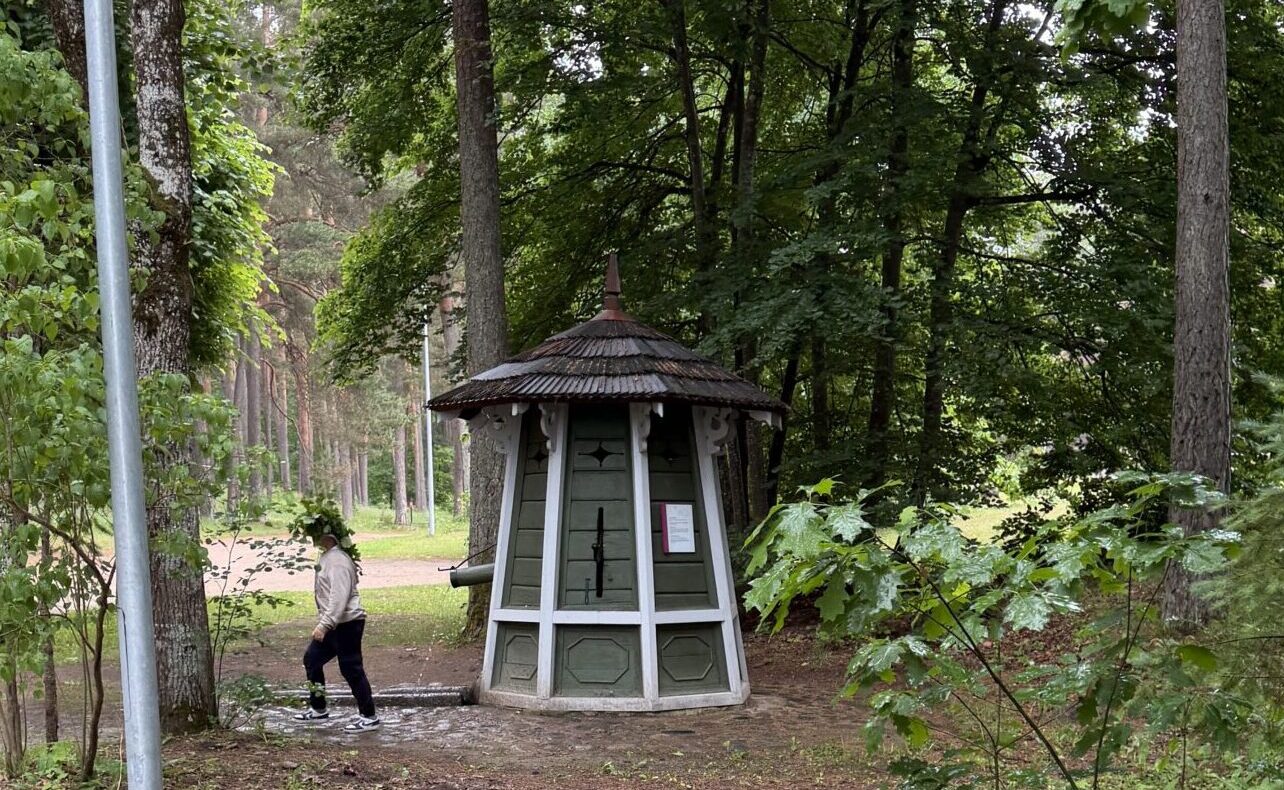
We saw traditional farmer houses designed for families of four or five people, old storage buildings, and water wells showing how people lived before modern conveniences. The water pump especially reminded us of similar wells we had seen growing up in India—it was fascinating to see how different cultures solved everyday problems in similar ways.
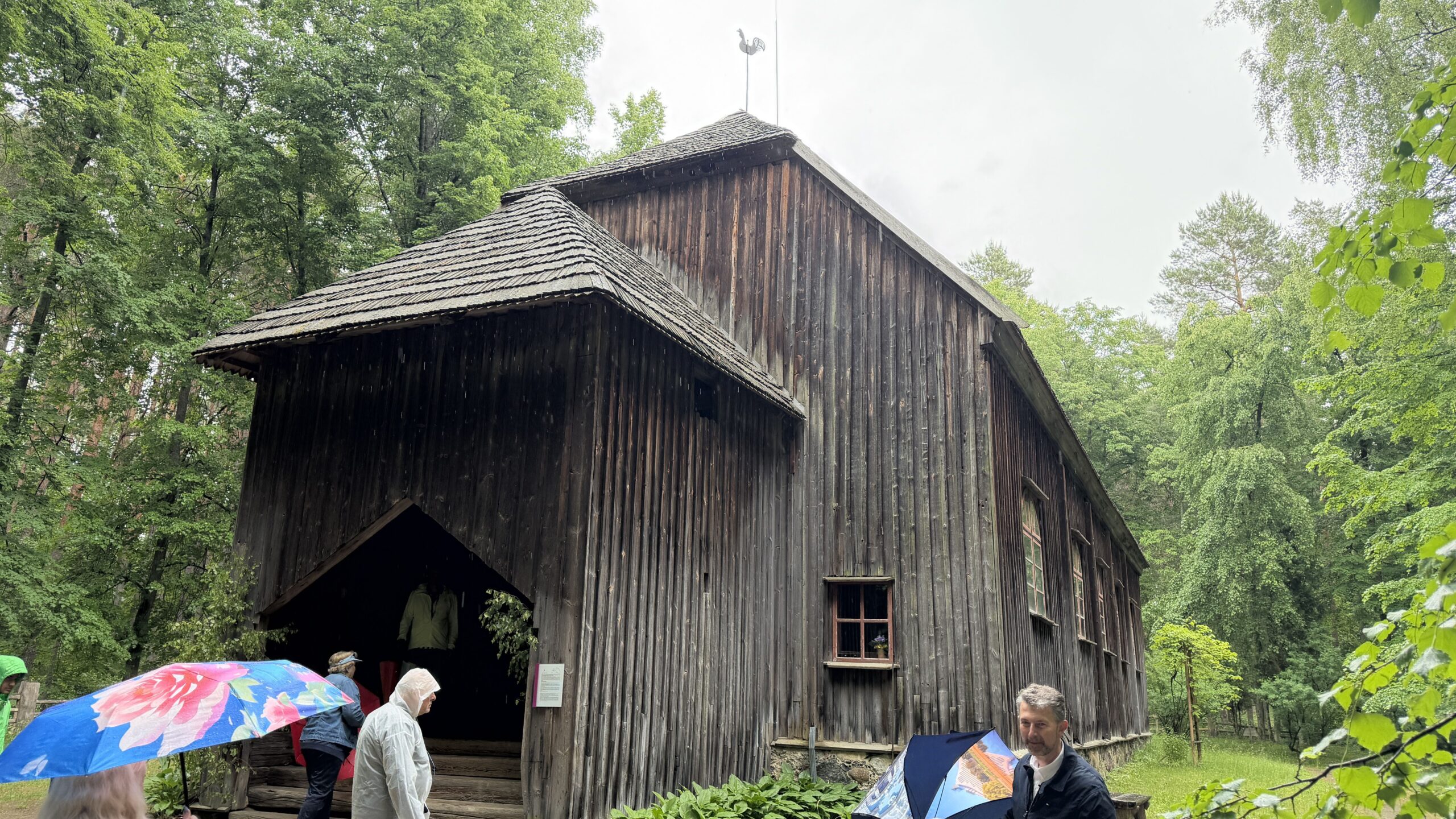
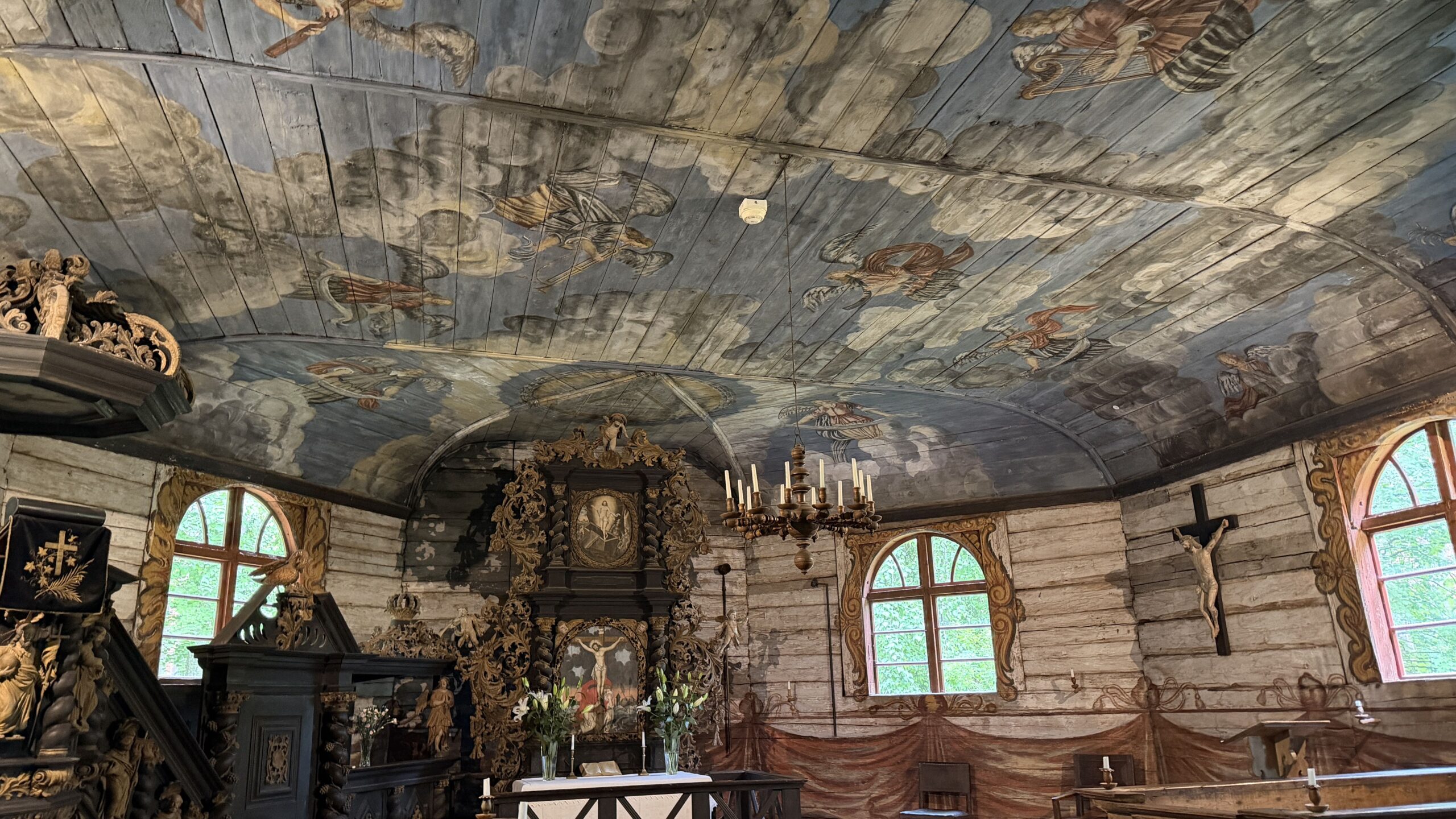
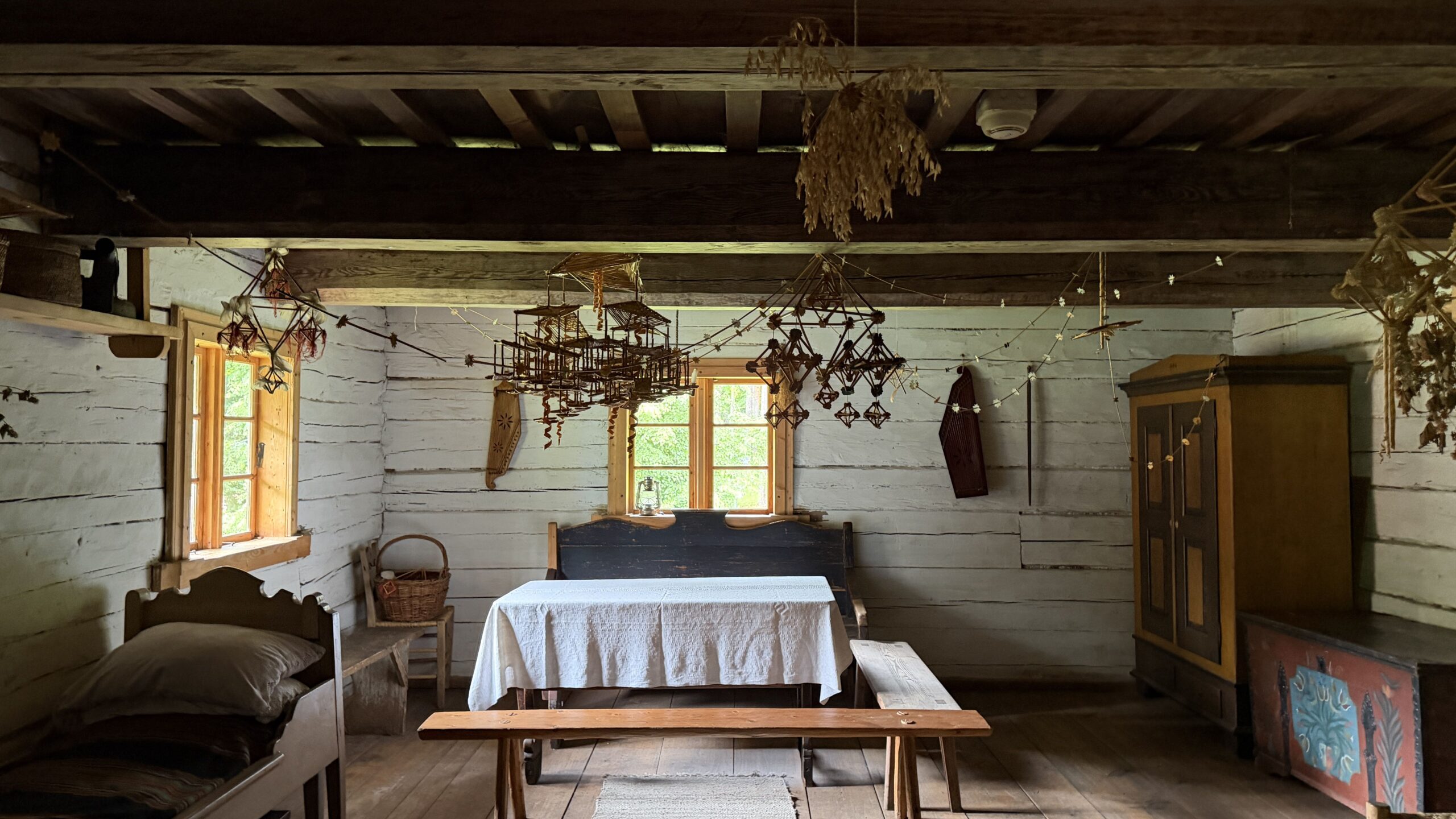
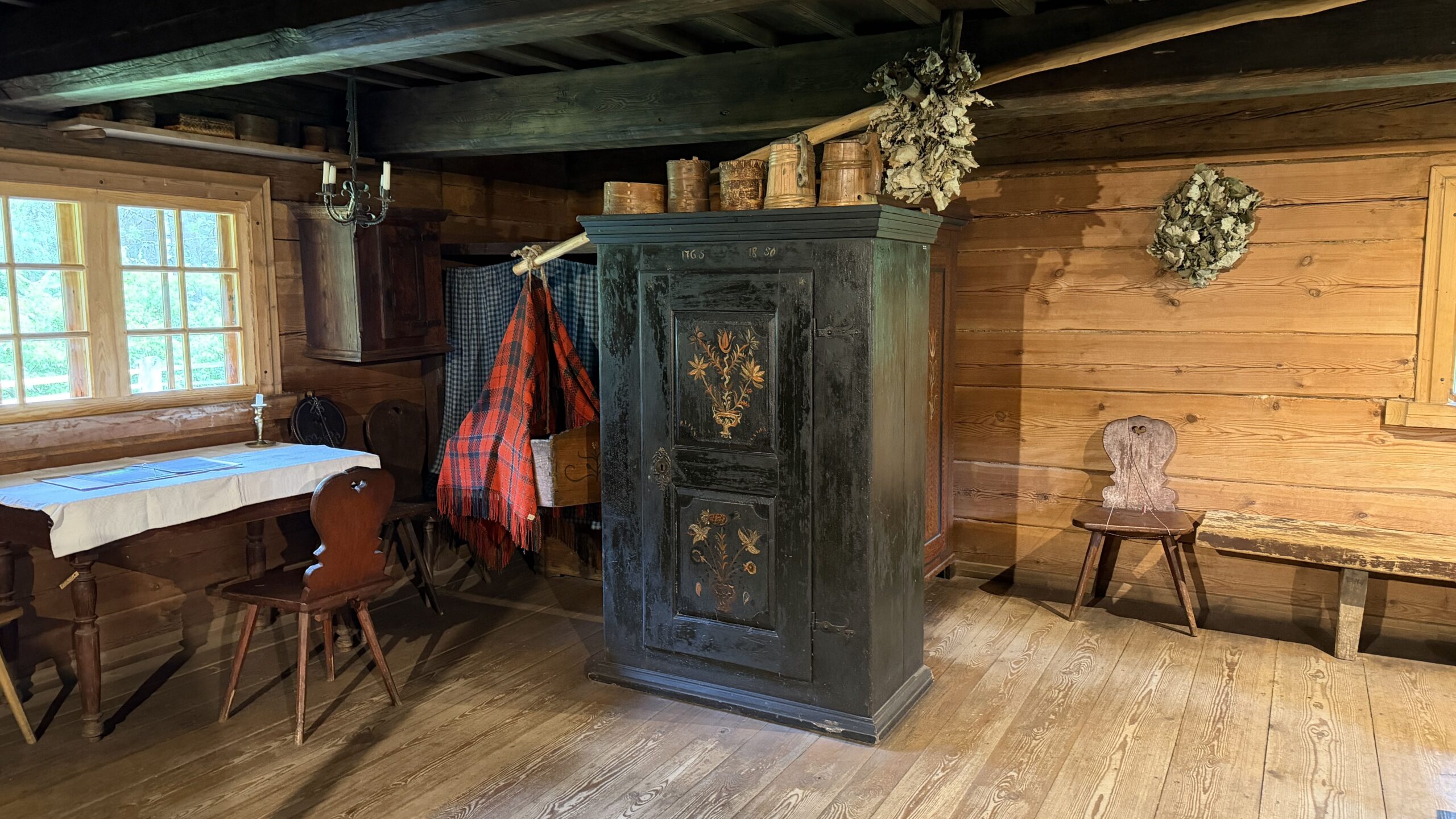
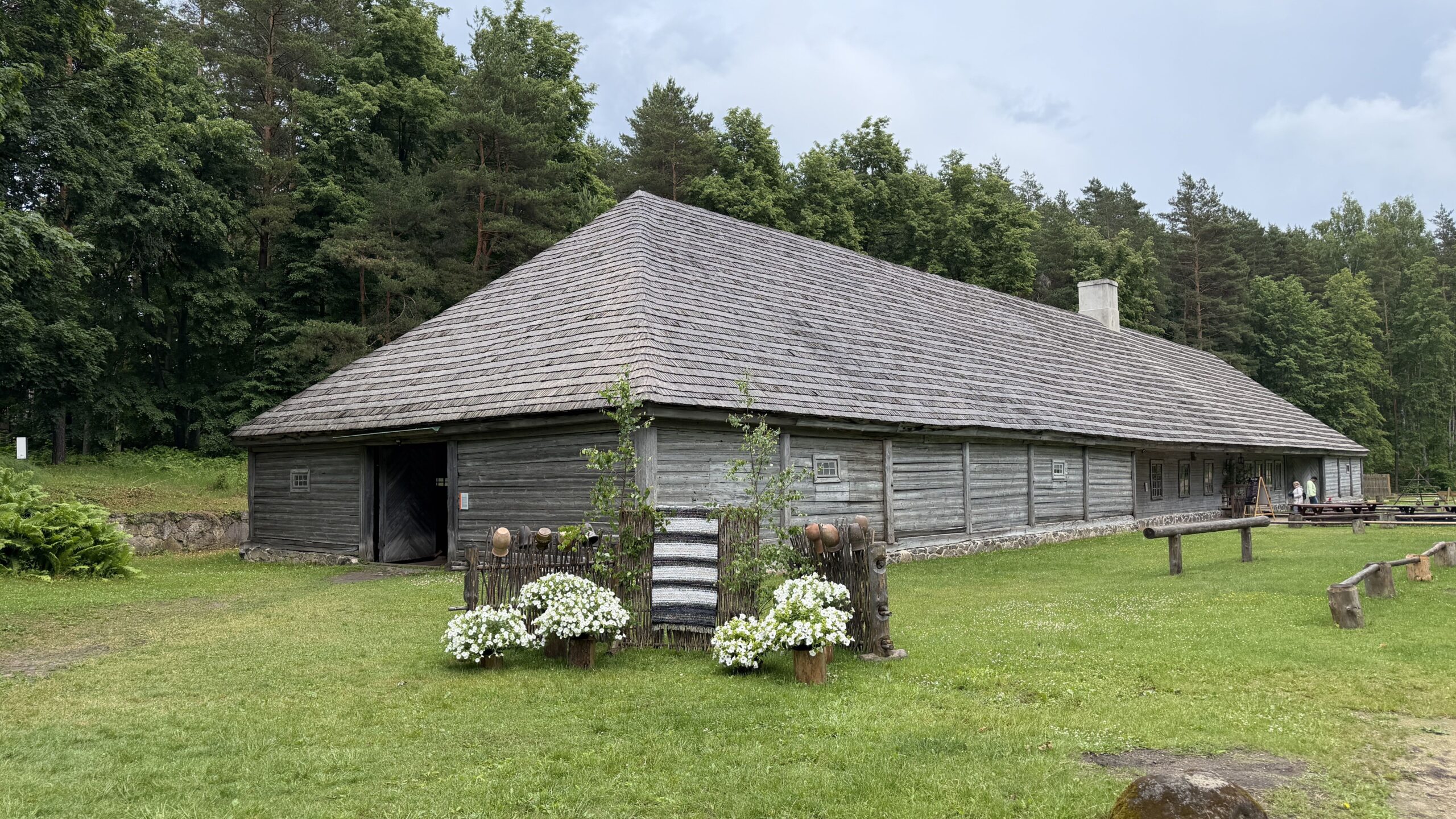
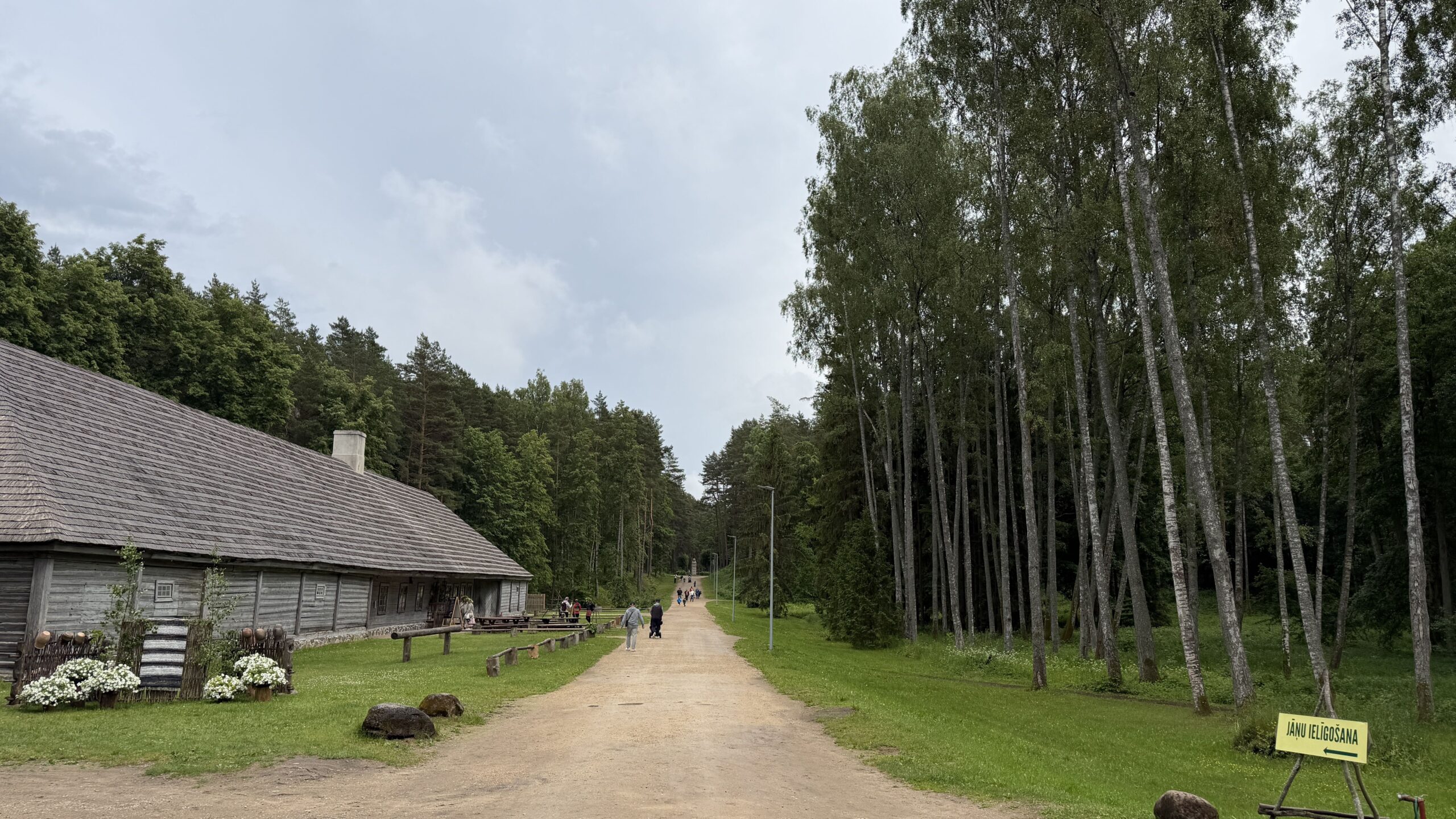
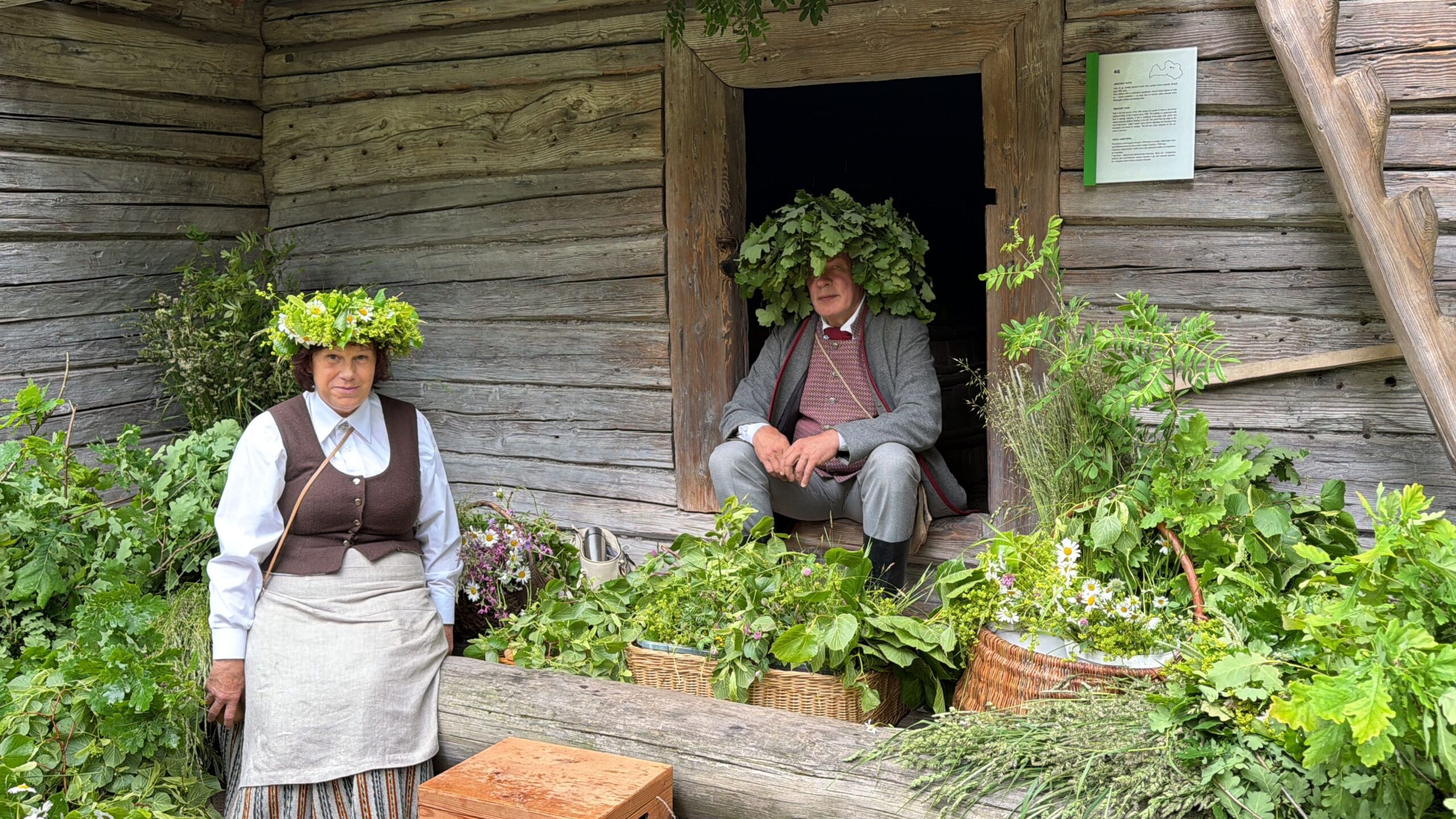
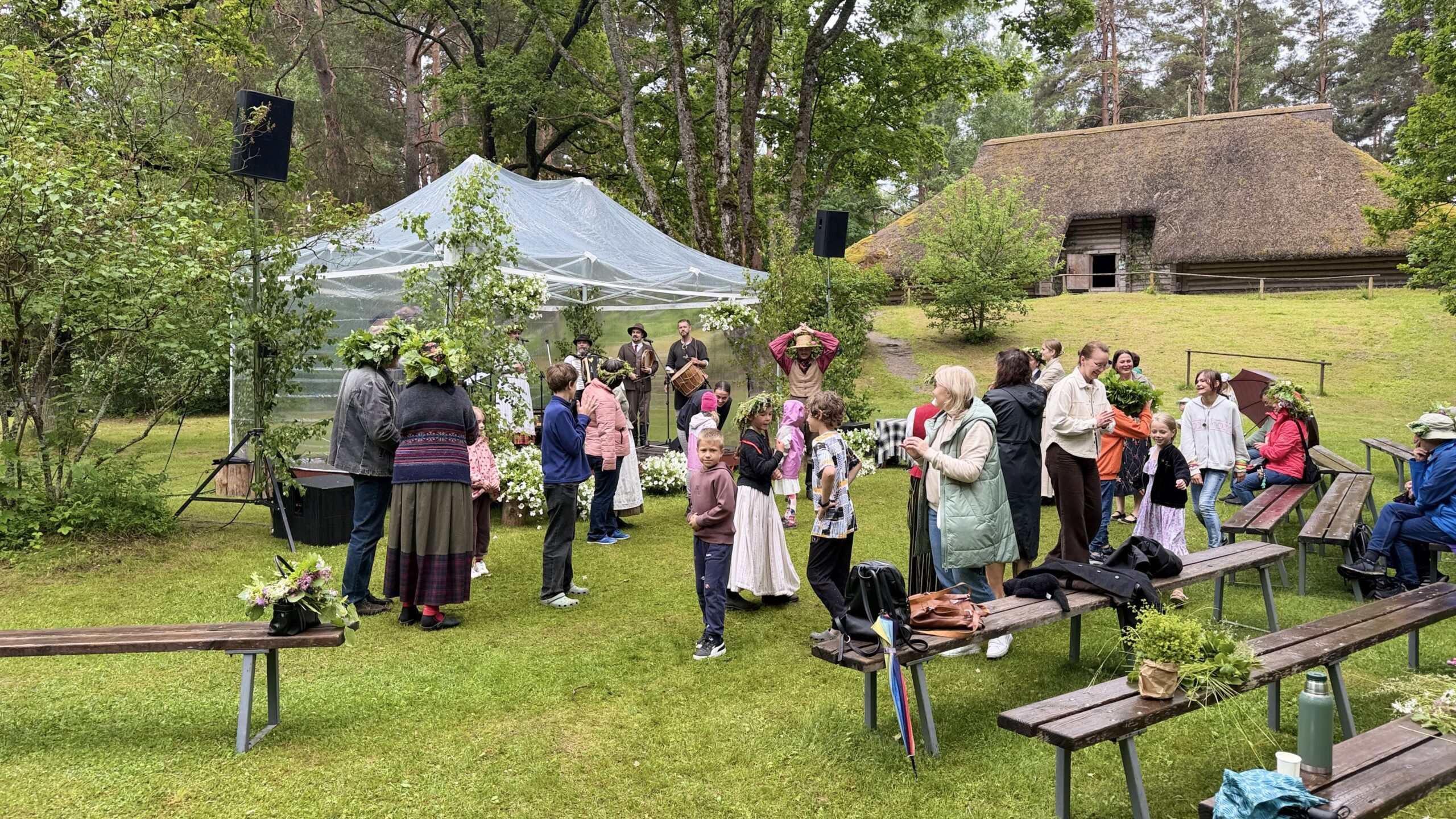
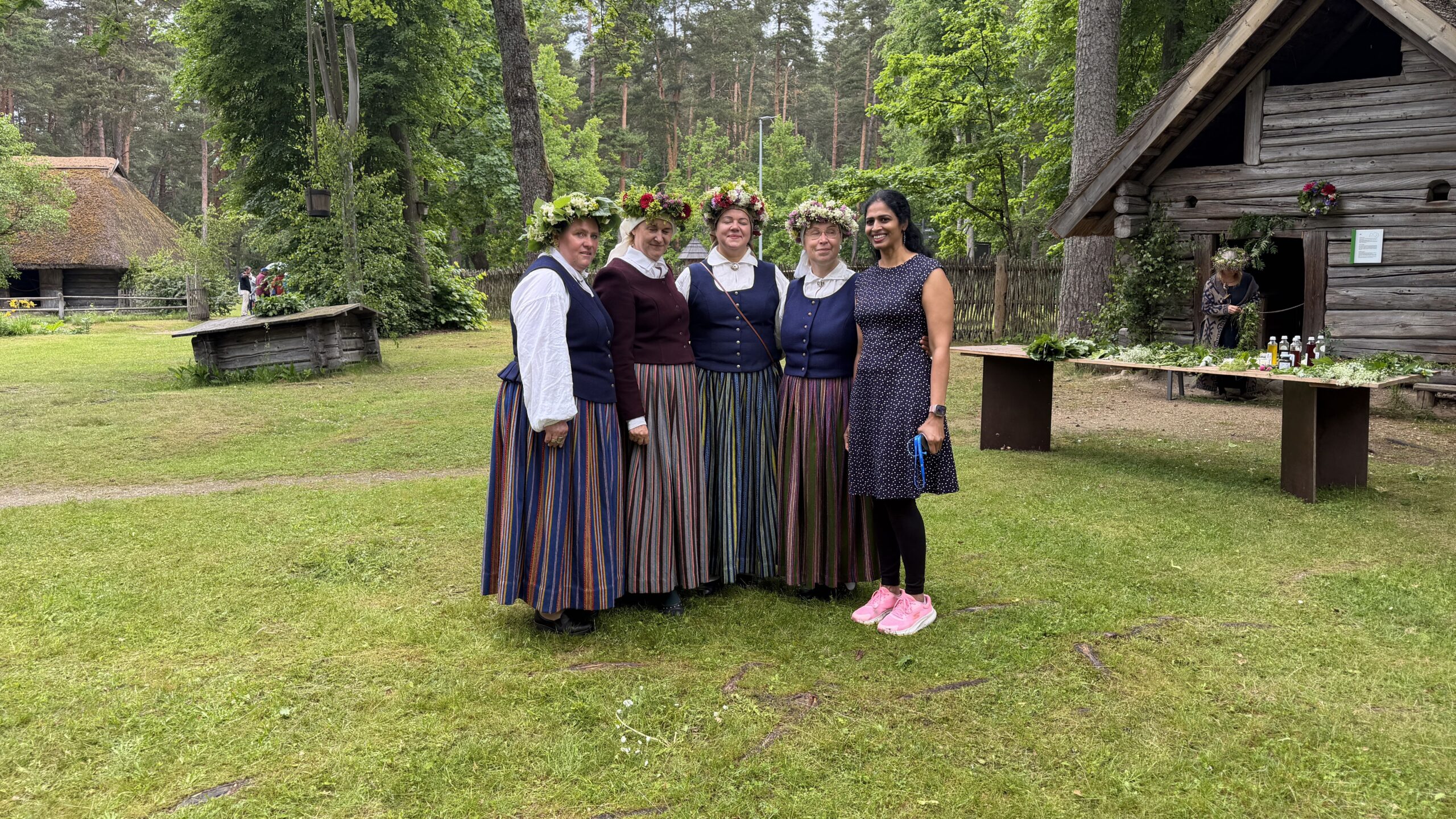
The museum was preparing for a summer festival during our visit. Many locals were dressed in traditional clothing, making leaf crowns, singing, and practicing dances. One thing we noticed during the dancing was how young men danced comfortably with older women from their families. It felt like an important cultural tradition passed through generations. We even had the opportunity to take pictures with some of the locals in their beautiful traditional outfits.
Evening Views of Riga
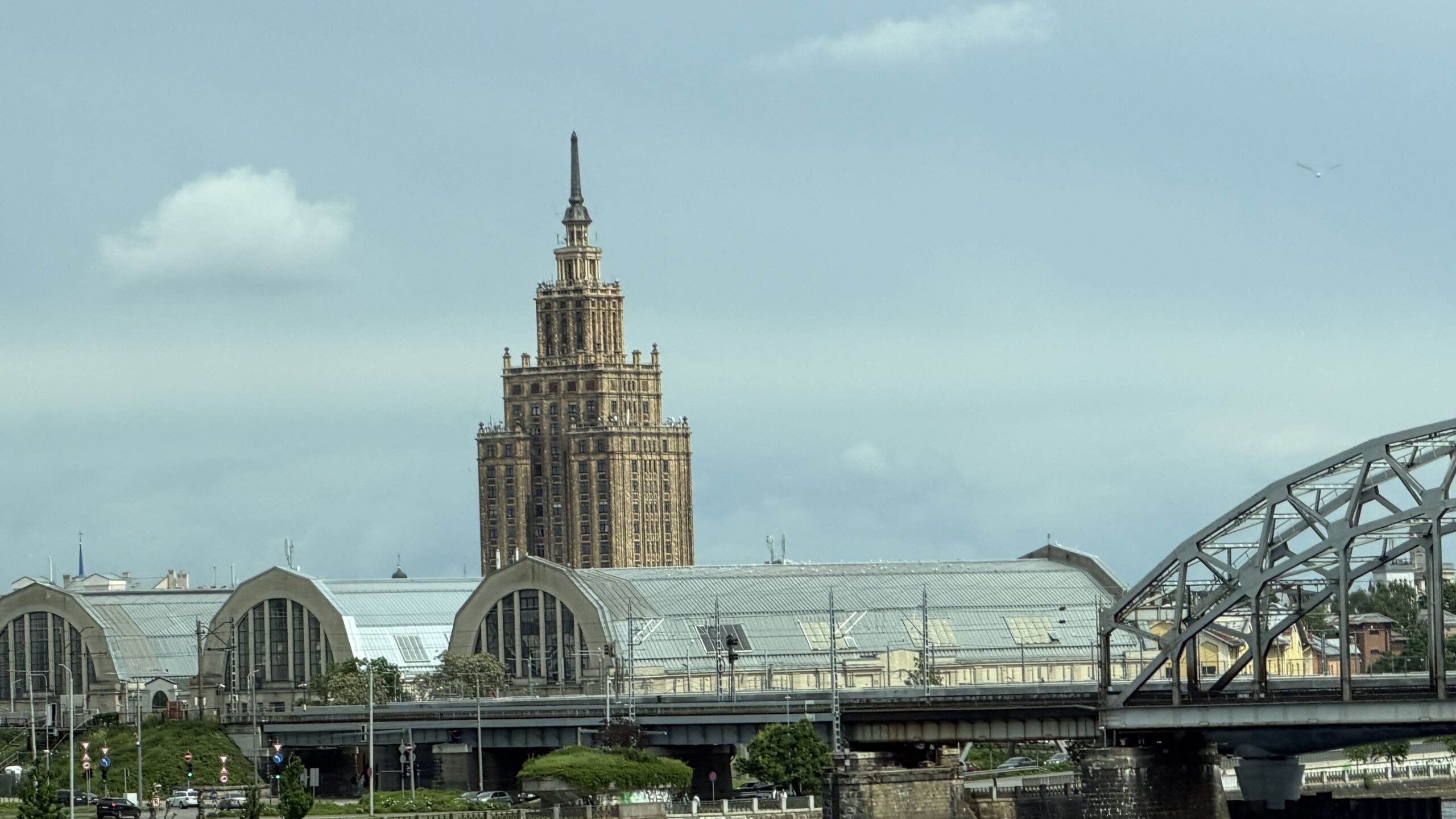
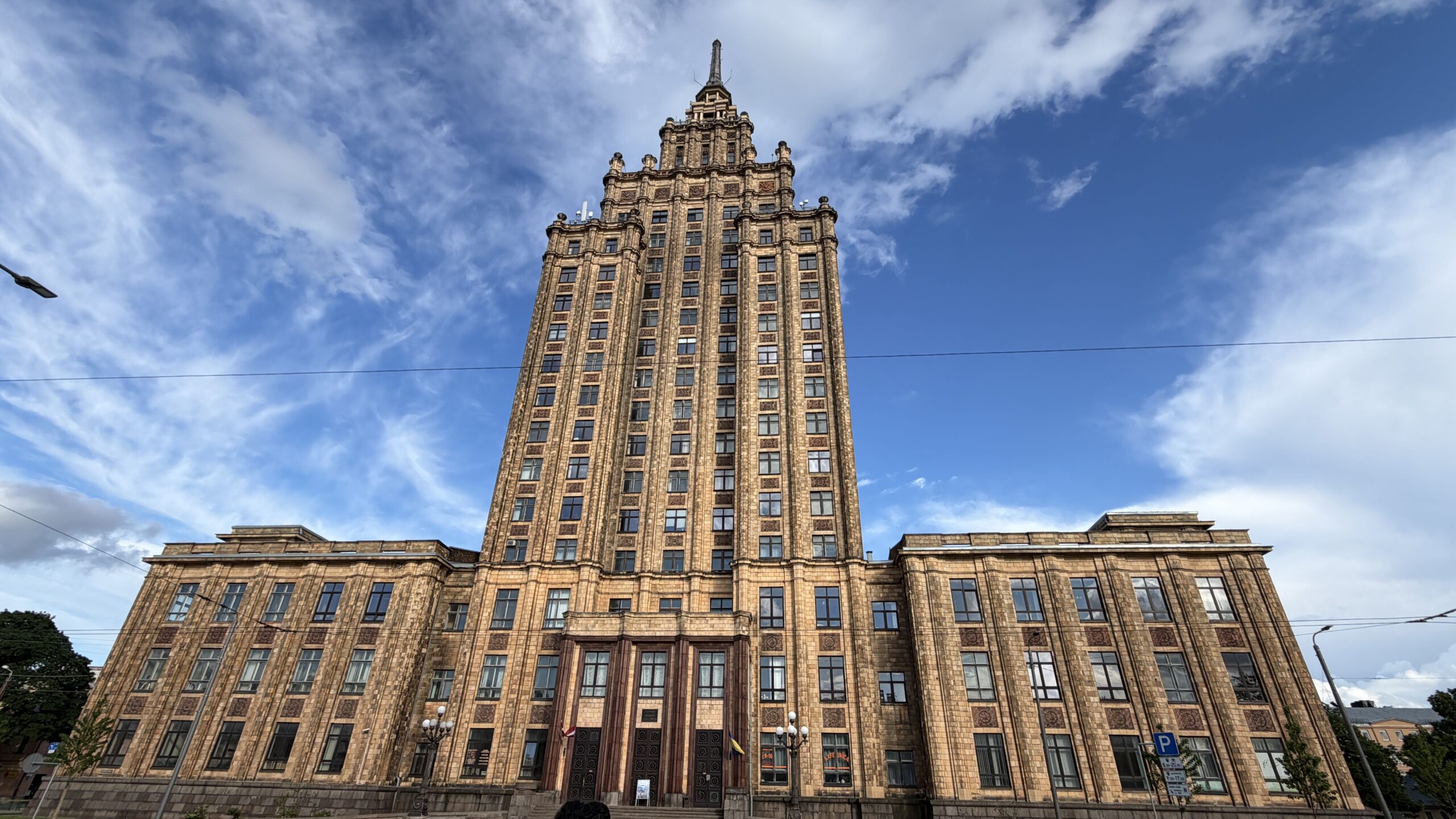
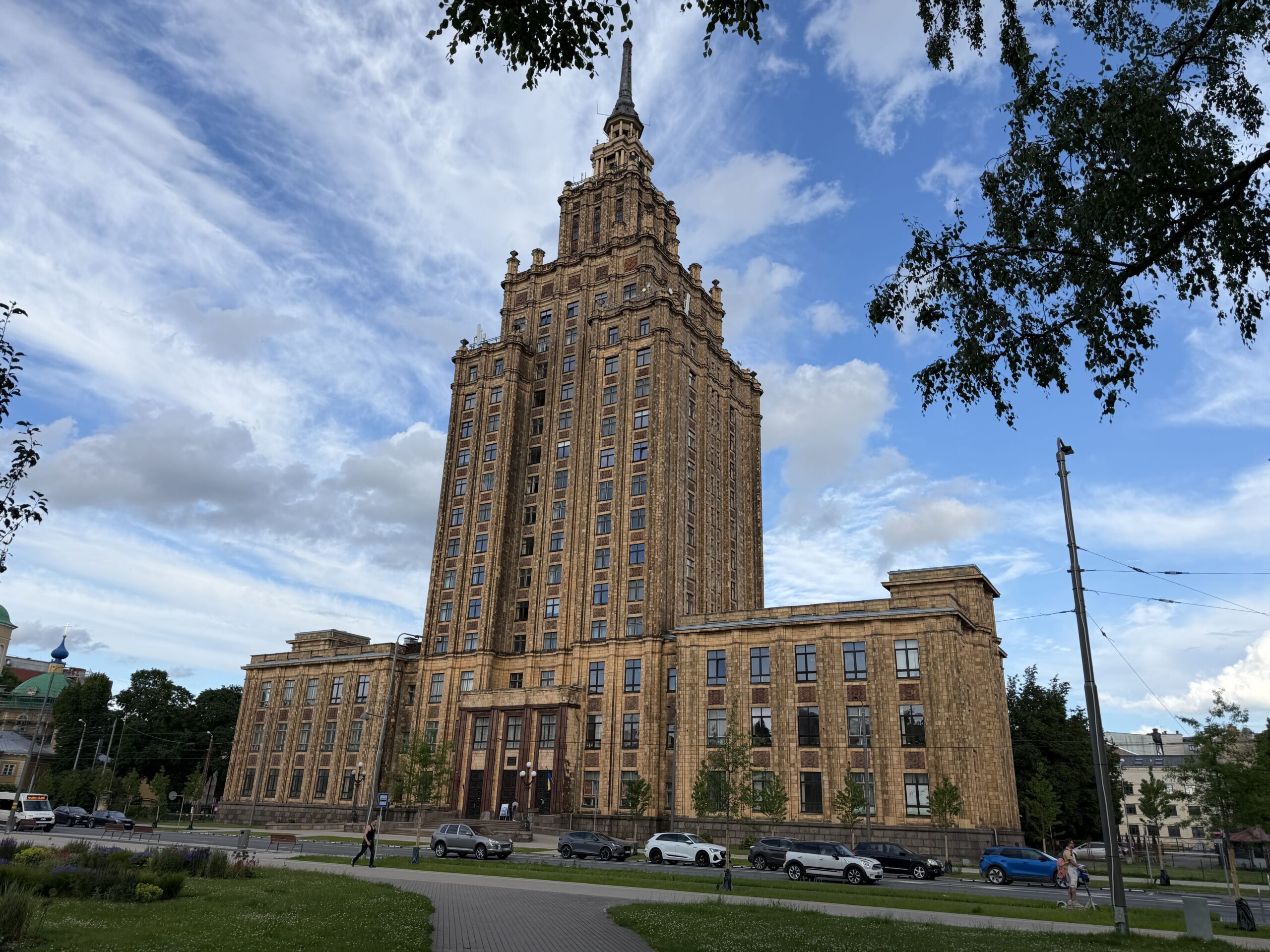
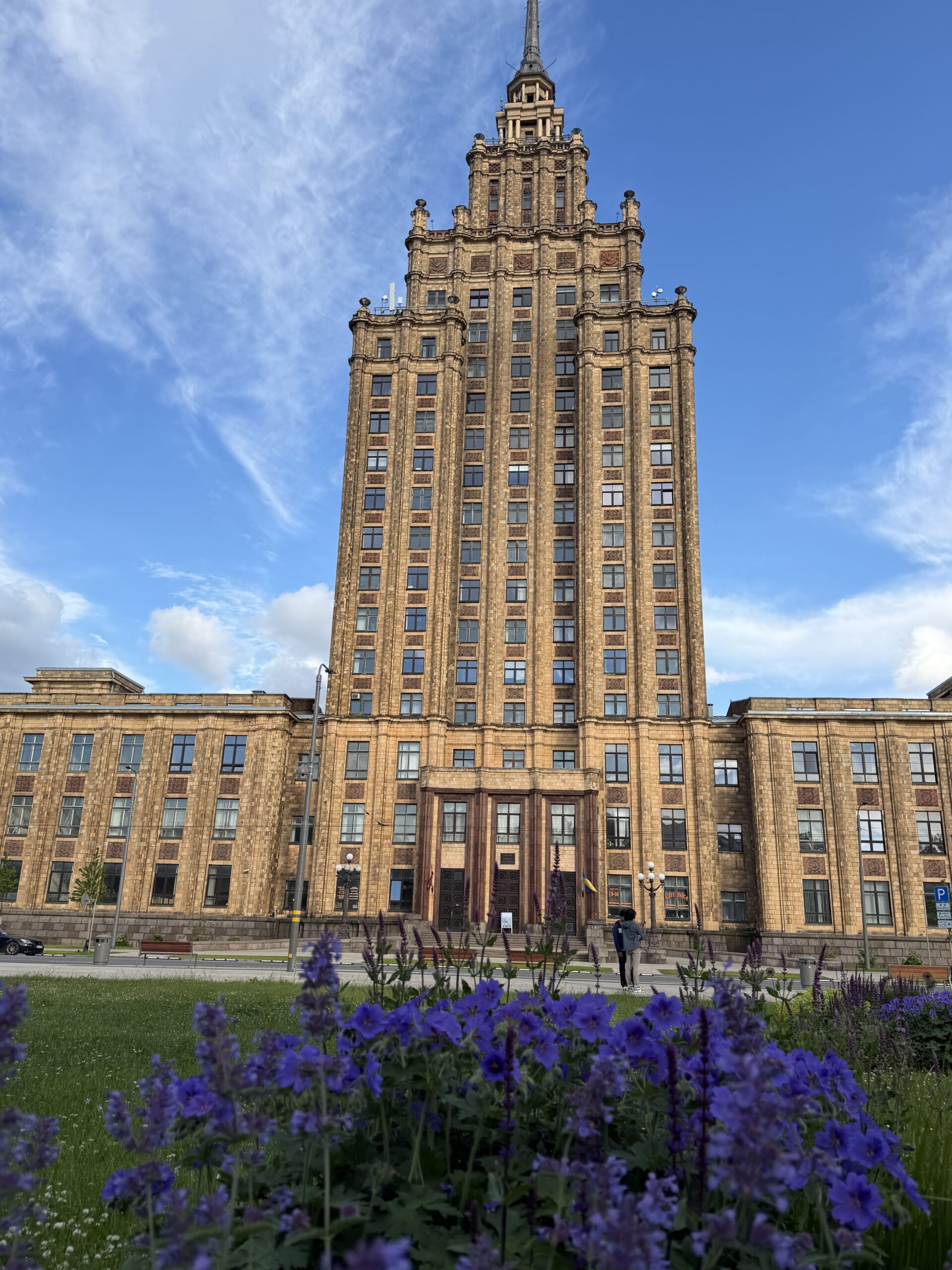
After returning to the city, we continued exploring Riga on foot. We passed the impressive National Library of Latvia and then decided to visit the Latvian Academy of Sciences. The building immediately caught our attention because of its unique shape—it almost looked like a Soviet-era version of a skyscraper from another time.
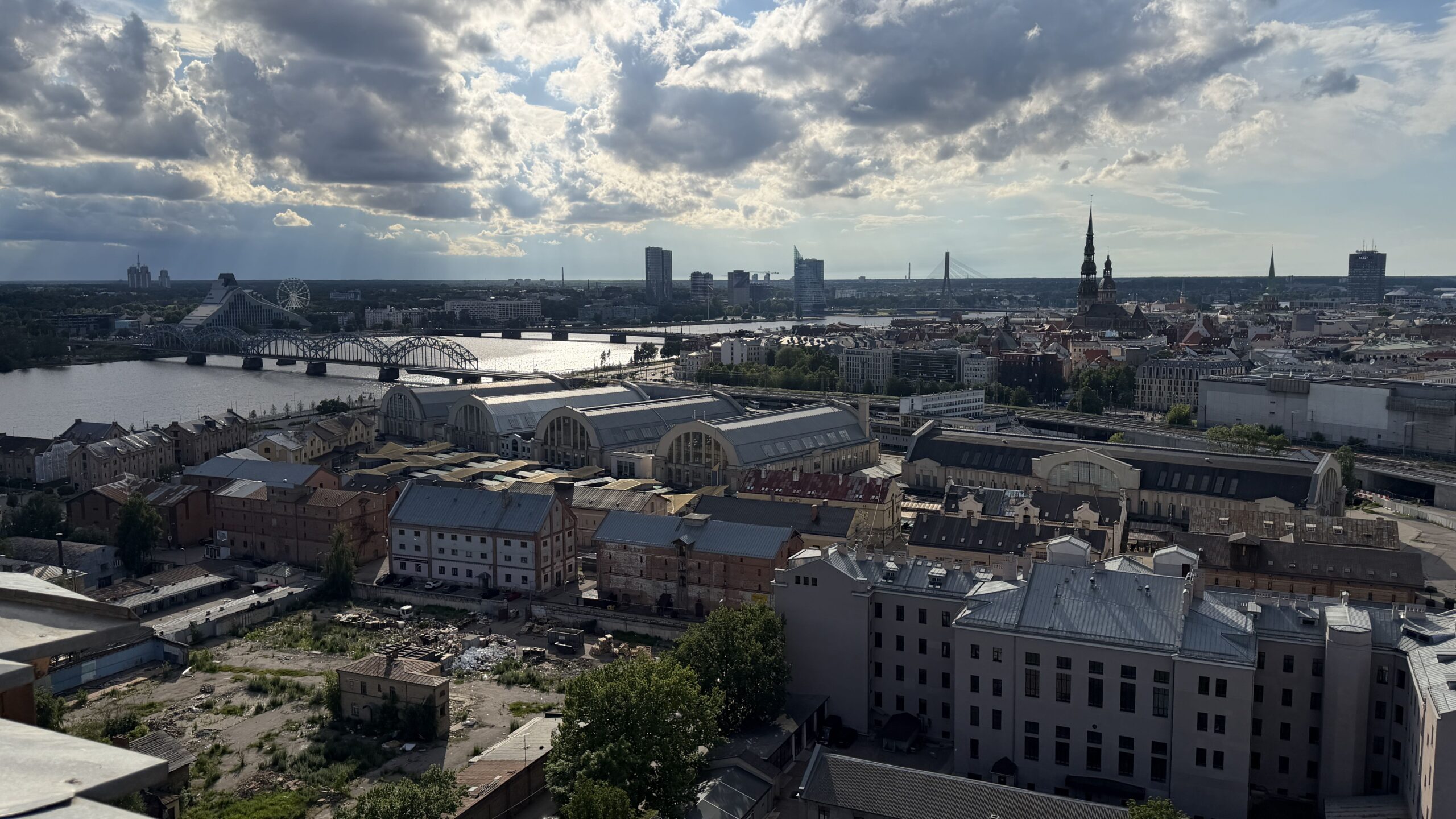
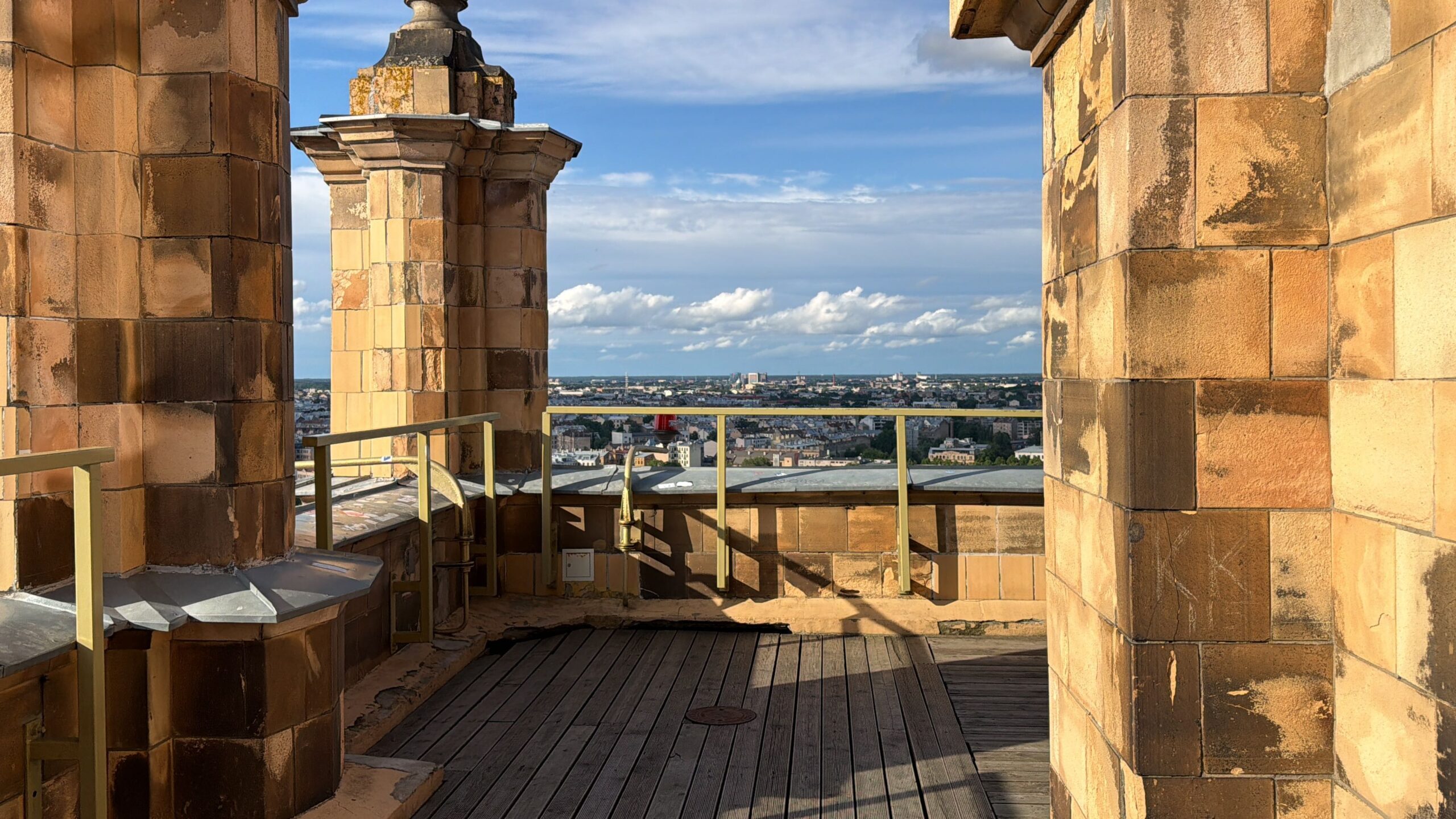
We took an Uber to reach the building and bought tickets to go up to the observation deck. The reward was worth it. From the top, we had a beautiful 360-degree panoramic view of Riga. The weather had cleared, giving us a perfect view of the Old Town, the Daugava River, the Central Market, and the surrounding city.
From there, we walked through Riga Central Market, one of Europe’s largest and most historic markets, before returning toward the Old Town.
Dinner & Riga Memories
For dinner, we stayed in the Old Town area where the atmosphere was wonderful. Restaurants were filled with music, and people were enjoying live singing in the open squares. It was the perfect way to end our day in Riga.
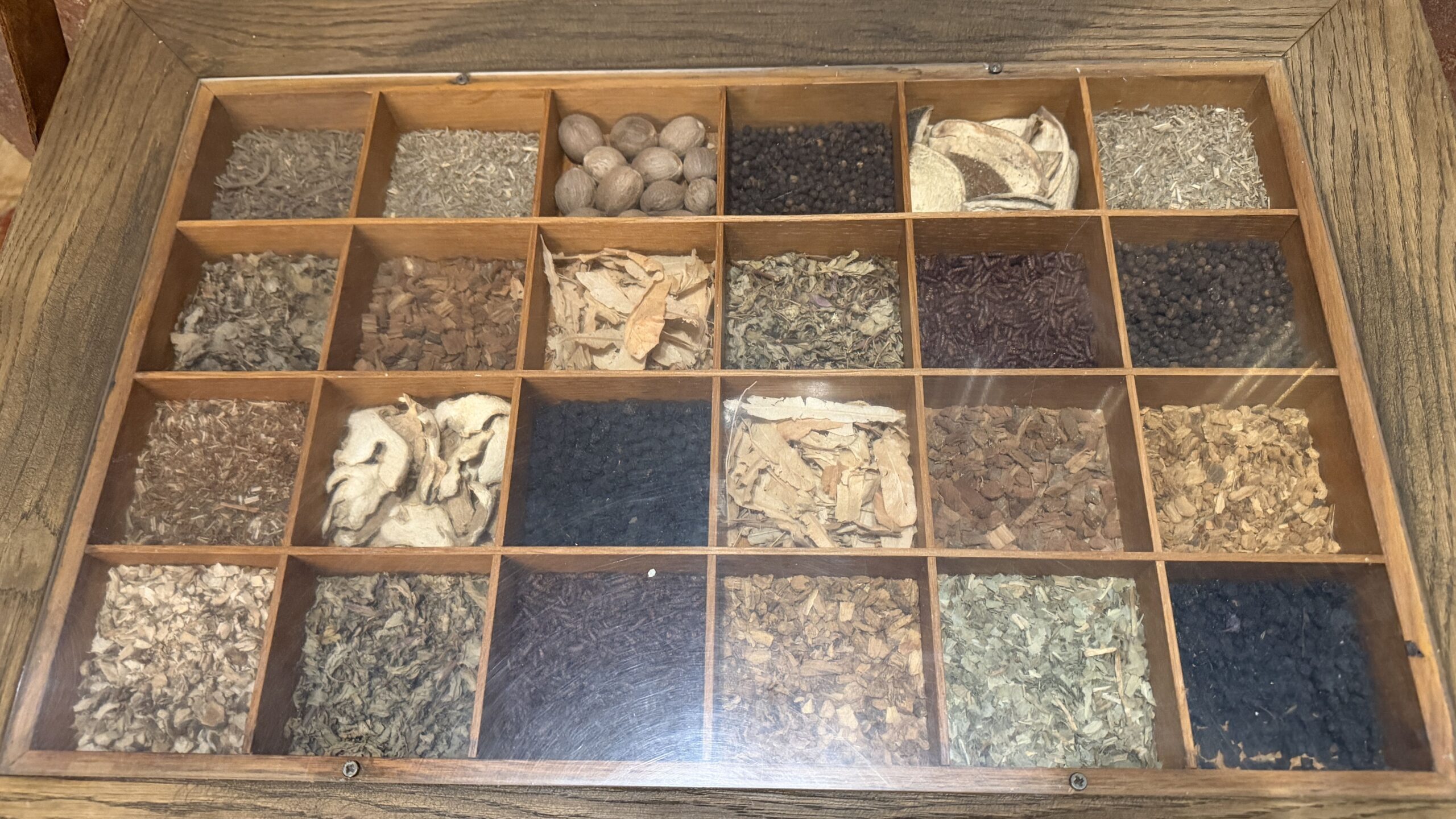
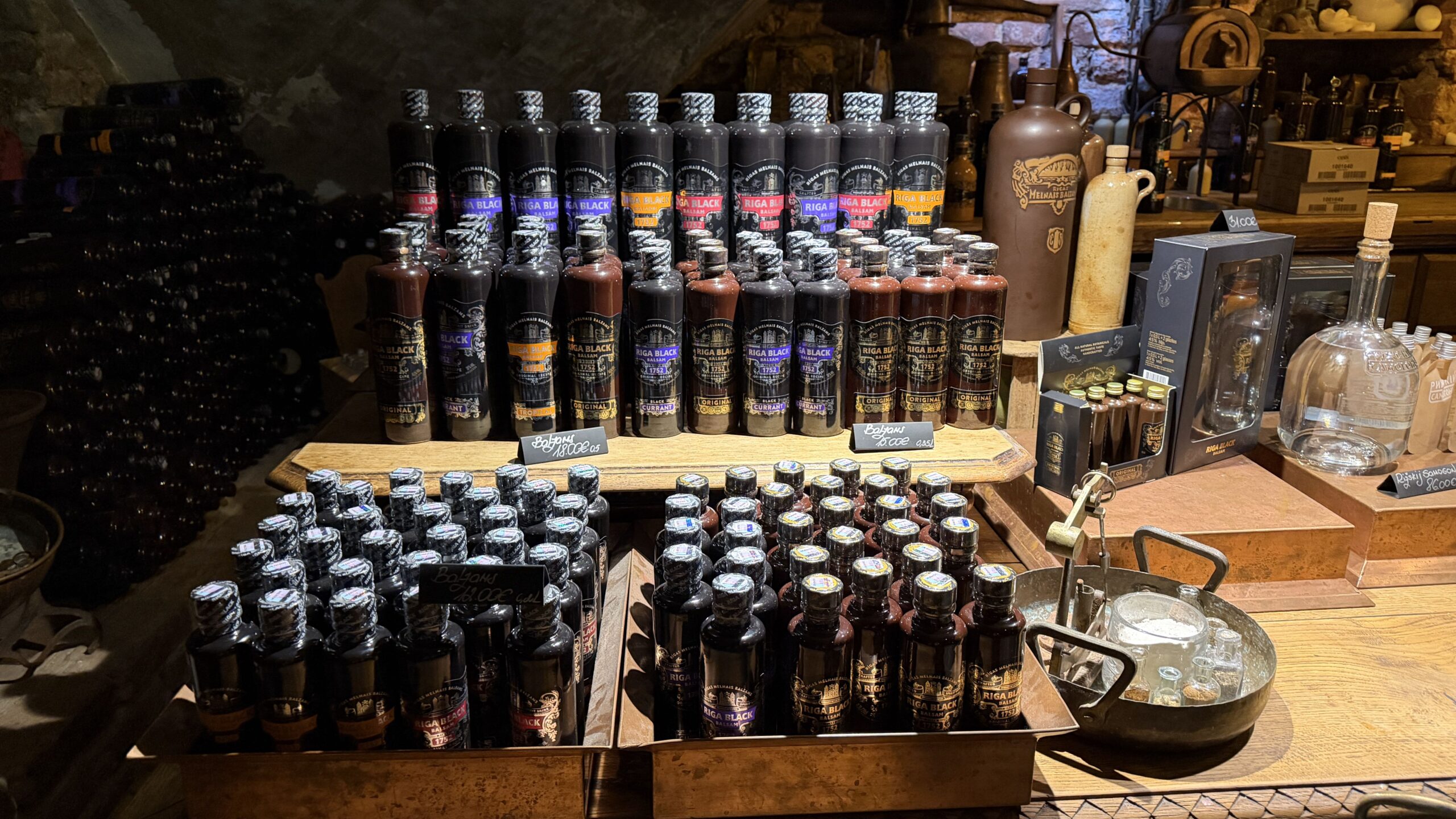
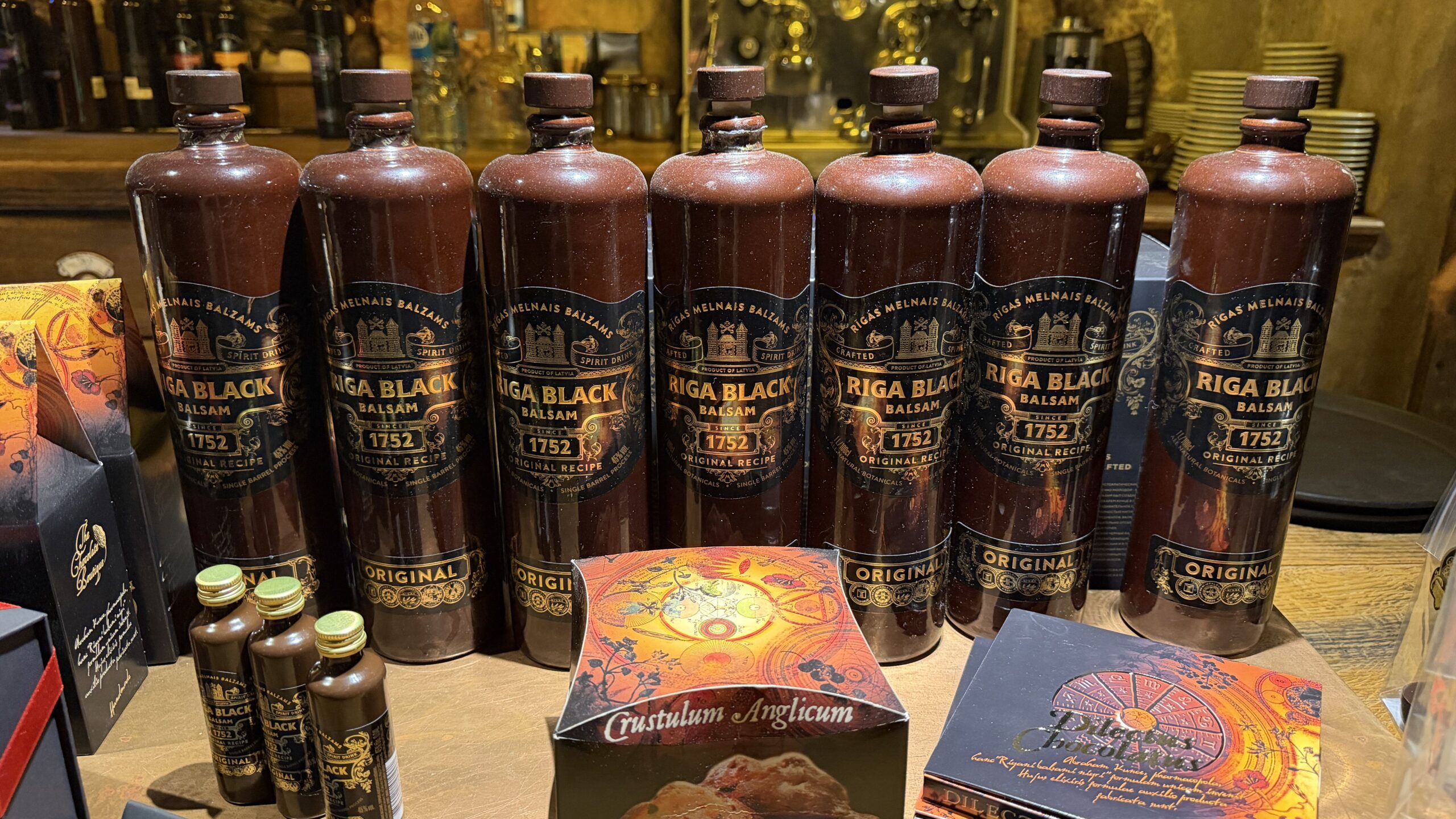
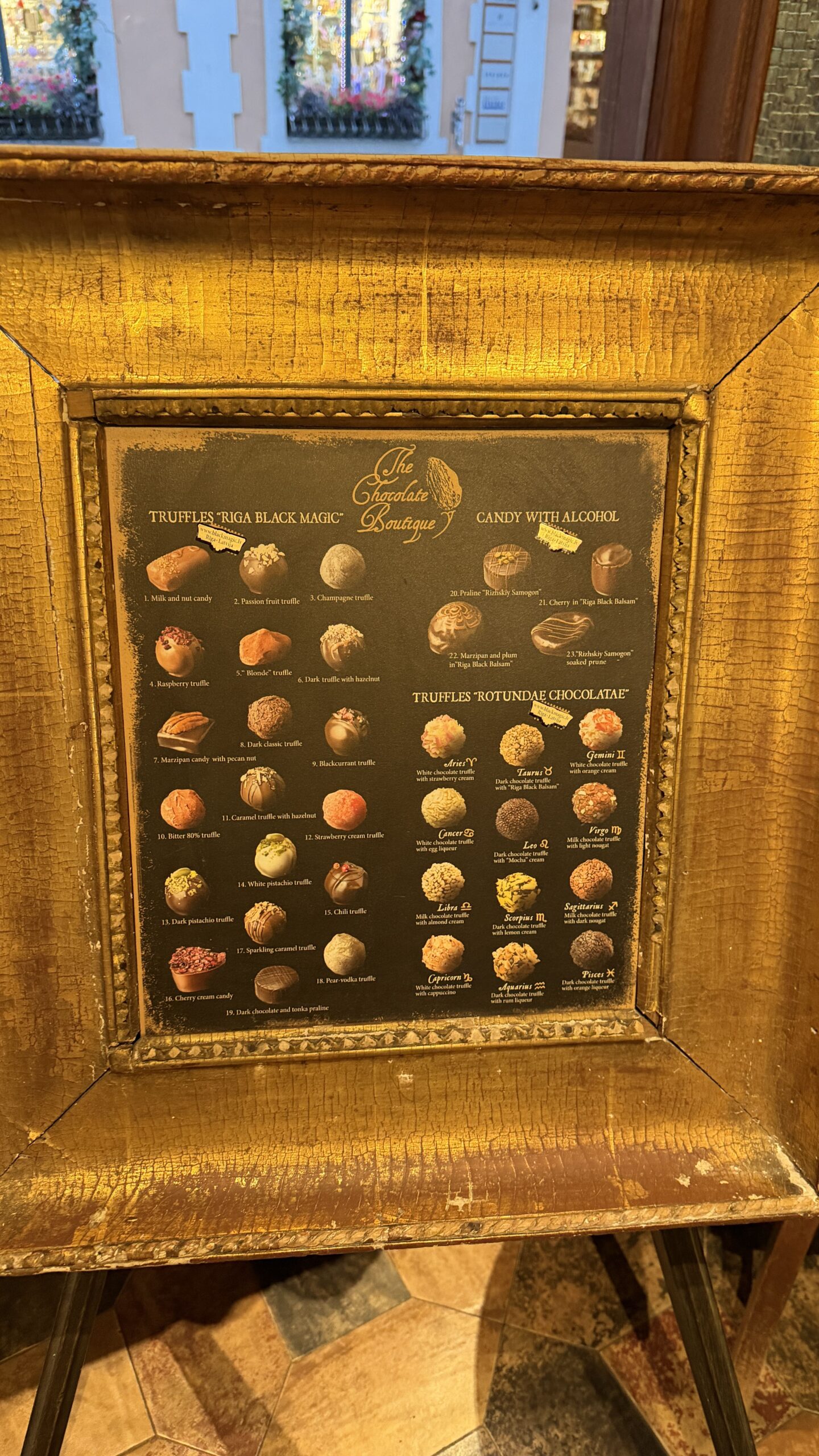
Before leaving, we also picked up some local souvenirs. We had heard a lot about Riga Black Balsam, Latvia’s famous herbal liqueur, so we bought a few small bottles for friends. We also found interesting chocolates, including varieties inspired by zodiac signs.
Although our hotel was only about a 20–30 minute walk away, the rain returned in the evening, so we decided to take an Uber back. After a full day of exploring Riga’s history, architecture, traditions, and food, we were happy to relax and enjoy the memories of this beautiful Baltic capital.
IKTraveler Tips for Visiting Riga
- Take a guided walking tour. Riga has fascinating stories hidden behind its churches, merchant houses, and Art Nouveau buildings. A local guide brings the city’s history and legends to life.
- Don’t miss Rundāle Palace. If you’re traveling between Vilnius and Riga, this Baroque palace is well worth the stop. Plan extra time to explore both the palace interiors and the French-style gardens.
- Wear comfortable walking shoes. Riga’s Old Town is covered with cobblestone streets, and you’ll be walking quite a bit during the city tour.
- Carry a light rain jacket or umbrella. Baltic weather can change quickly. We experienced light rain during our walking tour, but it didn’t stop us from enjoying the city.
- Visit the Latvian Ethnographic Open-Air Museum. It offers a wonderful glimpse into traditional Latvian village life, with authentic farmhouses, churches, windmills, and cultural demonstrations that you won’t experience in the city center.
- Ride to the top of the Latvian Academy of Sciences. The observation deck offers one of the best 360-degree panoramic views of Riga, including the Old Town, Daugava River, Central Market, and surrounding neighborhoods.
- Explore Riga Central Market. It’s a great place to experience local life and shop for chocolates, souvenirs, and traditional Latvian specialties.
- Try the local food—and be adventurous with the drinks. Rye bread, smoked specialties, and traditional Latvian dishes are worth tasting. We also tried Kvass, Latvia’s traditional fermented rye bread drink. It was an interesting local experience, although it wasn’t our favorite!
- Riga is a convenient place to do laundry. If you’re on a longer European itinerary like we were, the city has several self-service laundromats and laundry services, making it a practical stop before continuing your journey.
- Use contactless payments. Credit cards and Apple Pay were widely accepted throughout Riga, making payments quick and convenient.
Final Reflections
Our journey through Latvia was a wonderful blend of history, architecture, culture, and countryside. From the grandeur of Rundāle Palace and its beautifully restored Baroque interiors to the charming streets of Riga’s Old Town, every stop had its own story to tell. We admired some of Europe’s finest Art Nouveau architecture, learned about Latvia’s rich traditions at the open-air museum, and enjoyed experiencing local food and customs along the way.
One thing that particularly impressed us was how well maintained and developed the country felt. Clean streets, efficient infrastructure, modern trains and buses, and well-preserved historic sites made traveling through Latvia both comfortable and enjoyable. At the same time, it was wonderful to see people proudly celebrating their heritage. Watching locals dressed in traditional clothing, singing, dancing, and preparing for the summer festival showed us that Latvian traditions are not just preserved in museums—they continue to be a vibrant part of everyday life.
Latvia may not always be at the top of every traveler’s bucket list, but it certainly deserves to be. Friendly people, fascinating history, beautiful architecture, and a relaxed atmosphere made it a destination we were glad to include in our Baltic adventure. If you’re planning a trip through Northern Europe, don’t just pass through Latvia—take the time to explore it. You may leave with memories just as unforgettable as we did.
Travel Date: June 2026