Copenhagen
Denmark is the southernmost of the Nordic countries and is made up of the Jutland Peninsula and more than 400 islands, although only around 70 are inhabited. Its location between the North Sea and the Baltic Sea has made it an important maritime nation for centuries.
Despite being a relatively small country with a population of about 6 million people, Denmark consistently ranks among the happiest countries in the world. High levels of trust, a strong social welfare system, and an emphasis on work-life balance are often credited for this reputation.
The country is also known as one of the world’s leaders in sustainability. Wind power supplies a significant share of Denmark’s electricity, and cycling is deeply woven into everyday life.
We planned to visit Copenhagen. Copenhagen is Denmark’s capital and largest city, with a metropolitan population of around 1.4 million. It sits on the eastern coast of the island of Zealand, facing Sweden across the Øresund Strait. Although it is a modern European capital, Copenhagen never feels overwhelming. Much of the historic center is compact enough to explore on foot, making it one of Europe’s most walkable cities. The city beautifully blends centuries-old palaces and churches with modern Scandinavian architecture, green parks, canals, and bicycle-friendly streets.
Denmark Day 1 – First Impressions of Copenhagen
After a little over ten hours in the air, our Scandinavian Airlines (SAS) flight touched down right on schedule at Copenhagen Airport. Stepping off the plane, we immediately noticed how calm and organized everything felt. Immigration was quick, taxis were readily available outside Terminal 3, and within about twenty minutes we were on our way into the heart of Denmark’s capital.
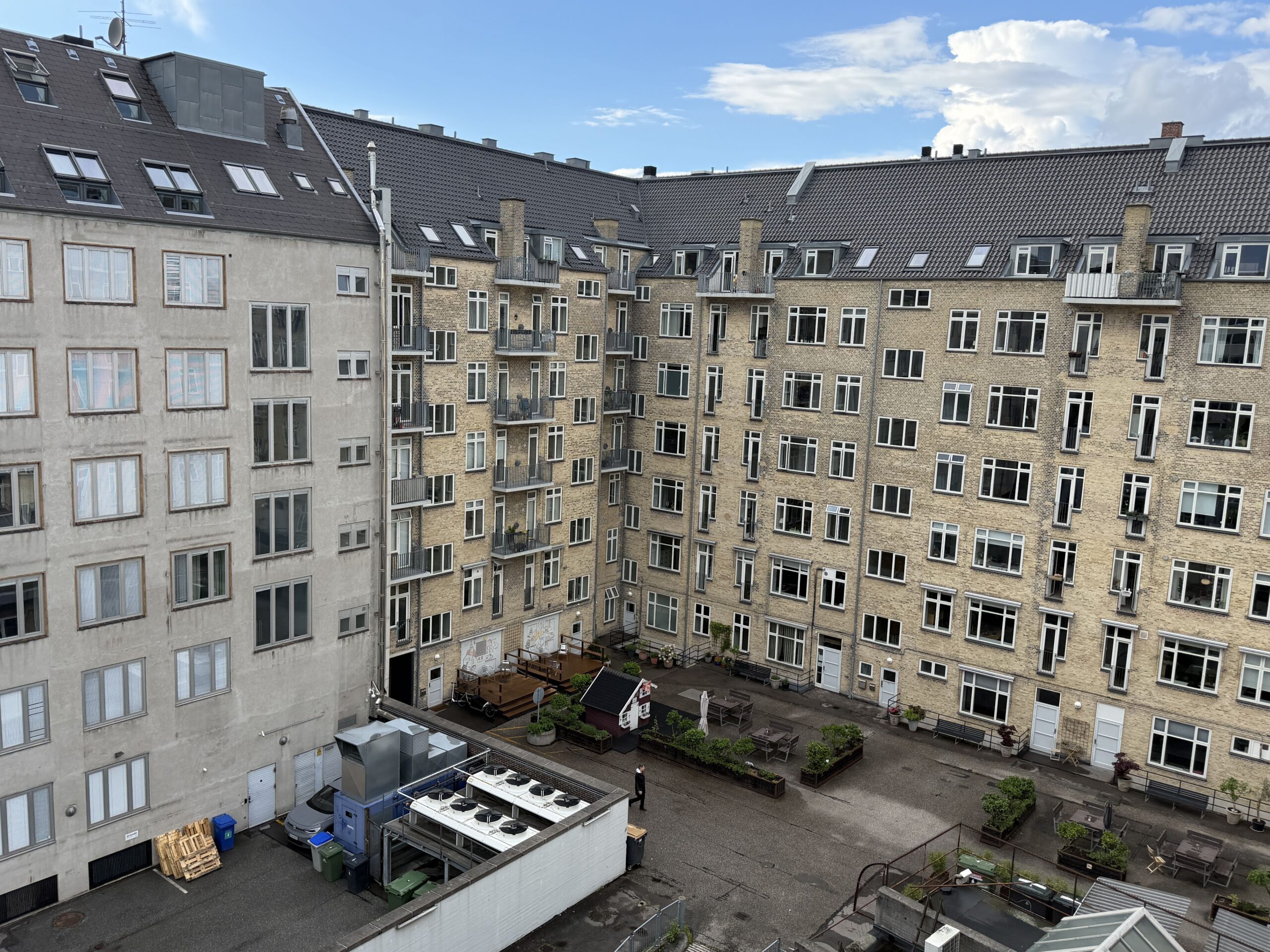
Our hotel, ProfilHotels Richmond, was perfectly located within walking distance of many of Copenhagen’s famous attractions. Before long we had checked in, unpacked, taken a refreshing shower, and were ready to begin exploring. We always try to resist the temptation to nap after a long international flight, getting outside is the best cure for jet lag.
Before I forget, a quick note about the flight. We had pre-ordered the upgraded poultry and fish meals on SAS, curious to see if they were worth the extra cost. The meals themselves were quite good and came with two drinks each, but honestly, the regular chicken-and-rice meal served to everyone else was surprisingly good too. Looking back, the upgrade probably wasn’t necessary.
A Walk Through Copenhagen
Instead of calling another taxi, we decided our first experience of Copenhagen should be on foot.
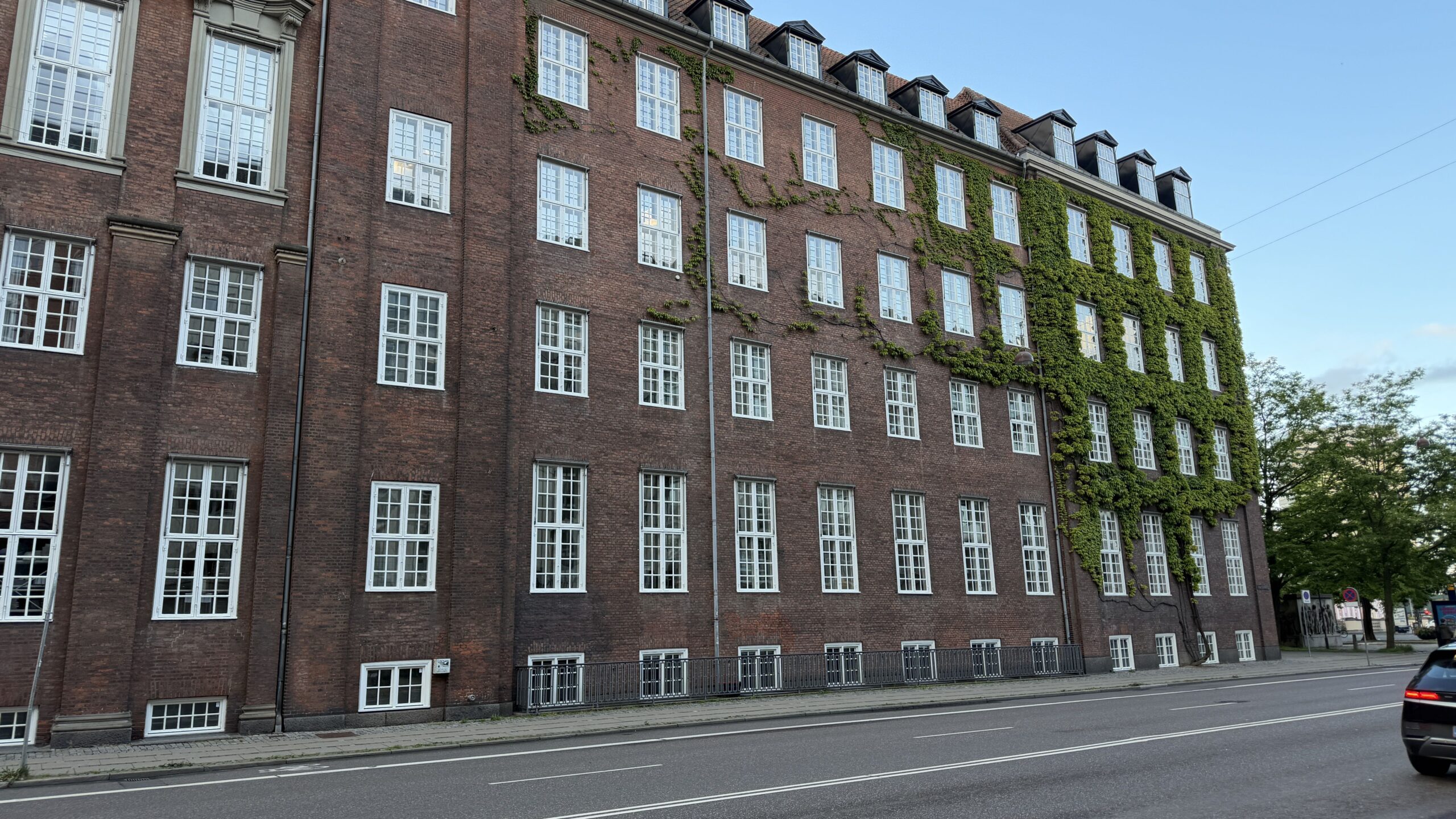
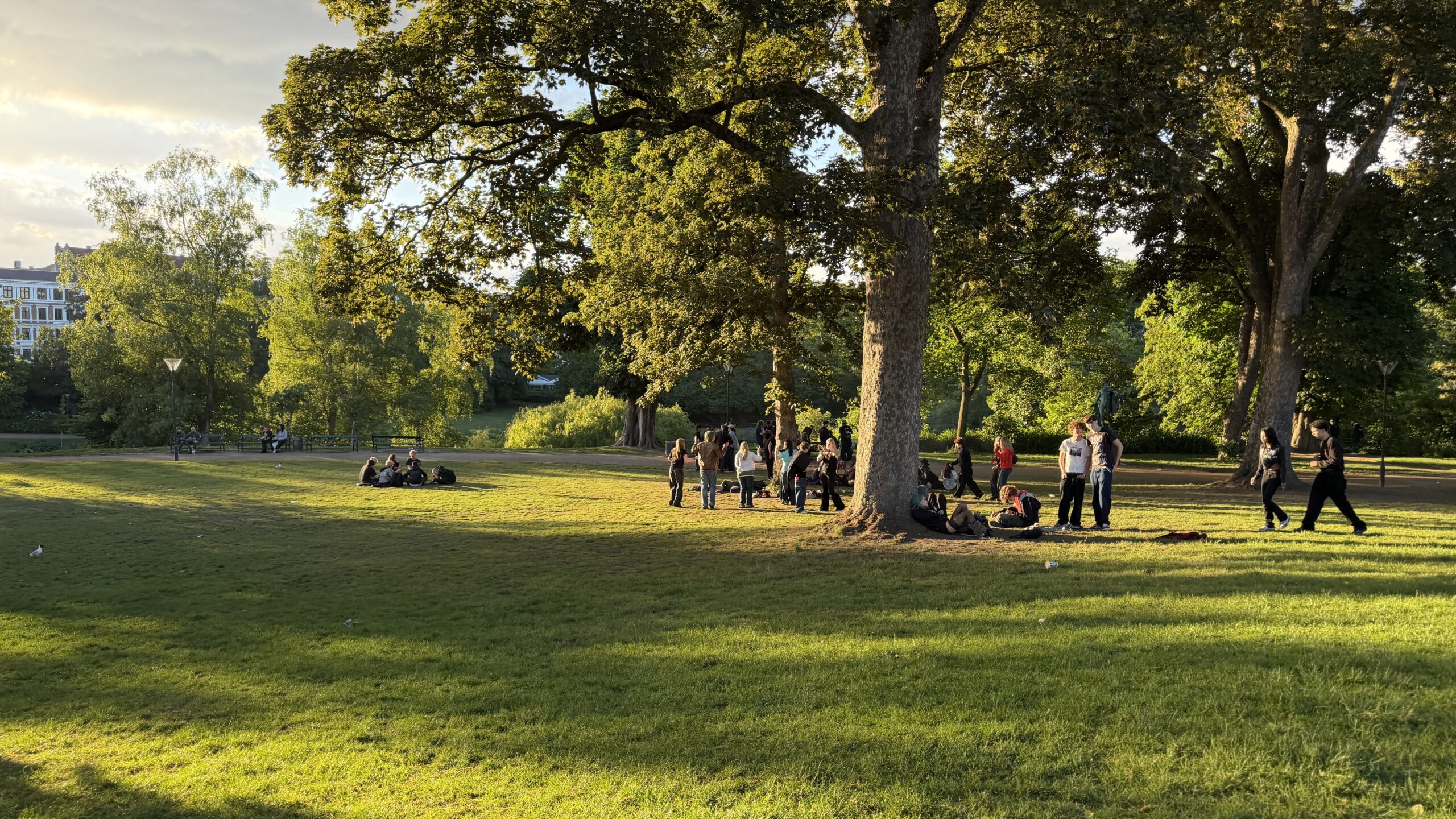
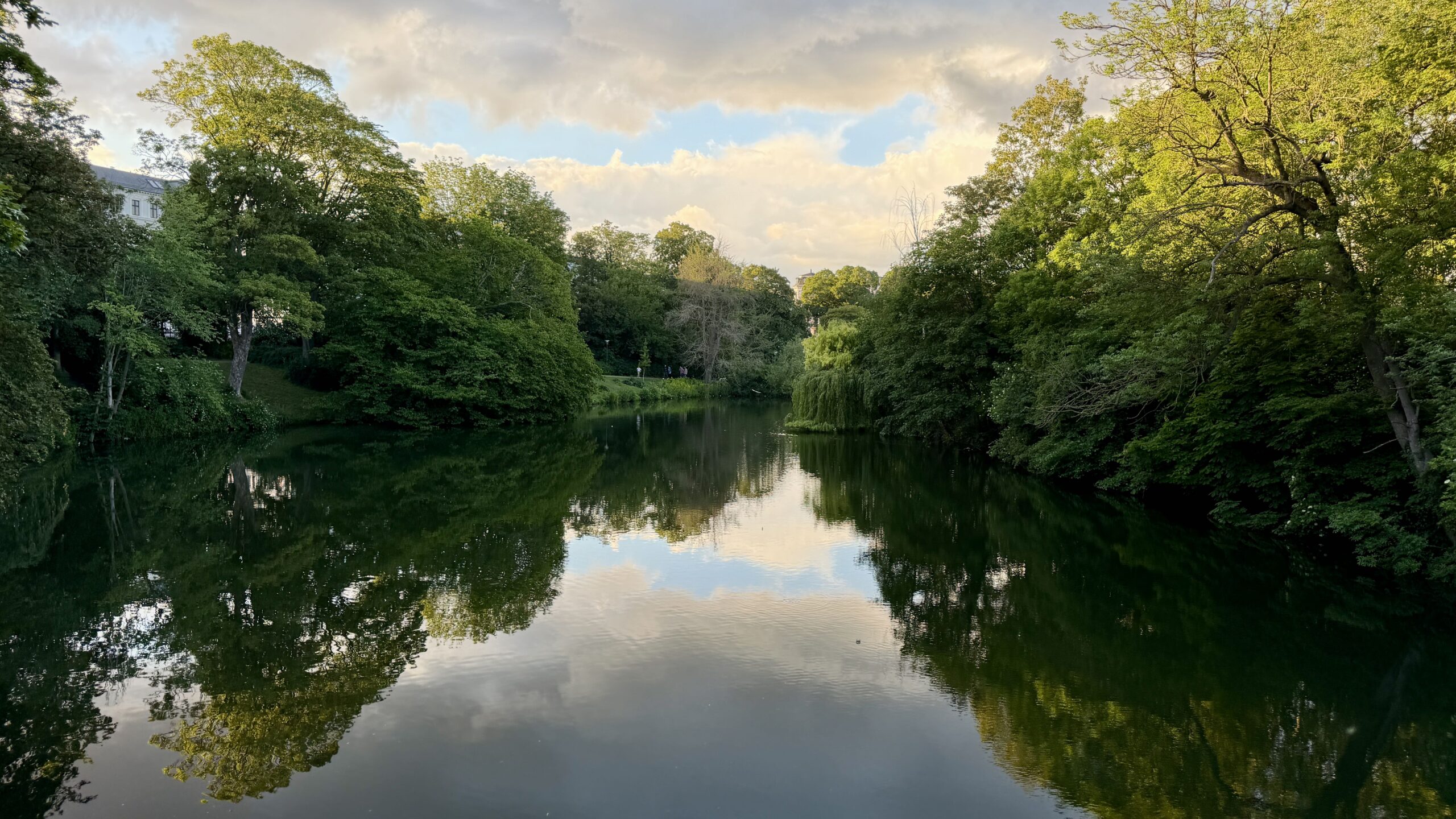
Our route took us through a peaceful green park before the city slowly unfolded around us. There are lot of people gathered in the park and partying. Even there was police patrol entering the park while we were about to exit. One of the first things we noticed was how incredibly relaxed everything felt. Cyclists quietly glided past, locals enjoyed the sunshine, and despite being the country’s largest city, Copenhagen never felt rushed.
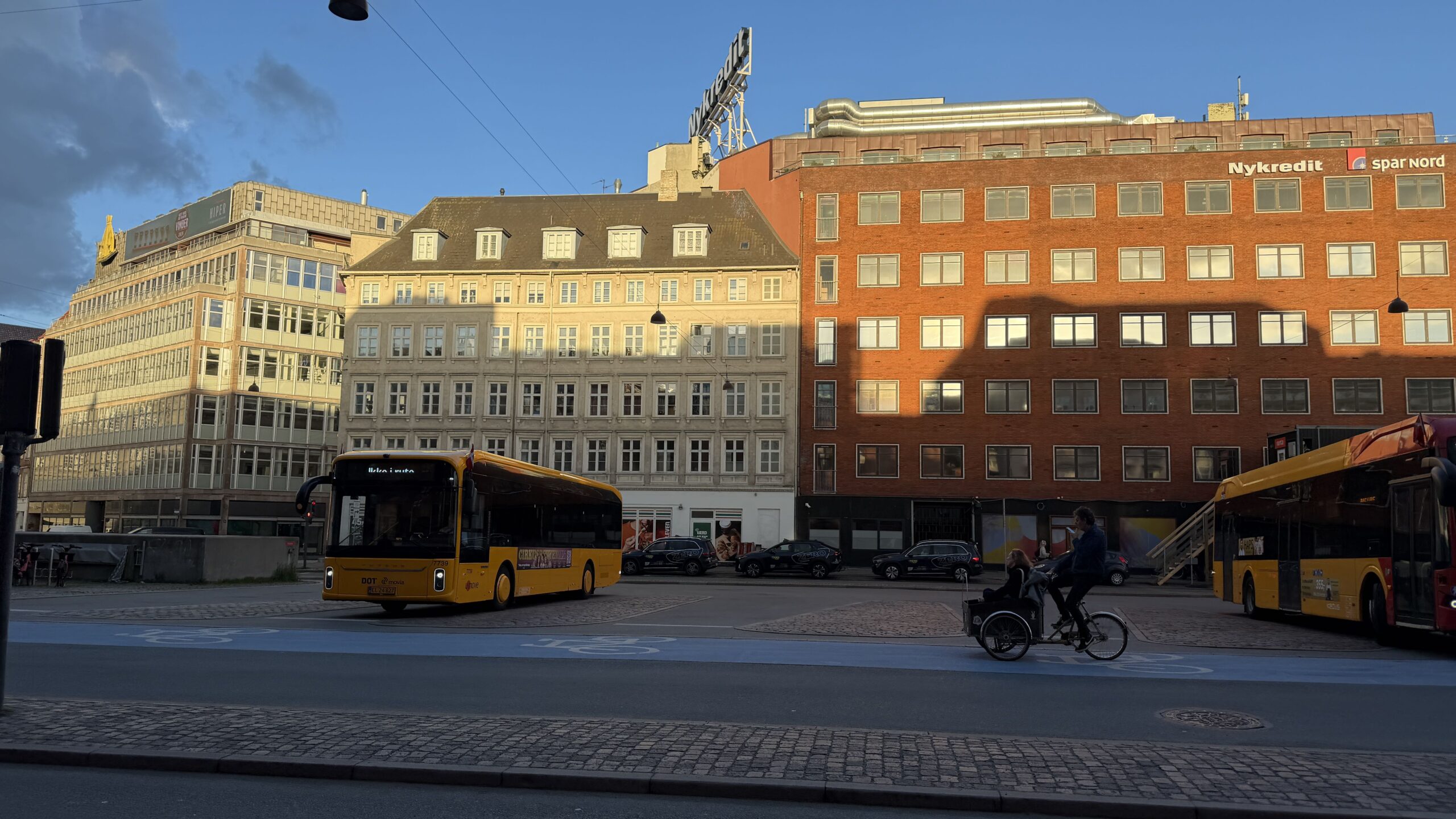
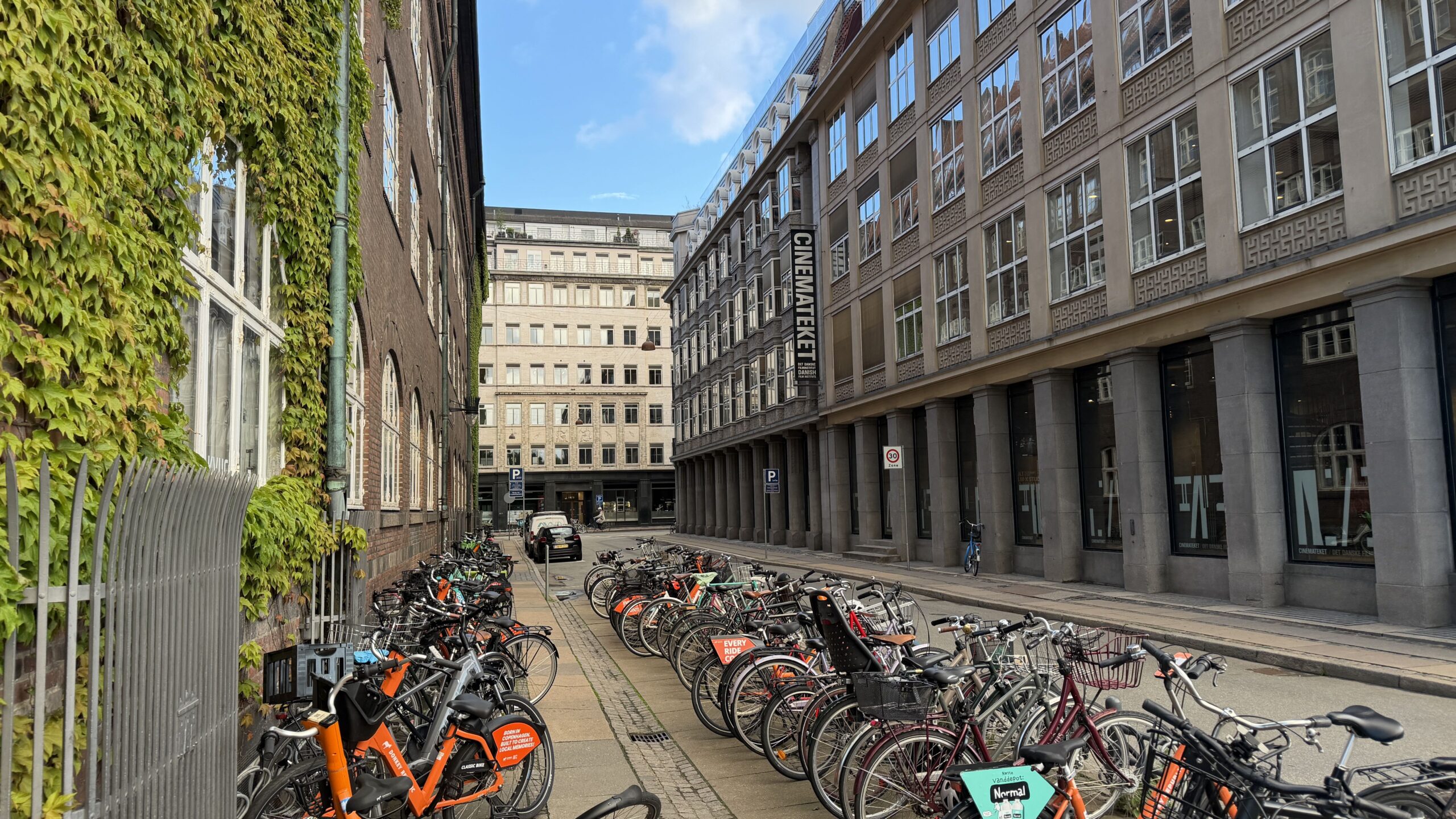
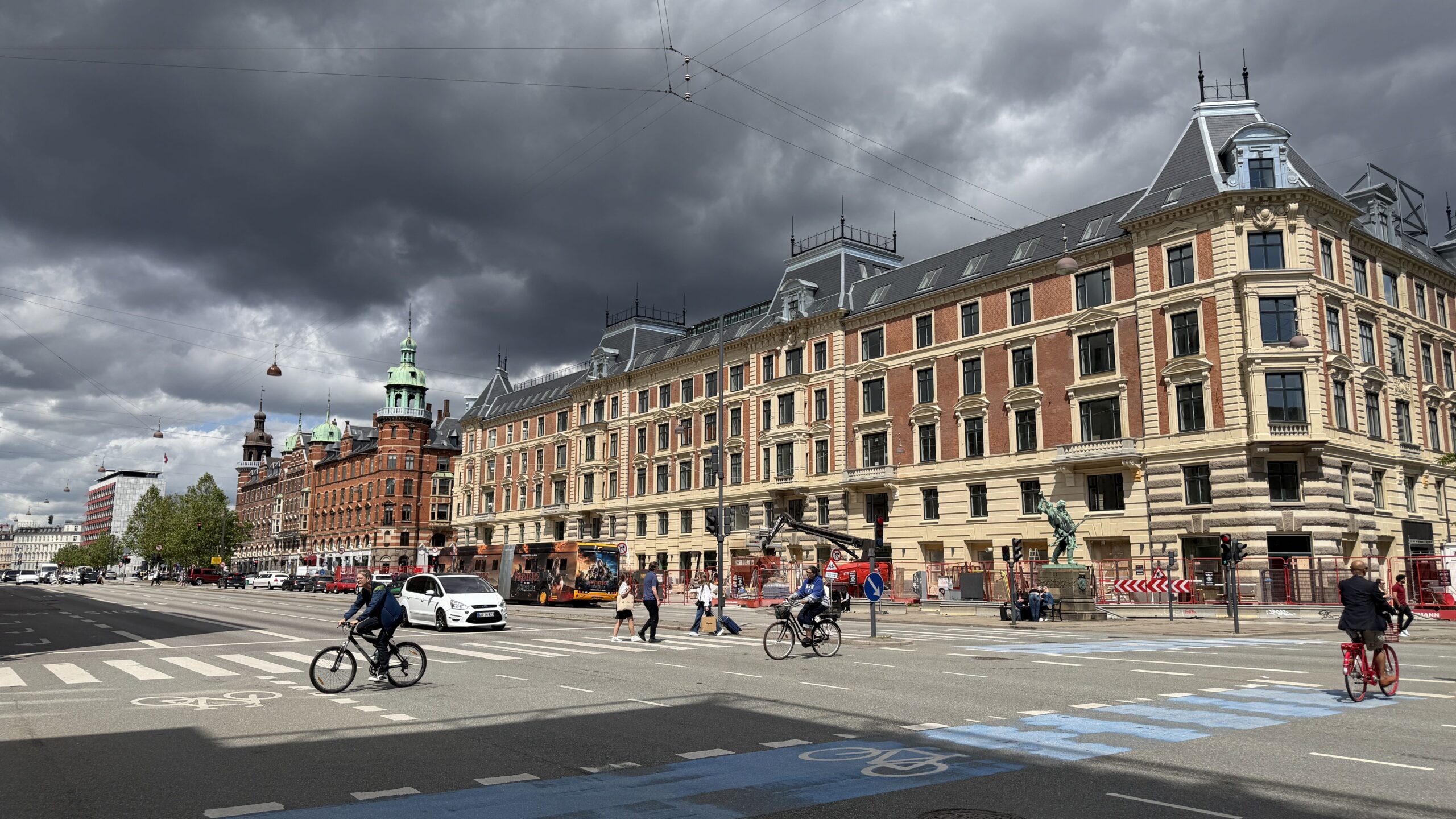
One of the first things that stood out was how effortlessly livable Copenhagen felt. Bicycles seemed to outnumber cars, dedicated cycling lanes crisscrossed the streets, and locals of every age pedaled to work, school, or cafés. More than half of Copenhagen’s residents commute by bike each day, making it one of the world’s most bicycle-friendly cities. Despite being Denmark’s largest city, everything felt calm, clean, and surprisingly relaxed. We have noticed a big number of Bicycles parked infront of the train station. Seems like most of them have multiple bikes one parked at the station and another one at the destination.
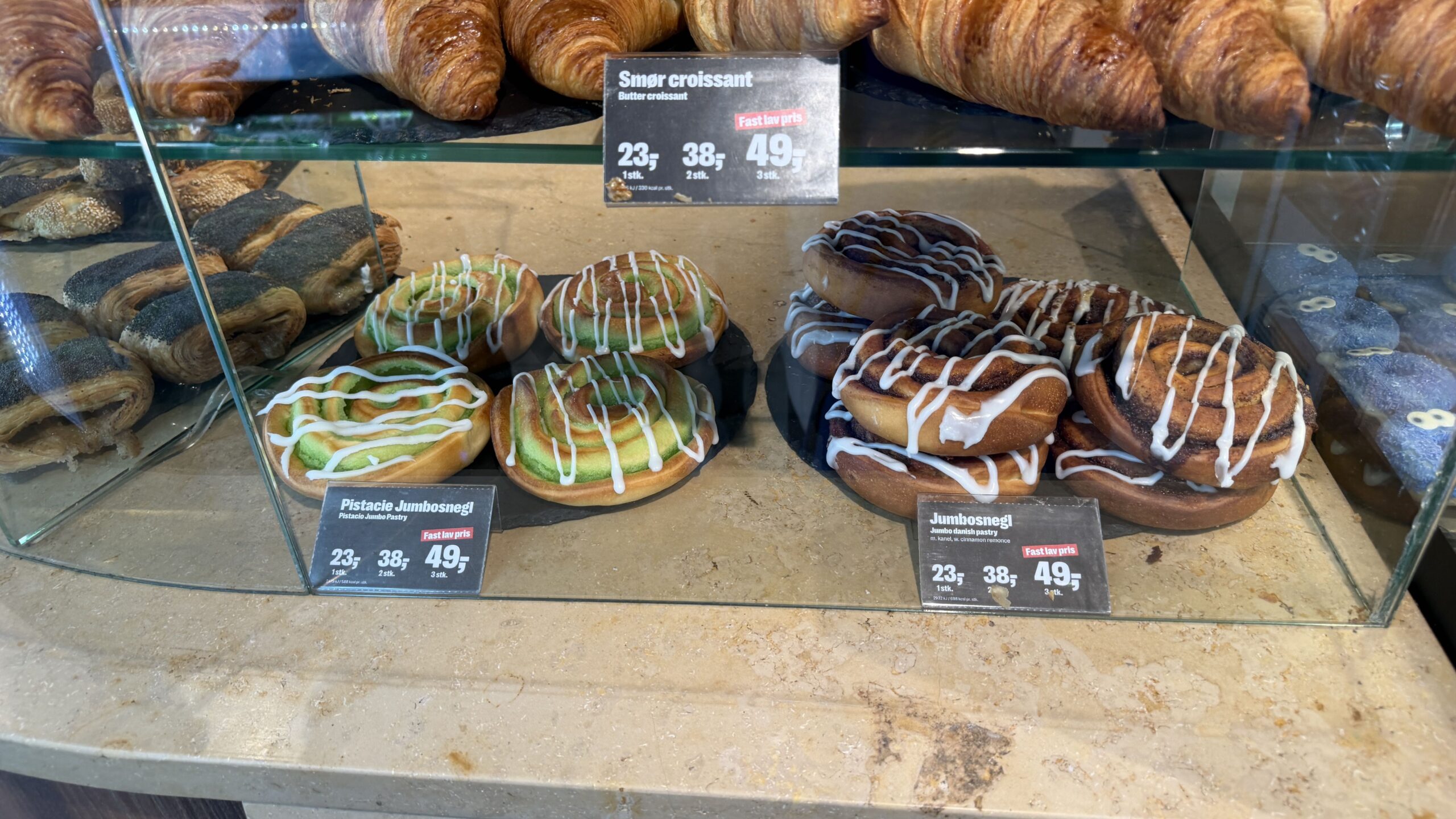
Needing a short break, we stopped at an Espresso House for coffee, a quick snack, and what every traveler eventually looks for after a long flight, a comfortable restroom. Sometimes it’s these small pauses that become part of the travel story too. We had our first Danish pastries Chocolate covered with coconut flakes and a fluffy pastry.
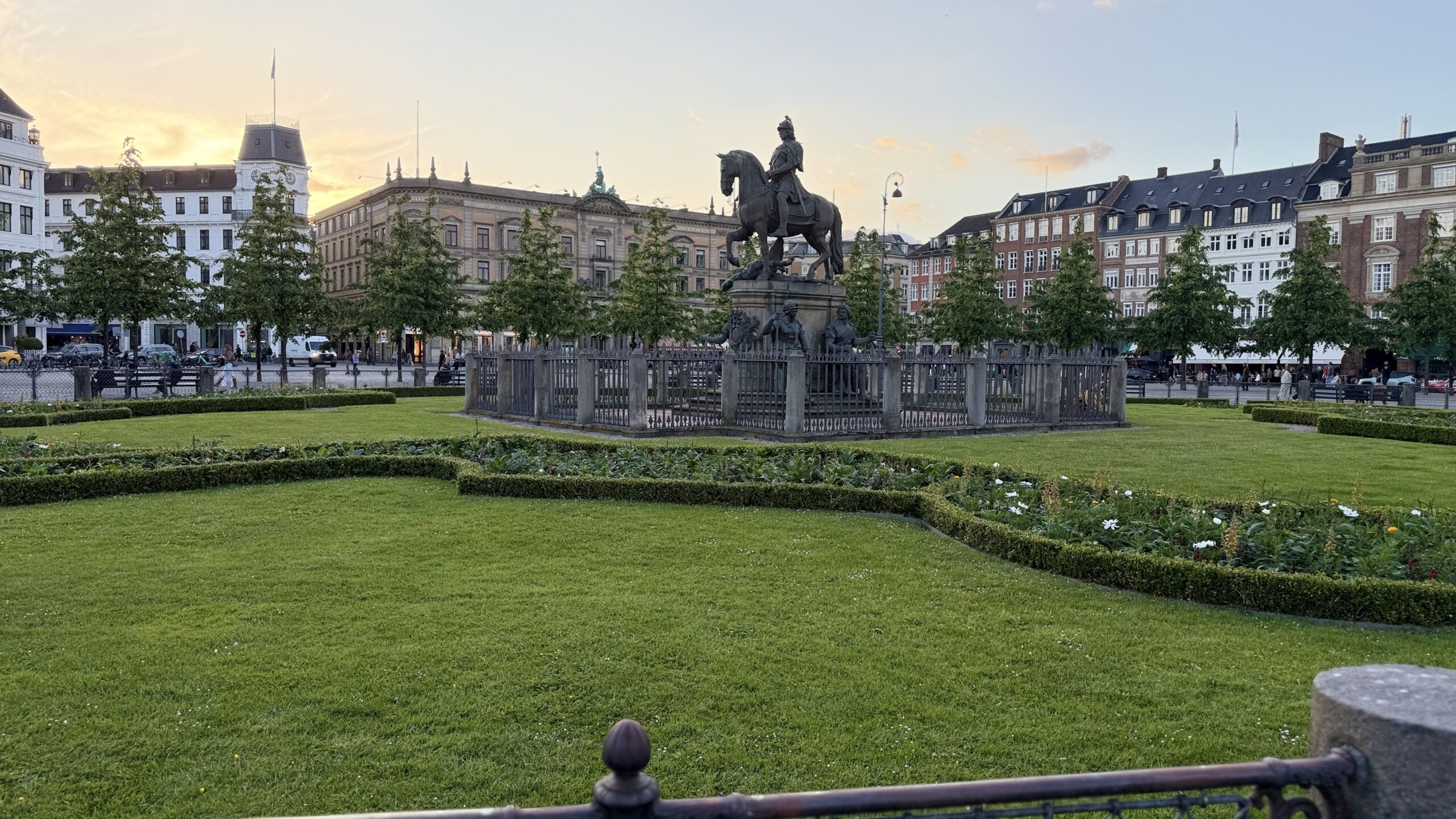
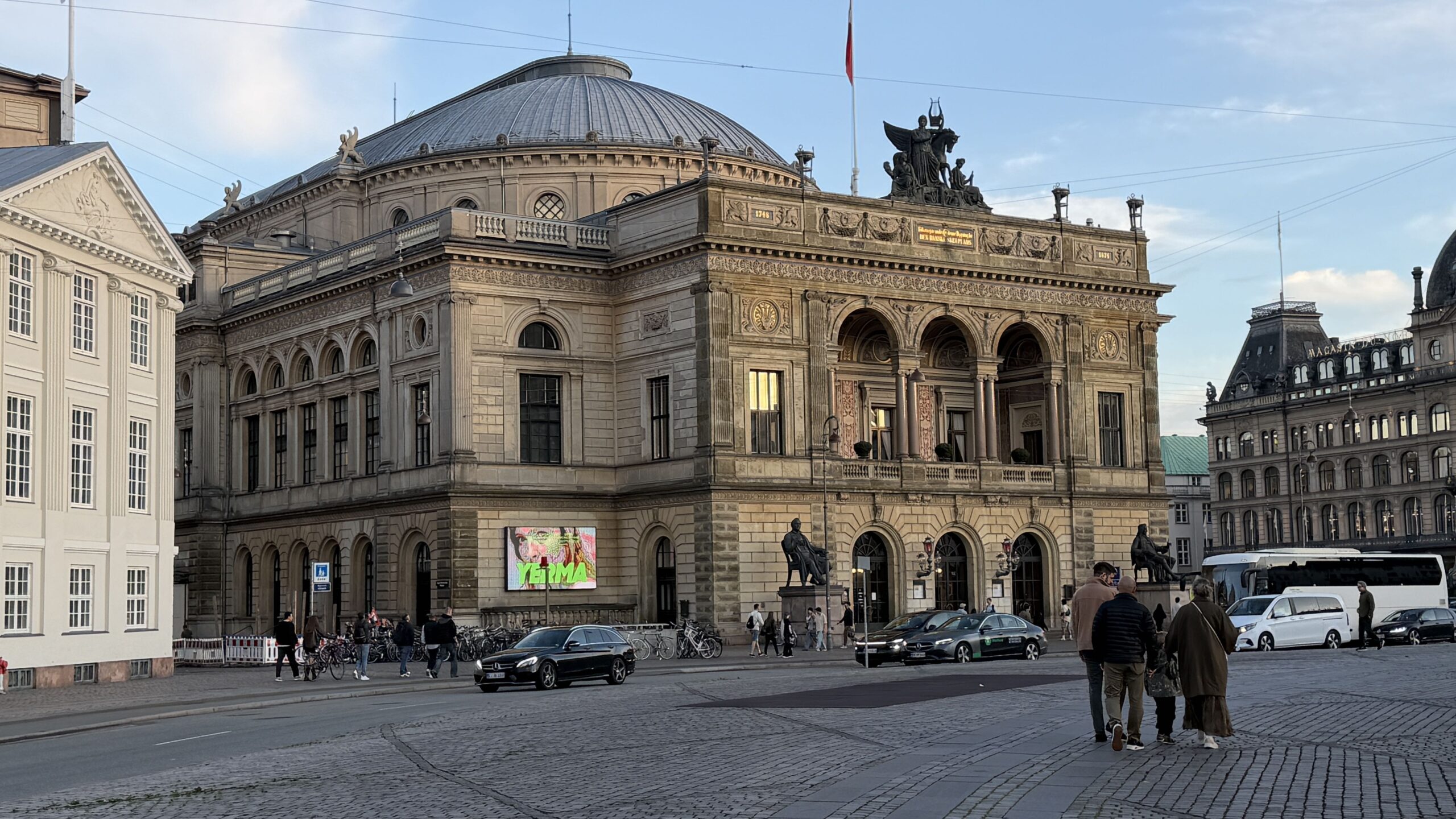
Soon we arrived at Kongens Nytorv, Copenhagen’s largest public square. At its center stands the impressive equestrian statue of King Christian V, Denmark’s first absolute monarch. Facing the square is the elegant Royal Danish Theatre, its grand façade watched over by statues of two of Denmark’s celebrated cultural figures. The square has served as one of Copenhagen’s main gathering places for centuries and still feels like the city’s living room.
Copenhagen’s Most Photographed Harbor
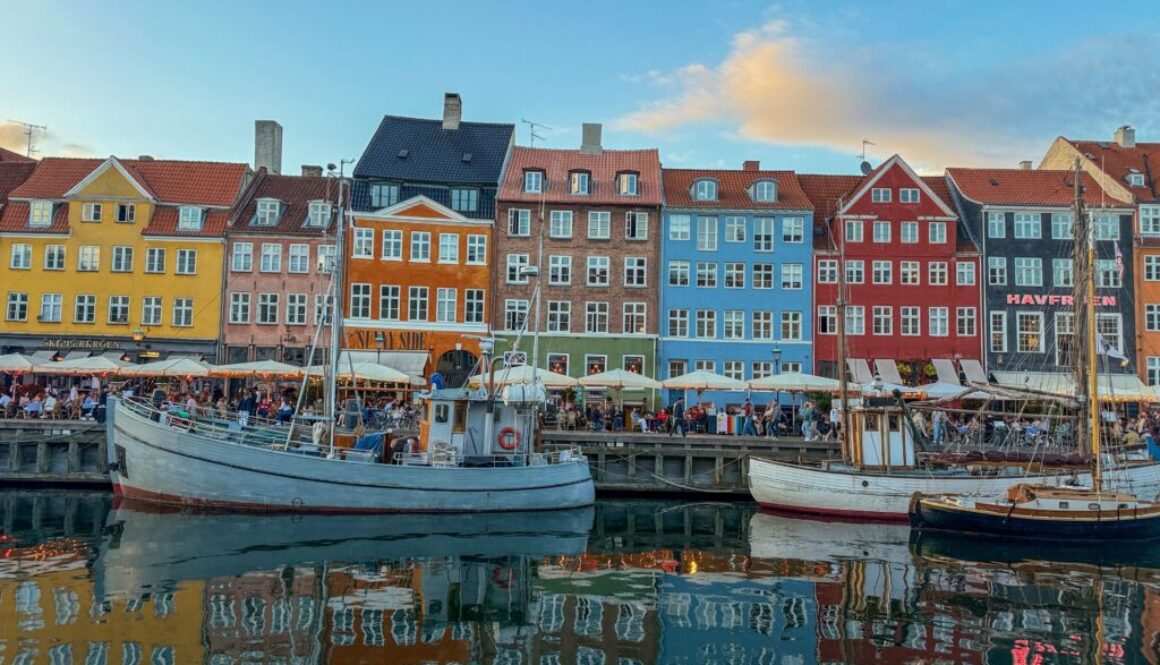
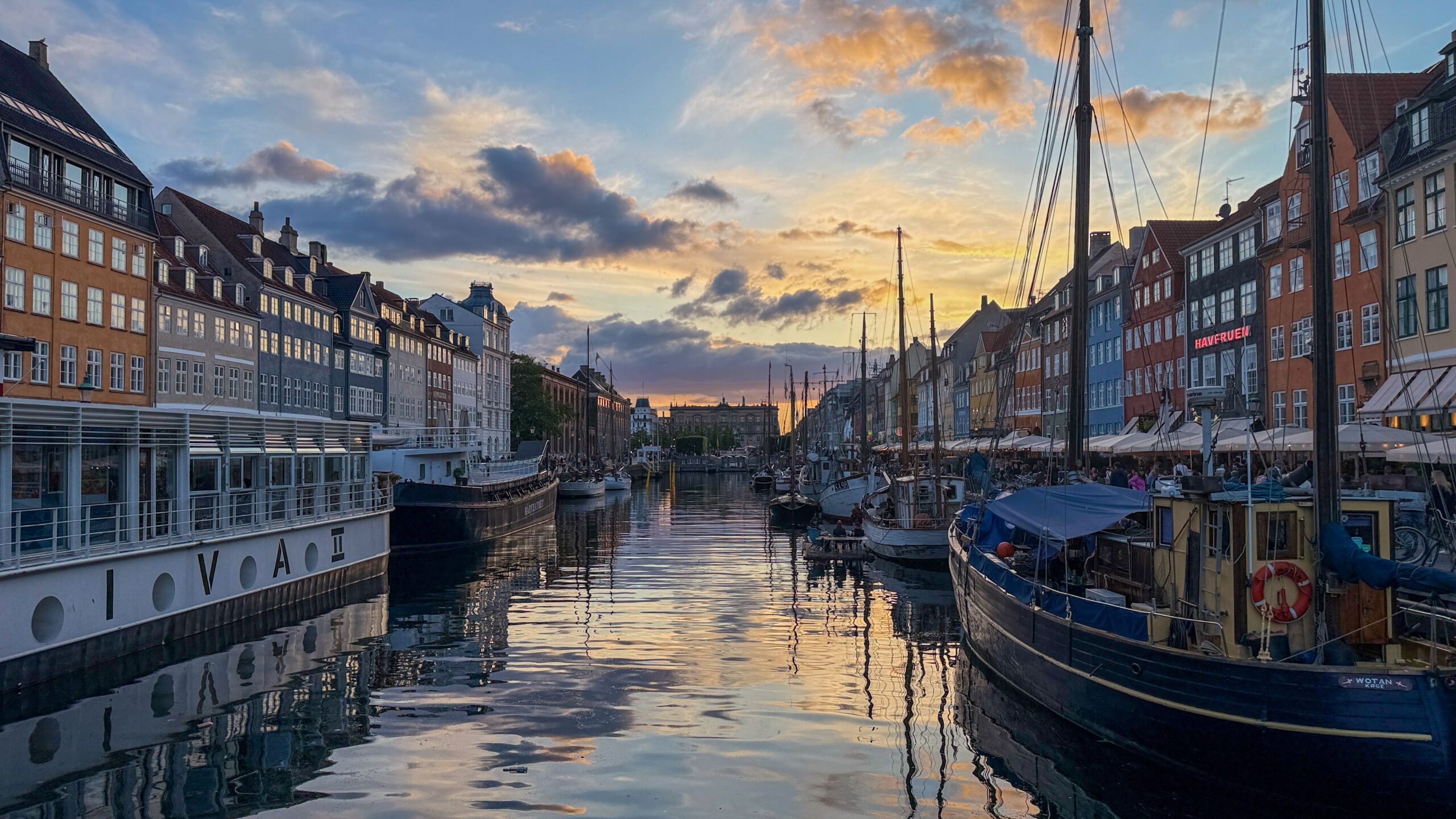
From Kongens Nytorv, it was only a short walk before we reached the place that probably appears on every Copenhagen postcard – Nyhavn.
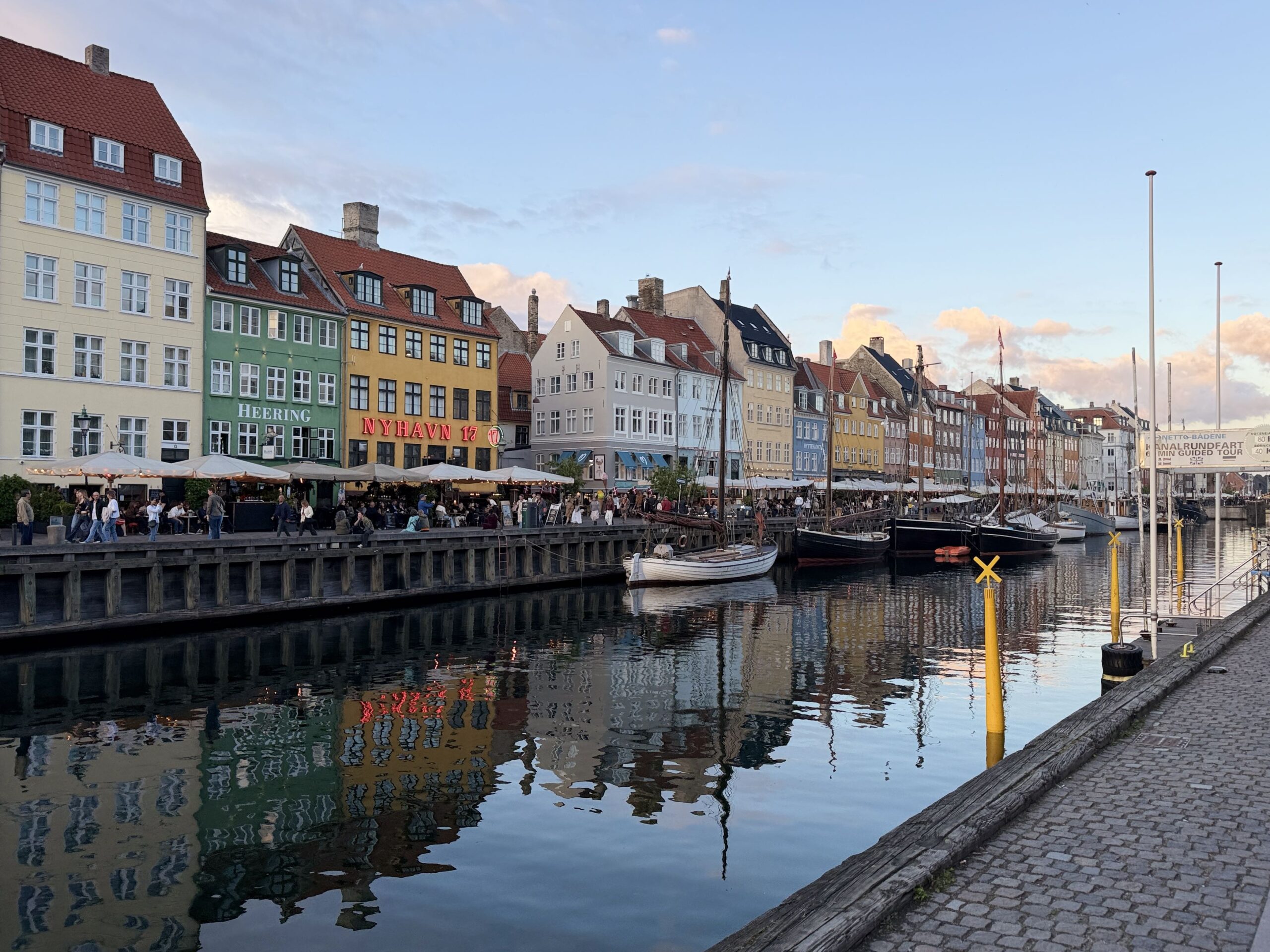
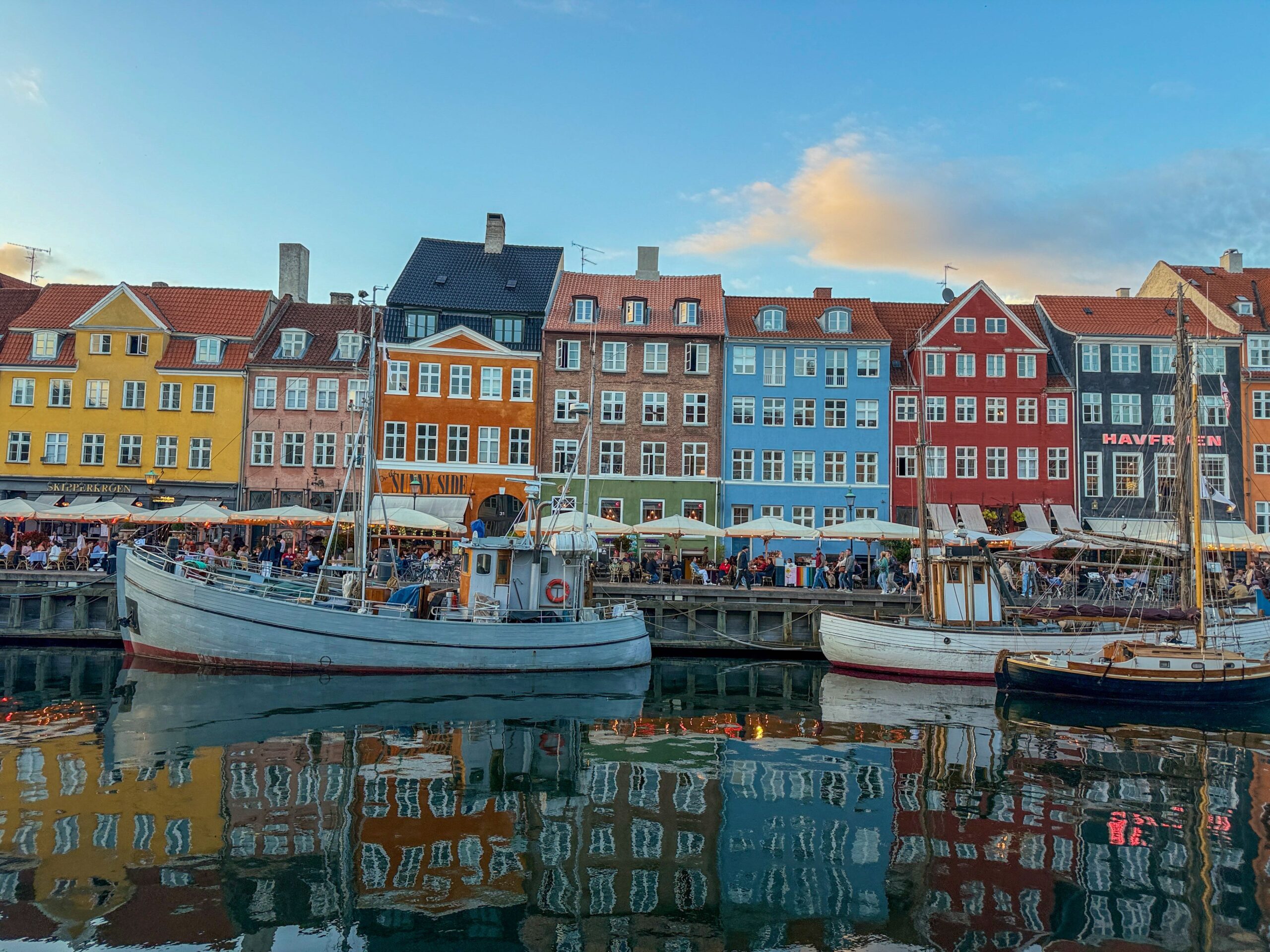
The moment we turned the corner, we understood why. Rows of brightly painted 17th- and 18th-century buildings reflected perfectly in the canal while historic wooden boats gently rocked in the water. The late evening sunlight painted everything in warm golden colors, making the harbor even more picturesque than we’d imagined. Reflections of these colorful buildings in the water were perfect for photographers.
Nyhavn wasn’t always this peaceful. The canal was originally built in the late 1600s as a busy commercial port where ships from around the world unloaded cargo. It was once known for sailors, warehouses, and lively taverns. Today, those old warehouses have become colorful cafés and restaurants, giving the harbor a completely different personality while preserving its historic charm.
One fascinating detail we learned is that the famous Danish storyteller Hans Christian Andersen lived in several houses along Nyhavn during different periods of his life. It’s easy to imagine how this beautiful waterfront may have inspired some of his timeless fairy tales.
We spent quite a while simply strolling along the waterfront, watching boats drift by and enjoying one of those perfect Scandinavian summer evenings where daylight seems reluctant to disappear.
Dinner – Danish Style
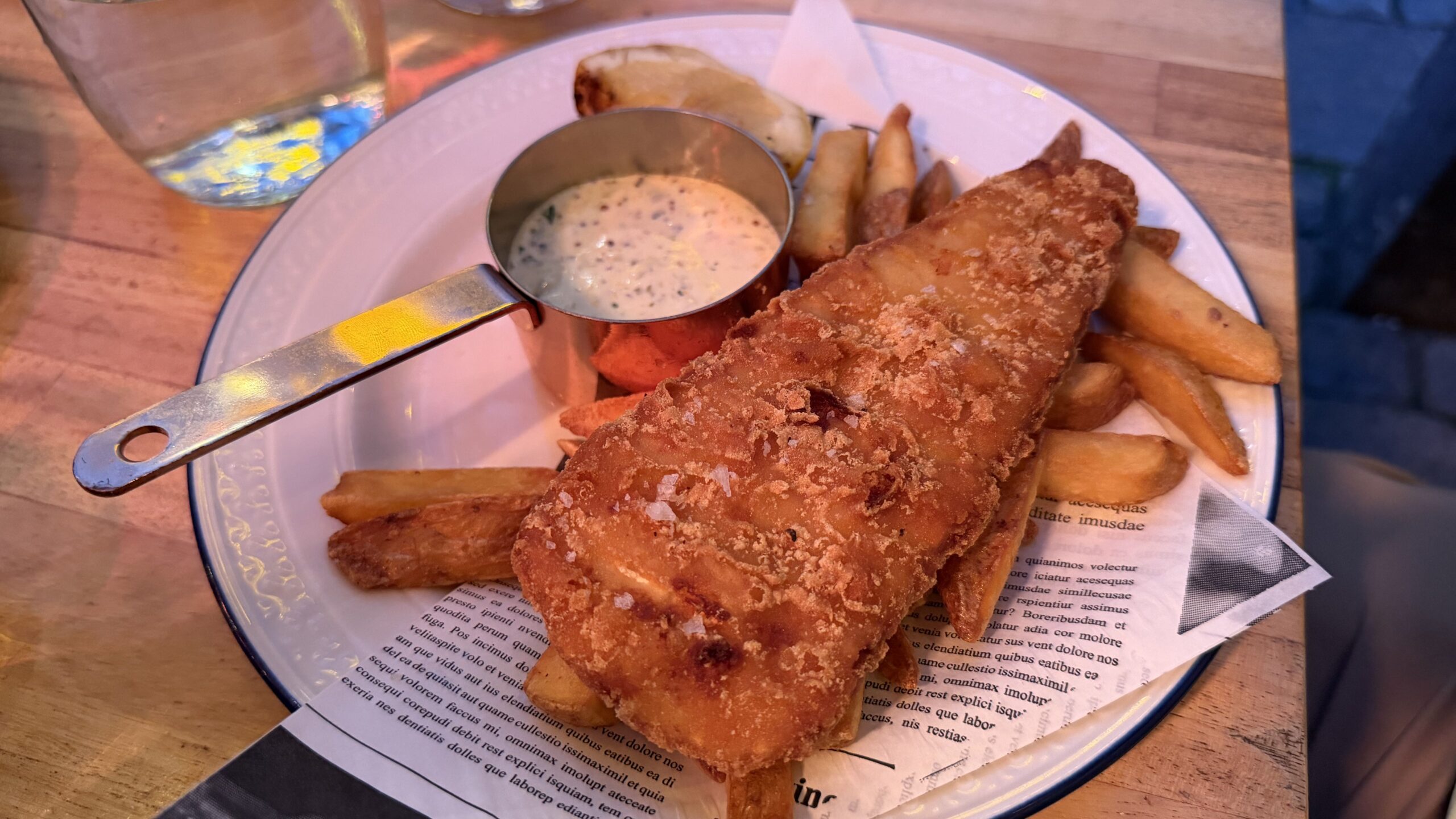
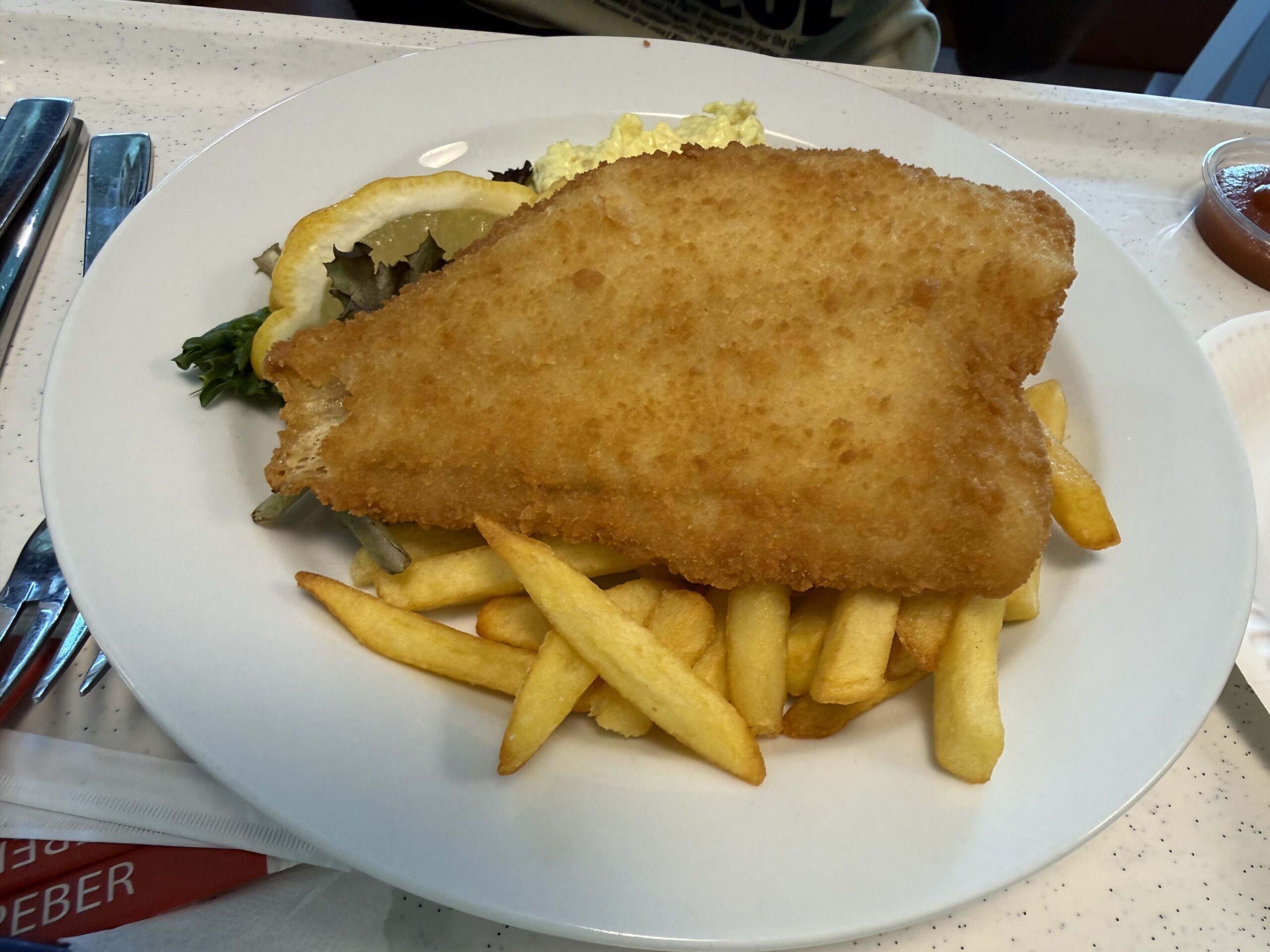
By the time we started looking for dinner, we discovered something that first-time visitors should know. Many restaurant kitchens close earlier than we expected, even though the bars remain open. After checking a few places, we found a table at Hyttefadet, a traditional Danish restaurant that turned out to be an excellent introduction to local cuisine.
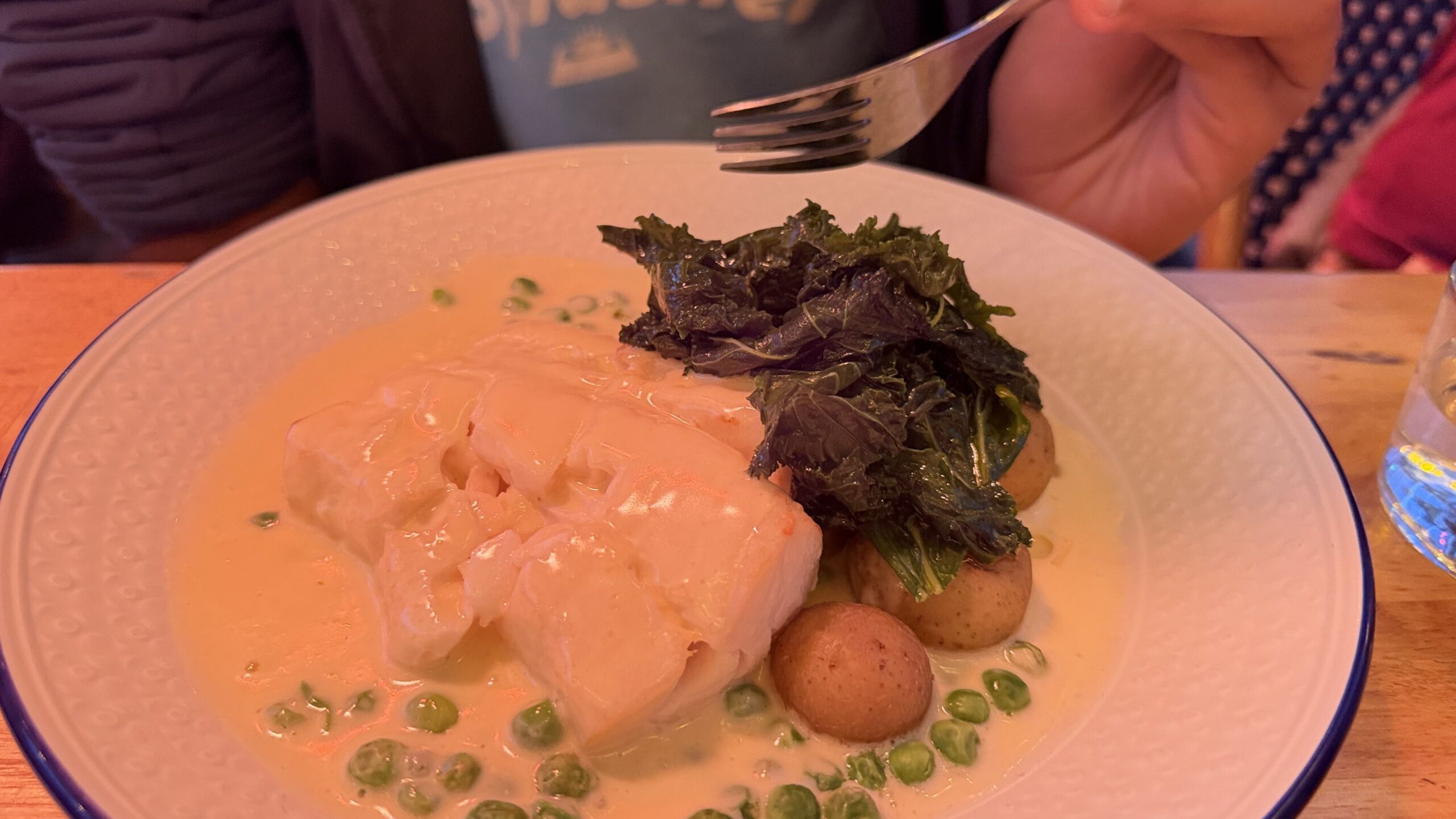
We decided to try a mix of familiar and traditional dishes: Traditional Danish tartlets, Fish and chips, and Fillet of cod
Fresh seafood is a natural choice in Denmark, a country surrounded by water and home to one of Europe’s oldest fishing traditions. The cod was fresh and delicately cooked, while the Danish tartlets gave us our first taste of a classic local comfort food.
Danish cuisine reflects the country’s close relationship with the sea. Surrounded by both the North Sea and the Baltic Sea, fresh seafood has long been a staple of everyday cooking. While Denmark is famous for open-faced sandwiches called smørrebrød, we decided to sample fresh fish on our very first evening and it turned out to be an excellent introduction to local flavors.


Evening Walk Through the Heart of Copenhagen
After dinner, we continued wandering through the city instead of heading straight back to the hotel.
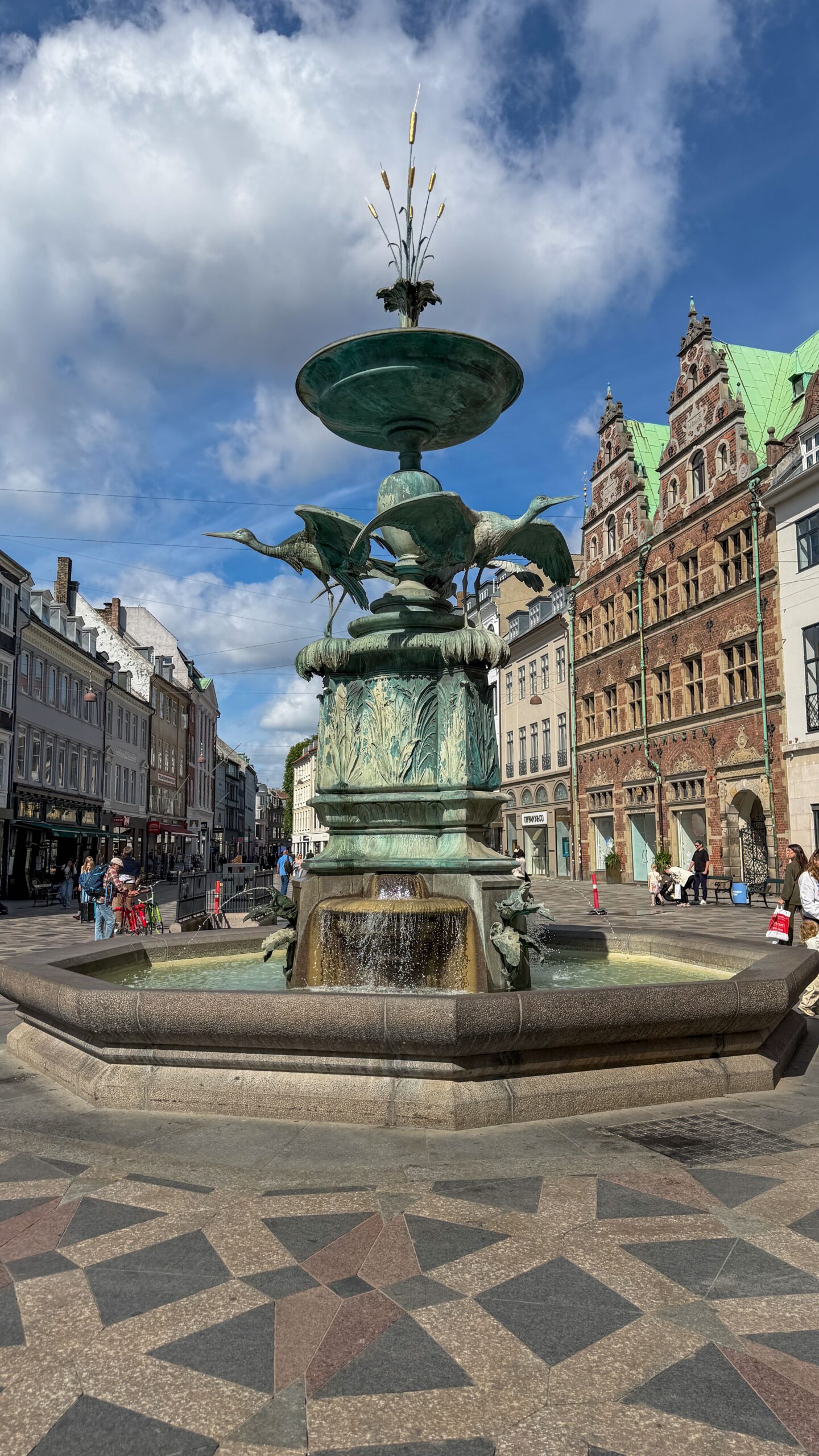
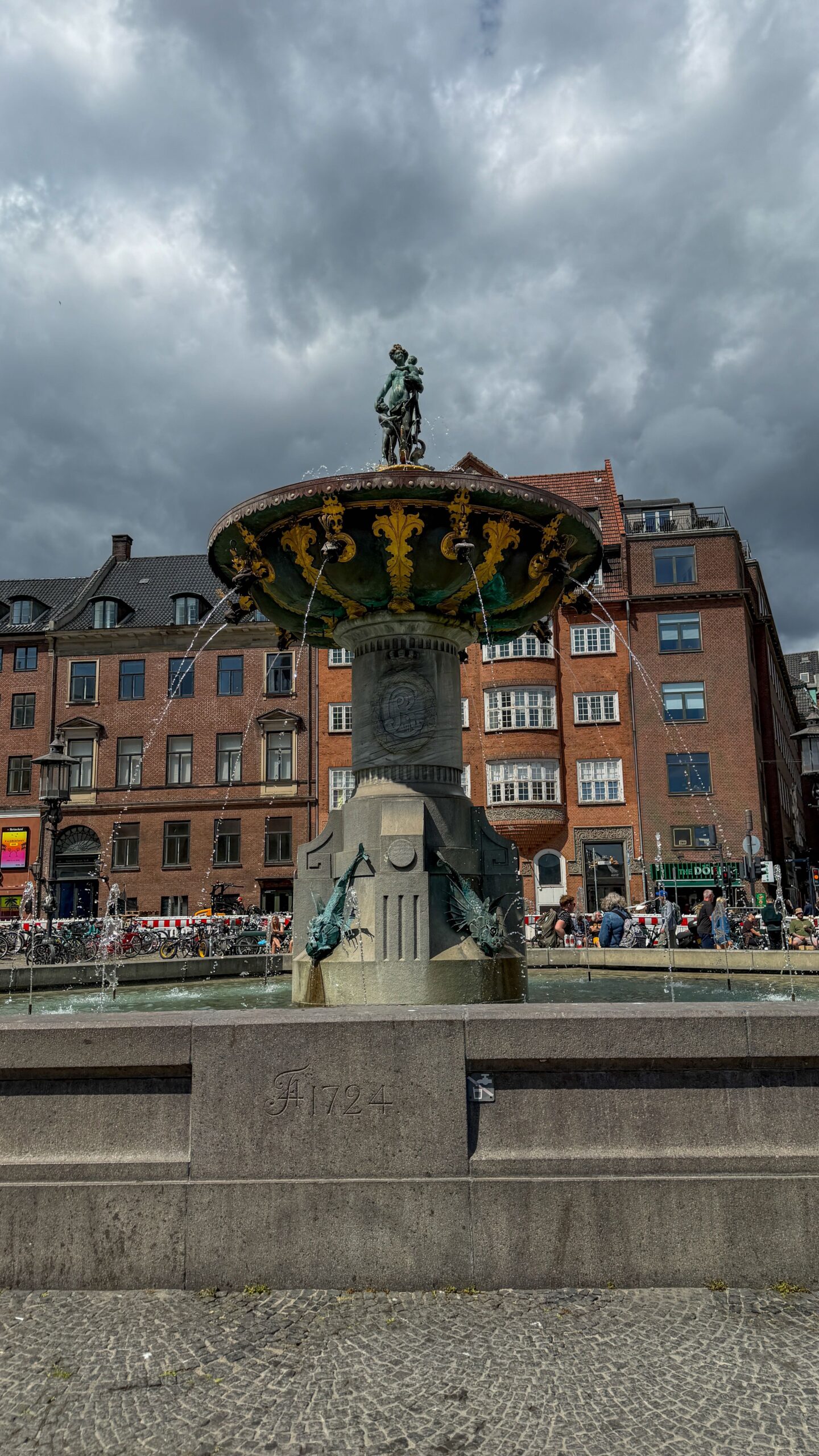
Our walk brought us past the beautiful Caritas Fountain, often called the Golden Apple Fountain. Built in 1608 during the reign of King Christian IV, it is Copenhagen’s oldest fountain and still decorates Gammeltorv, one of the city’s oldest public squares. Every year, to celebrate the king’s birthday, the fountain is filled not with water alone but with apples and golden-colored decorations, a tradition that has delighted locals for generations.
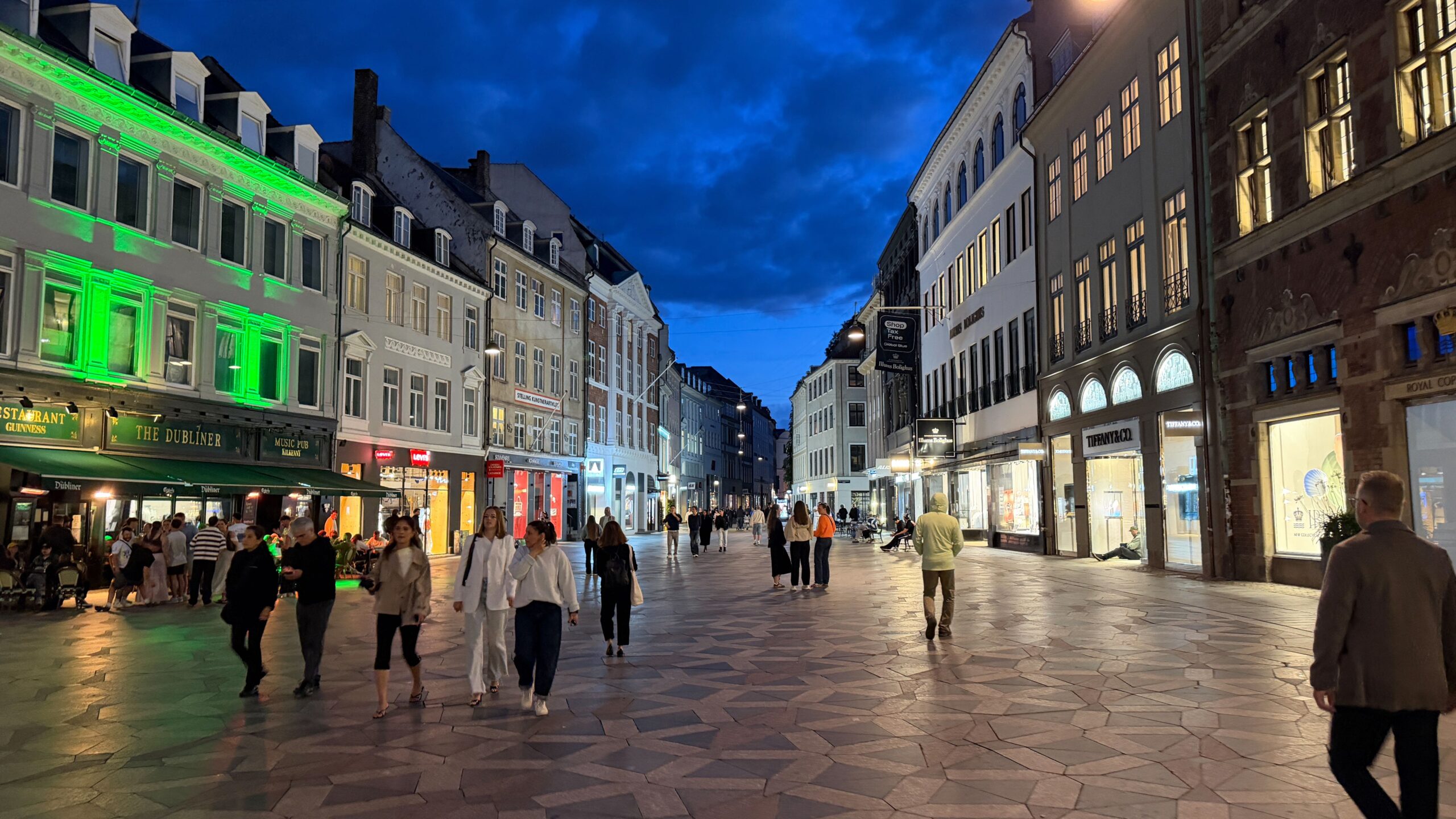
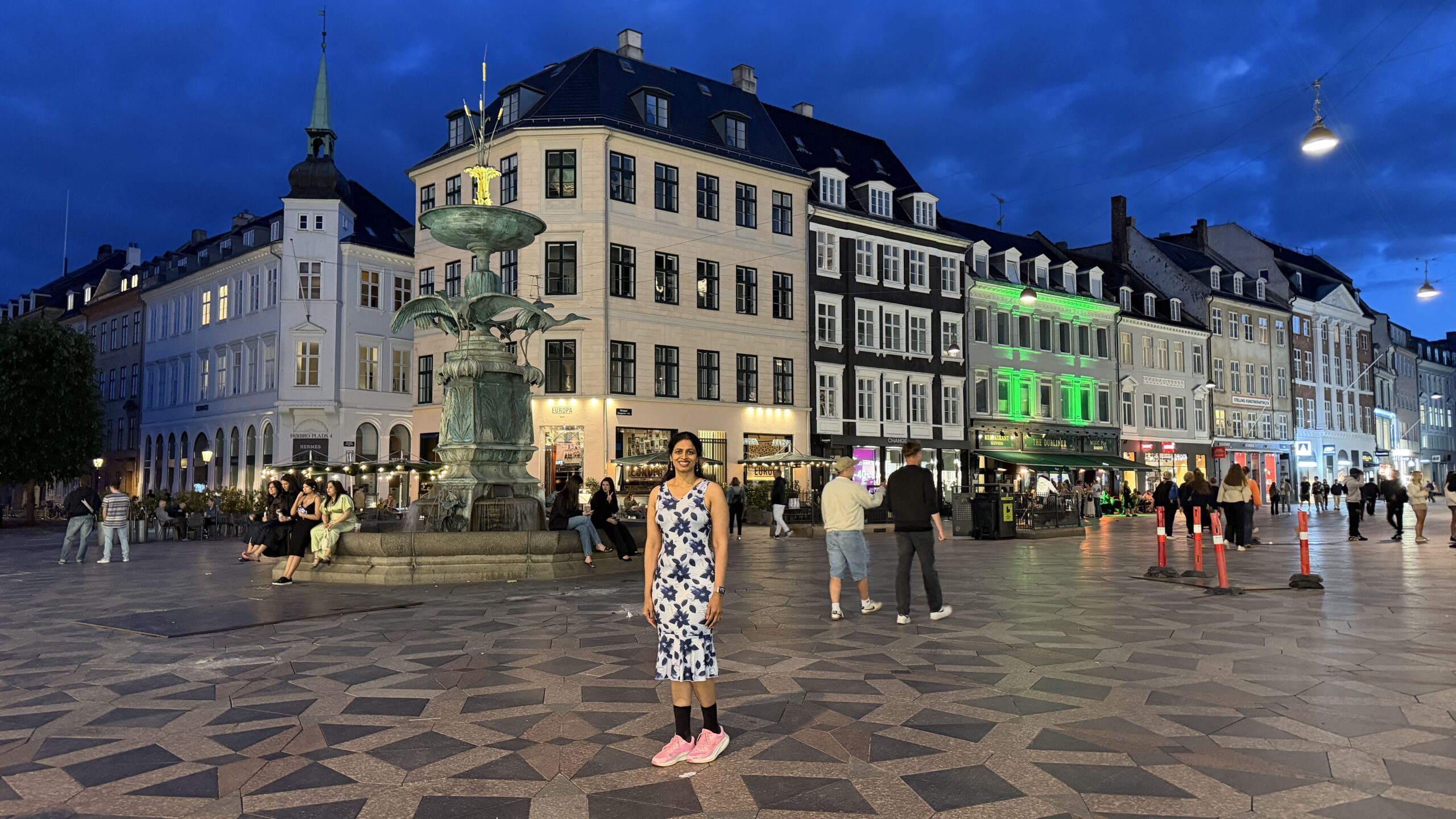
From there we entered Strøget, one of Europe’s longest pedestrian shopping streets.
Walking along Strøget felt almost surreal. The broad stone-paved street, beautiful historic buildings, clear blue evening sky, and lively atmosphere somehow reminded us of walking indoors along the Las Vegas Strip—except everything here was authentic, historic, and wonderfully relaxed. Street performers entertained visitors while shoppers wandered between international brands and local boutiques.
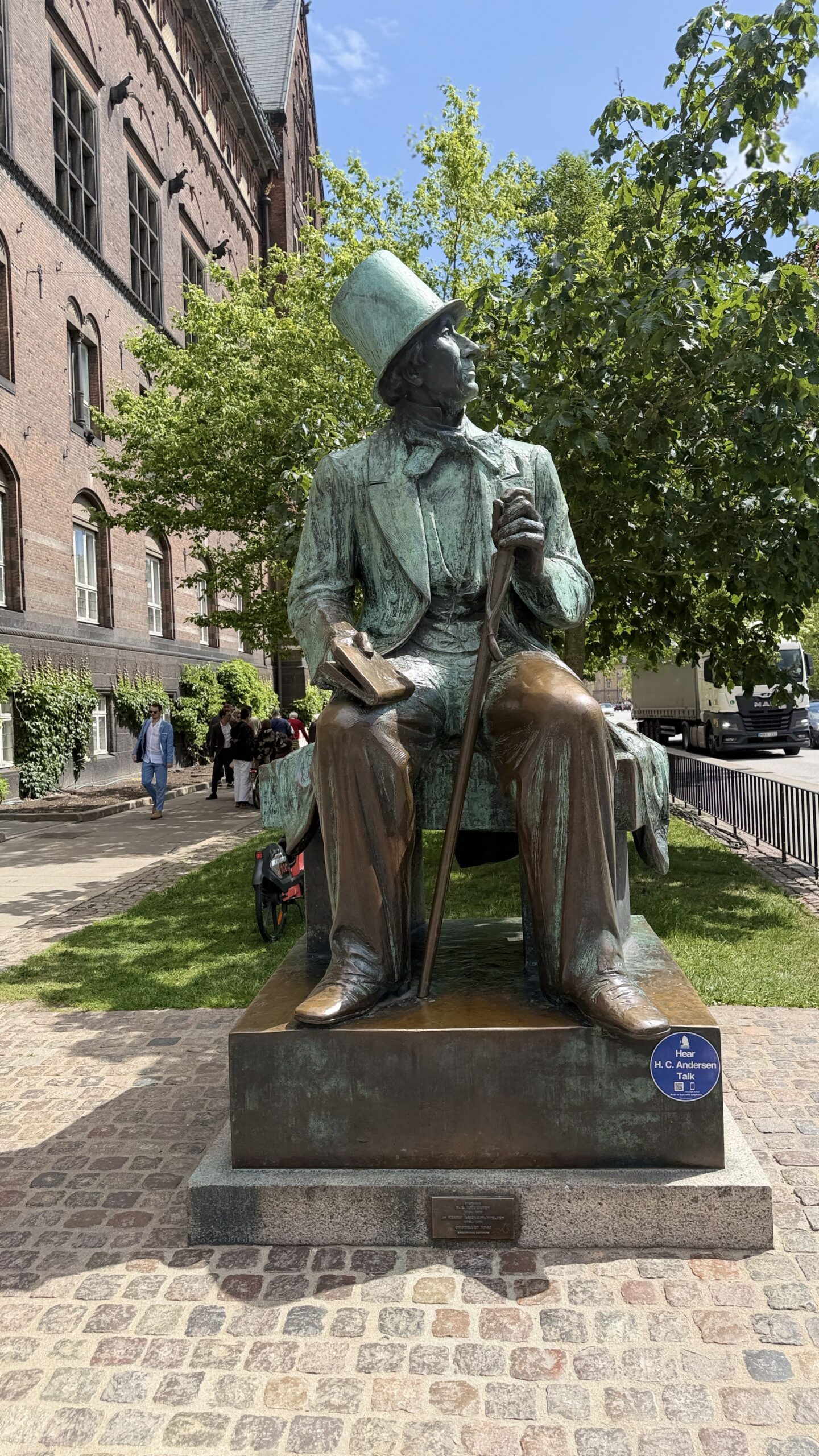
Before returning to the hotel, we also passed the statue of Hans Christian Andersen, seated with a book in hand and gazing thoughtfully toward the boulevard that now bears his name. It felt like a fitting encounter in a city that proudly celebrates one of the world’s greatest storytellers.
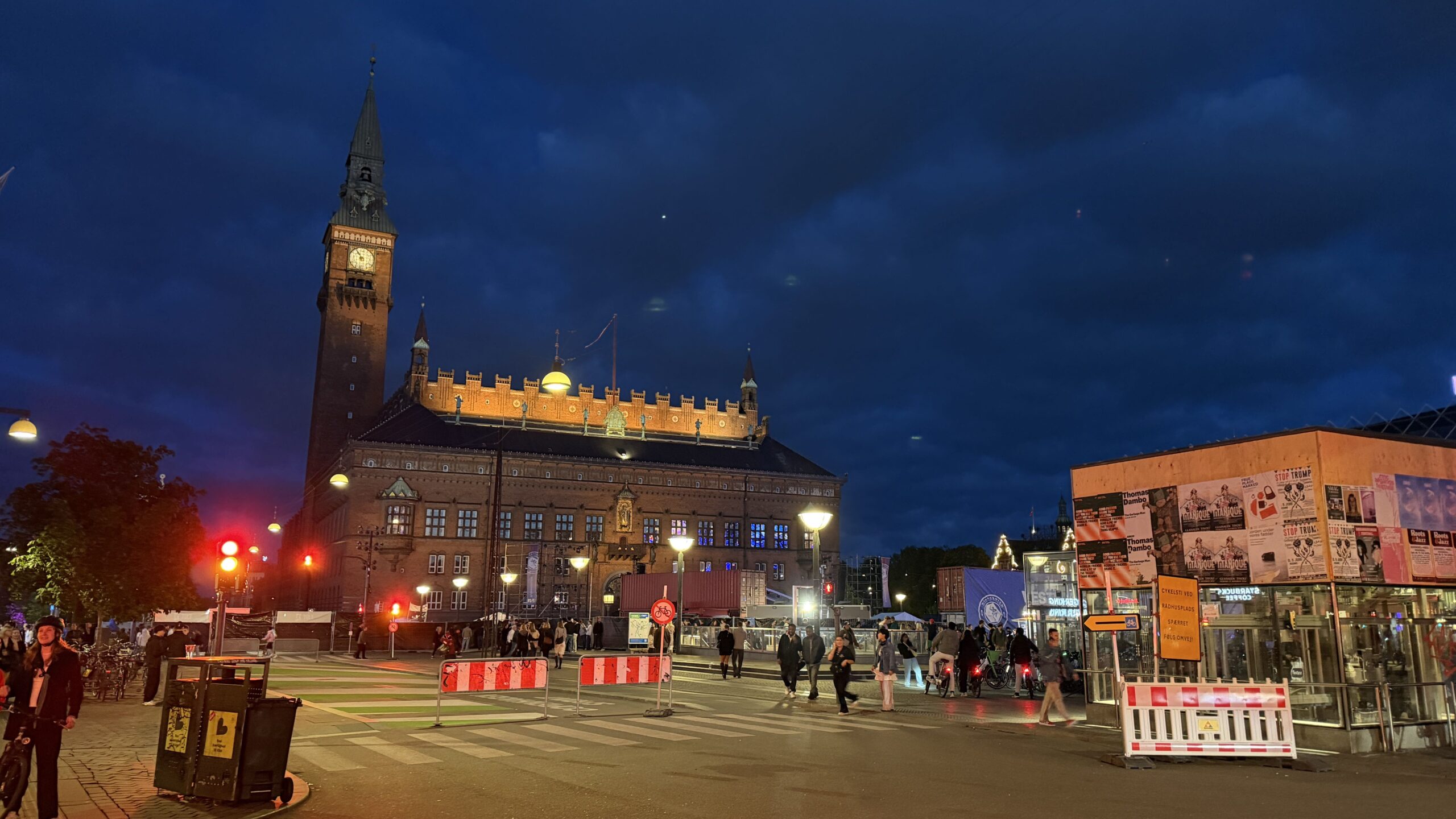
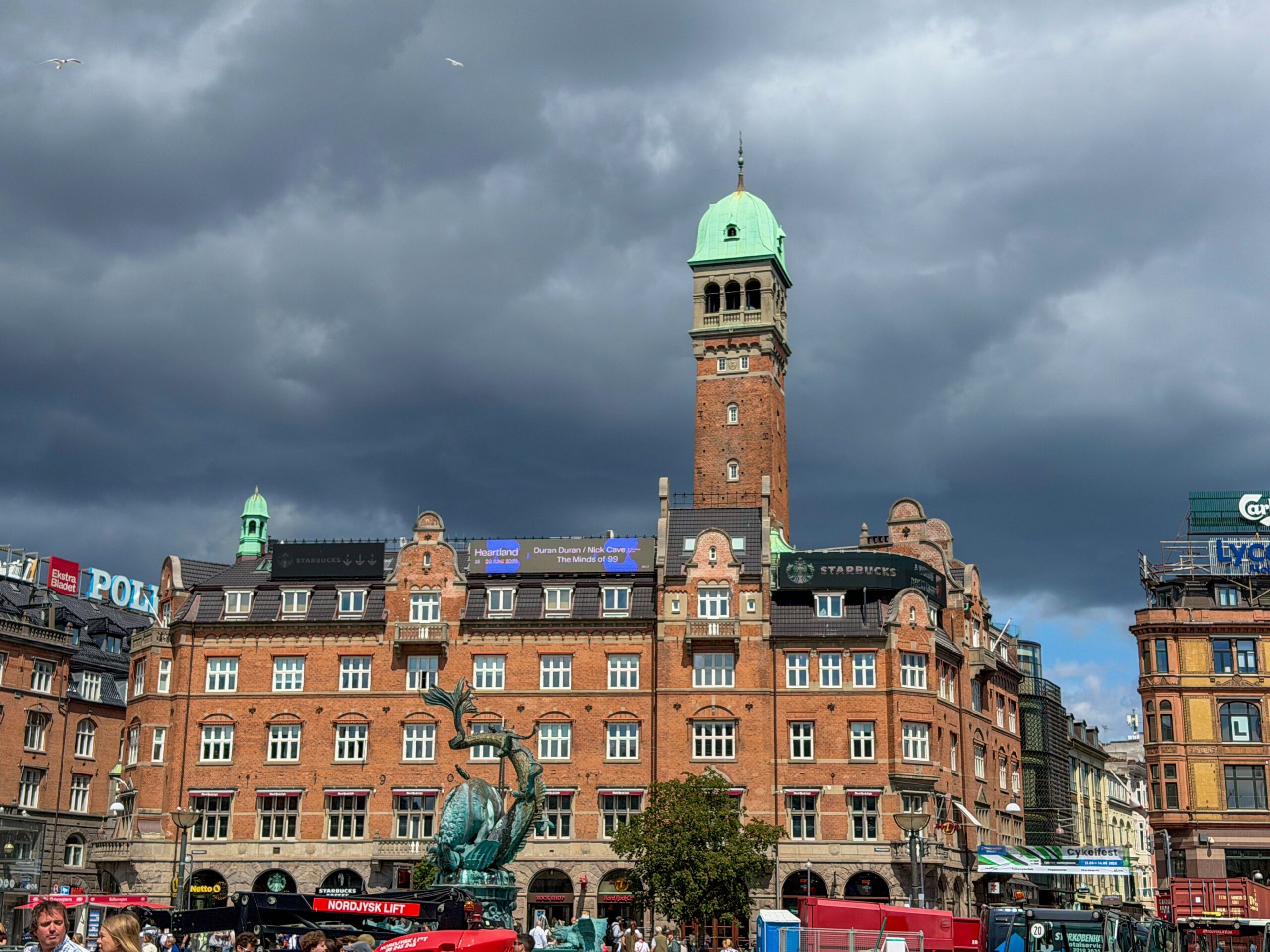
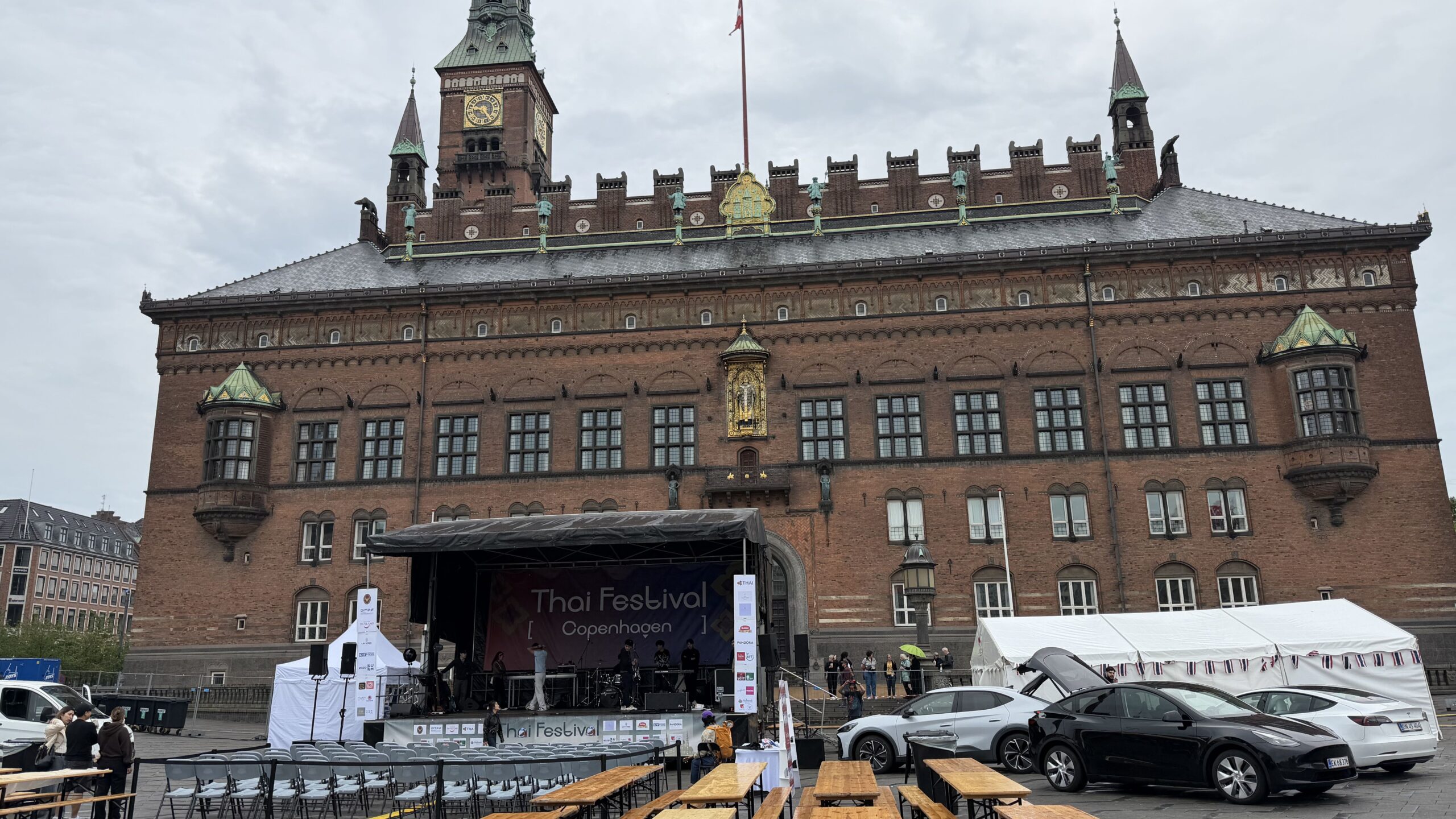
As we walked back toward City Hall Square, we realized our very first evening in Denmark had involved no rushing from attraction to attraction. Instead, it was simply about wandering, observing, and soaking in Copenhagen’s atmosphere.
Sometimes, that’s the best way to meet a new city.
Day 2 – Palaces, Royal Guards, and Our First Taste of Copenhagen’s Royal Heritage
After a good night’s sleep, we started our first full day in Copenhagen with breakfast at the hotel. One of the biggest advantages of staying in the city center was that most of the places we wanted to visit were within walking distance. So instead of relying on buses or taxis, we simply laced up our walking shoes and headed out.
Our plan for the morning was straightforward, wander through the historic heart of Copenhagen and see where the day took us.
Walking Through Copenhagen’s Historic Center
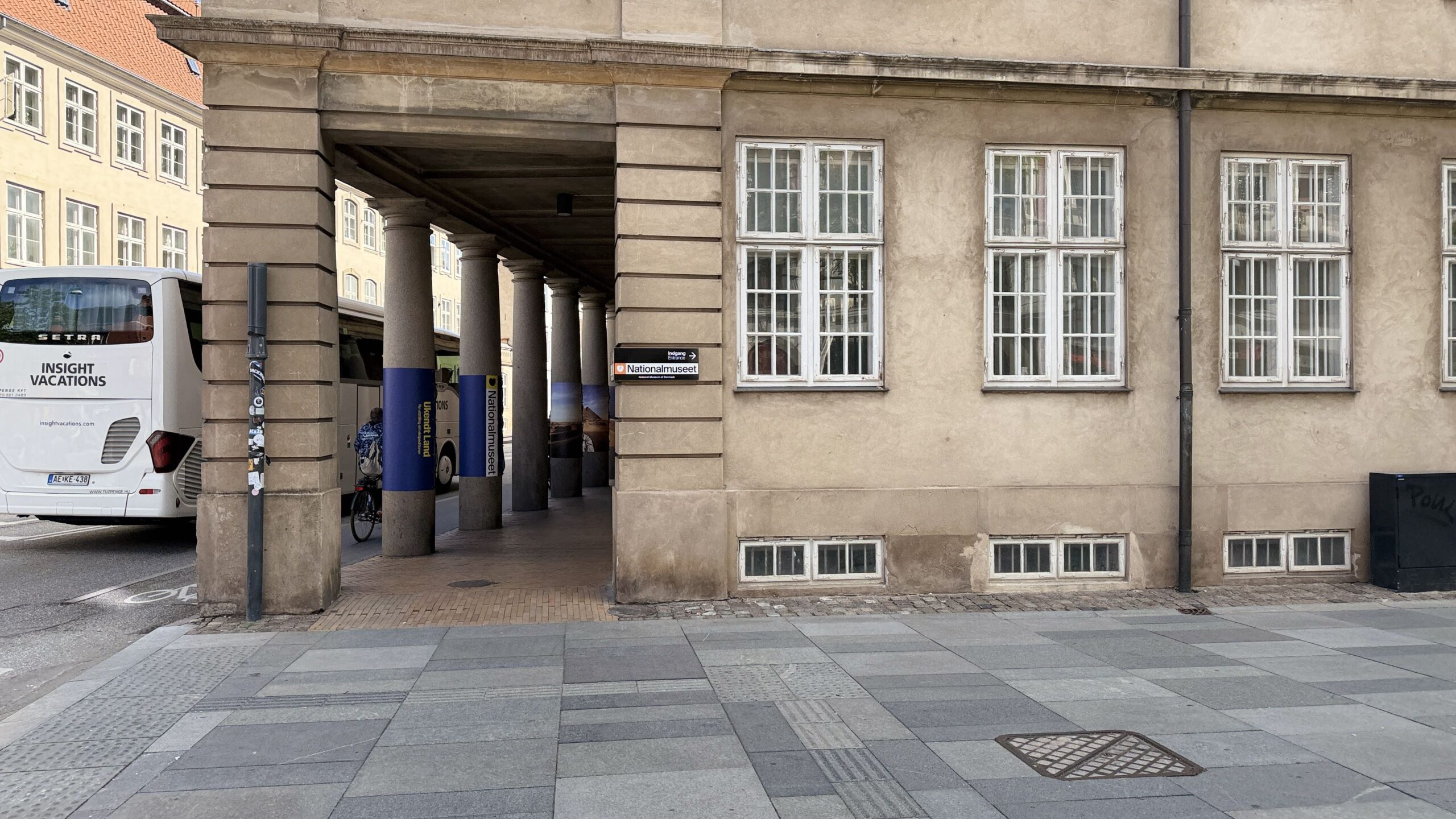
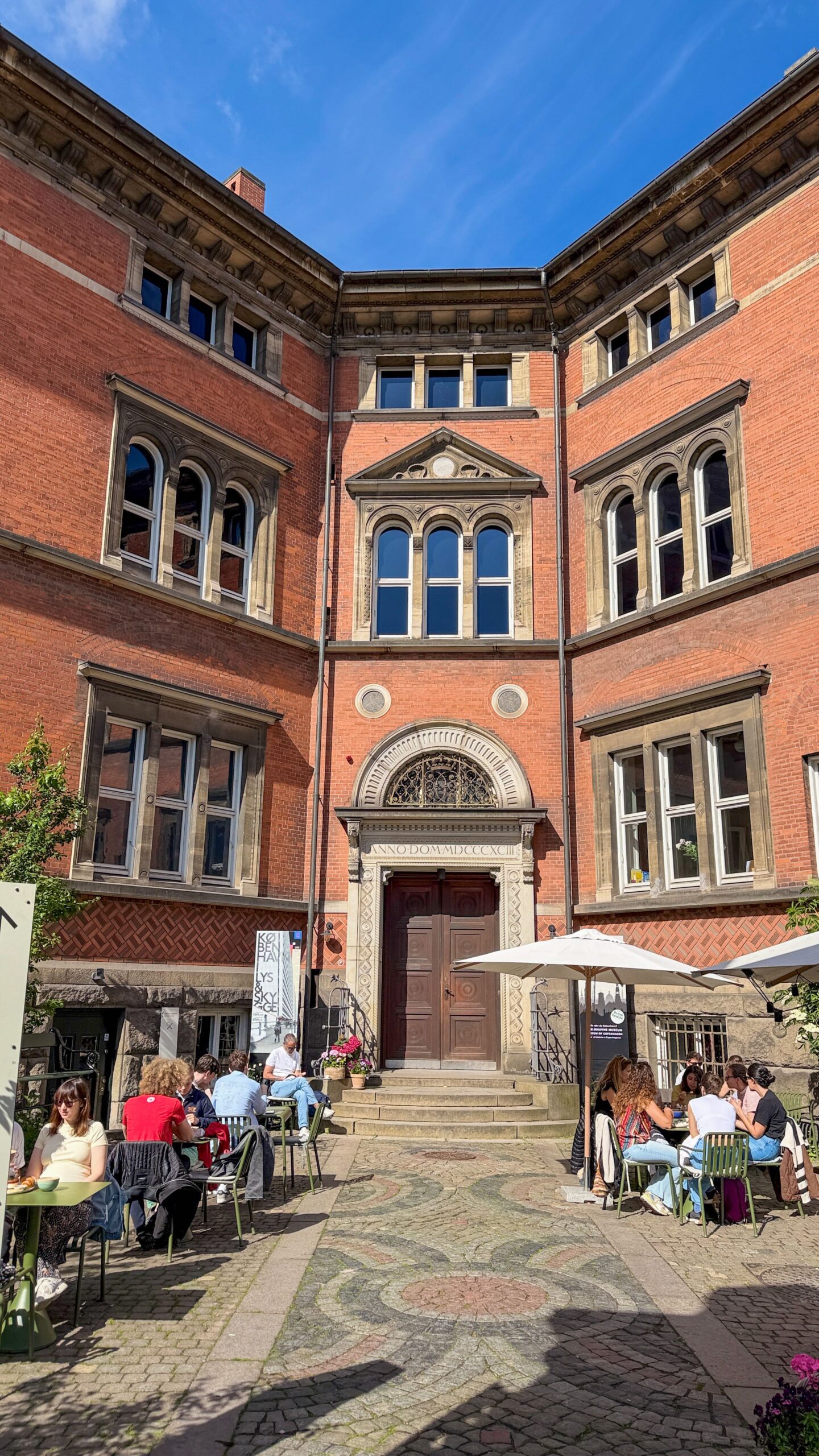
Our route took us past the Copenhagen Museum and the National Museum of Denmark, two museums that tell the story of Denmark from its Viking roots to modern times. Although we didn’t stop to explore them on this trip, simply walking through these historic streets gave us a sense of how much history is packed into Copenhagen’s compact city center.
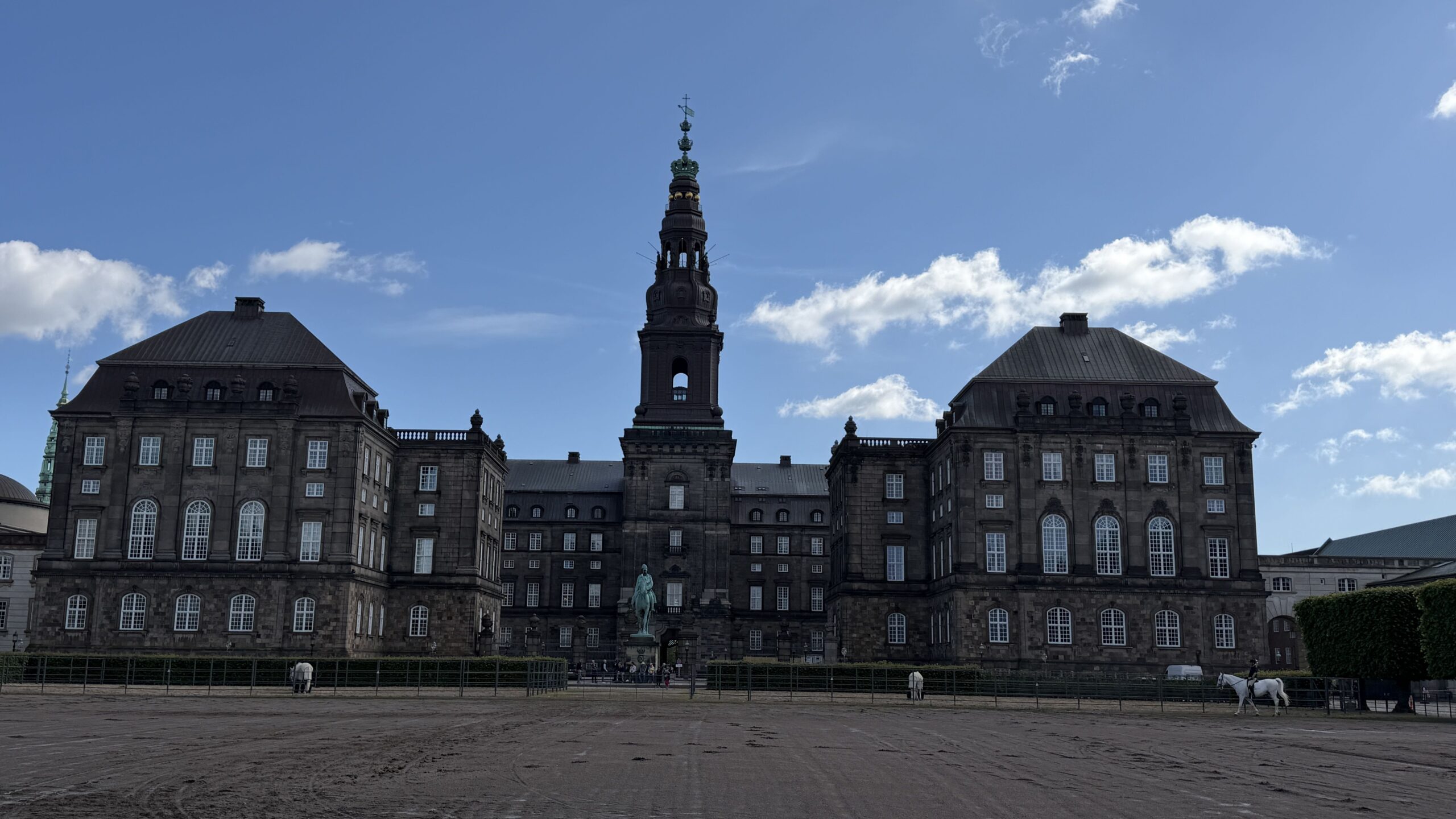
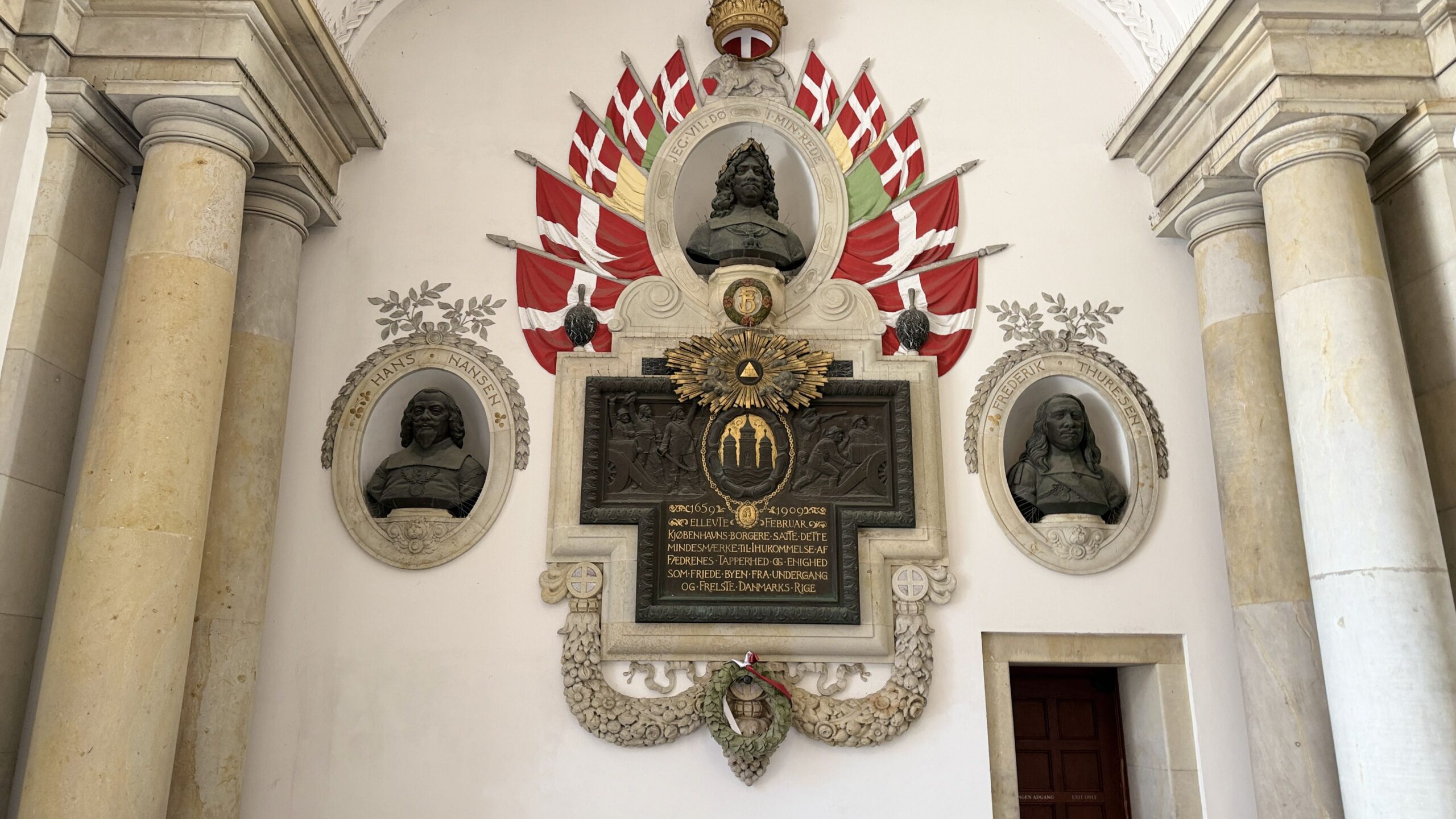
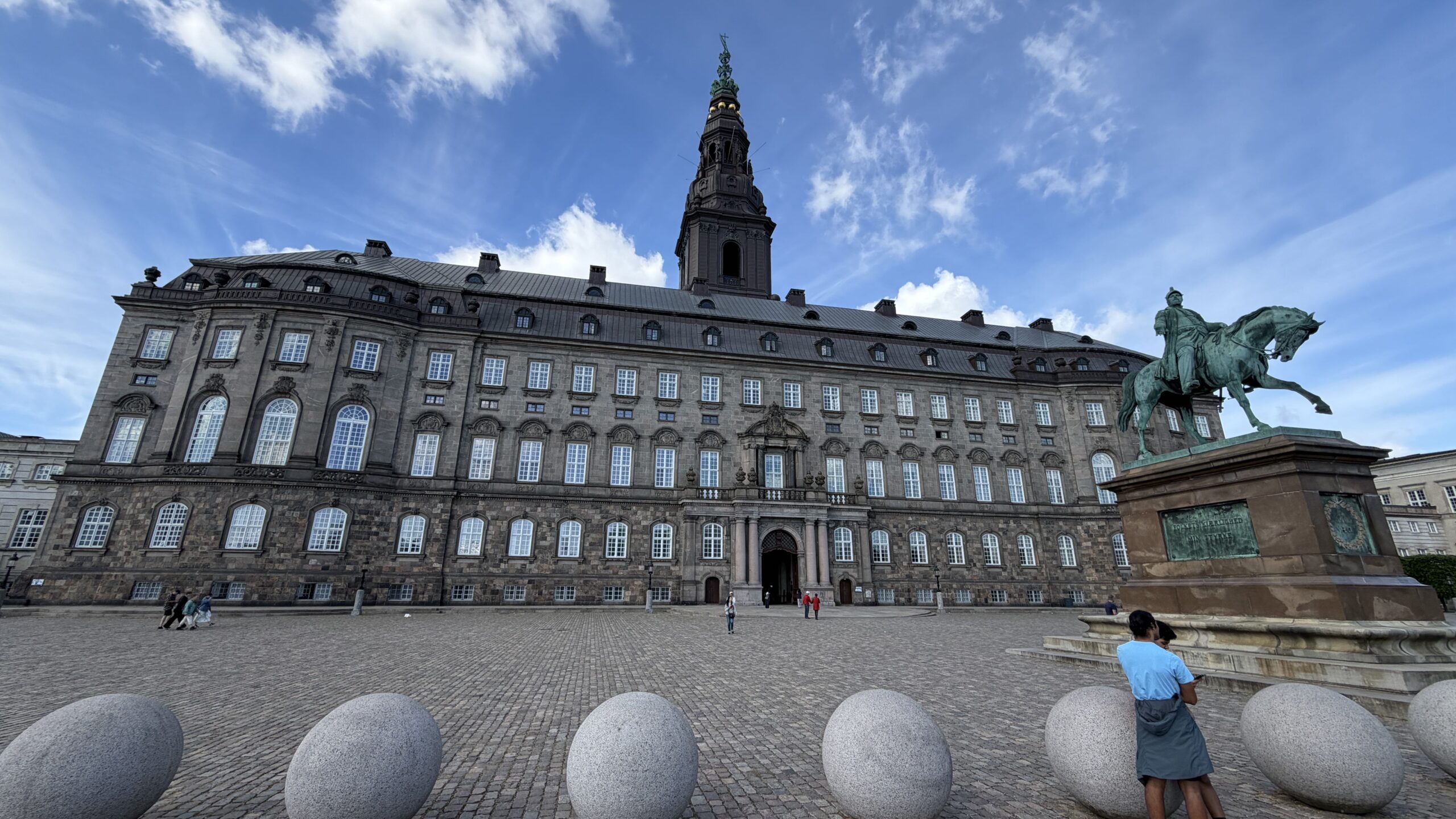
Soon we arrived at Christiansborg Palace, one of Denmark’s most important buildings.
Unlike many European palaces that serve only as museums, Christiansborg is still very much a working palace. It houses the Danish Parliament, the Prime Minister’s Office, and even the country’s Supreme Court. It is one of the few places in the world where all three branches of a nation’s government operate within the same complex.
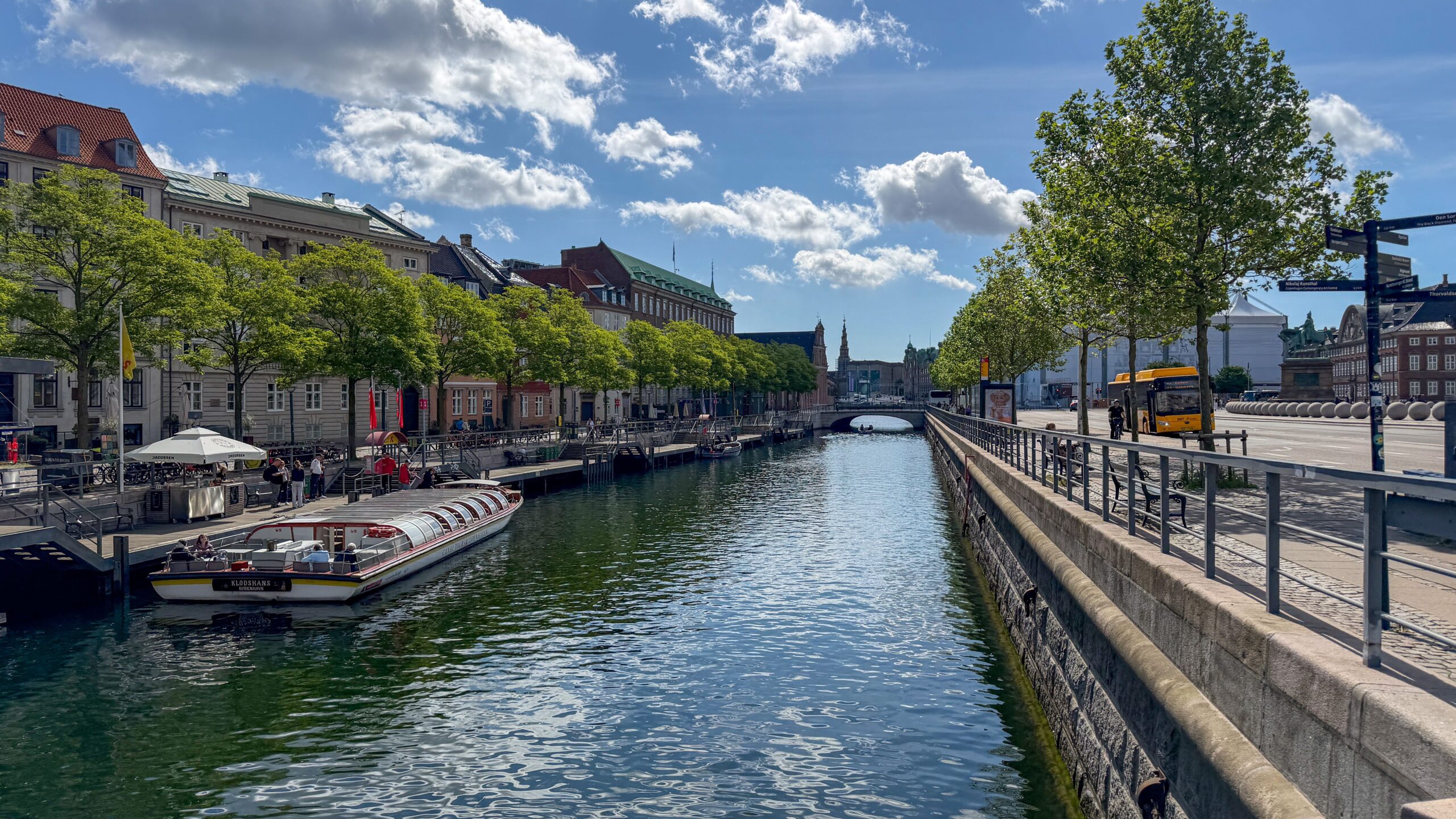
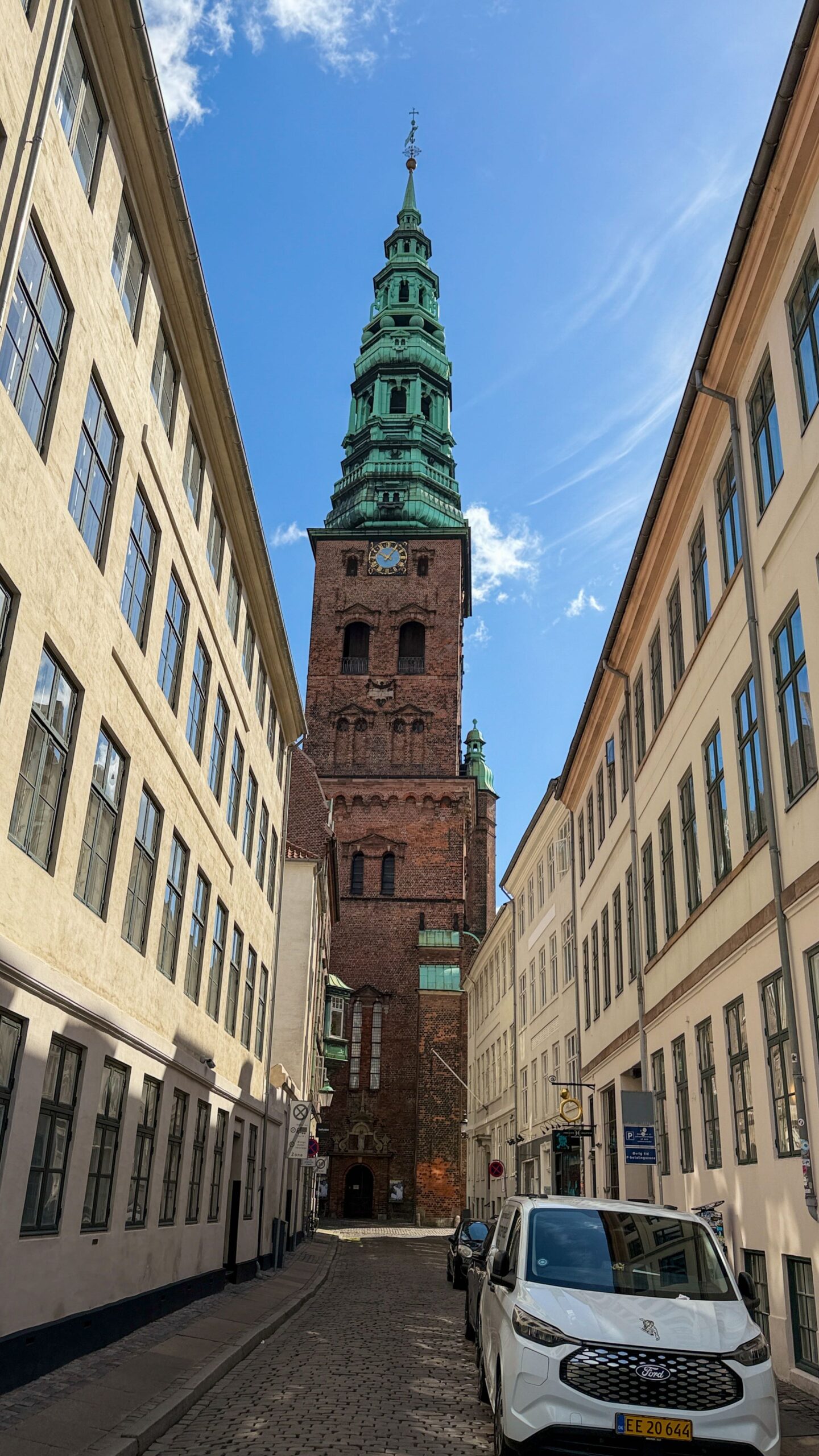
As we wandered through the palace grounds, we admired the impressive architecture before walking out toward the peaceful Christiansborg Canal. Nearby, the tall tower of Christiansborg rises above the city skyline. Interestingly, it’s the tallest tower in Copenhagen, and visitors can even ride an elevator to the top for panoramic views of the city.
Denmark is one of the world’s oldest continuous monarchies, with a royal lineage stretching back more than a thousand years. Although the country is now a modern constitutional monarchy, the royal family remains an important part of Danish culture and national identity. Throughout Copenhagen, royal palaces are not simply historic landmarks—they continue to serve official functions today.
A Green Oasis in the City
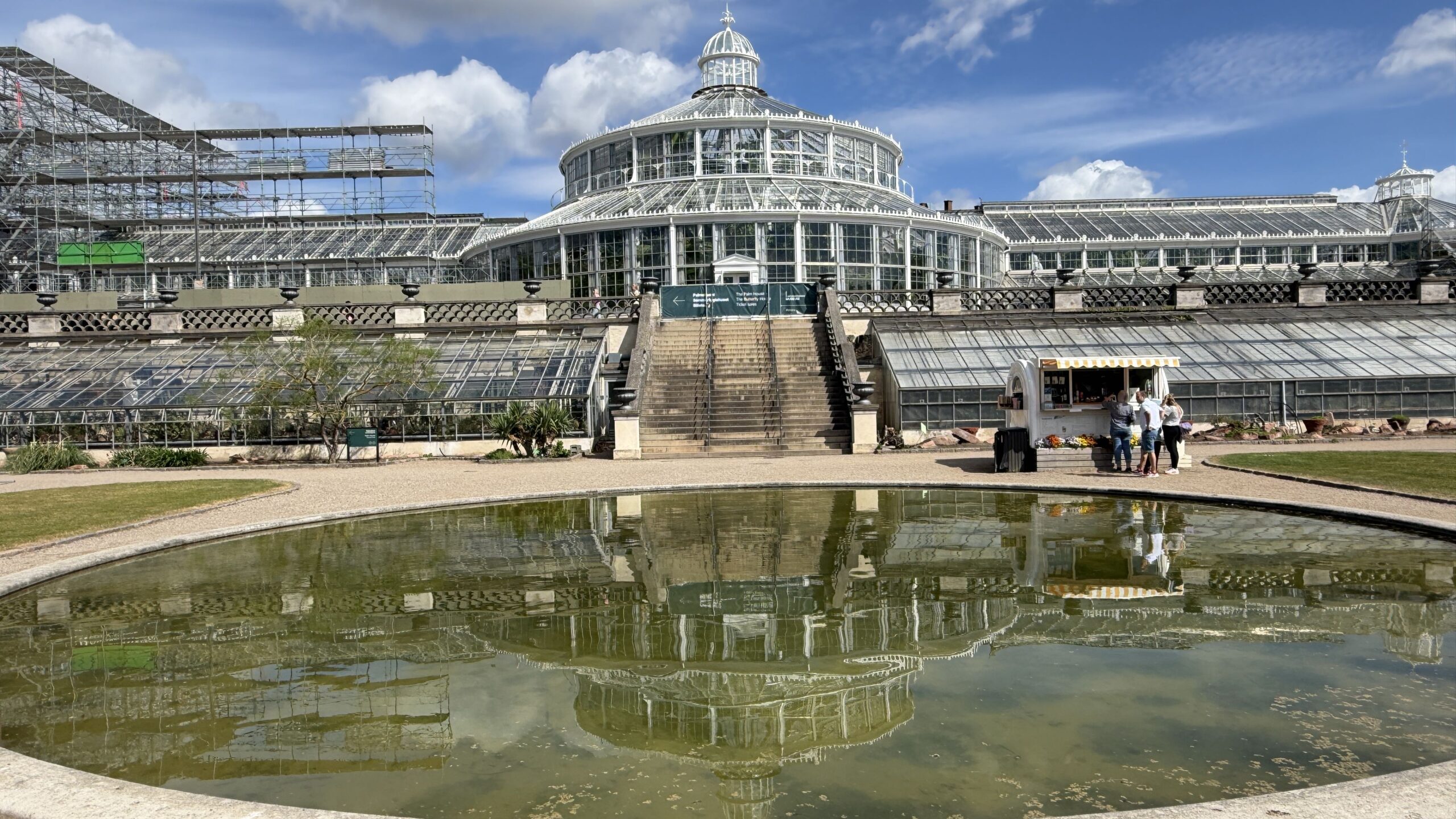
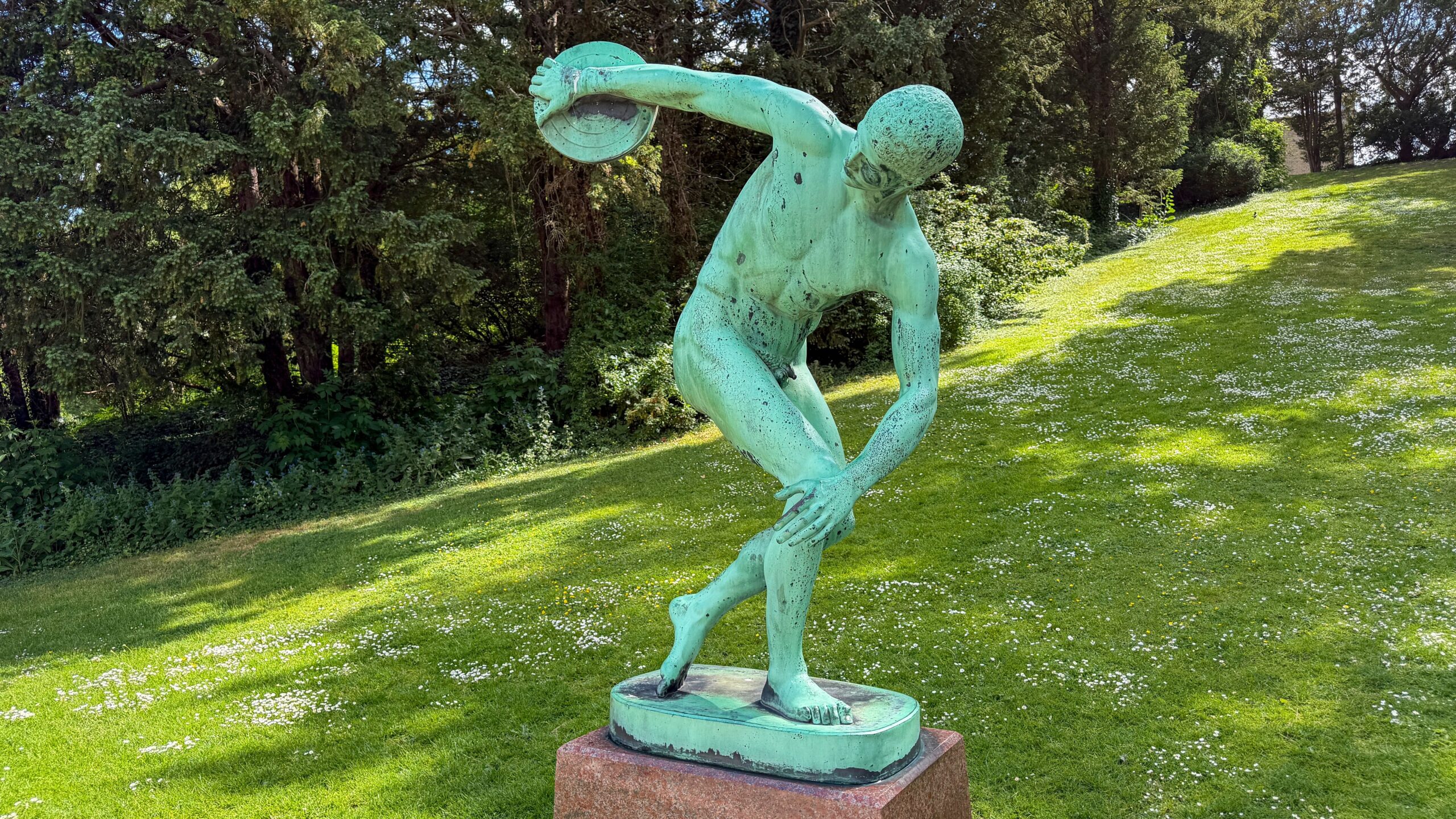
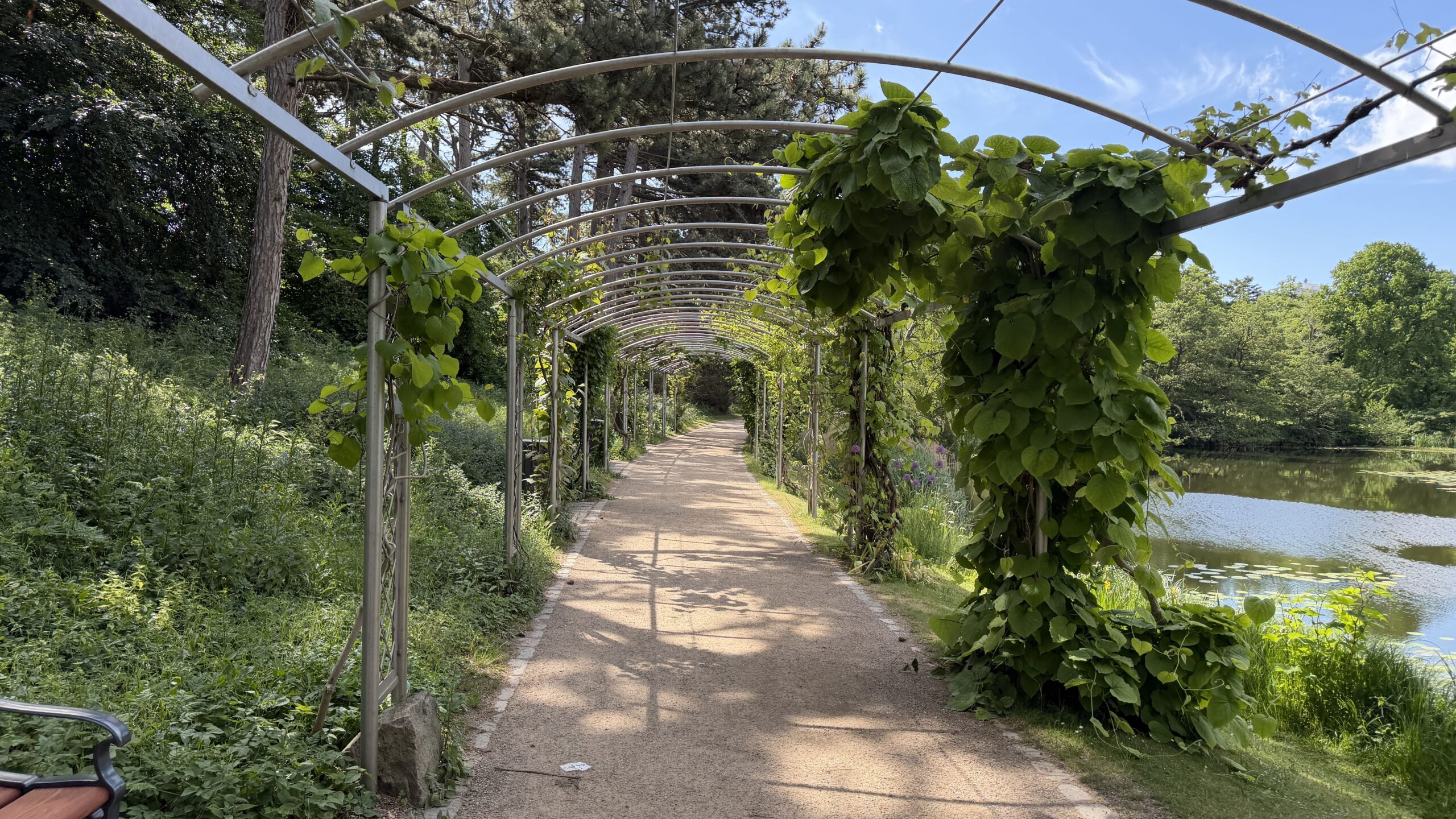
From the palace, we continued our walk toward the University of Copenhagen Botanical Garden.
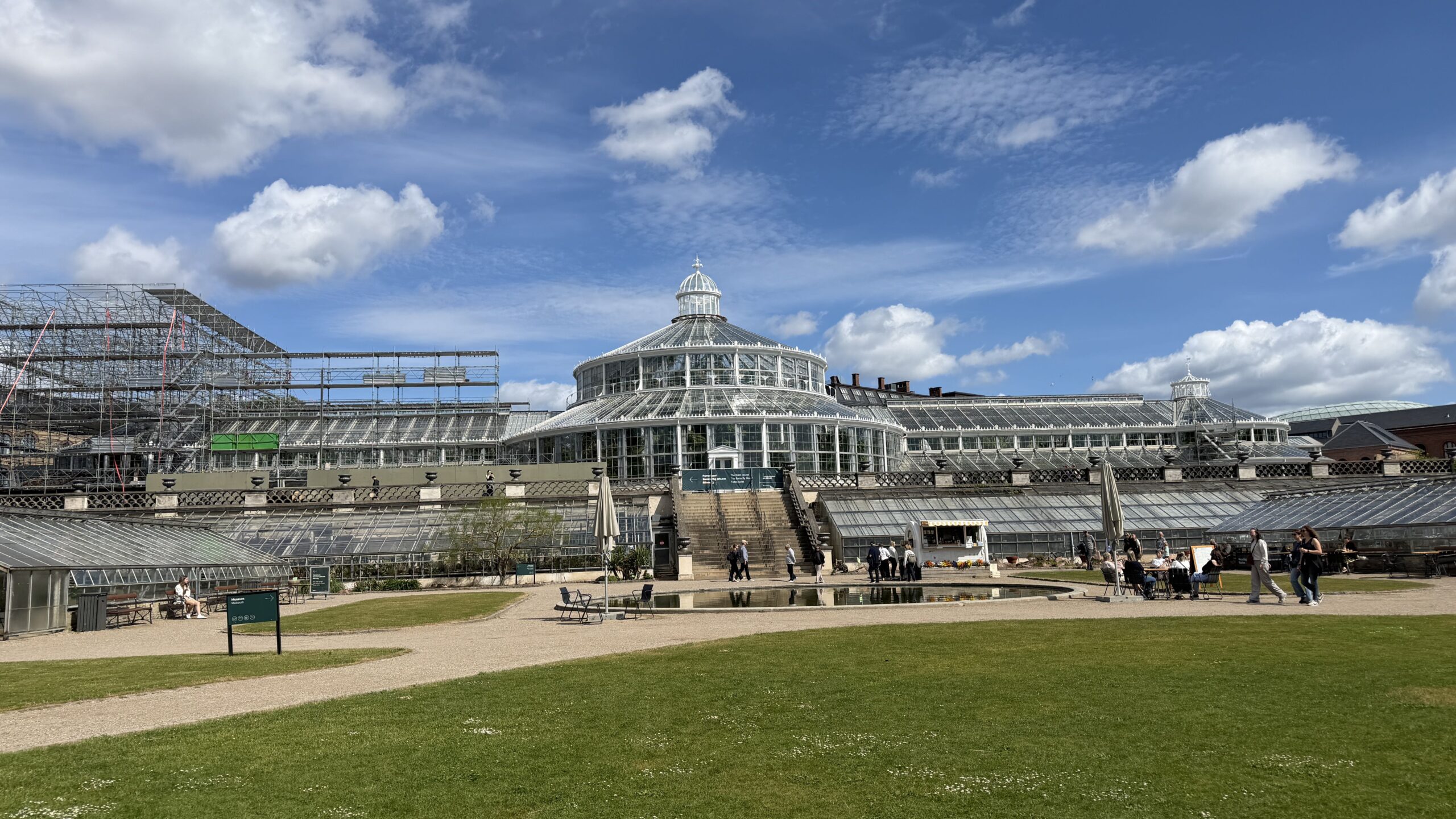
The gardens themselves were beautiful, but what immediately caught my attention was the stunning Victorian-style glasshouse. Its elegant iron framework and soaring glass panels looked like something straight out of a fairy tale. Even before stepping inside, it was one of my favorite buildings we had seen so far in Copenhagen.
The Botanical Garden is home to thousands of plant species from around the world, providing a peaceful escape in the middle of the city.
Denmark is internationally known for its appreciation of architecture and design. Whether it’s historic glasshouses like this one or modern Scandinavian buildings, the emphasis is often on simplicity, functionality, and blending beautifully with the surrounding environment.
Rosenborg Castle and King’s Garden
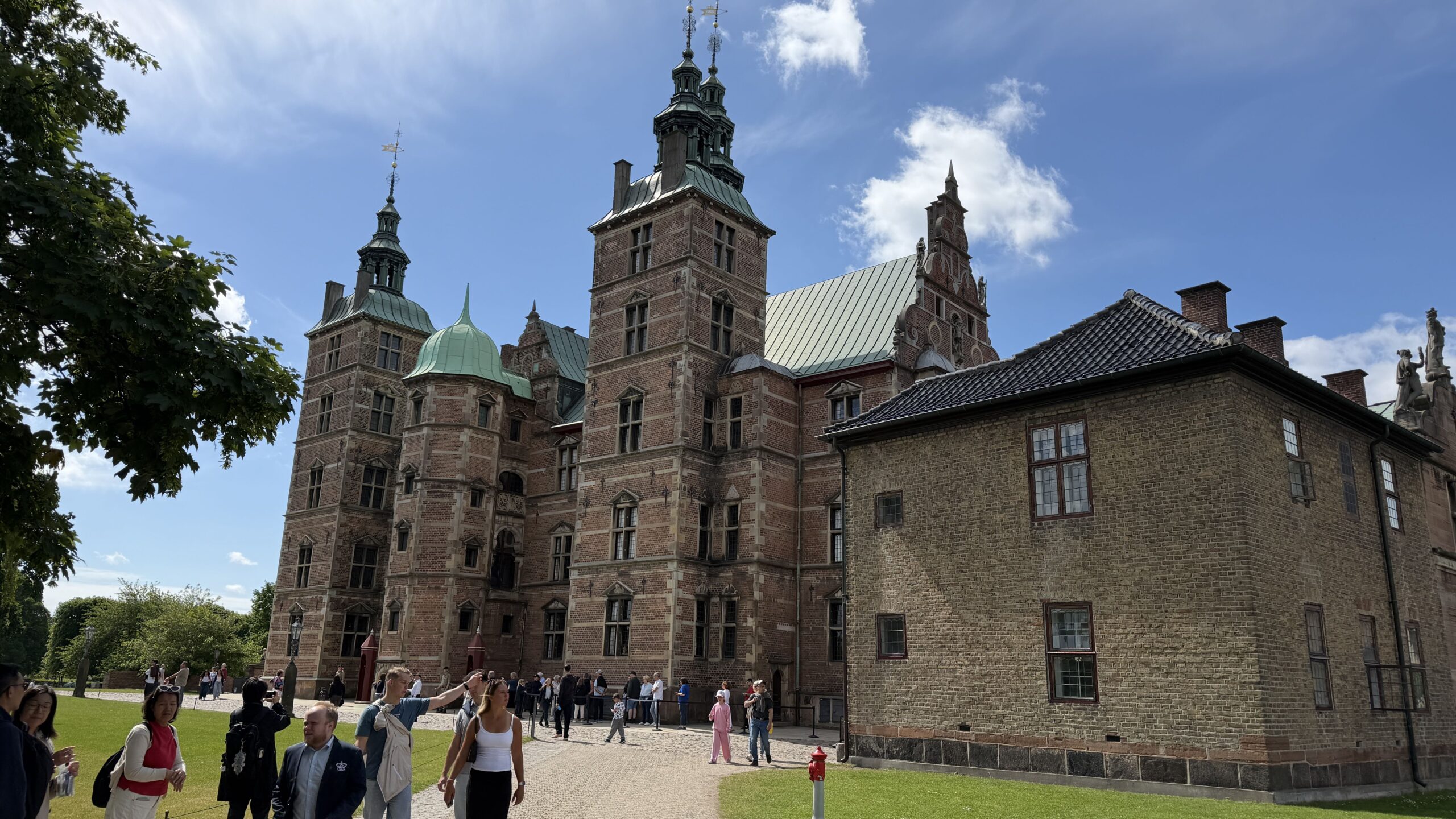
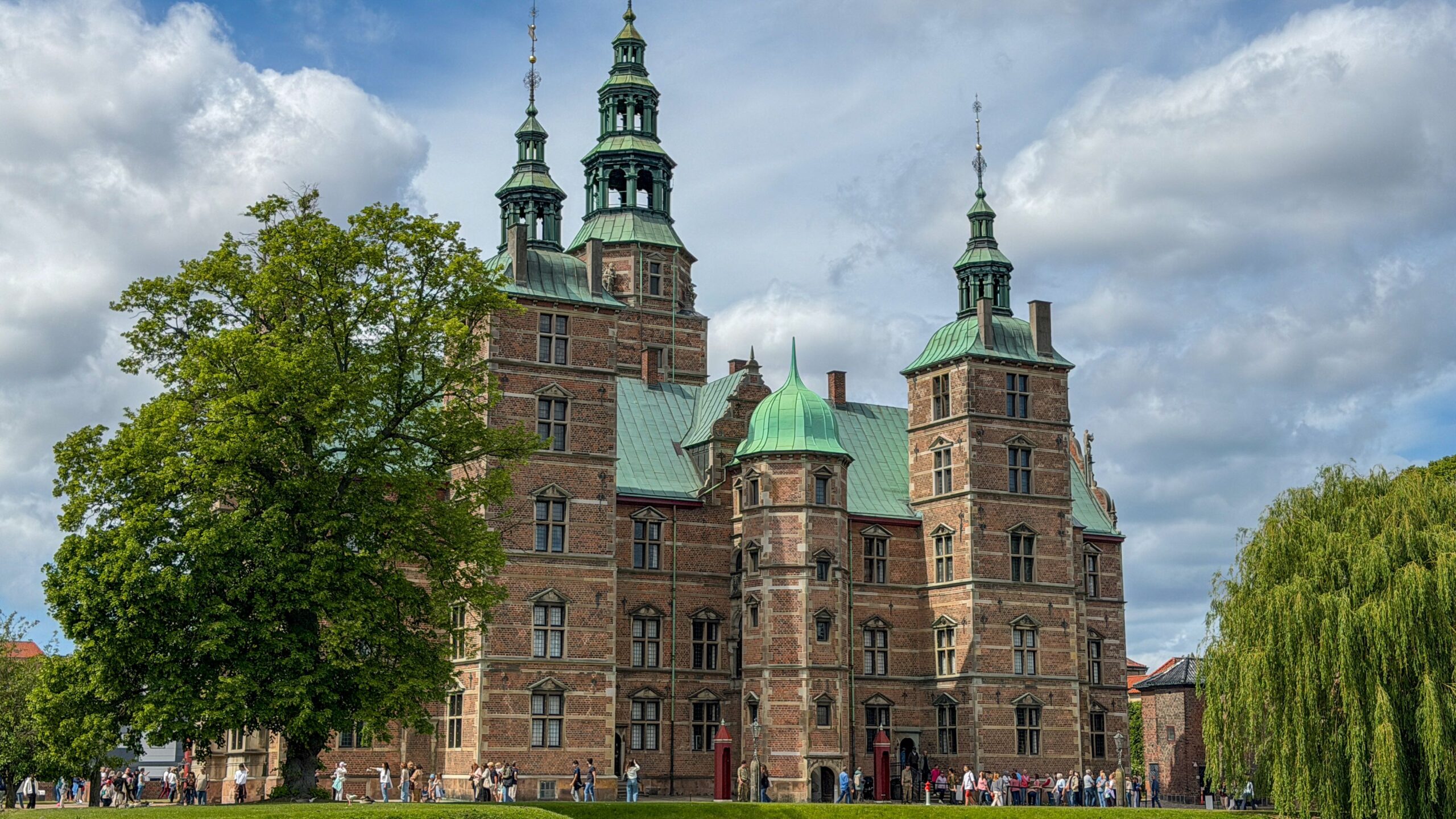
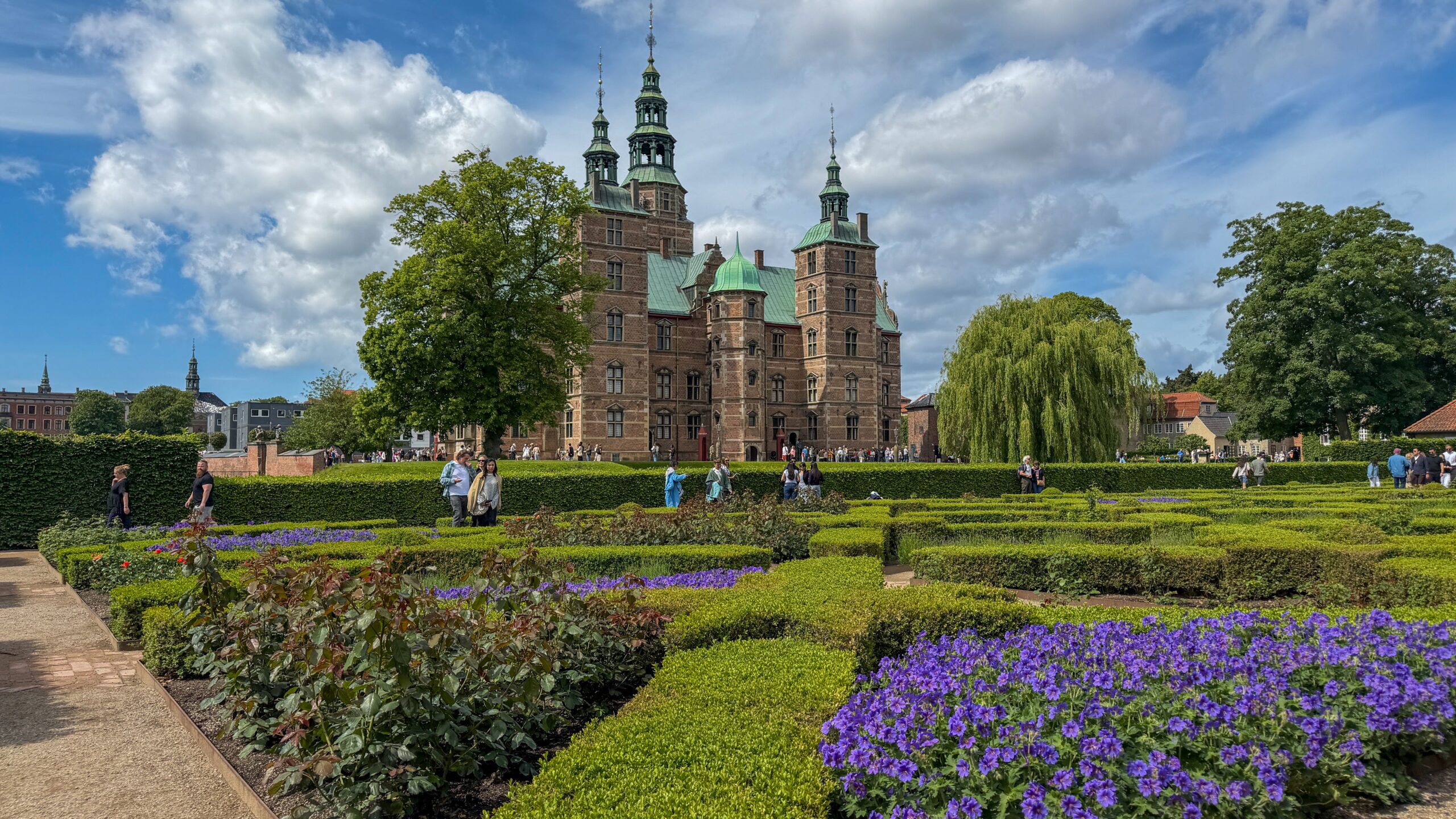
Our next stop was Rosenborg Castle, one of Copenhagen’s best-known landmarks. Built by King Christian IV in the early 1600s as a summer residence, the castle now houses Denmark’s crown jewels and royal treasures.
We had hoped to tour the castle interior, but when we arrived around noon, the next available entry wasn’t until 2:00 PM. Rather than wait for two hours, we decided to skip the indoor visit.
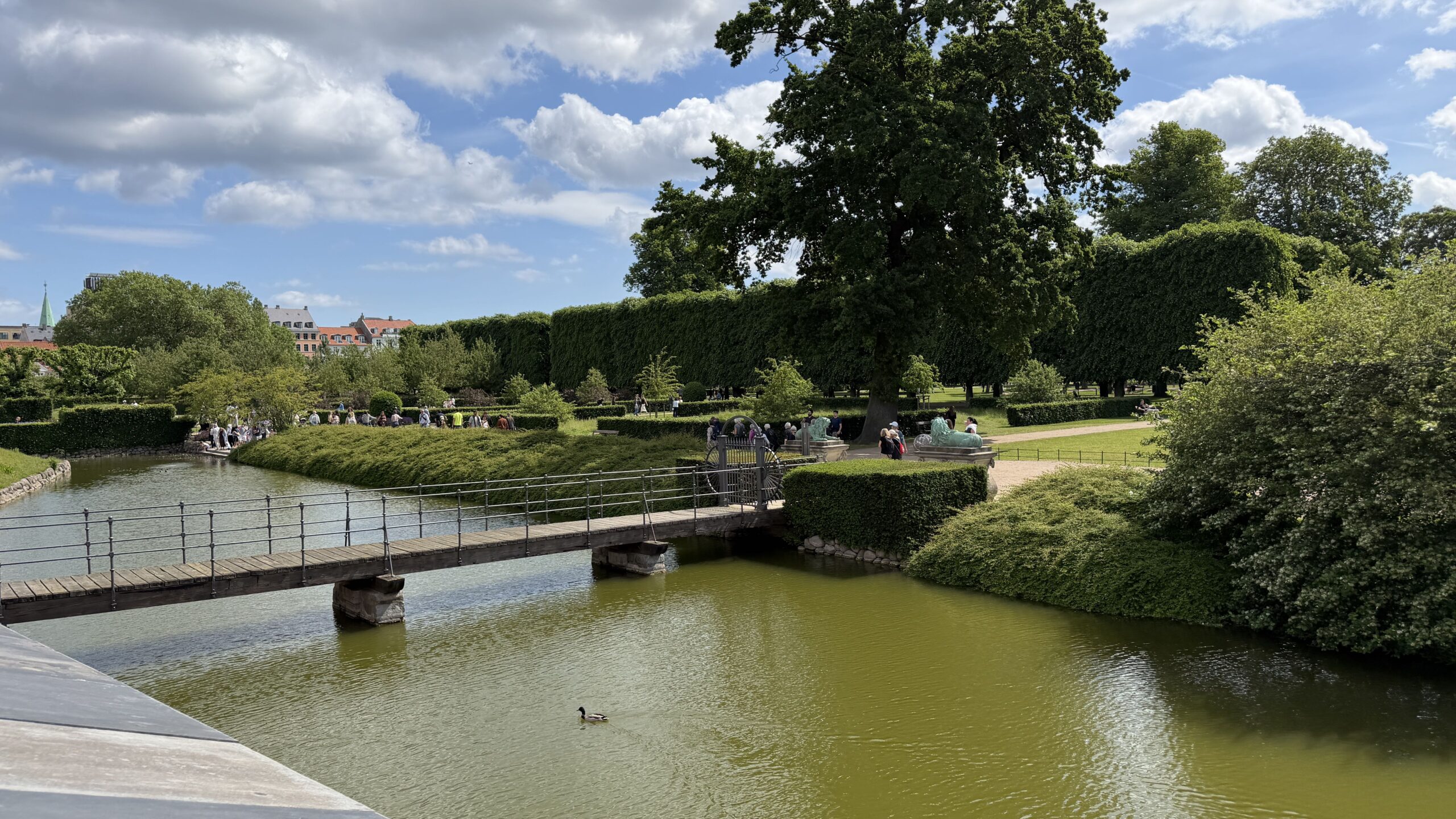
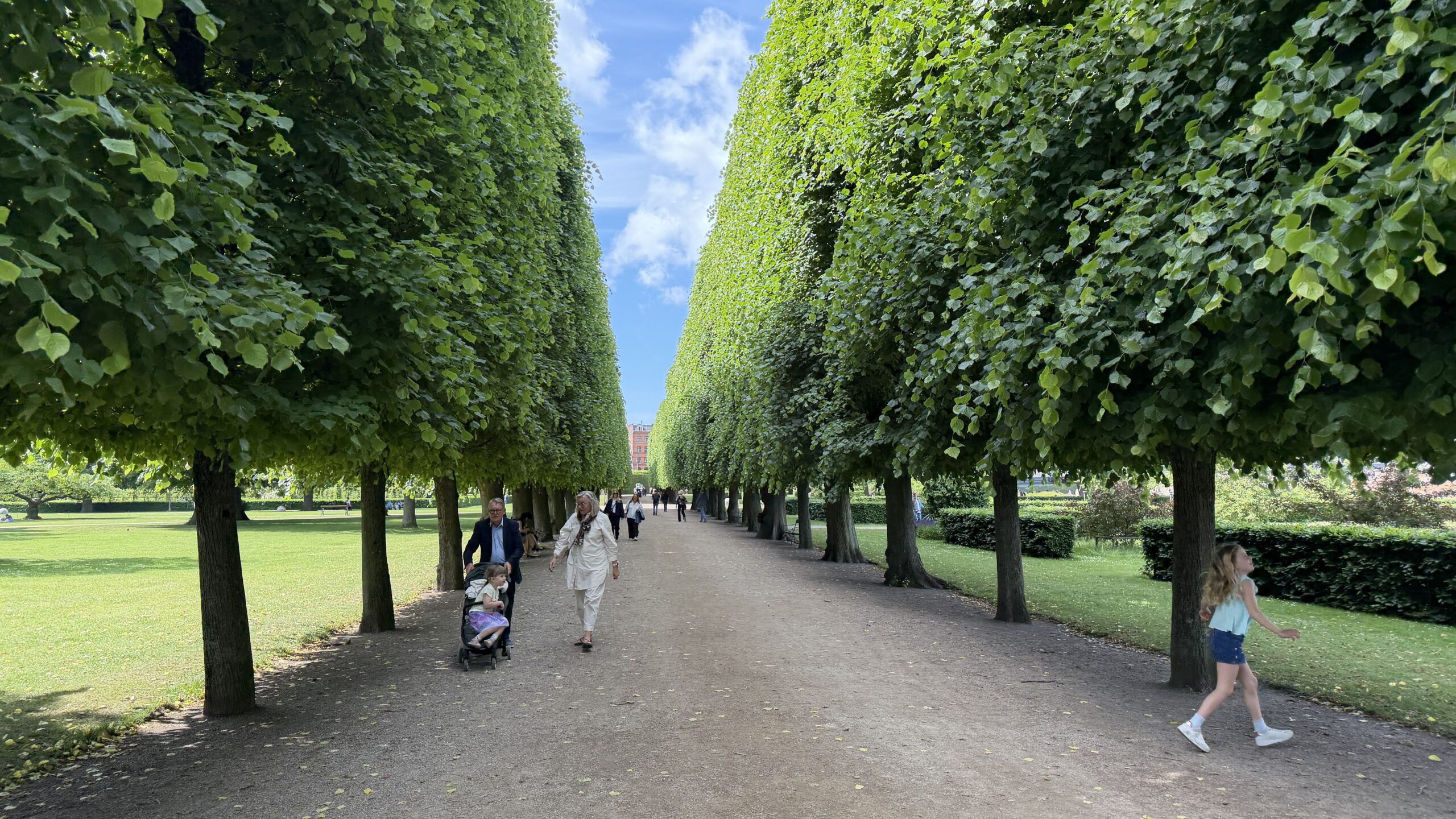
Some of our family went back to hotel to take some rest and some of us stayed back to enjoy the beautiful King’s Garden (Kongens Have) that surrounds the castle.
Sometimes travel doesn’t go exactly as planned, and that’s perfectly okay. Instead of spending the afternoon waiting in line, we enjoyed a leisurely stroll through one of Copenhagen’s oldest and most loved public parks, watching locals relax on the lawns and families enjoy the pleasant summer weather.
Watching the Royal Guards Go to Work (Changing of the Guards Ceremony)
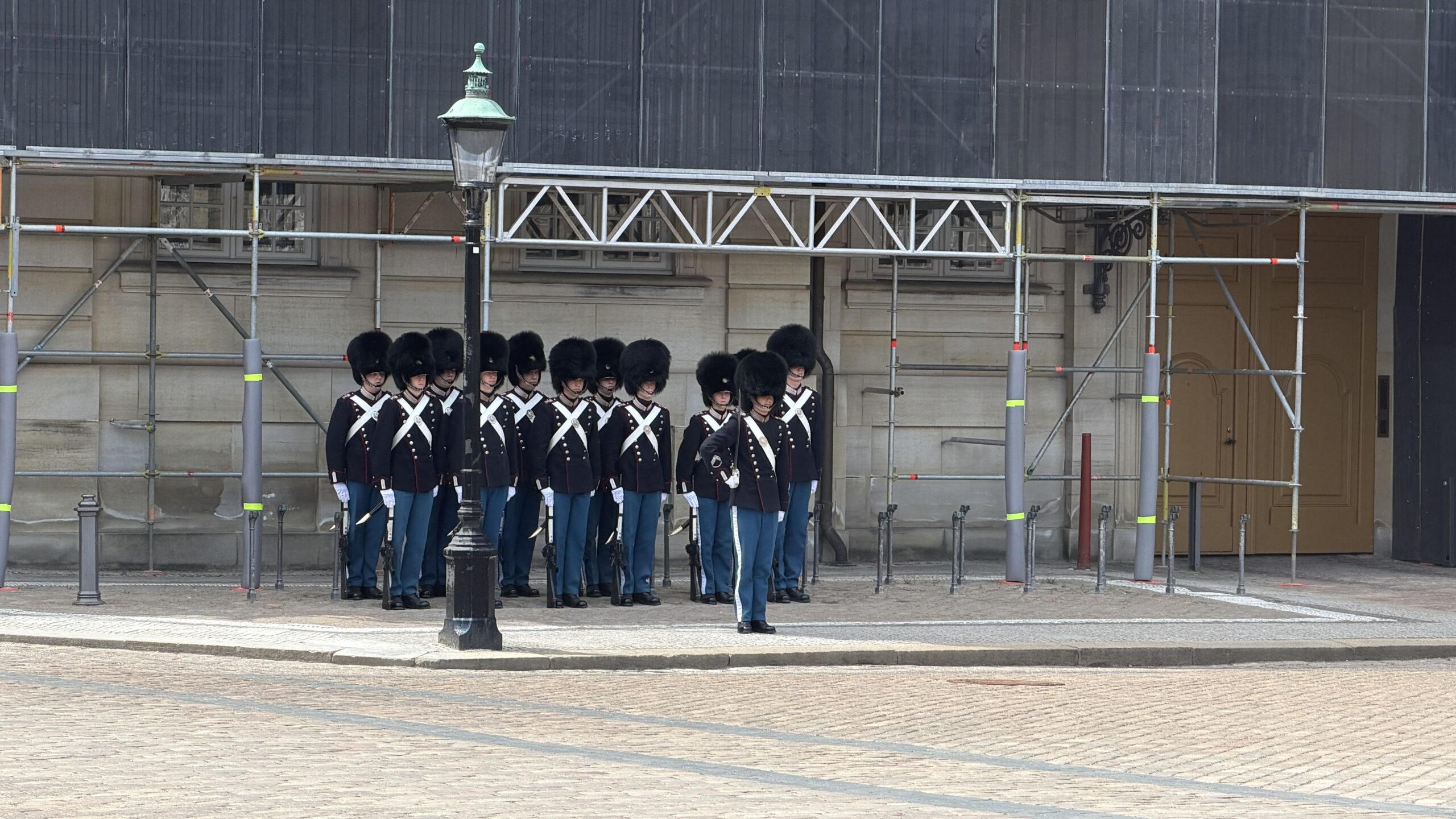
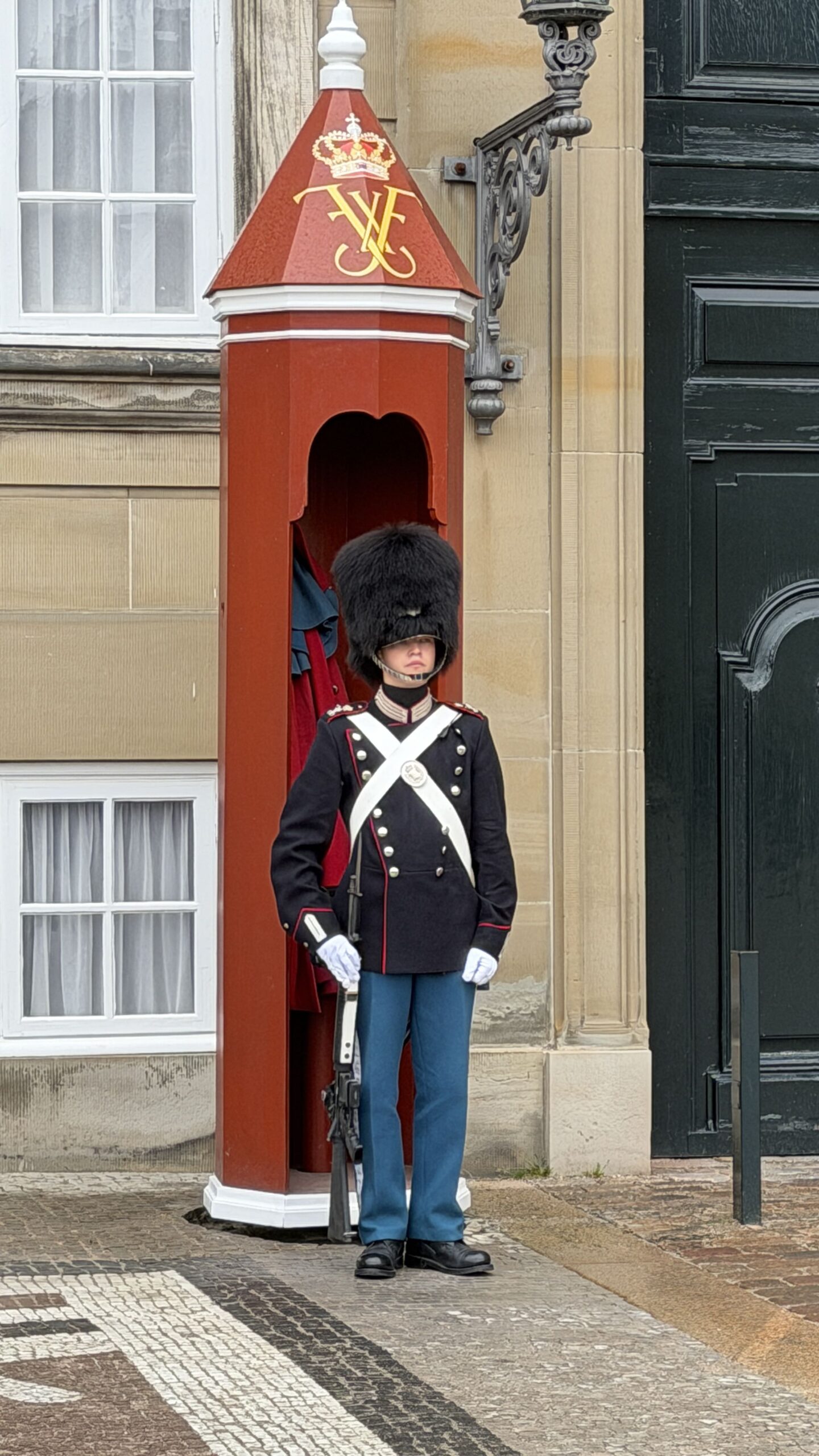
The Changing of the Guard is the famous, free military ceremony where active-duty soldiers hand over security duties at royal residences. Denmark’s Royal Life Guards have protected the Danish monarchy since 1658. Their daily march from Rosenborg Castle to Amalienborg Palace has become one of Copenhagen’s most popular traditions, drawing visitors from around the world.
One of the unexpected highlights of the day was seeing the Royal Life Guards begin their daily march. The guards set off from Rosenborg Castle toward Amalienborg Palace, where the official Changing of the Guard ceremony takes place each day.
As we joined the crowd waiting for the Royal Life Guards to march toward Amalienborg Palace, it struck us how many people had gathered just to watch them.
That sparked a funny conversation among us.
The kids laughed and said, “Imagine if people stood outside every morning just to watch you park your car and walk into the office!”
The more we talked about it, the funnier it became. After all, that’s exactly what was happening. For the thousands of tourists lining the streets, it was one of Copenhagen’s most famous attractions. But for the guards themselves, it was simply another workday. They weren’t performing a show, they were just heading to work while everyone watched, photographed, and applauded.
It gave us a whole new perspective on the ceremony, and every time another guard marched past, we couldn’t help but smile.
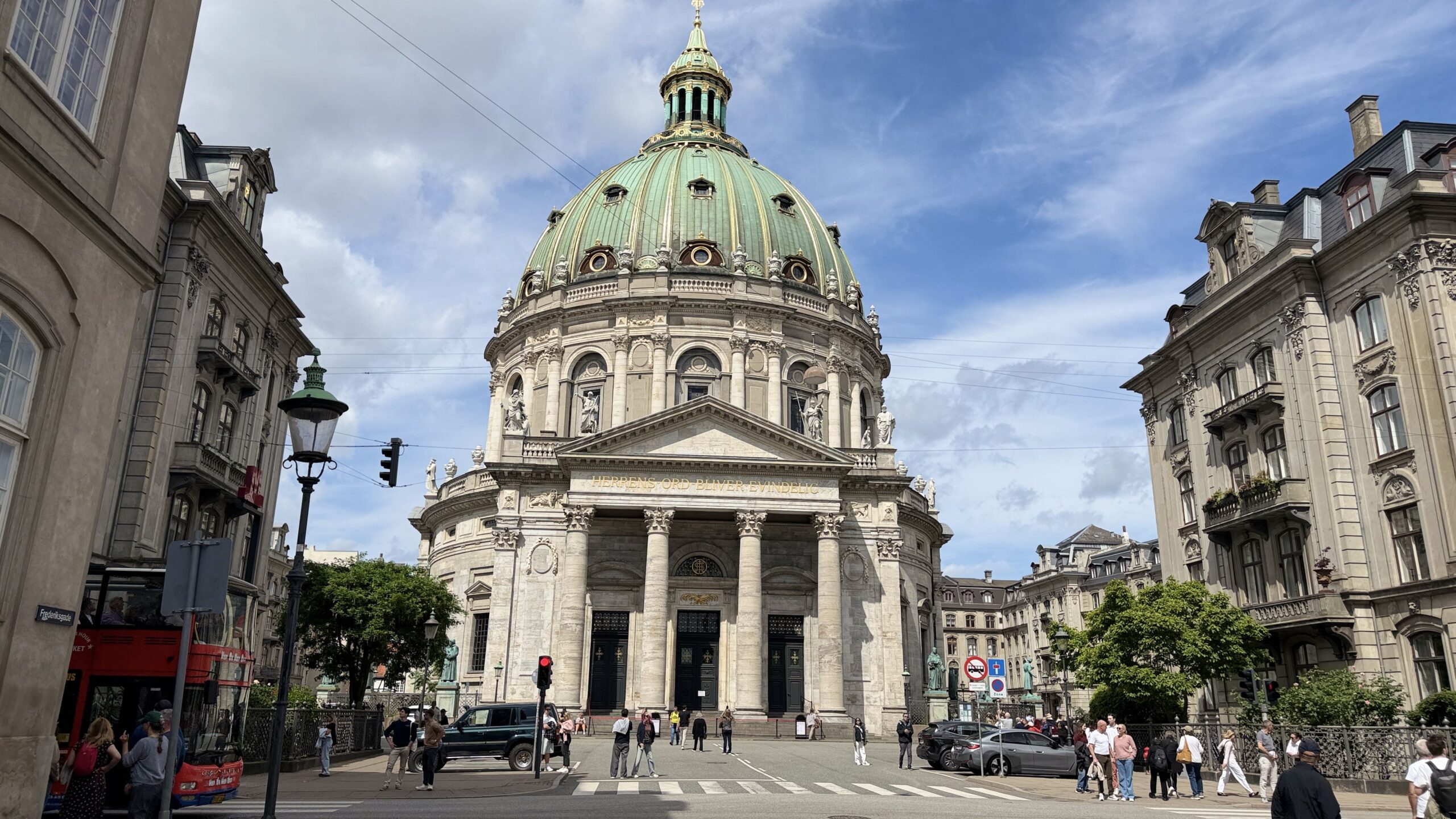
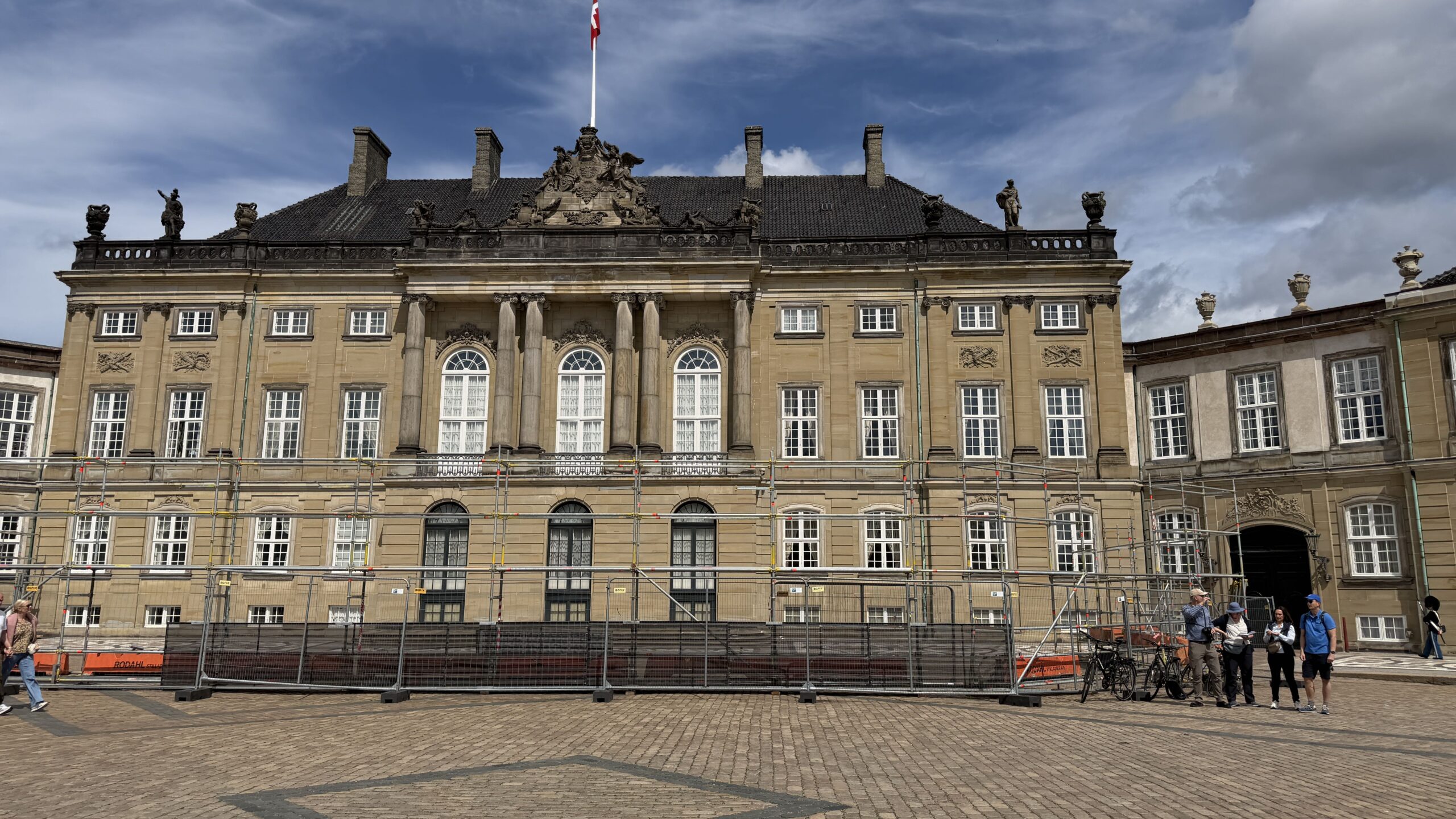
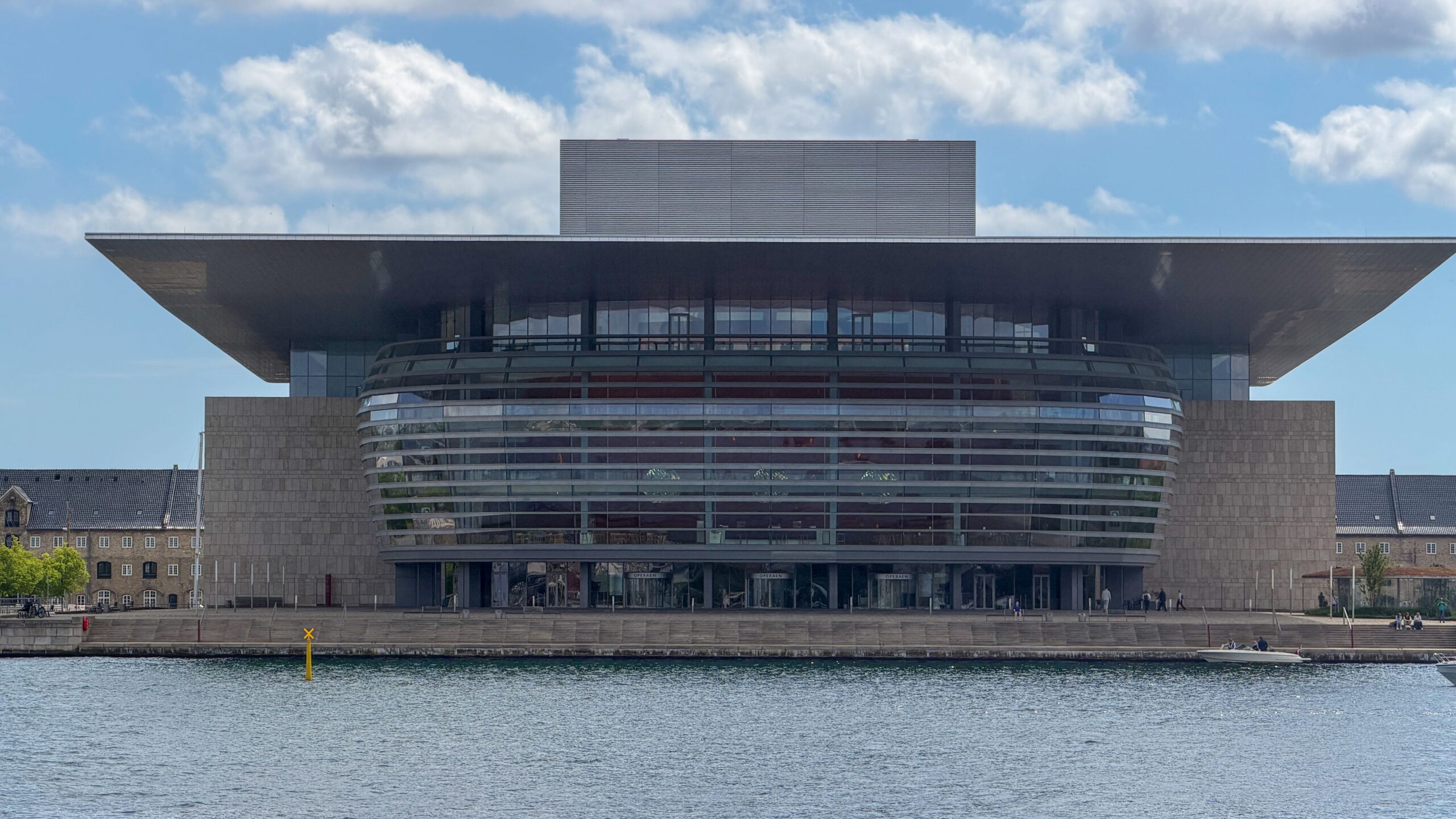
The ceremony at Amalienborg Palace was performed with impressive precision. If members of the Danish royal family are in residence, the ceremony becomes even more elaborate, making it one of Copenhagen’s most popular daily traditions.
A Carnival in the City
After leaving Amalienborg, we walked along the waterfront before making our way back toward Strøget.
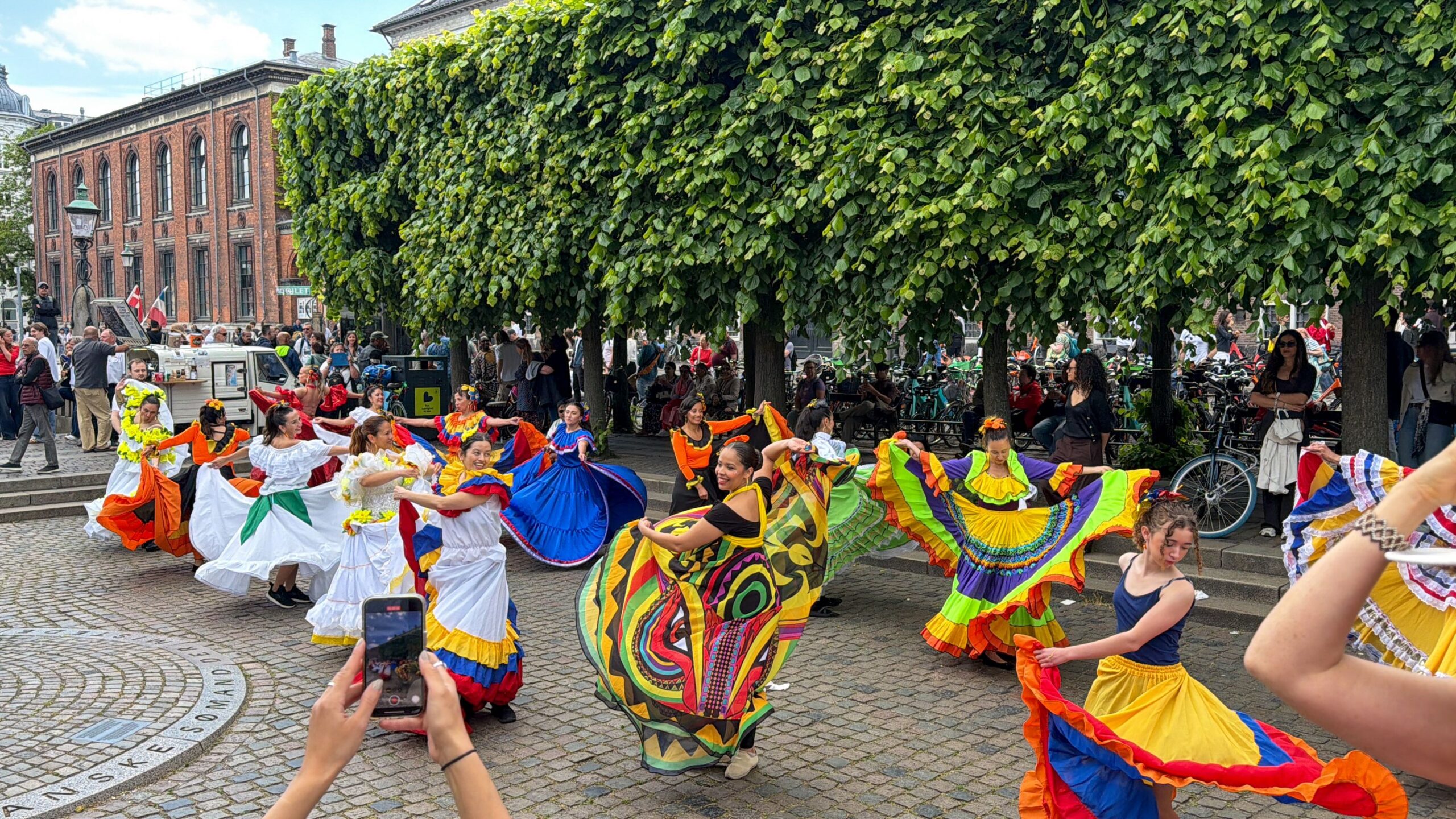
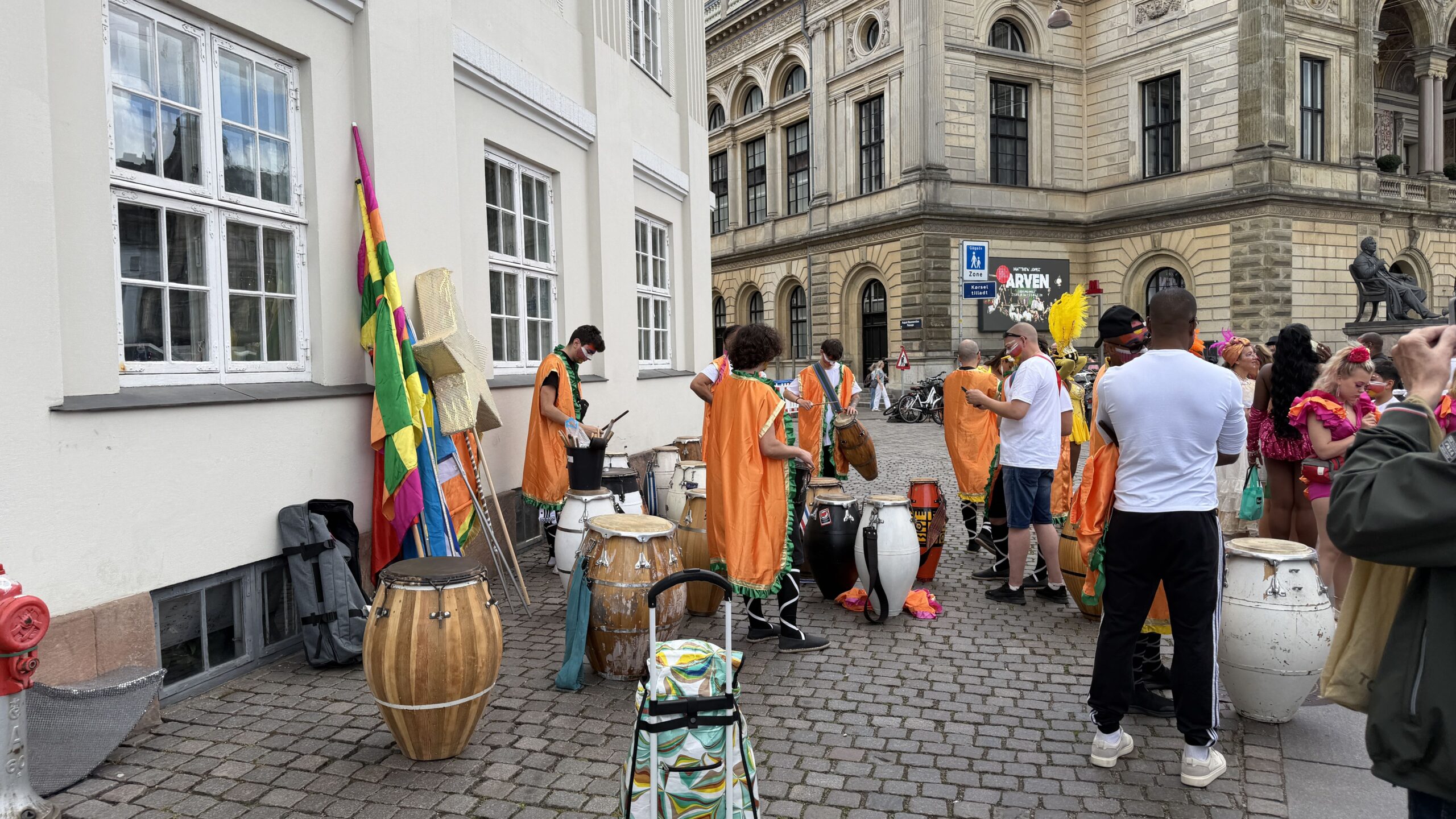
To our surprise, the city felt even livelier than the day before. Music echoed through the streets, performers entertained the crowds, and colorful decorations lined parts of the pedestrian area. We had unknowingly arrived during one of Copenhagen’s street festivals, giving the city an extra burst of energy. It wasn’t something we had planned to see, which made it all the more enjoyable.
These unexpected local events often become some of the most memorable parts of a trip.
A Simple Lunch and a Relaxed Afternoon
After several hours of walking, we were ready for something easy, so we stopped at a pizza restaurant for lunch.
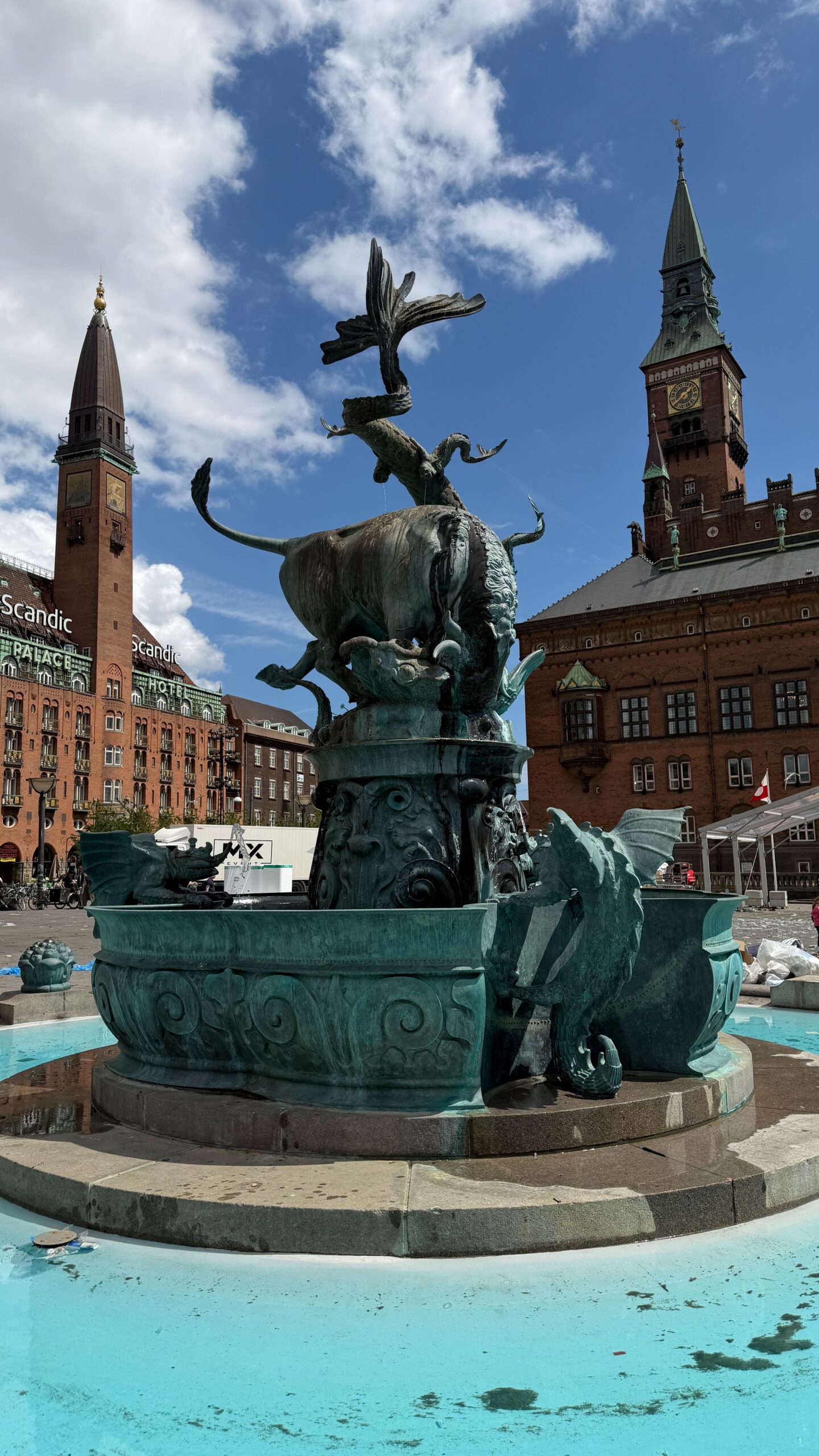
Nothing fancy, just a satisfying meal and a chance to rest our feet before making our way back through City Hall Square and returning to the hotel for a short break.
Meeting Our Travel Family
The evening marked the official beginning of the guided portion of our Denmark journey.
At 6:30 PM, we met our tour director, along with the rest of our travel group. Before dinner, Tour director carefully collected everyone’s dietary preferences and allergy information, making sure every traveler would be well looked after throughout the tour. It was a thoughtful touch that immediately gave us confidence in how well the trip would be organized.
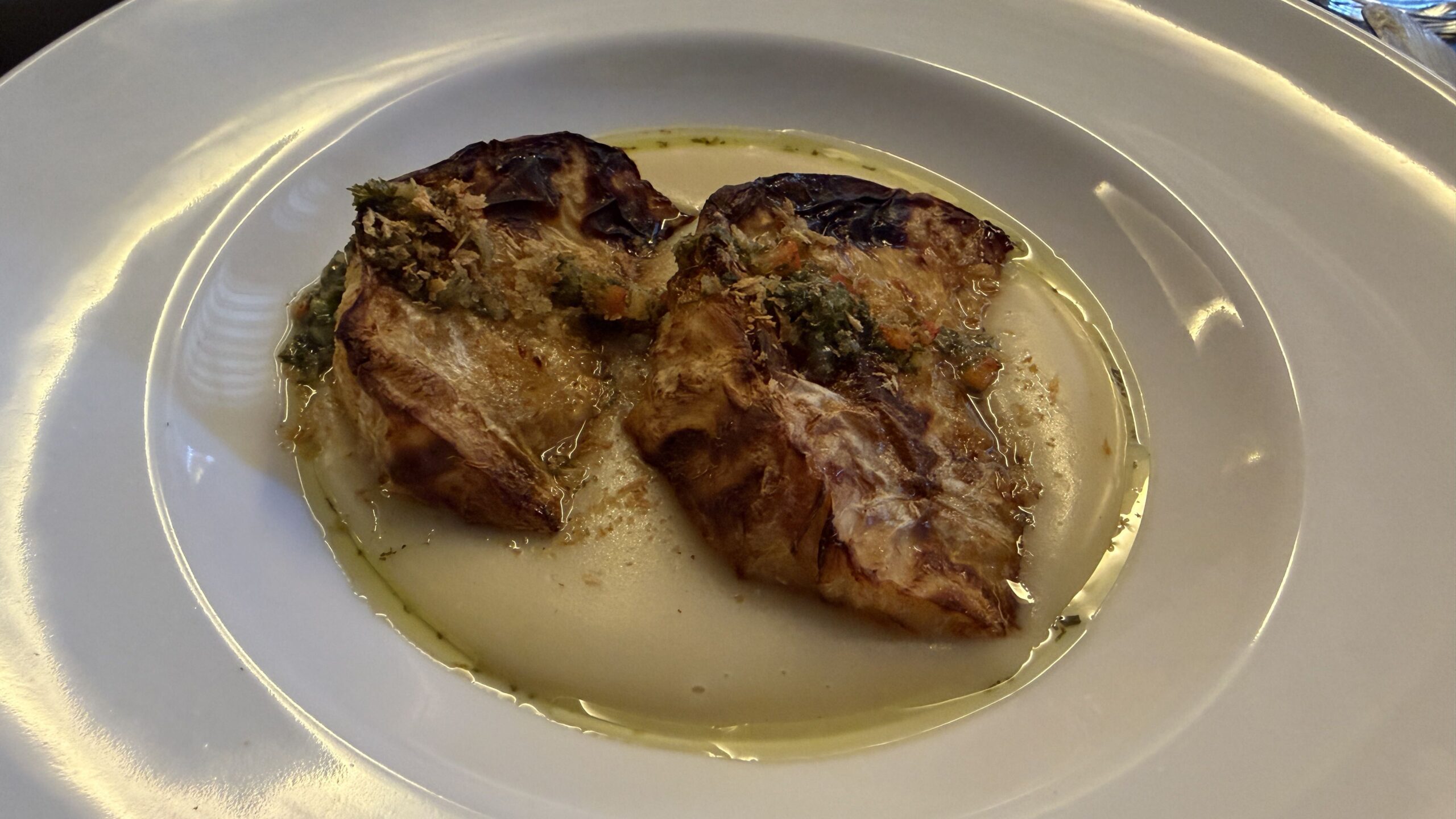
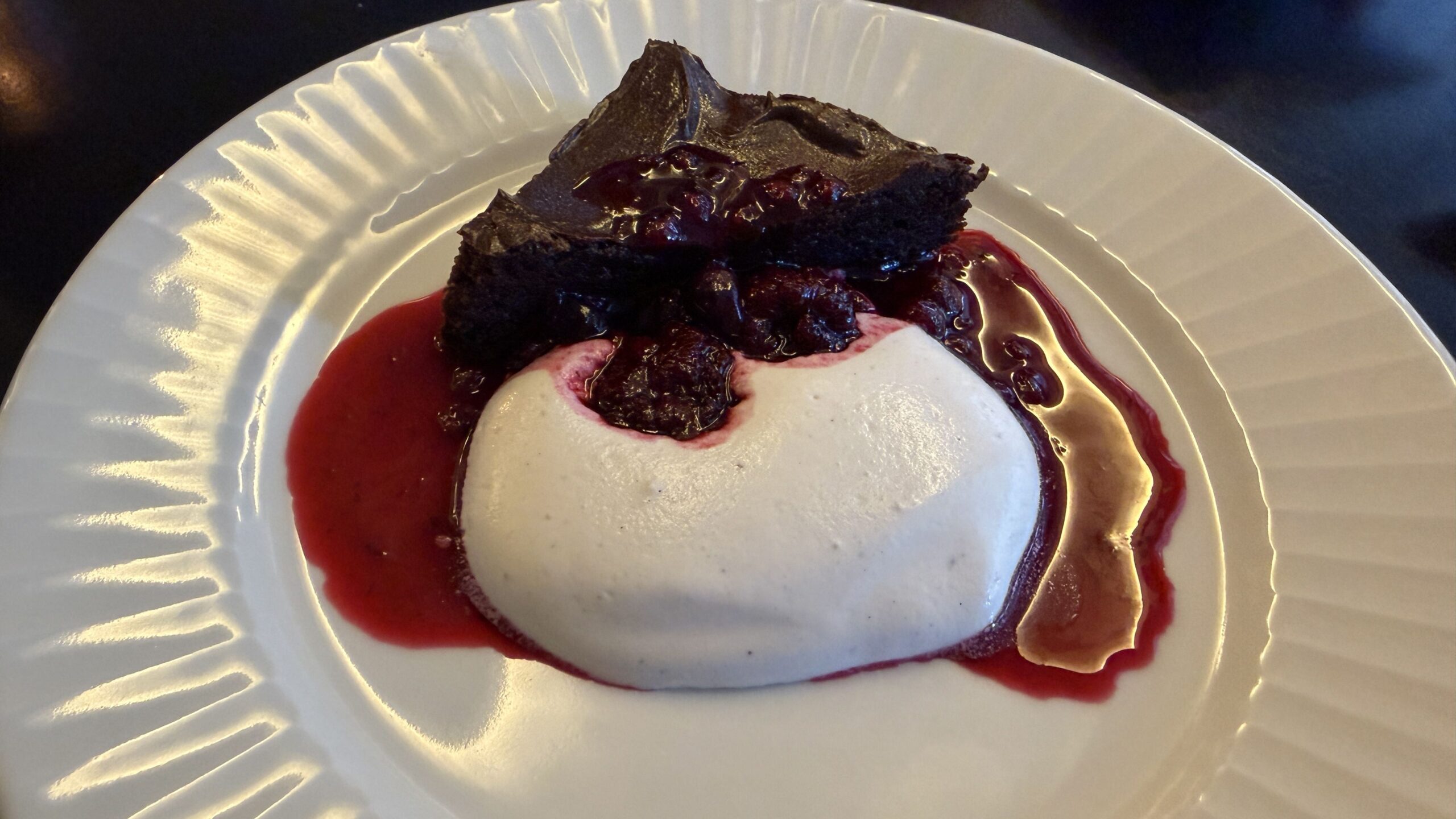
Our welcome dinner offered a choice between beef and a vegetarian entrée. We chose the vegetarian option, which featured a variety of seasonal root vegetables prepared in a distinctly Scandinavian style. It was simple, fresh, and a fitting introduction to Nordic cuisine.
Tomorrow, the real adventure would begin.

Day 3 – Copenhagen & to Berlin
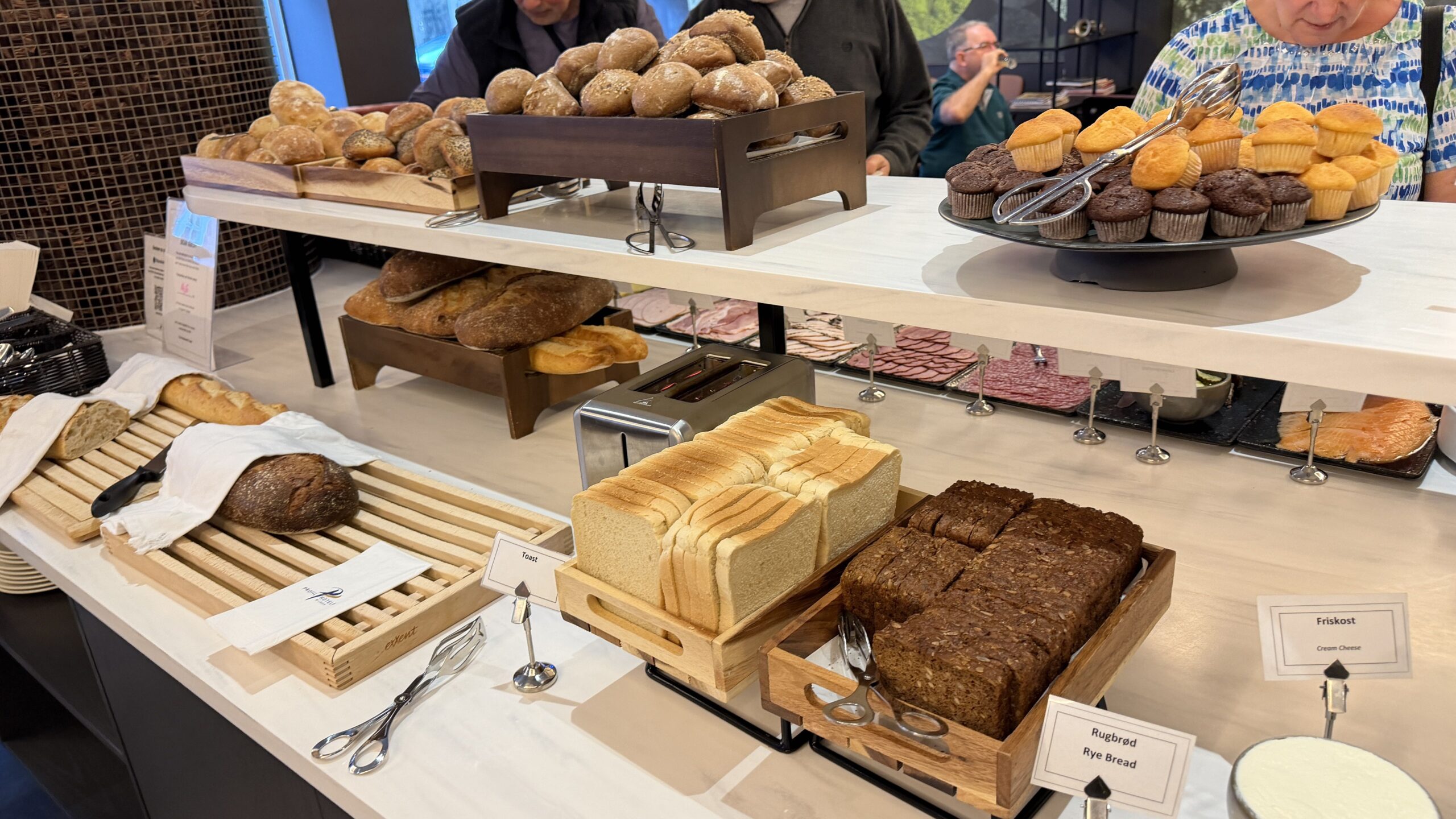
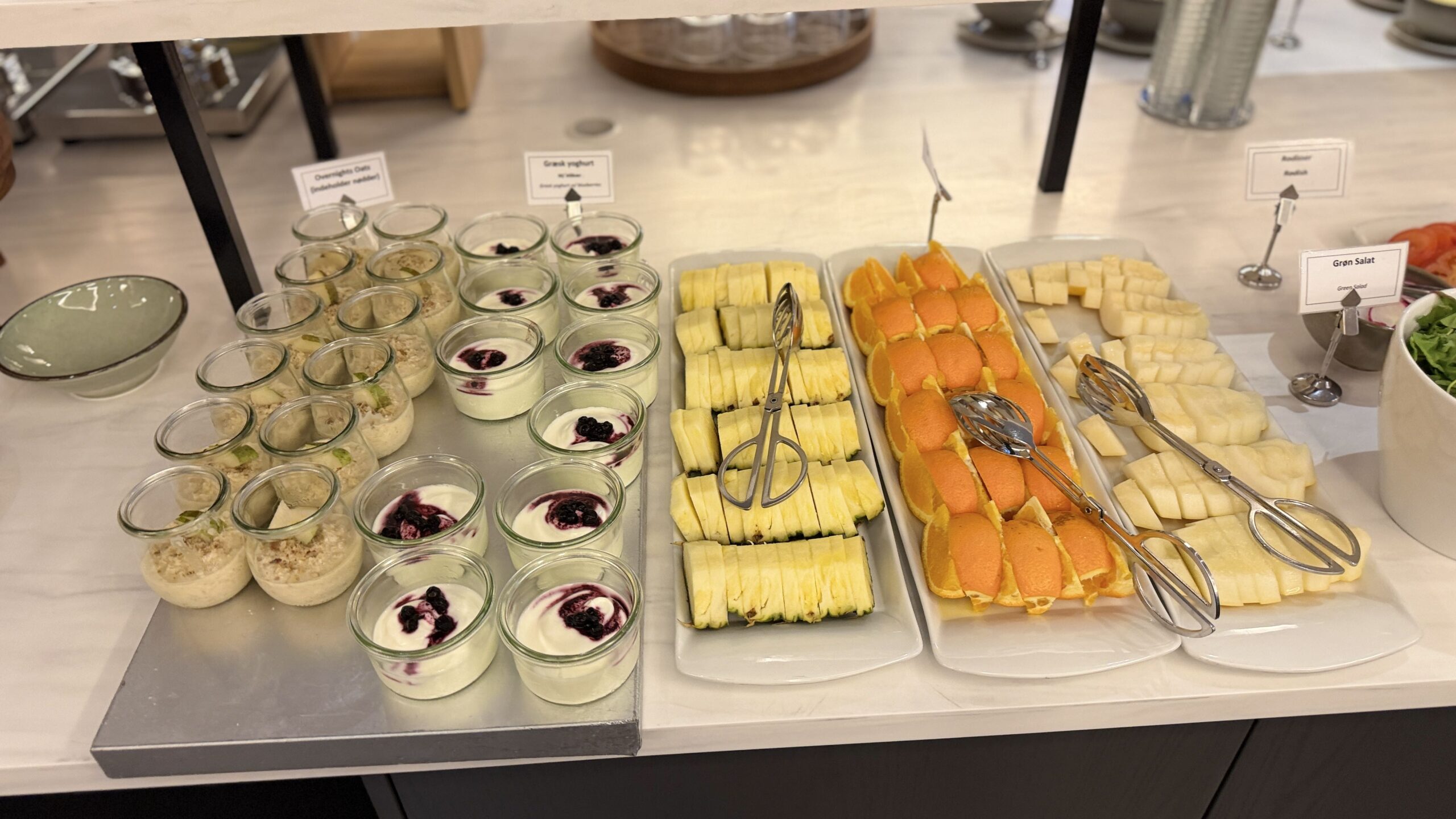
Our final morning in Copenhagen began with breakfast at the hotel before loading our luggage onto the tour coach. It was time to say goodbye to Denmark’s charming capital and begin our journey toward Germany. Rather than heading straight out of the city, our itinerary included a guided sightseeing tour, a perfect way to revisit some of Copenhagen’s most iconic landmarks before leaving.


One Last Walk Through Nyhavn
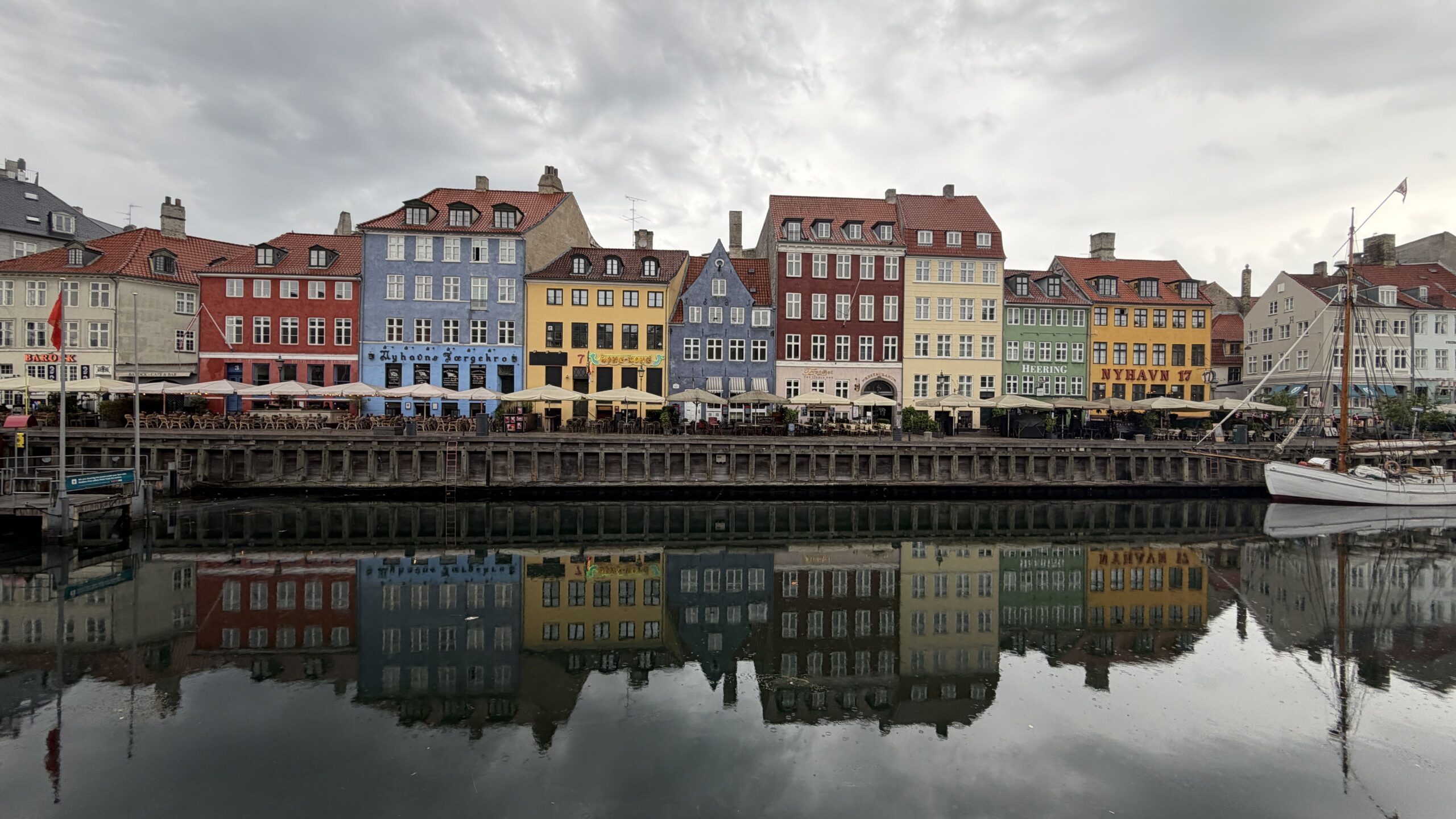
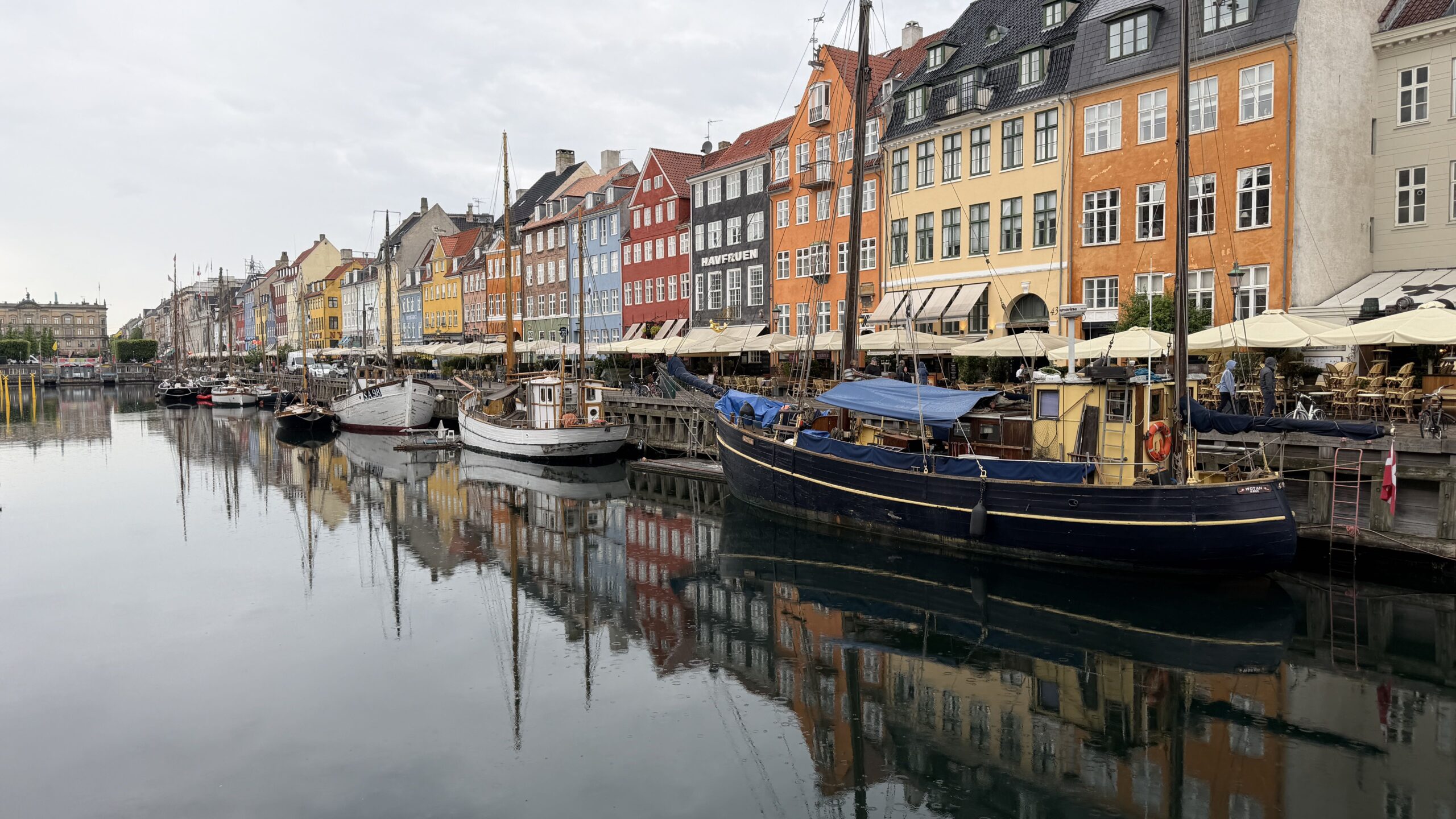
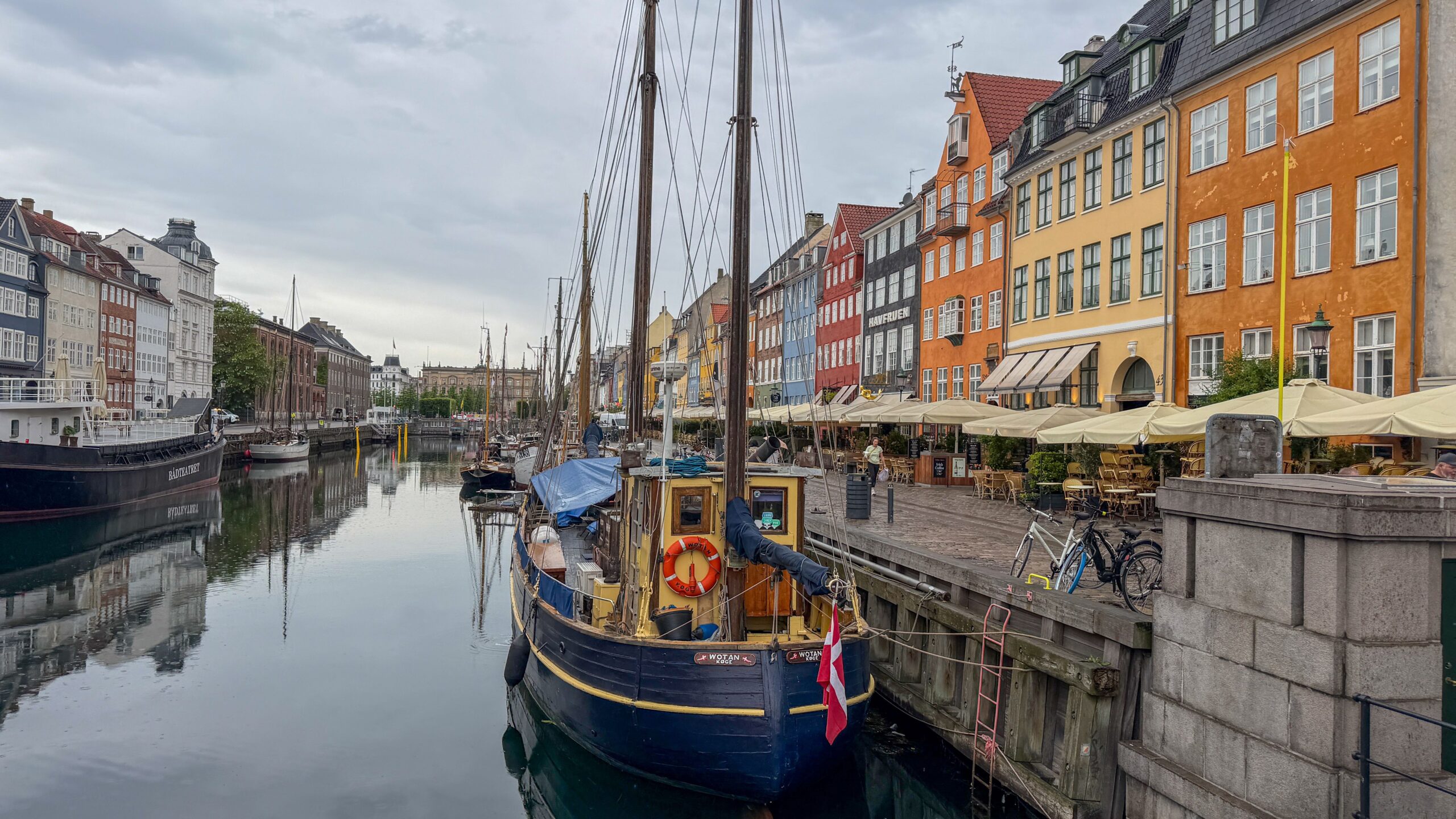
Our first stop was the colorful harbor of Nyhavn.
Even though we had explored it the previous evening, Nyhavn looked completely different in the bright morning light. The colorful waterfront houses reflected beautifully in the calm canal, while cafés slowly filled with locals enjoying their morning coffee.
As we walked along the harbor, our local guide shared stories about the historic buildings that line the canal. Most date back to the 17th and 18th centuries, when Nyhavn was one of Copenhagen’s busiest commercial ports. Today, those former warehouses and sailors’ homes have been transformed into some of the city’s most photographed cafés and restaurants.
It was a wonderful opportunity to appreciate the harbor one last time before continuing our journey.
Copenhagen’s Royal Side
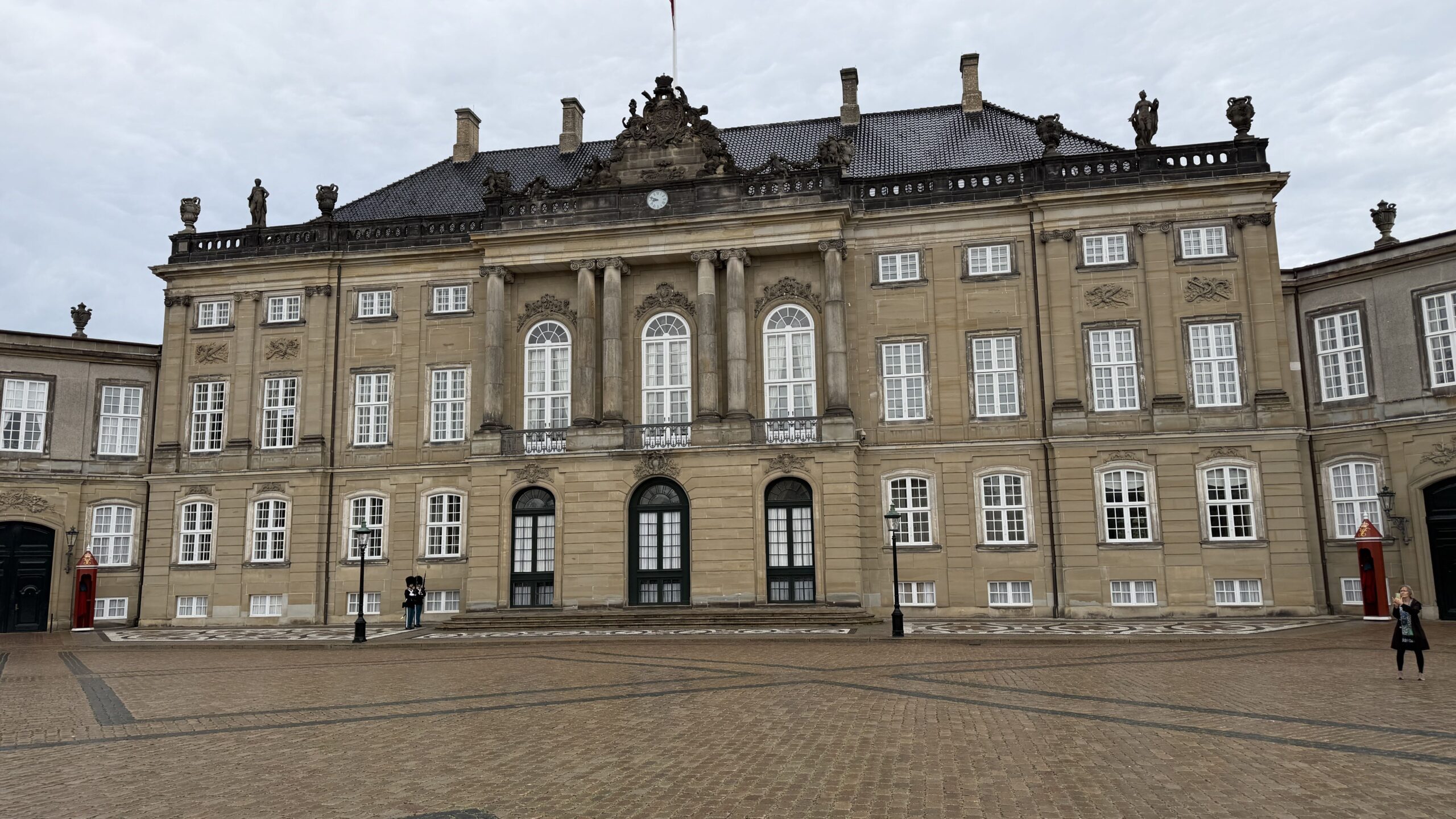
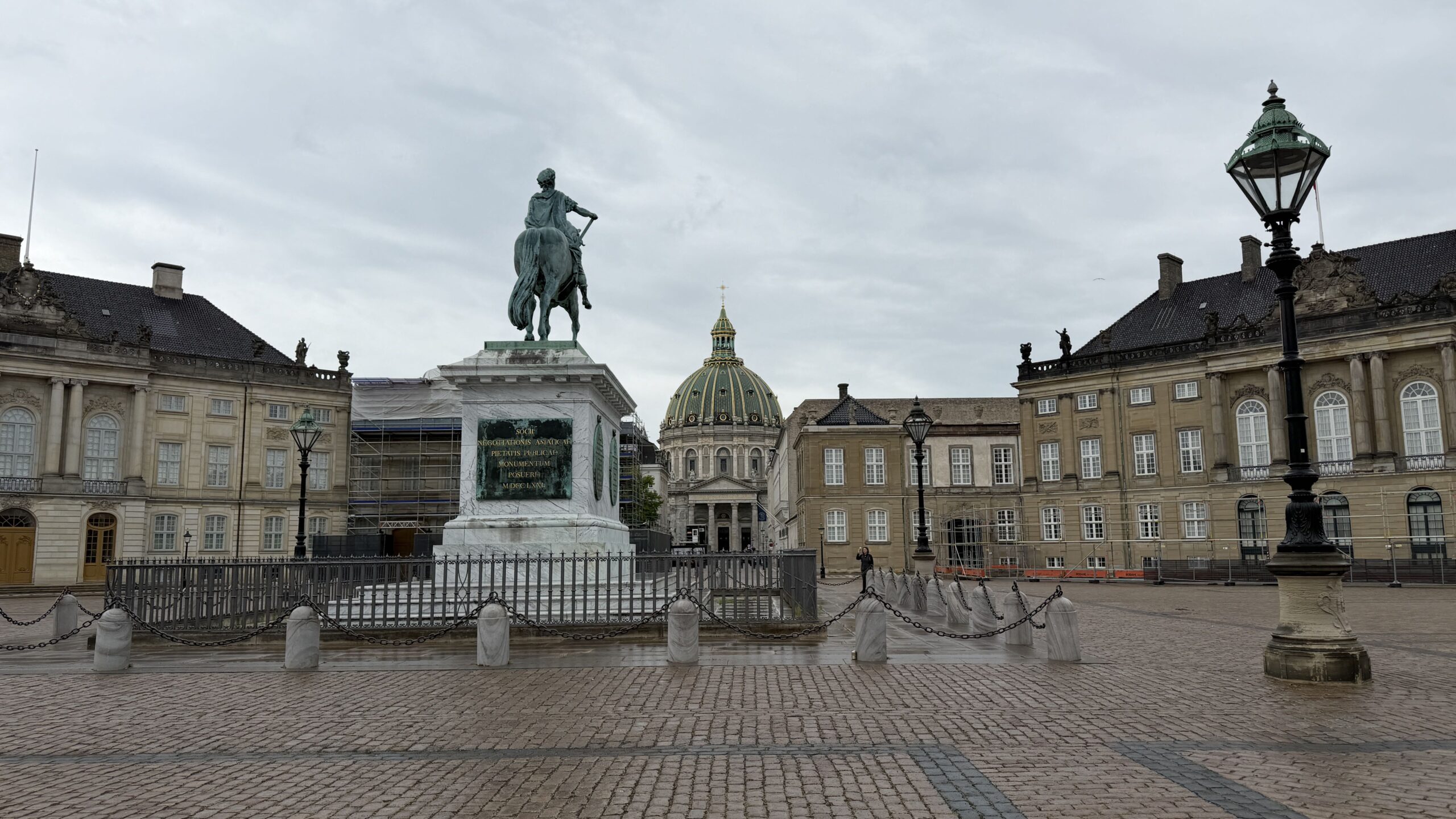
From Nyhavn, our coach took us to Amalienborg Palace, the official residence of Denmark’s royal family.
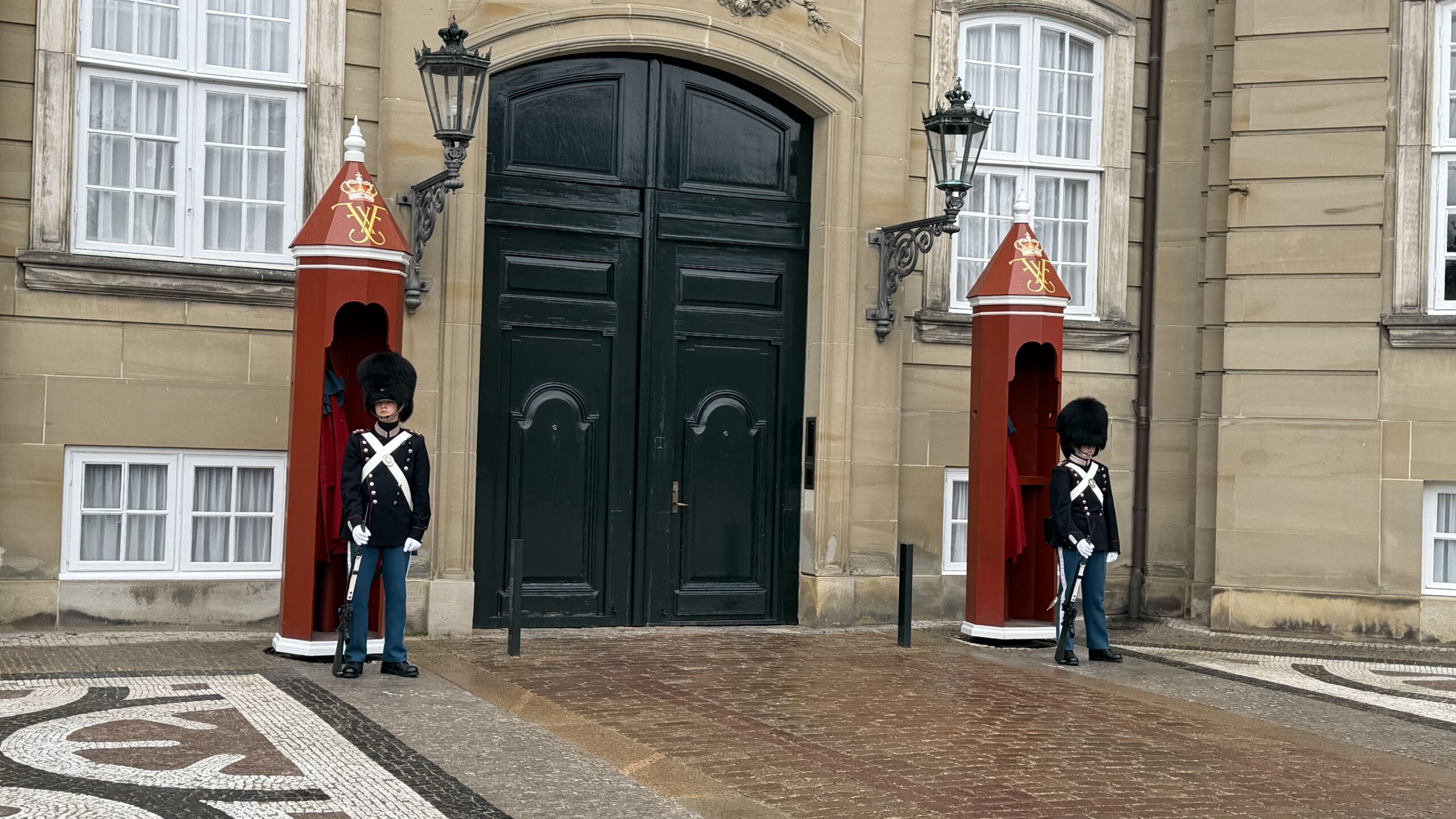
The elegant Rococo-style palace complex is made up of four nearly identical buildings arranged around a central square, where the Danish Royal Guard stands watch. Unlike many royal residences around the world, Amalienborg continues to serve as a working home for the Danish monarchy.
Our guide explained that when the royal family is in residence, a special flag flies above the palace, quietly letting everyone know the King or Queen is home.
Meeting Copenhagen’s Most Famous Resident
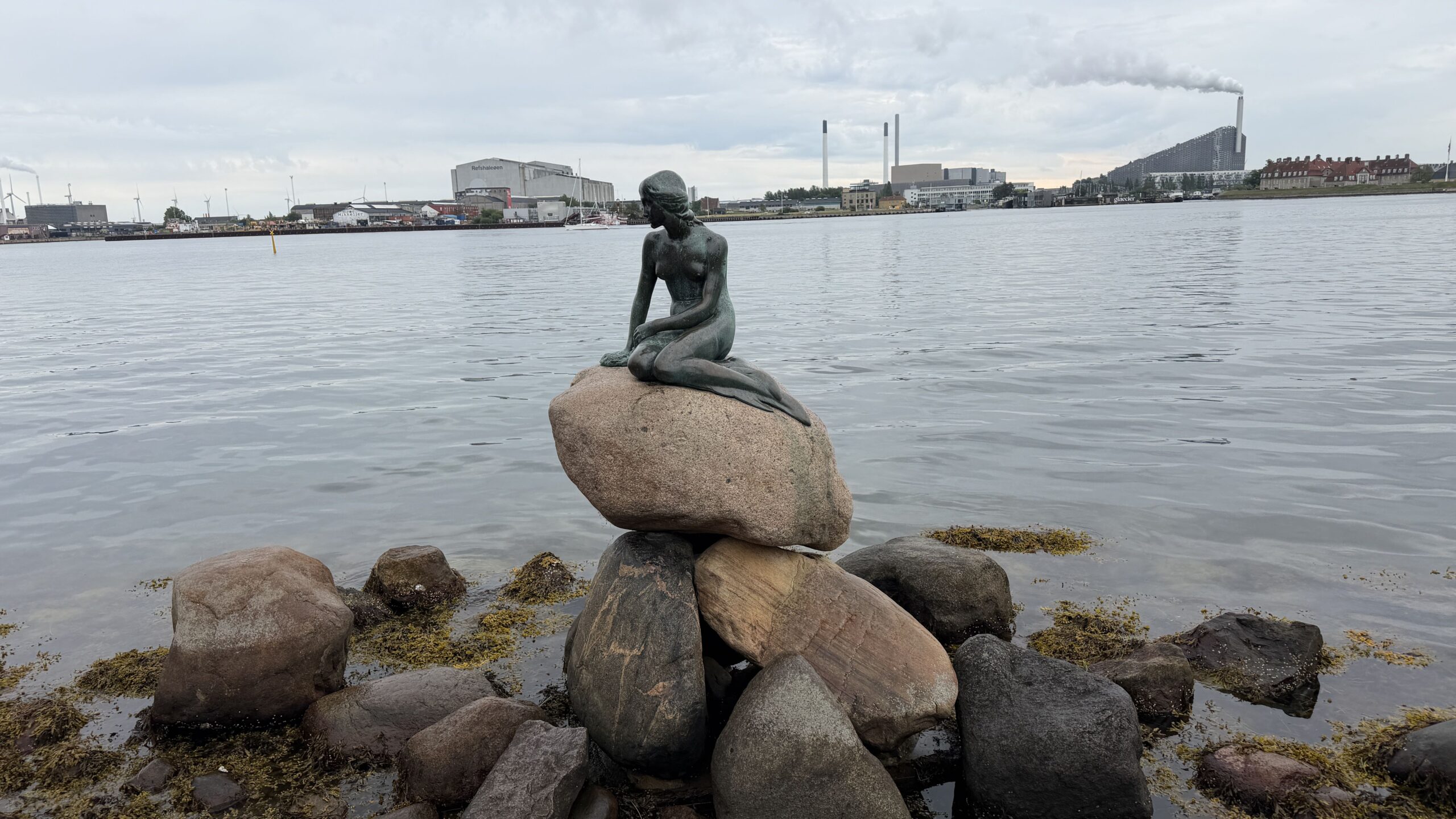
No visit to Copenhagen would be complete without stopping at the city’s most famous landmark—the The Little Mermaid.
Although the statue is only about 1.25 meters (just over 4 feet) tall, it has become one of the world’s most recognizable sculptures. Inspired by Hans Christian Andersen’s beloved fairy tale, it has welcomed visitors to Copenhagen’s harbor for more than a century.
Perched gracefully on a rock overlooking the harbor, the bronze statue is surprisingly small compared to what many visitors expect. Inspired by the fairy tale written by Hans Christian Andersen, the statue has become an enduring symbol of Copenhagen since it was unveiled in 1913.
Despite its modest size, visitors from around the world gather here every day, patiently waiting for their turn to capture the perfect photograph.
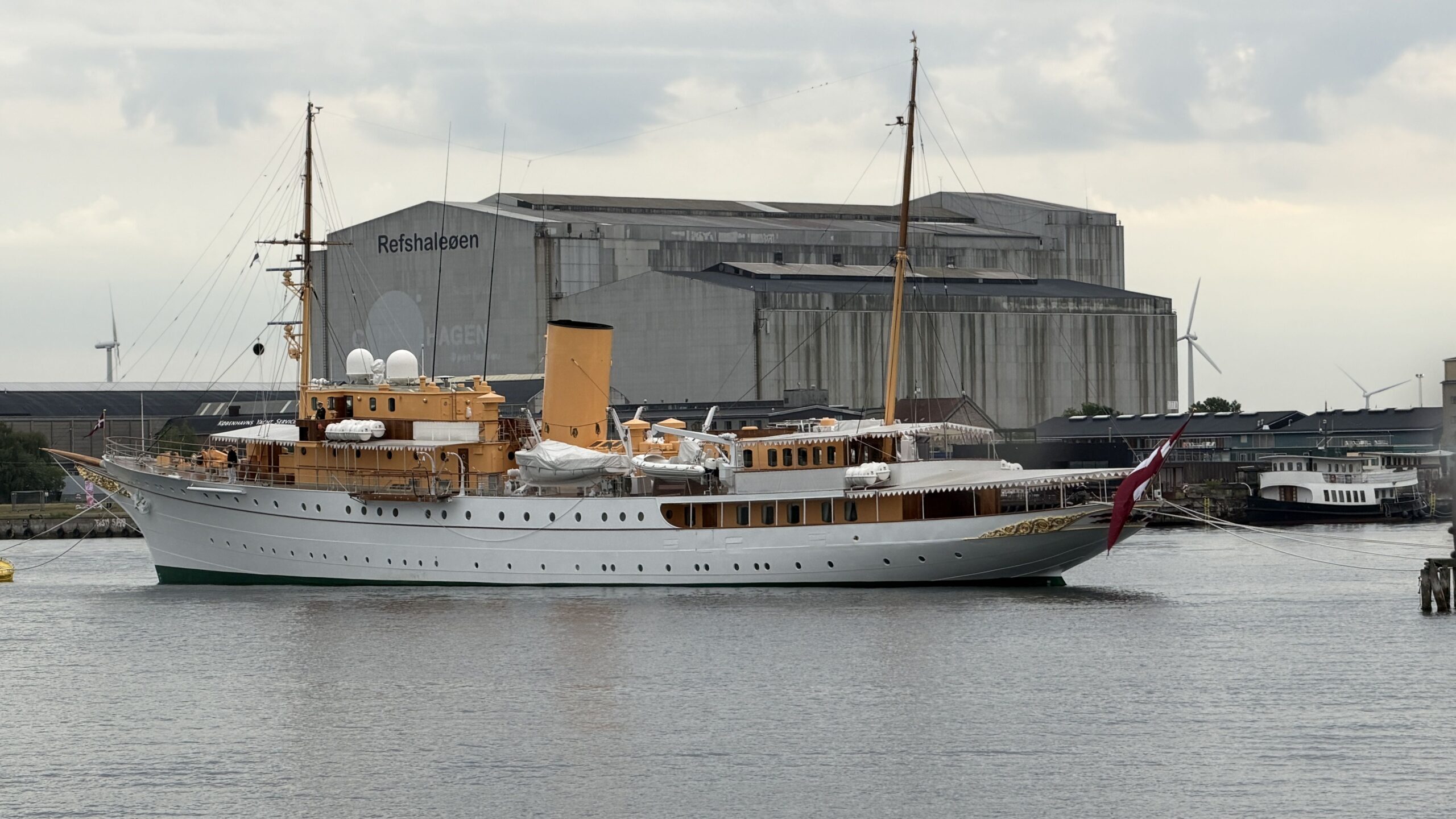
One Last Taste of Copenhagen
After our sightseeing tour, the coach returned to the area near Tivoli Garden & City Hall Square, where we had about an hour of free time.
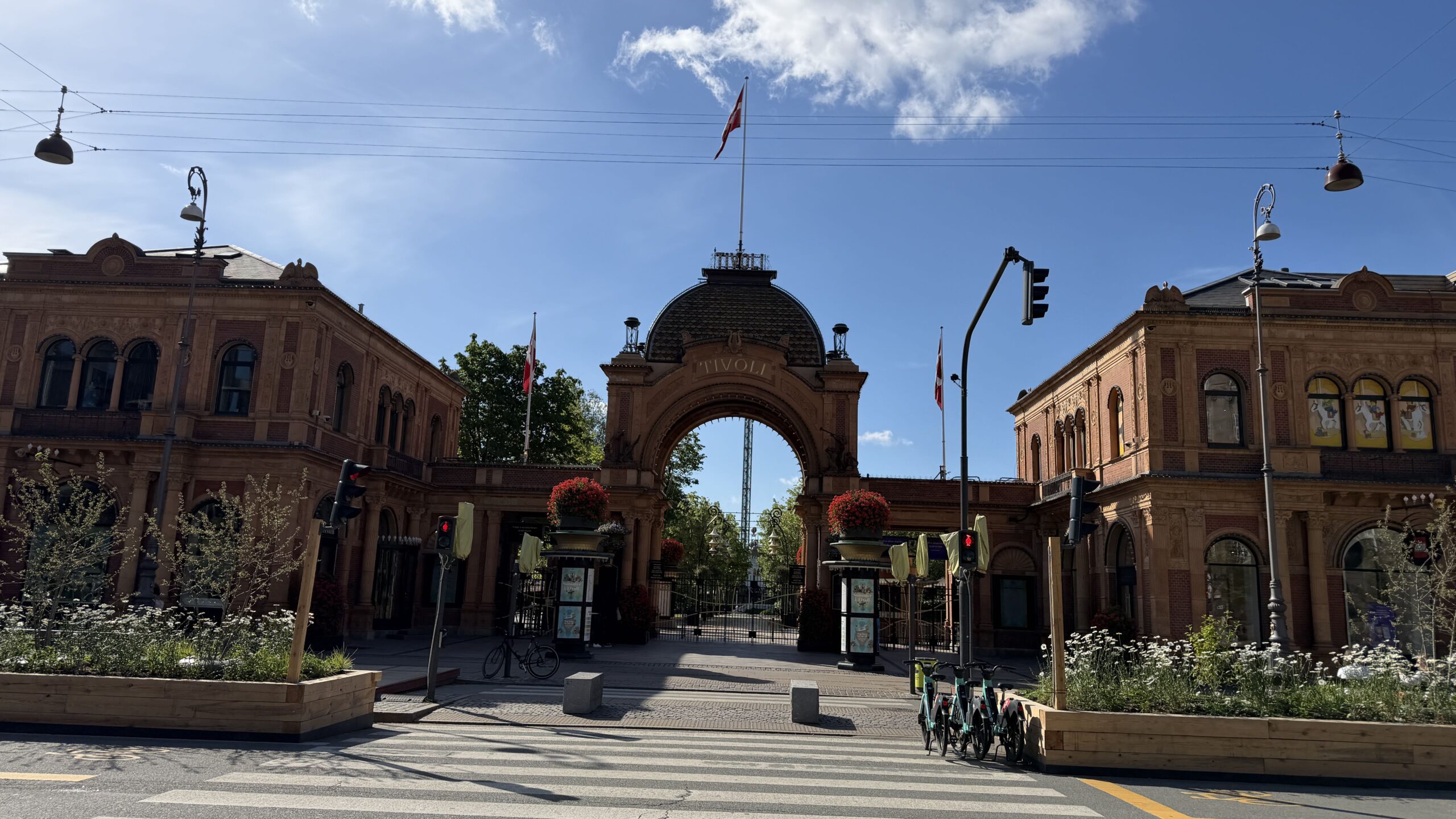
Before leaving Copenhagen, we had one more chance to walk past the entrance of Tivoli Gardens. Although we didn’t go inside, our local guide shared one of the park’s most fascinating stories.
Opened in 1843, Tivoli Gardens is one of the oldest operating amusement parks in the world. The guide explained that Walt Disney visited Tivoli several times and was so impressed by its beautiful gardens, evening lights, family-friendly atmosphere, and meticulously maintained grounds that it became one of the inspirations for Disneyland.
Standing outside the entrance, it was easy to imagine why. Even without stepping inside, the park had a charming, storybook feel.
Since the park typically opens later in the morning, around 10 or 11 o’clock depending on the season, it didn’t fit into our sightseeing schedule. Looking back, if you’re traveling with younger children, Tivoli is definitely worth setting aside at least half a day—or even an entire evening. It’s much more than an amusement park; it’s one of Copenhagen’s most beloved landmarks and a place where both kids and adults can enjoy the magic.
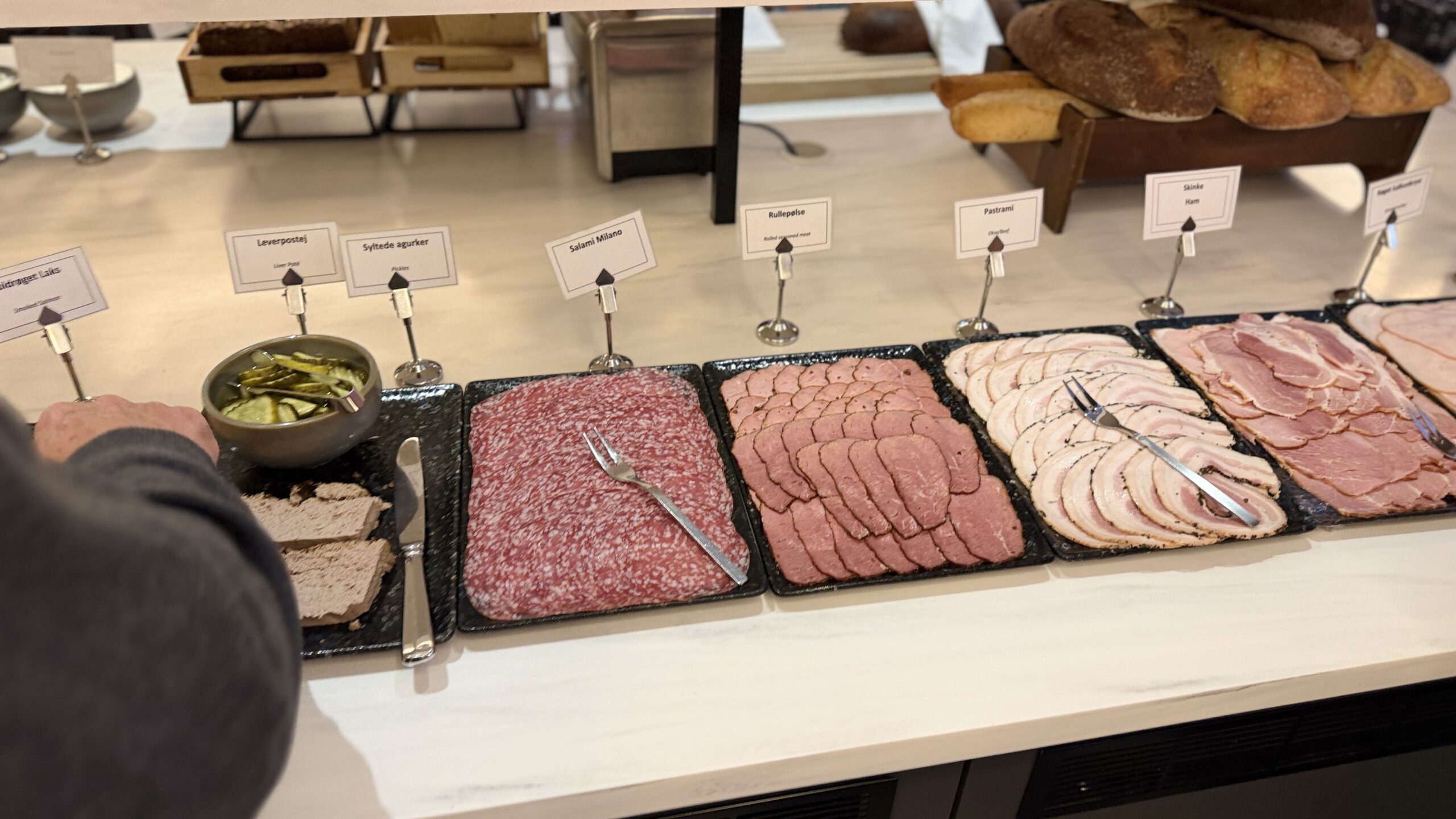
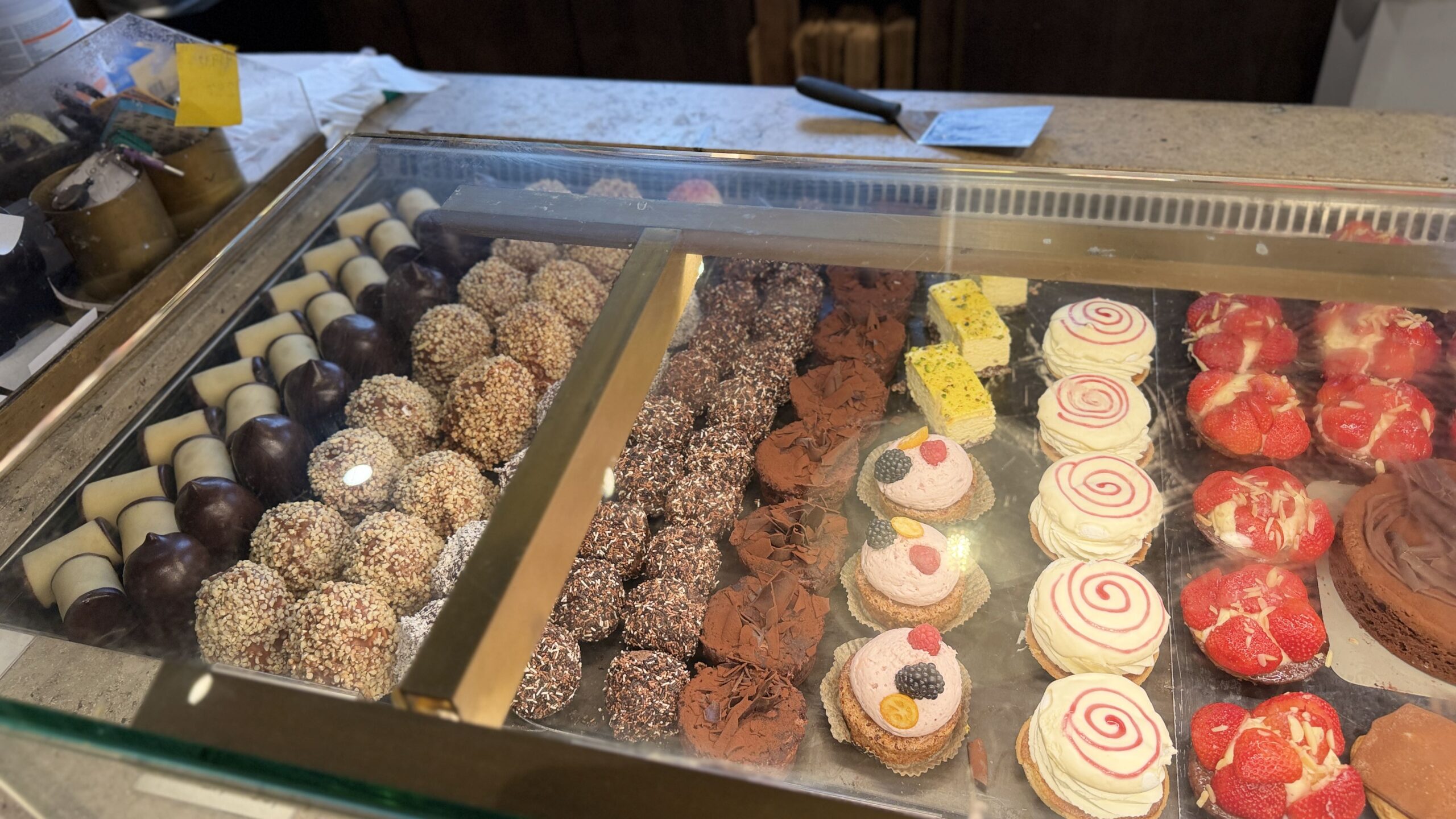
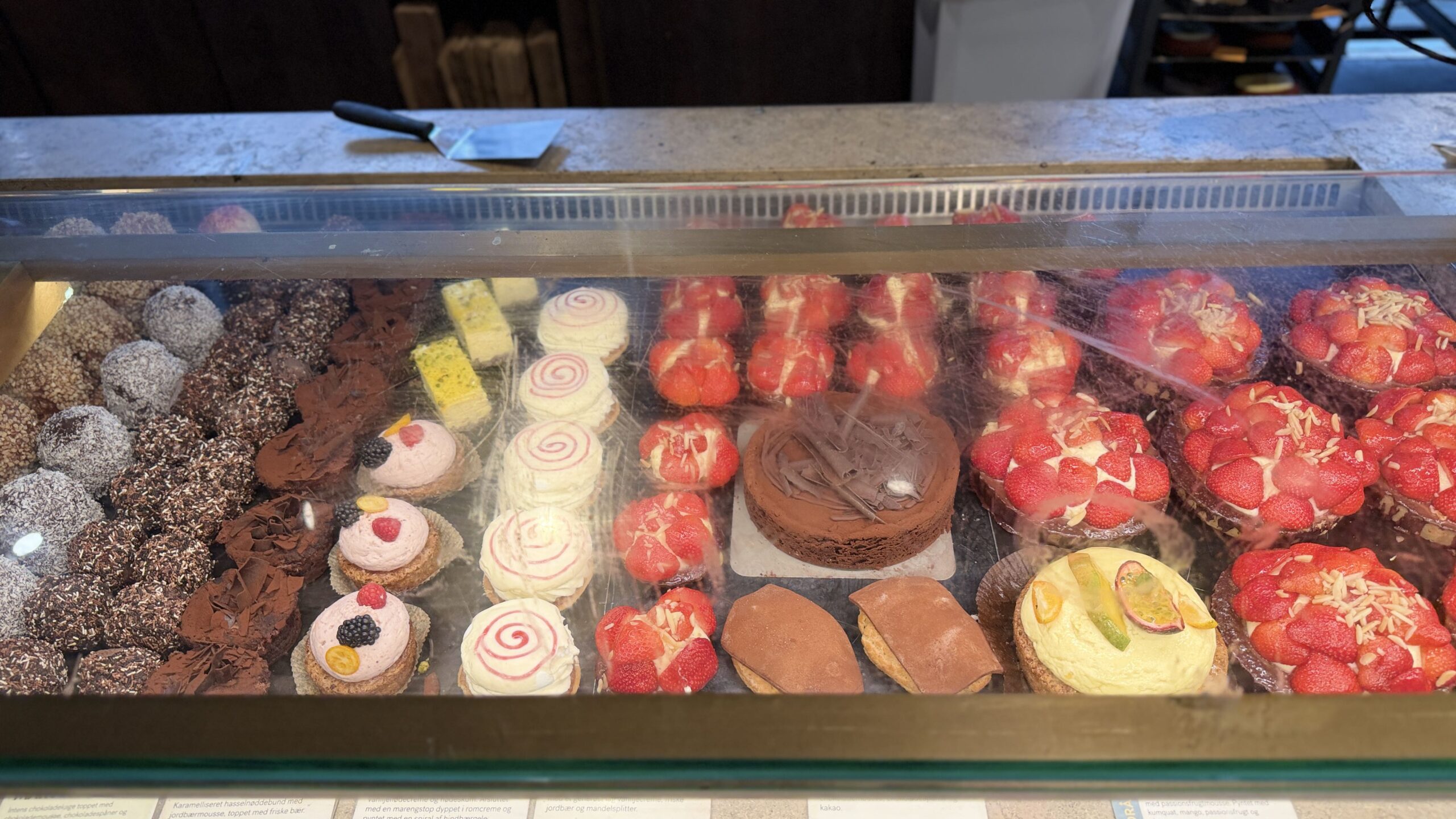
We grabbed a quick croissant-style pastry and coffee before taking care of one final travel task, exchanging some currency before leaving Denmark.
It was a relaxed ending to our stay in Copenhagen, giving us a chance to soak in the city’s atmosphere one last time before the long drive ahead.
Across the Baltic Sea
Soon our coach headed south through the Danish countryside toward the port town of Gedser.
Waiting for us there was something we had never experienced on a European tour—a ferry carrying not only passengers but also tour buses, trucks, and cars across the Baltic Sea to Rostock.
Watching our entire coach drive directly onto the ferry was fascinating. Once on board, everyone headed upstairs to explore the passenger decks while the vehicles remained safely parked below.
We enjoyed lunch during the two-hour crossing while watching the sea stretch endlessly around us.
Unfortunately, toward the end of the voyage, I began feeling a little dizzy. The gentle rocking of the ferry was enough to leave me slightly seasick, a reminder that even calm seas can surprise you if you’re not used to being on the water. Still, the ferry crossing was a memorable part of the journey and a relaxing break from traveling by road.


After arriving in Rostock, everyone returned to the coach, and we continued south toward Berlin.
Sitting on the coach as we left Copenhagen, the city slowly faded into the distance. Nyhavn’s colors, the palace courtyards, and the quiet canals all blended into one last impression of Denmark. What stood out most wasn’t any single landmark, but the rhythm of life itself. Even the royal guards marching through the streets didn’t feel like a performance, it felt like everyday routine, observed by the world.
Somehow, Denmark made the ordinary feel quietly special.
IKTraveler Tips – Copenhagen & Denmark
Copenhagen is one of those cities where things feel easy on the surface, but a few small insights can make the experience even smoother.
🚶♂️ 1. Walking is the best way to experience the city
Almost everything in central Copenhagen is surprisingly close. From City Hall Square, you can comfortably walk to Nyhavn, Tivoli Gardens, Strøget, and even Rosenborg Castle. The city is designed for pedestrians and cyclists more than cars, so walking doesn’t feel tiring—it feels natural.
🚴 2. Watch the bike lanes (seriously)
Copenhagen is built for bicycles. Lanes are fast, silent, and very organized—but they are also busy. Always be mindful before stepping into a bike lane, even while taking photos. Locals move quickly and expect the lane to stay clear.
🎢 3. Tivoli Gardens timing matters
Tivoli Gardens typically opens around 10–11 AM, depending on the season. If you are traveling with kids, it’s worth planning half a day or an evening visit rather than squeezing it in. Even from outside, it already feels like a magical space—and it’s easy to see why it inspired storybook-style theme parks like Disneyland.
👑 4. Royal guards are not a show (and that’s the fun part)
The changing of guards at Amalienborg isn’t staged for tourists—it’s part of their daily duty. Watching them march through the city gives a different perspective when you realize, as we joked, that it’s simply “people going to work… while being watched by everyone.”
🍽️ 5. Early dinner culture is real
We noticed that in many places, restaurant kitchens close earlier than expected, even when bars remain open. It’s better to plan dinner a bit earlier or check timings in advance—especially near Nyhavn.
⛴️ 6. The ferry crossing can be unexpectedly tiring
The Gedser–Rostock ferry is smooth, but even mild movement can cause dizziness if you’re sensitive. Sitting outdoors or focusing on the horizon helps. It’s a great break in the journey, but not everyone reacts the same way.
💳 7. Carrying cash is optional, but small exchanges help
Denmark is extremely card-friendly. However, having a little local currency handy is useful for small snacks, cafés, or quick stops—especially during transitions between cities or countries.
📸 8. Best photo moments happen naturally
Some of the most iconic shots don’t require planning:
- Nyhavn at sunset (golden reflections on the water)
- Royal guards marching through the streets
- Strøget under blue skies with street life
- Little Mermaid overlooking the harbor
- Tivoli entrance glowing in the evening light
The city rewards walking slowly and looking around—not rushing from landmark to landmark.
🧳 9. Copenhagen feels small—but don’t underestimate walking time
Everything looks close on the map, but cobblestone streets, detours, and photo stops stretch the time. Leave buffer time between attractions, especially if you’re exploring with kids or a group.
🇩🇰 10. The real Denmark experience is in the in-between moments
The most memorable parts of Copenhagen weren’t just the landmarks—it was:
- coffee stops between walks
- watching guards “go to work”
- unexpected street festivals
- ferry lunches with sea views
- and quiet parks where locals simply relax