Kenya-Explore
Thinking of Africa top destinations comes to mind are Kenya and Tanzania. We decided to do East Africa in this trip.
Kenya is a country in East Africa with Indian ocean as coastline. It encompasses Savannah, lake lands, the dramatic Great Rift Valley and mountain highlands. It has abundant wild life and provides safari trips. It’s home for “Big Five” (lion, leopard, rhino, elephant and cape buffalo).
Nairobi, the capital and large airport. Safari visits in the Maasai Mara Reserve is a must. Mara is also famous for annual wildebeest migrations. Another national park Amboseli National Park offers views of Tanzania’s 5,895m Mt. Kilimanjaro.
Kenya is East Africa’s crown jewel, a country of staggering natural beauty, extraordinary wildlife, and deeply warm people. Straddling the equator on the eastern edge of the continent, it is home to over 55 million people and more than 40 different ethnic groups, each with their own language, traditions, and culture.
Kenya is the birthplace of the world-famous wildebeest Great Migration and is widely regarded as one of the finest safari destinations on earth.
Its landscapes shift dramatically from the snow-capped peaks of Mount Kenya to the sun-scorched plains of the Maasai Mara, the dramatic floor of the Great Rift Valley, and the turquoise shores of the Indian Ocean.
Nairobi, the capital, is a thriving cosmopolitan city and the region’s business hub.
The official languages are Swahili and English, making it easy to get around as a visitor.
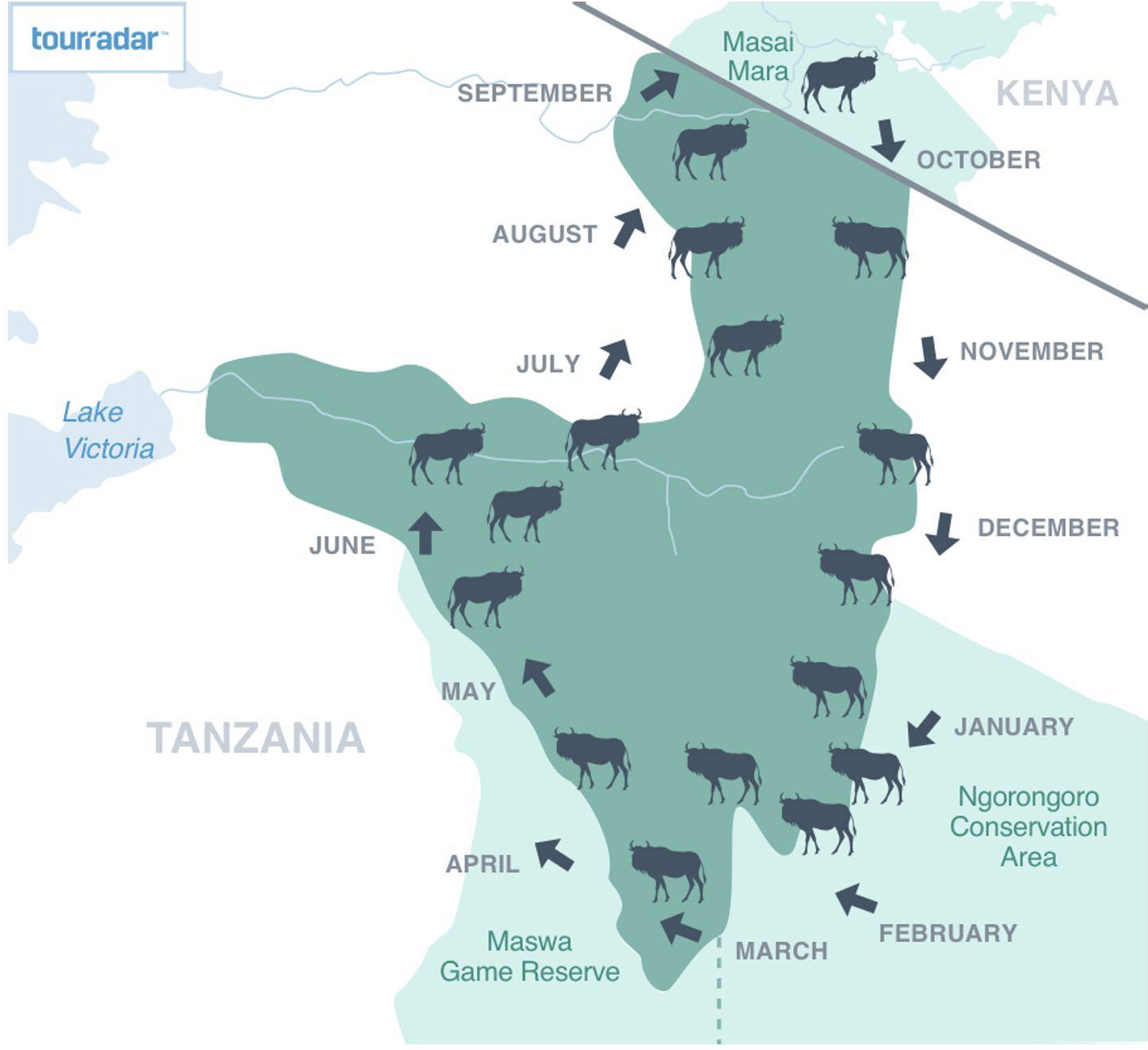
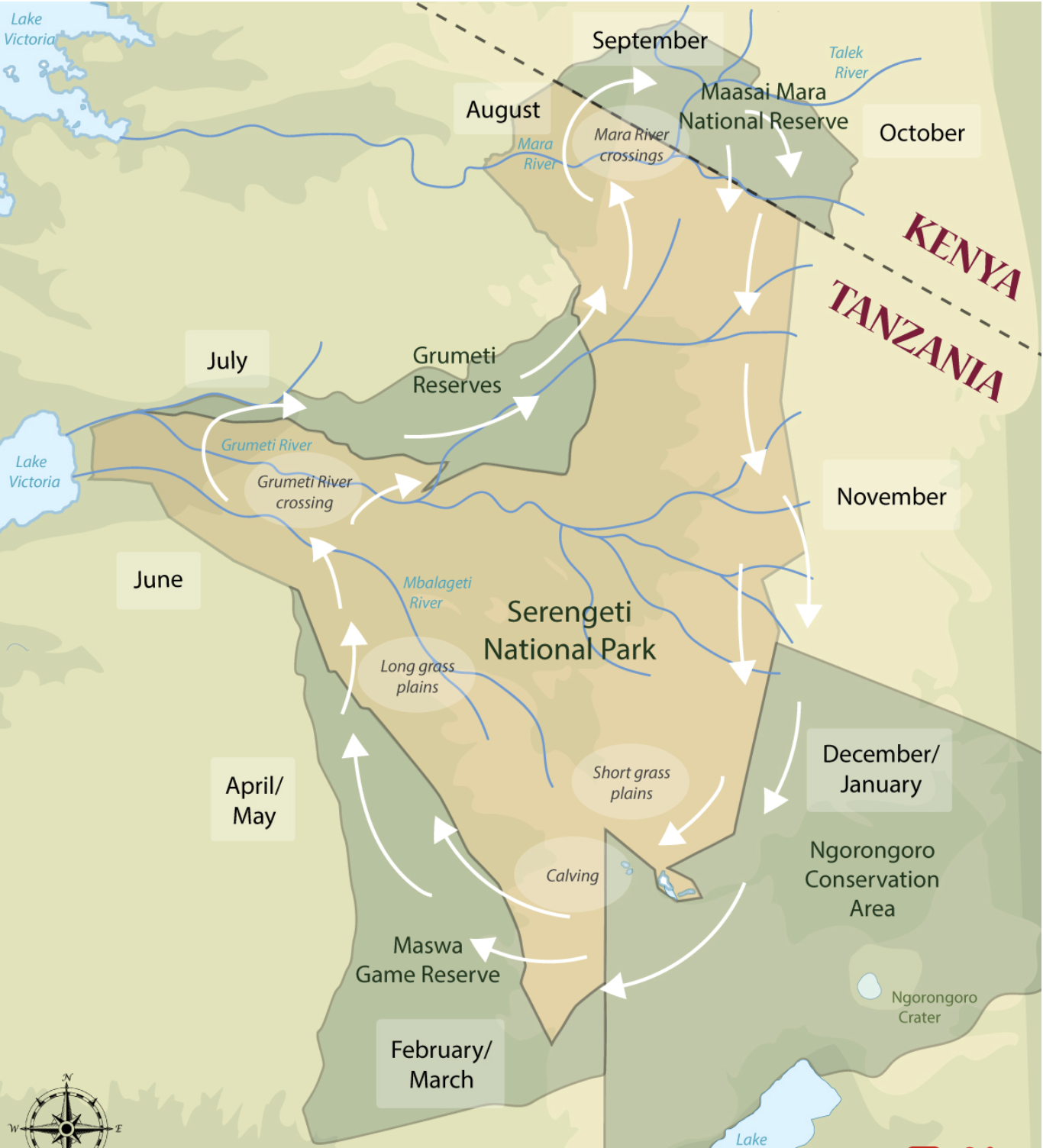
The best time to visit for the Great Migration is July through October, when the wildebeest cross the Mara River in their millions.
Capital: Nairobi
Currency: Kenyan Shilling
Official languages: Swahili, English
Visa for US Citizens : Visa Required for US Citizens
Vaccines: Yellow fever vaccine
| Best time to Go | KENYA |
| Peak / High Season | June – October (dry winter) |
| Low / Green Season | November – May |
| Wildebeest Migration | October – December |
| Rainy Seasons | November – December (short rains) April – May (long rains) |
Some of the places to see
- Maasai Mara National Reserve (Best time : July and October.)
- Tsavo National Park
- Lake Nakuru National Park
- Amboseli Game Reserve
- Mount Kenya
- Lamu
- Lewa Wildlife Conservancy
- Malindi and Watamu
- Lake Turkana
- Samburu, Shaba, and Buffalo Springs National Reserves
Our Kenya trip started on Day 7. 6+ days in Kenya and it is split between Amnoseli, Lake Naivasha and Masai Mara.
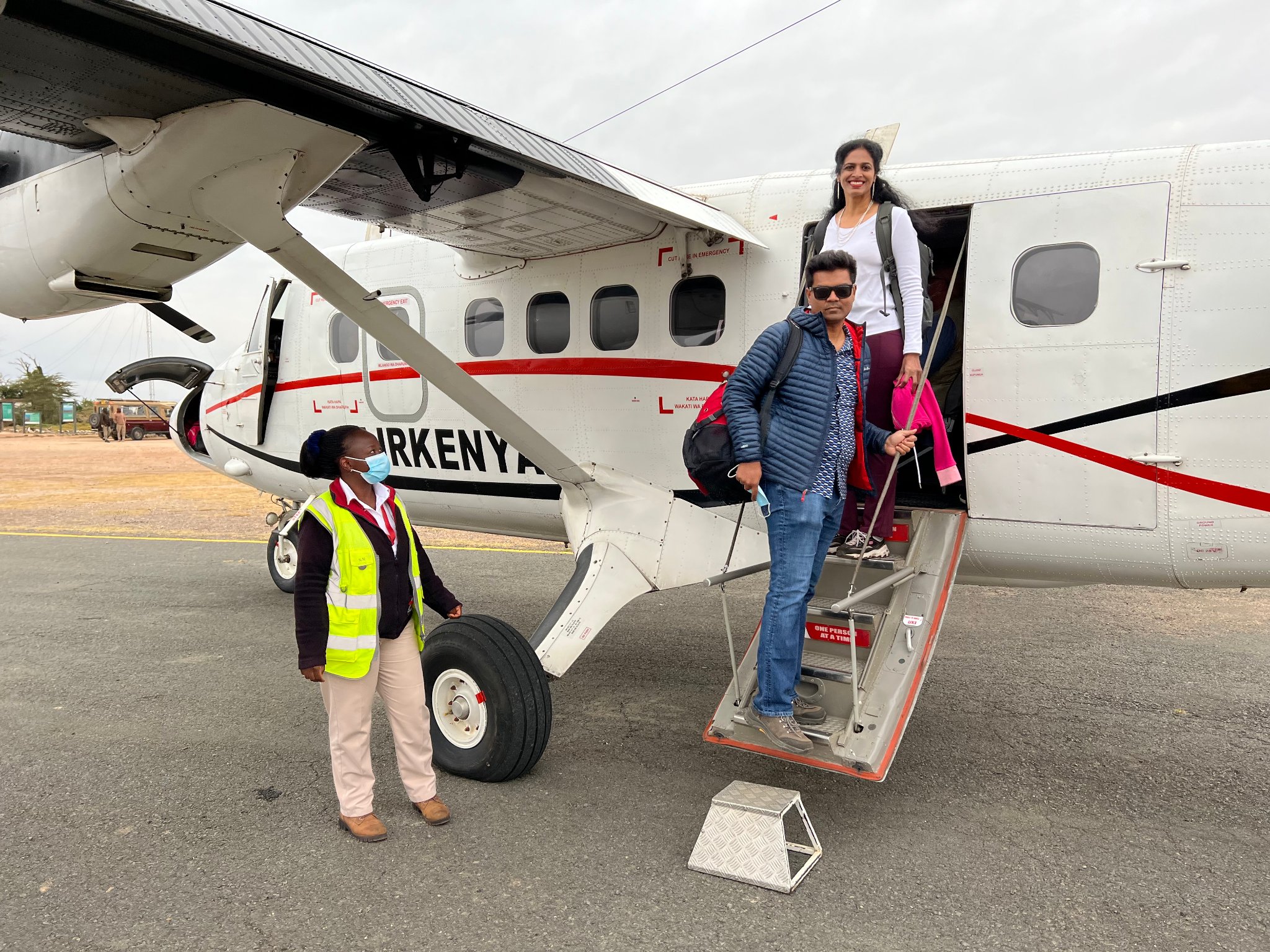
Day 7 : Flight from Serengati to Arusha and drive to Amboseli National Park
Day 8 : Amboseli National Park
Day 9 : Flight from Amboseli to Nairobi and drive to Lake Naivasha
Day 10 : Lake Naivasha to Mara
Day 11 : Masai Mara Game Reserve
Day 12 : Masai Mara Game Reserve
Day 13 : Mara to Nairobi Flight -> to Home
Serengeti to Amboseli
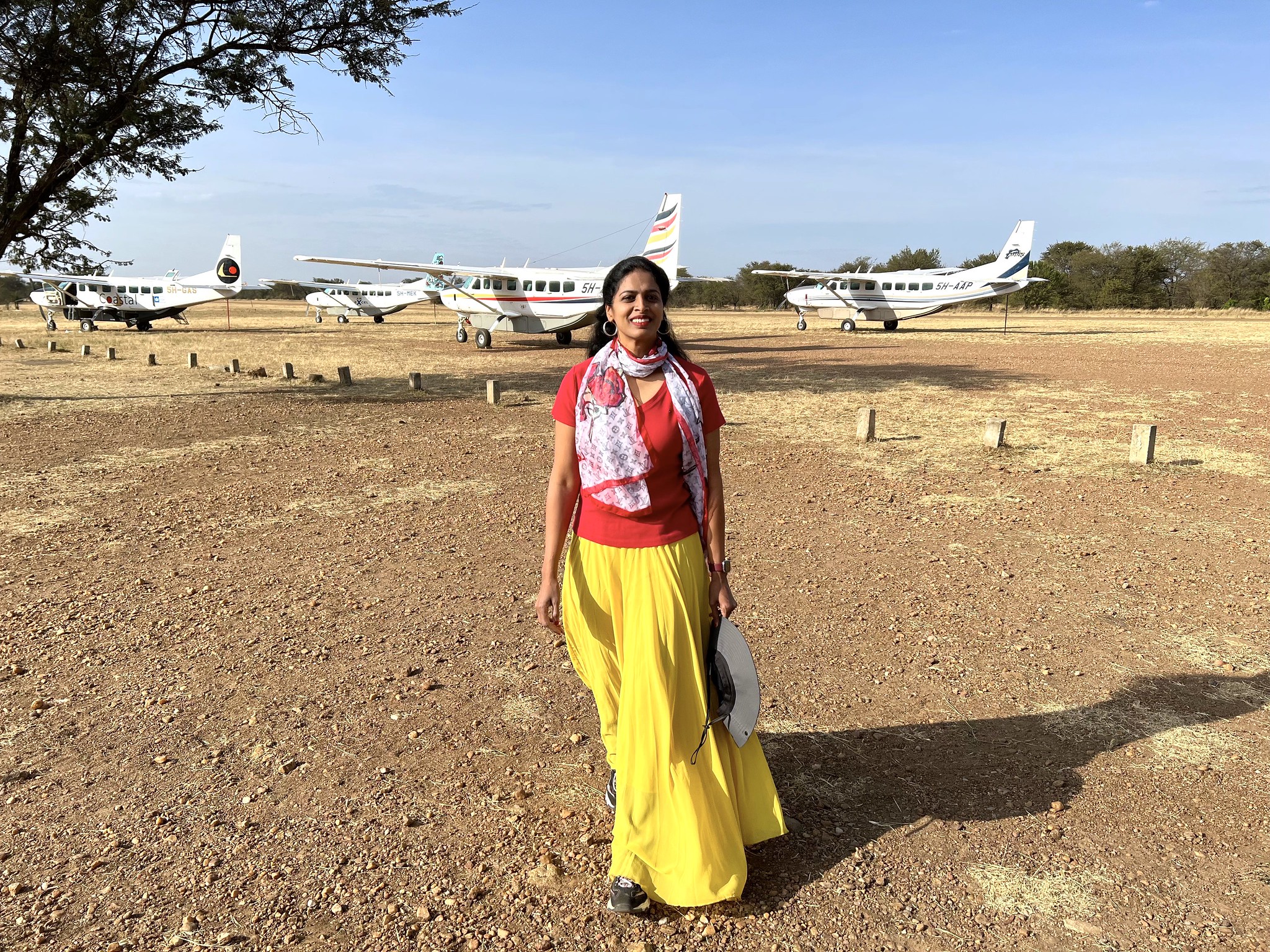
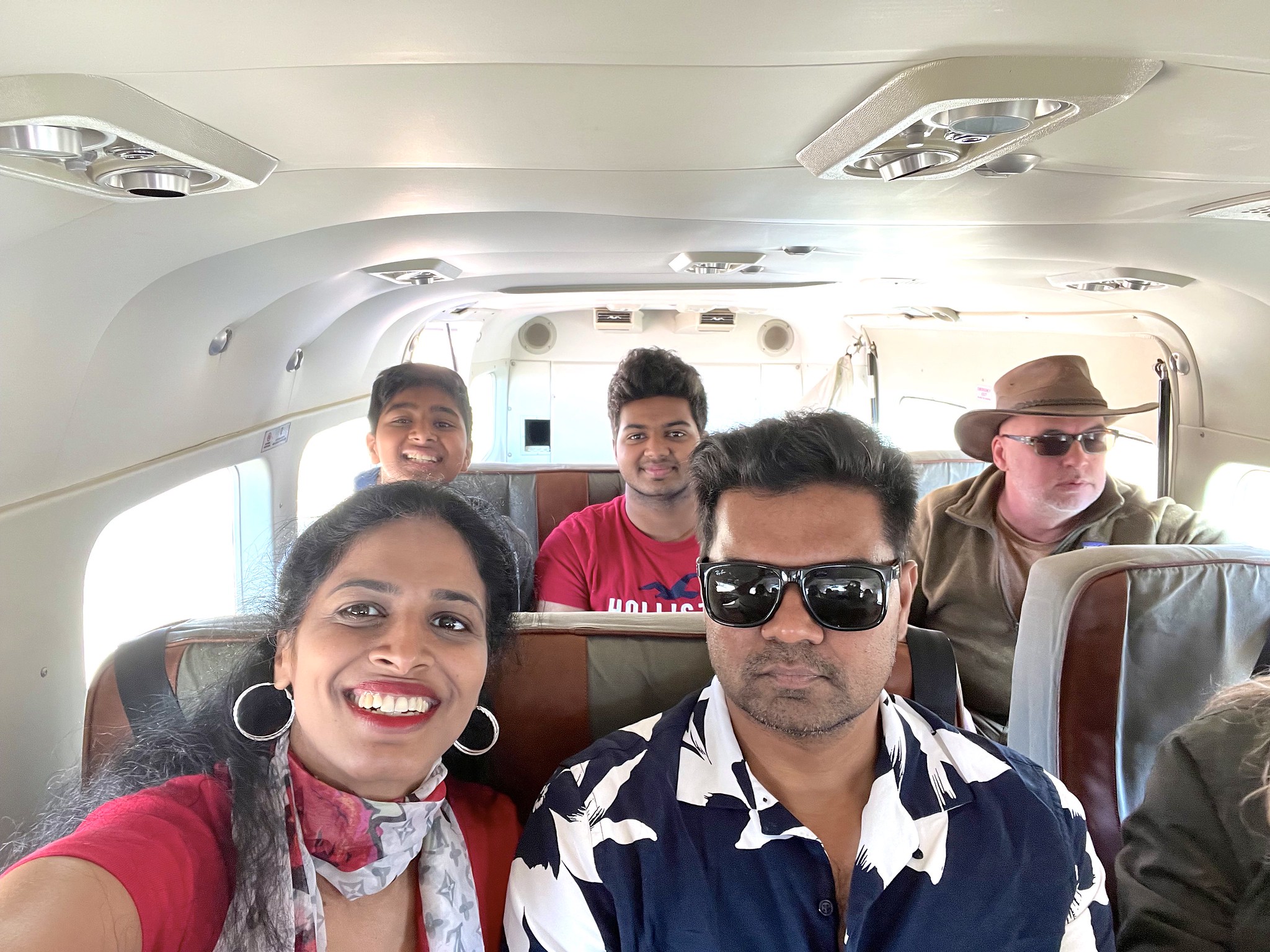
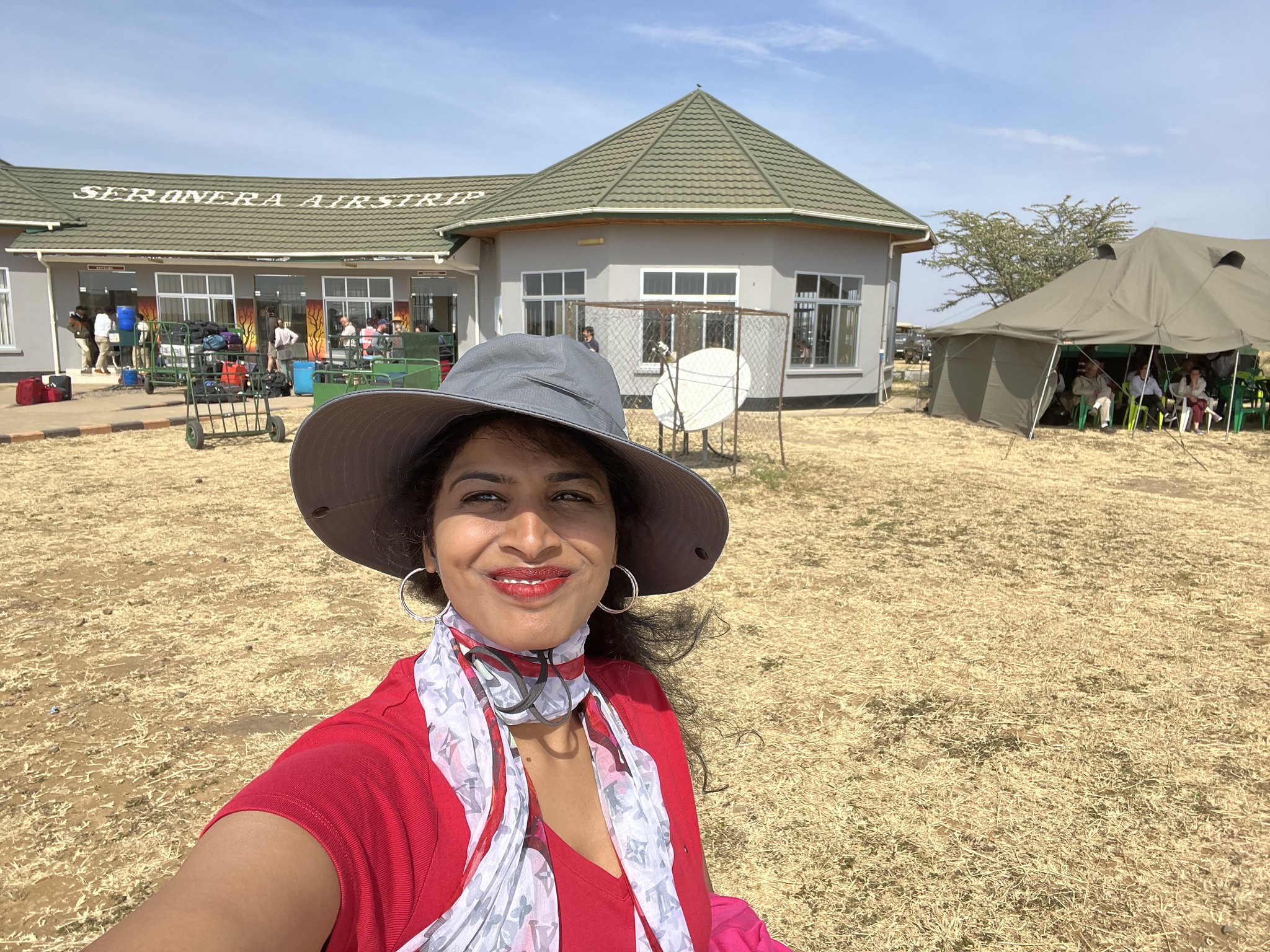
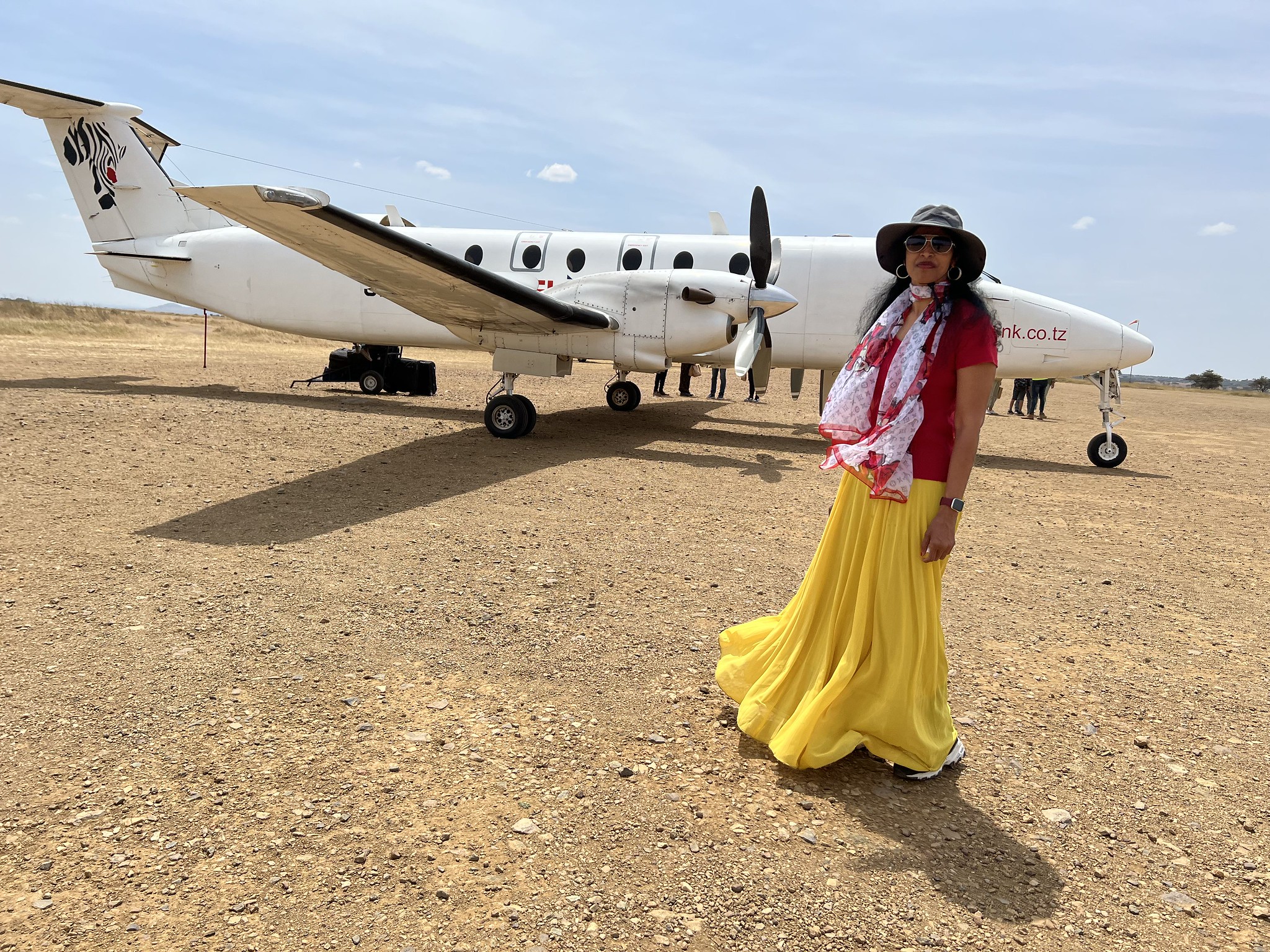
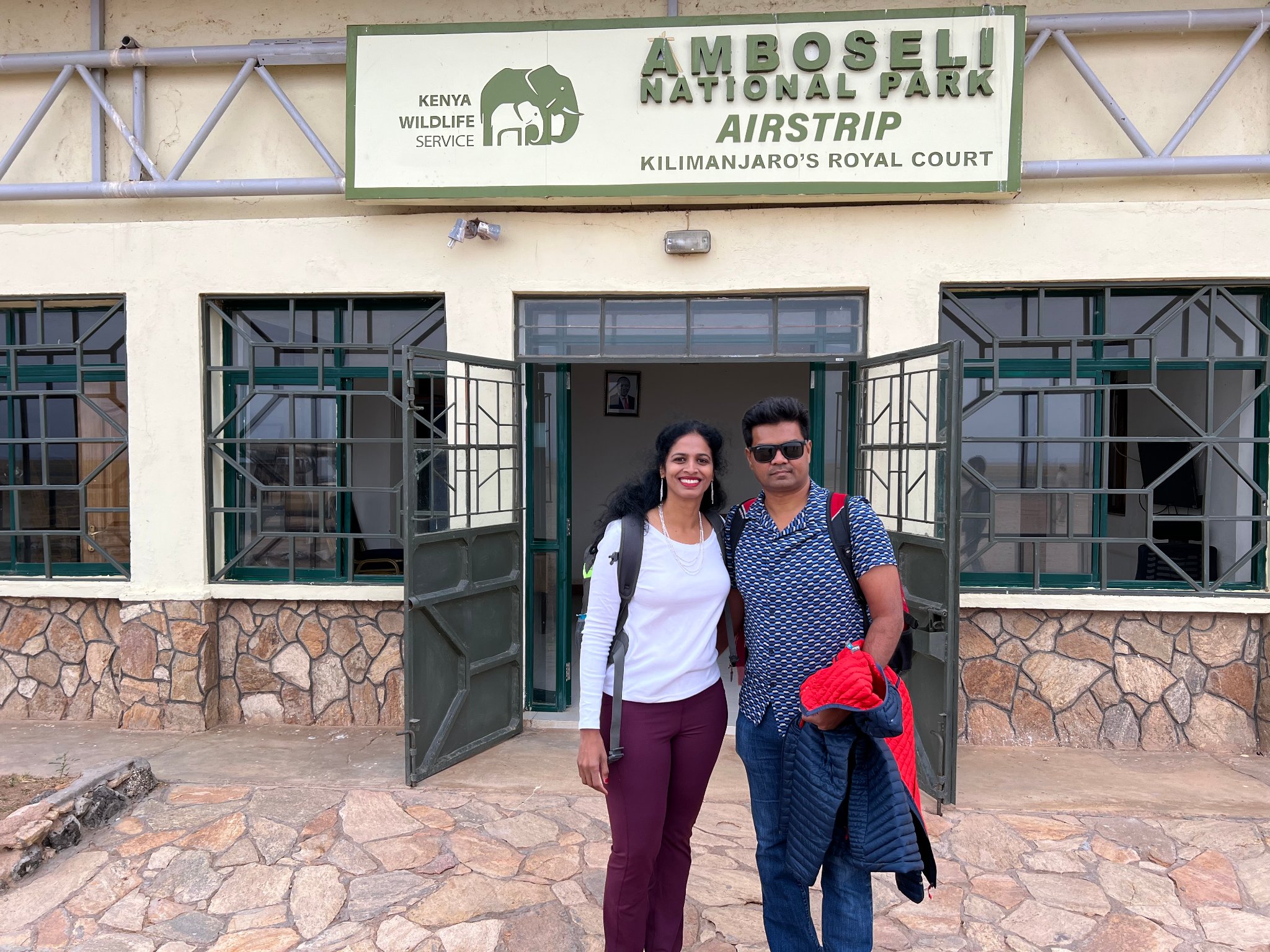
Our journey from the Serengeti to Arusha was an adventure in itself. We flew from Kogatende Airstrip in the northern Serengeti, stopped at Seronera Airstrip in the heart of the national park, and then continued to Arusha.
Kogatende Airstrip, located near the Mara River, is the main gateway to the northern Serengeti and is especially busy from July through October, when visitors come to witness the Great Migration and, if they’re lucky, the dramatic Mara River crossings. Seronera Airstrip, located in central Serengeti National Park, serves the wildlife-rich Seronera Valley throughout the year.
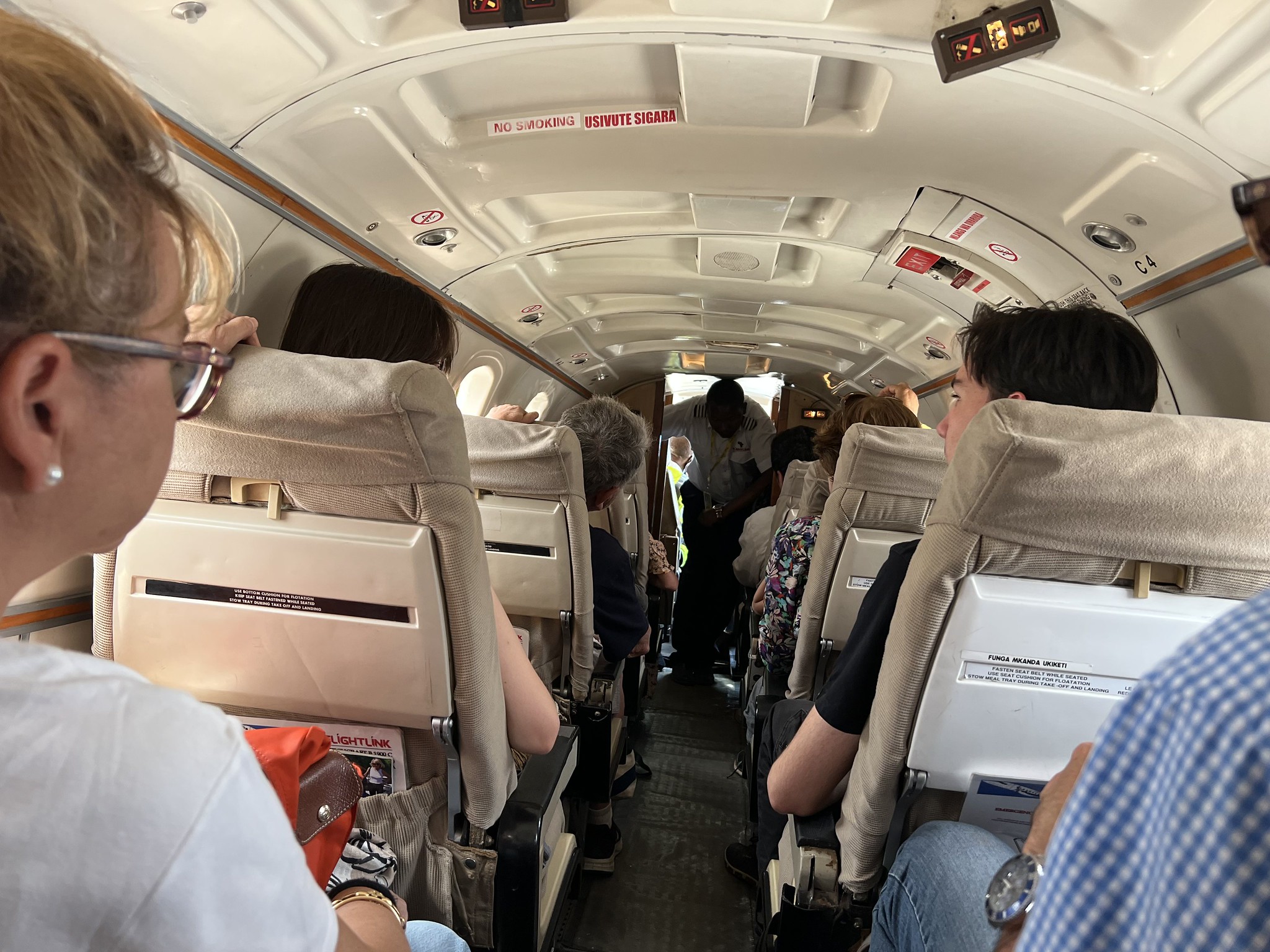
The bush flights themselves were an experience to remember. Our first flight, from Kogatende to Seronera, was on a tiny aircraft with three seats across each row (1+2 configuration). After a brief stop at Seronera, we boarded an even smaller plane for the flight to Arusha, with just two seats across each row (1+1 configuration). Before takeoff, the crew loaded our luggage into the front of the aircraft, right in front of where we were seated. Flying low over the endless plains, we enjoyed spectacular aerial views of rivers, acacia trees, scattered acacia trees, and the vast Serengeti. It truly felt like our safari continued from the sky.
Amboseli National Park – Elephants & Kilimanjaro
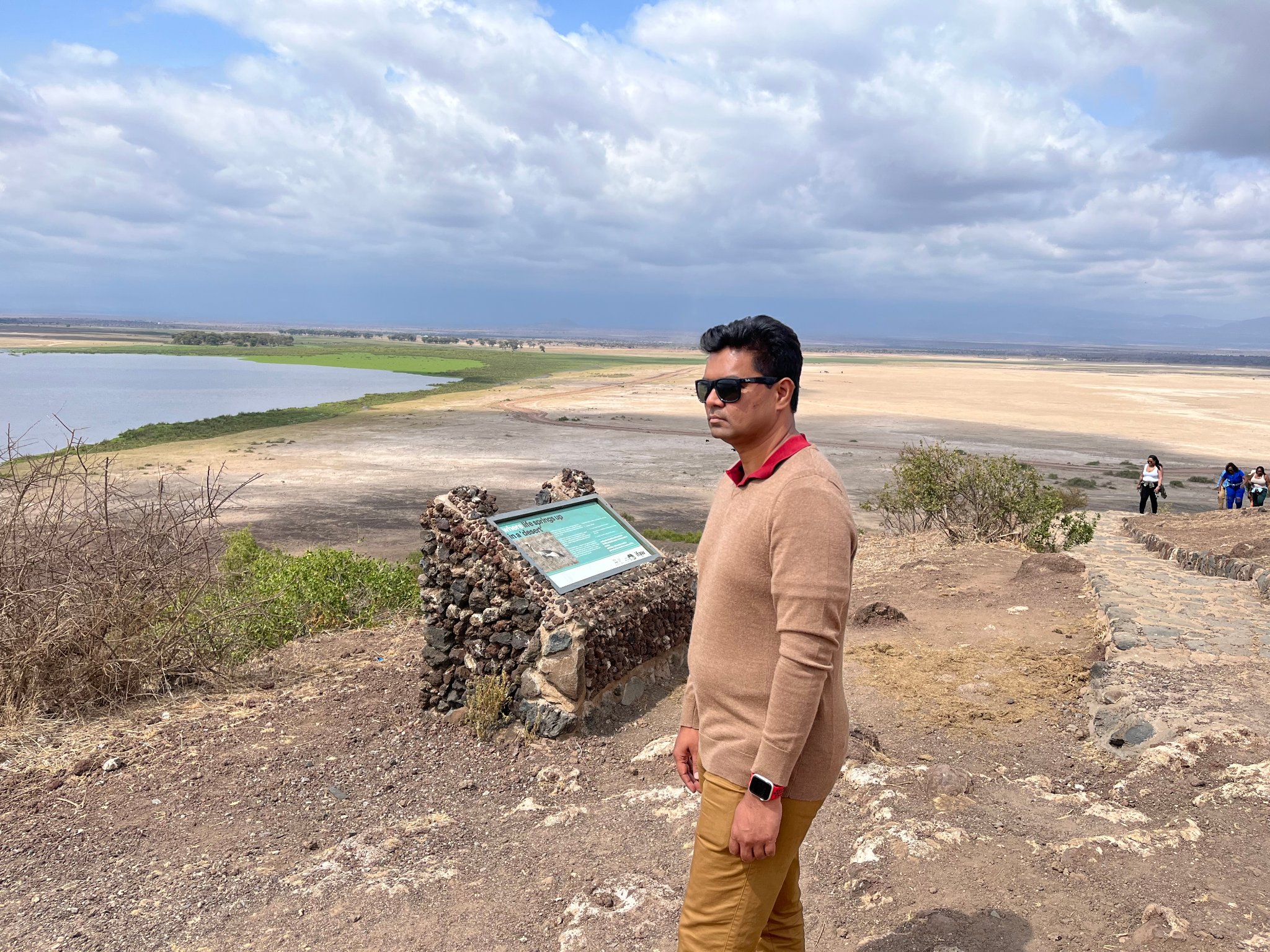
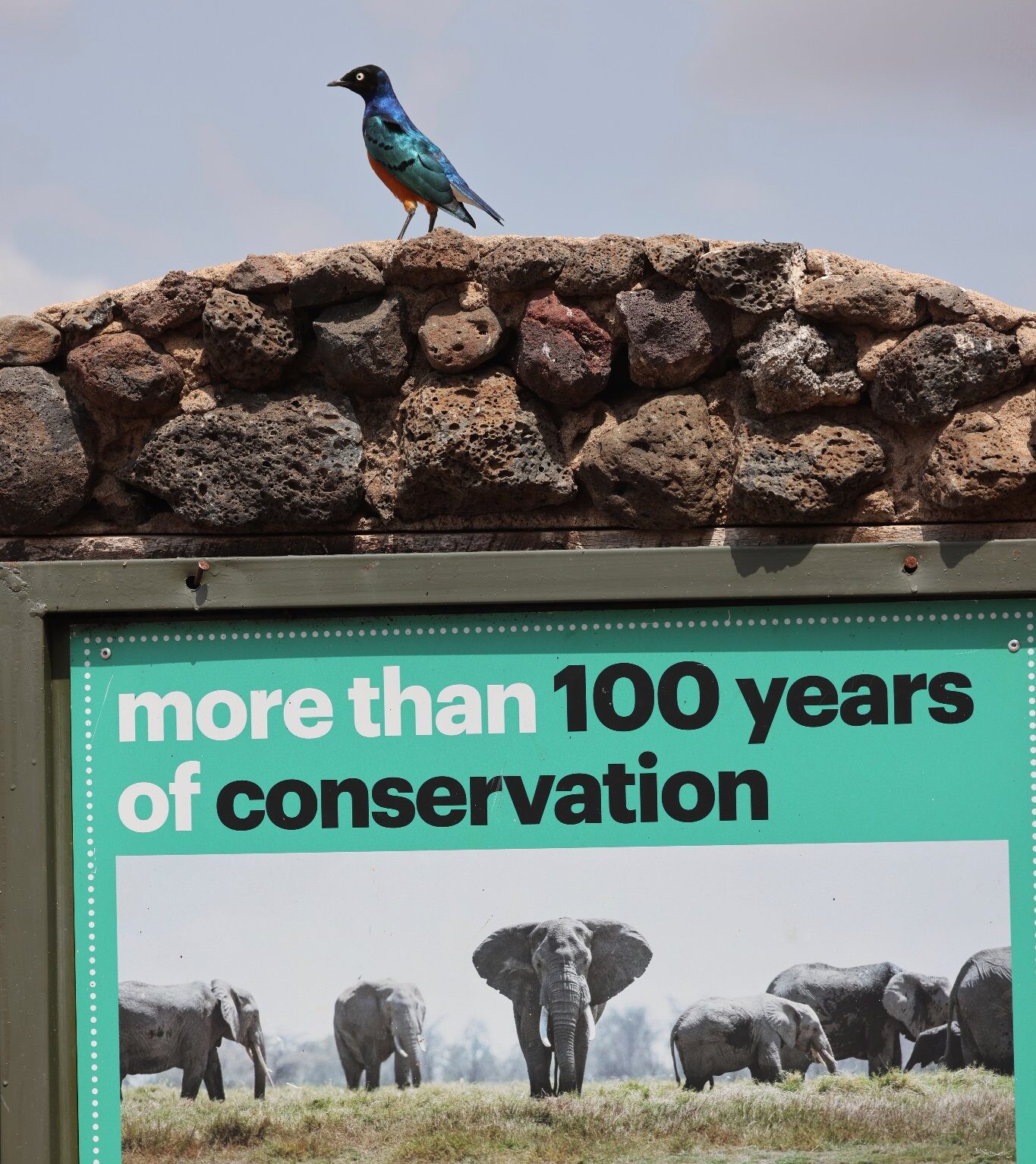
Our visit to Amboseli National Park was another unforgettable safari experience in East Africa. Located in southern Kenya near the Tanzania border, the park is best known for its large elephant herds and its iconic views of Mount Kilimanjaro, which rises dramatically in the background on clear days.
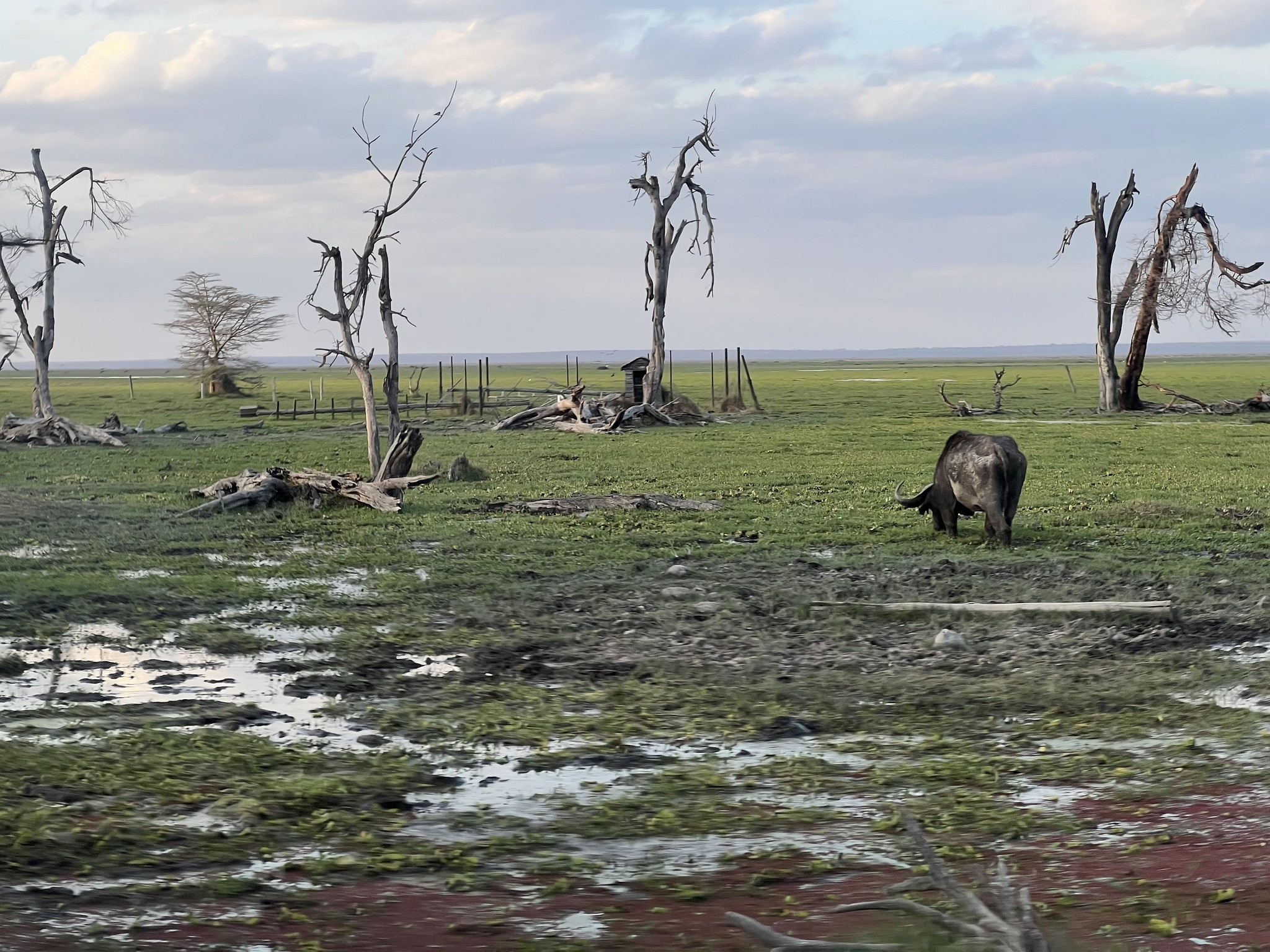
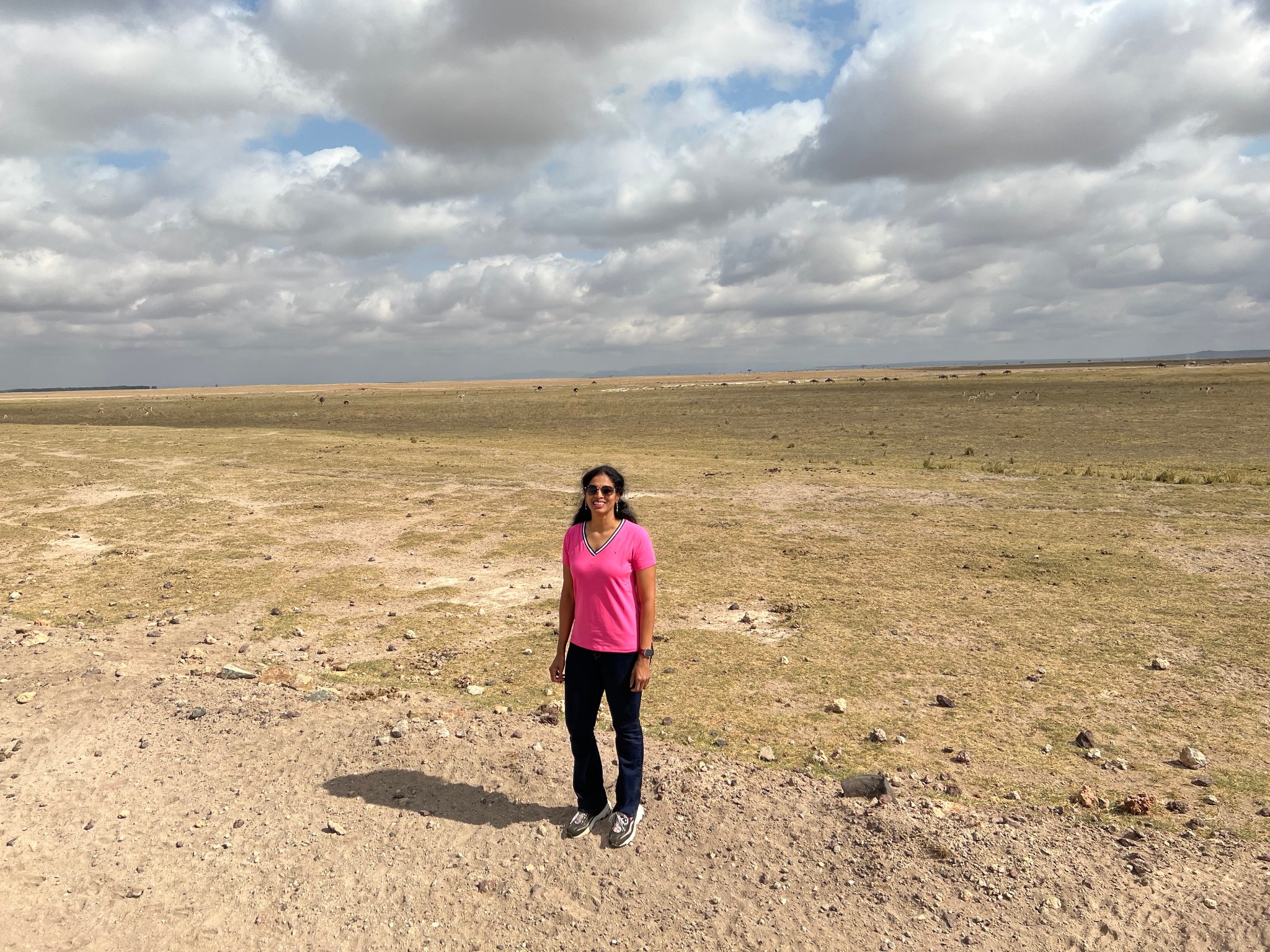
The landscape here is wide, open, and beautifully raw, flat dusty plains mixed with seasonal swamps and patches of acacia woodland. This contrast creates an incredible setting for wildlife viewing, where animals are often visible from a distance as they move across the horizon. The elephant herds are especially striking, often seen walking slowly in family groups with Kilimanjaro towering behind them like a painted backdrop.
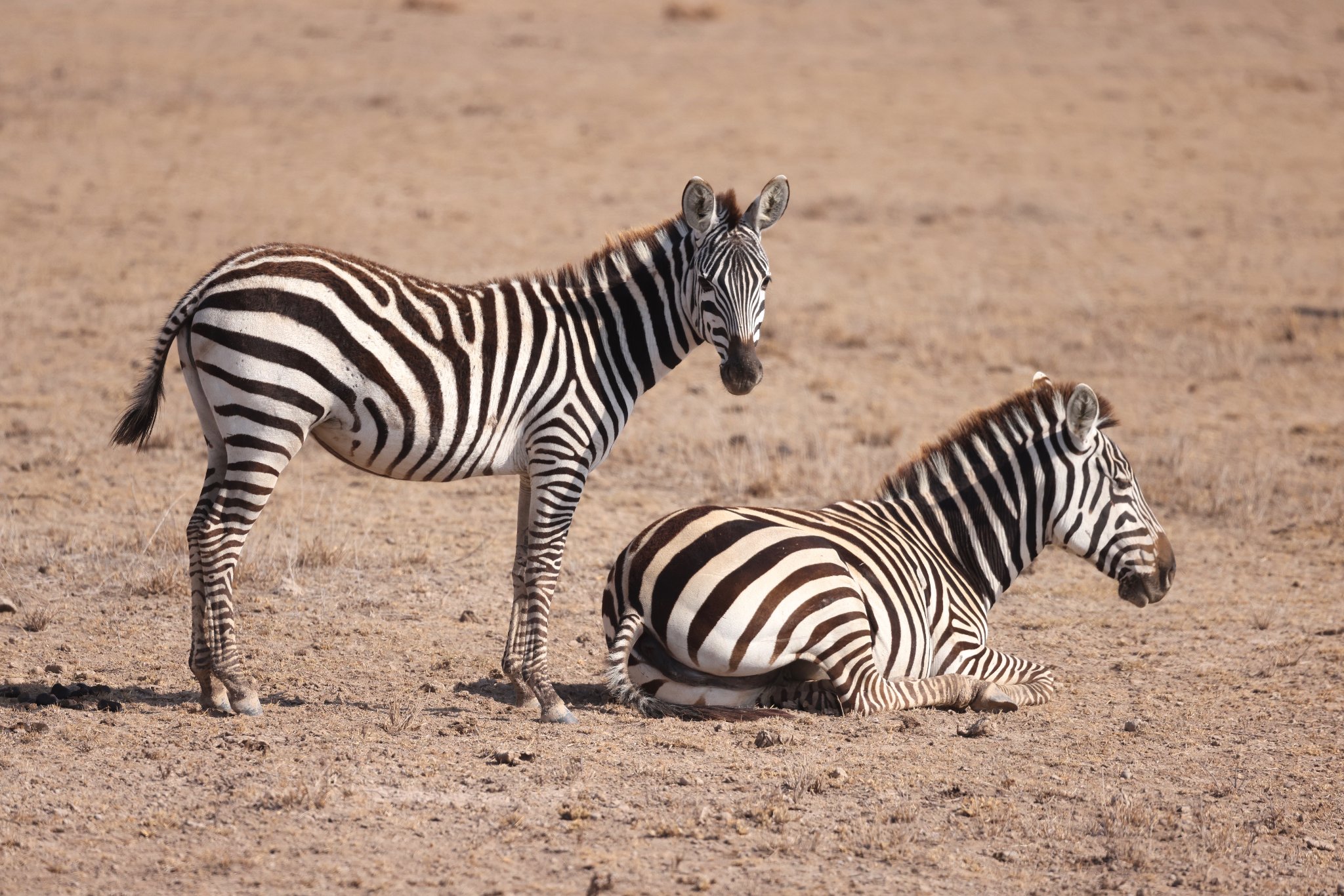
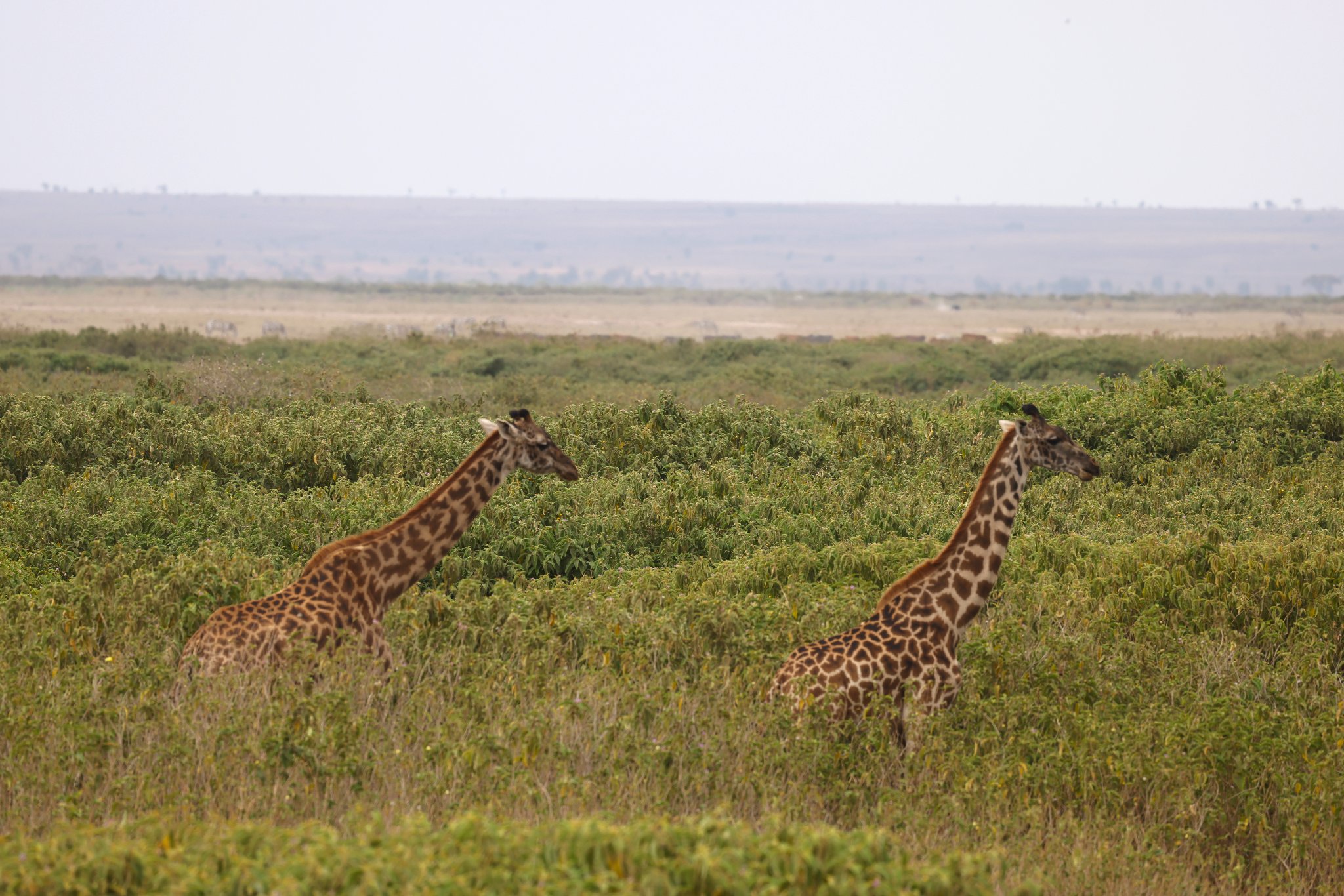
Compared to larger, denser parks, Amboseli offers a more open and intimate safari experience. In a single game drive, it is common to spot elephants, zebras, giraffes, buffalo, and a variety of birdlife, all framed by one of the most famous mountain views in Africa. It is a place where the scenery itself feels just as memorable as the wildlife.
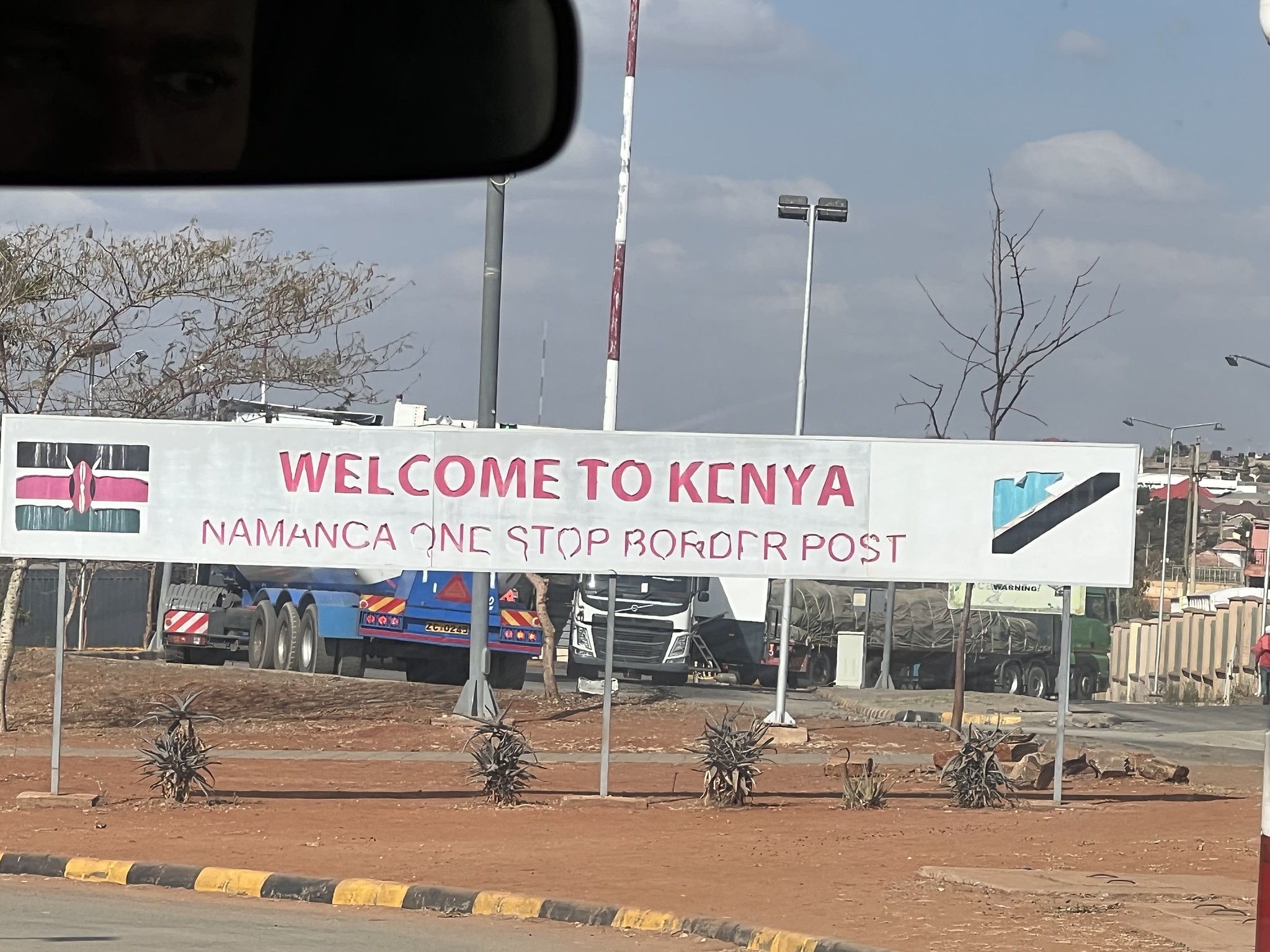
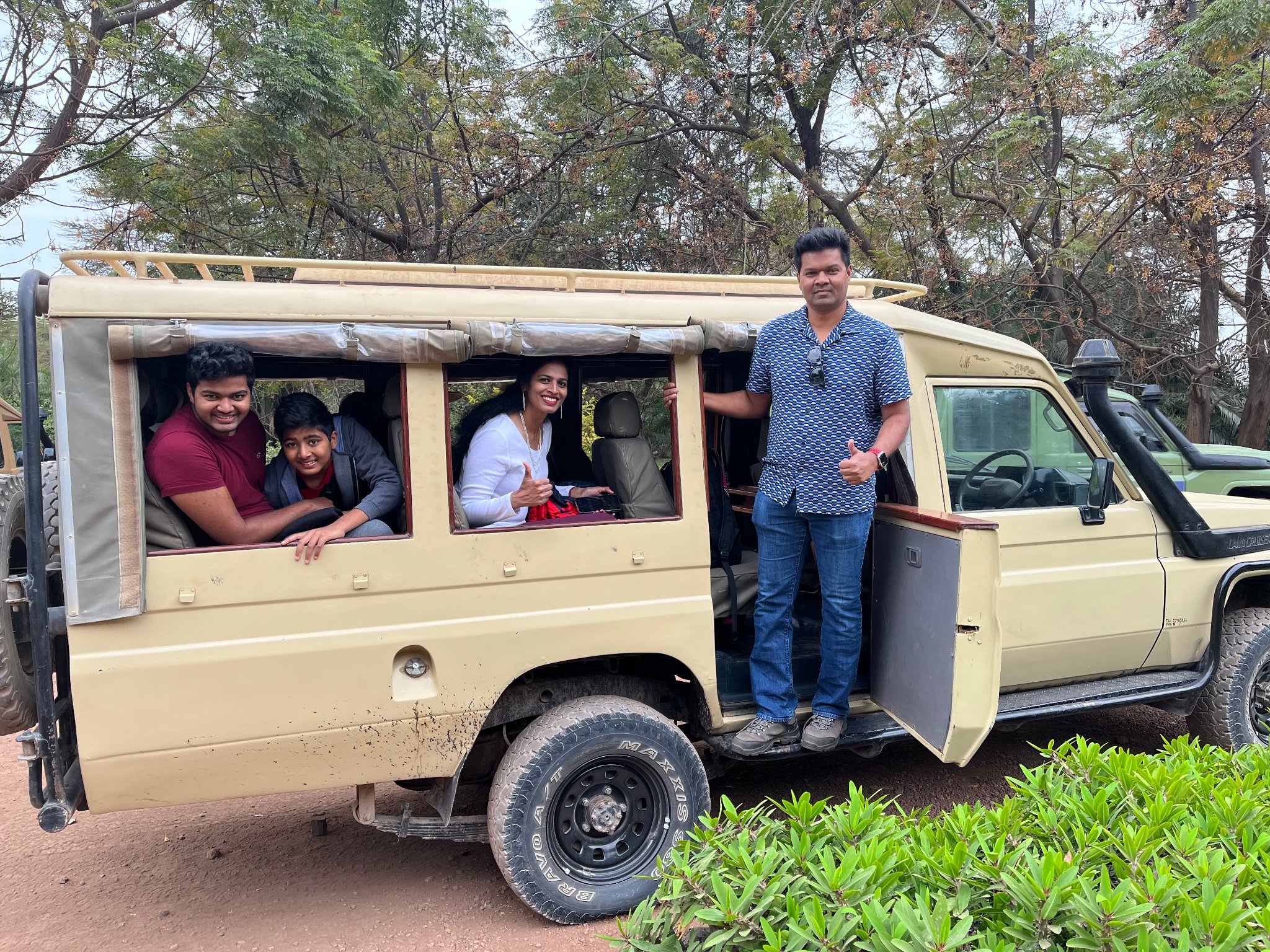
We arrived in the late afternoon, crossing into Kenya from the Namanga border after a flight from the Serengeti. Our guide handed us over seamlessly from one vehicle to another from Tanzania to Kenya and we were in the park just in time for a golden-hour game drive.
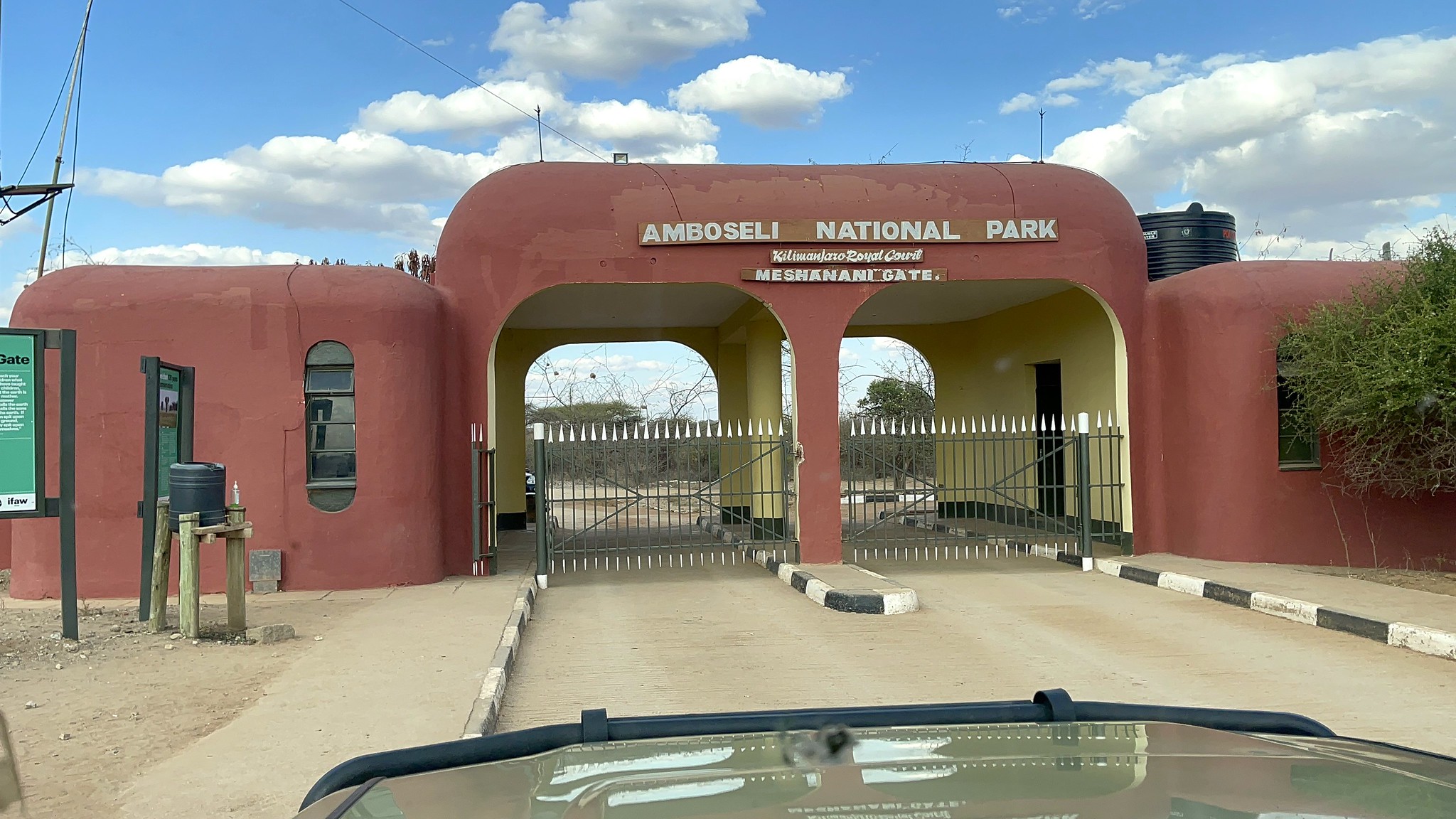
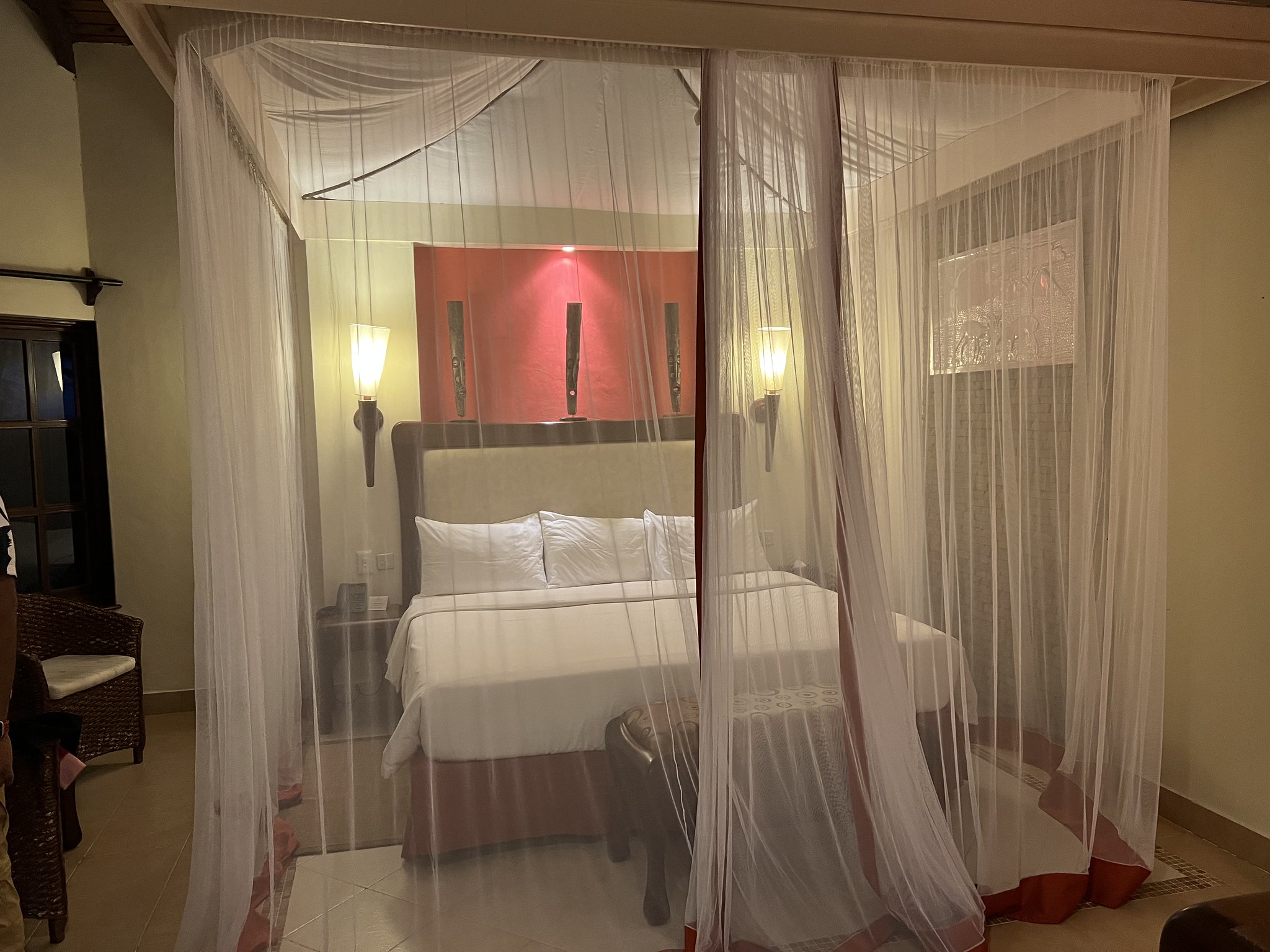
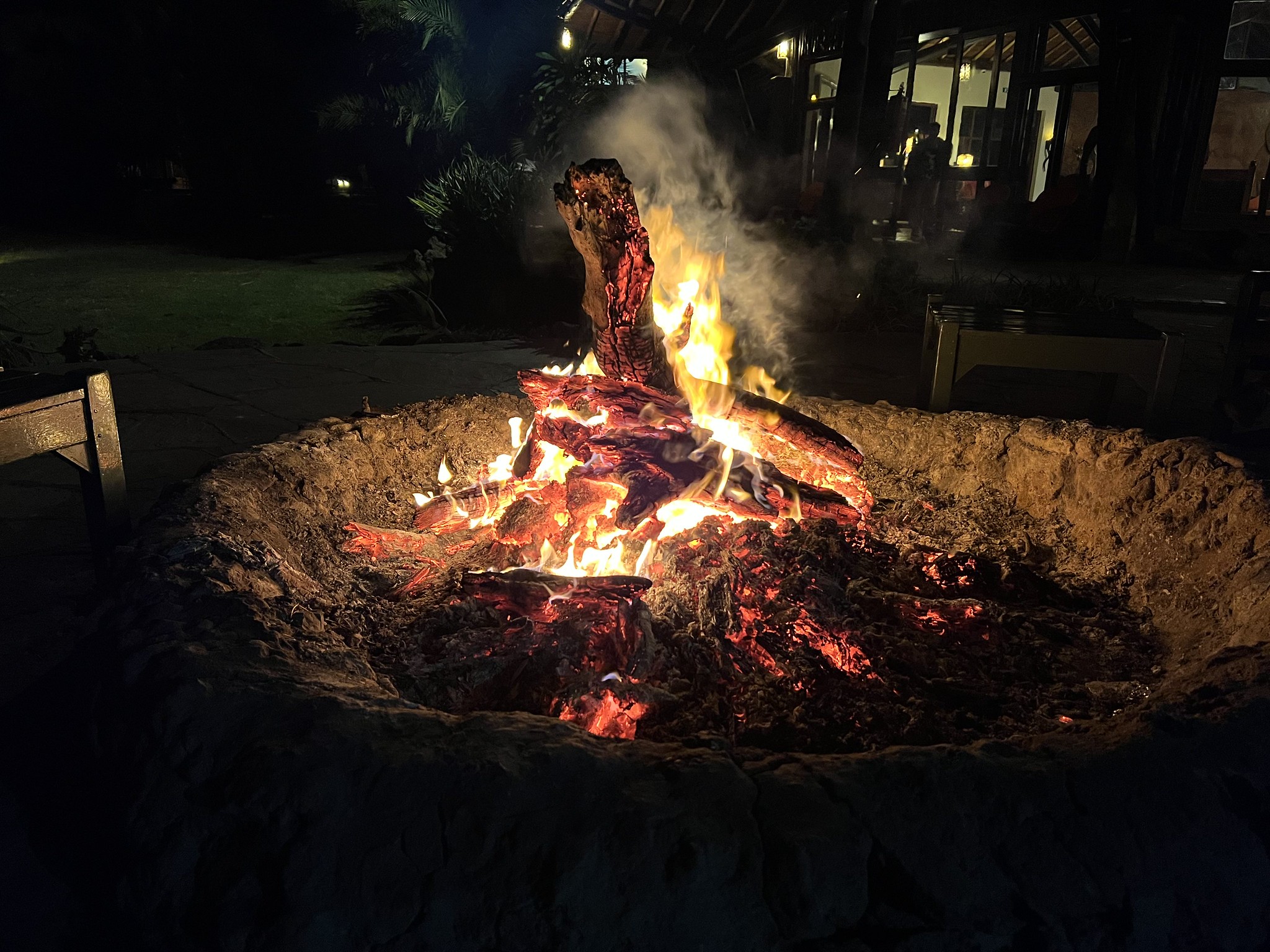
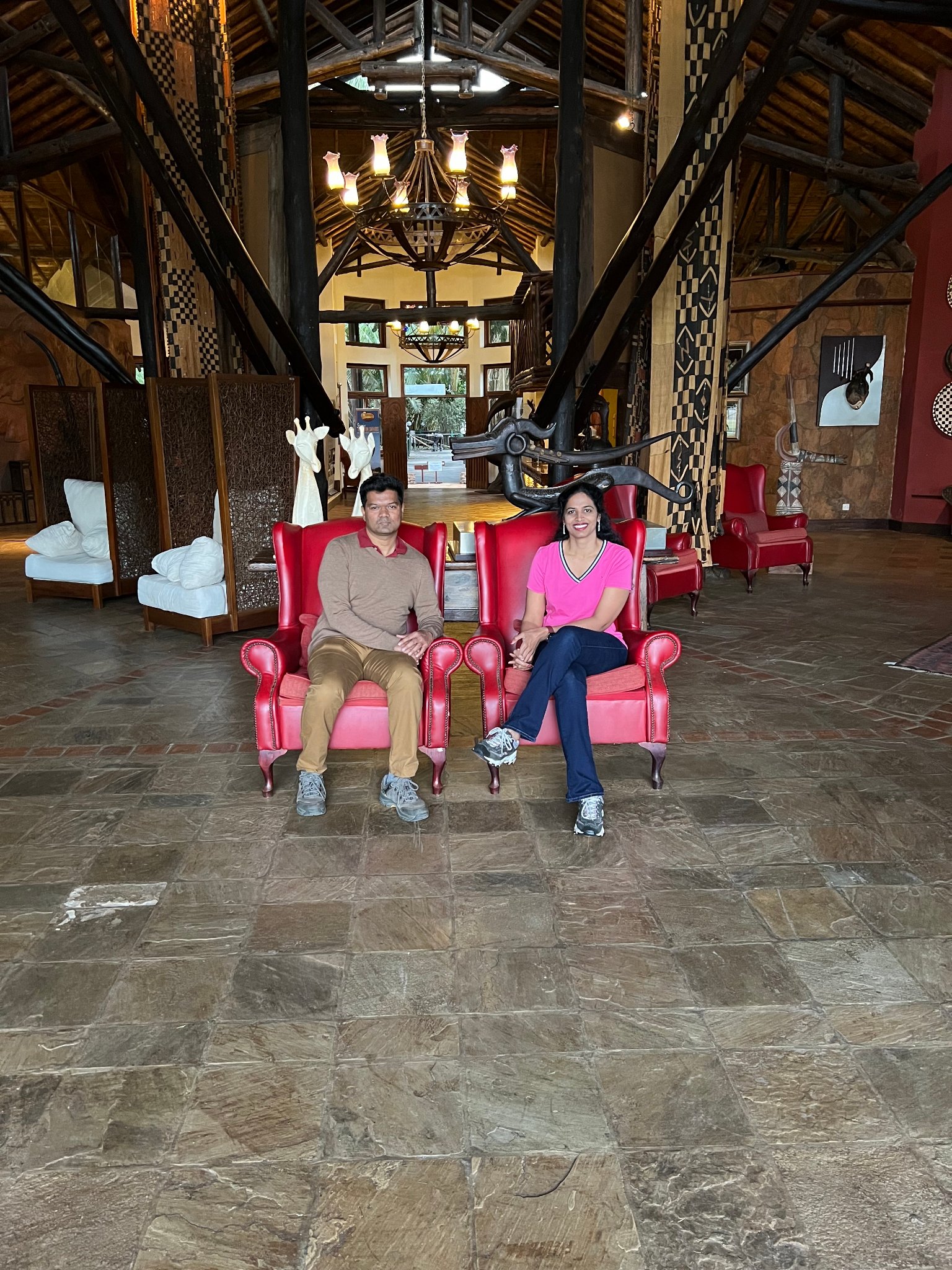
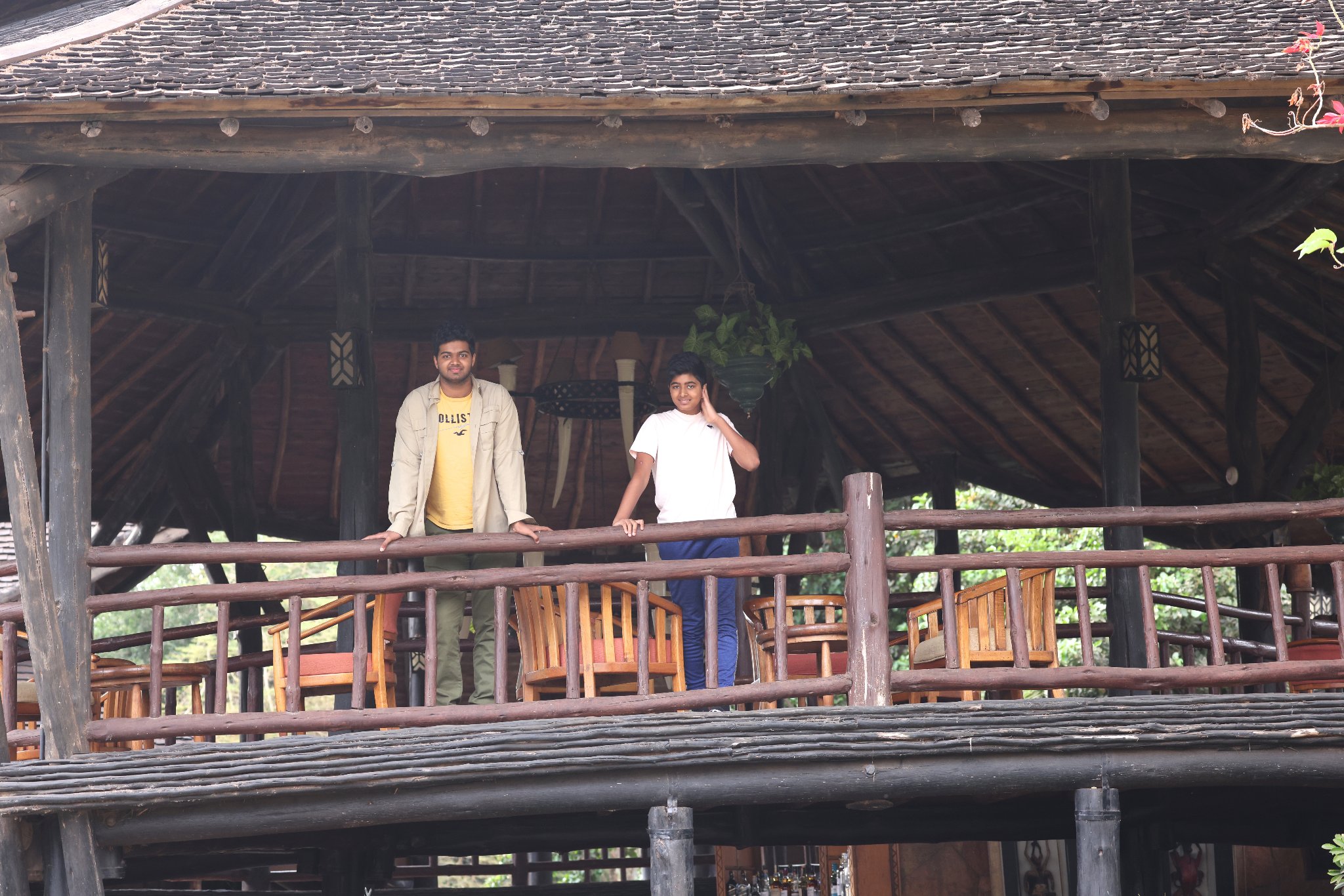
We stayed in Oltukai Lodge in Amboseli.
Our first game drive in Amboseli National Park, late in the afternoon, immediately set the tone for what would become an unforgettable safari experience.
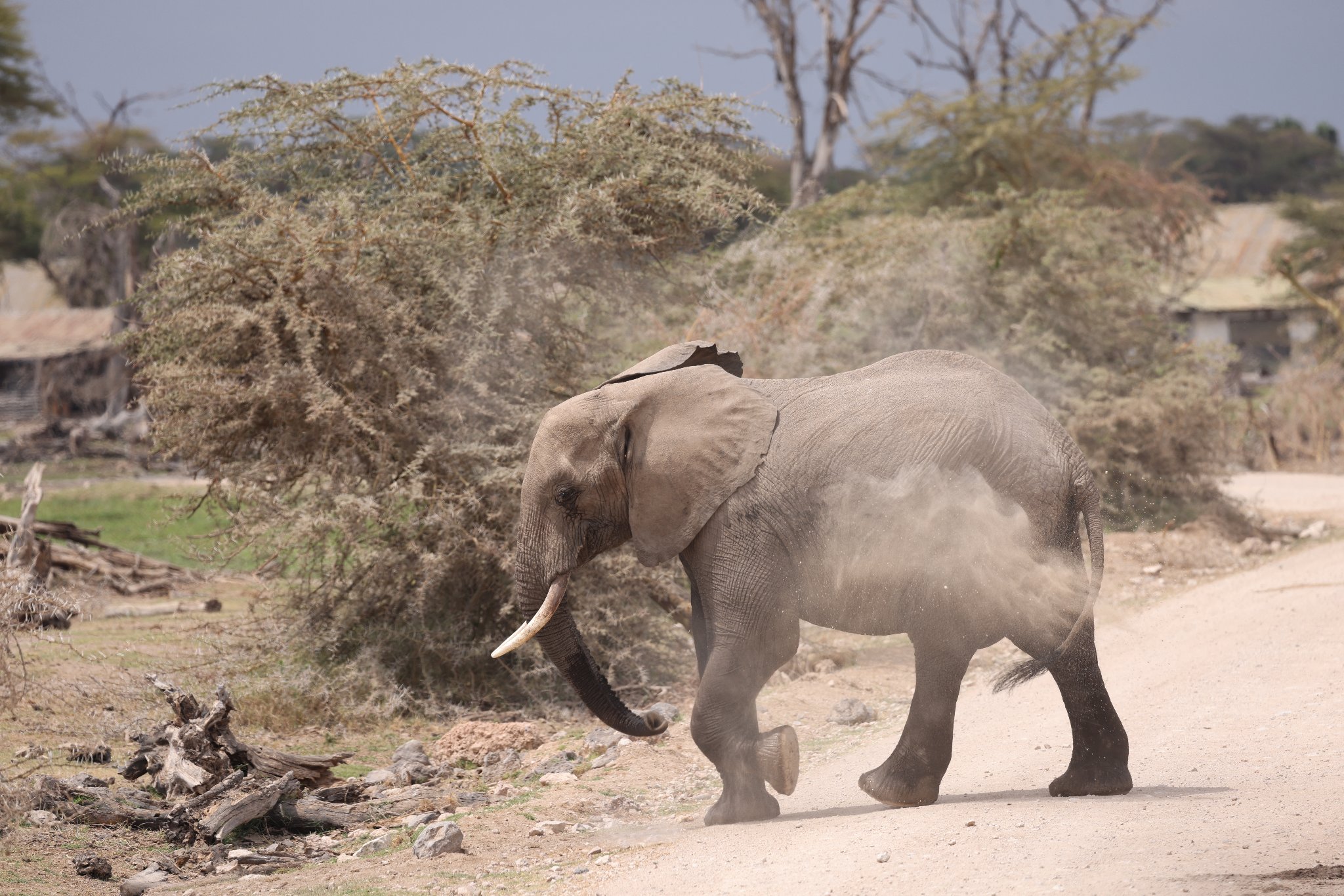
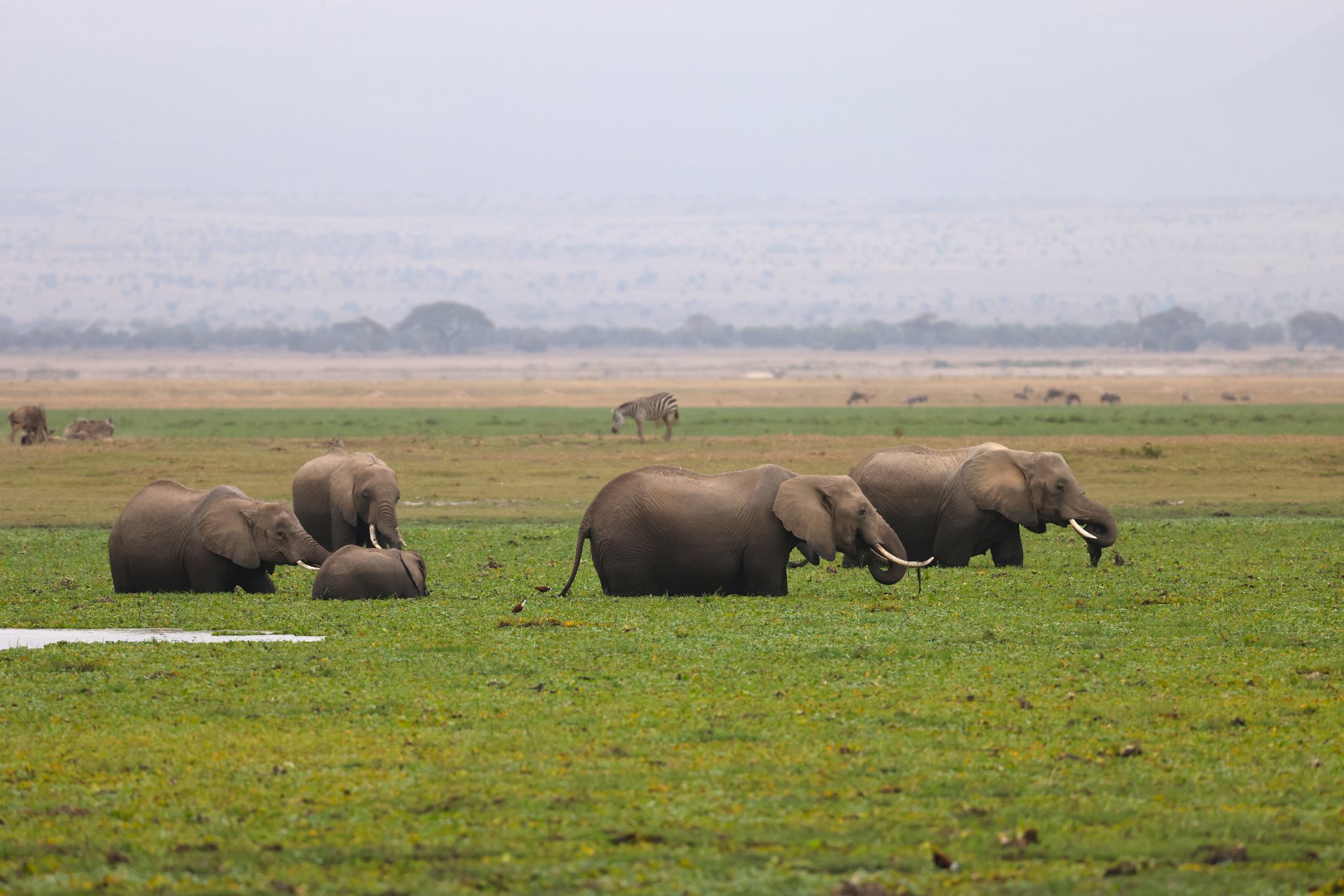
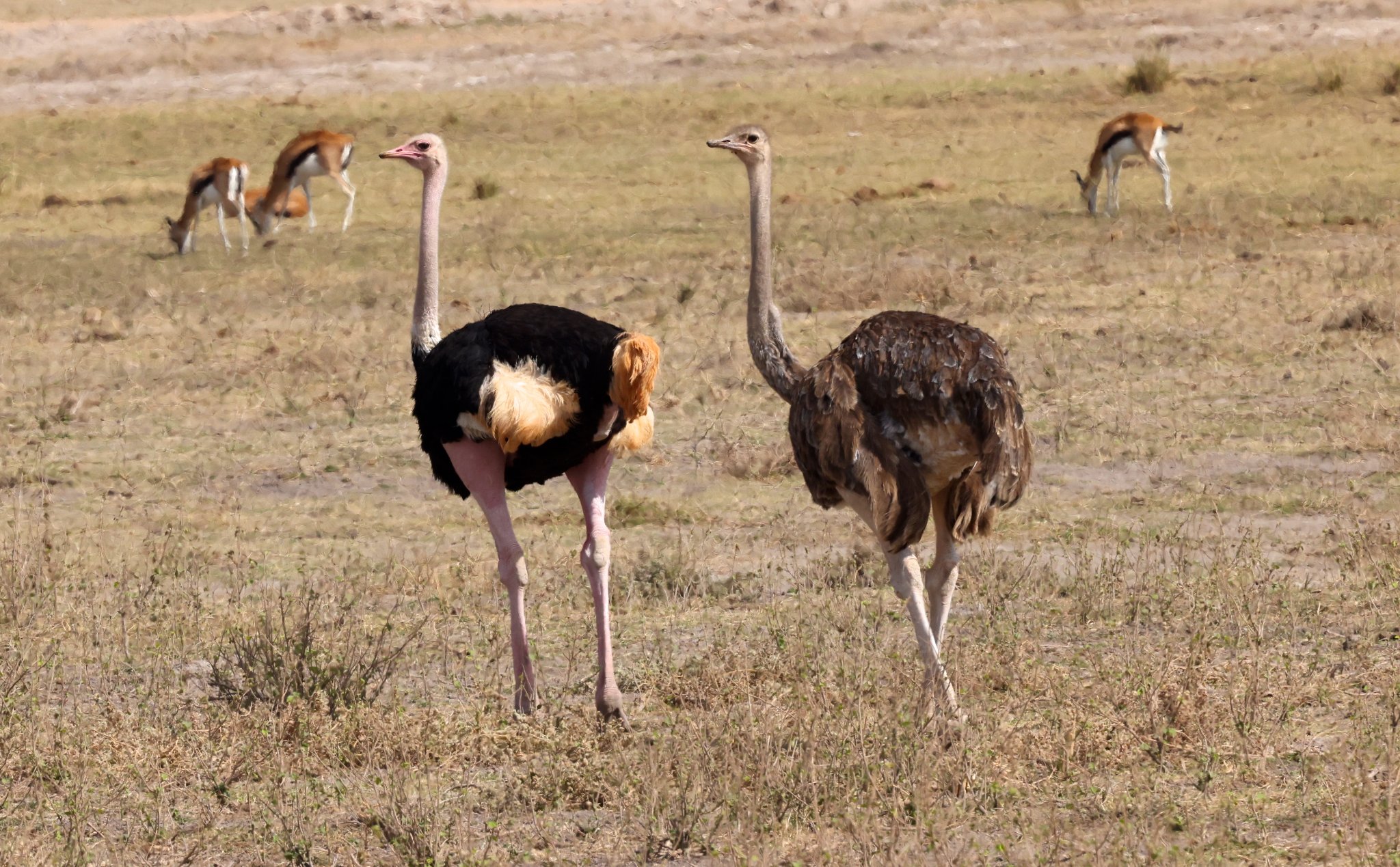
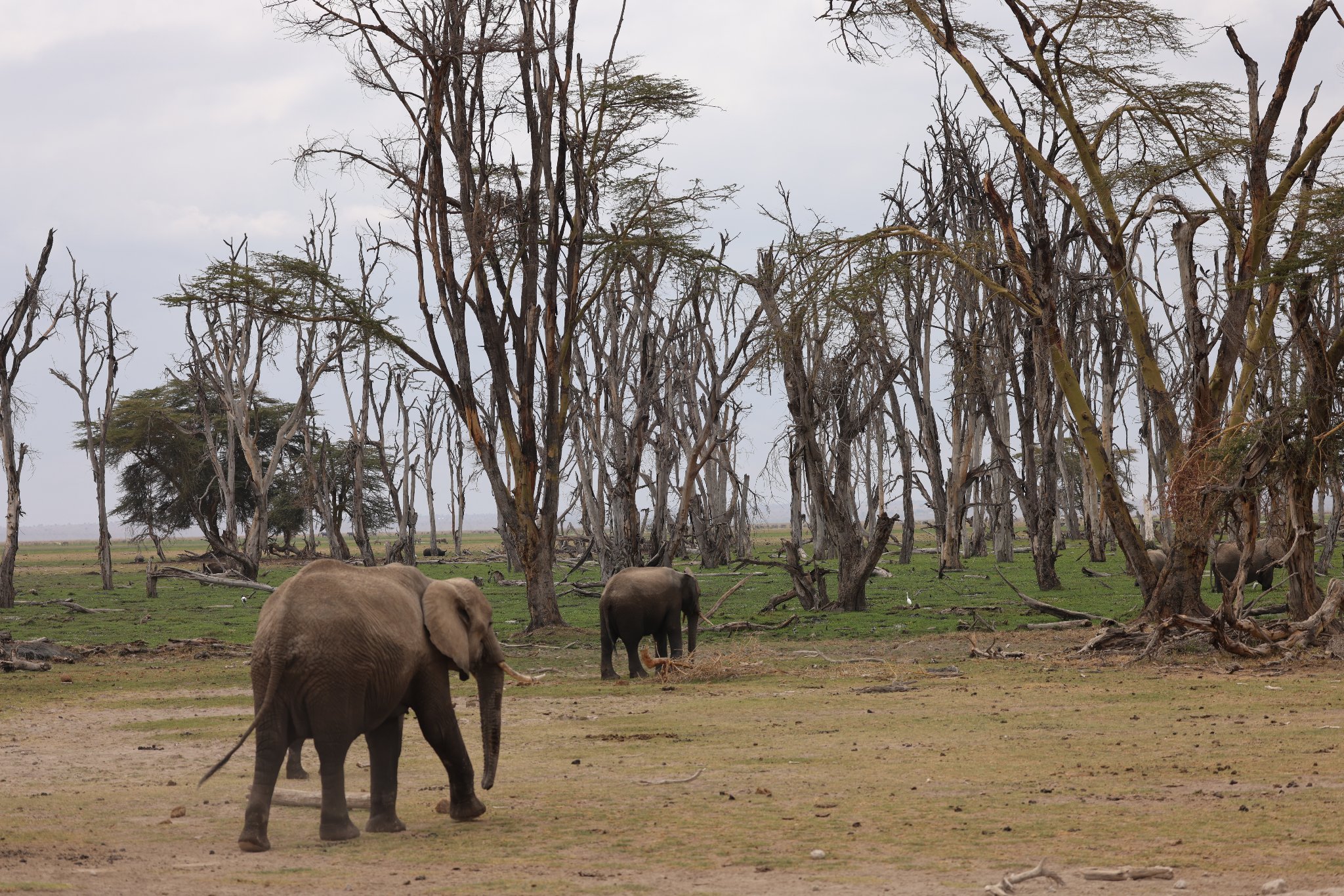
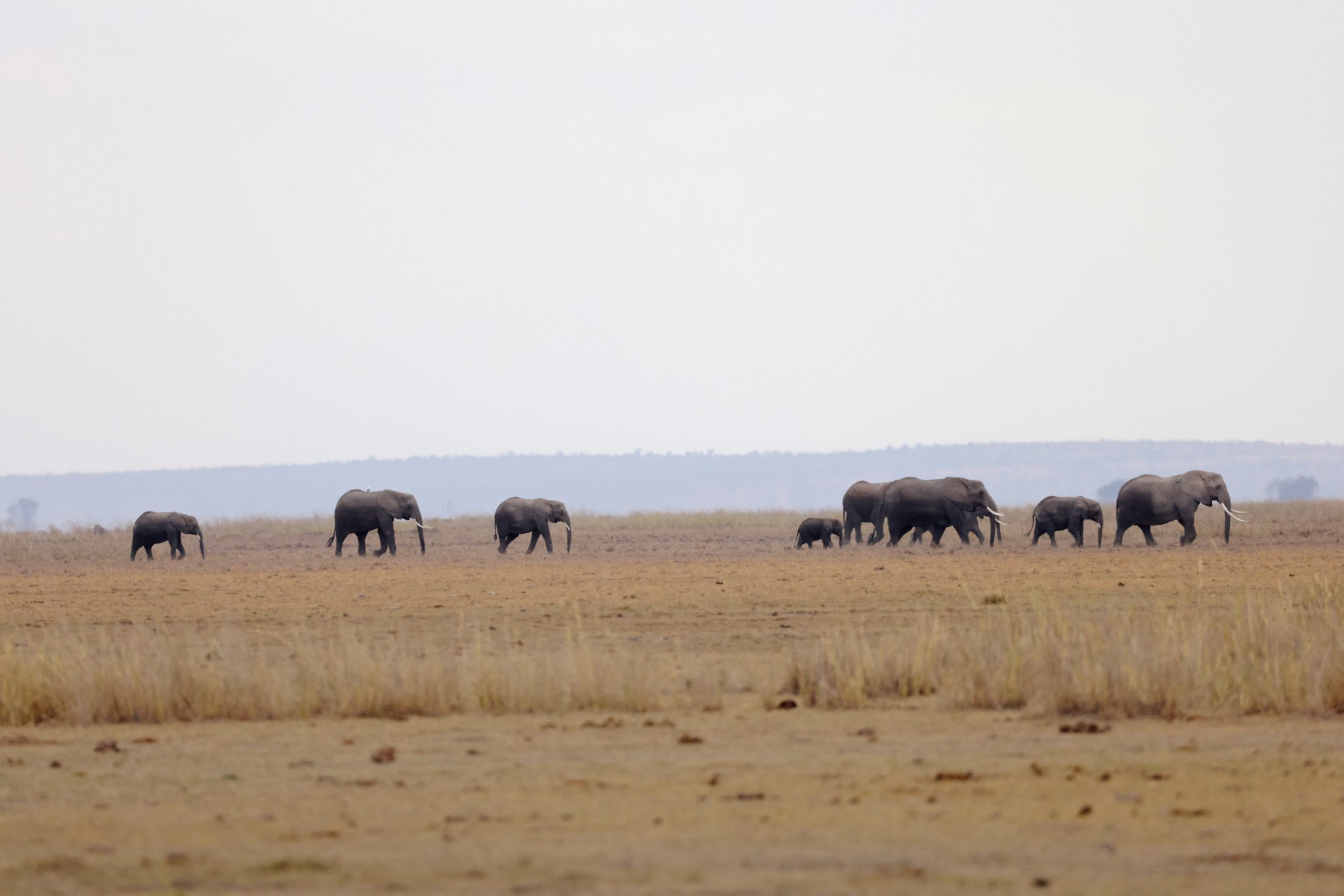
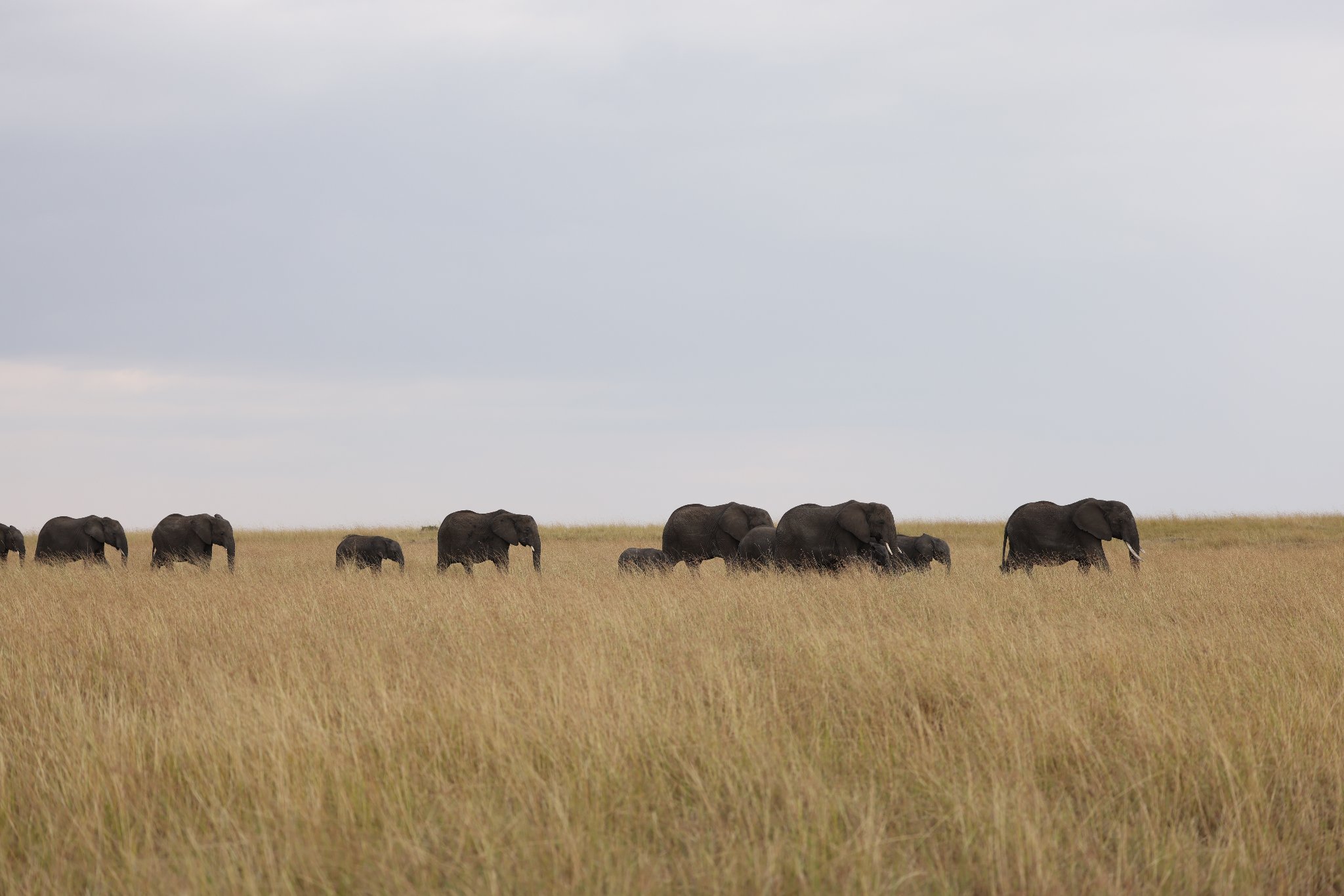
The landscape was vast and open, an expanse of dry lake bed, winding swampy channels, and acacia-dotted plains that seemed to stretch endlessly in every direction. And everywhere we looked, there were elephants. Massive family herds moved slowly across the grasslands, mothers keeping close watch over their calves, while lone bulls drifted through the dust with calm, steady presence. All of it unfolded beneath the distant, snow-capped silhouette of Mount Kilimanjaro, which loomed like a quiet backdrop over the entire scene. That first drive unfolded with remarkable variety. We saw cheetah, buffalo, giraffe, and large herds of gazelle spread across the plains.
Over the next day, we experienced two dedicated game drives—one in the morning and one in the afternoon—each revealing a different rhythm of Amboseli. The morning light on Kilimanjaro was soft and golden, slowly unveiling the mountain in a way that photographs can never quite capture.
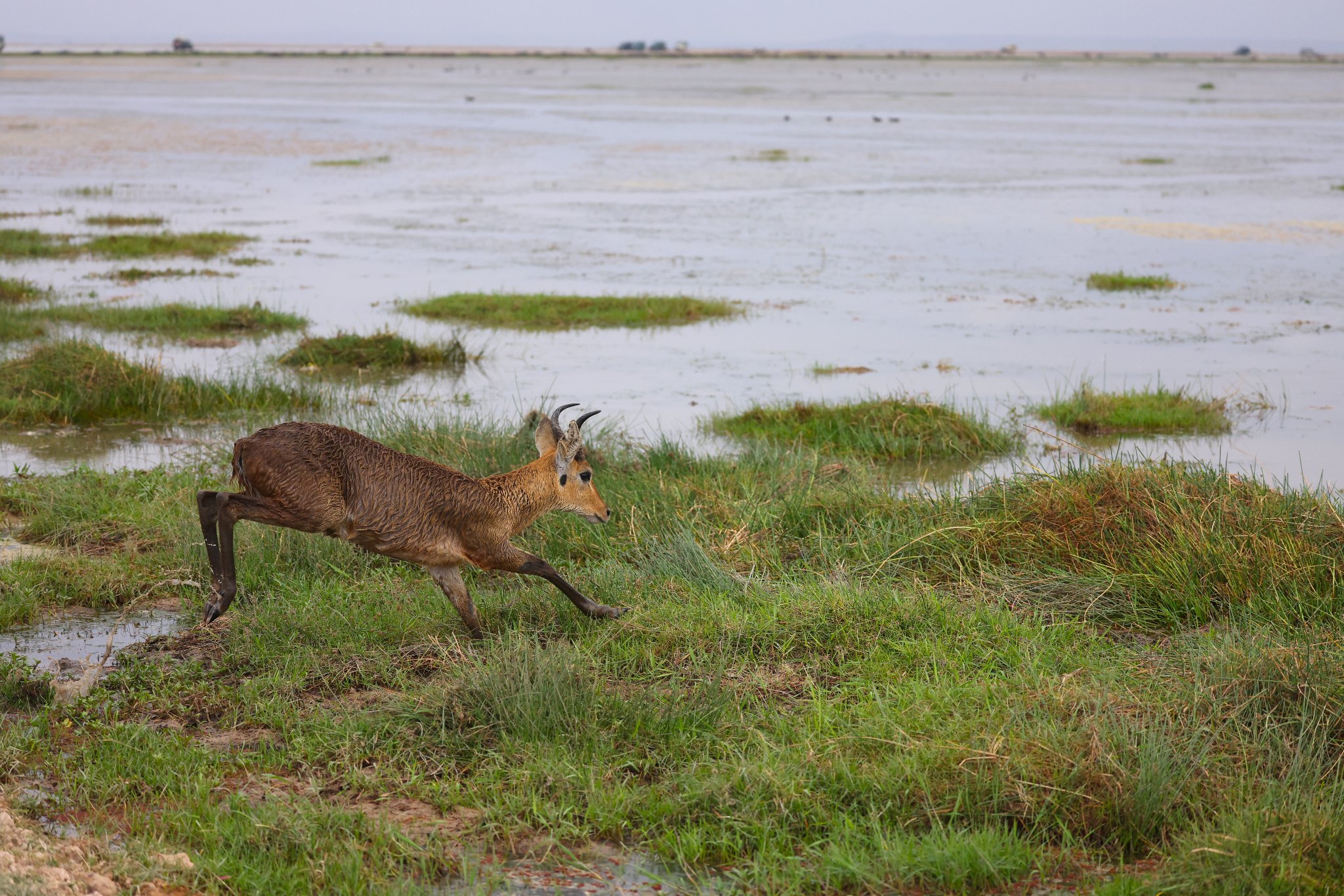
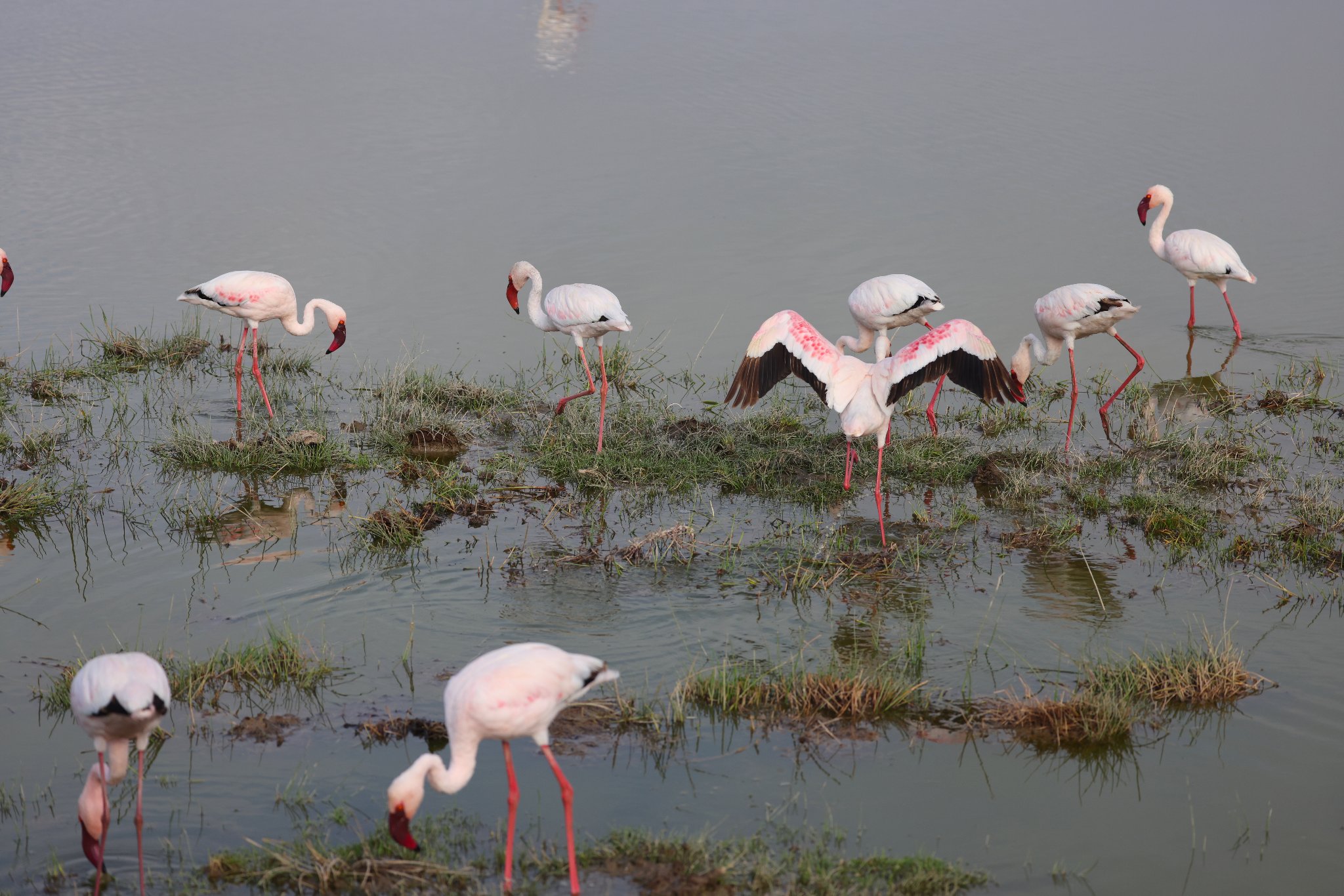
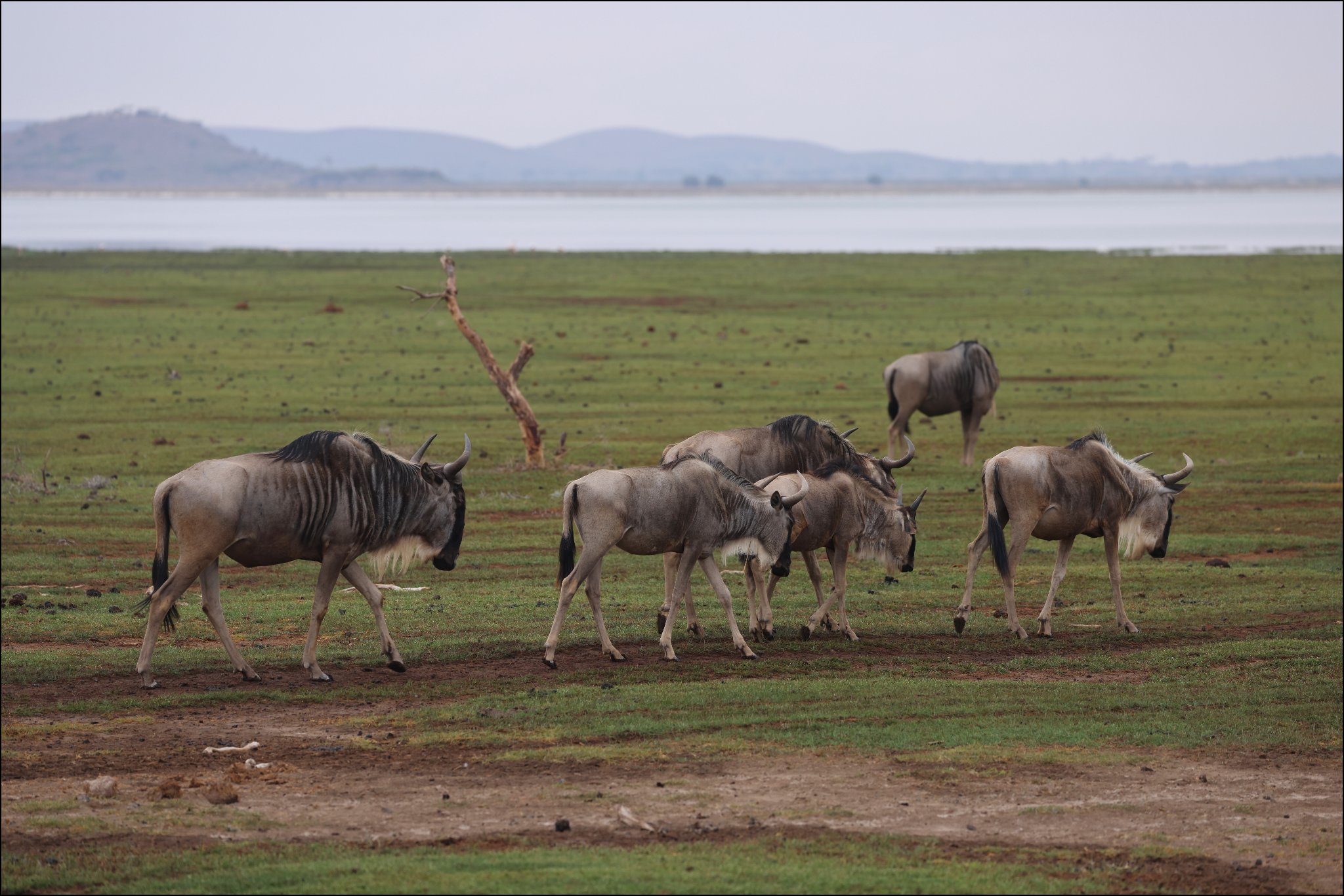
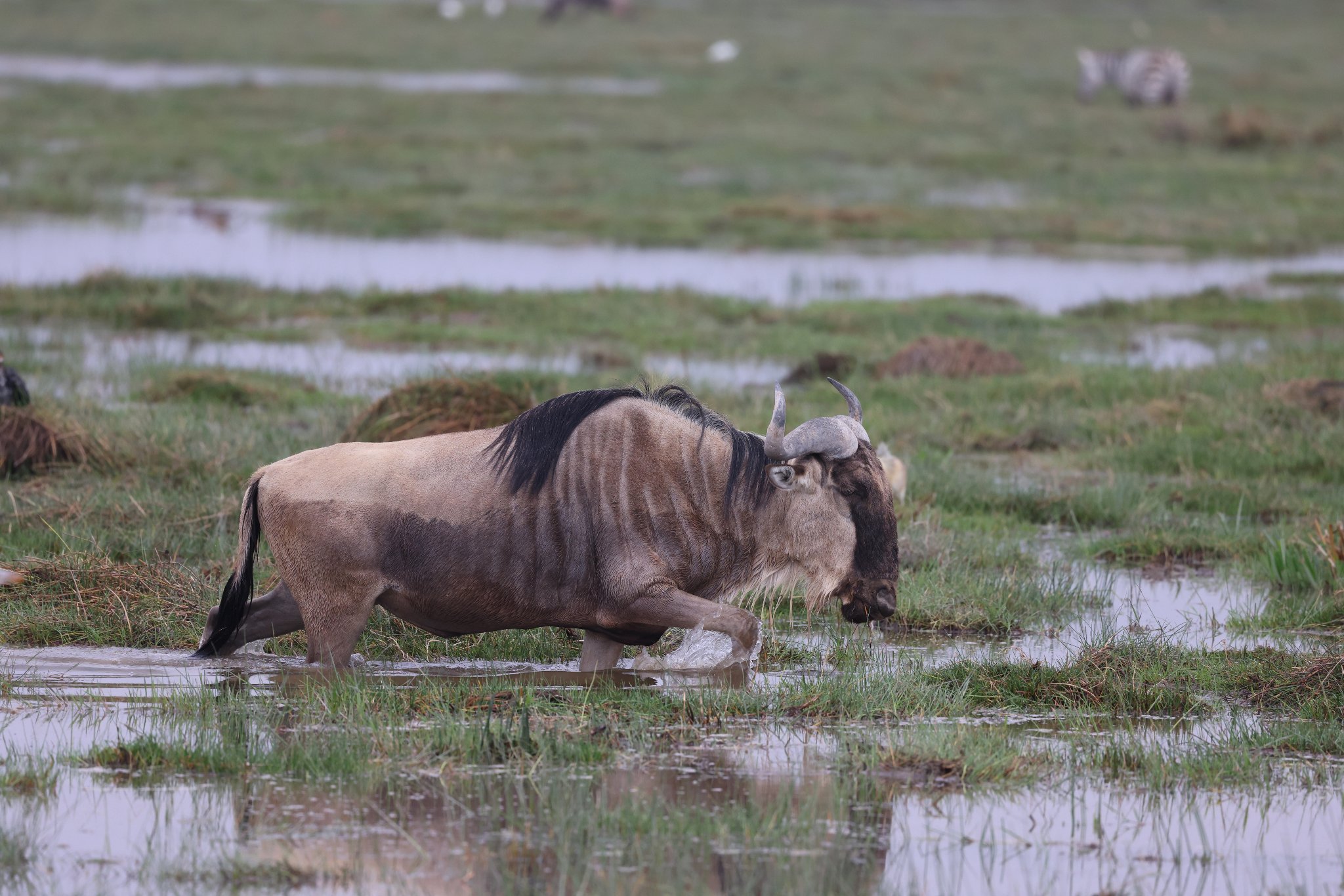
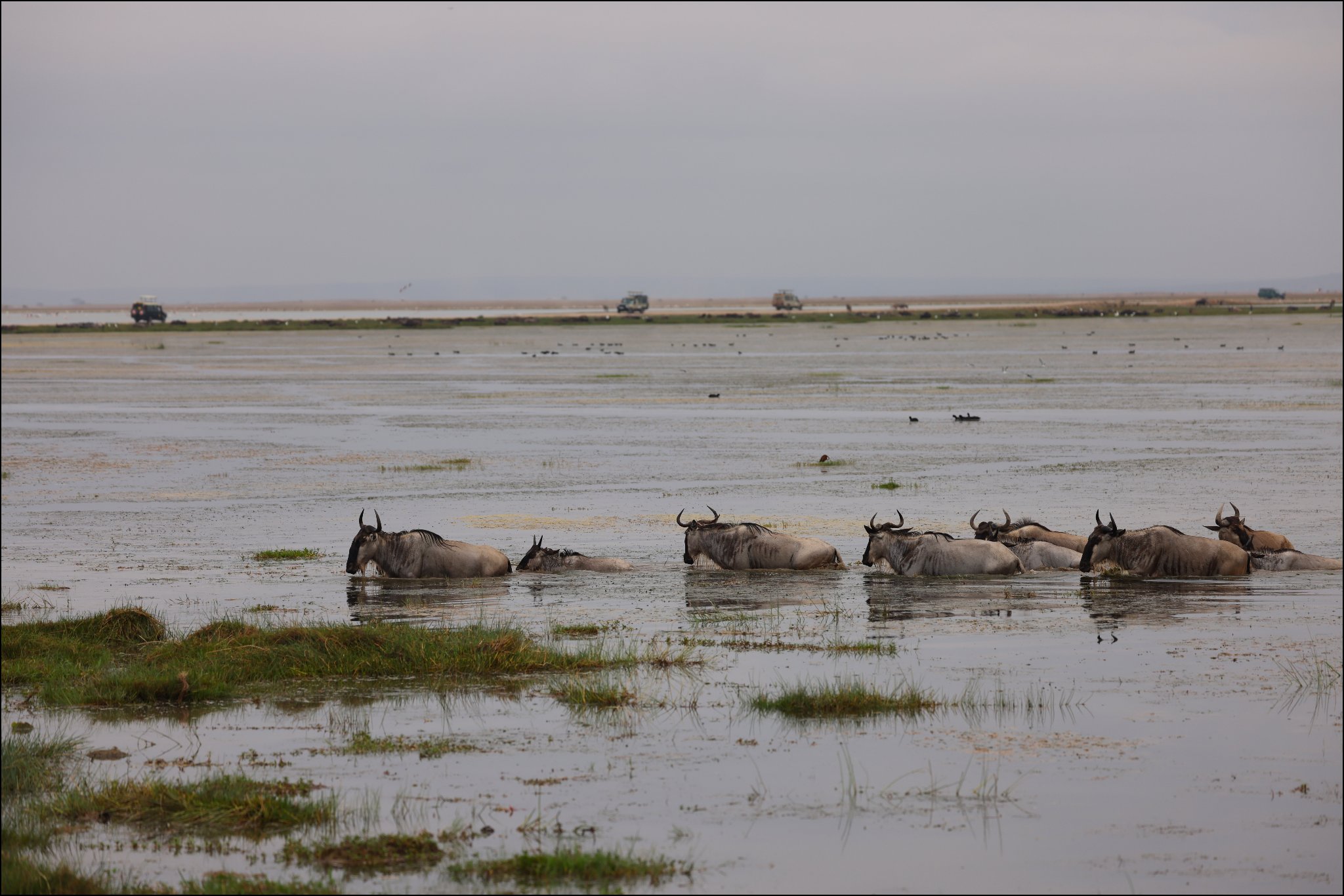
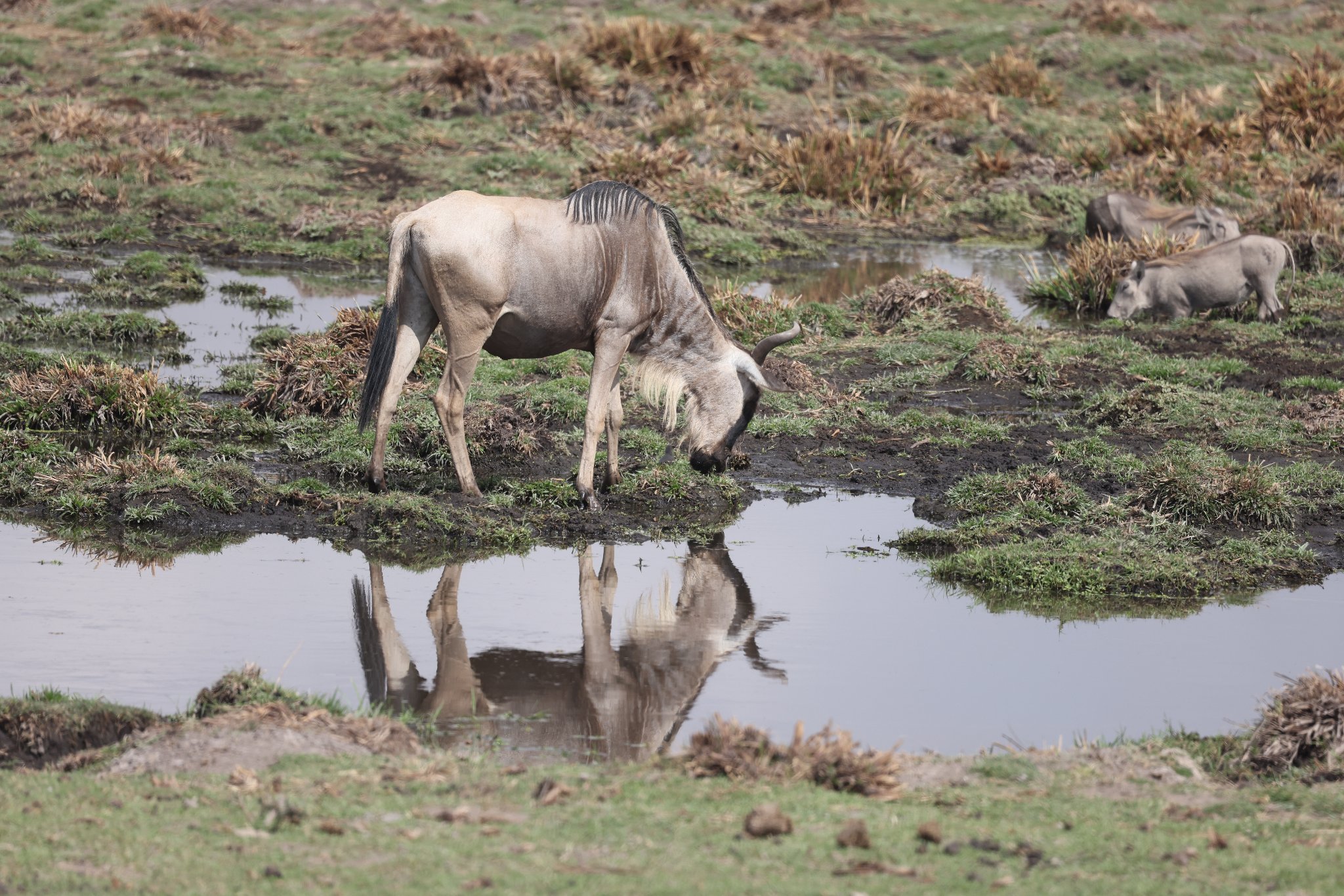
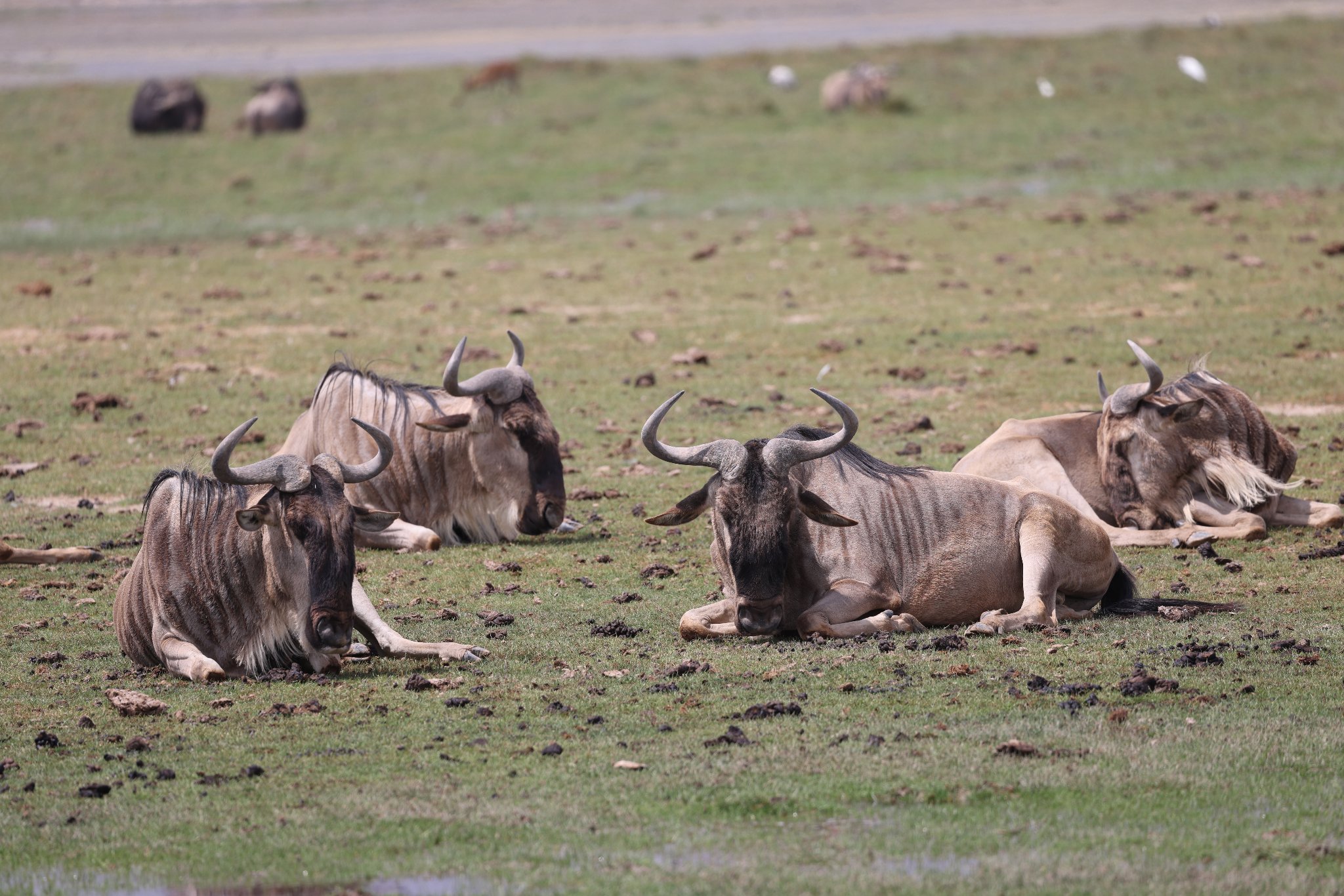
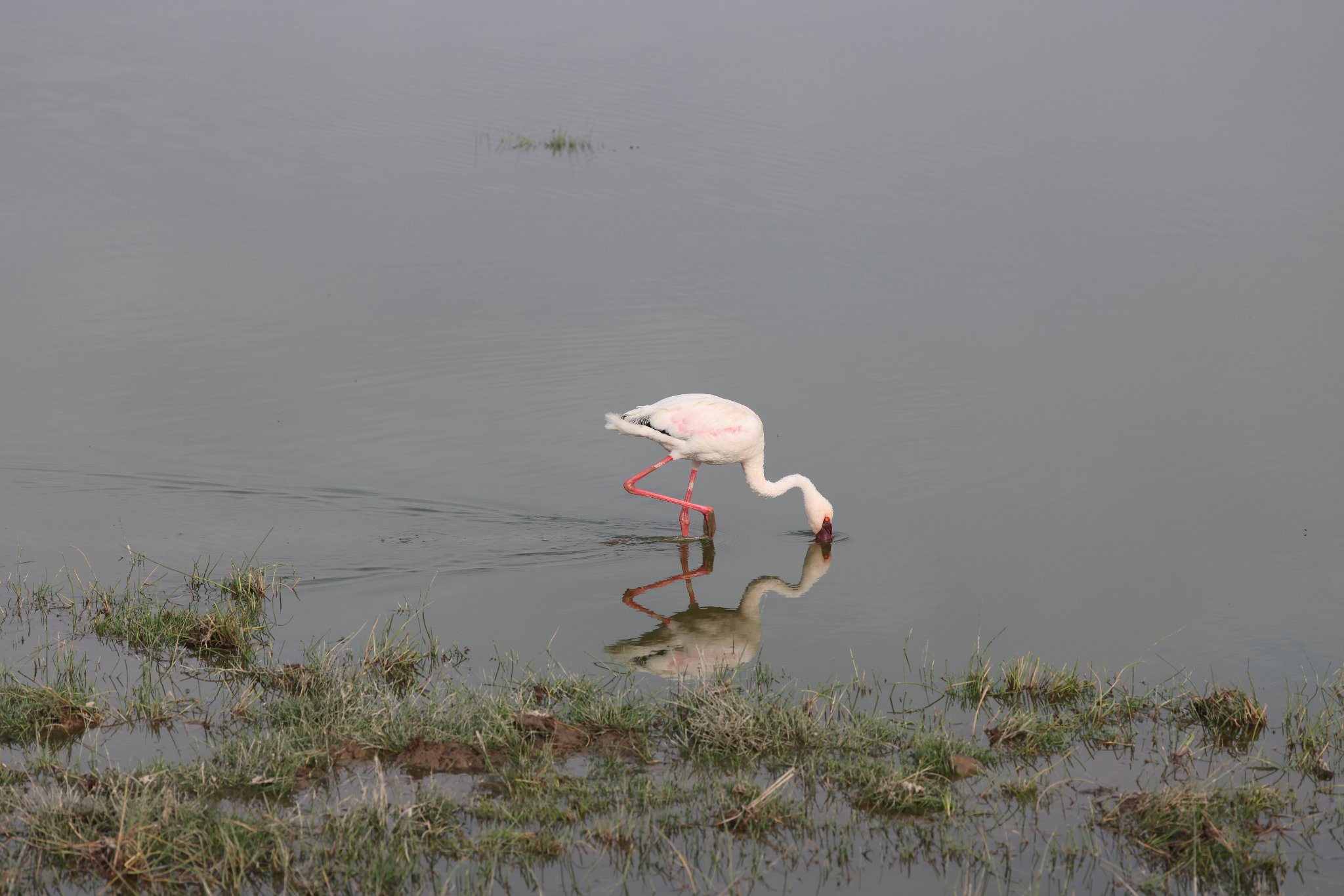
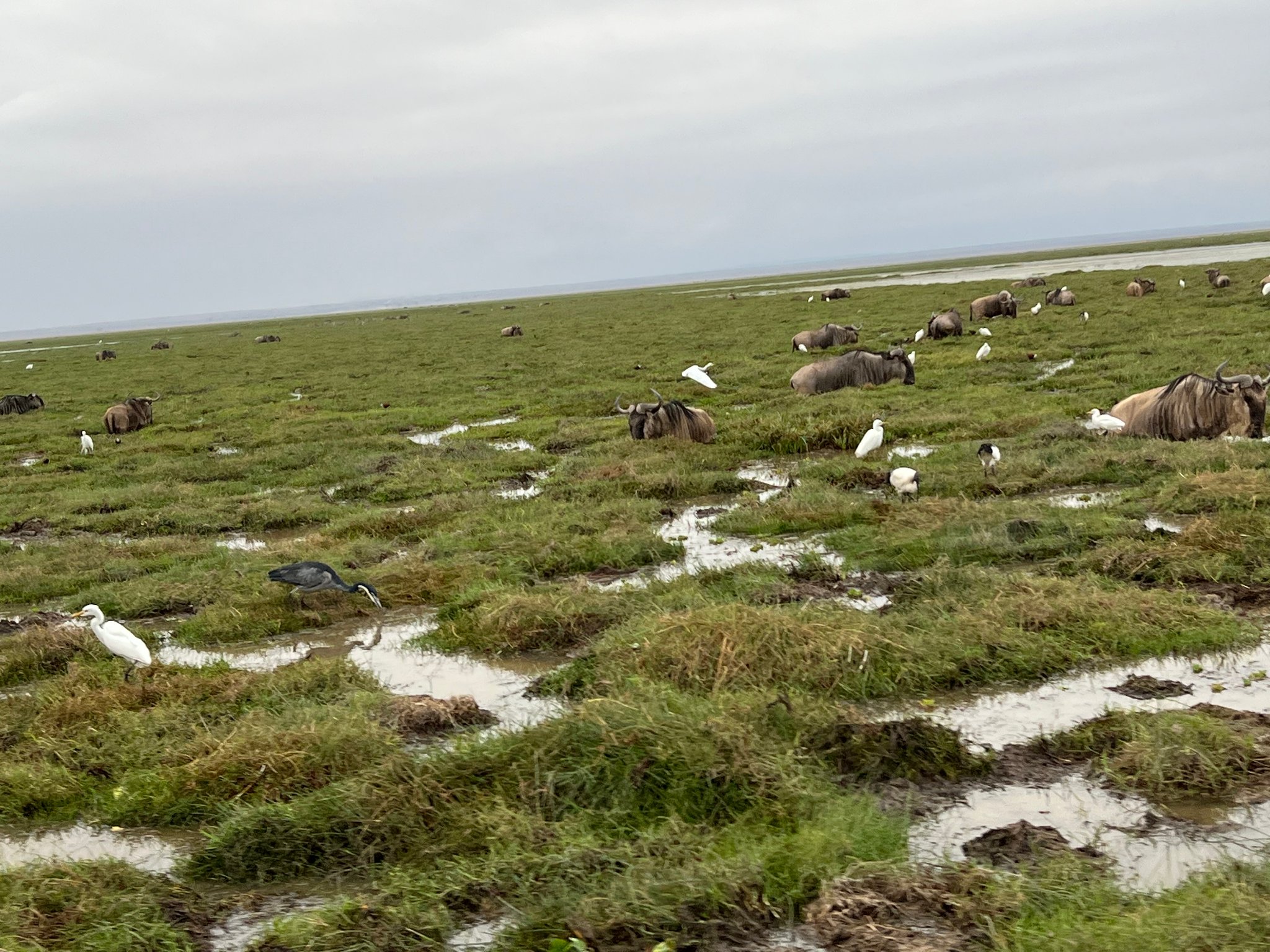
At one point, gazelles were seen leaping playfully through shallow water channels, while wildebeest splashed heavily through muddy pools, sending ripples across the wetlands. In the distance, flamingoes gathered in patches of shallow water, adding flashes of pink against the muted tones of the landscape. It was a raw and dynamic introduction to the park, full of movement and contrast.
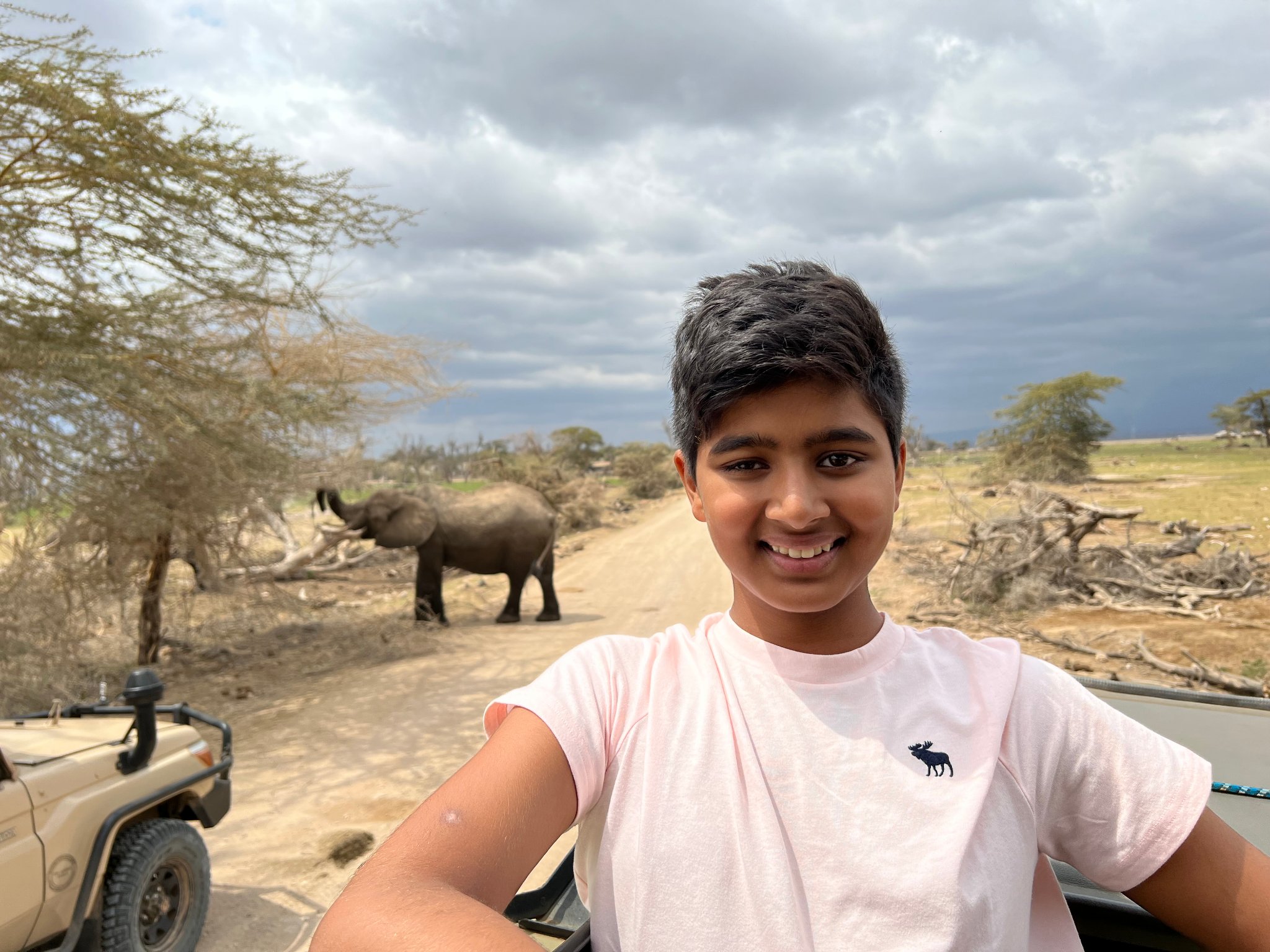
The elephants remained the constant thread throughout both drives. We watched herds moving steadily from morning until evening, traveling between grazing areas and swampy water sources. Some were seen reaching up to strip dried branches from acacia trees, carefully breaking them to feed. Matriarchs led their families with quiet authority, calves struggling to keep pace as the herd shifted across the plains and returned again to the water swamps later in the day.
We also came across a lone dead zebra on the plains—a stark reminder of the natural cycle of life in the wild, where survival is constant and unforgiving.
It was a deeply immersive experience, where every moment—whether dramatic or quiet—felt like part of the same living, breathing landscape.
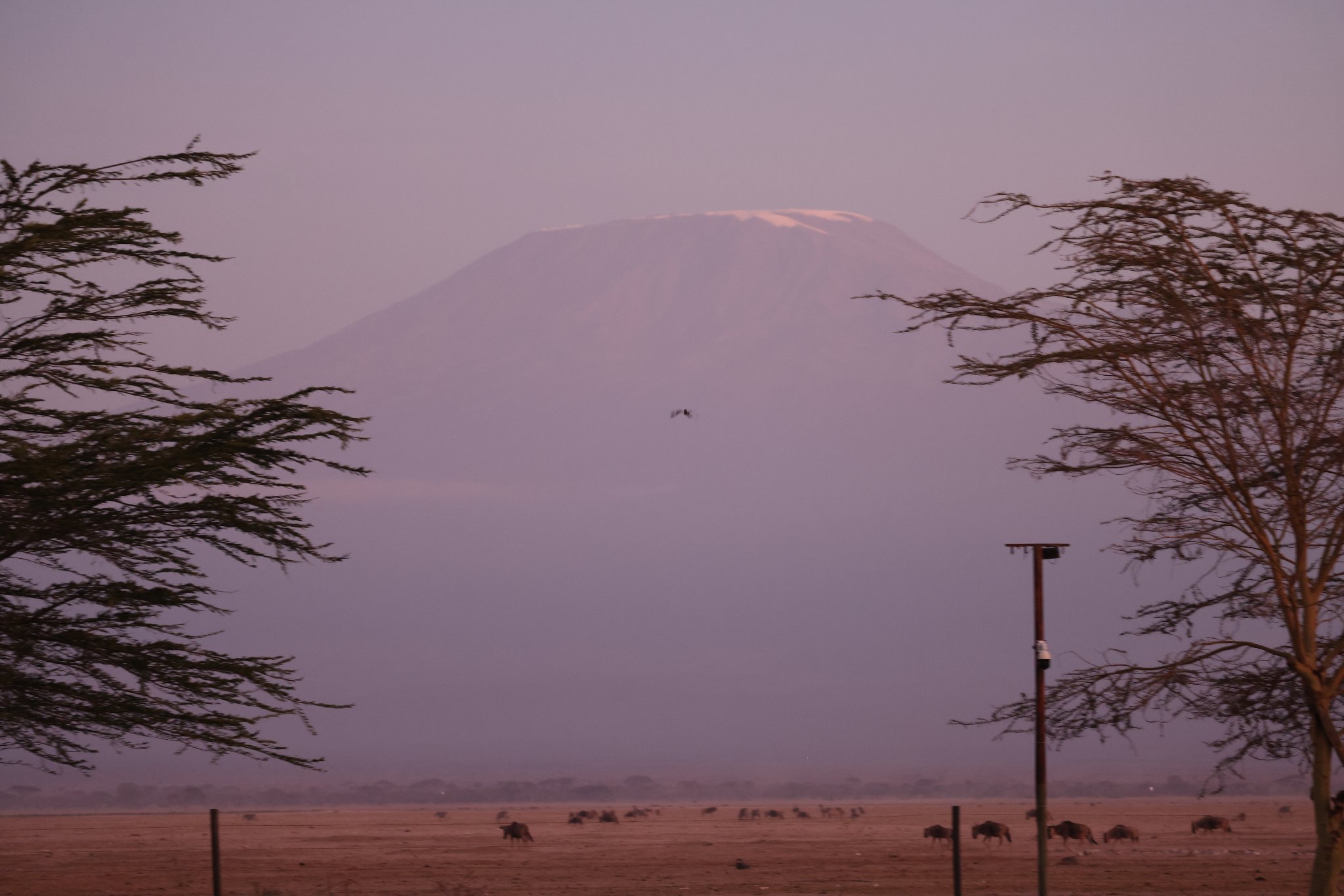
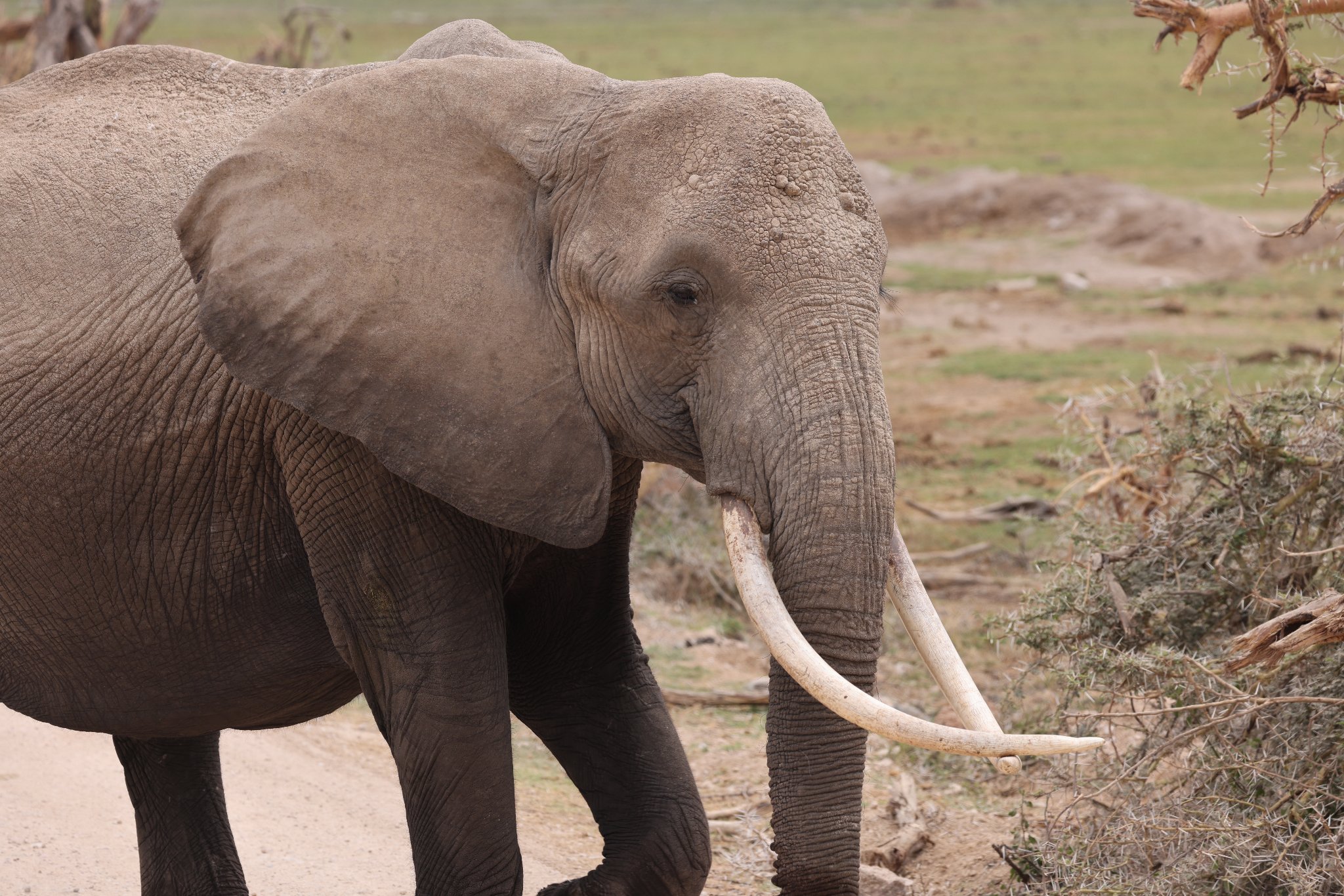
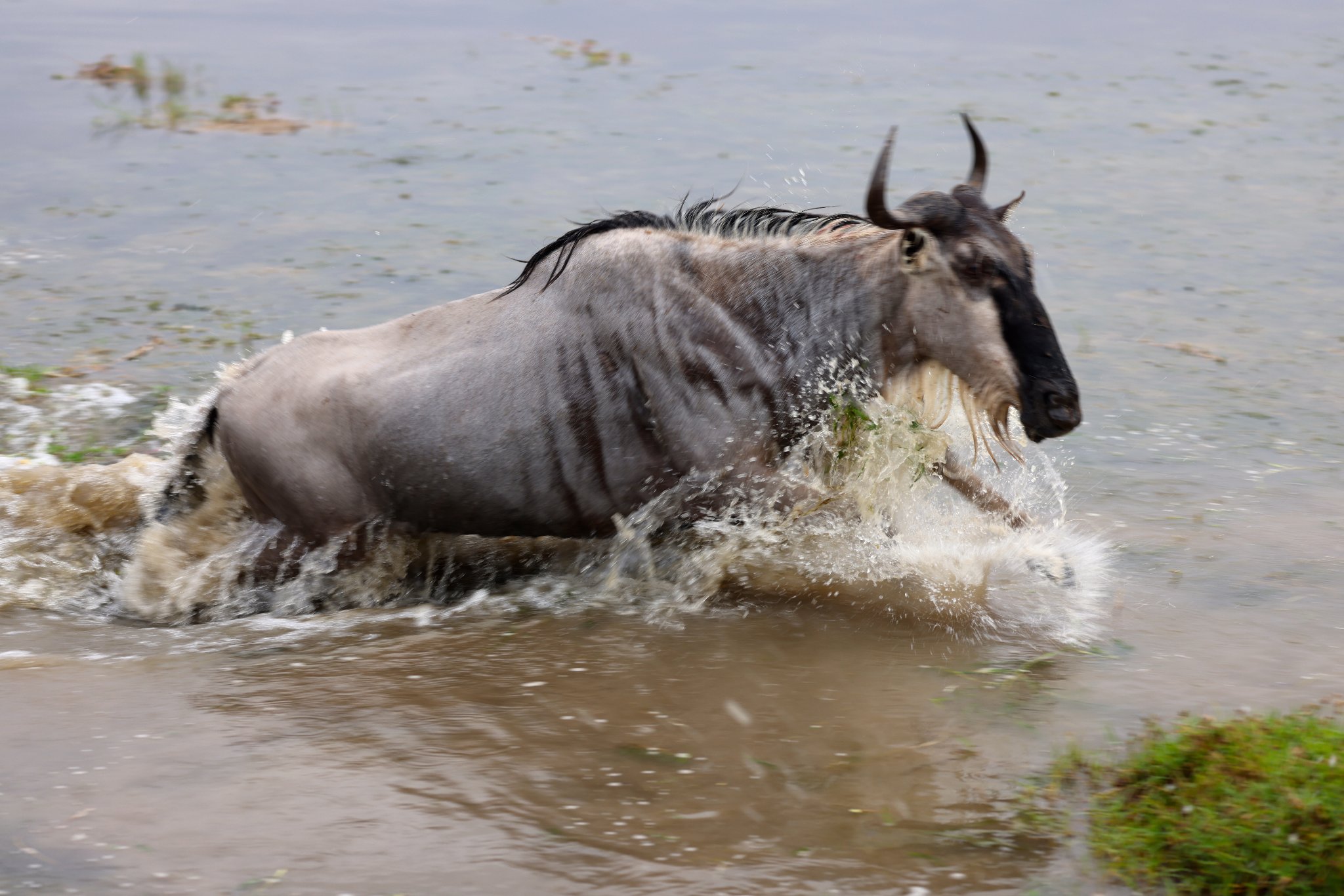
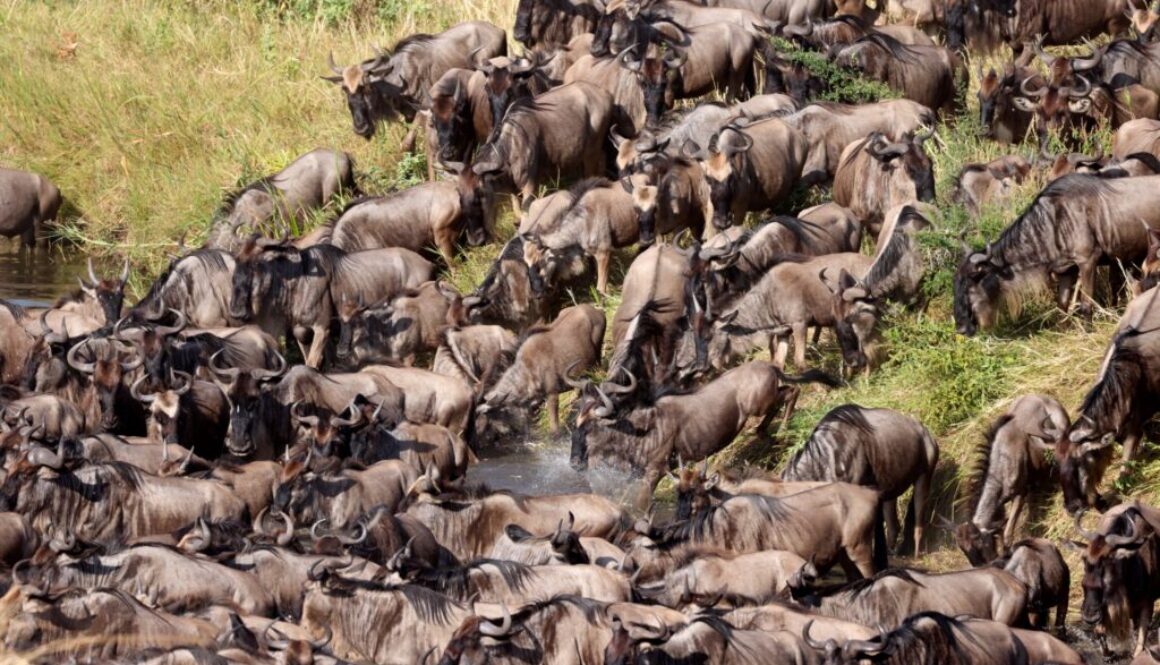
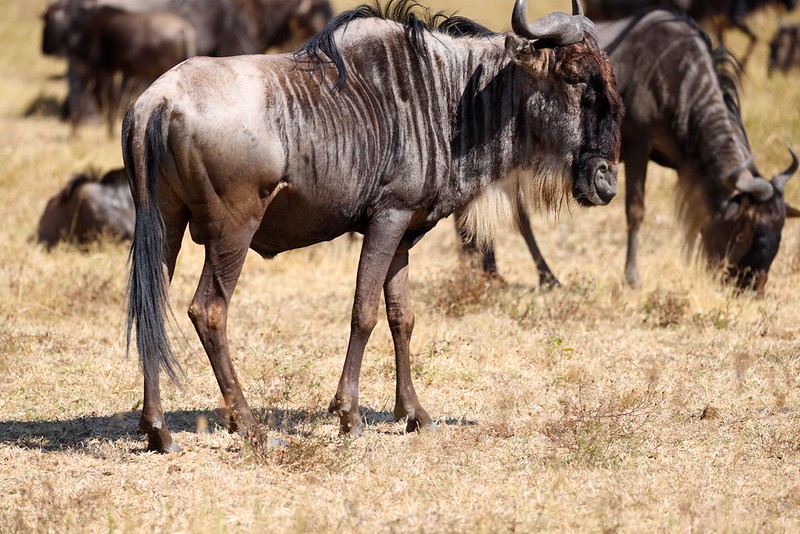
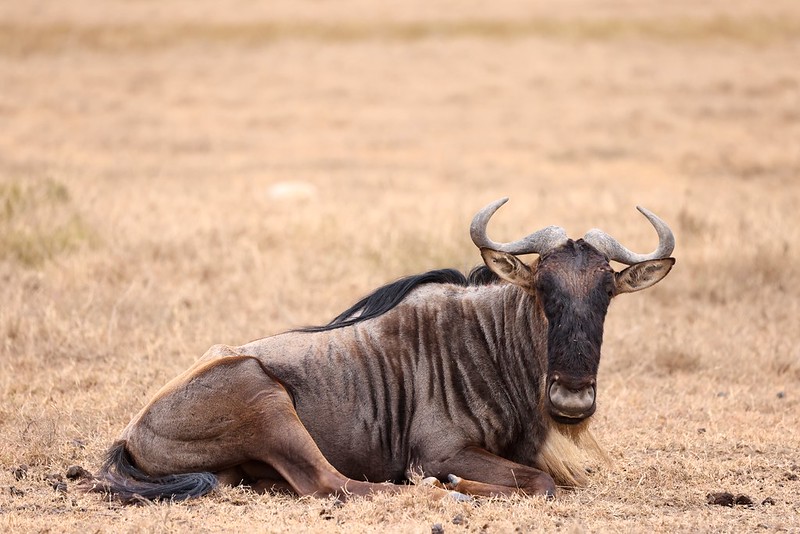
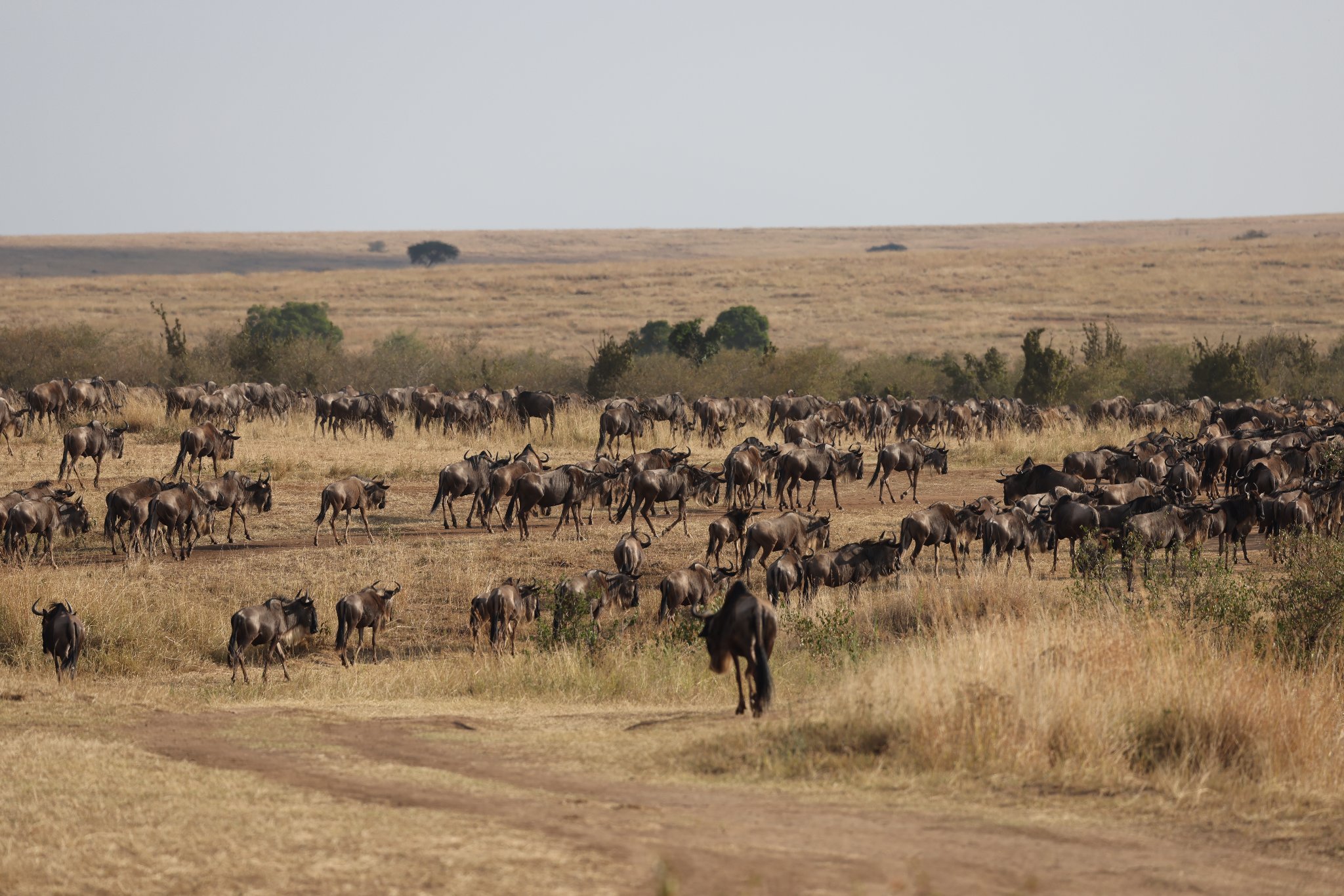
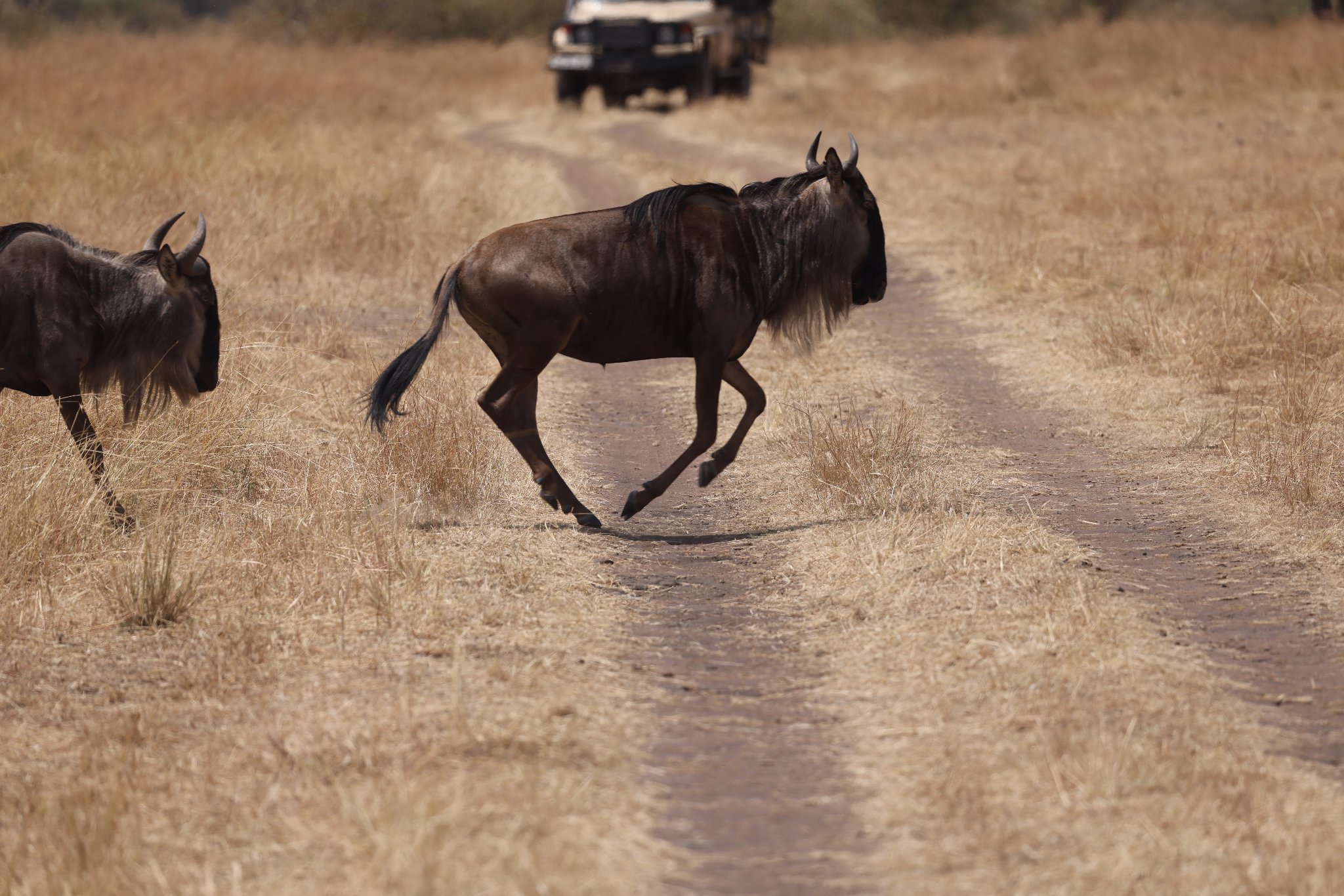
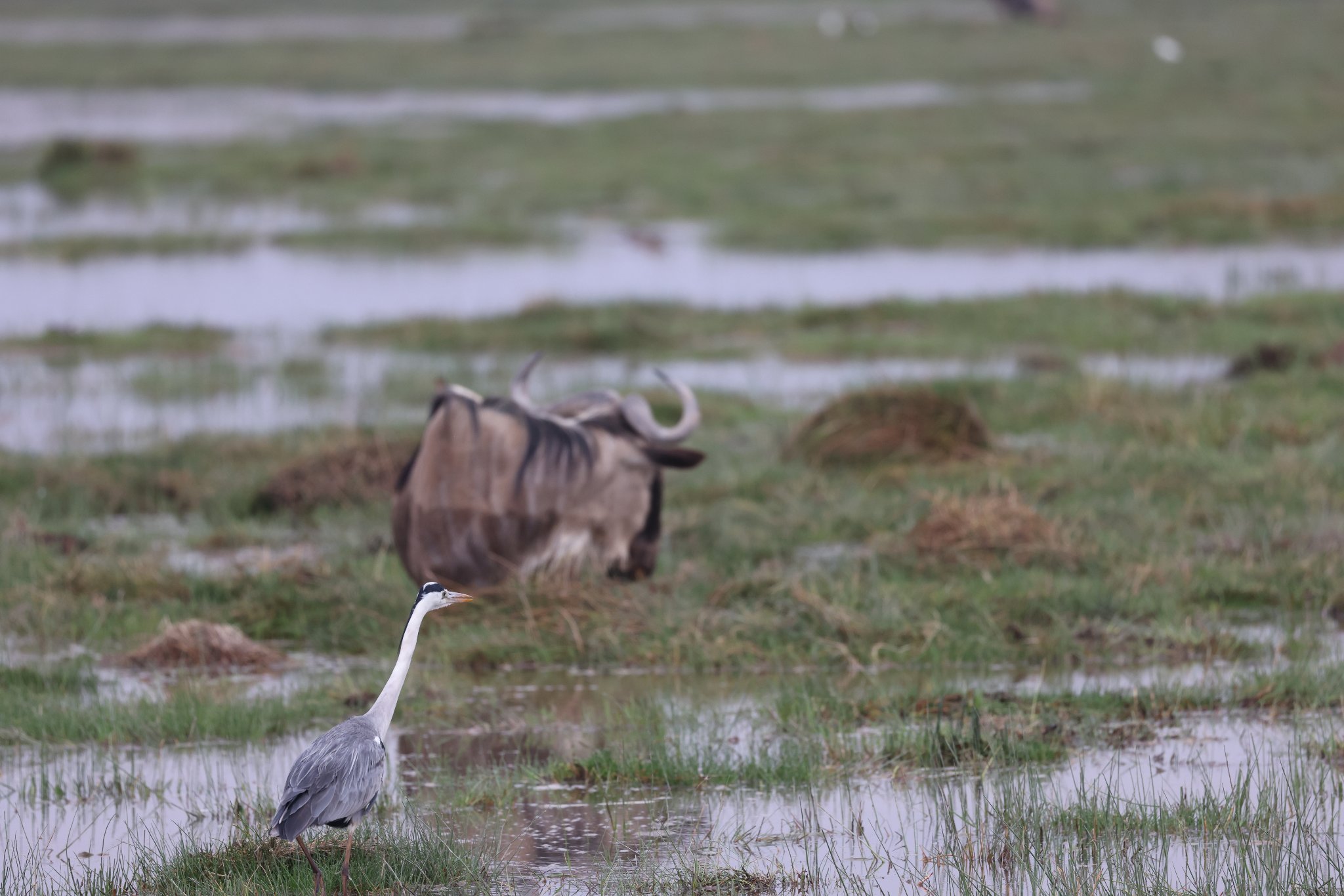
Wildebeests
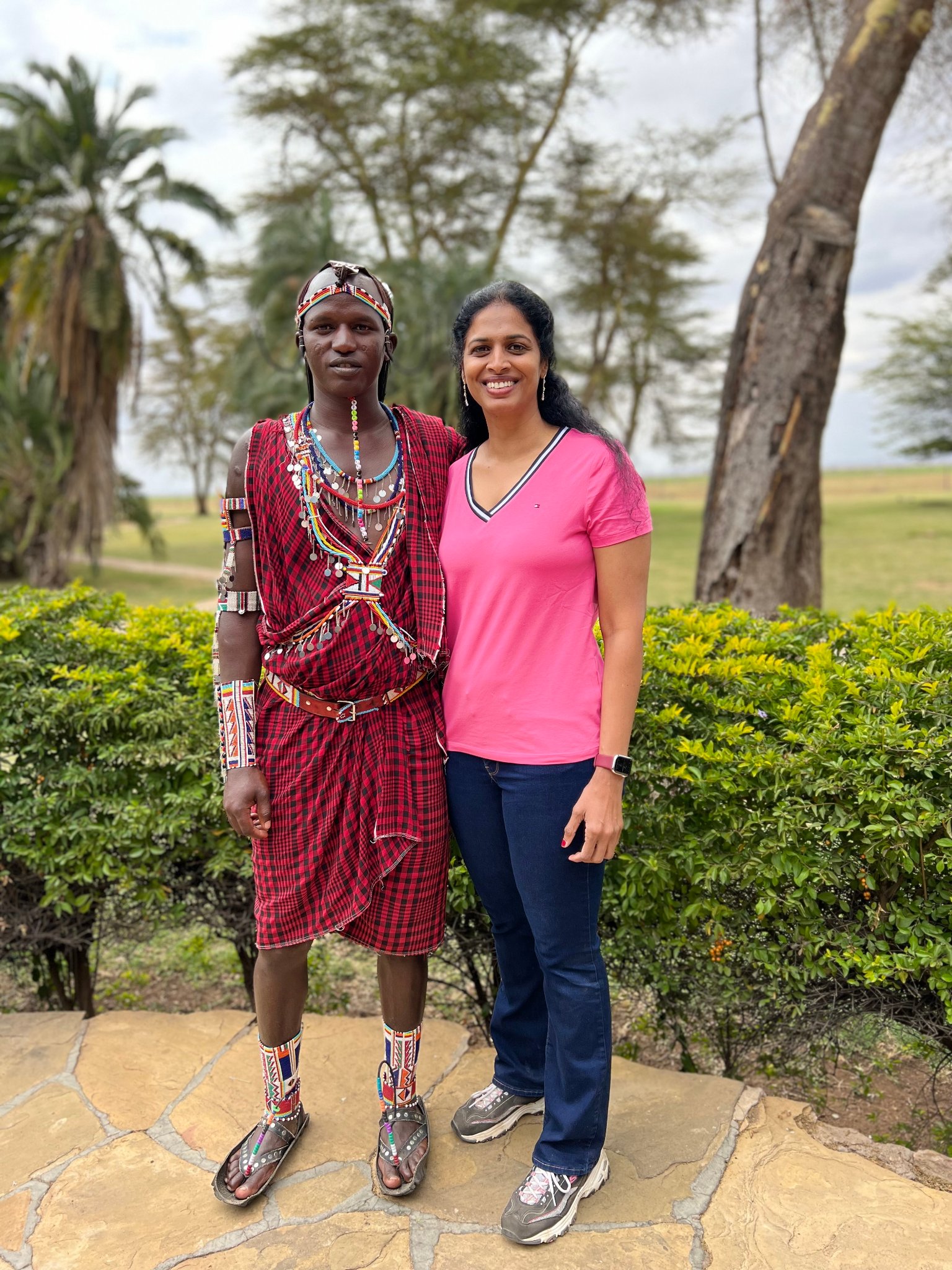
Finally Resort in Amboseli
Amboseli to Lake Naivasha
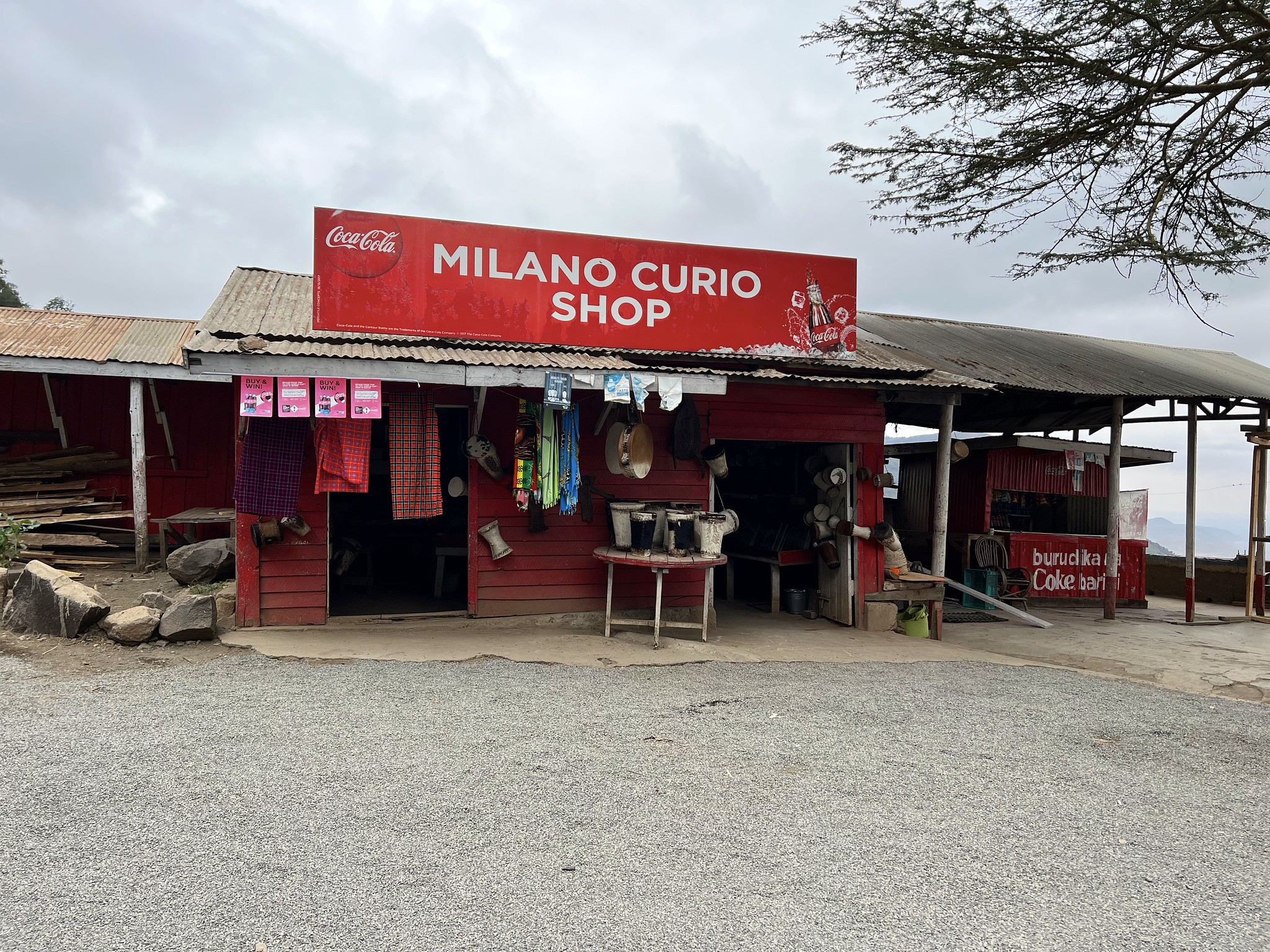
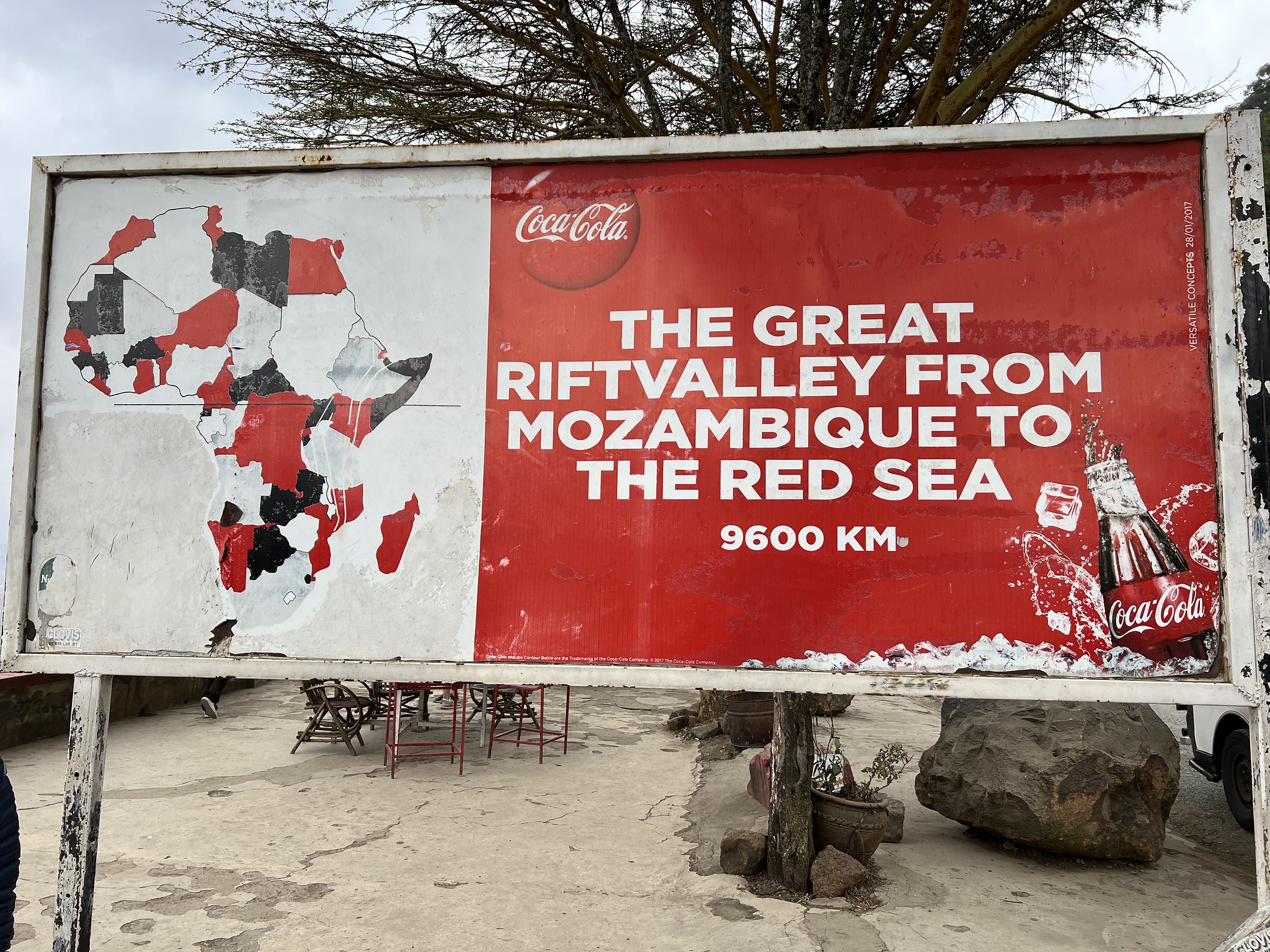
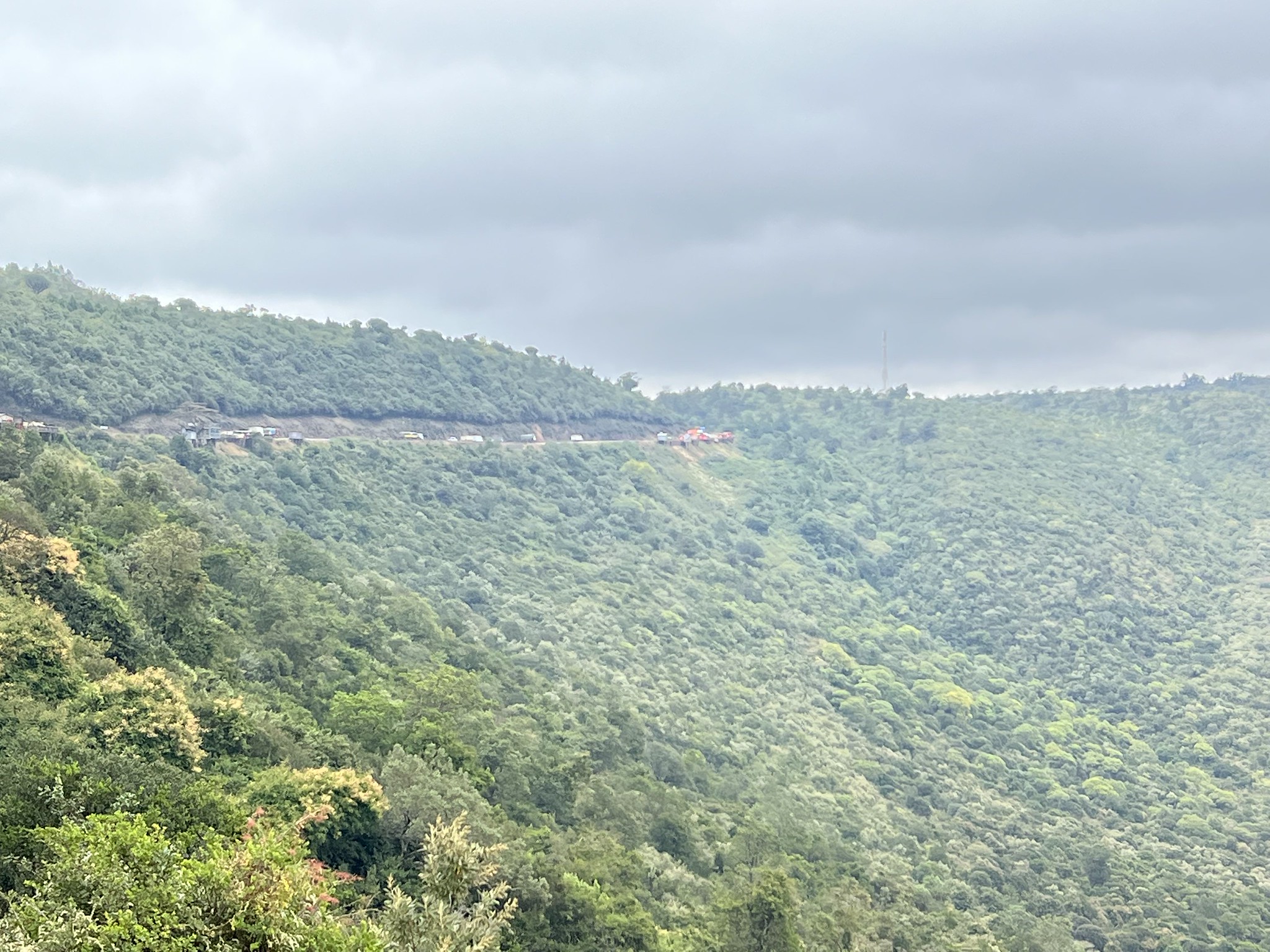
We flew in from Amboseli to Wilson Airport in Nairobi and were picked up by our guide, who drove us out to Naivasha with a stop along the way at the Great Rift Valley viewpoint. Standing on that escarpment, looking out over the vast valley floor stretching to the horizon in both directions , one of those moments that reminds you just how ancient and dramatic this continent is.
Great Rift Valley Viewpoint
The Great Rift Valley is one of Earth’s most extraordinary geographical features, a massive tectonic fracture running 6,000 kilometres from the Middle East all the way down through East Africa to Mozambique. From the viewpoint on the escarpment above Naivasha, the scale of it becomes real. You are looking down at the cradle of humanity. We stayed longer than we planned.
Lake Naivasha
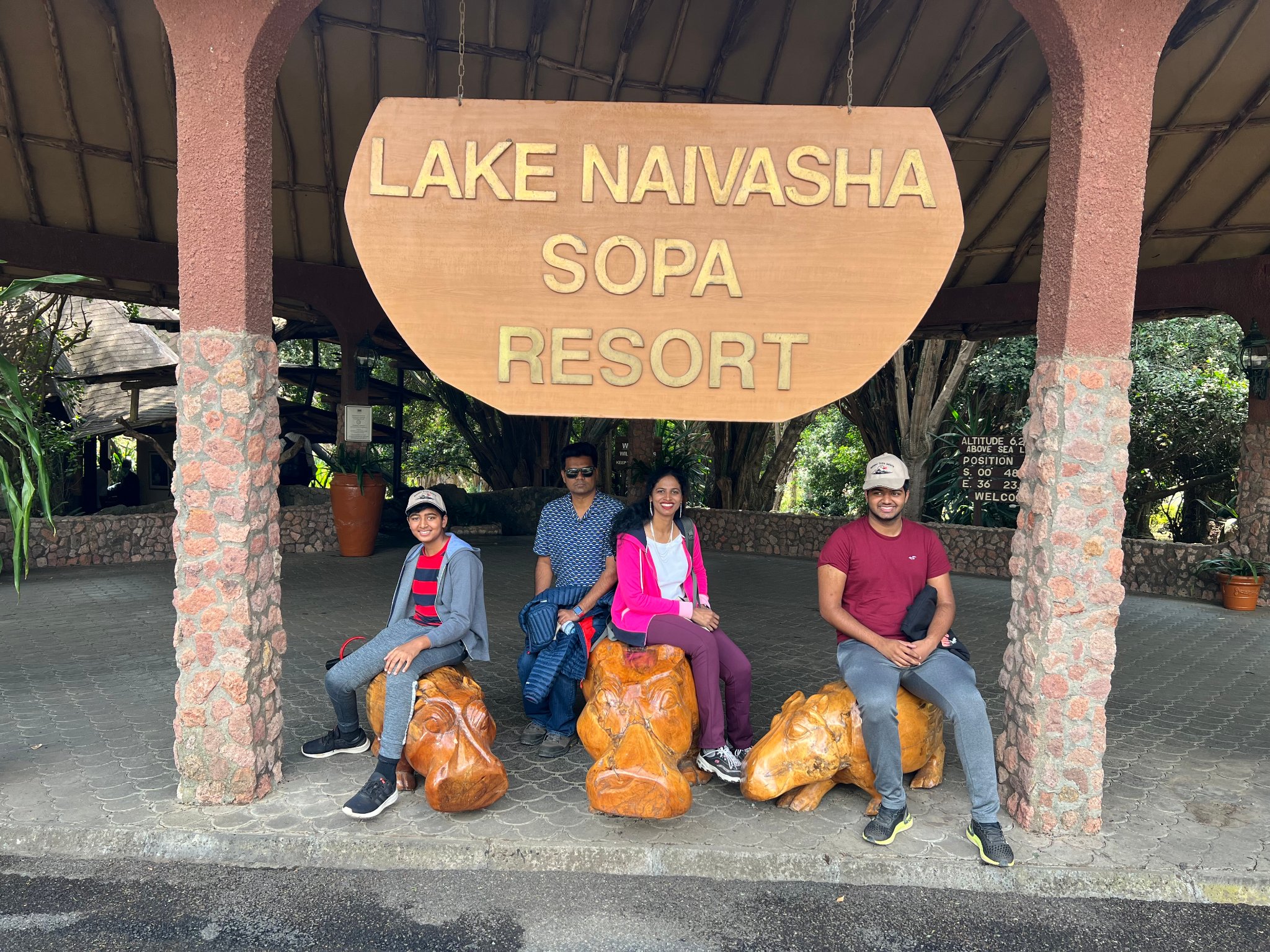
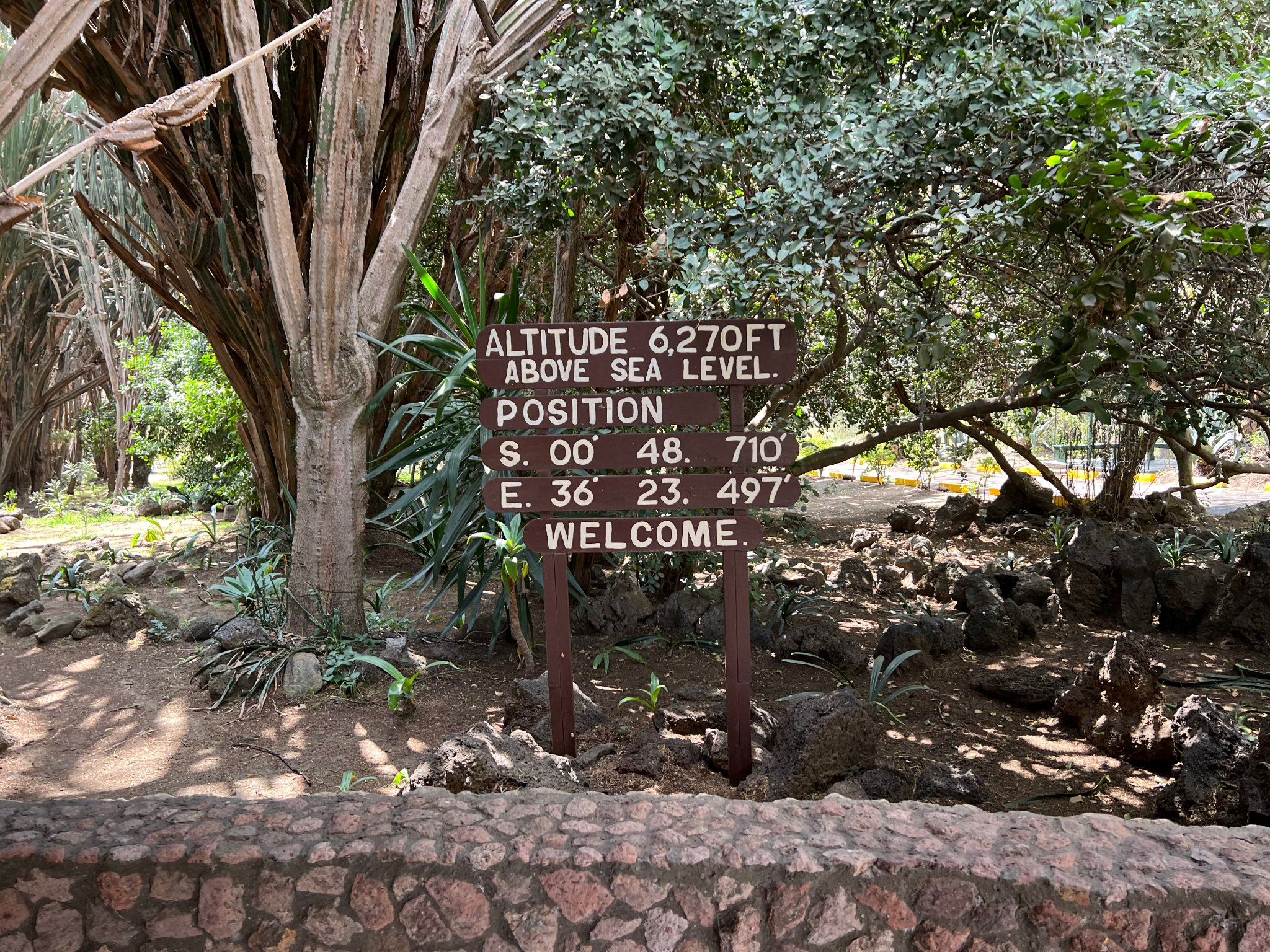
Lake Naivasha Sopa Lodge
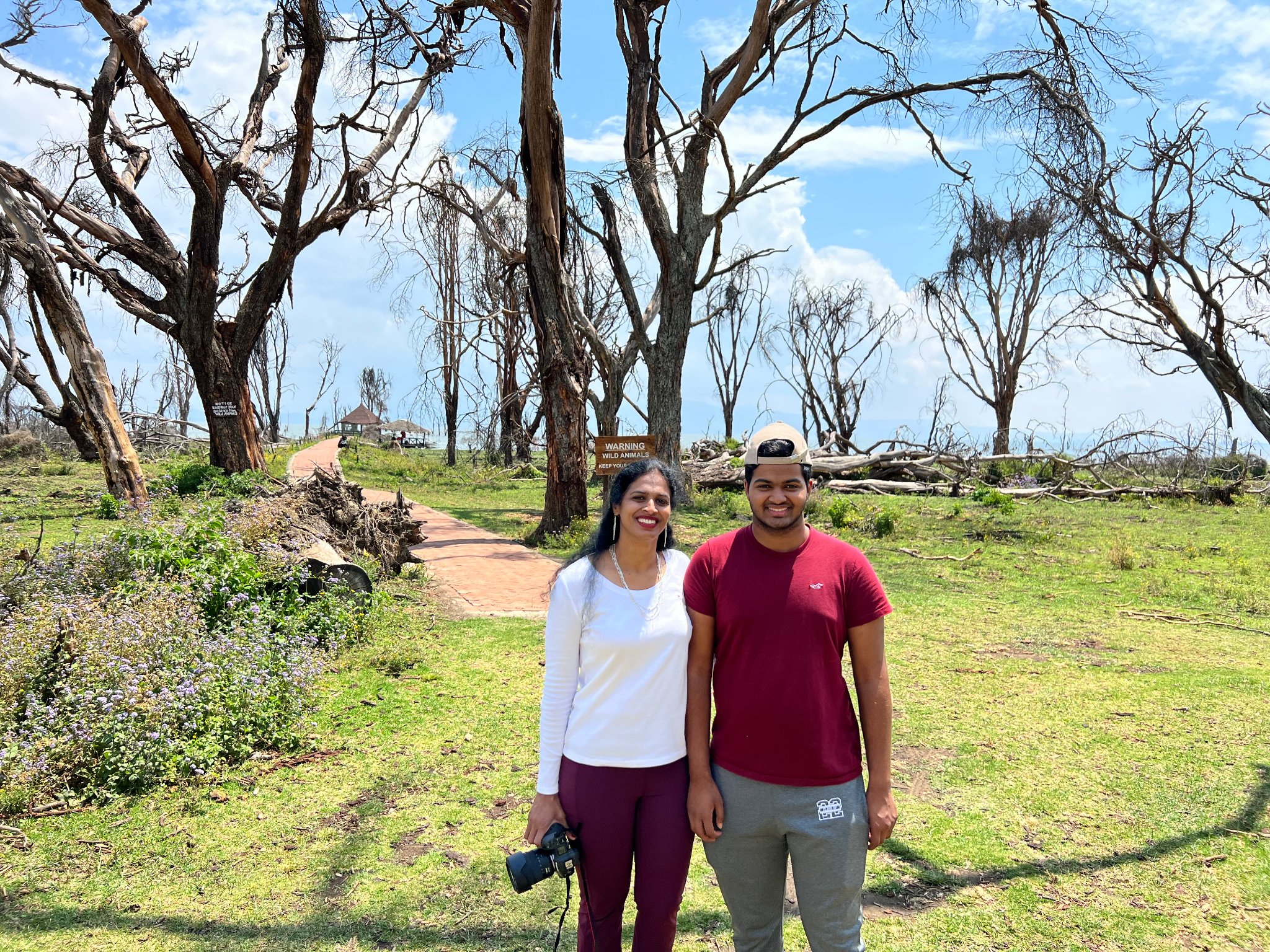
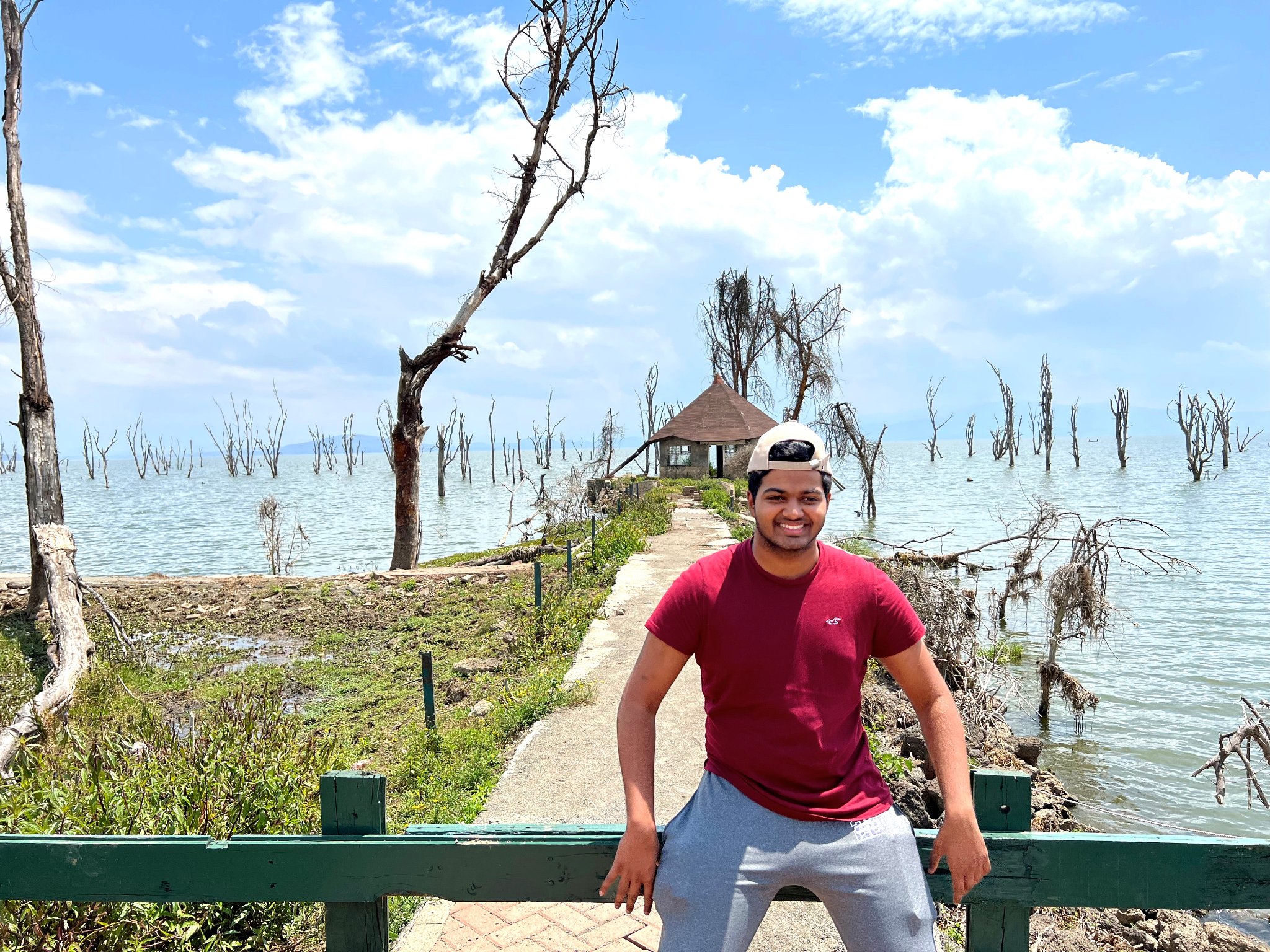
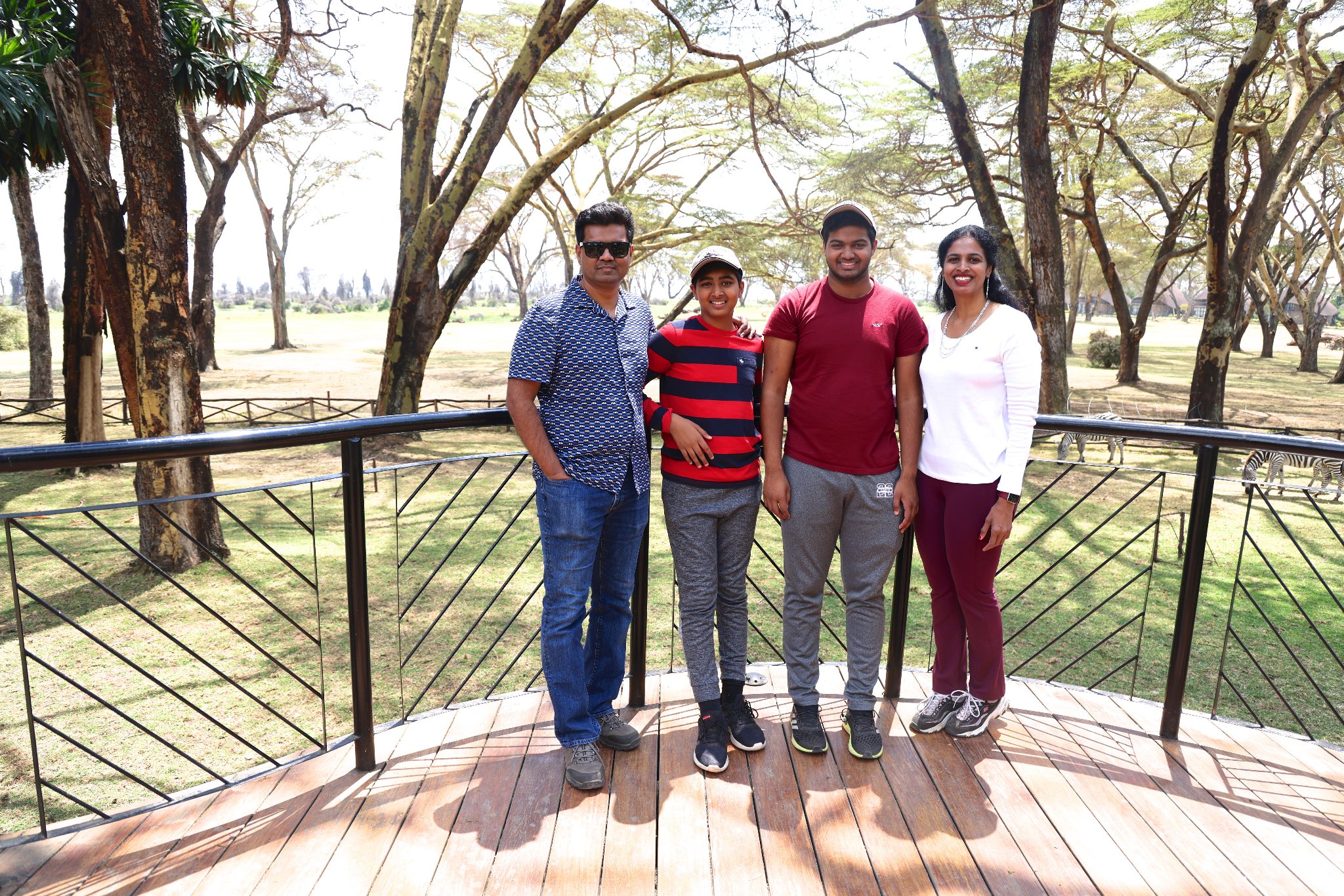
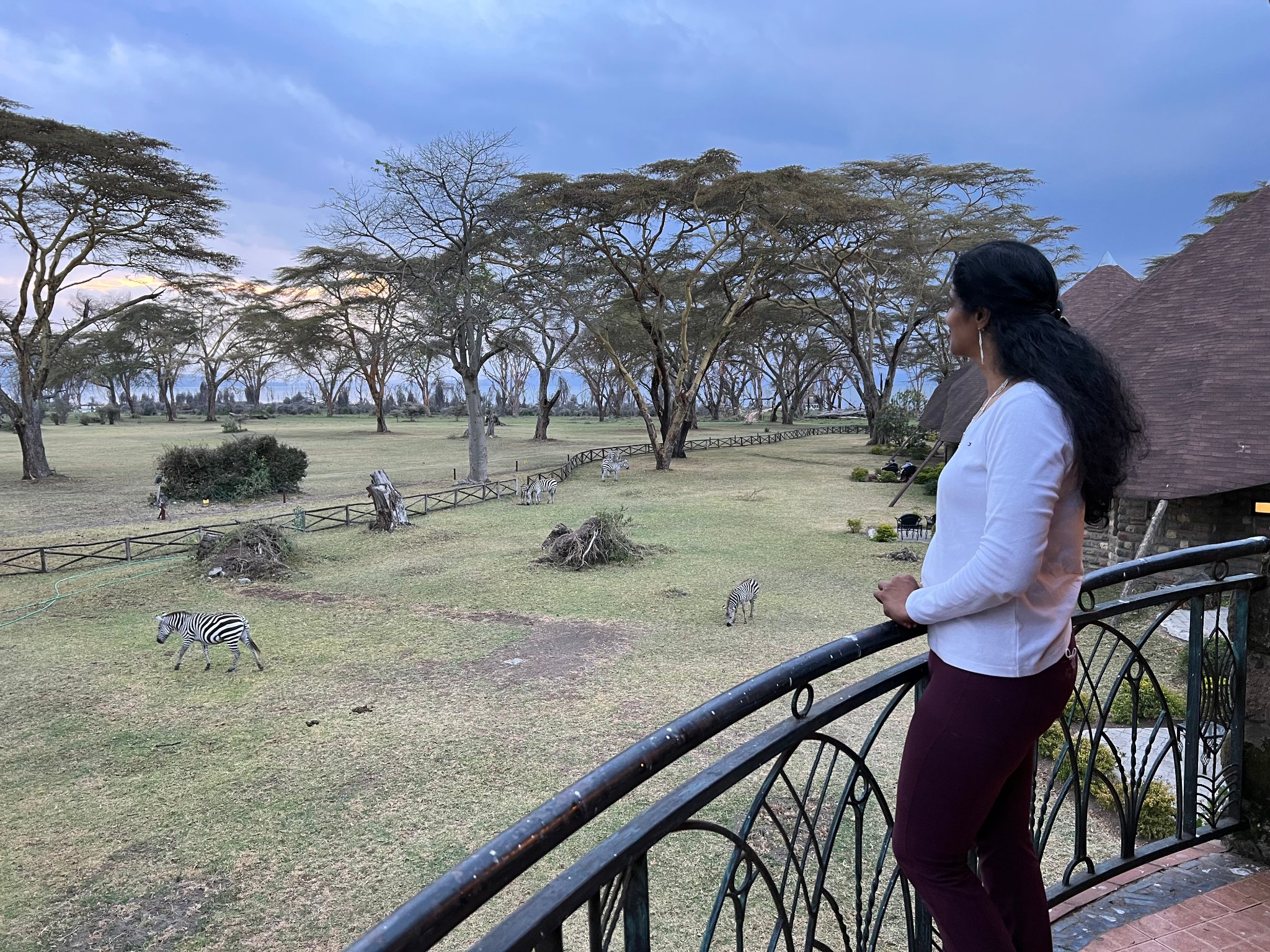
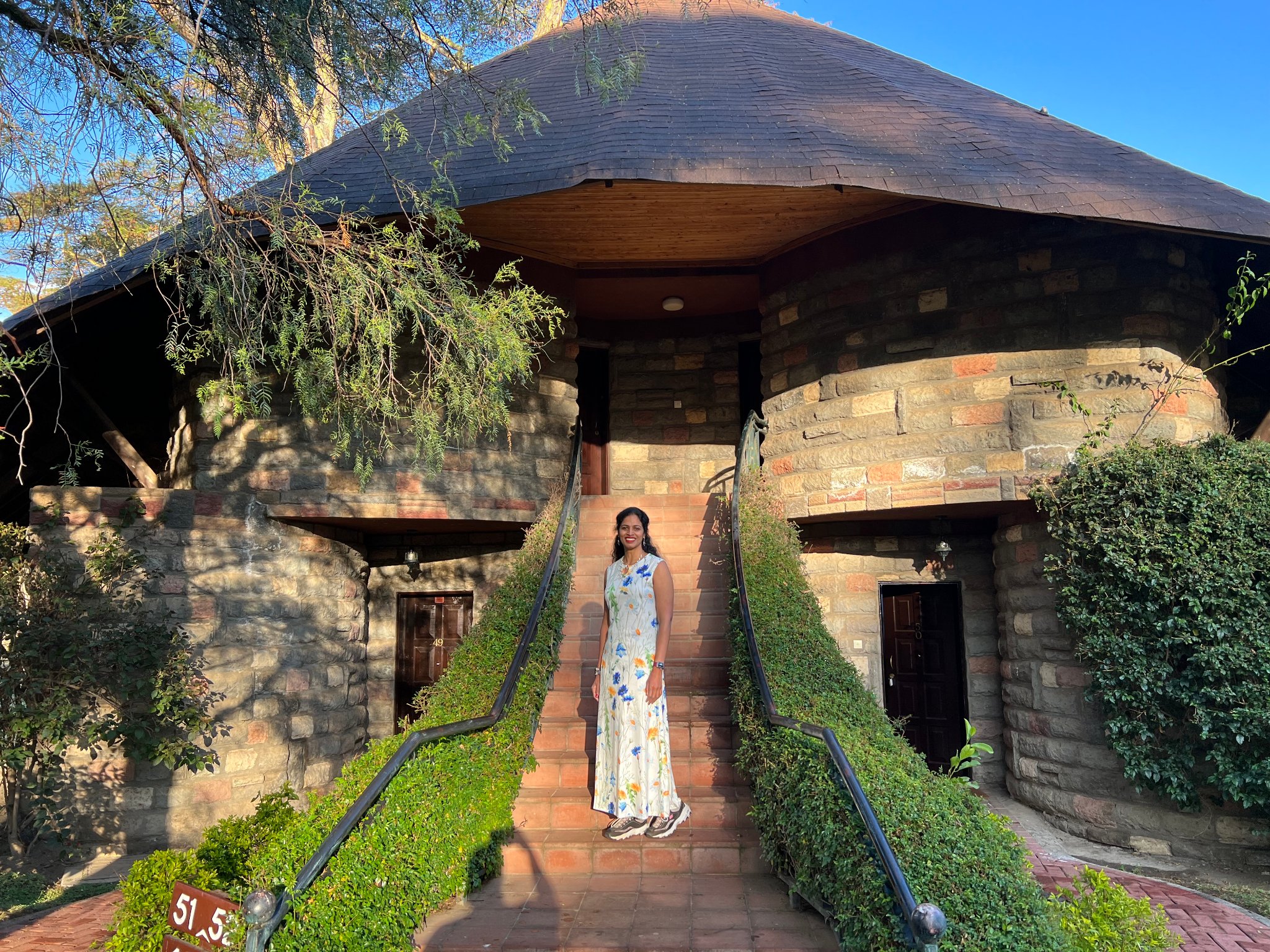
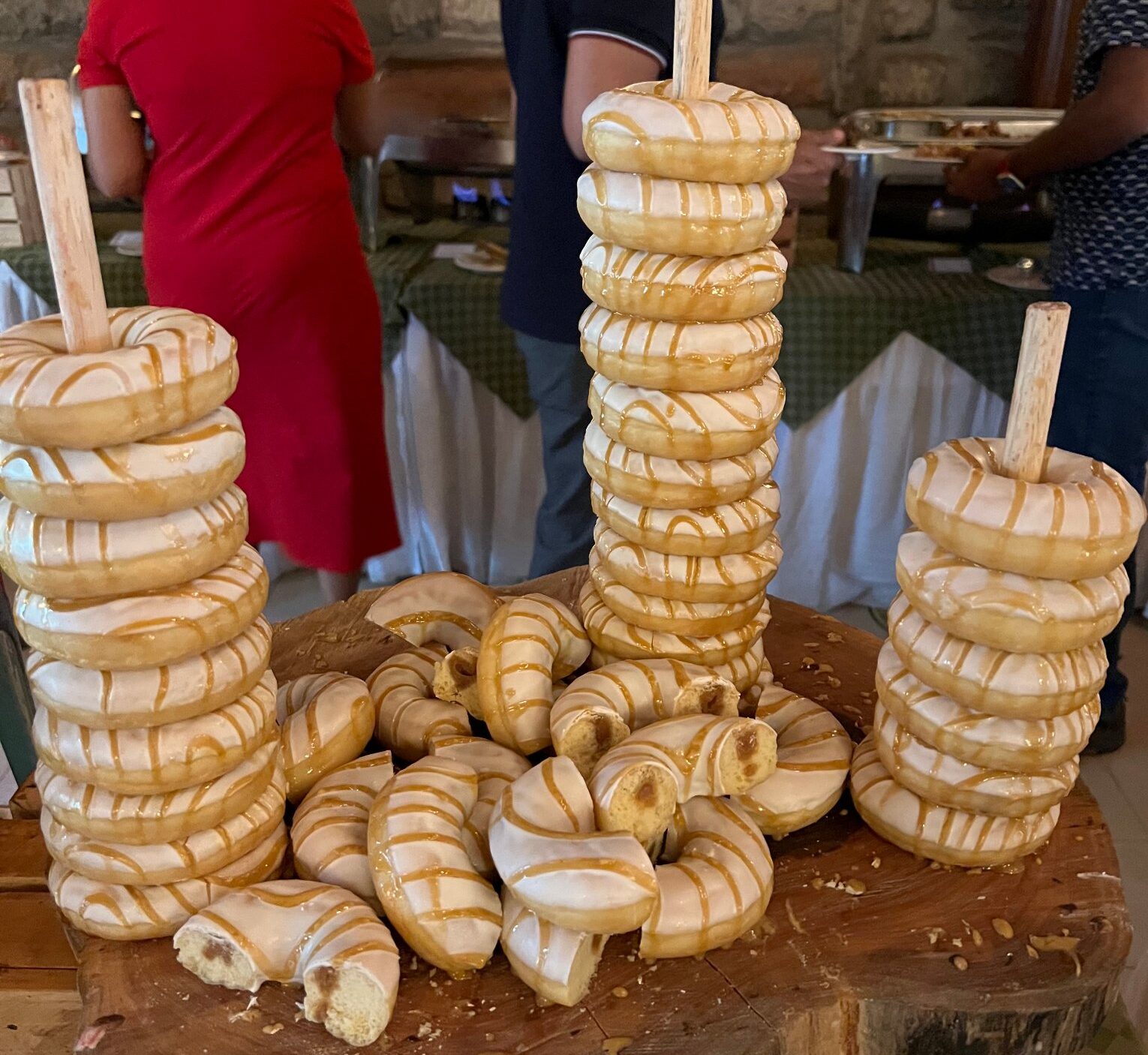
Boat Ride & Crescent Island Nature Walk
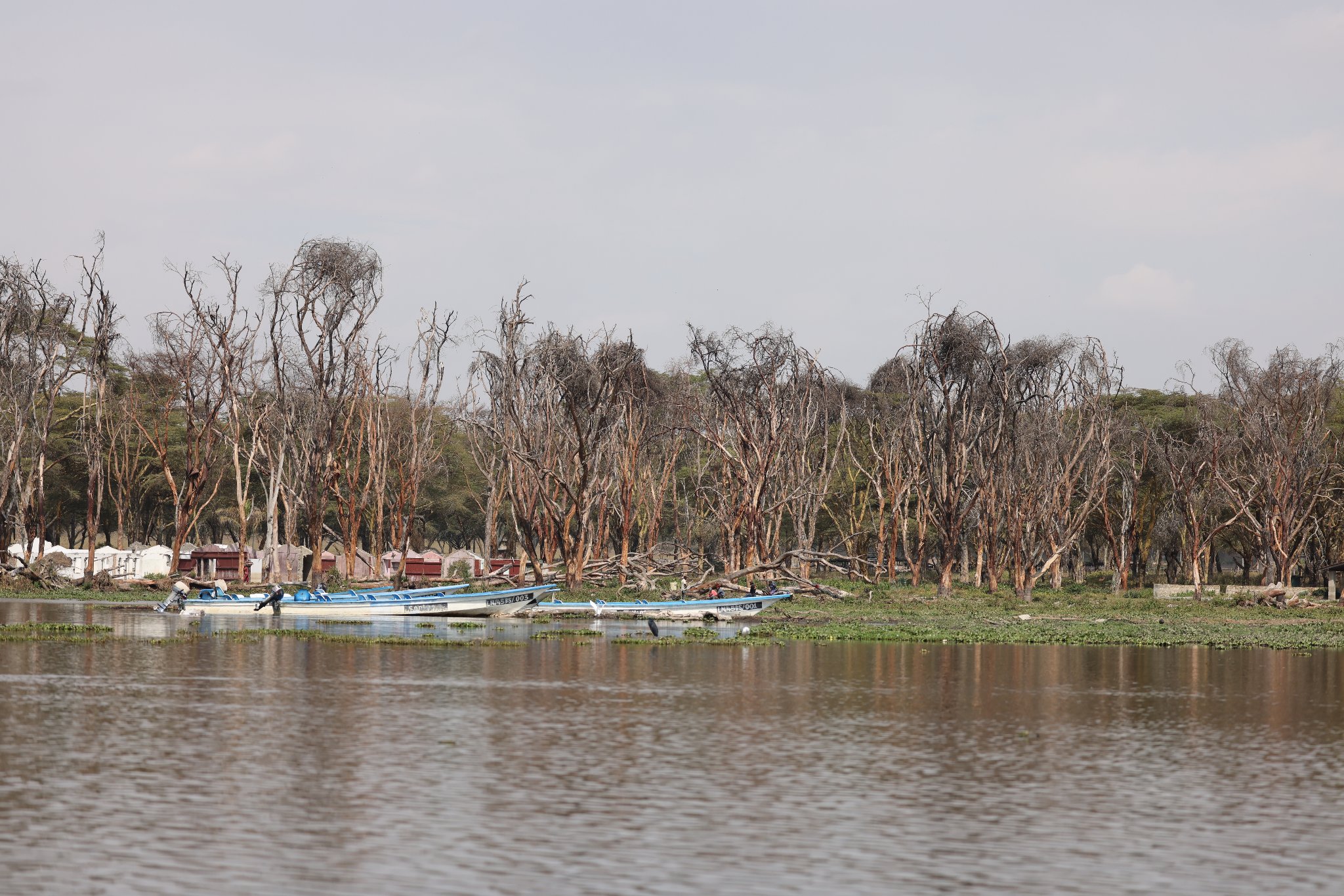
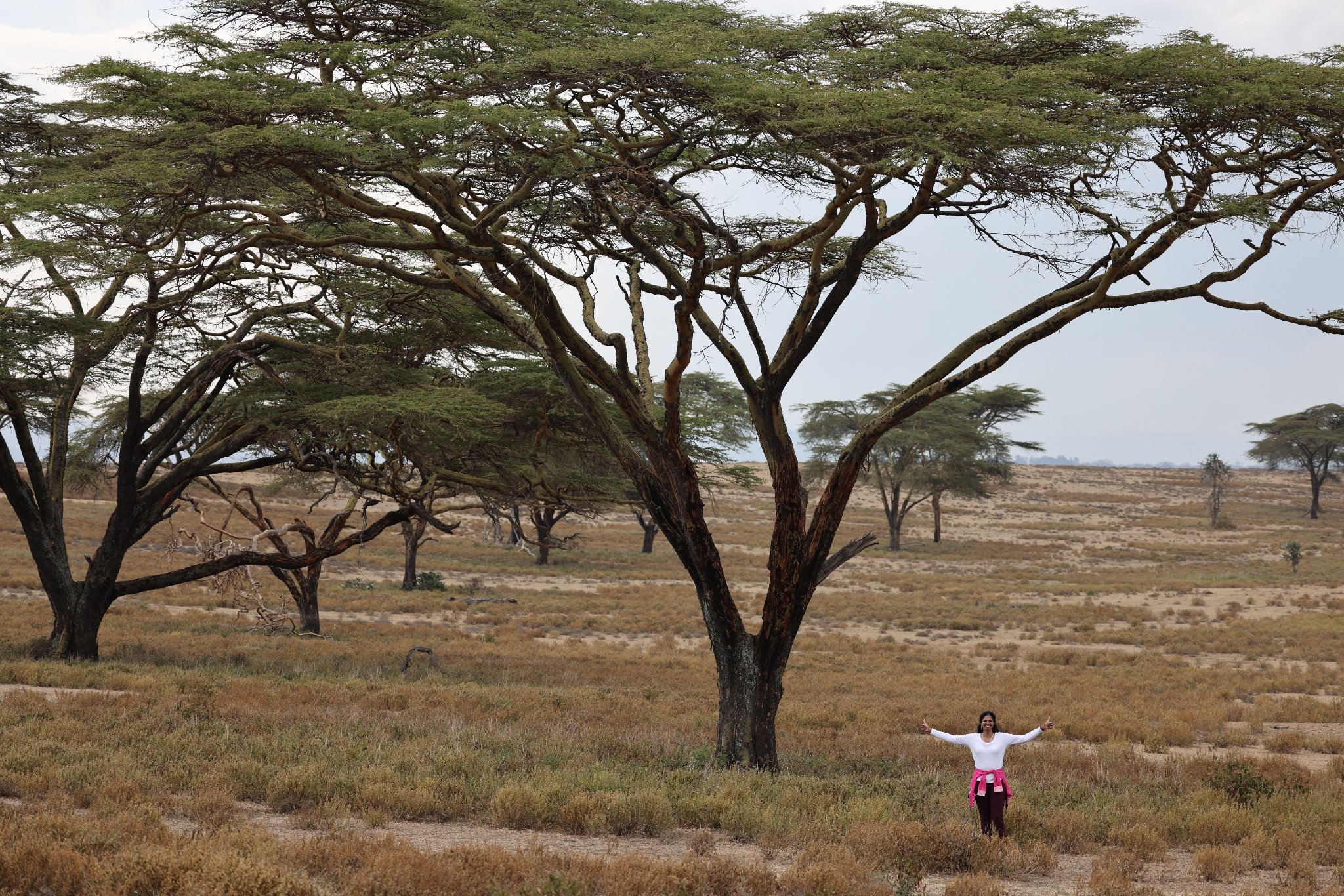
Lake Naivasha is one of Kenya’s best-kept secrets, tucked into the floor of the Great Rift Valley about two hours’ drive north of Nairobi. It is a calm freshwater lake surrounded by fever trees, papyrus reeds, and dense green vegetation—a striking contrast to the dry, open savannah landscapes we had just come from in Amboseli.
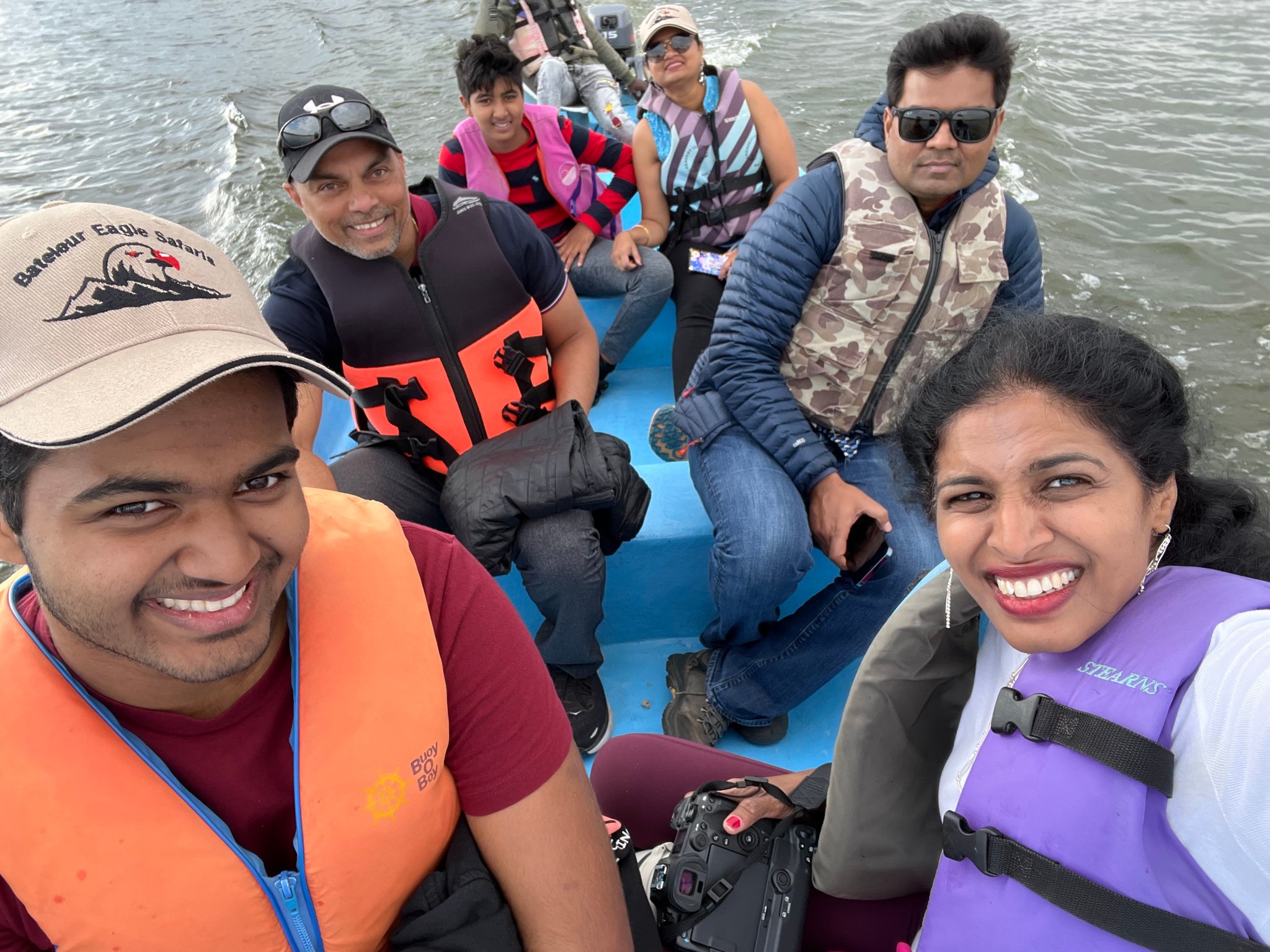
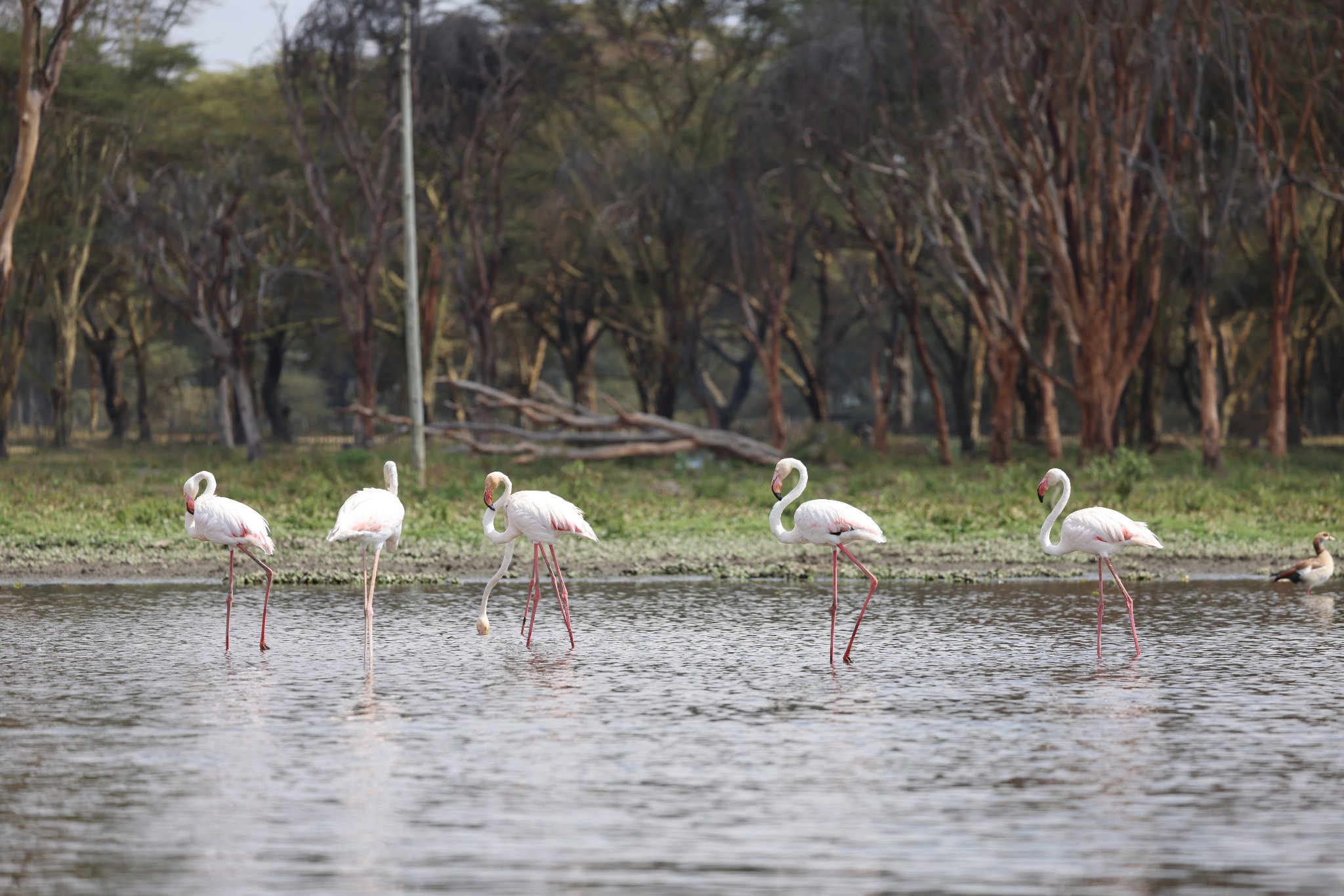
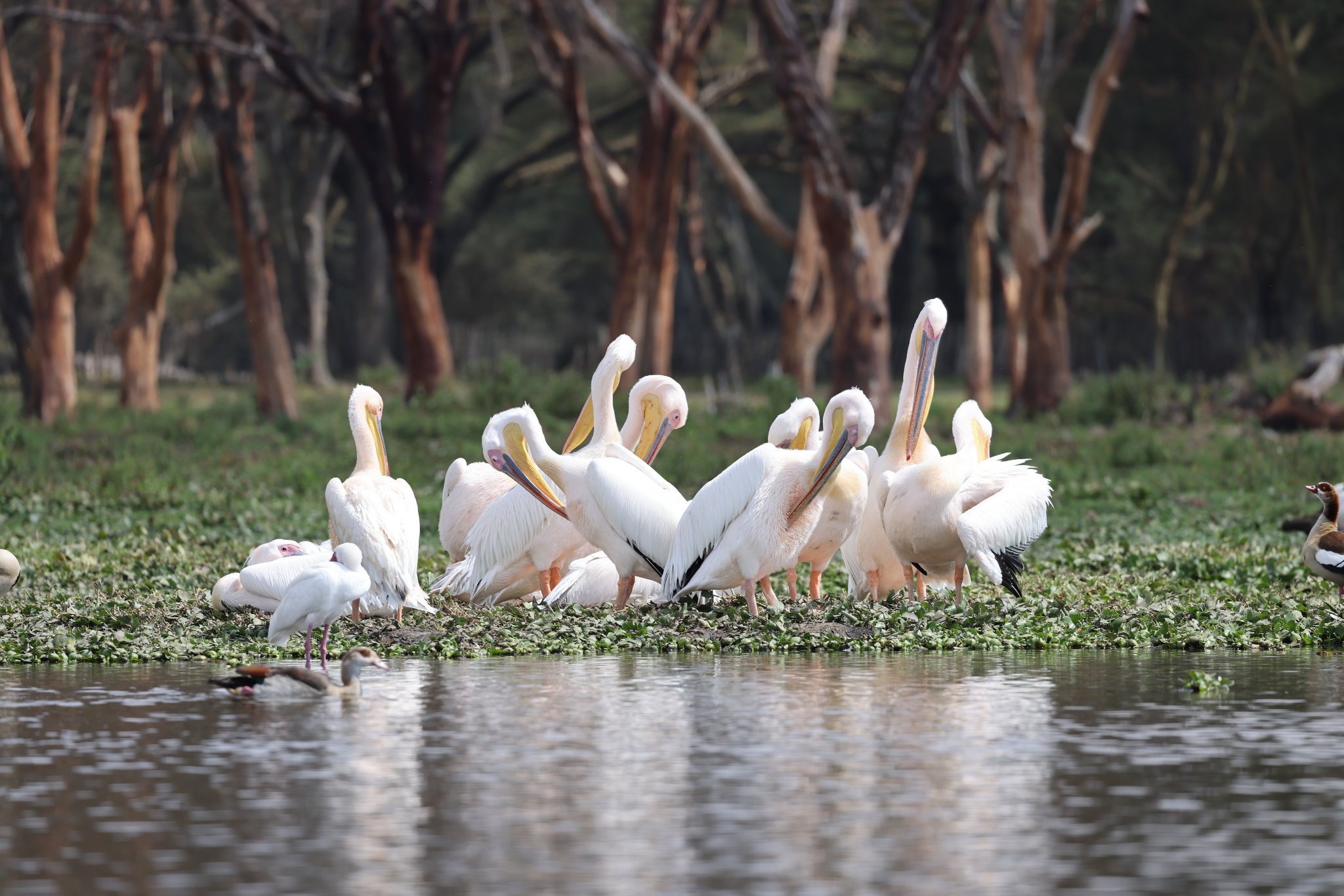
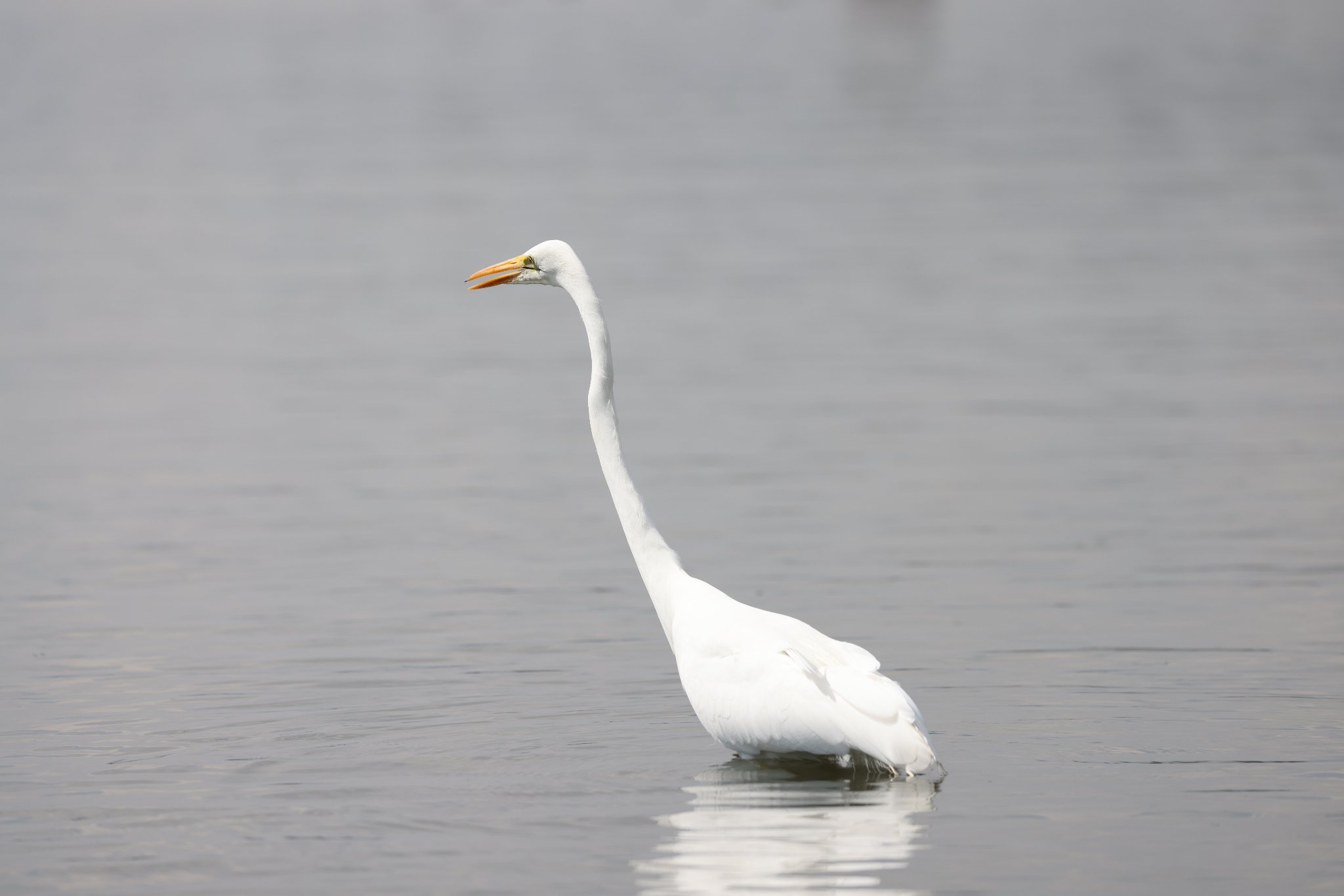
After checking in and enjoying lunch at Naivasha Sopa Lodge, we headed out onto the lake by boat. The water was incredibly calm and glassy, bordered by papyrus and drifting patches of water hyacinth.
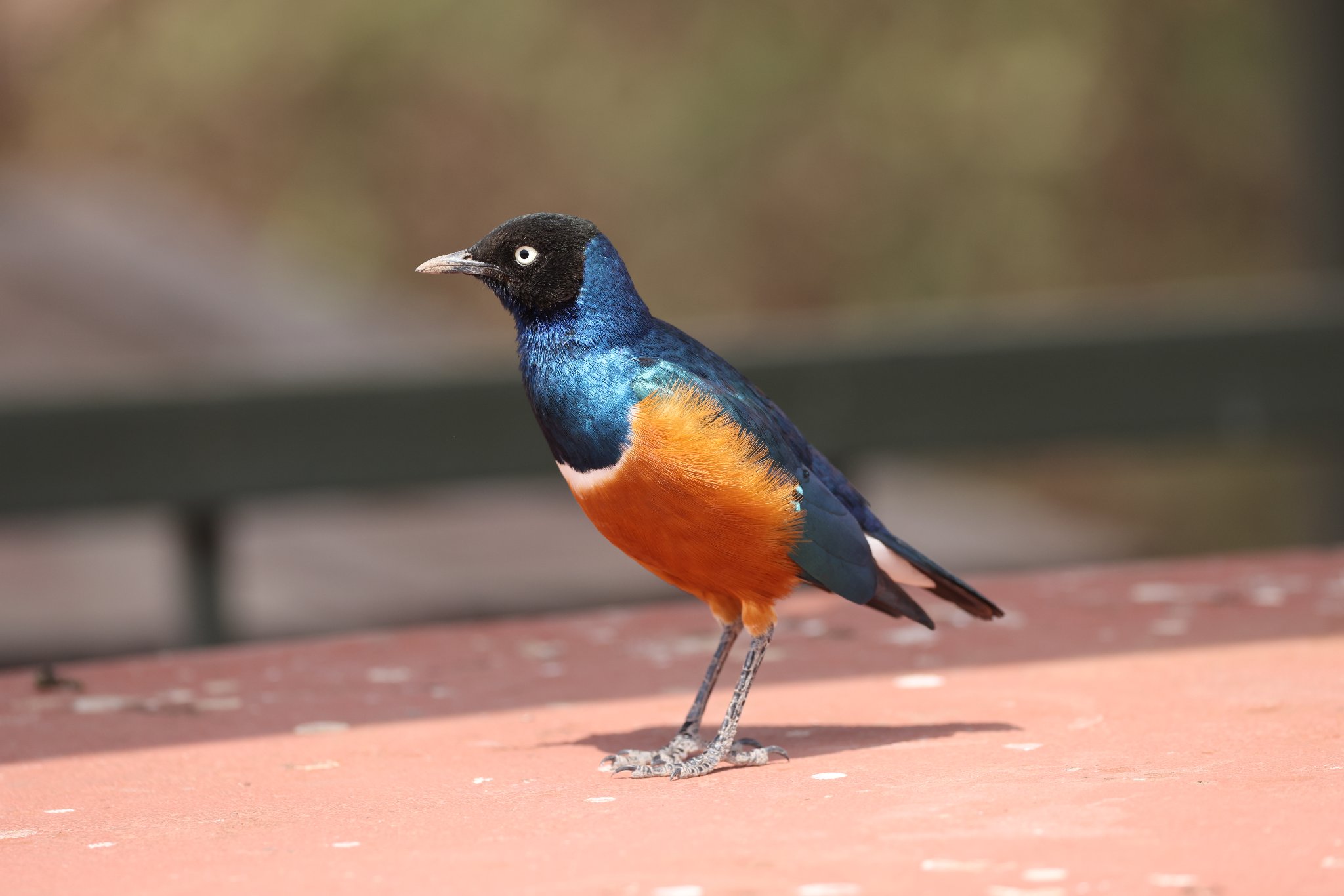
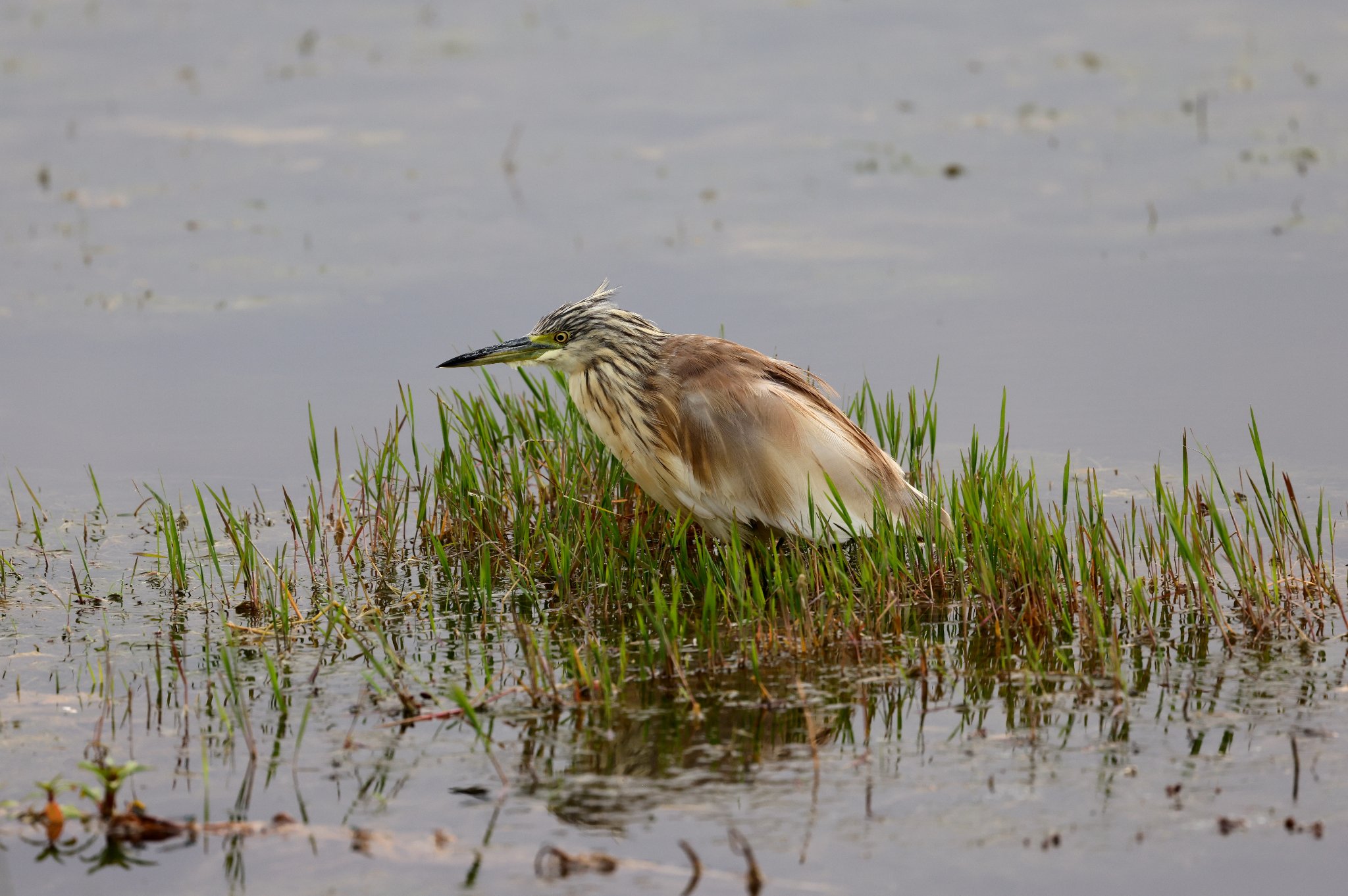
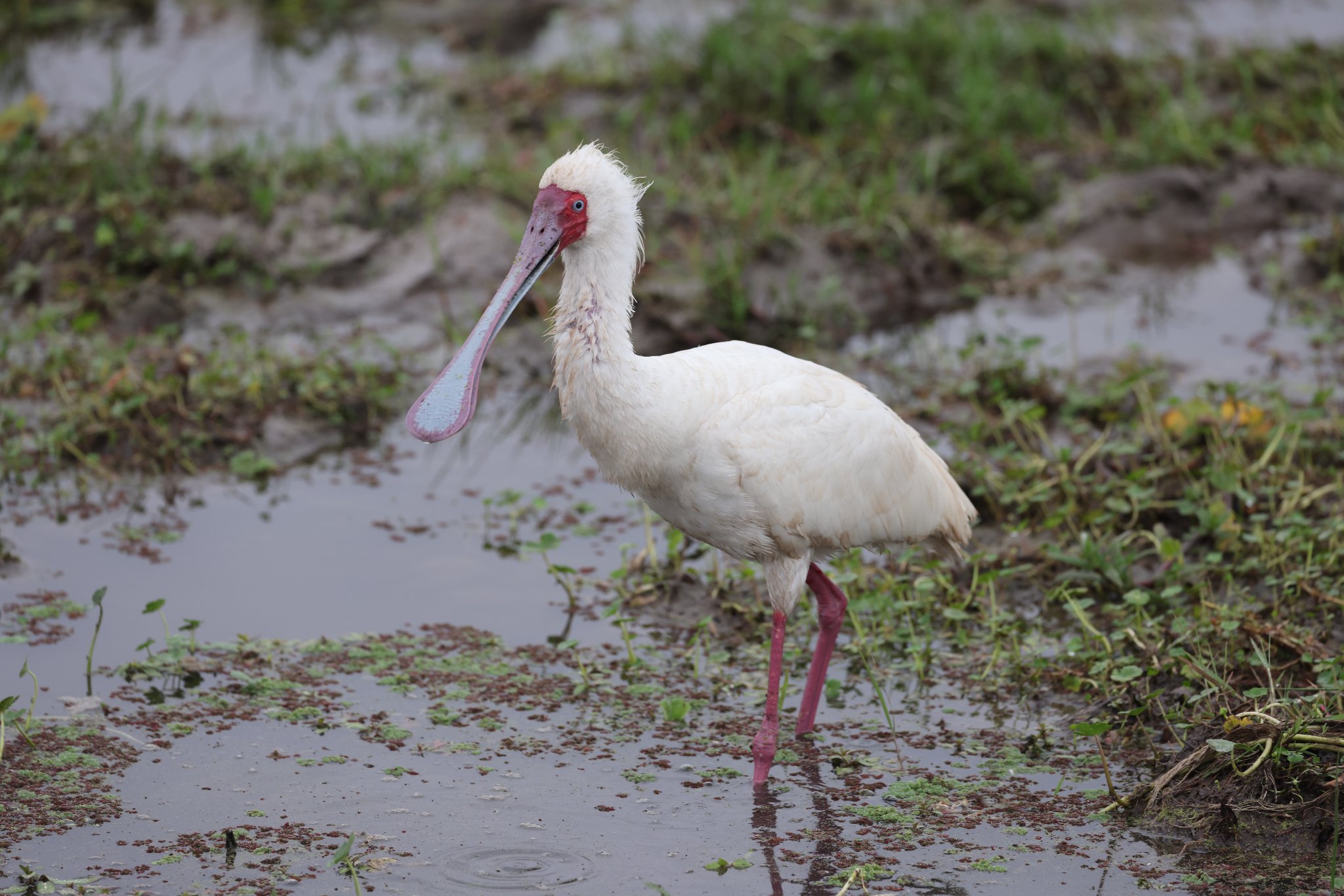
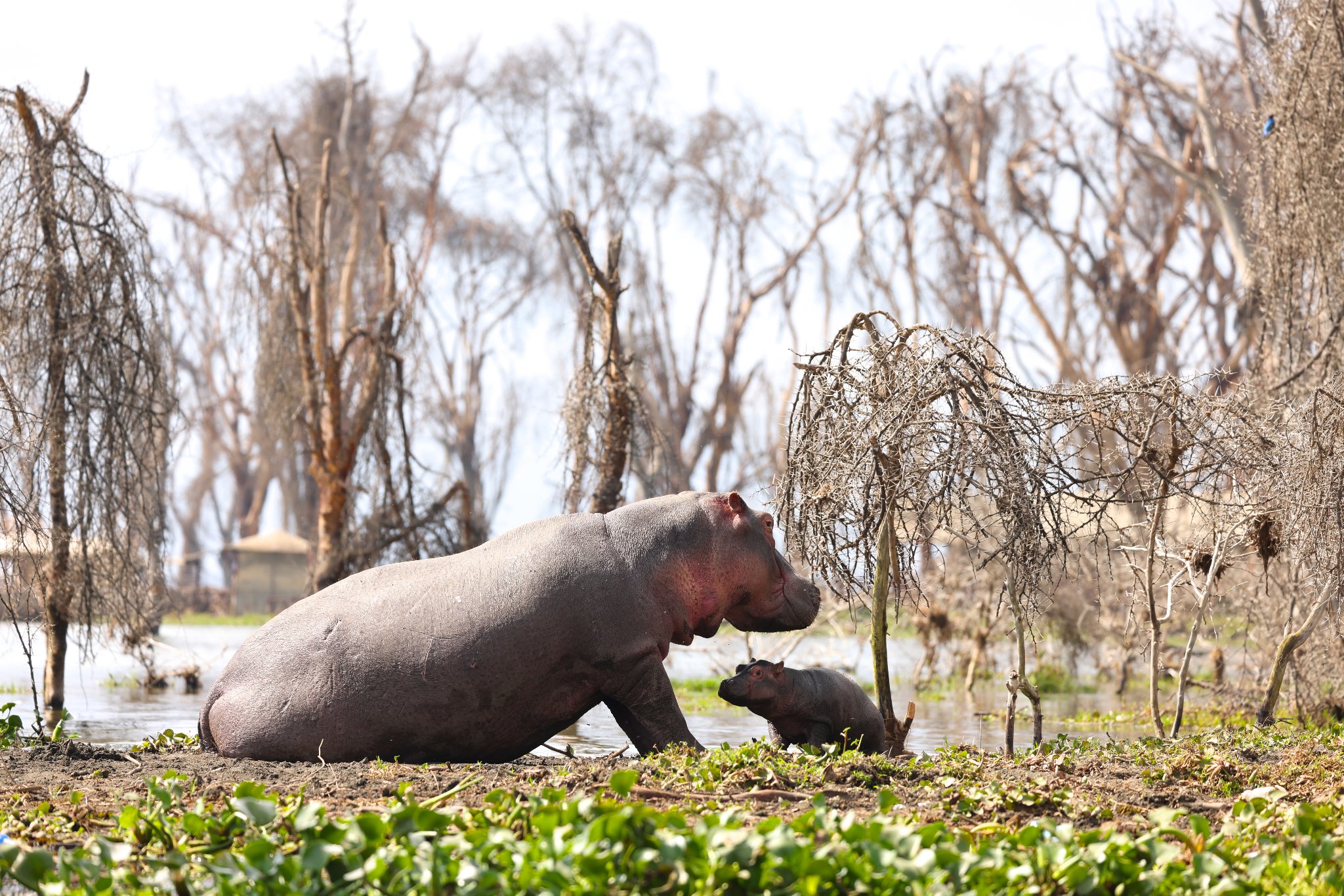
The birdlife was extraordinary, pelicans gliding across the surface, cormorants diving for fish, and African fish eagles perched nearby, their haunting calls echoing across the water like the sound of Africa itself. We also drifted past hippos partially submerged in the shallows, their ears flicking and eyes just above the water, completely unbothered by our presence.
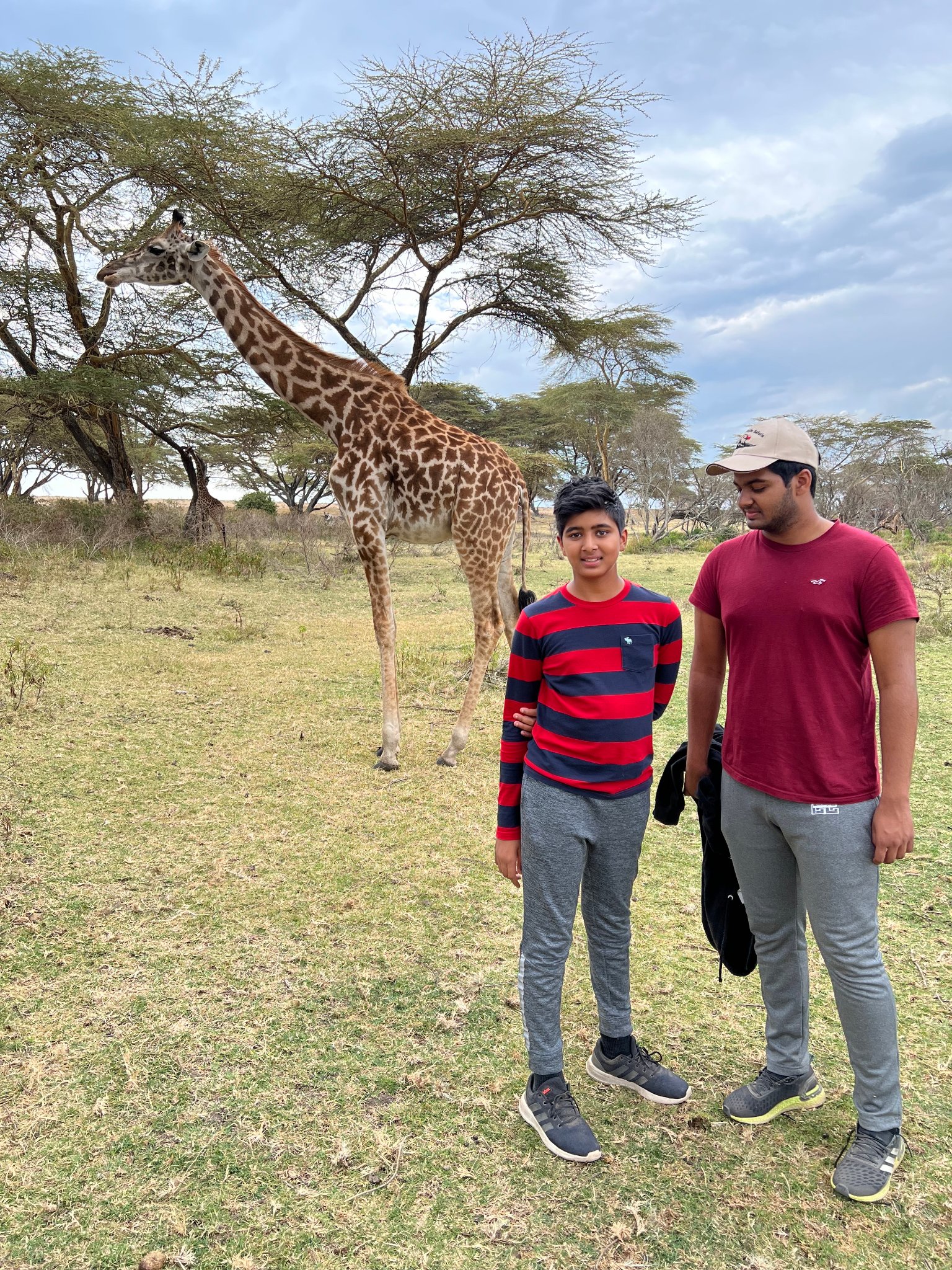
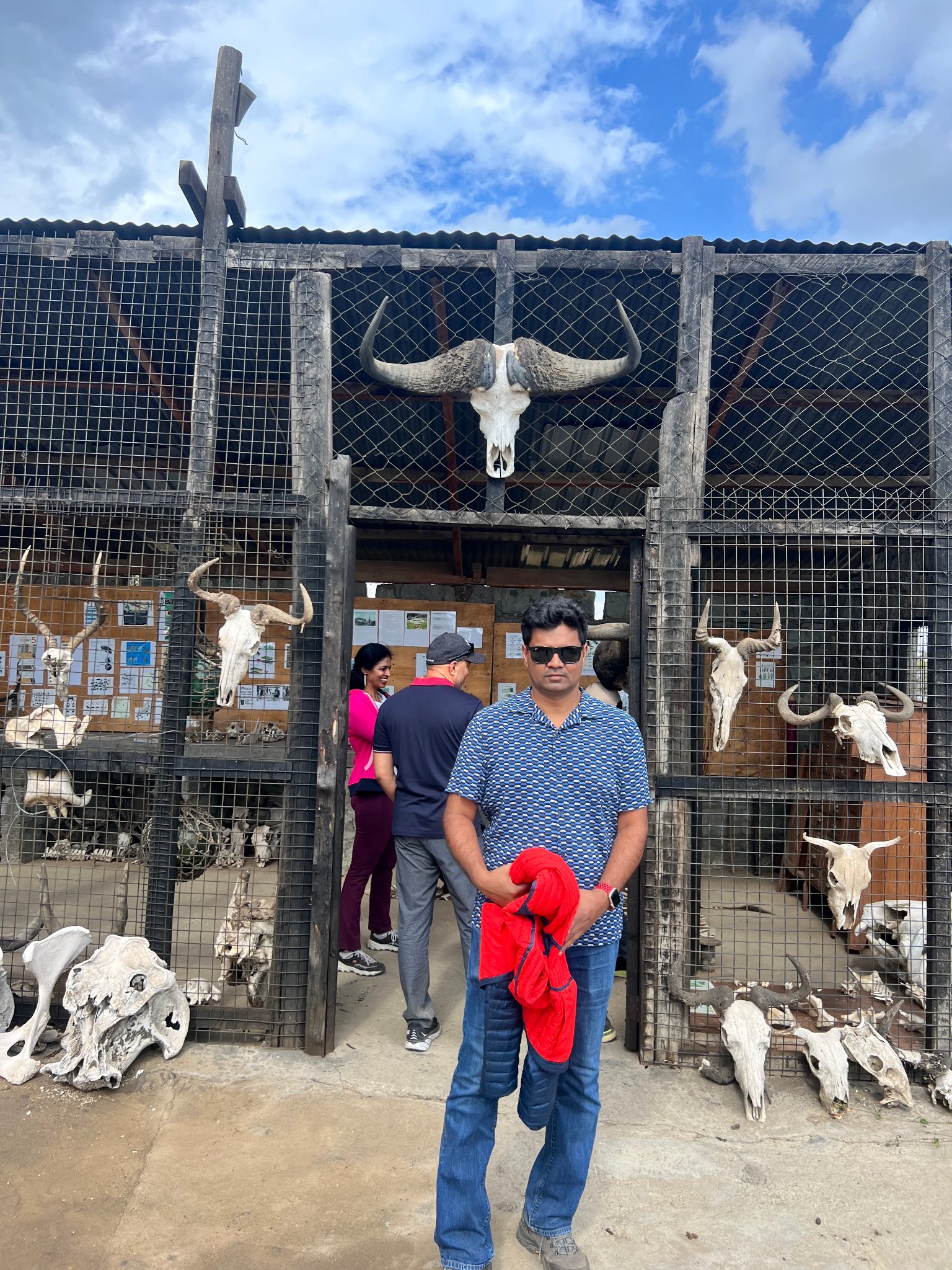
From the lake, we crossed over to Crescent Island Nature Sanctuary, technically a peninsula, though it feels like a separate world entirely. This is one of Naivasha’s most remarkable experiences. The sanctuary is unfenced, allowing wildlife to roam freely, and it has one of the highest concentrations of animals per acre in Kenya.
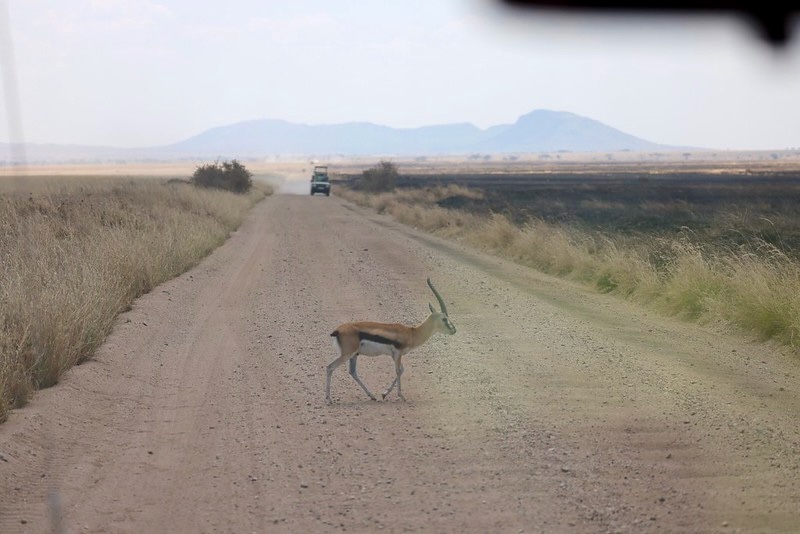
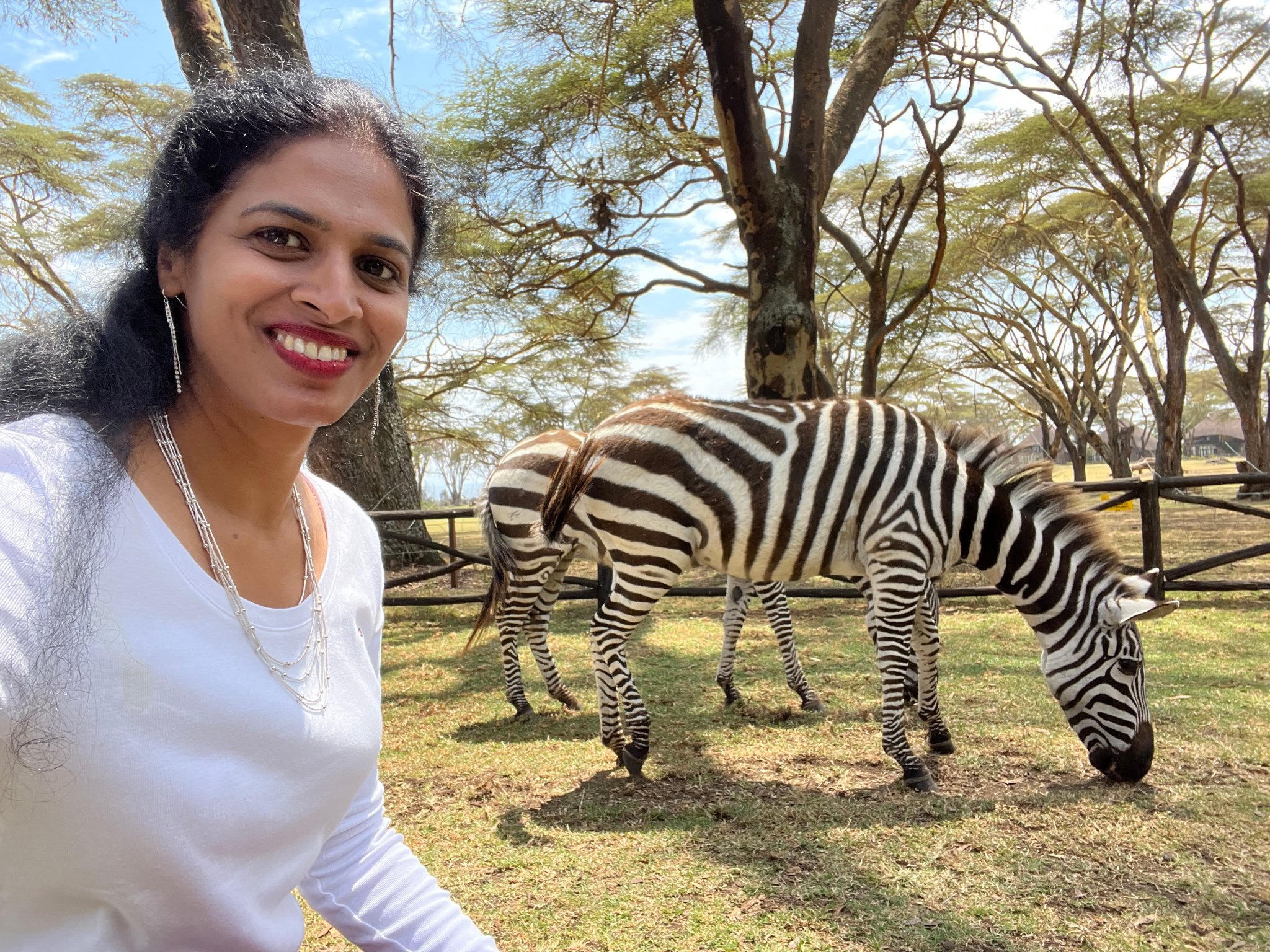
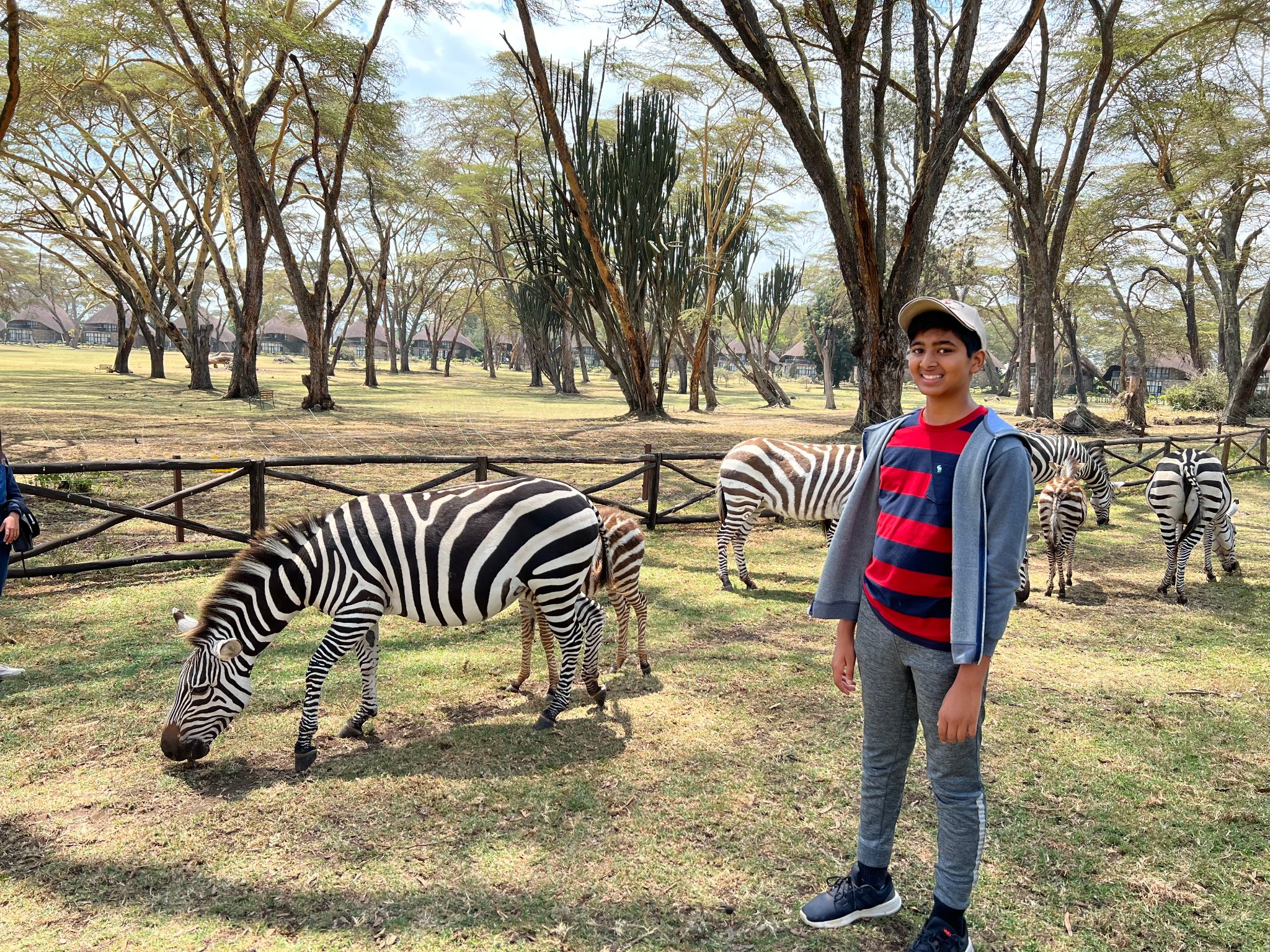
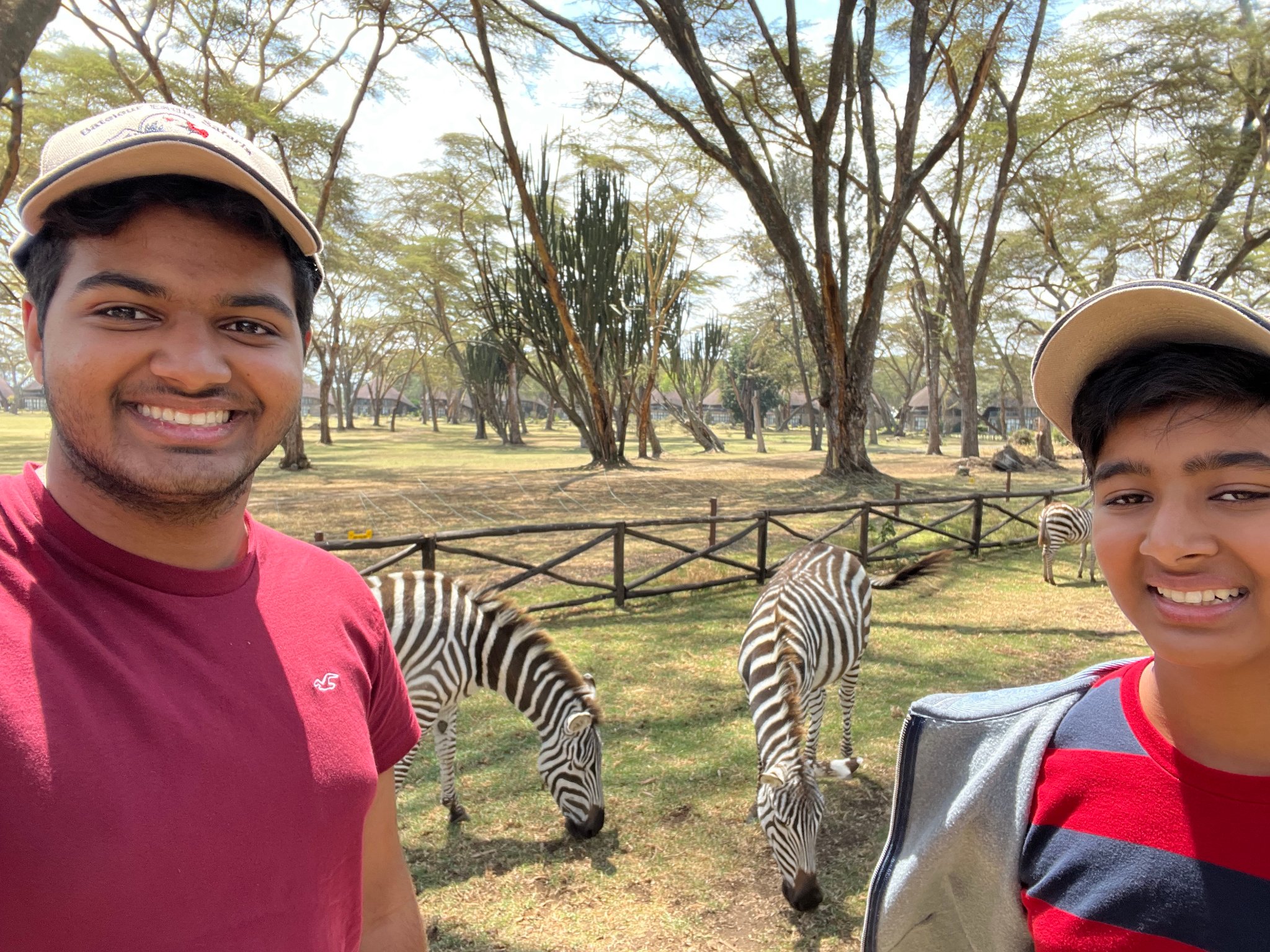
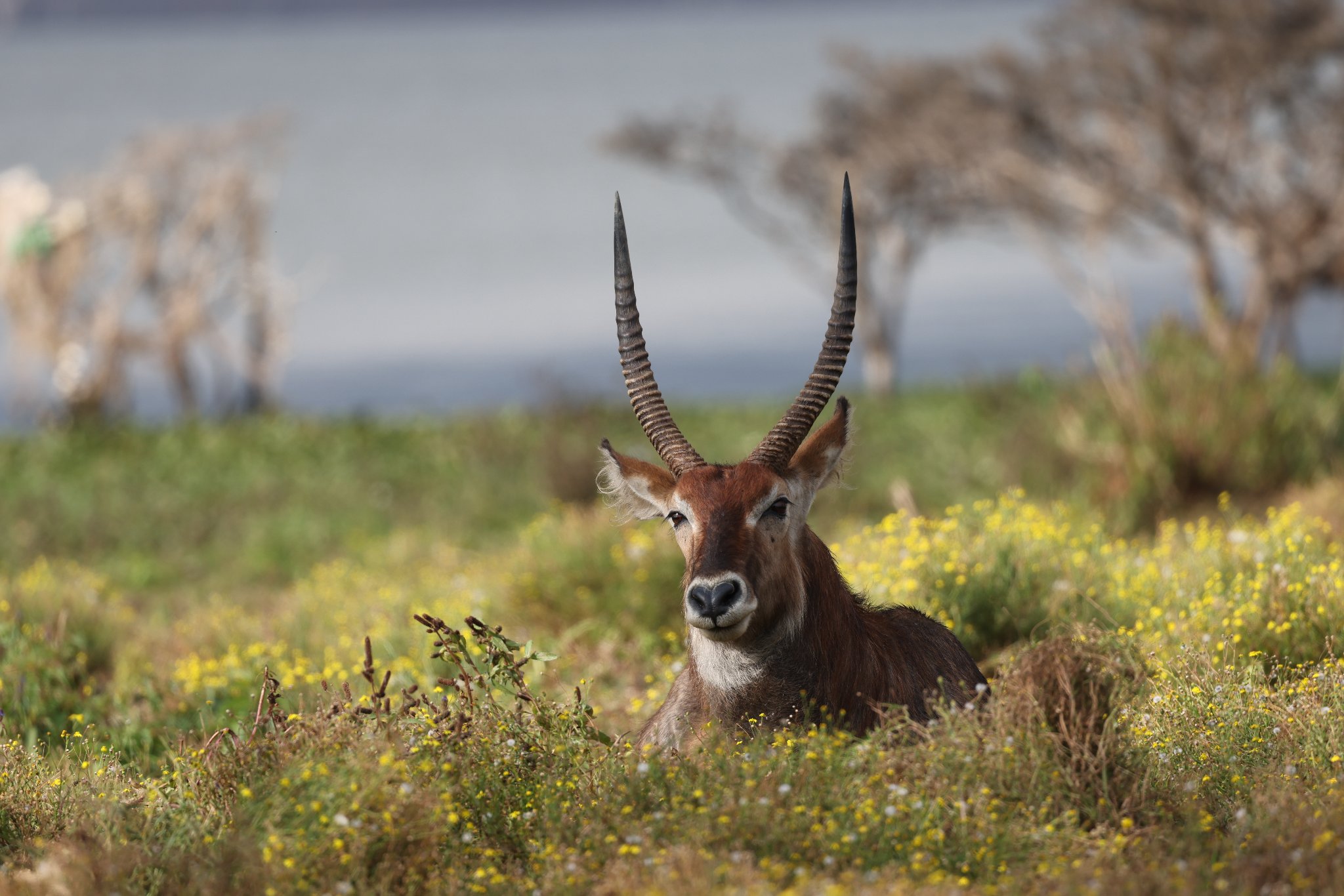
The most unique part is that you explore it on foot. No safari vehicles, just walking directly among the wildlife. We strolled past herds of wildebeest, zebra, waterbuck, and Thompson’s gazelle, all moving peacefully through the open grasslands. Without the barrier of a vehicle, everything felt more immediate and intimate, as if we were stepping directly into their world.
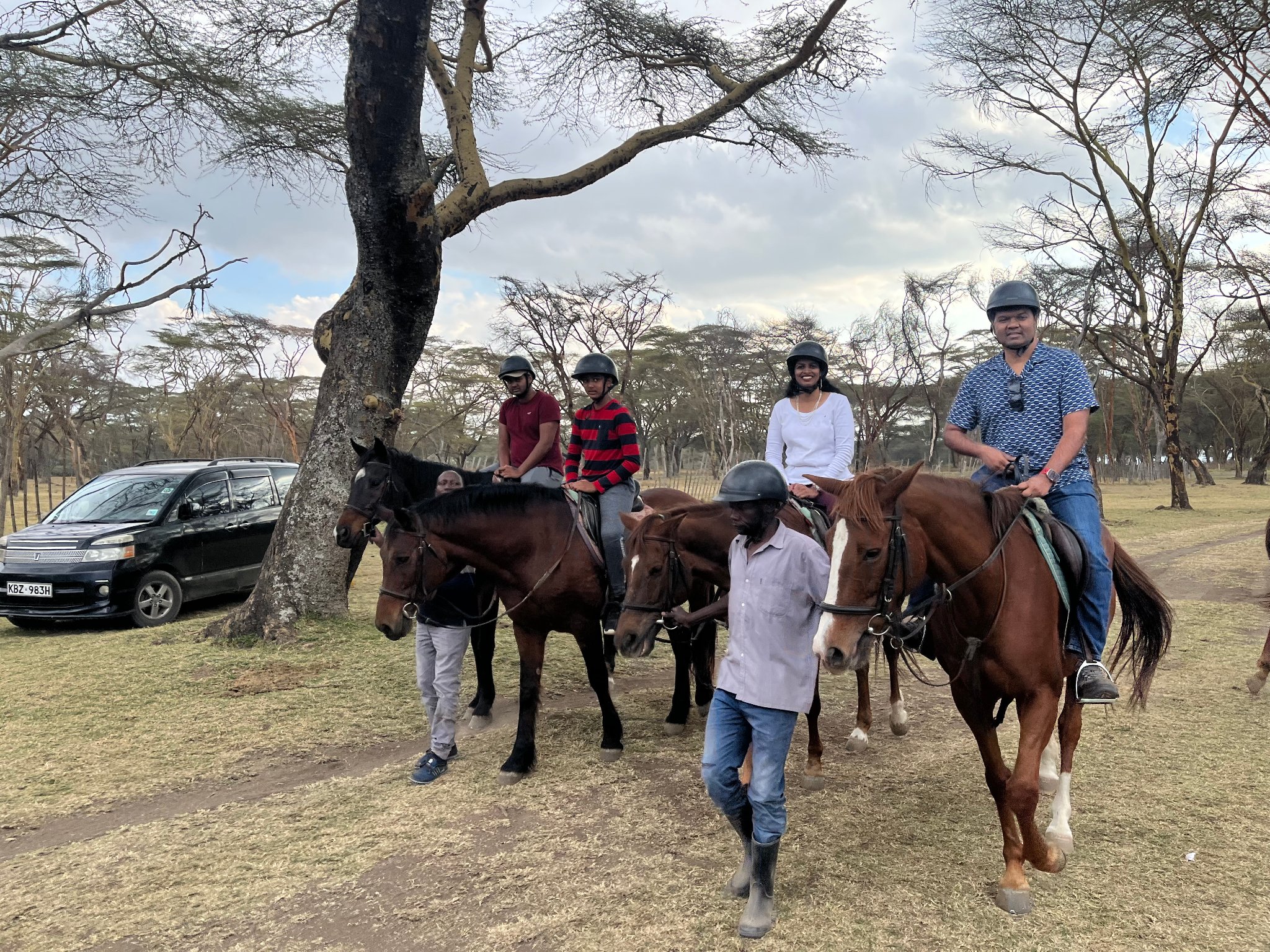
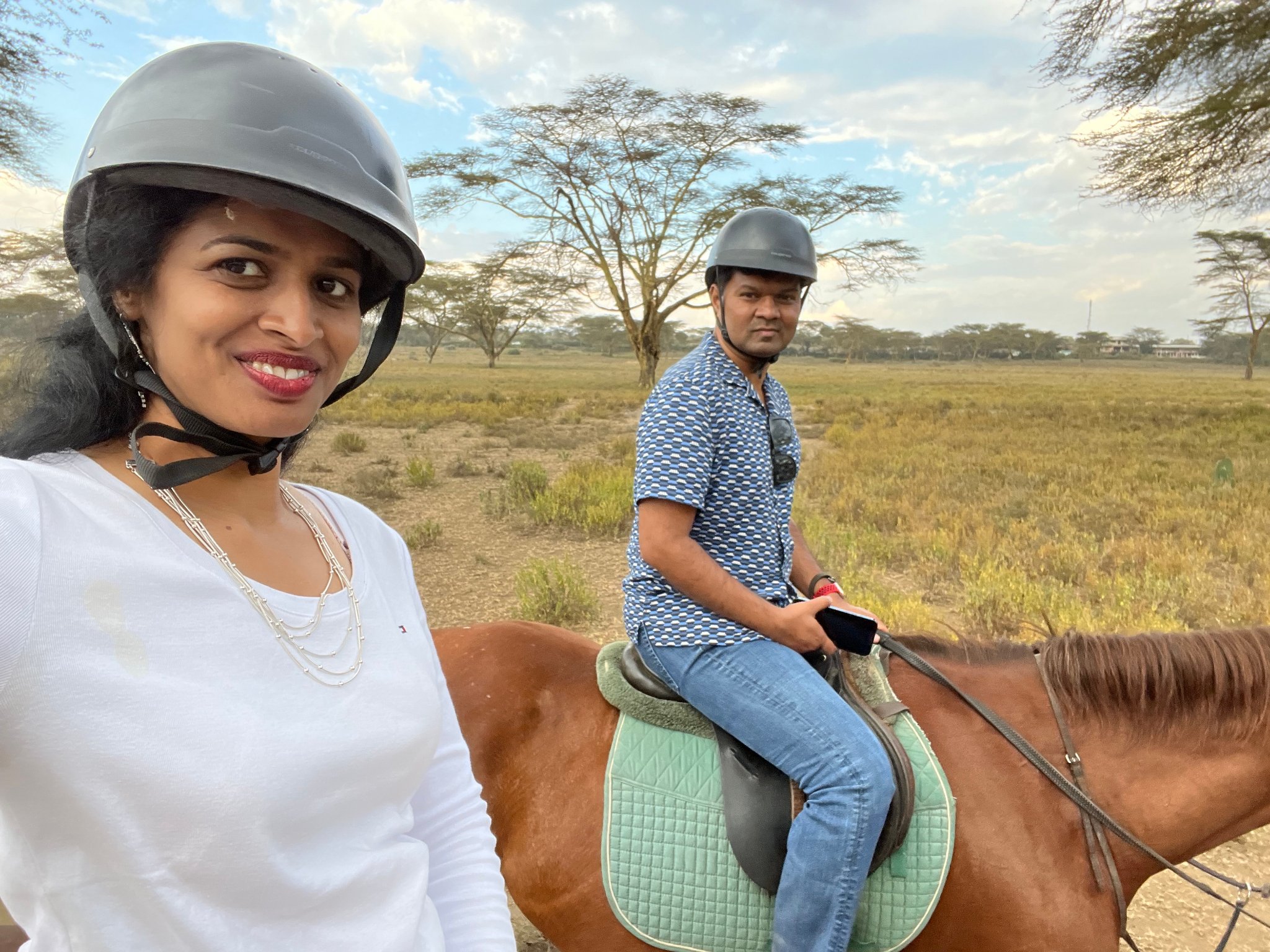
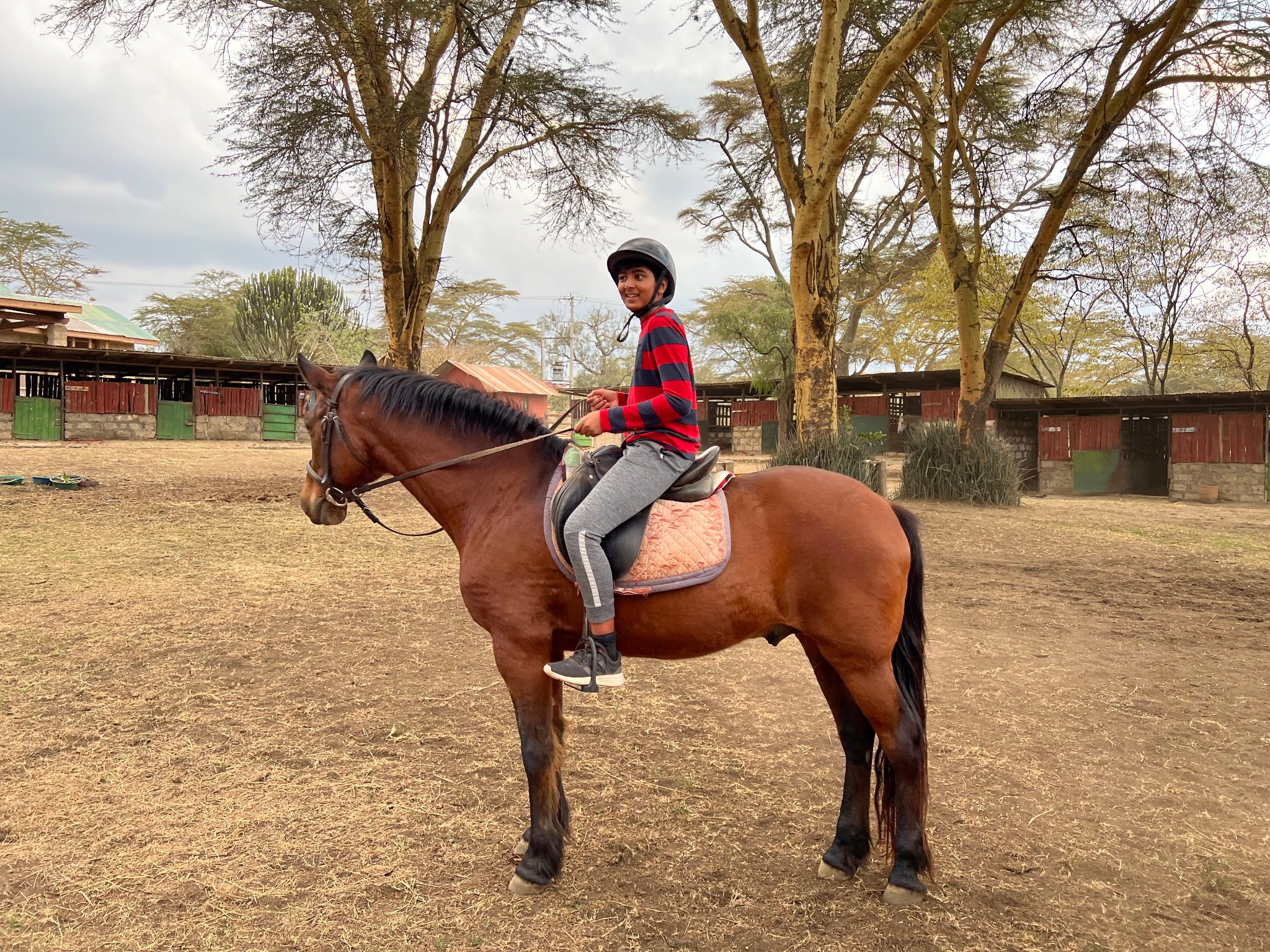
We also had the option of exploring the sanctuary on horseback, and some of us chose to ride through the plains. Cantering alongside zebra with Lake Naivasha shimmering in the background created one of those rare, unforgettable safari moments—simple, quiet, and completely immersive.
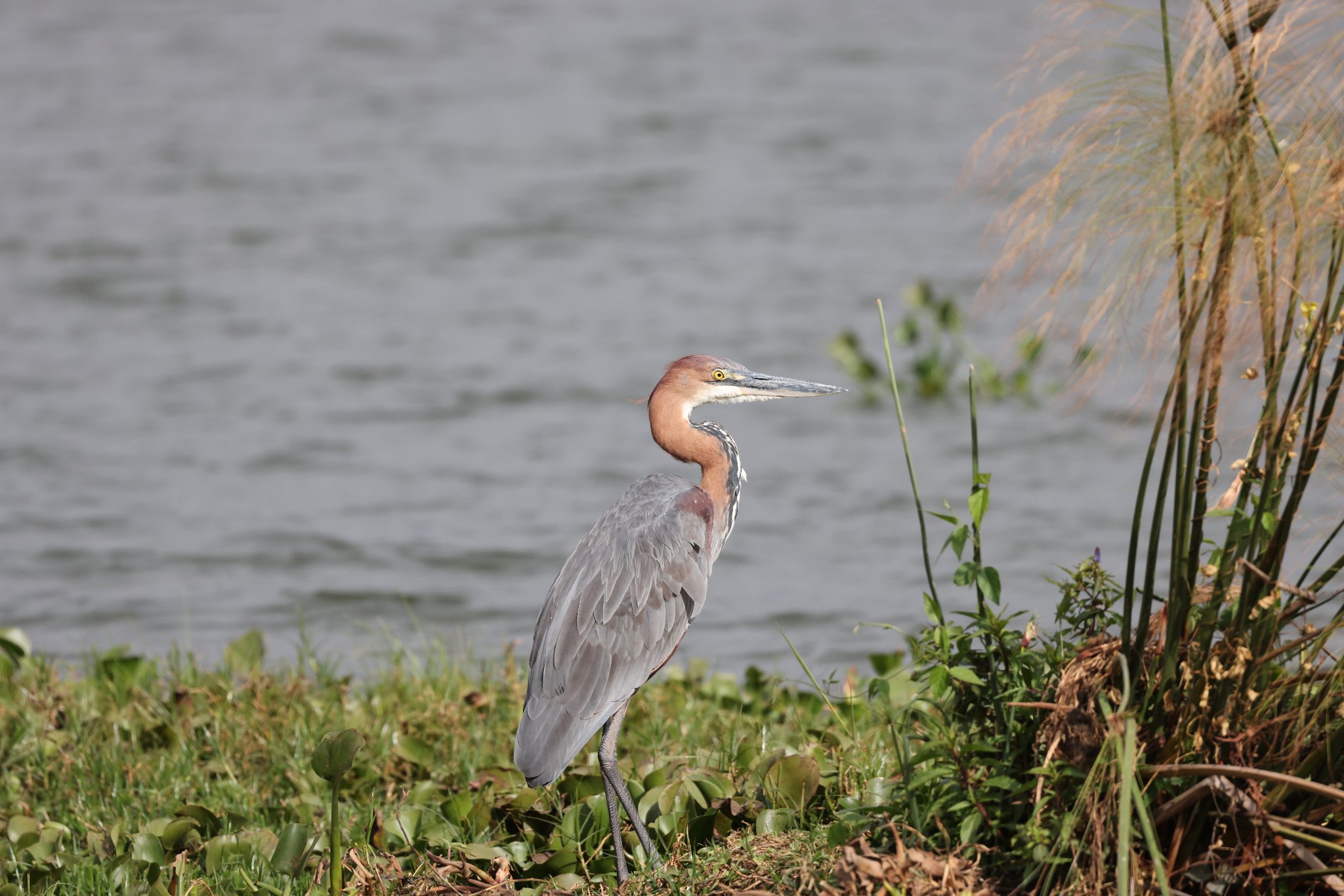
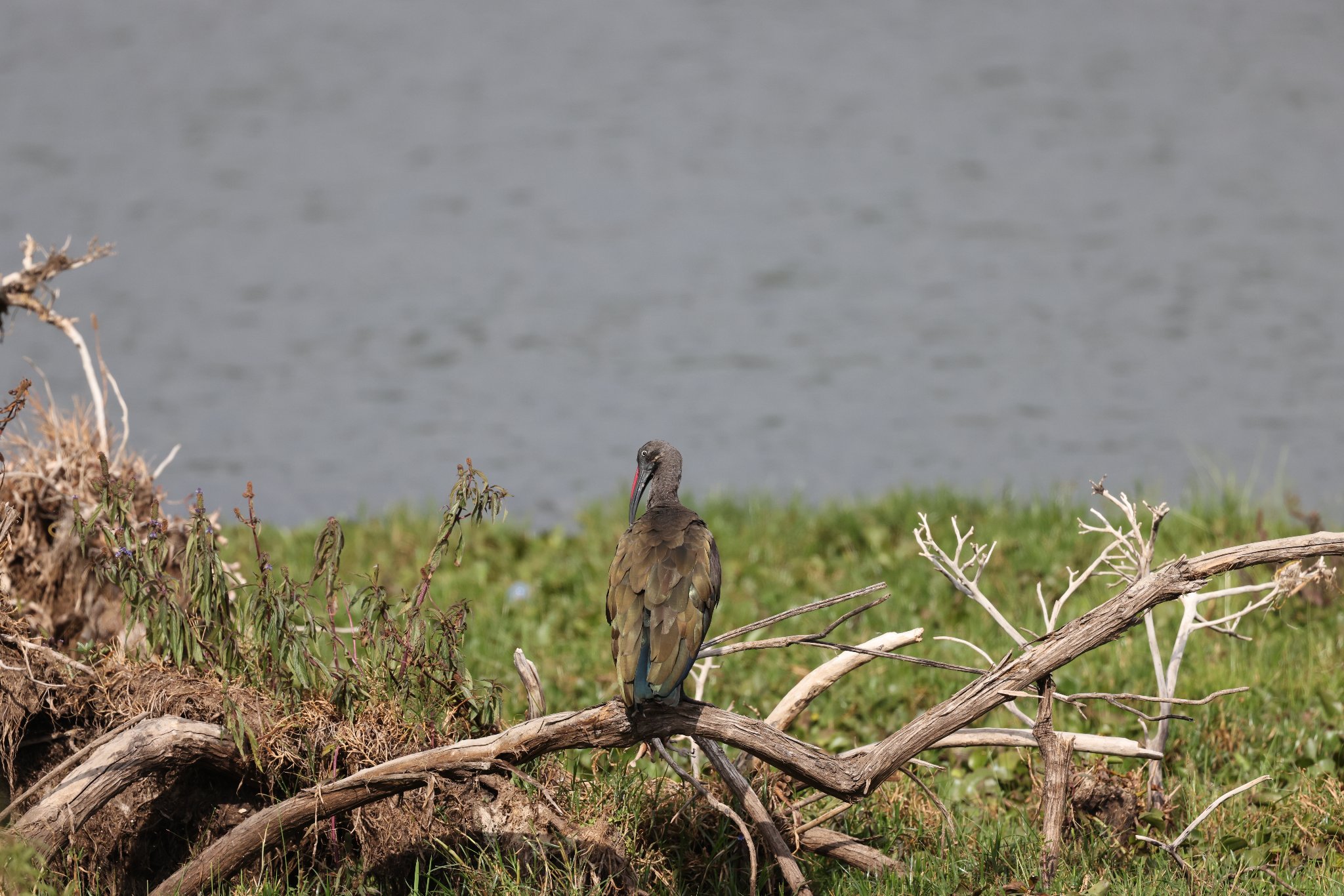
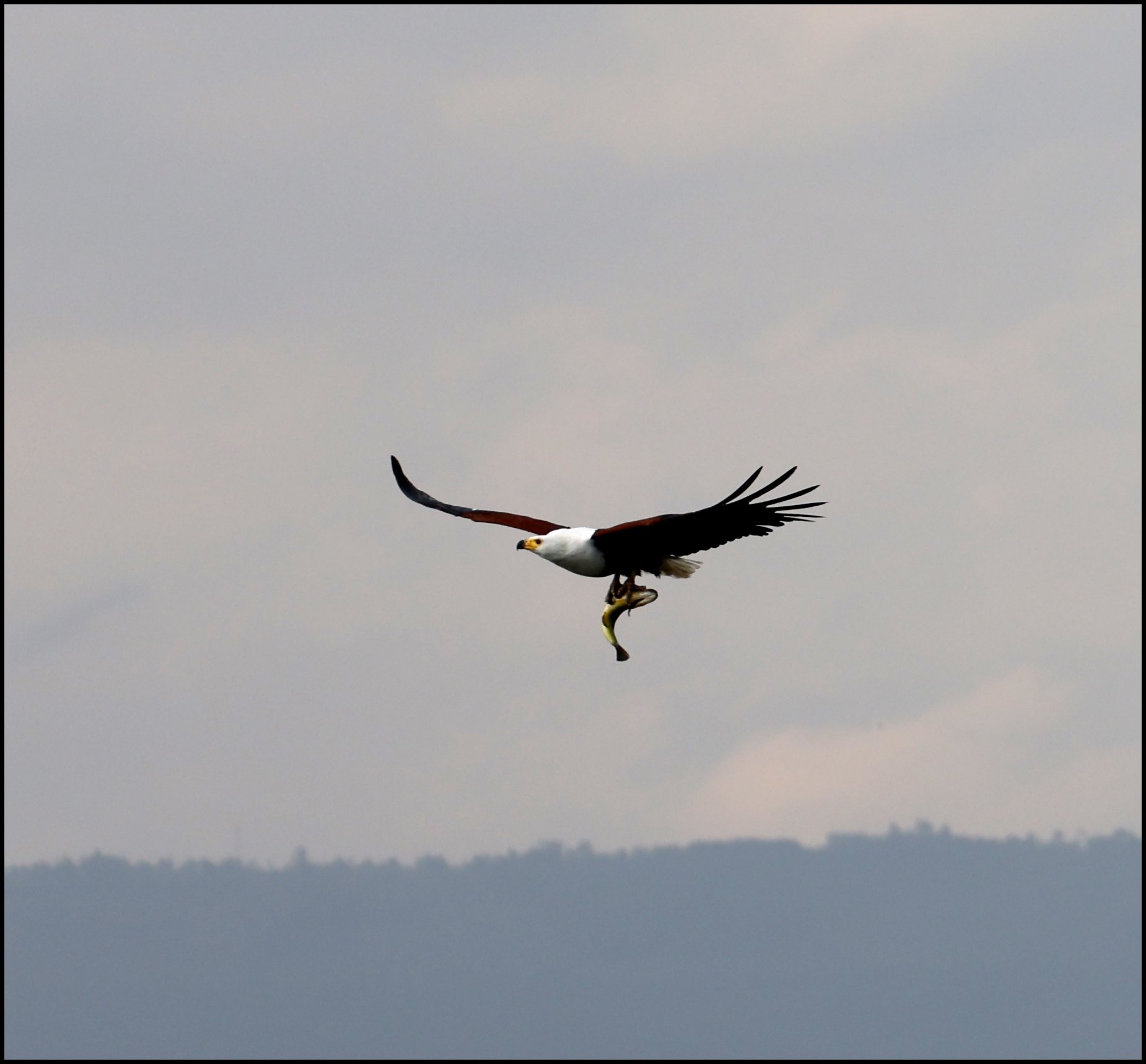
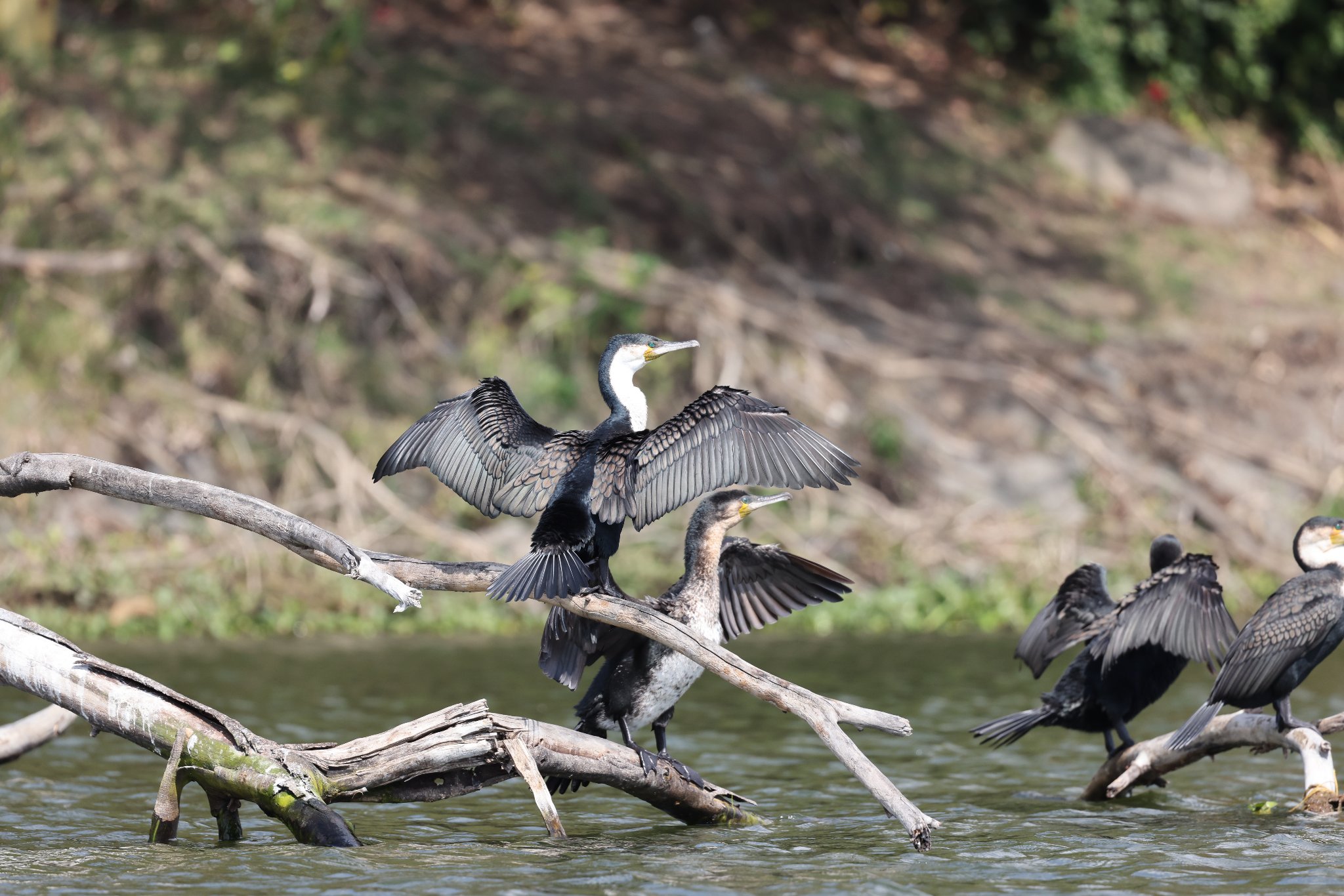
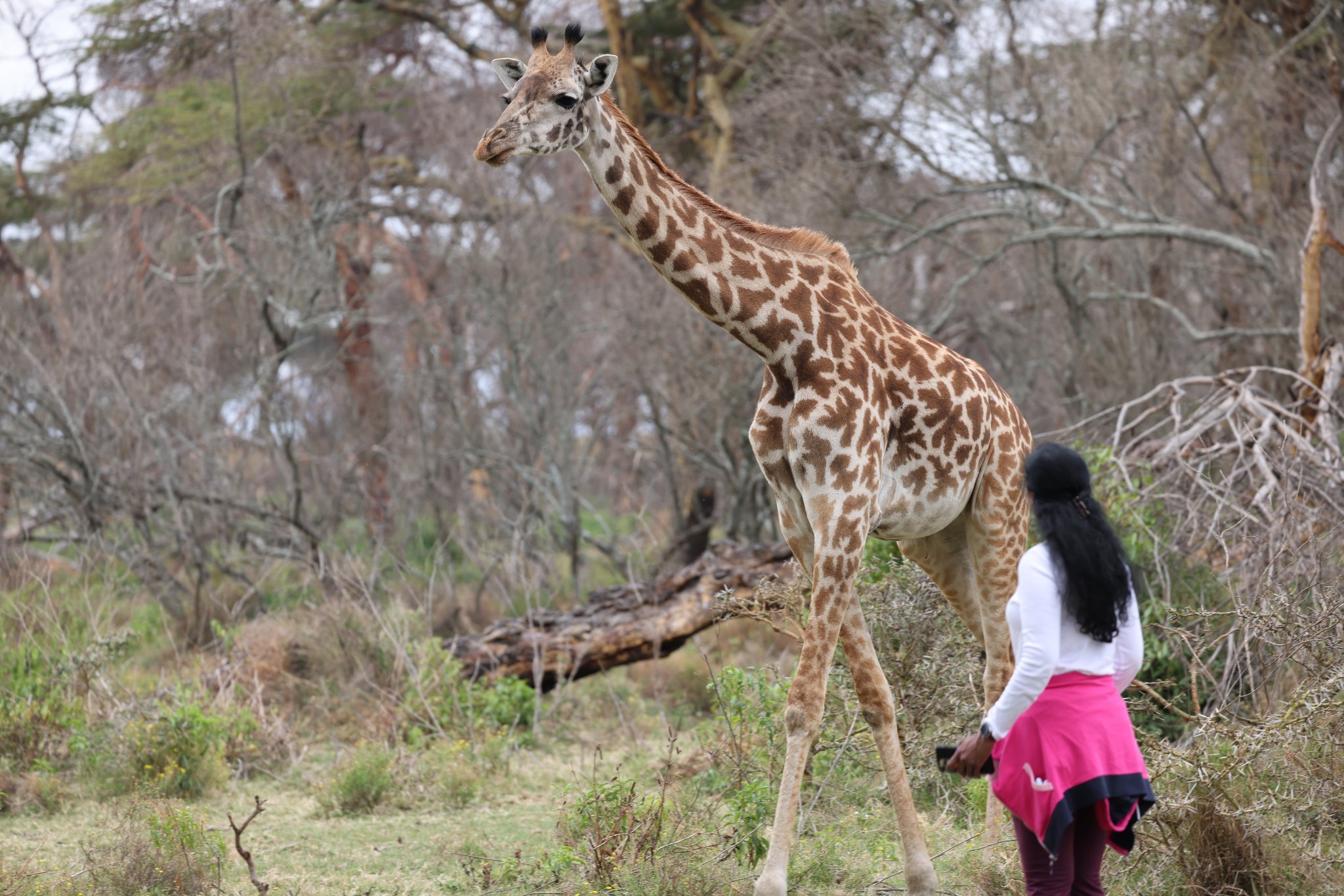
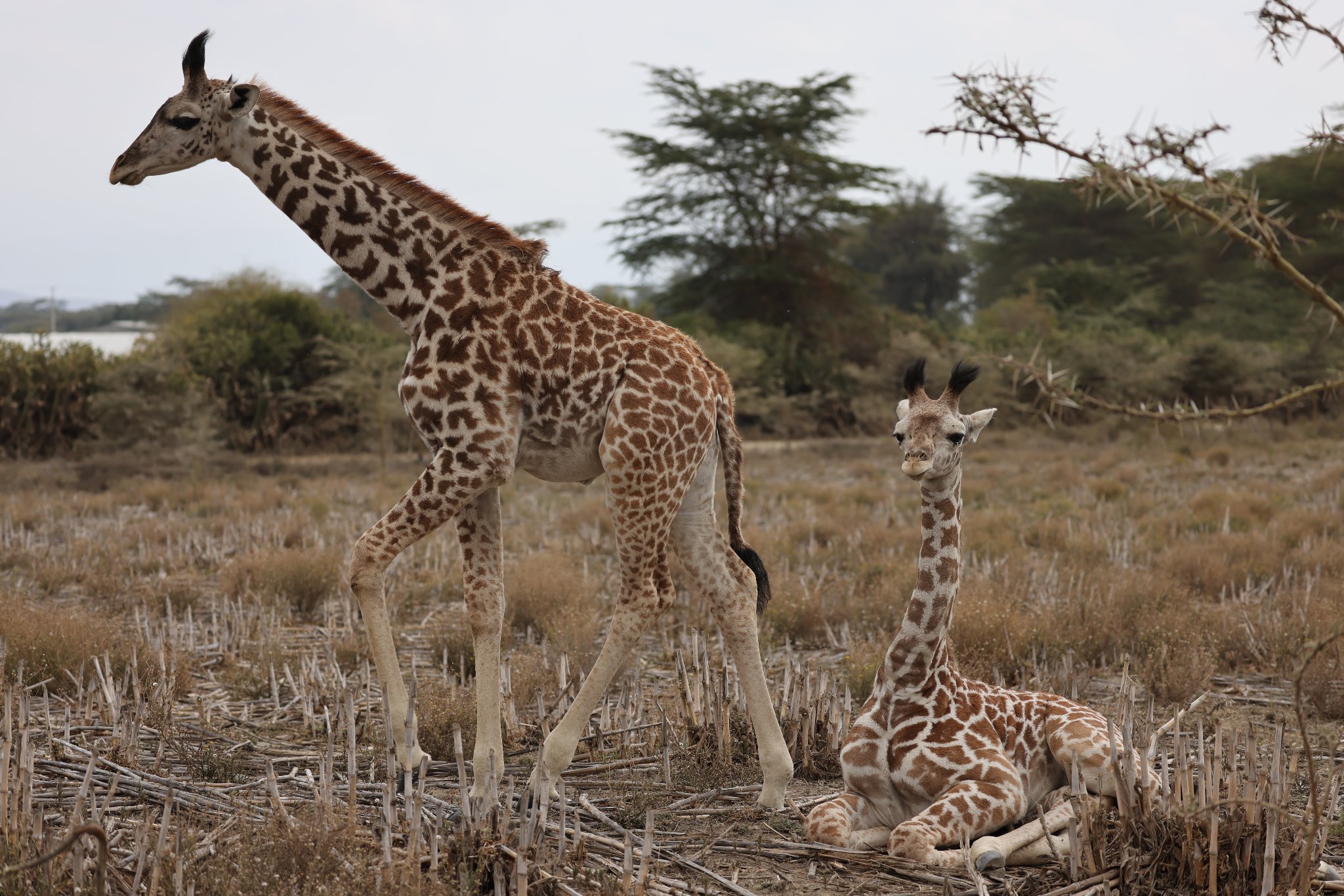
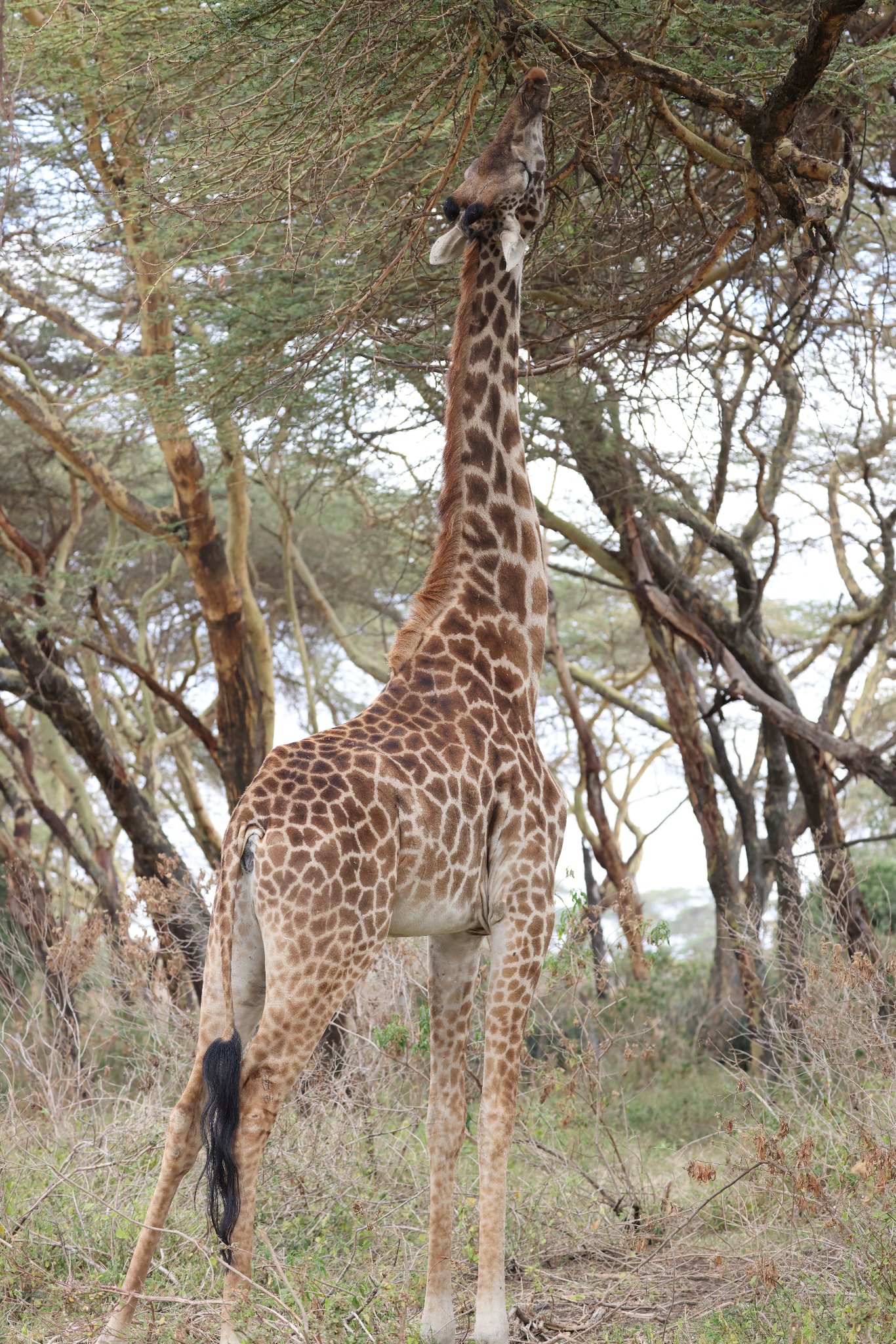
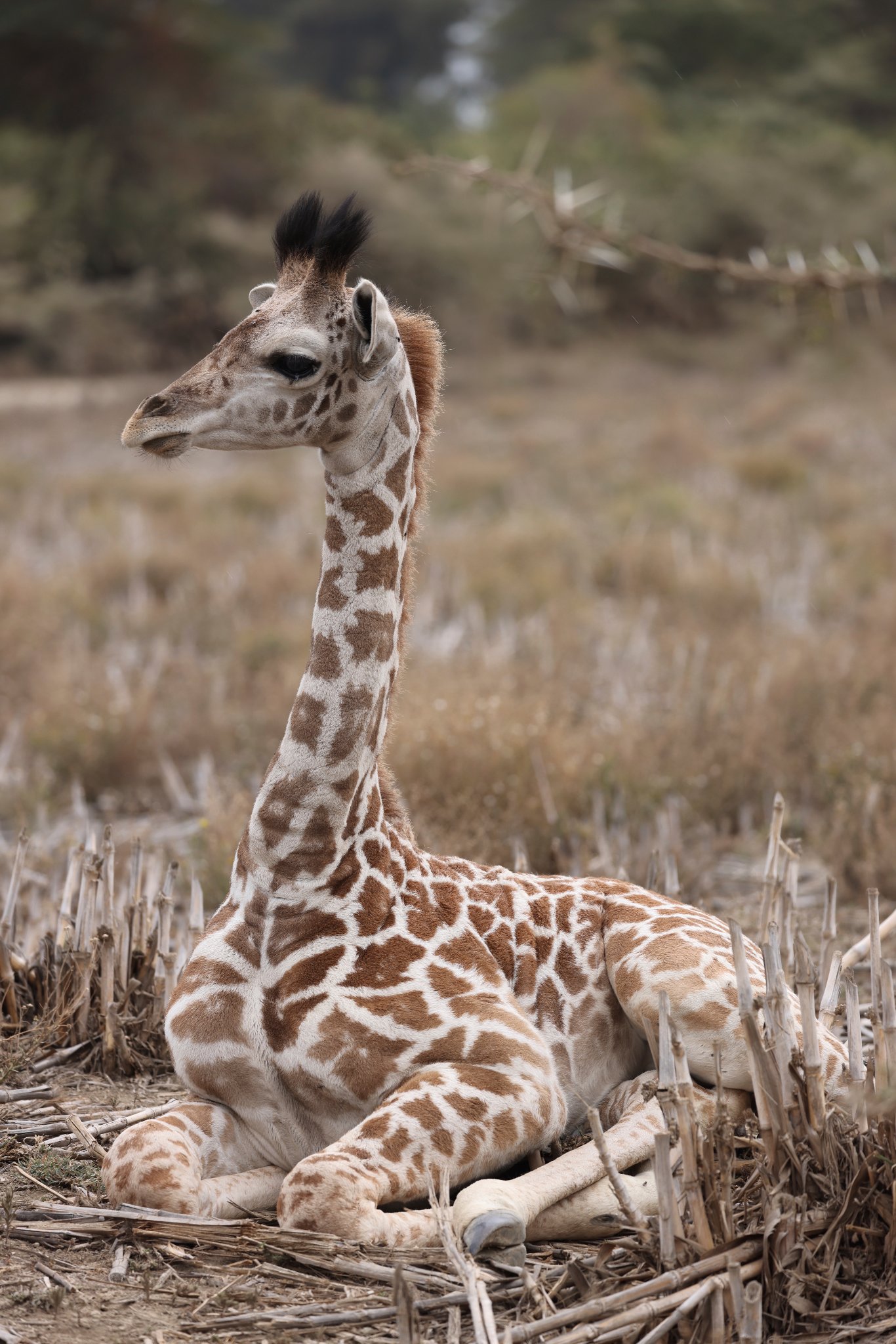
Maasai Mara
We had been building to this for days. After Lake Naivasha we drove south into the reserve, arriving at Ashnil Mara Camp in time for check-in, lunch, and an afternoon rest before our evening drive. Three nights here. We were ready.
Maasai Mara Game Reserve
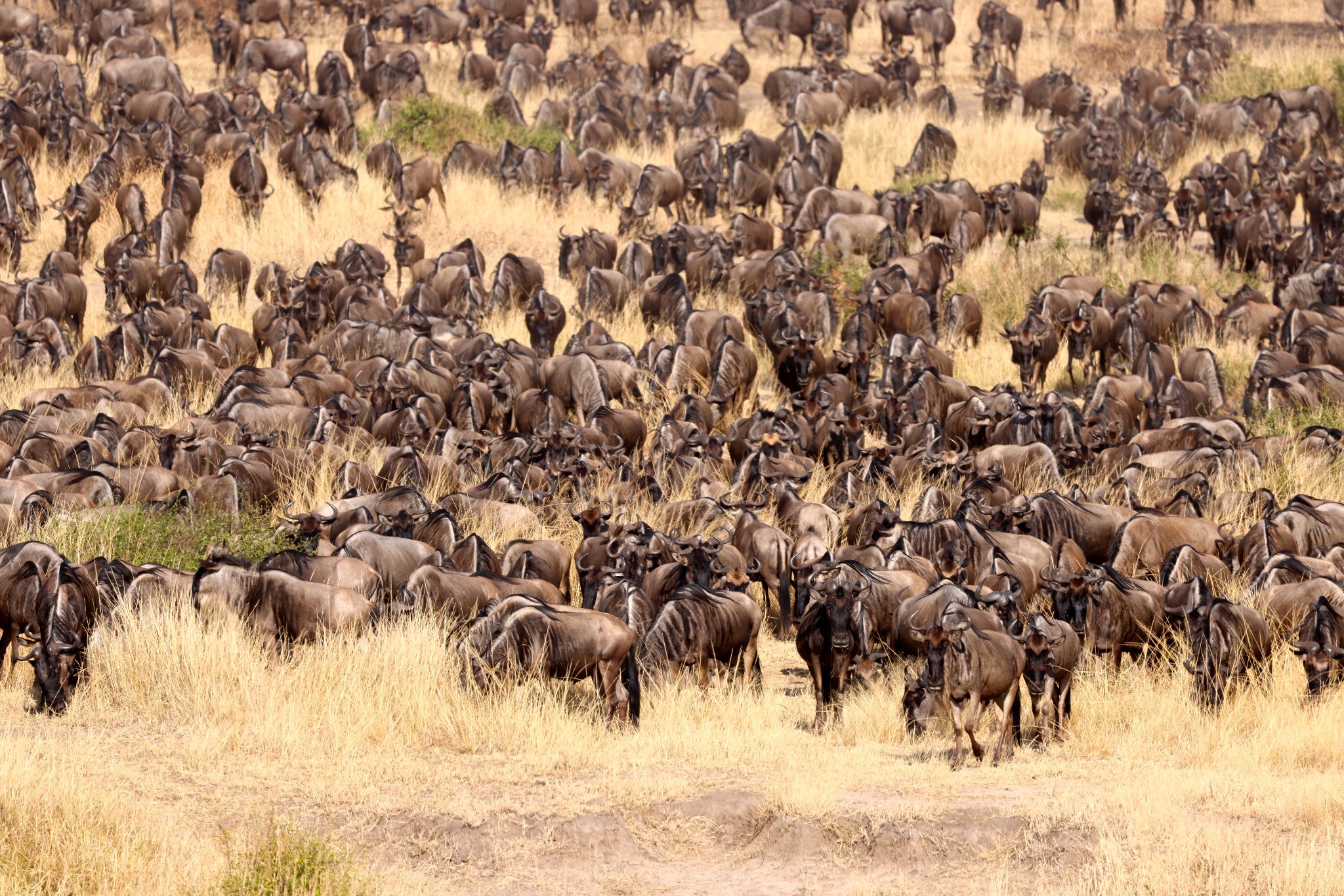
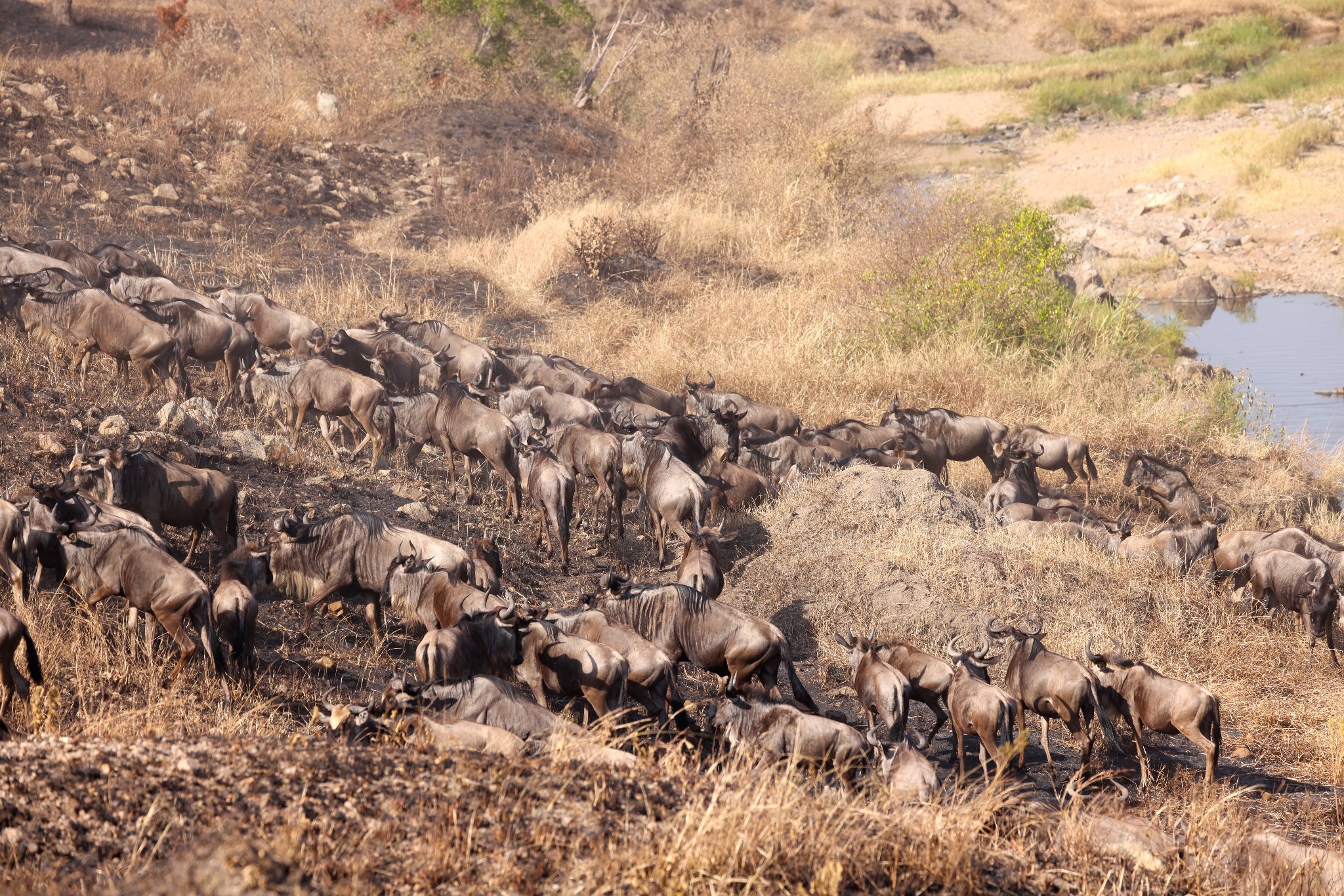
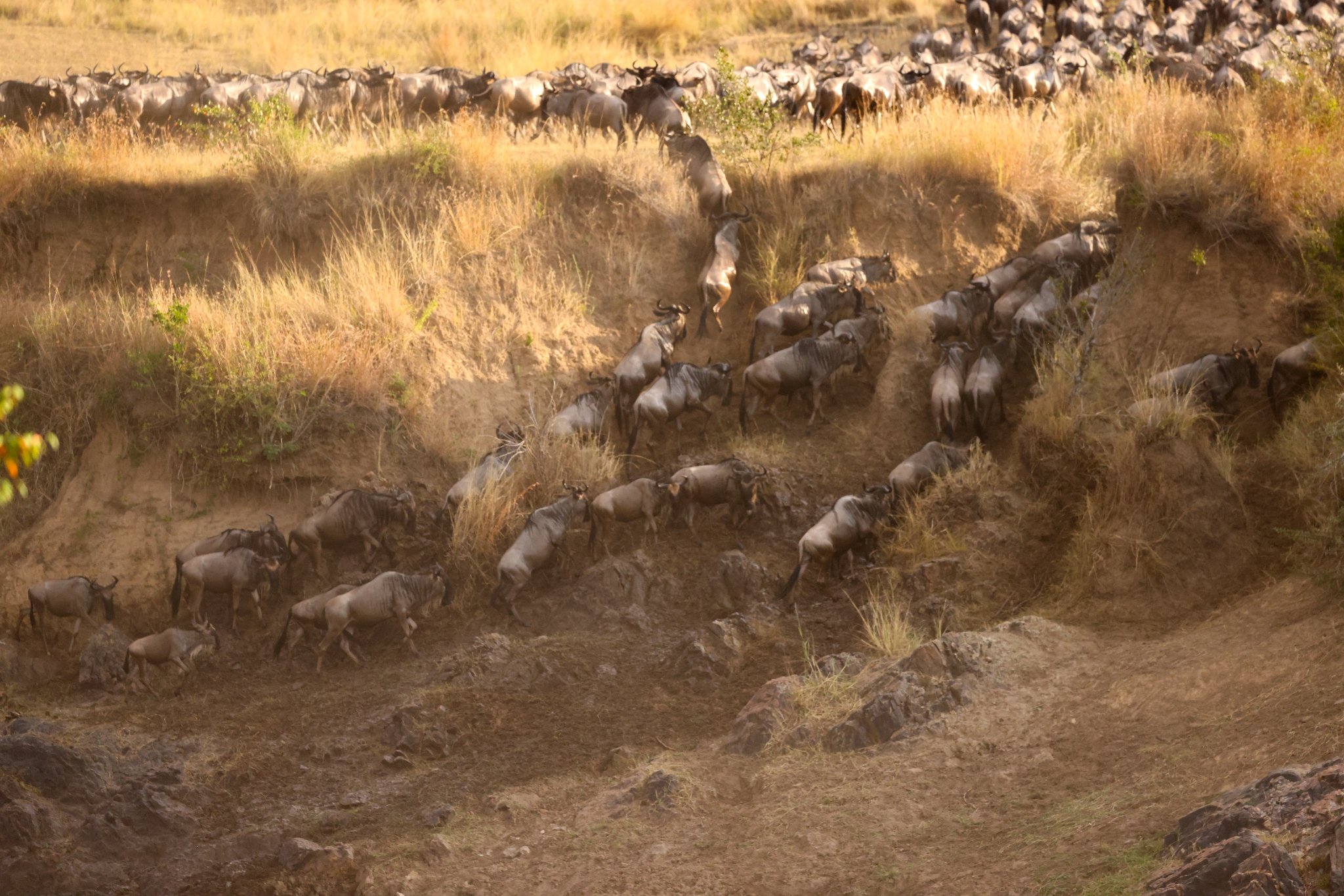
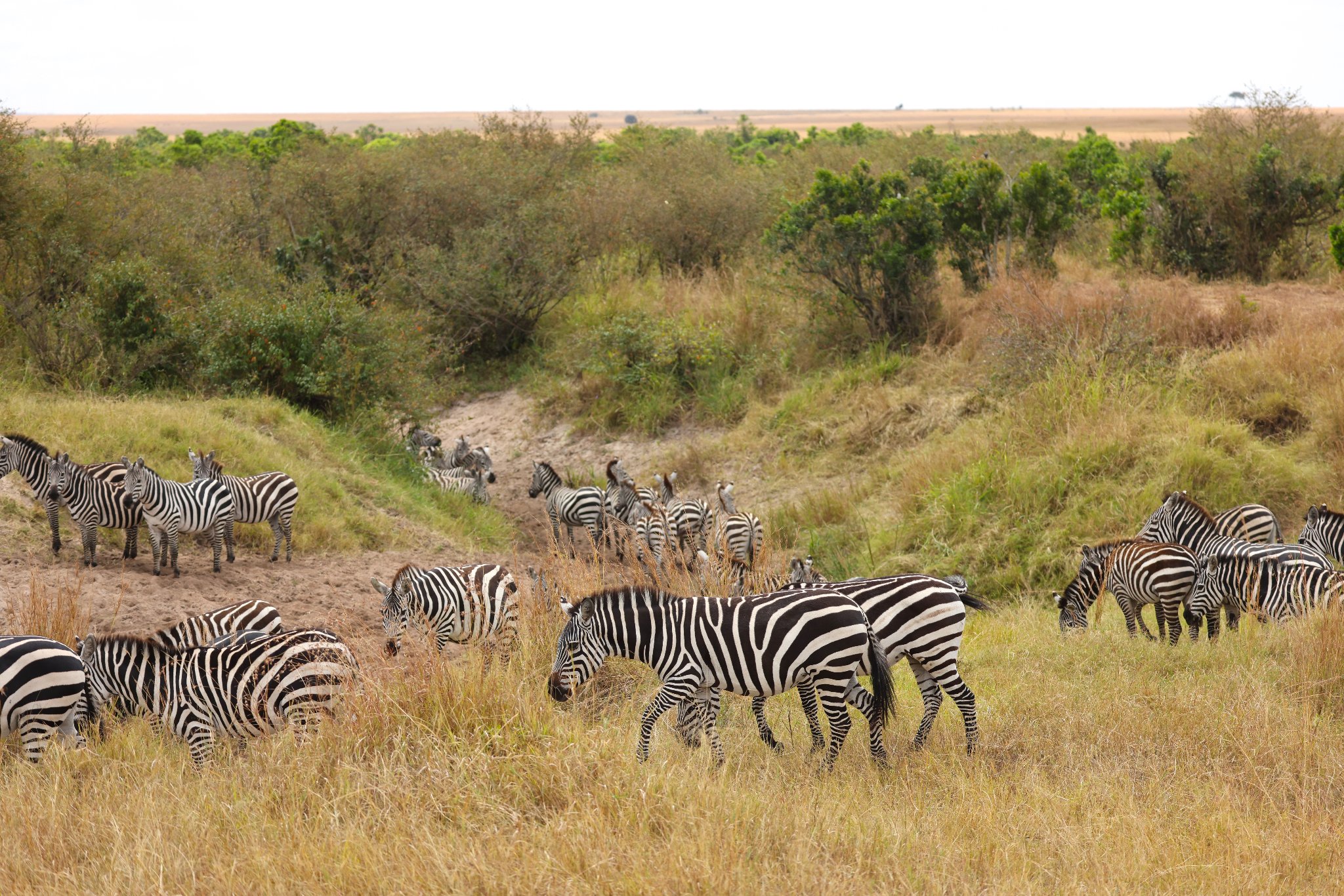
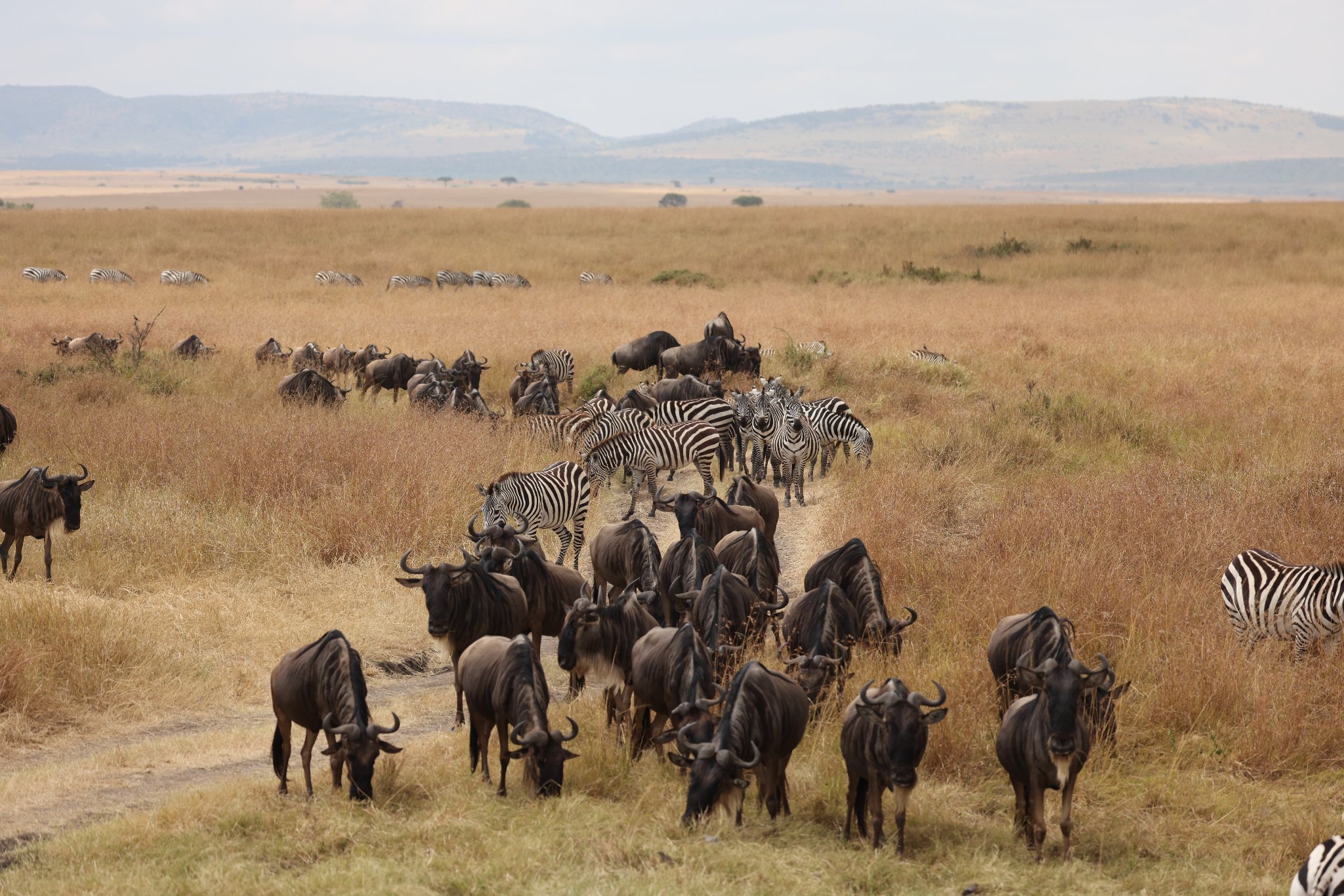
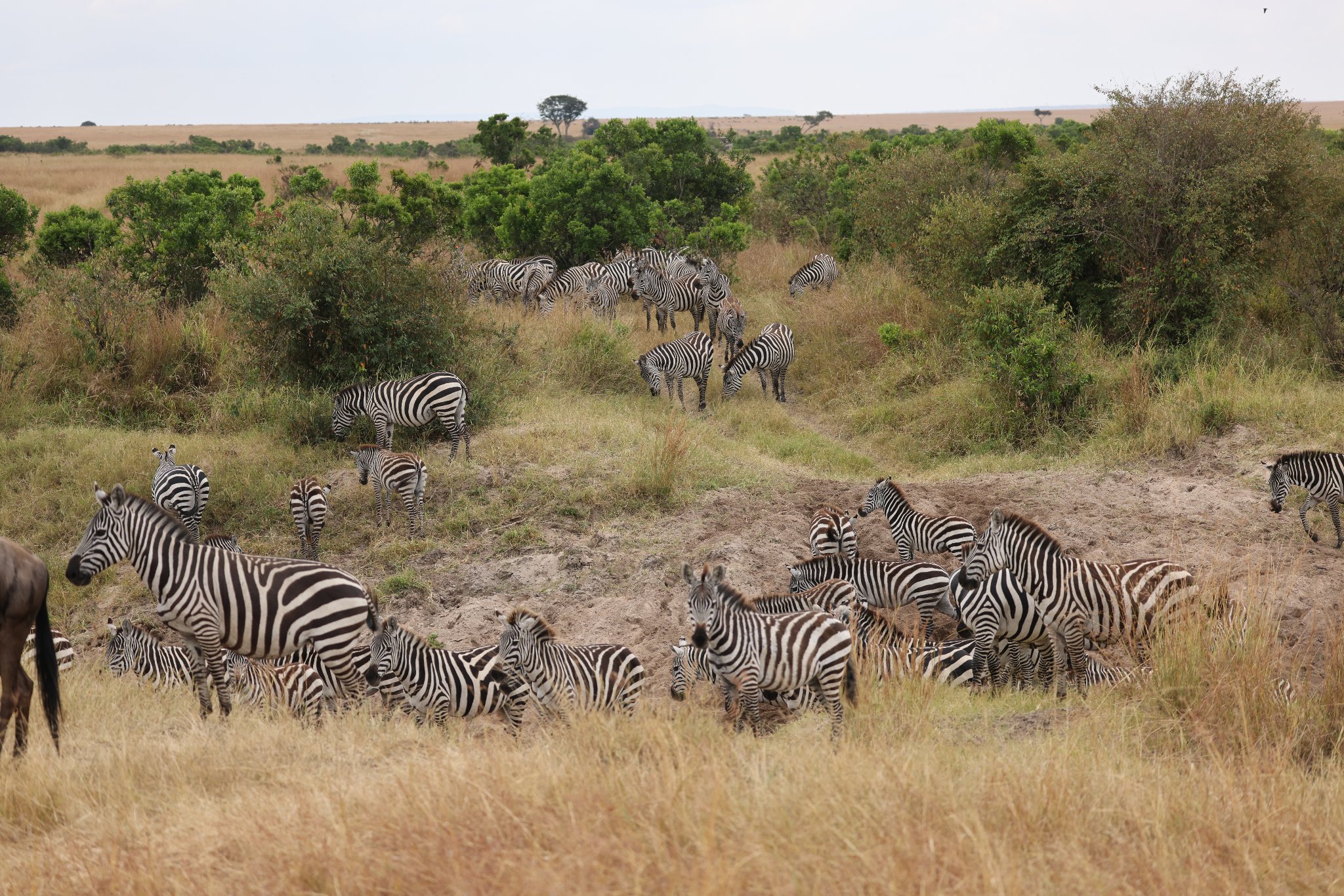
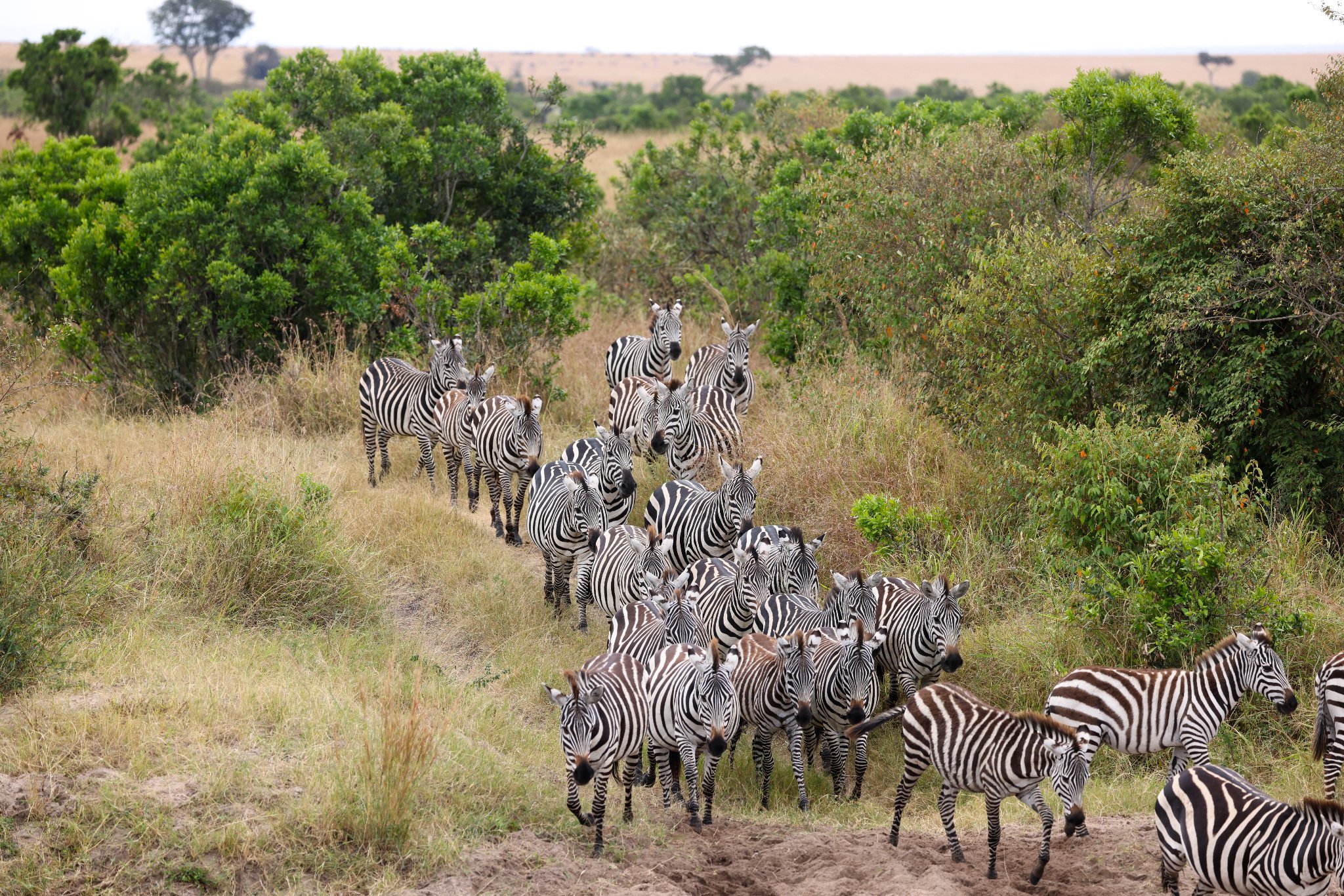
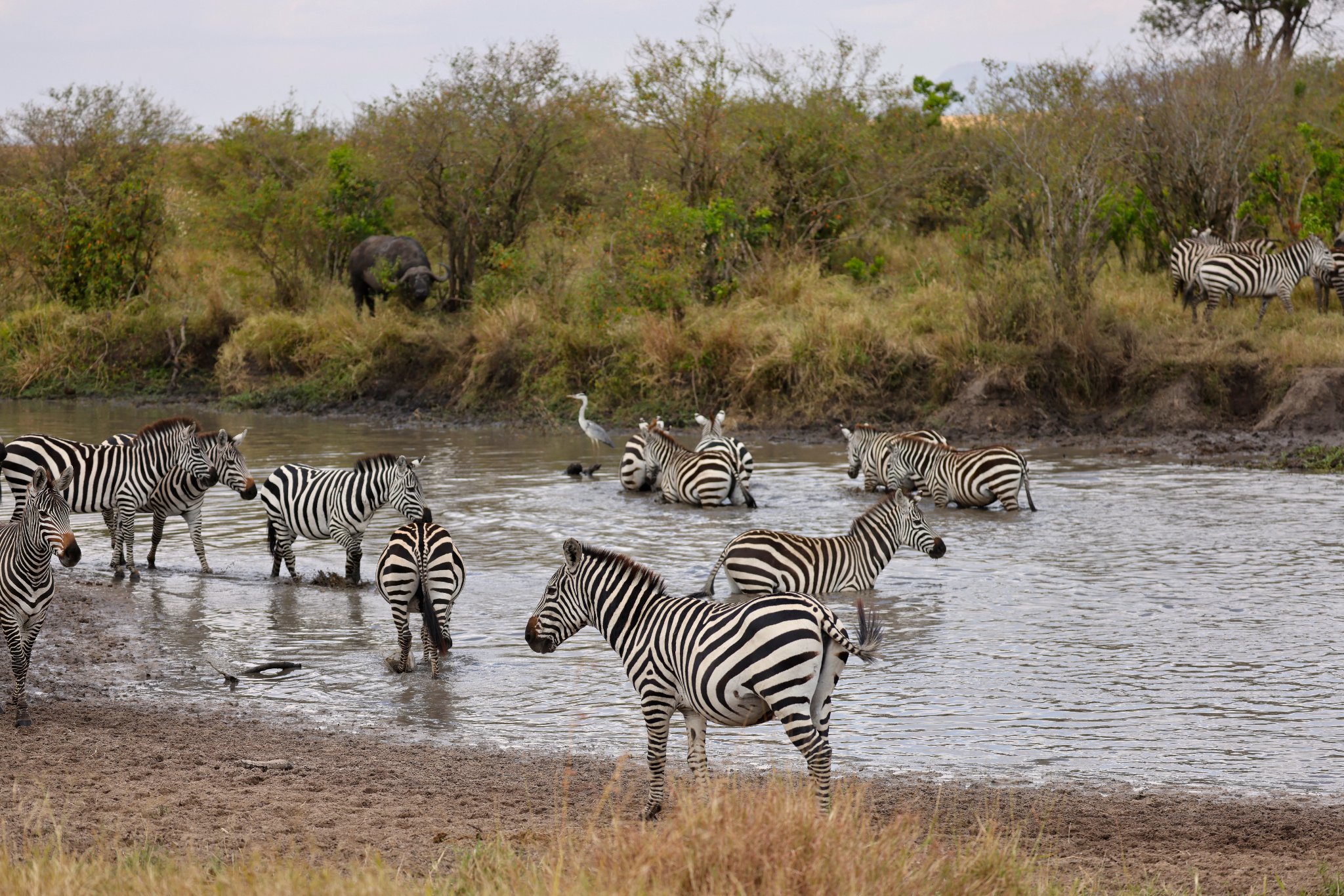
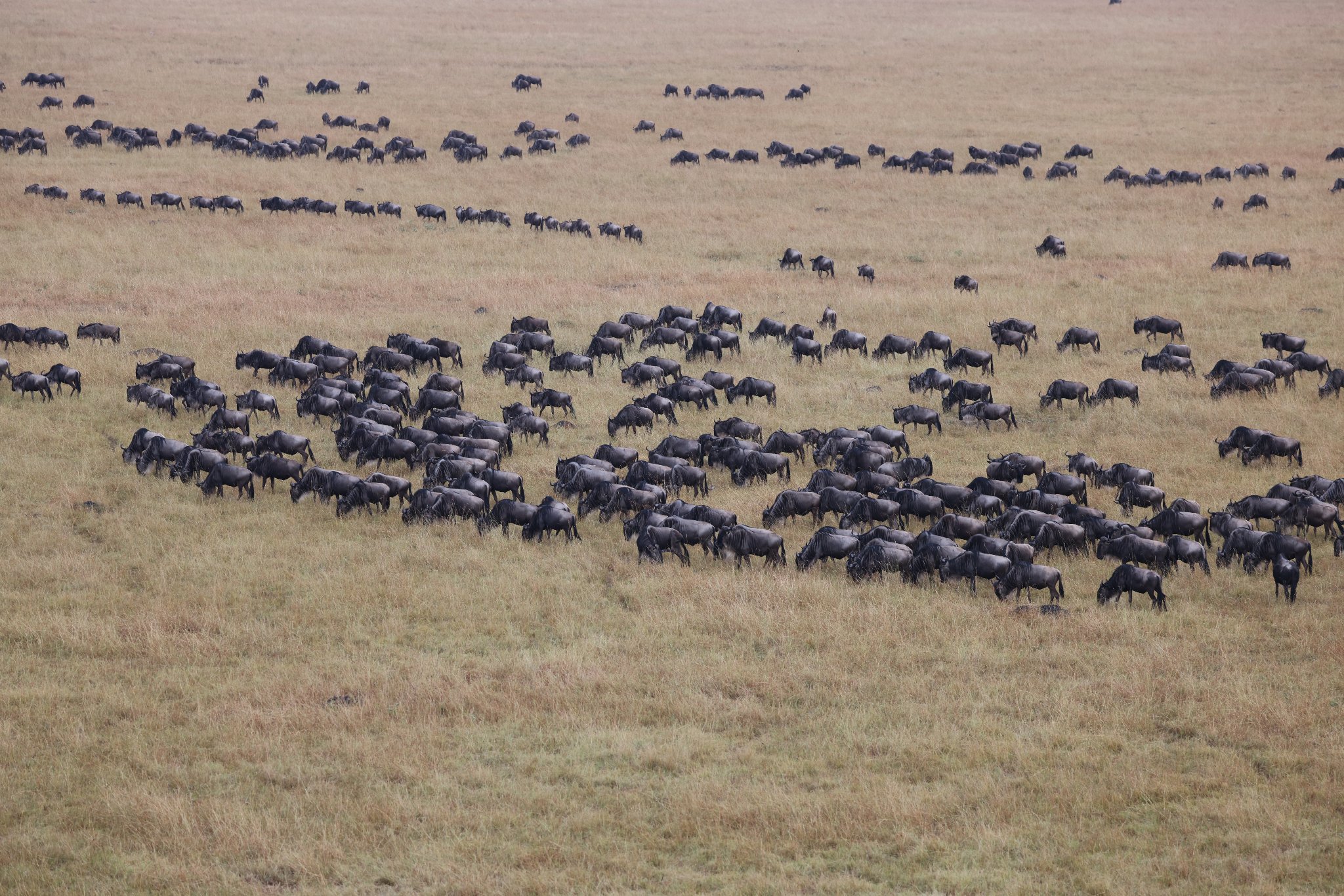
There is nowhere else on earth quite like Maasai Mara National Reserve. Widely regarded as the crown jewel of Kenya’s wildlife reserves, it forms the northern extension of the vast Serengeti ecosystem and is home to one of the greatest wildlife spectacles on the planet. Every year, typically between July and October, more than a million wildebeest, accompanied by hundreds of thousands of zebras and gazelles, migrate from Tanzania’s Serengeti into the Maasai Mara in search of fresh grazing. Along the way, they face dramatic river crossings and the constant presence of predators, making the Great Migration one of nature’s most extraordinary events.
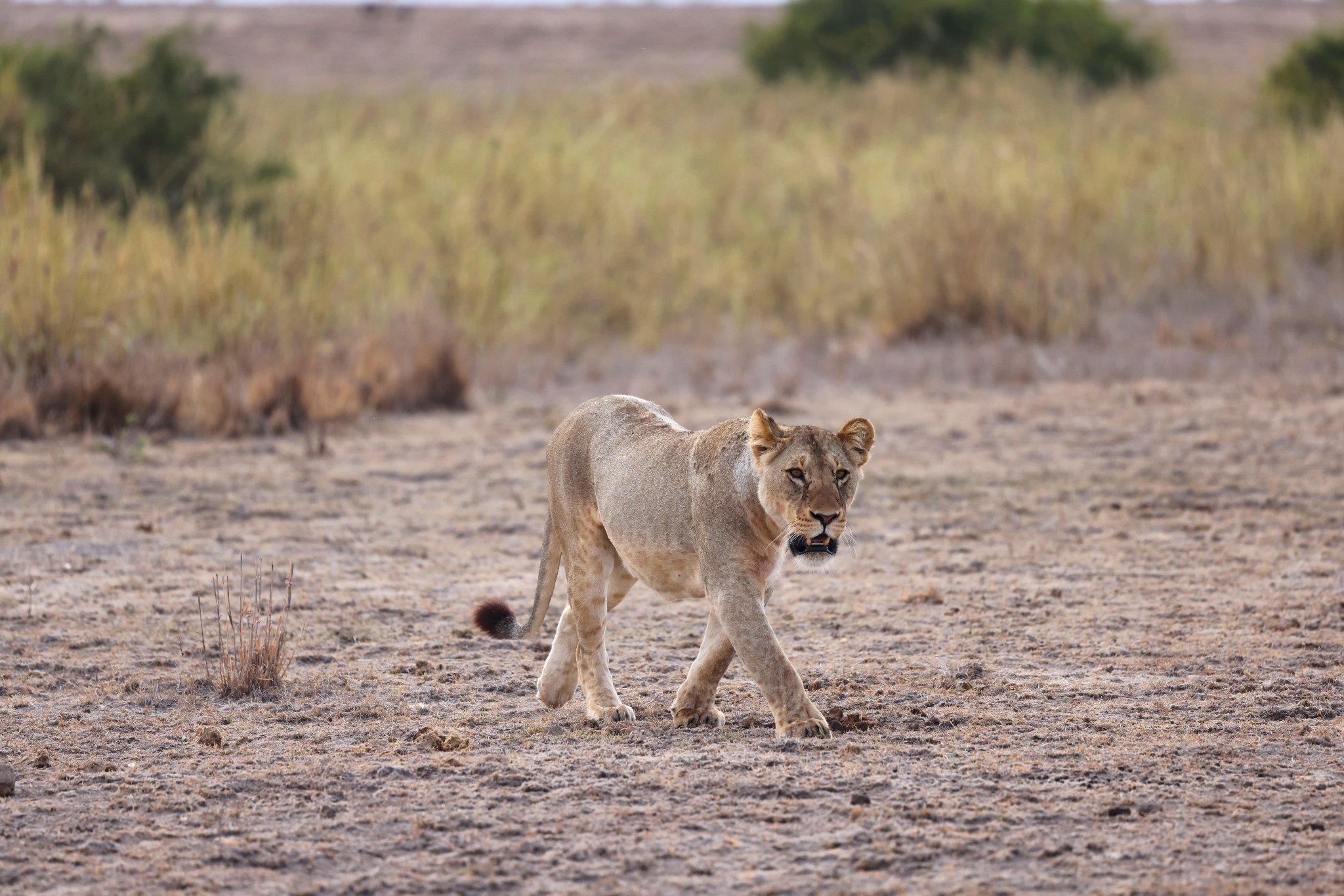
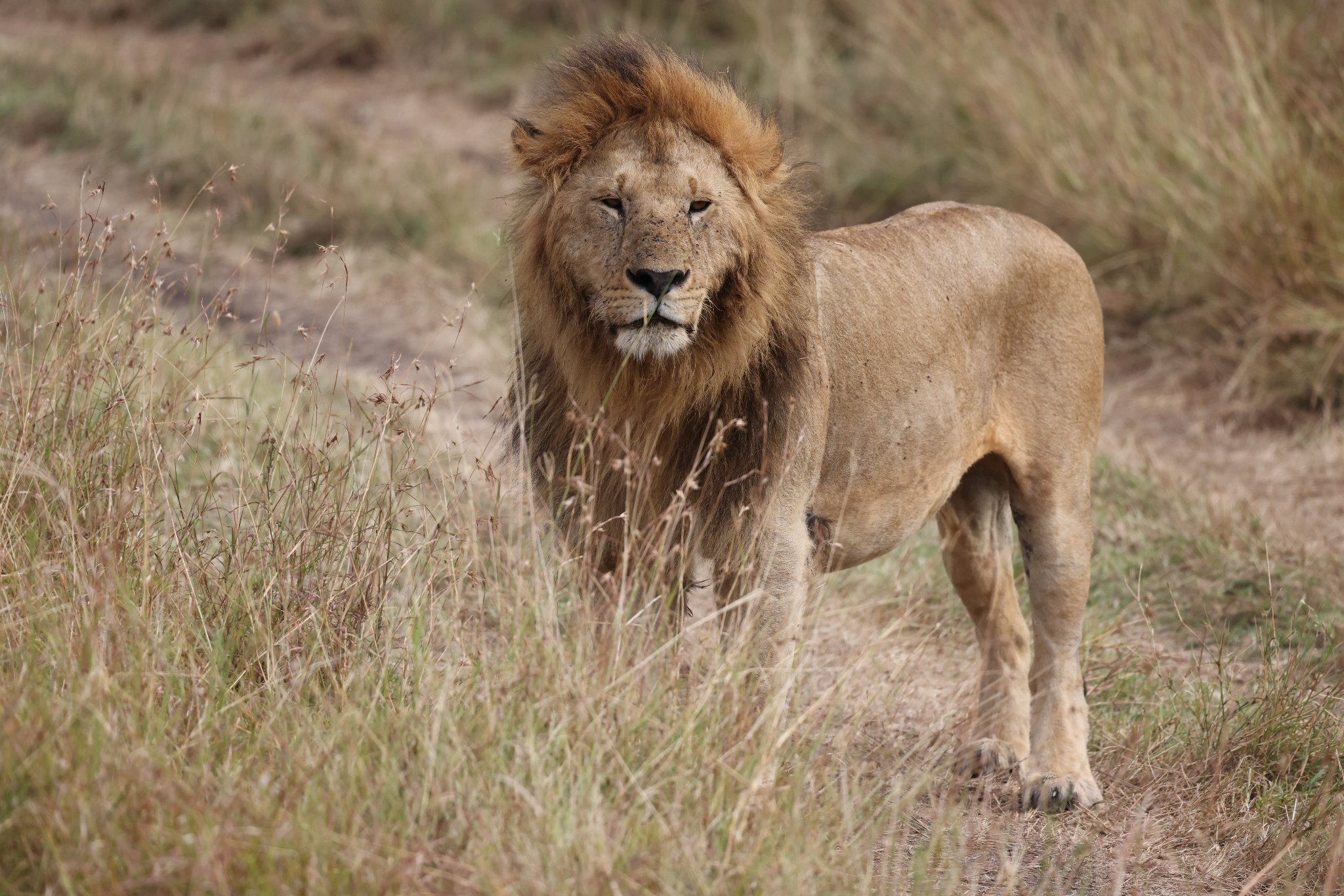
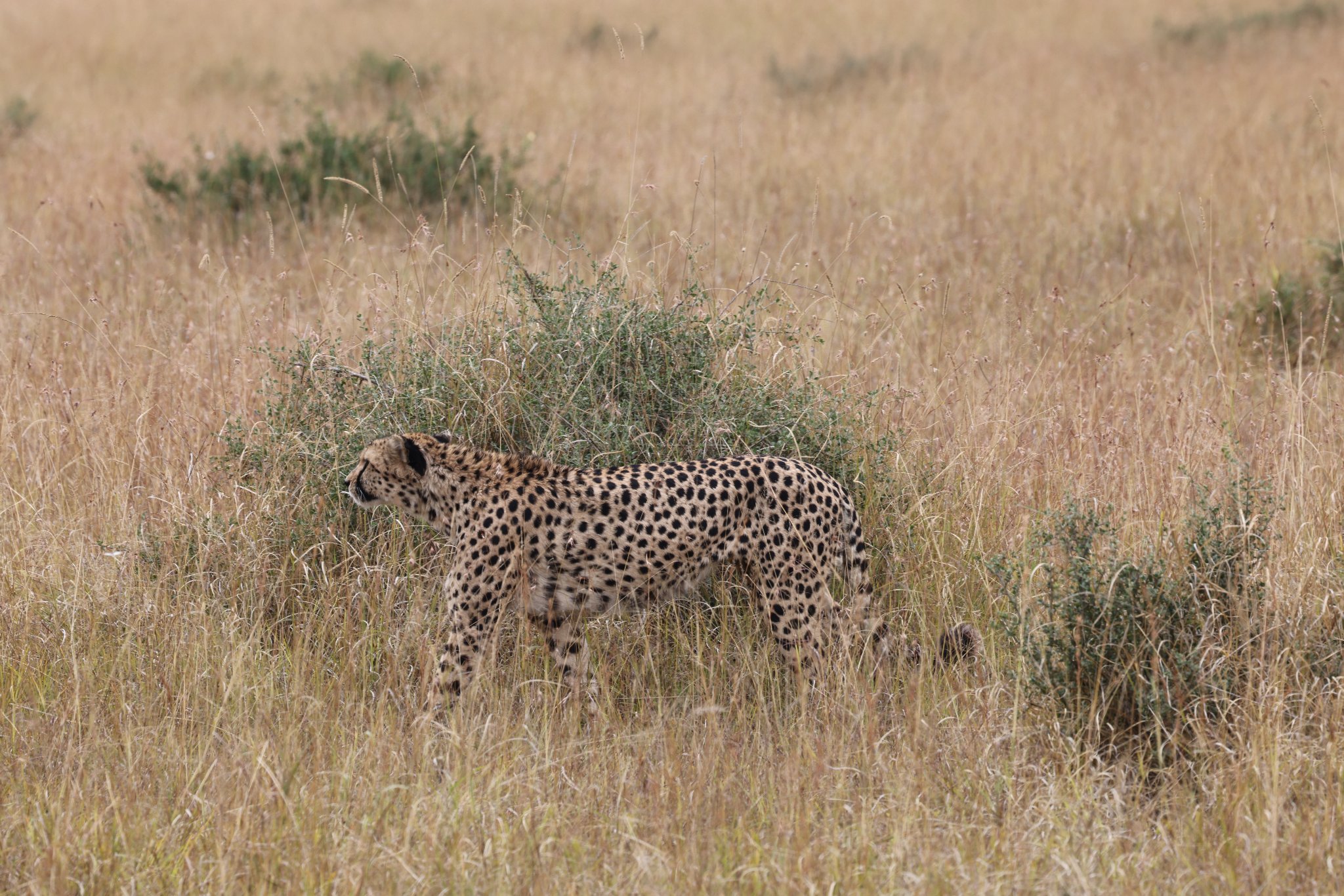
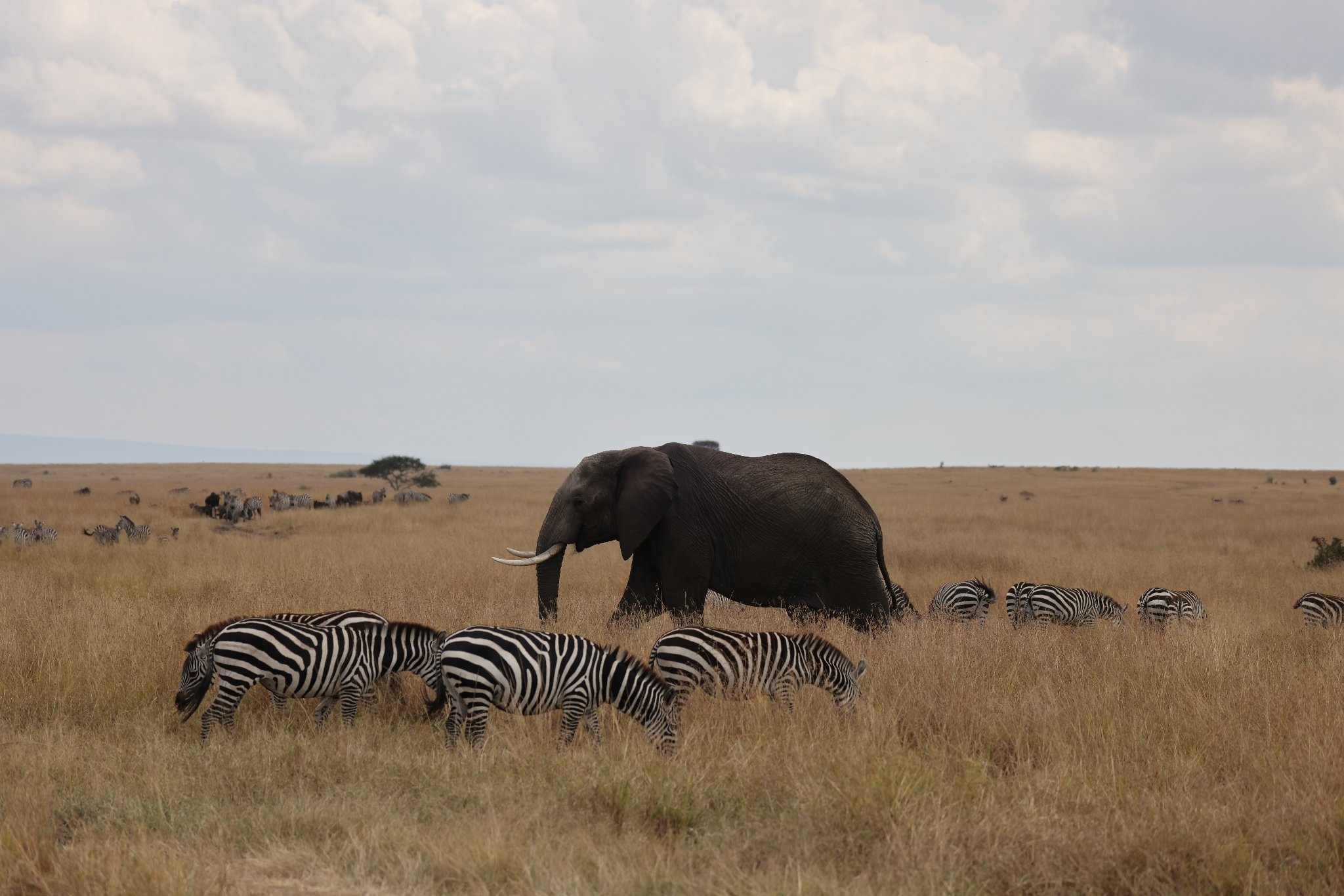
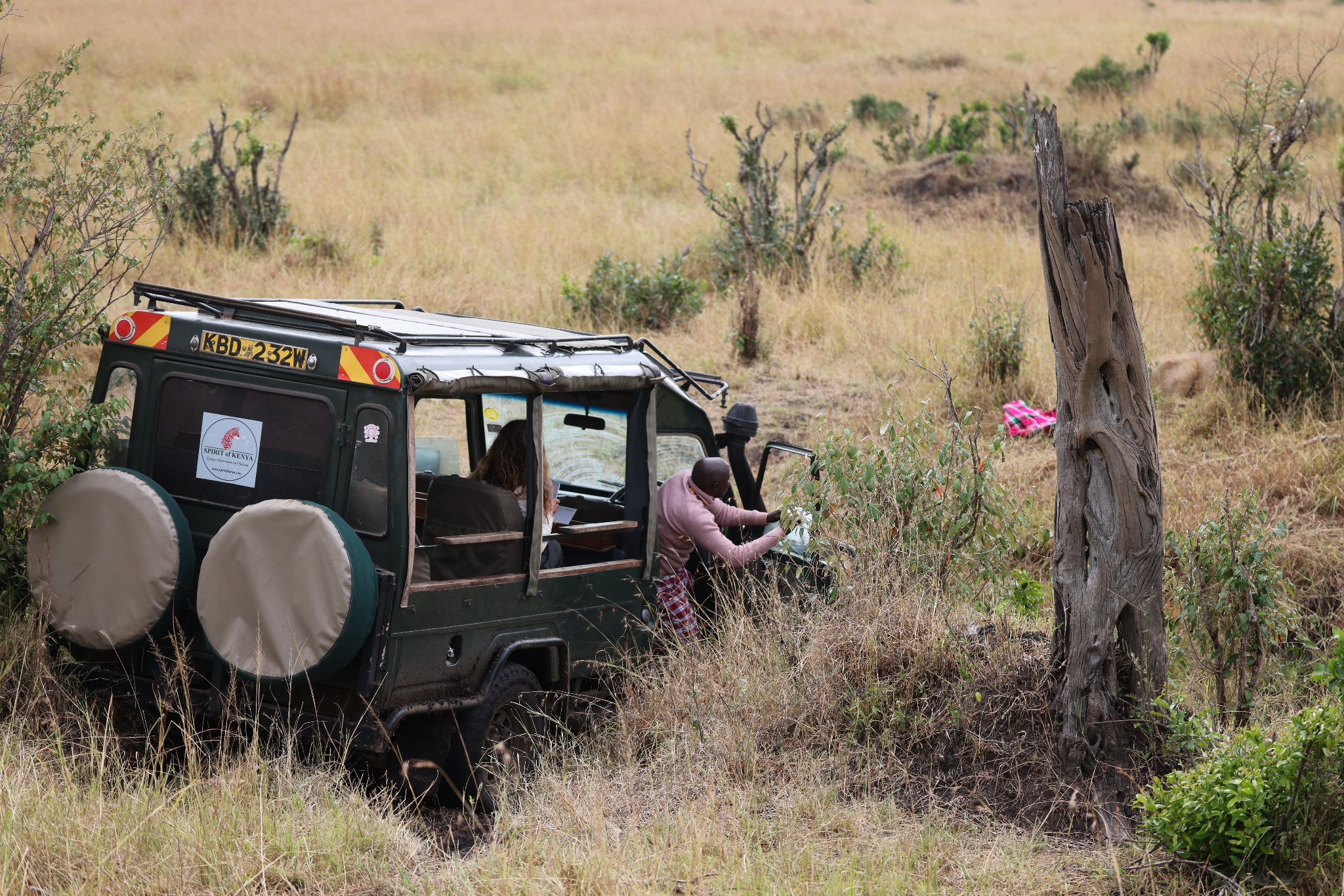
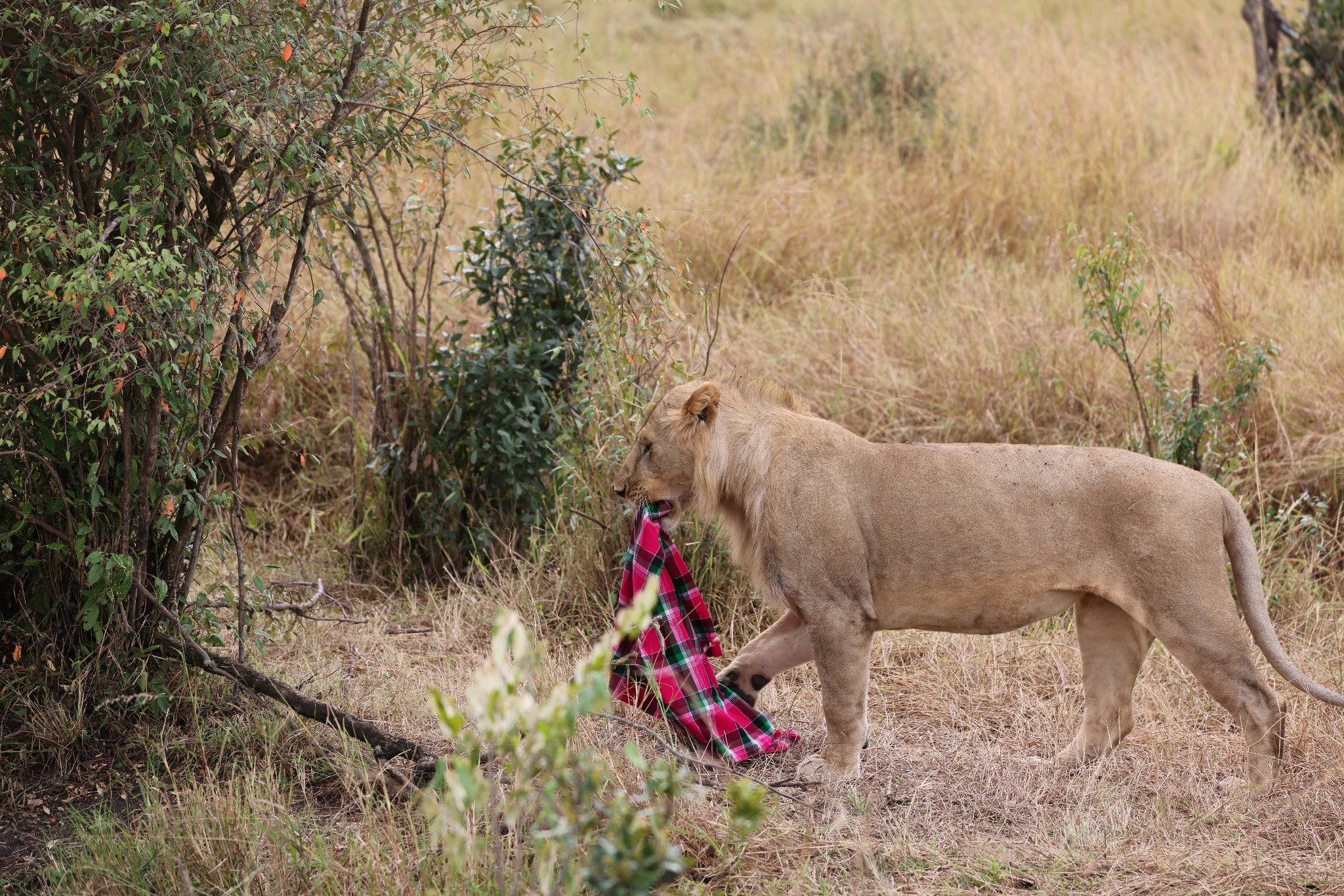
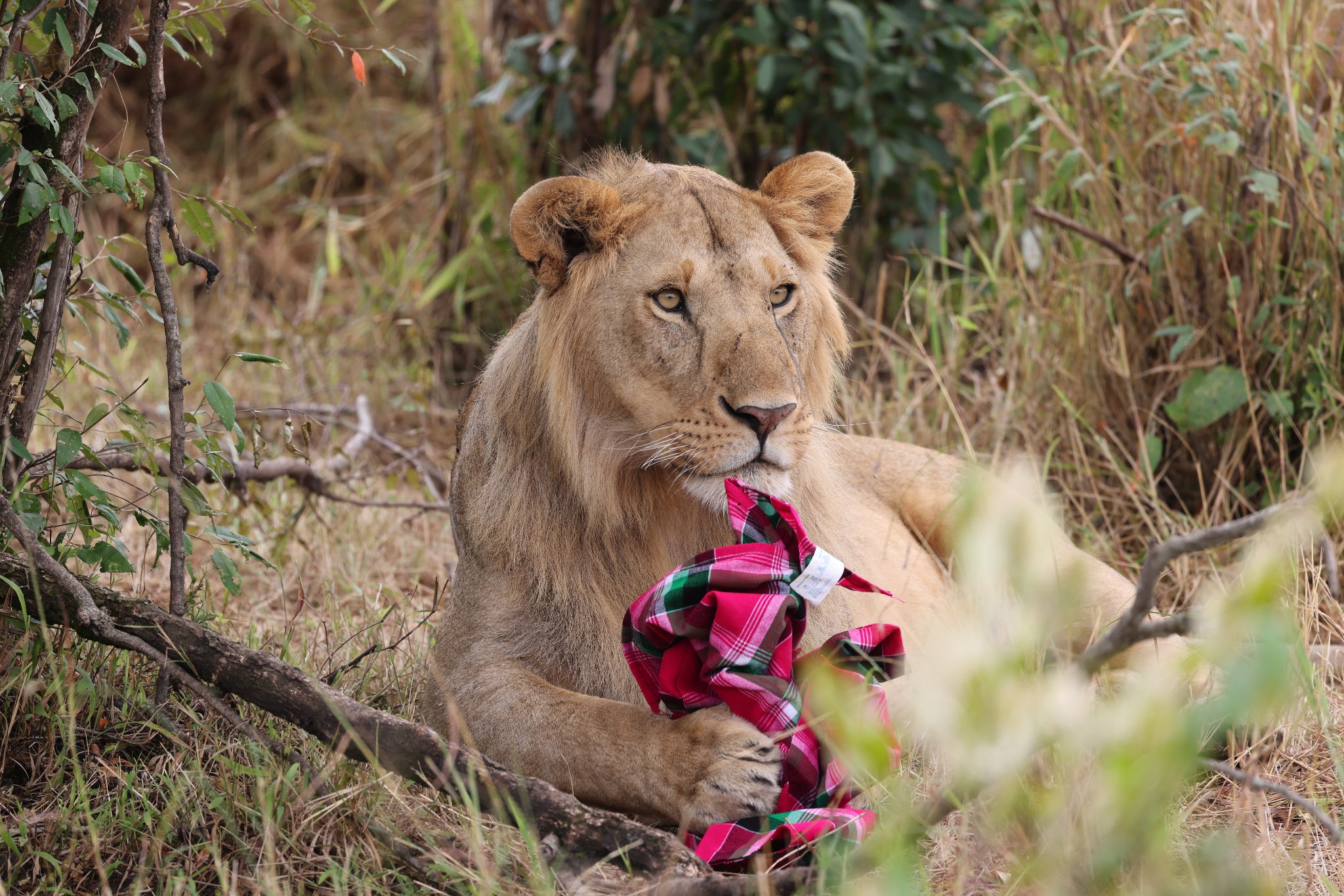
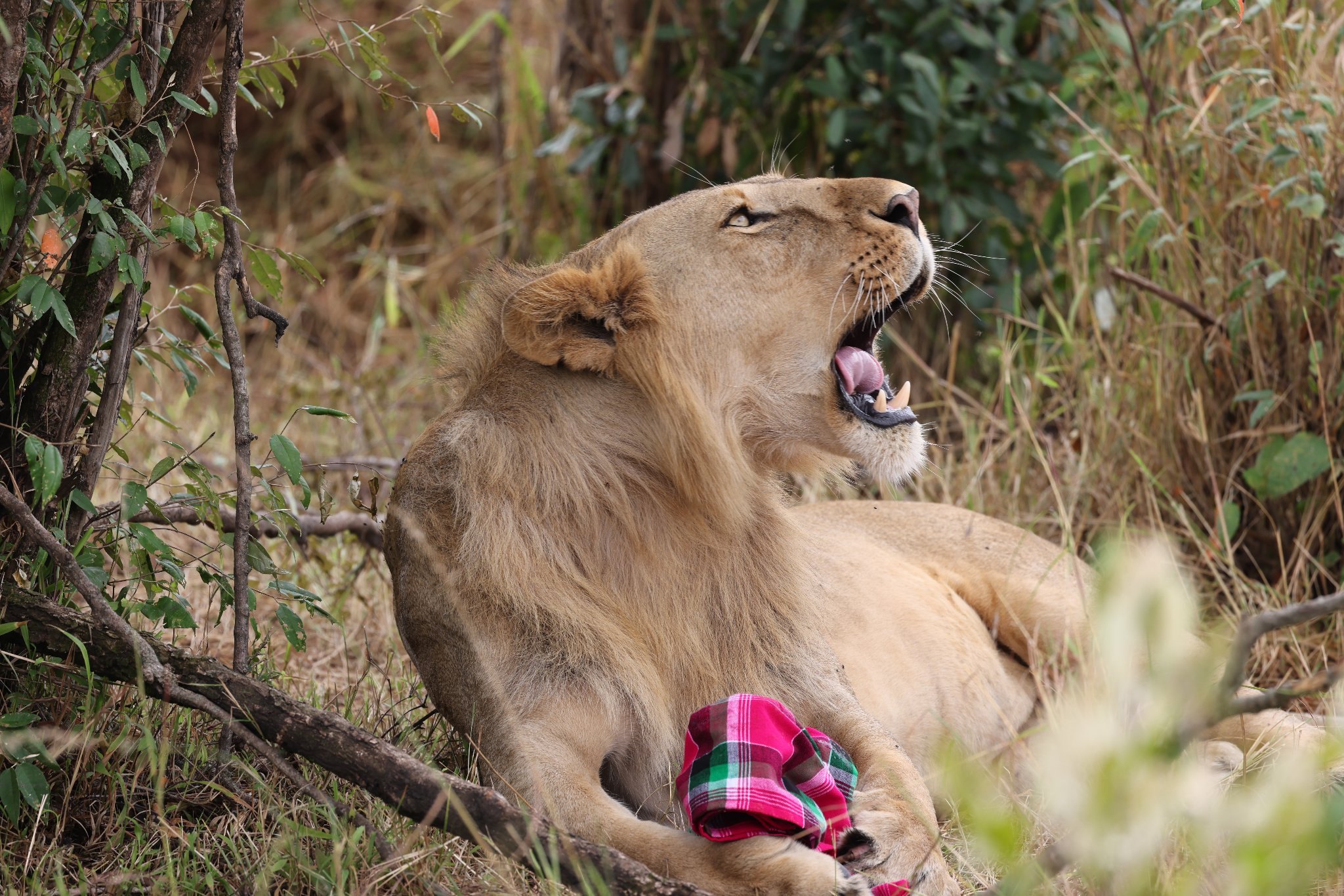
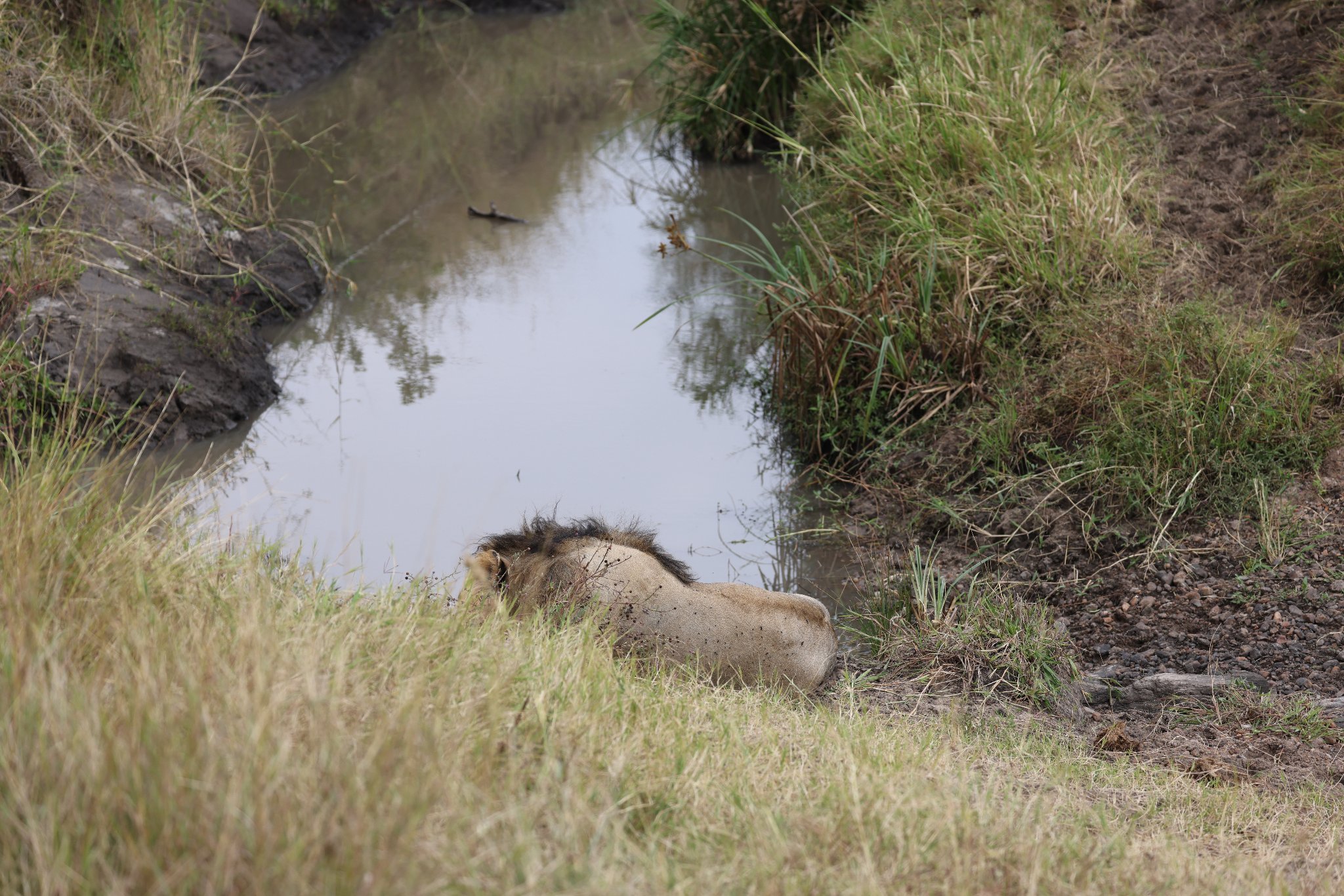
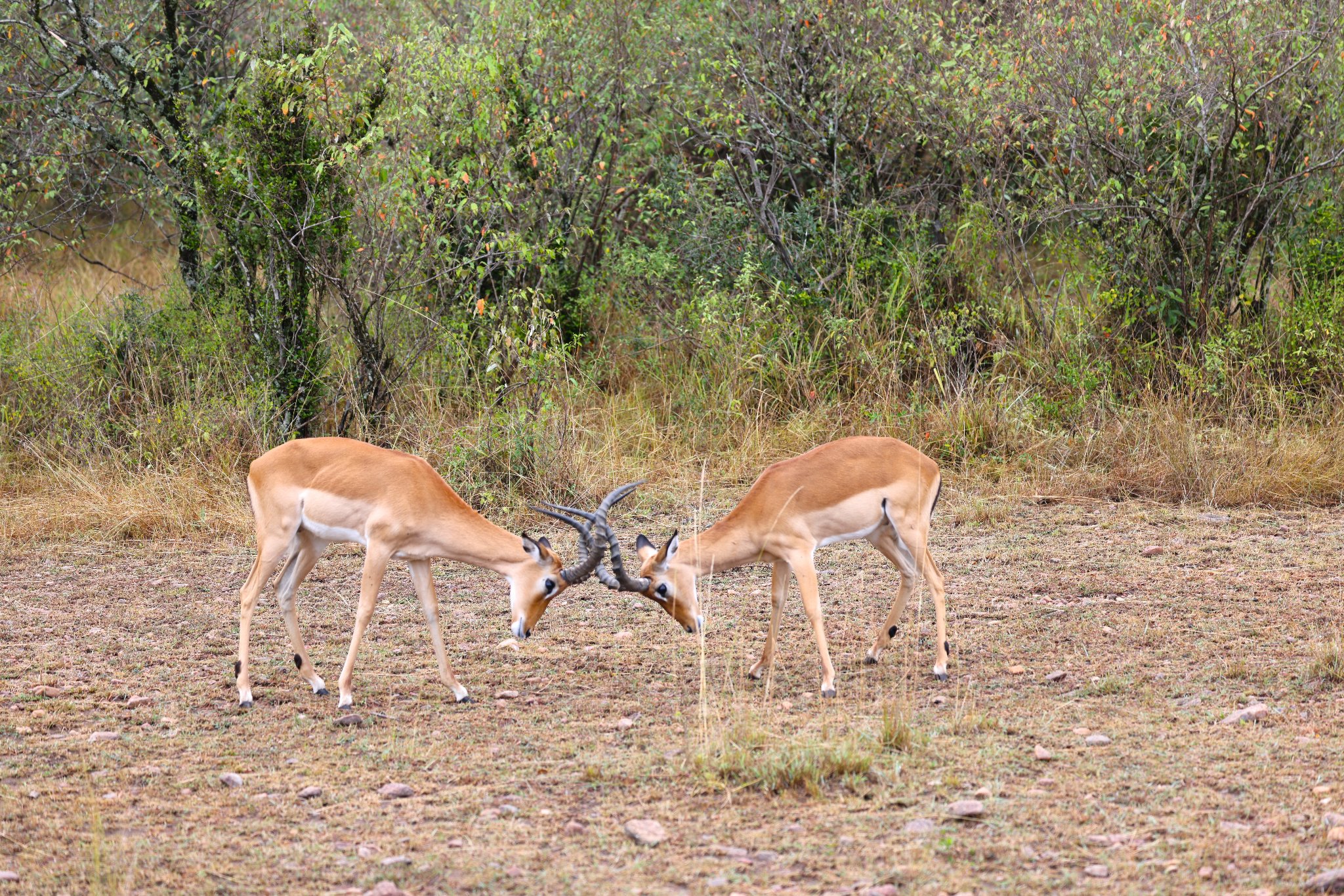
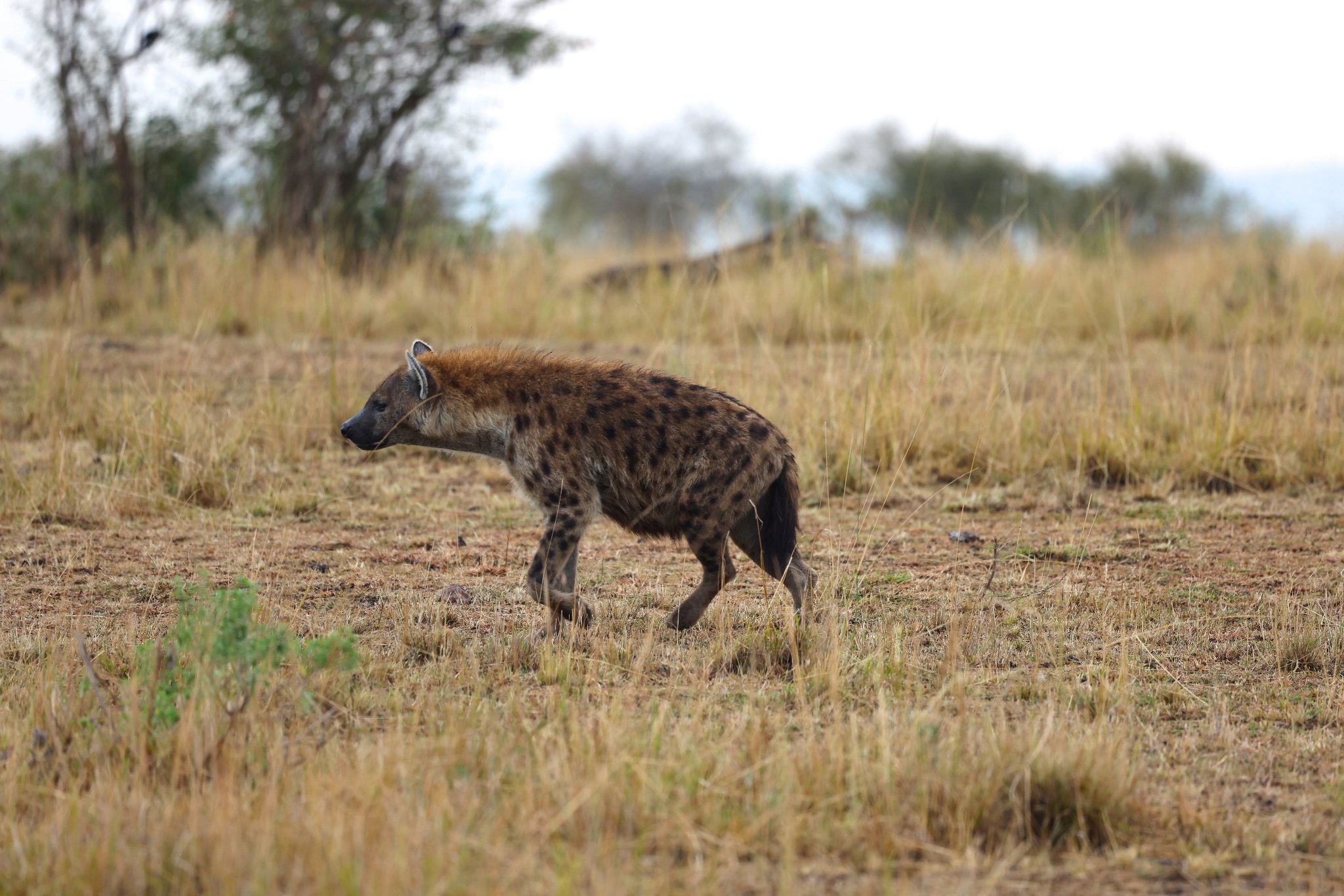
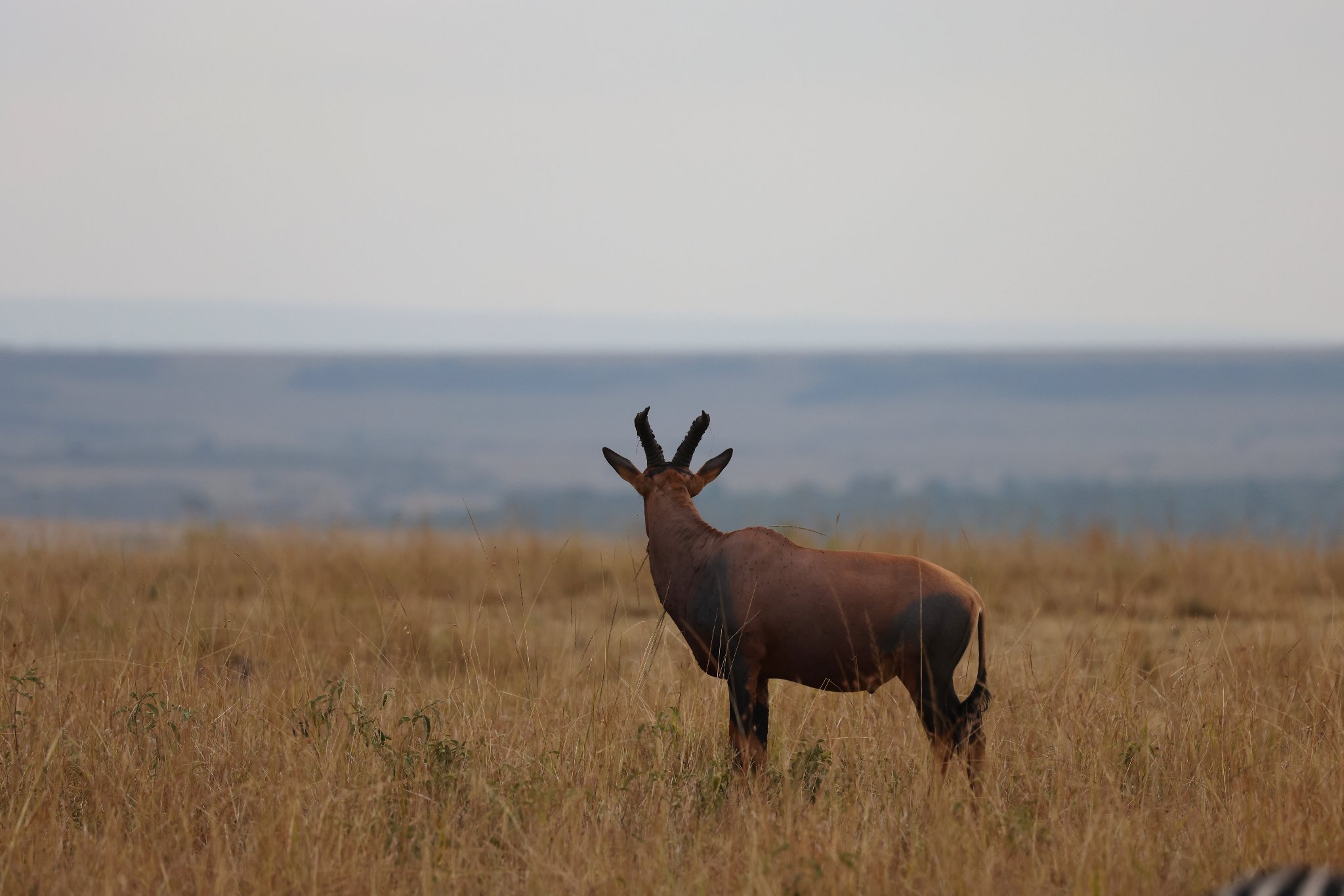
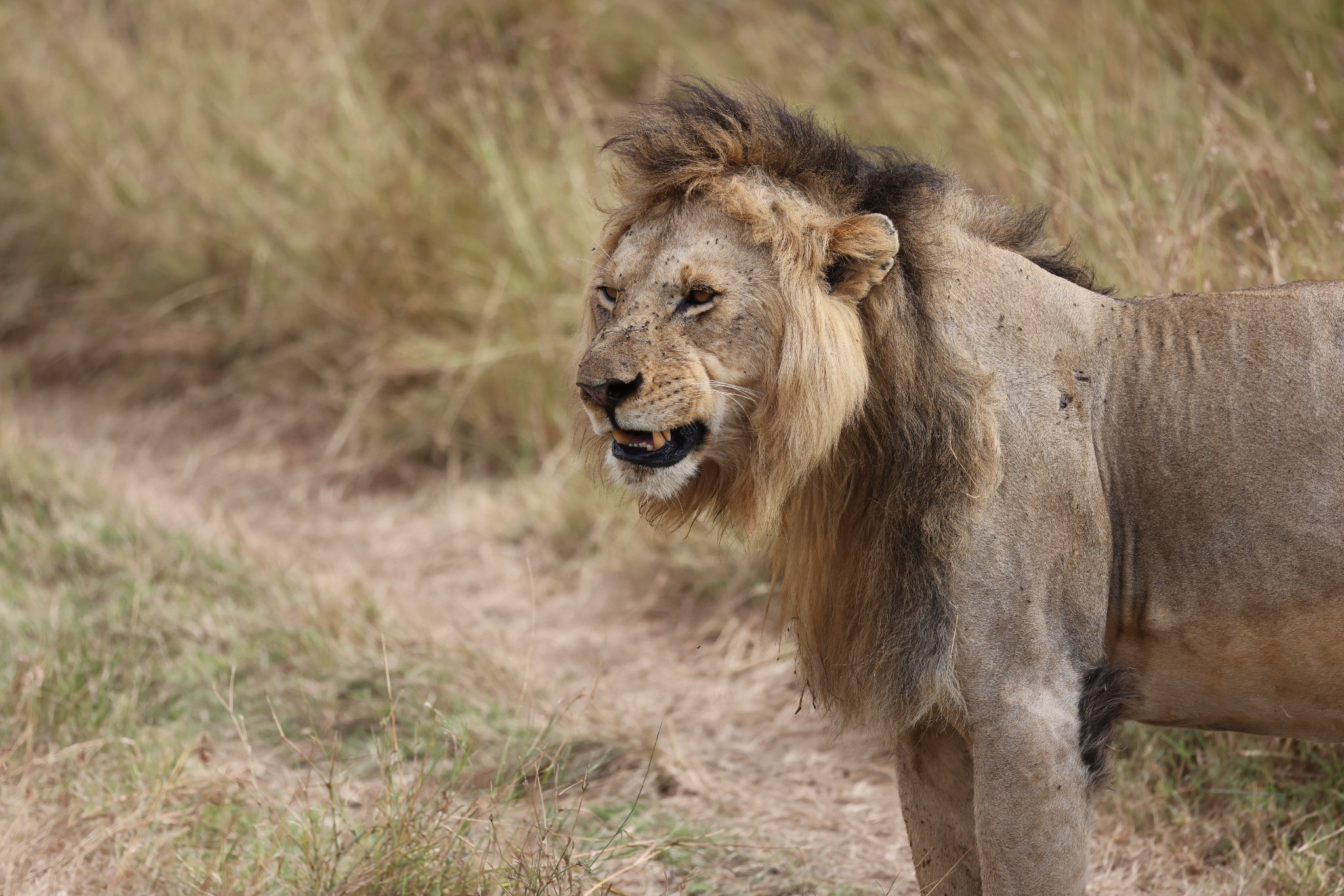
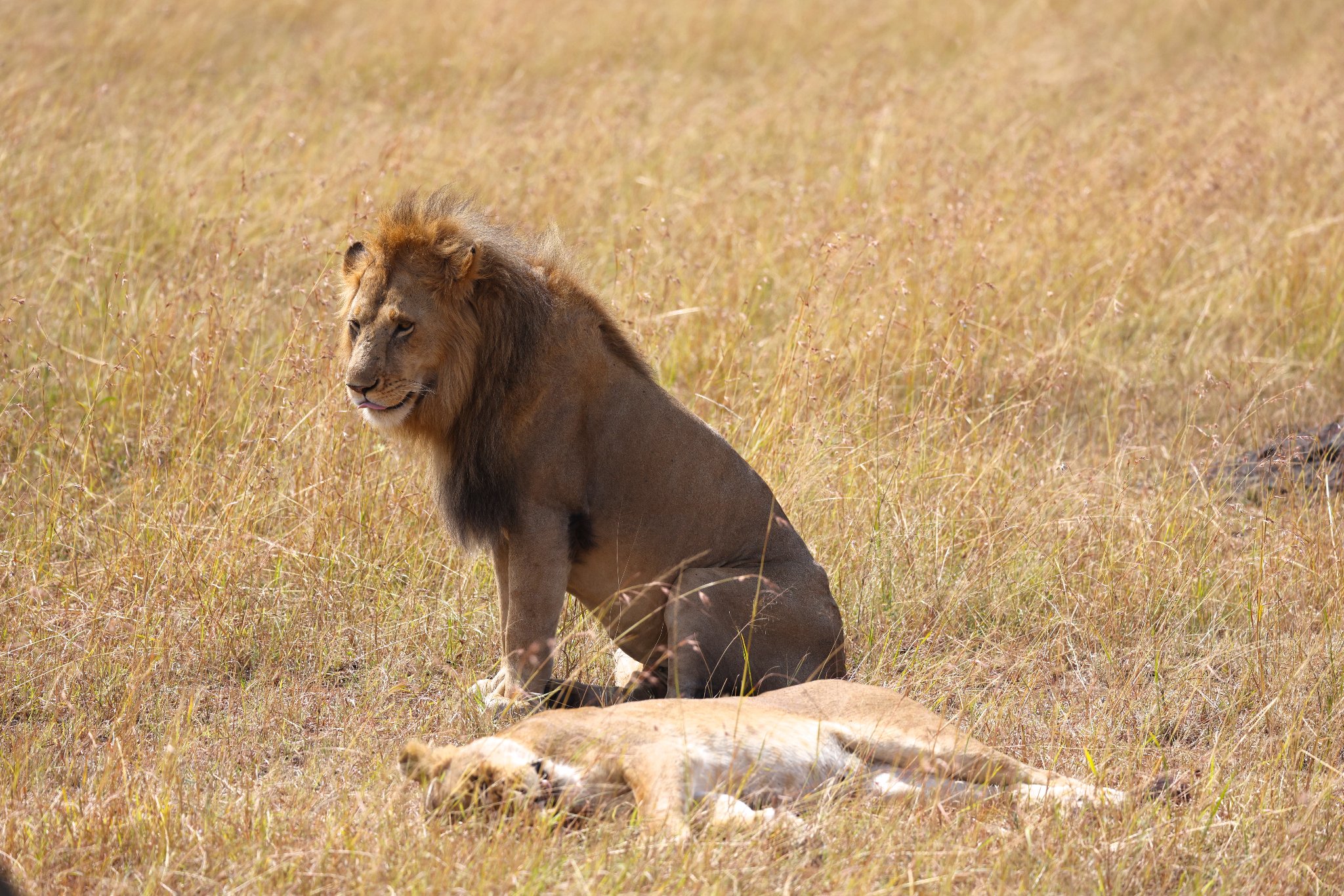
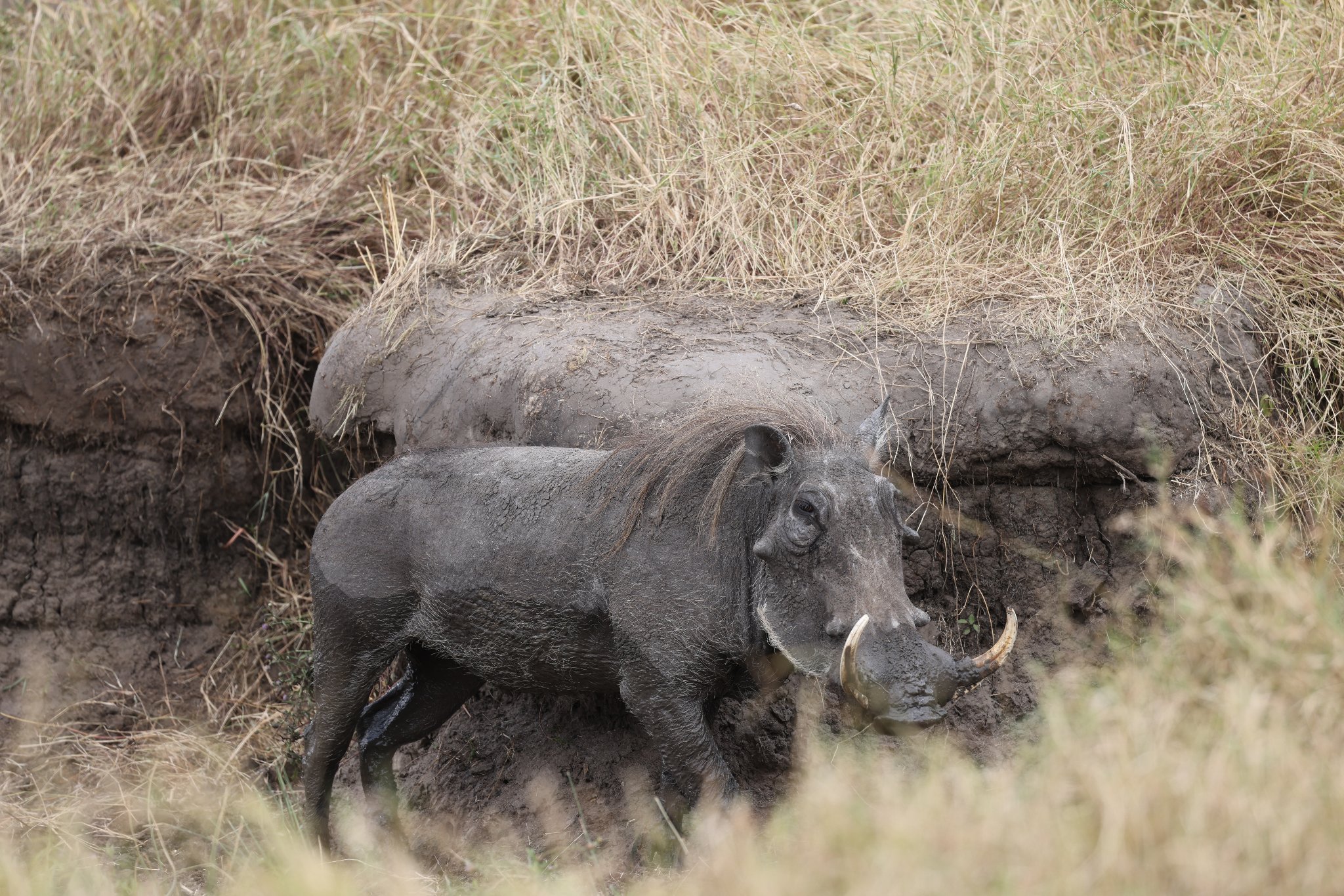
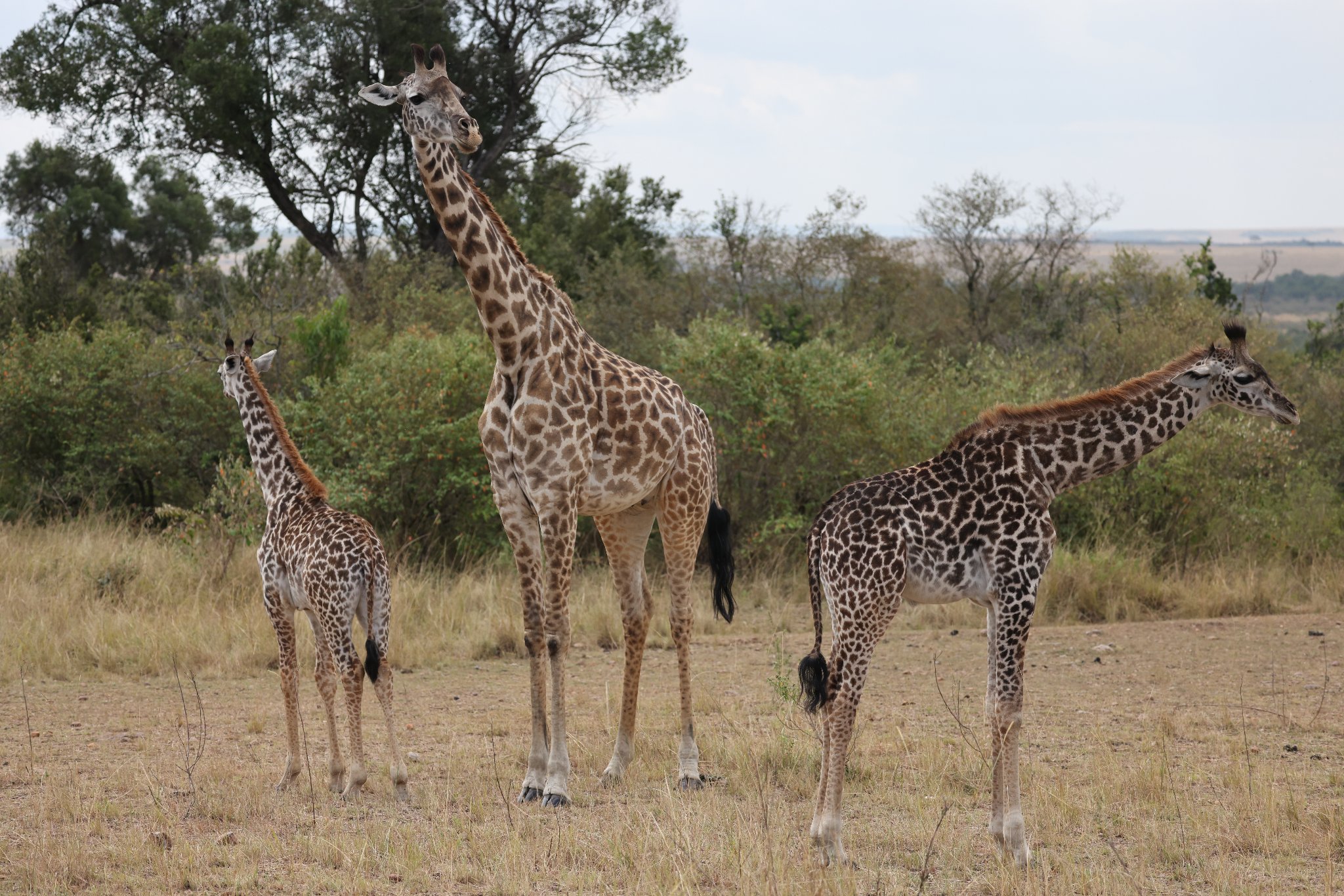
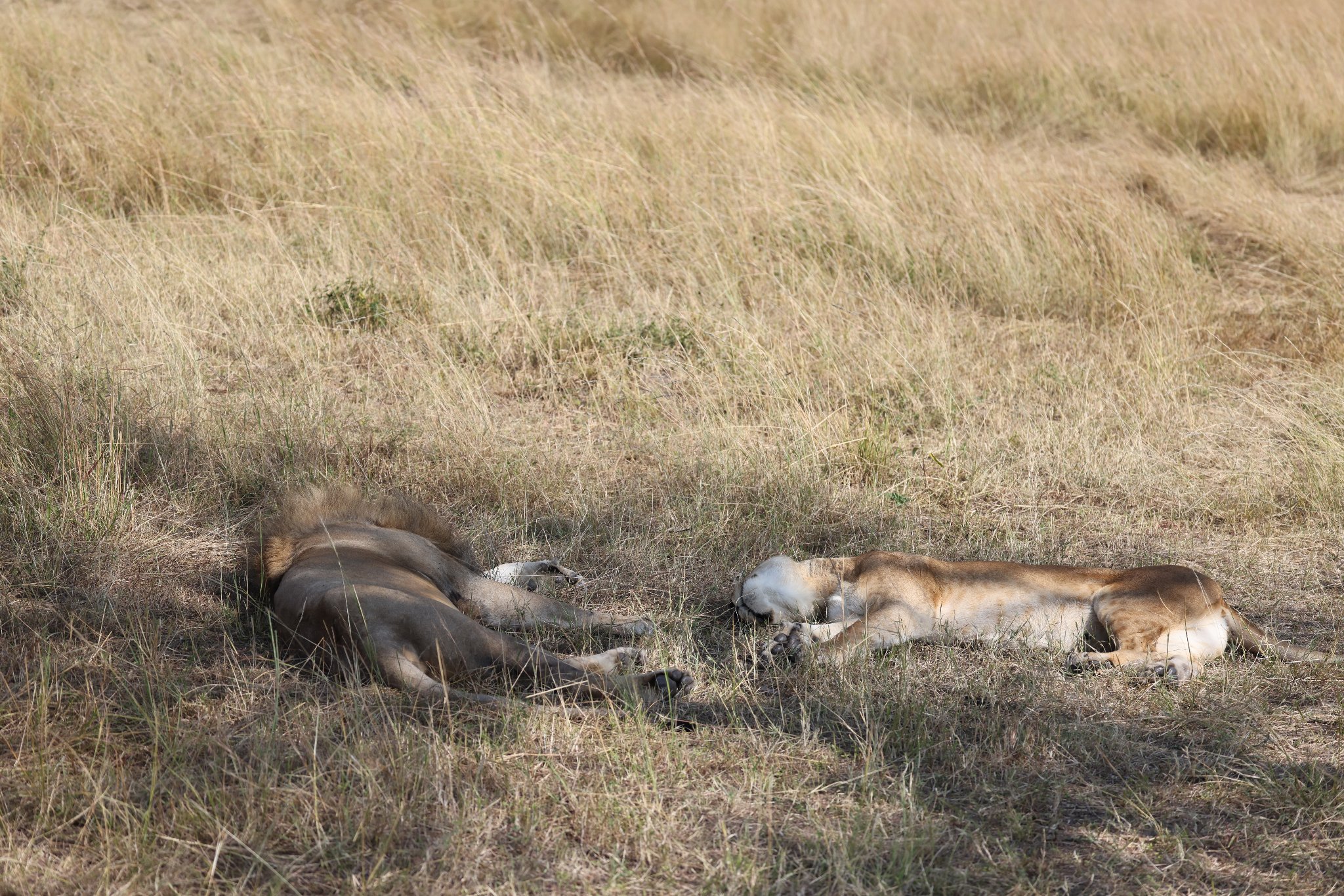
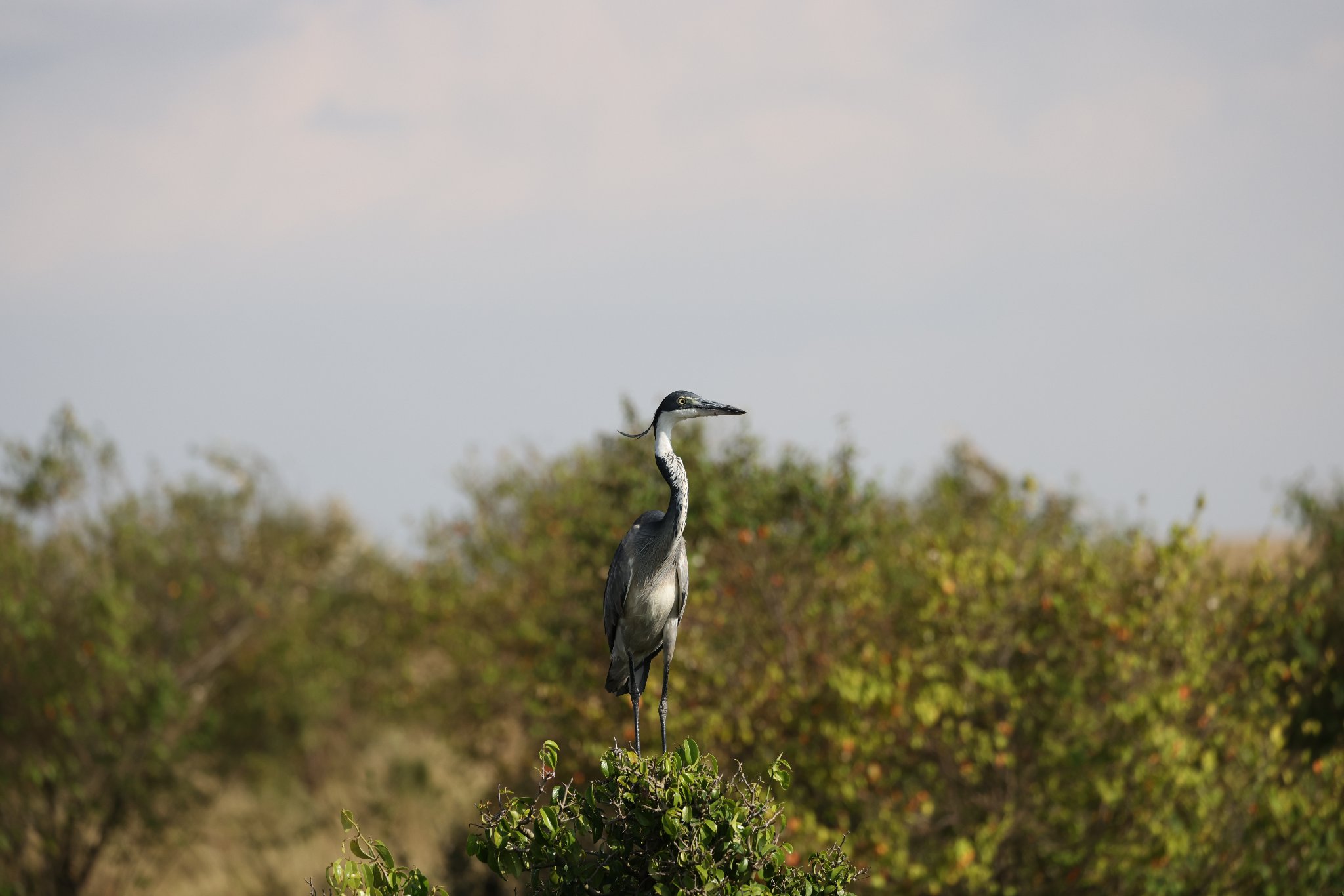
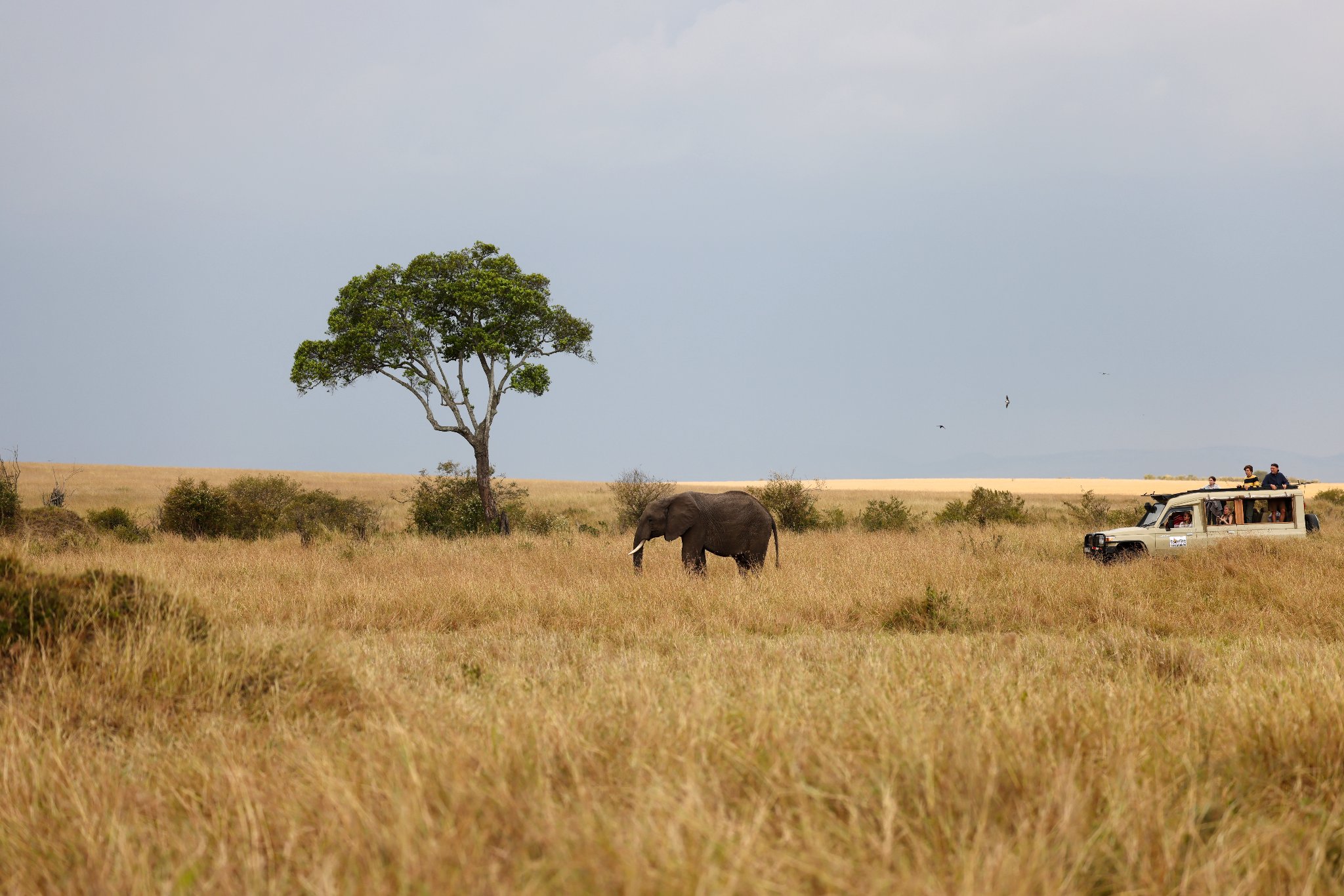
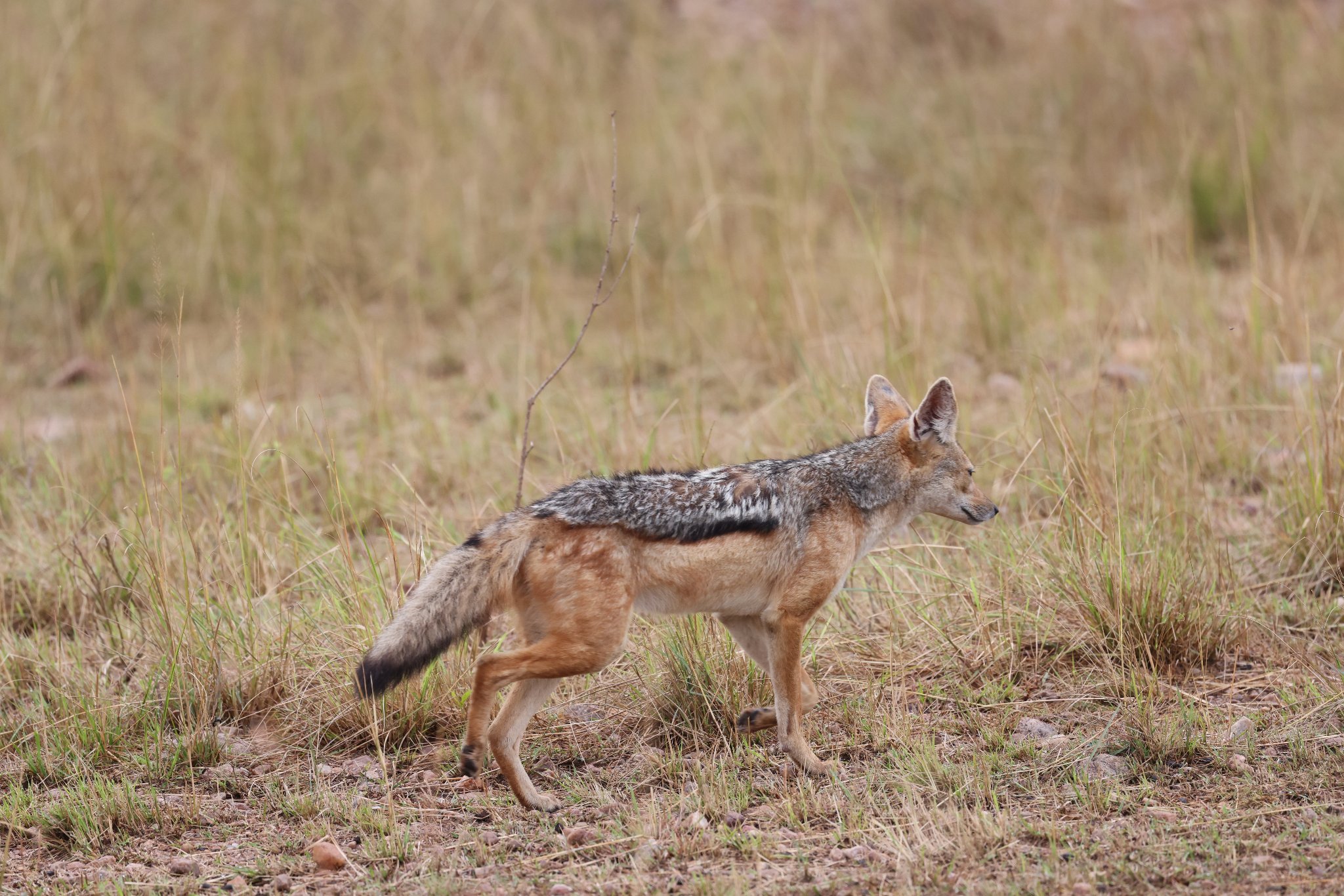
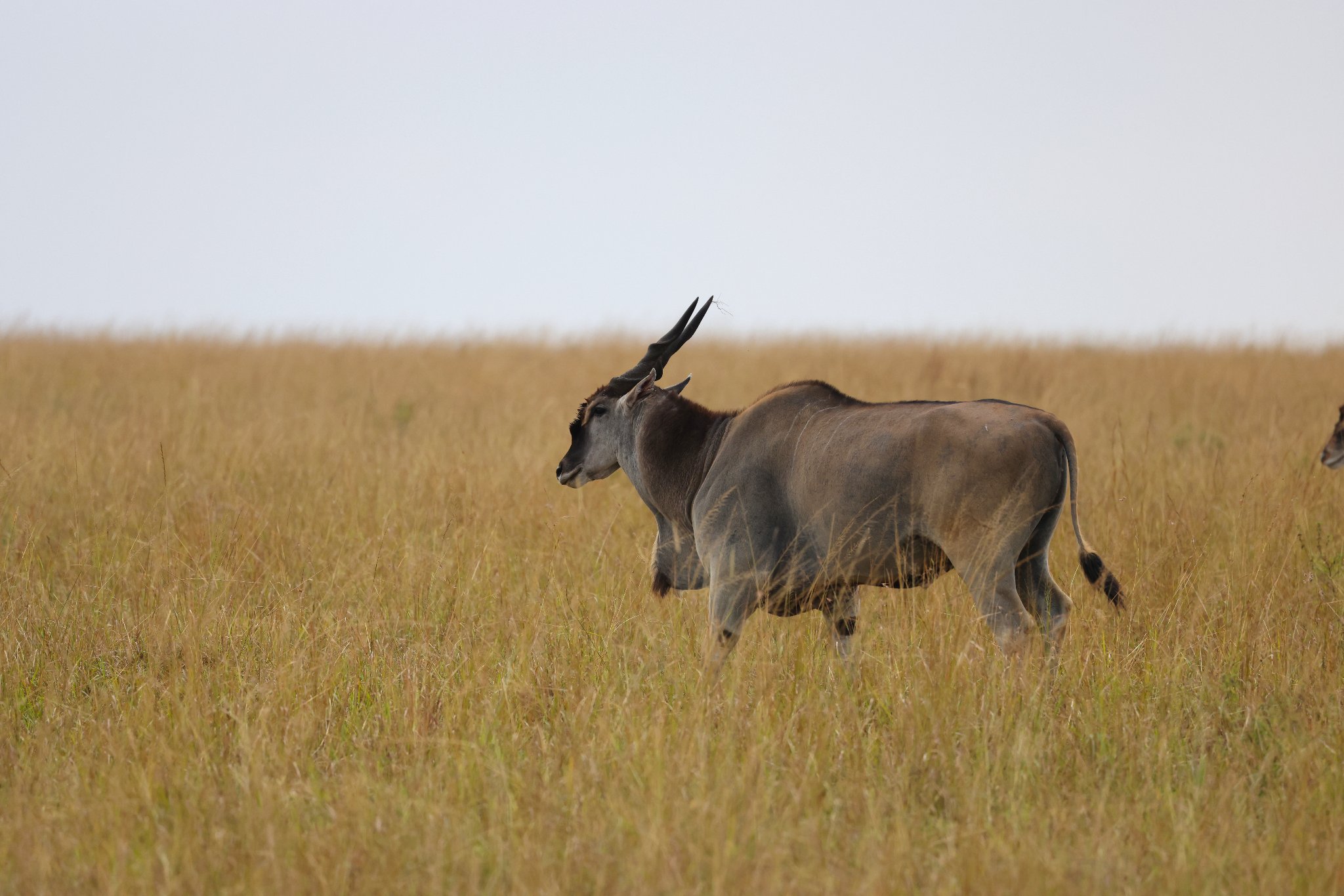
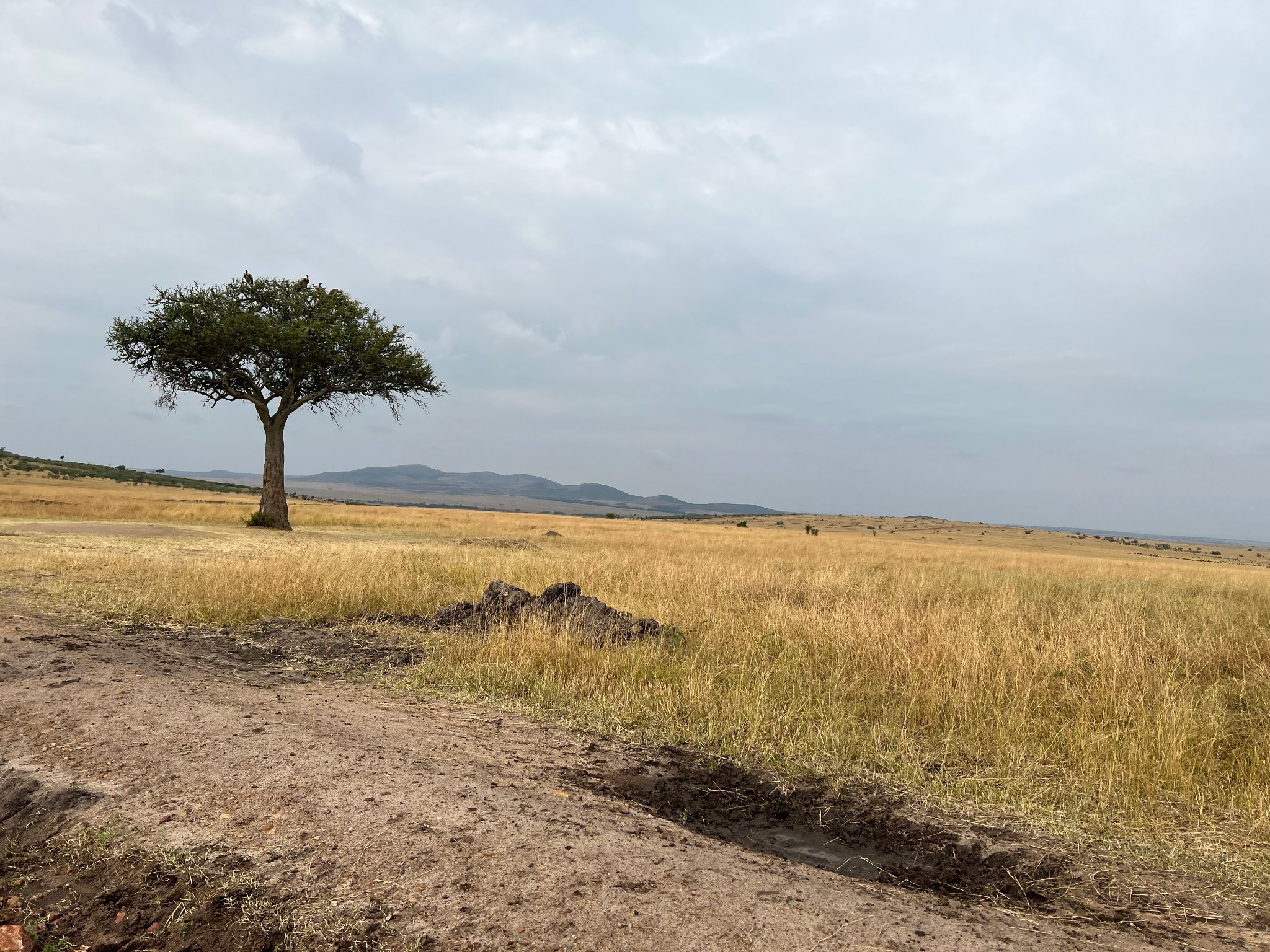
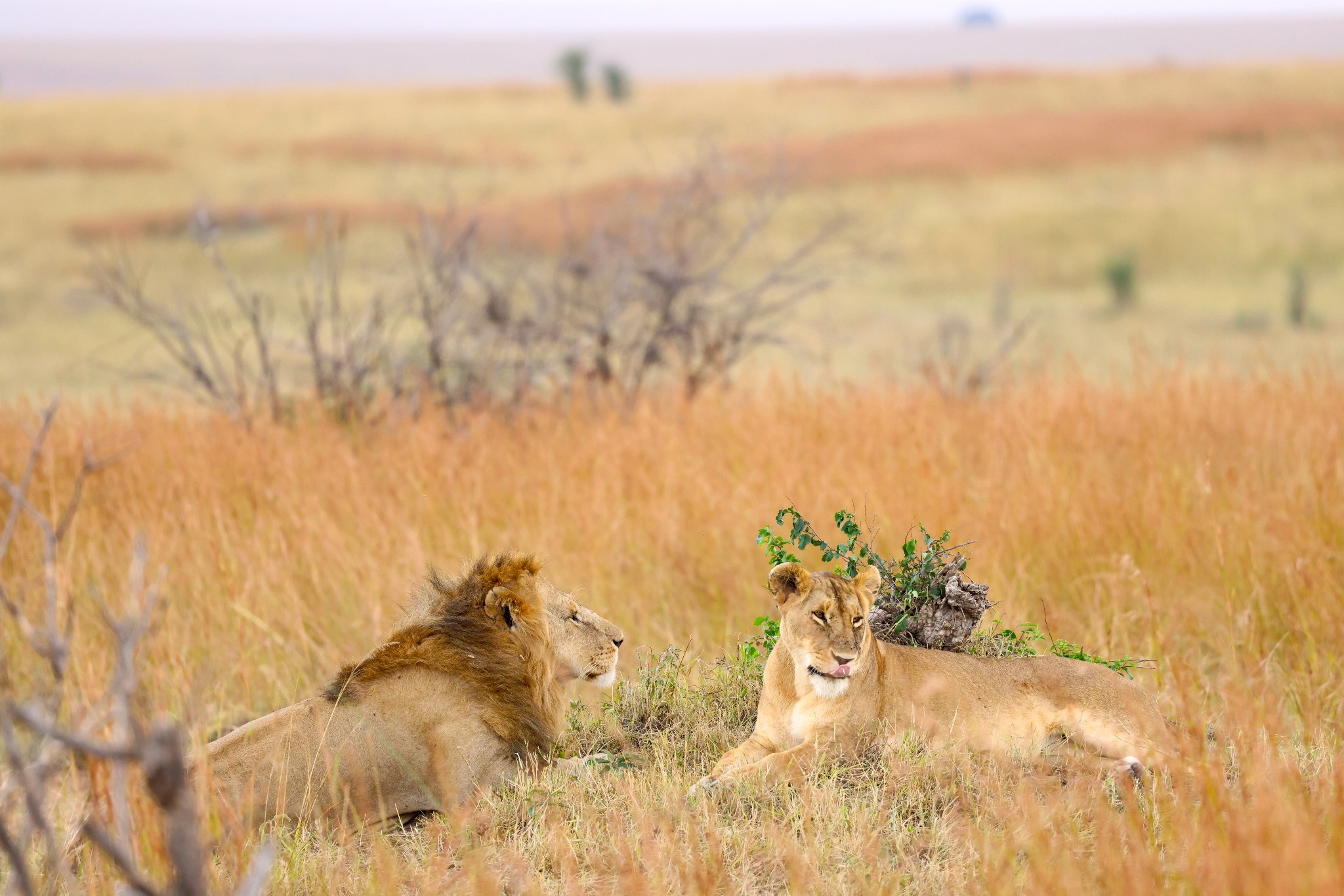
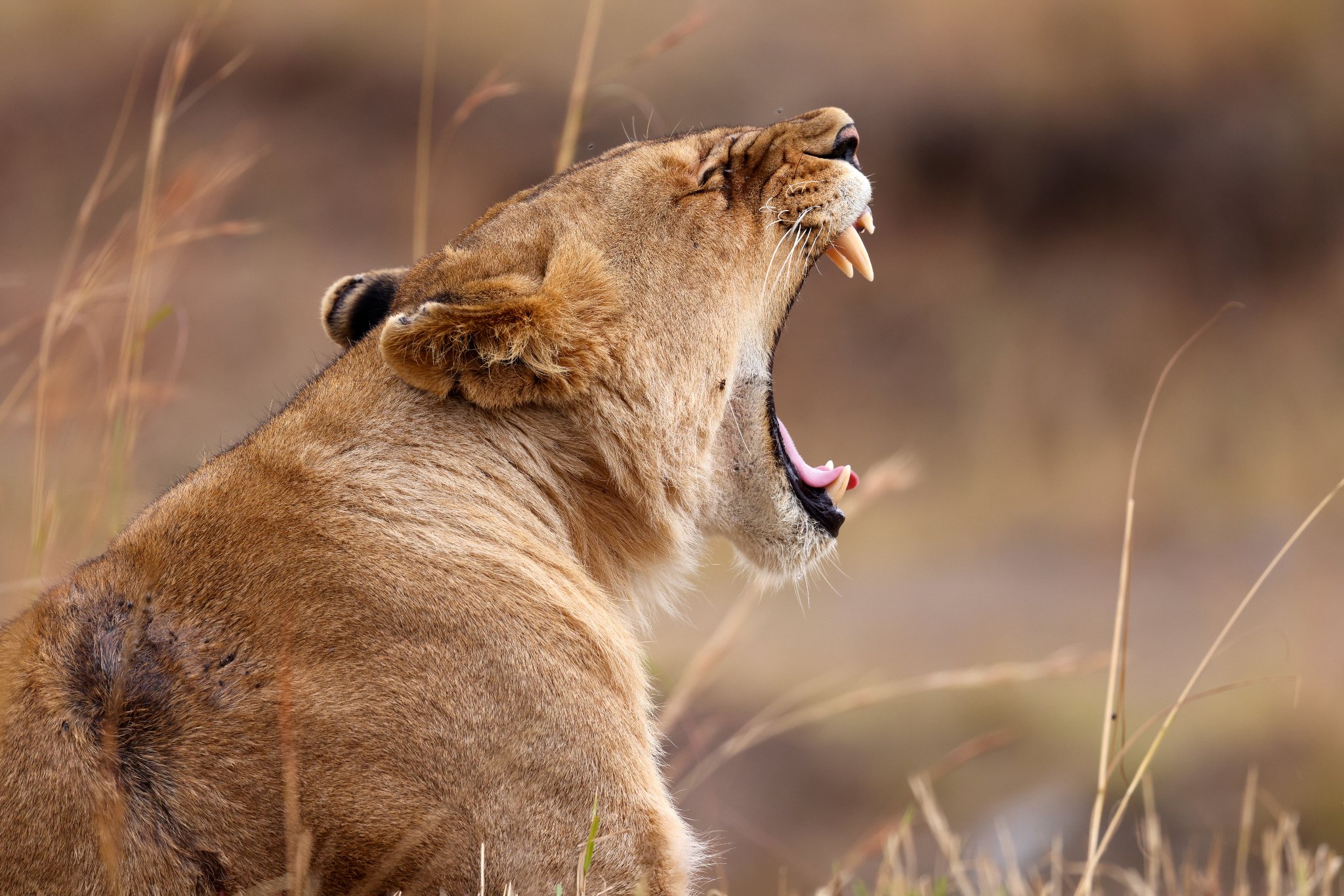
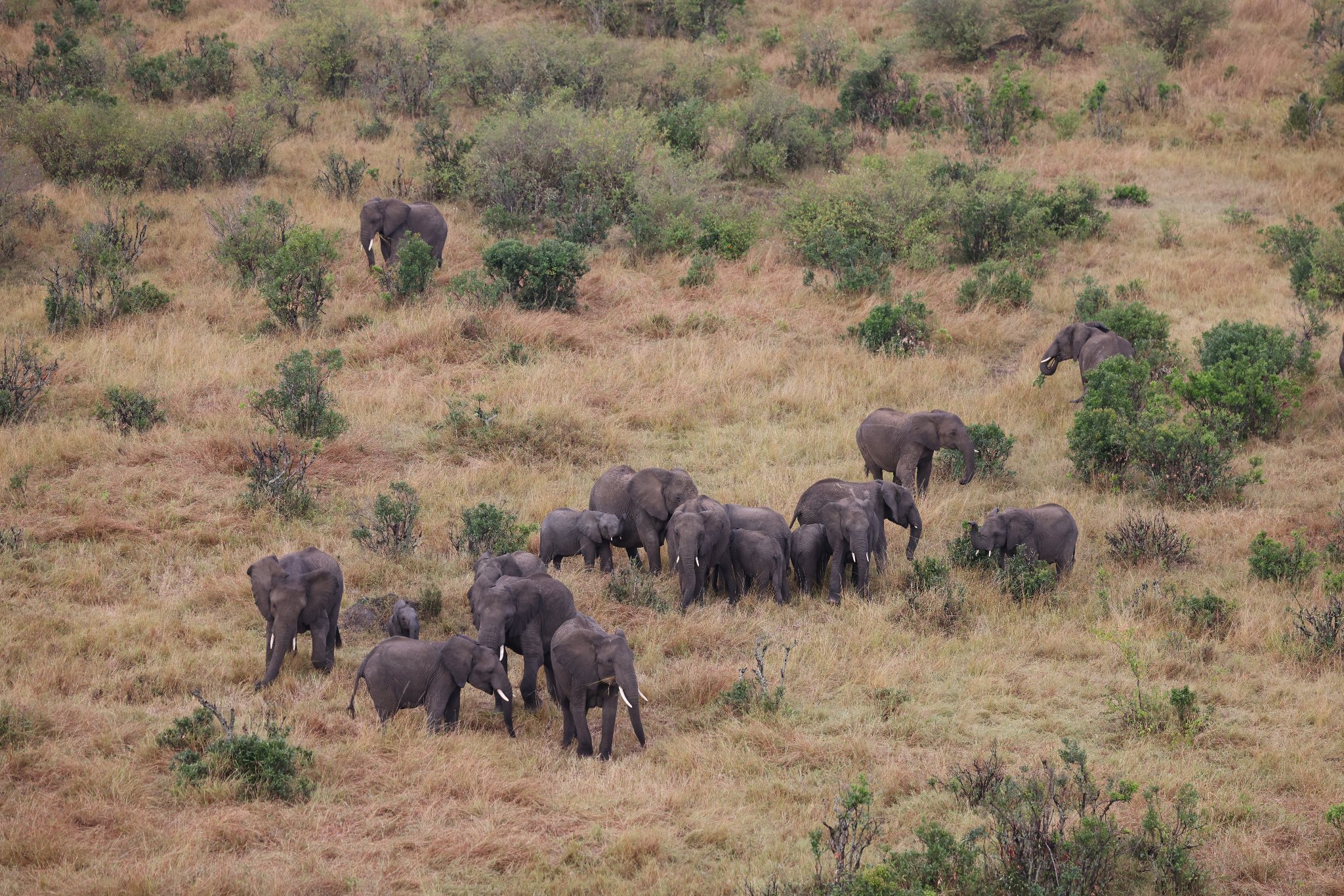
Our excitement began the moment we entered the reserve. Within minutes, wildlife seemed to appear in every direction. Lions rested beneath the shade of acacia trees while elephants wandered calmly across the open plains. Large herds of topi, impala, hartebeest, and Thomson’s gazelles grazed together, and giraffes moved gracefully across the savannah against the endless African sky. In the distance, hyenas circled the remains of a fresh kill, a reminder that life and survival unfold continuously in this remarkable ecosystem.
The Maasai Mara is home to an astonishing diversity of wildlife, with more than 95 species of mammals and over 500 species of birds recorded in the reserve. Every game drive offered something new, but that very first drive was enough to convince us that this place truly deserves its legendary reputation. Everywhere we looked, there was another unforgettable wildlife encounter waiting just around the corner.
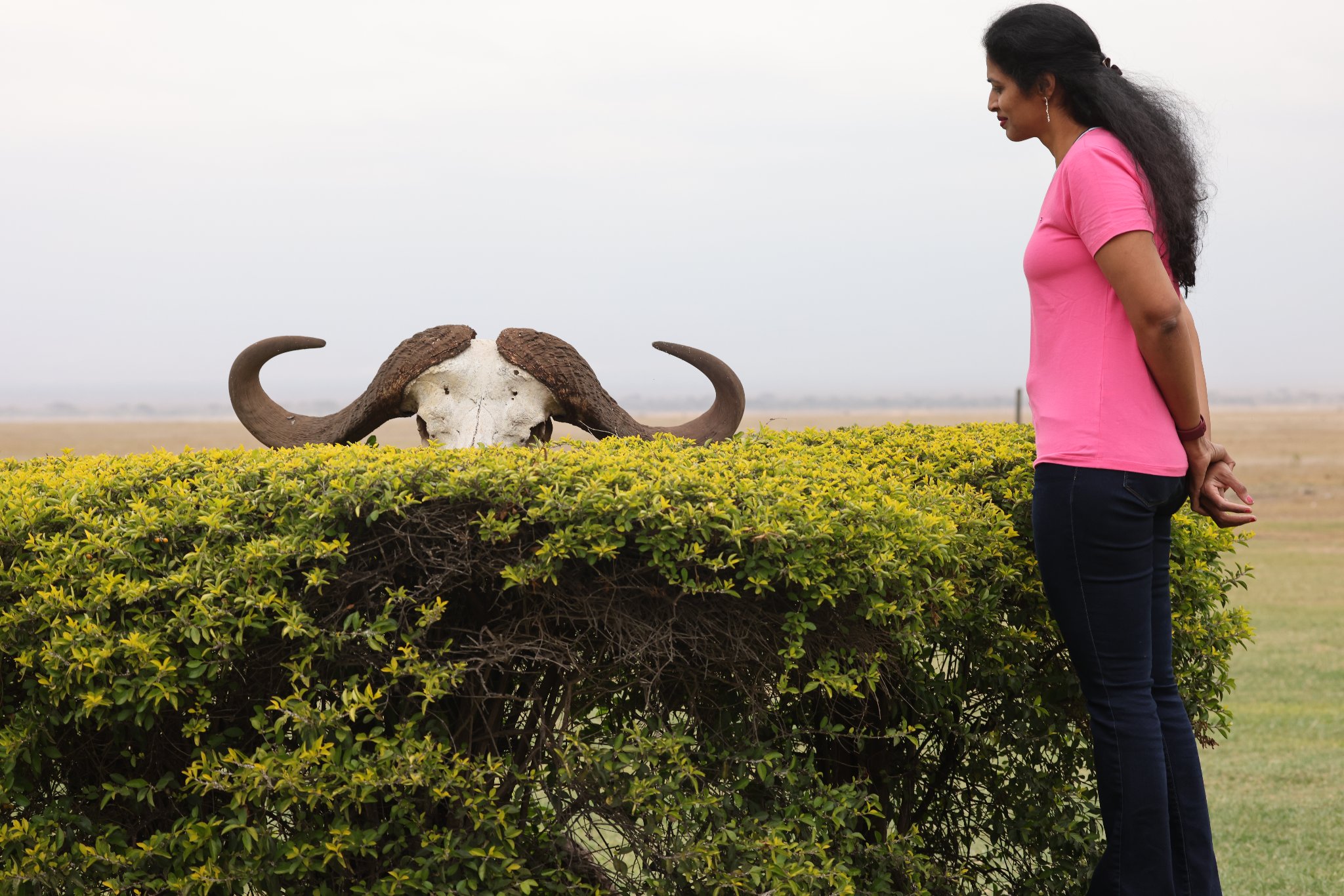
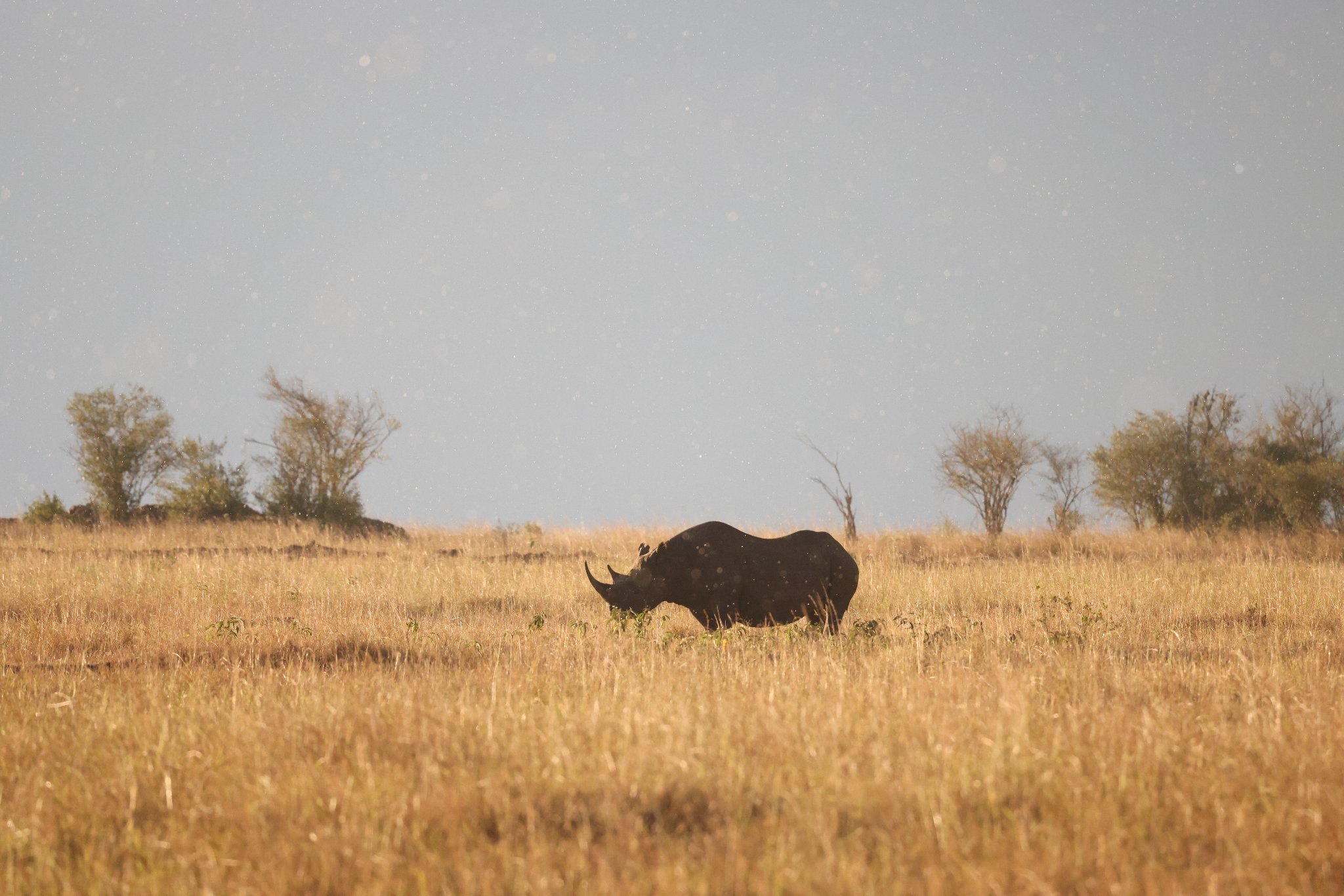
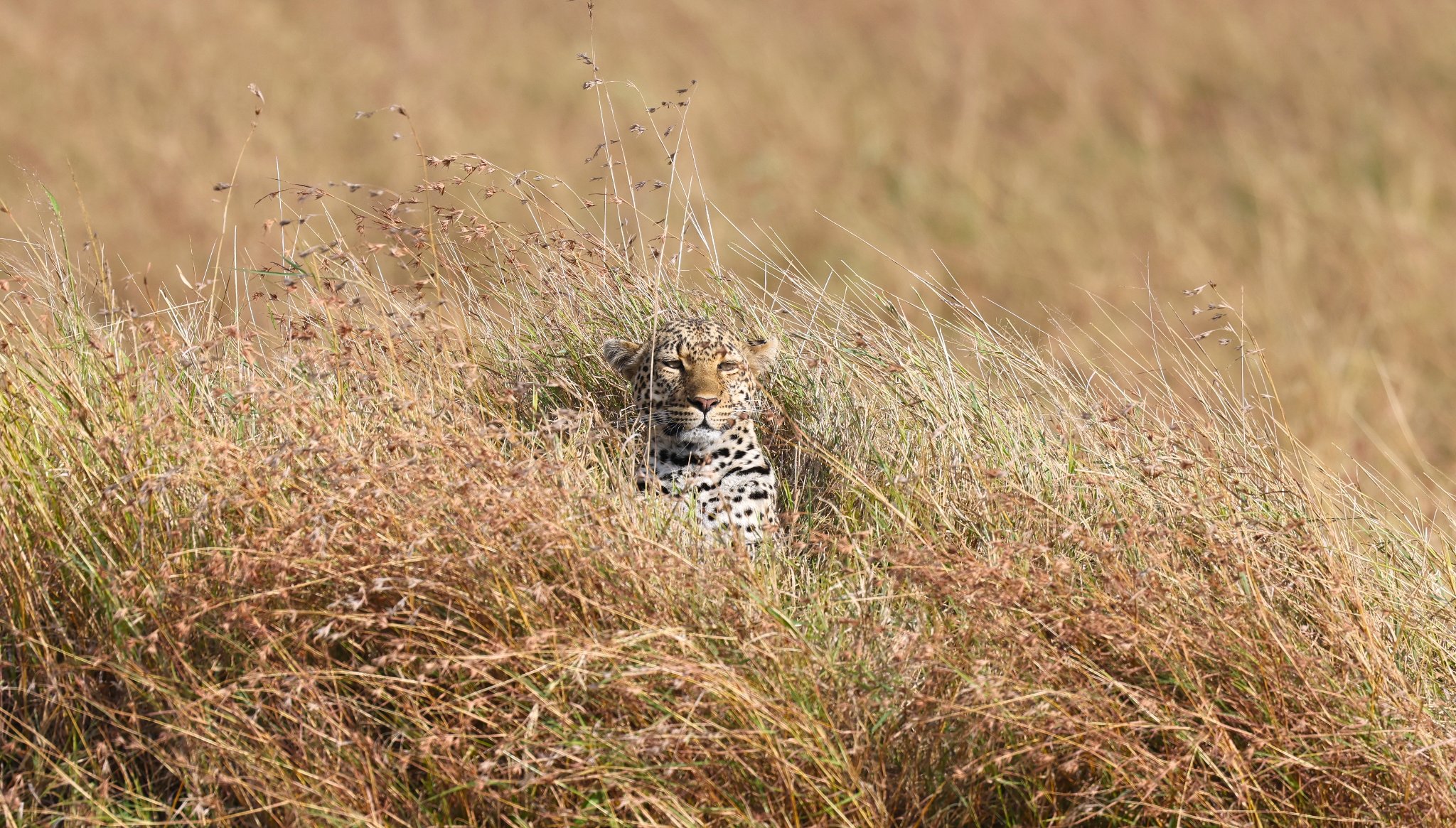
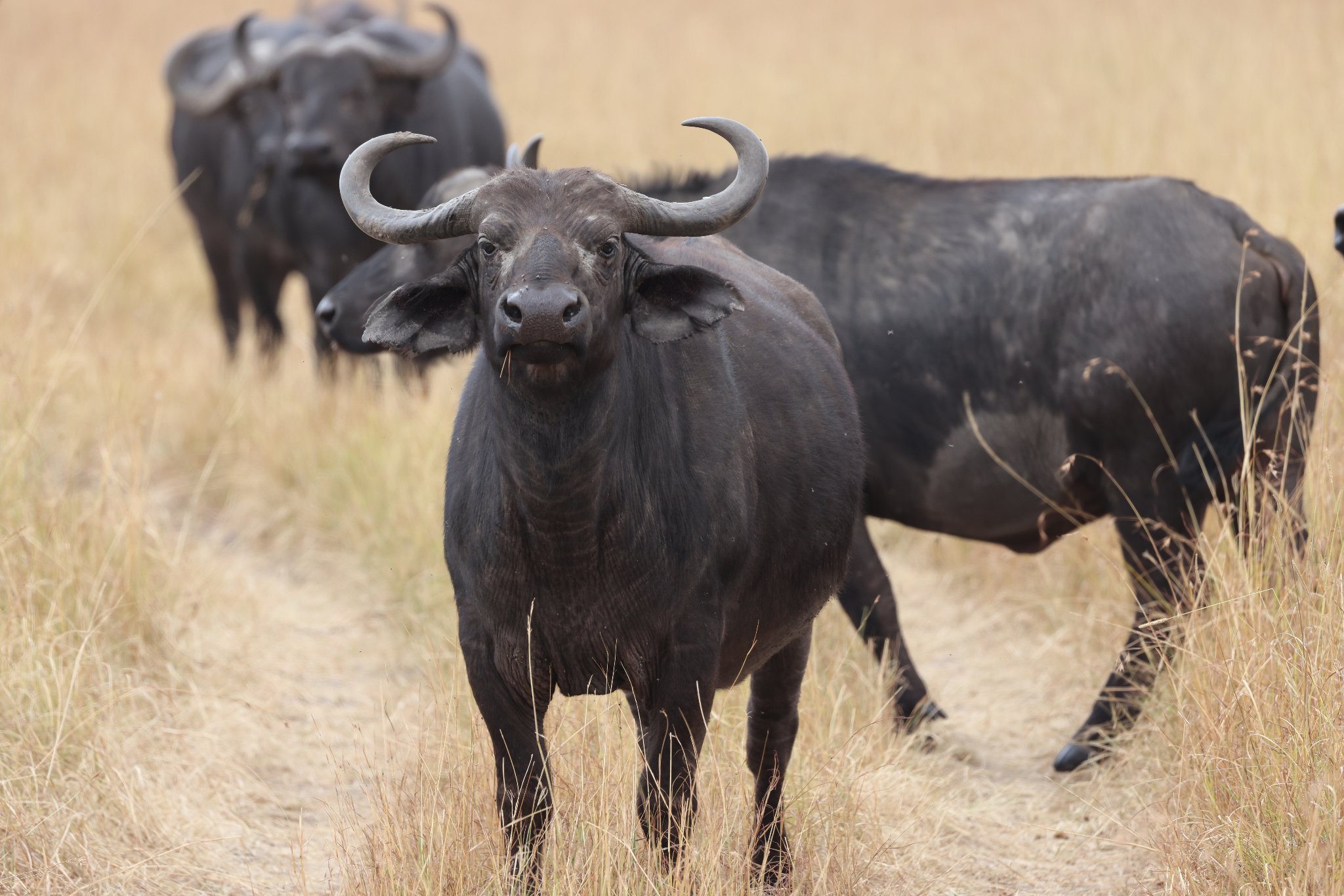
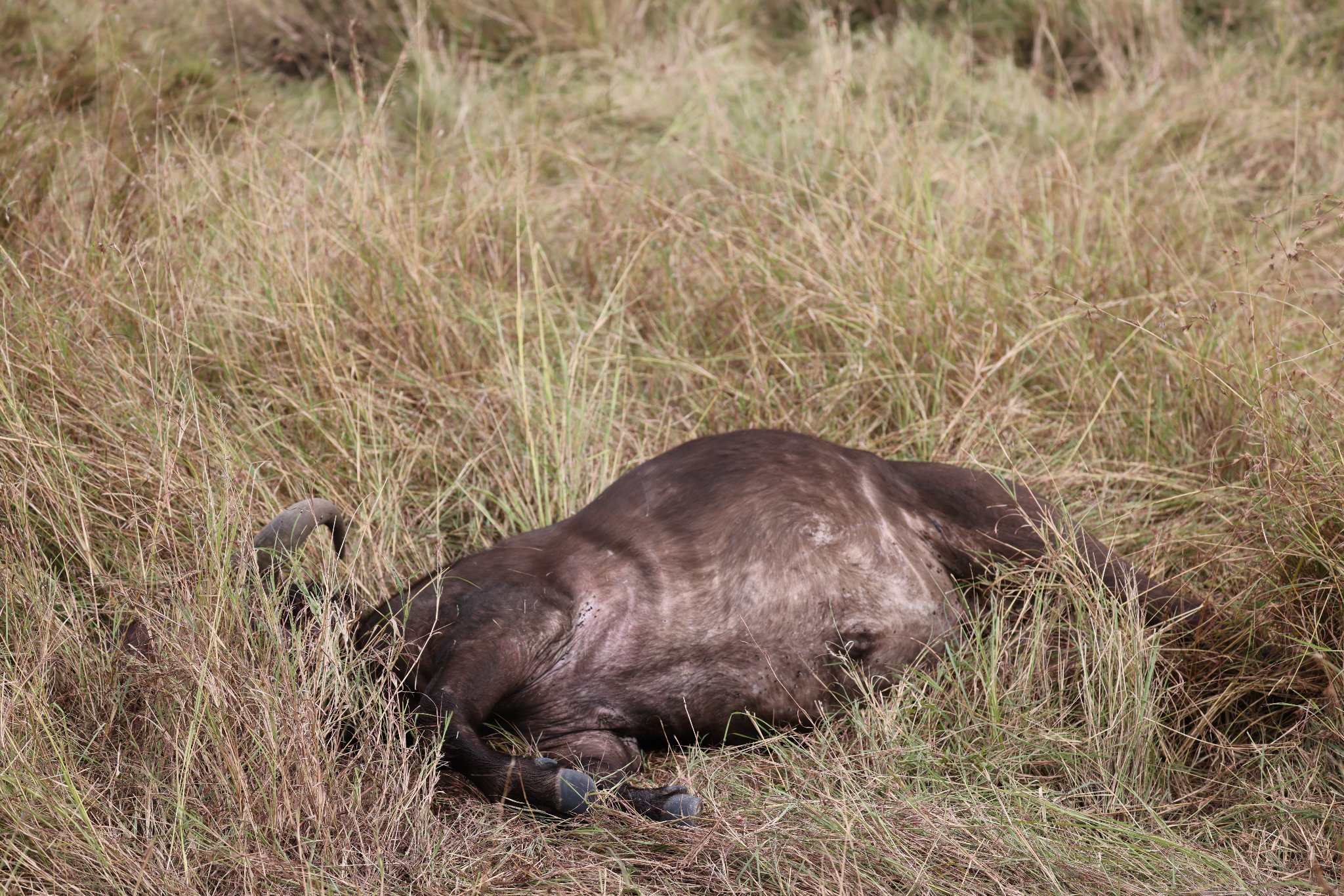
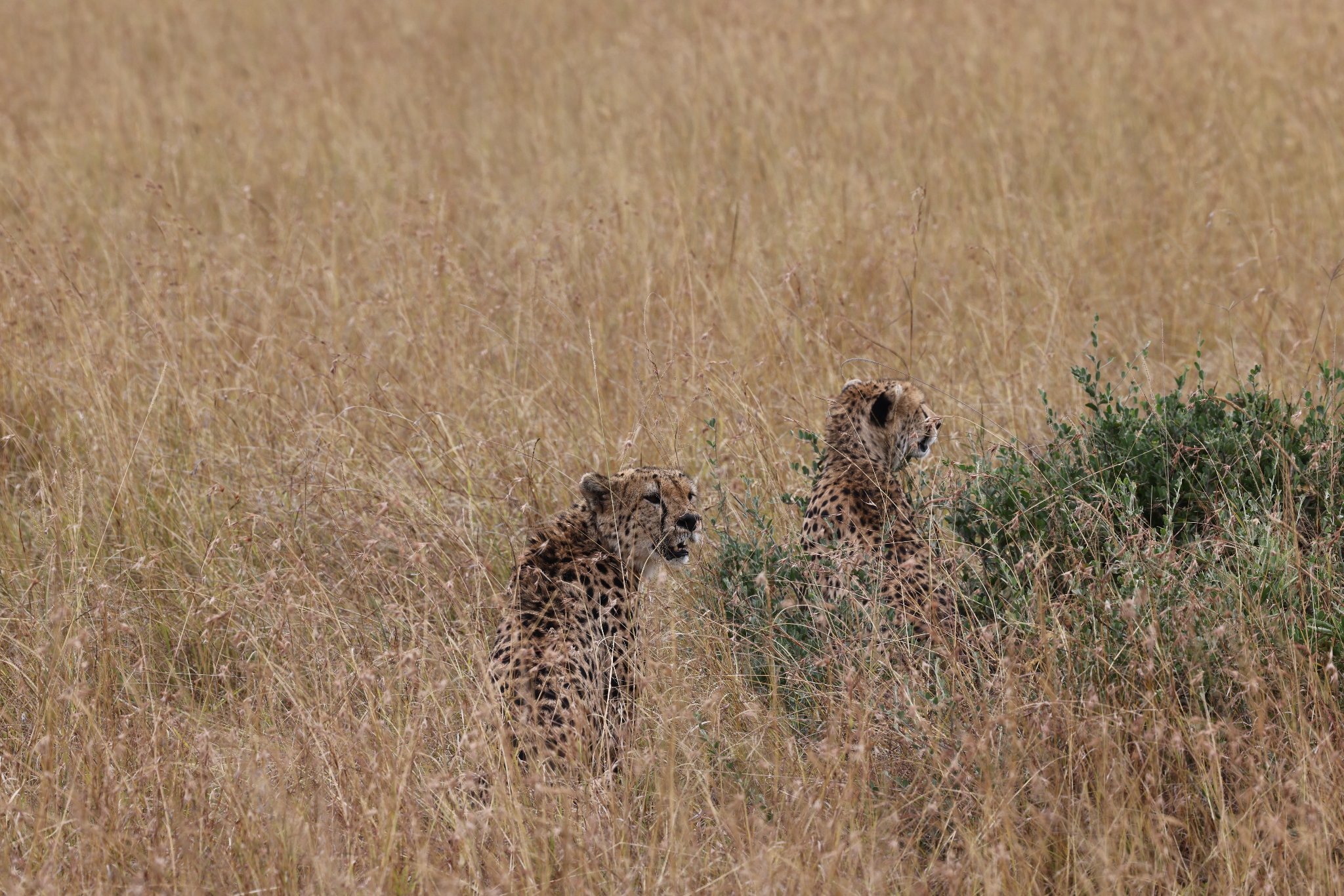
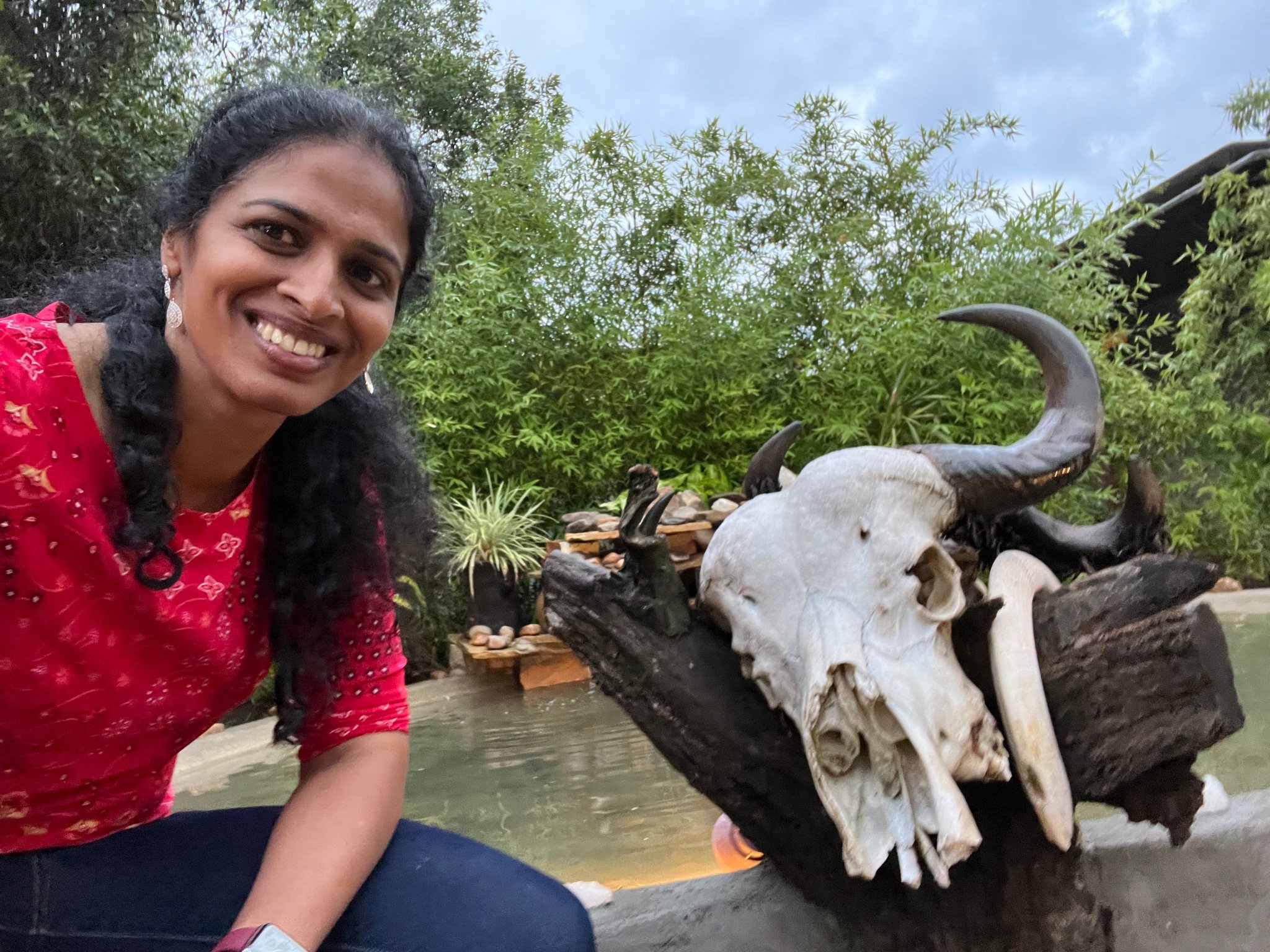
Big five: Lion, Cheetah, Rhino, Elephant, and Buffalo
Mara River – Migration Crossing
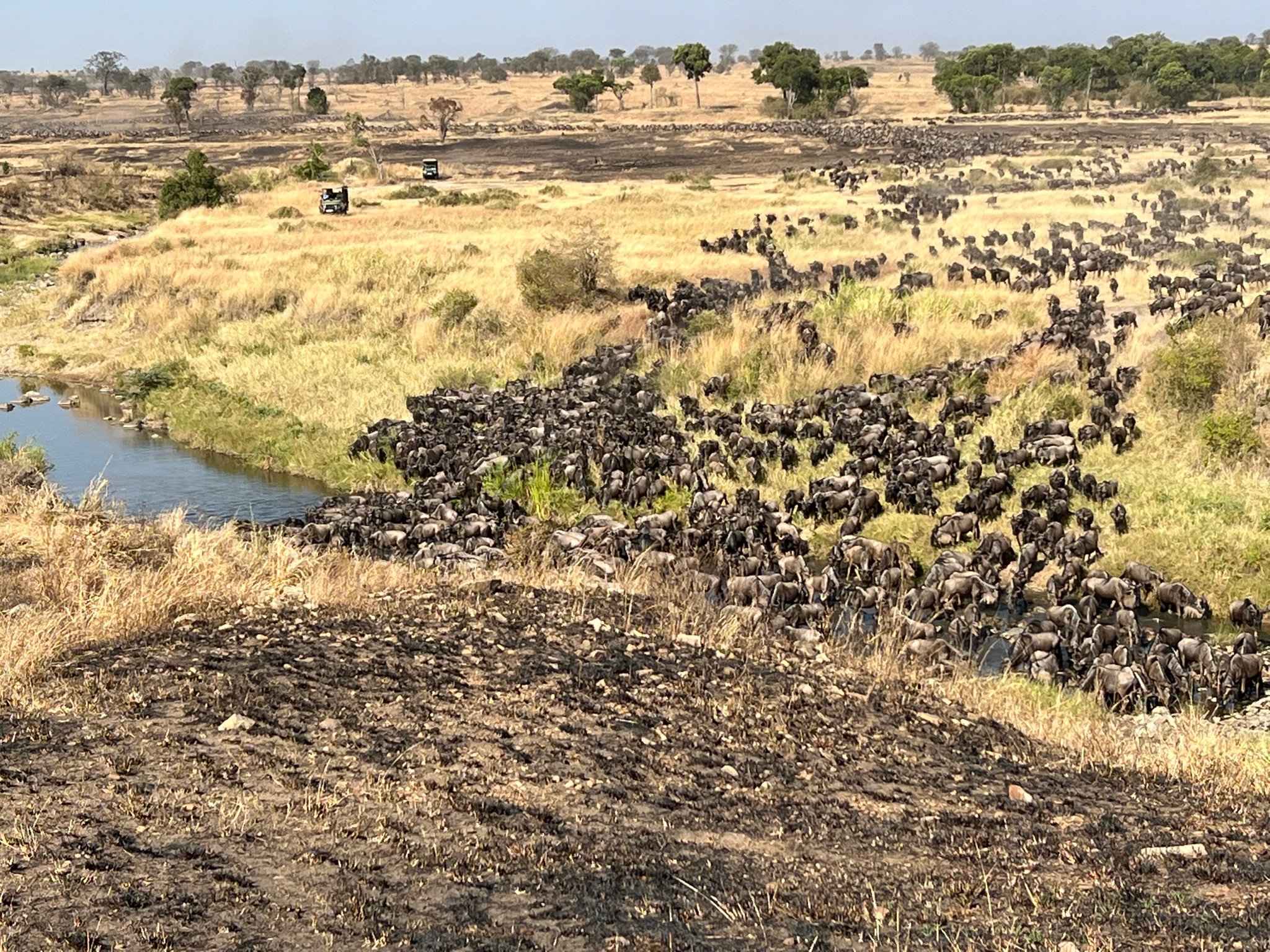
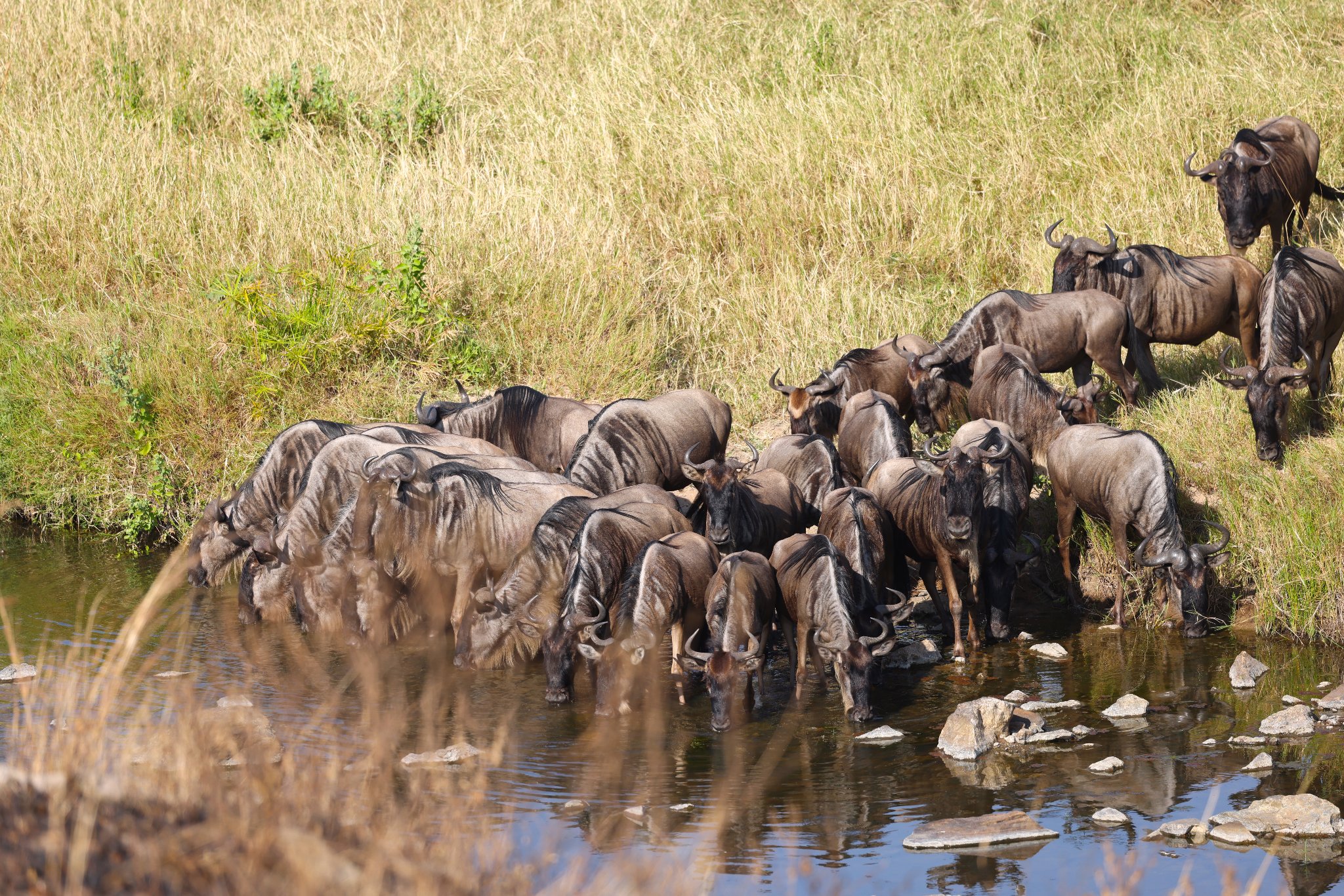
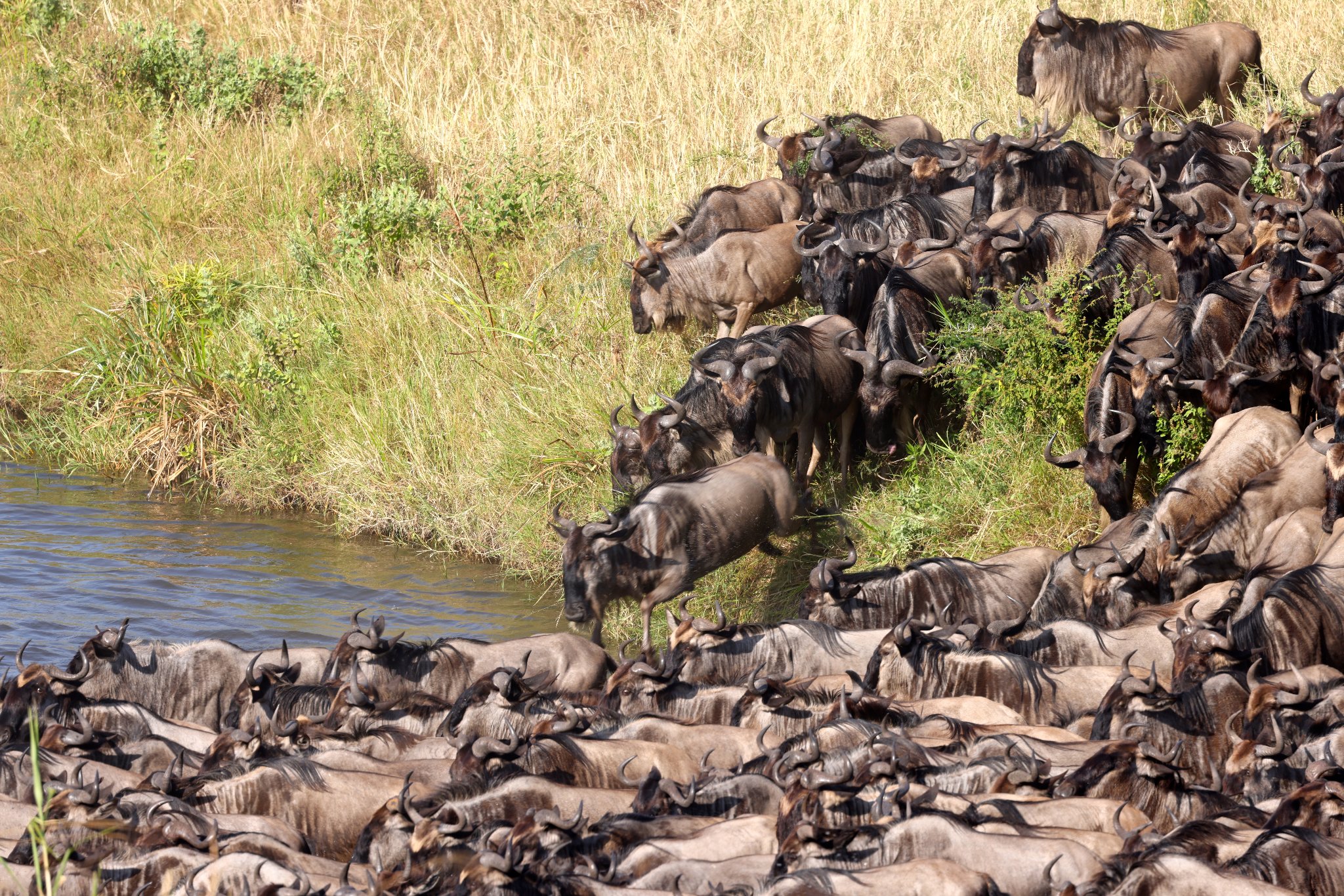
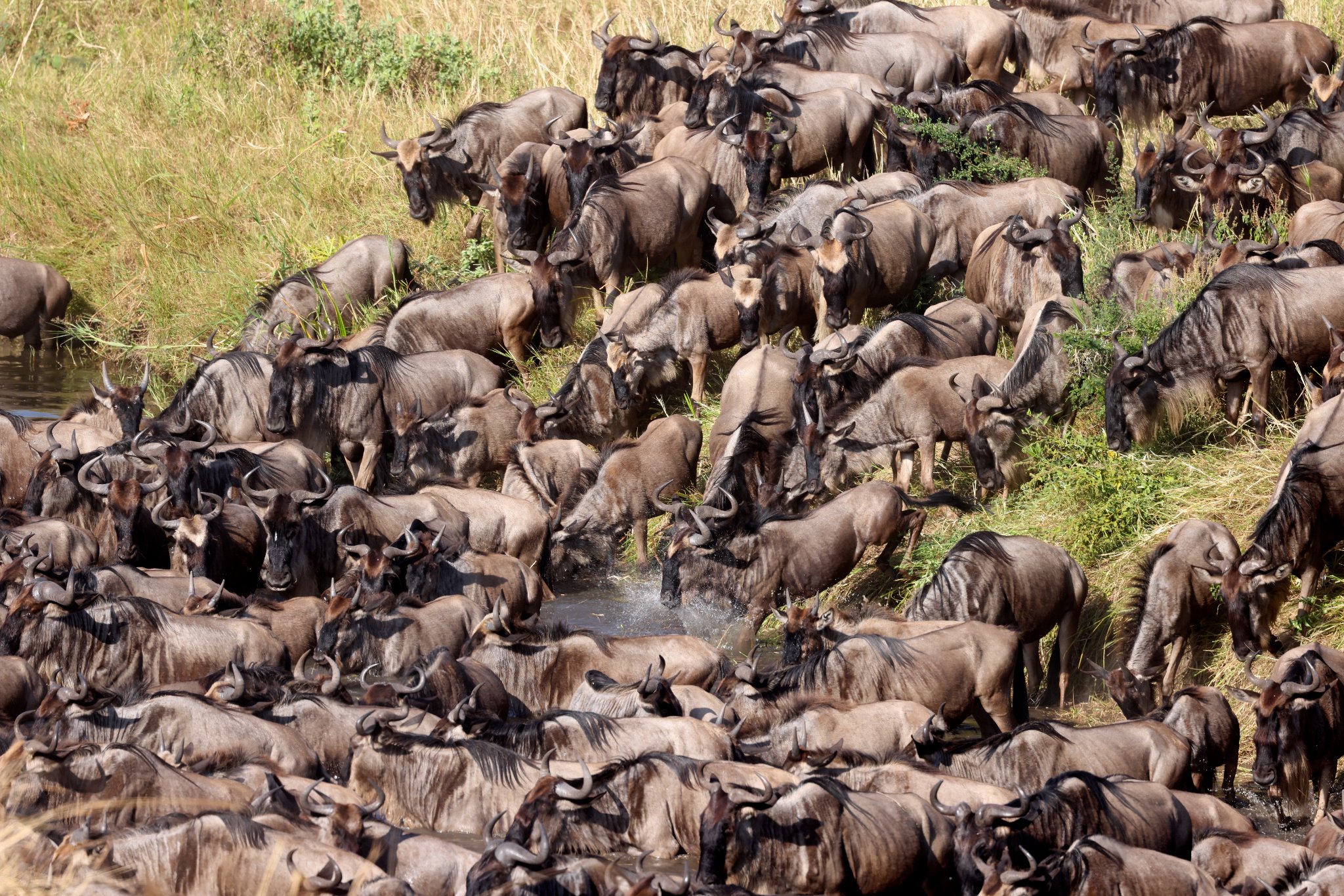
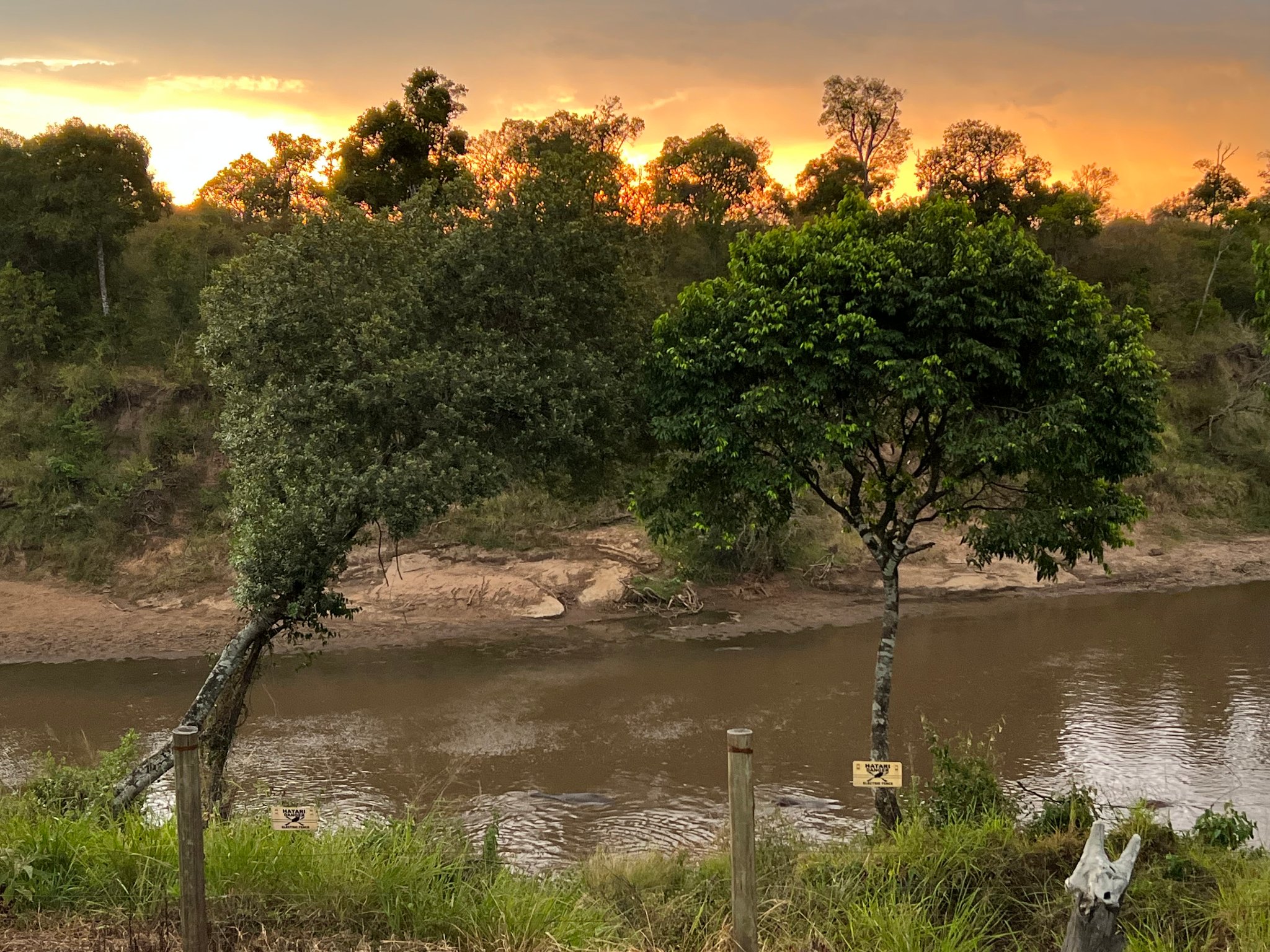
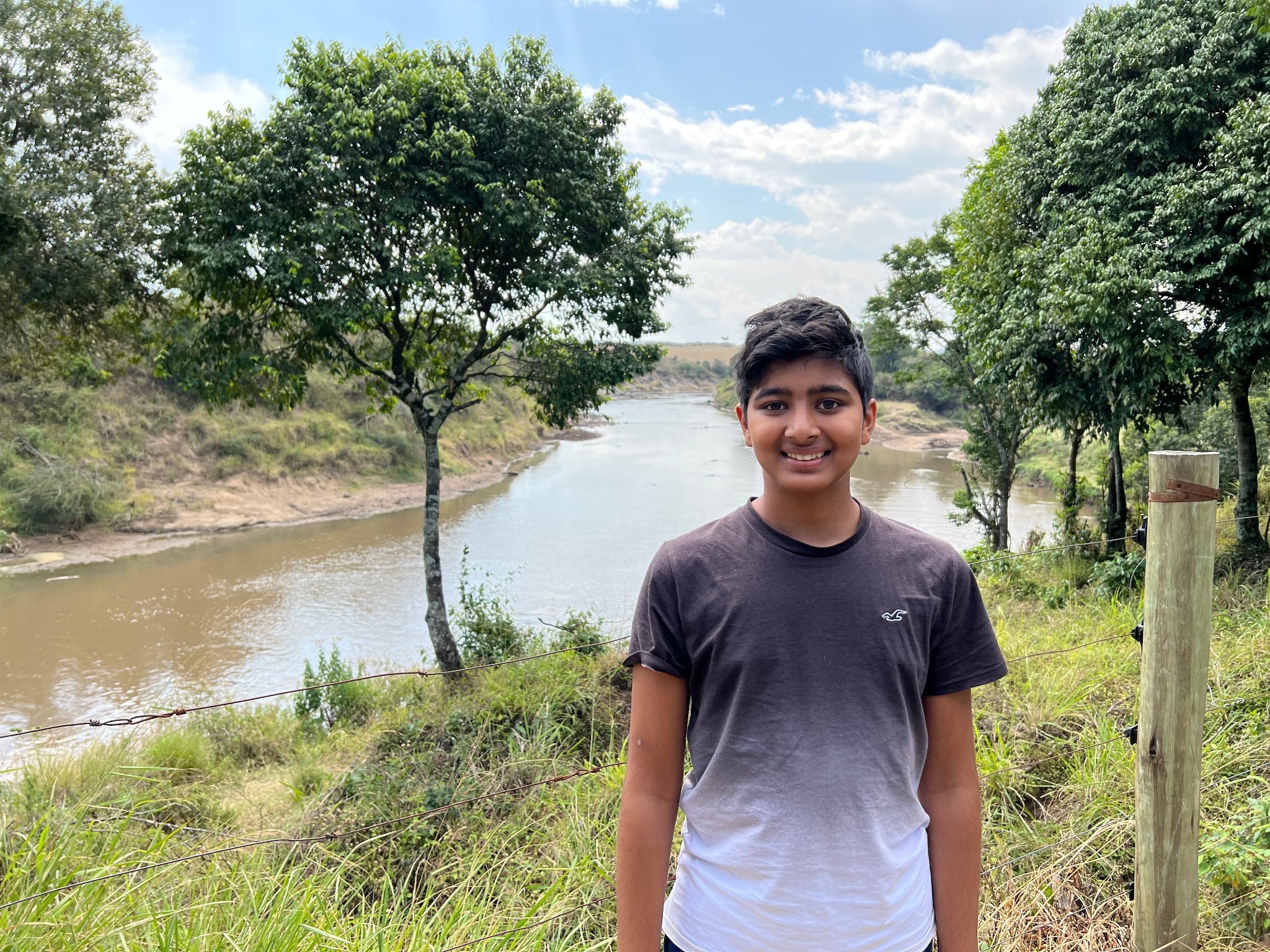
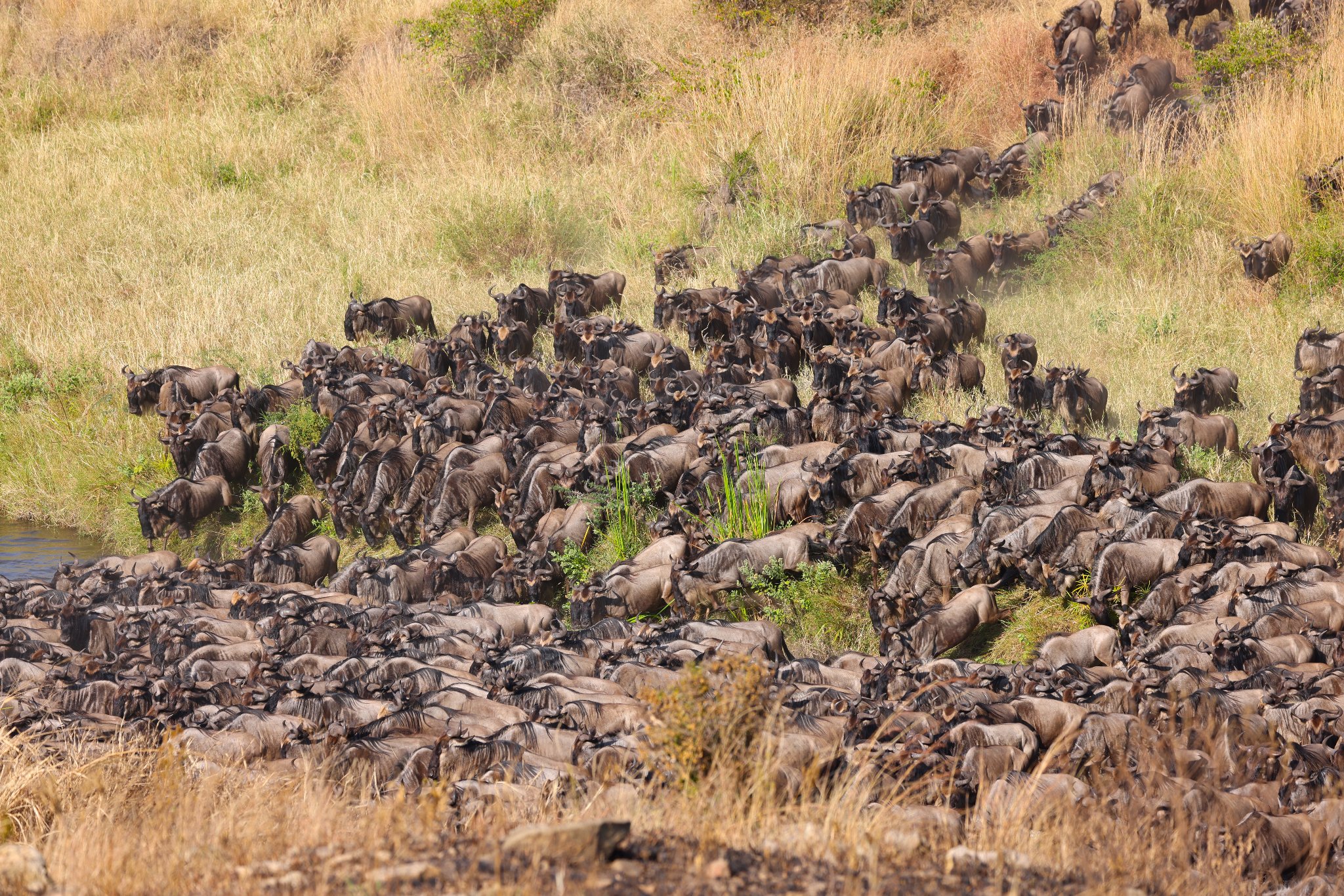
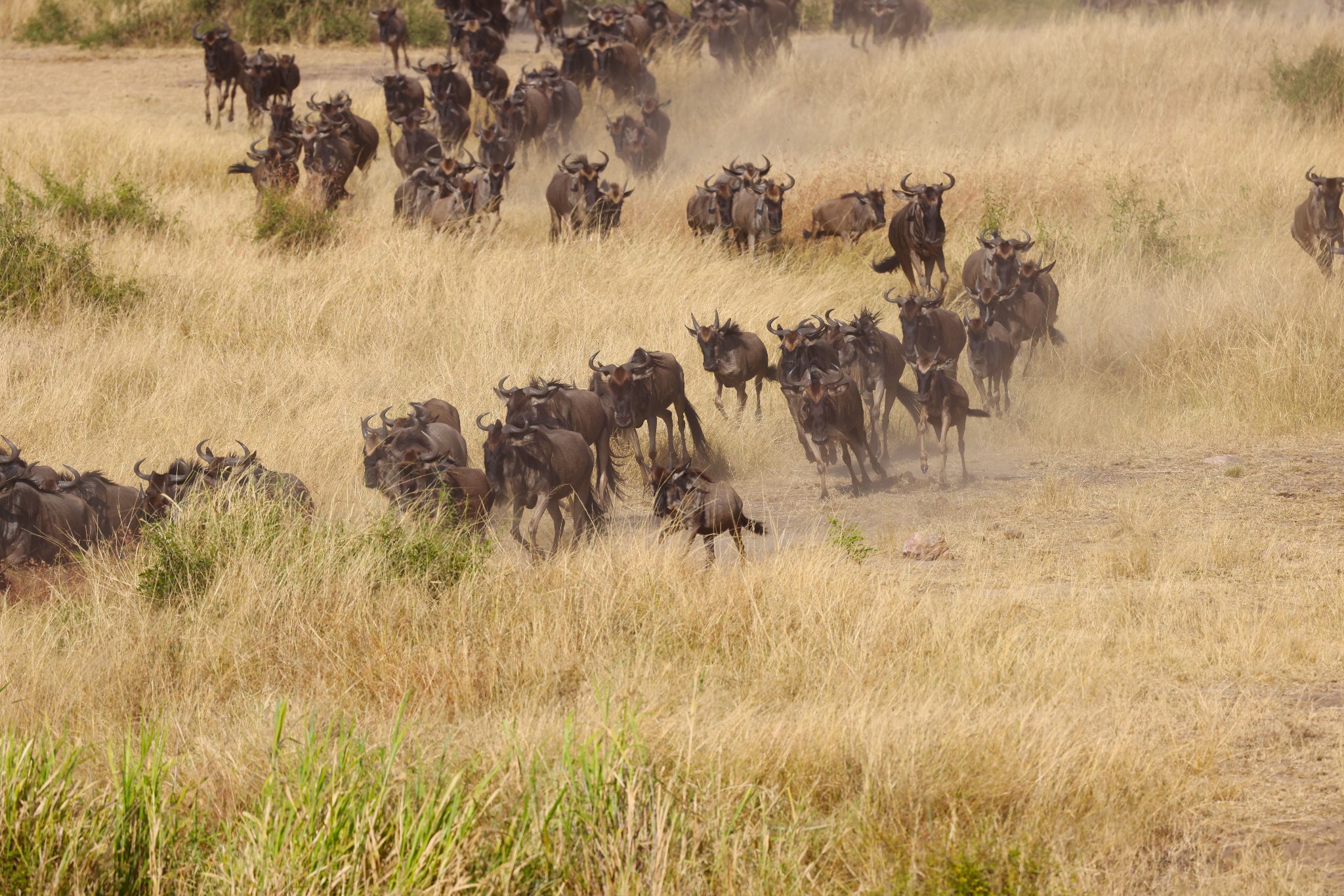
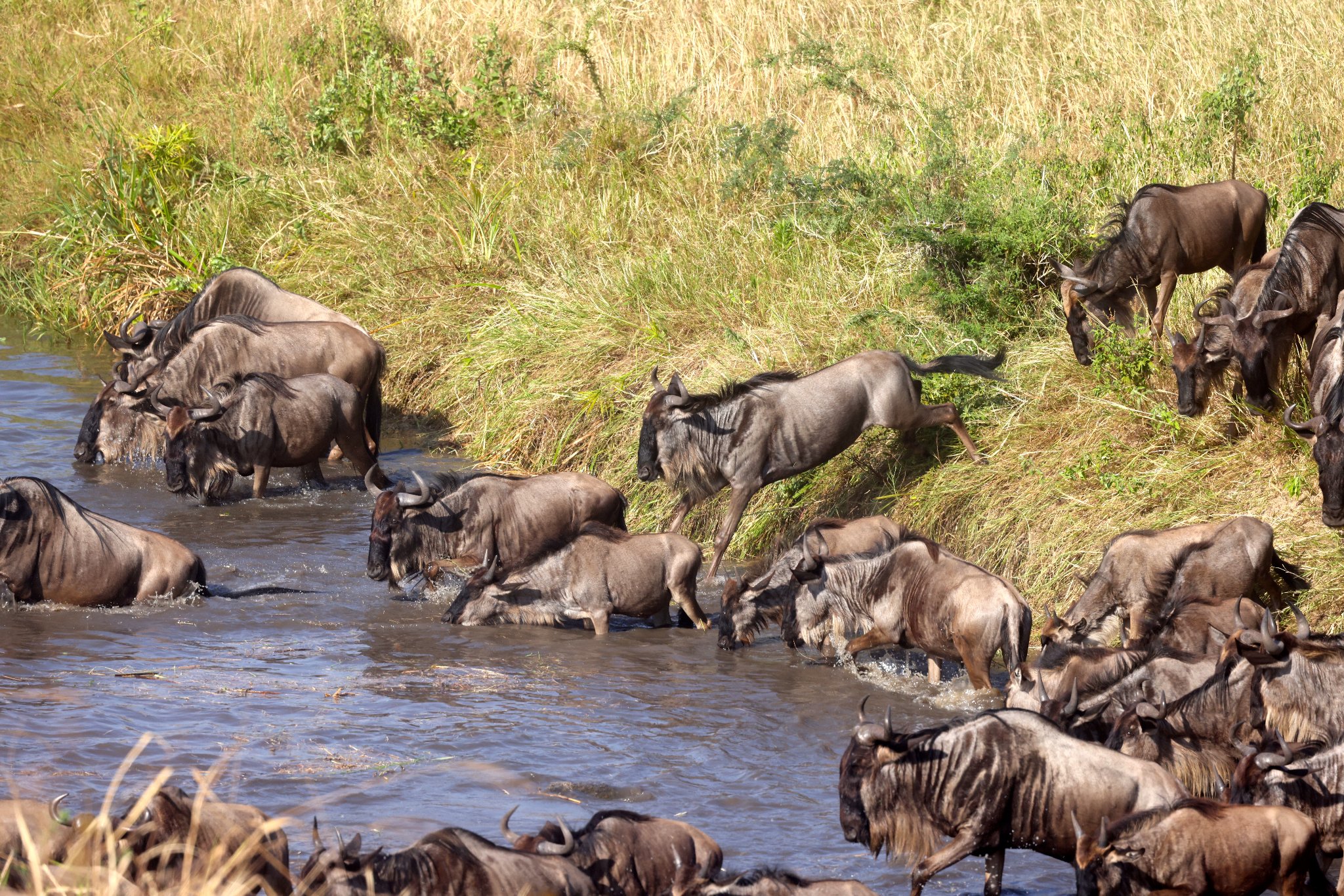
On our second day, we drove to the Mara River. This is where the Great Migration becomes something more than a documentary moment. Thousands of wildebeest packed the banks, pacing, nervous, the herd bunching and splitting, uncertain. Then, slowly, a few break from the group and plunge in. The rest follow in a churning, desperate mass. The river is full of crocodiles. Enormous ones, ancient and still, waiting in the current. It is brutal and beautiful in equal measure. We watched three crossings that morning. One of those experiences you will spend the rest of your life trying to explain to people who weren’t there.
Hot Air Balloon Safari
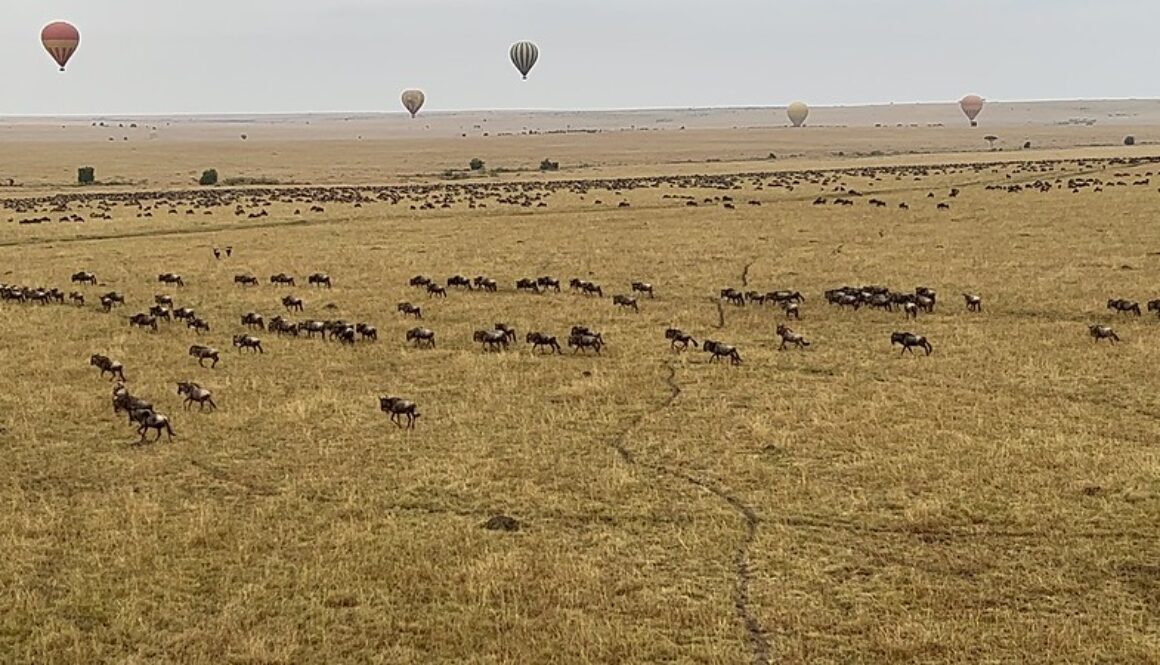
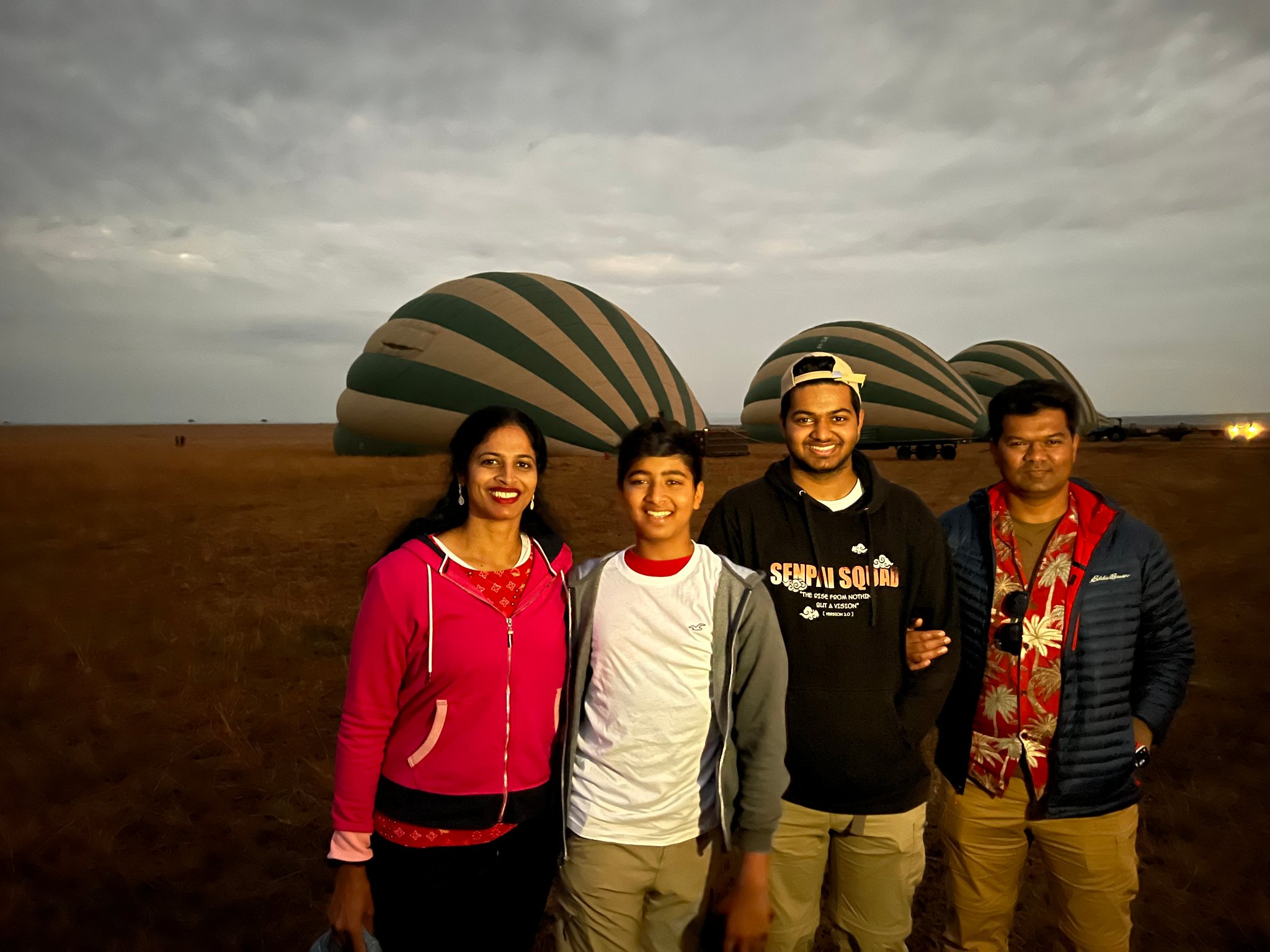
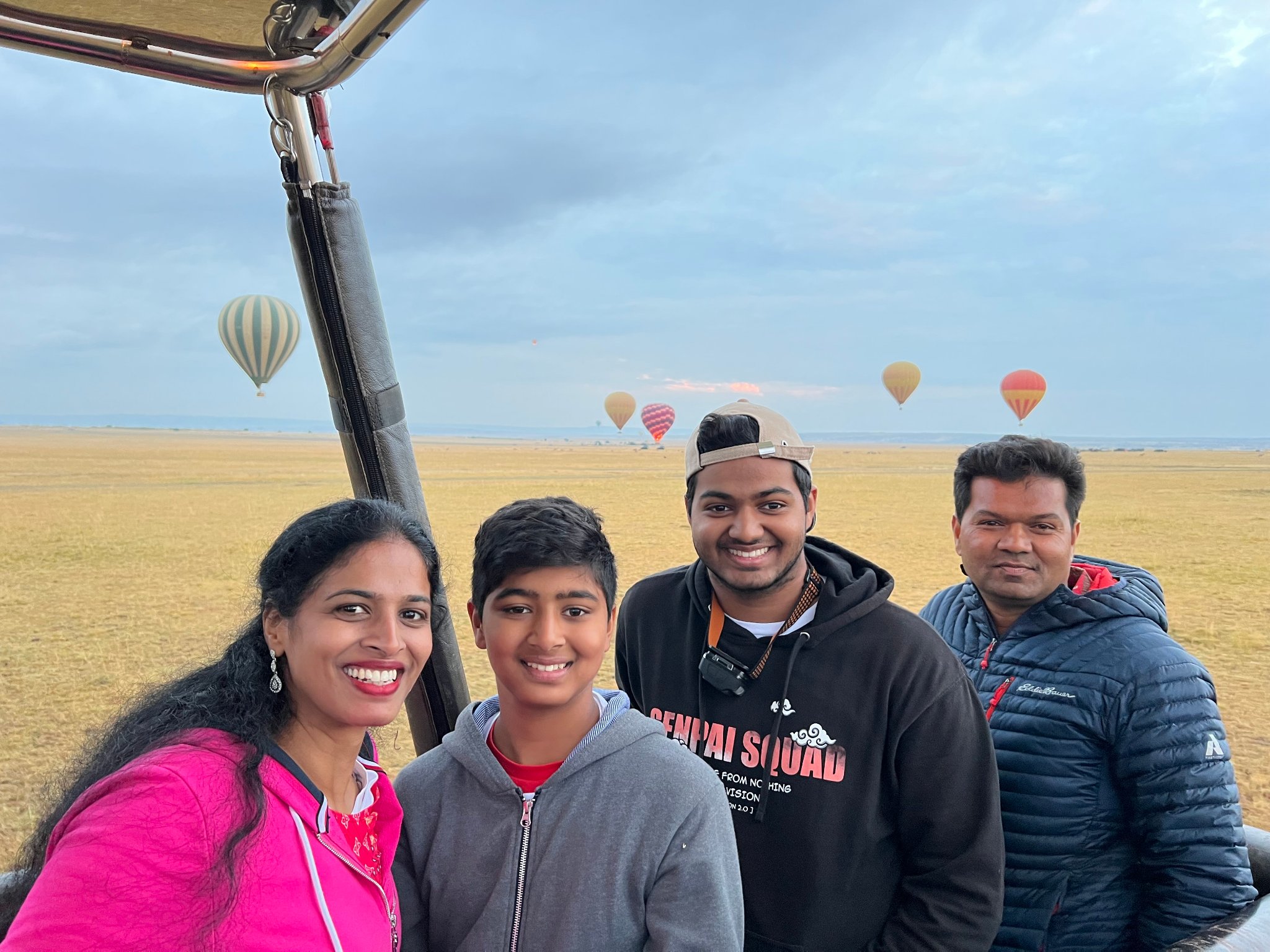
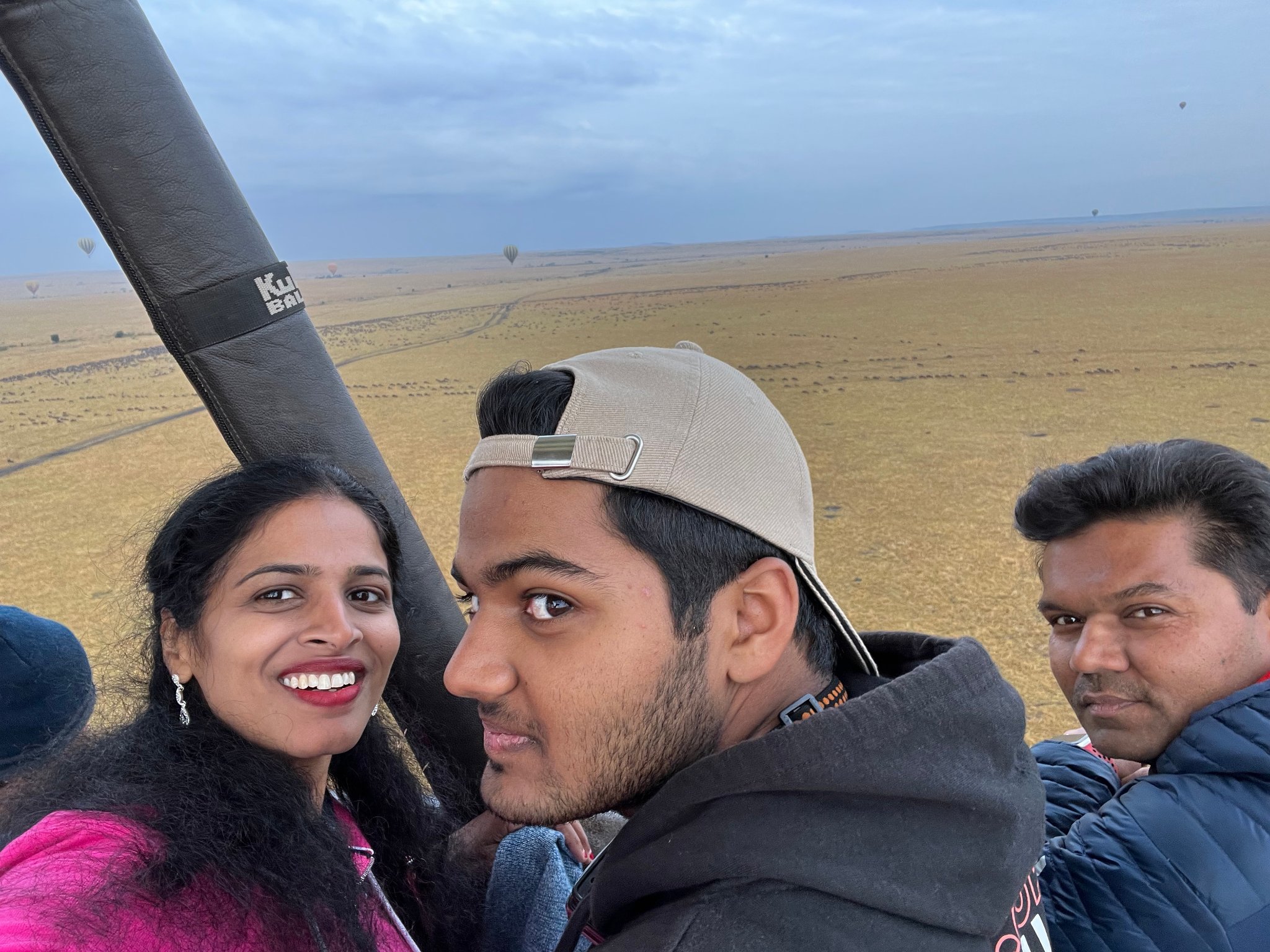
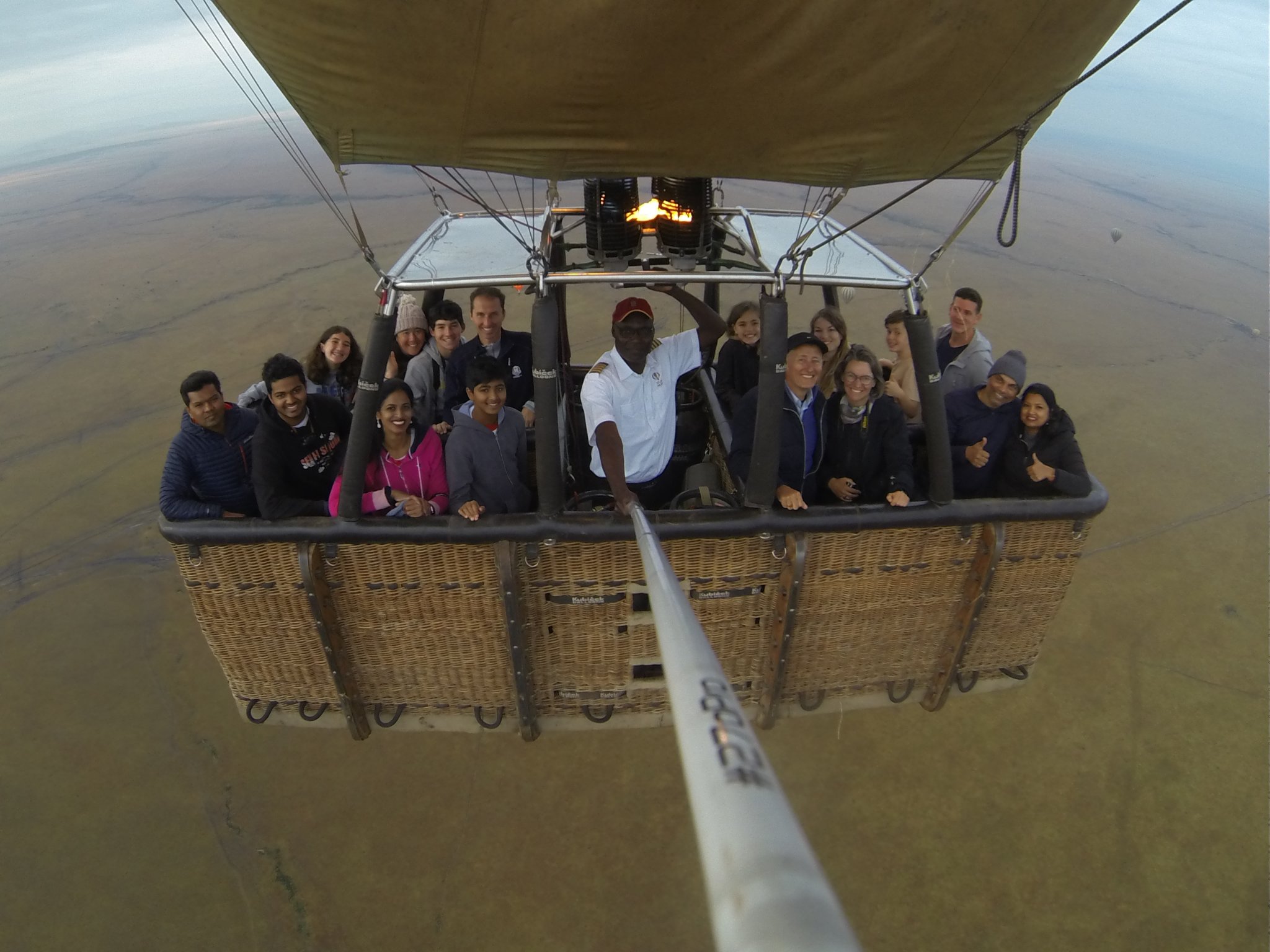
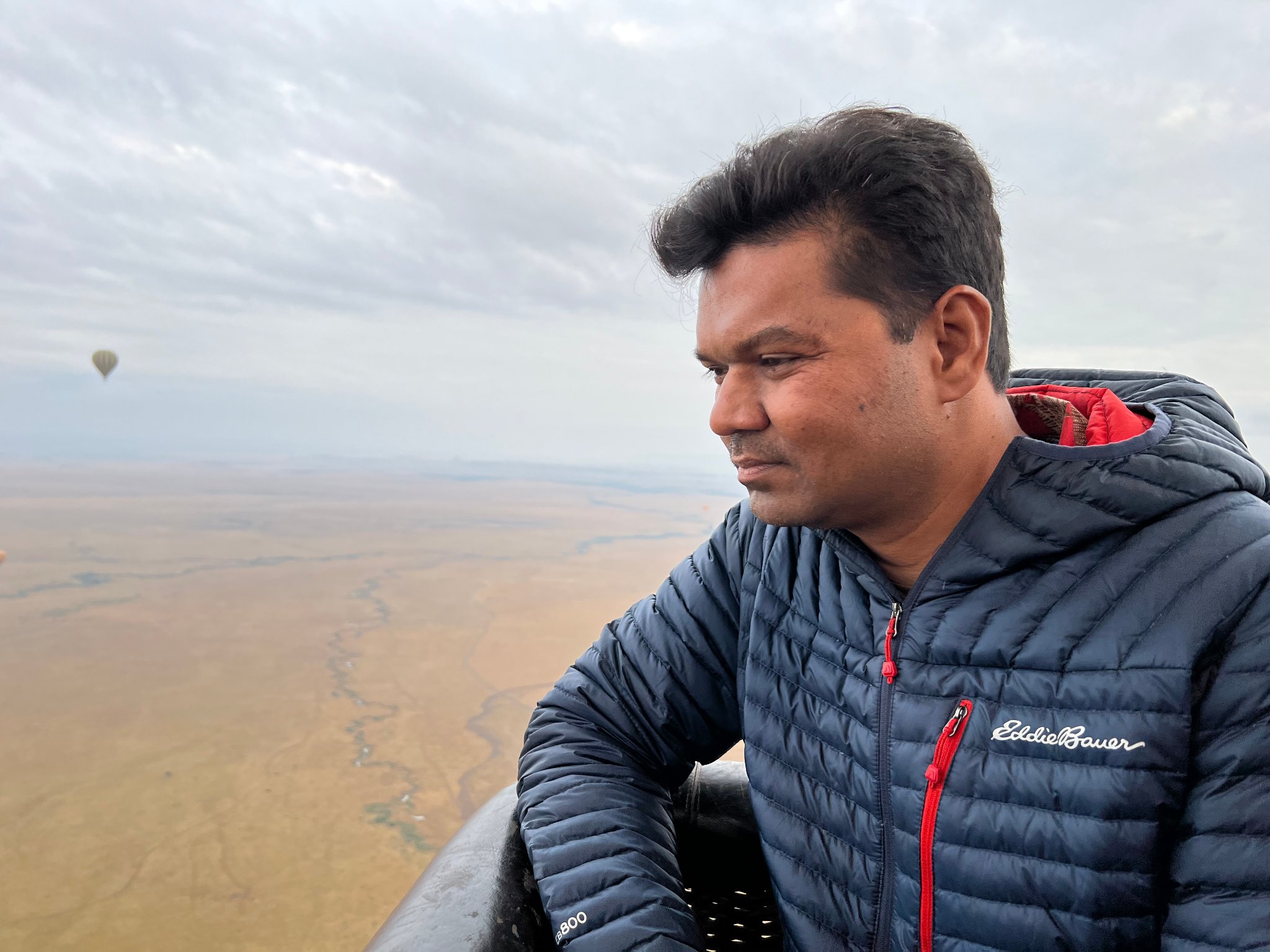
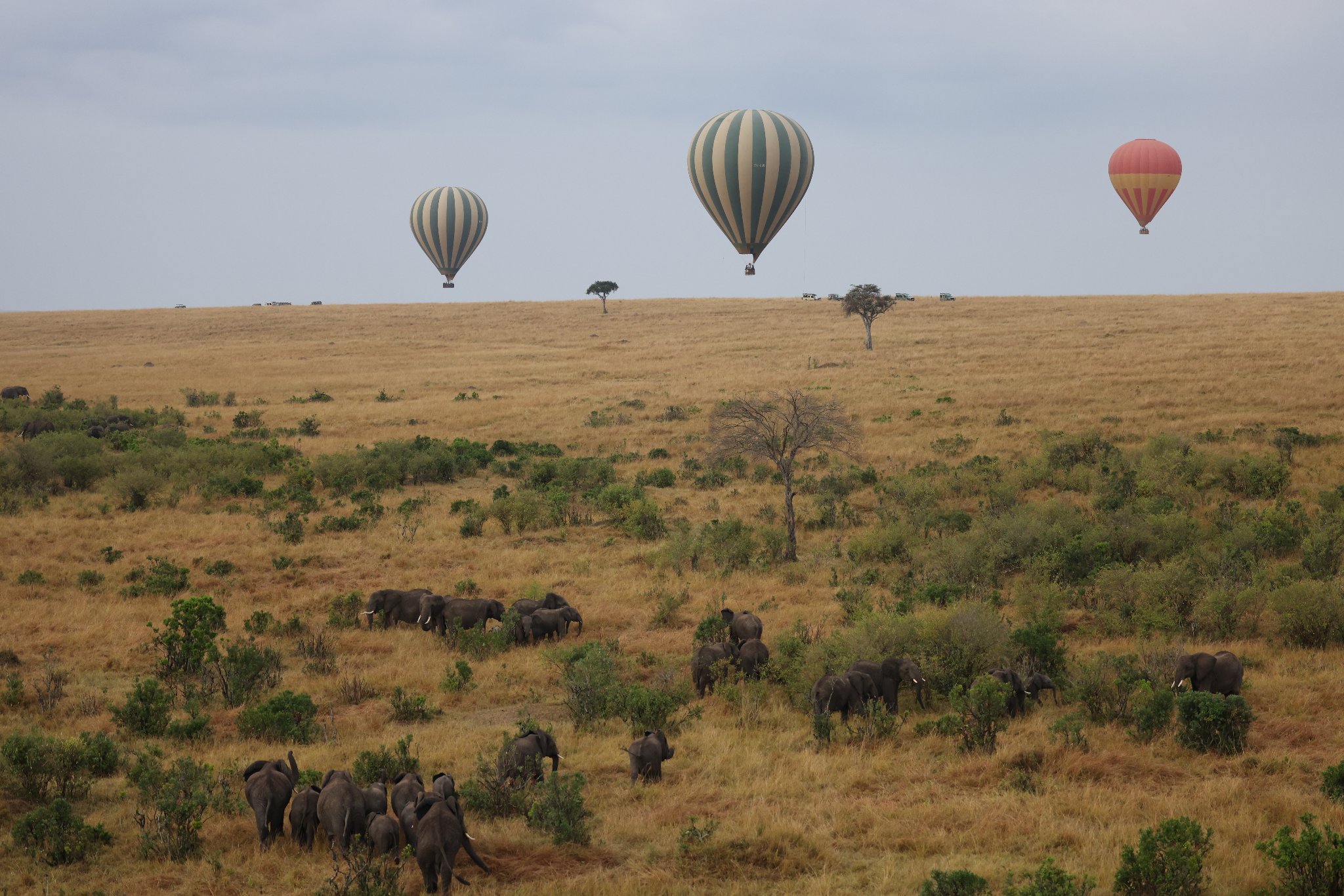
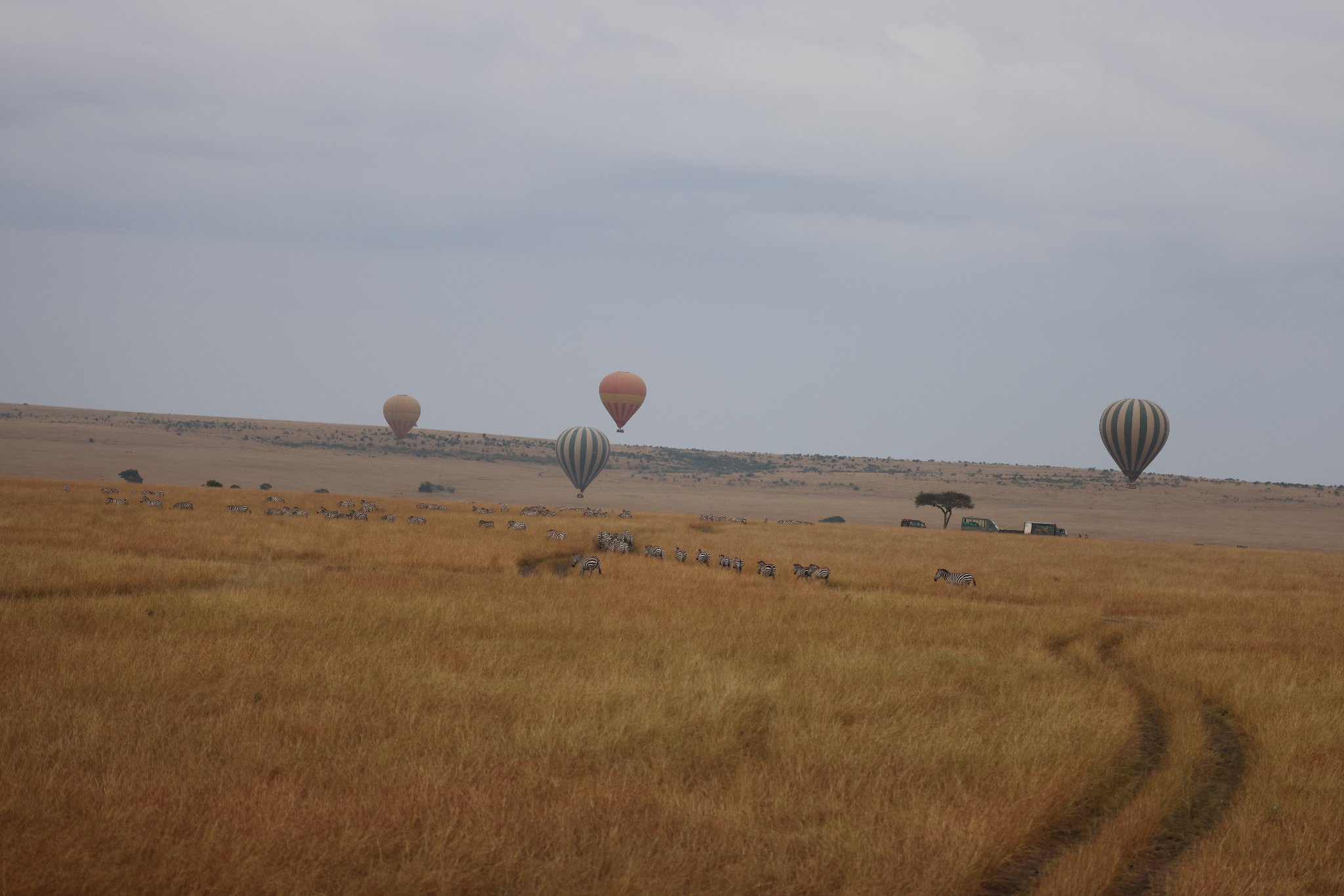
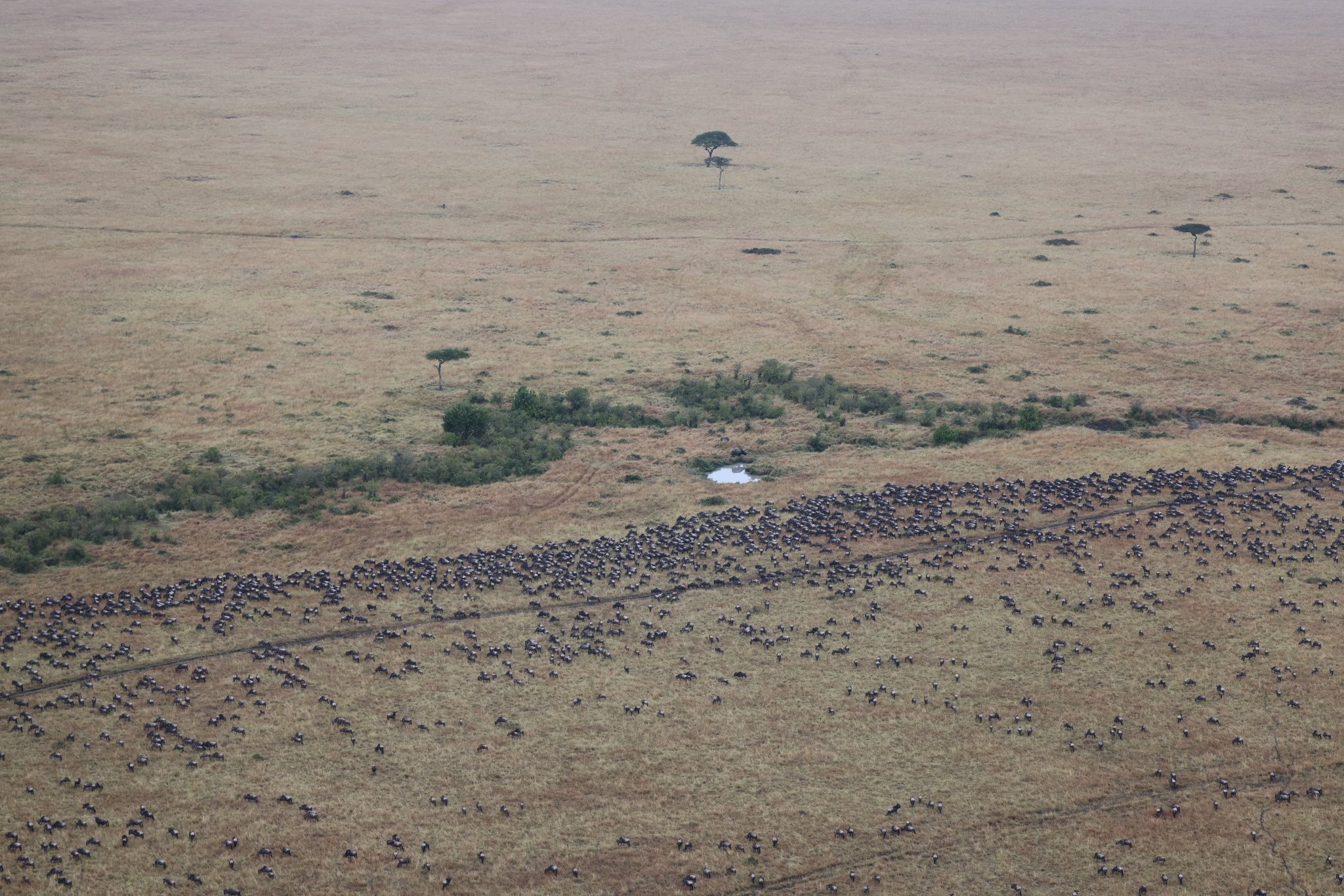
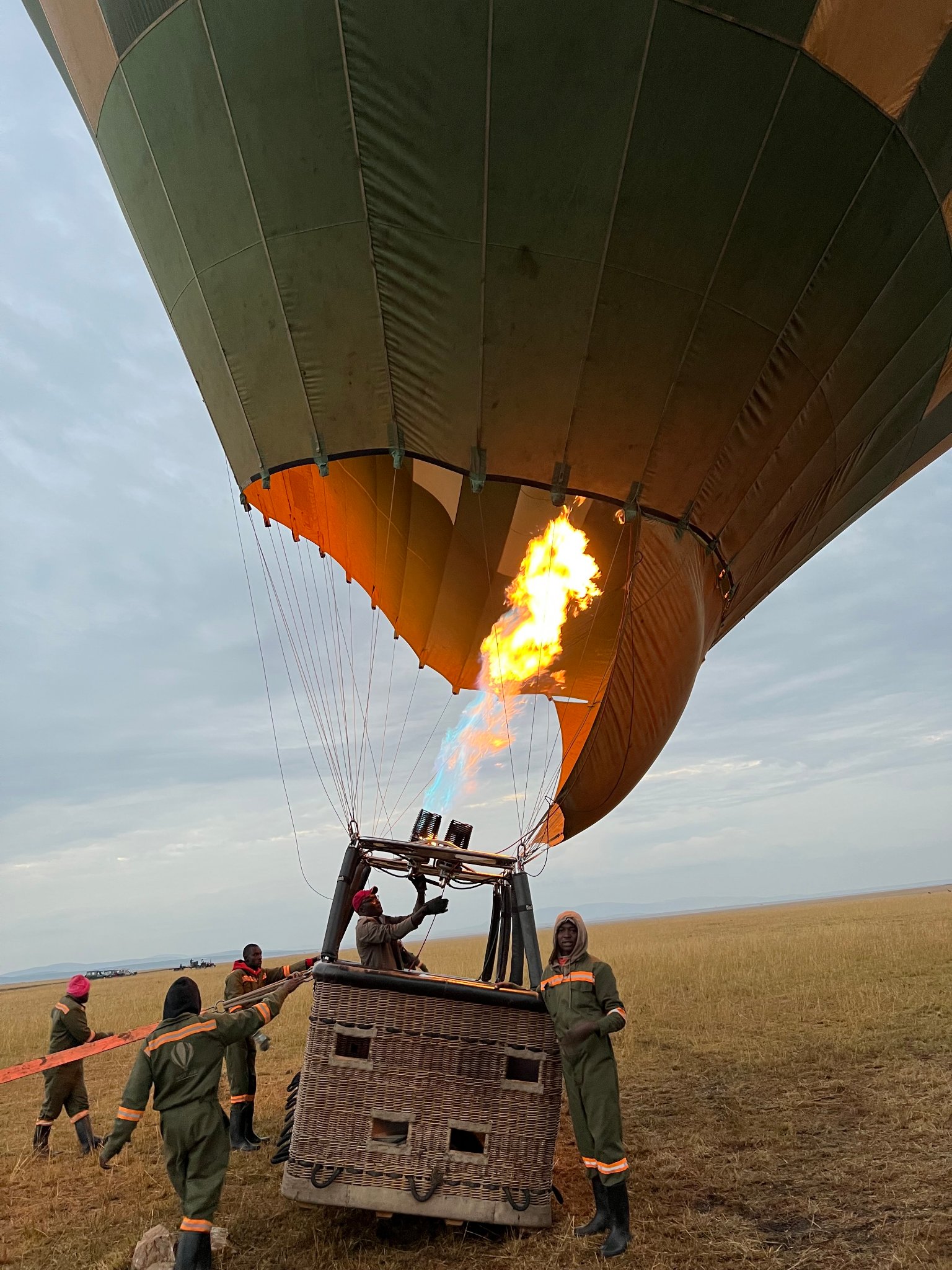
On our final morning in the Mara, we were up before dawn for the hot air balloon safari. In the cold pre-dawn dark, the balloon inflated slowly over the grass, glowing orange and gold in the torchlight. Then we rose — silently, impossibly gently — above the plains as the sun came up over the Mara.
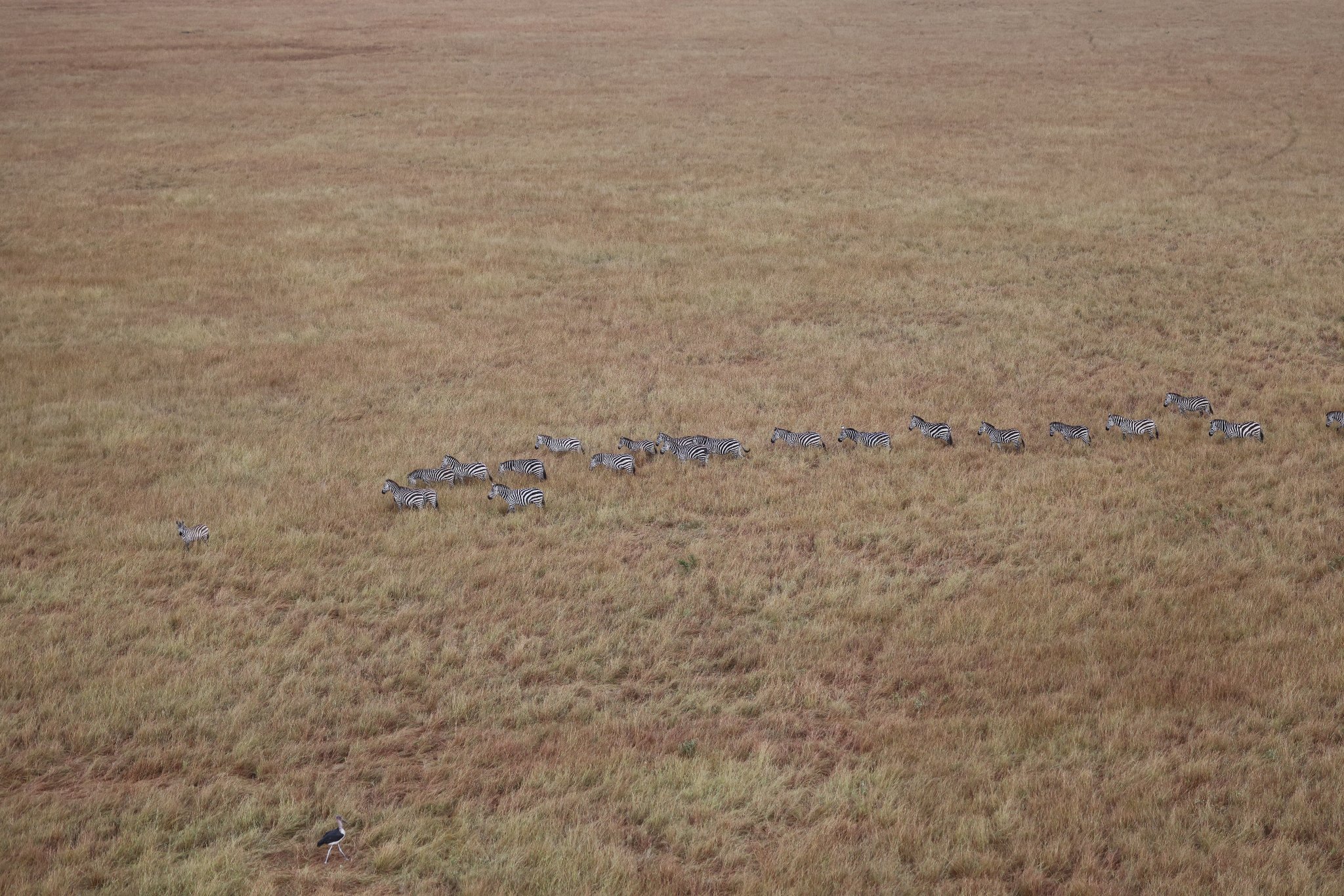
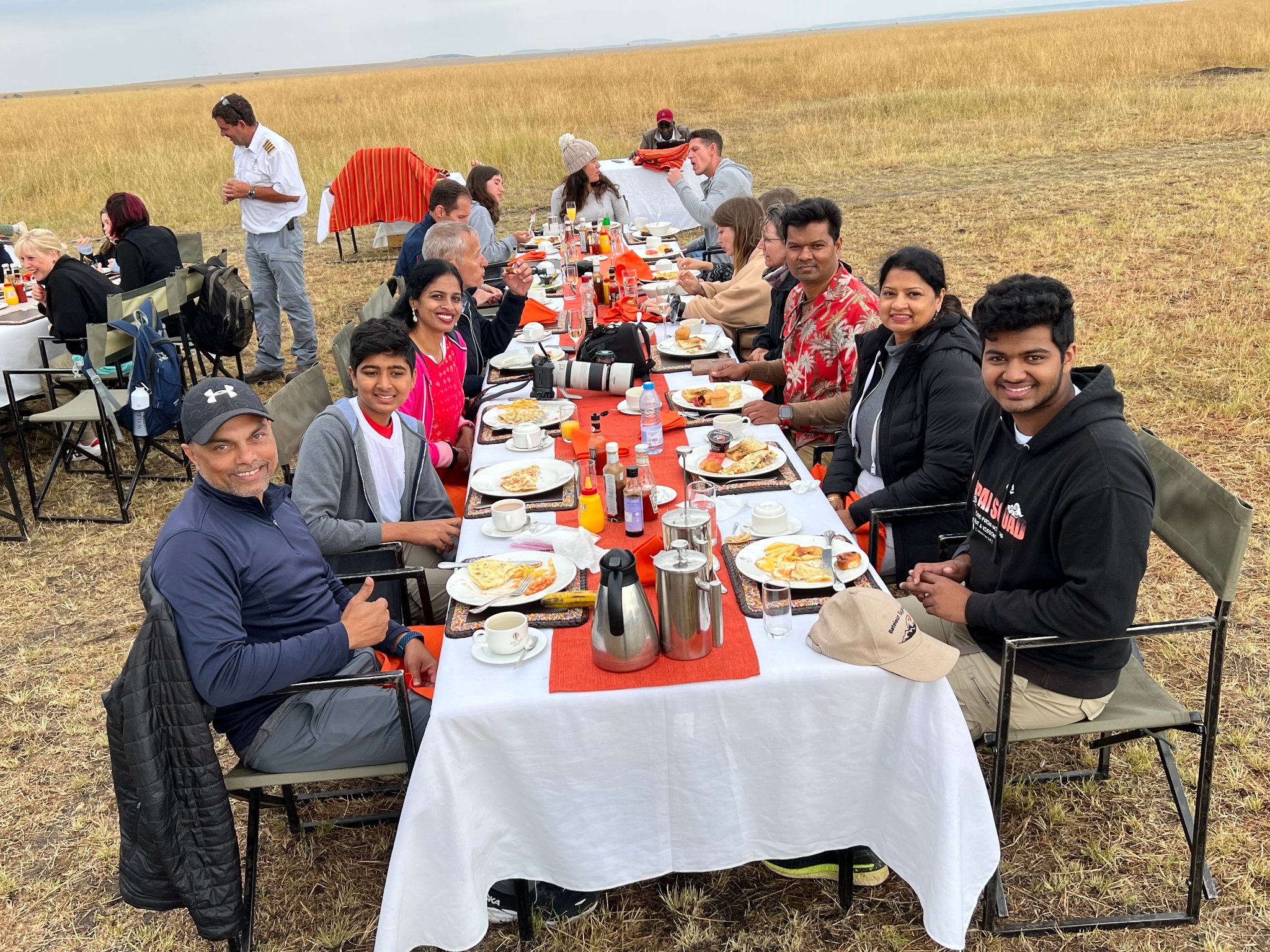
From above, the scale of the place becomes clear. The endless rolls of savanna grassland, the silver thread of the river, the tiny dots of wildebeest and zebra moving in their tens of thousands. No engine noise. Just wind and bird calls and the occasional murmur from the other passengers. We drifted over lion prides, elephant families, buffalo herds. When we landed, the crew had set up a full champagne breakfast in the bush. One of the best mornings of our lives.
Maasai Village Visit
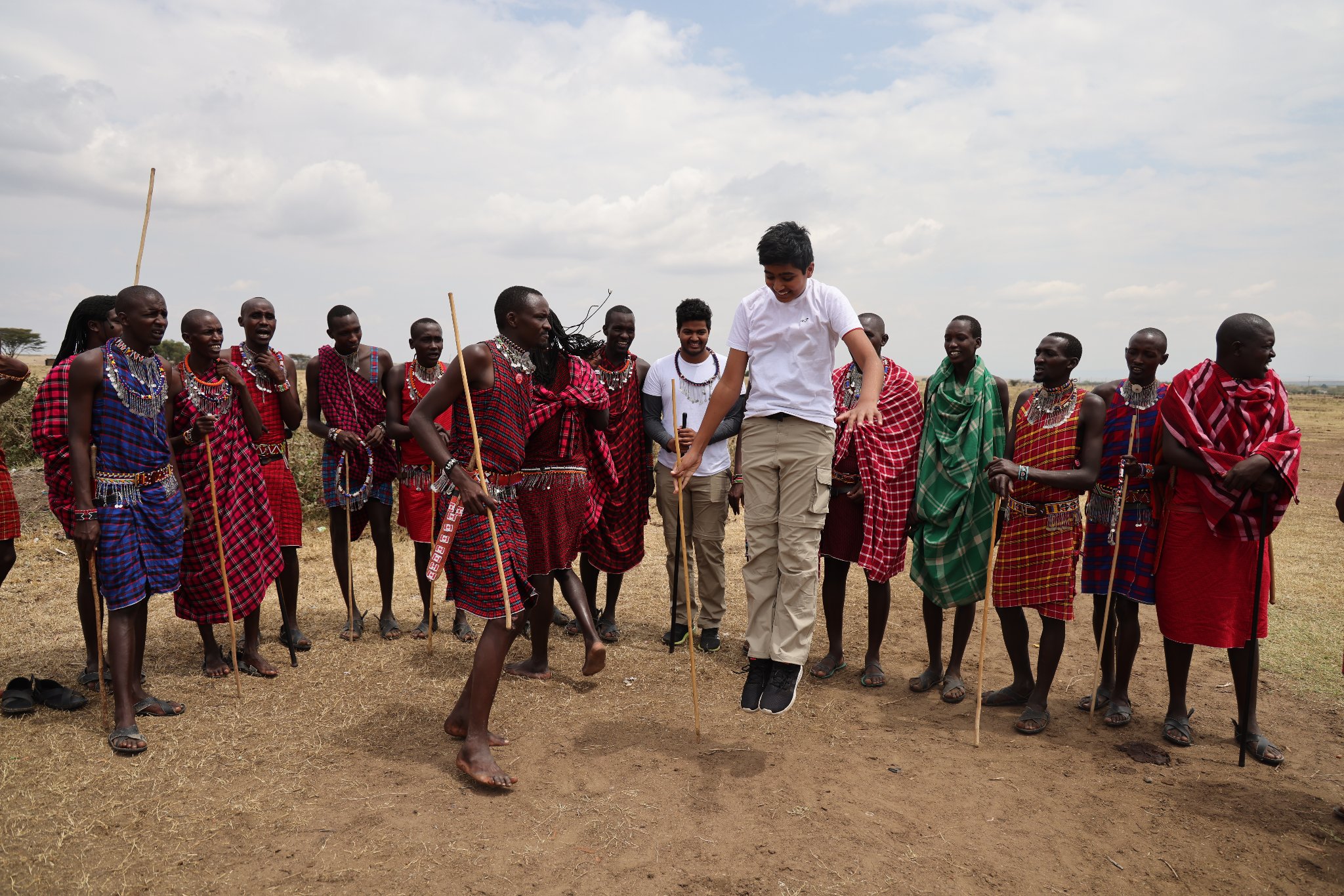
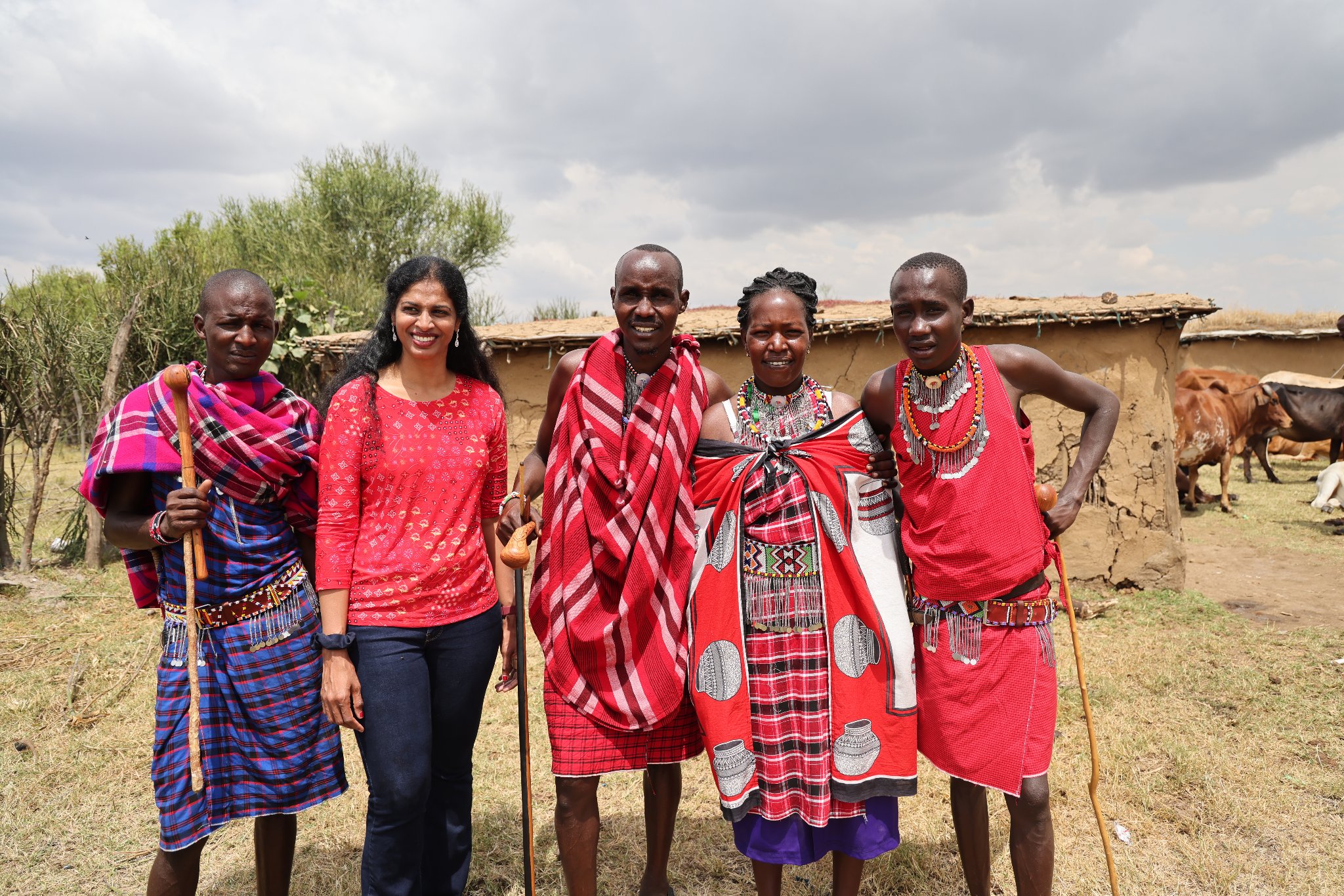
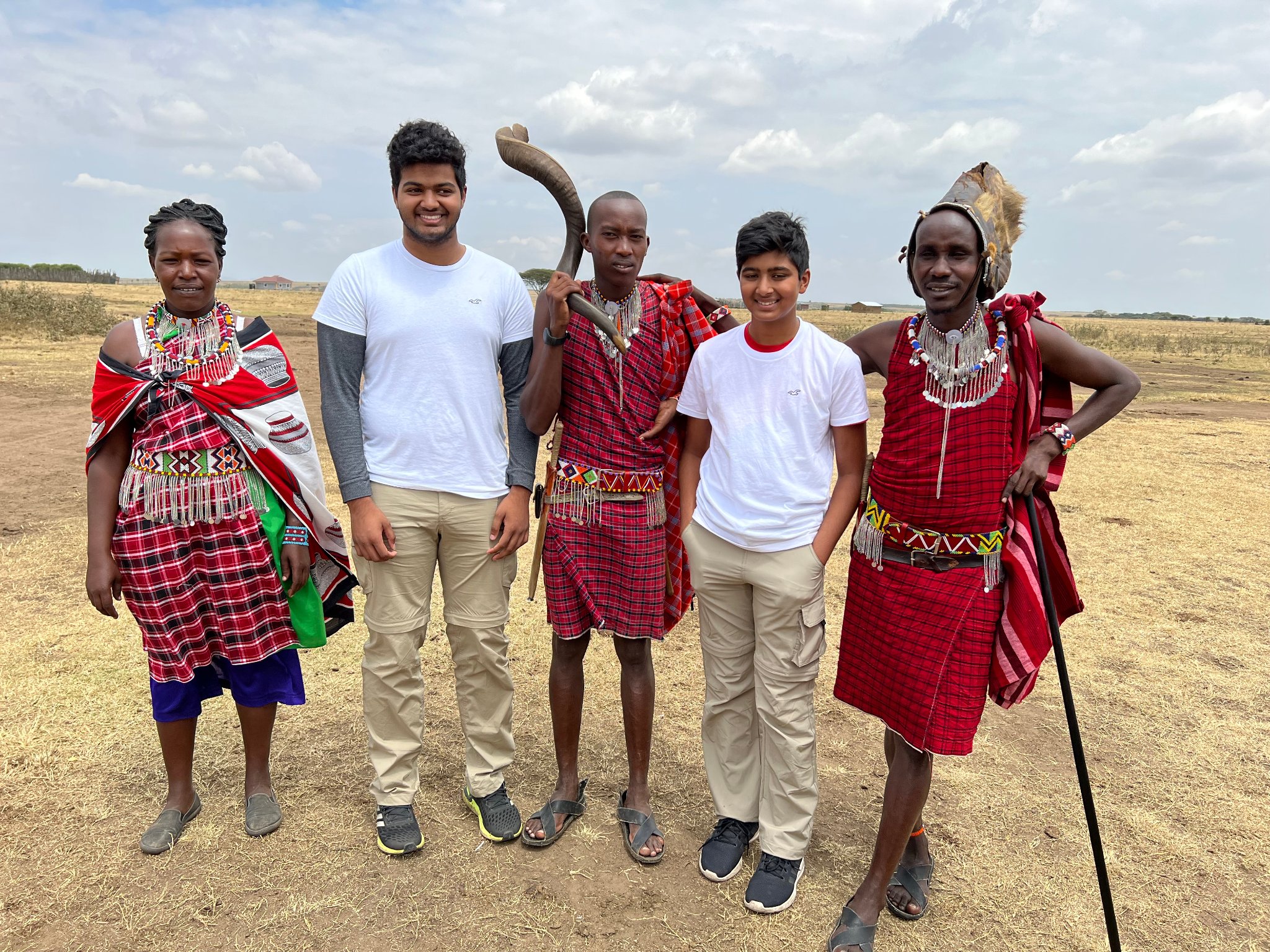
On our final afternoon in the Maasai Mara National Reserve, we chose to visit a local Maasai village—an experience that offered a fascinating glimpse into the culture of the people who have lived alongside the wildlife of the Mara for centuries.
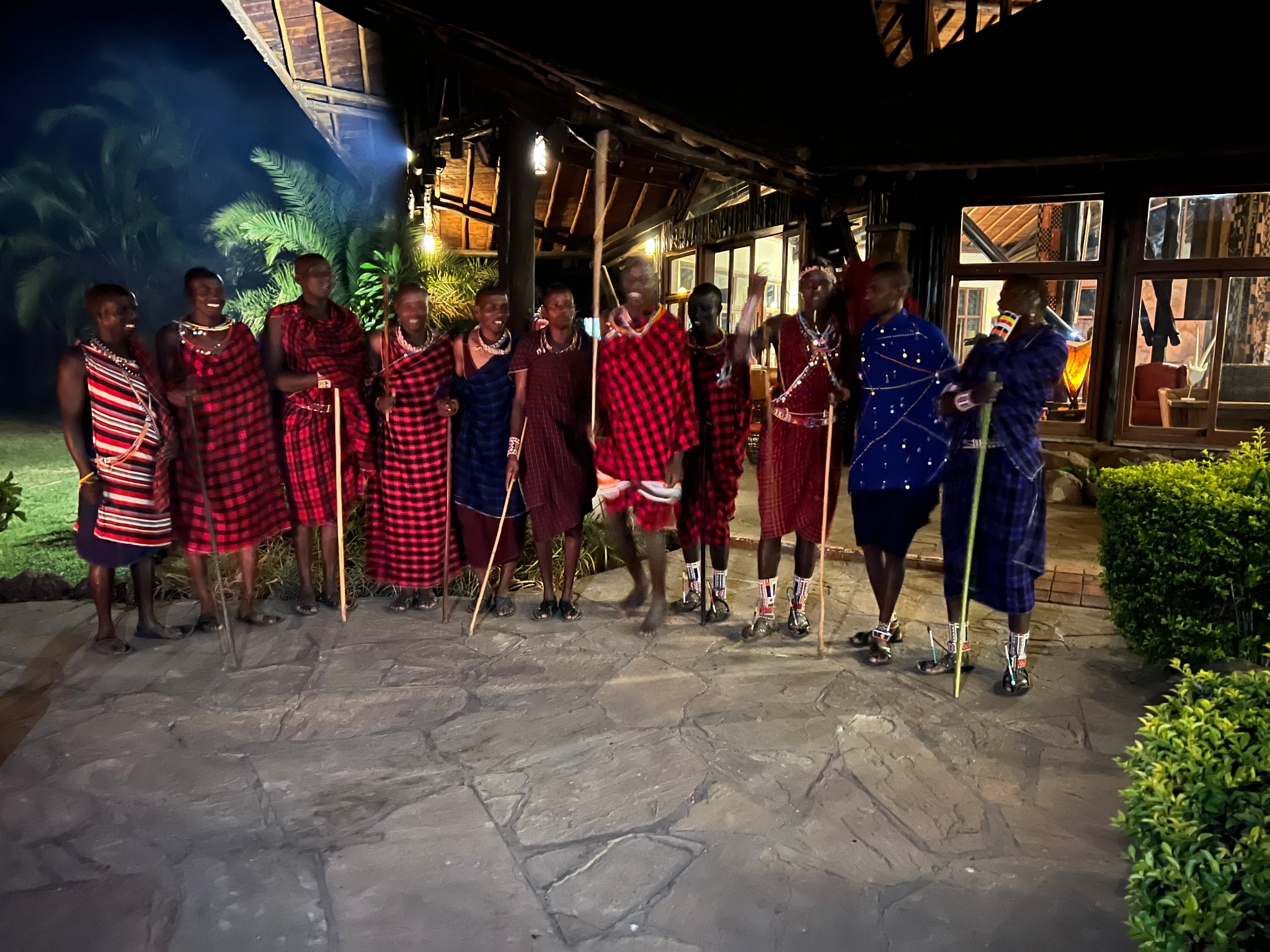
We were welcomed with traditional singing and the famous adumu, or Maasai jumping dance, where the young warriors demonstrated their incredible vertical jumps. Dressed in their vibrant red shukas and intricate beaded jewelry, the community warmly invited us into their village and shared stories about their way of life.
As we walked through the village, we visited the traditional manyattas, small homes constructed from mud, sticks, and cow dung by the women of the community. We learned how cattle remain at the heart of Maasai life, providing food, wealth, and social status, and how families live together in a close-knit, communal setting. Our guides also explained the Maasai age-set system, the responsibilities of warriors and elders, and how the community is balancing modern education and opportunities with preserving traditions that have been passed down for generations.
Final Game Drive
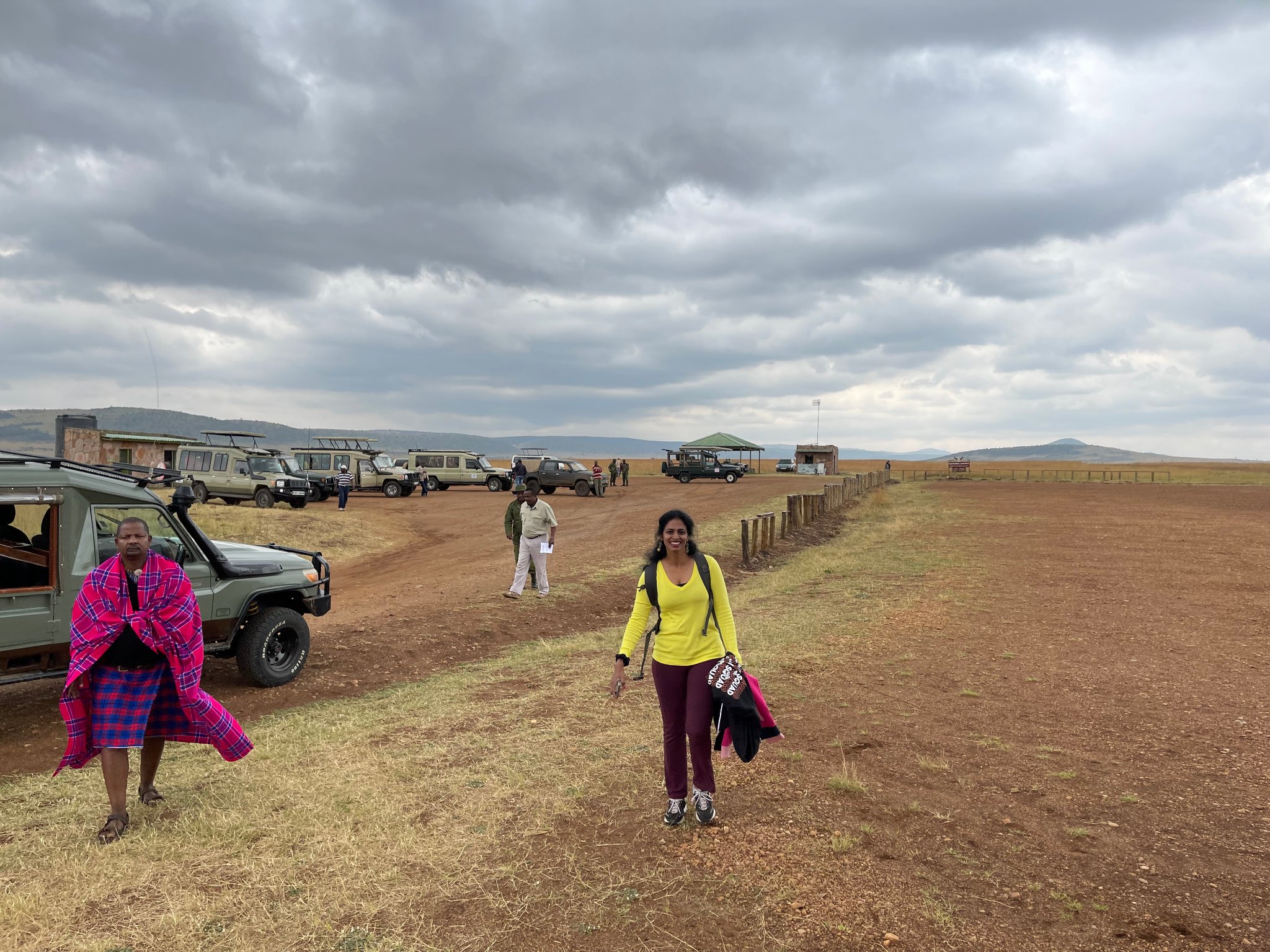
On the morning of our departure, we set out on one final game drive as we made our way to the airstrip. Even on our last few hours in the Maasai Mara National Reserve, the Mara continued to surprise us.
We enjoyed one last sighting of graceful giraffes browsing among the acacia trees before coming across a group of vultures gathered around the carcass of a dead wildebeest. While not as glamorous as the big cats, vultures play a vital role in the ecosystem. As nature’s cleanup crew, they quickly consume carcasses, helping prevent the spread of disease and keeping the ecosystem healthy. It was a powerful reminder that every animal, whether predator, prey, or scavenger, has an important role in the circle of life.
Soon after, we arrived at the airstrip and boarded our bush flight to Wilson Airport. As the aircraft lifted off over the endless plains of the Mara, we took one last look at the landscape that had given us so many unforgettable wildlife encounters. At Wilson Airport, our guide was waiting to greet us and transfer us for the final leg of our Kenyan adventure.
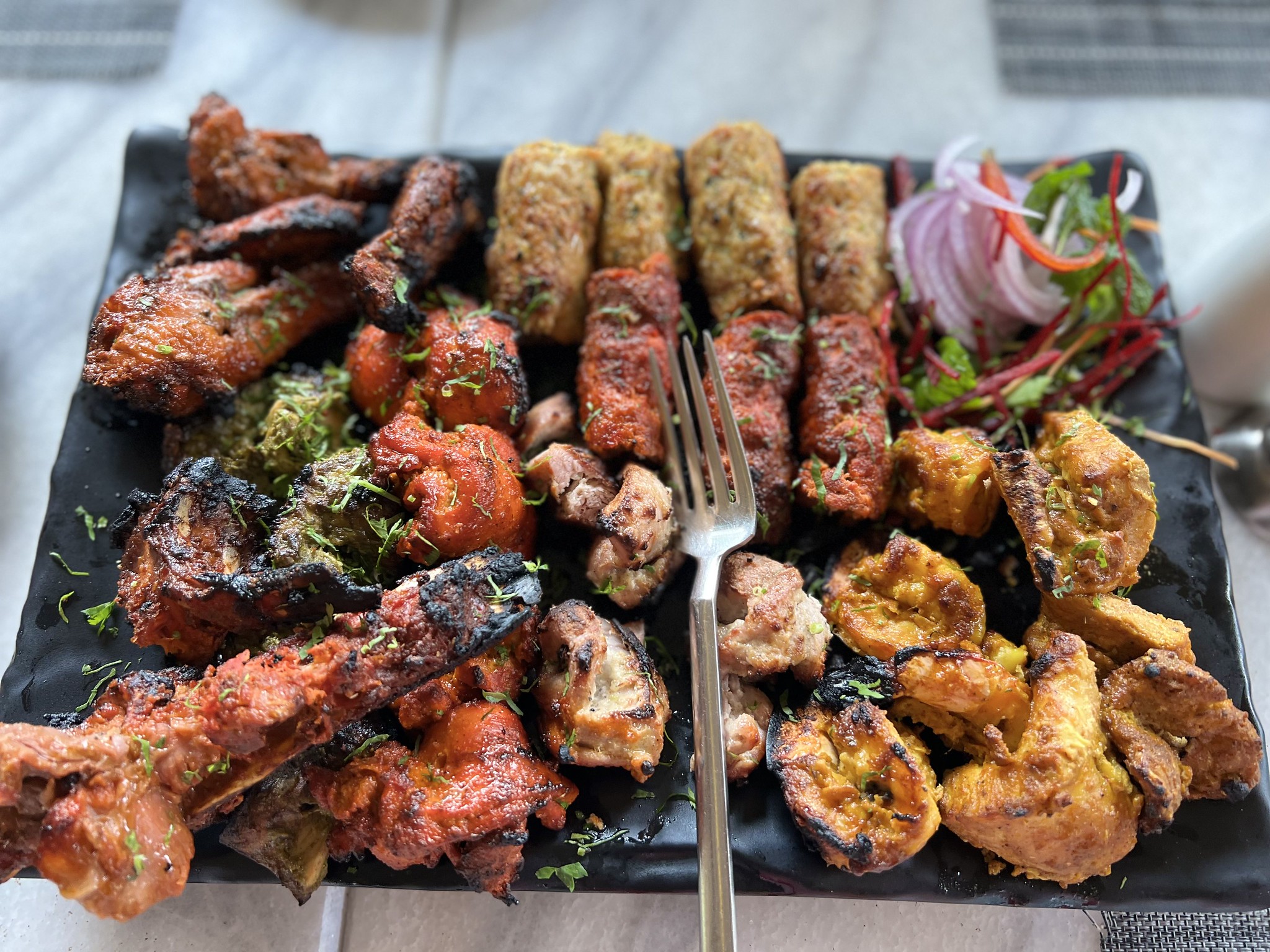
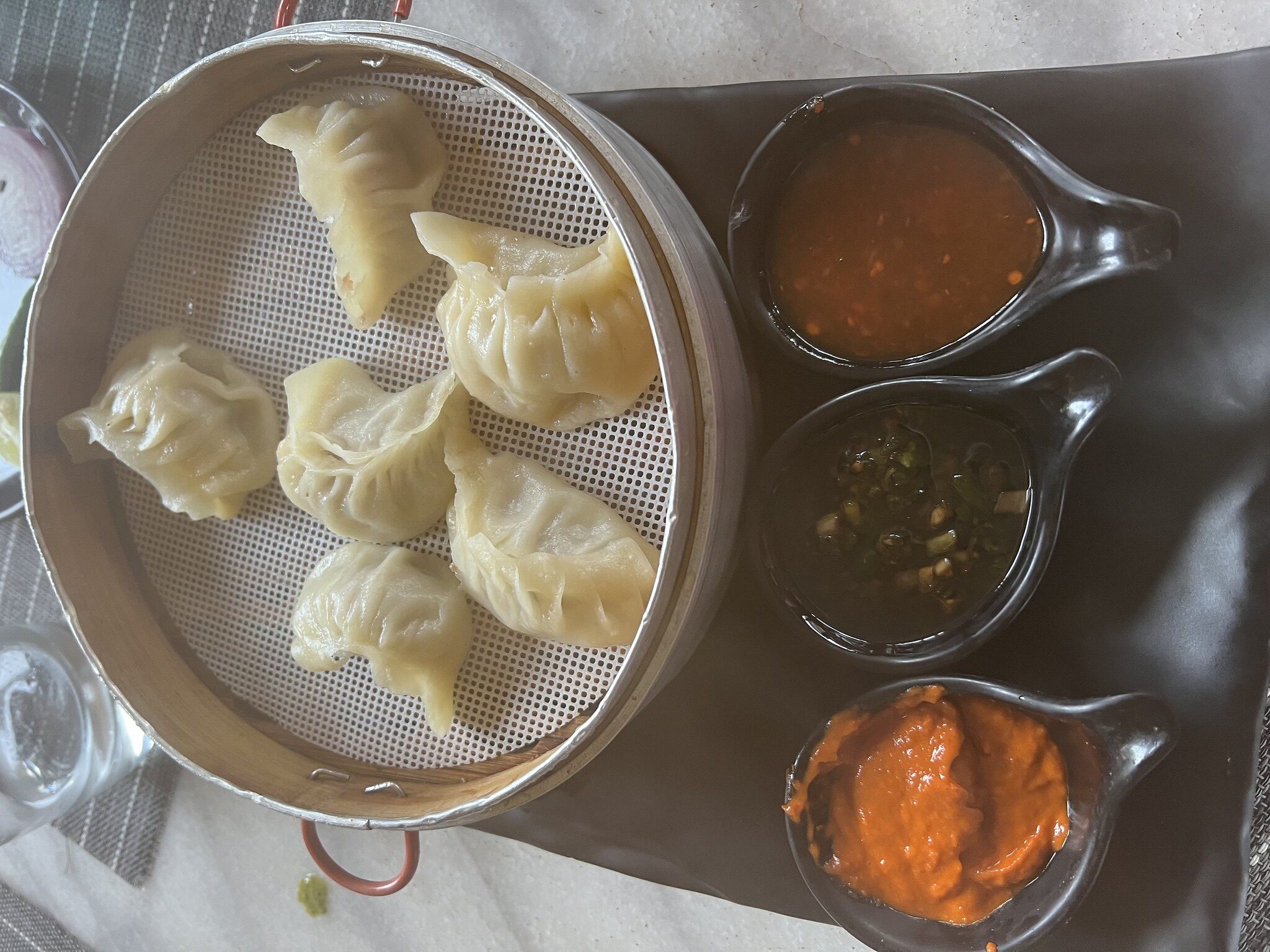
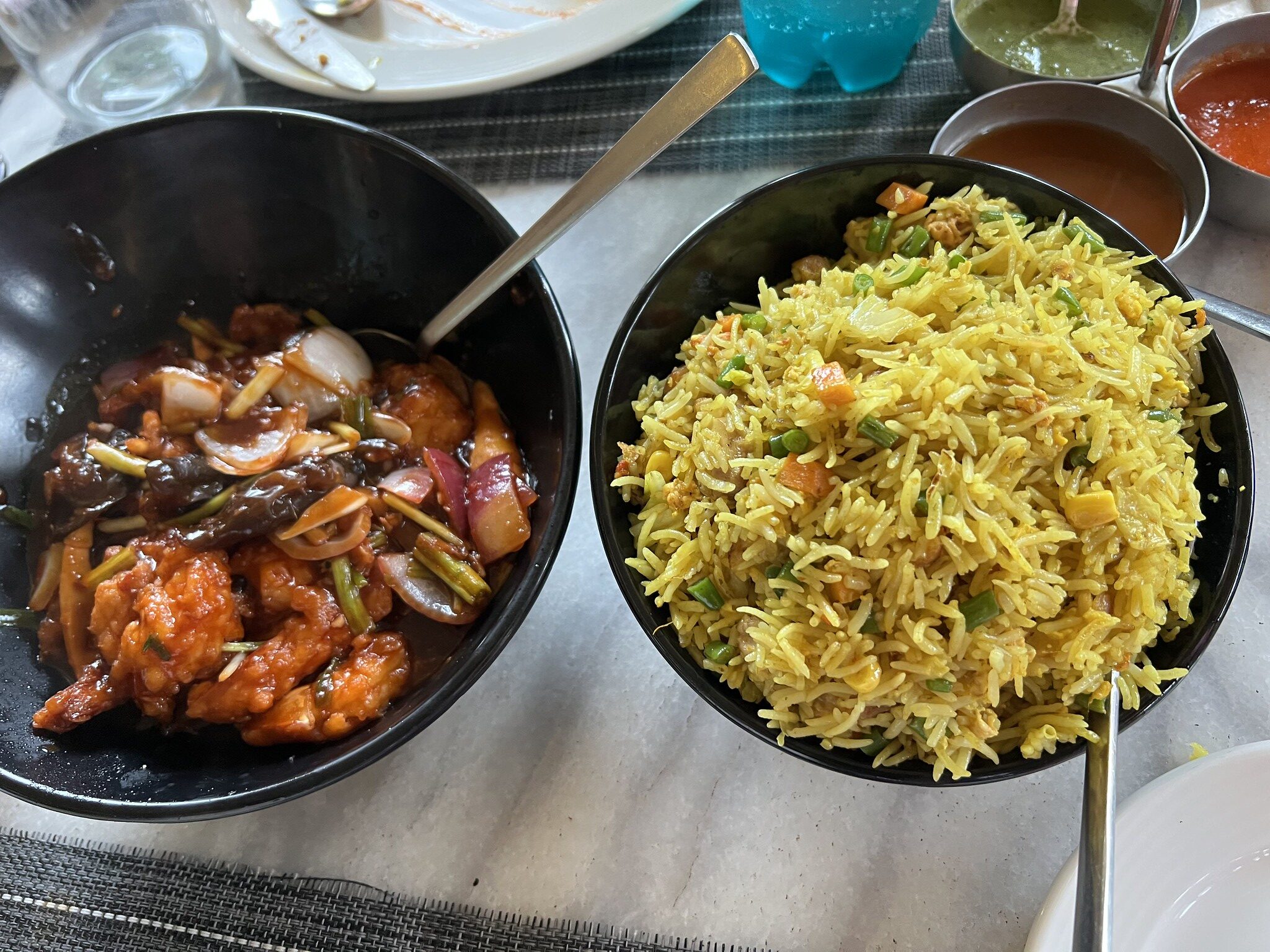
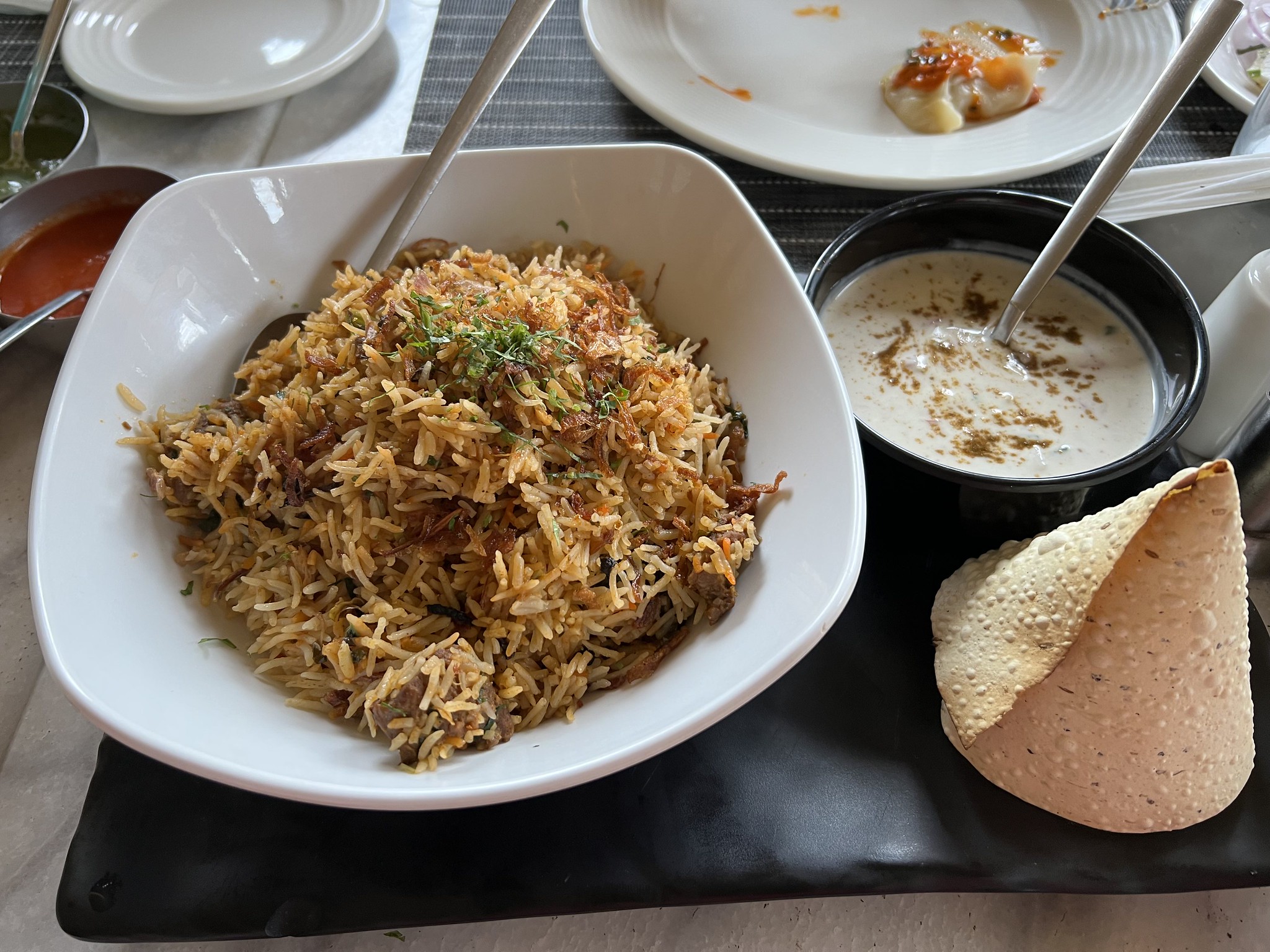
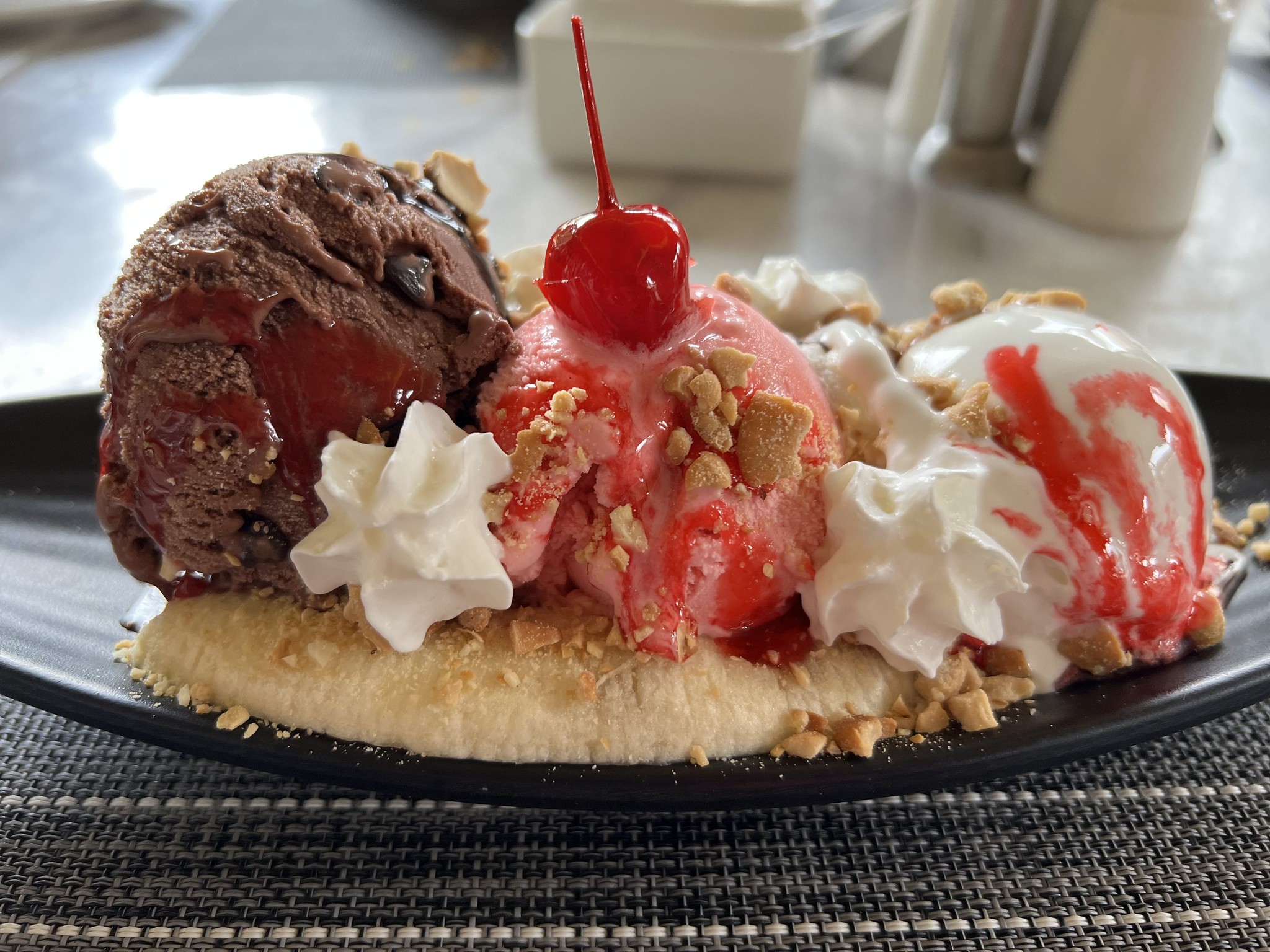
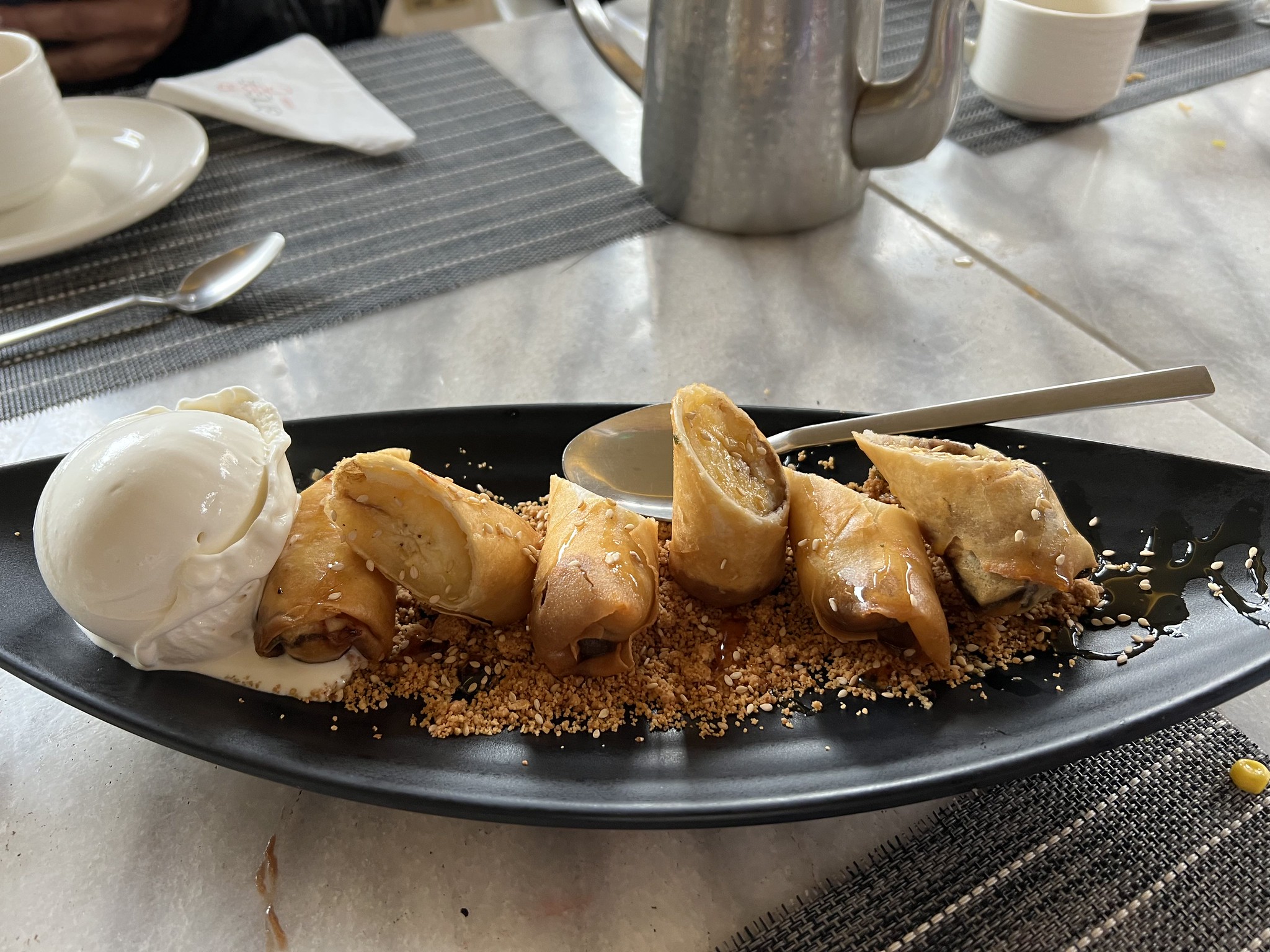
Stop over in Nairobi, we learnt that there are day rooms that we can take in the hotels for our late night flight. Had a good lunch and rest before our flight home. There is lot of good Indian food in Nairobi, Kenya. Food was very tasty.
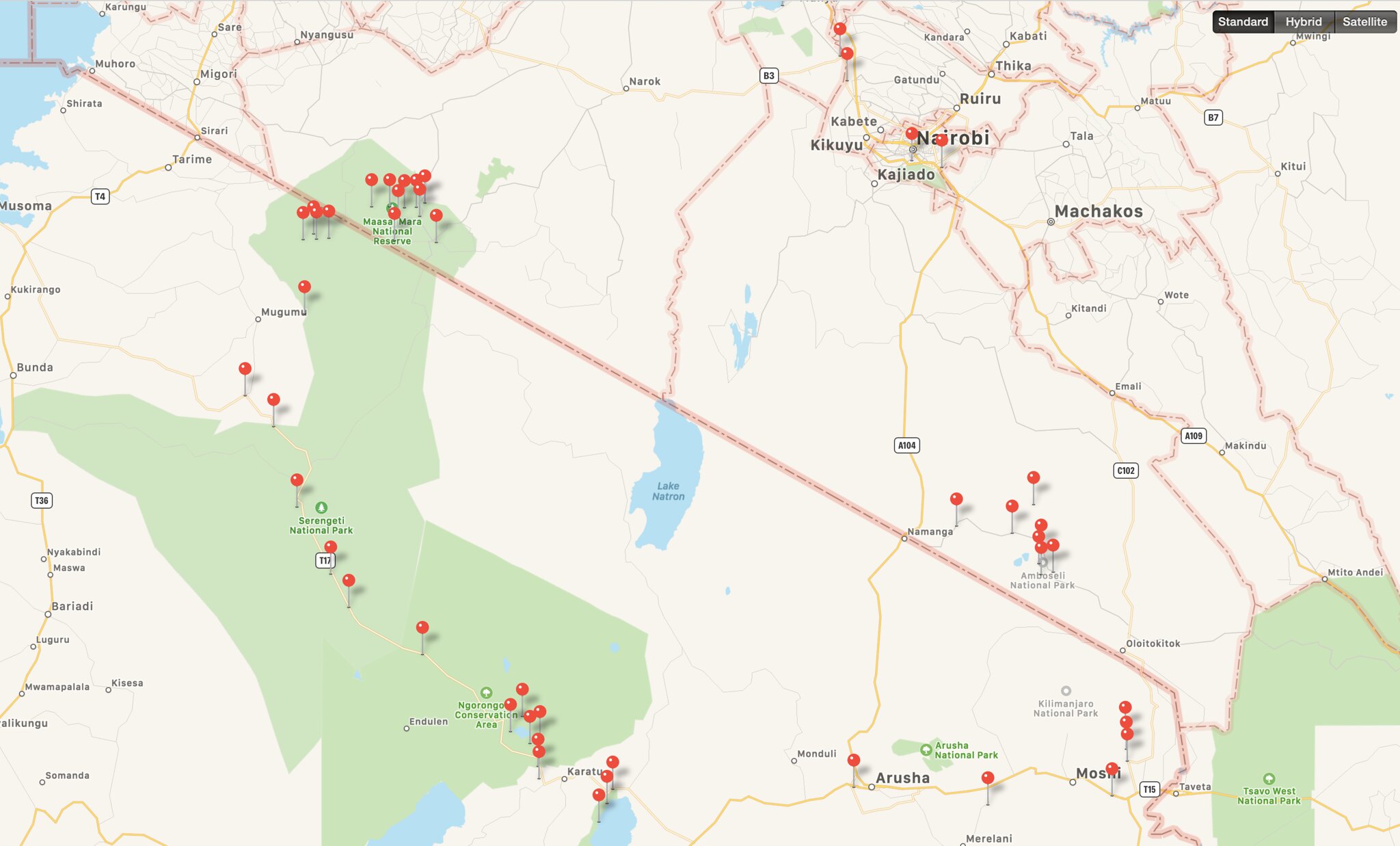
Travel Map
Travel Time: July 2022