Amazon Rainforest
Amazon Rainforest – Into the Heart of the World’s Greatest Jungle
The Amazon had been on our bucket list for years. Covering more than 2 million square miles (about 5.5 million square kilometers) and stretching across nine South American countries, it is the largest tropical rainforest on Earth and home to an astonishing variety of wildlife. Stretching across nine South American countries, around 60% of the rainforest lies within Brazil, followed by Peru (13%) and Colombia (10%), with smaller portions extending into Bolivia, Ecuador, Venezuela, Guyana, Suriname, and French Guiana.
Flowing through this immense wilderness is the legendary Amazon River. Although the Nile is sometimes cited as the world’s longest river depending on the measurement used, the Amazon is unquestionably the largest river on Earth by volume of water, carrying nearly one-fifth of all river water that reaches the oceans. Its vast network of tributaries forms the lifeline of the rainforest and the countless communities and wildlife that depend on it.
Our journey would take us from the bustling city of Manaus into the heart of the jungle, where rivers replace roads and nature sets the pace of everyday life. Over the next five days, we explored the rainforest by canoe, walked jungle trails, fished for piranhas, visited local communities, and witnessed one of the world’s most fascinating natural phenomena—the Meeting of the Waters. It was an adventure unlike any other.
We booked a tour package for 4 days in Amazon Ecopark jungle lodge including Bed and Breakfast.
- Day 1: Arrive at the Amazon resort | Evening canoe night tour
- Day 2: Jungle walk | Monkey Forest | Caboclo’s House | Piranha fishing
- Day 3: Full-day boat tour to the Meeting of the Waters
- Day 4: Natural pools | Manaus city sightseeing | Opera House | Local market
- Day 5: Manaus to Rio
Day 1 – From Rio to the Heart of the Amazon
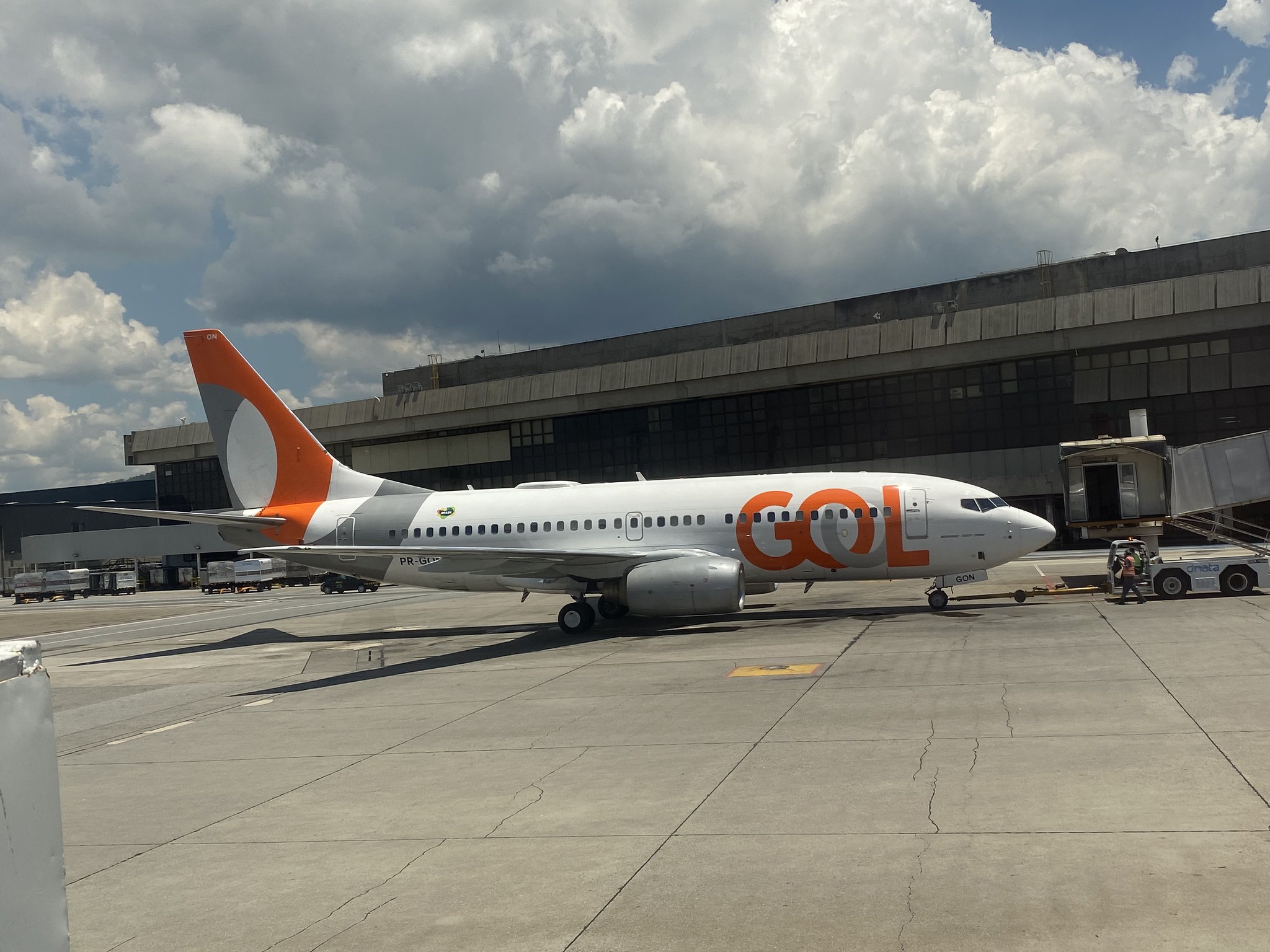
Our Amazon adventure began with a morning flight from Rio de Janeiro to Sao Paulo to Manaus, the gateway to the Brazilian Amazon. Although Manaus is a bustling city in the middle of the rainforest, reaching our lodge required another adventure.
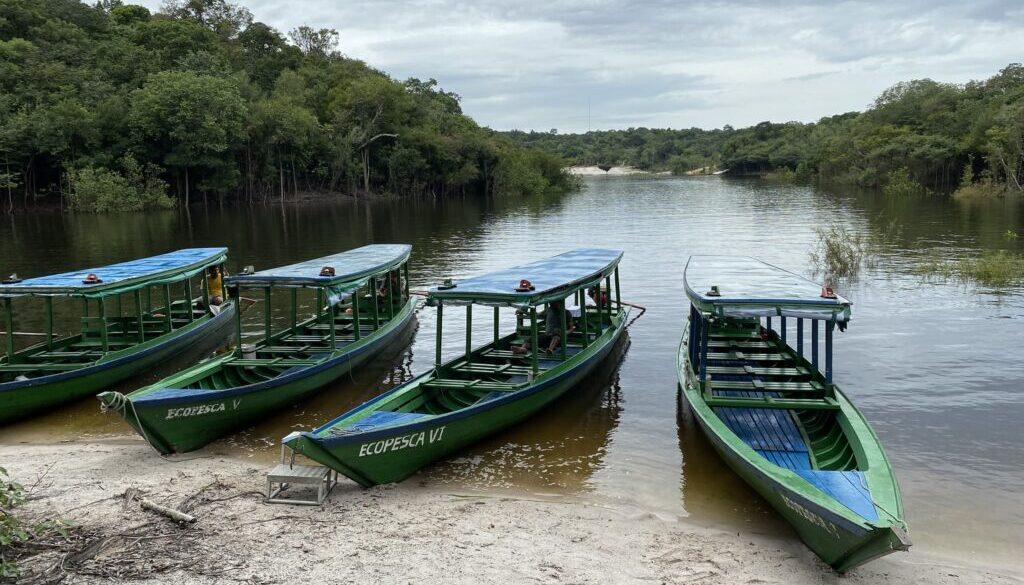
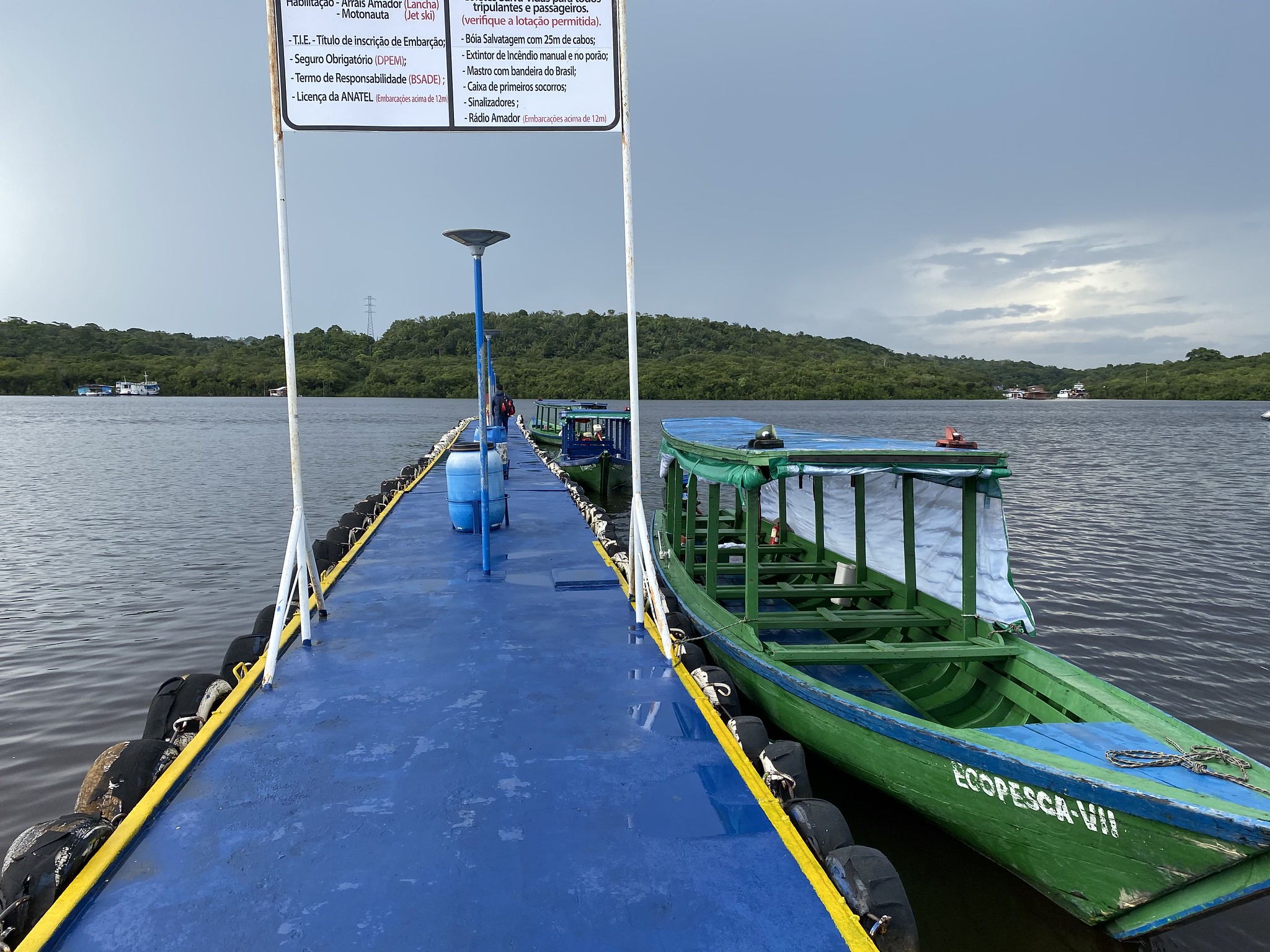
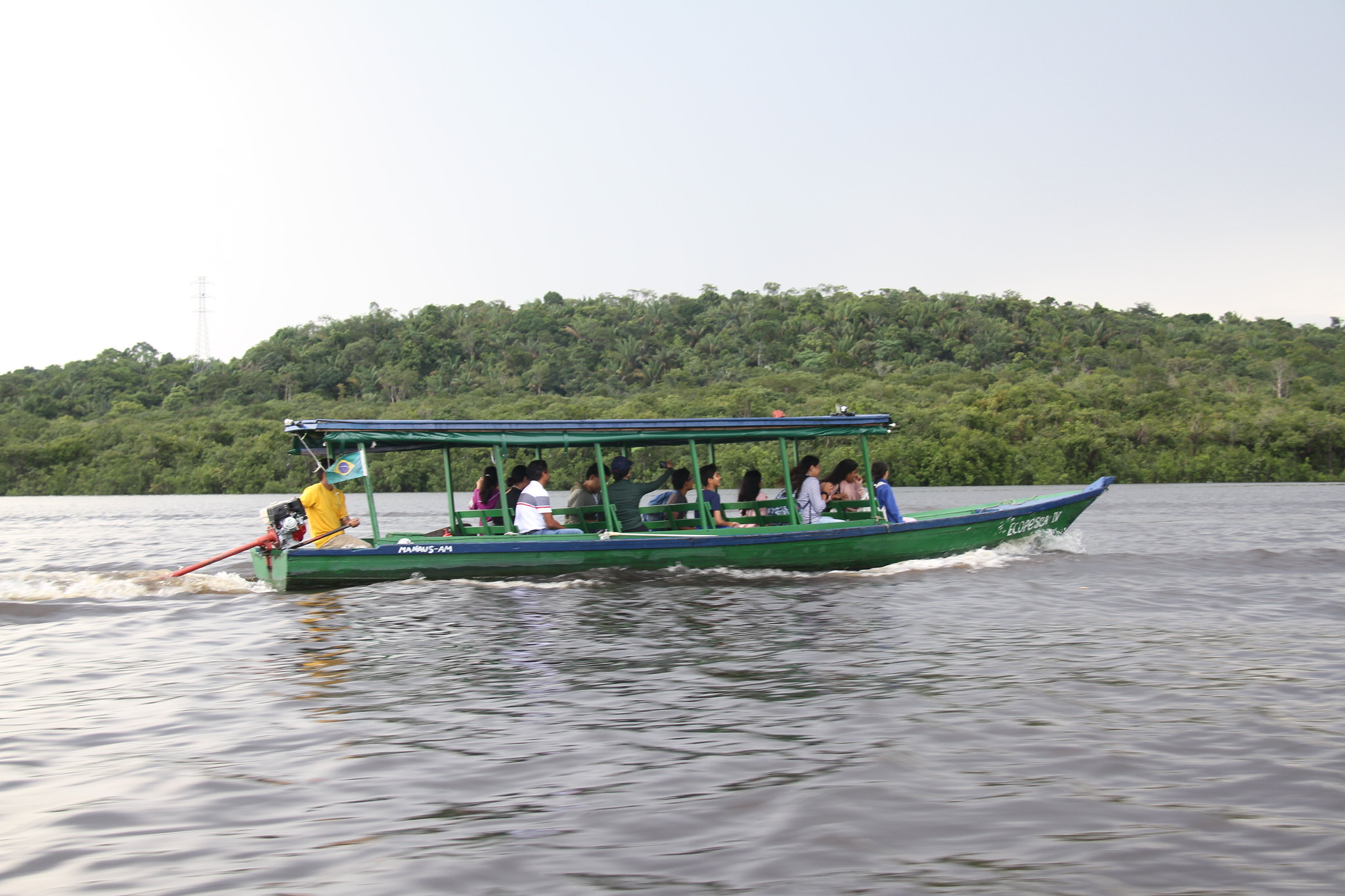
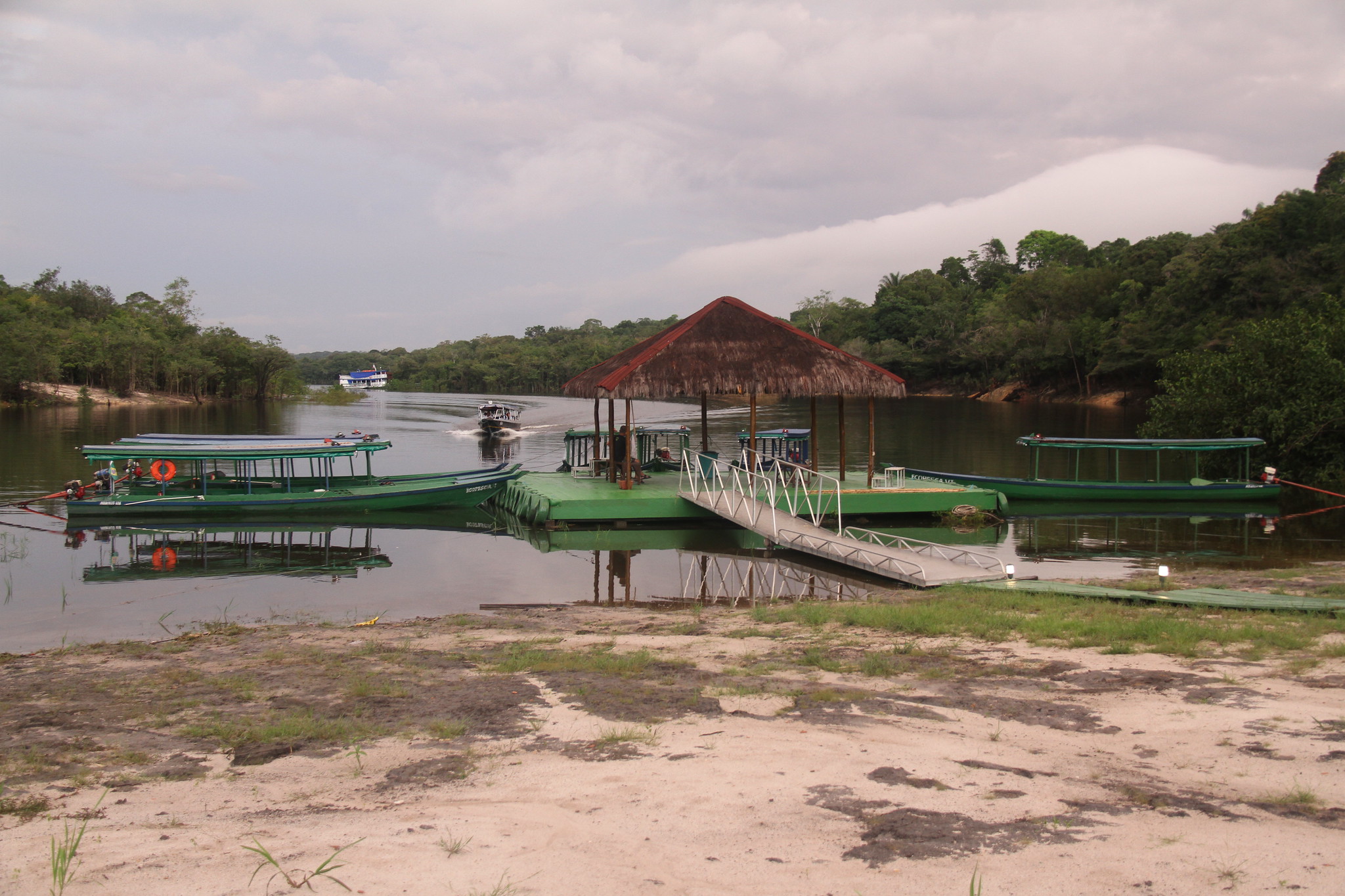
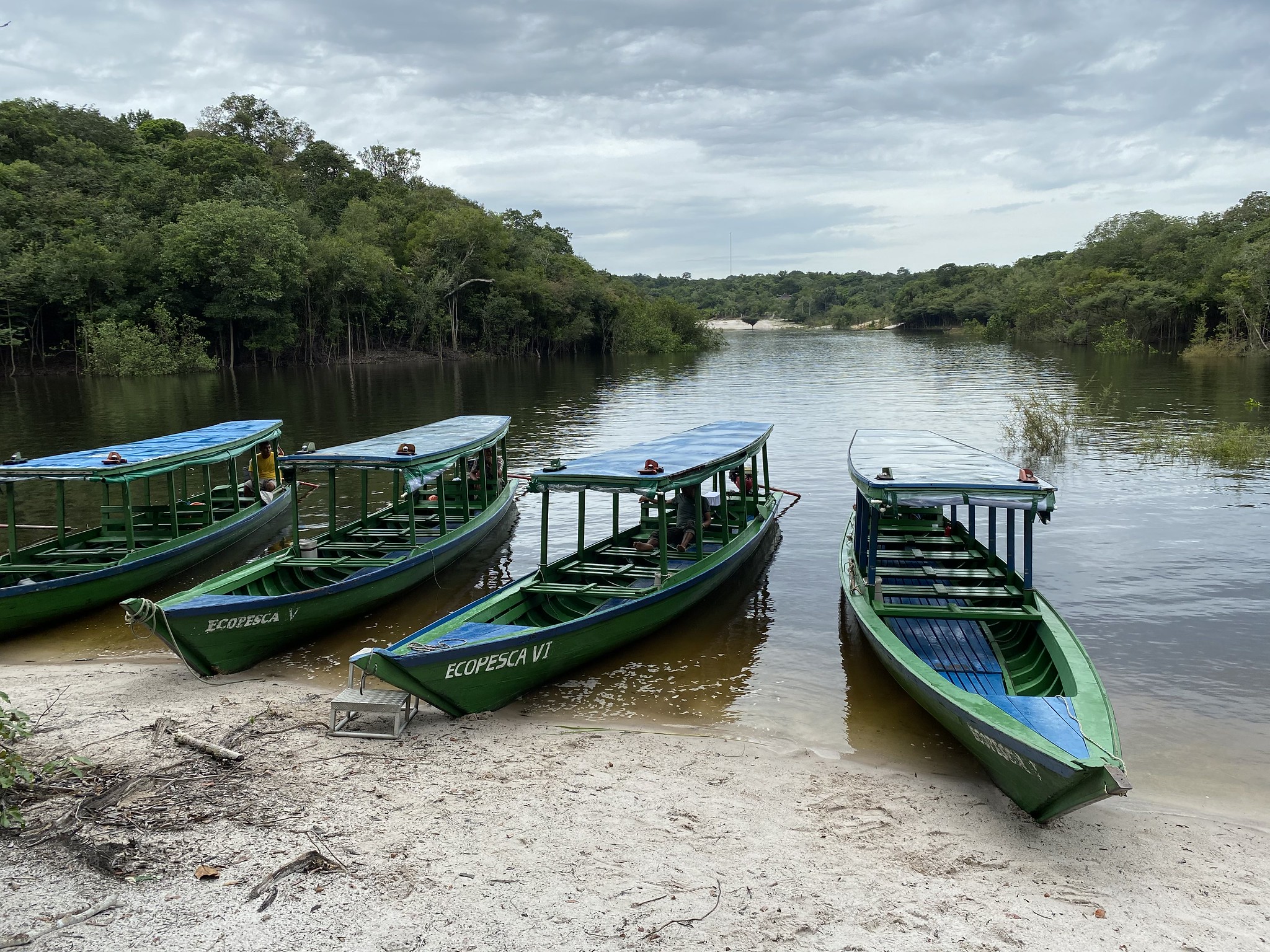
After meeting our guide at the airport, we were transferred to a small regional boat that would take us deep into the jungle. As the city gradually disappeared behind us, the scenery changed completely. The river widened, dense rainforest lined both banks, and the sounds of civilization were replaced by birdsong and the gentle hum of nature. The boat ride itself felt like the beginning of the adventure.
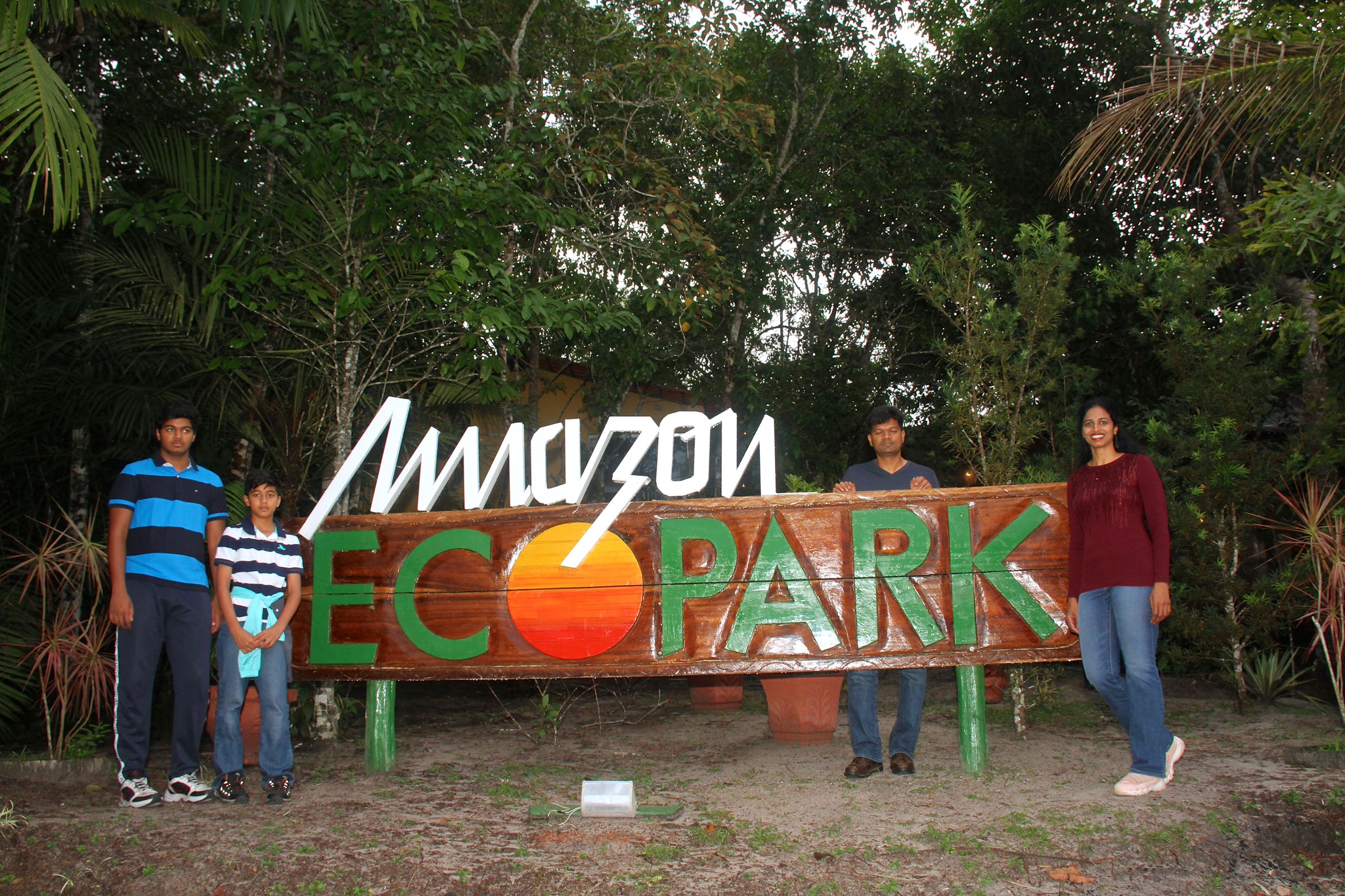
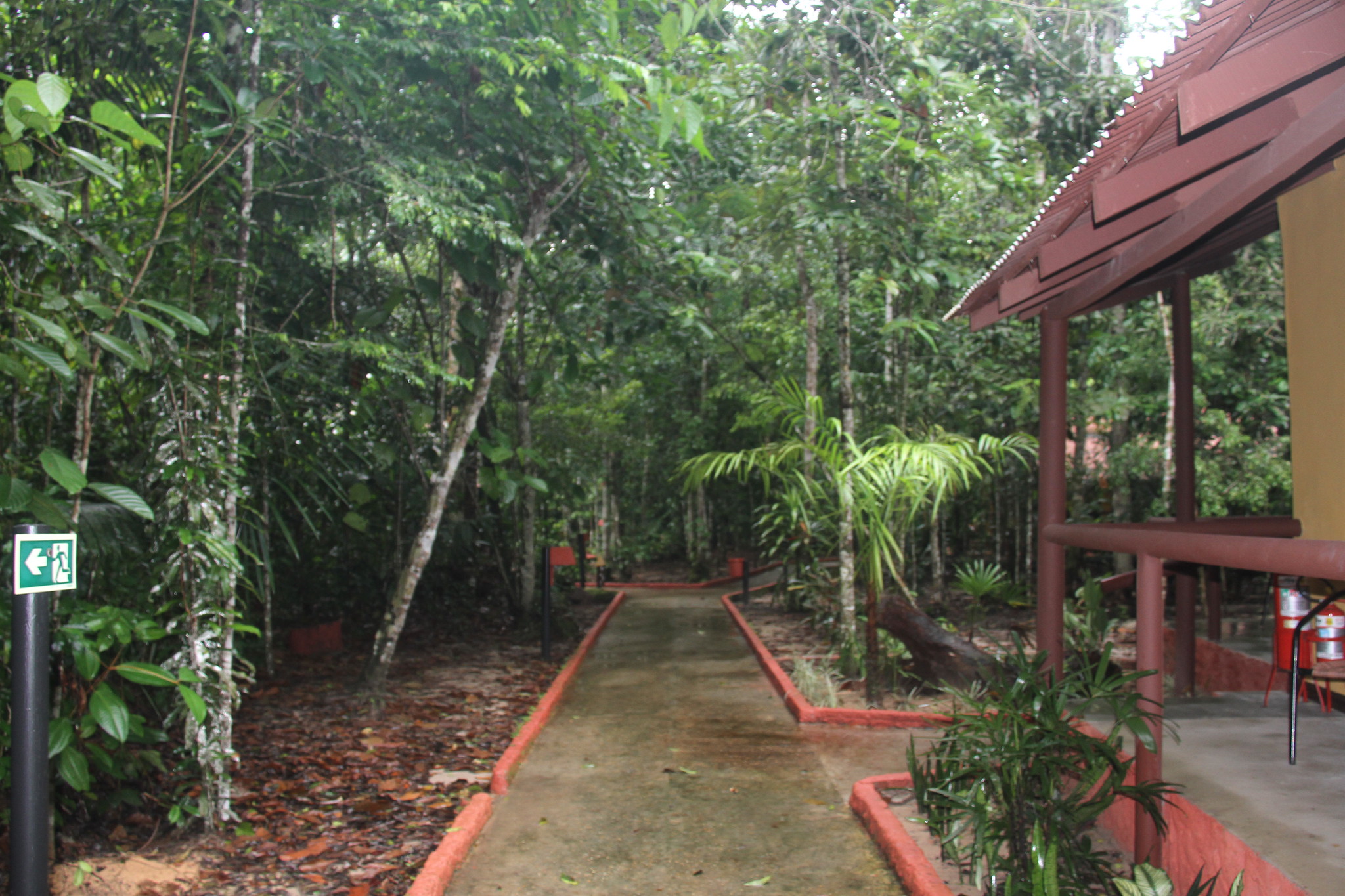
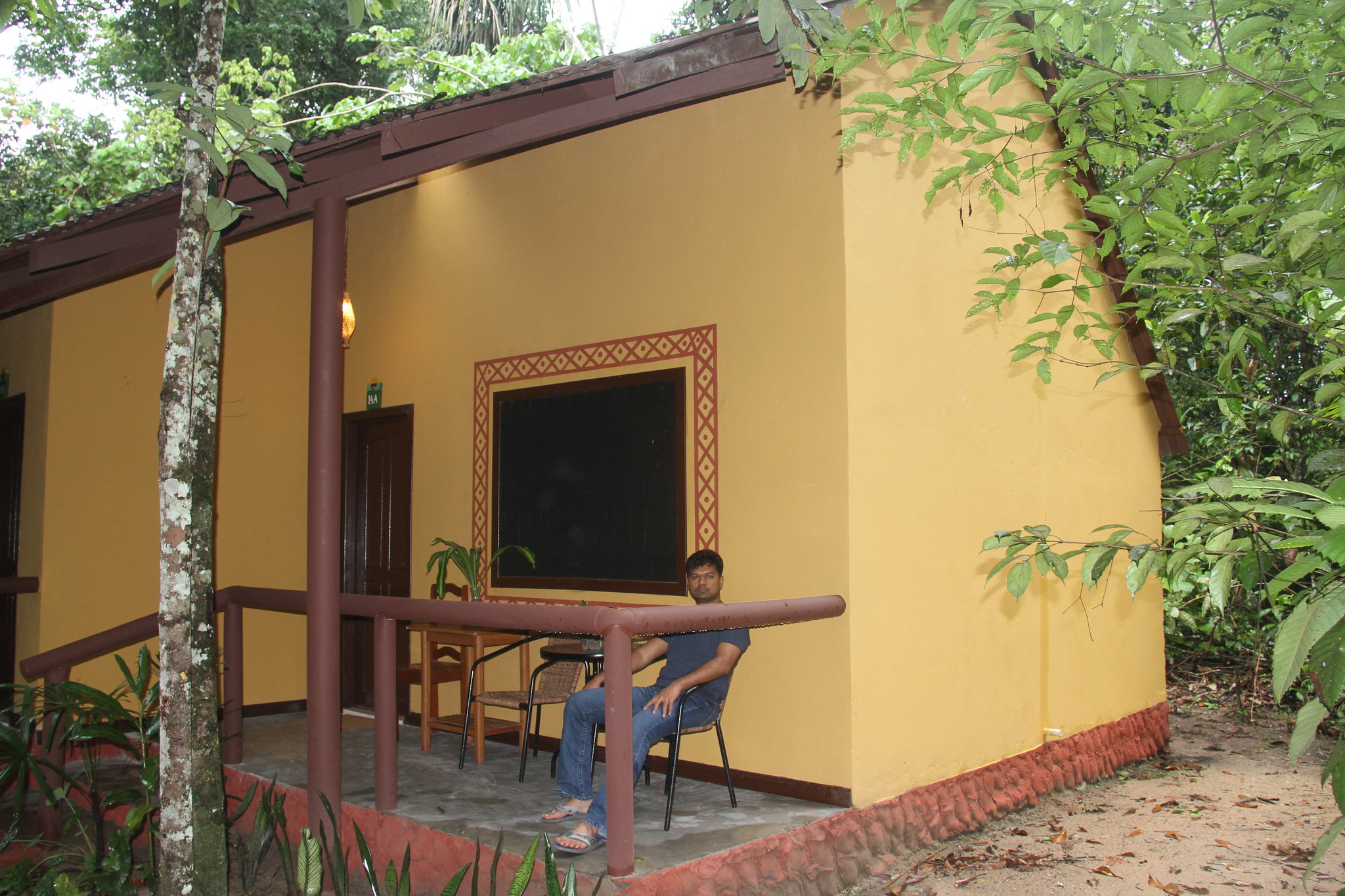
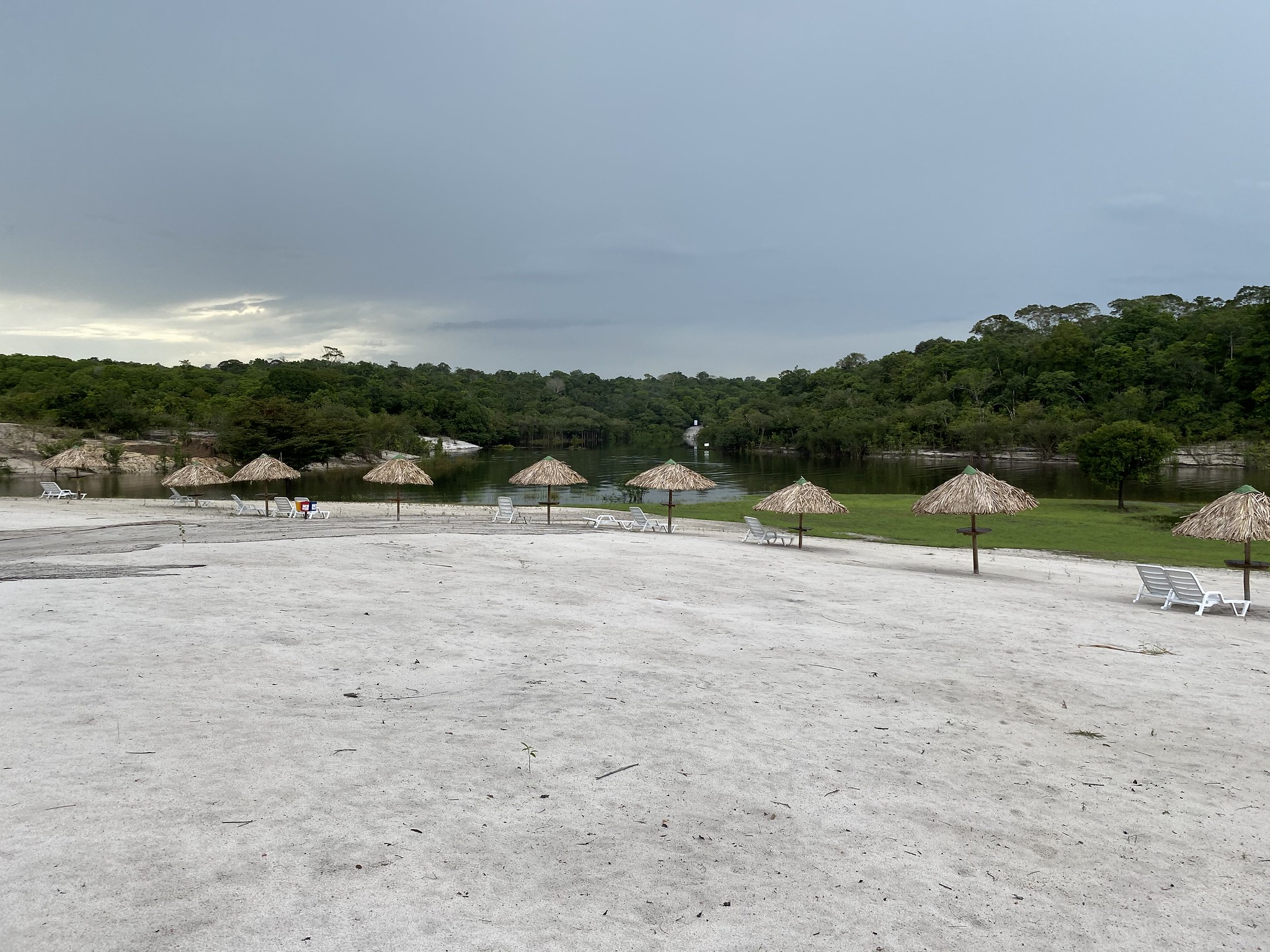
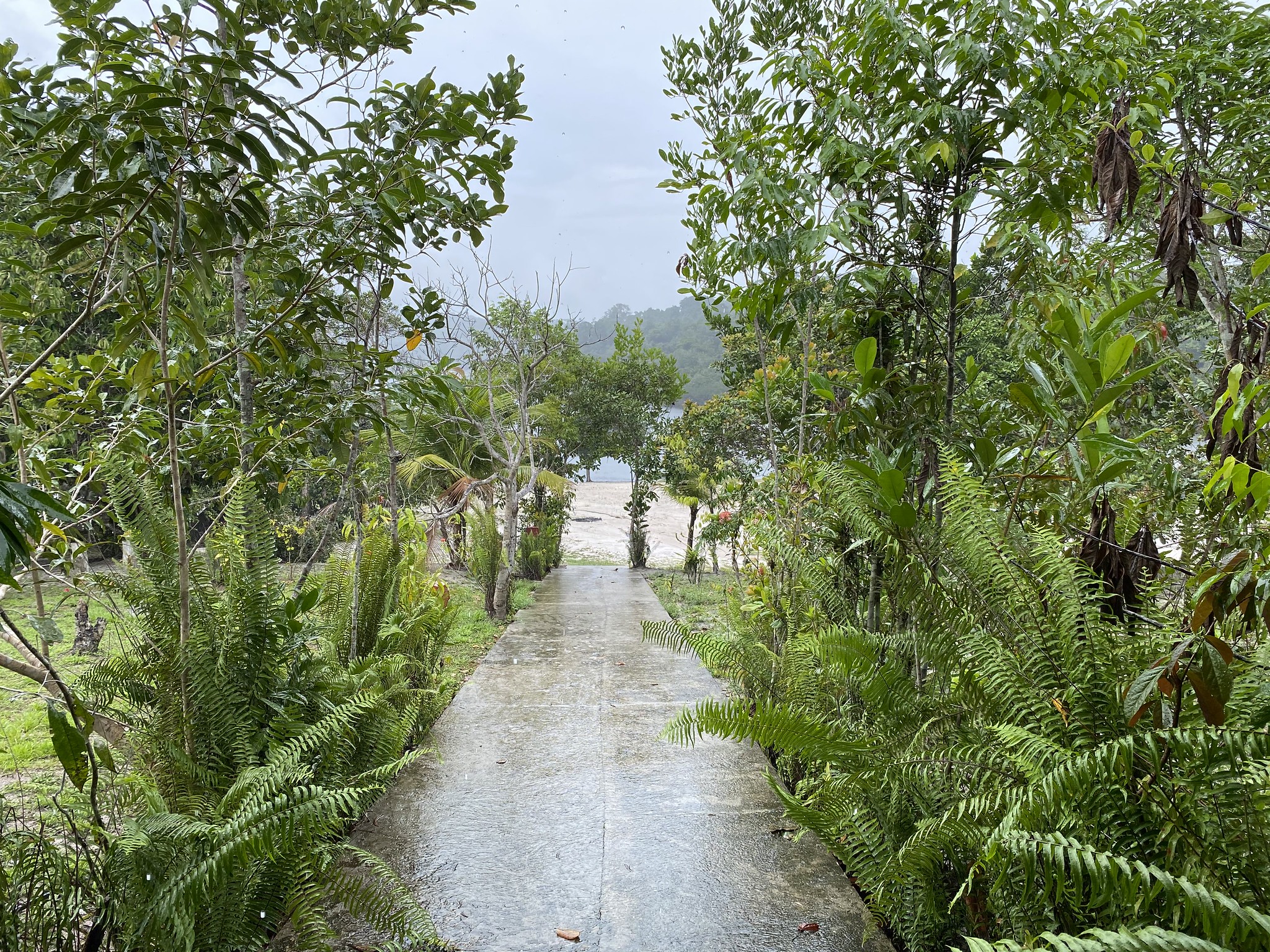
Soon we arrived at the Amazon EcoPark Jungle Lodge, our home for the next four nights. Nestled along the river and surrounded by lush rainforest, the lodge offered the perfect escape from the modern world.
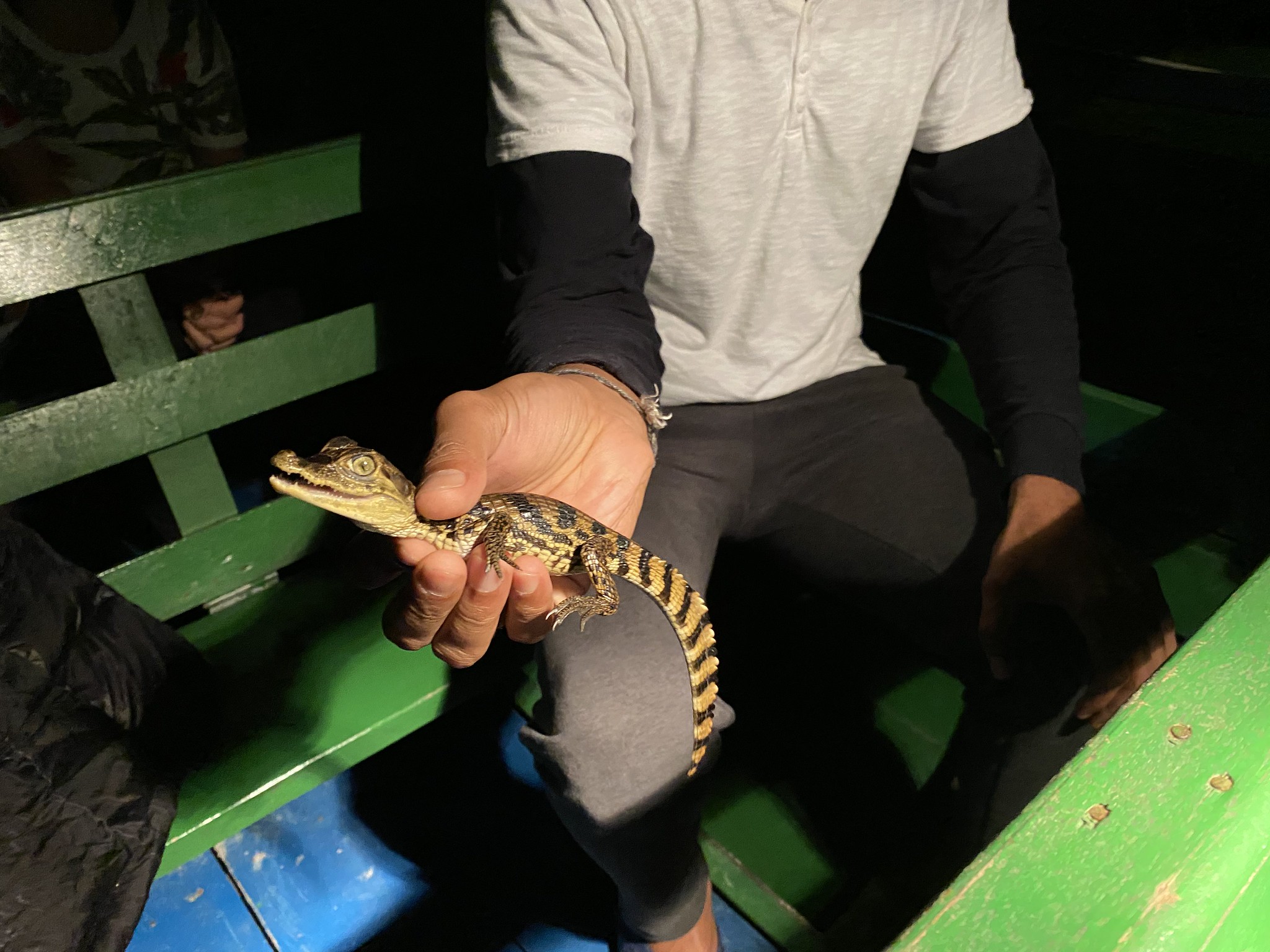
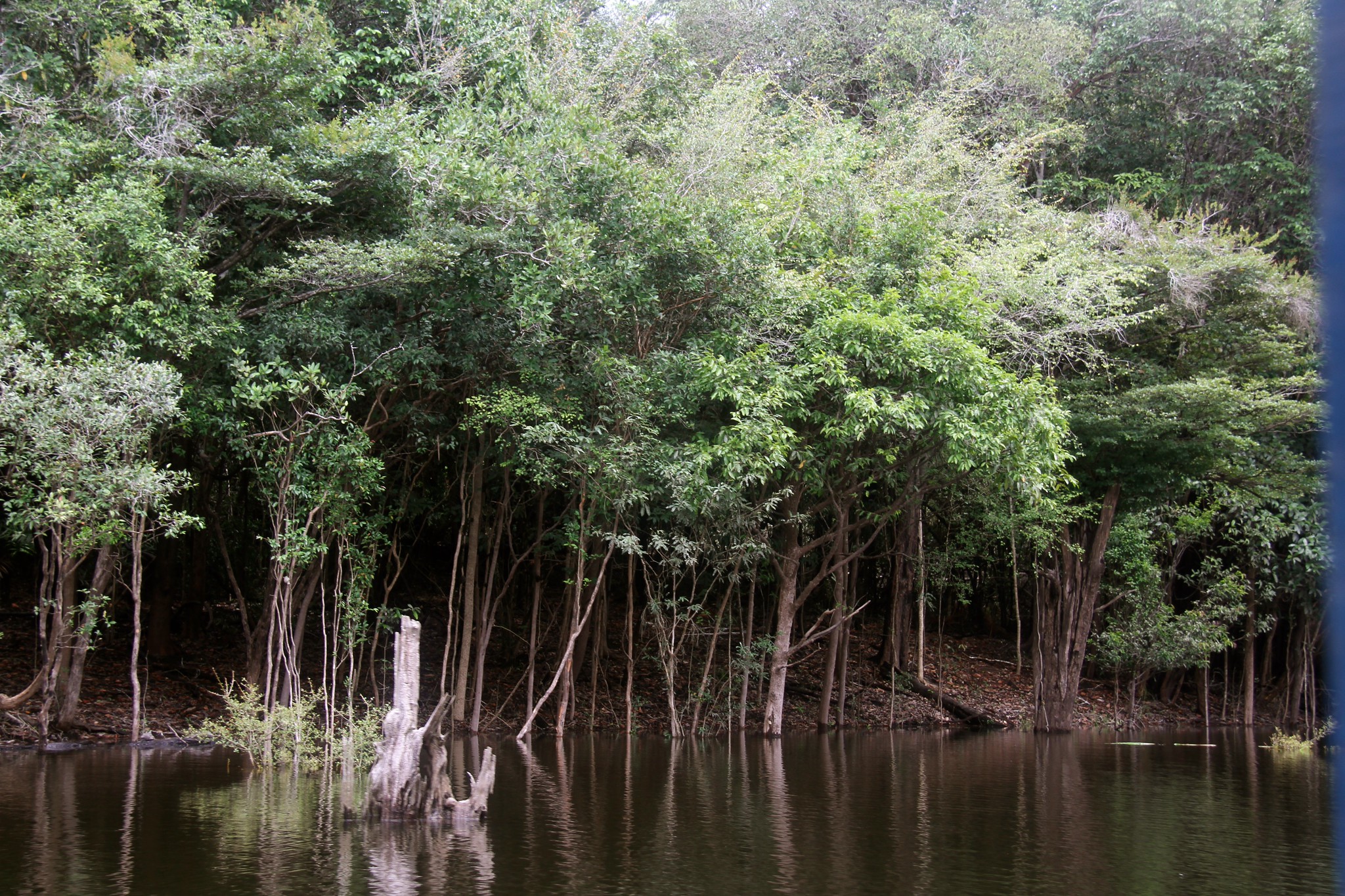
After settling into our rooms and enjoying the peaceful surroundings, we headed out again in the evening for our first wildlife excursion. Quietly paddling through the waterways in a canoe after sunset was a completely different experience. The rainforest comes alive at night, with frogs calling, insects buzzing, and countless unseen creatures moving through the darkness.
Our guide scanned the riverbanks with a spotlight, searching patiently for signs of wildlife. Before long, we spotted a tiny baby caiman resting quietly near the water’s edge, its eyes glowing brightly in the light. It wasn’t a dramatic encounter, but it was the perfect introduction to Amazon wildlife. As we paddled back to the lodge beneath a sky full of stars, surrounded only by the sounds of the rainforest, we knew our Amazon adventure had truly begun.
Day 2 – Into the Rainforest
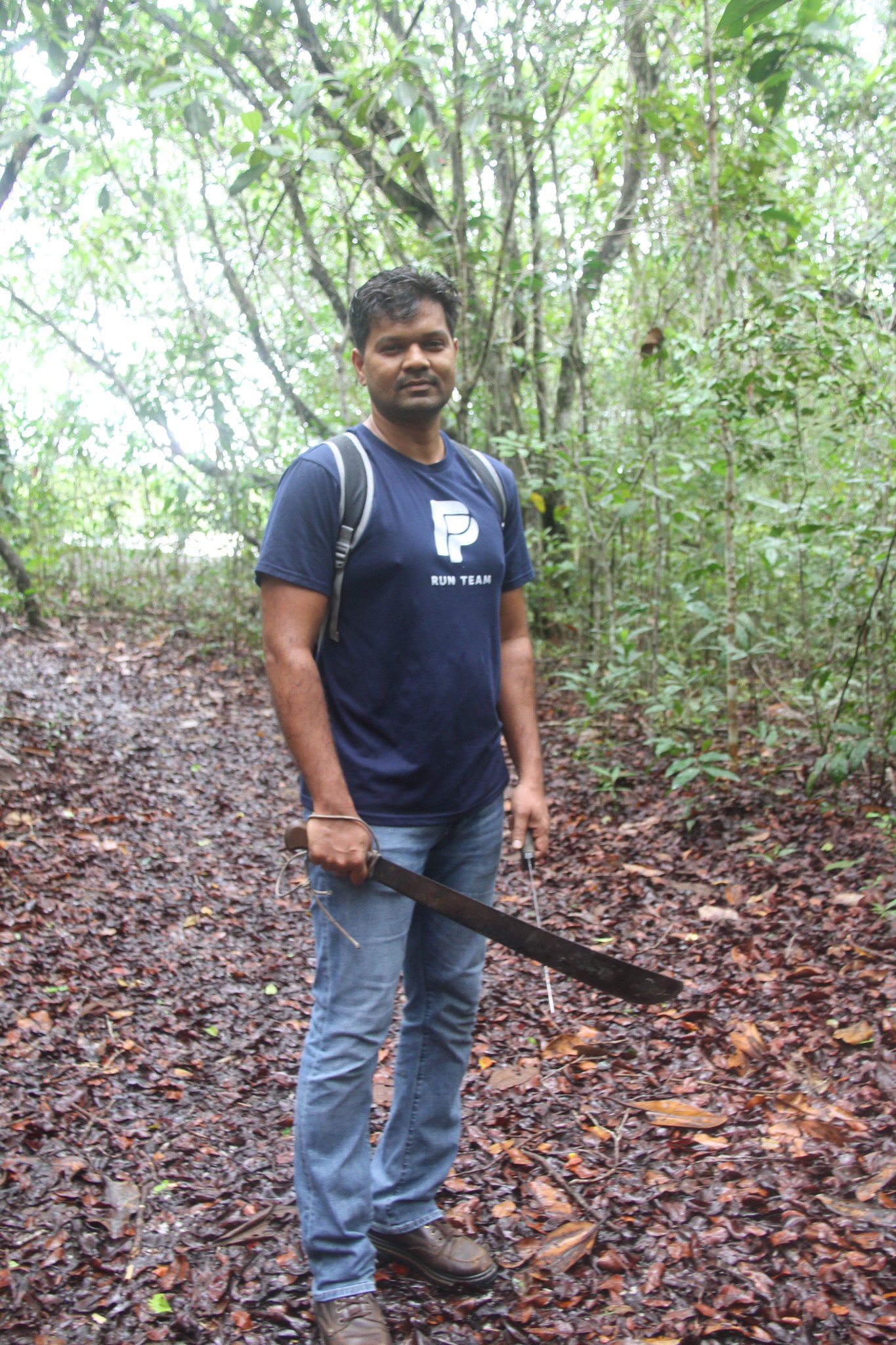
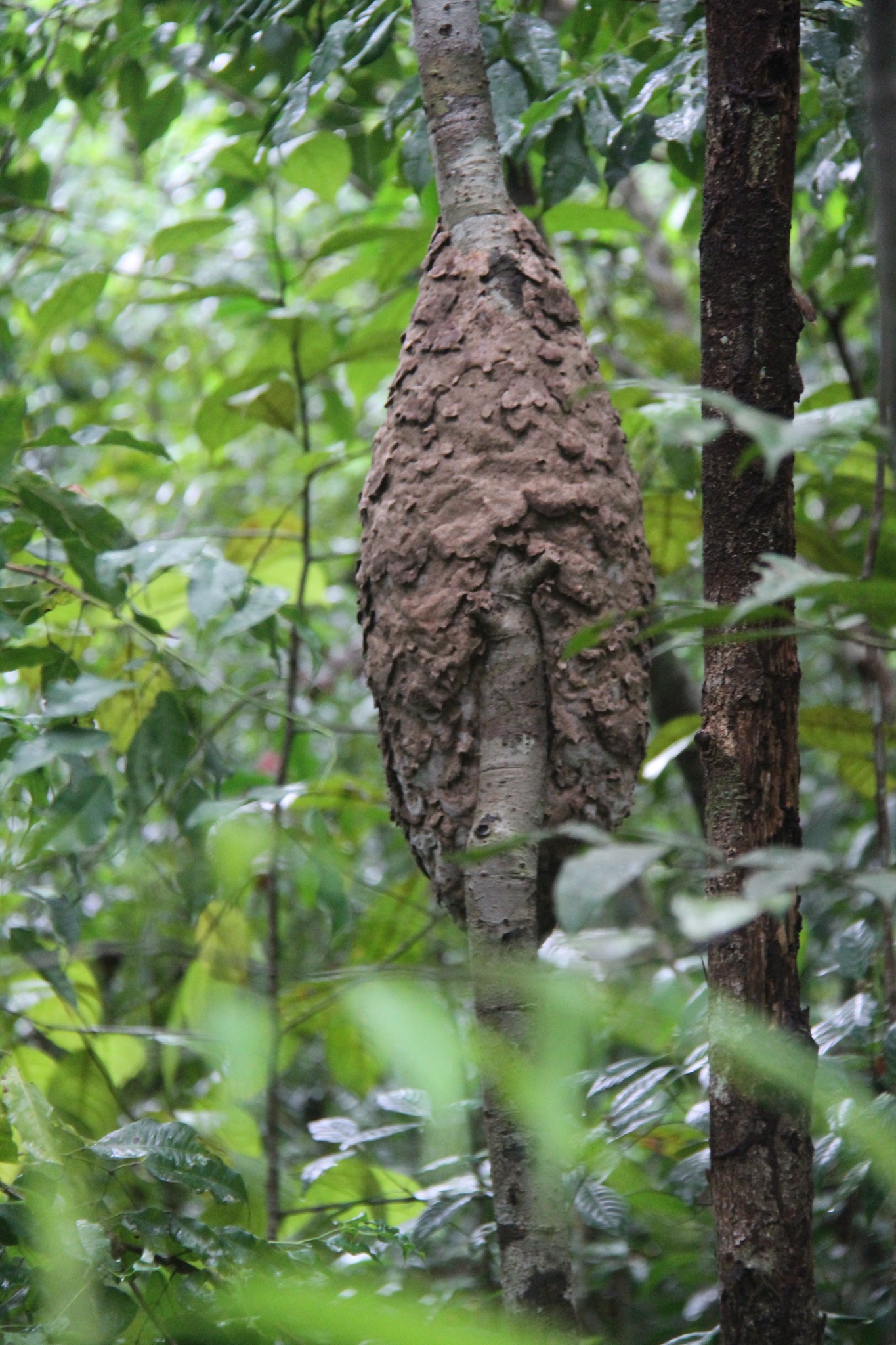
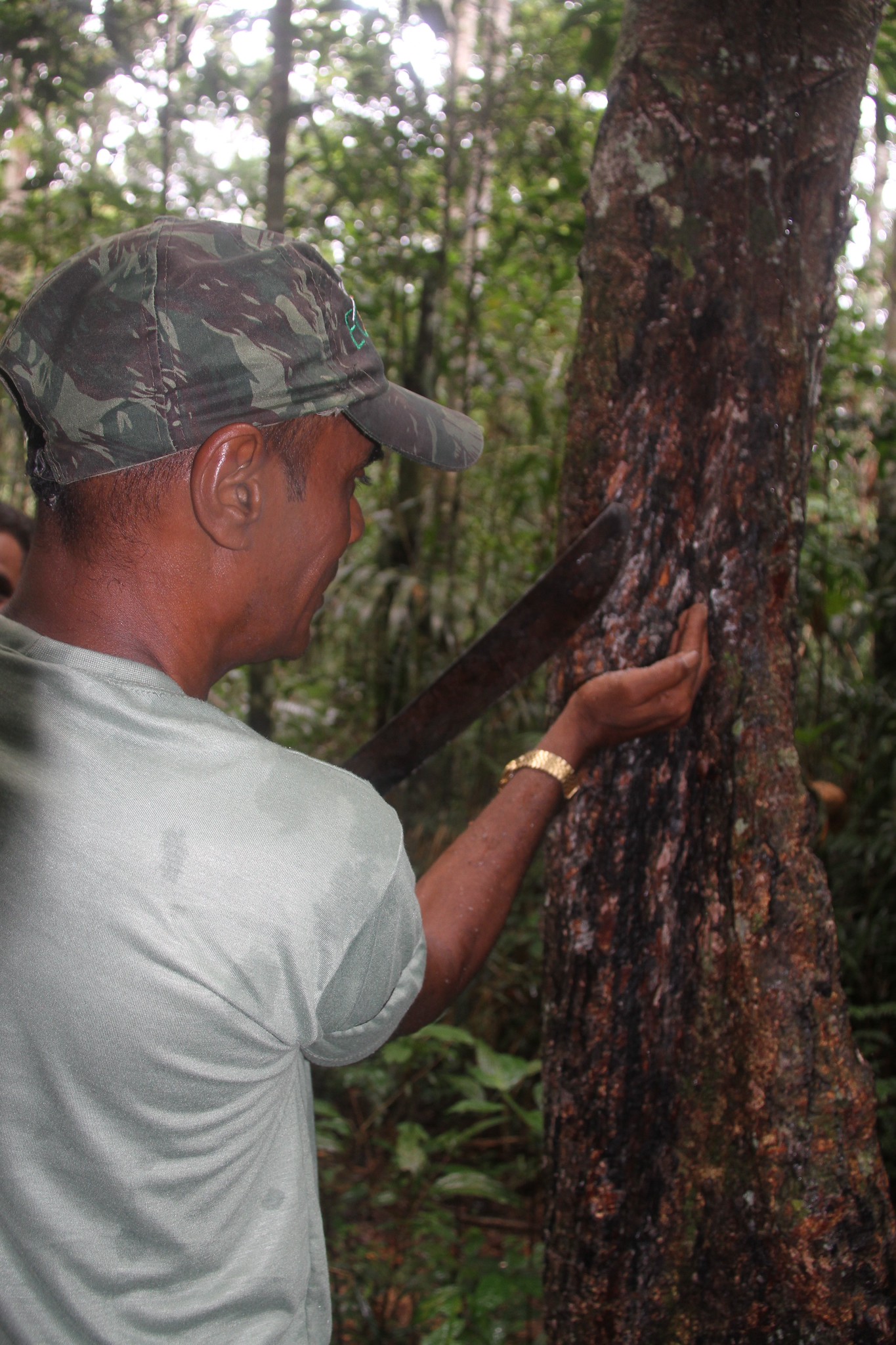
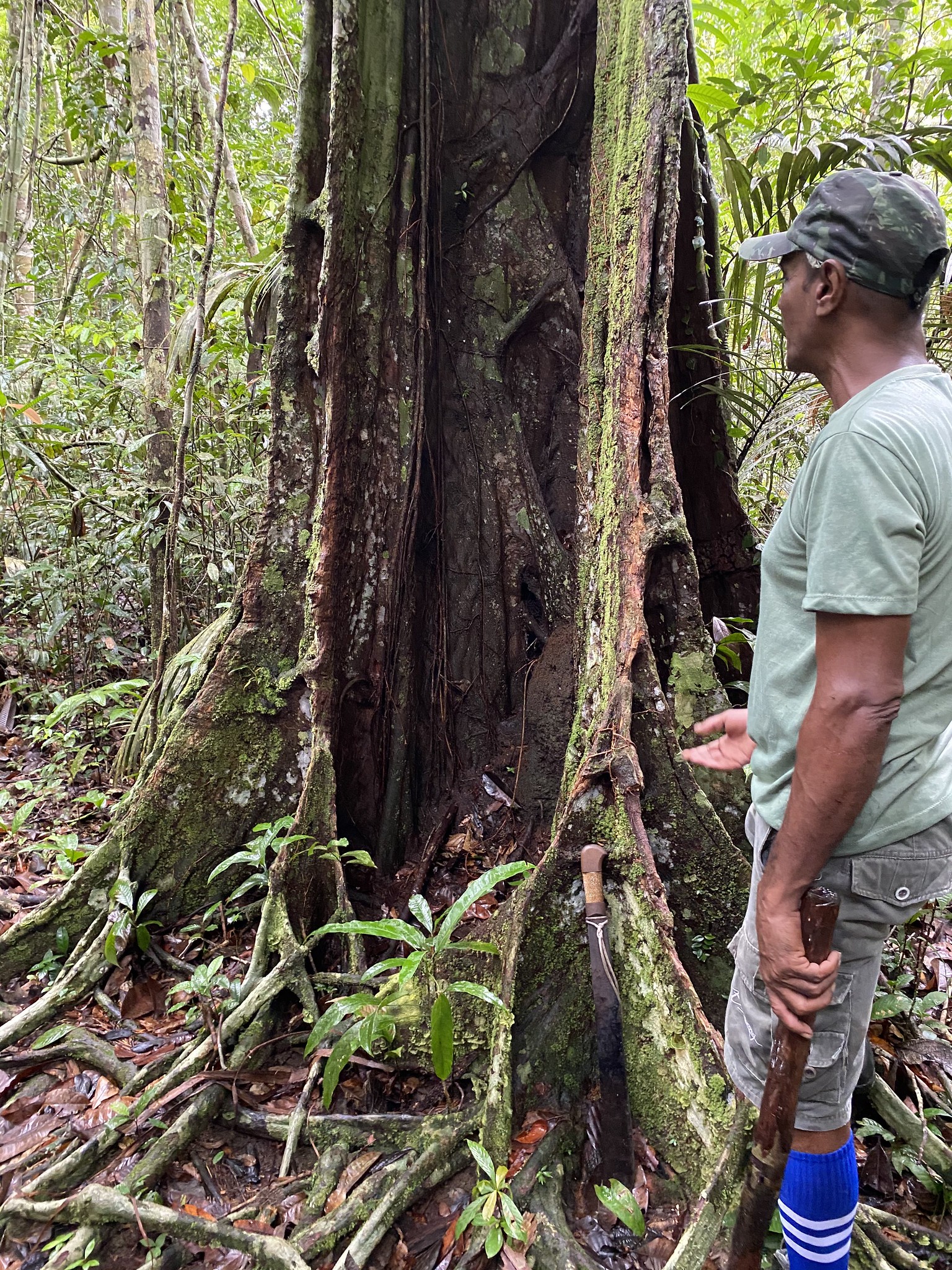
Our first full day in the Amazon began deep in the heart of the rainforest with a guided jungle walk. Stepping under the dense canopy, we were immediately surrounded by a world that felt untouched and alive. Our naturalist guide led the way, moving confidently through the forest with a machete, which he used to clear light paths and point out different plants along the trail. It quickly became clear that in the Amazon, this tool is as essential as a map.
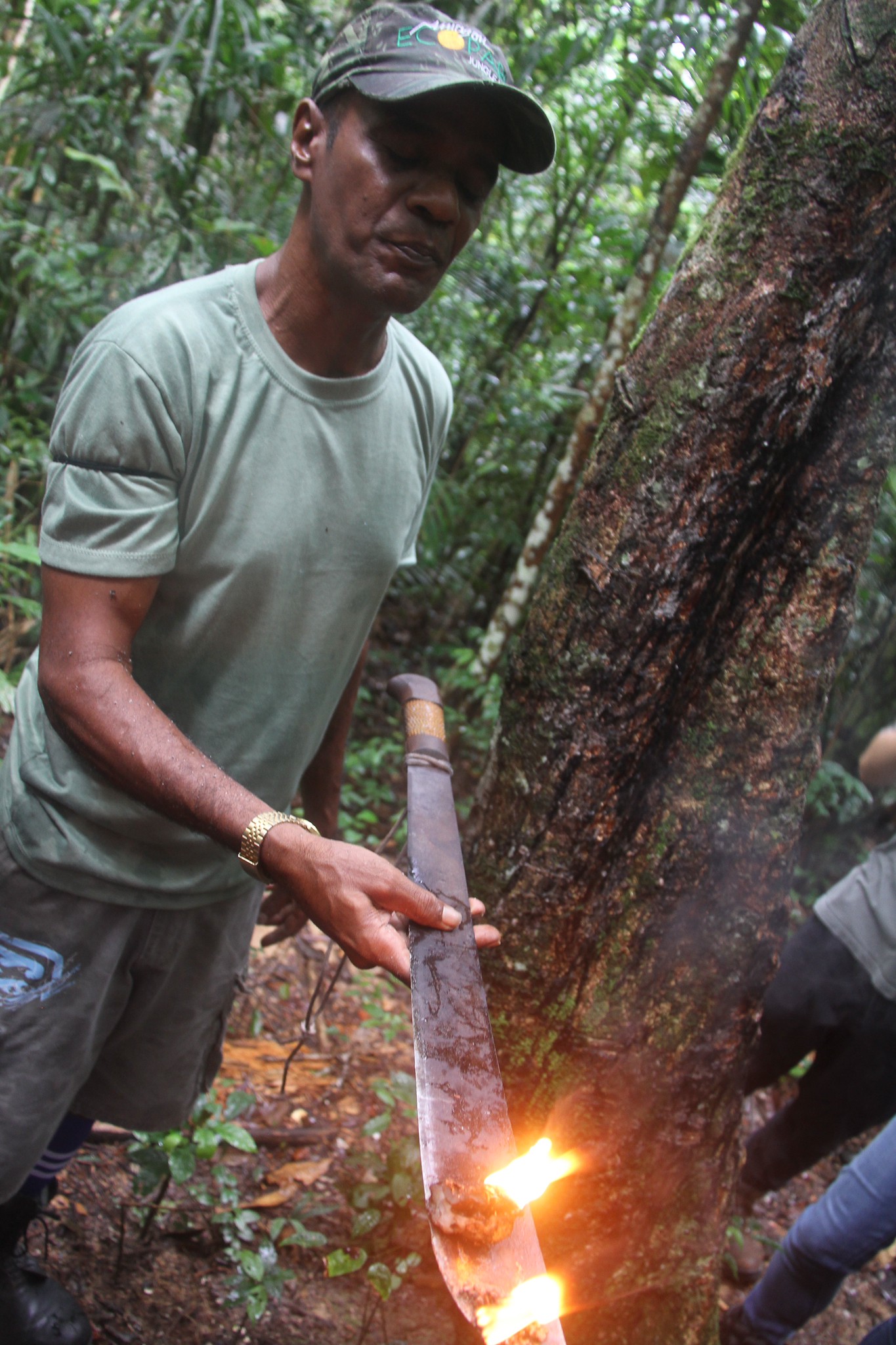
One of the most fascinating moments came when our guide demonstrated how fire can be started in the jungle using a fine powder made from a tree. With just a small spark and this natural tinder, he was able to ignite a flame—an impressive reminder of how traditional knowledge is deeply connected to survival in the rainforest.
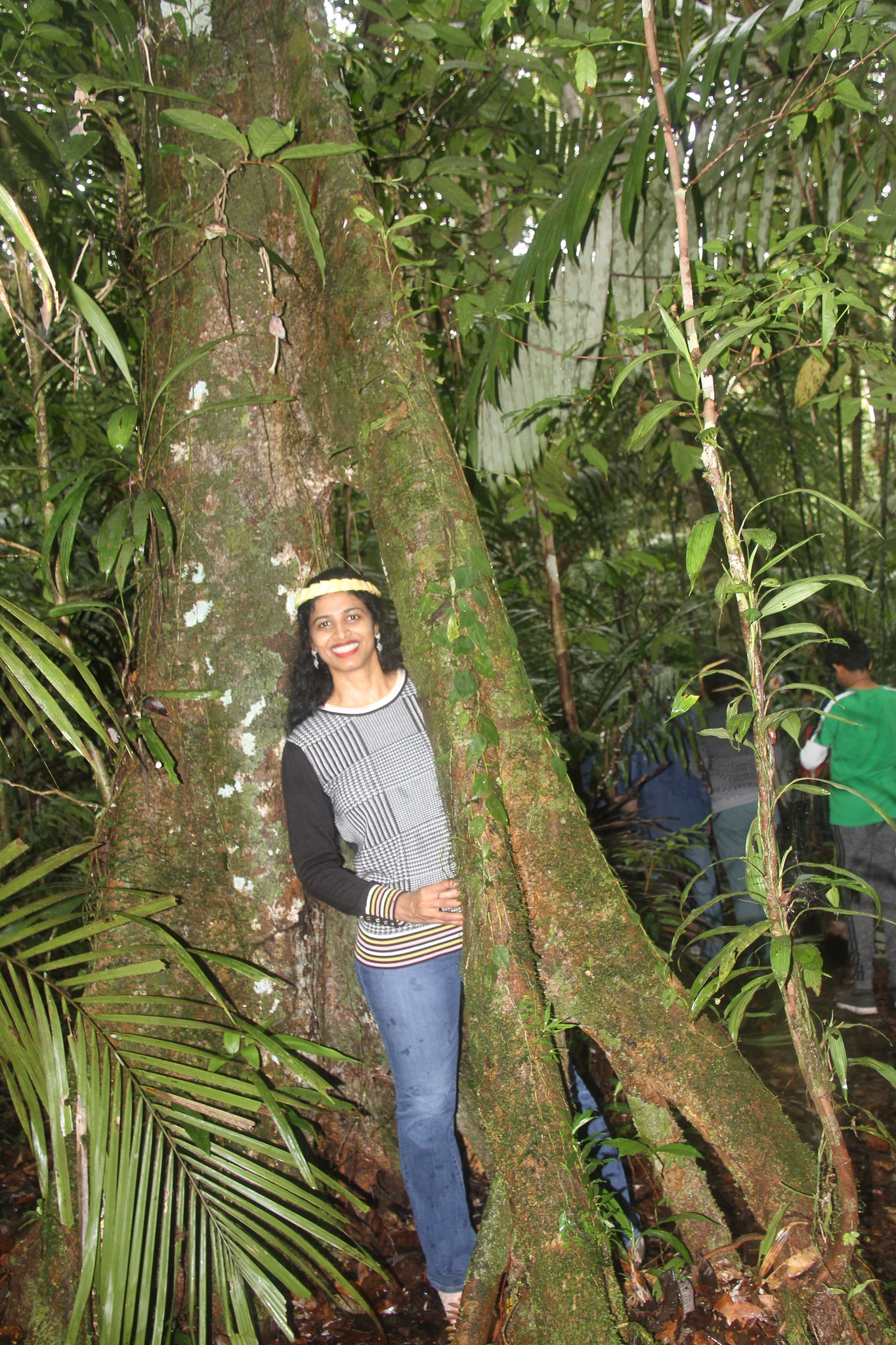
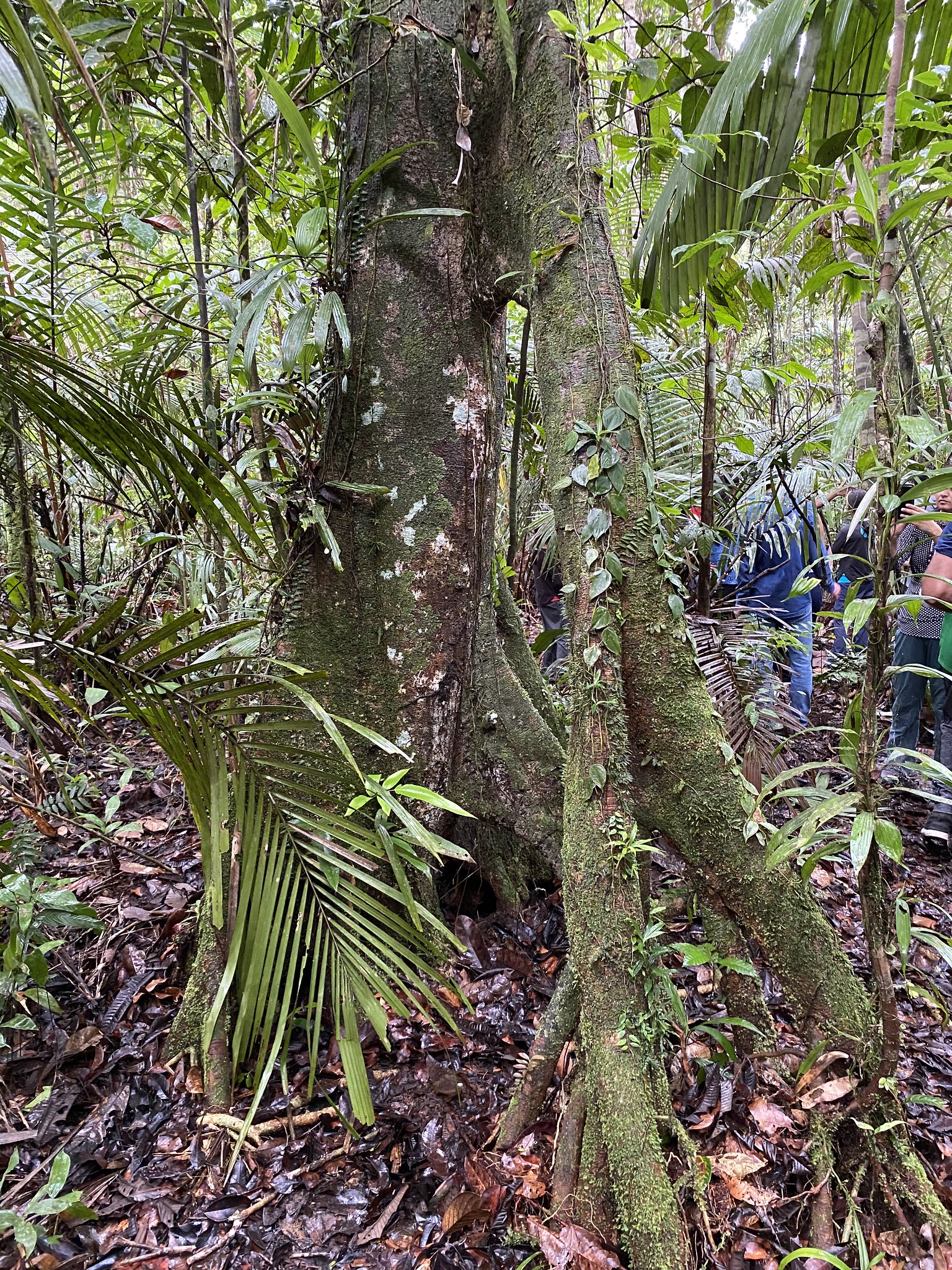
He continued pointing out medicinal plants, towering trees, and hidden insects that we would have easily walked past on our own. One of the highlights of the walk was the massive Kapok tree, its enormous buttress roots spreading across the forest floor. Standing beside it made us realize just how ancient and powerful this rainforest really is—an entire ecosystem built layer by layer over thousands of years.
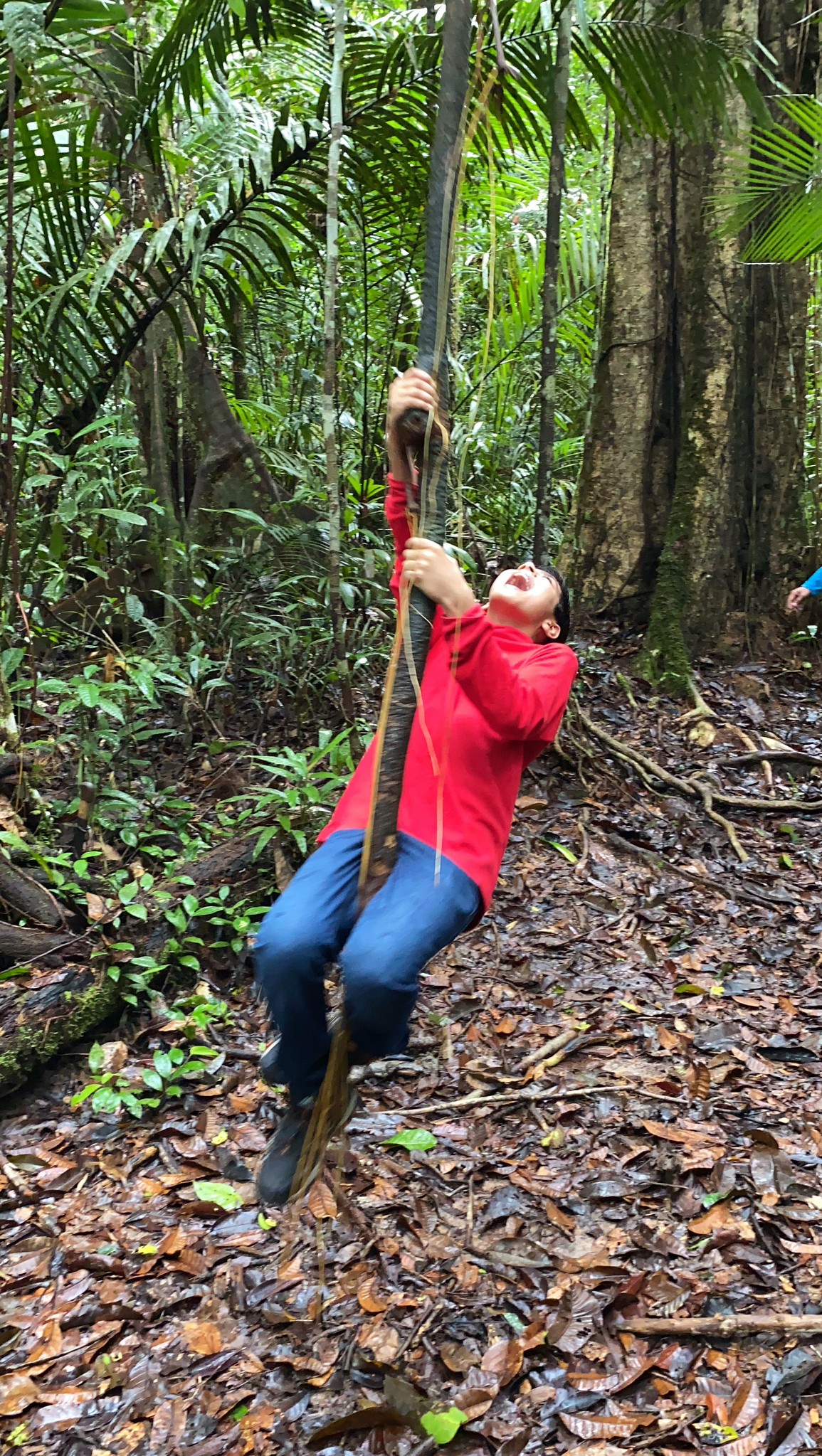
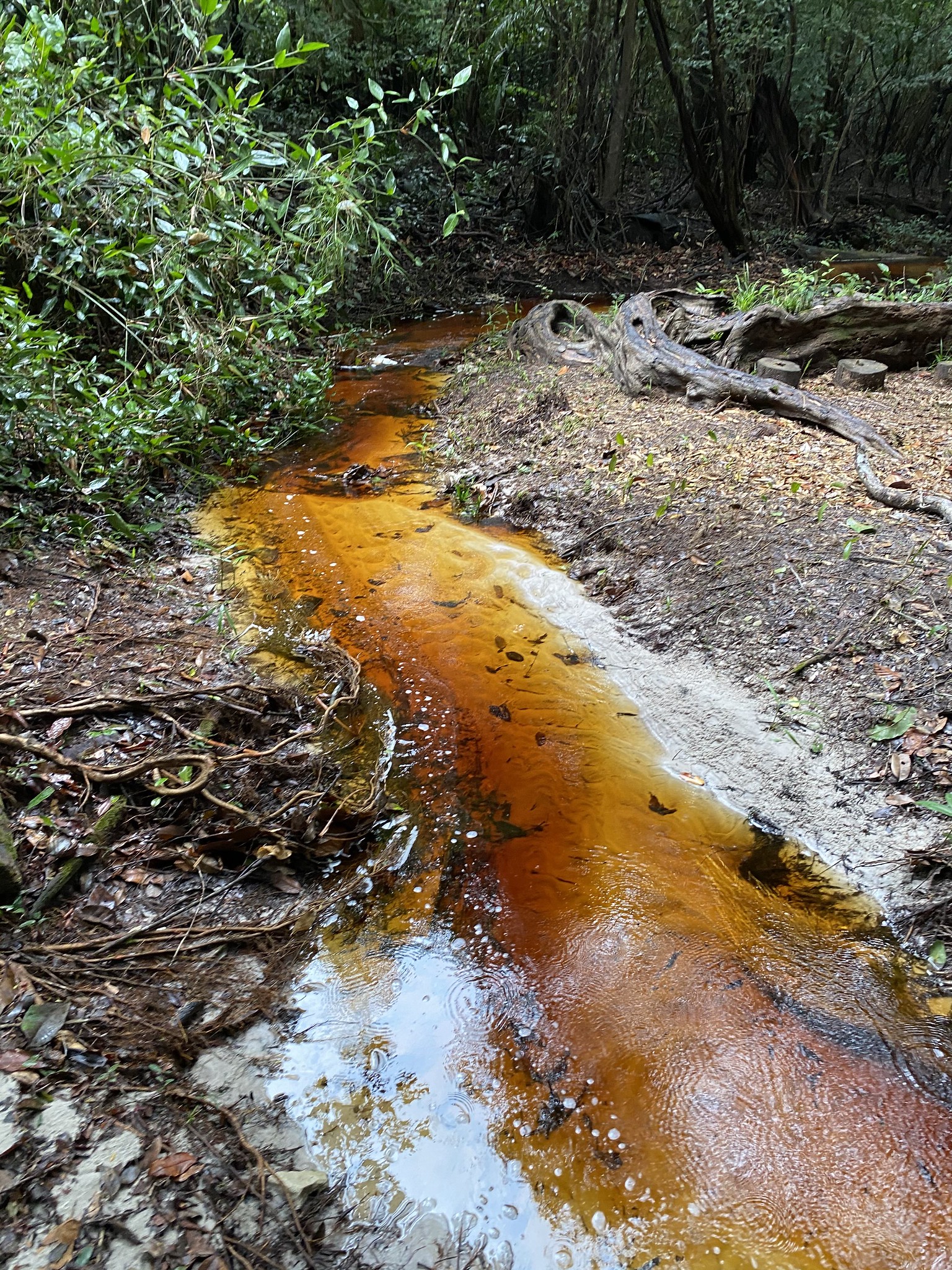
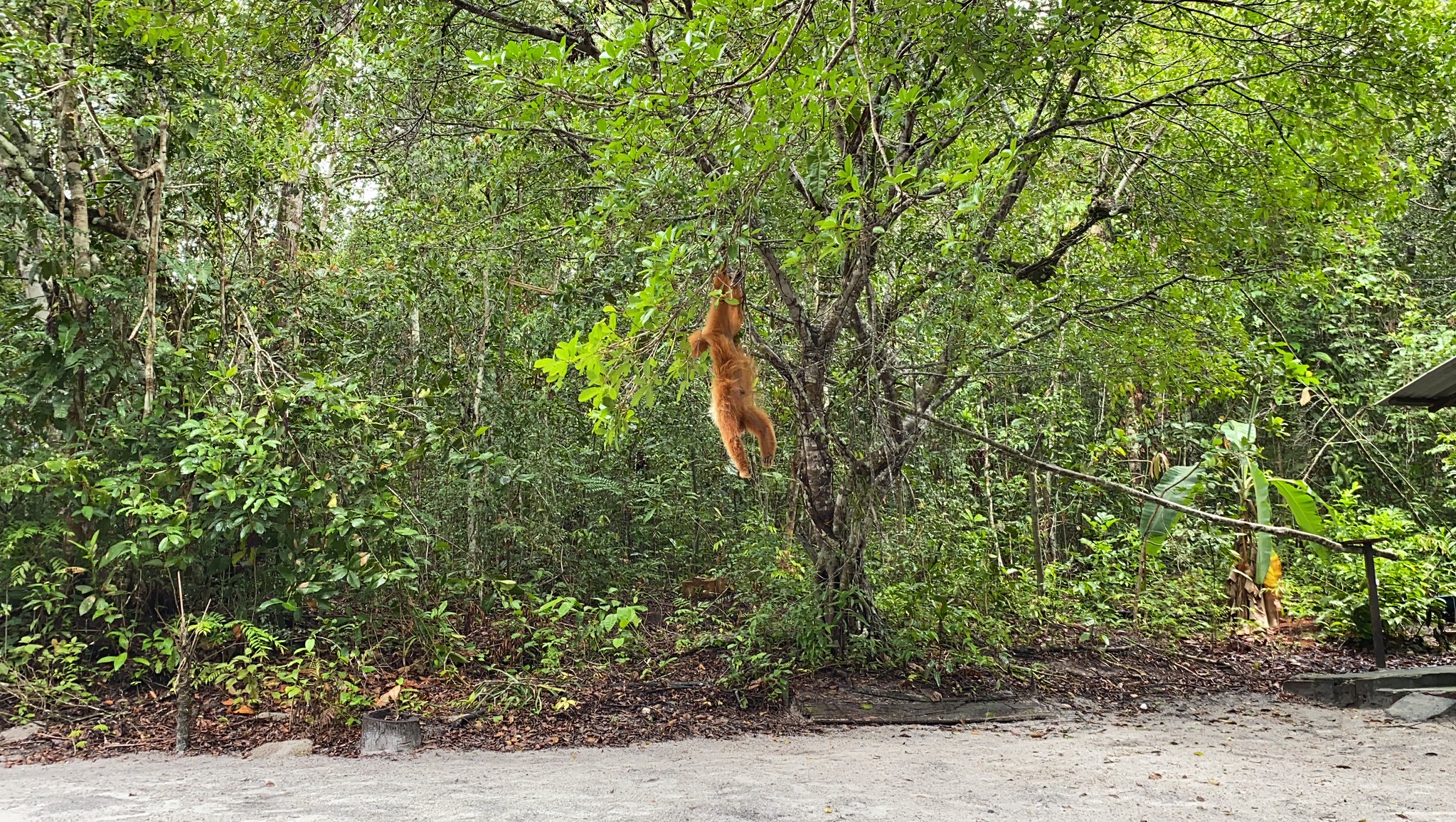
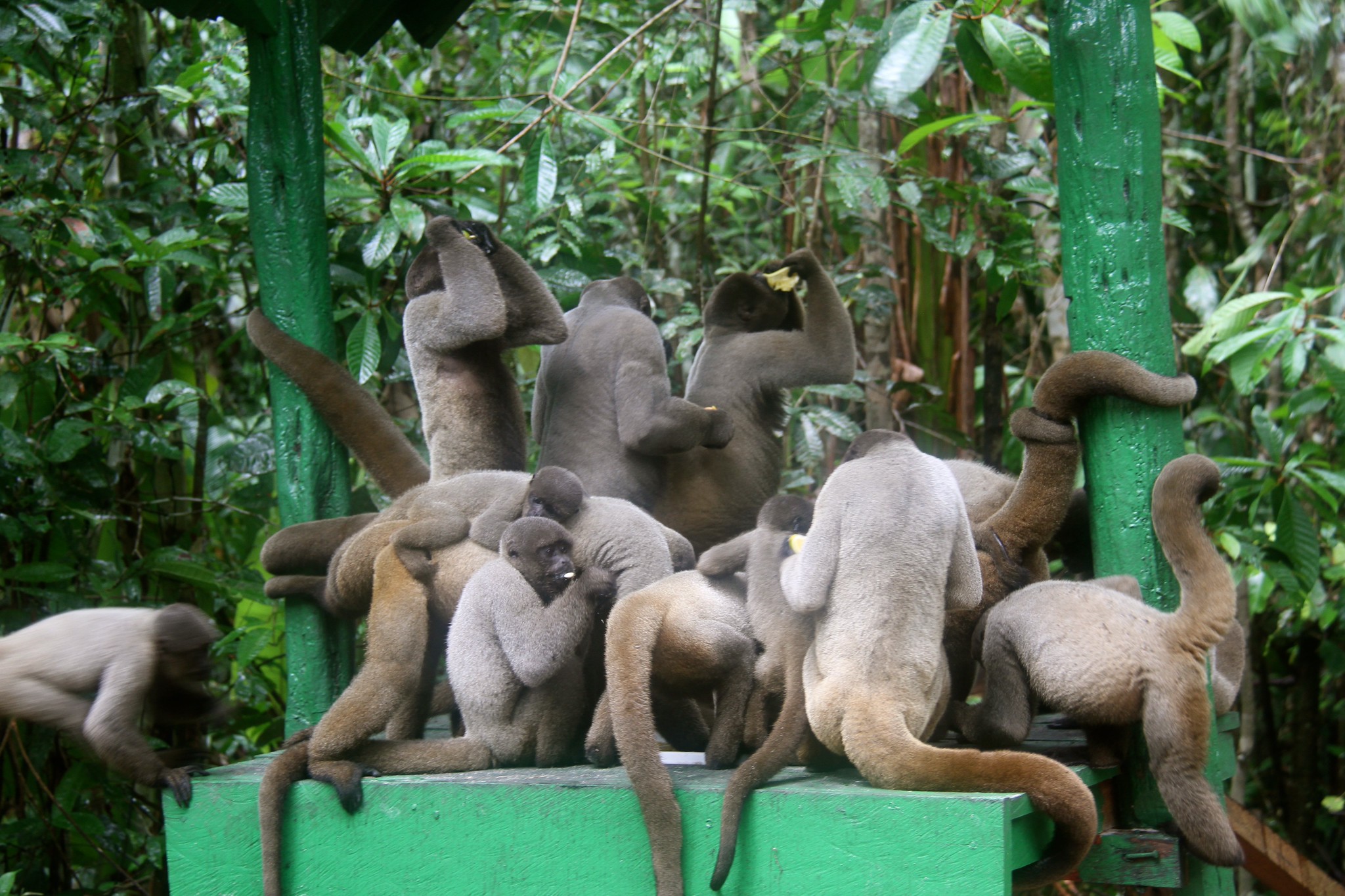
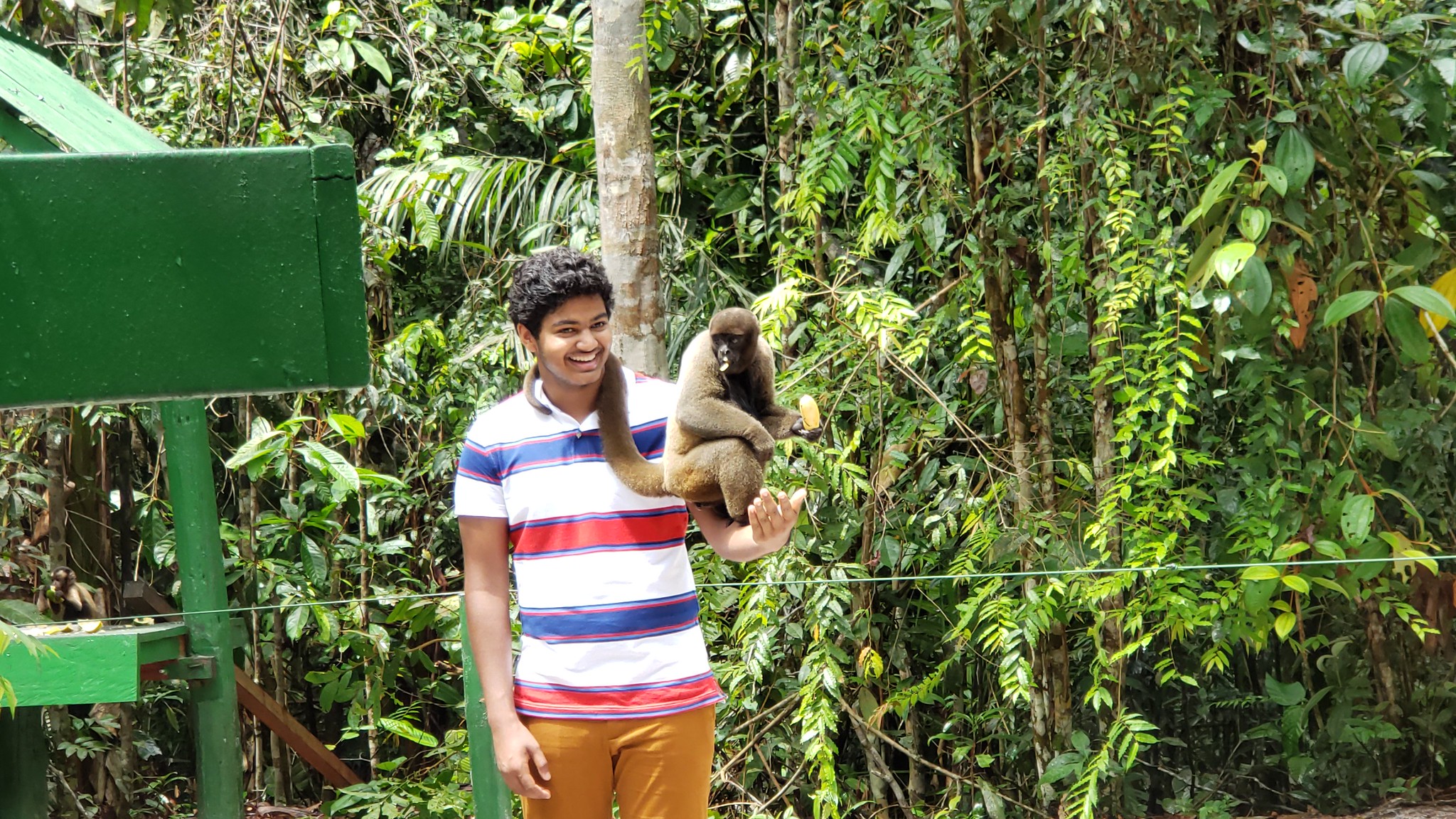
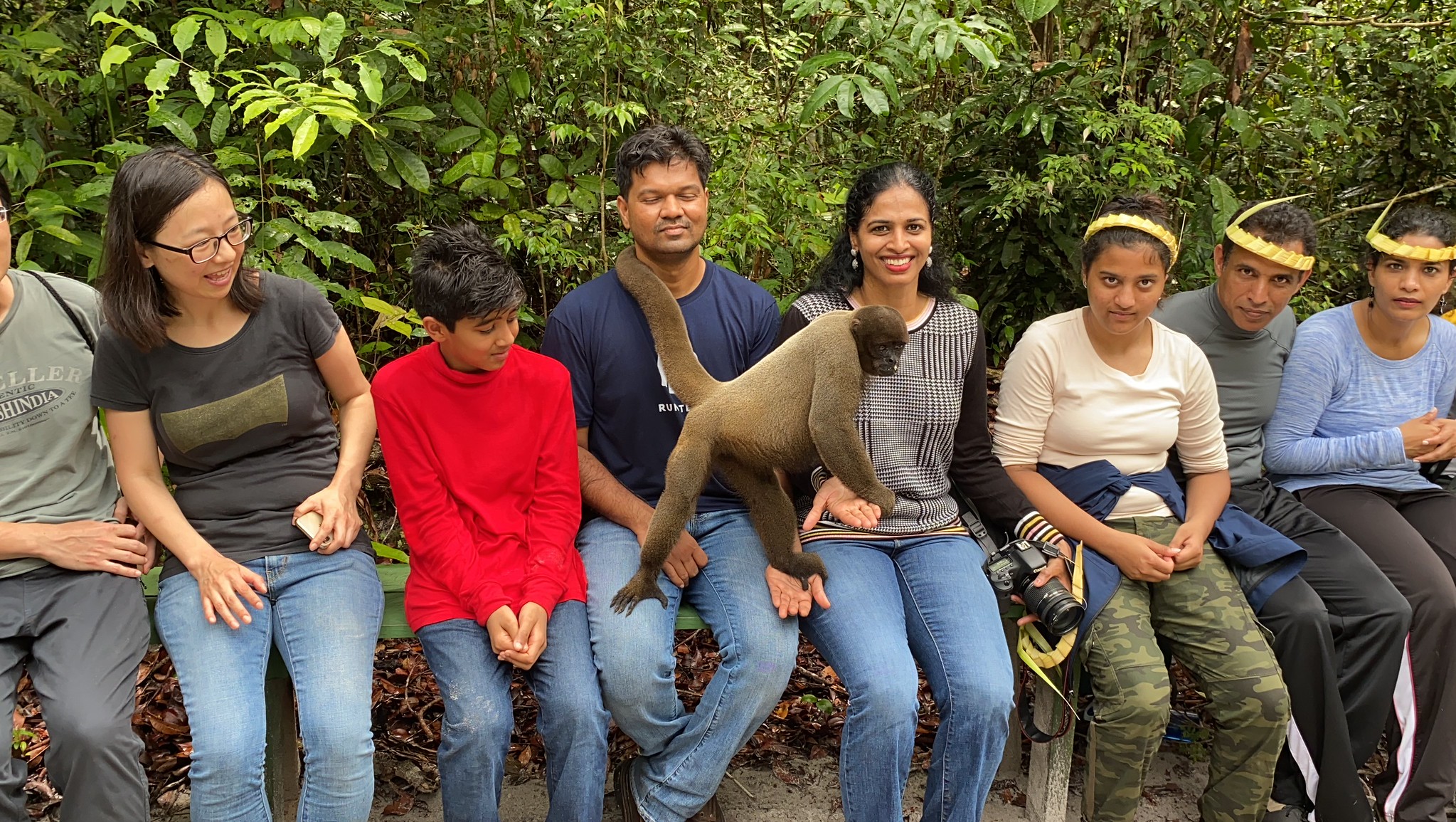
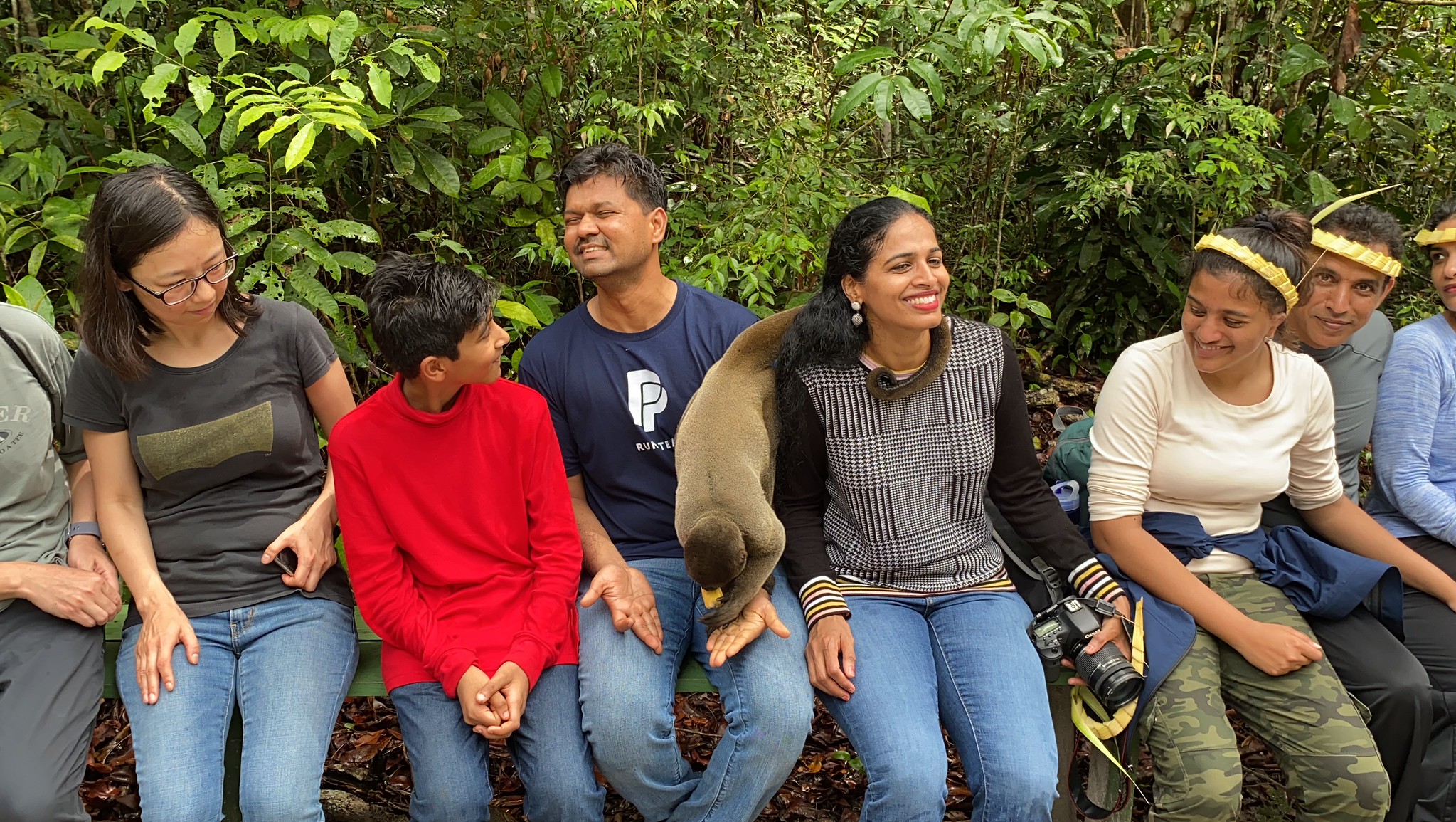
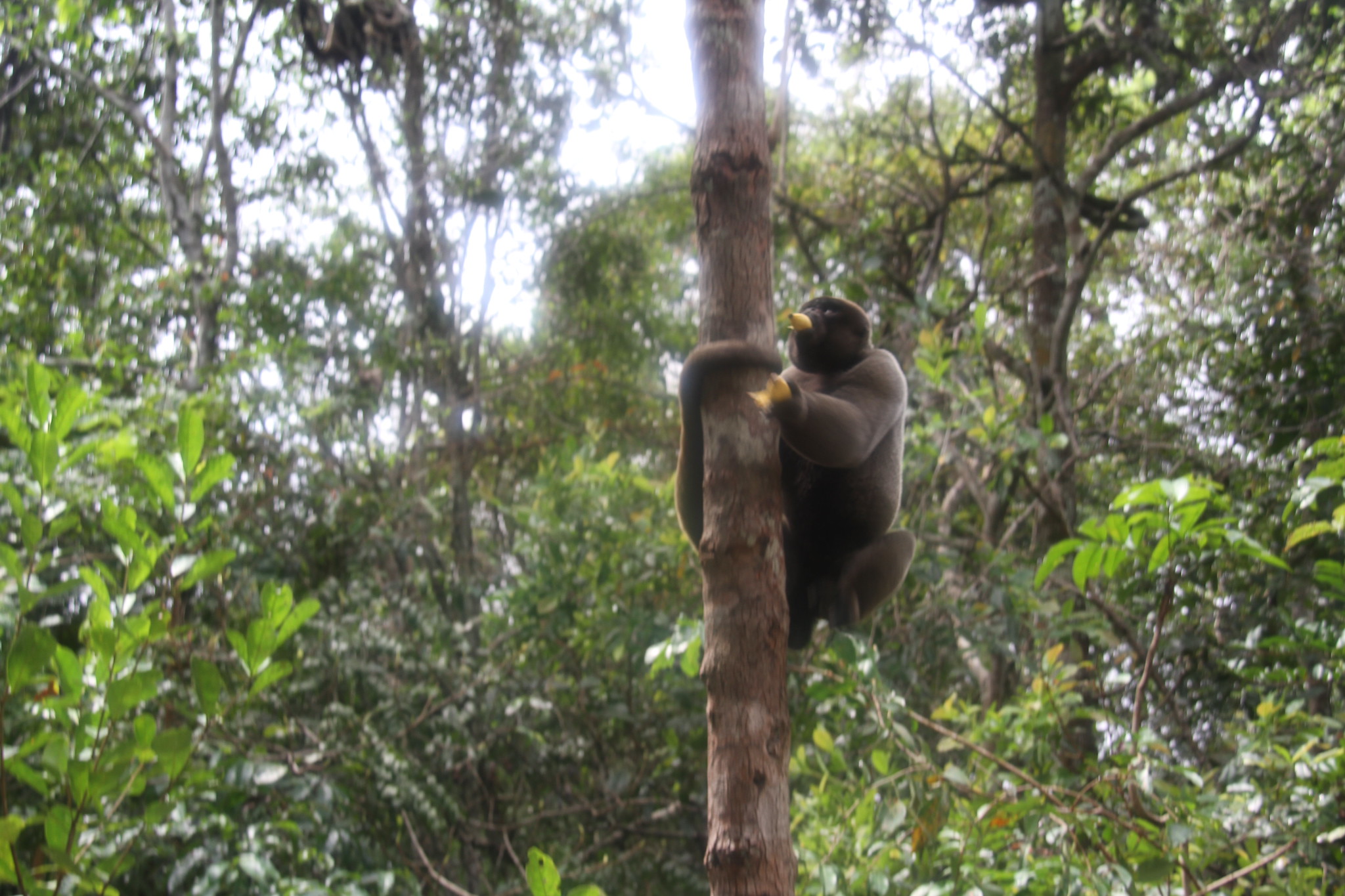
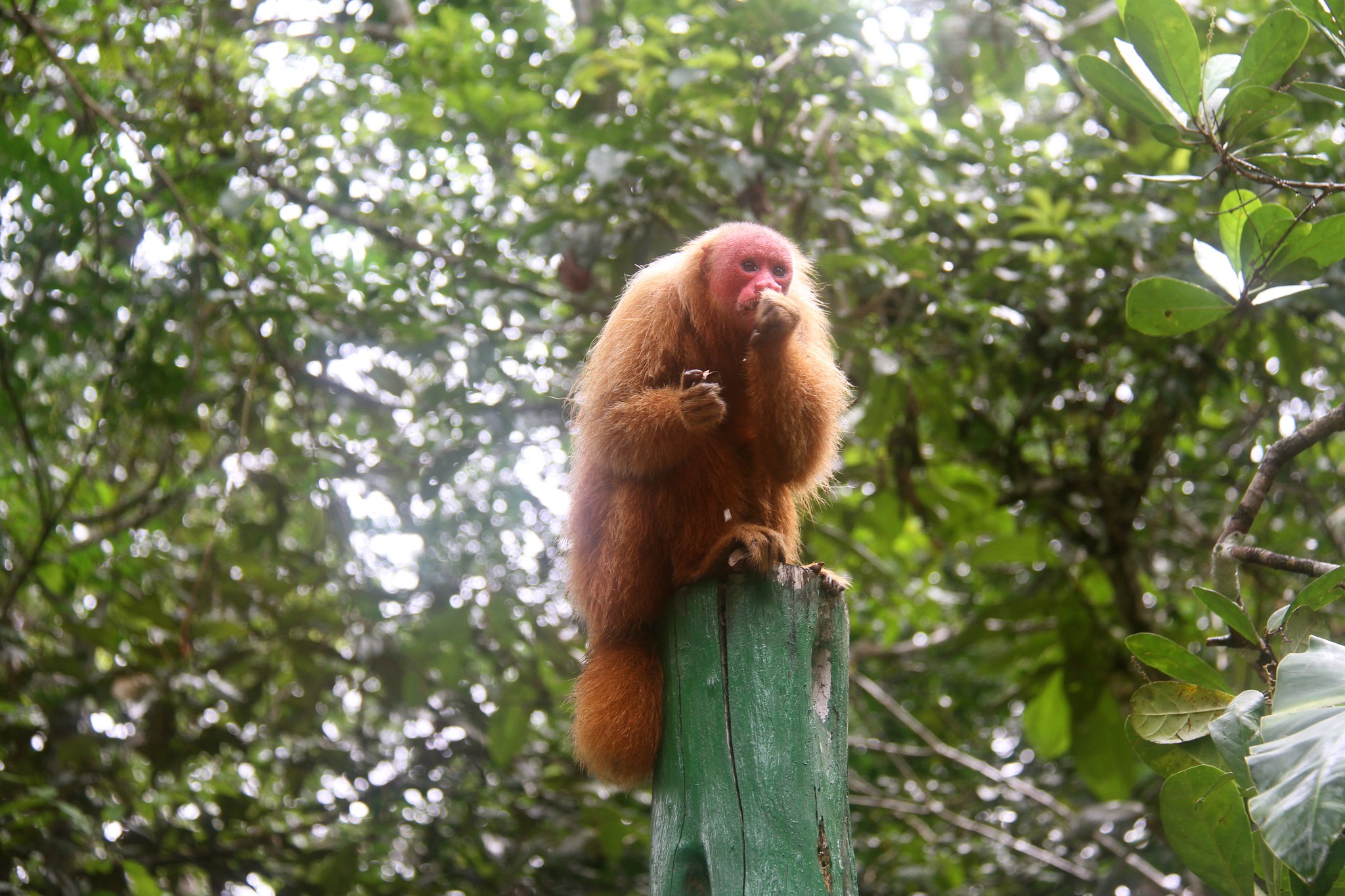
Later in the morning, we visited the Monkey Forest, a rehabilitation area where rescued monkeys roam freely. This was one of the most fun and interactive parts of the day. We fed the monkeys up close, watching them gently take food from our hands. At one point, our guide even encouraged one of them to walk in circles around us, almost like it was putting on a playful performance. It was funny, unexpected, and an unforgettable experience being surrounded so closely by such curious animals.
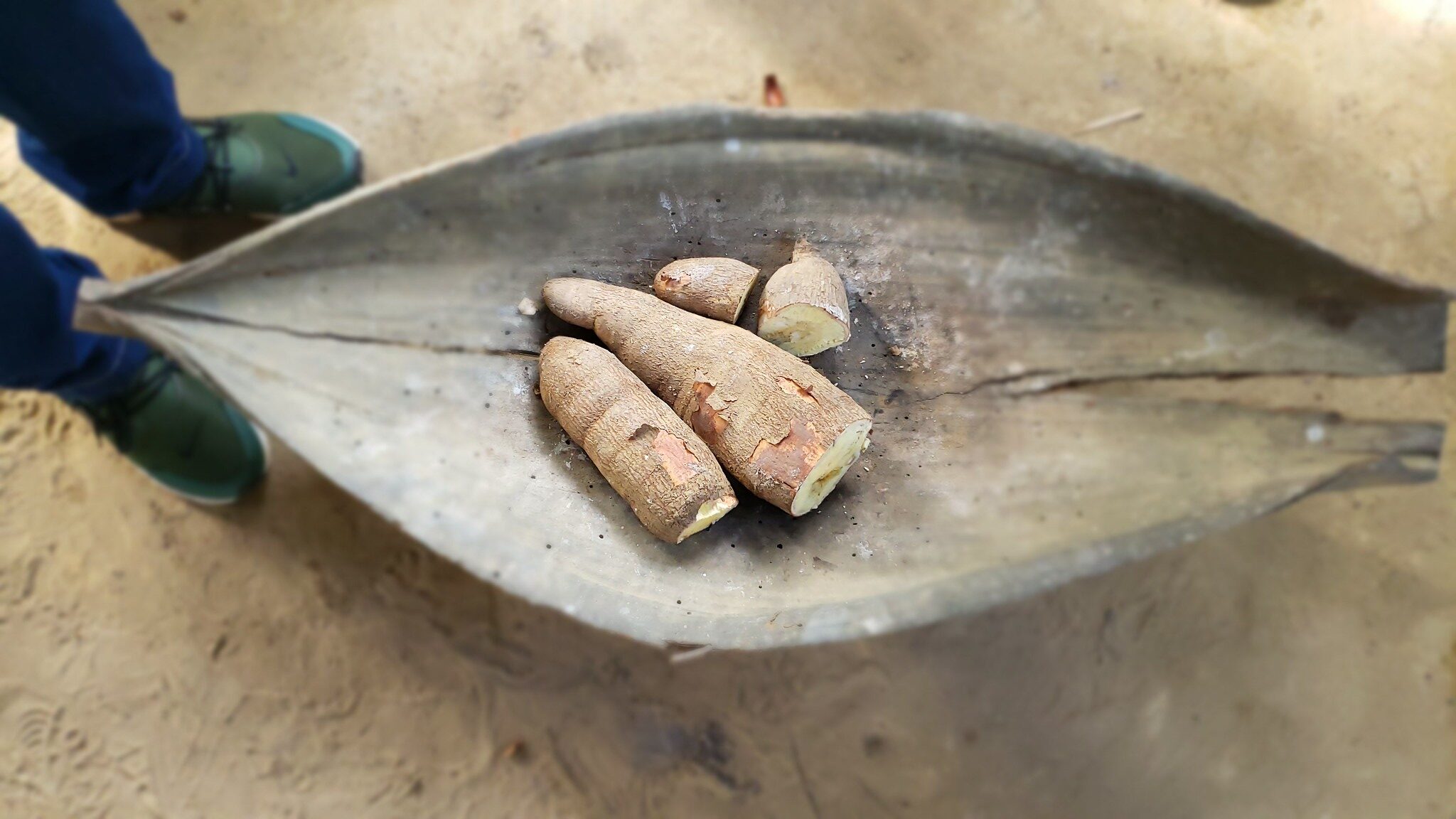
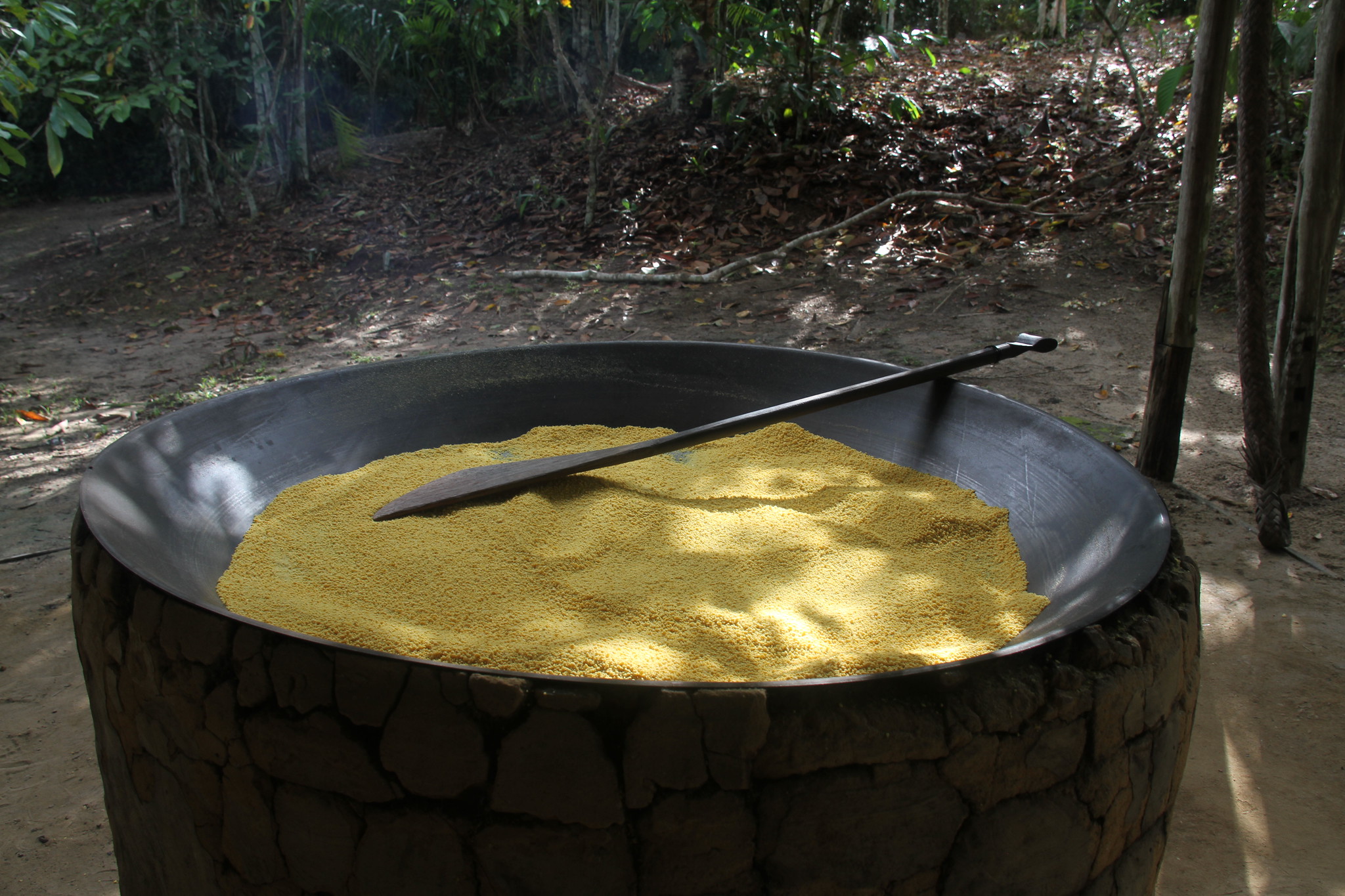
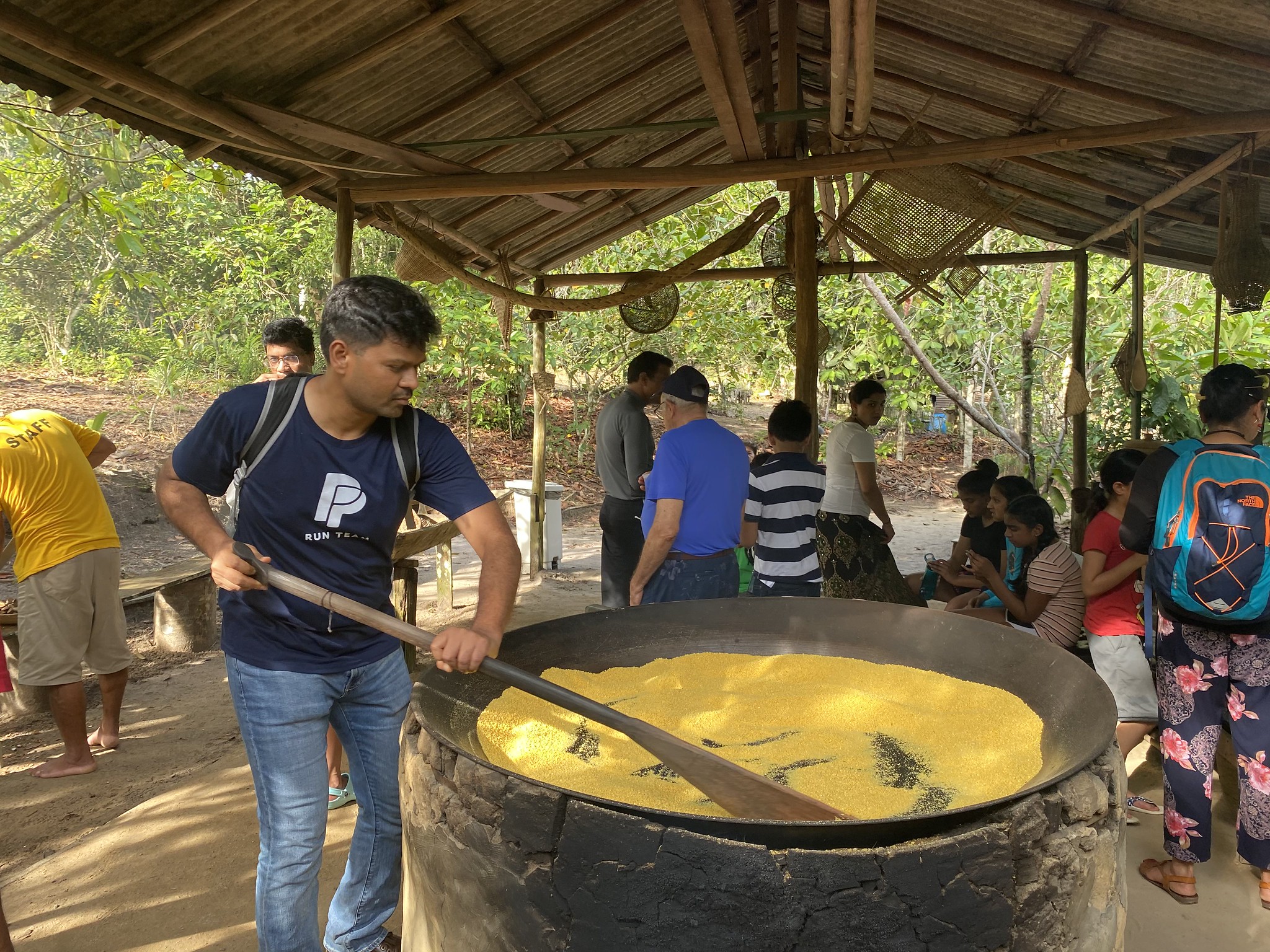
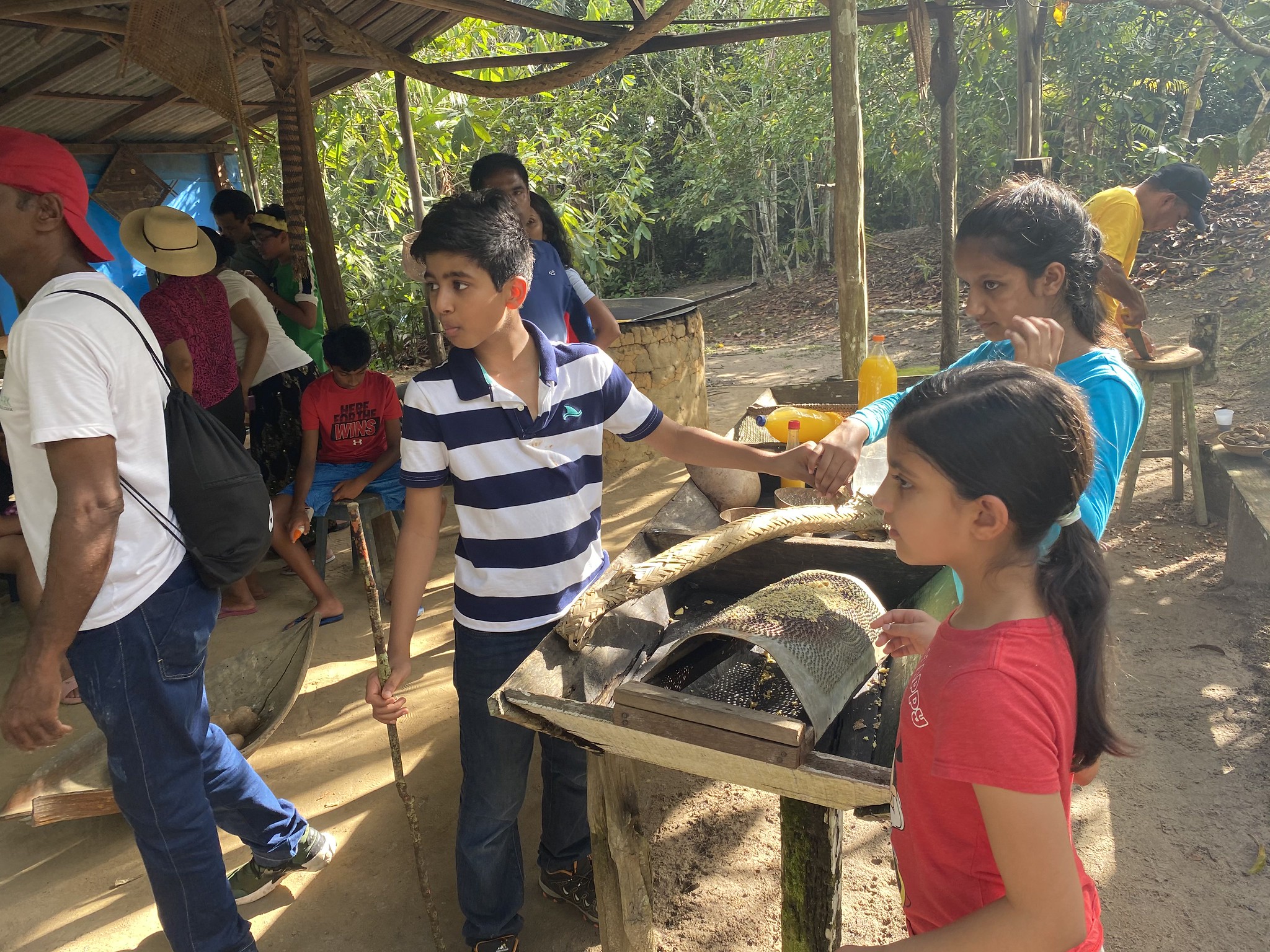
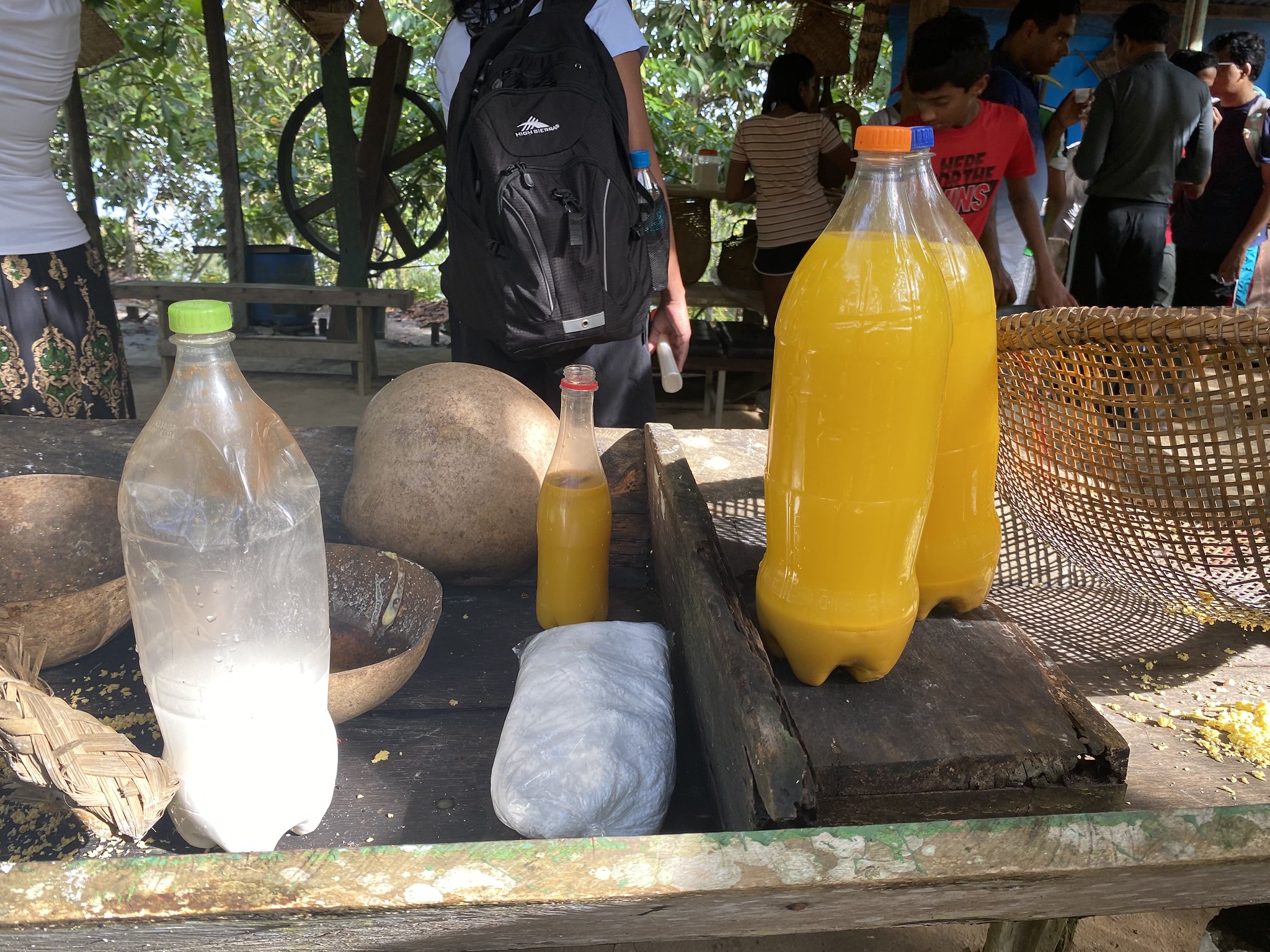
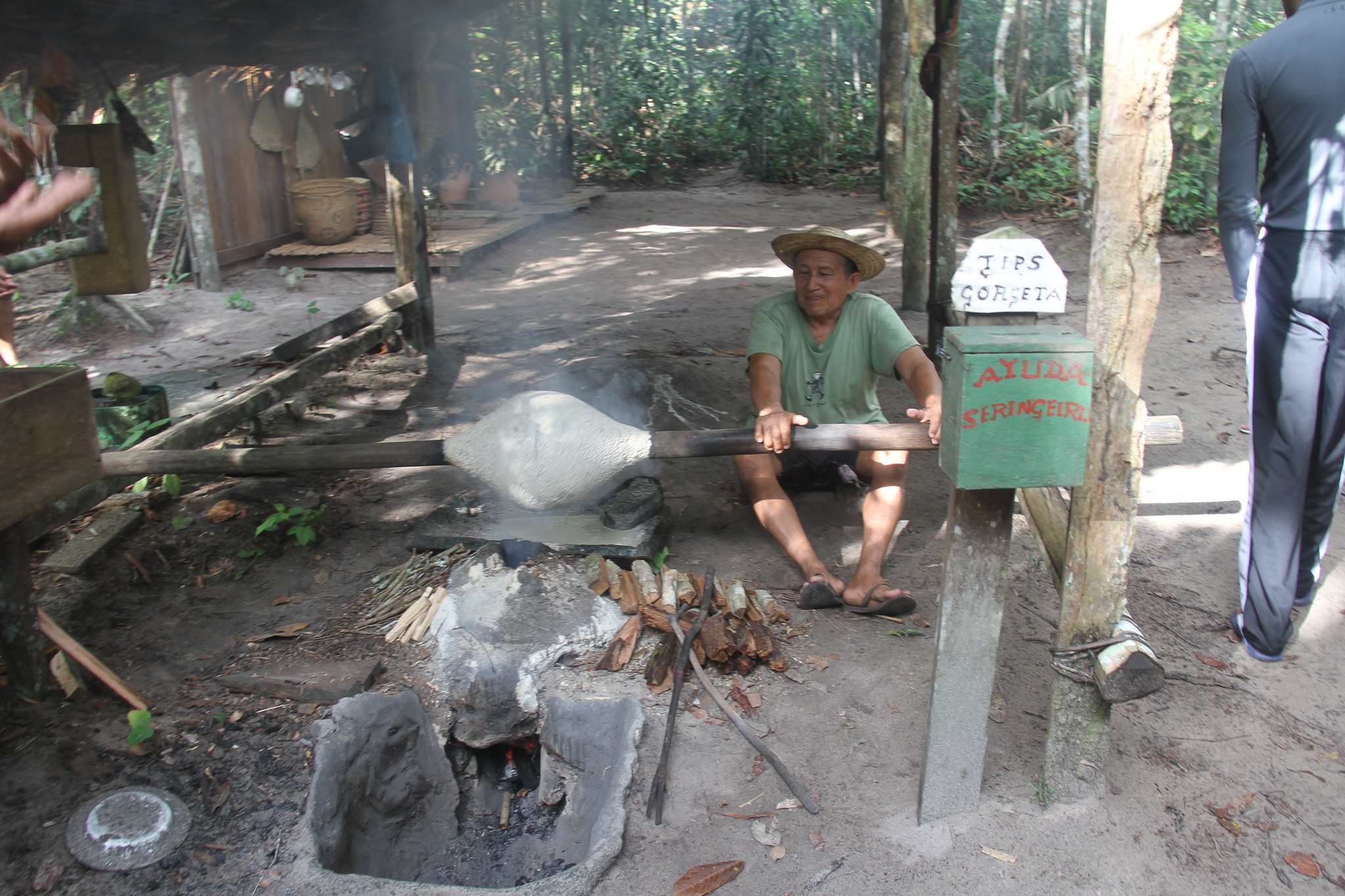
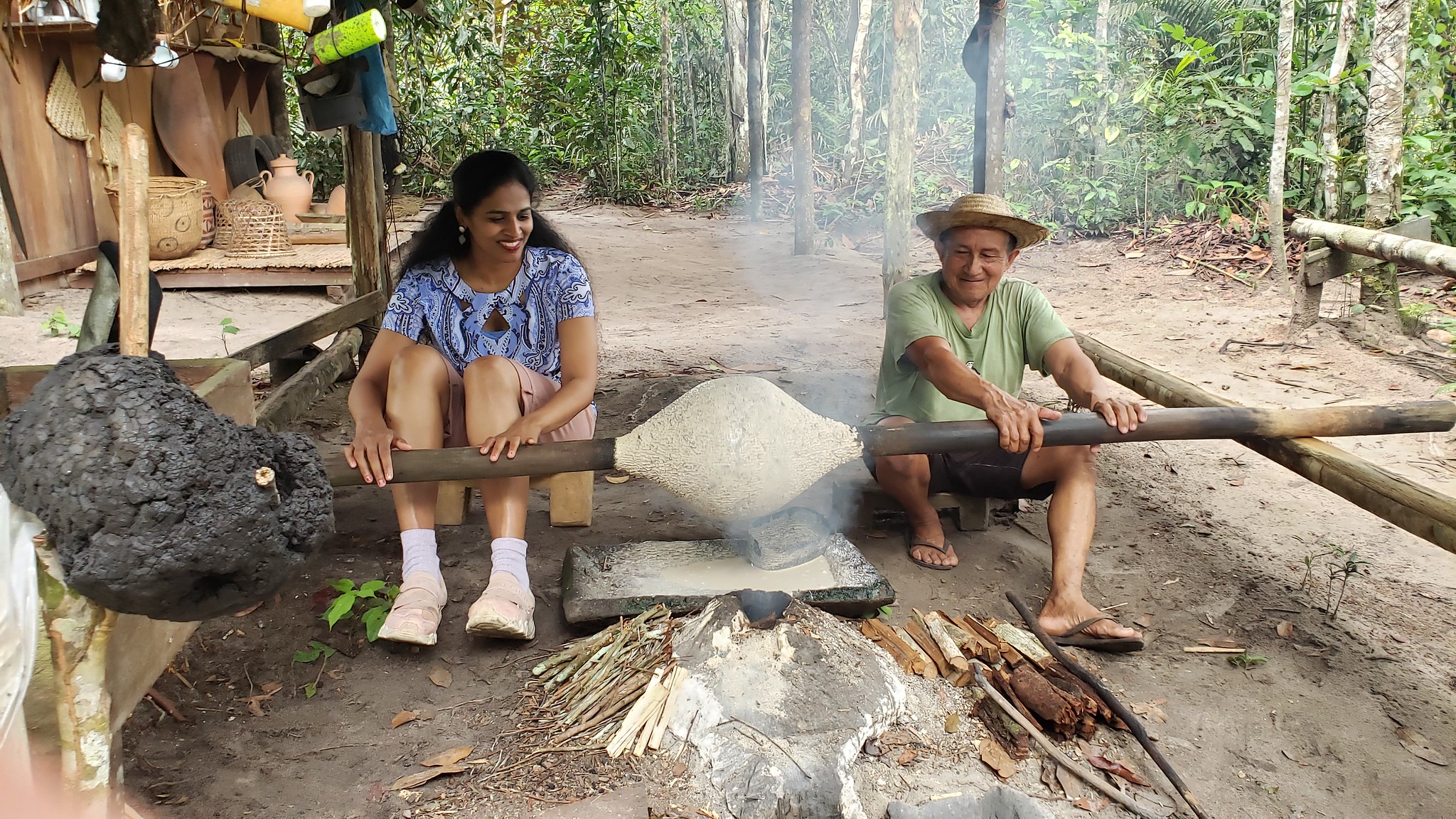
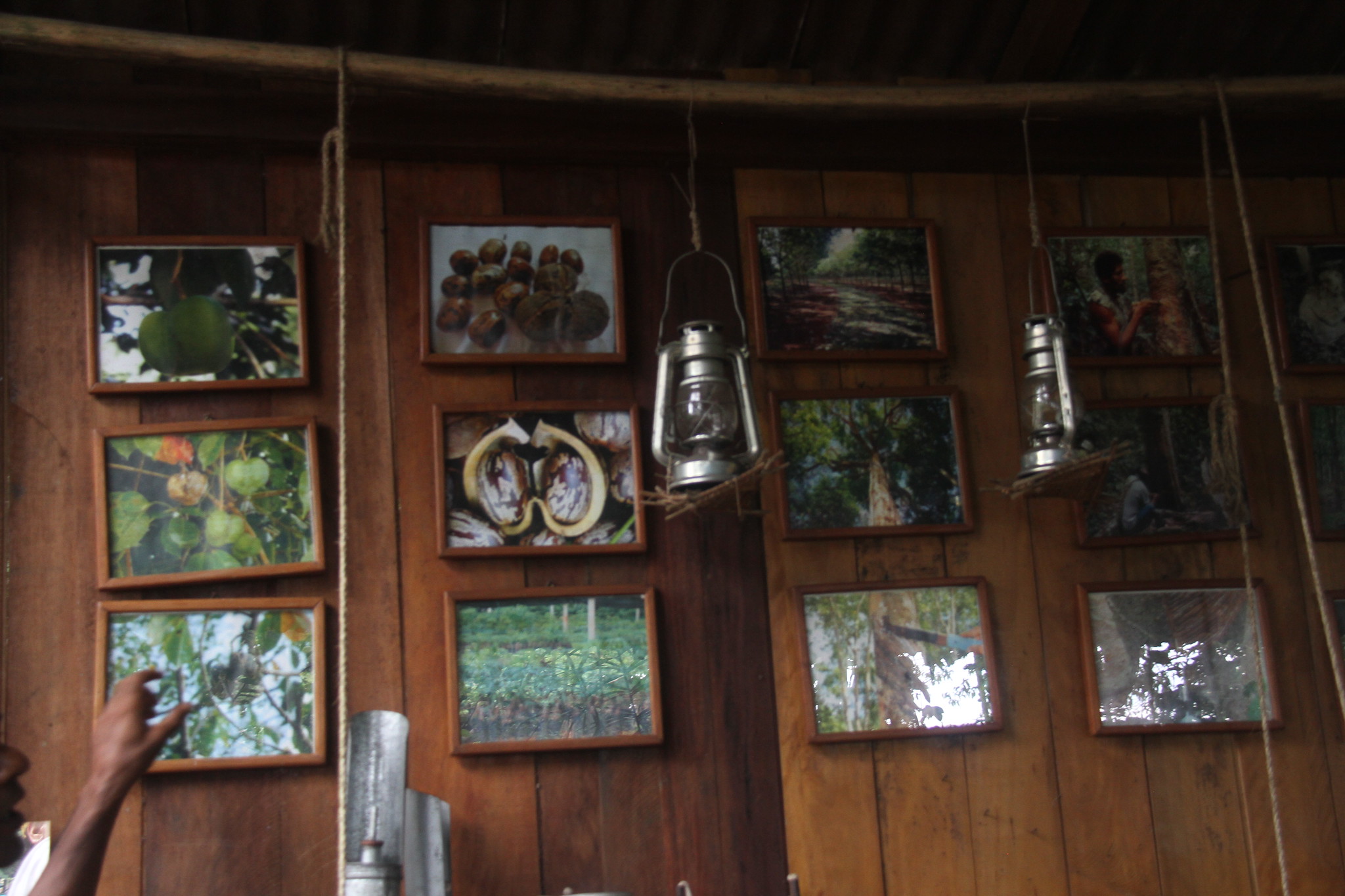
Next, we visited a local Caboclo family, who welcomed us into their home along the river. Caboclos are people of mixed Indigenous and European heritage who have lived in harmony with the Amazon for generations. Here, we saw demonstrations of traditional cassava flour making and learned about rubber tapping, an activity that once shaped the region’s entire economy.
We also got to try freshly prepared cassava-based snacks, fried on the spot, which gave us a real taste of local Amazonian food traditions.
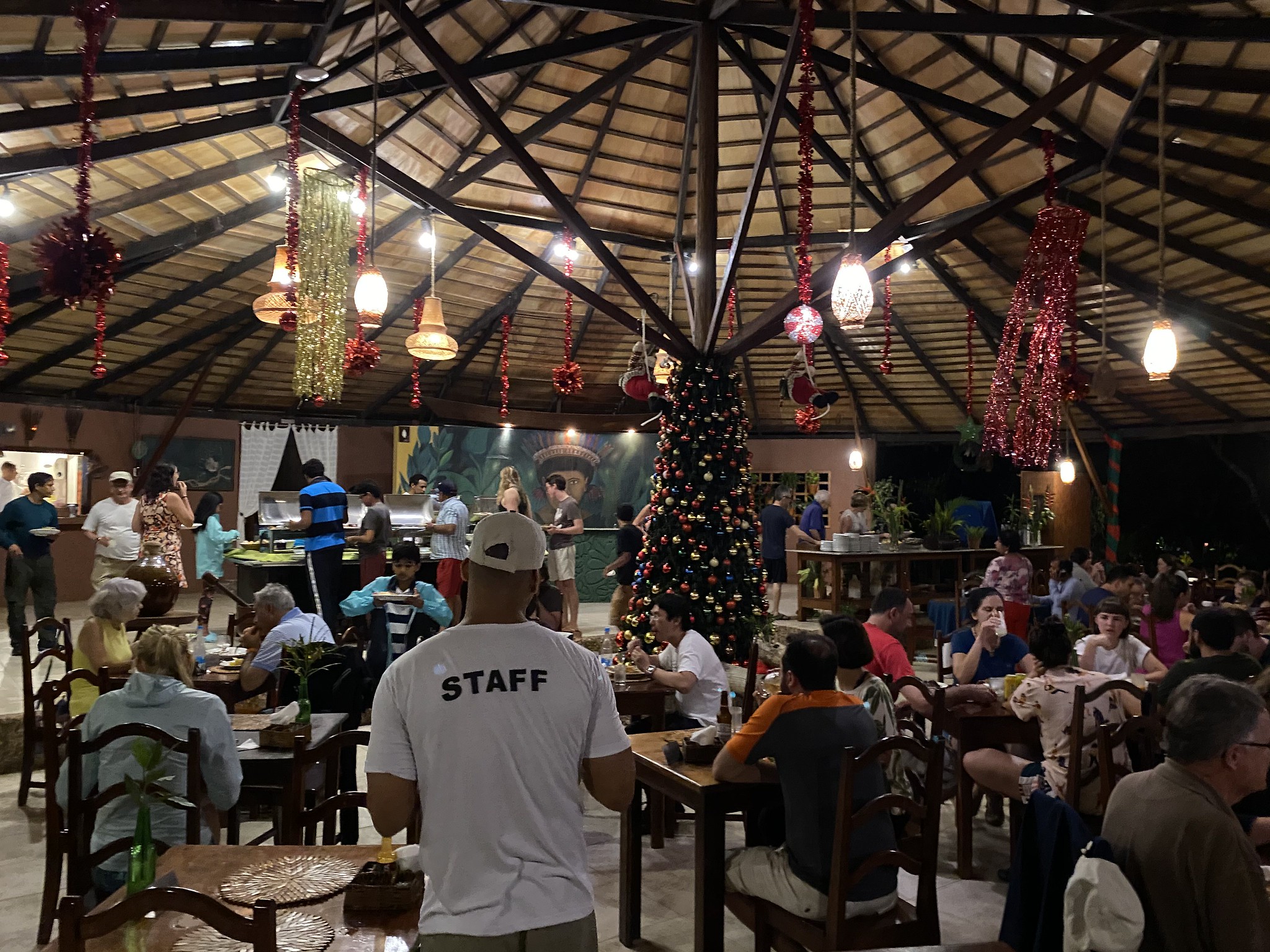
Back at the lodge, meals were a highlight of the experience. Breakfast, lunch, and dinner were all beautifully prepared, with a mix of chicken, fish, and vegetarian options for our group. There were also other meat dishes like pork and beef available. Every meal ended on a sweet note with delicious desserts, which quickly became something we looked forward to after each excursion.
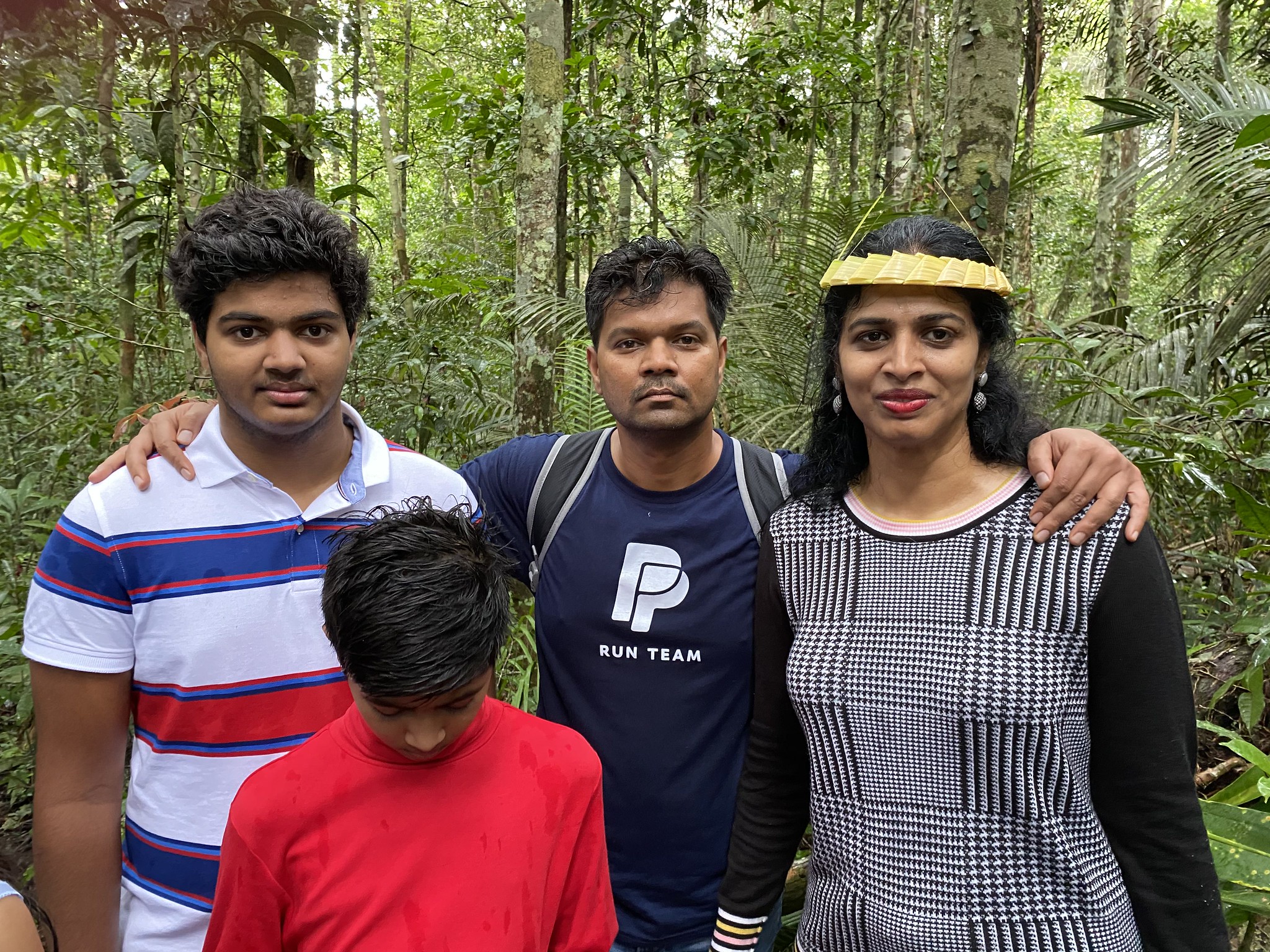
Between activities, there was also time to relax at the resort. We played pool and chess, and even tried crown making using jungle leaves, which turned into a fun and creative break between adventures.
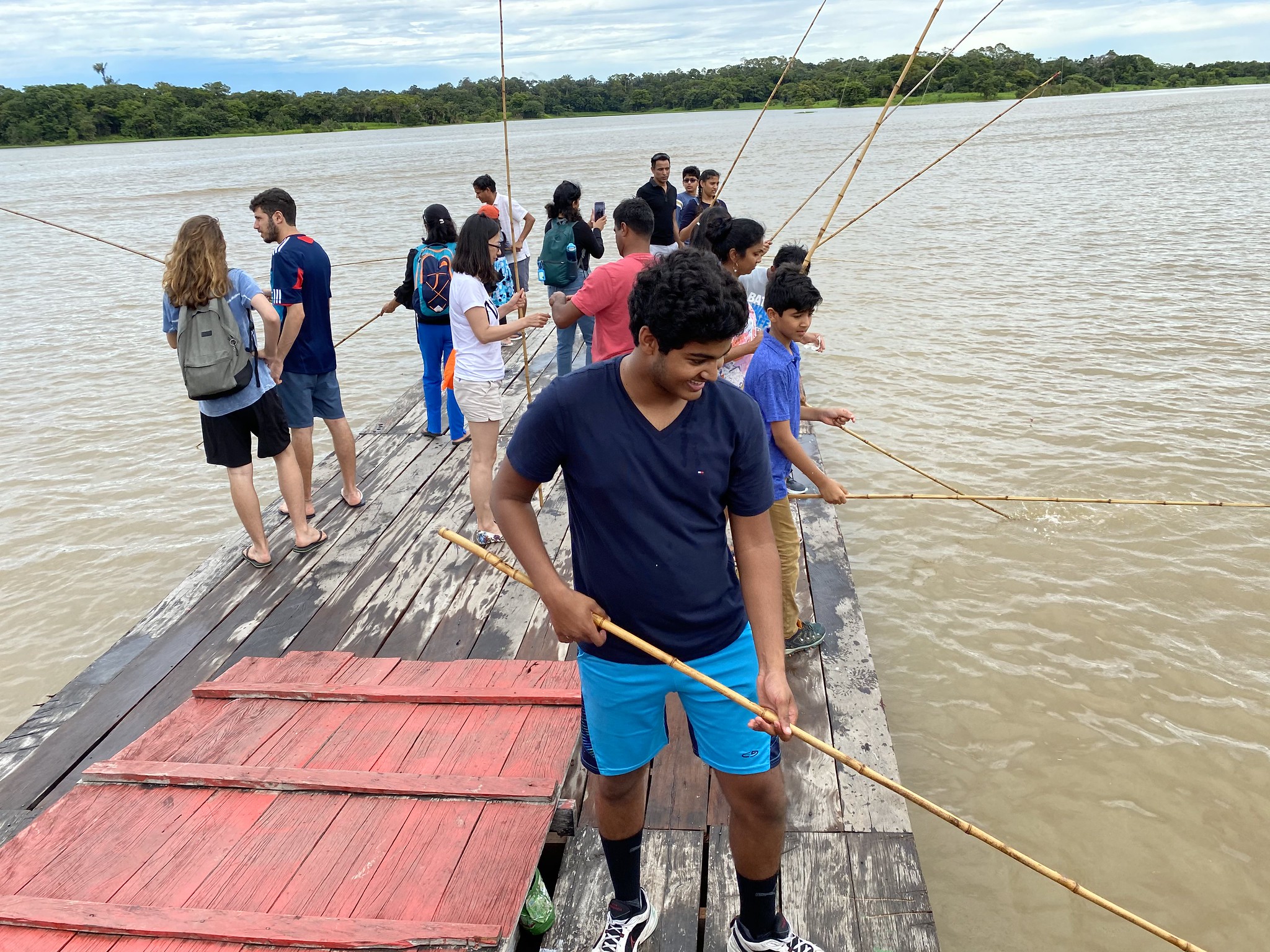
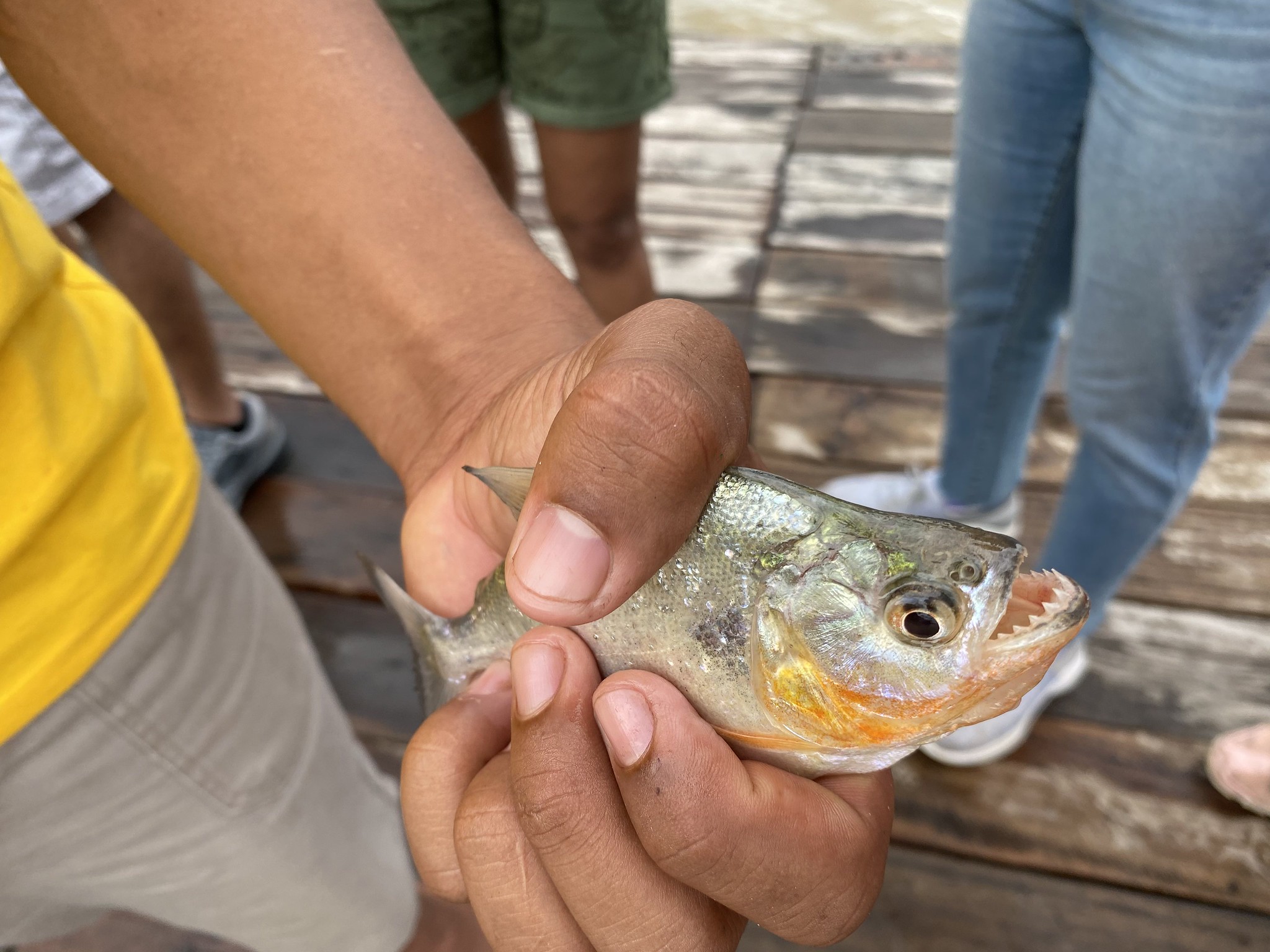
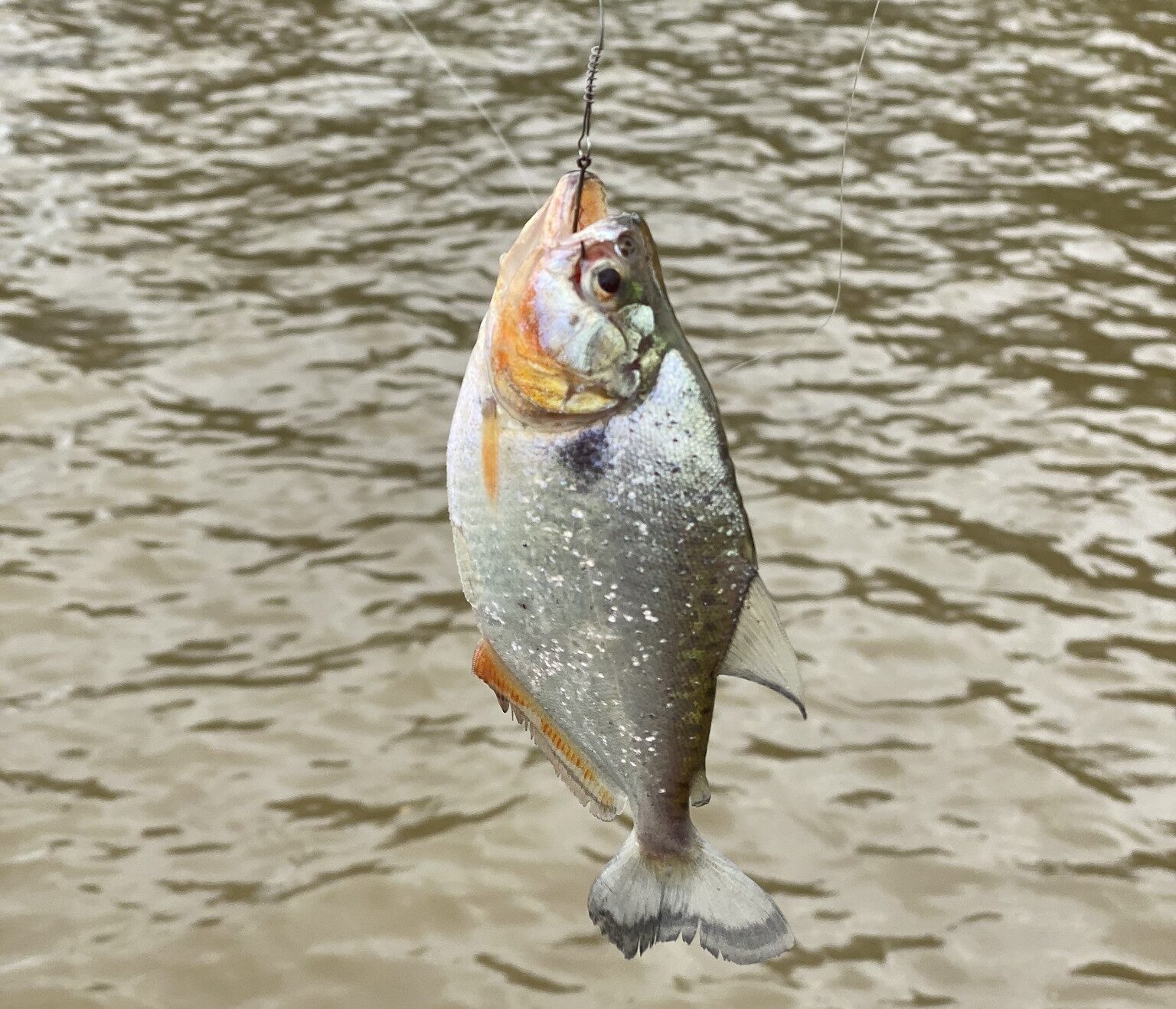
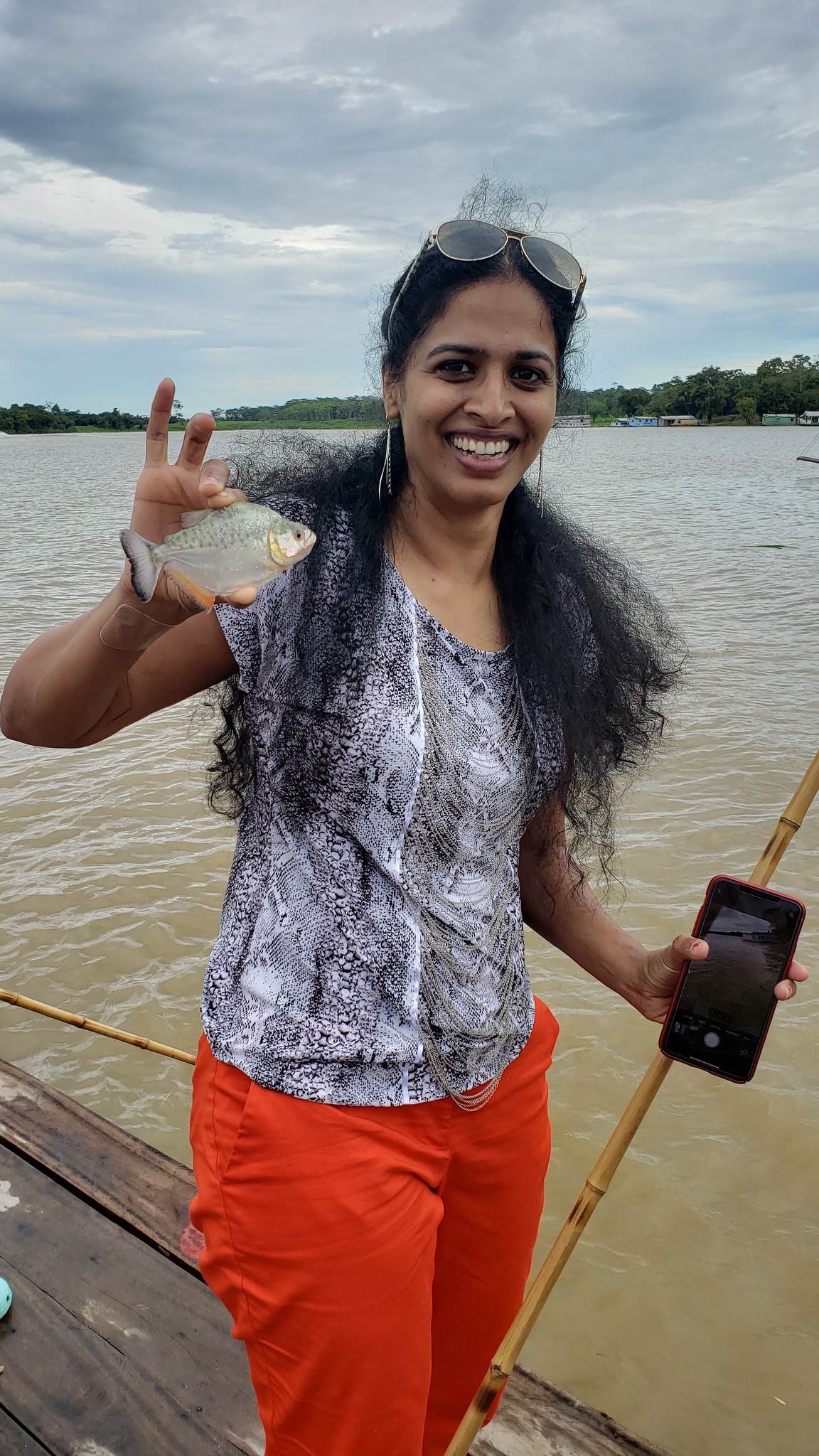
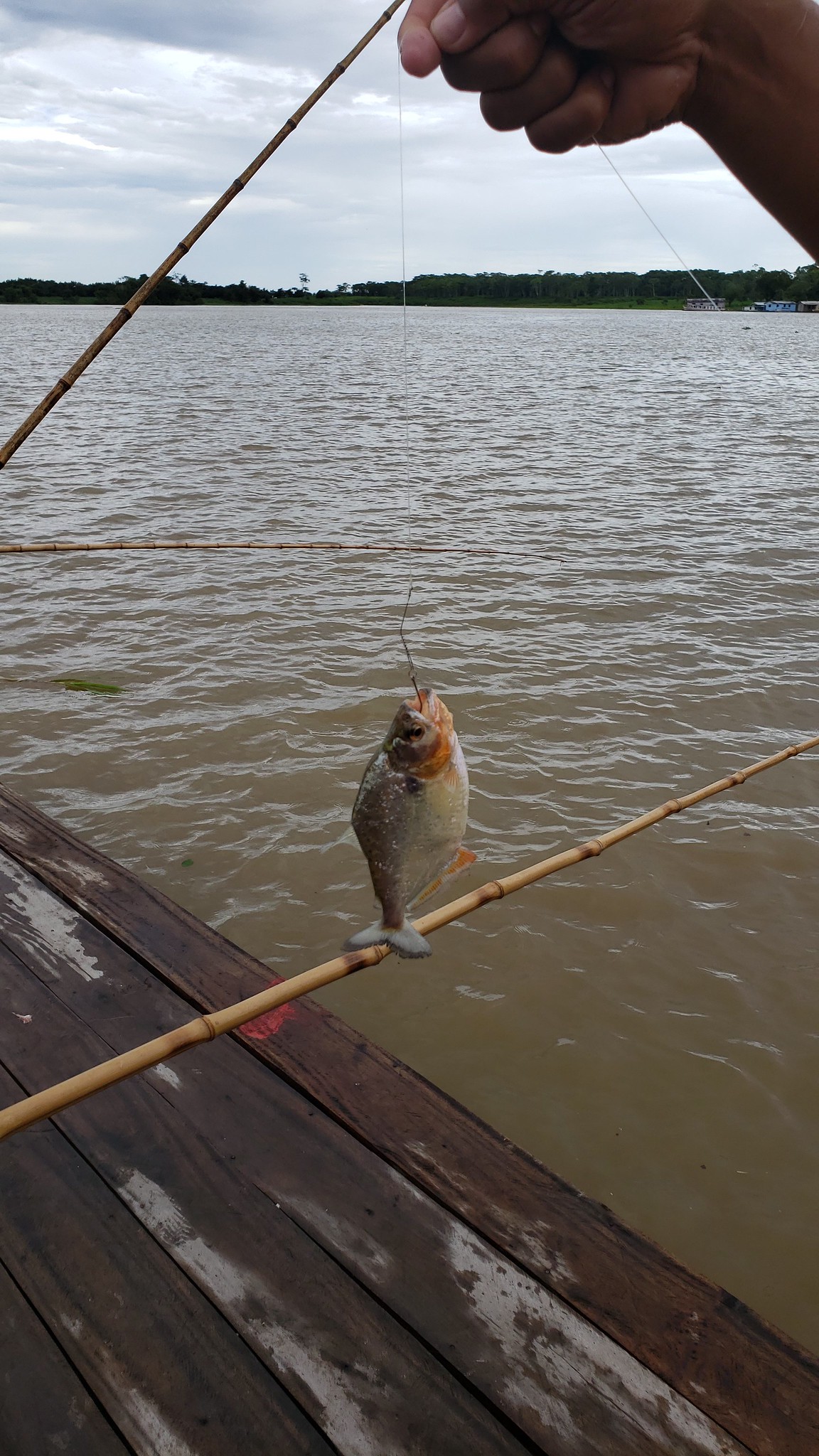
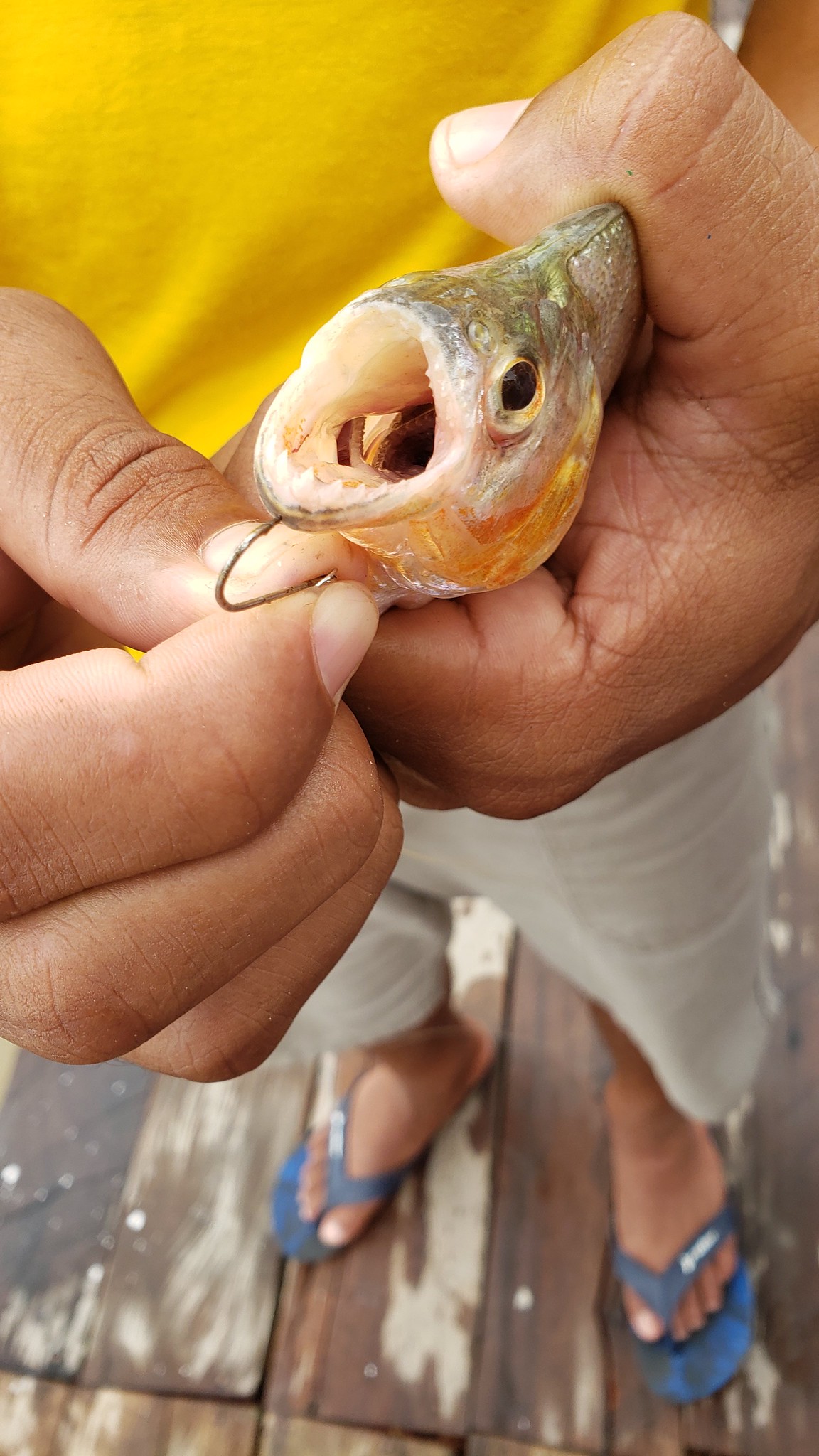
In the afternoon, it was time for one of the Amazon’s most iconic activities—piranha fishing. Using simple bamboo rods and bait, we cast our lines into the dark waters. The excitement peaked when someone in our group caught a piranha, and soon everyone managed to catch one. We all got the chance to hold the fish for photos, equal parts thrilling and surreal given its fierce reputation.
On our way back by boat, we experienced an unexpected but important moment. Our boat was stopped by Amazon police patrols, who checked licenses and documentation from our operators. While it was brief, it was reassuring to see how strictly tourism is regulated here to protect the rainforest and ensure only authorized guides operate in these sensitive areas.
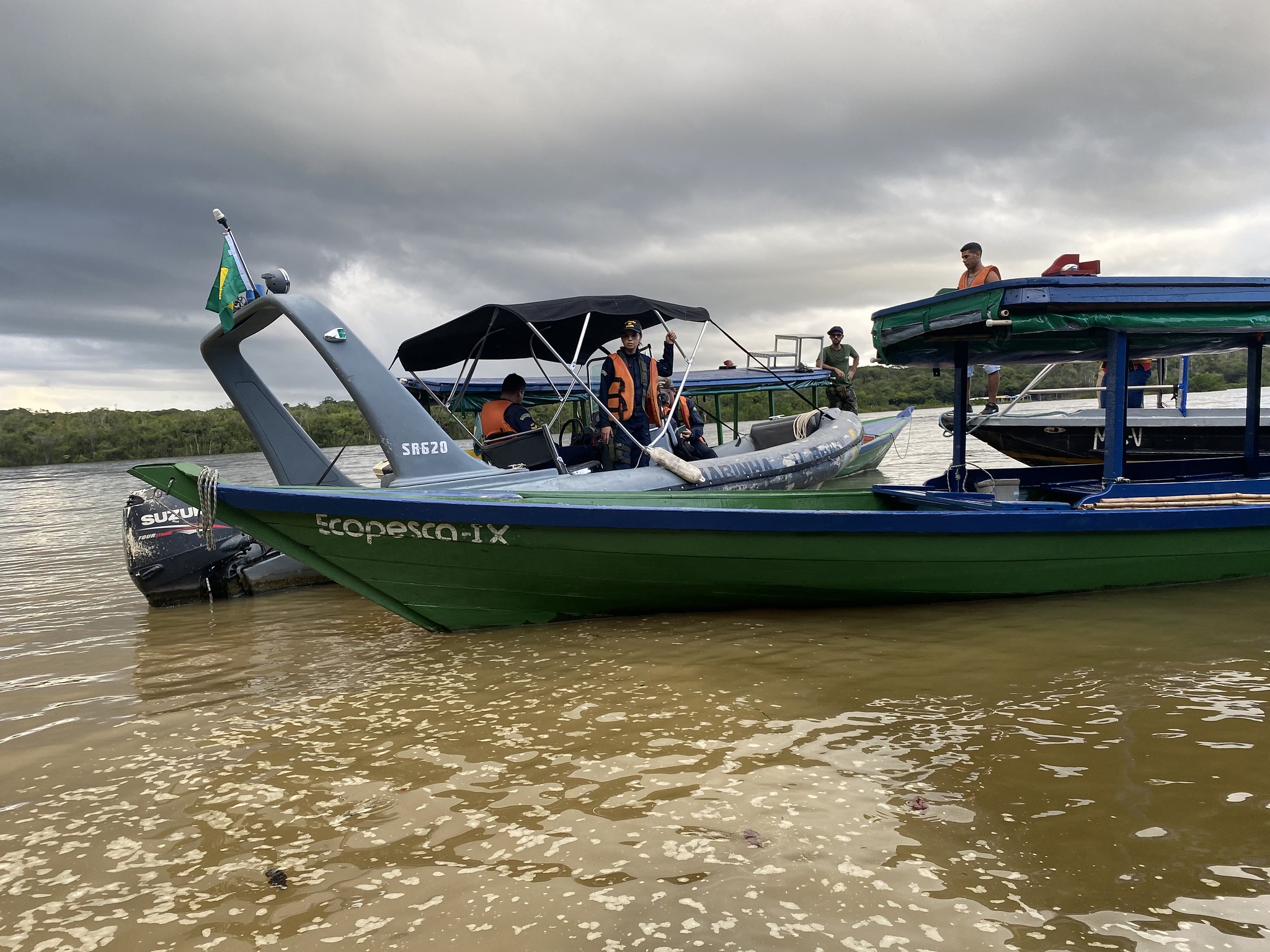
By the end of the day, we had walked through ancient rainforest, learned survival skills from our guide, experienced local traditions with a Caboclo family, relaxed at the lodge, and even witnessed the real-world systems that help protect the Amazon. It was a day that showed both the beauty of the rainforest and the importance of preserving it.
Day 3 – The Meeting of the Waters
Today was one of the most anticipated experiences of our Amazon journey—a full-day expedition by regional boat to witness the famous Meeting of the Waters.
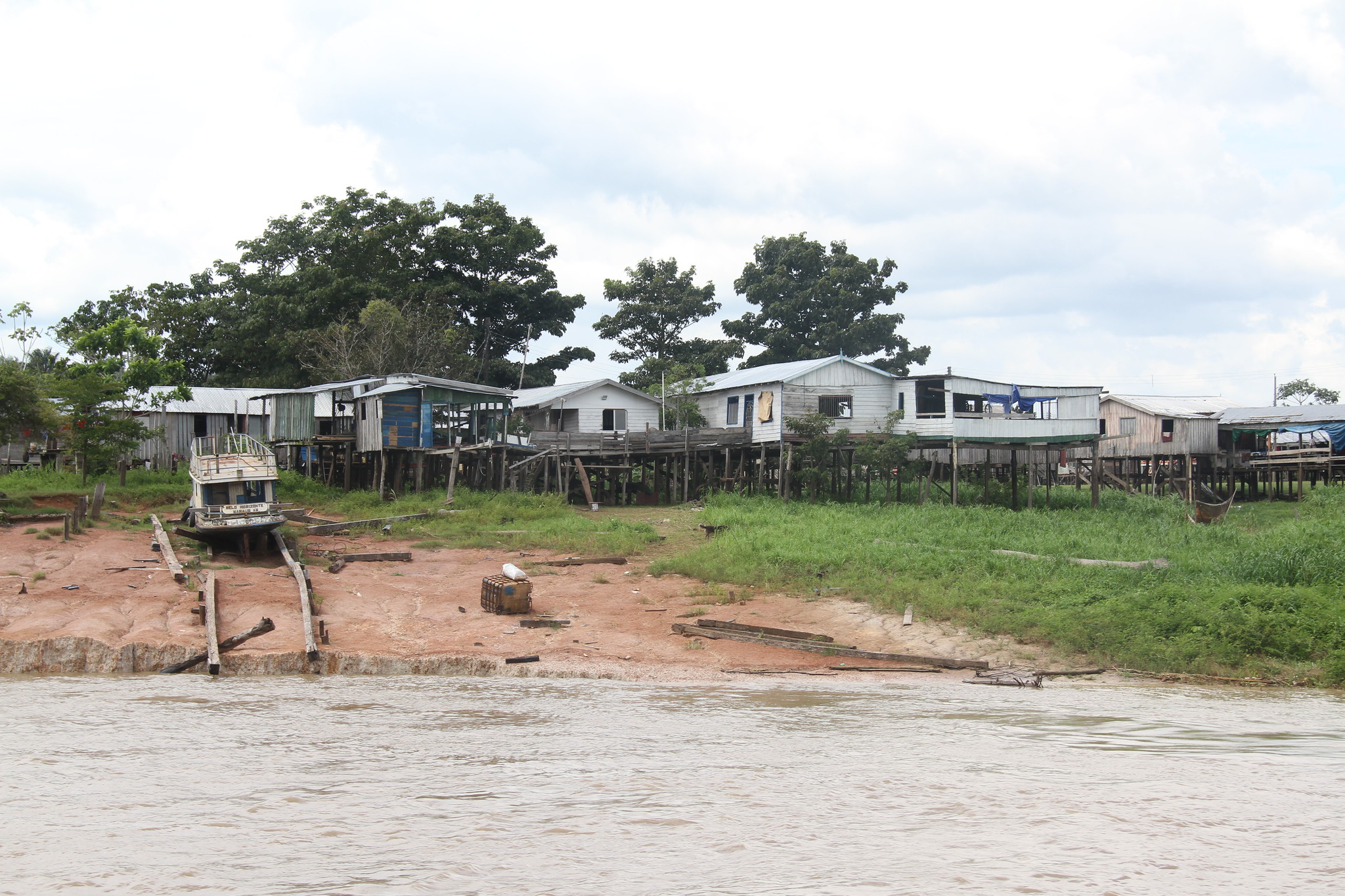
We set out early in the morning, leaving behind the calm surroundings of our lodge and heading deeper into the vast river system that defines the Amazon. As the boat picked up speed, the landscape slowly changed—dense rainforest on both sides, occasional stilted houses along the riverbanks, and endless waterways stretching into the horizon. Life here is completely tied to the river, and it felt like we were traveling through a living highway.
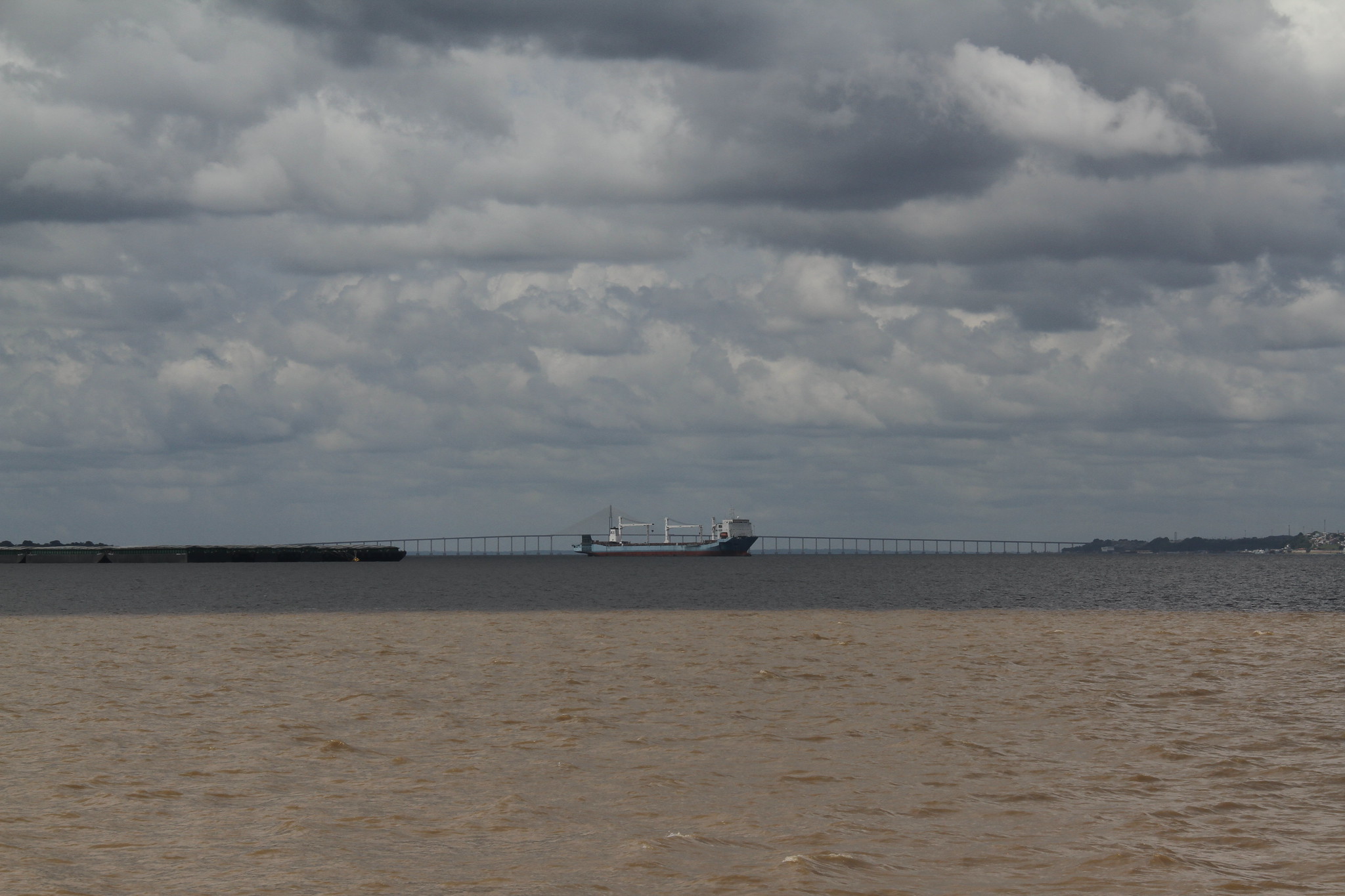
After a few hours on the water, we reached the highlight of the day: the incredible confluence where two massive rivers meet but do not immediately mix. On one side flows the dark, almost black waters of the Rio Negro, and on the other, the lighter, sandy-colored waters of the Rio Solimões. For miles, the two rivers run side by side, separated by differences in temperature, speed, and density, before slowly merging into the Amazon River.
It was a surreal sight, two completely different worlds flowing together yet remaining distinct. Standing on the boat, it felt like watching nature quietly draw a boundary line across the water itself.
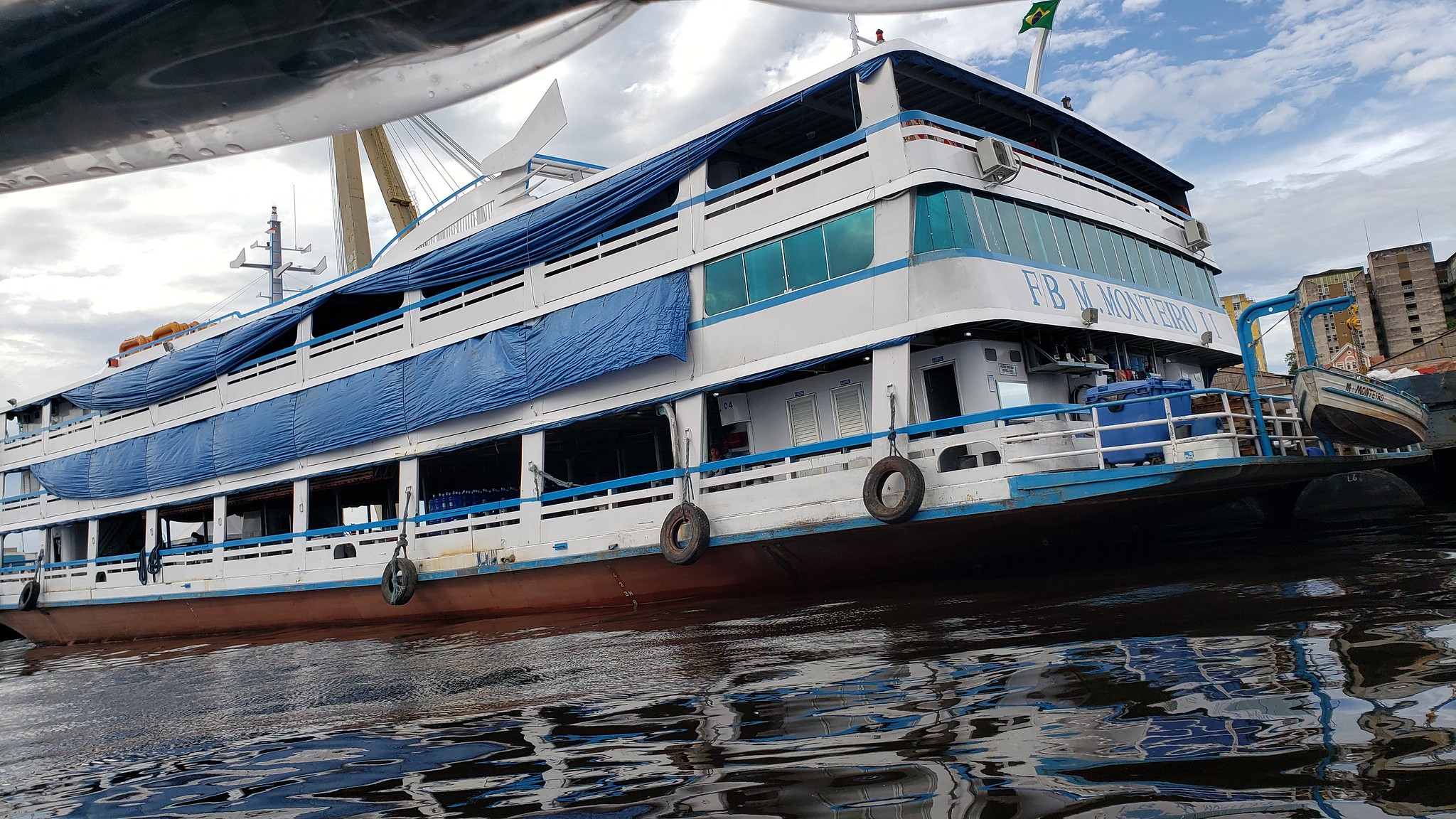
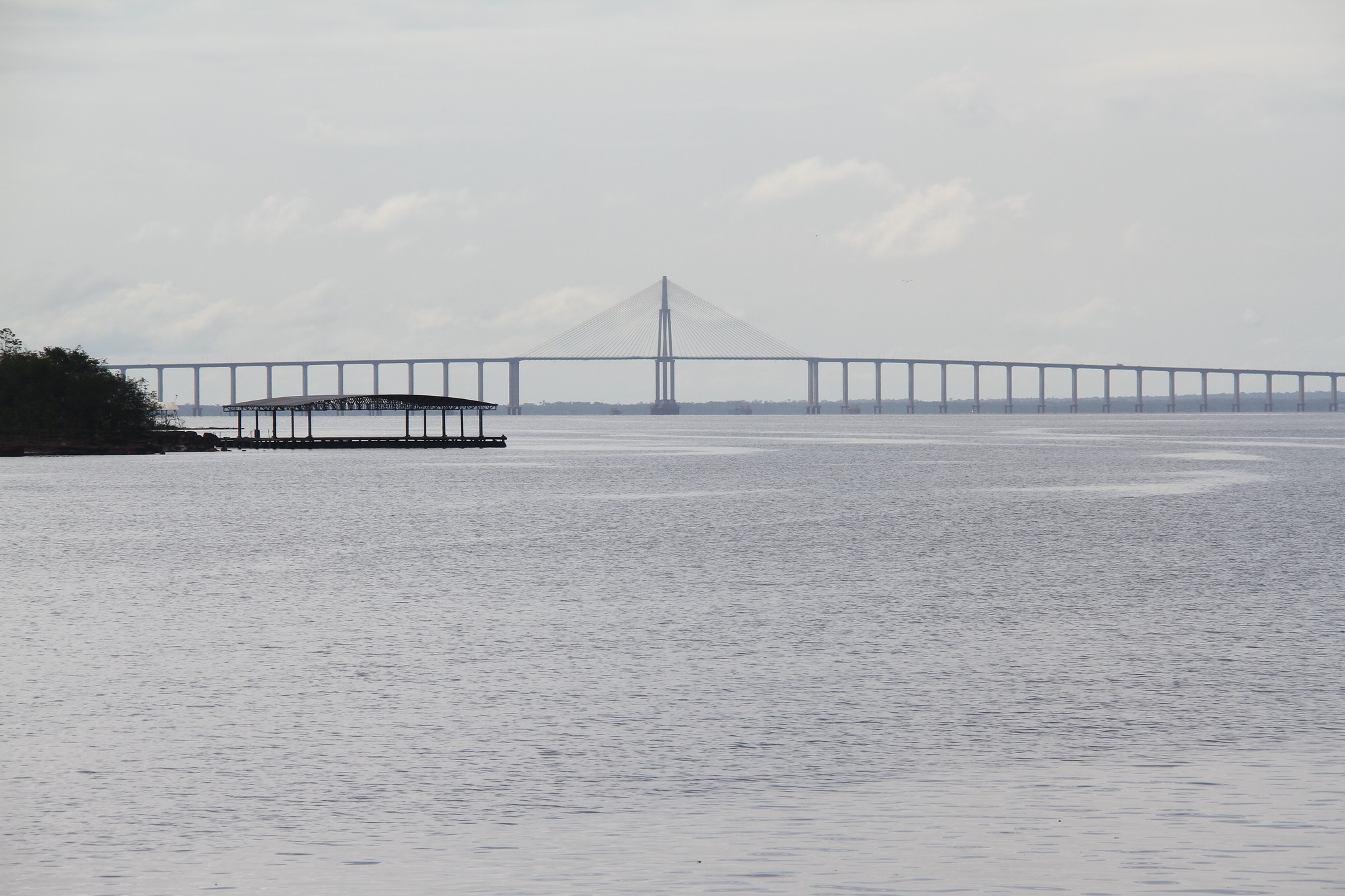
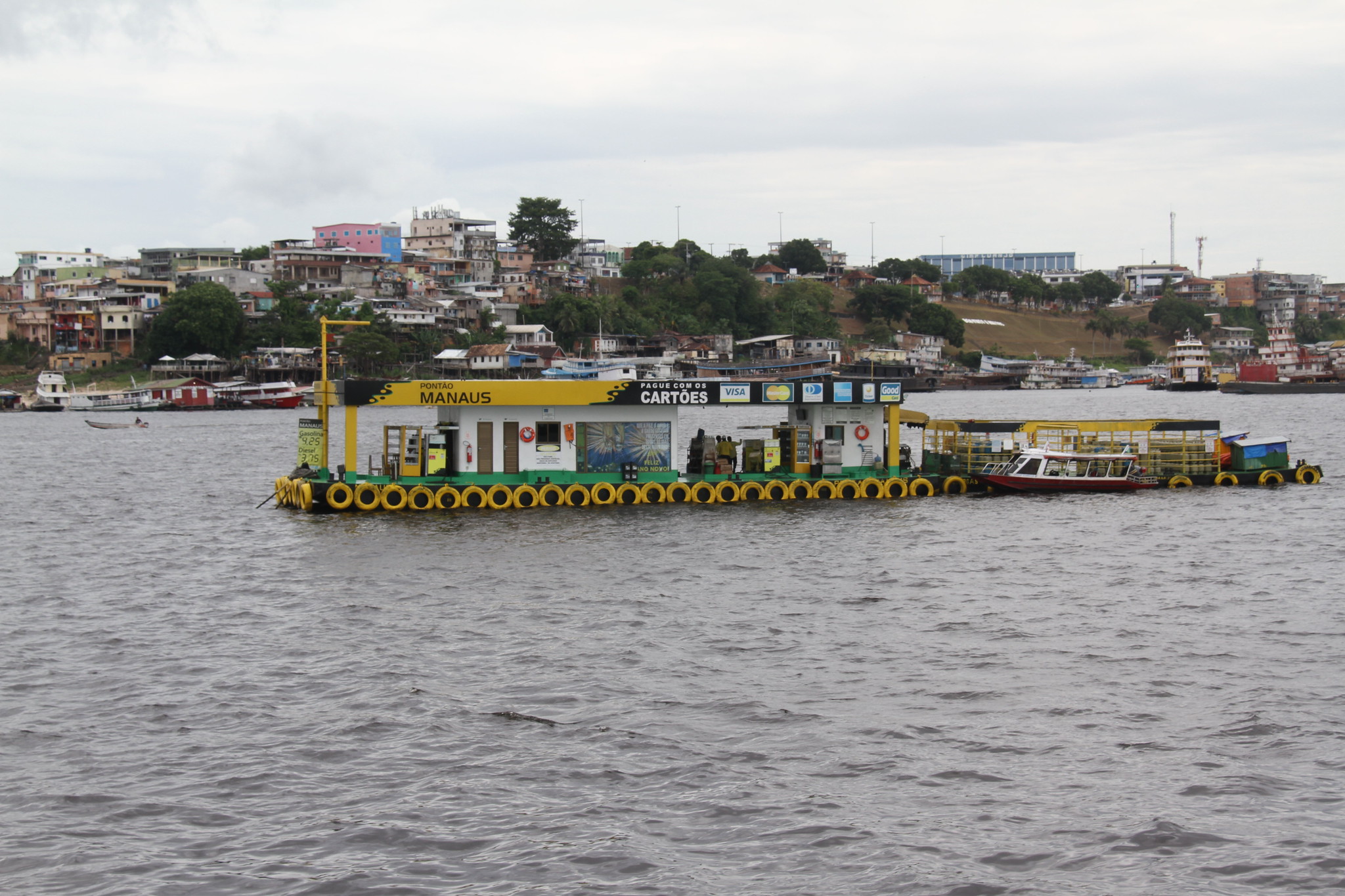
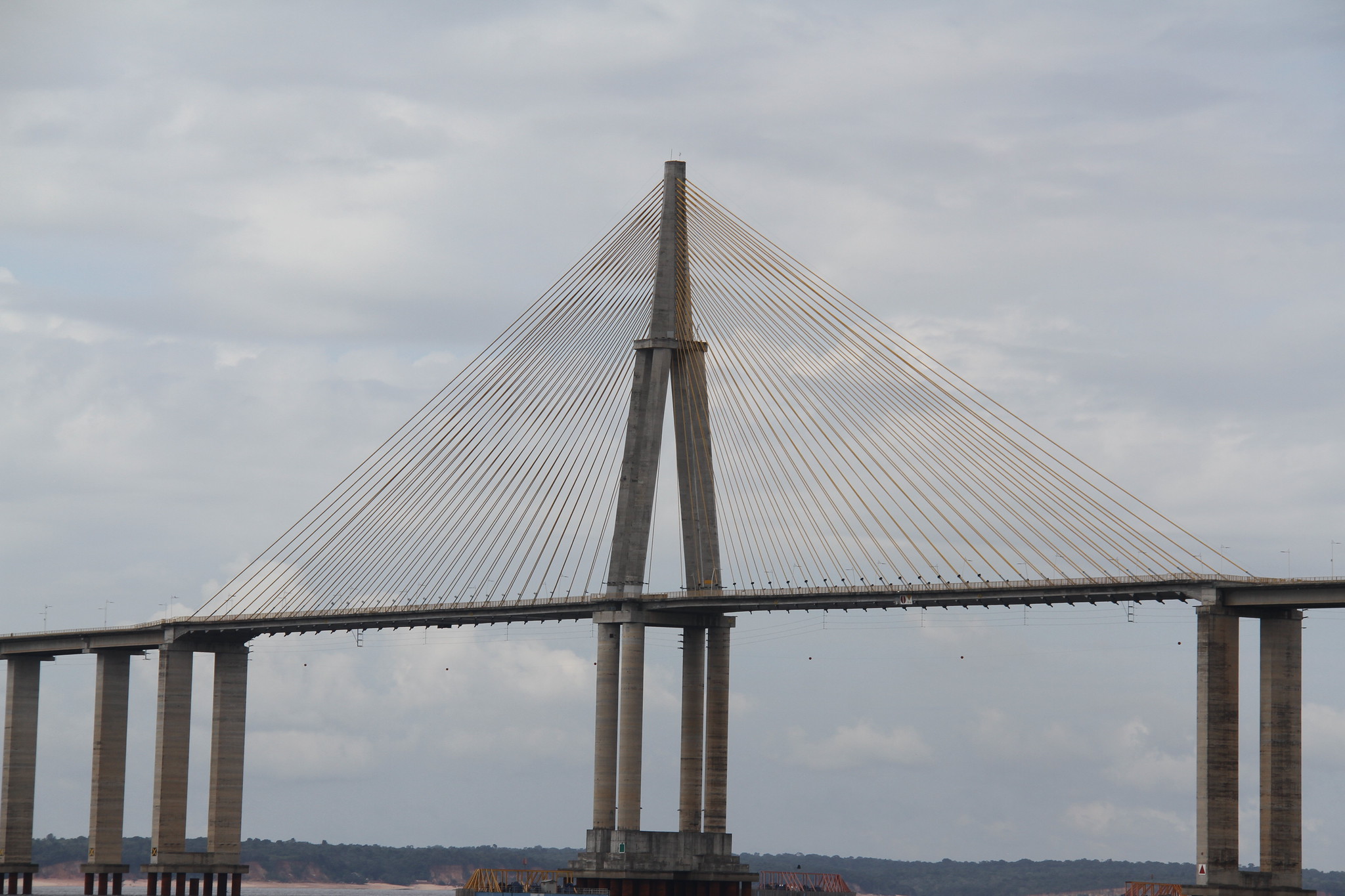
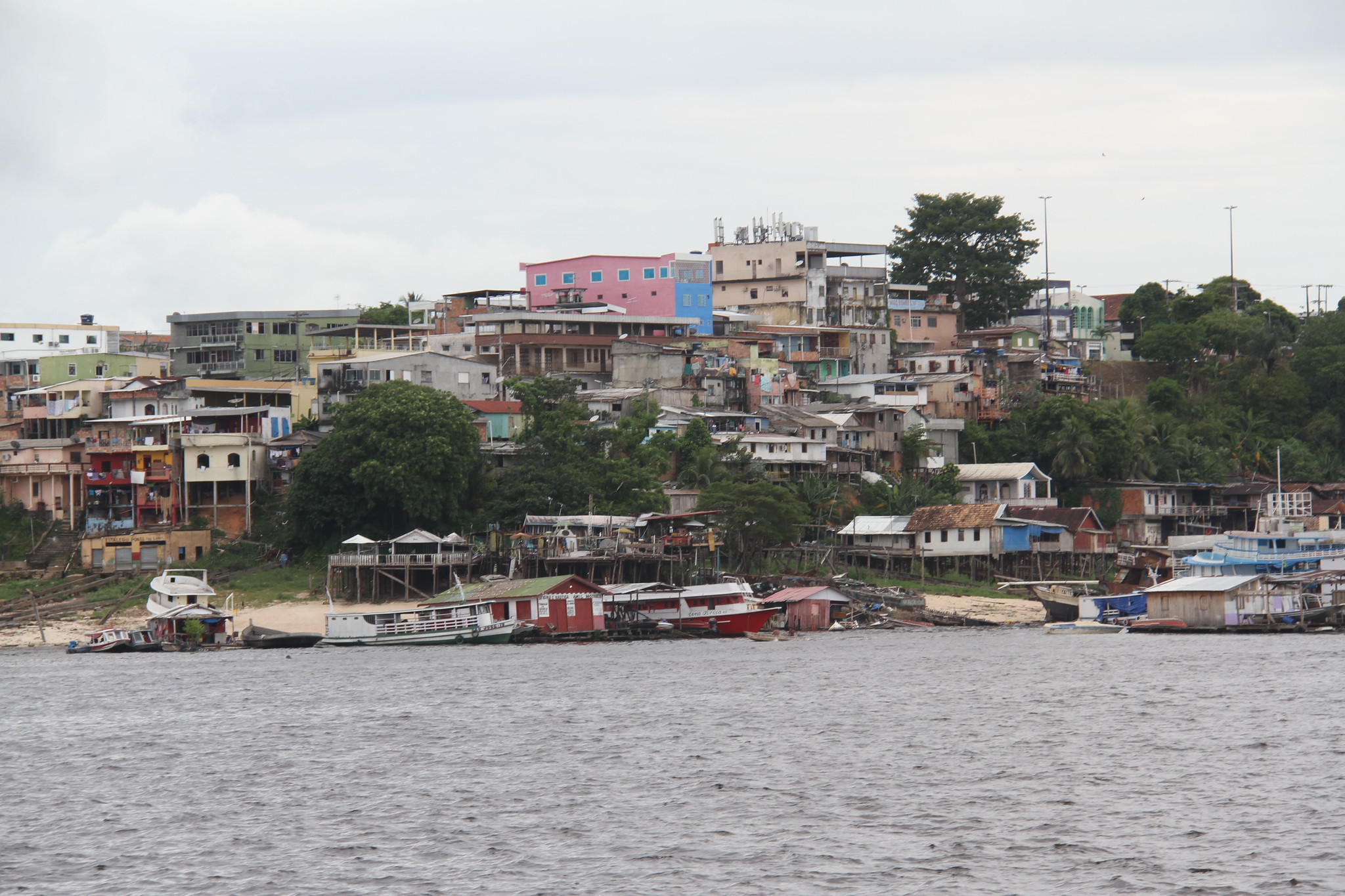
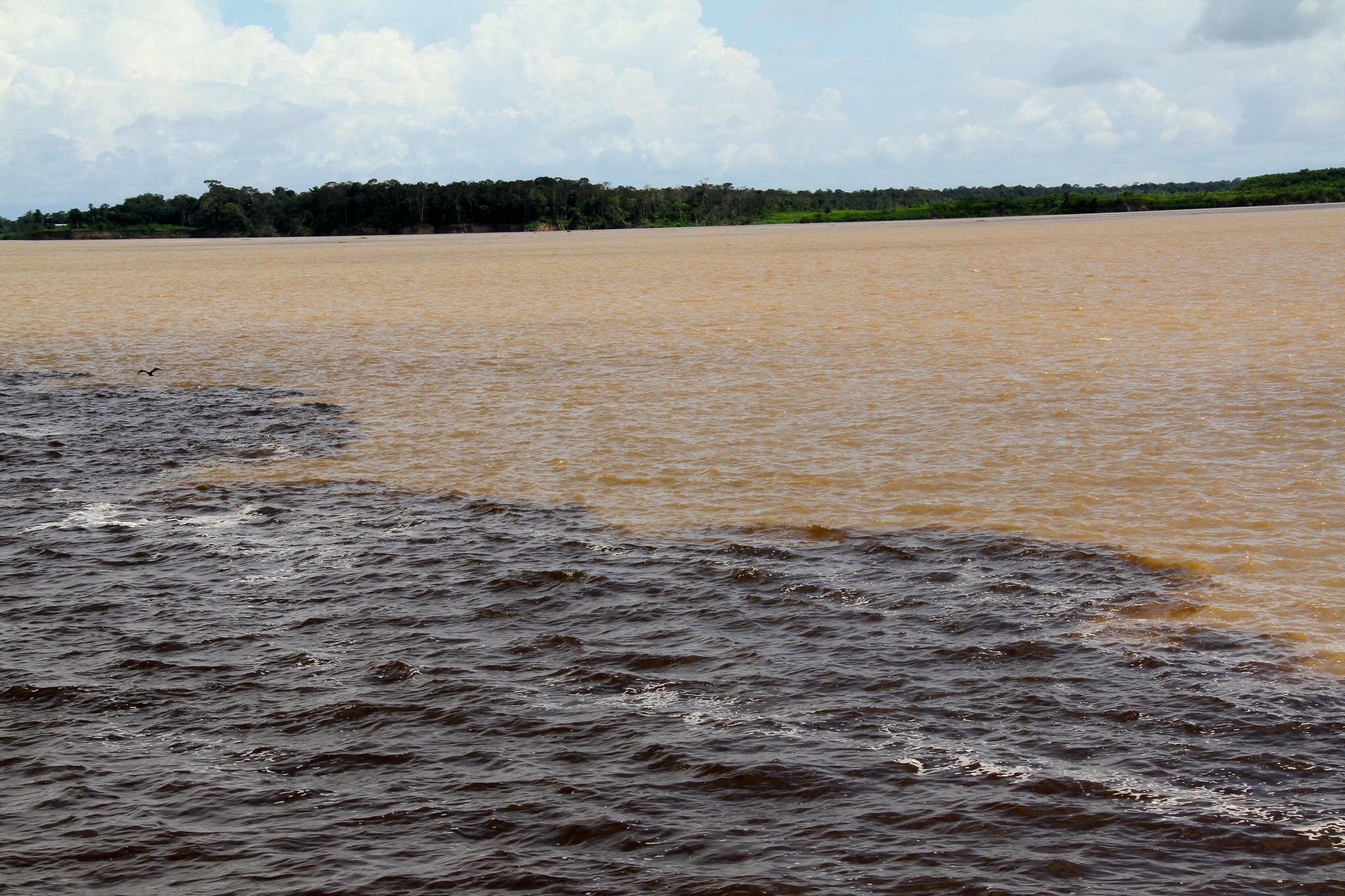
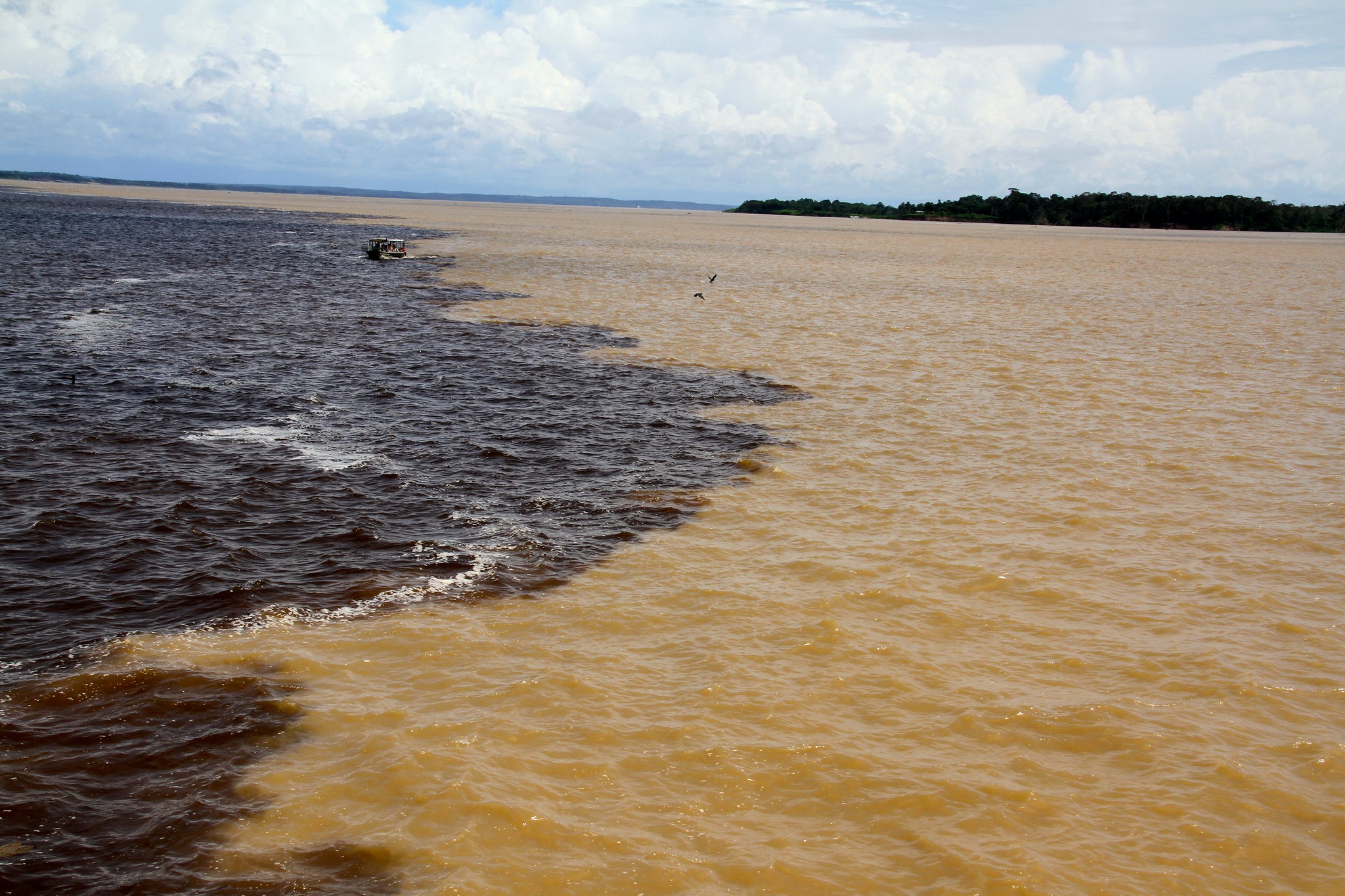
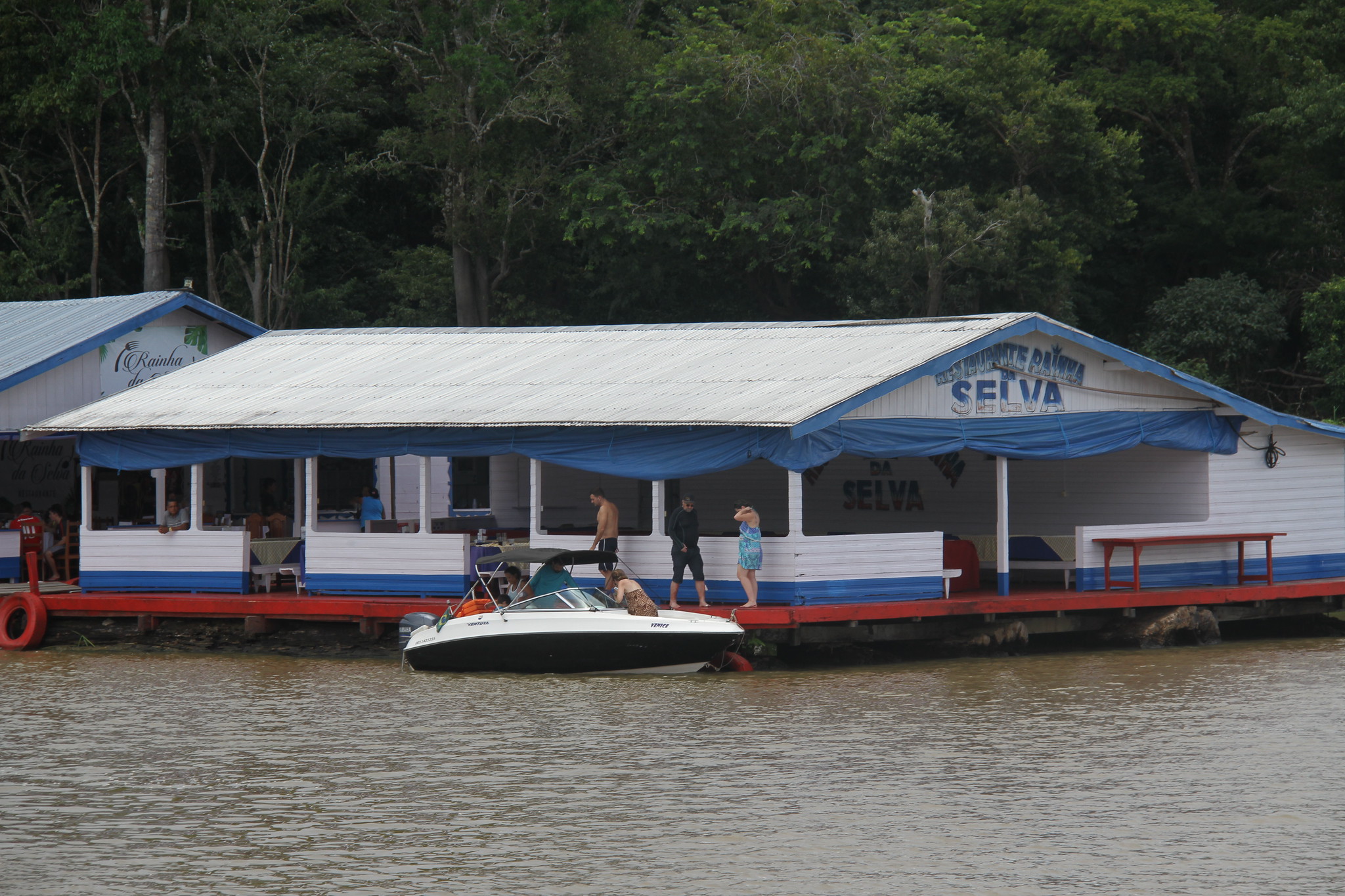
We stopped for lunch at Restaurante Selva Amazônica, enjoying a relaxing break surrounded by river views before continuing our journey.
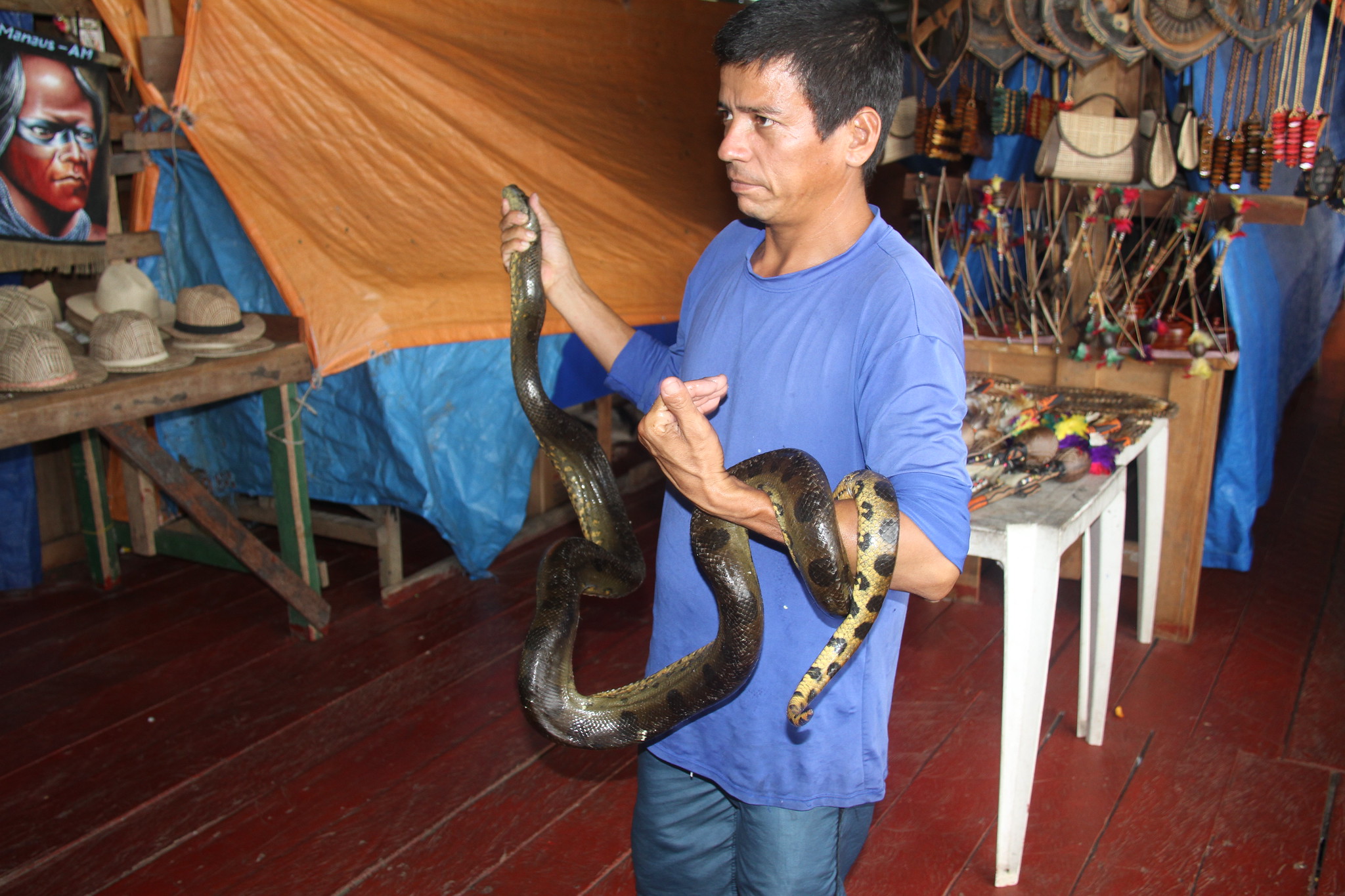
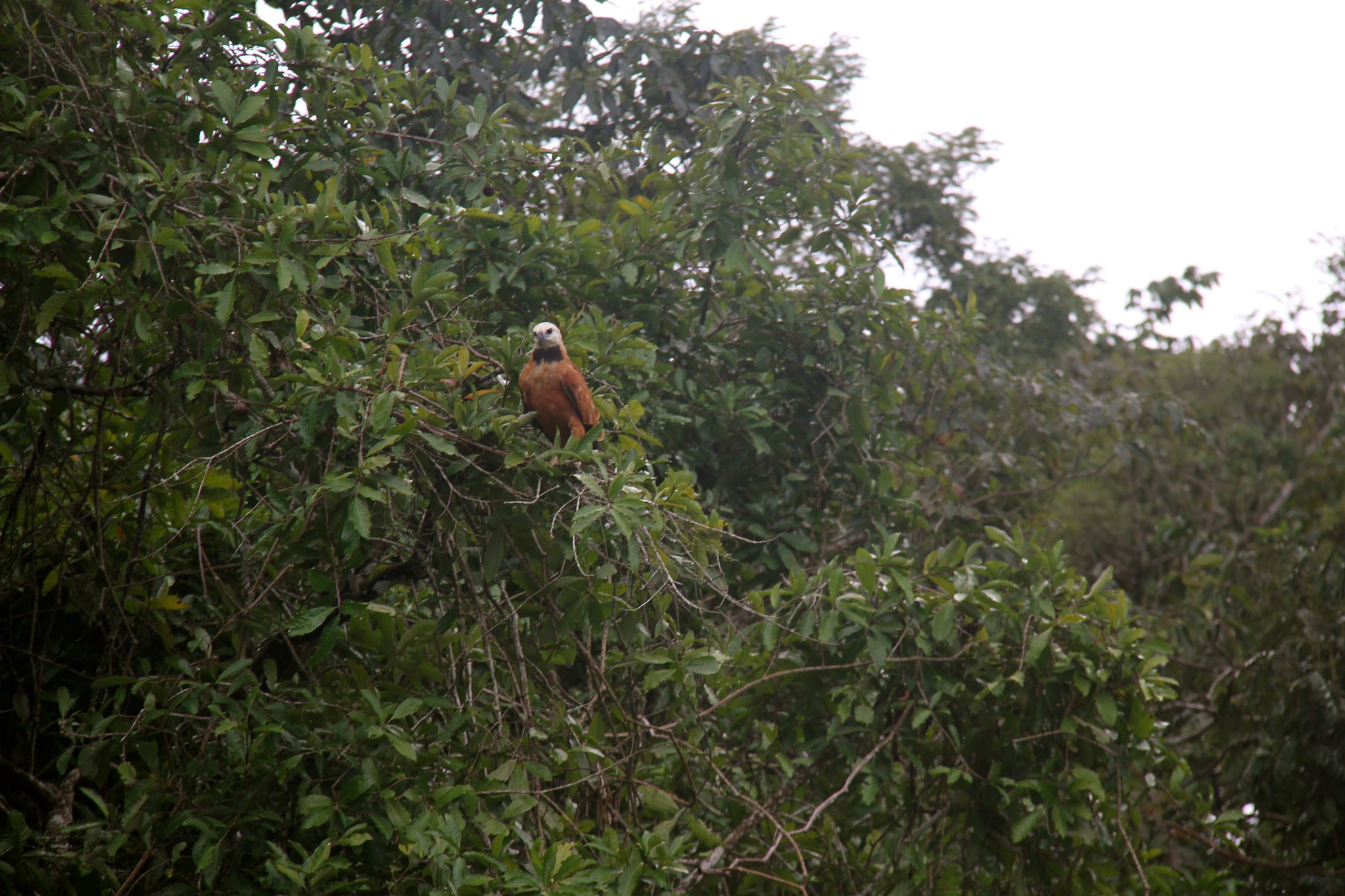
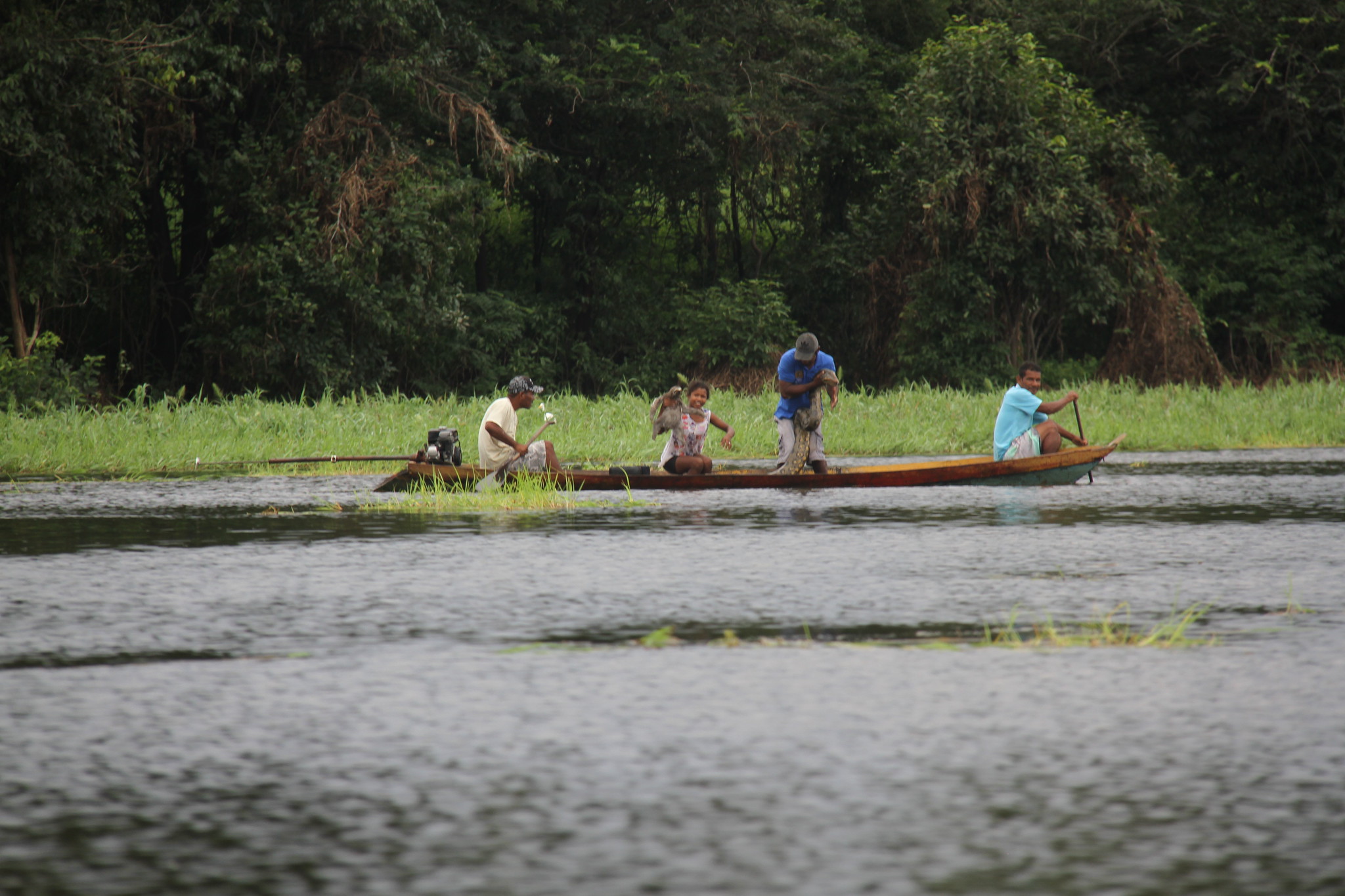
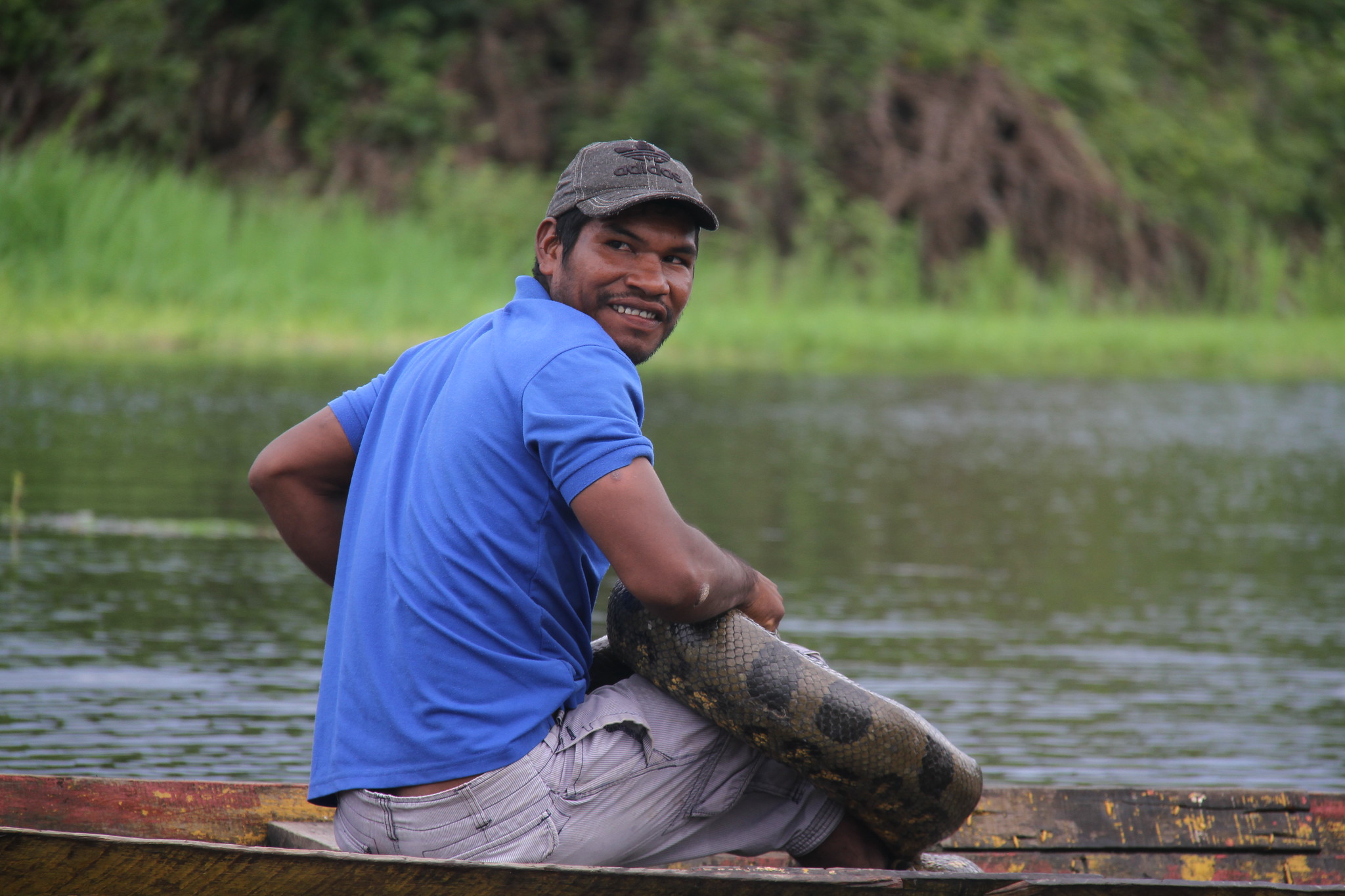
In the afternoon, we cruised along riverbank areas known for birdlife. The Amazon here feels alive in every direction, occasional flashes of color from tropical birds, distant calls echoing across the water, and small villages appearing briefly before disappearing back into the forest. We also had chance to hold the Sloth and Anacando for pictures.
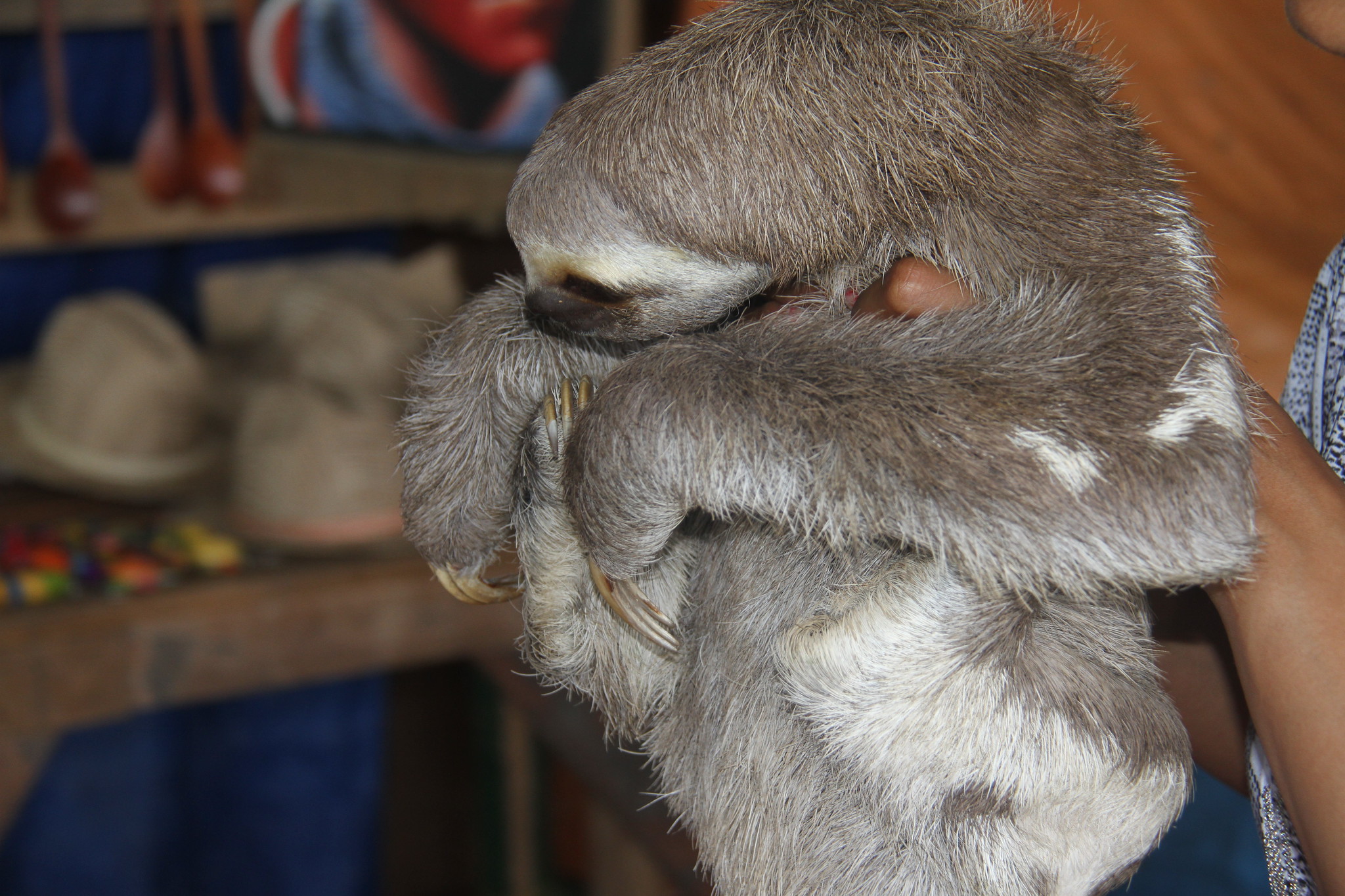
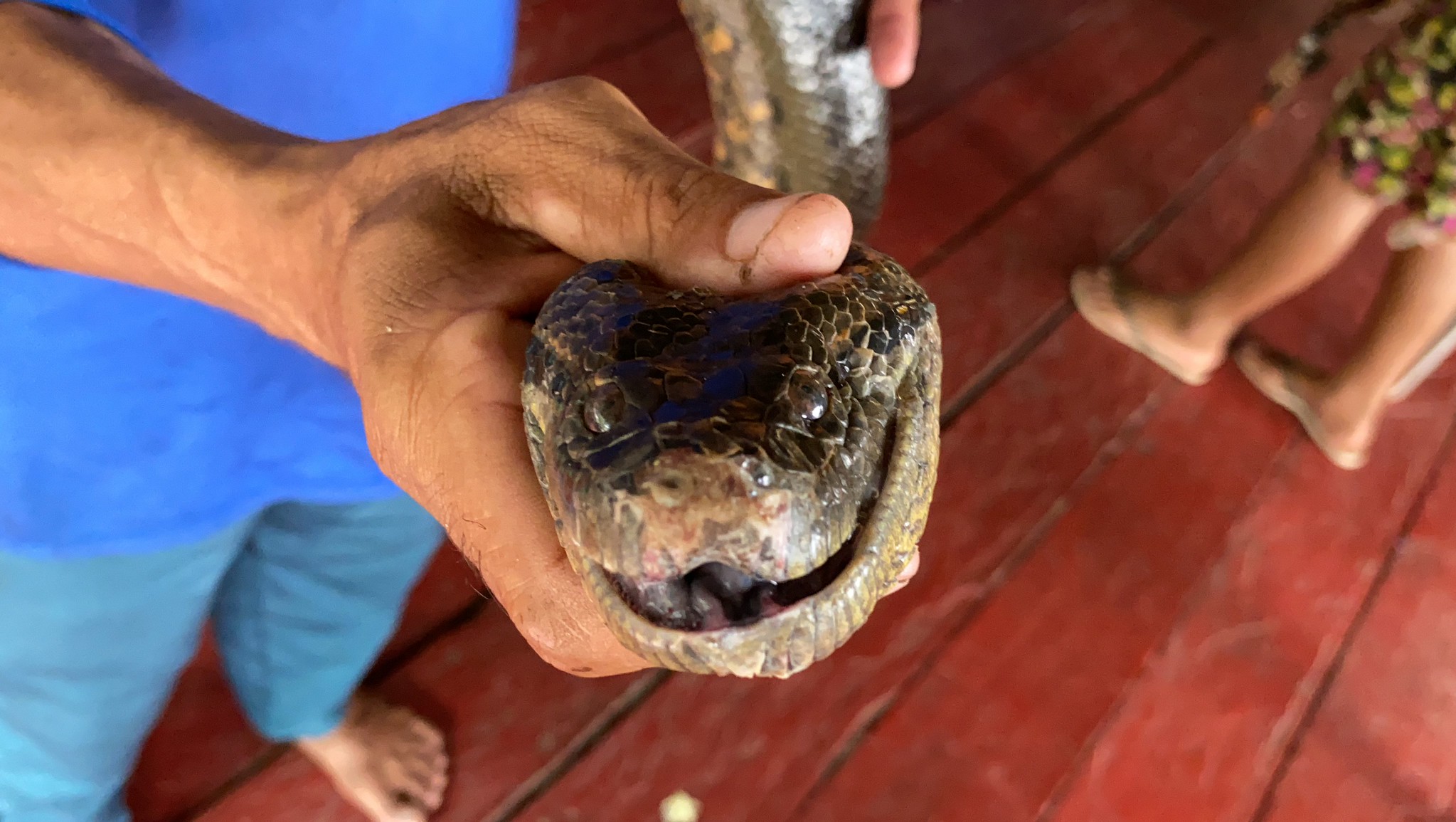
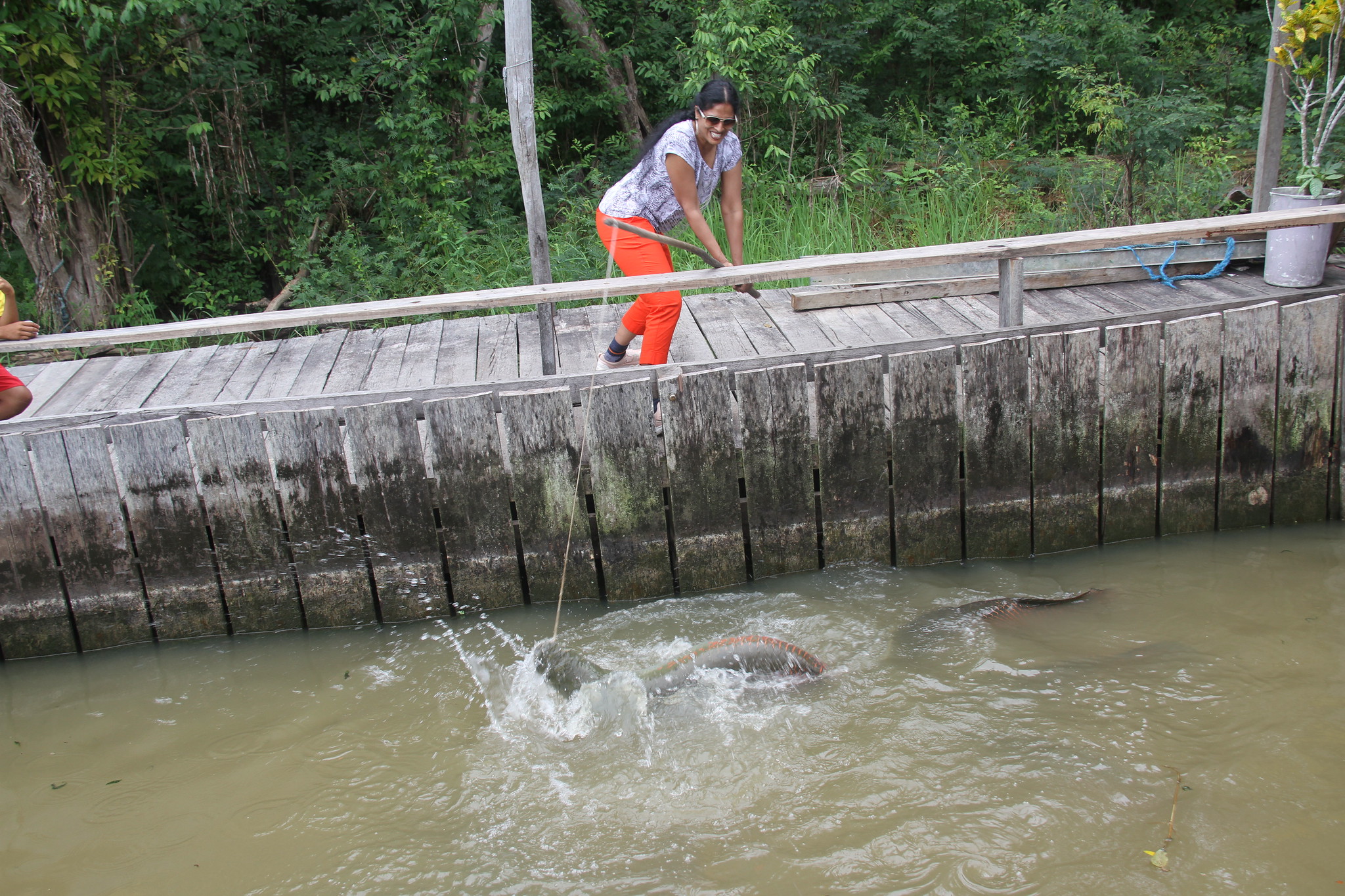
During one of the stops, we also had a chance to see and interact with one of the Amazon’s most iconic giants the Arapaima (pirarucu), one of the largest freshwater fish in the world, capable of growing up to 10 feet (3 meters) long and weighing over 400 pounds. Standing close to it was almost unbelievable, its massive size making it feel prehistoric.
We were given bait to try feeding it, and within seconds of placing it near the water, the fish surged up with incredible speed and swallowed it in one swift movement. The power and speed of such a huge creature was shocking to witness up close, and it became one of the most memorable wildlife encounters of the trip.
We also came across small boats along the river carrying sloths and anacondas, offering photo opportunities in exchange for money. While it may seem like an exciting chance to interact with wildlife, our guide explained that this practice is not sustainable and can be harmful to the animals. Choosing not to participate, we continued our journey, gaining a deeper understanding of the importance of responsible tourism in the Amazon.
By the time we began our return, the river was glowing under the afternoon sun. The vastness of the Amazon once again surrounded us, leaving us with a mix of awe, excitement, and reflection.
The Meeting of the Waters wasn’t just about two rivers joining, it was about witnessing the scale, power, and complexity of an ecosystem that still feels larger than life.
Day 4 – From the Rainforest to the Heart of Manaus
After three unforgettable days surrounded by the Amazon rainforest, our final morning at the Amazon EcoPark Jungle Lodge was a little more relaxed. Before checking out, we spent some time enjoying the lodge’s natural pools, soaking in the peaceful surroundings one last time. With birds calling from the trees and the rainforest all around us, it was the perfect way to say goodbye to the jungle.
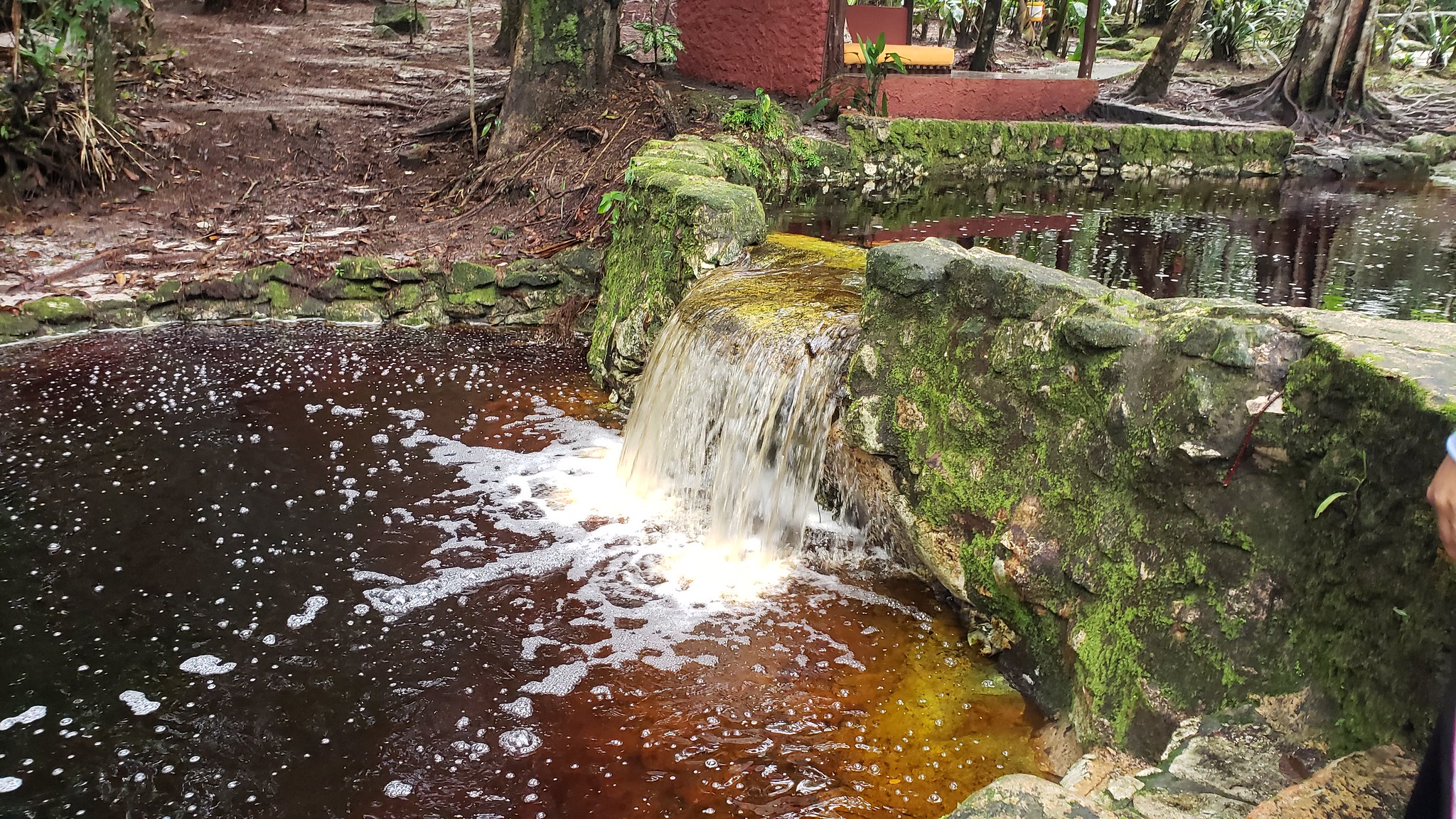
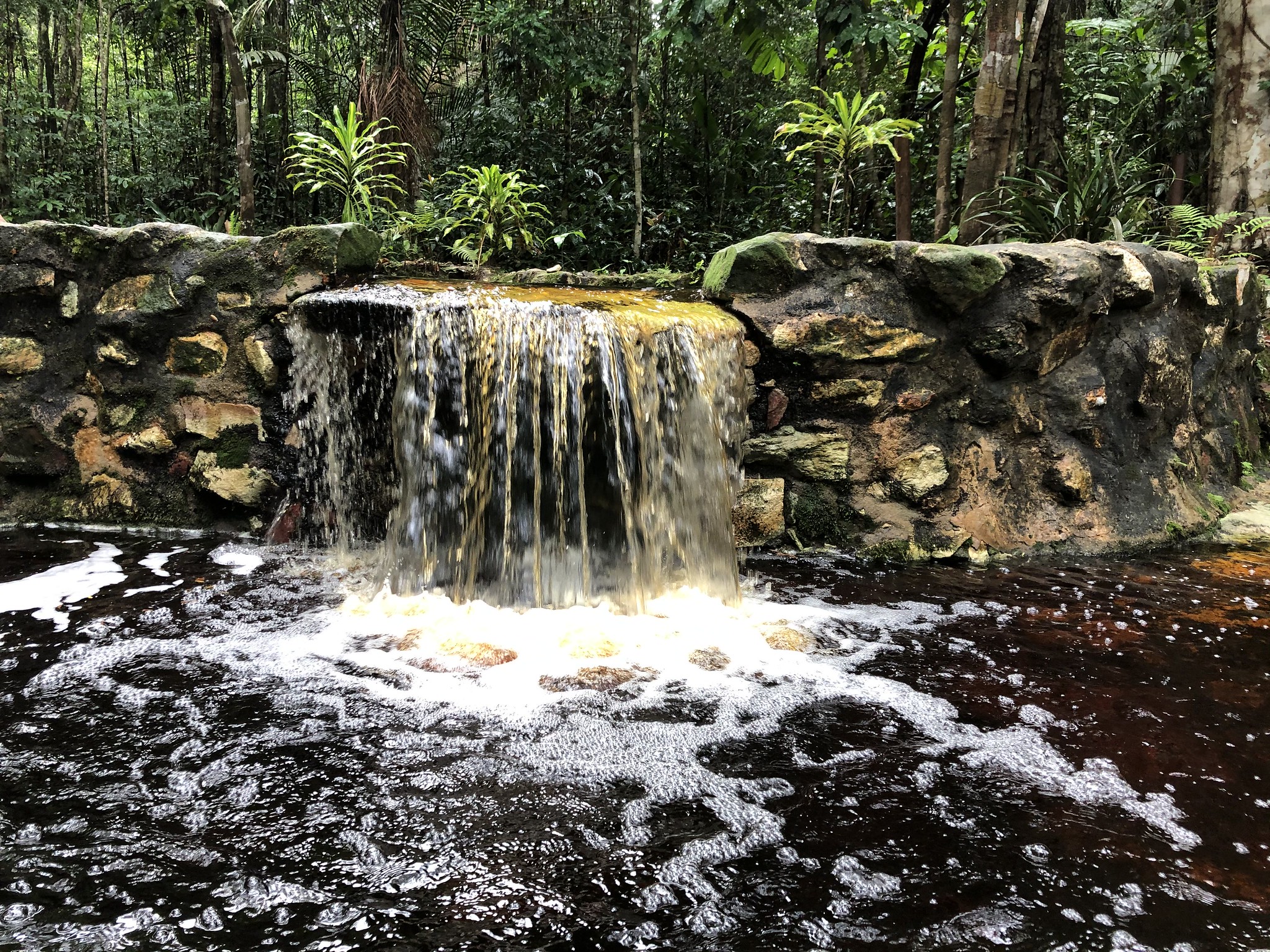
Soon it was time to board the boat back to Manaus. The return journey felt very different from our arrival a few days earlier. What had once seemed like an endless maze of rivers and rainforest now felt familiar, and it was hard to believe our Amazon adventure was already coming to an end.
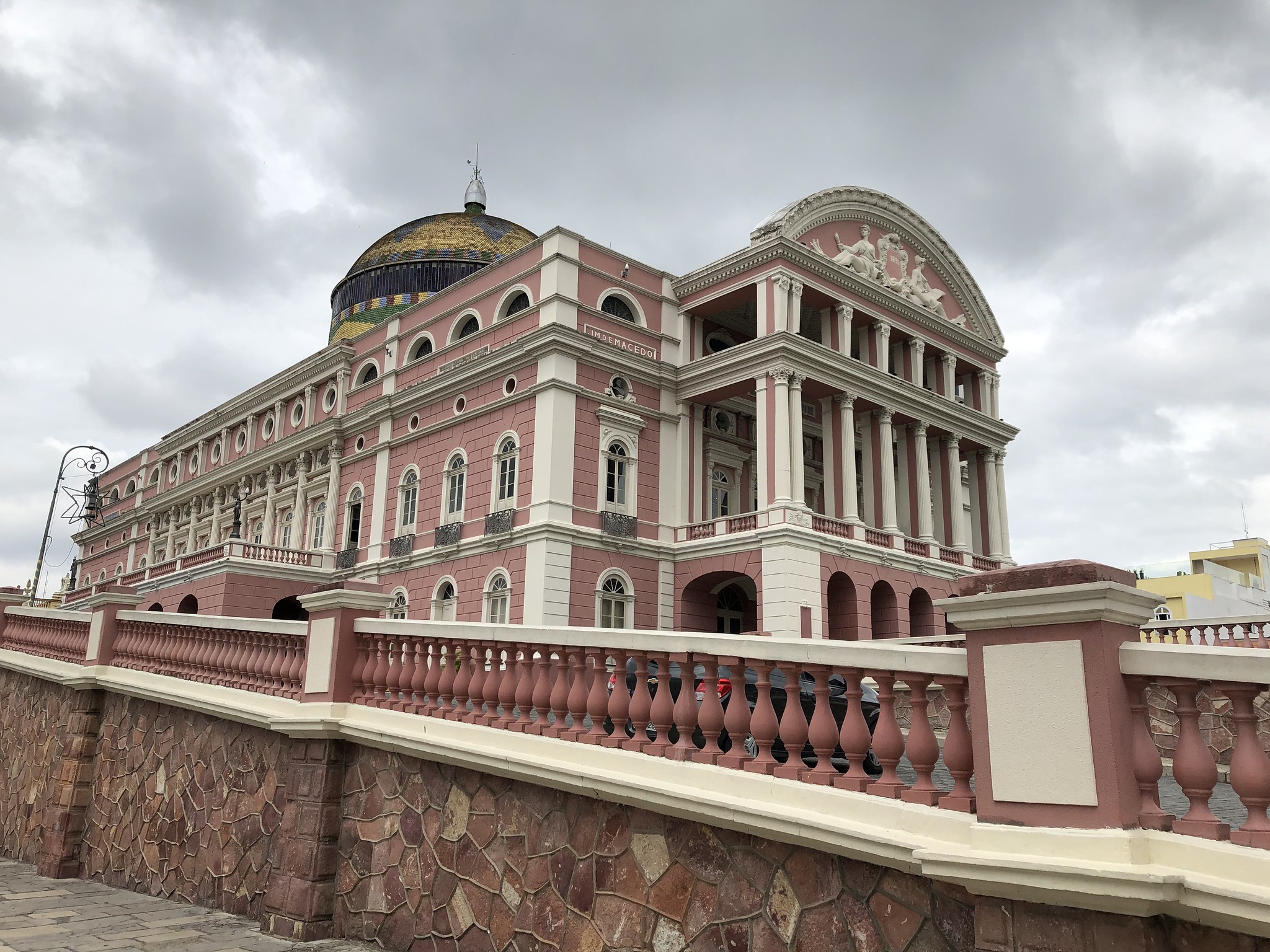
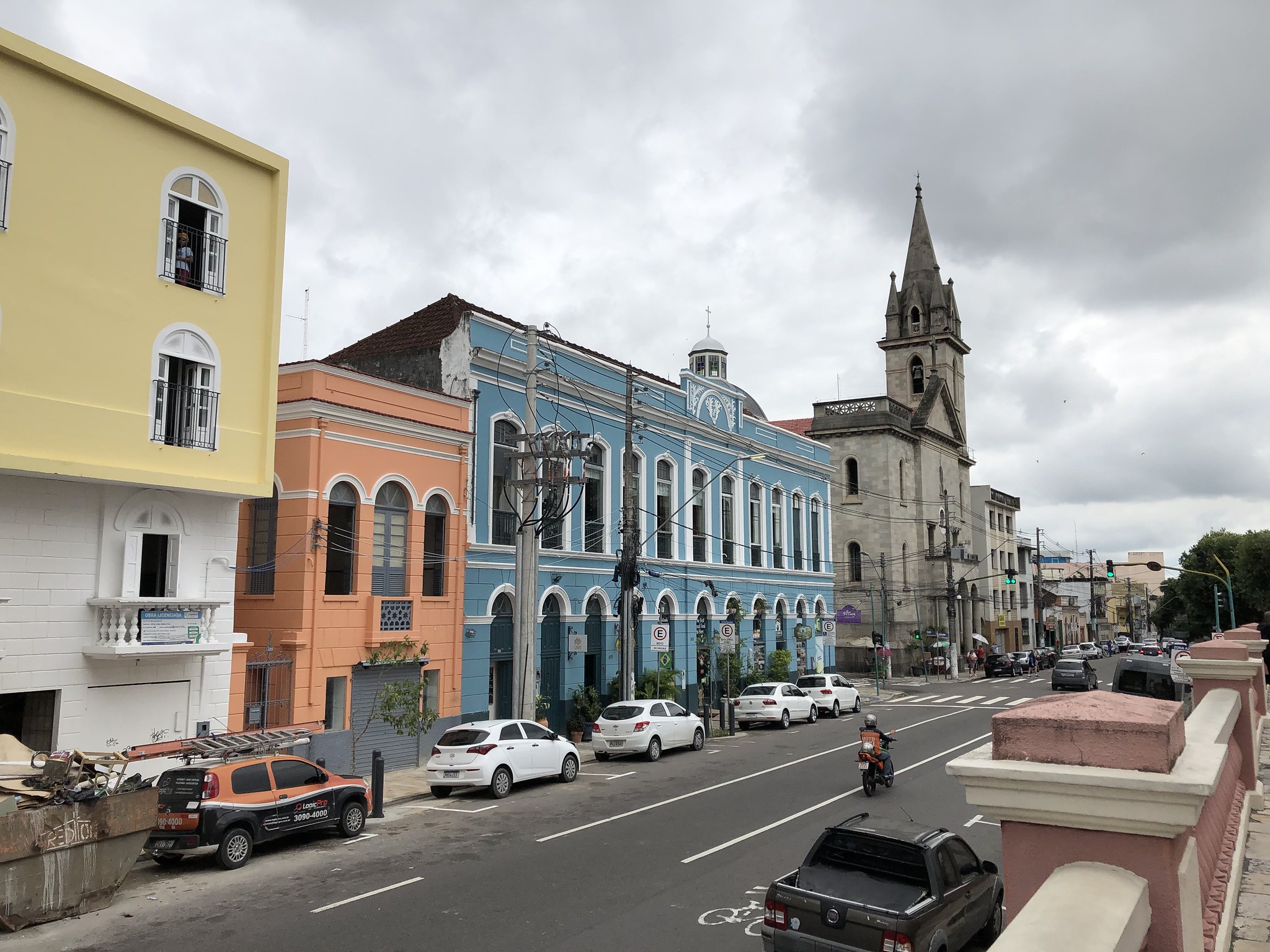
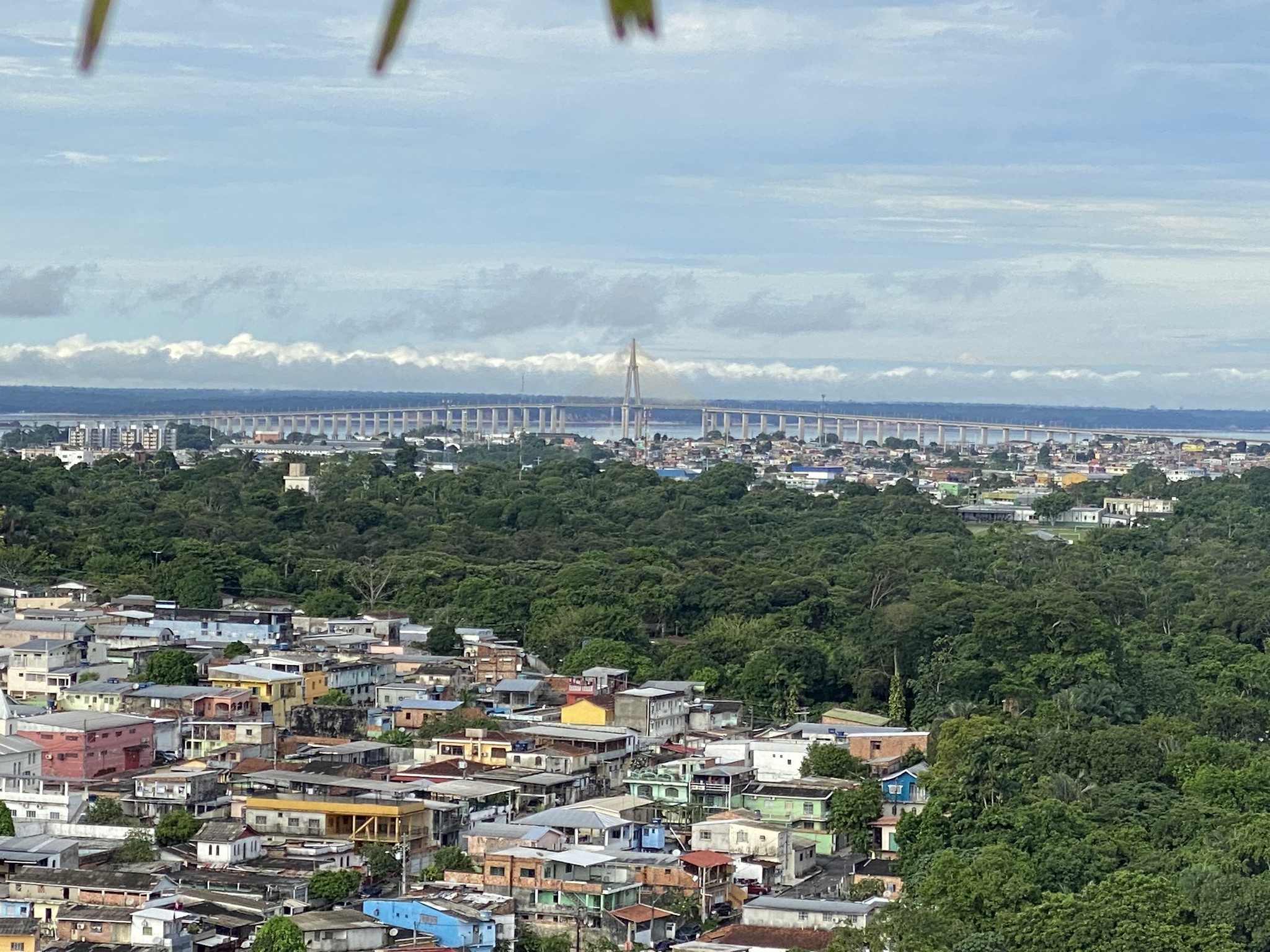
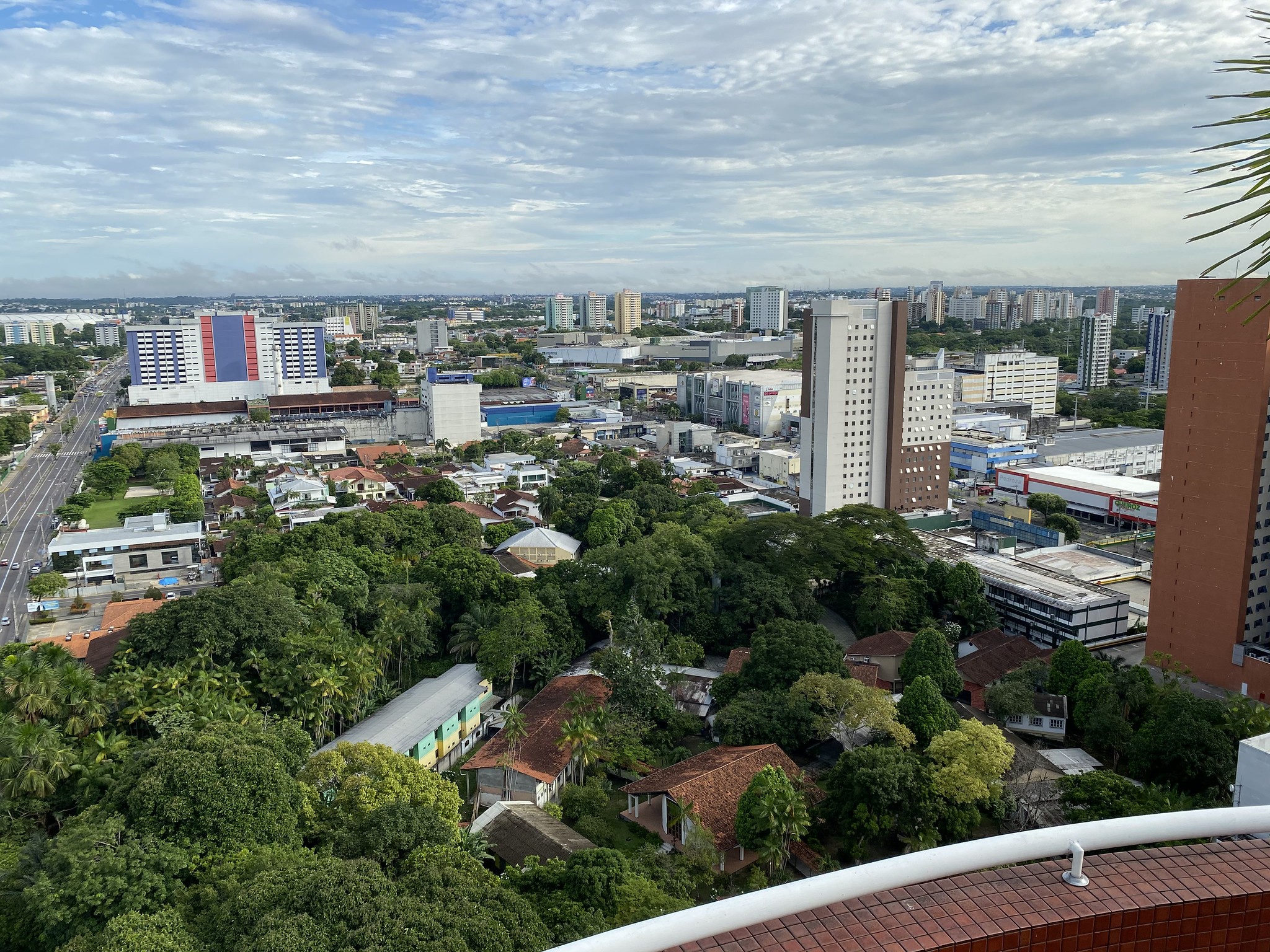
Back in Manaus, we stepped into a city with a fascinating history. During the late 19th-century rubber boom, Manaus became one of the wealthiest cities in South America, and many of its historic buildings still reflect that remarkable era.
The highlight of our city tour was the magnificent Amazon Theatre (Teatro Amazonas). Completed in 1896, this architectural masterpiece was built almost entirely with materials imported from Europe, including Italian marble, French glass, and Scottish steel. Walking through its beautifully decorated halls and elegant auditorium, it was amazing to find such a grand opera house in the middle of the Amazon rainforest. It stands as a lasting reminder of the city’s prosperity during the rubber boom.
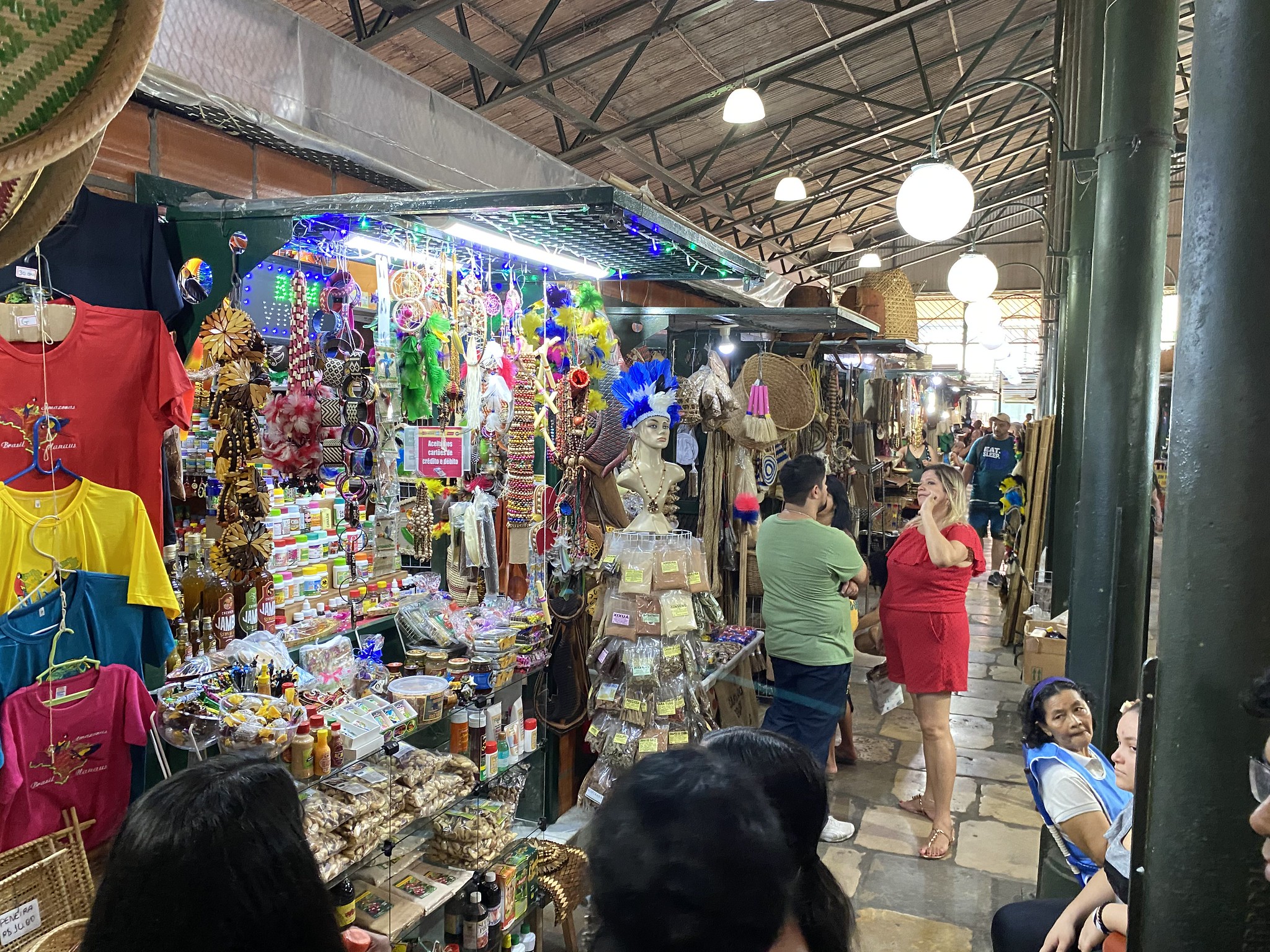
From there, we visited the famous Adolpho Lisboa Municipal Market, one of Manaus’ best-known landmarks. Inspired by the famous Les Halles market in Paris, the market is a lively place where locals shop for fresh produce, spices, medicinal herbs, handmade crafts, and regional specialties.
One section of the market was dedicated to the Amazon’s incredible fish. Seeing enormous pirarucu (arapaima) and tambaqui displayed on ice gave us a whole new appreciation for the diversity of the Amazon River. After spending the previous day feeding a giant arapaima, it was fascinating to see these famous fish as part of the region’s everyday cuisine and culture.
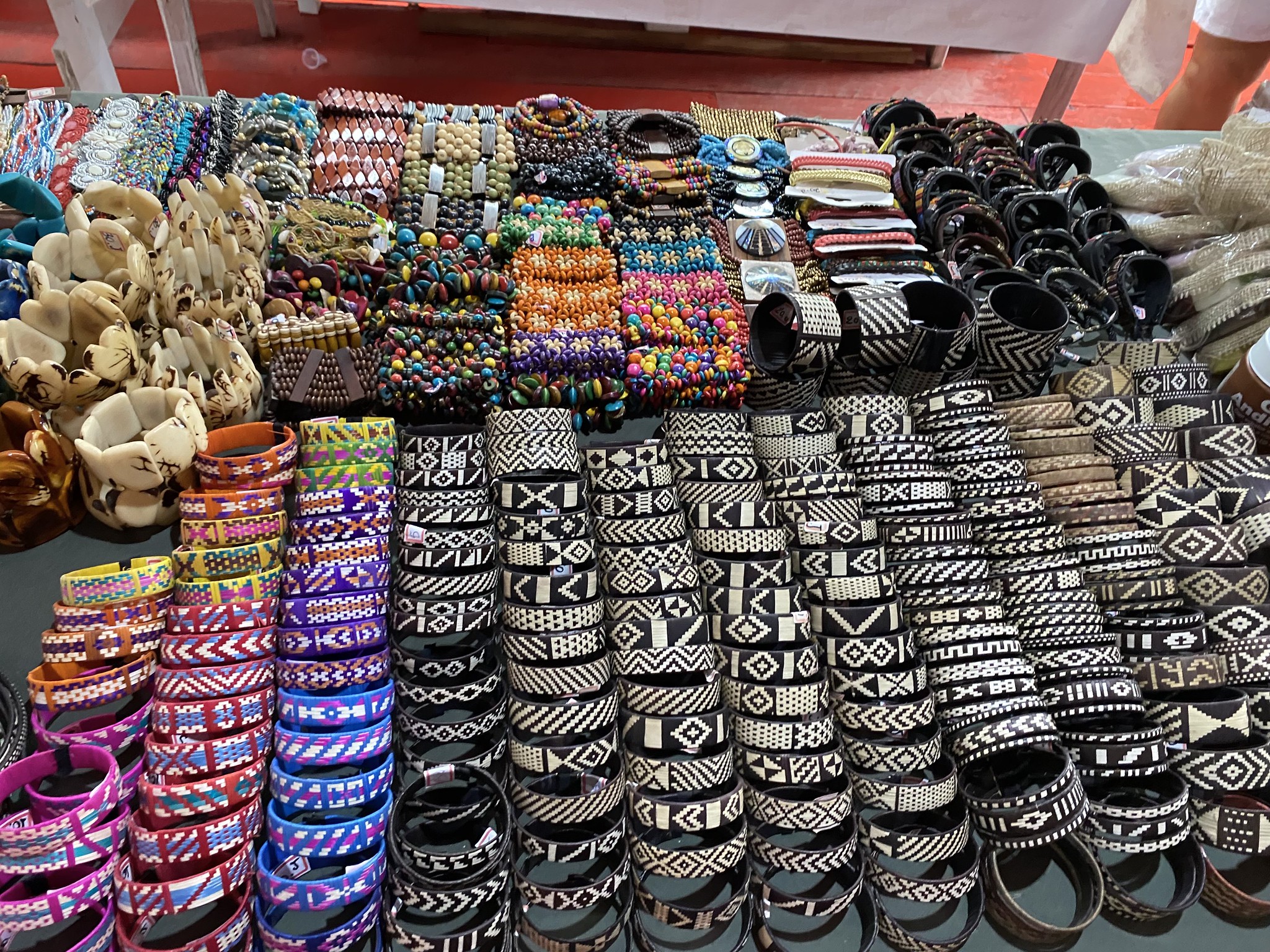
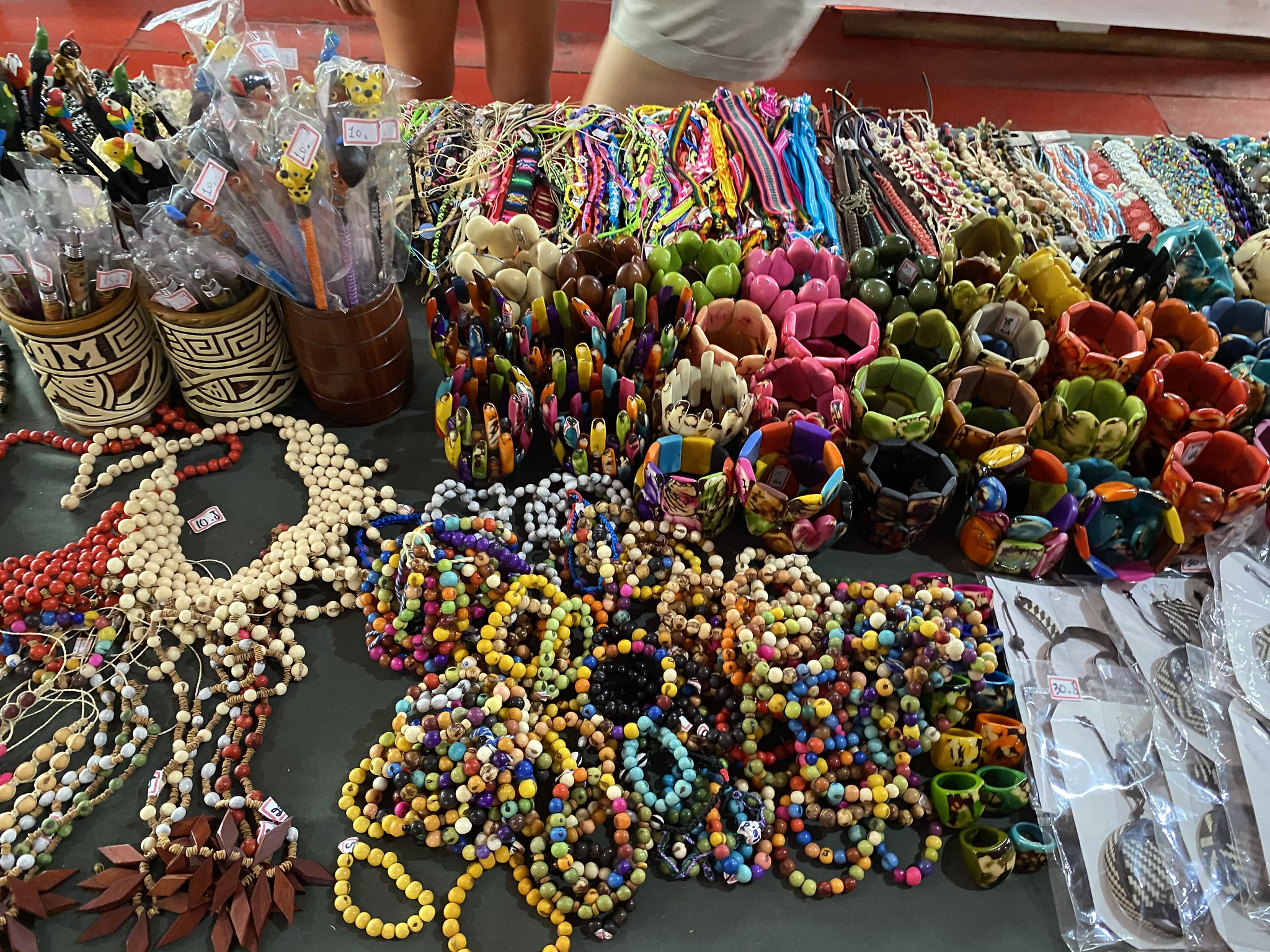
The market was also a wonderful place to browse for souvenirs. Handcrafted wooden carvings, woven baskets, local chocolates, and products made from Amazonian fruits made it easy to take a small piece of the rainforest home.
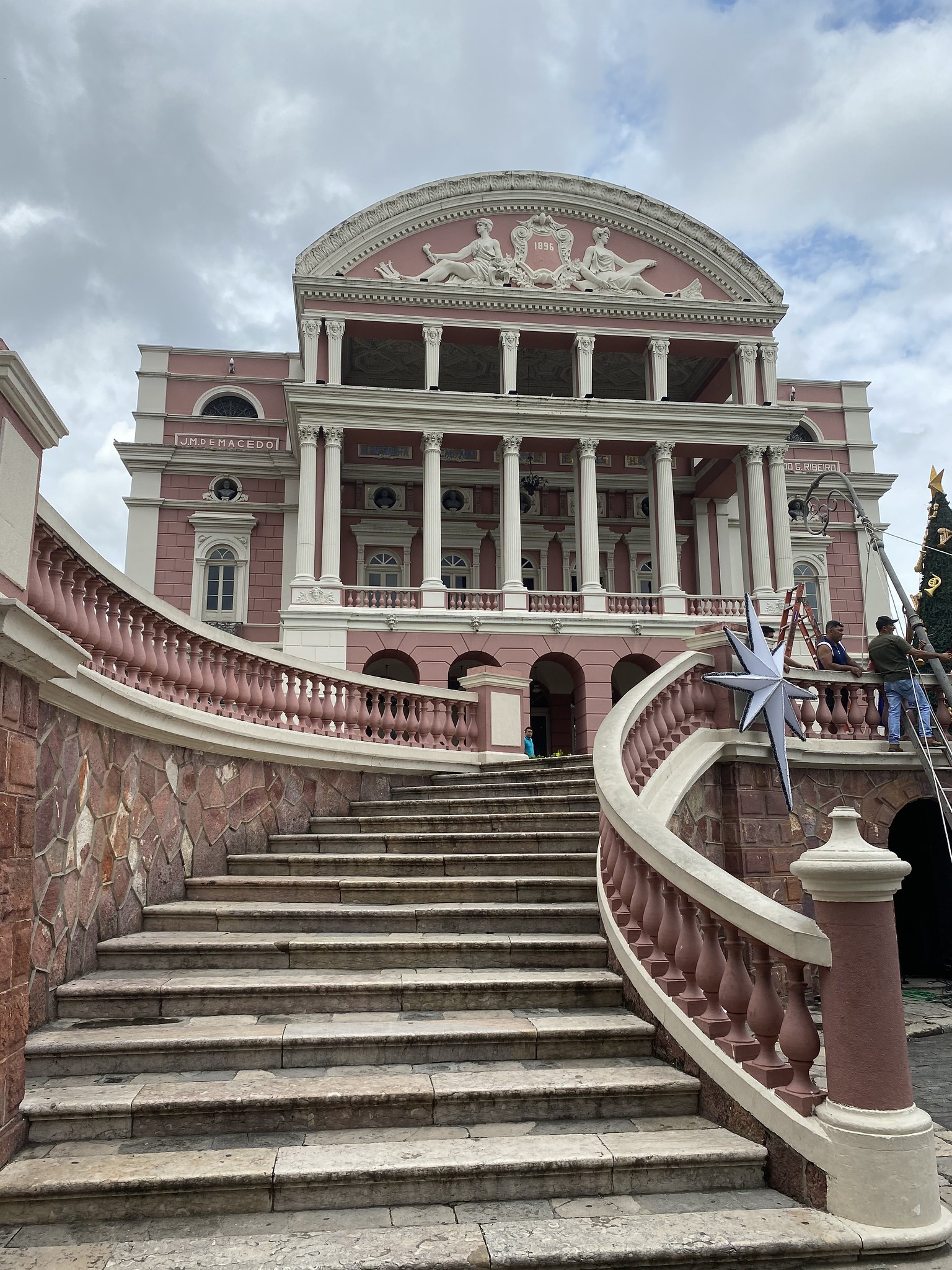
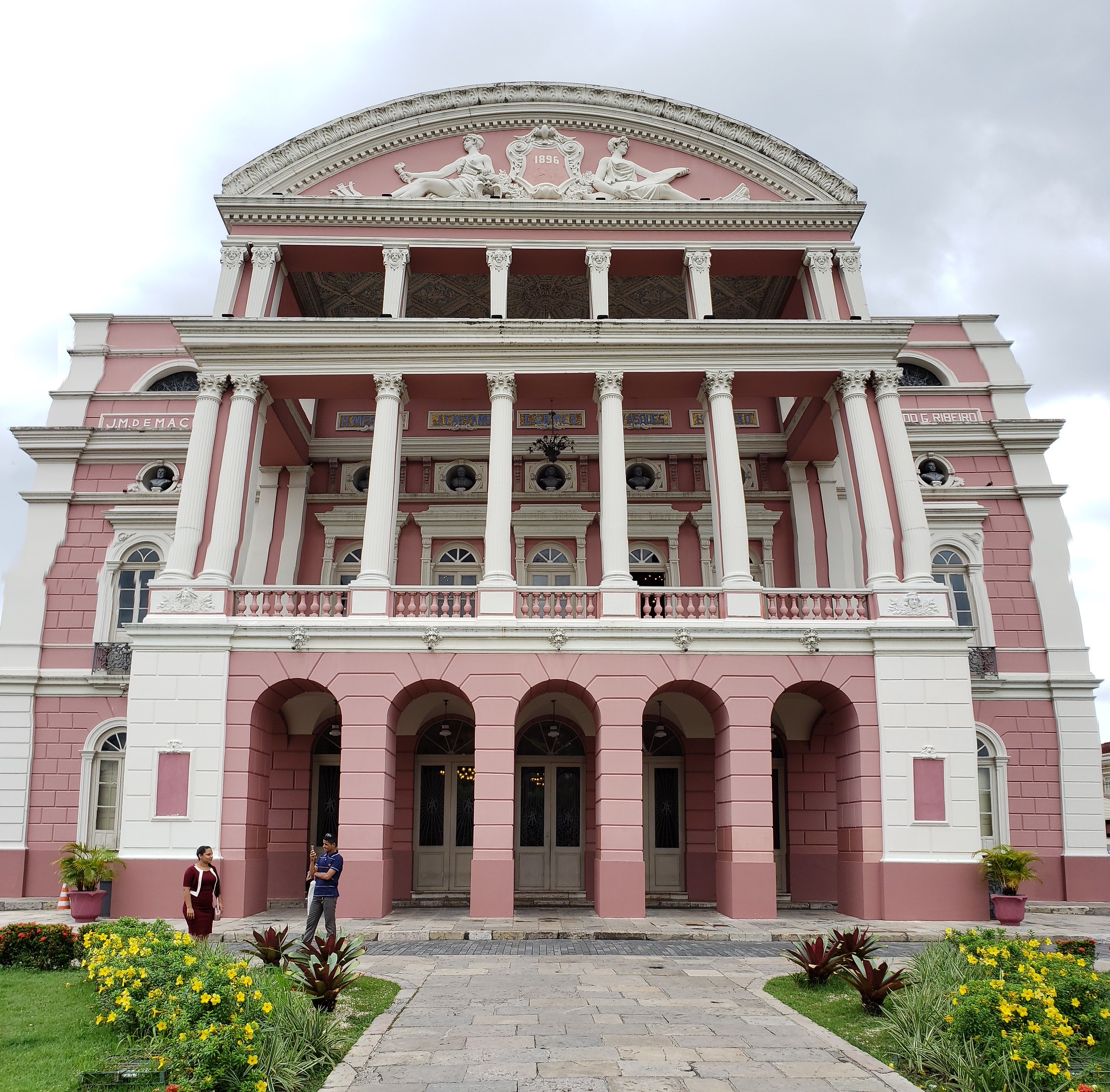
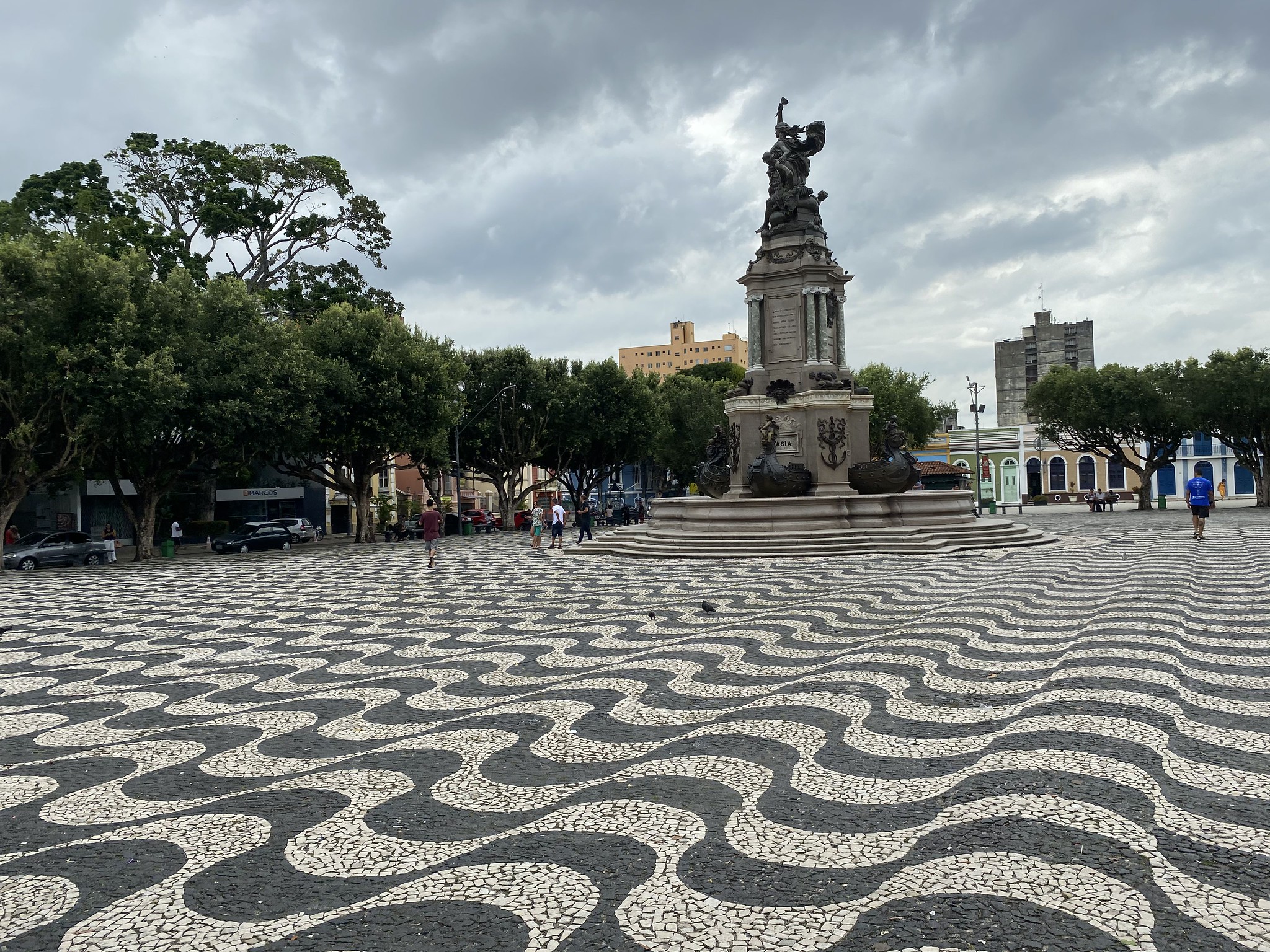
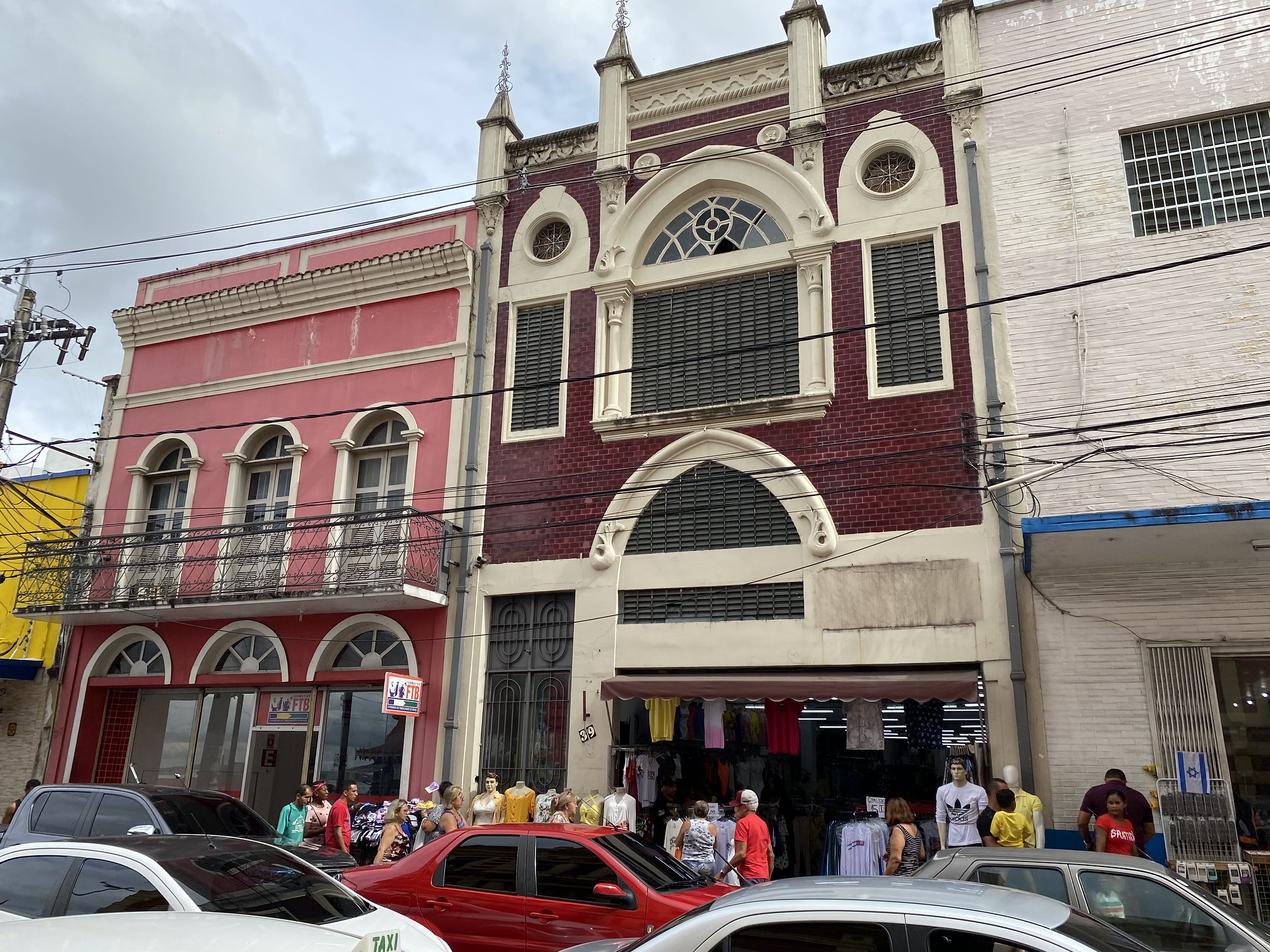
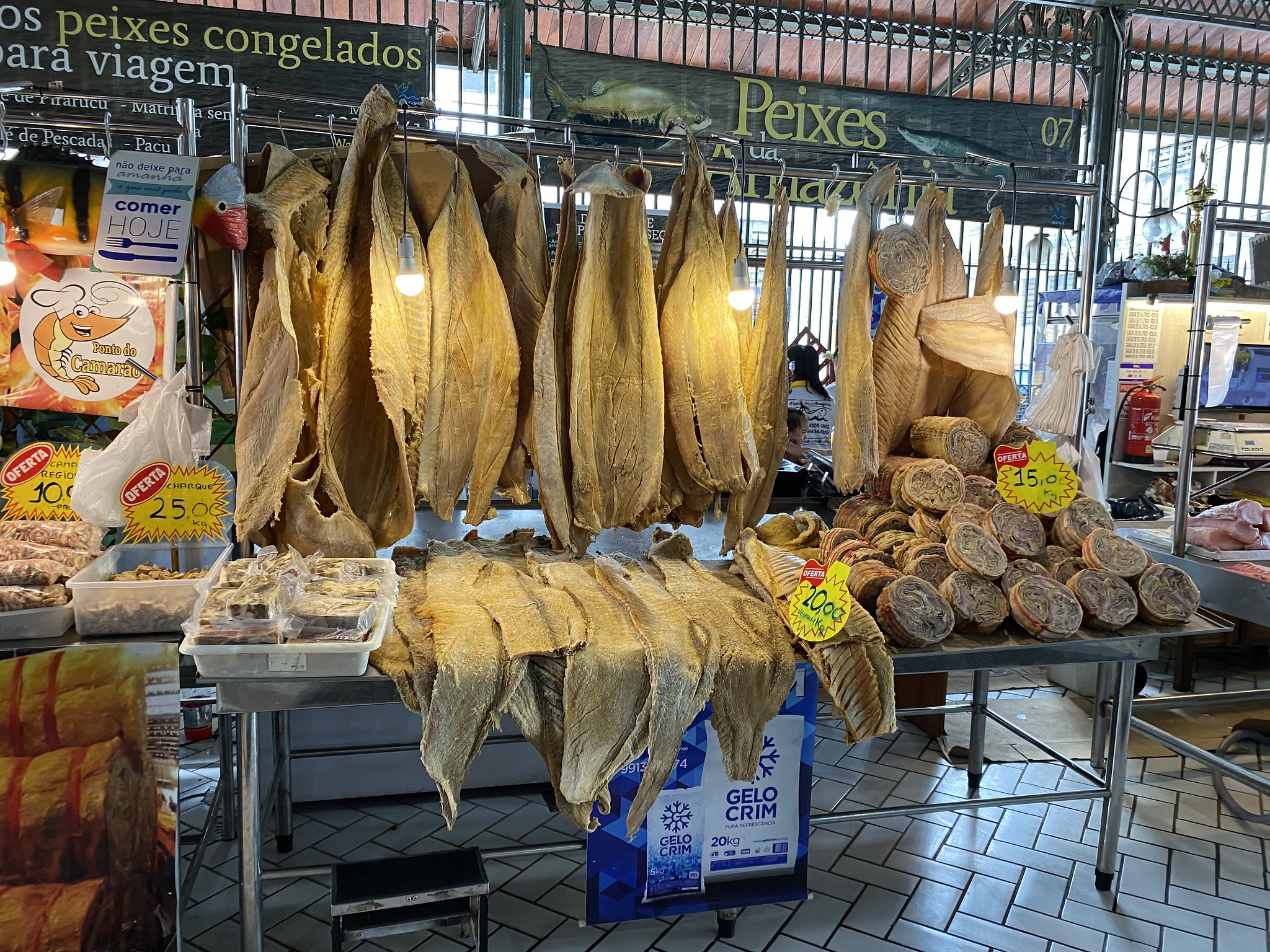
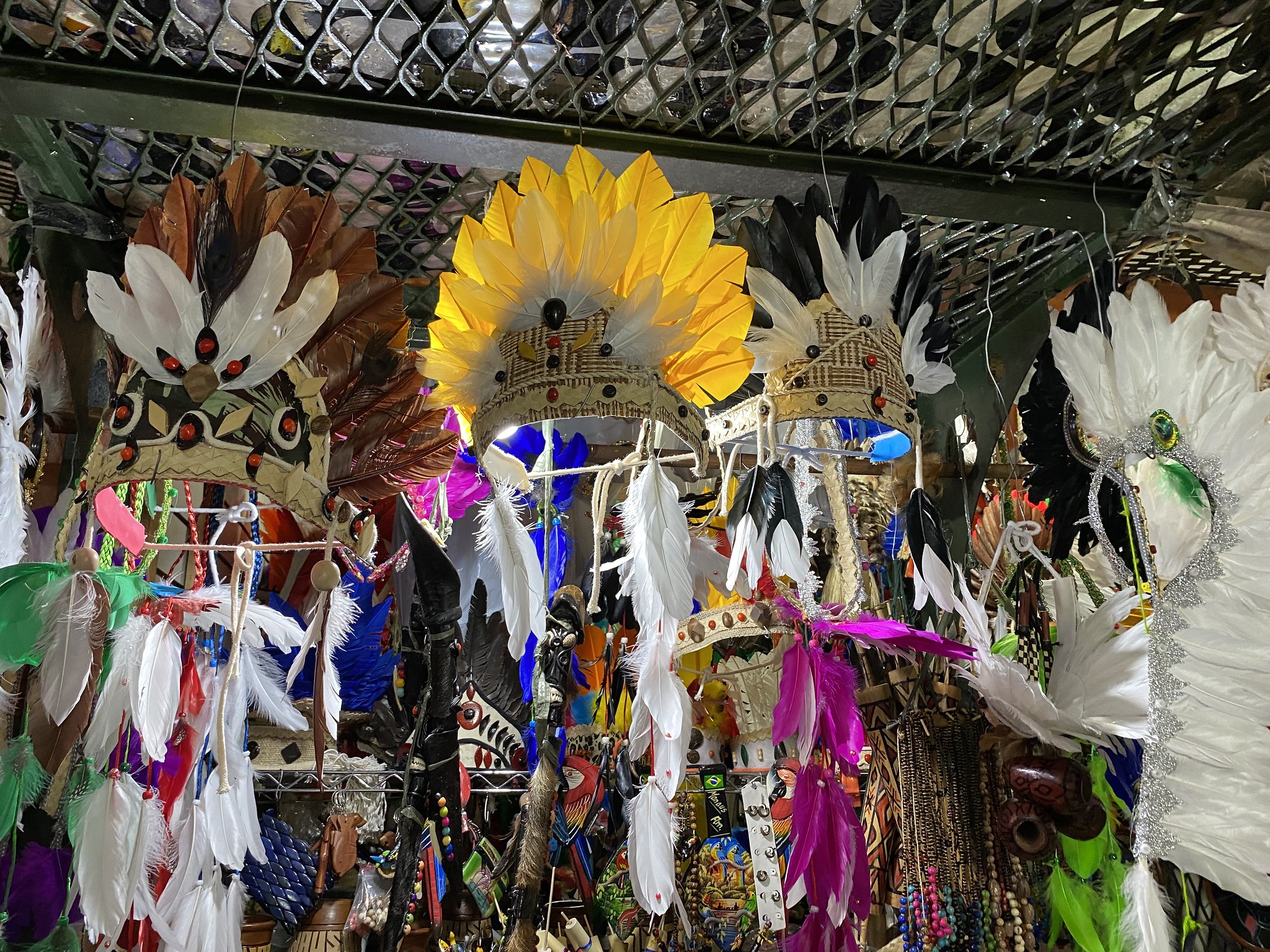
As the day came to an end, we reflected on everything we had experienced over the past four days—night canoe rides, jungle walks, feeding monkeys, meeting Caboclo families, catching piranhas, witnessing the spectacular Meeting of the Waters, and discovering the rich history of Manaus.
The Amazon had exceeded every expectation. It wasn’t just about seeing wildlife or visiting the world’s largest rainforest—it was about experiencing a way of life shaped by the river, the forest, and the people who have called this remarkable place home for generations.
Day 5 – Farewell, Amazon
We boarded our flight from Manaus back to Rio de Janeiro. Looking out the airplane window as the endless green canopy disappeared beneath the clouds, it was hard to imagine the incredible adventures we had experienced over the previous four days.
From paddling through quiet jungle waterways and spotting a tiny baby caiman to feeding giant arapaimas, catching piranhas, and witnessing the Meeting of the Waters, the Amazon had given us memories that will last a lifetime.
Some places impress you with their beauty. The Amazon leaves you with something even more profound, a deep respect for the power of nature and the importance of protecting one of the planet’s greatest treasures.
Travel Tips
- Best time to visit: The Amazon can be visited year-round. Water levels vary by season, offering different experiences.
- Pack light but smart: Lightweight, quick-dry clothing, insect repellent, sunscreen, a rain jacket, and binoculars are highly recommended.
- Listen to your guide: The rainforest is safe when explored with experienced guides who know the terrain and wildlife.
- Respect wildlife: Avoid paying for photos with wild animals or supporting activities that may exploit them.
- Prepare for humidity: The Amazon is hot and humid throughout the year, so stay hydrated and wear breathable clothing.
IKTraveler Highlights
🛶 Favorite Experience: Night canoe safari through the rainforest
🐒 Best Wildlife Encounter: Feeding the monkeys at Monkey Forest
🐊 Most Memorable Sighting: Spotting a tiny baby caiman during the night excursion
🐟 Most Exciting Moment: Catching a piranha and feeding the giant arapaima
🌊 Must-See Attraction: The spectacular Meeting of the Waters
🍰 Best Food Surprise: The delicious desserts at Amazon EcoPark Lodge
❤️ Would We Visit Again? Absolutely. Four days gave us a wonderful introduction, but the Amazon is so vast that there’s always more to discover.
“The Amazon isn’t a place you simply visit, it’s a place you experience. Long after leaving the rainforest behind, the sounds of the jungle, the rhythm of the river, and the memories of its incredible wildlife stay with you forever.”
Time of the Travel: Dec 2019